In this guide
Touch and hold the line at the bottom of the screen. The setting is in Settings, Home screen, System navigation: set Press and hold full screen indicator to Circle to Search, or None to turn it off. Searching Settings for circle to search didn't find it on ours.
- Device
- Android
- Shown on
- Xiaomi Redmi Note 15 Pro 5G (25080RABDG), HyperOS 3.0.308.0, Android 16
- App
- Settings
- Path
- Settings › Home screen › System navigation › Press and hold full screen indicator
- Real screenshots
- 5 of 5 steps
- Checked
- October 2026
- Sources
- 2 official, linked below
Step by step
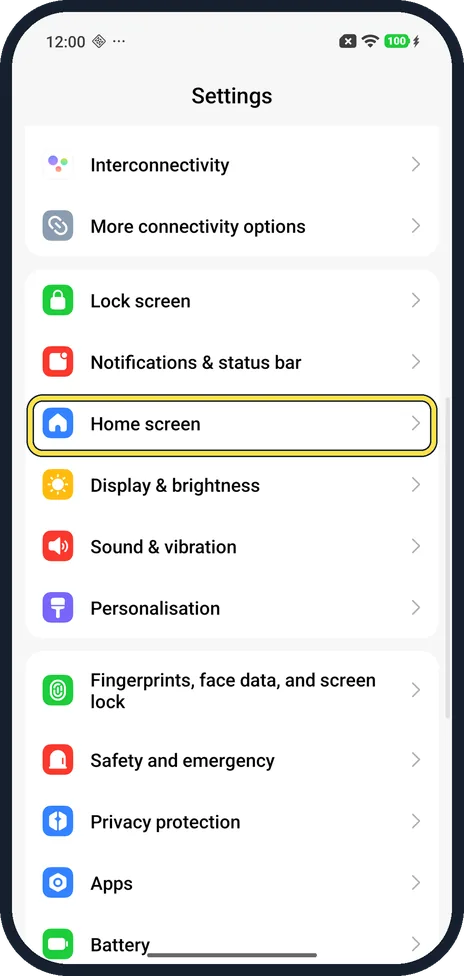
Open Home screen settings
Open Settings and tap Home screen. It is in the group with Lock screen, Notifications & status bar and Display & brightness.
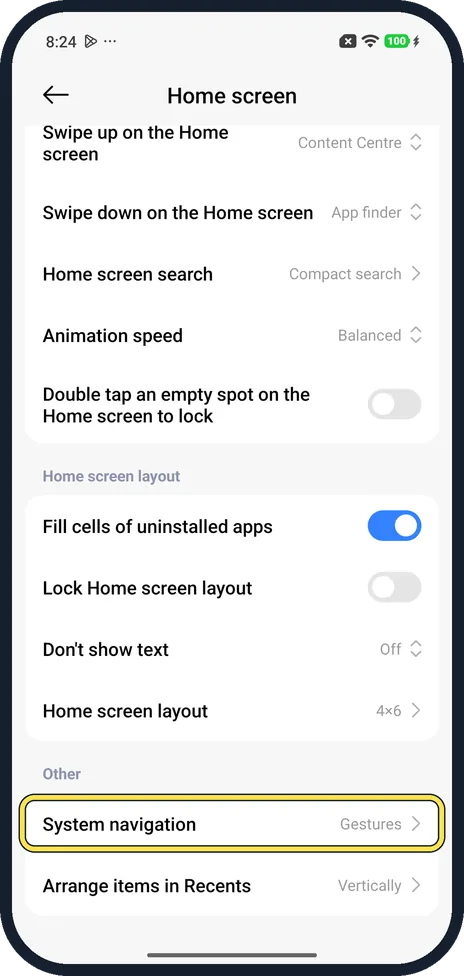
Tap System navigation
Scroll down to Other and tap System navigation. Ours said Gestures.
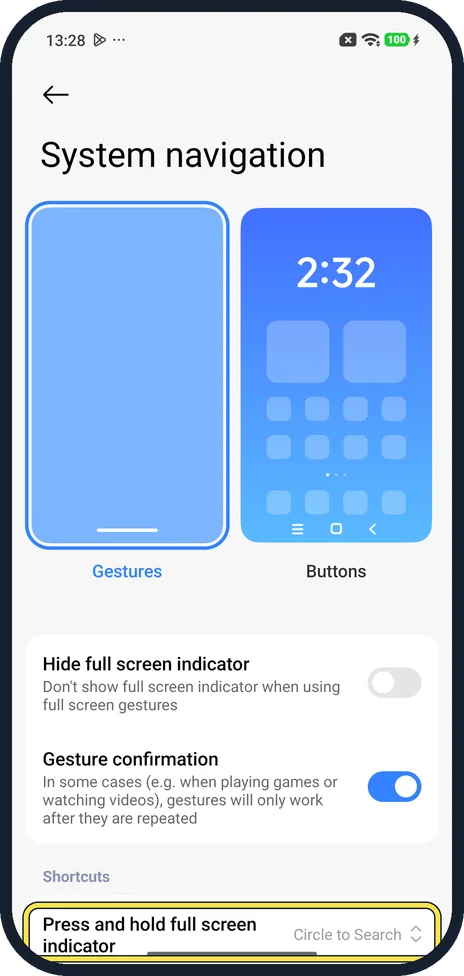
Tap Press and hold full screen indicator
Gestures was selected on ours. Under Shortcuts, Press and hold full screen indicator said Circle to Search. Tap it.
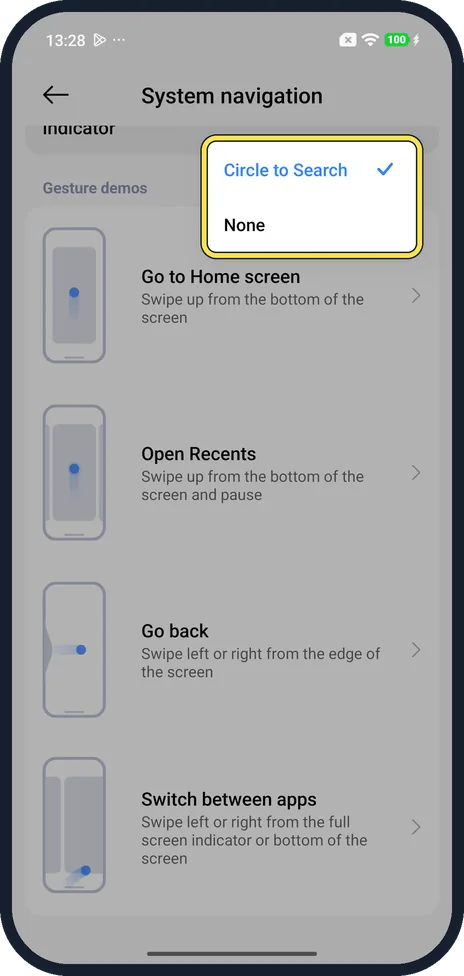
Pick Circle to Search
A small list opens: Circle to Search or None. Pick Circle to Search; None turns it off. Ours stayed on Circle to Search.
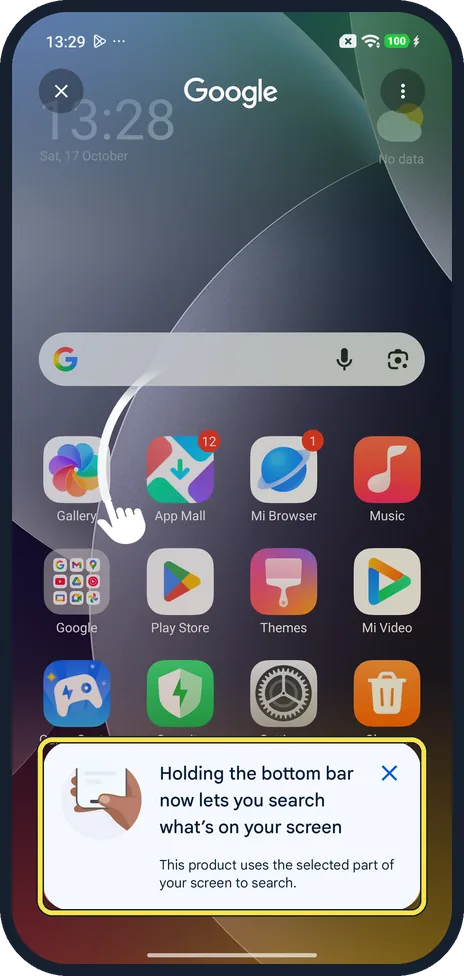
Touch and hold the bottom bar
On any screen, touch and hold the line at the bottom. Ours opened with a Google bar at the top and a card: Holding the bottom bar now lets you search what's on your screen. This product uses the selected part of your screen to search. We closed it with Back.
If you do not see this option
- Settings search finds nothing? On ours, searching Settings for circle to search found only System update, and circle found nothing. Searching for gesture did lead to System navigation.
- Using Buttons instead of Gestures? Xiaomi's guide gives this choice for full screen gestures. With Buttons, the page has Press and hold rows for the Menu, Home and Back buttons instead. Source: Generic User Guide for HyperOS 3.0
If this does not work
- It opens when you rest your thumb? Set Press and hold full screen indicator to None. Source: Generic User Guide for HyperOS 3.0
- Holding the line does nothing? Check the row says Circle to Search, not None. Hide full screen indicator, on the same page, was off on ours, so the line showed.
- Doesn't work in one app? Google says it may not work in some apps, such as banking, medical and other confidential apps. Source: Search your screen with Circle to Search
About this guide
Circle to Search searches whatever is on your screen. On our Redmi it is started by holding the line at the bottom, and the setting for it is a shortcut on the System navigation page.
The screenshots are from our Redmi Note 15 Pro 5G with Xiaomi HyperOS 3.0.308.0 and Android 16, in Light mode. Ours was already set to Circle to Search. We opened Circle to Search once and closed it. We did not search anything or change the setting.
Good to know
Change between gestures and buttons: switch between gestures and buttons on a Xiaomi phone. More shortcuts: use gesture shortcuts.
On a Samsung phone you hold the Home button or the handle: use Circle to Search on a Samsung Galaxy.
In short: Settings, Home screen, System navigation, Press and hold full screen indicator: Circle to Search. Then hold the bottom line.
Links checked in October 2026. Menus and features can change after software updates. These steps match the version named at the top.
Did this guide work for you?
Sorry about that. What happened?