In this guide
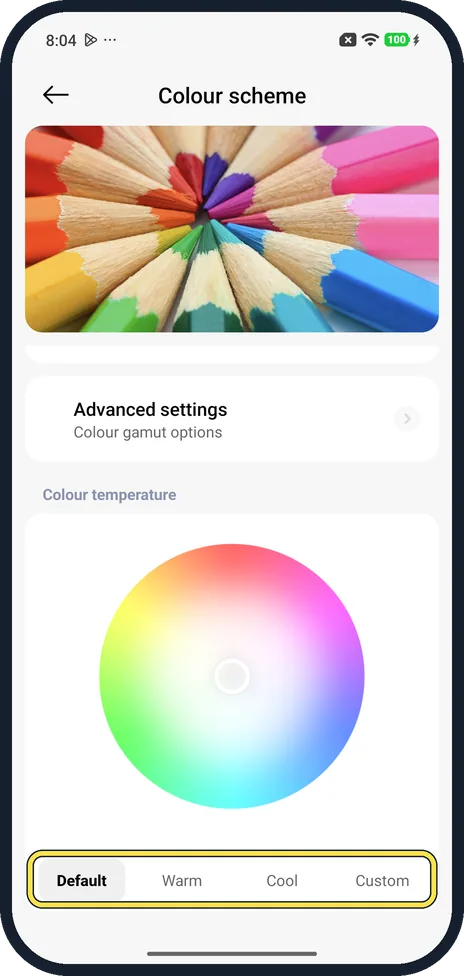
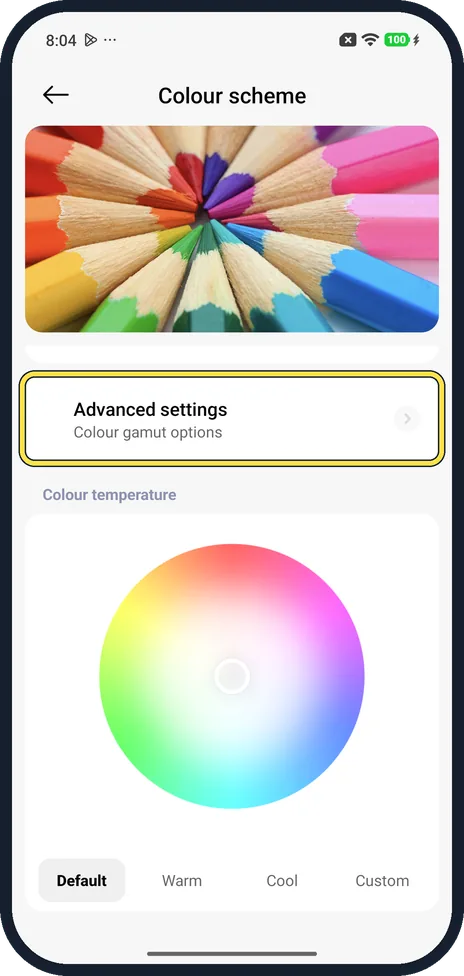
Go to Settings, Display & brightness, Colour scheme. Pick Vivid, Saturated or Standard, or open Advanced settings. Further down, Colour temperature has a colour wheel and Default, Warm, Cool and Custom. Ours was on Vivid and Default.
- Device
- Android
- Shown on
- Xiaomi Redmi Note 15 Pro 5G (25080RABDG), HyperOS 3.0.308.0, Android 16
- App
- Settings
- Path
- Settings › Display & brightness › Colour scheme
- Real screenshots
- 5 of 5 steps
- Checked
- October 2026
- Sources
- 5 official, linked below
Step by step
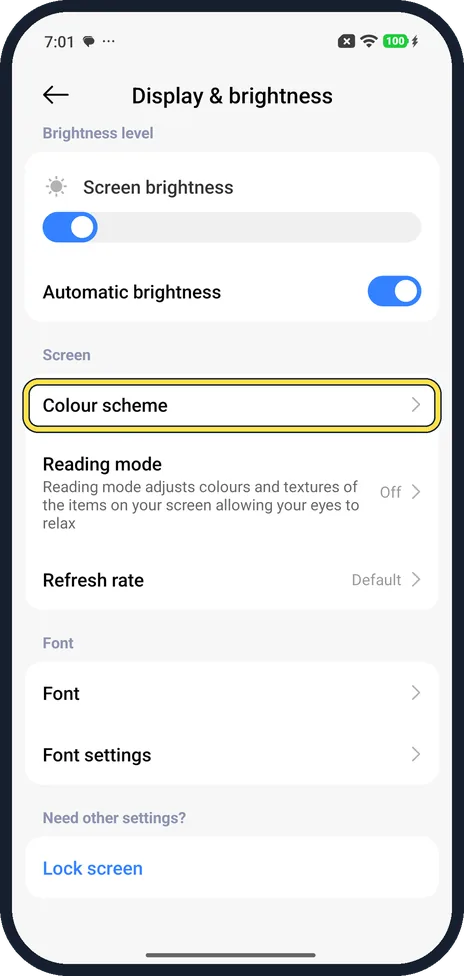
Open Colour scheme
Open Settings, tap Display & brightness and scroll to Screen. Tap Colour scheme.
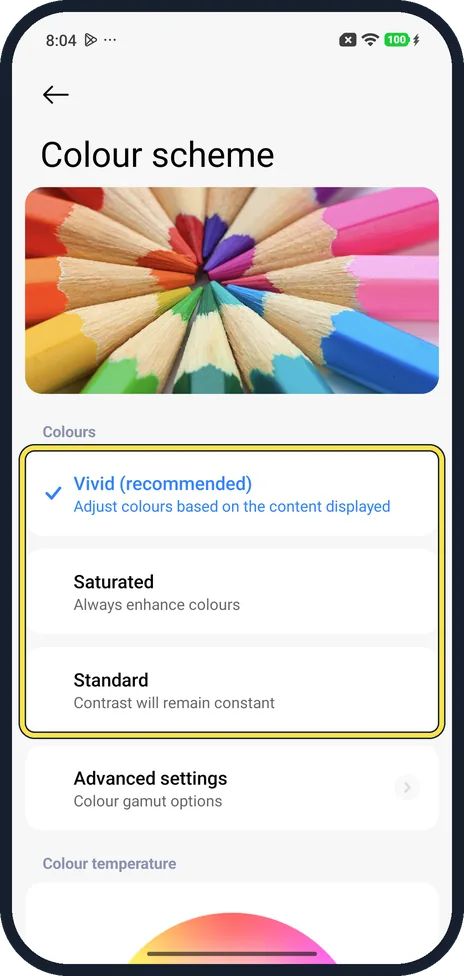
Pick the colours
Under Colours: Vivid (recommended) adjusts colours based on the content displayed, Saturated always enhances colours, and Standard keeps contrast constant. Vivid was ticked on ours. Tap the one you want.
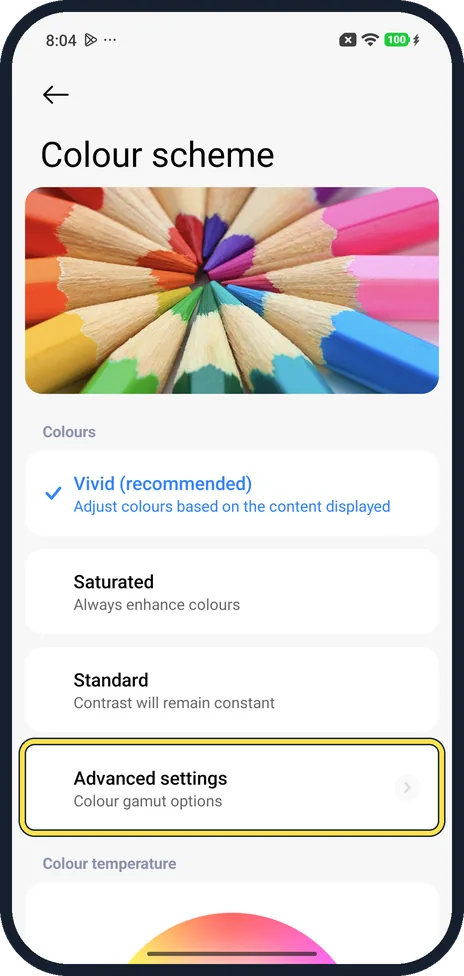
Advanced settings
Advanced settings, below them, is for colour gamut options. We did not open it.
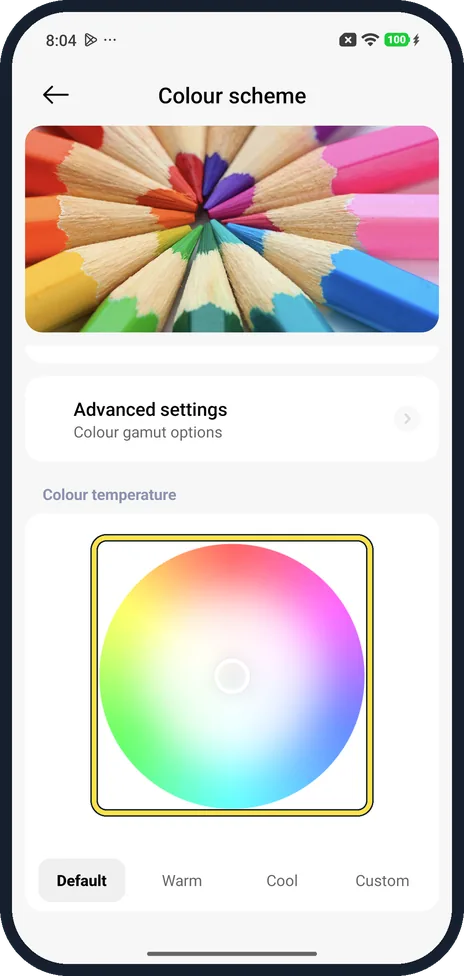
Use the colour wheel
Scroll down to Colour temperature. The dot sat in the middle of the wheel on ours. Xiaomi says you can move the dot on the dial to change the colours.
Or pick Warm or Cool
Below the wheel are Default, Warm, Cool and Custom. Default was selected on ours. We did not change it.
If you do not see this option
- Different modes in the list? They vary by model and version. Xiaomi's HyperOS 3 guide lists Vivid or Original color PRO. Its older display page lists Vivid, Saturated, Original color and Advanced settings. Ours showed Vivid, Saturated, Standard and Advanced settings. Source: Generic User Guide for HyperOS 3.0 · Source: How to adjust Display of phone?
- Looking for Adaptive colors? Xiaomi says the Xiaomi 15T Pro has Adaptive colors, which adjust colours to the light around you. Our Colour scheme page had no Adaptive colors switch. Source: Why does the Xiaomi 15T Pro screen show a color cast when Adaptive colors is on?
If this does not work
- Screen looks reddish, yellowish or greenish? Xiaomi's tip for the Xiaomi 14: choose Vivid and move the dot on the Colour temperature dial. It says slight colour differences are normal on OLED screens. Source: Why does the screen of the Xiaomi 14 show colors that are reddish, yellowish, or greenish?
- Colours look different from another phone? For the REDMI Pad 2 Pro, Xiaomi suggests comparing the modes in natural light, updating the system, and taking off a screen protector or blue light filter to check. Source: Why is there a difference in screen color on the REDMI Pad 2 Pro?
About this guide
The colour scheme sets how strong the screen colours are. Colour temperature makes white look warmer or cooler.
The screenshots are from our Redmi Note 15 Pro 5G with Xiaomi HyperOS 3.0.308.0 and Android 16, in Light mode. We only opened these screens and changed nothing.
Good to know
Smoother scrolling: how to change the refresh rate.
Easier-to-read text: how to change the text size and font.
In short: Settings, Display & brightness, Colour scheme. Vivid, Saturated or Standard; Colour temperature below.
- Xiaomi: Generic User Guide for HyperOS 3.0
- Xiaomi Support: How to adjust Display of phone?
- Xiaomi Support: Why does the Xiaomi 15T Pro screen show a color cast when Adaptive colors is on?
- Xiaomi Support: Why does the screen of the Xiaomi 14 show colors that are reddish, yellowish, or greenish?
- Xiaomi Support: Why is there a difference in screen color on the REDMI Pad 2 Pro?
Links checked in October 2026. Menus and features can change after software updates. These steps match the version named at the top.
Did this guide work for you?
Sorry about that. What happened?