Wash the area, grip the end of the splinter with clean, pointed tweezers close to the skin and pull it out slowly along the line it went in. If it is deep, in or near the eye, or under a nail you cannot reach, leave it and get medical help.
The end, as close to the skin as you can (St John Ambulance)
Pull
Slowly, at the same angle it went in (SickKids)
Stop after
10 to 15 minutes of trying (SickKids)
Get help
Deep, near the eye, under a nail, or breaks (NHS, SJA)
Call 999
A large splinter or glass stuck in a wound (NHS)
Tetanus
Garden or soil splinter and unsure of jabs: call 111 (NHS)
Checked
October 2026
Most splinters can come out at home in a few minutes with clean tweezers. The trick is to grip the end close to the skin and pull along the line it went in, so it comes out whole. Below, one example runs from finding the splinter to checking it a few days later, with a drawing for every step.
Call 999 or go to A&E if something large is stuck in a wound, such as a big splinter or a piece of glass. Don't pull it out (NHS Healthier Together). Also call 999 if bleeding won't stop when you press on it, or if, after a deep or dirty wound, someone gets a stiff jaw, painful muscle spasms or trouble breathing or swallowing (NHS).
See your GP practice, a minor injuries unit or an urgent treatment centre, or call 111, if:
it is deep or large, or you can't see the end
it is in or near the eye. Don't try to remove it; get help straight away
it is under a fingernail or toenail and you can't reach the end
the area is bleeding heavily
it breaks and pieces stay in (SickKids)
you have tried for 10 to 15 minutes without success (SickKids)
the skin is already red, hot, swollen or has pus
Tetanus. Splinters from soil, gardens, fences or farms carry a small tetanus risk. The NHS says to ask for an urgent GP appointment or call 111 if dirt is still in the wound after cleaning, or if you are not sure you are fully vaccinated. Full protection in the UK means 5 doses.
Our example: Zoya's splinter from the garden bench
Every step below follows one story, and each drawing shows that exact moment. On a Saturday afternoon Zoya, who is 7, slides her hand along the old wooden garden bench and gets a splinter in the pad of her left index finger. Its end is still sticking out. Her mum, Amira, takes it out at the kitchen table. Three short "what if" drawings at the end show what Amira would do if the splinter were buried, tiny spines, or too deep to take out at home.
Part 1: Get ready
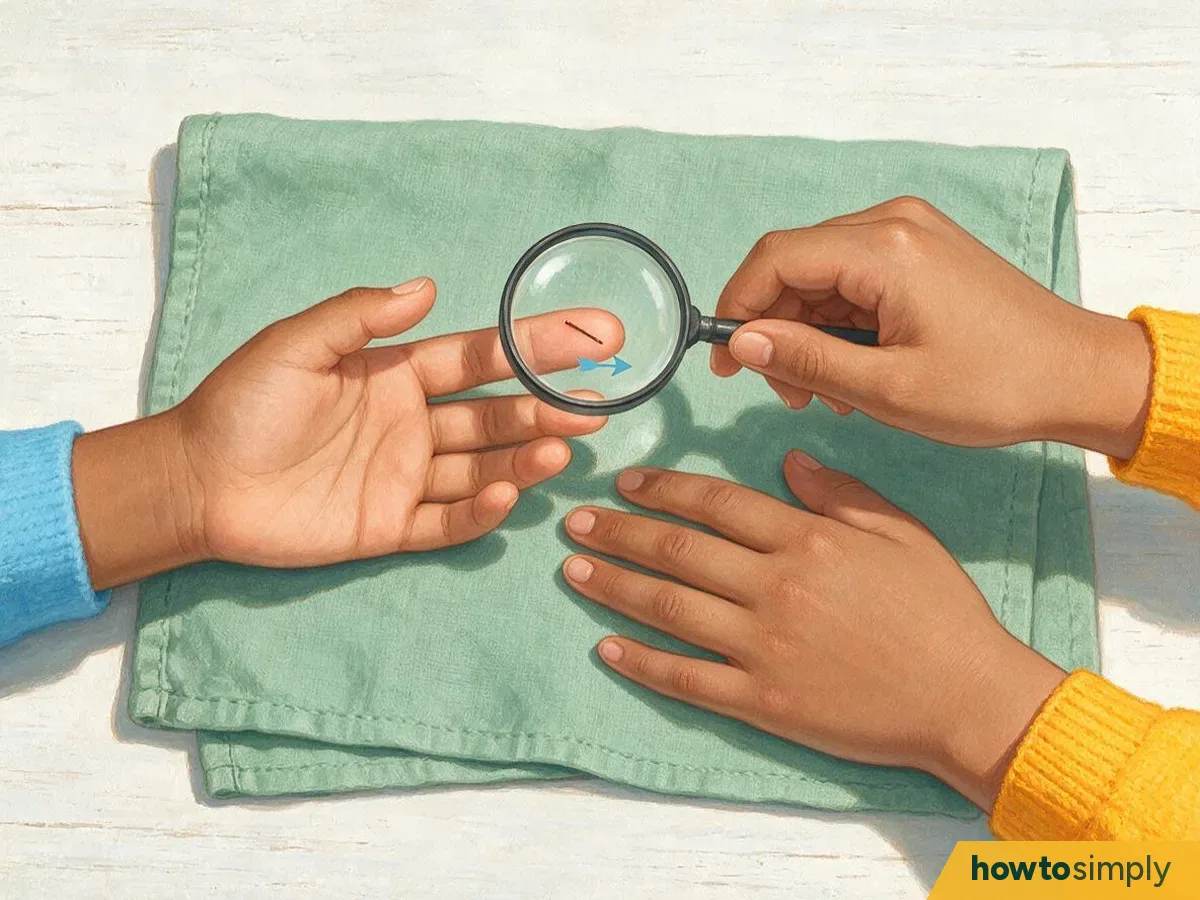
Look closely first.
Illustration
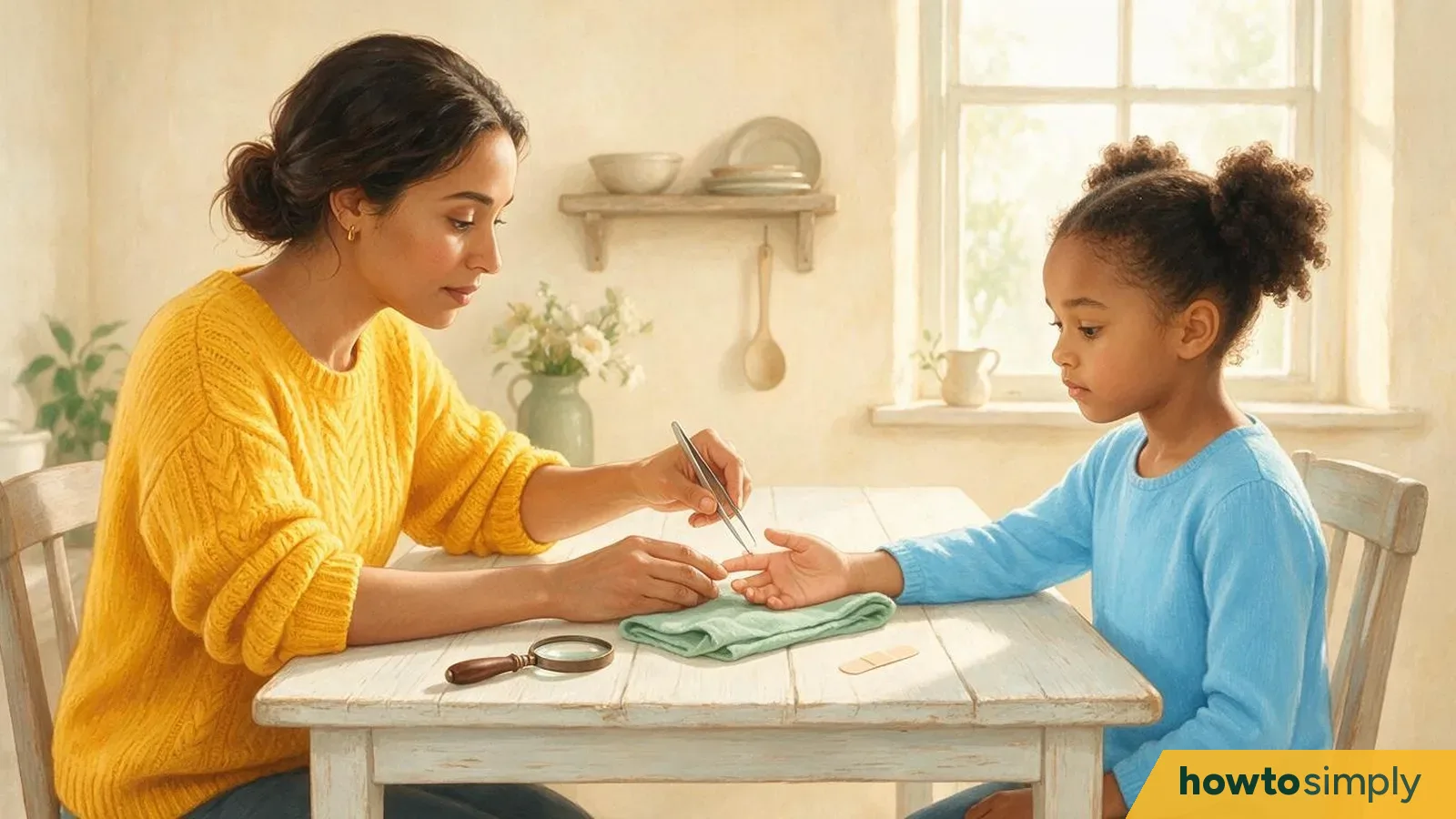
In our story: At the kitchen table, Amira holds a magnifying glass over the pad of Zoya's left index finger, her other hand resting flat on the towel beside Zoya's. The splinter is short and shallow, slanting in from the palm side towards the fingertip, with a tiny end sticking out. It can come out at home.
In good light, check how big the splinter is, which way it went in and whether an end sticks out. A magnifying glass helps with small ones. If it matches anything in Leave it in and get help if, stop here.
Wash your hands and the skin.
Illustration
In our story: At the kitchen sink, Amira and Zoya wash their hands together with soap and warm water, then pat them dry on the green towel.
Use soap and warm water, then pat dry (St John Ambulance, KidsHealth).
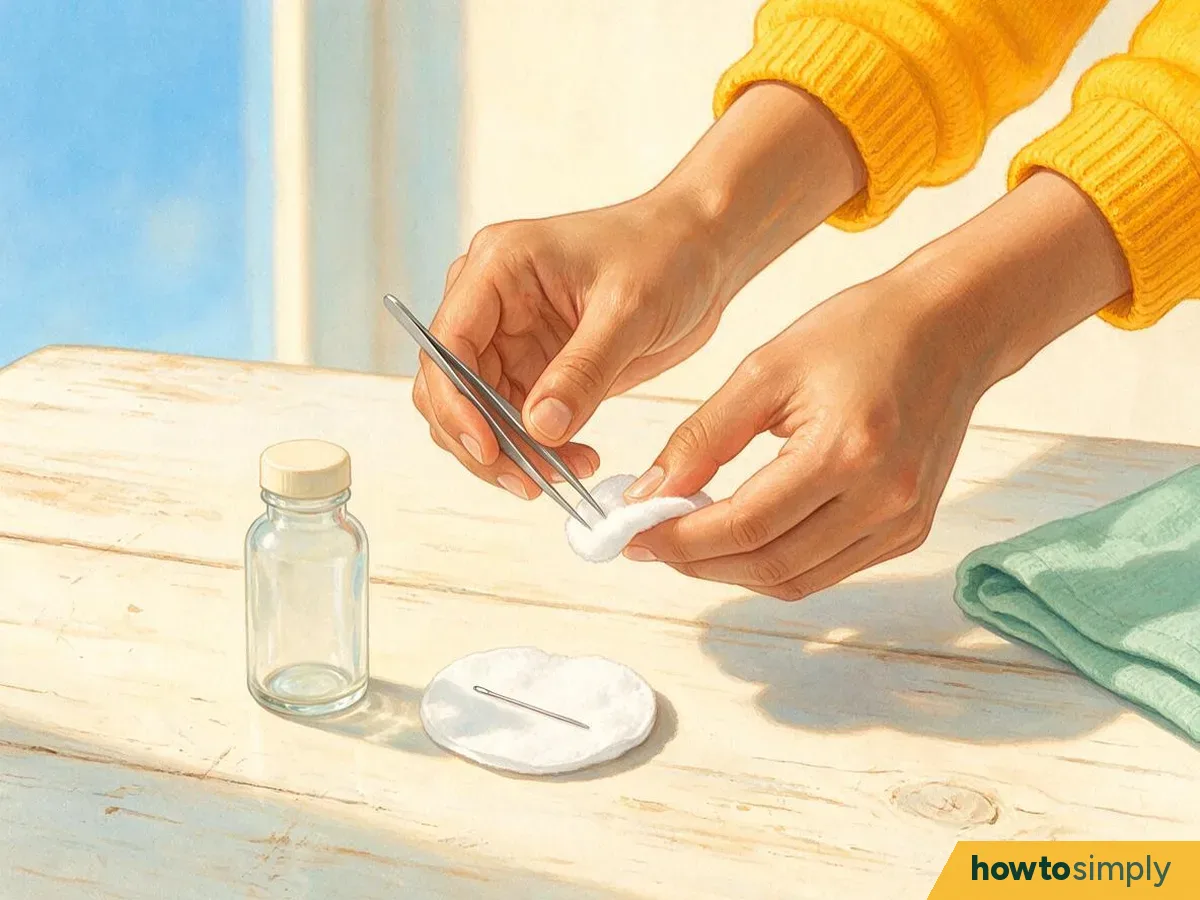
Clean the tools.
Illustration
In our story: Amira wipes the tips of her pointed tweezers with a cotton pad dampened with rubbing alcohol. A needle lies ready on a second pad, just in case.
Wipe the tweezer tips and the needle with rubbing alcohol on a cotton pad (MedlinePlus, SickKids). If you have no alcohol, KidsHealth suggests dipping the tips in boiling water and wiping them with a clean cotton pad. Let them cool.
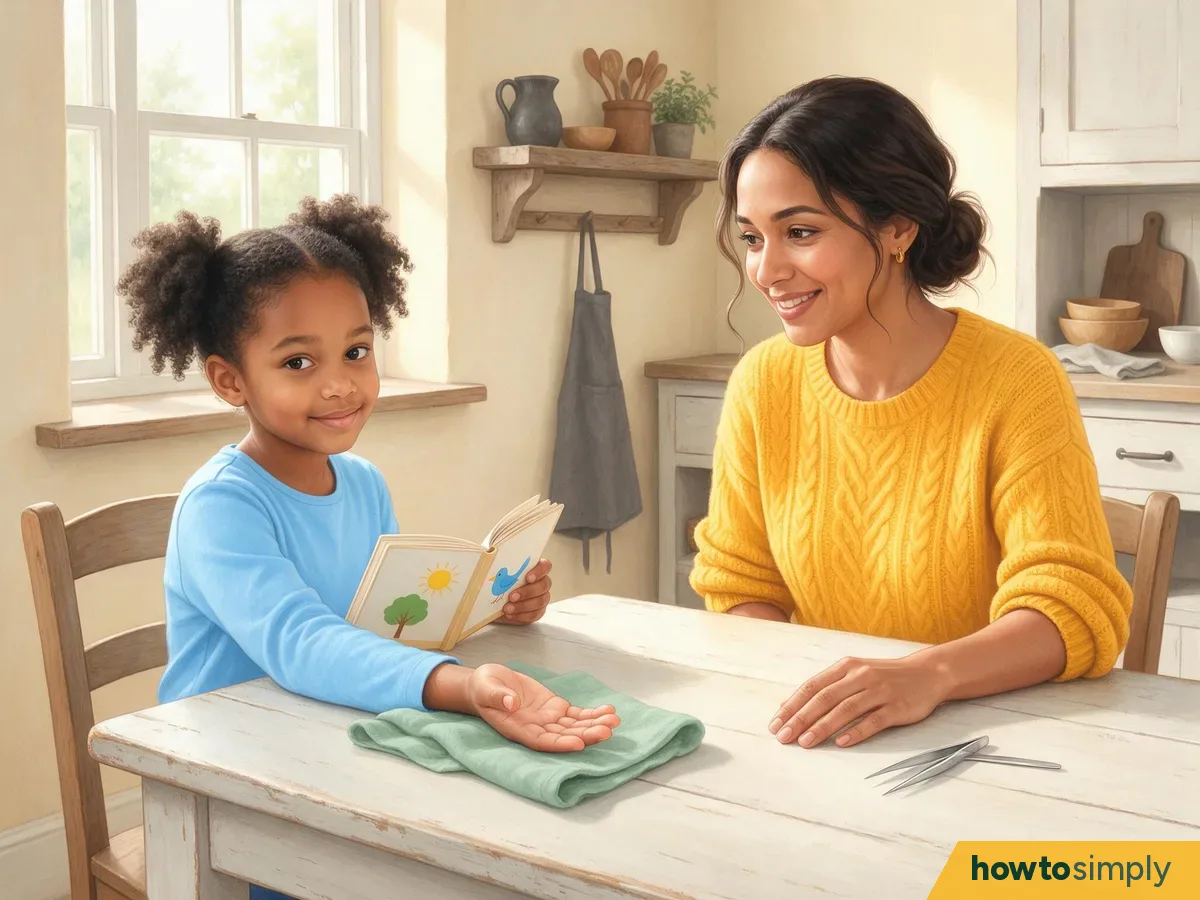
Help a child keep still and calm.
Illustration
In our story: Zoya sits at the table with her left hand resting palm up on a folded tea towel. She holds her picture book open in her other hand while Amira chats to her.
Sit them at a table with the hand resting flat and still. If another adult is home, the child can sit on their lap. Stay calm; children tend to follow your lead. A video, a song or a story helps (KidsHealth, SickKids).
Part 2: Take it out
Don't squeeze or pinch the skin around the splinter first. It can push the splinter deeper or break it into pieces (SickKids).
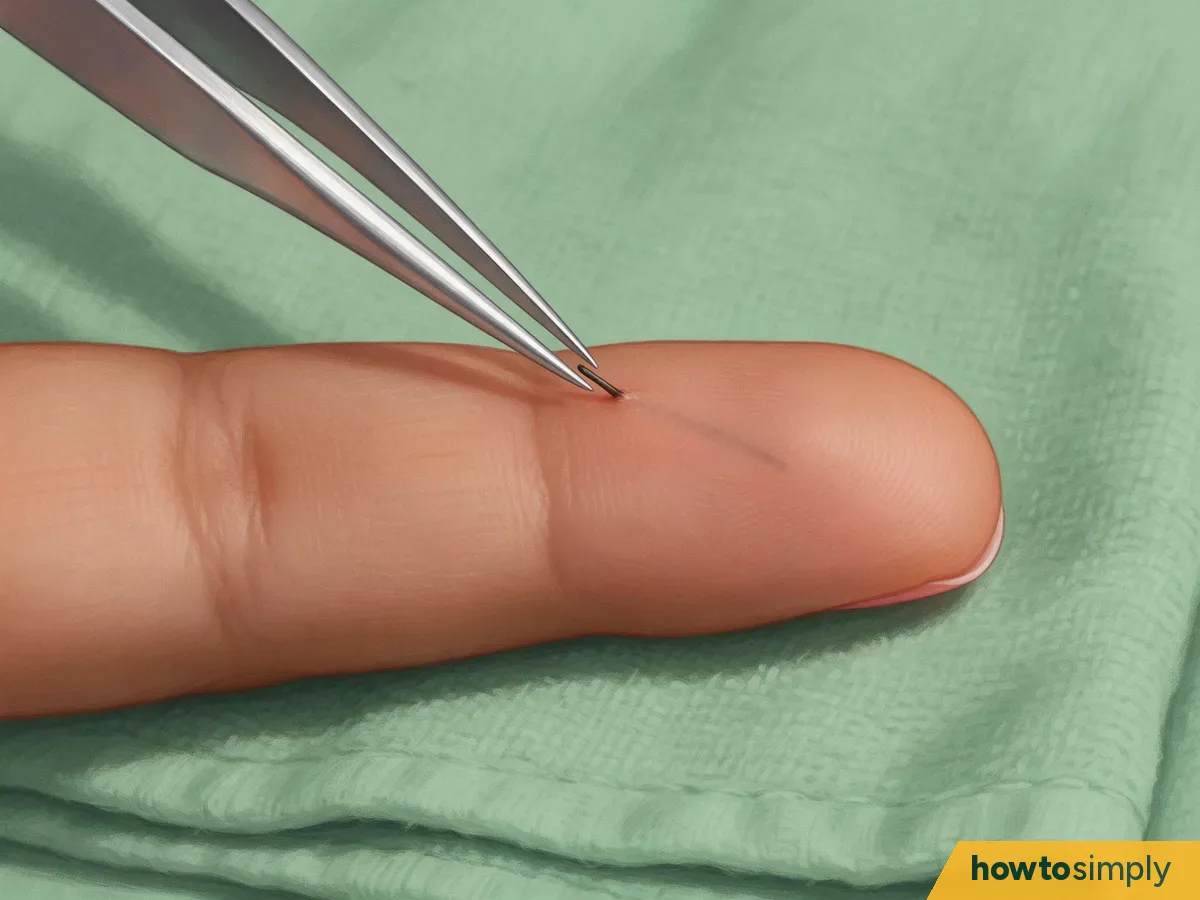
Grip the end close to the skin.
Illustration
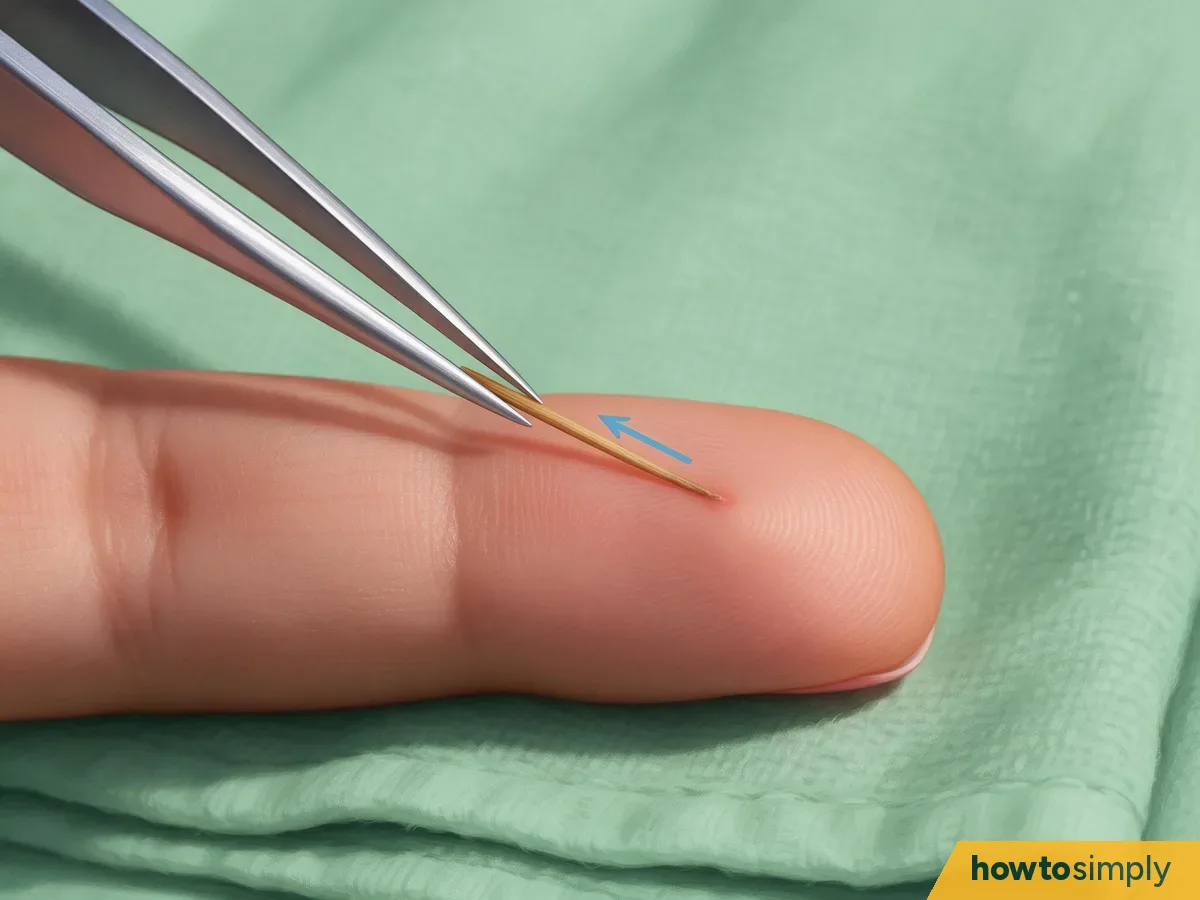
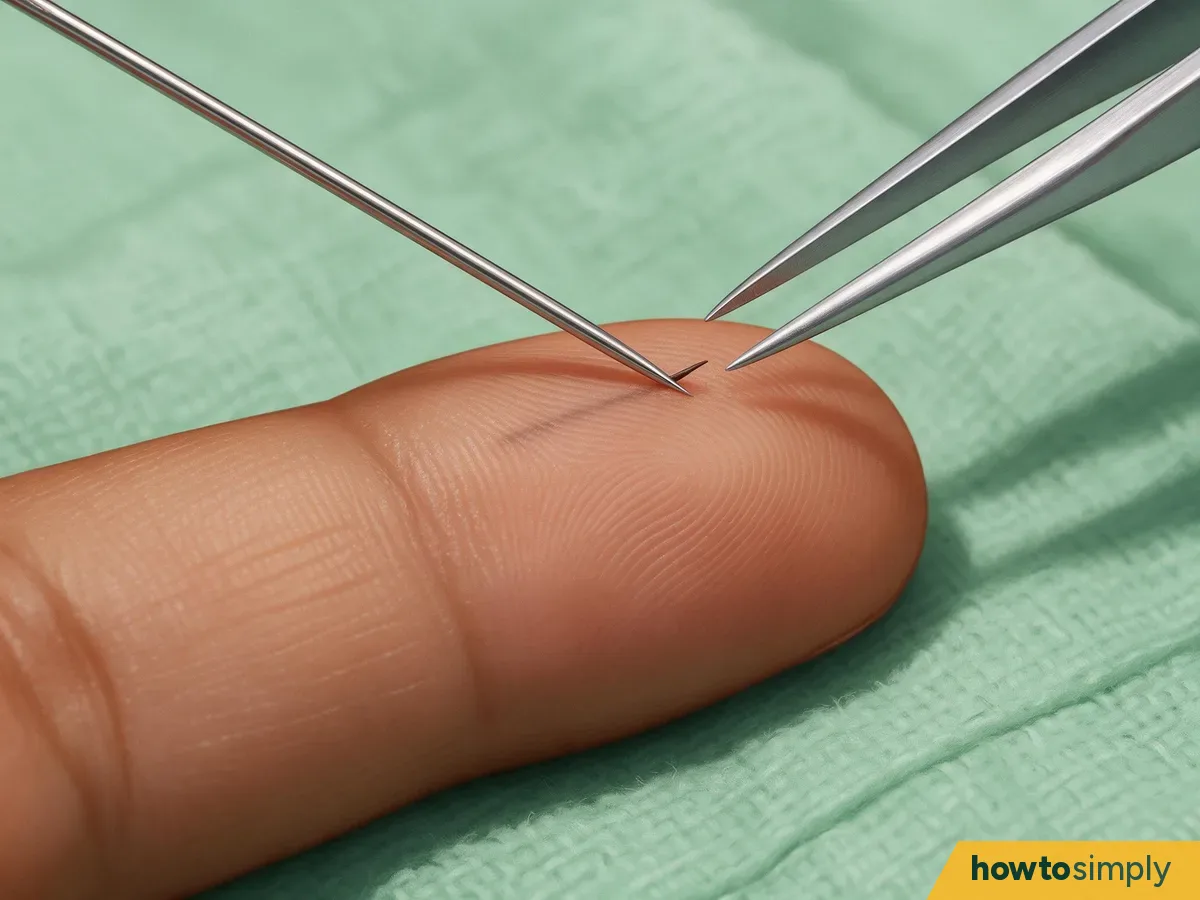
In our story: Amira closes the tweezer tips on the end of the splinter, right where it leaves Zoya's skin.
If an end sticks out, close the tweezers on it as near to the skin as you can, and grip firmly (St John Ambulance).
Pull slowly, along the same line it went in.
Illustration
In our story: The splinter went in slanting towards Zoya's fingertip, so Amira pulls it slowly back the same way, towards her palm, and it slides out whole.
Don't pull straight up if it went in at a slant; follow its angle (St John Ambulance, SickKids). You should feel it slide out in one piece.
Check it is all out.
Illustration
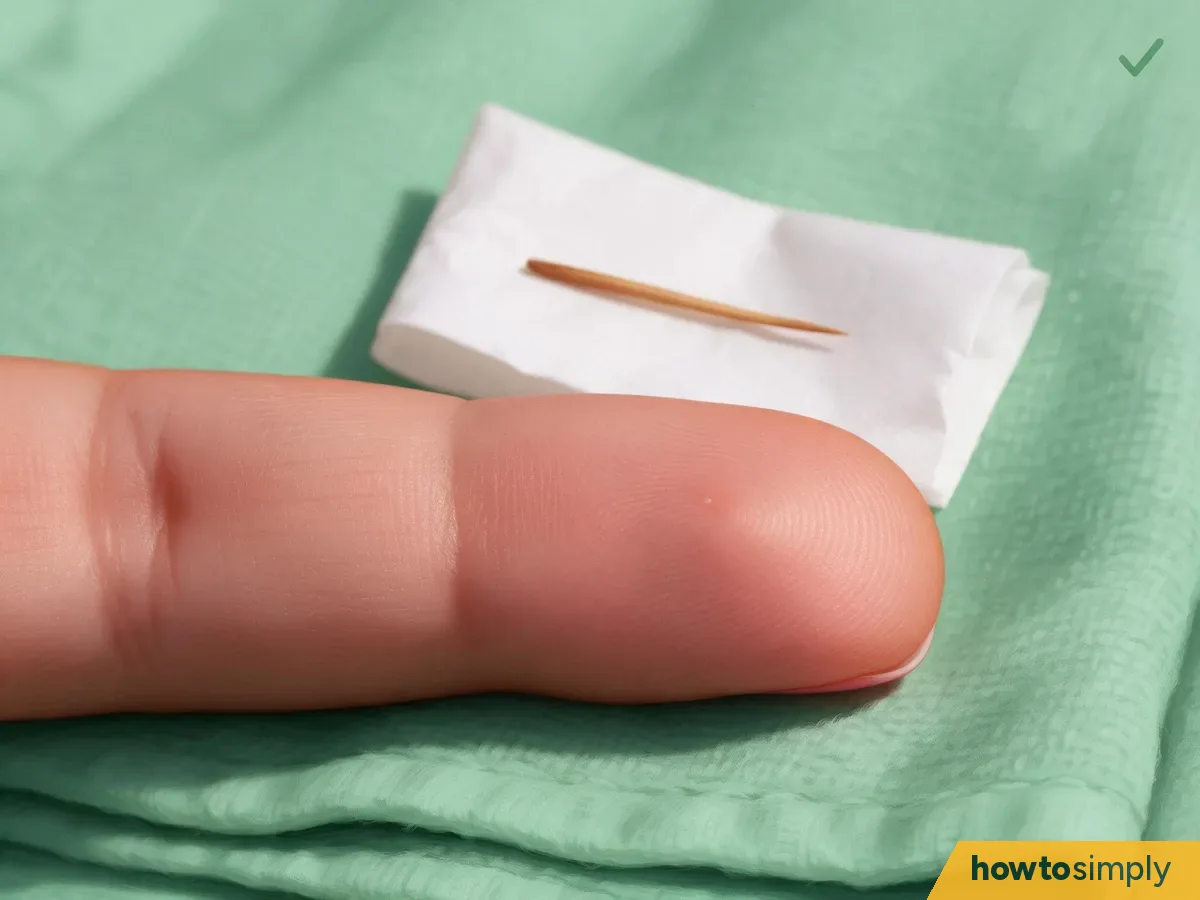
In our story: The whole splinter lies on a white tissue next to Zoya's finger. Amira checks with the magnifier: the skin is clear, with only a tiny pale mark.
The splinter should have a clean, unbroken end. Look at the skin again with the magnifier and run a clean fingertip lightly over the spot: you shouldn't feel anything sharp. If a piece has broken off and stays in, see Leave it in and get help if.
Part 3: Afterwards
Wash it.
Illustration
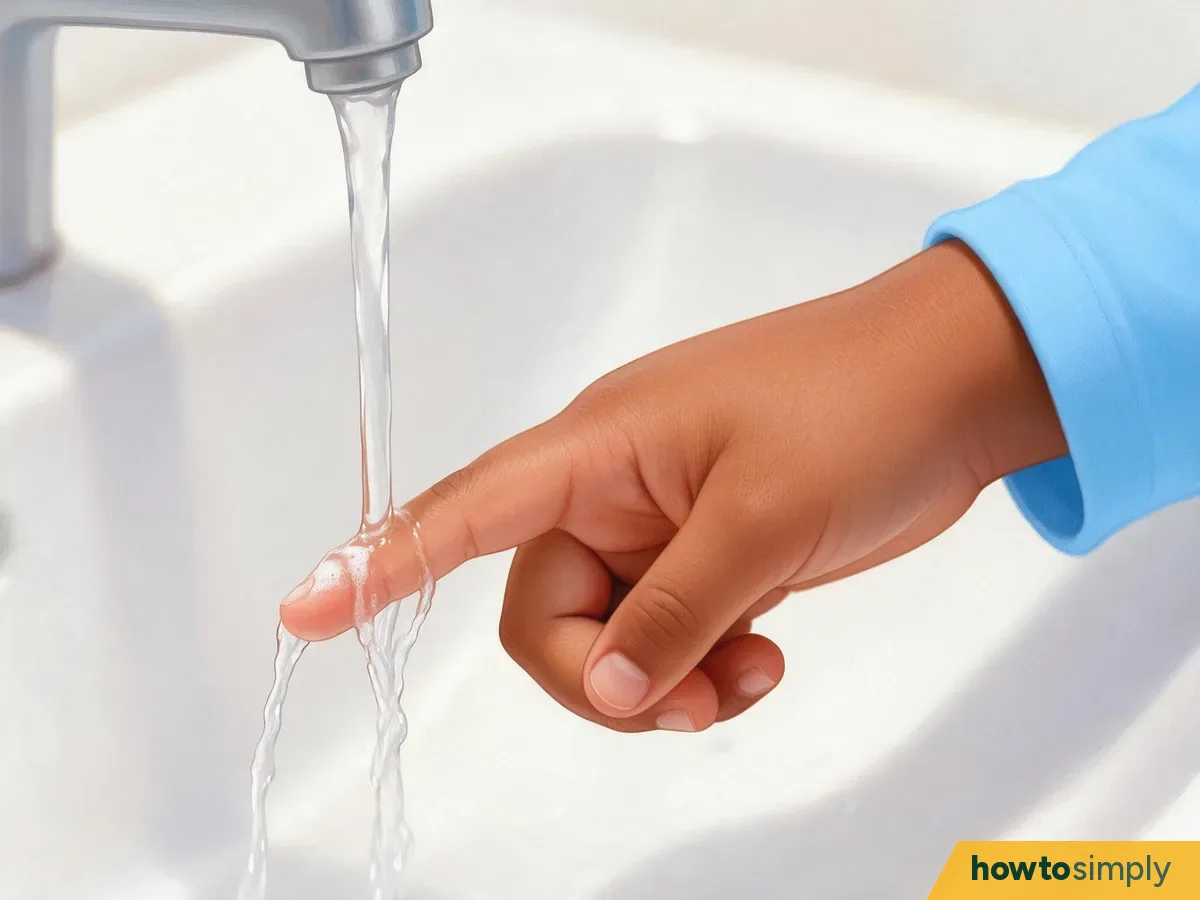
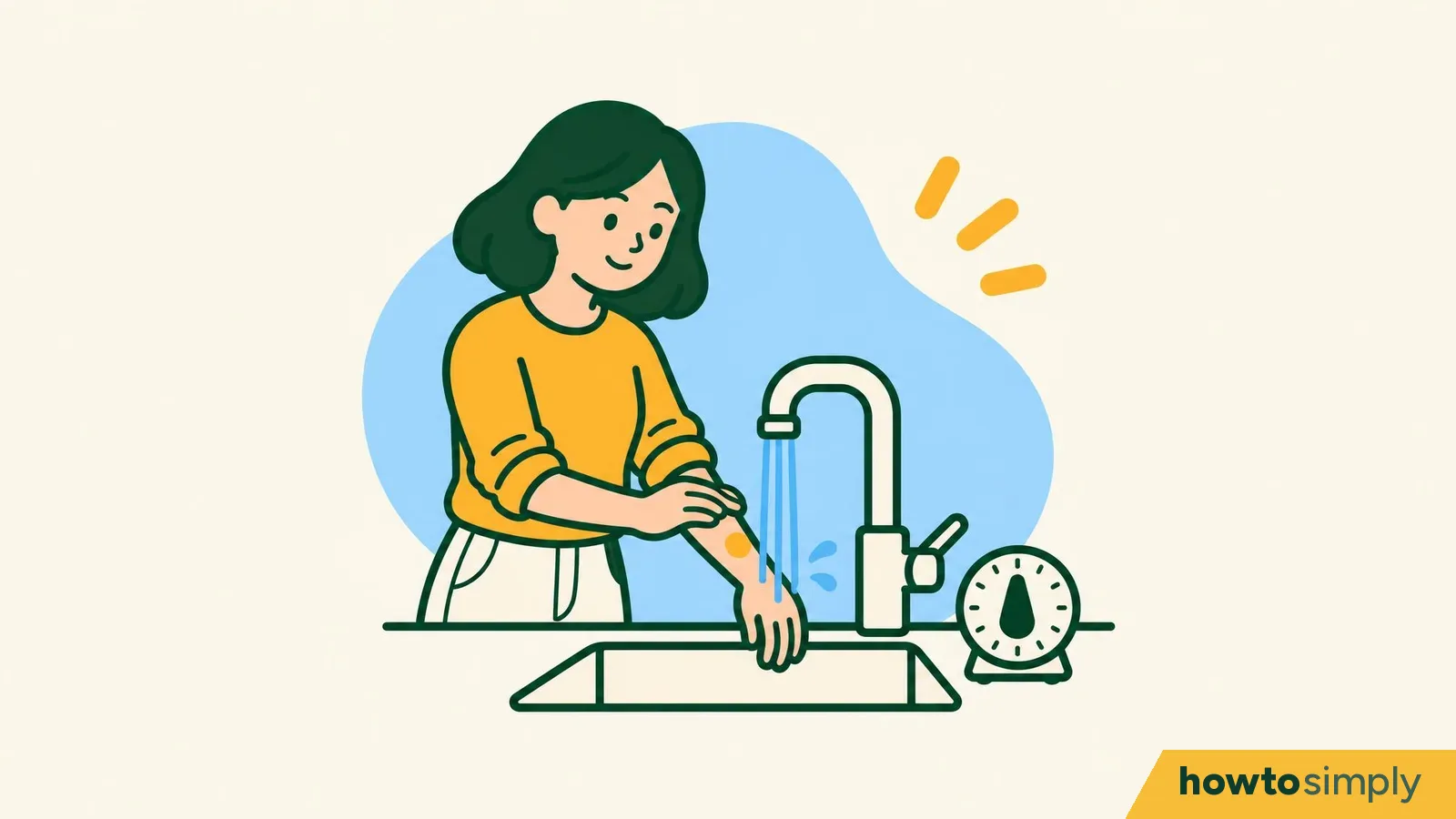
In our story: Amira pumps a little soap onto Zoya's fingertip, and Zoya rinses it under the warm tap. Then Amira pats it dry.
St John Ambulance suggests gently squeezing the wound to let it bleed a little, which helps wash out dirt. Then wash the area with soap and water and pat it dry.
Cover it.
Illustration
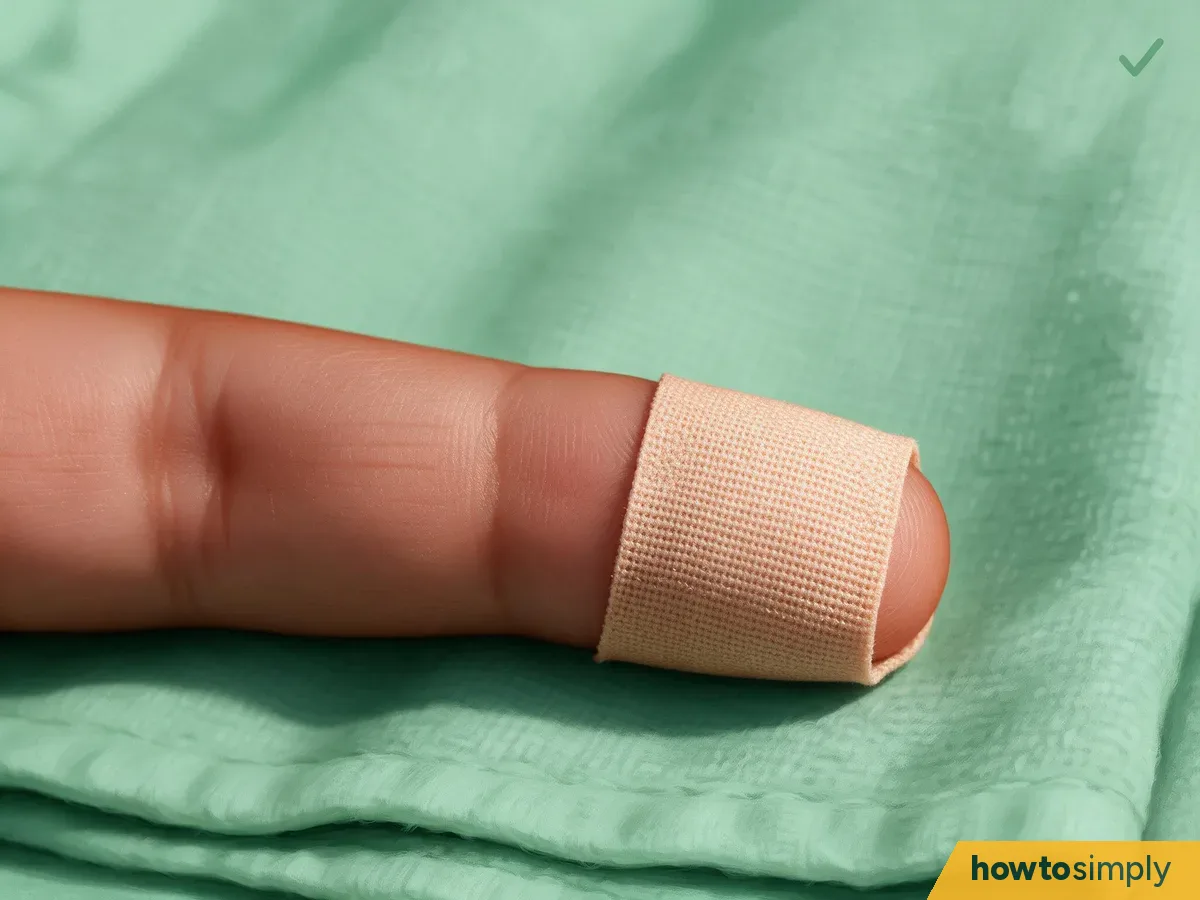
In our story: Amira wraps a small fabric plaster round the tip of Zoya's left index finger, and Zoya is smiling again.
Put on a plaster, especially if the spot will get dirty (St John Ambulance).
Watch it for a few days.
Illustration
In our story: Two days later, by the kitchen window, Amira checks Zoya's finger with the plaster off. The skin is smooth and healed, with no redness or swelling.
Look for redness, swelling, warmth, increasing pain or pus. If you see these, contact your GP practice or call 111 (NHS Healthier Together, KidsHealth).
Very tiny splinters that don't hurt and are near the surface can be left alone. They usually come out on their own in a few days; keep the area clean and watch for infection (KidsHealth).
If yours is different
If the end is buried, lift it with a needle, or get help.
Illustration
In our story: What if Zoya's splinter had no end showing? The drawing shows a clean needle tip lifting the end of a splinter lying just under the surface, with the tweezers ready to grip it.
UK and North American sources disagree on this step (see Needle or no needle?). If you aren't confident, or a child won't keep still, stop and get it removed at a minor injuries unit or your GP practice. If you go ahead: gently break the very top layer of skin over the end with the needle tip, then lift or nudge the end up until you can grip it with the tweezers, and go back to Pull slowly (MedlinePlus, SickKids). It shouldn't bleed or really hurt. If it does, stop and get help.
For lots of tiny spines, use tape.
Illustration
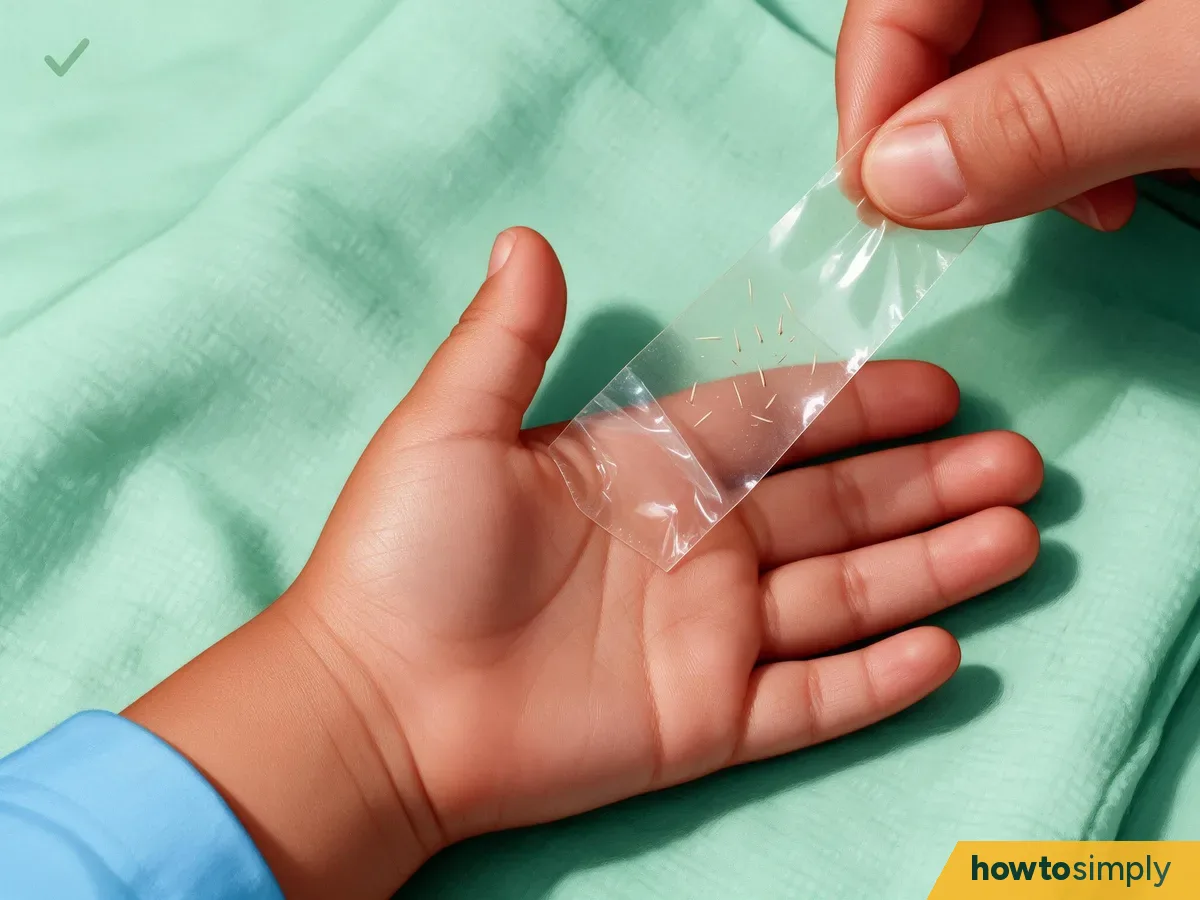
In our story: What if it had been tiny cactus spines? Amira would press a strip of clear packing tape on the spot and peel it off, taking the spines with it.
Cactus spines, nettle hairs and fibreglass are often too small for tweezers. The American Academy of Pediatrics suggests pressing packing tape or duct tape onto the skin and peeling it off. Any bits left usually work their way out.
If it's deep, near the eye, under a nail or won't come out, get help.
Illustration
In our story: What if it had been deep? Amira would take Zoya to a minor injuries unit, where a nurse would look at her finger.
MedlinePlus (US National Library of Medicine) and SickKids describe using a cleaned needle to break the top layer of skin and lift a buried end.
St John Ambulance's splinter page only describes tweezers and says a deep splinter should be left in place and medical help sought.
Our advice for UK readers: use tweezers when an end is showing. Only use a needle for an end you can clearly see lying just under the surface, with clean tools, and stop at once if it hurts or bleeds.
How to tell it went well
The splinter came out in one piece with a clean end.
You can't see or feel anything sharp in the skin.
Over the next few days the spot stays clean, with no redness, swelling or pus.
If something goes wrong
What happens
Likely cause
What to do
The splinter snaps
Pulled too fast or at the wrong angle, or the skin was squeezed
Stop. If an end still shows, try again gently; if not, see a doctor or nurse (SickKids)
The tweezers keep slipping
The tips don't meet, or the skin is wet
Use pointed tweezers whose tips close exactly; dry the skin
You can't see the end
It's deeper than it looks
Stop after 10 to 15 minutes and get help (SickKids)
Don't dig. Get medical help for glass stuck in a wound (St John Ambulance); for a large piece, go to A&E or call 999 (NHS Healthier Together)
If you'd rather not take it out
For a small, shallow splinter that doesn't hurt, you can wash the area, cover it and leave it. It often works its way out within a few days (KidsHealth). Keep it clean and dry and check it every day for redness or swelling. This is a good choice for a child who won't keep still.
No. Even a needle is debated: St John Ambulance's splinter advice only describes tweezers and says a deep splinter should be left in place for medical help. Cutting into the skin is a job for a doctor or nurse.
Should I put antiseptic cream on it?
Washing with soap and water is the main step. The American Academy of Pediatrics suggests an antibiotic ointment once after removal; UK first aid advice only says clean and cover. If you want a cream, ask a pharmacist and follow the label.
Do I need a tetanus jab for a splinter?
Usually not for a clean, small splinter if you are fully vaccinated. If it came from soil or a garden, dirt is still in the wound after cleaning, or you are not sure about your vaccines, ask your GP practice for an urgent appointment or call 111 (NHS).
What about a splinter under a nail?
If you can see and grip the end, try tweezers. If you cannot reach it, do not dig under the nail. See your GP practice or a minor injuries unit.
Should I soak it first?
Sources disagree. SickKids suggests a few minutes in warm water to soften the skin; the American Academy of Pediatrics says not to soak a wood splinter, because it can swell. If the end is easy to grip, skip soaking.
Did this solve the problem?
What needs work?
What did you think?
Reaction counts are loading.
Spotted a mistake? If a step is unclear or a picture is inaccurate, tell us the step number and what needs correcting. Email us about this page or use the contact form. We read every report, and fixes are listed on What changed.
Liked this article?
Follow us for new articles and short how-to videos.
 Illustration