Minor burn or scald? First aid in the first 20 minutes, and what not to put on it
Researched by Abu Bakar Saadat5 min read
Last updated: 15 November 2026References
 Illustration
On this page 9 sections
In short
Hold the burn under cool running water for 20 minutes, take off rings or clothing near it (not anything stuck), then lay cling film loosely over it. No ice (MedlinePlus), butter, creams or sticky plasters, and don't burst blisters (NHS).
At a glance
- Emergency
- Large, deep, face, genitals, chemical or electrical burns
- Advice from
- NHS and MedlinePlus (US National Library of Medicine), read 27 October 2026
- Checked
- November 2026
A burn stings and is a real shock, so we'll keep this quick and clear. Follow the steps in order, and read the rest while the cool water does its work.
Step by step
Take off rings, watches and clothing near the burn
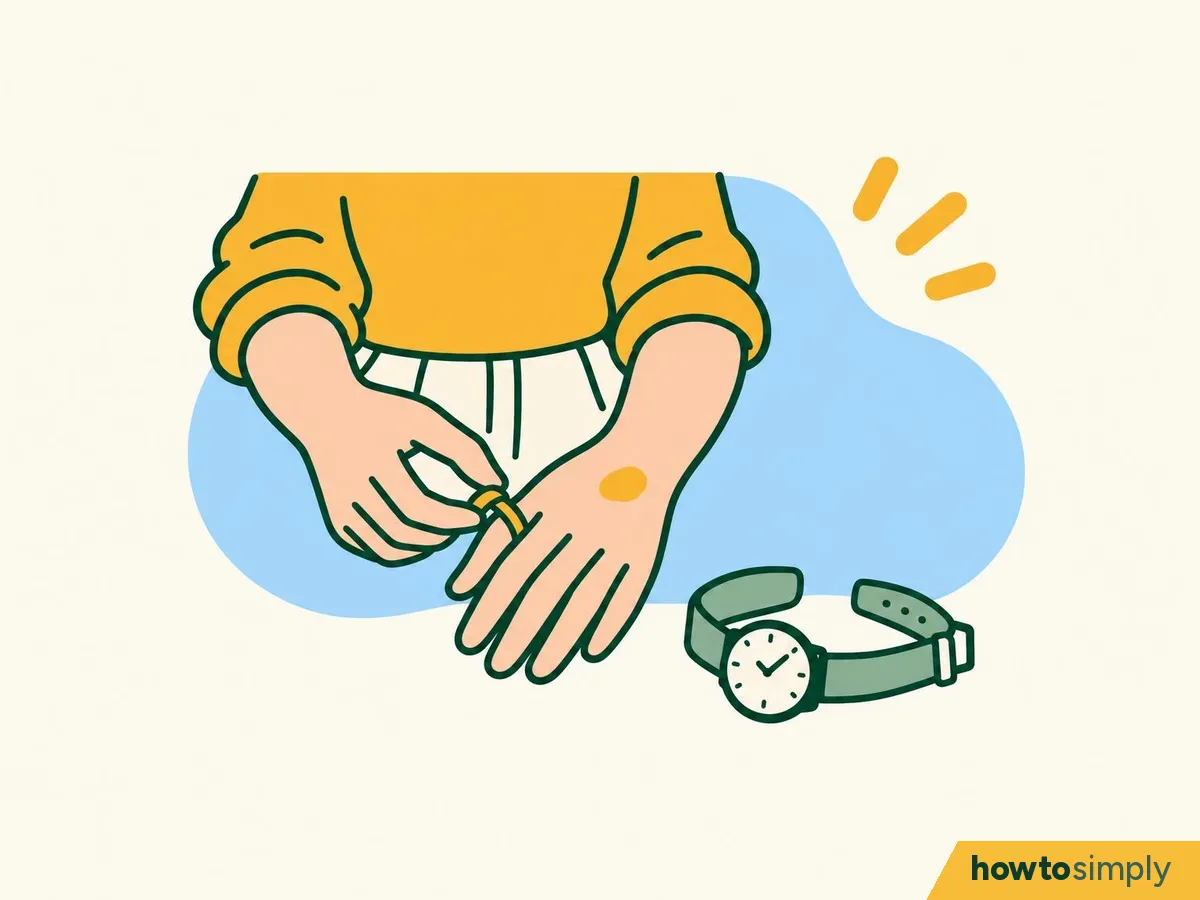
Illustration Remove anything near the burn, but leave anything that's stuck to the skin.
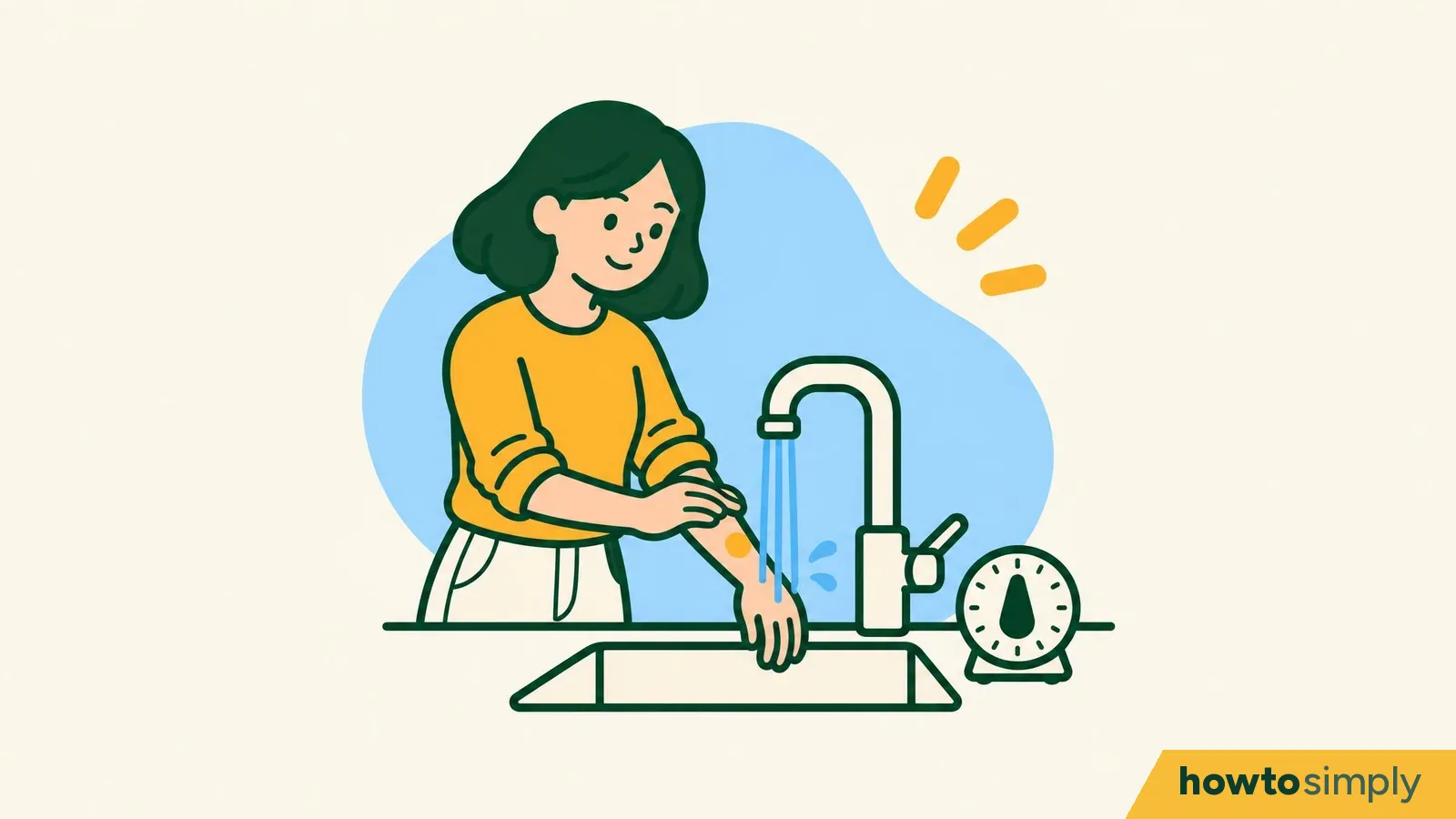
Run cool water over it for 20 minutes
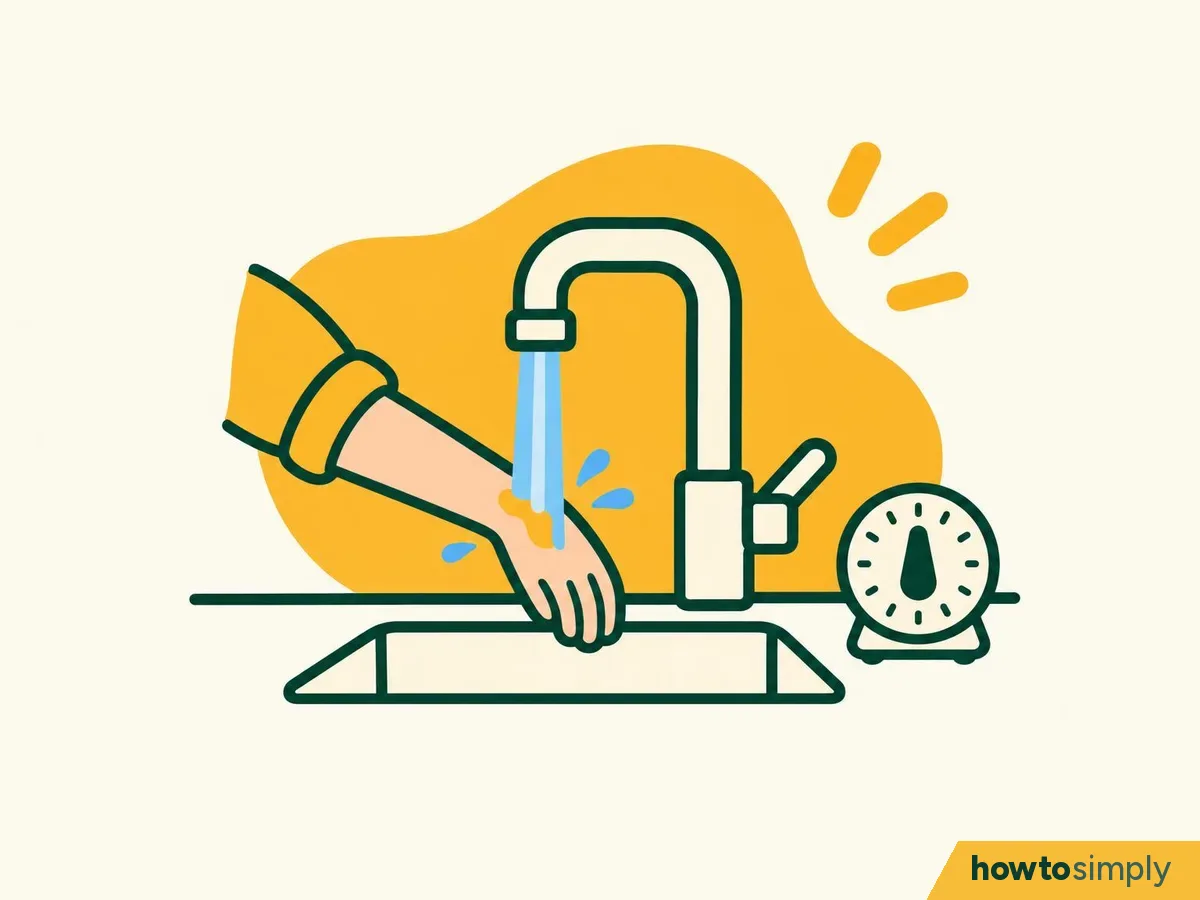
Illustration Start within 3 hours of the burn. No tap nearby? No tap nearby? A wet towel or some cool bottled water works too. Use cool water, not ice water.
Keep the person warm while you cool the burn. Put a blanket or layers of clothing over the rest of the body, but not on the burn itself. Cooling a large burn can make body temperature drop too low (hypothermia), especially in young children and older people.
Lay cling film over it
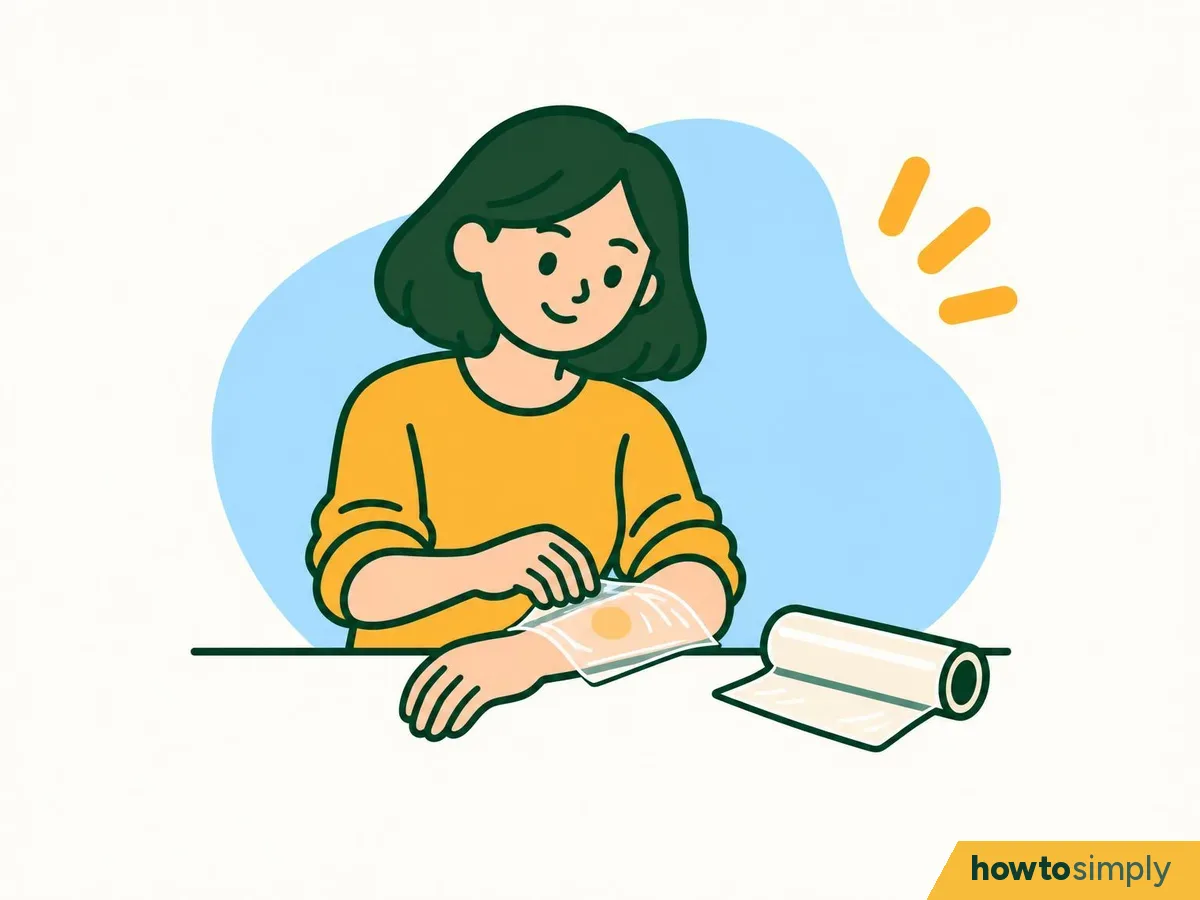
Illustration Lay it over the burn; don't wrap it around the arm or leg.
For pain, ask a pharmacist
The NHS says painkillers such as paracetamol or ibuprofen can help. A pharmacist can advise on what to use if the skin gets dry or itchy as it heals.
What not to put on a burn
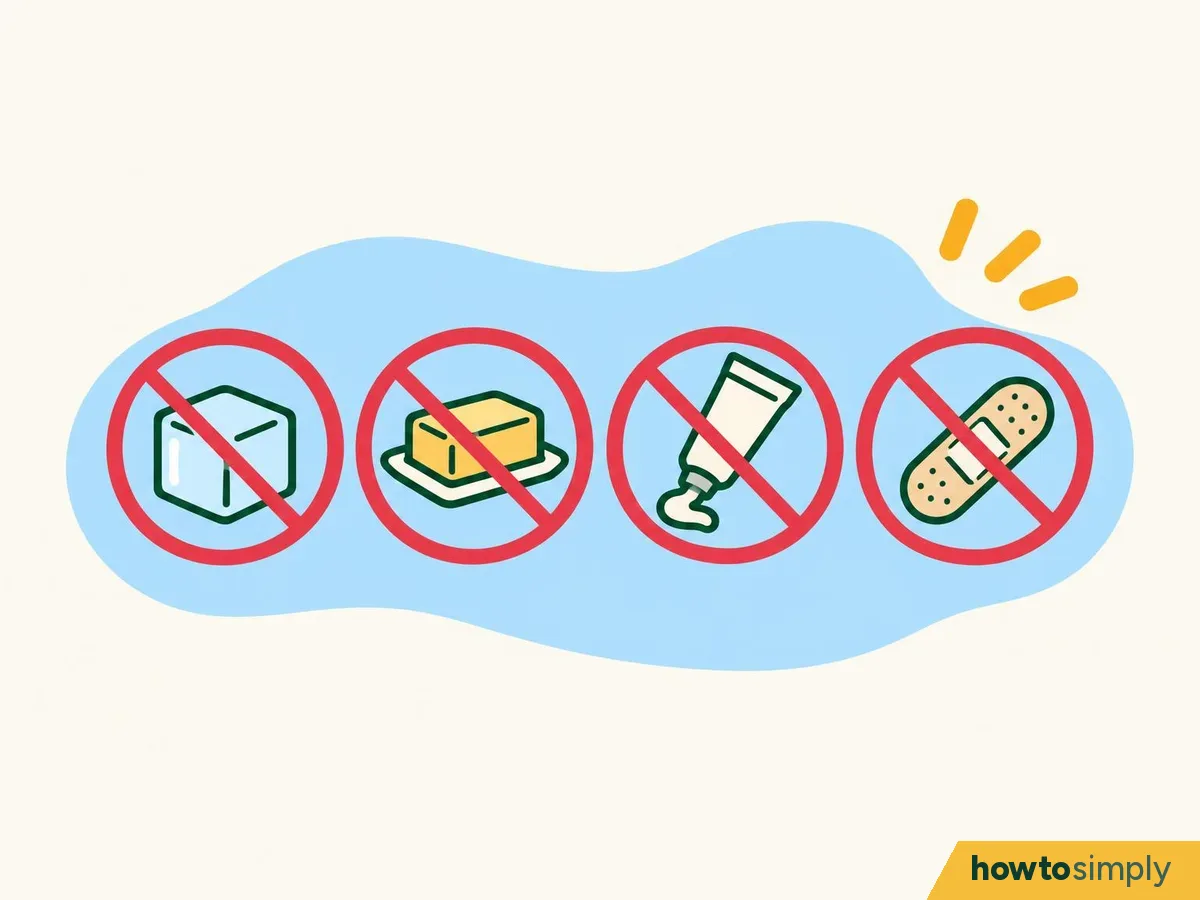
| Don't | Source |
|---|---|
| Creams, oils or butter | NHS |
| Ice or ice water | MedlinePlus |
| Plasters or sticky dressings | NHS |
| Bursting blisters | NHS, MedlinePlus |
Get help
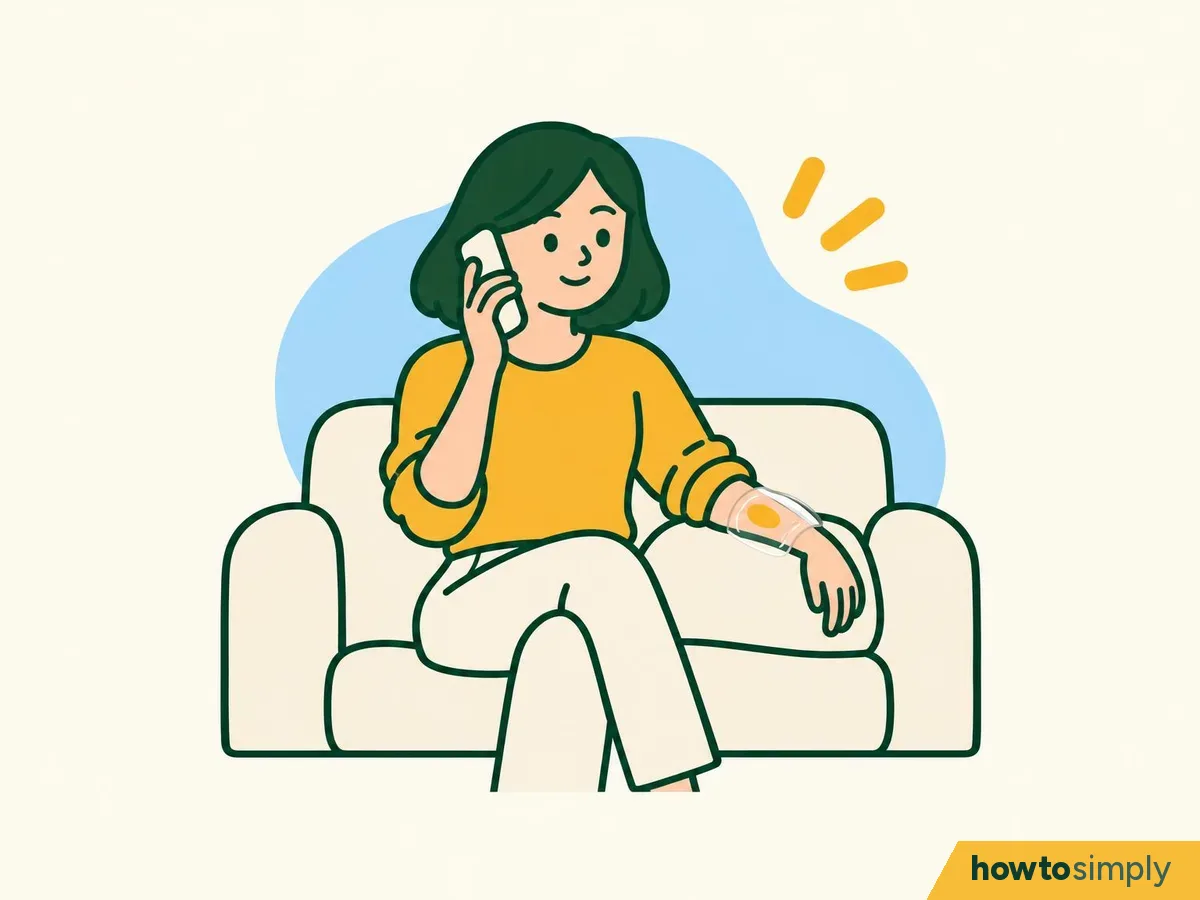
- Call an ambulance (999 in the UK, 911 in the US, or your local emergency number) or go to A&E if the burn is very large or deep, is on the face, genitals or bottom, or was caused by a chemical or electricity. Don't drive yourself (NHS). MedlinePlus also lists a burn as big as your palm or bigger, signs of shock, and having breathed in smoke.
- Not sure what to do, or it's a child under 5: in the UK, call NHS 111.
- Still painful after 48 hours, or signs of infection: contact your doctor (MedlinePlus).
Is it a minor burn?
MedlinePlus counts these as minor burns: first-degree burns anywhere on the body, and second-degree (blistering) burns less than 2 to 3 inches (5 to 7.5 cm) wide. Anything bigger or deeper needs medical help (see above).
This article covers small, minor burns and scalds only. It doesn't cover large, deep, chemical or electrical burns (see above), sunburn or burns in babies. For a child under 5, call NHS 111 for advice (NHS).
Pain is not a guide to how bad it is
MedlinePlus says the amount of pain tells you nothing about how serious a burn is, and the worst burns can be painless. Skin that looks white or blackened can mean a deep (full-thickness) burn, and the skin may be numb (MedlinePlus). Go to A&E for burns of any size with white or charred skin.
NHS 111 Wales also says to get urgent medical help for a burn in a child under 10, a person with a heart, lung or liver condition or diabetes, or someone with a weakened immune system.
How long it takes to heal
The NHS says small burns and scalds usually take about 2 weeks to get better. Burns that only affect the top layer of skin, red and sore with no blisters, usually heal in about a week without scarring. Burns that go a little deeper, pale pink and painful and sometimes with small blisters, normally heal in around 14 days with minimal scarring (NHS 111 Wales).
If the burn has blistered, NHS 111 Wales says to get medical attention for it, even a small one. Don't burst the blister.
- Keep it clean and put no creams or greasy products on it while it heals (NHS 111 Wales).
- Keep the healed skin out of direct sun: it is most sensitive in the first year. NHS 111 Wales advises covering it with cotton clothing and using total sun block (such as SPF 50) on it. It can go back in the sun around 3 years after the injury, still with high-factor sun cream (SPF 25 or above) and out of the midday sun.
Get medical advice if the wound becomes more painful or smells, you have a temperature of 38°C or higher, the dressing gets soaked through, or it still hasn't healed after 2 weeks (NHS 111 Wales).
Signs of infection. Contact a doctor straight away if you notice pus or fluid coming from the burn, a fever, pain that gets worse, red streaks spreading from the burn, or swollen glands. MedlinePlus also says to make sure your tetanus vaccination is up to date.
For next time: scalds and young children
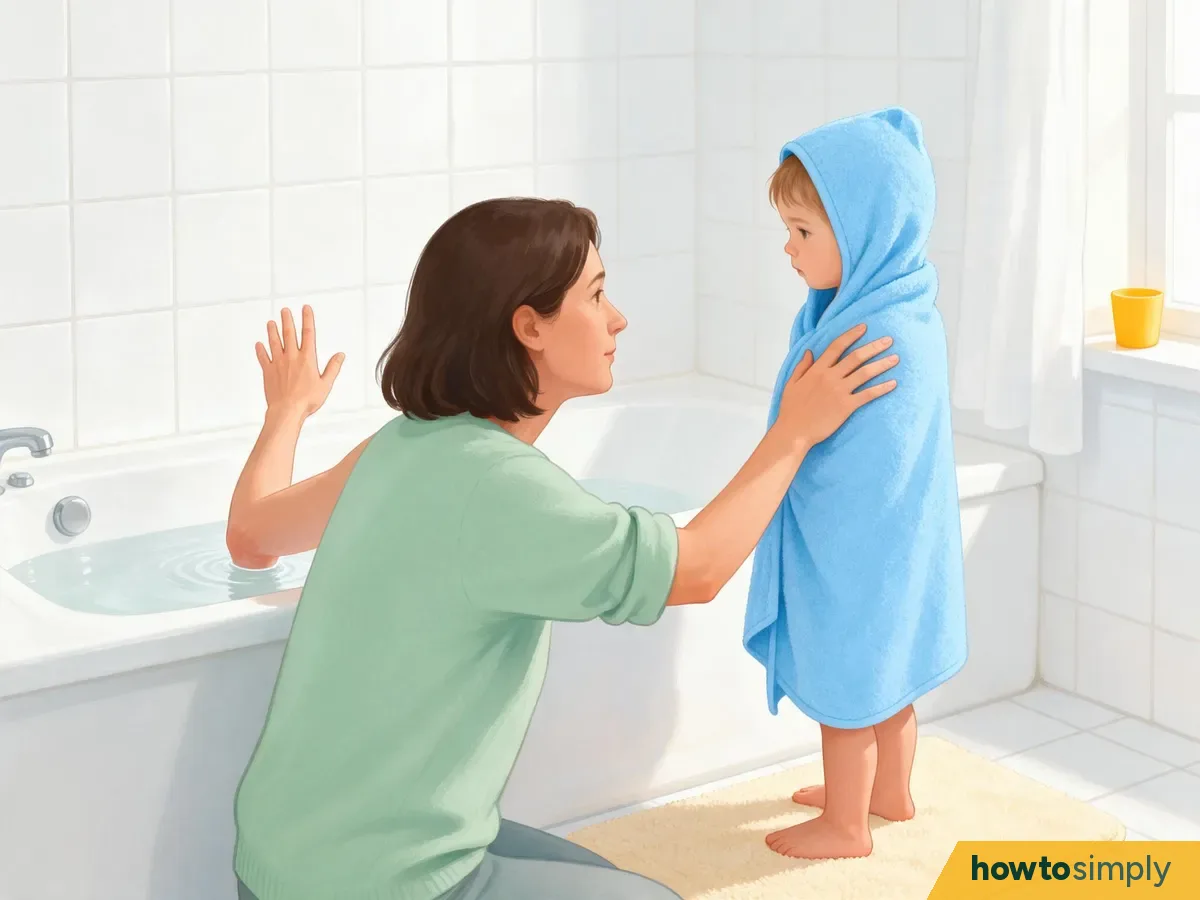
NHS 111 Wales suggests these ways to protect young children:
- Run the cold water first, then add hot, and test the bath with your elbow. Never leave a child alone in the bath.
- Keep hot drinks out of reach: they can still scald 20 minutes after being made. Don't let children drink hot drinks through a straw.
- Use a kettle with a short cord, and cook on the back rings.
- Use a safety gate to keep toddlers out of the kitchen.
- Put irons and hair straighteners out of reach while they cool down.
MedlinePlus adds:
- Point pan handles to the back of the hob so children can't reach them.
- Keep children away from the hob, irons and oven doors.
- Set your water heater to 48.8°C (120°F) or less.
- Fit smoke alarms and check them regularly. See our guide to a smoke alarm that keeps chirping.
Questions readers ask
Why cool a burn for 20 minutes?
That is the NHS advice: hold it under cool running water for 20 minutes, starting within 3 hours. MedlinePlus gives 5 to 30 minutes.
Can I put ice on a burn?
No. MedlinePlus says to use cool water, not ice water, and lists ice among the things not to put on a severe burn.
Should I pop a burn blister?
No. The NHS says not to burst blisters, and MedlinePlus says not to disturb blistered skin. NHS 111 Wales says any burn that causes a blister should get medical attention.
Sources and method
- Researched by
- Abu Bakar Saadat
- Tested by our team
- No. We have no record of anyone on our team trying these steps, so treat them as researched instructions from the sources below.
- Pictures
- 7 illustrations drawn for this article, each marked Illustration (drawings, not photos).
- Sources
- 3 named sources, linked below.
- What this page adds
- A drawing of the things not to put on a burn, crossed out, with a sourced table, plus a check for whether it is a minor burn and a section on scalds and young children.
What to do next
First aid basics for home Step 2 of 8
Did this solve the problem?
Where did you get stuck?
What did you think?
Reaction counts are loading.
Sources
We use primary, official and specialist sources appropriate to the topic.