Blocked with earwax? What is safe to do at home, and what to avoid
Researched by Abu Bakar Saadat5 min read
Last updated: 15 November 2026References
 Illustration
On this page 11 sections
In short
Lying on your side, drip 2 to 3 drops of oil (olive or almond) into the blocked ear, stay there 5 to 10 minutes, and repeat for 3 to 5 days, 3 to 4 times each day (NHS). Never use cotton buds or fingers. If your eardrum has a hole in it, don't use drops.
At a glance
- Drops
- 2 to 3 drops of olive oil or almond oil (NHS)
- Lie on your side
- 5 to 10 minutes, affected ear up
- How often
- For 3 to 5 days in a row, 3 to 4 times each day
- Expect
- Lumps of wax fall out over about 2 weeks
- Advice from
- NHS and MedlinePlus (US National Library of Medicine), read 27 October 2026
- Checked
- November 2026
A blocked ear can cause partial hearing loss, and it is a little worrying when you can't hear properly. Most cases can be treated at home (MedlinePlus), and it mostly asks for a bit of patience. However, if you develop ear pain or fluid coming out of the ear, see a doctor (MedlinePlus).

Before you start
Only do this if your ear feels blocked with wax and you have no known hole in your eardrum. The NHS says drops aren't safe with a perforated eardrum, and a pharmacist can help if wax keeps building up.
Step by step
Get olive or almond oil and a dropper
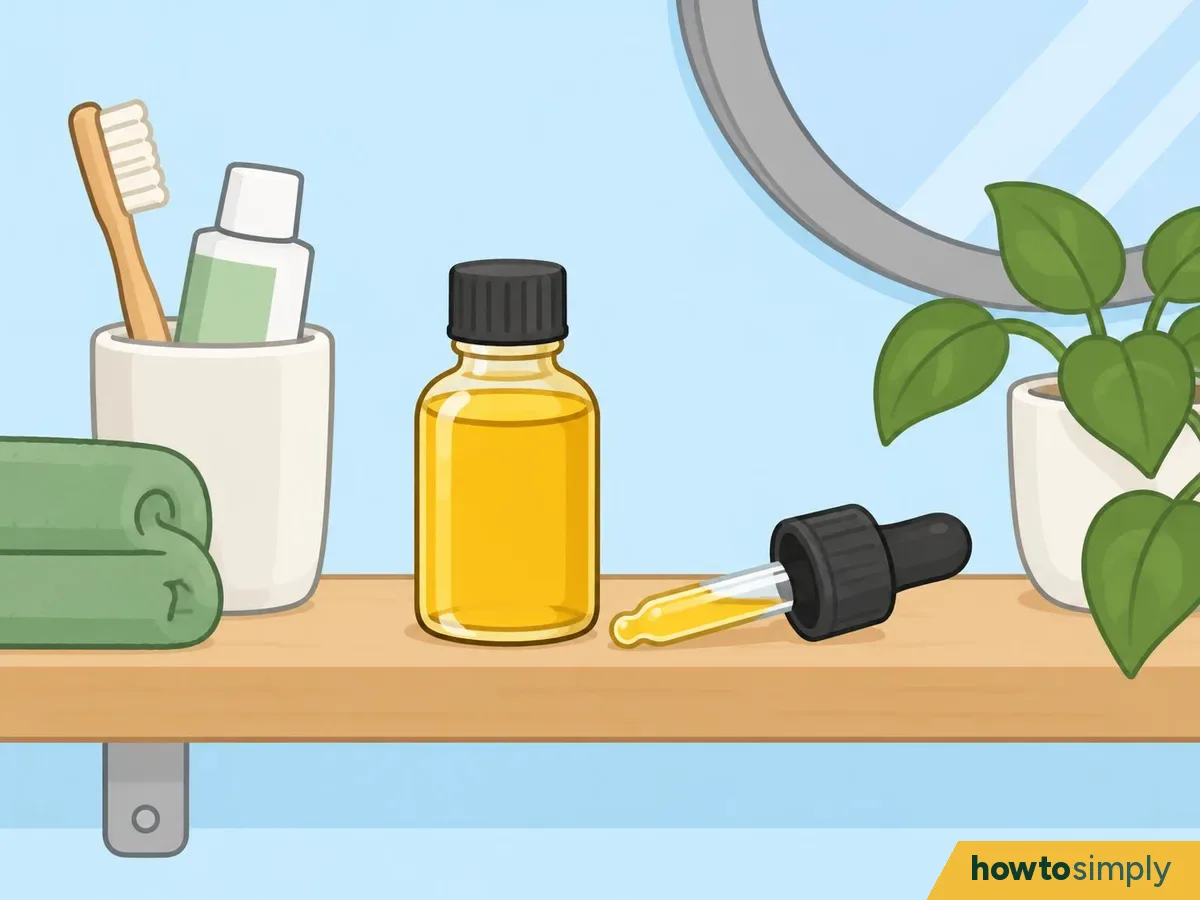
Illustration Plain olive or almond oil is what the NHS suggests. If you're allergic to almonds, skip almond oil (NHS).
Lie on your side, blocked ear up

Illustration Get comfortable first, because you will be lying like this for a little while.
Put in 2 to 3 drops
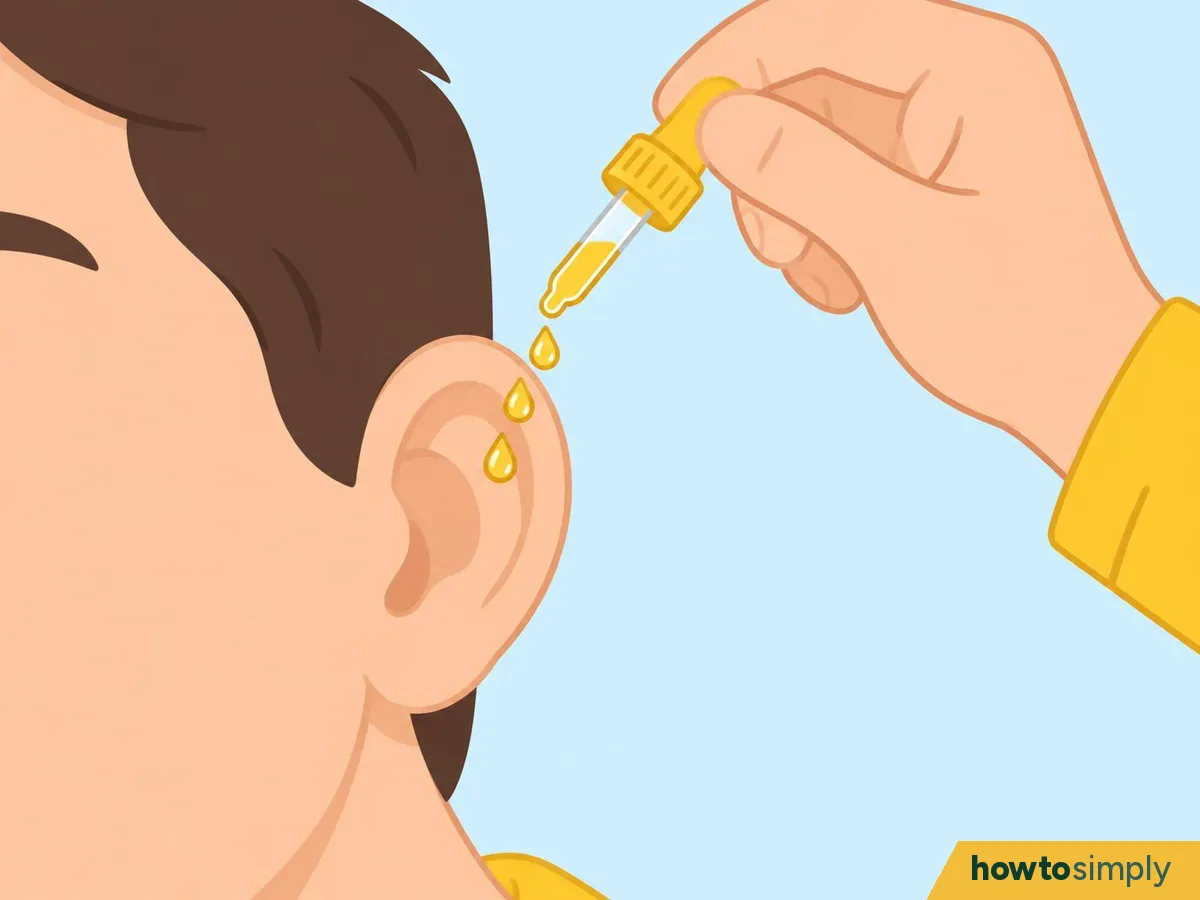
Illustration Olive or almond oil works: 2 to 3 drops in the ear each time (NHS).
Stay lying down for 5 to 10 minutes

Illustration Once the oil is in, don't sit up for 5 to 10 minutes; stay on your side (NHS). It is a good excuse to rest while the oil does the work.
Repeat for 3 to 5 days, then give it time
Keep this up for 3 to 5 days, 3 to 4 times each day. Within about 2 weeks, bits of earwax should come out and your hearing should get better (NHS). Don't worry if nothing seems to change in the first few days; this is a slow method.
What not to do
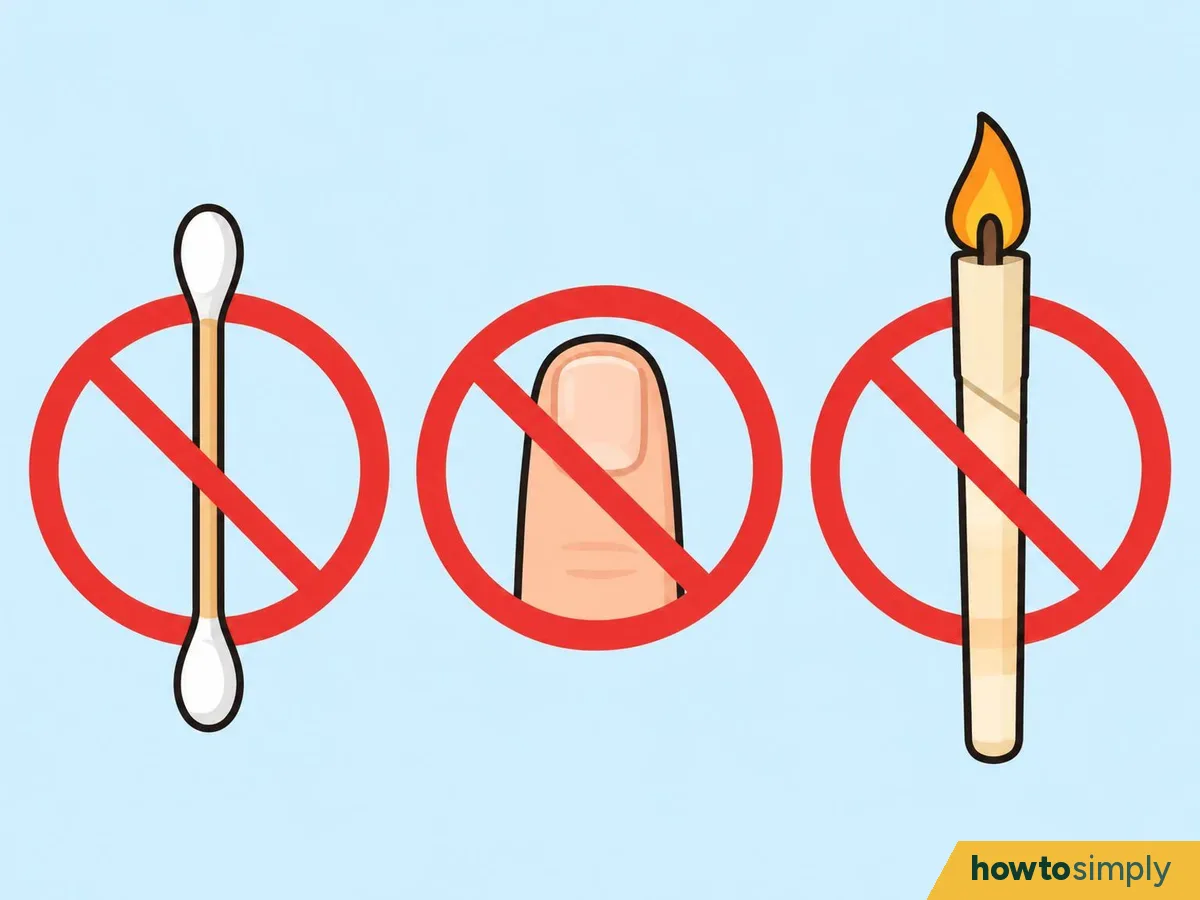
| Don't | Why |
|---|---|
| Cotton buds, fingers or any object in the ear | They push the wax further in and make it worse (NHS). MedlinePlus says a cotton bud should never go inside the ear canal. |
| Ear candles or ear vacuums | No evidence they get rid of earwax (NHS). |
| Oil drops with a hole in your eardrum | The NHS says not to use drops if you have a perforated eardrum. |
Is it earwax? Common signs
The NHS lists these symptoms of earwax build-up:
- hearing loss
- earache, or a feeling that the ear is blocked
- ringing or buzzing in the ear (tinnitus)
- vertigo, which means feeling dizzy and sick
A pharmacist can give advice about earwax build-up and suggest treatments (NHS).
Why some people get it more
Earwax normally falls out on its own (NHS). It protects the ear by trapping dust and germs (MedlinePlus). Some people make more wax than the ear can easily clear, and it may harden and block the canal (MedlinePlus). The NHS says build-up is more likely if you have:
- narrow or damaged ear canals
- a lot of hair in the ear canals
- problems with the skin of your scalp or round your ears
- an inflamed ear canal (otitis externa, which people often call swimmer's ear)
MedlinePlus adds that people who wear hearing aids should have their ear canals checked every 3 to 6 months.
Home ear-washing kits: check first
Another method is to wash the wax out with water, using a syringe you can buy at a store. MedlinePlus says to ask your healthcare provider before doing this yourself. If you do, make the water body temperature, because cooler water can make you briefly but badly dizzy. Don't use a water jet made for cleaning teeth. Don't wash the ear or use softening drops if your eardrum may be damaged, or if you've had ear surgery recently (MedlinePlus).
If a nurse or doctor removes it
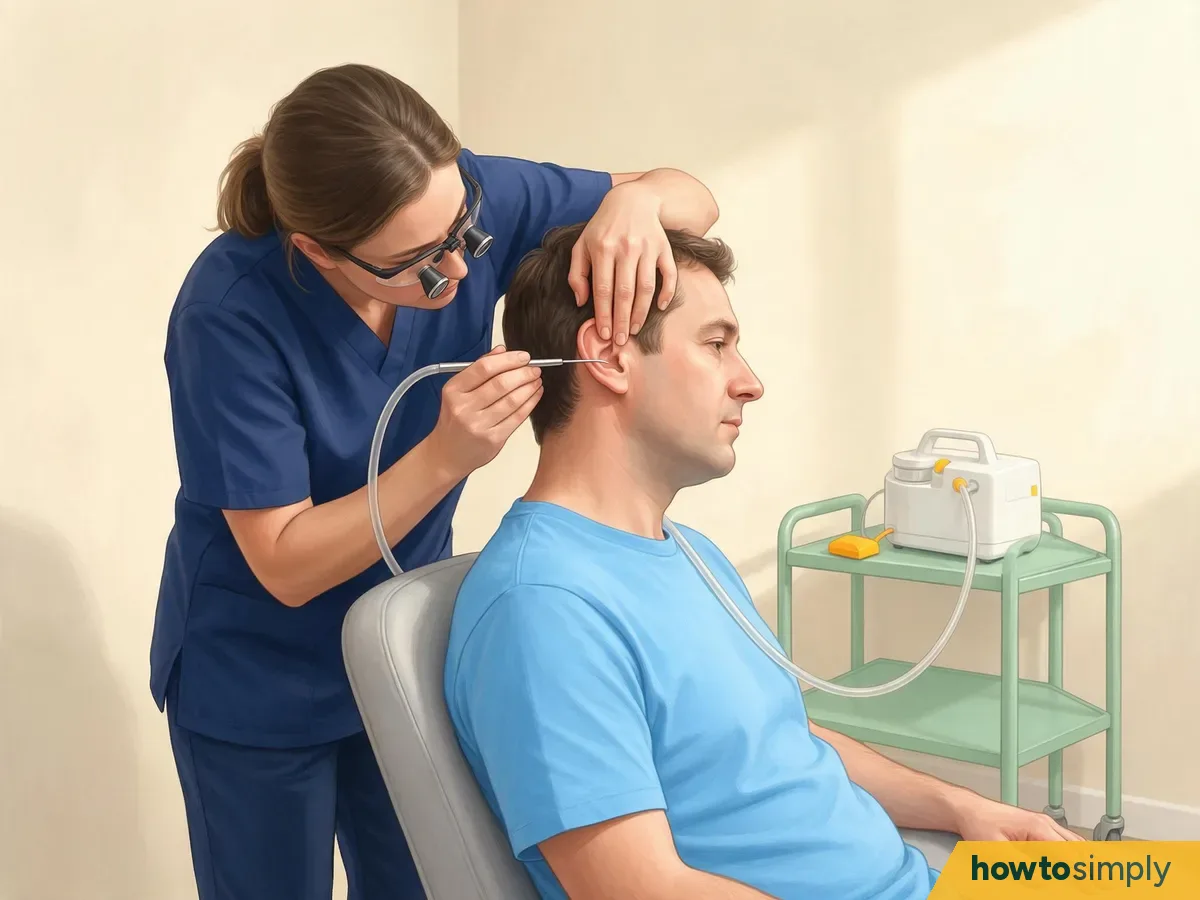
Not all GP surgeries remove earwax. Those that do may flush it out with water (ear irrigation), suck it out (microsuction) or scrape it out with a very small tool. The NHS says these are usually painless. If your surgery doesn't offer it, you may be referred to another local NHS service, or you may have to pay for private treatment (NHS). In the US, a provider may use irrigation, suction or a small tool called a curette (MedlinePlus).
Afterwards
- Hearing: hearing loss from wax is often temporary and usually comes back fully once the wax is out (MedlinePlus).
- It can come back. Earwax can't be fully prevented, but using drops or olive or almond oil regularly can soften it so it falls out on its own (NHS).
- Day to day: you can wrap a fingertip in a cloth or paper tissue and wipe the outer part of the ear canal. Don't clean too often or too hard (MedlinePlus).
Get help if
Asking for help with an ear is never a bother. Go to someone if one of these fits.
- You want advice or treatments for earwax build-up: ask a pharmacist (NHS).
- It hasn't cleared after 5 days, or your ear is so blocked you can't hear anything: see a nurse at your GP surgery. An infection can develop if it doesn't clear (NHS). In the US, see your healthcare provider if wax blocks your ear and you can't remove it (MedlinePlus).
- You have fluid coming out of the ear, ear pain, a fever, or hearing loss that stays after the wax has cleared: see a doctor (MedlinePlus).
This article doesn't cover ear infections, children's ears or hearing aids. Ask a pharmacist or doctor about those.
Questions readers ask
Do I need to clean inside my ears?
Usually not. MedlinePlus says earwax most often moves to the opening of the ear and falls out or is washed away. For the outer part of the ear canal, a cloth or tissue wrapped over your finger is fine.
Do ear candles or ear vacuums work?
The NHS says nothing shows that ear candles or ear vacuums remove earwax.
Can I use almond oil?
The NHS lists olive or almond oil, but says not to use almond oil if you are allergic to almonds.
Sources and method
- Researched by
- Abu Bakar Saadat
- Tested by our team
- No. We have no record of anyone on our team trying these steps, so treat them as researched instructions from the sources below.
- Pictures
- 7 illustrations drawn for this article, each marked Illustration (drawings, not photos).
- Sources
- 3 named sources, linked below.
- What this page adds
- A drawing of holding the dropper just outside the ear, and a what-not-to-do table covering cotton buds, ear candles and drops with a perforated eardrum.
Did this solve the problem?
Where did you get stuck?
What did you think?
Reaction counts are loading.
Sources
We use primary, official and specialist sources appropriate to the topic.