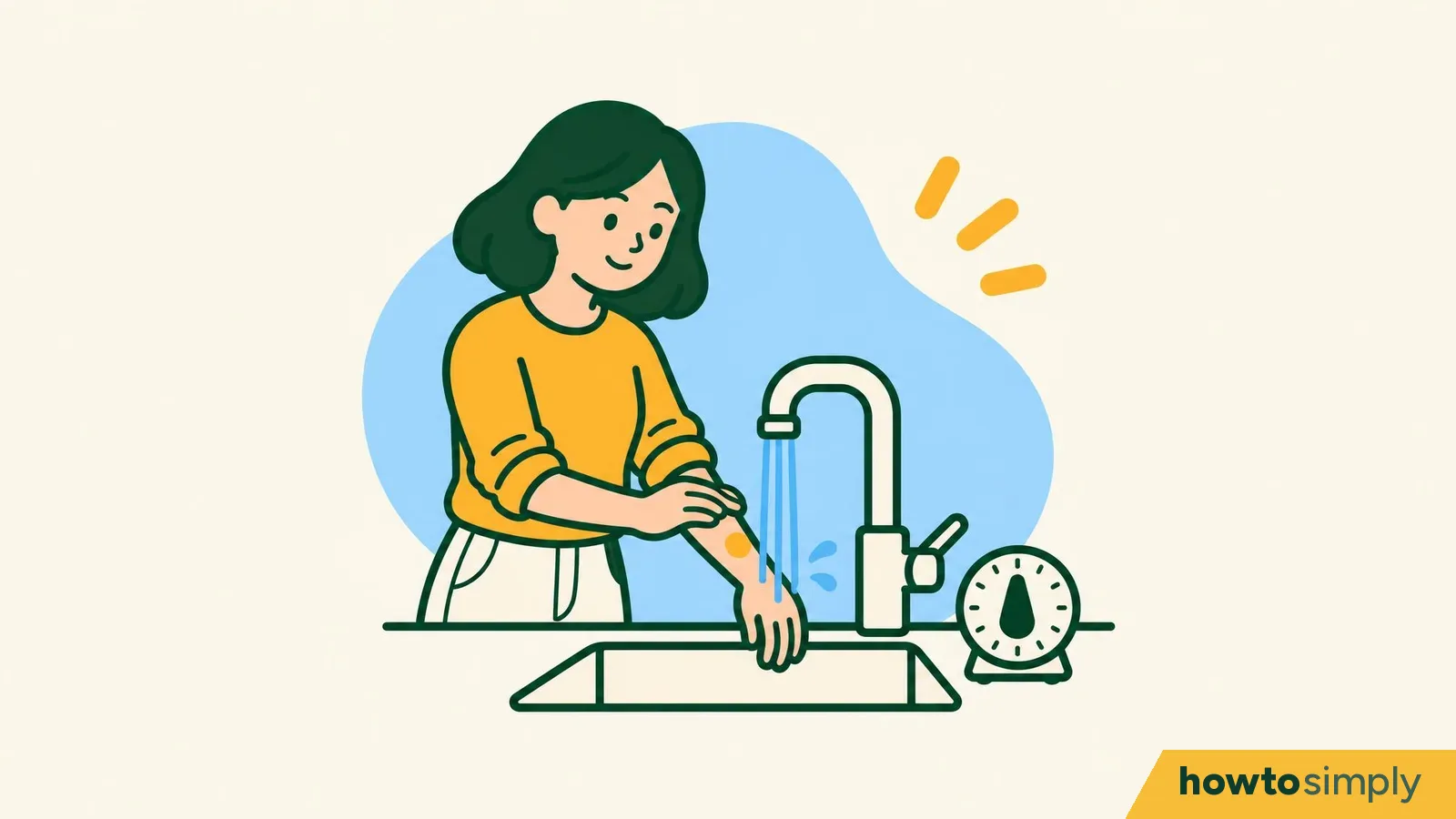
How to clean and dress a small cut or graze, and when it needs a doctor
Reviewed by Dr Sumbal Safi Ullah✓, MBBS
By Abu Bakar Saadat6 min readPublisher: Saadat Rafiq
Last updated: 28 October 2026References
 Illustration
On this page 8 sections
In short
Wash your hands, press a clean cloth on the cut until it stops bleeding, rinse it under tap water, pat dry and cover it with a sterile plaster or dressing. Get help if it spurts, won't stop, is deep or gaping, is over about 5 cm, or has something stuck in it.
At a glance
- Rinse with
- Tap or bottled water, or sterile wipes (NHS)
- Avoid
- Hydrogen peroxide and iodine (Mayo Clinic)
- Change the dressing
- When wet or dirty, and at least daily (Mayo Clinic)
- Get advice
- Over about 5 cm, signs of infection, or unsure of tetanus jabs (NHS)
- Advice from
- NHS and Mayo Clinic, read 28 October 2026
- Checked
- October 2026
Most cuts and grazes can be treated at home and heal within a few days (NHS). The job is simple: stop the bleeding, get the dirt out, keep it covered and watch for infection. Before you start, check the cut isn't one that needs a clinician to close it.
How to clean and dress it
Wash and dry your hands.
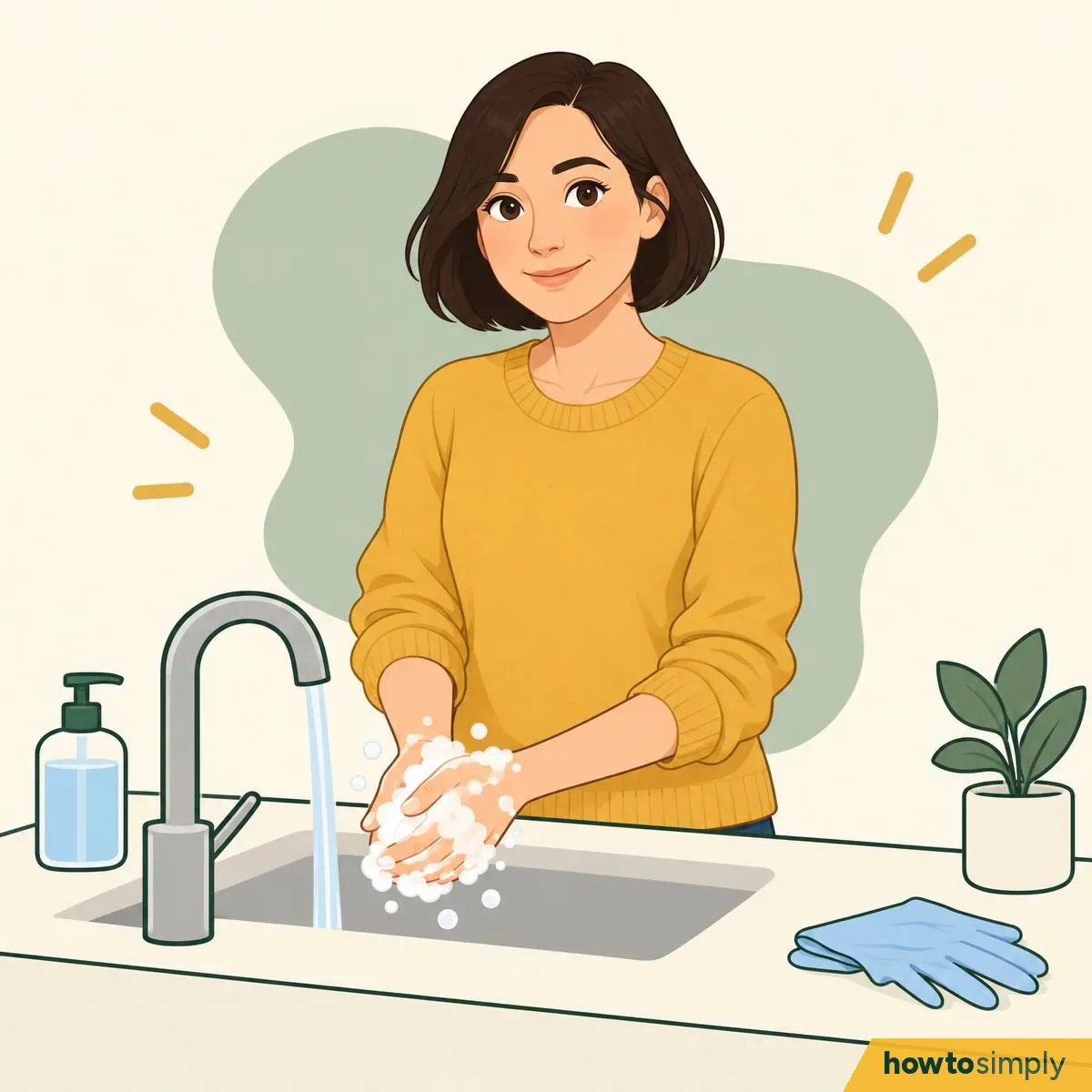
Illustration This lowers the risk of infection (Mayo Clinic). Put on disposable gloves if you have them, especially when treating someone else (NHS).
You should see: clean, dry hands, or gloves on.
Careful: if something is stuck in the cut, leave it in. Don't press on it; press firmly on either side to bring the edges together, and get help (NHS).
Press a clean cloth on the cut and raise it.
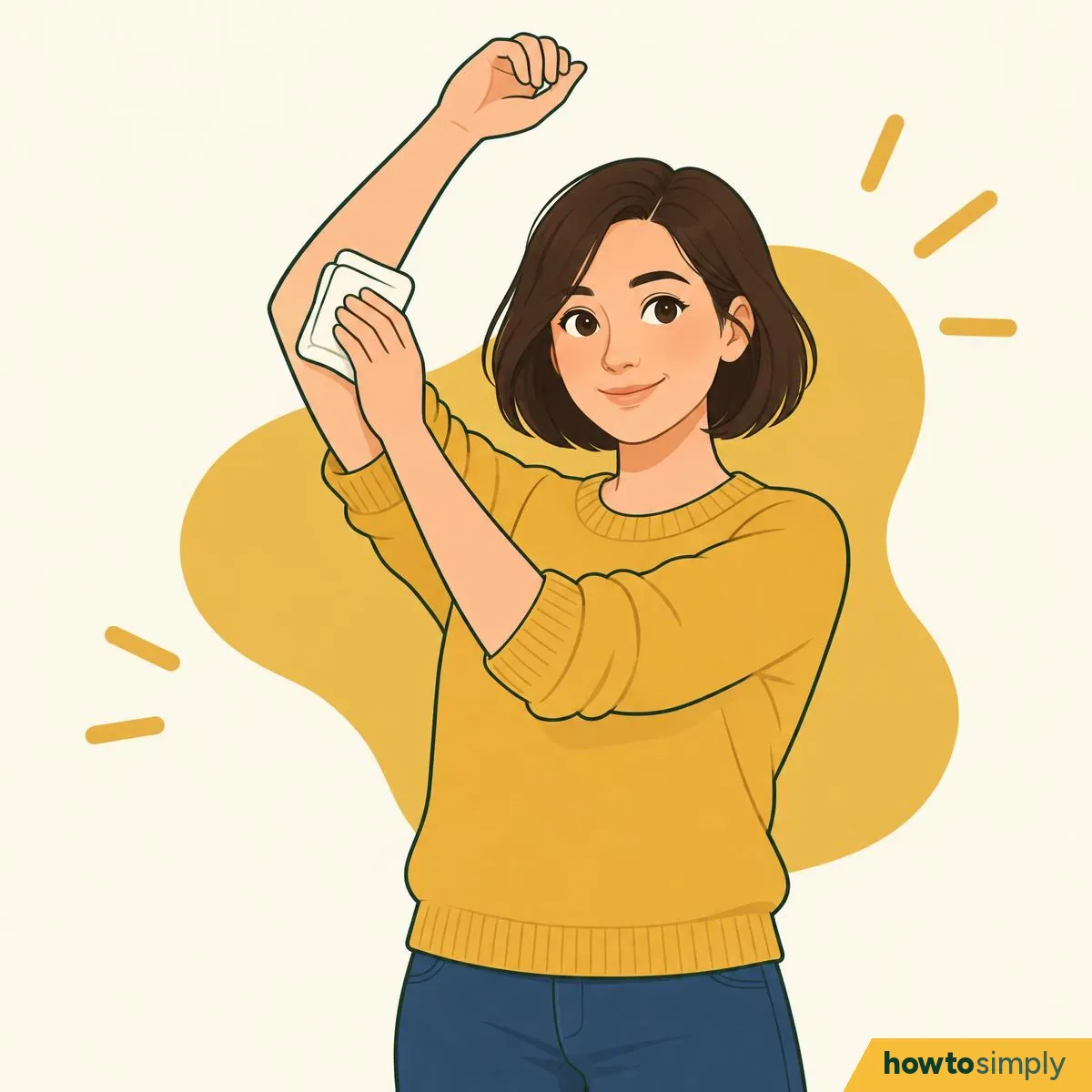
Illustration Many minor cuts stop on their own (Mayo Clinic). If not, press with a clean folded cloth or bandage and lift the injury: a hand or arm above your head, or lie down and raise a leg above the level of your heart (NHS). If blood soaks through, add another layer on top rather than lifting the first (NHS).
You should see: the bleeding slow and then stop.
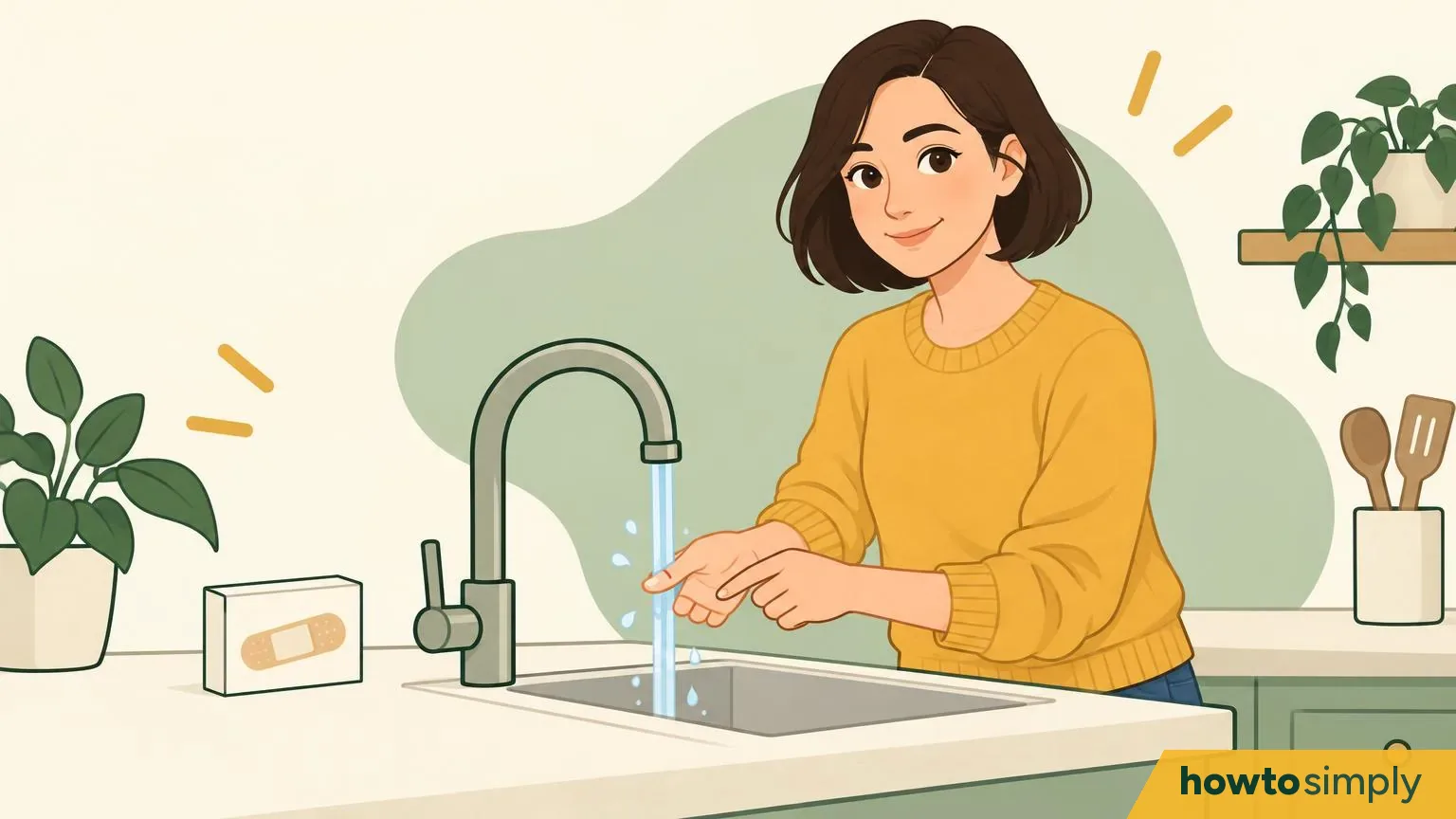
Rinse the cut under running water.
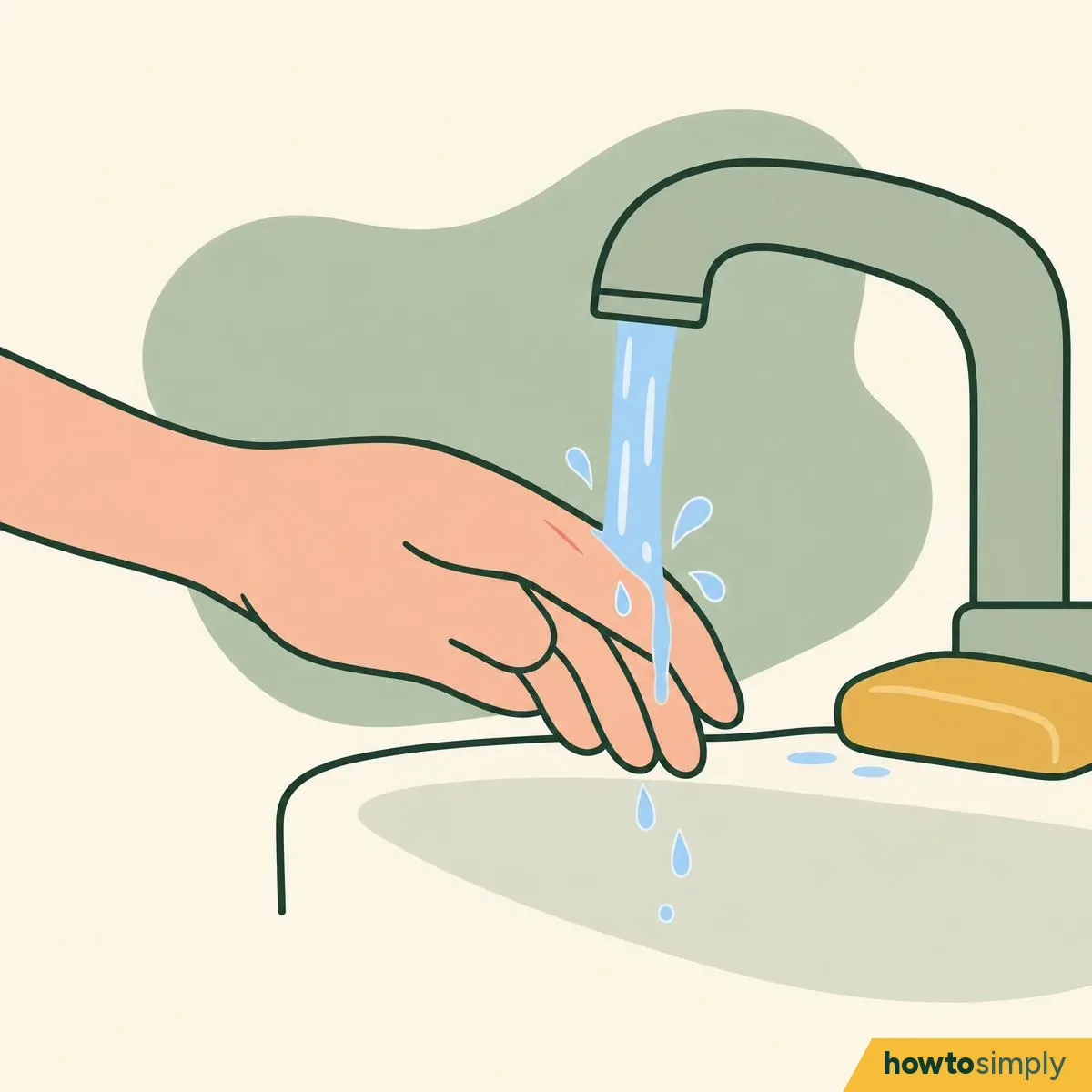
Illustration Only clean it once the bleeding has stopped, and only for small wounds (NHS). Use tap or bottled water, or sterile wipes (NHS); Mayo Clinic says running water lowers the risk of infection. Wash the skin around it with soap, but keep soap out of the cut itself (Mayo Clinic).
Lift out any loose dirt with tweezers cleaned with alcohol. If you can't get it all out, see a healthcare professional (Mayo Clinic). Don't use hydrogen peroxide or iodine, which can irritate the wound (Mayo Clinic).
You should see: no grit, soil or splinters left in the cut.
Pat it dry and clean the skin around it.
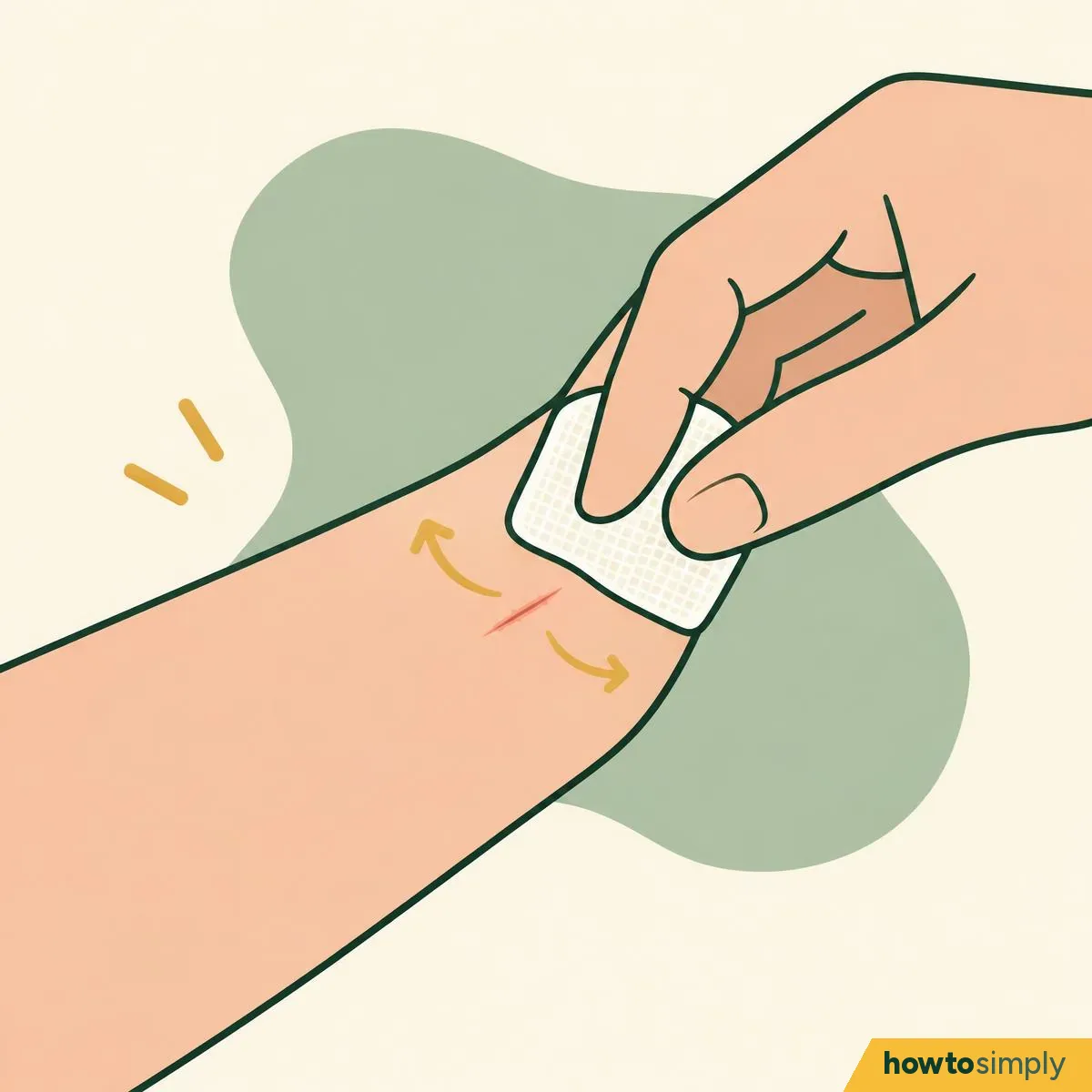
Illustration Pat it dry with a gauze swab or a clean tea towel (NHS). Cover the cut for a moment, then clean the surrounding skin with soap and water, wiping outwards from the wound with a fresh swab for each stroke (NHS).
You should see: dry skin around the cut, so a plaster will stick.
Cover it with a sterile plaster or dressing.
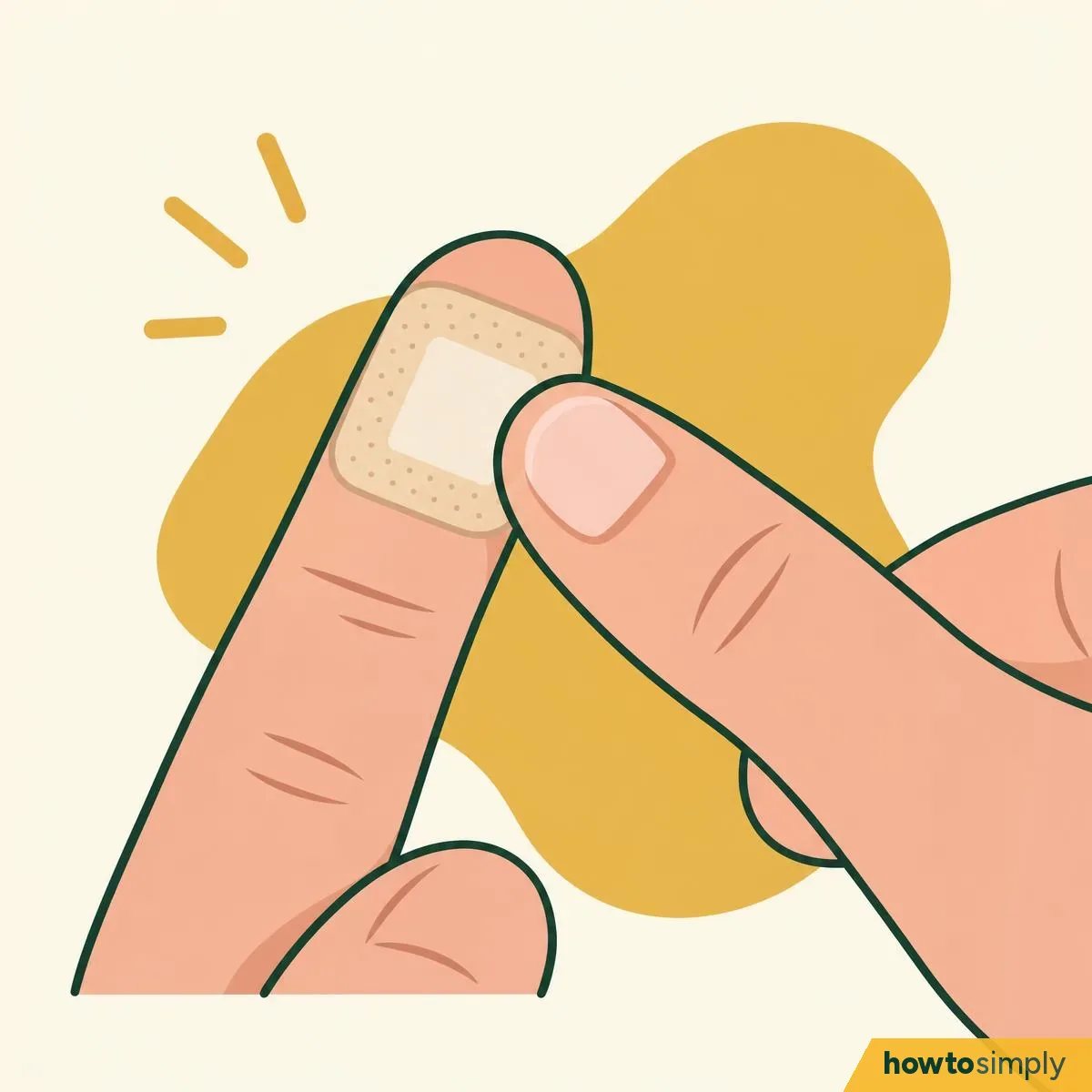
Illustration Put the pad of the plaster or dressing straight over the cut (NHS). Mayo Clinic says a thin layer of petroleum jelly or antibiotic ointment first keeps the surface moist and helps prevent scarring; if a rash appears, stop using the ointment. A minor scrape or scratch can be left uncovered (Mayo Clinic).
You should see: the whole cut under the pad, with the sticky part only on dry, unbroken skin.
Keep it clean and change the dressing when needed.
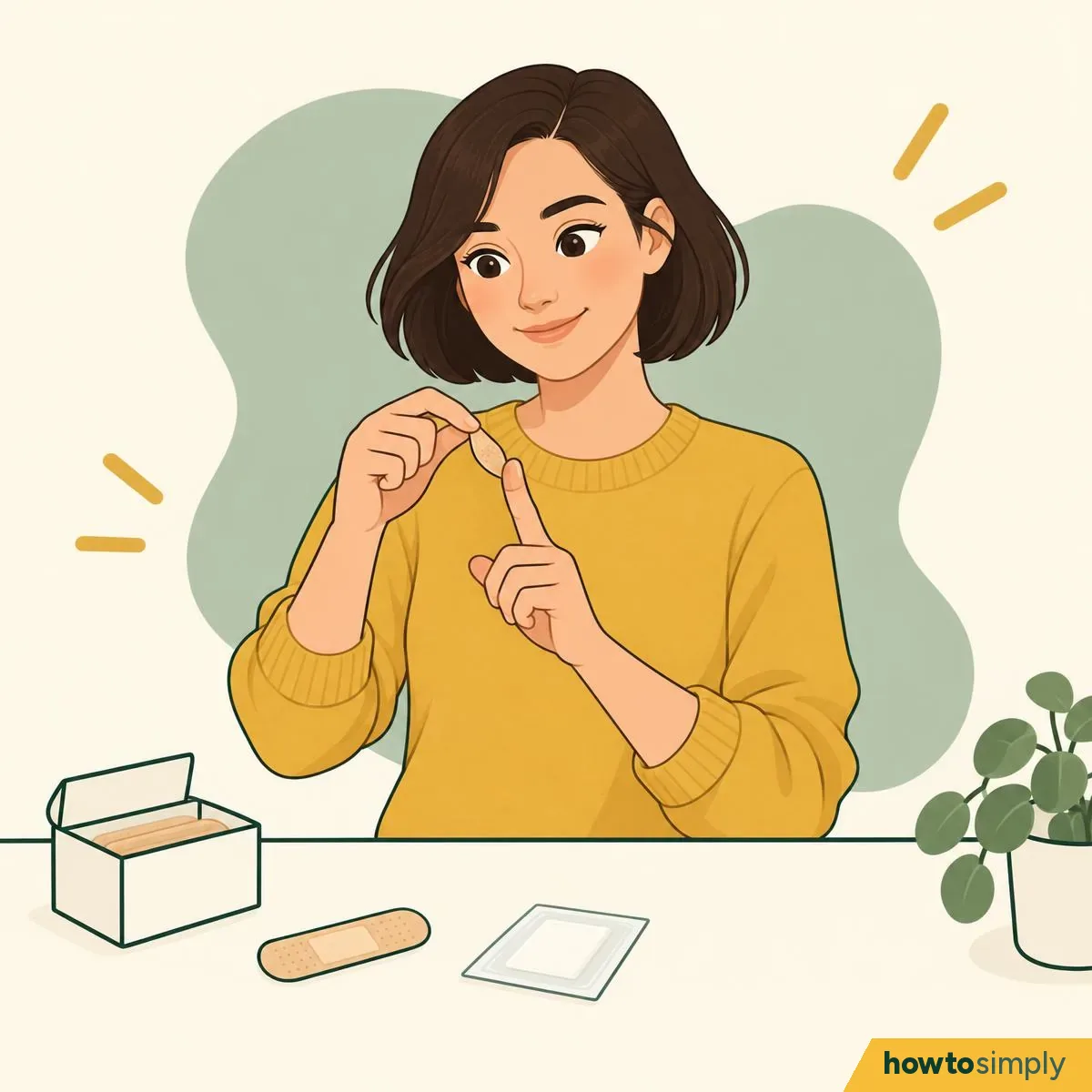
Illustration Change it at least once a day, or whenever it gets wet or dirty (Mayo Clinic). Keep it clean and dry: use a waterproof dressing, or keep it away from water (NHS). Once the wound has closed, usually after a few days, you can leave the dressing off (NHS).
You should see: a fresh, dry dressing, and a cut that looks a little smaller each day.
Check it each day for signs of infection.
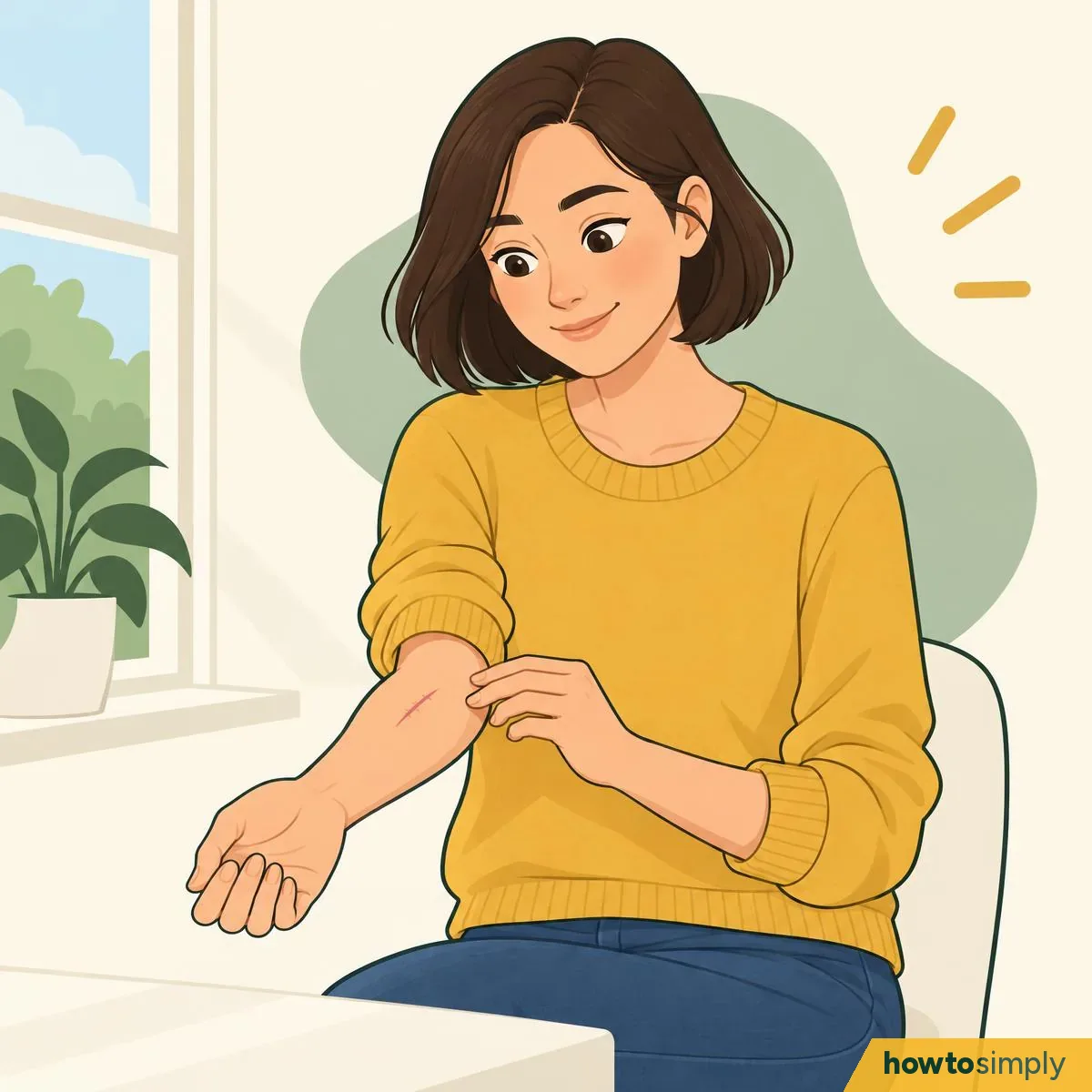
Illustration Get advice from a GP or NHS 111 if the cut becomes swollen, red or more painful, produces pus, or you feel generally unwell or have a high temperature (NHS). On darker skin, look for skin that is darker than the skin around it rather than red (NHS tetanus page). Mayo Clinic adds spreading colour change and warmth.
You should see: the edges closing and the pain easing, with no spreading redness or warmth.
How to tell you've done it right
- The bleeding has stopped completely.
- No dirt or debris is left in the cut.
- The cut is small enough to be covered by one plaster or dressing.
- Over the next few days it is closing, with no swelling, pus or spreading redness (NHS).
If something goes wrong
| What happens | What it means | What to do |
|---|---|---|
| Blood soaks through the cloth | Pressure needs more time | Add a layer on top, keep pressing and raise it (NHS). If it won't stop, call 999 or go to A&E (NHS) |
| The edges gape open or the cut is deep | It may need stitches, strips or glue (NHS) | Go to A&E if it is very large or deep; otherwise contact a GP or NHS 111 (NHS) |
| Dirt won't come out | Higher infection and tetanus risk (NHS) | See a healthcare professional (Mayo Clinic); GP or NHS 111 in the UK (NHS) |
| A rash appears around the cut | Some antibiotic ointments cause one (Mayo Clinic) | Stop the ointment (Mayo Clinic); ask a pharmacist if it doesn't settle |
| It gets redder, hotter or more painful, or you feel unwell | Possible infection (NHS, Mayo Clinic) | Contact a GP or NHS 111 (NHS) |
Questions readers ask
Is it better to let a cut breathe?
Mayo Clinic says a covering keeps a cut clean, and a thin layer of petroleum jelly keeps the surface moist and helps prevent scarring. A minor scrape or scratch doesn't need a covering. The NHS says to remove the dressing once the wound has closed.
Can I clean a cut with hydrogen peroxide or iodine?
Mayo Clinic advises against both because they can irritate the wound. The NHS says to rinse with tap or bottled water, or use sterile wipes.
Do I need a tetanus jab for a small cut?
In the UK, get urgent advice from a GP or NHS 111 if you aren't fully vaccinated (at least 5 doses) or aren't sure, or if dirt is still in the wound after cleaning (NHS). Mayo Clinic (US) says get a shot if you haven't had one in five years and the wound is deep or dirty.
When can I take the plaster off?
The NHS says most wounds start to heal within a few days, and you can remove the dressing once the wound has closed. Until then, change it whenever it gets wet or dirty, and at least once a day (Mayo Clinic).
Did this solve the problem?
What needs work?
What did you think?
Reaction counts are loading.
Spotted a mistake? If a step is unclear or a picture is inaccurate, tell us the step number and what needs correcting. Email us about this page or use the contact form. We read every report, and fixes are listed on What changed.
Liked this article?
Follow us for new articles and short how-to videos.
Sources
We use primary, official and specialist sources appropriate to the topic.