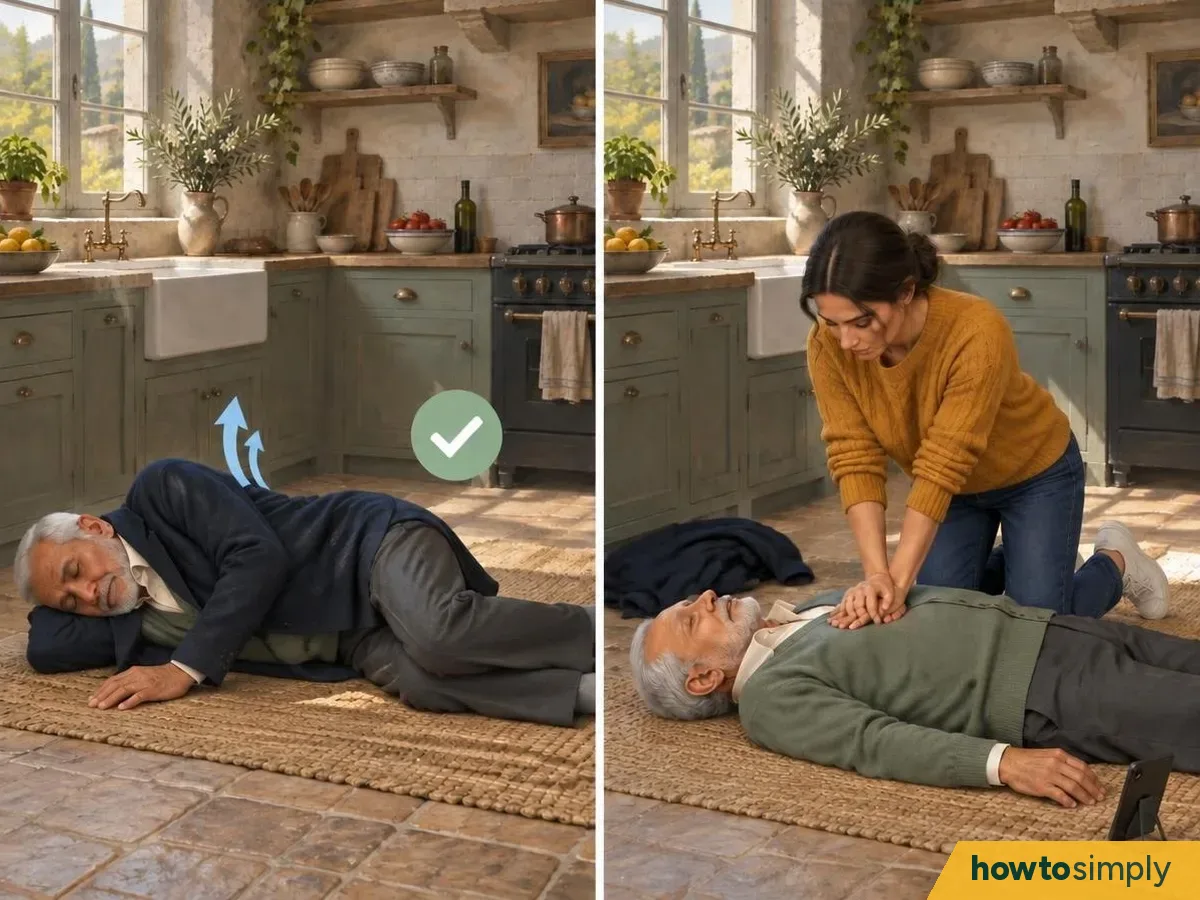
If someone is unresponsive but breathing normally, call 999 or 112 (911 in the US), then roll them onto their side with the head tilted back, so the airway stays open and vomit can drain out. If they are not breathing normally, start CPR instead.
Unresponsive but breathing normally (St John Ambulance)
Not when
Not breathing normally: start CPR (RCUK)
Call
999 or 112 UK, 112 EU, 911 US
Roll
Near arm out, far hand to cheek, far knee up, pull (SJA)
Then
Head tilted back, keep checking breathing (SJA)
30 minutes
Roll them onto the other side (SJA)
Checked
October 2026
The recovery position keeps the airway of an unresponsive person open, so their tongue can't block it and vomit can drain out (St John Ambulance). It is only for someone who is unresponsive but breathing normally. Below, one example runs from finding the person to handing over to the ambulance crew, with a drawing for every step.
Not breathing, or only gasping? Don't use the recovery position. Call 999 or 112 (911 in the US) and start CPR straight away. Gasping, noisy or irregular breaths are not normal breathing (Resuscitation Council UK).
They aren't breathing normally. Treat it as cardiac arrest: call 999 or 112 and start CPR (Resuscitation Council UK).
They respond to you. Let them find a comfortable position and call for advice.
They may have a serious injury, such as a fall from a height, a crash, a dive into shallow water or a crush. Read Suspected neck or back injury first. The Resuscitation Council UK's 2025 first aid guidelines say not to put an injured casualty into the recovery position.
If they are clearly pregnant, roll them onto their left side (St John Ambulance Cymru).
Our example: Sara finds her dad on the kitchen floor
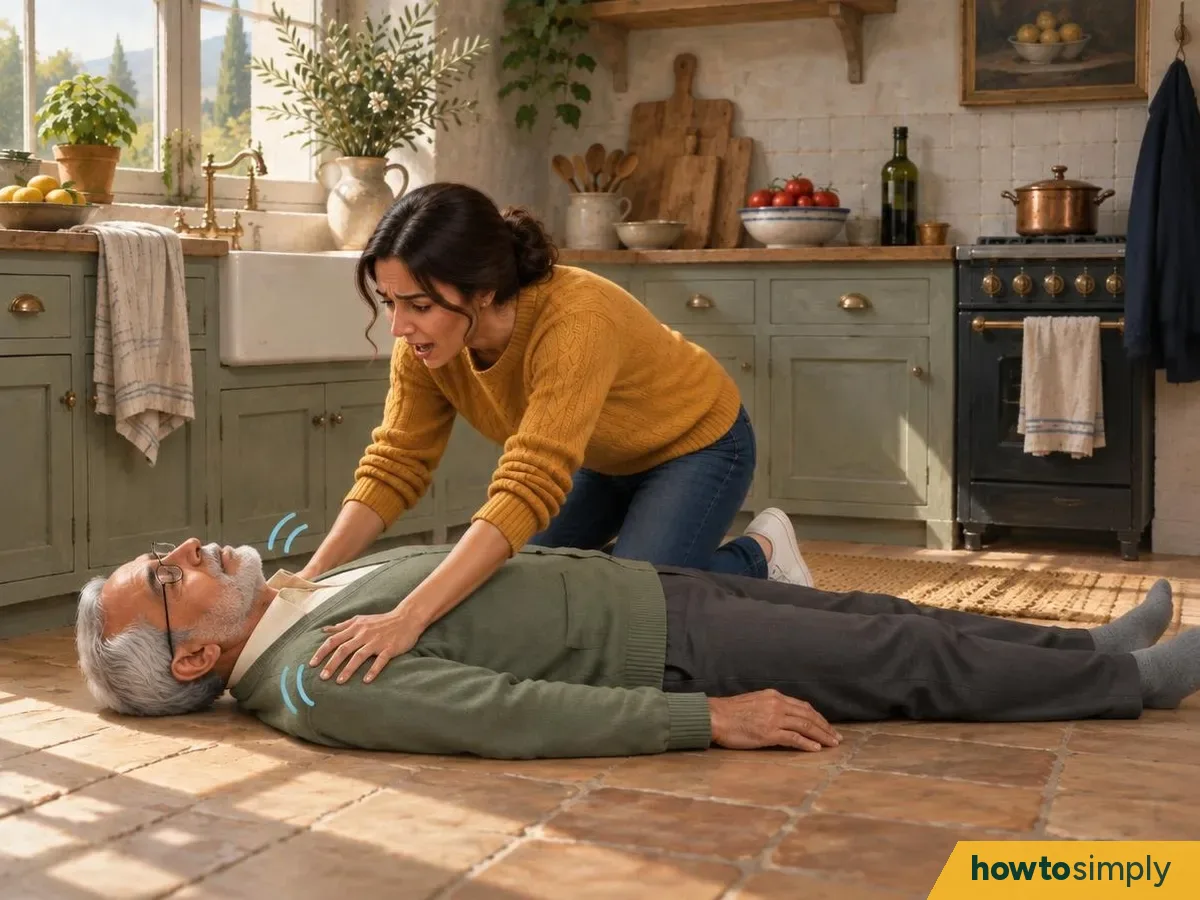
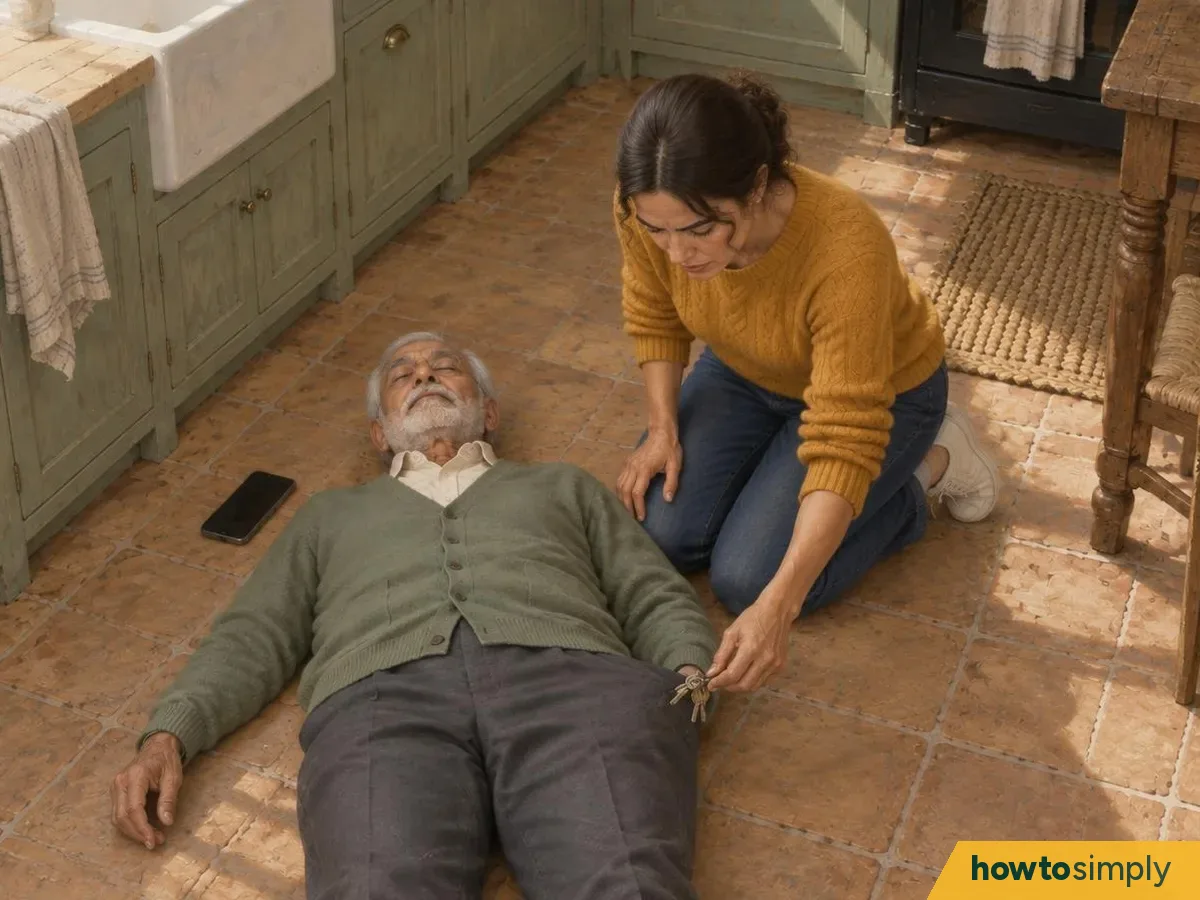
Every step below follows one story, and each drawing shows that exact moment. Sara pops round to see her dad, Yusuf, who is 68. She finds him lying on his back on the kitchen floor. He felt faint and slid down from his chair; he didn't fall from a height and has no obvious injury. She kneels at his left side, so she rolls him towards her onto his left side. The same steps work for anyone over 1 year old.
Part 1: Check them
Make sure it's safe.
Illustration
In our story: Sara stops in the kitchen doorway and looks around. The hob is off, nothing is spilled and there are no trailing cables, so she goes to him.
Look for traffic, fire, electricity or gas before you go near, so you don't get hurt too (St John Ambulance).
Check whether they respond.
Illustration
In our story: Sara kneels beside Yusuf's chest, holds his shoulders and calls "Dad, it's Sara, can you hear me?" He doesn't answer or move.
Kneel by their chest, say who you are, ask loudly "Are you OK?" and gently shake their shoulders. If they don't answer or move, shout for help (St John Ambulance).
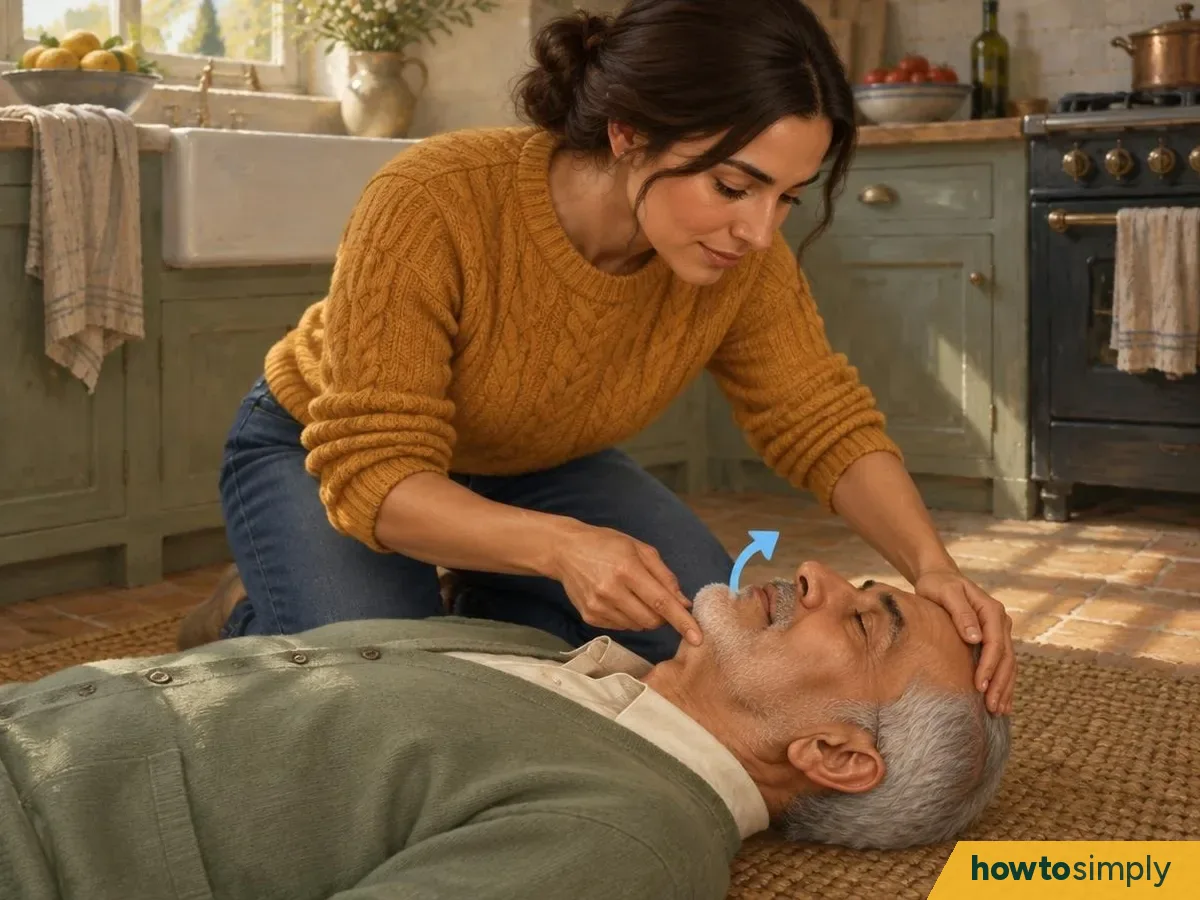
Open the airway.
Illustration
In our story: Sara puts one hand on Yusuf's forehead and lifts his chin with two fingers, so his head tips back.
Put one hand on their forehead and tilt the head back. Put two fingers of your other hand under the bony tip of the chin and lift. This pulls the tongue forward off the back of the throat (St John Ambulance).
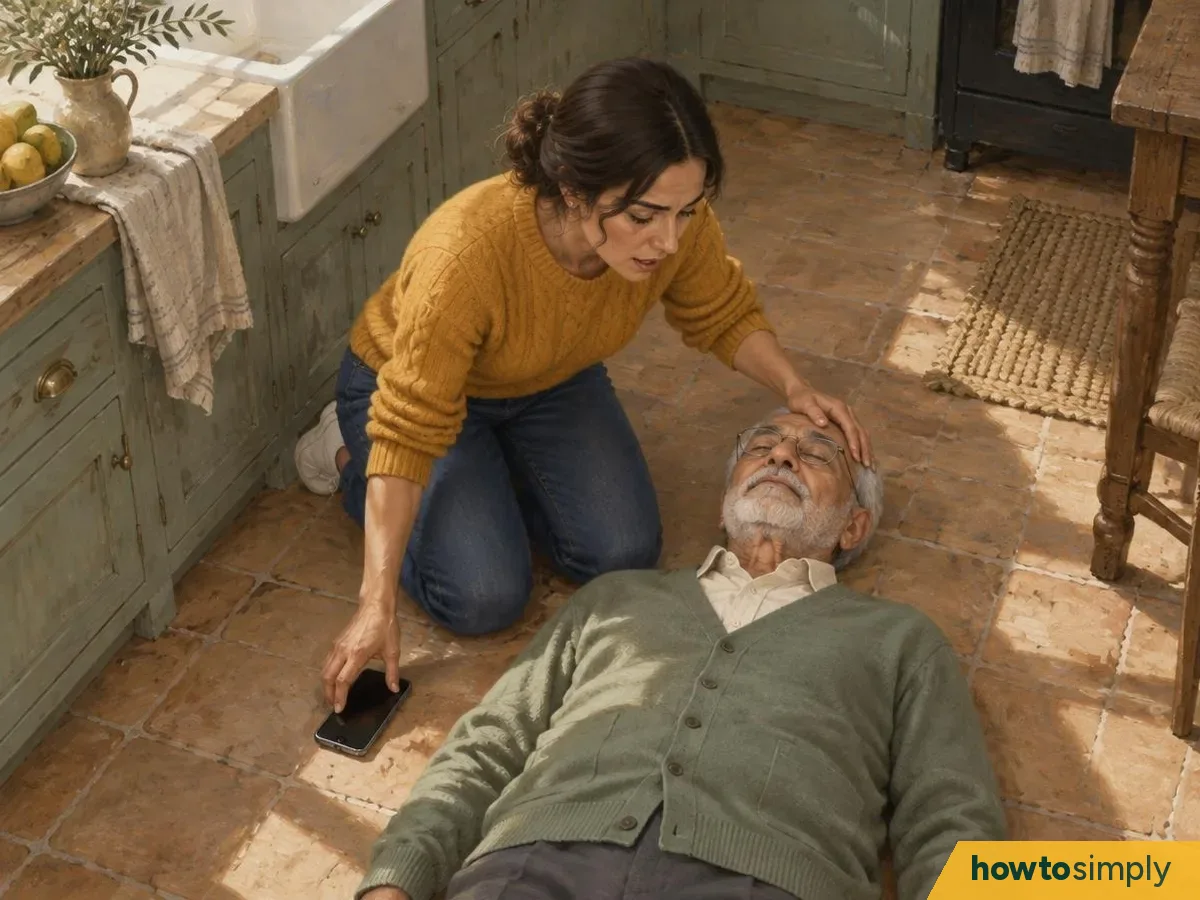
Call 999 or 112 now, if nobody has yet.
Illustration
In our story: Nobody else is home. Sara dials 112, puts her phone on speaker on the floor by Yusuf's shoulder and keeps her hand on his forehead.
Put the phone on speaker beside you and tell the call handler the person is unresponsive. If you are alone, the Resuscitation Council UK's 2025 guidelines say to make the call before checking breathing, and to check breathing while you wait for an answer.
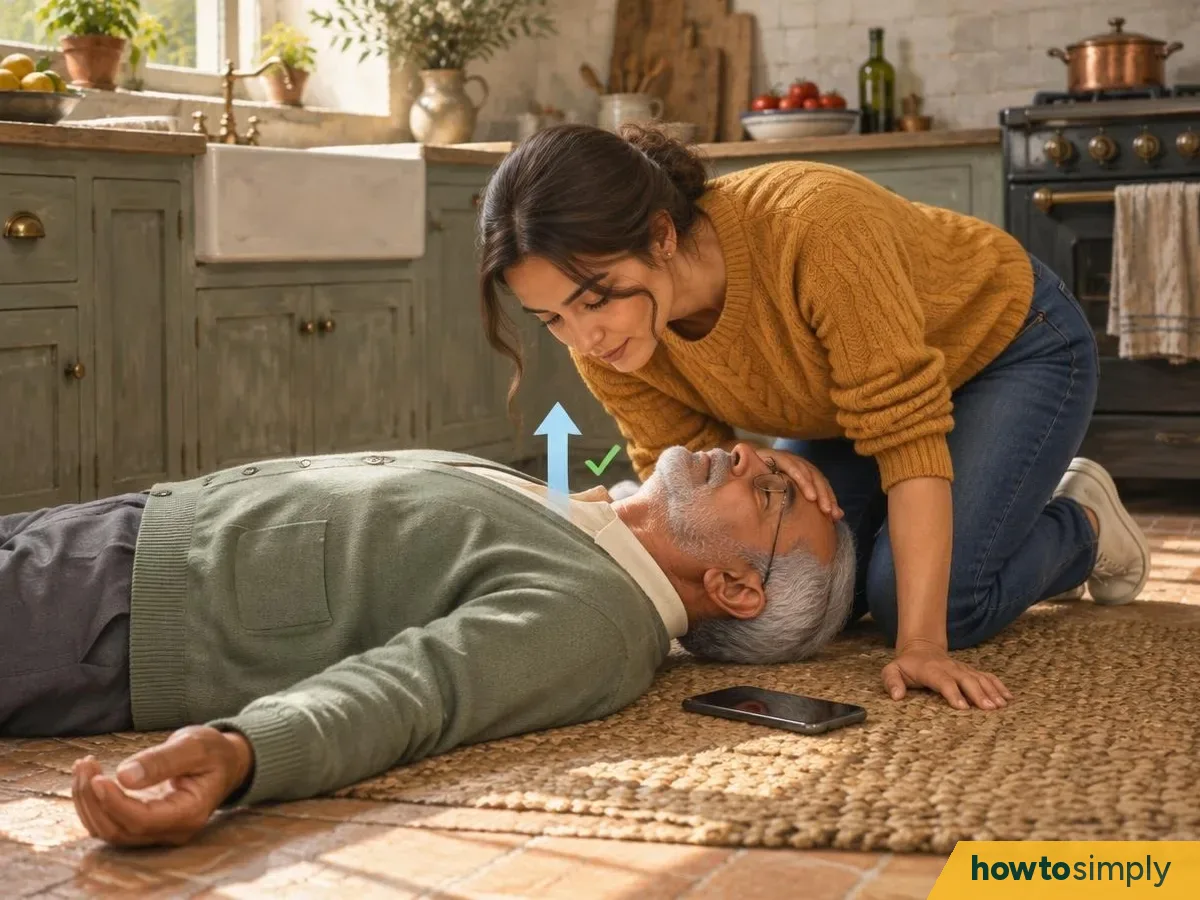
Check breathing for up to 10 seconds.
Illustration
In our story: Sara bends her cheek to Yusuf's mouth and watches his chest. It rises and falls evenly, and she tells the call handler "He's breathing normally."
Keep the head tilted. Look along the chest for movement, listen for breaths and feel for air on your cheek (St John Ambulance). If they are not breathing normally, stop here and start CPR; the call handler will guide you. If they are breathing normally, carry on.
Part 2: Roll them onto their side
These steps are the same for adults and children over 1 (St John Ambulance).
Straighten their legs and clear their pockets.
Illustration
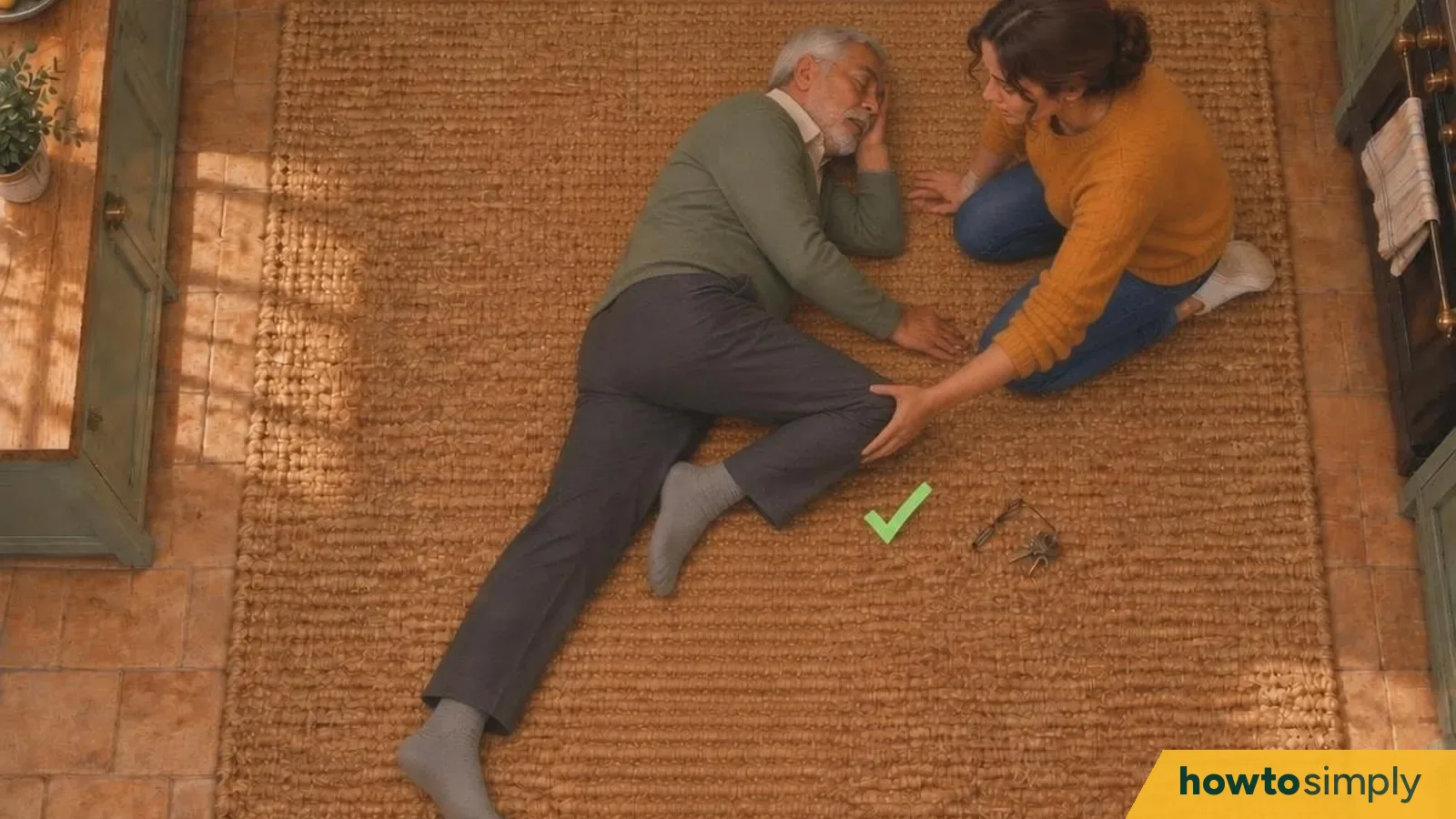
In our story: Sara straightens Yusuf's legs, takes off his glasses and lifts a bunch of keys out of his left trouser pocket, the side he will roll onto.
Take off glasses and remove bulky things such as a phone or keys from their pockets (St John Ambulance). Don't search for small items.
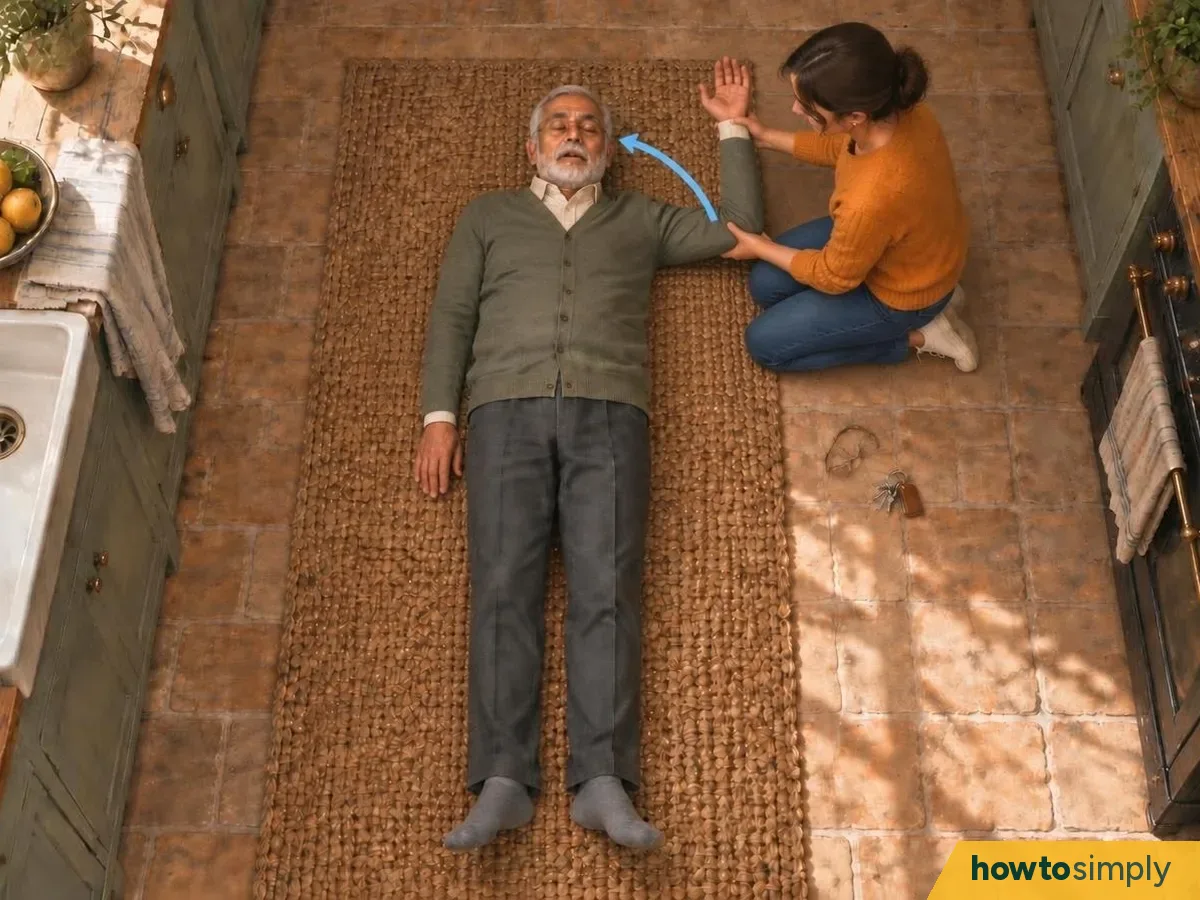
Put the near arm out at a right angle.
Illustration
In our story: Sara lays Yusuf's left arm out from his shoulder, elbow bent, palm up.
Lay the arm nearest you out from the body, with the elbow bent upwards and the palm facing up (St John Ambulance).
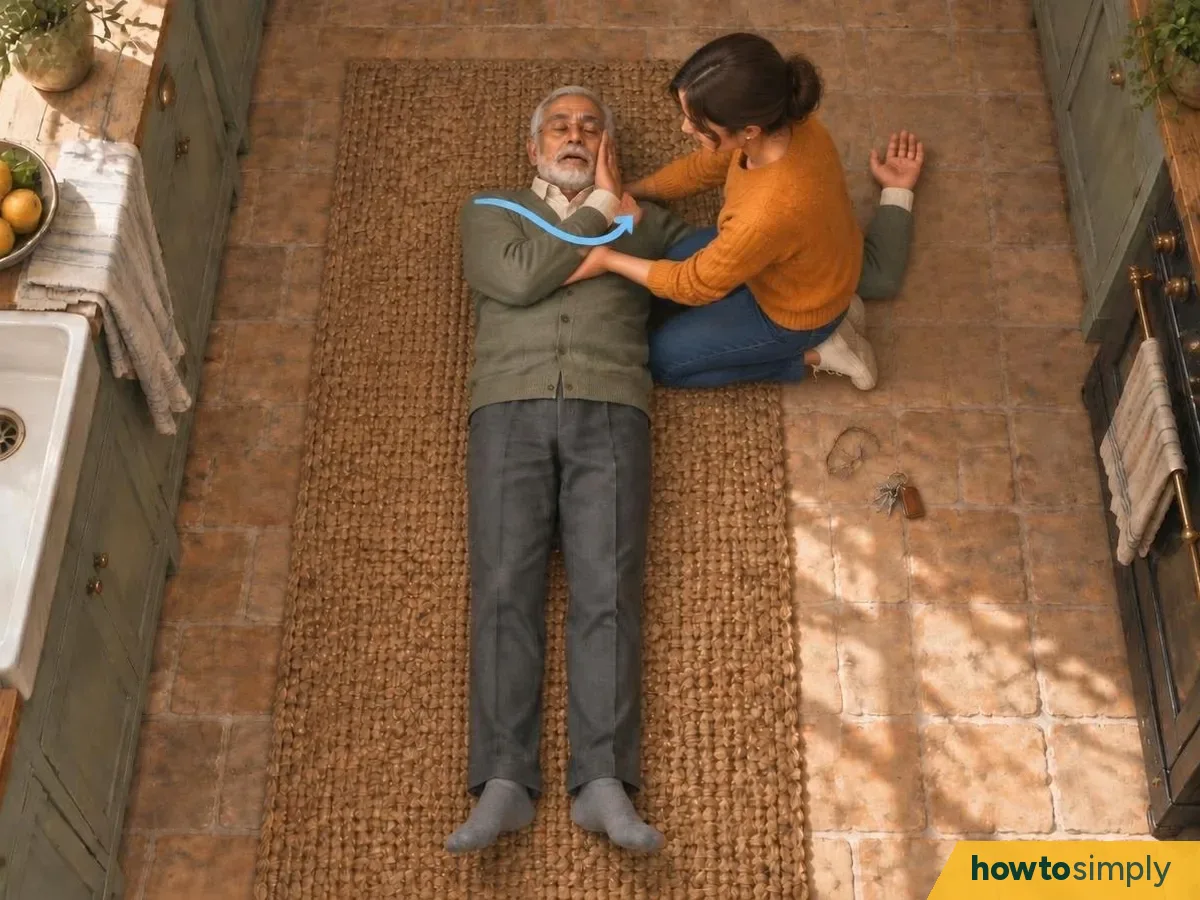
Bring the far arm across.
Illustration
In our story: Sara brings Yusuf's right hand across his chest and holds the back of it against his left cheek.
Take their far hand, bring it across the chest and press the back of that hand against the cheek nearest you. Keep holding it there (St John Ambulance).
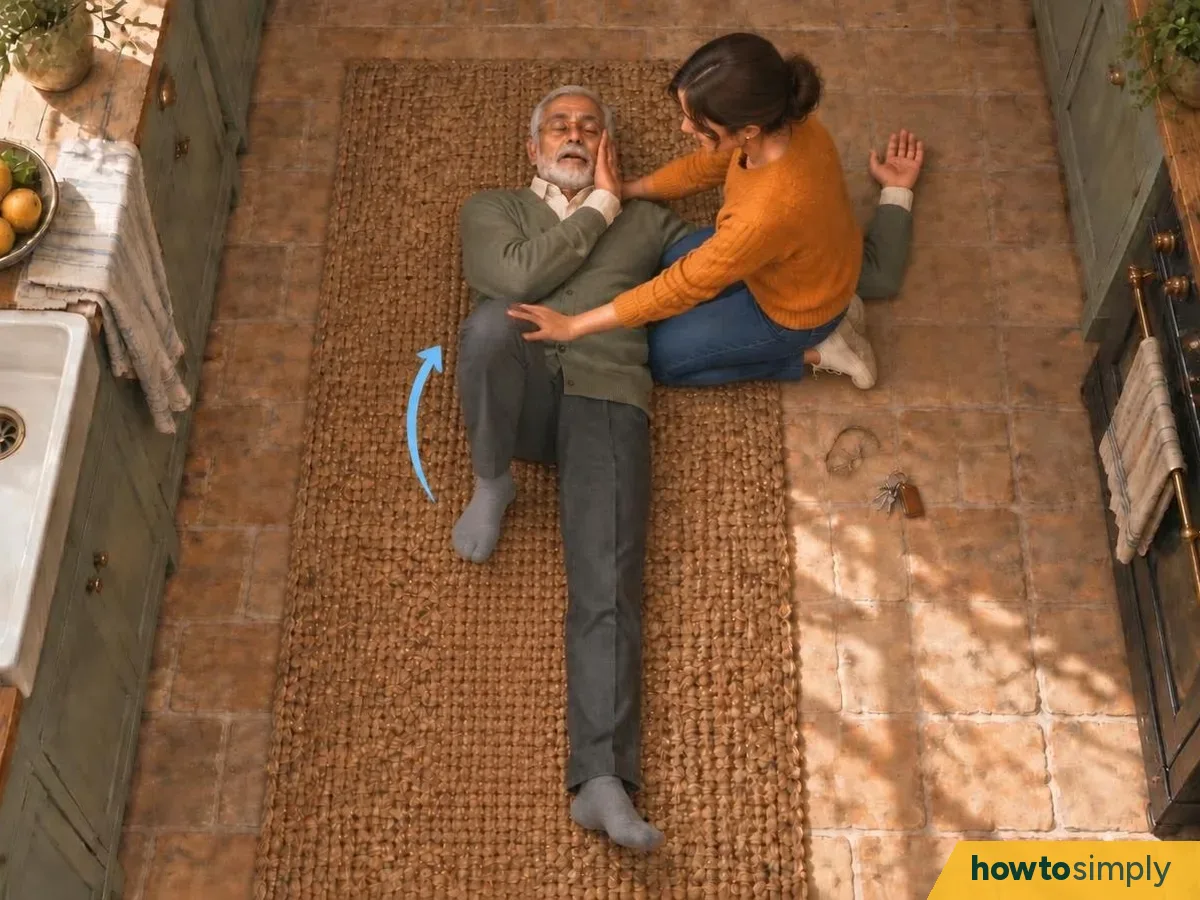
Bend the far knee.
Illustration
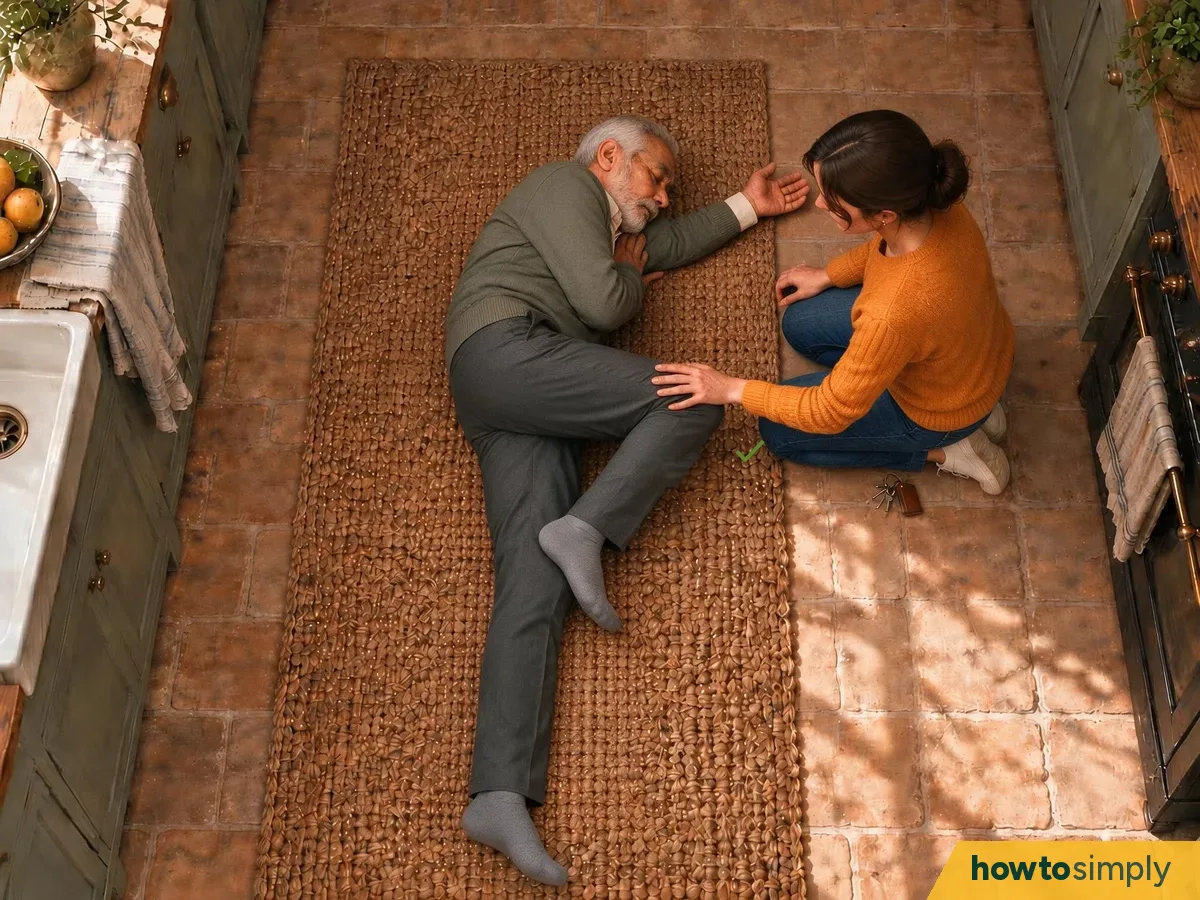
In our story: Still holding his hand to his cheek, Sara pulls up Yusuf's right knee until his right foot is flat on the floor.
With your free hand, pull up the far knee until their foot is flat on the floor (St John Ambulance).
Roll them towards you.
Illustration
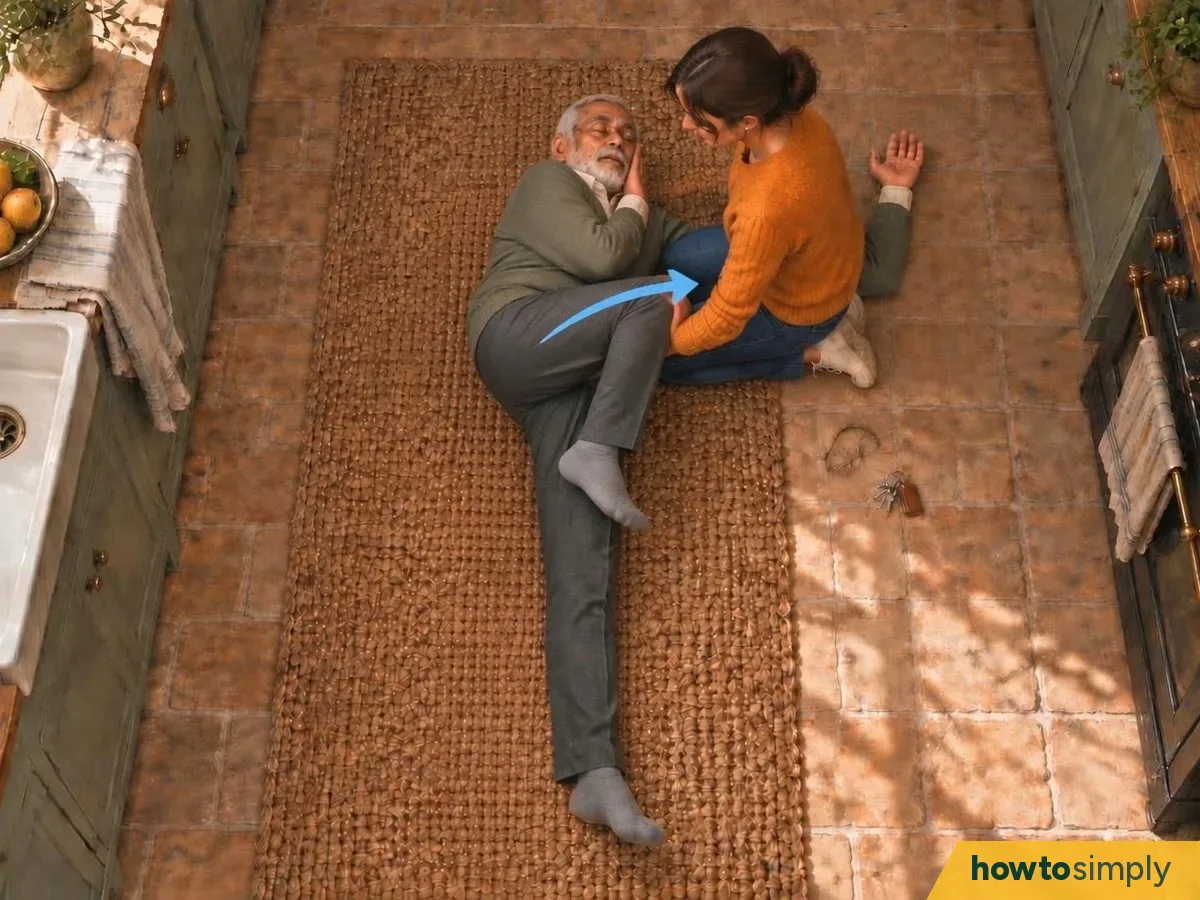
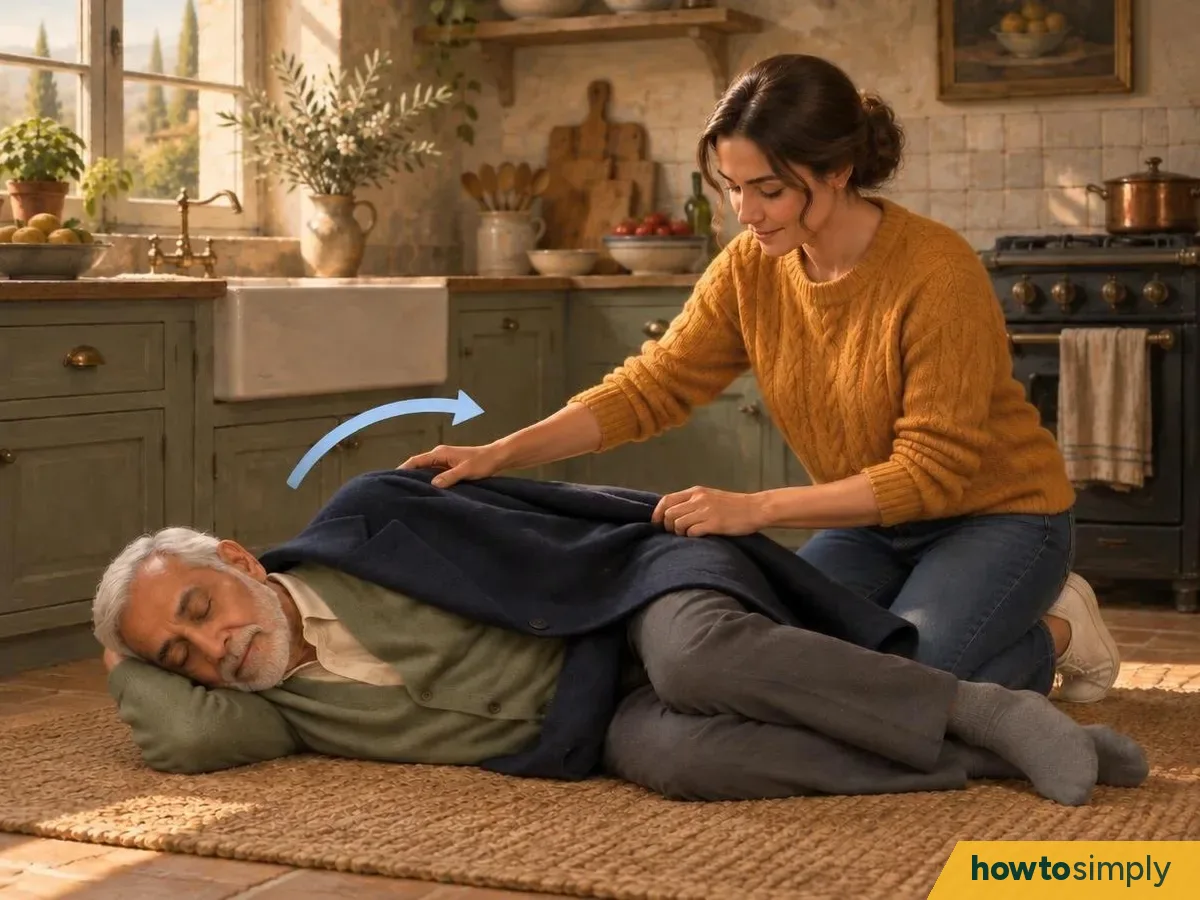
In our story: Sara pulls his right knee towards her and Yusuf rolls onto his left side, facing her, his head resting on his hand.
Keep their hand pressed to their cheek and pull on the far knee so they roll towards you onto their side (St John Ambulance). Pull on the knee, not the arm.
Bend the top leg.
Illustration
In our story: Sara moves Yusuf's top (right) leg until hip and knee are both bent at right angles, with the knee resting on the floor.
Move the top leg so both the hip and the knee are at right angles. This stops them rolling onto their front (St John Ambulance).
Open the airway again.
Illustration
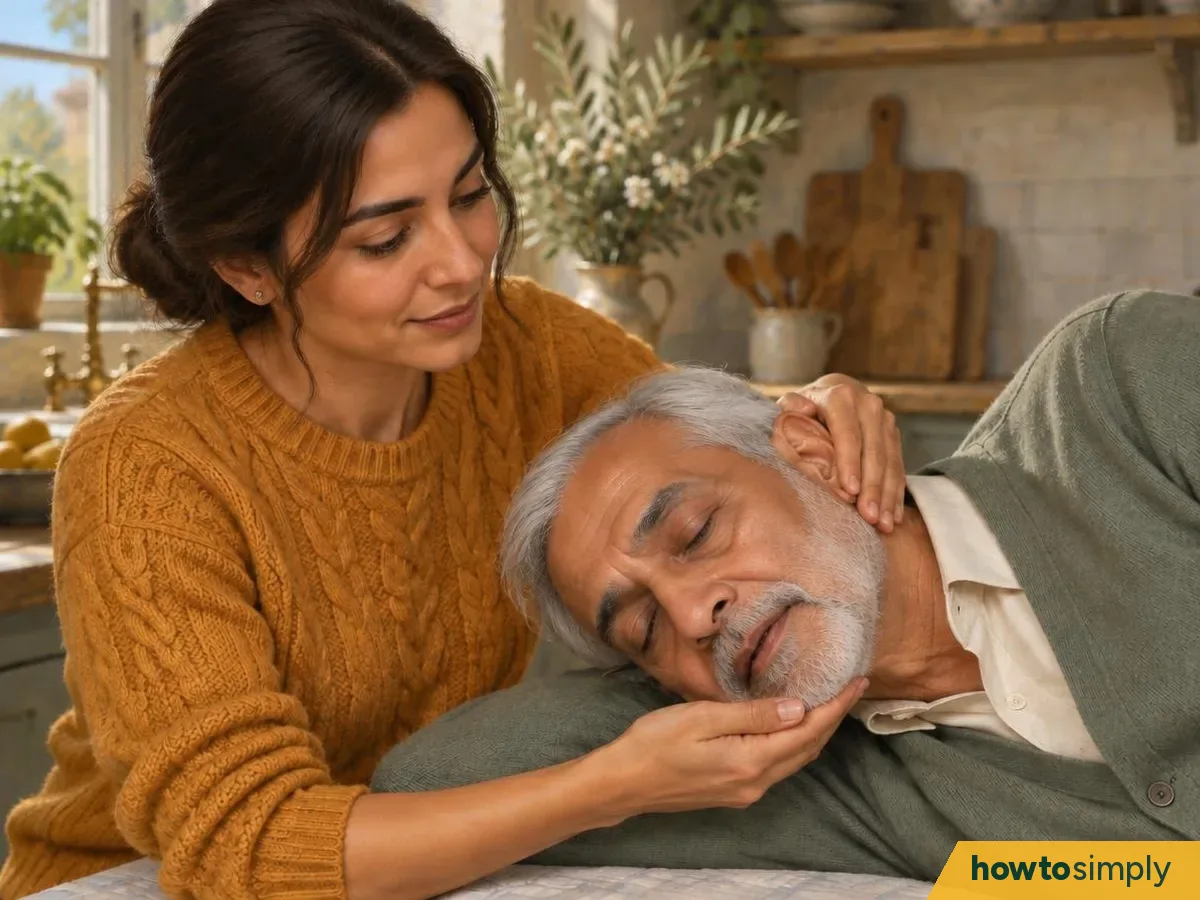
In our story: Sara tilts Yusuf's head back a little and adjusts his hand under his cheek. His mouth now points slightly towards the floor.
Gently tilt the head back and lift the chin, and adjust the hand under the cheek so the head stays tilted (St John Ambulance). The mouth should point slightly down so fluid can drain out (IQWiG).
Part 3: Stay with them until help arrives
Keep them warm and keep checking.
Illustration
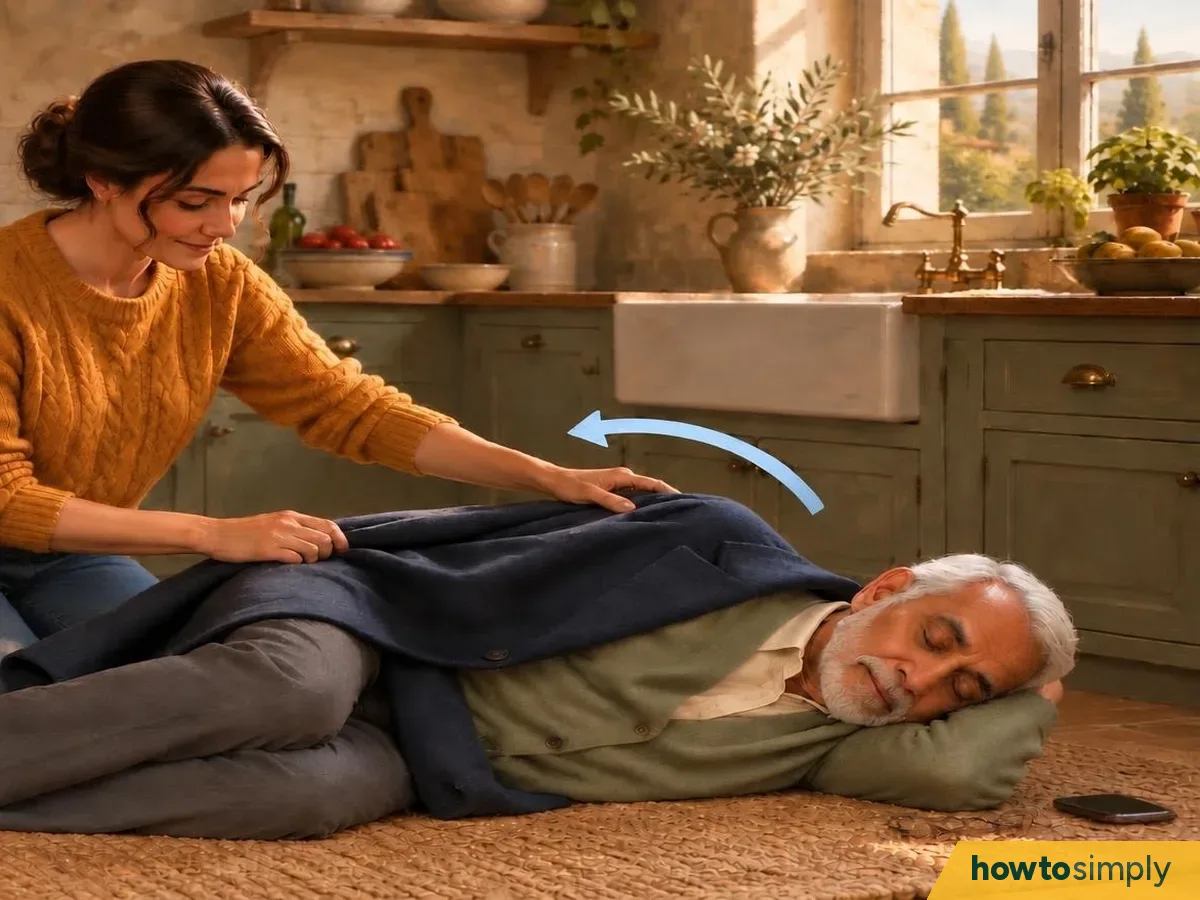
In our story: Sara lays Yusuf's navy coat over him like a blanket. She stays beside him with the phone still on speaker, talks to him quietly and keeps watching his breathing.
Cover them with a coat or blanket. Keep talking to them, as they may hear you, and watch their breathing all the time until help arrives (St John Ambulance, British Red Cross).
If breathing changes, act at once.
Illustration
In our story: The drawing shows what Sara watches for. On the left, even breathing, so he stays on his side. On the right, if it turned to gasping, she would roll him onto his back and start CPR.
If their breathing stops, or becomes noisy, irregular or gasping, roll them onto their back, call 999 or 112 again and start CPR (St John Ambulance, Resuscitation Council UK).
Change sides after 30 minutes.
Illustration
In our story: The ambulance is busy. After 30 minutes Sara rolls Yusuf onto his right side, now with his left leg bent on top and his left hand under his cheek.
If they are still in the recovery position after 30 minutes, roll them onto their other side to take the pressure off the lower arm, using the same steps (St John Ambulance).
Tell the ambulance crew what happened.
Illustration
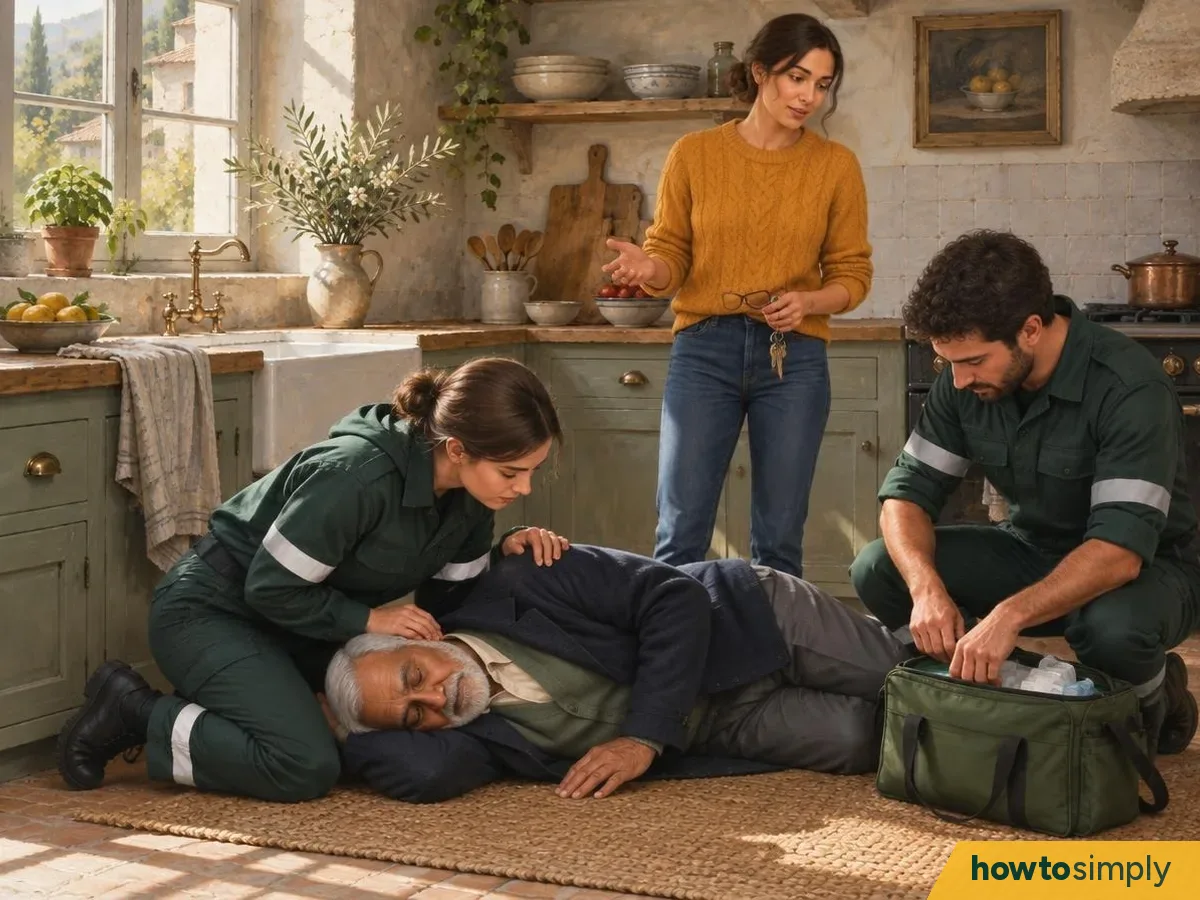
In our story: Two paramedics kneel beside Yusuf. Sara stands back and tells them what happened, holding his glasses and keys.
Tell them when you found the person, what you did, how their breathing has been and when you turned them. Give them anything you took from their pockets.
Babies under 1
Don't roll a baby on the floor. Hold the baby in your arms with their head tilted downwards, so they can't choke on their tongue or breathe in vomit (St John Ambulance). Call 999 or 112 and keep checking their breathing until help arrives. If the baby isn't breathing normally, follow the call handler, who may guide you through baby CPR.
Suspected neck or back injury
UK first aid bodies don't say quite the same thing here, so here are both views.
Resuscitation Council UK (2025 first aid guidelines): don't move an injured casualty into the recovery position. Keep their neck still: kneel behind their head and hold the head and neck in line with the body. If the airway needs opening, that comes first, using a jaw lift ("jaw thrust") that keeps the neck in line.
St John Ambulance and the British Red Cross: if someone with a possible spinal injury is unresponsive and you can't keep their airway open where they lie, turn them onto their side anyway, keeping the head, neck and back in a straight line. With a helper, one person holds the head in line while the other turns them.
Both agree that the airway comes first. In practice: call 999, keep them still with the head in line, and follow the call handler. Only turn them if they are vomiting, gurgling or you can't keep the airway open where they lie.
How to tell you've got it right
They lie stably on their side and don't roll forwards (St John Ambulance).
The head is tilted back and the mouth points slightly down (St John Ambulance, IQWiG).
You can see and hear them breathing normally, and you keep checking (St John Ambulance).
If something isn't right
What happens
Likely cause
What to do
They won't roll
Knee not bent enough, or you're pulling the arm
Pull up the far knee until the foot is flat, then pull on the knee
They keep rolling onto their front
The top leg is straight
Bend the top hip and knee to right angles
Snoring or gurgling
The head has dropped forward
Tilt the head back, lift the chin, check the mouth points down
They're too heavy for you
A large adult
Keep the head tilted and the chin lifted; follow the call handler
Breathing turns to gasping or stops
Cardiac arrest
Roll onto their back, call 999 or 112 again, start CPR
They vomit
Common when unresponsive
Keep them on their side, mouth pointing down; re-open the airway
They wake up
They're recovering
Keep them still, reassure them, tell the ambulance service
They're lying face down
They collapsed forwards
If breathing and not injured, roll them into the recovery position; if injured, see above
If you can't do the full roll
If the person is very heavy or there's little space, the British Red Cross teaches a simpler version: keep the head tilted back and roll them onto their side, keeping the spine as straight as you can. What matters is that they are on their side with the airway open.
Either side, unless they are clearly pregnant. Then use their left side (St John Ambulance Cymru).
How do I know if breathing is "normal"?
Normal breathing is regular and quiet, with the chest rising and falling. Occasional gasps, or noisy, irregular breaths, are not normal. Treat gasping as no breathing and start CPR (Resuscitation Council UK).
Can I leave them to go and call 999?
Only if you have no phone, no signal and nobody comes when you shout. Then you will have to leave them to call, as quickly as possible (Resuscitation Council UK). If they are breathing normally, put them in the recovery position first, and check their breathing again when you get back.
Should I give them water?
No. The NHS says only give sips of water to someone who is conscious, able to swallow and not being sick. The Resuscitation Council UK warns not to give anything by mouth to an unresponsive person because they could choke.
What if they have been drinking?
Use the recovery position in the same way and call 999: the NHS says to call if someone has lost consciousness or you think they have alcohol poisoning. Stay with them, as they could choke on vomit. No coffee, food, cold shower or making them sick (NHS).
What about a baby under 1?
Don't roll a baby on the floor. Hold them in your arms with their head tilted downwards, call 999 or 112 and keep checking their breathing (St John Ambulance).
Did this solve the problem?
What needs work?
What did you think?
Reaction counts are loading.
Spotted a mistake? If a step is unclear or a picture is inaccurate, tell us the step number and what needs correcting. Email us about this page or use the contact form. We read every report, and fixes are listed on What changed.
Liked this article?
Follow us for new articles and short how-to videos.
 Illustration