How to make a home emergency kit: what the UK, German and US checklists say
Researched by Abu Bakar Saadat6 min read
Last updated: 15 November 2026References
 Illustration
On this page 10 sections
In short
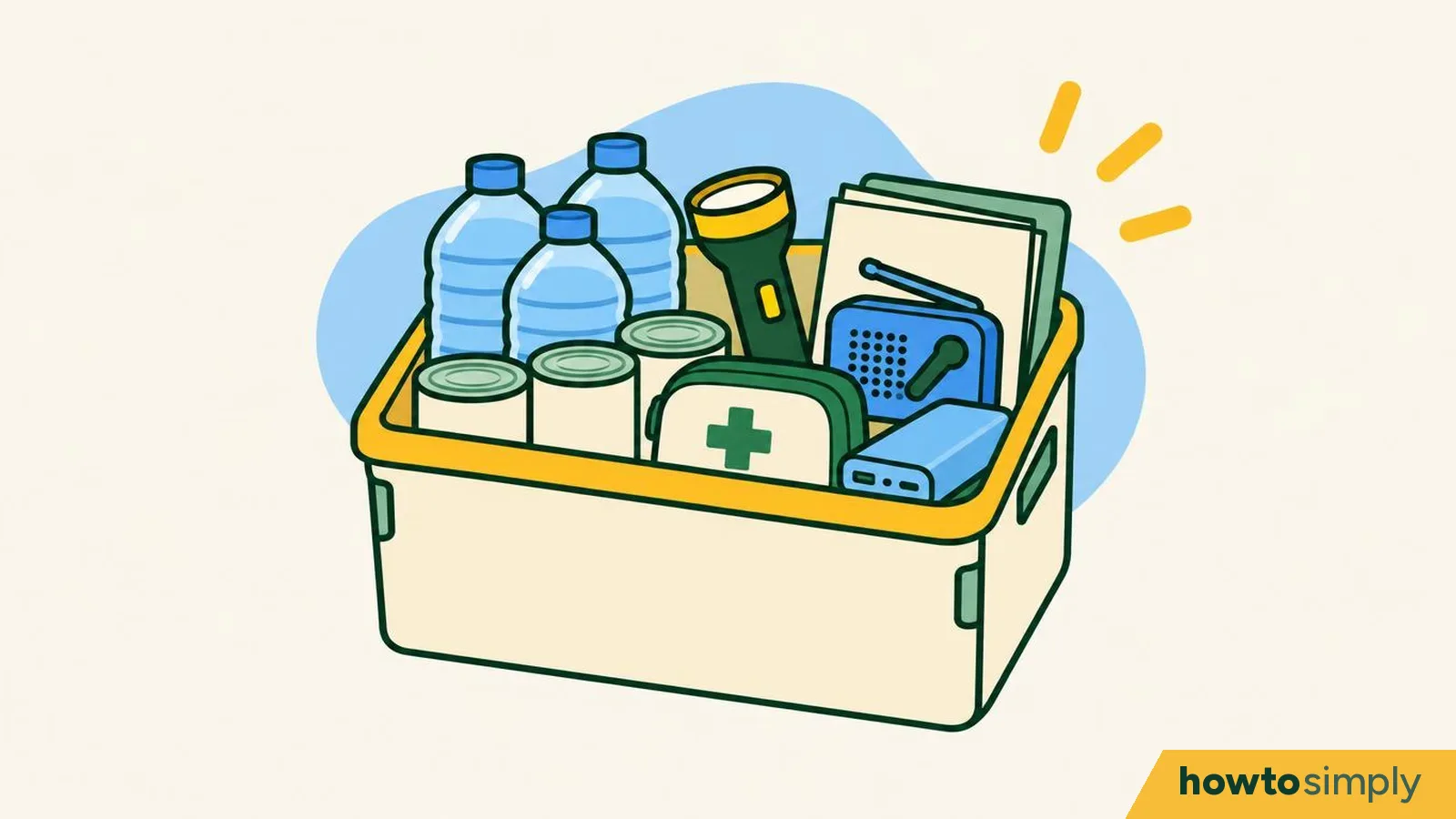
Keep water, non-perishable food, a torch, a battery or hand-crank radio, a phone charger and backup battery, a first aid kit, medicines, cash and document copies in one place. Germany says plan for up to 10 days, the US several.
At a glance
- UK
- 3 days; 3 litres of drinking water per person per day (Be Ready)
- Germany
- Ideally 10 days; 2 litres per person per day (BBK)
- US
- Several days; 1 gallon per person per day (Ready.gov)
- Check it
- Every six months for expiry dates (UK)
- Advice from
- UK Government, BBK and Ready.gov, read 27 October 2026
- Checked
- November 2026
Thinking about power cuts or floods can feel heavy, but putting a kit together is one of those jobs that leaves you calmer afterwards. You don't have to buy everything at once, and this is a good place to start.
The three official checklists side by side
| UK (Be Ready) | Germany (BBK) | US (Ready.gov) | |
|---|---|---|---|
| How long | 3 days | Ideally 10 days; even 3 helps | Several days |
| Water | 3 litres per person per day for drinking, more for cooking and washing | 2 litres per person per day | 1 gallon (about 3.8 litres) per person per day, for drinking and sanitation |
| Food | Long-life food that needs no fridge or cooking | Long-life food for the days you chose | Non-perishable food and a manual can opener |
| Light and news | Torch, spare batteries, battery or wind-up FM radio | Torch, spare batteries, solar, battery or crank radio | Flashlight, extra batteries, battery or hand-crank radio |
| Phone | Charged power bank | Charged power bank; a warning app such as NINA | Phone with chargers and a backup battery |
| Money and papers | Cash (coins and notes), cards, copies of ID and documents, important numbers | Cash; a folder of important documents | Not on the basic list |
| Check it | Every six months | No interval given | Replace expired items; review your needs every year |
You don't have to buy it all at once: the UK checklist suggests adding an item or two during normal shopping. Plan for everyone at home, including babies (infant formula, nappies) and pets (food and extra water) (Ready.gov).
Step by step
Pick how many days to plan for
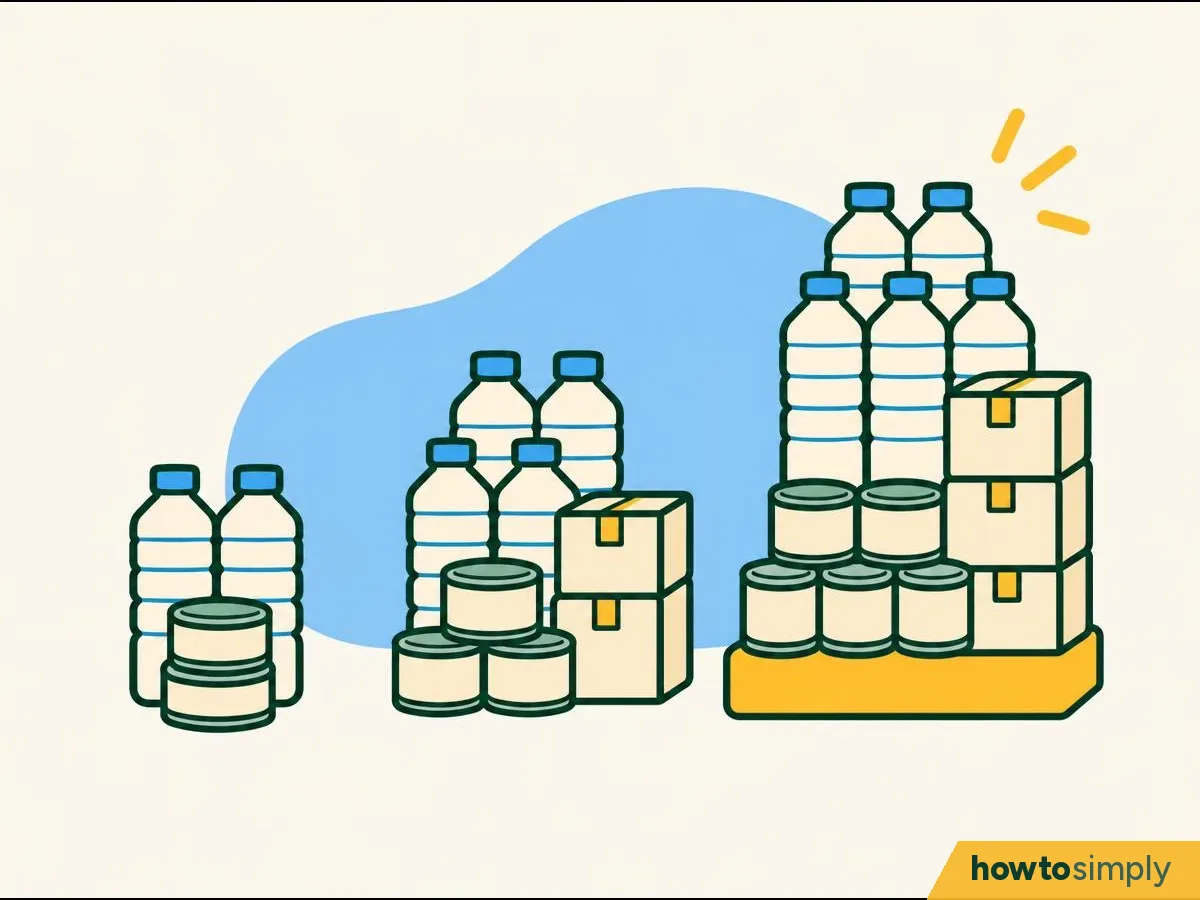
Illustration Start with 3 days. Germany's BBK says even 3 days helps, though it suggests building up to 10. You don't have to get there in one trip: the BBK says you can build up step by step.
You should see: a number of days and a number of people written at the top of your list. Every amount below comes from those two numbers.
Store water for everyone
Illustration 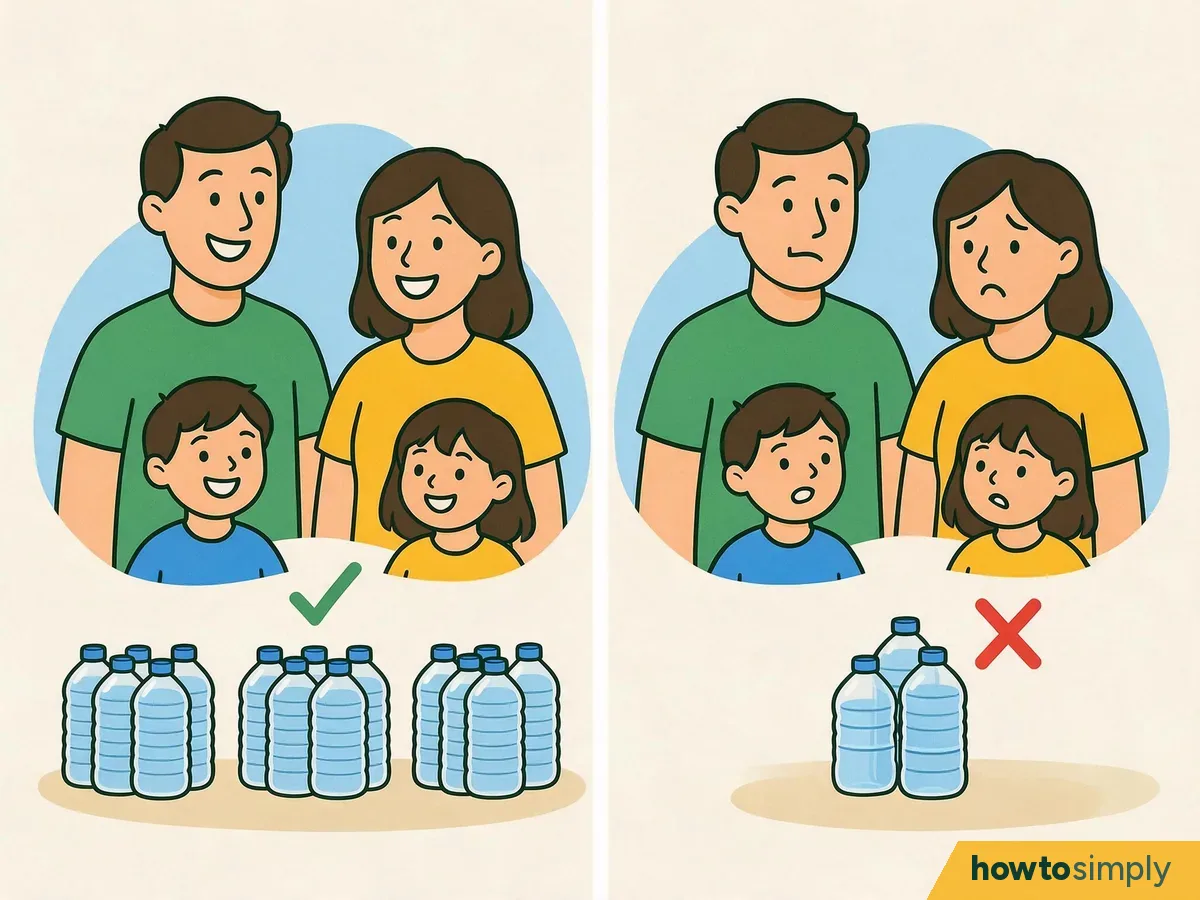
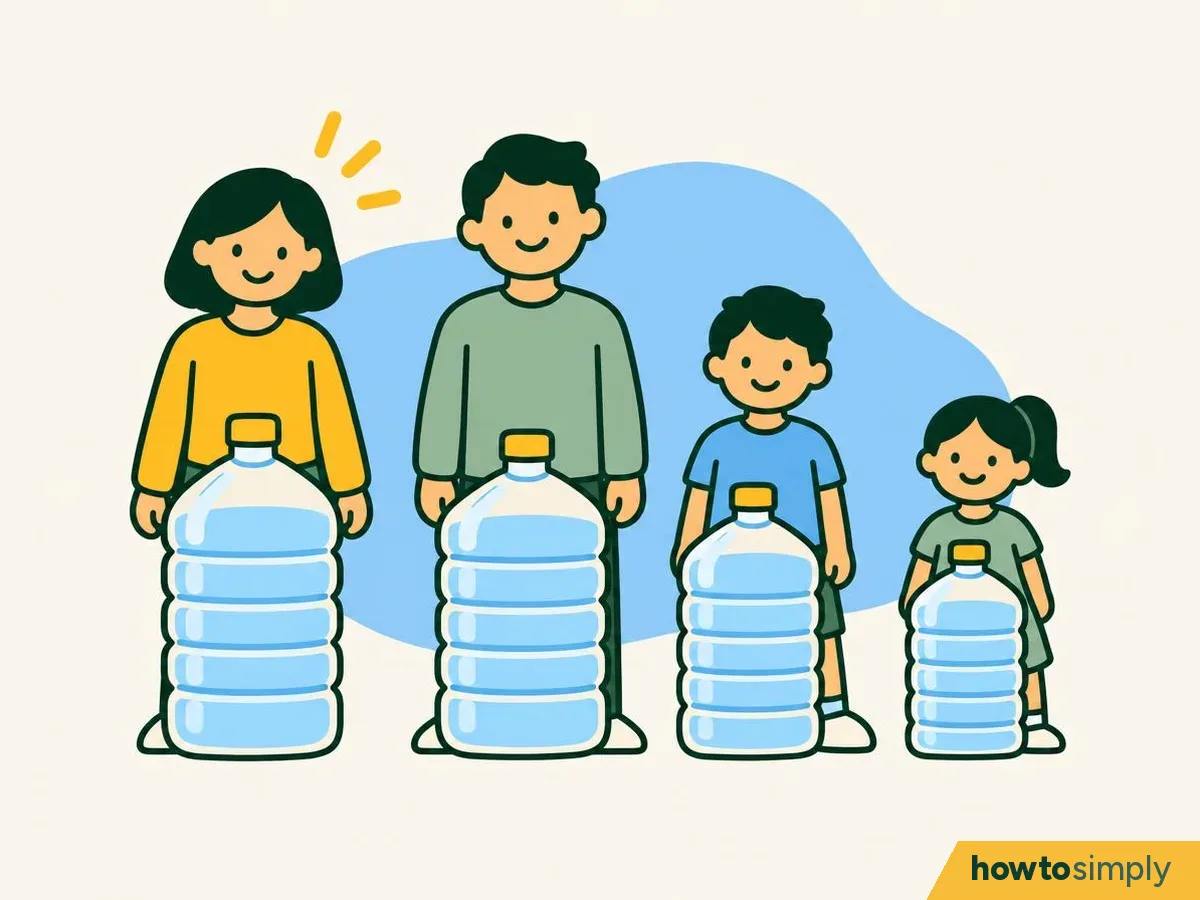
Illustration: water for every person for every day, not one small stack for the whole family Multiply your country's amount by the number of people and the number of days. A family of four planning 3 days on the UK figure needs 36 litres just for drinking (3 litres x 4 x 3), and the UK checklist says to allow more for cooking and washing. The same family on Germany's 10 days at 2 litres needs 80 litres.
You should see: a total in litres, and a stack of bottles that matches it.
Add food that needs no cooking or fridge
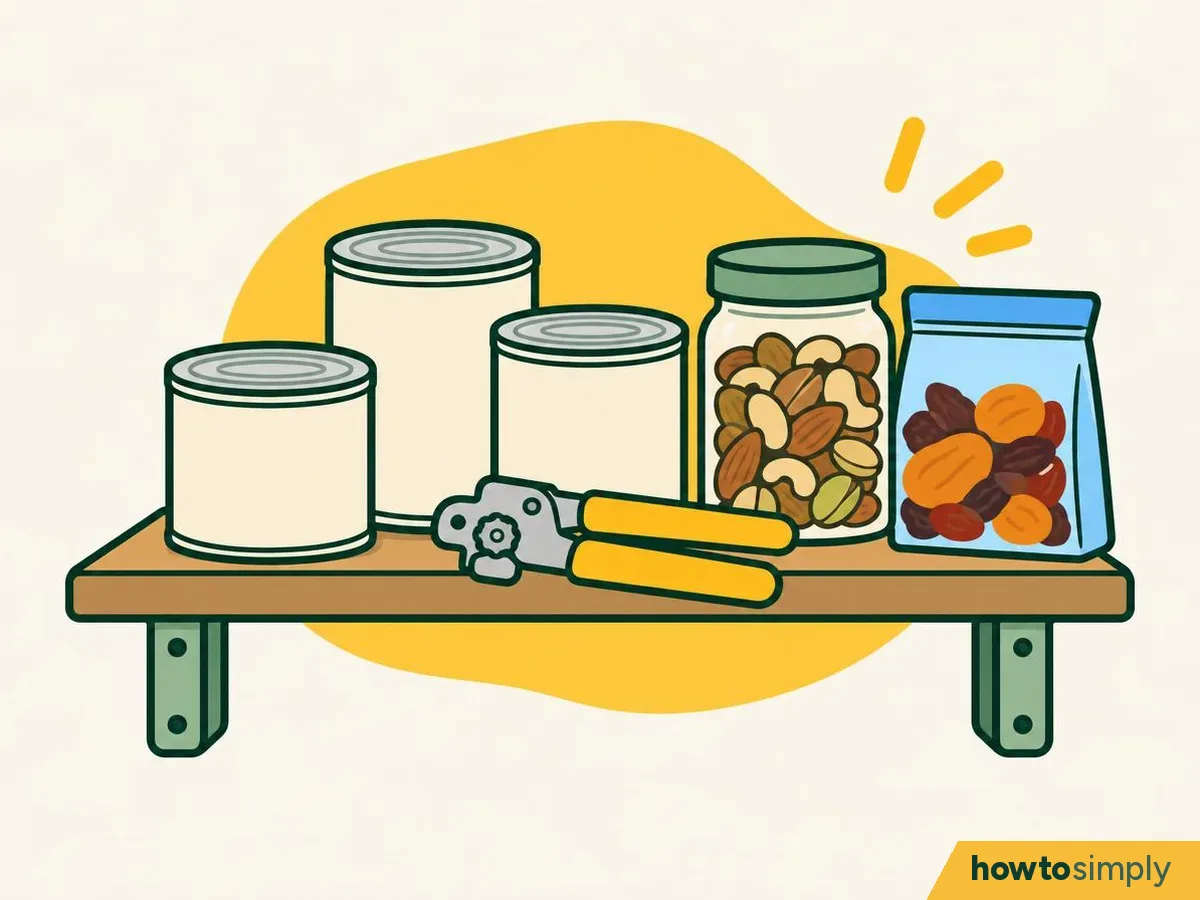
Illustration Tins, dried fruit and nuts are the UK checklist's examples. Choose food your household likes to eat: the BBK says your stock should suit your own preferences and dislikes. Ready.gov lists a manual tin opener for food. Keep tins somewhere cool and dry.
Add a torch and a radio
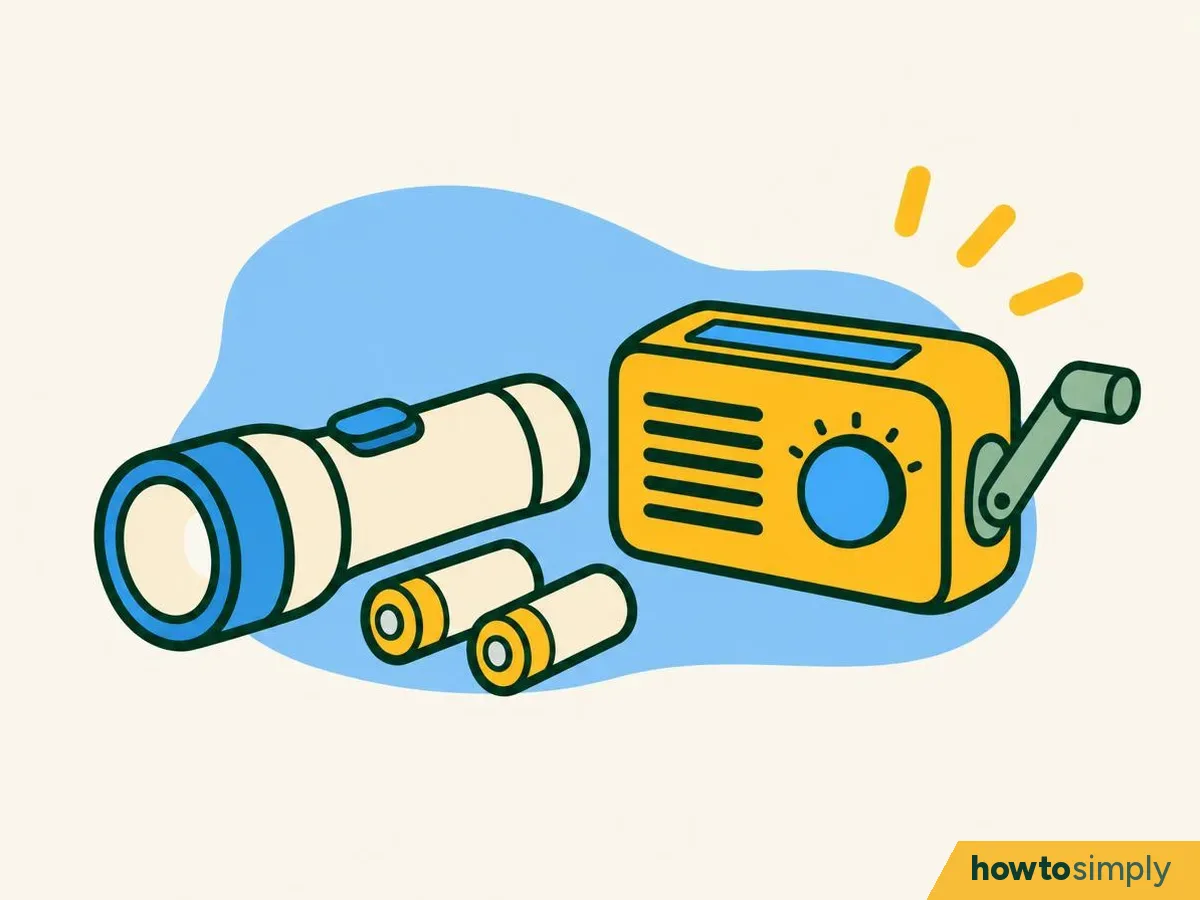
Illustration A torch with spare batteries, and a radio that runs on batteries or a hand crank (Ready.gov). In a long power cut the radio is how you keep getting news once phones and the internet go quiet. Check the batteries fit before you put them away.
Get your phone ready
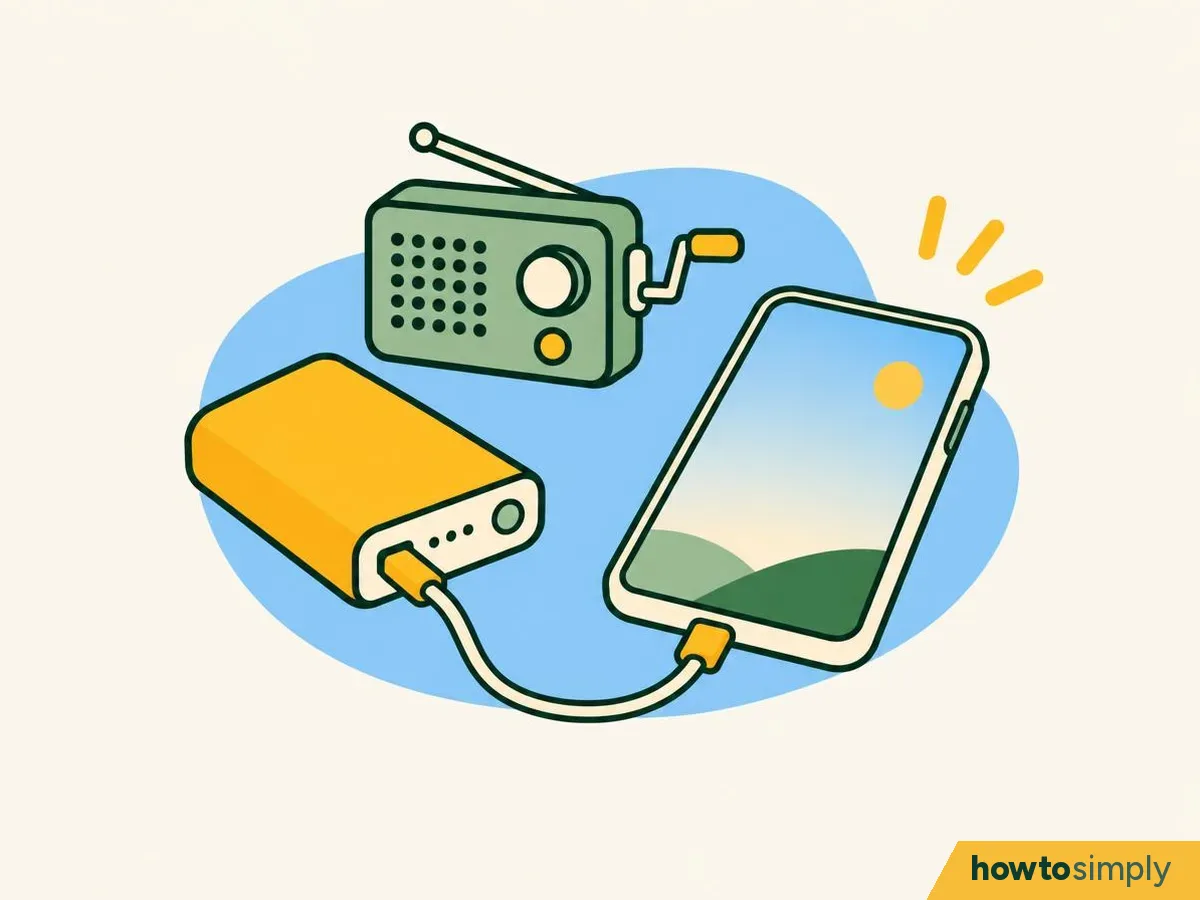
Illustration Keep phone chargers and a backup battery in the kit (Ready.gov). Then spend five minutes on three phone settings before you need them: emergency alerts switched on, your medical details and emergency contacts filled in, and a map of your area downloaded for when there's no signal. Germany's BBK also suggests a warning app such as NINA.
Step-by-step screenshots: emergency alerts on Pixel, Medical ID on iPhone or Galaxy, and offline maps on Android.
Add first aid, medicines and hygiene items
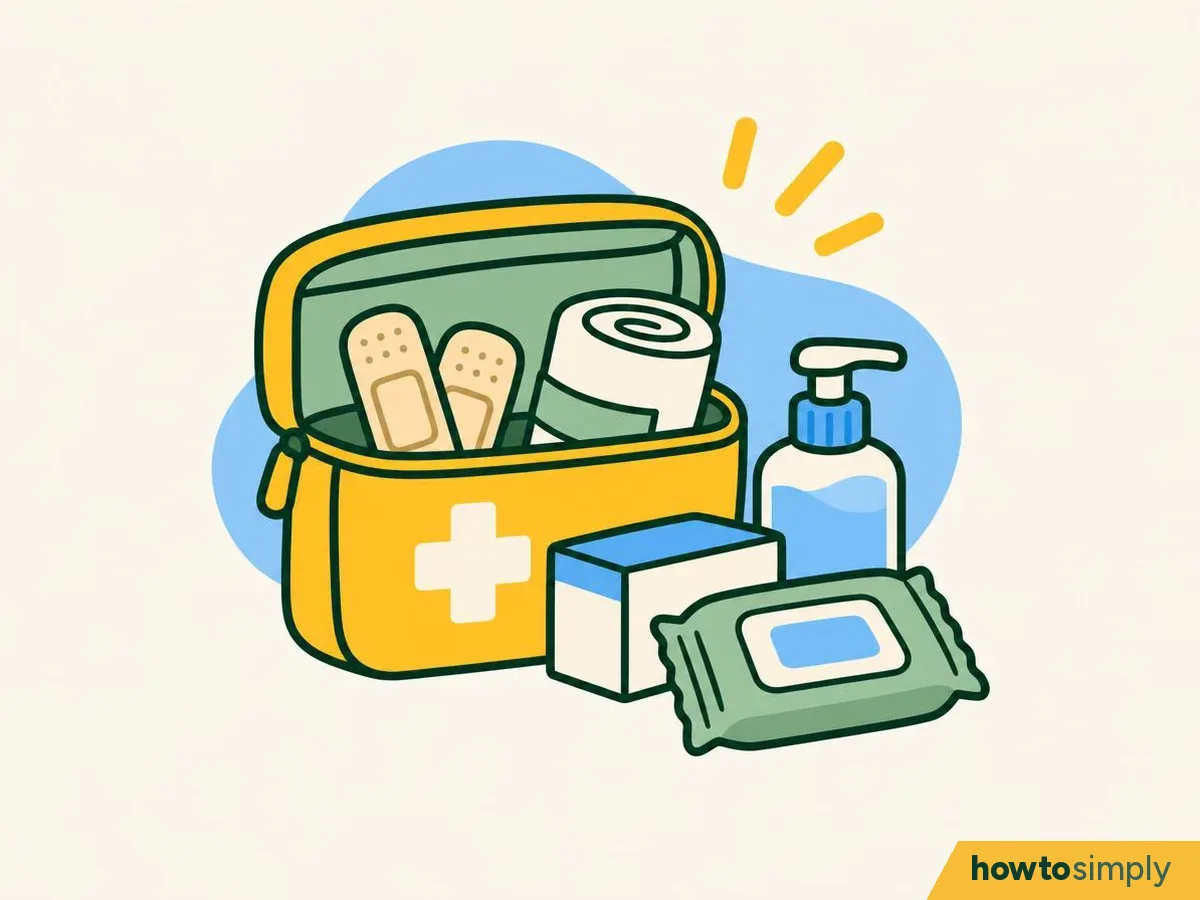
Illustration A first aid kit, prescription medicines, hand sanitiser and moist towelettes (Ready.gov). Medicines are the item people forget. Ready.gov points out that about half of Americans take a prescription medicine every day, and an emergency can make it hard to get a refill or find an open pharmacy. Add glasses and contact lens solution if anyone needs them.
Add cash and copies of your documents
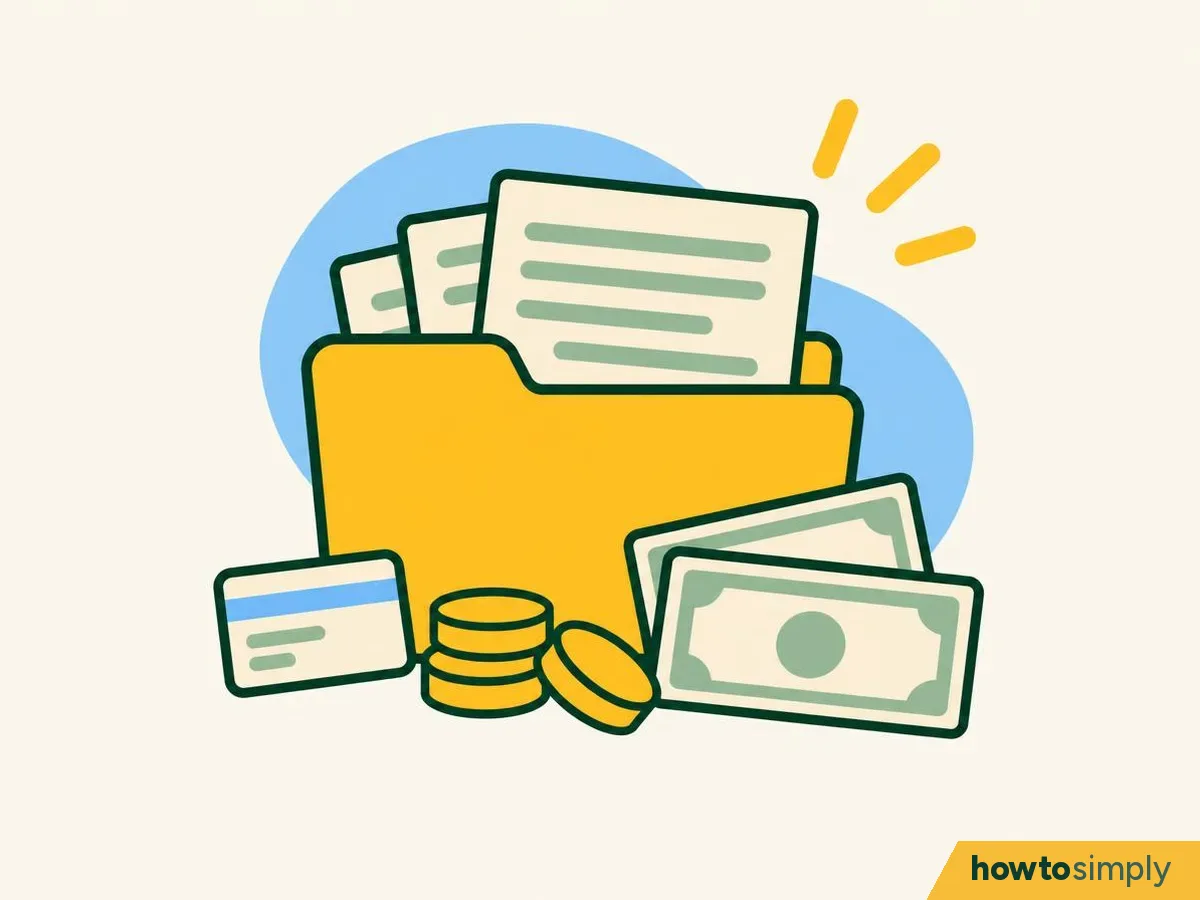
Illustration Cash, and copies of important family documents such as insurance policies, ID and bank records (Ready.gov).
Keep it where everyone knows, and check it
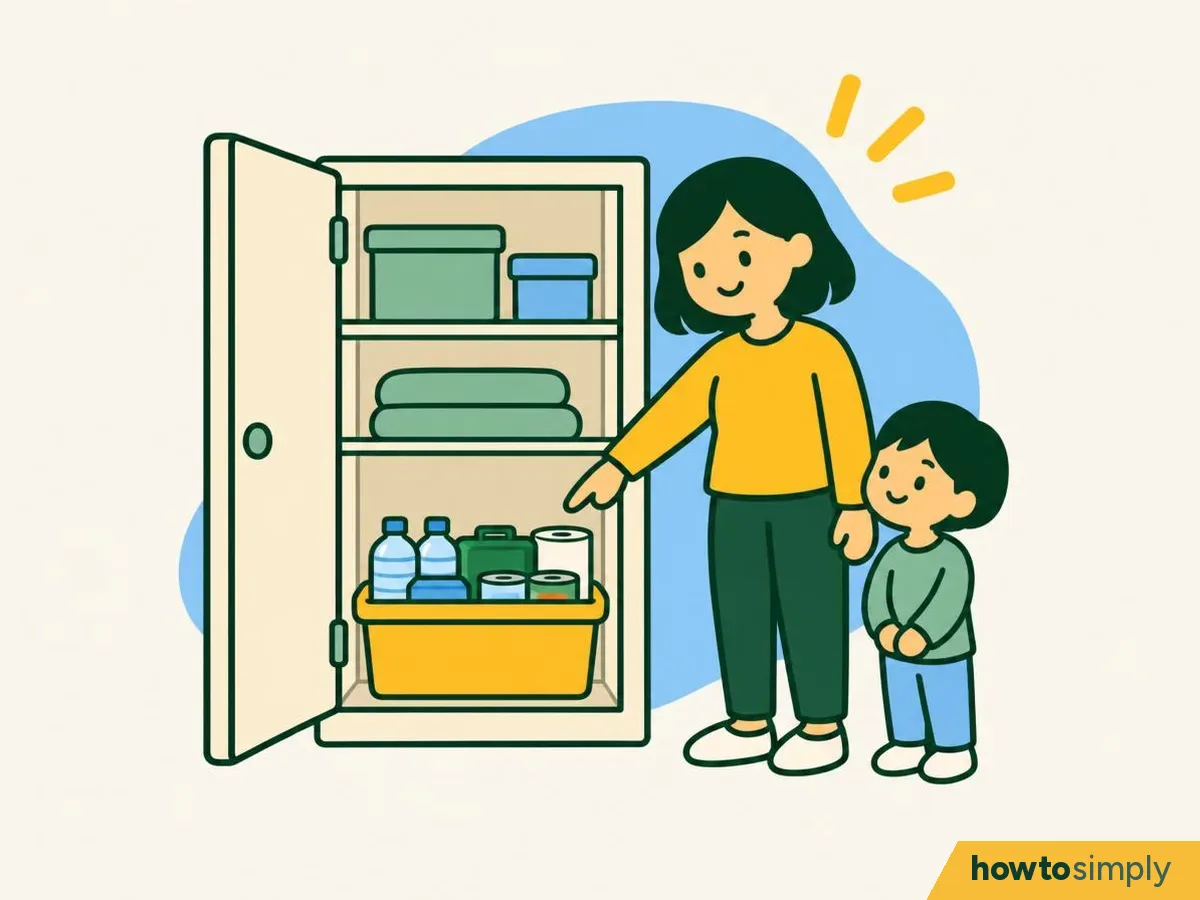
Illustration Ready.gov says to keep it in one set place that everyone at home knows, ready to grab if you have to leave quickly. Show the children too. Then put a reminder in your phone for a year's time to rethink your needs and update the kit, replacing expired items as needed, as Ready.gov suggests.
You should see: everyone at home able to point to the box, and a reminder in your calendar.
Extras worth adding
- Warmth: a warm blanket or sleeping bag for every person (Ready.gov). Ready.gov adds a complete change of clothing suited to your climate, and sturdy shoes.
- Tools and signalling: a whistle to signal for help, a dust mask to filter dirty air, and a wrench or pliers to turn off utilities (Ready.gov). See how to turn off your main water valve.
- Sanitation: wet wipes, bin bags and plastic ties (Ready.gov).
- Paper maps of your local area, and matches in a waterproof container (Ready.gov).
Plan for the people at home
The UK checklist says ready-to-feed (ready-made) baby formula is the better choice, as you might not be able to boil water to mix powdered formula safely. Germany's BBK says its lists aren't binding: your stock should suit any food intolerances, what your household likes to eat and the space you have. Its guide and checklists are free, and come in English and several other languages.
How to store it
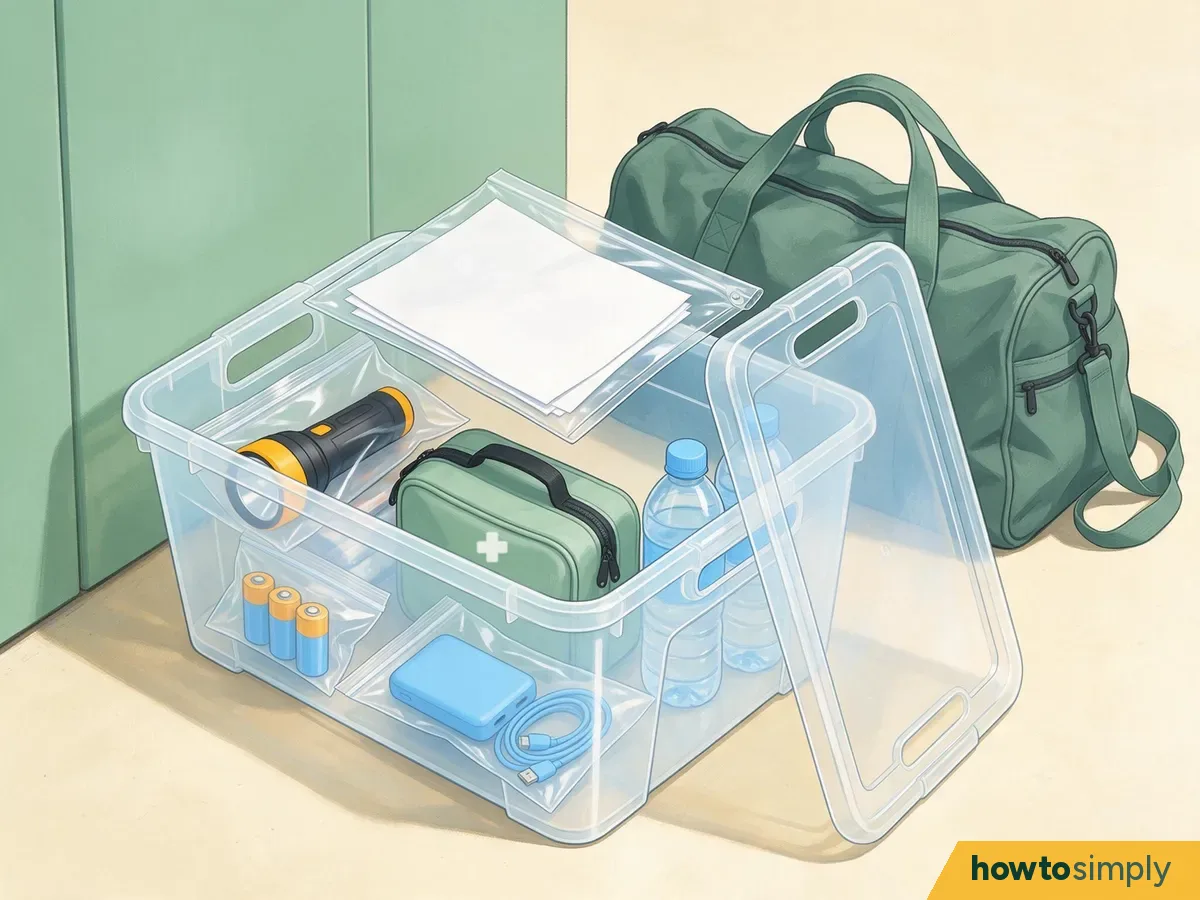
- Keep items in airtight plastic bags, and the whole kit in one or two containers that are easy to carry, such as plastic boxes or a holdall (Ready.gov).
- Store tins somewhere cool and dry, and keep boxed food sealed in plastic or metal containers with tight lids (Ready.gov).
- Store document copies in a waterproof container, or save them electronically (Ready.gov).
A smaller kit for work and the car
Ready.gov points out that you can't predict where you'll be when something happens. It suggests being ready to stay at work for at least 24 hours, with food, water, medicines and comfortable walking shoes in a grab-and-go bag. Keep some emergency supplies in the car too, in case you get stranded.
Start with what you have, and talk to the neighbours
The UK checklist suggests checking your cupboards first, as you may already have many of the items. It also suggests talking to neighbours about what you could share during an outage, and swapping contact details. If you end up with spare items, you could donate them to people who can't afford to prepare, or help someone by printing or copying their important documents.
In an emergency
Call 112 in the EU, 999 or 112 in the UK, or 911 in the US.
Questions readers ask
How much water does a family of four need for three days in the UK?
For drinking, 3 litres x 4 people x 3 days = 36 litres. The UK checklist says you need more for cooking and washing.
Why do Germany and the US give different amounts of water?
The BBK plans 2 litres per person per day. Ready.gov plans 1 gallon (about 3.8 litres) per person per day, which also covers washing.
What is NINA?
Germany's official warning app. The BBK checklist suggests having a warning app such as NINA installed.
Sources and method
- Researched by
- Abu Bakar Saadat
- Tested by our team
- No. We have no record of anyone on our team trying these steps, so treat them as researched instructions from the sources below.
- Pictures
- 11 illustrations drawn for this article, each marked Illustration (drawings, not photos).
- Sources
- 3 named sources, linked below.
- What this page adds
- A side-by-side table of the UK, German and US official checklists, showing how many days each plans for and how much water per person per day.
What to do next
Do a home safety check Step 6 of 6
- Smoke alarm chirping? What the chirp means and how to stop itTest the smoke alarms first.
- Carbon monoxide alarm beeping? What each beep means and what to do nowThen the carbon monoxide alarm, if you have a boiler, fire or stove.
- How to find and turn off your main water valve (UK, US, Germany)Find your stop tap before you ever need it.
Remind me
Check your emergency kit for expired items every 6 months (UK Government checklist). Add a repeating reminder to your own calendar. It links back to this page.
Nothing is sent to us. The reminder lives only in your calendar.
Did this solve the problem?
Where did you get stuck?
What did you think?
Reaction counts are loading.
Sources
We use primary, official and specialist sources appropriate to the topic.