How to use a fire blanket
London Fire Brigade says don't tackle a pan fire: turn off the heat if you safely can, leave the room, shut the door and call 999. If a pan fire is small and has only just started, a lid or a fire blanket can smother it; switch off the heat and keep it covered until everything has cooled.
Researched by Abu Bakar SaadatPublished 29 October 2026Last changed 17 November 2026Verified 17 November 2026Version 6See all changes
On this page 15 sections
Information, not professional advice.
If something is on fire right now, leave the room, close the door and call 999. If you are reading ahead so you are ready, that is a really wise thing to do, and I am glad you are here. We will go through what fire services advise, calmly and step by step.
Fire blankets are sold for kitchen fires (FireAngel). BSI says a fire blanket is one way to tackle some kinds of small fire while they're just starting. I am saying this up front because it can feel confusing when the experts disagree. This guide shows you what each one says, how to use a blanket if you choose to, and what to do instead, so you can decide with all the facts in front of you.
What's on fire?
A pan, and the fire is small and just started
Heat off, then smother it, or get out. Start at The first seconds.
It's spreading, or you're not sure
Get out now. Go to Leave and call.
Someone's clothes
Stop, drop and roll. Go to If clothes catch fire.
The first seconds: what never to do, and whether to tackle it
Never pour water on a burning pan.
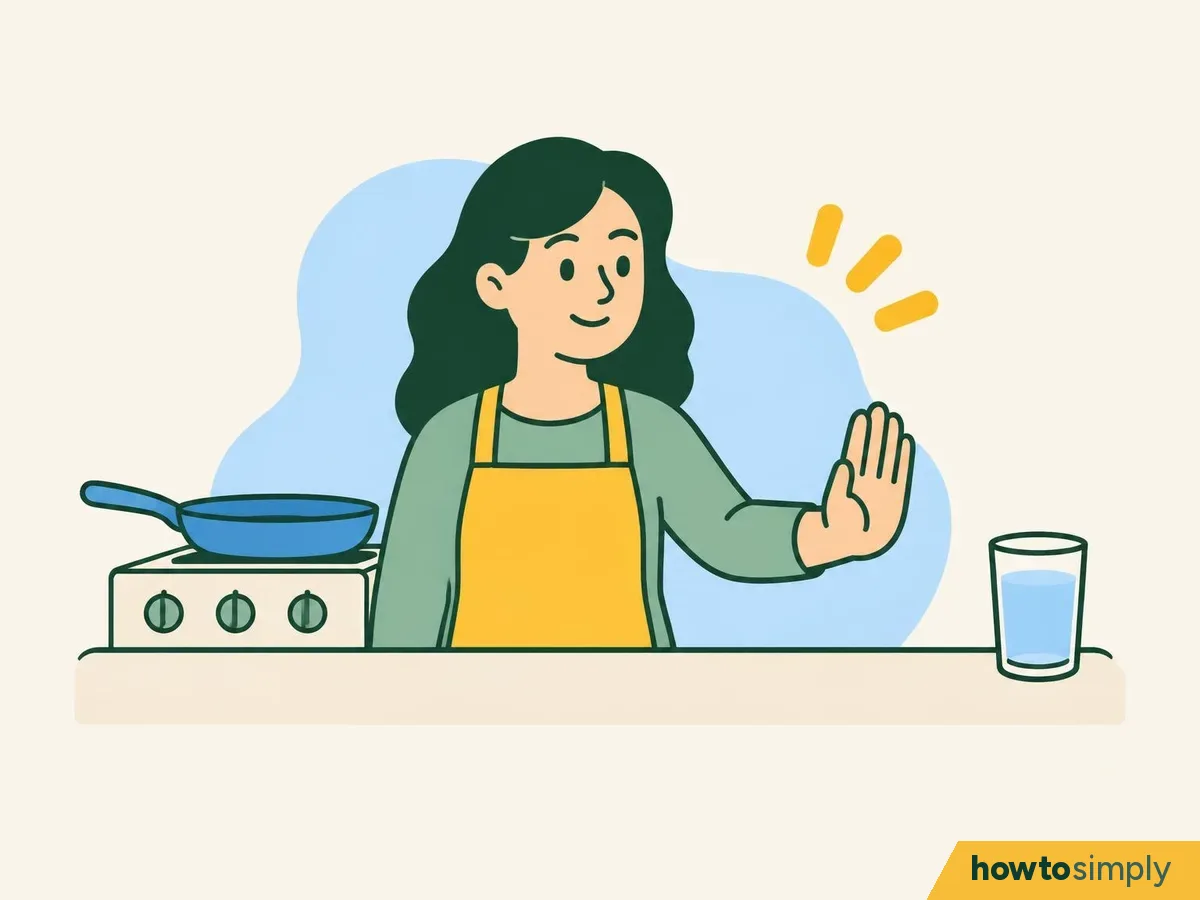
Illustration Water on burning oil can cause a fireball (London Fire Brigade). The water turns to steam in an instant: one litre of water becomes about 1,700 litres of steam, which throws burning fat out of the pan (Freiwillige Feuerwehr Lehrte).
If you use a damp tea towel, as older UK advice suggested, wring it out well first (MOD, 2010). NFPA: never pour water on a grease fire.
Don't move the pan.
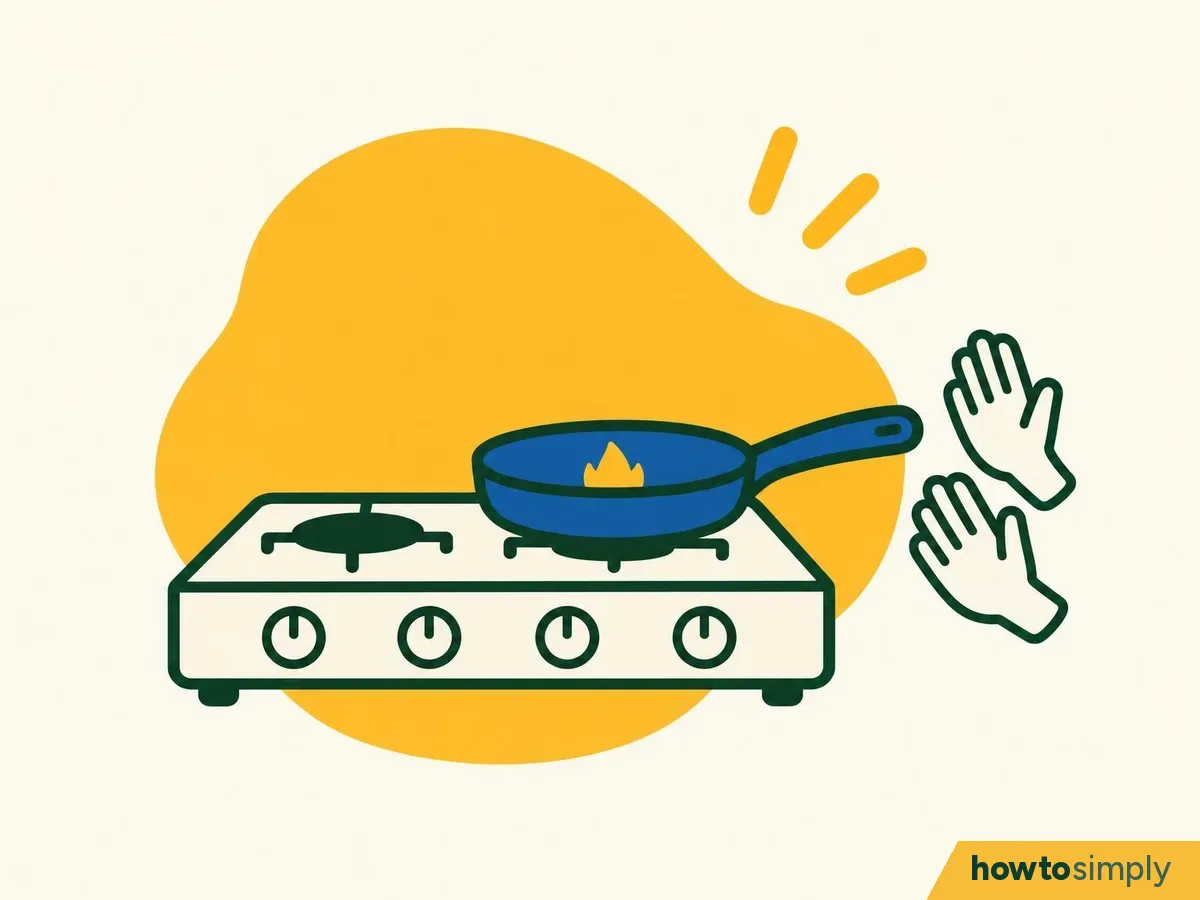
Illustration London Fire Brigade says not to move a burning pan.
Switch off the heat, but only if you can get to it safely.
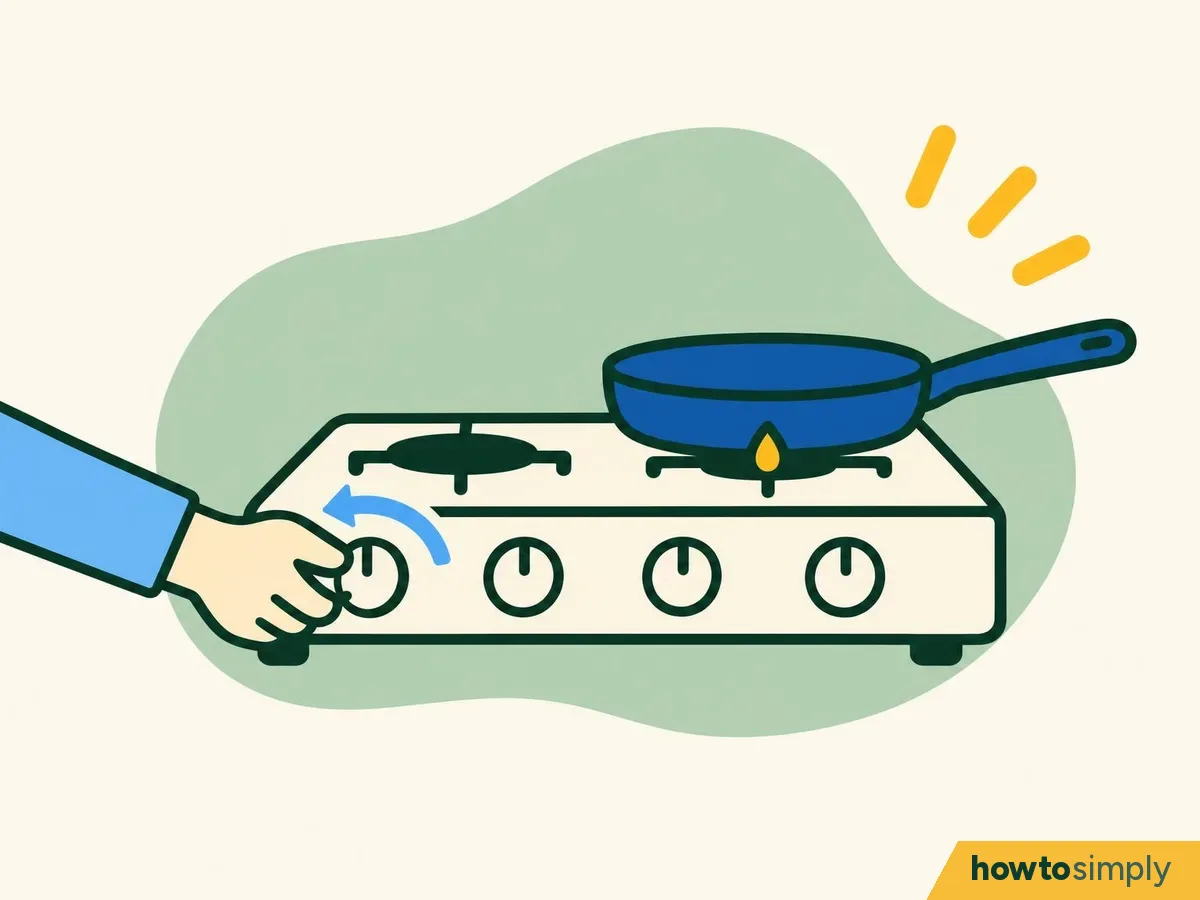
Illustration Turning off the heat stops the fire from growing, but only do it if it's safe (London Fire Brigade). For gas or electric hobs, switch off the energy supply to the cooker (Altusried fire brigade).
You should see: the knob or control at off, and no more heat going into the pan.
Don't tackle the fire yourself.
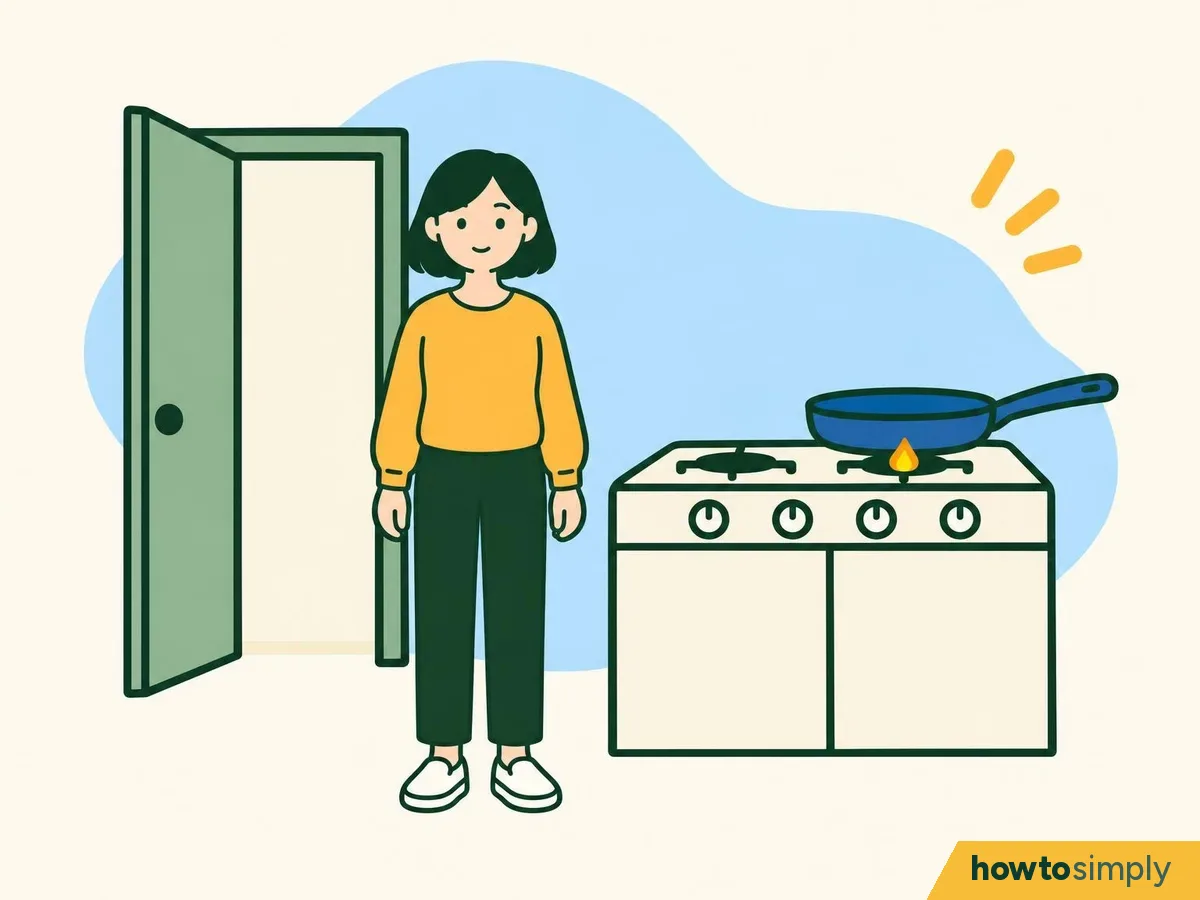
Illustration Older UK guidance said only to have a go if the fire has only just started and you're certain you can put it out without putting yourself in danger (MOD, 2010). London Fire Brigade's current advice is not to tackle it at all.
If the flames are higher than the pan, are spreading, or you hesitate, go to the next step.
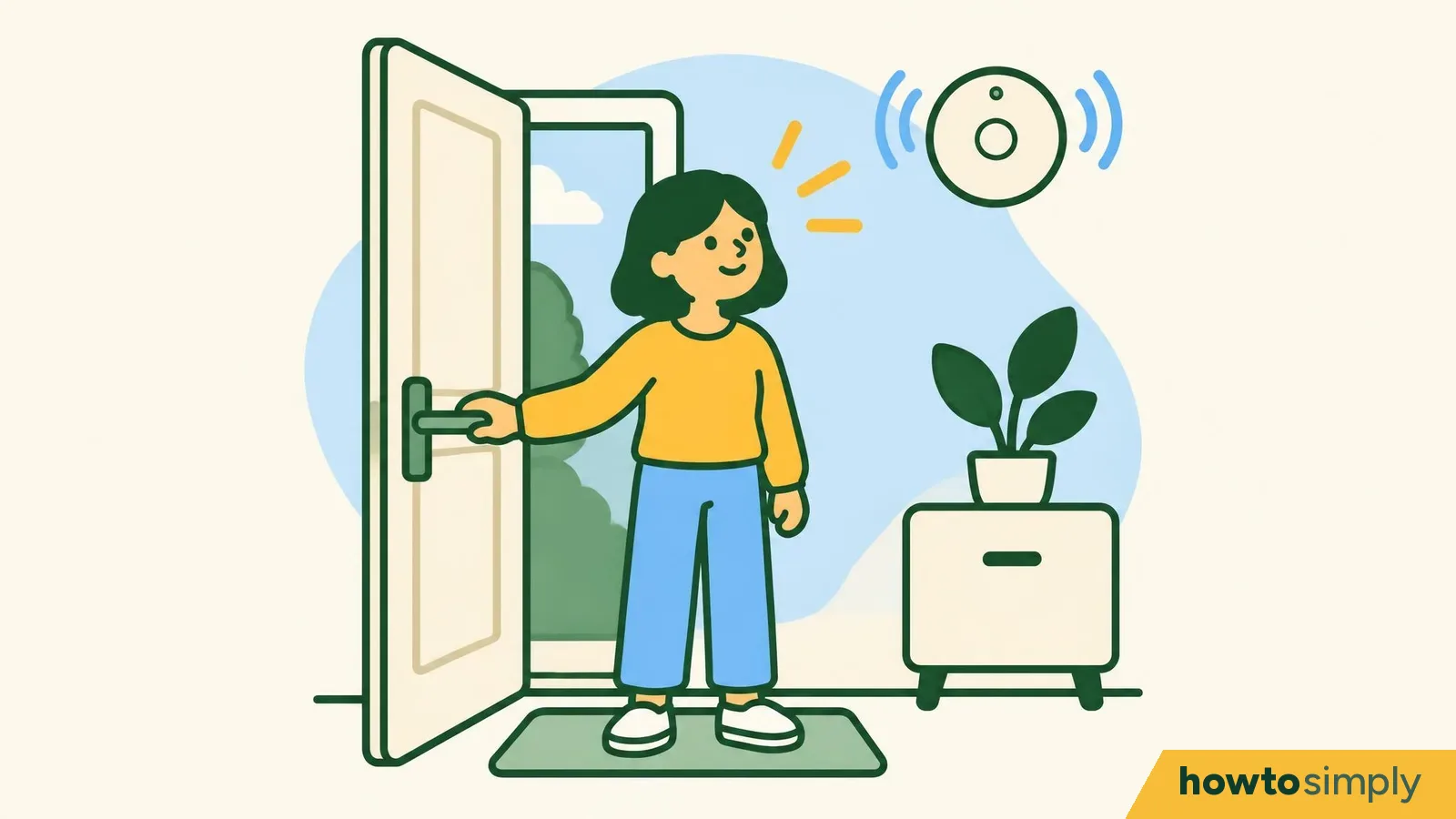
Get out of the room, shut the door, tell everyone else and get help.
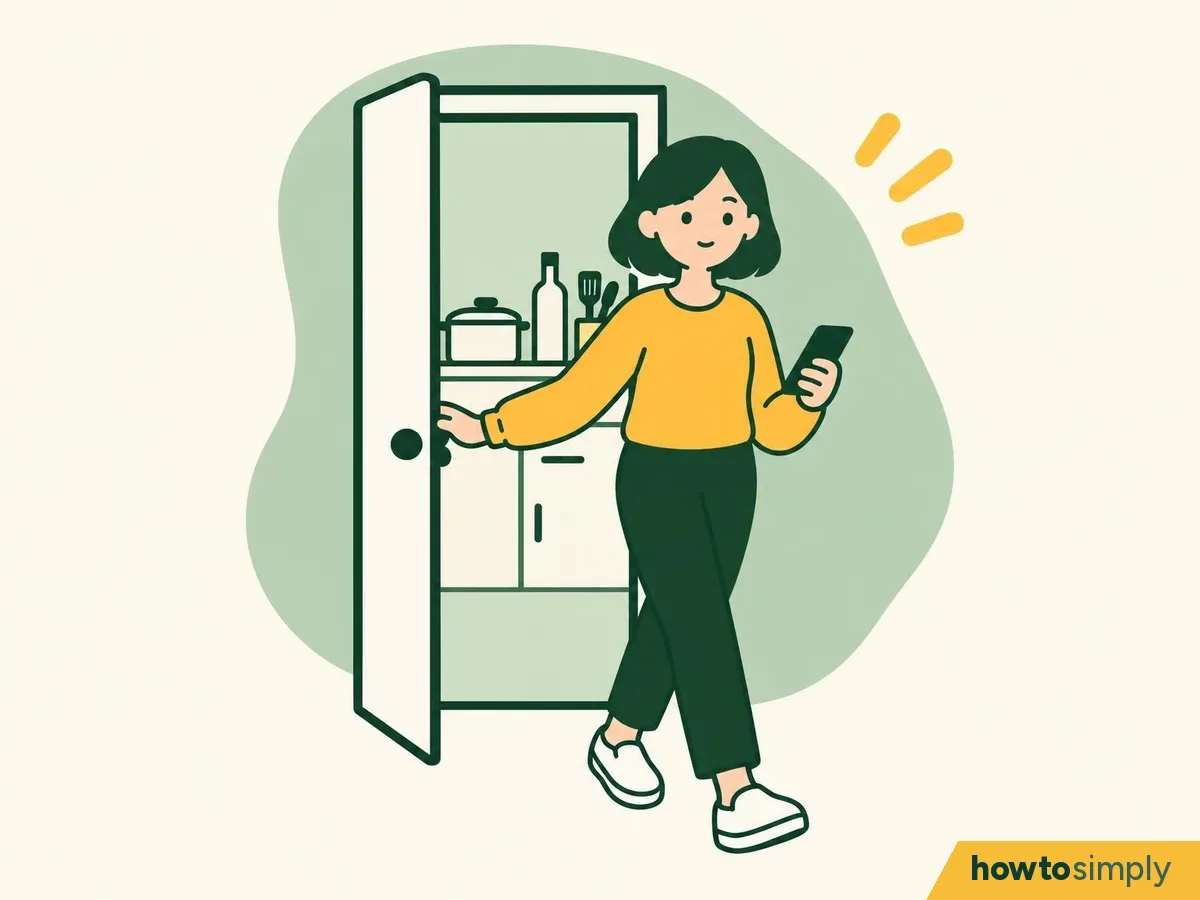
Illustration Close the kitchen door behind you and warn everyone at home (London Fire Brigade). Call 999 in the UK (London Fire Brigade).
You should see: you out of the room, the kitchen door shut behind you.
Smother a small pan fire
If you have a lid, slide it over the pan.
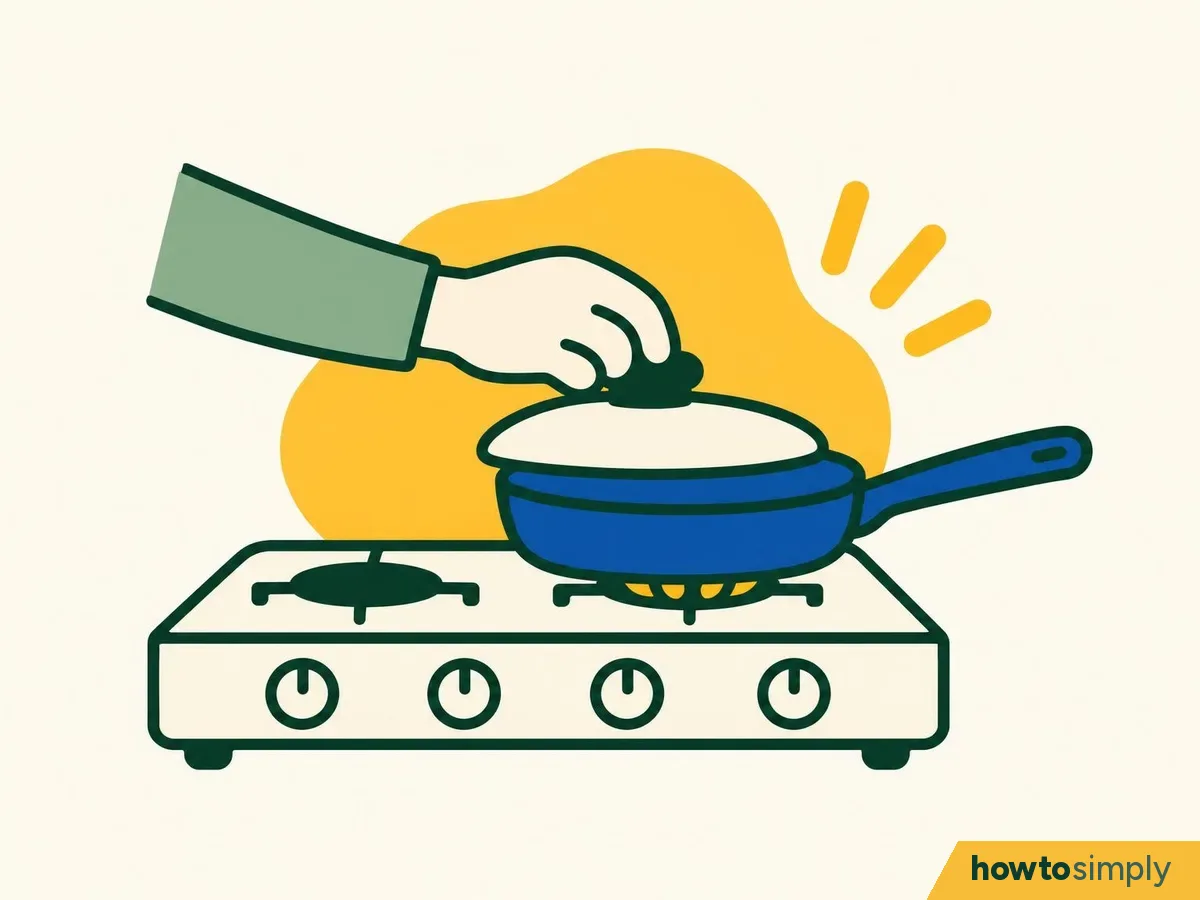
Illustration NFPA says to keep a lid nearby when you cook and to smother a small grease fire by sliding the lid over the pan, then turning off the burner. German fire brigades also say a lid (Altusried fire brigade).
Don't lift the lid until the pan is cold, or the fire could flare up again (NFPA).
Careful: fire services don't agree on blankets for pan fires. In Germany, fire brigades and DGUV say they're not suitable because flames can come through the fabric.
No lid? Tug both tapes downwards and outwards and the blanket slides free.
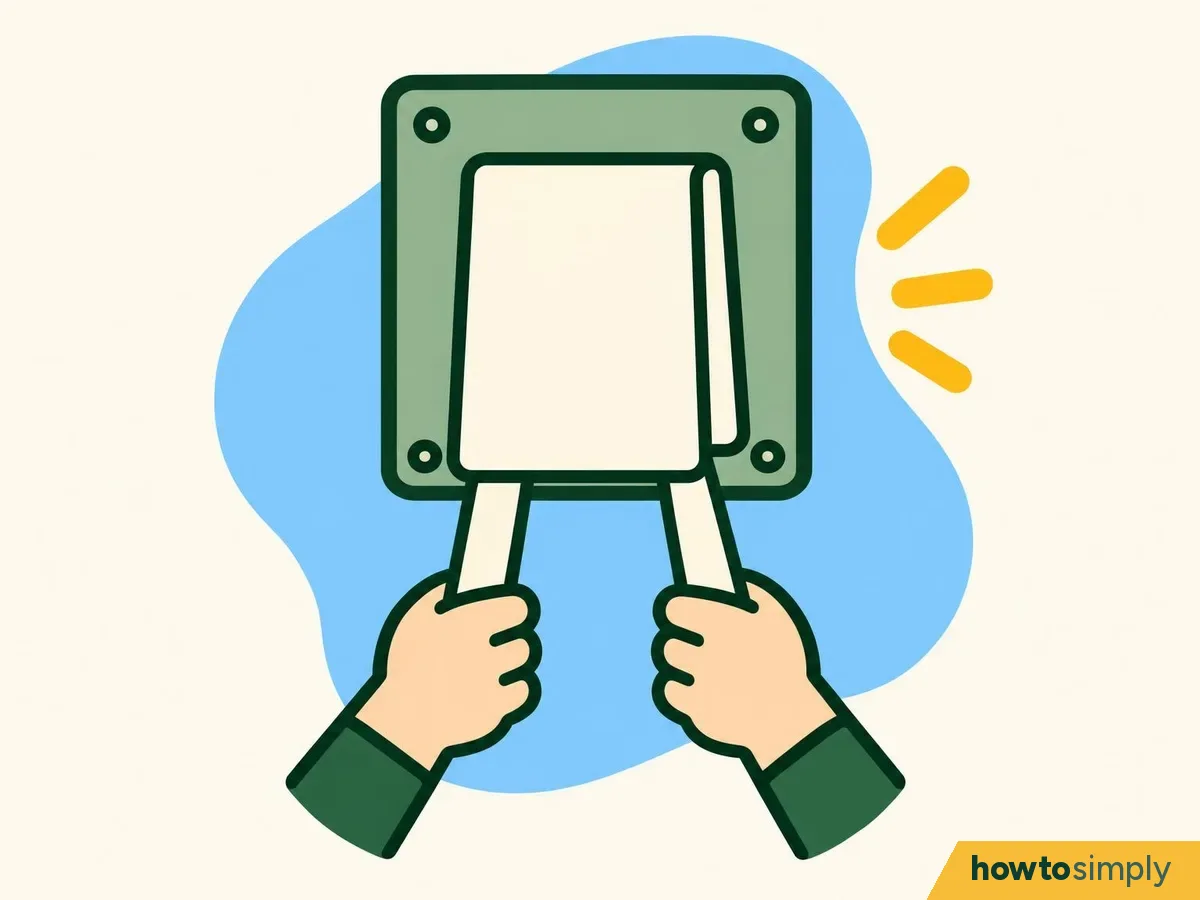
Illustration Grip one tape in each hand and pull downwards and out (FireAngel).
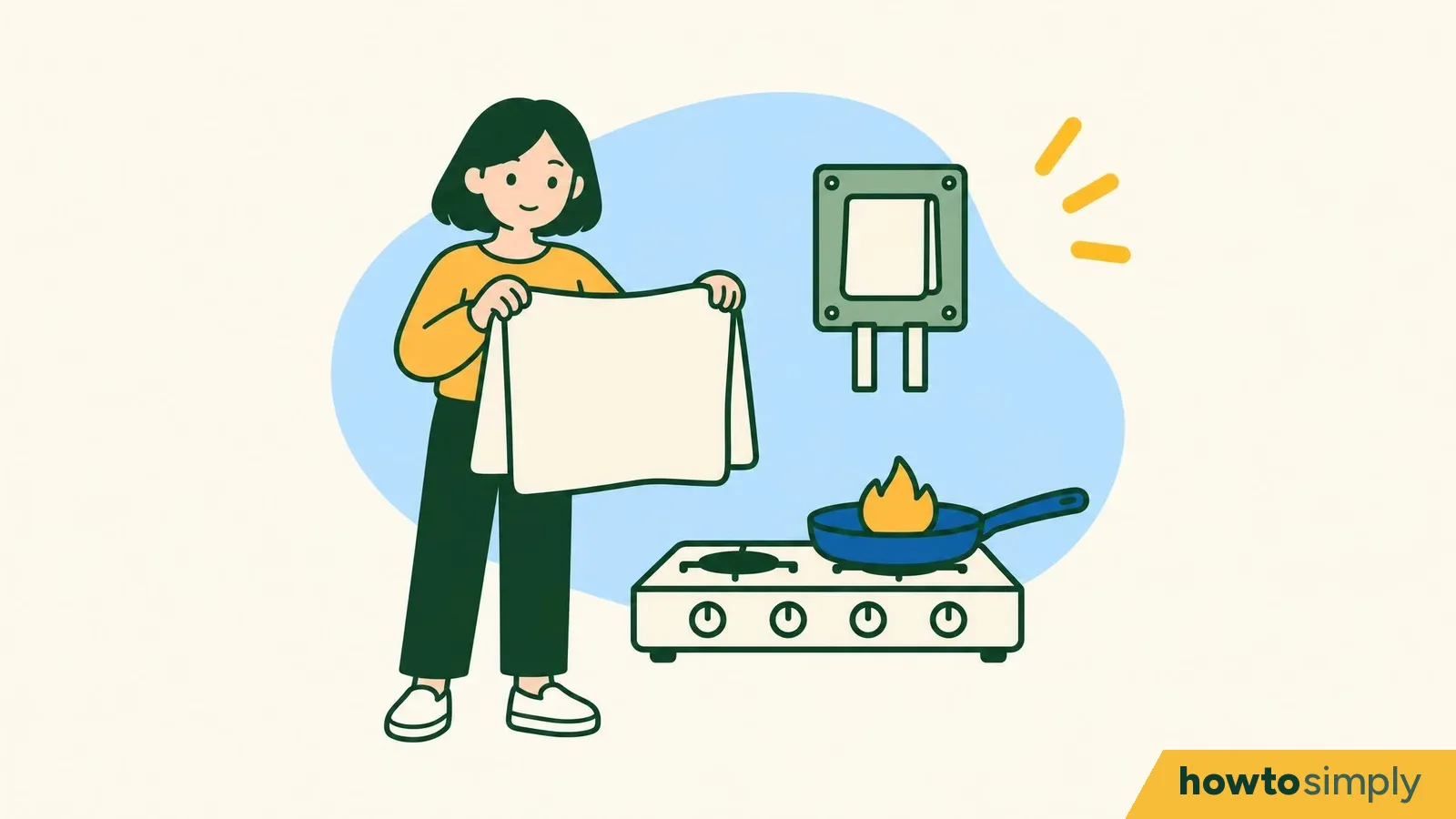
Hold it up in front of you like a shield.
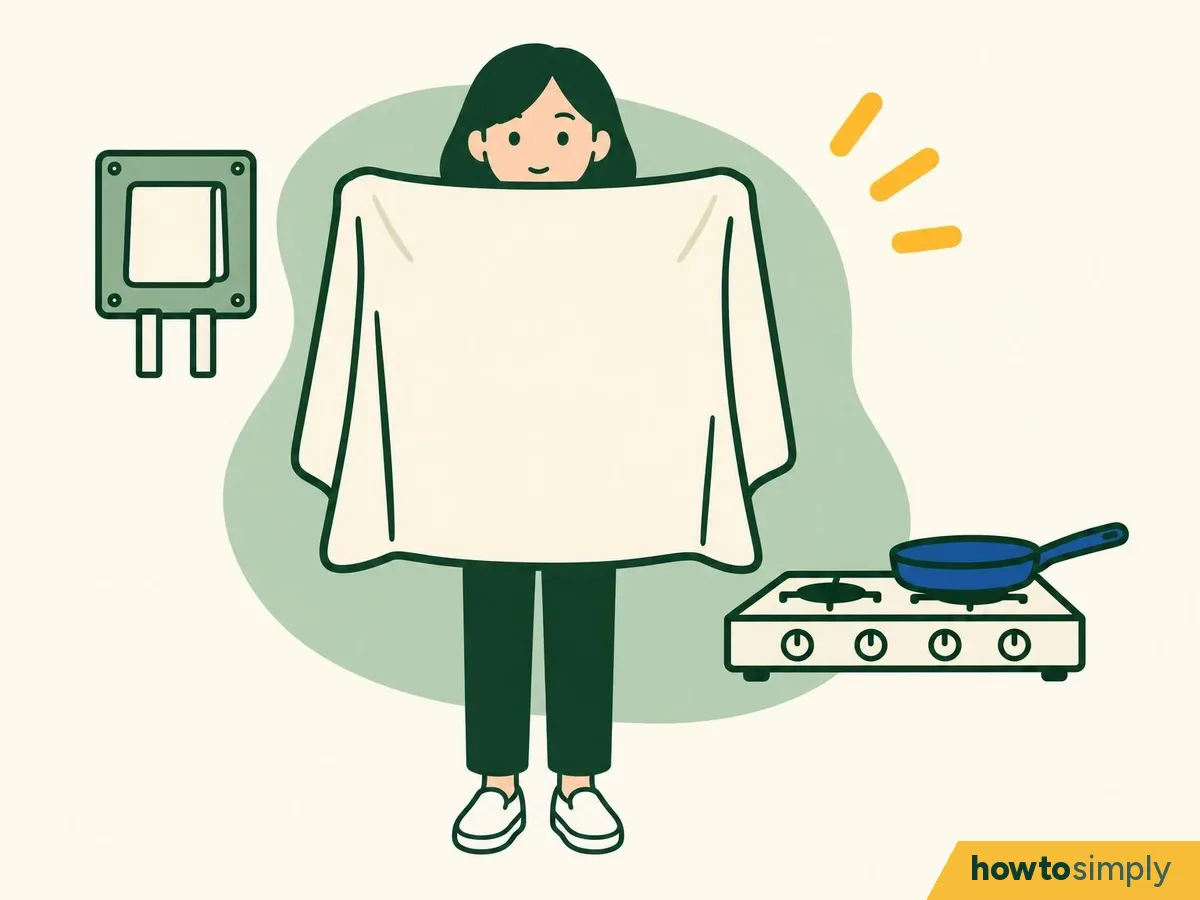
Illustration Hold the blanket in a shield position (FireAngel).
Lay it gently over the pan, then turn off the heat.
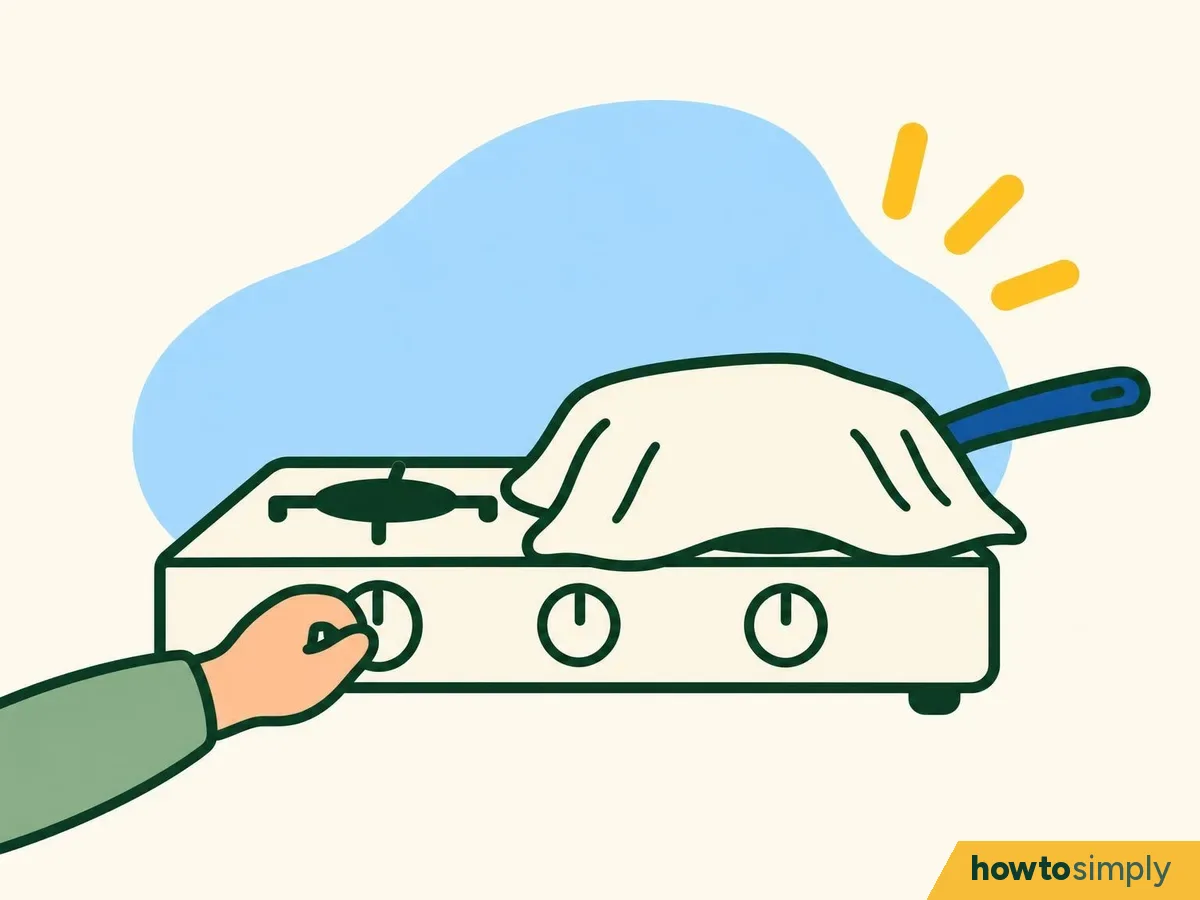
Illustration Place it gently over the fire (FireAngel). Then switch off the heat, if you haven't already (FireAngel).
You should see: the pan covered by the blanket.
Leave it covered until everything is cold, and call the fire service.
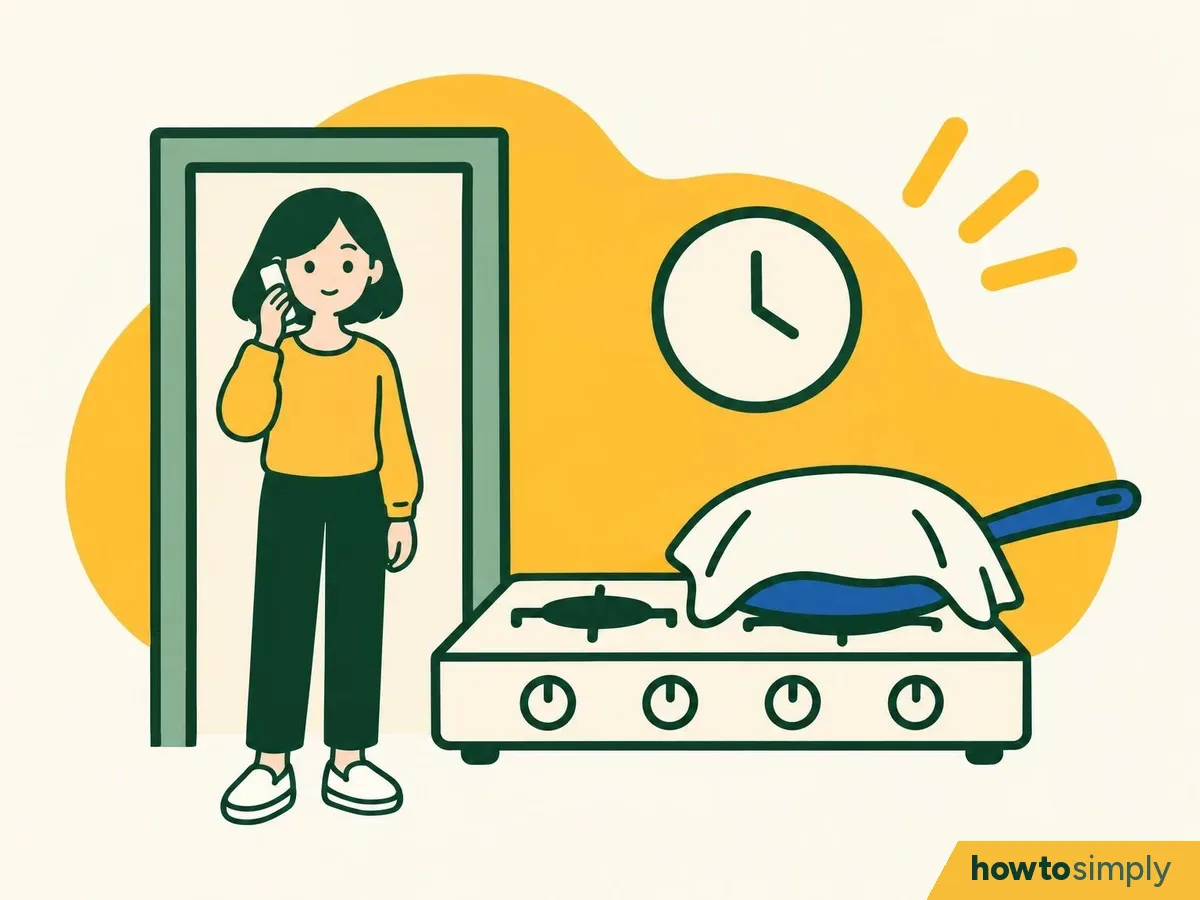
Illustration Leave the blanket in place until cooled (FireAngel). Don't lift a corner to check: the fire can restart (NFPA, for lids). The older UK leaflet also says to call the fire brigade (MOD).
Then replace it: EN 1869 covers fire blankets that are not reusable (BSI).
If clothes catch fire
Stop, drop and roll.
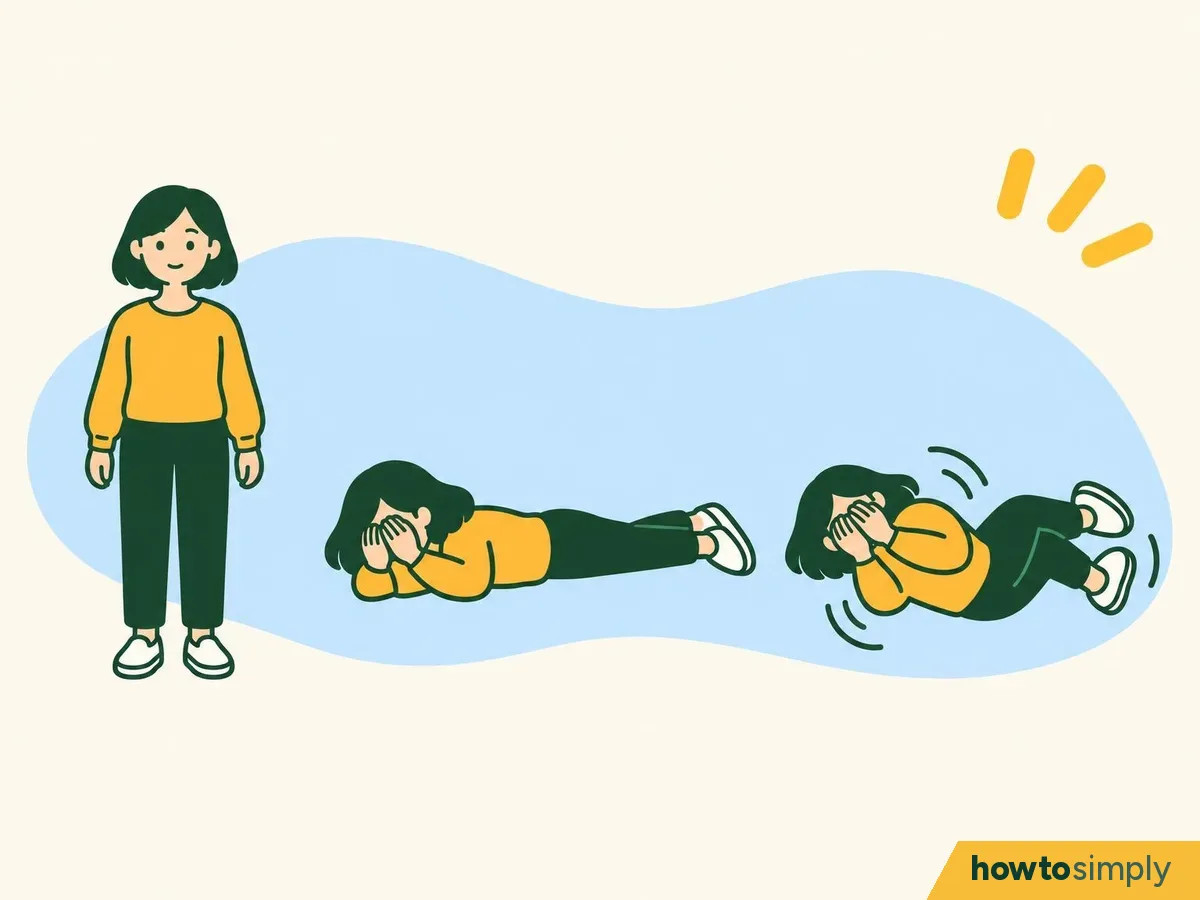
Illustration Stop where you are, because running makes the flames spread faster. Drop to the ground to limit how far the flames can reach, and roll to put them out (London Fire Brigade). Keep your hands over your face while you roll (NFPA).
Smother the flames with a fire blanket or heavy fabric.
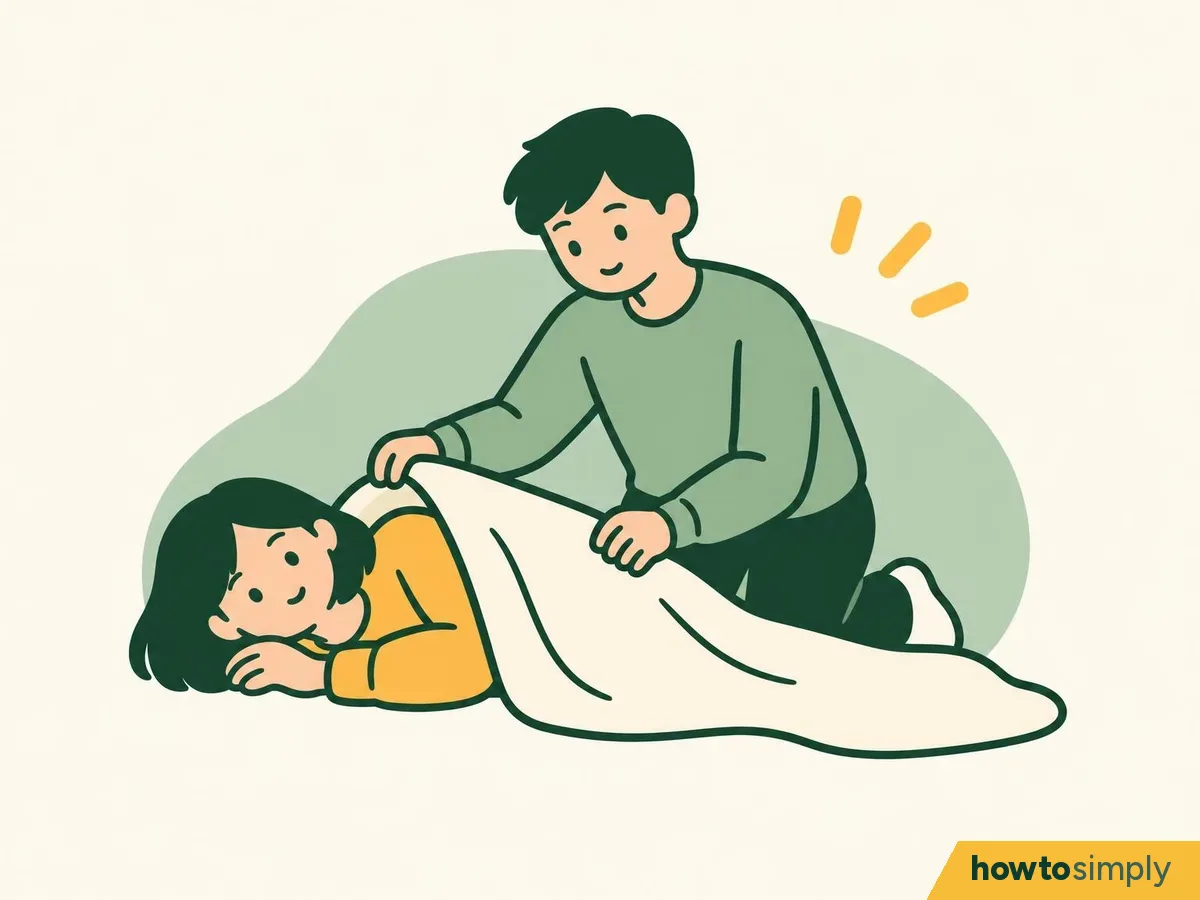
Illustration London Fire Brigade says wrapping yourself in a fire blanket or heavy fabric helps put the flames out. NFPA says to use a blanket or towel if you can't stop, drop and roll.
DGUV, the German accident insurers' body, has doubts about blankets on people for workplace use, because a burning person often runs or resists. Once the flames are out, remove any clothing or jewellery near the burn, but do not remove anything stuck to it (NHS).
Hold the burn under a cool running tap for 20 minutes.
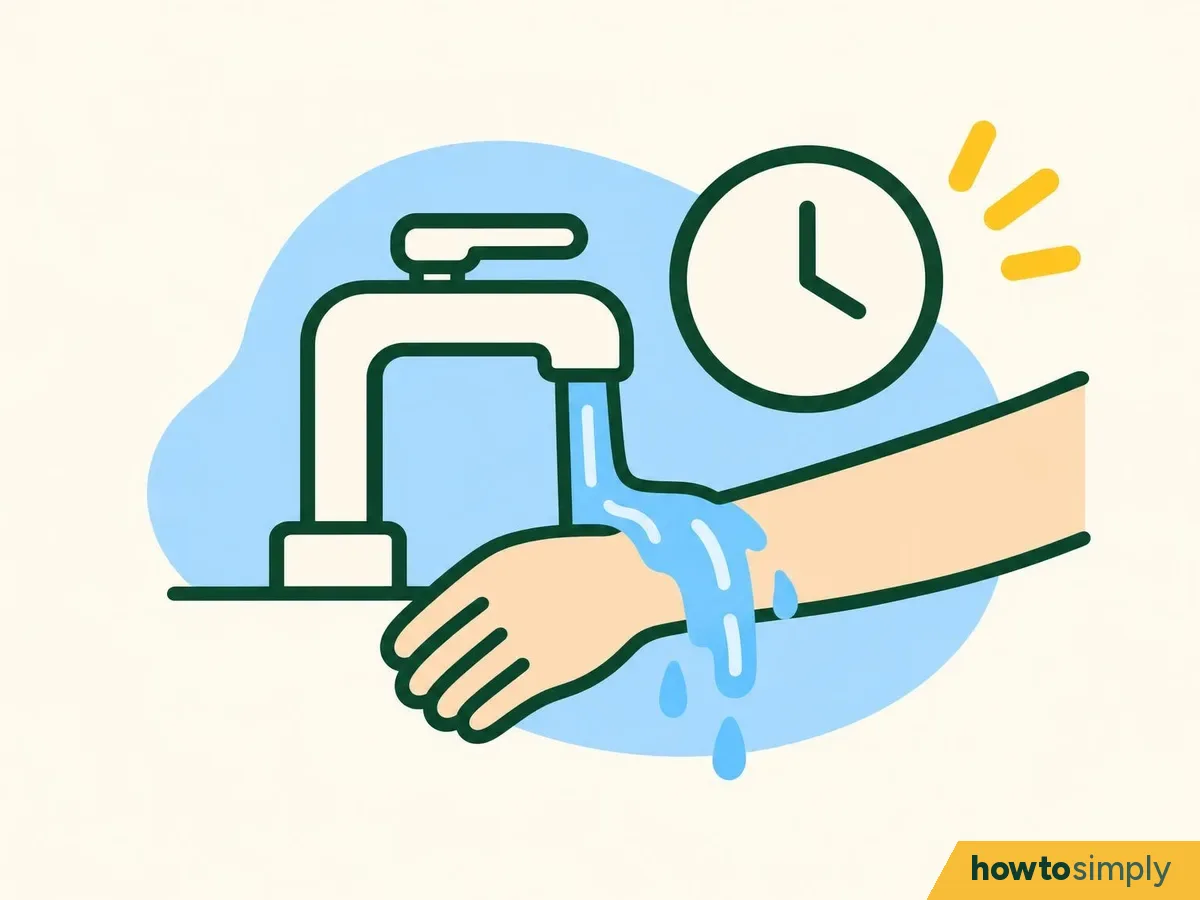
Illustration The NHS says to cool a burn under cool running water for 20 minutes, then cover it loosely with cling film. Don't use creams, oils or butter.
Call 999 or go to A&E for large or deep burns, or burns on the face (NHS). In other countries, call 112, 911 or 1122.
Choose and place a blanket
This part is for the calm moments, when nothing is burning and you have time to think it through.
If you buy one, check it's tested to EN 1869:2019.
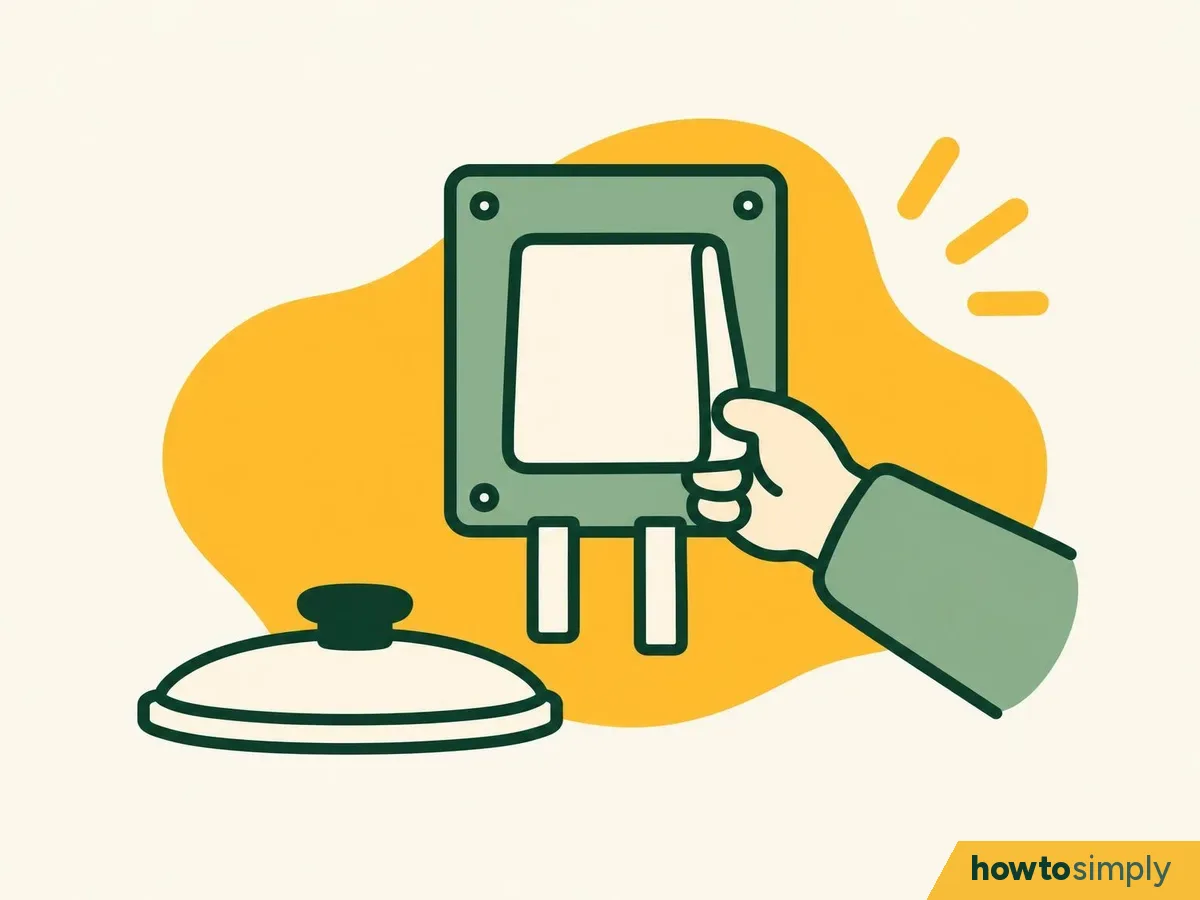
Illustration BS EN 1869:2019 is the current standard, for single-use blankets meant to be used by one person (BSI). Its fire test only covers fryers with up to 3 litres of oil (DGUV).
In the US, NFPA says no fire blankets on the market are listed to existing safety standards and doesn't recommend buying them. A lid is the safer kit there.
Hang it where you can reach it without leaning over the hob.
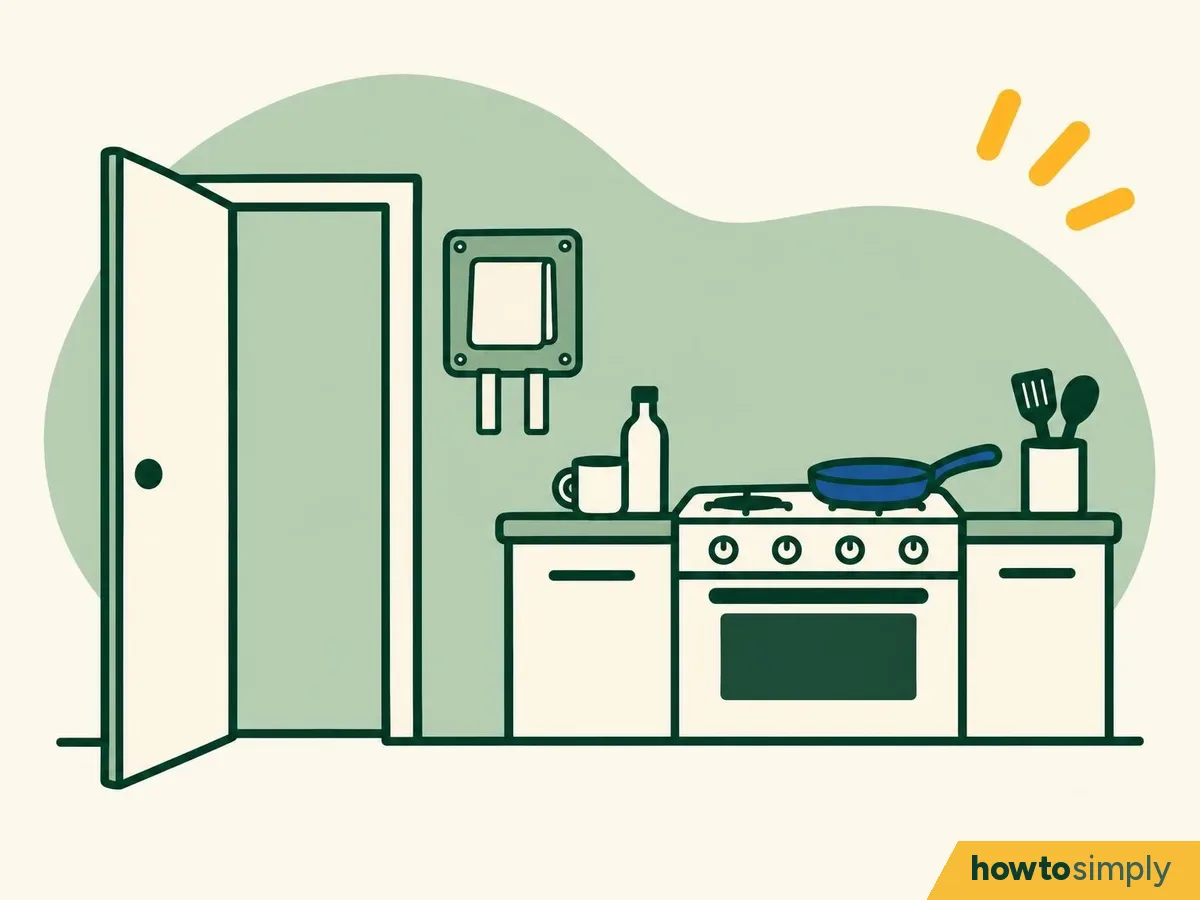
Illustration Our suggestion is near the kitchen door, because then you can grab it on your way and still have the exit behind you. Not above the cooker, and not inside a cupboard. Make sure everyone at home knows where it is and how the tapes work.
What fire services say in the UK, Germany, the US and Pakistan
| UK | Germany | US | Pakistan | |
|---|---|---|---|---|
| Pan on fire | Don't tackle it; heat off if safe, leave, close the door, call 999 (London Fire Brigade) | Lid or a Class F extinguisher; switch off gas or electricity (Altusried fire brigade, DGUV) | Slide a lid on, burner off, leave it until cool (NFPA) | Don't remove it or try to put it out: get out (Sindh Rescue 1122) |
| Fire blankets | Sold to EN 1869:2019 (BSI); London Fire Brigade mentions them for clothes on fire | Not suitable for fat fires: they can burn through (Altusried fire brigade, DGUV) | None listed to US safety standards (NFPA) | No official advice found |
| Extinguisher | Class F is the class for cooking fat (Altusried fire brigade, DGUV) | Class K, for trained adults (NFPA) | Not covered in Sindh Rescue 1122's advice | |
| Emergency | 999 | 112 | 911 | 1122 |
How to tell it's over
- The heat is off and the pan is still covered.
- The blanket has stayed in place until cooled (FireAngel).
- You called the fire service, or everyone is out and help is on the way.
- Any burn has been cooled for 20 minutes (NHS).
- You have replaced the blanket, or bought a lid that fits.
If it doesn't go to plan
Real life rarely goes exactly like the leaflet, and that is nobody's fault. If any of these happen, the table tells you the next move.
| What happens | What it means | What to do |
|---|---|---|
| The tapes don't release the blanket | You're losing time | Stop trying. Use a lid, or leave and close the door |
| Flames come round the edges of the blanket or lid | The cover is too small or the fire too big | Leave the room, close the door, call for help |
| The fire spreads beyond the pan | It's no longer a small fire | Get out, close the door, call 999, 112, 911 or 1122 (London Fire Brigade) |
| The oil smokes before it catches | It's too hot (London Fire Brigade) | Turn off the heat and let it cool |
| The fire is inside the oven | The closed door is holding it in | Heat off, door closed until it's cool (NFPA) |
While you are thinking ahead, keep a torch and a first aid kit in your home emergency kit too, so they are all together if you ever need them.
Pan fires and fire blankets, by source
| Source | Pan on fire | Fire blankets |
|---|---|---|
| London Fire Brigade, UK[1][2] | Don't tackle it; heat off if safe, leave, shut the door, call 999 | Named for clothes on fire, with heavy fabric |
| MOD leaflet, UK, 2010[4] | Only if it has just started and you're sure you can stay safe; don't move the pan | Lay it over the pan and turn off the heat; or a well wrung-out wet tea towel |
| NFPA, US[5] | Slide a lid on, burner off, leave it until cool | None listed to US safety standards; not recommended |
| Altusried and Lehrte fire brigades, Germany[7][8] | A lid or an extinguisher made for fat fires; cut the gas or power; Lehrte says always call 112 | Not suitable: they can burn through |
| DGUV, Germany, workplaces[6] | A class F extinguisher | Not for fat fires, and not for people on fire |
| Sindh Rescue 1122, Pakistan[9] | Don't remove it or try to put it out: get out | Not mentioned |
| FireAngel, maker[10] | Cover it, heat off, leave until cooled | Sold for kitchens, tested to EN 1869:2019 |
Graphic by howtosimply, from the sources below.
Questions
Can I use a fire blanket again after a fire?
No. EN 1869 is the standard for fire blankets that are not reusable, so replace it after use.[11]
How much oil is safe in a pan?
Fill a pan no more than a third full of oil or fat, dry food before it goes in, and if the oil starts to smoke, turn off the heat and let it cool.[3][4]
Do I still call the fire service if the fire went out?
The older MOD leaflet says to call the fire brigade and leave the pan to cool completely[4]. The Lehrte fire brigade says to call 112 in every case[8].
How far away should I stand to use an extinguisher on a pan fire?
NFPA says at least 6 to 8 feet (180 to 240 cm), and only with a Class K extinguisher, which is the type made for grease fires.[5]
Can I use a damp tea towel instead?
An older UK government leaflet (MOD Defence Fire Risk Management Organisation, 2010) suggested a wrung-out damp tea towel if you have no blanket. London Fire Brigade's current pan fire advice doesn't mention tea towels and says not to tackle the fire yourself. A lid is the option NFPA and German fire brigades name.
Does a fire blanket work on a deep fat fryer?
BS EN 1869 covers fire blankets usable to control small fires (BSI). The EN 1869 fire test only covers fryers with up to 3 litres of oil, and DGUV says blankets aren't suitable for fat fires in workplaces because flames came through the fabric in tests. A German fire brigade (Altusried) says blankets can burn through.
Should I use a fire extinguisher on a pan fire?
Only the right type. NFPA says only Class K extinguishers are made for grease fires, and only trained adults should use them. In Germany the matching class is F, for fat fires (Altusried fire brigade). Never use water.
Are fire blankets sold in the US safe to rely on?
NFPA says no fire blankets on the US market have been listed to existing safety standards, and it does not recommend buying products that are not listed. It recommends keeping a lid nearby instead.
What if the fire is inside the oven?
NFPA says to turn off the heat and keep the oven door closed until it is cool, and to open it only once you're sure the fire is completely out.
The pictures on this page are illustrations, not photos.
How we know this: sources, checks and every change
Current advice
Don't tackle a pan fire: turn off the heat only if it's safe, leave, close the door, warn others and call 999[1]. If you do cover a small, new pan fire with a lid or blanket, switch off the heat and leave it covered until it has cooled[5][10].
Information, not professional advice.
Latest update
17 November 2026. We re-read the sources. All 12 opened today and still back the steps, the warnings and the country table. Two small credits on the page are corrected below.
What changed in this version
- Correction: the page credited the Altusried fire brigade alone with naming Class F; it now credits DGUV too. Their leaflet says to use an extinguisher made for fat fires; it is DGUV that names fire class F[6][7].
- Correction: London Fire Brigade says to cover yourself with heavy fabric or a fire blanket. The page said 'a heavy coat'; it now says heavy fabric, as they do[2].
- Added: NFPA's burn advice gives a shorter cooling time than the NHS, so both are shown under where the sources differ[5][12].
Key facts
- London Fire Brigade's four steps for a pan fire: don't tackle it or move the pan, never throw water on it, turn off the heat only if that's safe, then leave, shut the door, warn others and call 999.[1]
- Water on burning oil can cause a fireball. One litre of water can turn into about 1,700 litres of steam, which carries burning fat out of the pan.[1][8]
- For a small grease fire in a pan, NFPA says slide a lid over it, turn off the burner and keep the lid on until the pan has cooled.[5]
- FireAngel's instructions: pull the tapes down and out, hold the blanket up as a shield, lay it gently over the fire, switch off the heat and leave it in place until cooled.[10]
- German fire brigades and DGUV say fire blankets are not suitable for fat fires, because flames can come through the fabric.[6][7][8]
- NFPA says no fire blankets on the US market are listed to existing safety standards, and it doesn't recommend buying unlisted products.[5]
- BS EN 1869:2019 covers single-use fire blankets meant for one person; BSI lists it as current but under review. Its cooking oil test only covers fryers holding up to 3 litres.[6][11]
- If clothes catch fire: stop, drop and roll, and smother the flames with heavy fabric or a blanket. Cool a burn under cool running water for 20 minutes.[2][5][12]
What the sources agree on
- Never put water on burning oil or fat.[1][4][5][7][8]
- Don't move a burning pan.[1][4][5]
- Cut the heat to the pan, gas or electric.[1][5][7][8][10]
- If clothes catch fire, stop, drop and roll.[2][5]
- Getting out and calling for help is always an option: London Fire Brigade, NFPA and Sindh Rescue 1122 all say to leave.[1][5][9]
Where the sources differ, or nothing is confirmed
- Whether to tackle a pan fire: London Fire Brigade and Sindh Rescue 1122 say don't; NFPA says smother a small grease fire with a lid; the older MOD leaflet said only if it has just started and you're sure.[1][4][5][9]
- Fire blankets on pans: FireAngel and the MOD leaflet say lay one over the pan; German fire brigades and DGUV say they can burn through; NFPA says none on the US market are listed to safety standards.[4][5][6][7][8][10]
- Fire blankets on people: London Fire Brigade, NFPA and BSI see a blanket as a way to smother burning clothes; DGUV says for workplaces an extinguisher works better, because pressing a blanket on can push burning fabric into the skin.[2][5][6][11]
- How long to cool a burn: the NHS says 20 minutes under cool running water; NFPA says 3 to 5 minutes in cool water.[5][12]
- Not from a source: hanging the blanket near the kitchen door is our own suggestion, and the page says so.
Record history
- Version 6. Sources re-read; record layout added with key facts, a table of what each source says, agree and differ notes, history and more questions.
- Version 5. The 13 November rewording was taken back off this page and the checked text returned.
- Version 4. Wording rewritten throughout.
- Version 3. Every line checked against its source; some source names and wording corrected.
- Version 2. Published on the site.
- Version 1. First written, with illustrations; one drawing redrawn the same day.
Sources
- London Fire Brigade: Pan fires. Read 17 November 2026.
- London Fire Brigade: Cooking safety. Read 17 November 2026.
- London Fire Brigade: Deep fat fryers. Read 17 November 2026.
- MOD Defence Fire Risk Management Organisation: Community Fire Safety (2010, PDF). Read 17 November 2026.
- NFPA: Educational Messages Desk Reference, 2026 edition, chapters 7, 8 and 21 (PDF). Read 17 November 2026.
- DGUV: Fachbereich AKTUELL FBFHB-006, Einsatz von Löschdecken (German, April 2020, PDF). Read 17 November 2026.
- Feuerwehren Markt Altusried: Fettbrand (German, PDF). Read 17 November 2026.
- Freiwillige Feuerwehr Lehrte: Fettexplosionen (German, PDF). Read 17 November 2026.
- Sindh Emergency Rescue Service 1122: Community Safety. Read 17 November 2026.
- FireAngel: FB100 fire blanket. Read 17 November 2026.
- BSI Knowledge: BS EN 1869 Fire blankets. Read 17 November 2026.
- NHS: Burns and scalds (reviewed 31 March 2026). Read 17 November 2026.
Sources and method
- Researched by
- Abu Bakar Saadat
- Pictures
- 18 illustrations drawn for this article: drawings, not photos.
- Sources
- Steps checked against the 12 named sources linked below.
- What this page adds
- A table of what fire services in the UK, Germany, the US and Pakistan say about pan fires and blankets, and drawings of releasing the tapes and covering the pan.
- What we checked
- On 17 November 2026 we re-read all 12 sources: the three London Fire Brigade pages, the MOD leaflet, NFPA's desk reference (chapters 7, 8 and 21), the DGUV, Altusried and Lehrte leaflets, the Sindh Rescue 1122 page, FireAngel's product page, BSI's EN 1869 page and the NHS burns page, and checked each step, figure and table entry against them.
What to do next
Do a home safety check Step 4 of 6
- How to use a fire extinguisher, and pick the right oneLearn when an extinguisher is safe to use, and when to just get out.
- How to make a home emergency kit: what the UK, German and US checklists sayPut the essentials in one place.
- Smoke alarm chirping? What the chirp means and how to stop itTest the smoke alarms first.
Did this solve the problem?
Where did you get stuck?
Get new guides by email
Our newest guides, sent to your inbox. Free, and you can unsubscribe in one click.
We'll email you to confirm. How we use your email
Follow howtosimply on Facebook
We share every new article on our Facebook page, so the next fix turns up in your feed.
Follow on FacebookWhat did you think?
Reaction counts are loading.