A drooping peace lily is usually thirsty: water it well when the top few centimetres of compost are dry, and it should stand up again. Keep it in bright, indirect light away from radiators, never leave it in a saucer of water, and keep it away from pets.
Usually thirst; water promptly and it recovers (RHS)
When to water
Top few centimetres of compost dry (RHS)
Light
Bright, indirect; no direct summer sun (RHS, Clemson)
Temperature
12 to 24 °C (RHS); avoid below about 15 °C (Clemson)
Water type
Rainwater or filtered if you can (RHS)
Pets
Toxic to cats and dogs (ASPCA)
Checked
November 2026
A peace lily that suddenly flops over looks like it's dying, but it is usually just thirsty. The trick is to check the compost before you water, because a soggy peace lily can droop too. Below, one example runs from a collapsed plant to a healthy routine, with a drawing for every step.
Every step below follows one story, and each drawing shows that exact moment. On Sunday morning, Amira finds her peace lily flopped over the side of its pot on the living-room floor, right next to the radiator. She checks the compost, waters it, and then moves it somewhere better.
Part 1: Rescue a drooping peace lily
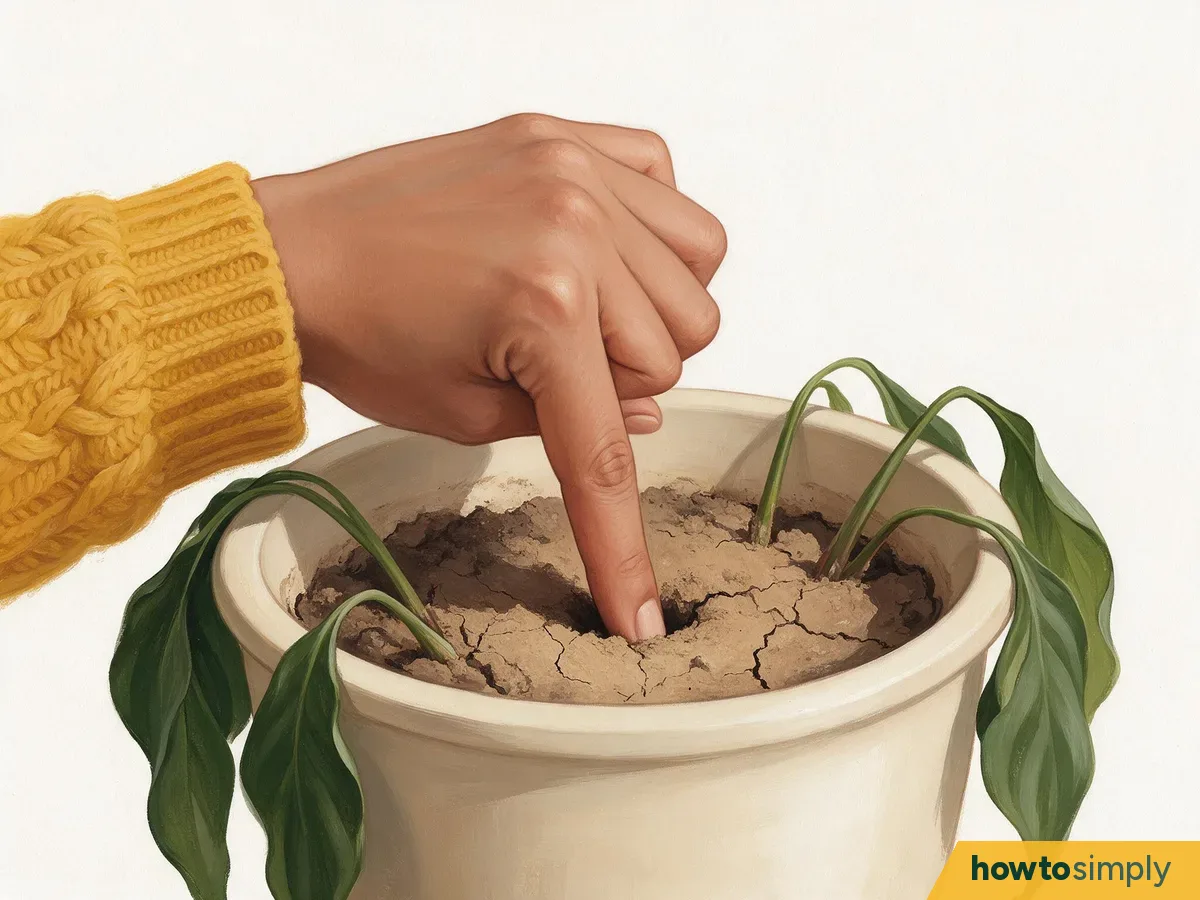
Feel the compost before you water.
Illustration
In our story: Amira pushes a finger into the compost. It is dry and crumbly a few centimetres down, and the pot feels light.
A lack of water makes peace lilies droop alarmingly (RHS). But keeping the compost too wet can also cause problems, including root rot (RHS), so check first. Dry compost and a light pot mean it's thirsty (our advice). If the compost is wet, go to step 4.
Water it well and let it drain.
Illustration
In our story: She carries it to the kitchen sink and waters slowly until water runs out of the holes in the bottom, then leaves it to drain for a few minutes.
Water promptly, and it should recover with no ill effects (RHS). Use room-temperature water (Clemson Extension), and rainwater or filtered water if you can, because the fluoride in tap water can damage the leaves (RHS). Never let it sit in a saucer of extra water afterwards (Clemson).
Give it a few hours to stand up again.
Illustration
In our story: By the evening, the leaves are standing up again.
The RHS says it should soon recover; expect a few hours rather than days (our estimate). Don't wait for it to droop each time, though: Clemson Extension says letting it dry out too much makes the leaves and edges turn yellow.
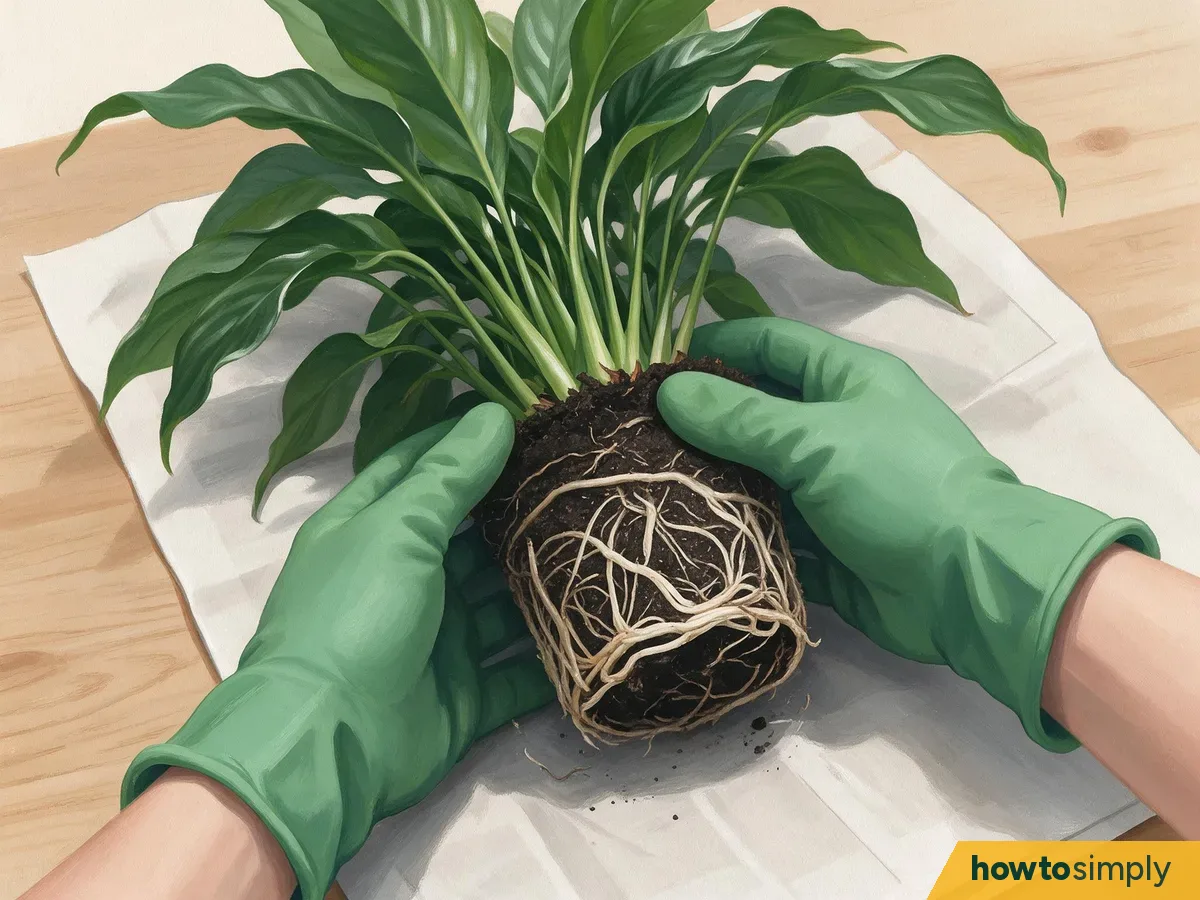
If the compost is wet and it still droops, check the roots.
Illustration
What if Amira's compost had been soaking wet? She would slide the plant out of its pot to look at the roots.
Keeping the compost too wet for long periods can cause root rot, and overwatering can also turn leaves brown or yellow (RHS). Healthy roots are firm and pale; soft, dark, smelly roots are a sign of rot (our advice). Let the top of the compost dry out between waterings (RHS).
Part 2: Keep it healthy
Move it to bright, indirect light, away from the radiator.
Illustration
In our story: Amira moves it from the floor by the radiator to a side table near the window, behind a sheer curtain.
Keep it in bright, indirect light near a window, but out of direct summer sun (RHS); direct sun can scorch the leaves (Clemson). In deep shade it survives but rarely flowers (RHS). Keep it away from hot radiators and cold draughts (RHS) and from heating or air-conditioning vents (Clemson). The RHS gives 12 to 24 °C; Clemson suggests 20 to 29 °C by day and warns that below about 15 °C it can be damaged by cold.
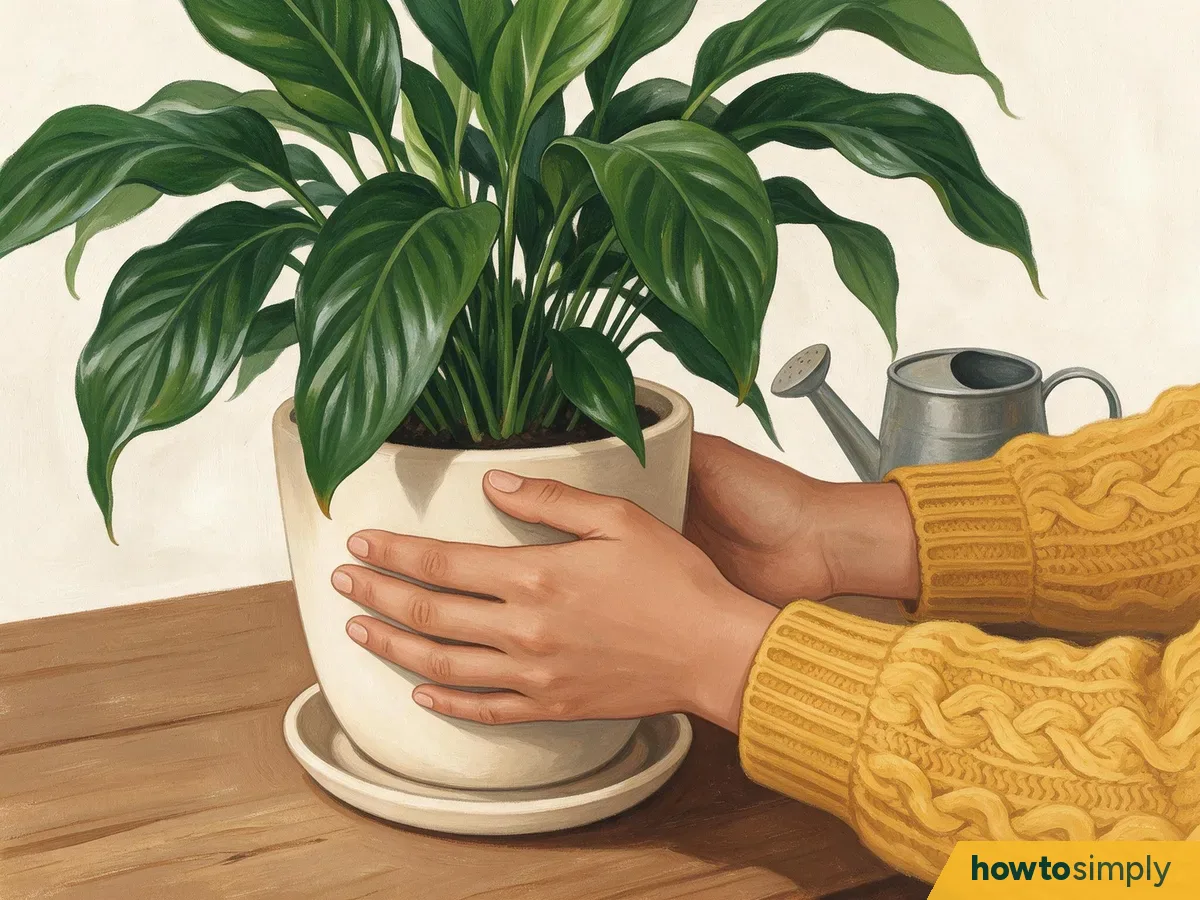
Water when the top few centimetres are dry, and turn the pot.
Illustration
In our story: Amira now feels the compost every few days and waters when the top is dry. Each time, she gives the pot a quarter turn.
Water once the top few centimetres of compost are dry, a little less in winter (RHS). Turning the pot a quarter each time you water stops it leaning towards the light (RHS). If the compost dries out very quickly, it may need a slightly bigger pot in spring (RHS).
Wipe the leaves.
Illustration
In our story: Once a month, she wipes the dust off each leaf with a damp cloth.
The wide leaves collect dust, so wipe them regularly with a damp cloth (Clemson Extension). Peace lilies like moderate humidity; in dry air the leaves can brown at the edges, so the RHS suggests standing the pot on a tray of damp gravel or misting.
Cut off faded flowers at the base.
Illustration
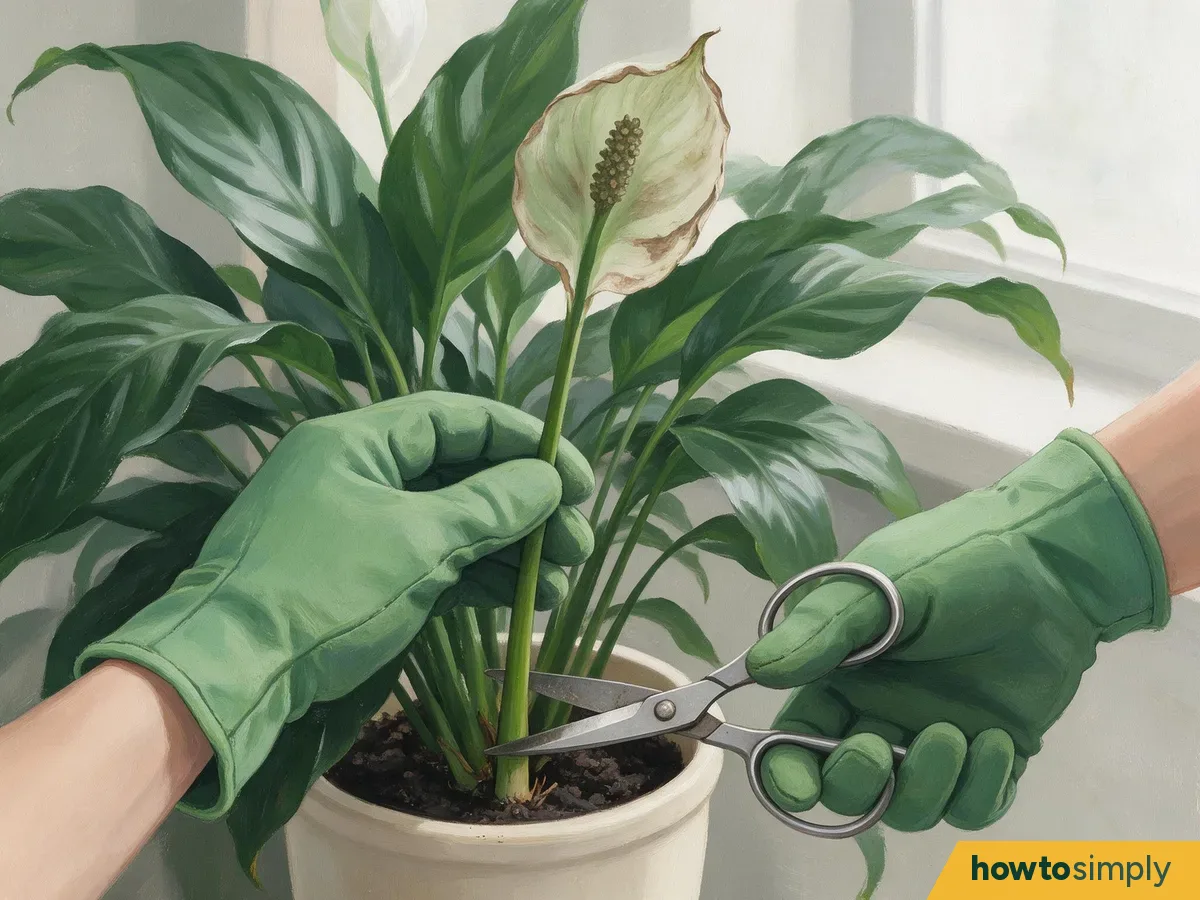
In our story: When a flower fades, Amira puts on gloves and snips its stem off low down.
Snip off fading leaves and spent flowers at the base of the stem, wearing gloves, because the sap can irritate skin (RHS). The white flowers turn pale green as they age (Clemson).
Feed it lightly in spring and summer.
Illustration
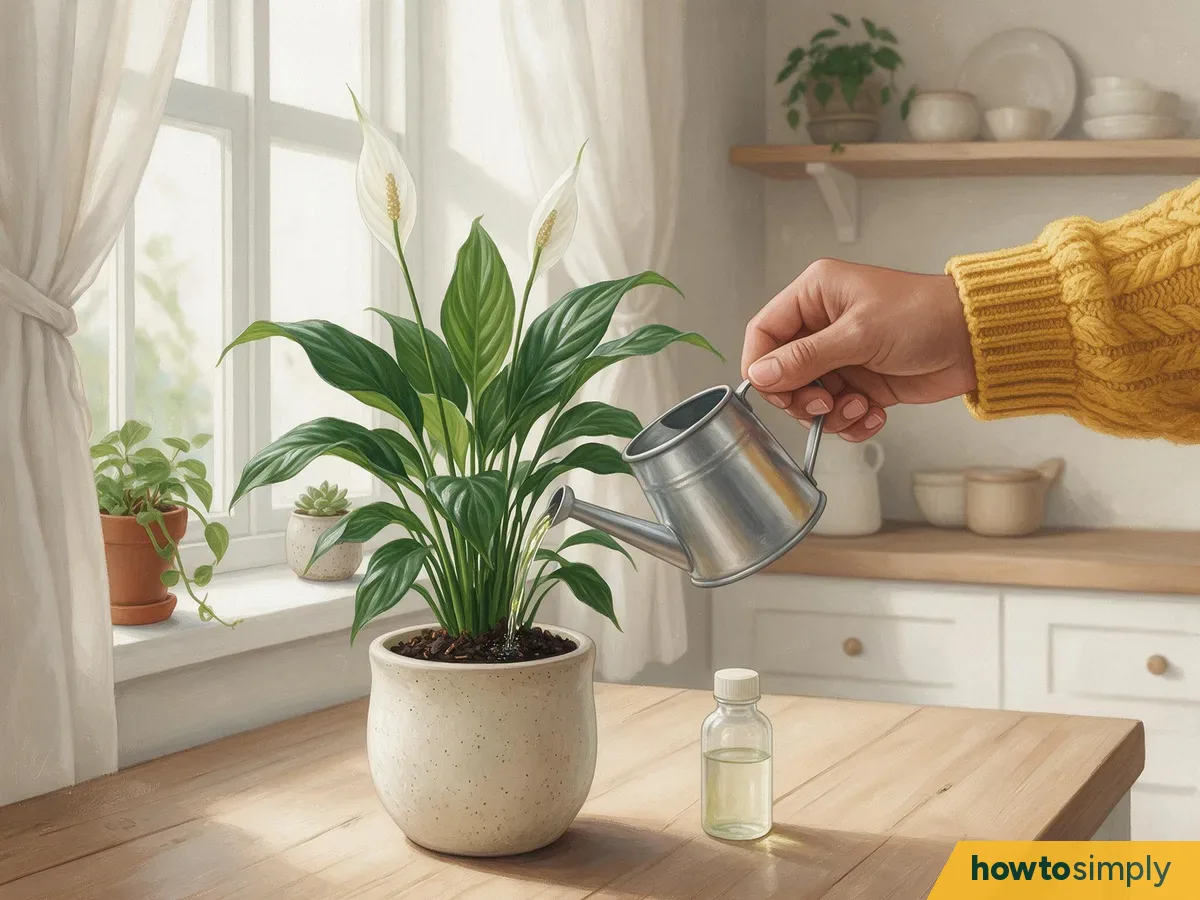
In our story: From April, Amira adds a little liquid plant food to the watering can now and then.
The RHS suggests a general liquid fertiliser every few weeks from April to October. Clemson says peace lilies need very little: every 6 to 8 weeks in spring and summer, at a quarter of the recommended strength, because too much burns the leaf tips and roots.
Keep it away from pets and small children
Don't put it where a cat or dog can chew it.
Illustration
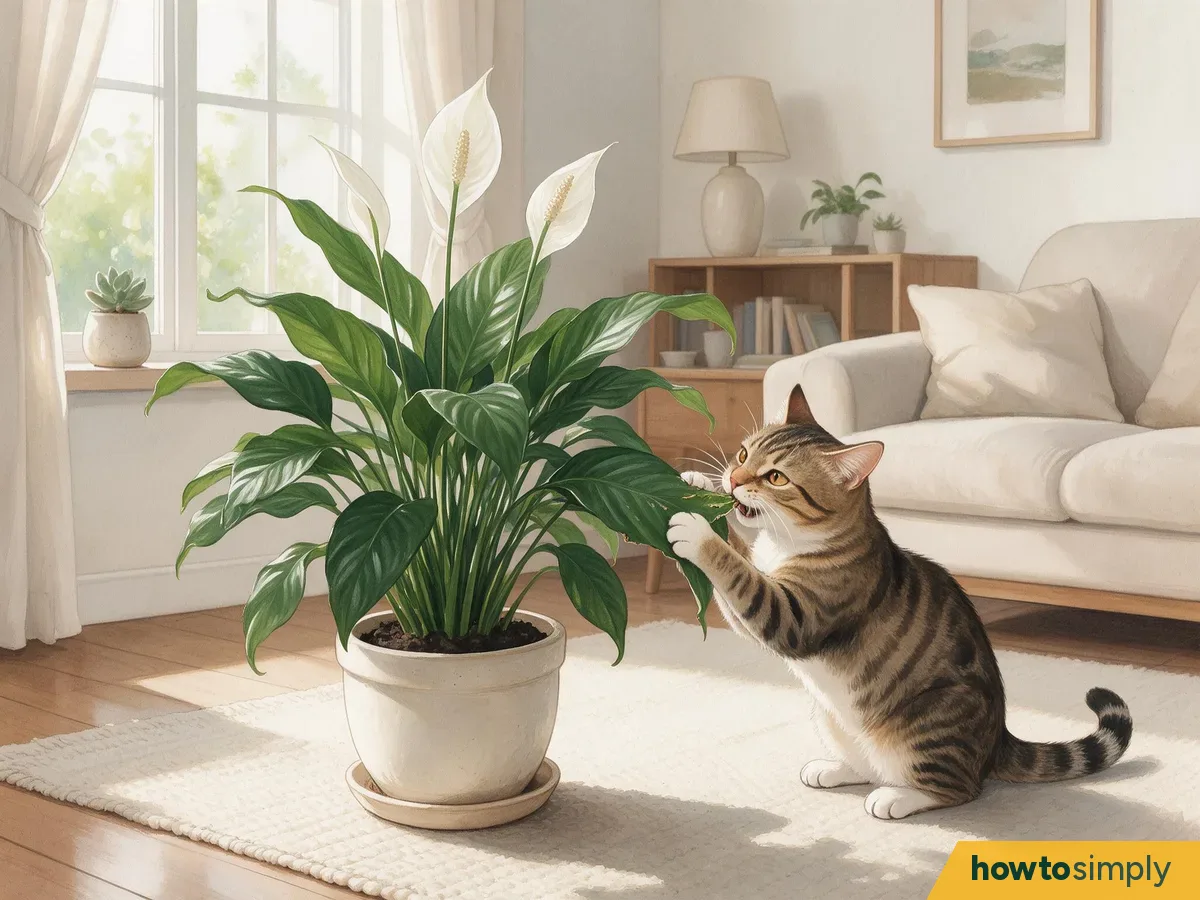
What if the plant had stayed on the floor and a cat visited? It could chew the leaves.
The ASPCA lists peace lily as toxic to cats and dogs: chewing it can cause intense burning and irritation of the mouth, drooling, vomiting and difficulty swallowing. Clemson Extension says it can also harm children if eaten, most often burning the mouth and throat. The RHS says to keep it out of reach of children and pets. If a pet has chewed it, contact your vet.
How to tell it's working
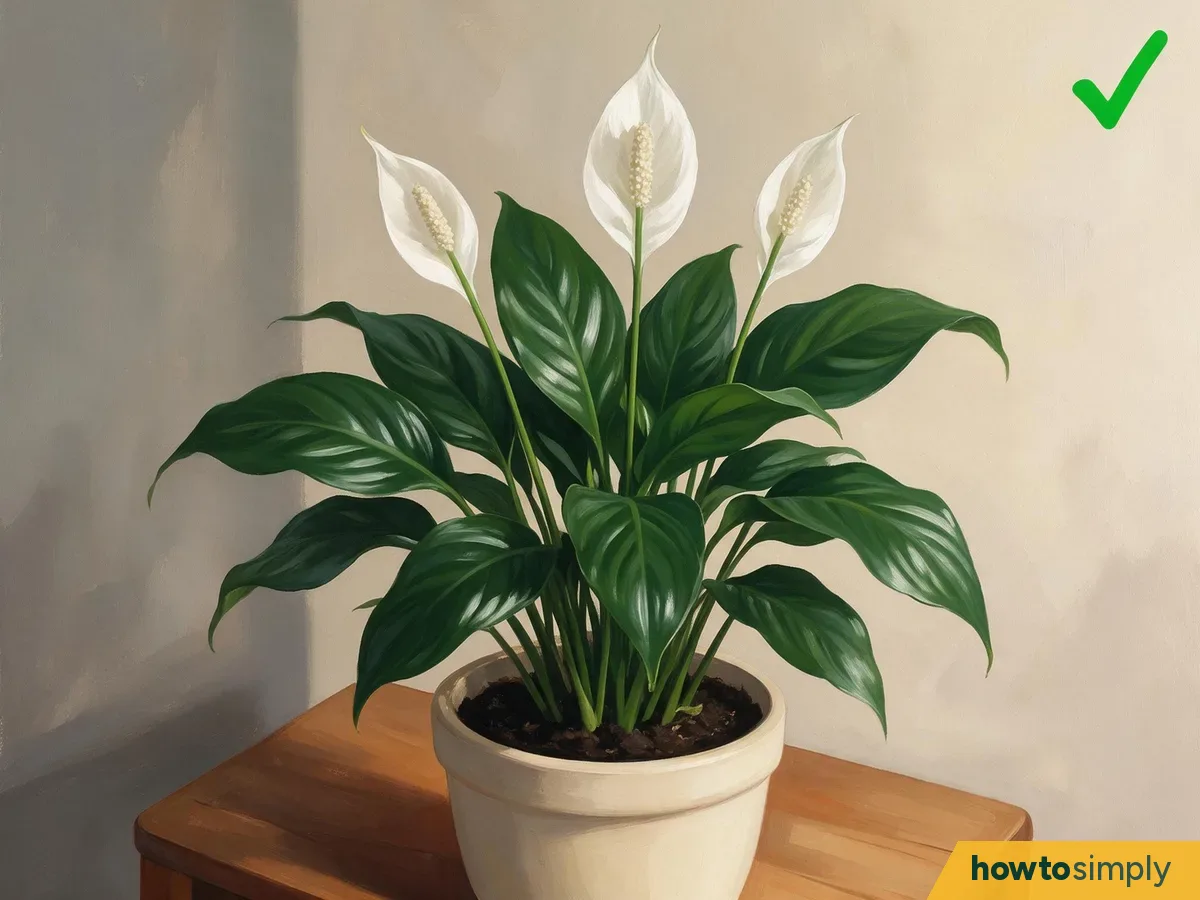
The leaves stand up firm and glossy within hours of watering.
New leaves keep coming from the centre.
White flowers appear in spring and summer (RHS).
If something goes wrong
What happens
Likely cause
What to do
Whole plant flops, compost dry
Thirst (RHS)
Water well and let it drain
Droops, compost wet
Too wet for too long, possible root rot (RHS)
Check the roots; let the top dry before watering
Leaves and edges yellow
Drying out too much (Clemson) or overwatering (RHS)
Water when the top is dry, before it droops
Brown leaf edges or tips
Dry air (RHS), too much feed (Clemson), tap water fluoride (RHS)
Damp gravel tray; feed less; rainwater or filtered water
Most often it is thirsty. The RHS says a lack of water makes peace lilies droop alarmingly, but they recover with no ill effects if you water promptly. If the compost is wet and it still droops, check the roots for rot.
How often should I water a peace lily?
Water when the top few centimetres of compost are dry (RHS). Keep it moist but not soggy, let it dry slightly between waterings, and never leave it standing in water (Clemson Extension). Water a little less in winter (RHS).
Why are the leaf tips going brown?
Dry air is a common cause (RHS). Clemson Extension adds too much fertiliser, and the RHS says fluoride in tap water can damage the leaves, so rainwater or filtered water is better.
Why won’t my peace lily flower?
Usually not enough light. The RHS says it rarely flowers in deep shade and does best in bright, indirect light near a window, out of direct summer sun.
Is a peace lily poisonous to cats and dogs?
Yes. The ASPCA lists it as toxic to cats and dogs; chewing it can burn and irritate the mouth and cause drooling and vomiting. Clemson Extension says it can also harm children if eaten. Keep it out of reach.
Did this solve the problem?
What needs work?
What did you think?
Reaction counts are loading.
Spotted a mistake? If a step is unclear or a picture is inaccurate, tell us the step number and what needs correcting. Email us about this page or use the contact form. We read every report, and fixes are listed on What changed.
Liked this article?
Follow us for new articles and short how-to videos.
 Illustration