How to tell if a houseplant needs water, and fix over- or underwatering
Researched by Abu Bakar Saadat8 min read
Last updated: 15 November 2026References
 Illustration
On this page 11 sections
In short
Push a finger into the compost: if it's dry at your fingertip, and the pot feels light when you lift it, water until it runs out of the drainage hole, then empty the saucer. If the compost is still damp, wait, even if the plant droops.
At a glance
- Check
- Finger in the compost, then lift the pot
- Water when
- Dry at your fingertip (Clemson) or about 5 cm down (University of Maryland)
- How
- Until it drains from the hole; then empty the saucer (RHS)
- Main risk
- Overwatering: Clemson says it kills more potted plants than anything else
- Advice from
- RHS, Clemson, University of Maryland and Colorado State University extension services, read 28 October 2026
- Checked
- November 2026
Standing over a plant with the watering can, unsure whether to pour or wait, is a worry nearly every plant owner knows, and a drooping leaf only makes it worse. Take heart, because the pot itself holds the answer: a quick finger test and a lift will tell you what your plant needs.
Roots need both water and air. Clemson Extension and the RHS say that when compost stays soggy, water fills the air spaces, the roots can't get oxygen and they may rot, which is why Clemson calls overwatering the main killer of potted plants. So the answer is to check before you water, every single time, rather than watering on a set day (University of Maryland Extension, RHS). If you water every Sunday whether the plant wants it or not, University of Maryland Extension says that routine can mean too much water or too little.
Does your plant follow the usual rule?
Most leafy houseplants
Follow the steps below: water when the compost feels dry at fingertip depth and the pot feels light.
Cacti and succulents
University of Maryland Extension says these need far less water than most houseplants, so the finger test isn't as reliable a signal for them. Clemson says plants with fleshy leaves and stems need watering less often.
Large or very thin leaves, fine surface roots
Clemson says these usually need watering more often, so check them first.
Just bought it
Flush it the first time you water: University of Maryland Extension says to leach every newly bought plant by pouring plenty of water through and letting it drain away.
How to check and water
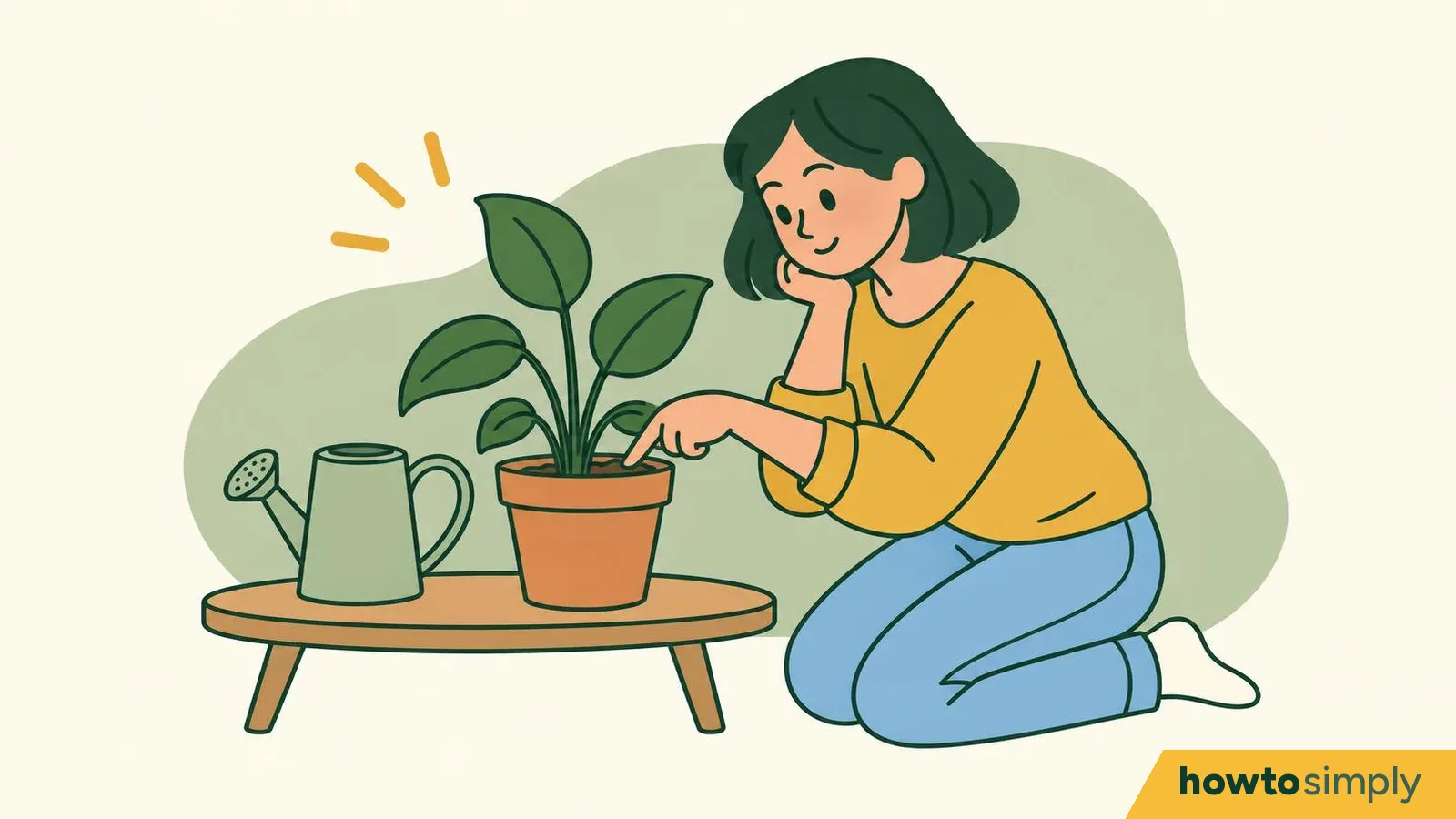
Push a finger into the compost.
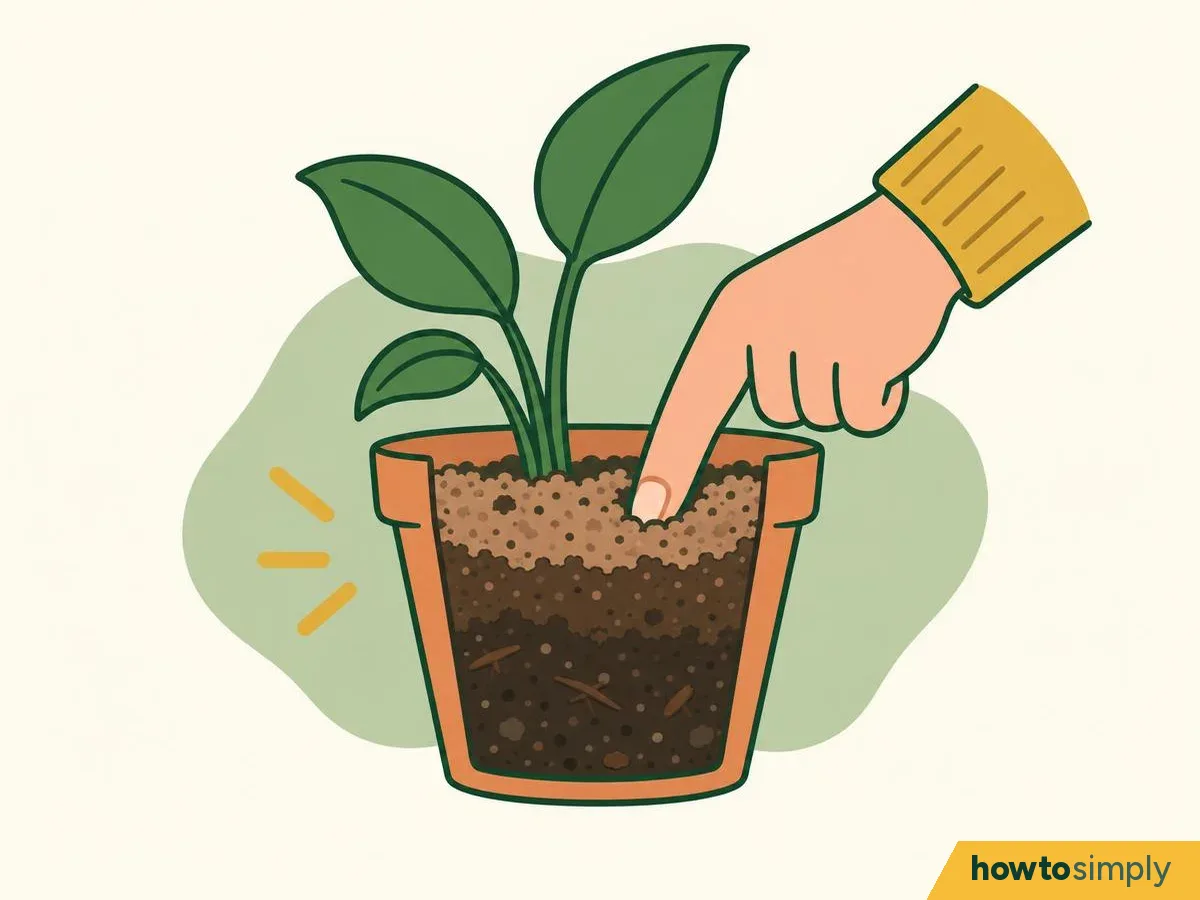
Illustration: dry on top, still moist lower down Clemson Extension calls touch the most accurate check: push your finger in up to the first knuckle and water if the mix is dry at your fingertip. University of Maryland Extension goes a little deeper, about 5 cm (2 in). Most roots sit in the bottom two-thirds of the pot (Clemson).
Don't worry if you can't push a finger in that far. The mix may be too dense or the plant may be root-bound (University of Maryland Extension). On large containers, a stick long enough to reach the bottom works too: moist mix sticks to it or discolours it slightly (University of Maryland Extension).
You should see: dry compost at your fingertip means water now. Damp compost means wait and check again later.
Lift the pot to feel how heavy it is.
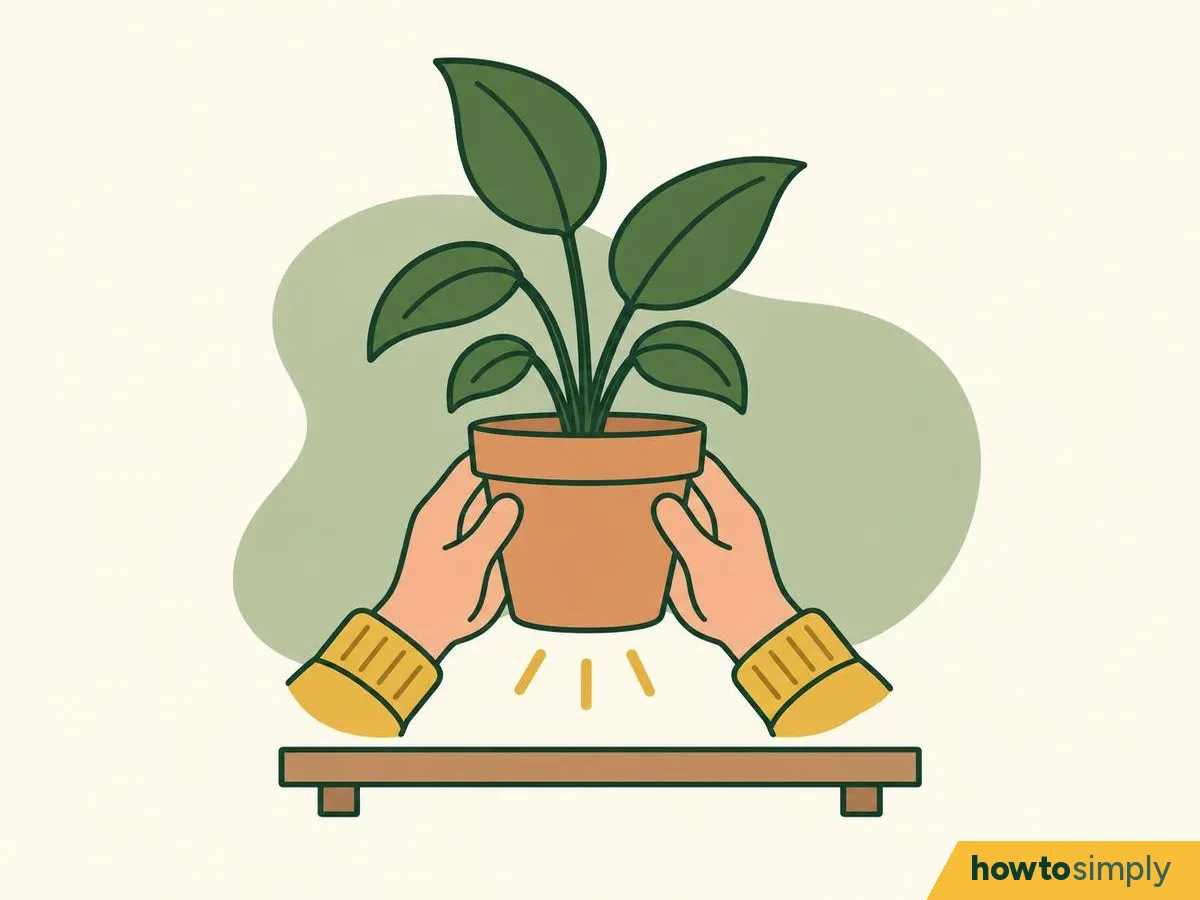
Illustration Dry compost weighs much less than wet compost (RHS, University of Maryland Extension). Make sure you lift the pot just after a good watering once, so you know what "full" feels like. After that, lift the pot now and then and compare it with how it felt after watering (University of Maryland Extension). With clay pots you can also tap the side: a dull sound means moist, a hollow sound means dry (Clemson).
You should see: a pot that feels clearly lighter than it did after watering, together with dry compost at your fingertip.
Look at the compost and the leaves.
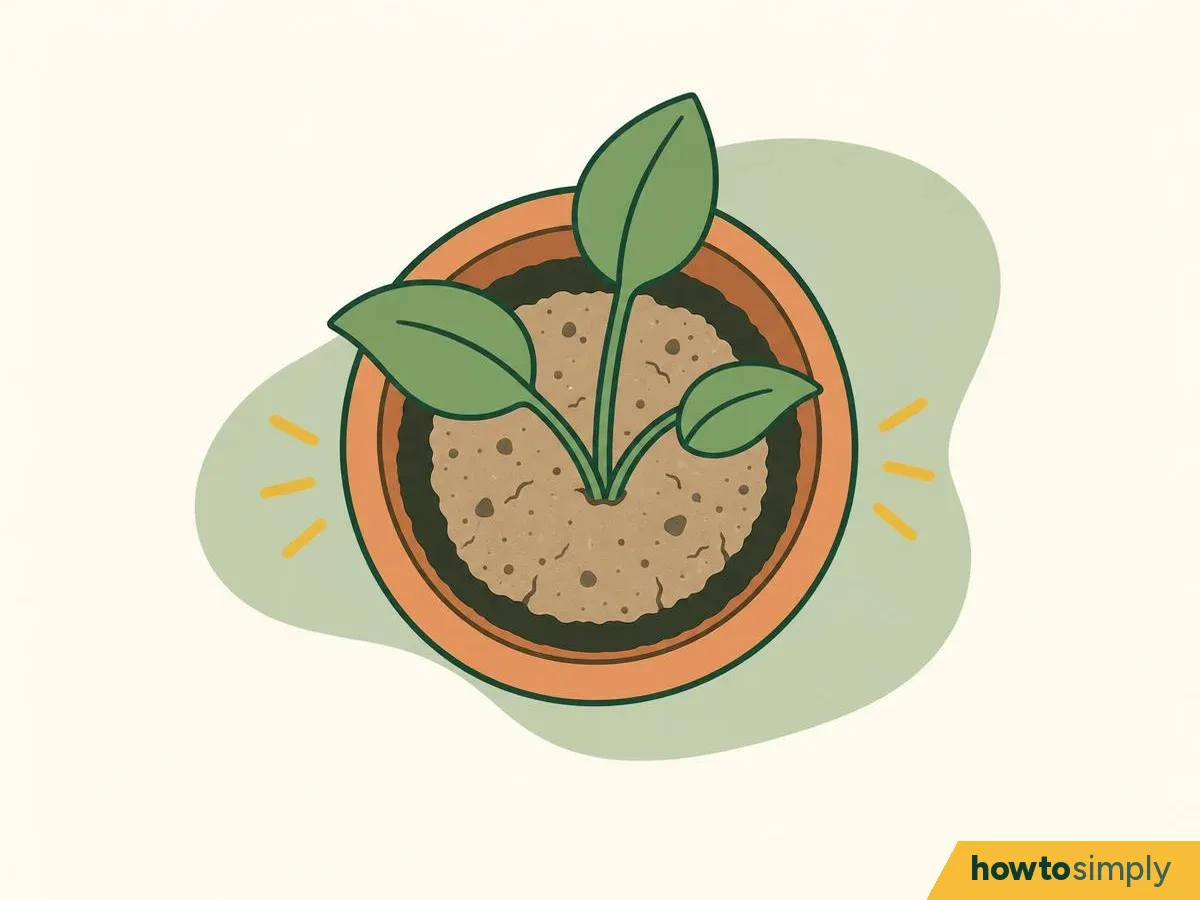
Illustration: dry compost pulls away from the pot Potting mix gets paler as it dries (Clemson), and once it's dry it pulls back from the edges of the pot (University of Maryland Extension). Leaves give clues too. However, they can mislead you: a plant that is too dry wilts and turns grey-green, while a plant that is too wet also wilts, and its lower leaves yellow and drop (University of Maryland Extension).
Before you water: if the plant droops but the compost is still damp, don't water. Clemson warns that when wilting is caused by damaged or rotting roots, watering may make the problem worse. Go to the overwatering fix below.
Give it a good soak until water comes out of the hole at the bottom.
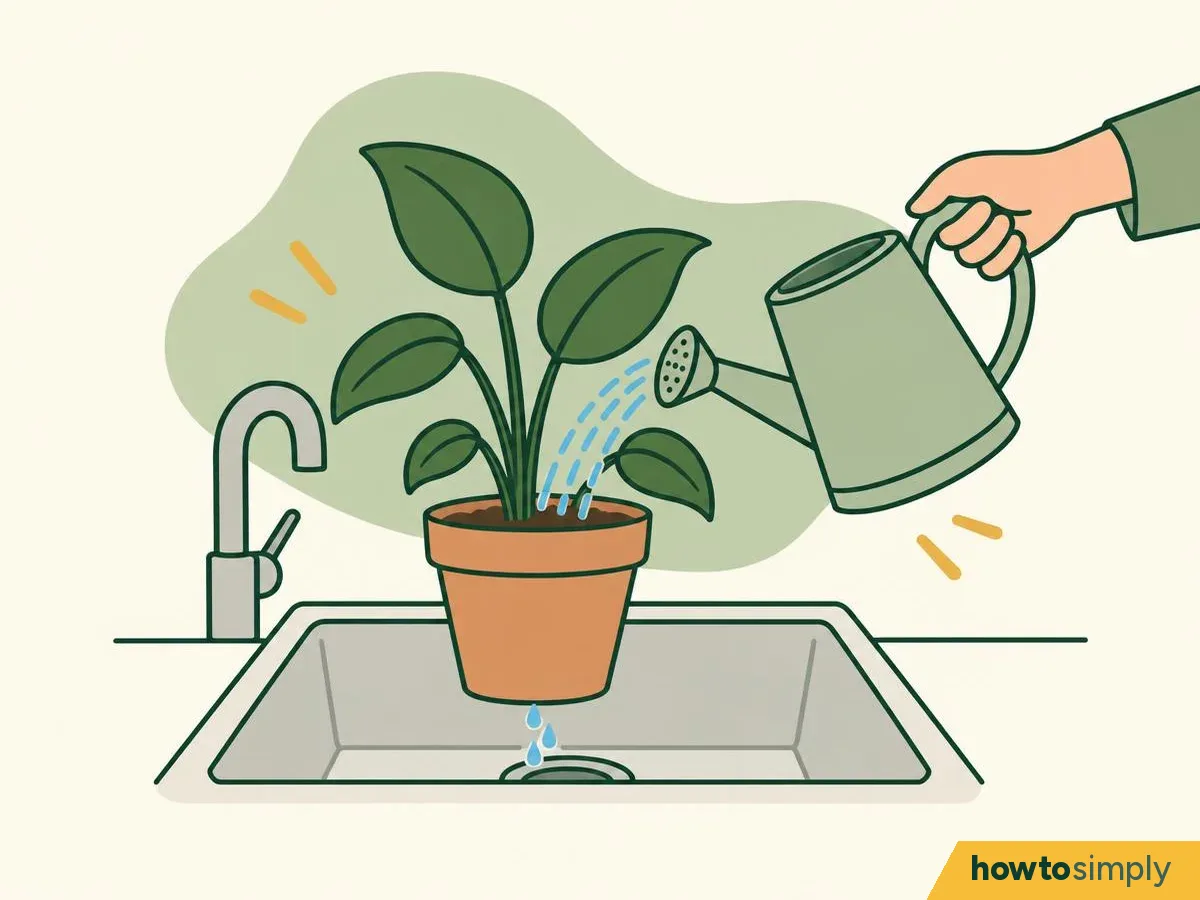
Illustration Water until it drains from the bottom (RHS, Clemson). What it will do, it wets the lower two-thirds of the pot, where most roots are, and flushes out excess salts (Clemson). A small plant can go in the sink for this (University of Maryland Extension).
You can also try bottom watering. Stand the pot in a tray of water so the mix draws it up, then pour off what's left (University of Maryland Extension).
You should see: water dripping from the drainage hole, and the pot heavier when you lift it.
Let it drain, then empty the saucer.
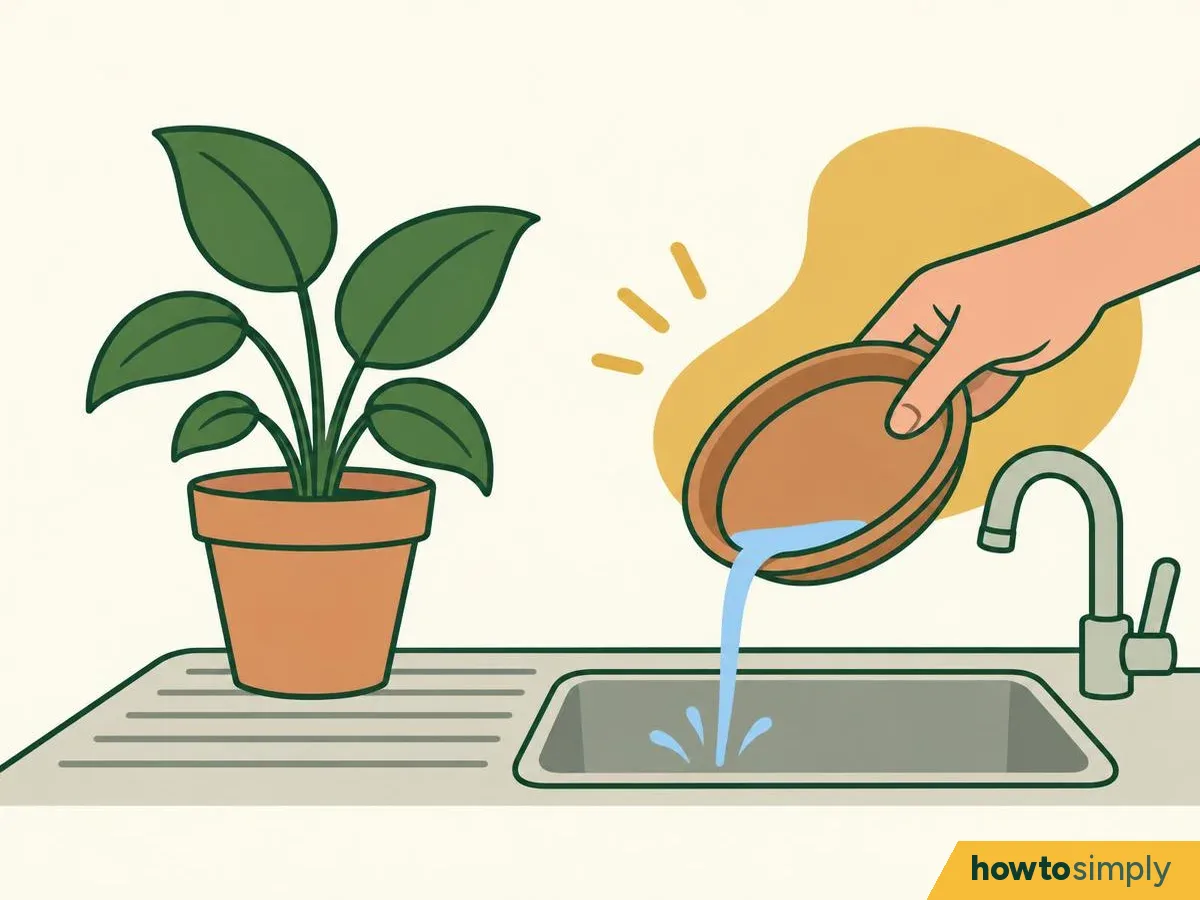
Illustration Then there is the saucer, which is very easy to forget. Don't leave houseplants standing in water (University of Maryland Extension). Let the pot drain fully and empty any saucer that holds water (RHS). A wet saucer also invites fungus gnats (University of Maryland Extension).
You should see: a dry saucer and no water pooling on top of the compost.
Too much water or too little?
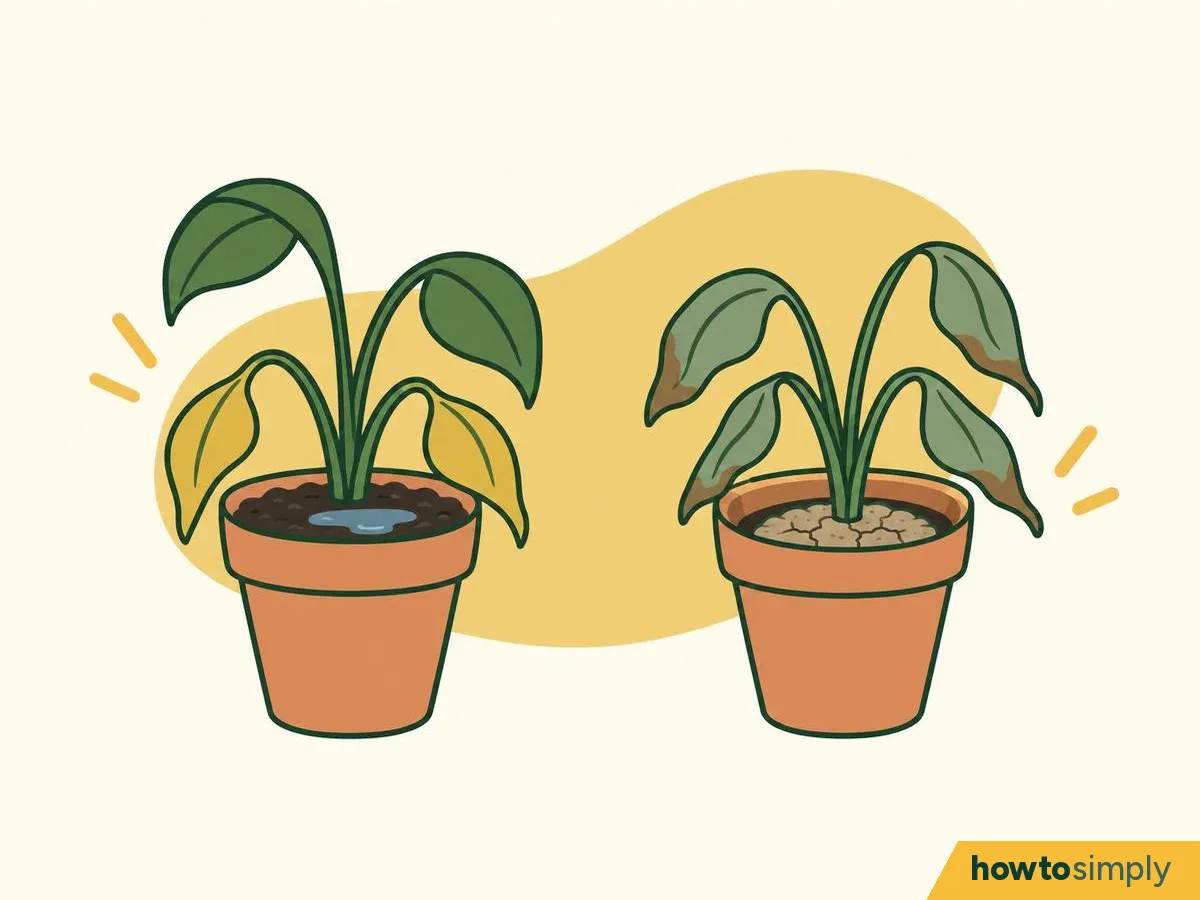
University of Maryland Extension says both problems can make a plant wilt, so feel the compost: Clemson calls touch the most accurate test, and says wilting doesn't always mean the plant needs water.
| What you notice | Too much water | Too little water |
|---|---|---|
| Compost | Moist or wet while the plant wilts (RHS) | Lighter in colour, dry, pulled away from the pot (Clemson, University of Maryland) |
| Leaves | Lower and inner leaves wilt or turn yellow and drop (University of Maryland, RHS) | Wilting, grey-green colour (University of Maryland); brown leaf edges (RHS) |
| Flowers and growth | Whole plant may collapse (RHS) | Flowers drop, growth slows (RHS) |
| Roots | Roots may rot (Clemson) | Root ball dry and hard to rewet (Clemson) |
If the compost has dried out completely
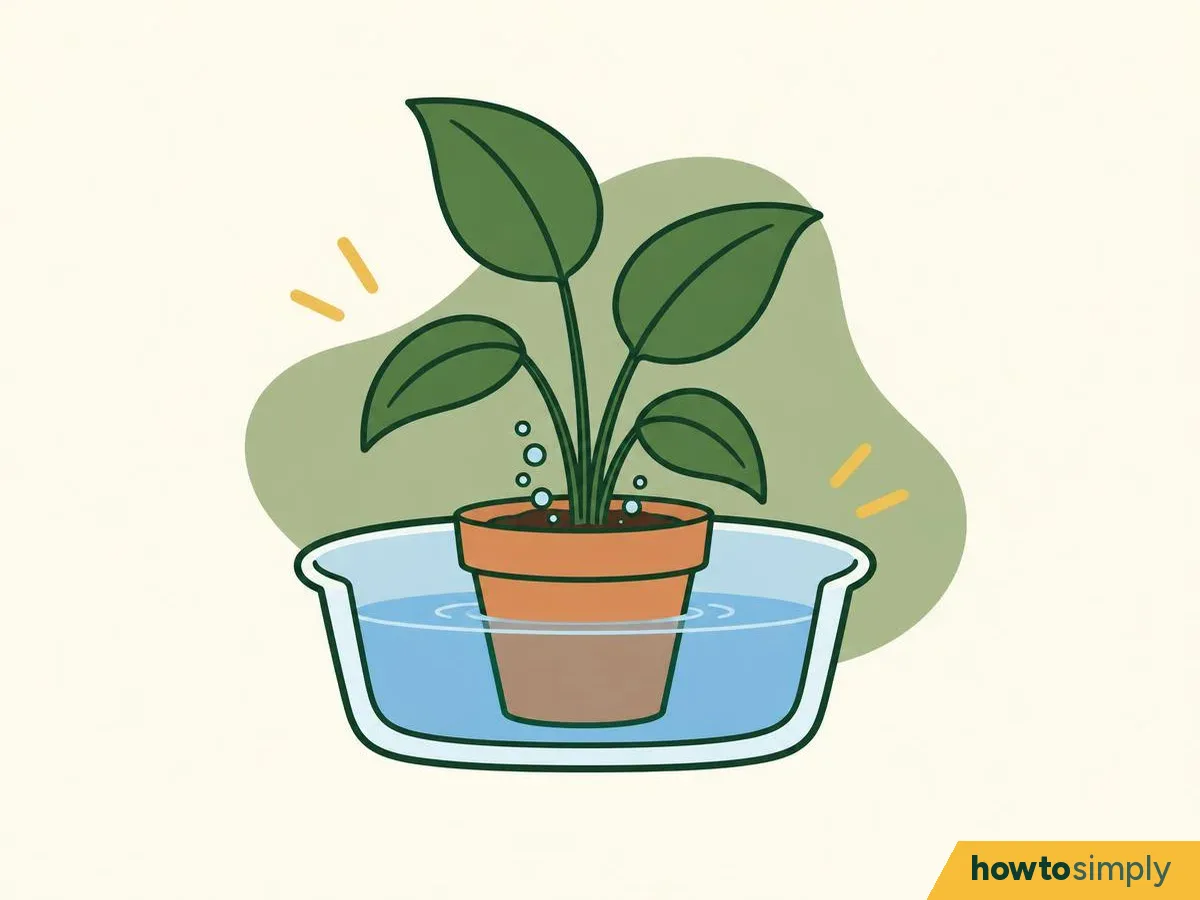
Clemson says a very dry mix is hard to wet again, and University of Maryland Extension says once the mix has pulled in from the pot's edge, one watering often isn't enough. Clemson offers two fixes. Water once, then again roughly 30 minutes later. Or sit the pot in a sink or bucket of water, lift it out once the top of the compost is damp, and let it drain thoroughly. Clemson adds that peat-based mix that has dried out completely holds less water afterwards, so carry on checking it with your finger as usual.
If you think you've overwatered
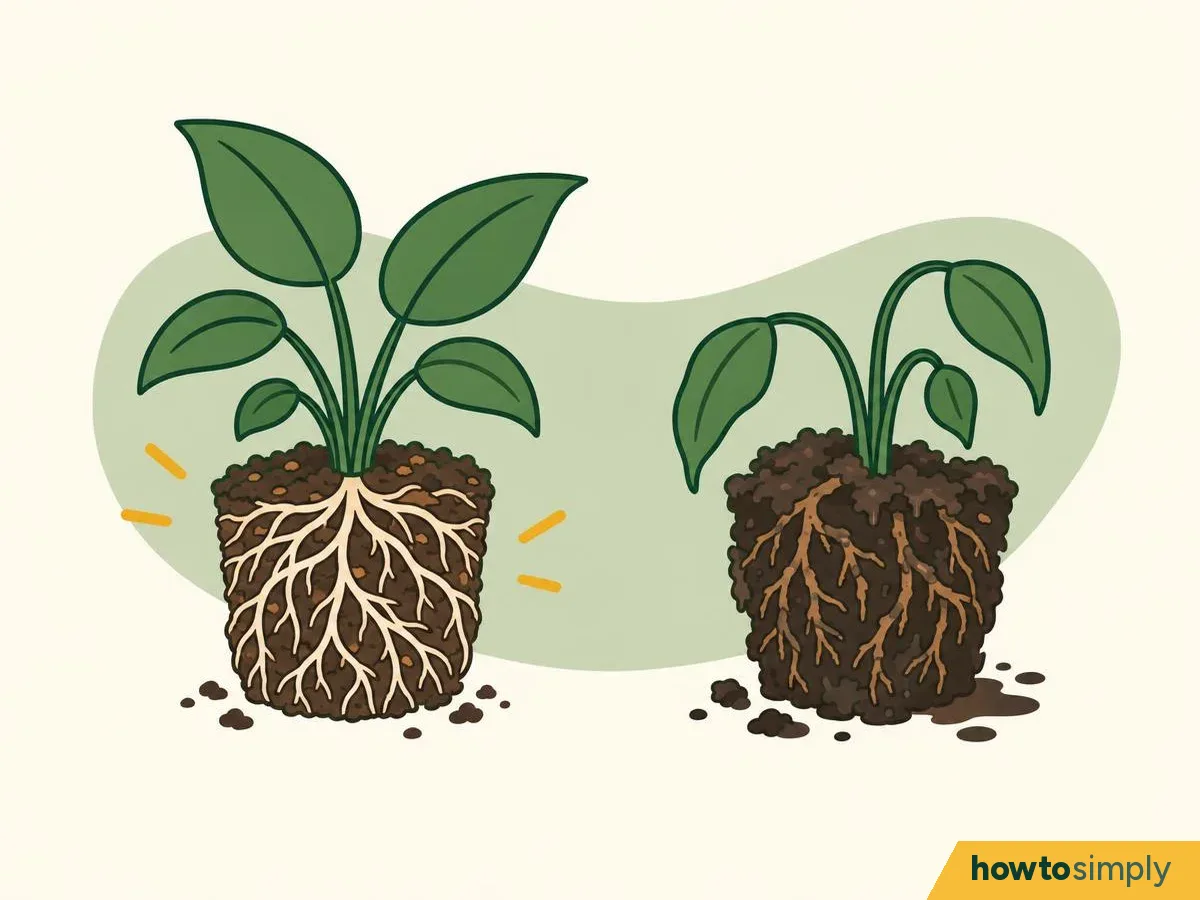
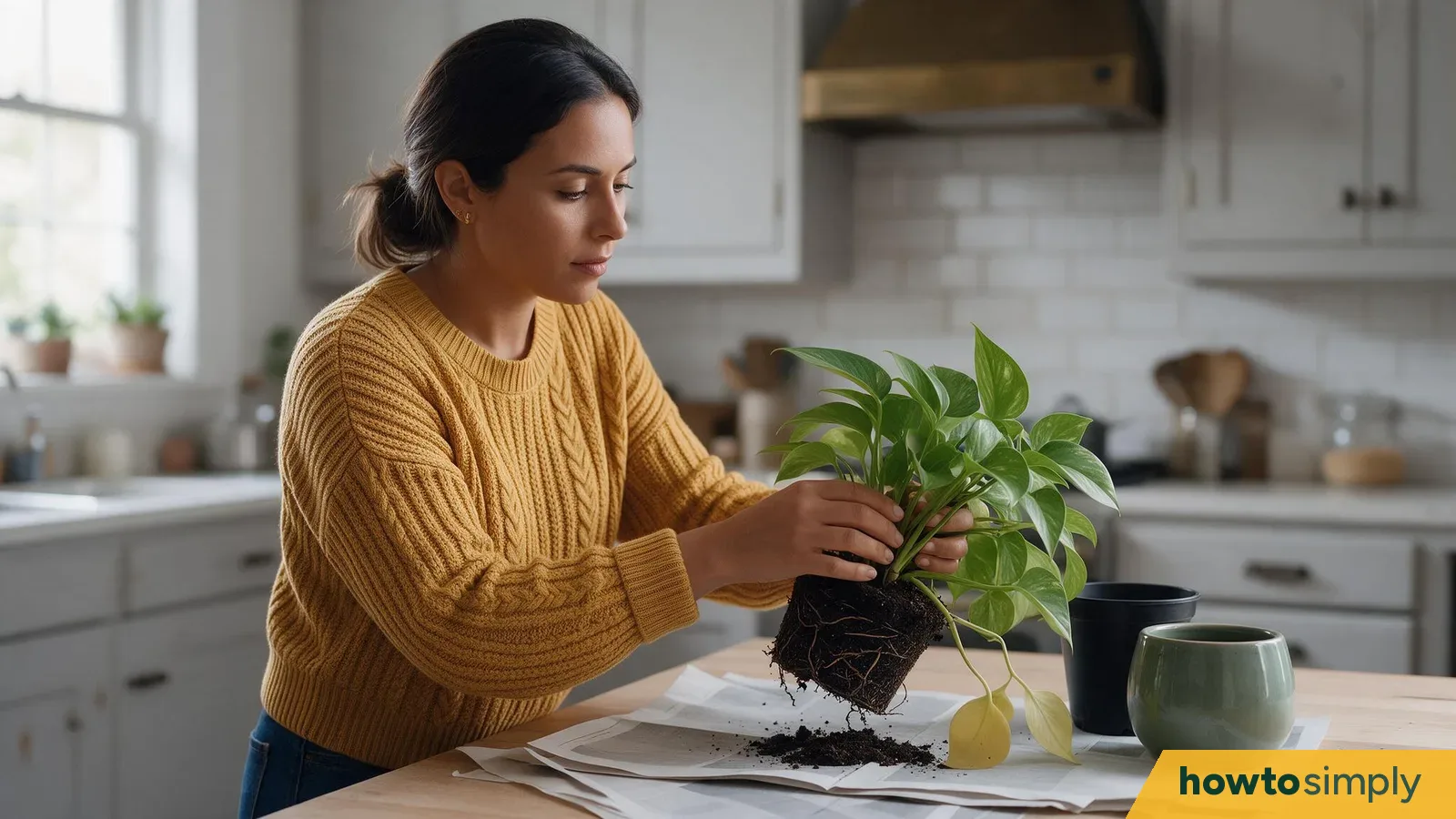
Please don't be hard on yourself here, because it is an easy mistake to make with a plant you care about. Stop watering, empty the saucer and let the top of the compost dry out (University of Maryland Extension, RHS). If the plant still droops in damp compost, or the leaves keep yellowing, ease it out of the pot and look at the roots. Colorado State University Extension says to cut away black, mushy roots and repot in fresh potting mix, at the same depth as before. Our repotting guide walks through that.
How to tell you got it right
- Water ran out through the drainage hole, and the saucer is empty again (RHS).
- The pot feels heavy when you lift it.
- A day later, a drooping plant has perked back up. If it hasn't and the compost is wet, see the overwatering fix.
- Over the next few weeks, new leaves come through green and the lower leaves stop turning yellow.
If something goes wrong
| What happens | What it means | What to do |
|---|---|---|
| Very dry compost is hard to rewet | The mix has dried and pulled away from the pot (University of Maryland) | Soak the pot, or water twice 30 minutes apart (Clemson) |
| Water sits on top and won't drain | Poorly drained soil (University of Maryland) | Repot if the pot has poor drainage (University of Maryland) |
| Plant wilts although the compost is wet | Roots may be damaged or rotting (Clemson, RHS) | Don't water; check the roots |
| Salt crust on the compost or pot, brown tips | Salt build-up (University of Maryland) | Flush with at least twice the pot's volume of water (University of Maryland) |
| Small black flies around the pot | Fungus gnats (RHS) | Pour off water that collects in saucers (University of Maryland); see our fungus gnat guide |
From the writer
Abu Bakar, who wrote this article, has kept a container garden for years. In his own words:
“When watering, make sure you water each of your pots slowly, because it takes some time for water to reach the root zone. If you are just wetting the leaves, then I am afraid the plants might die very soon. Too much water can be as devastating for plants as too little.”
Questions readers ask
Are soil moisture meters reliable?
Not very. Clemson Extension says their accuracy varies widely, and readings can be thrown off by fertiliser and the type of potting mix. Use one as a second opinion next to the finger and weight checks, not instead of them.
Can I water houseplants straight from the tap?
The RHS suggests letting tap water stand in an open container for at least 24 hours first, and using it at room temperature. Never use water from a domestic water softener (RHS, Clemson). Acid-loving plants do best with rainwater (RHS).
Should I water less in winter?
Check first rather than watering routinely (RHS). Plants in cool rooms need less water, but central heating dries the air and pots can dry out faster (RHS). In a cool room that stays above the plant's minimum temperature, many houseplants can go a week or two without water (RHS).
Why are the leaf tips brown?
Brown leaf edges can be a sign of underwatering (RHS), but salt build-up from minerals and fertiliser causes brown tips too, and a salt crust may form around the pot (University of Maryland Extension). It suggests flushing the pot with at least twice its volume of clear water every four to six months.
Sources and method
- Researched by
- Abu Bakar Saadat
- Tested by our team
- No. We have no record of anyone on our team trying these steps, so treat them as researched instructions from the sources below.
- Pictures
- 9 illustrations drawn for this article: drawings, not photos.
- Sources
- 5 named sources, linked below.
- What this page adds
- A cut-away of dry versus moist compost, a 'too much water or too little?' table with drawings side by side, and a diagram of healthy versus rotting roots.
What to do next
Rescue a struggling houseplant Step 1 of 6
Did this solve the problem?
Where did you get stuck?
What did you think?
Reaction counts are loading.
Sources
We use primary, official and specialist sources appropriate to the topic.
- RHS: How to grow houseplants (no page date)
- Clemson Cooperative Extension, HGIC 1459: Indoor plants, watering (last reviewed 21 June 2024)
- University of Maryland Extension: Watering indoor plants (updated 10 March 2023)
- University of Maryland Extension: Symptoms of overwatering indoor plants (updated 13 March 2023)
- Colorado State University Extension, PlantTalk 1316: Houseplants, repotting (no page date)