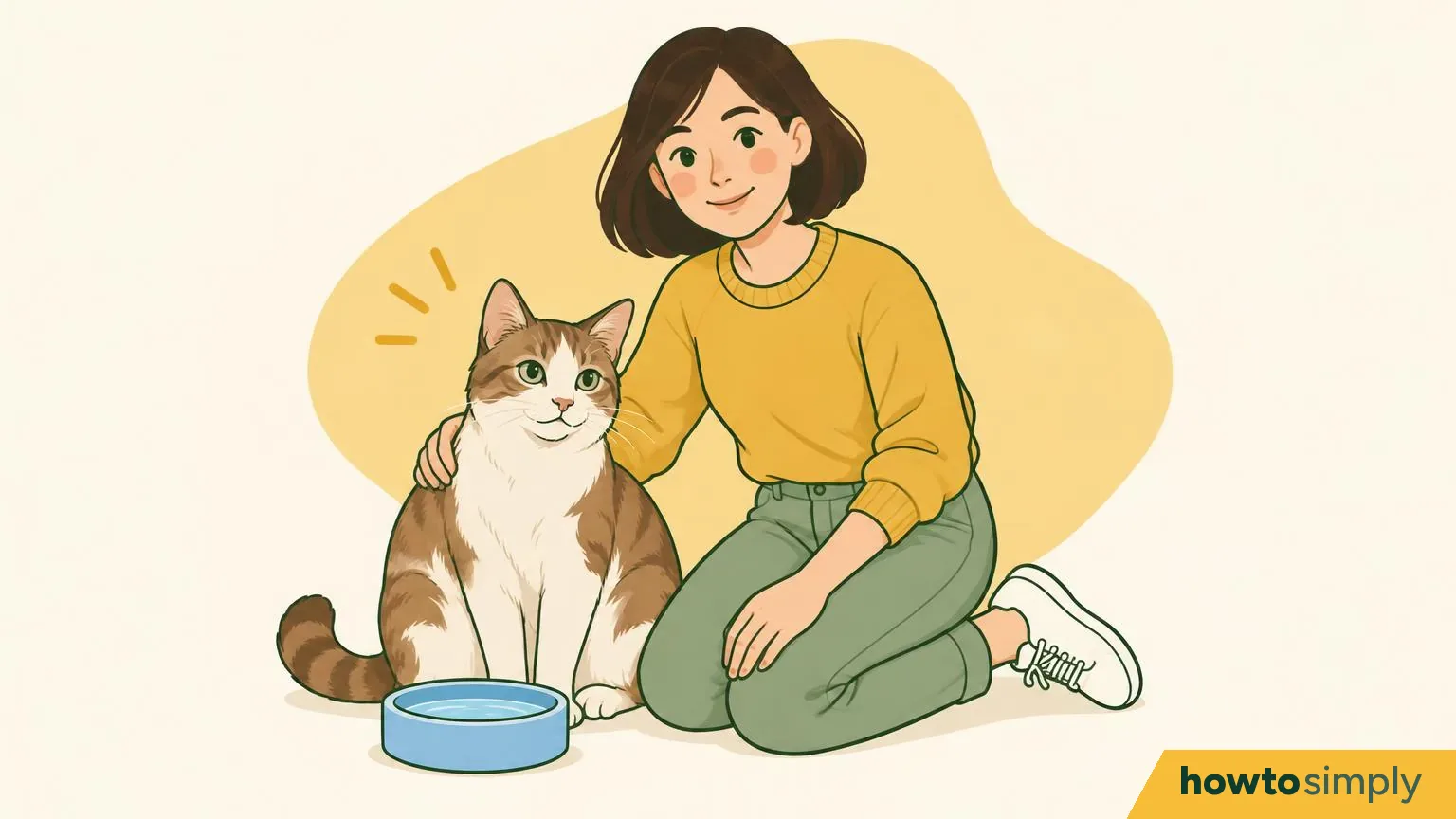
Which houseplants are poisonous to cats
Researched by Abu Bakar Saadat6 min read
Last updated: 15 November 2026References
On this page 11 sections
In short
Find the Latin name on each plant's label, check it against the ASPCA's cat list, give away anything toxic, and never bring lilies into the house. If your cat eats a plant that might be poisonous, contact your vet.
At a glance
- Common toxic houseplants
- Aloe, pothos, peace lily, snake plant, monstera, dieffenbachia, jade (ASPCA)
- Common safe ones
- Spider plant, Boston fern, calathea, parlour palm, moth orchid (ASPCA)
- Time
- About 30 minutes to check a flat
- Checked
- Lists read 30 October 2026
- Checked
- November 2026
Call your vet now if your cat has touched a lily or eaten a plant that might be poisonous, then come back here. If you're checking your plants before a new cat arrives, that's a lovely thing to do, and this won't take long.
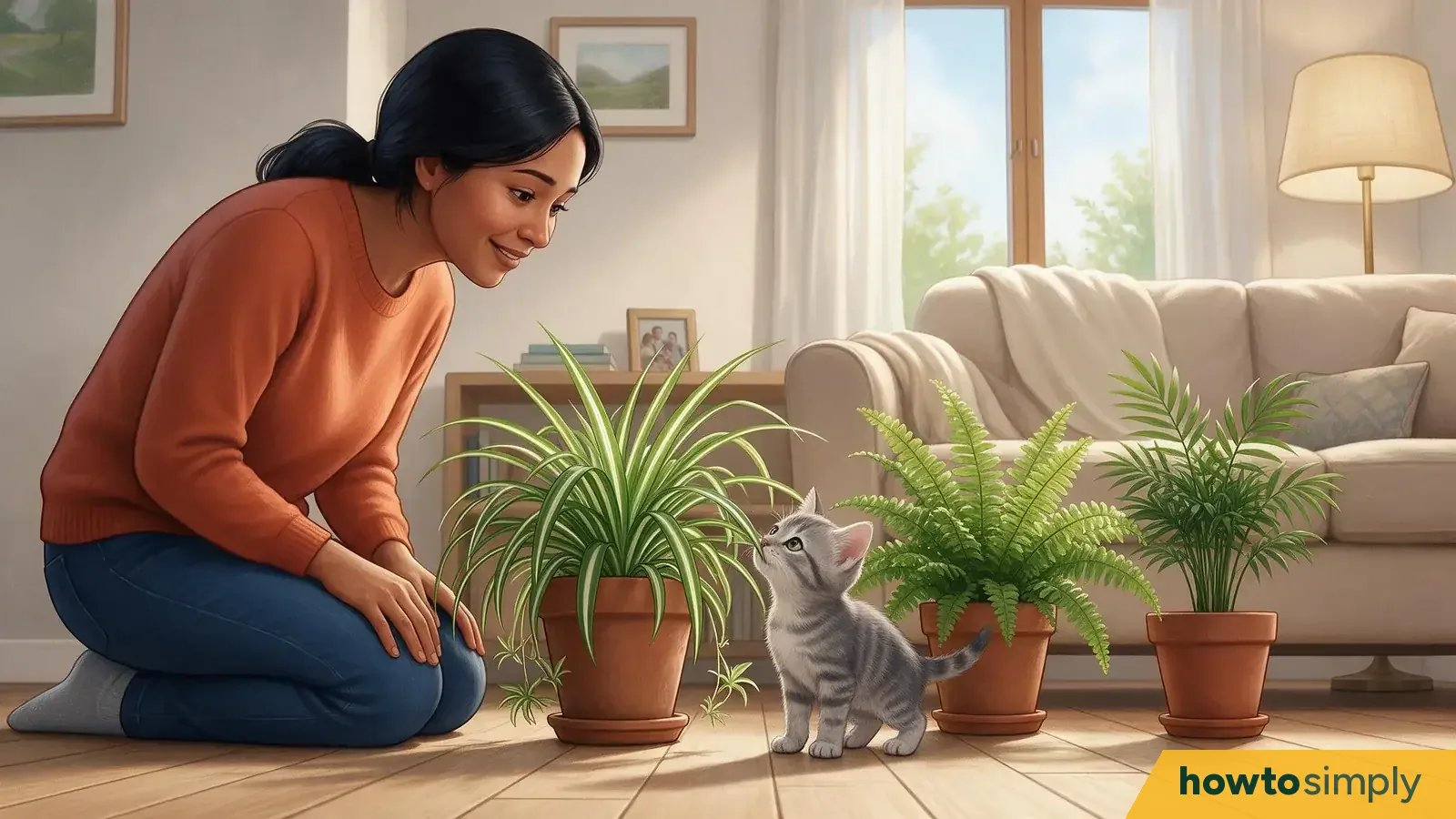
Follow Sara as she checks every plant in her flat before her kitten, Pip, arrives on Saturday.
Sara and Pip are a made-up example that our illustrations follow. The plant safety information comes from the sources named in each step.
Where are you?
Getting a cat soon
Check every plant first. Start at Check each plant.
Buying a new plant or flowers
Check the name before you pay. Go to Keep it safe.
Your cat has eaten a plant
Call your vet now if the plant might be poisonous. Go to If your cat eats a plant.
Check each plant
Gather every plant and find its Latin name.
Illustration 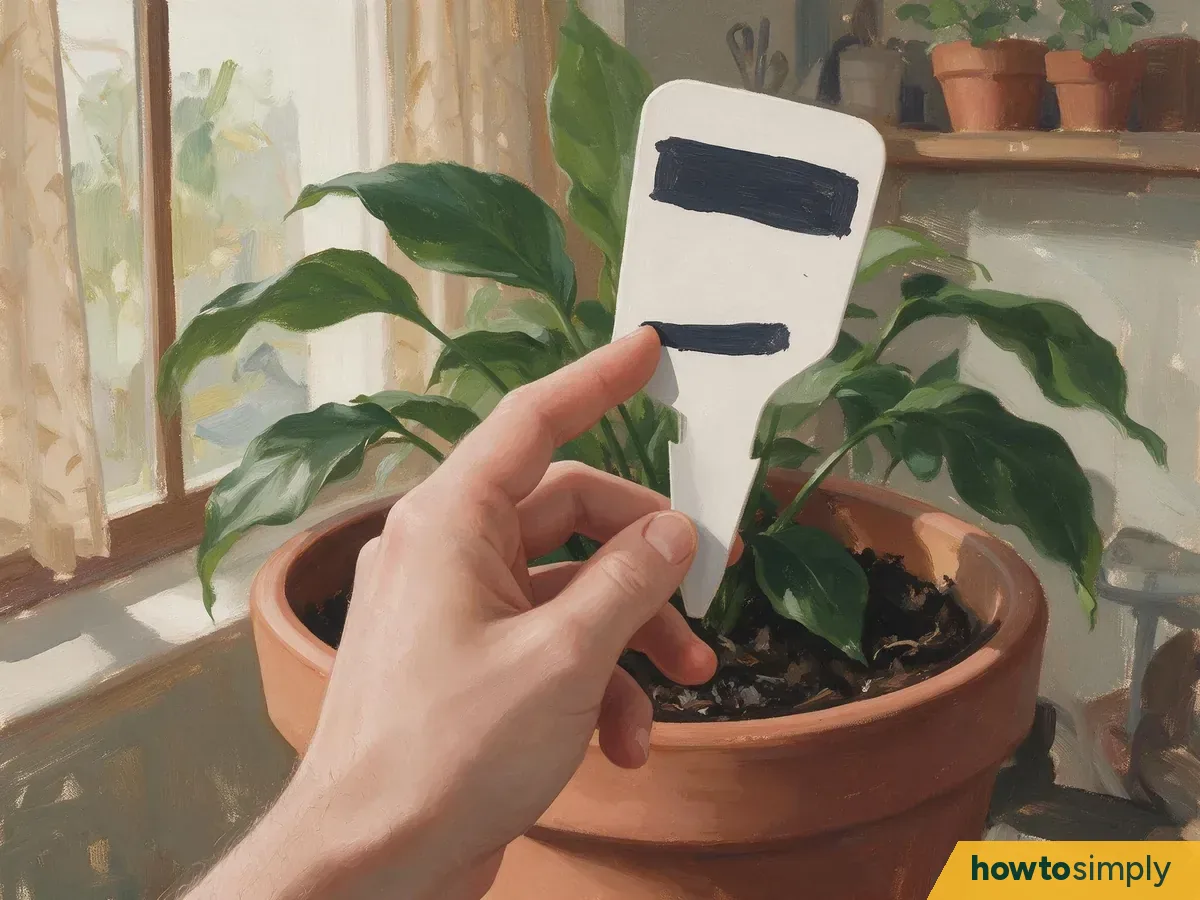
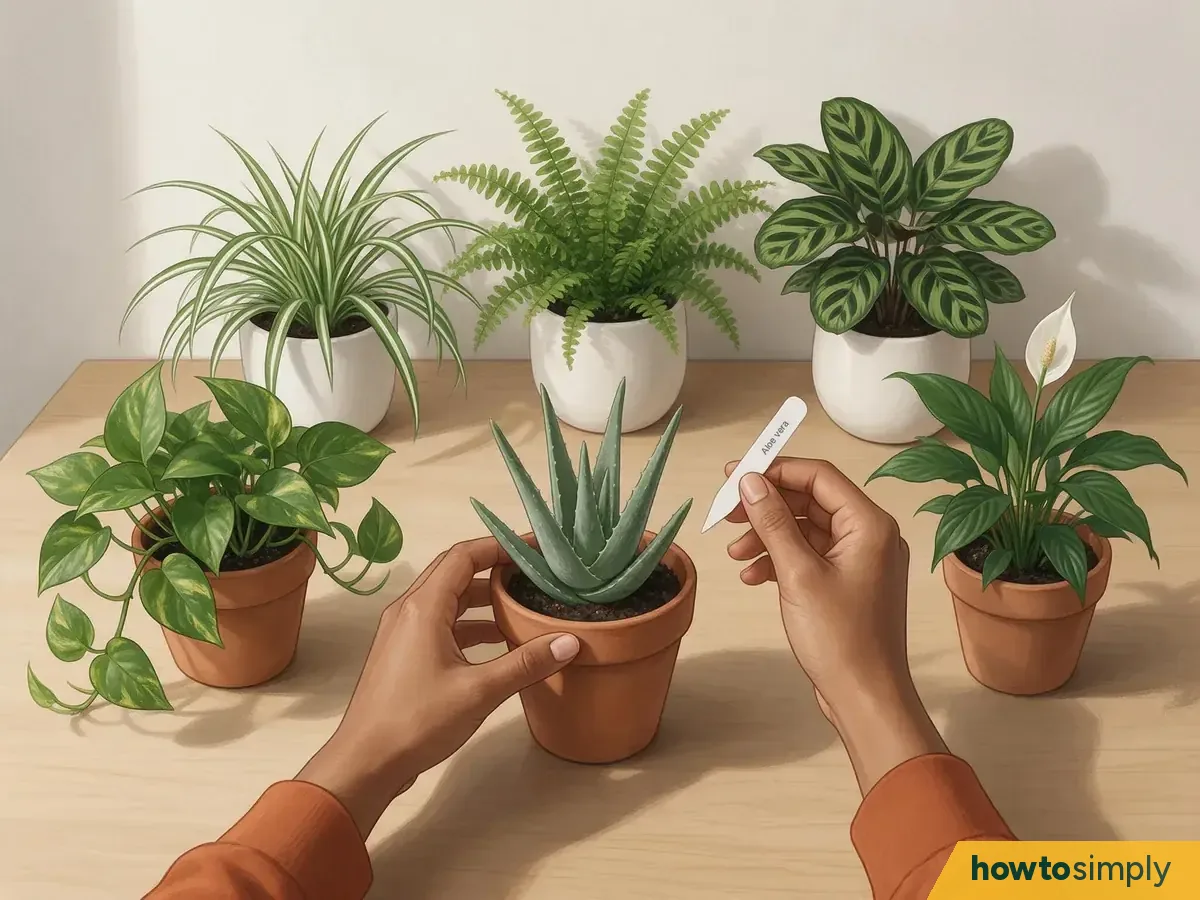
Illustration: the Latin name is usually the smaller second line on the label Sara carries all her plants to the kitchen table and pulls out each little label to read the Latin name.
Common names mix things up: "snake plant" is used for more than one plant. The Latin name (for example Chlorophytum comosum for spider plant) is what the lists use. If a label is missing, take a clear photo of the leaves and ask a garden centre. Write each name in your notebook.
Look each name up on the ASPCA cat list.

Illustration The ASPCA keeps two lists for cats: toxic and non-toxic. Search by the Latin name. If a plant isn't on either list, treat it as unsafe until your vet or a garden centre tells you otherwise; that's our general advice.
Common houseplant ASPCA list for cats Aloe vera Toxic Golden pothos (Epipremnum aureum) Toxic Peace lily (Spathiphyllum) Toxic Snake plant (Sansevieria trifasciata) Toxic Monstera (Monstera deliciosa) Toxic Dumb cane (Dieffenbachia) Toxic Jade plant (Crassula) Toxic Weeping fig (Ficus benjamina) Toxic Spider plant (Chlorophytum comosum) Non-toxic Boston fern (Nephrolepis exalta bostoniensis) Non-toxic Calathea Non-toxic Parlour palm (Chamaedorea elegans) Non-toxic Moth orchid (Phalaenopsis) Non-toxic From the ASPCA's Toxic and Non-Toxic Plant List for cats, read 30 October 2026.
Take lilies out of the house completely.
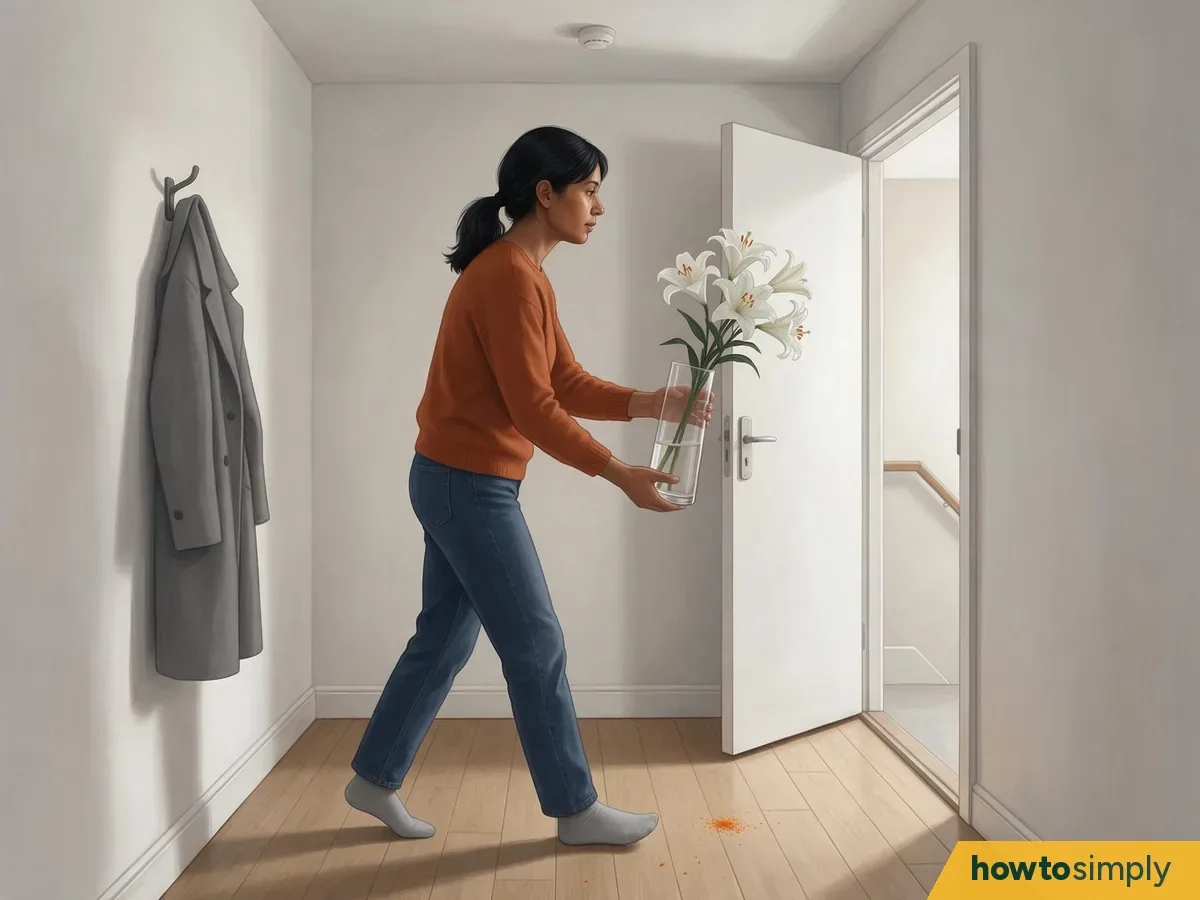
Illustration A friend gave Sara a bunch of white lilies last week. She carries the whole vase out of the flat, water and all, and wipes the table where pollen fell.
All true lilies (Lilium) and day lilies (Hemerocallis) are poisonous to cats, including the pollen and the vase water. "Pollen-free" lilies aren't safe either. Don't keep them in the house or garden at all.
Source
International Cat Care
Sort the plants
Give the toxic plants away before your cat arrives.
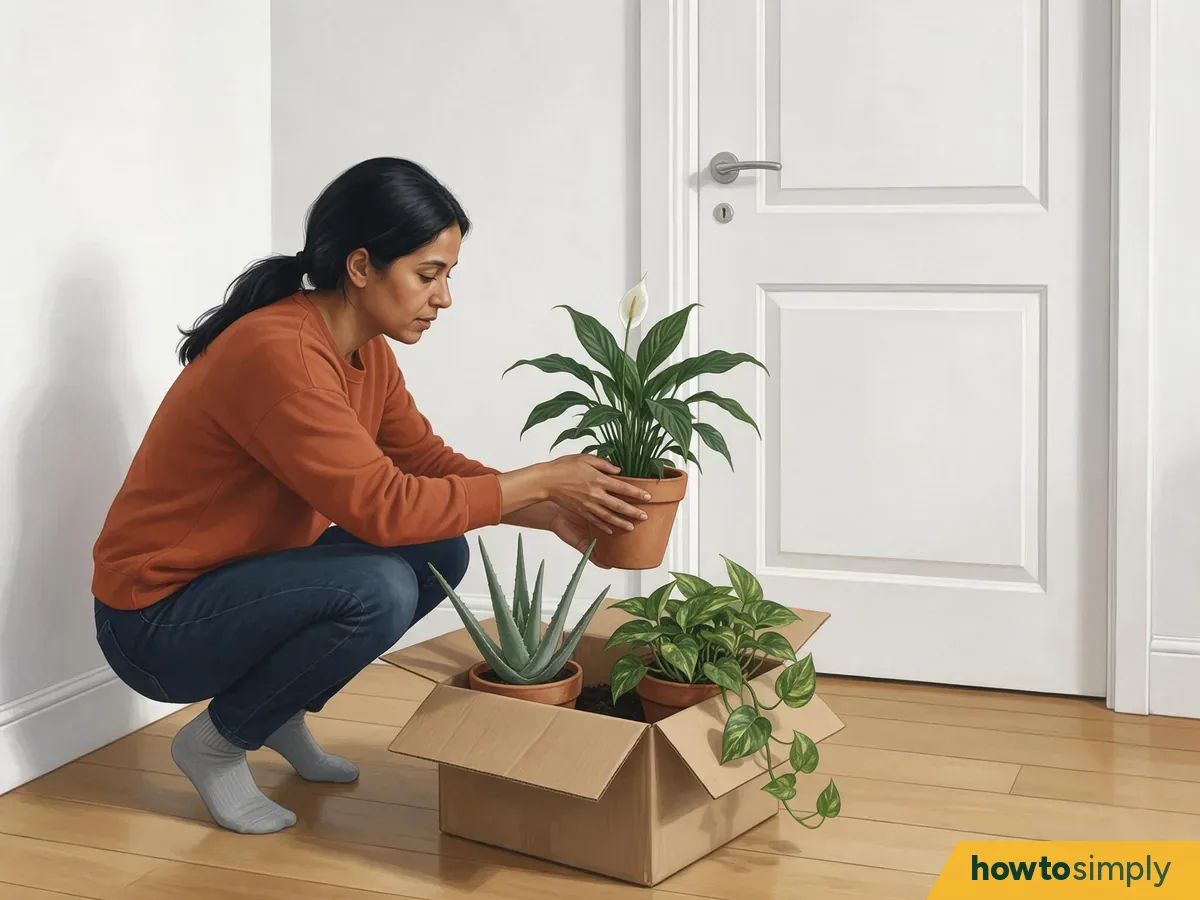
Illustration The aloe, the pothos and the peace lily got a cross. Sara packs them into a box for her neighbour, who has no pets.
International Cat Care advises never keeping hazardous plants in the house, especially with a kitten or an indoor cat. High shelves don't stop a cat that climbs, and leaves fall.
Keep the safe plants, and sweep up any fallen leaves.
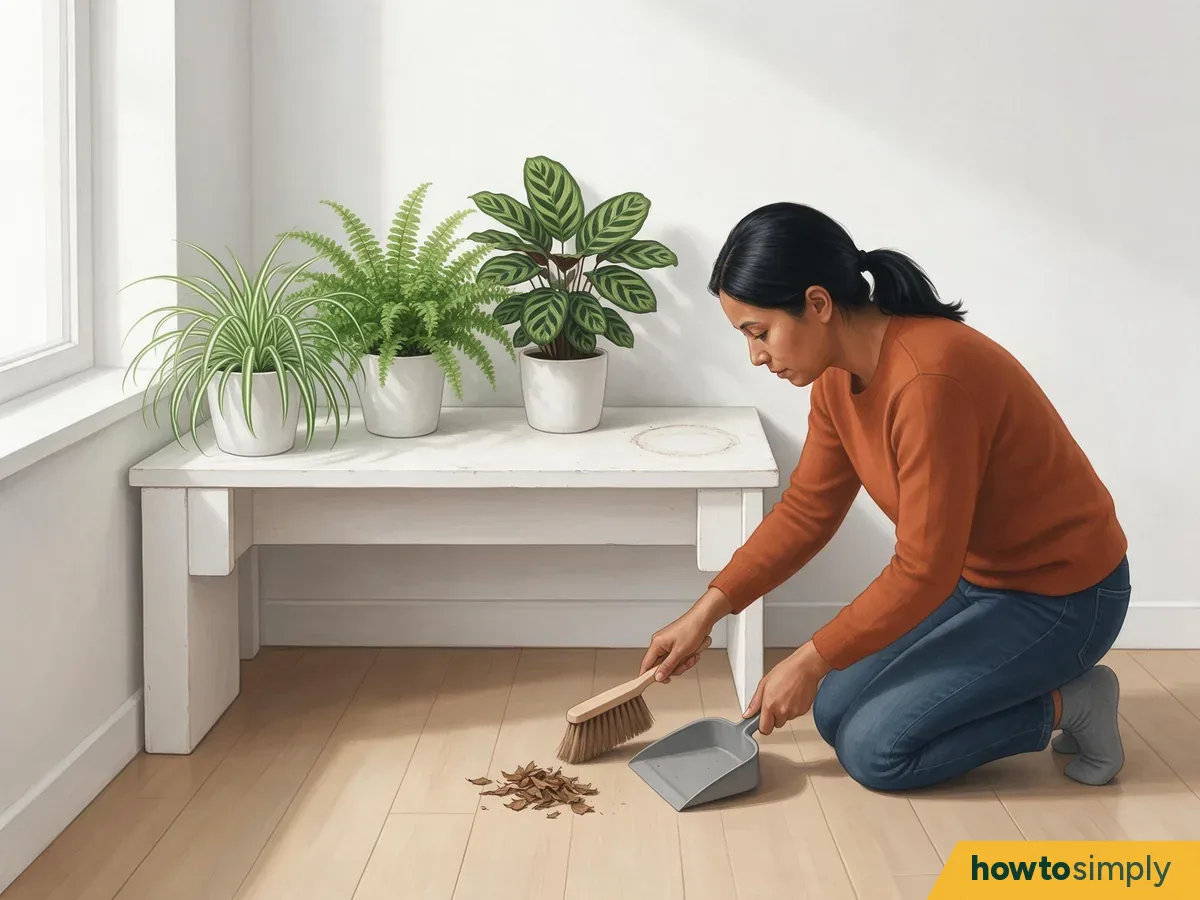
Illustration Any plant, grass included, can upset a cat's tummy and make it sick (International Cat Care). Vomiting is also on its list of signs of a poisonous plant, and it says to contact your vet immediately if you notice any of those signs.
Source
International Cat Care
Check the balcony or garden too.
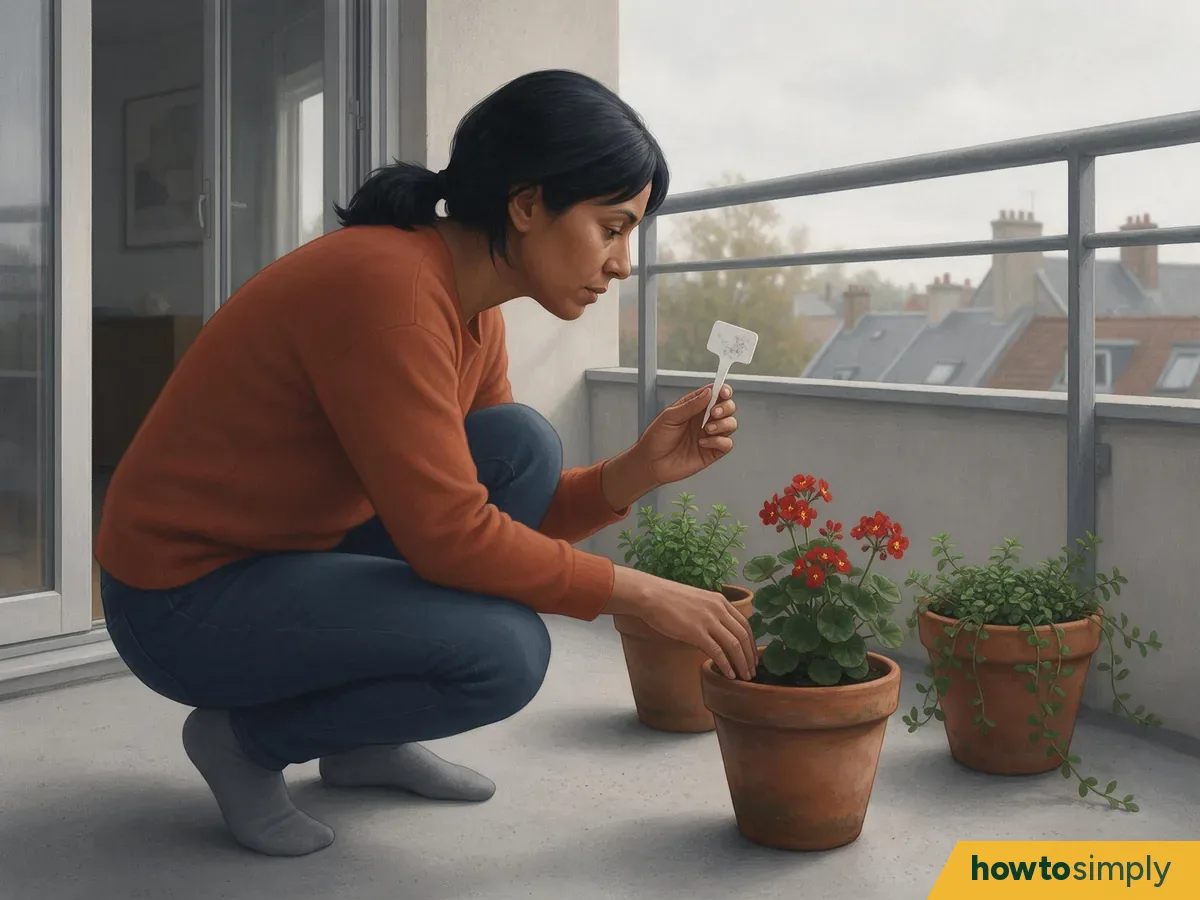
Illustration Look up outdoor pots and beds as well. On some plants, the bulbs, rhizomes and roots are the most dangerous bits. Never leave clippings or uprooted plants near your cat.
Source
International Cat Care
Keep it safe
Check the name before you buy a new plant or flowers.

Illustration A month later, Sara wants a new plant. At the garden centre she reads the label and checks the name on her phone before she pays.
Many garden centres label harmful plants using the Horticultural Trades Association's categories; category B plants ("toxic if eaten") should be avoided. Bouquets are the easy one to forget: ask the florist to leave out lilies.
Source
International Cat Care
Save your vet's number and keep the labels.
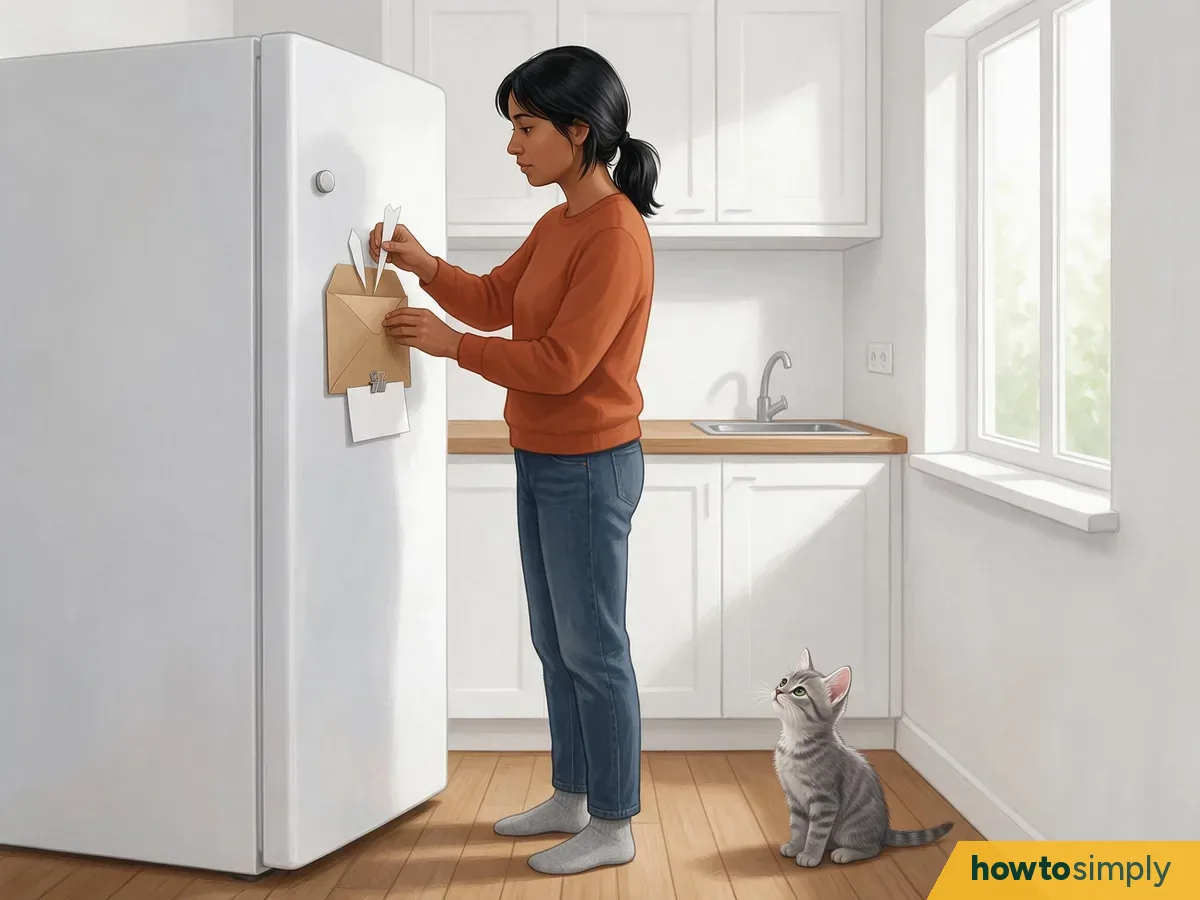
Illustration If your cat eats a plant, have the plant label to hand when you contact your vet.
Source
International Cat Care
If your cat eats a plant
Know the signs.
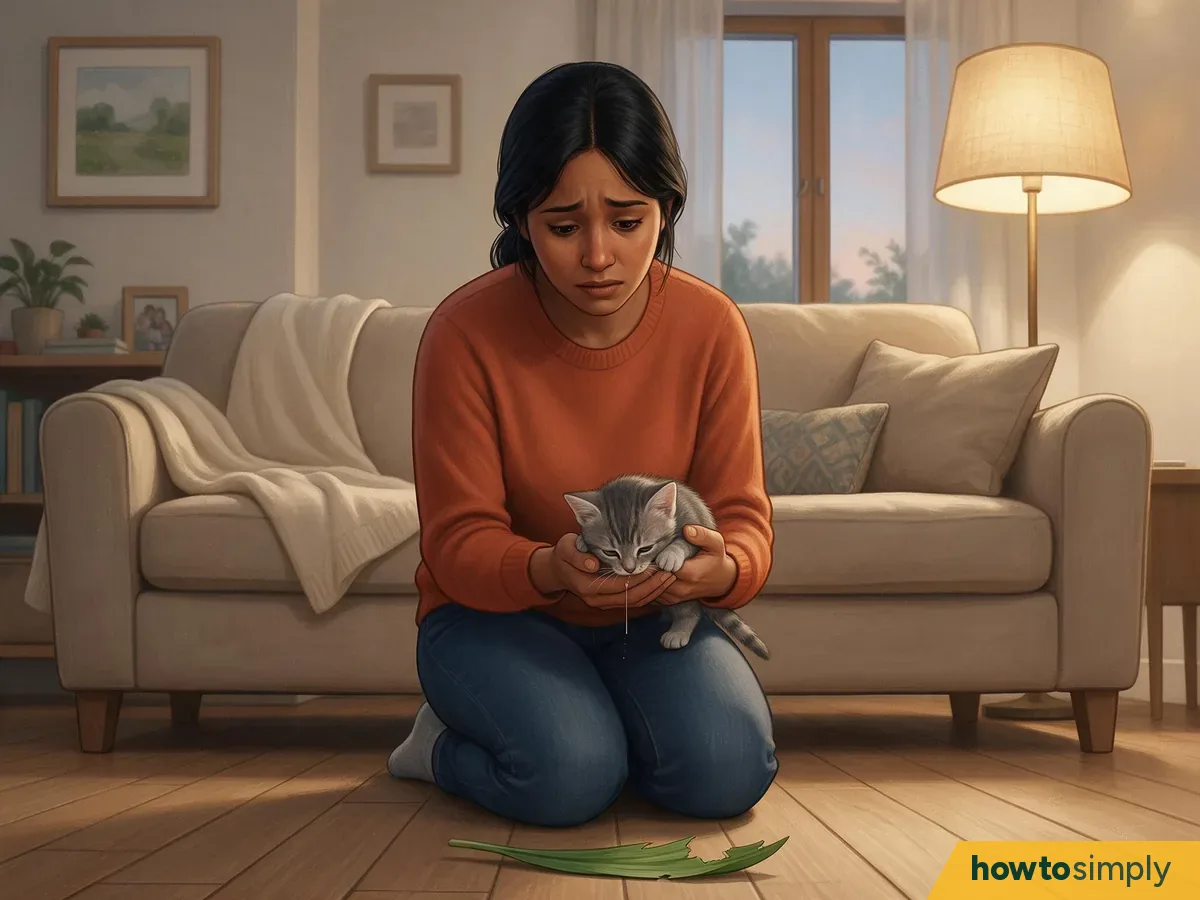
Illustration One evening Sara finds Pip drooling next to a chewed lily leaf from a visitor's bouquet. She scoops him up.
Signs can include drooling, vomiting, diarrhoea, redness or swelling of the mouth, not eating, tiredness and collapse. With lilies, signs start within 1 to 6 hours, but don't wait for them.
Source
International Cat Care
Call your vet straight away. Don't make your cat sick.
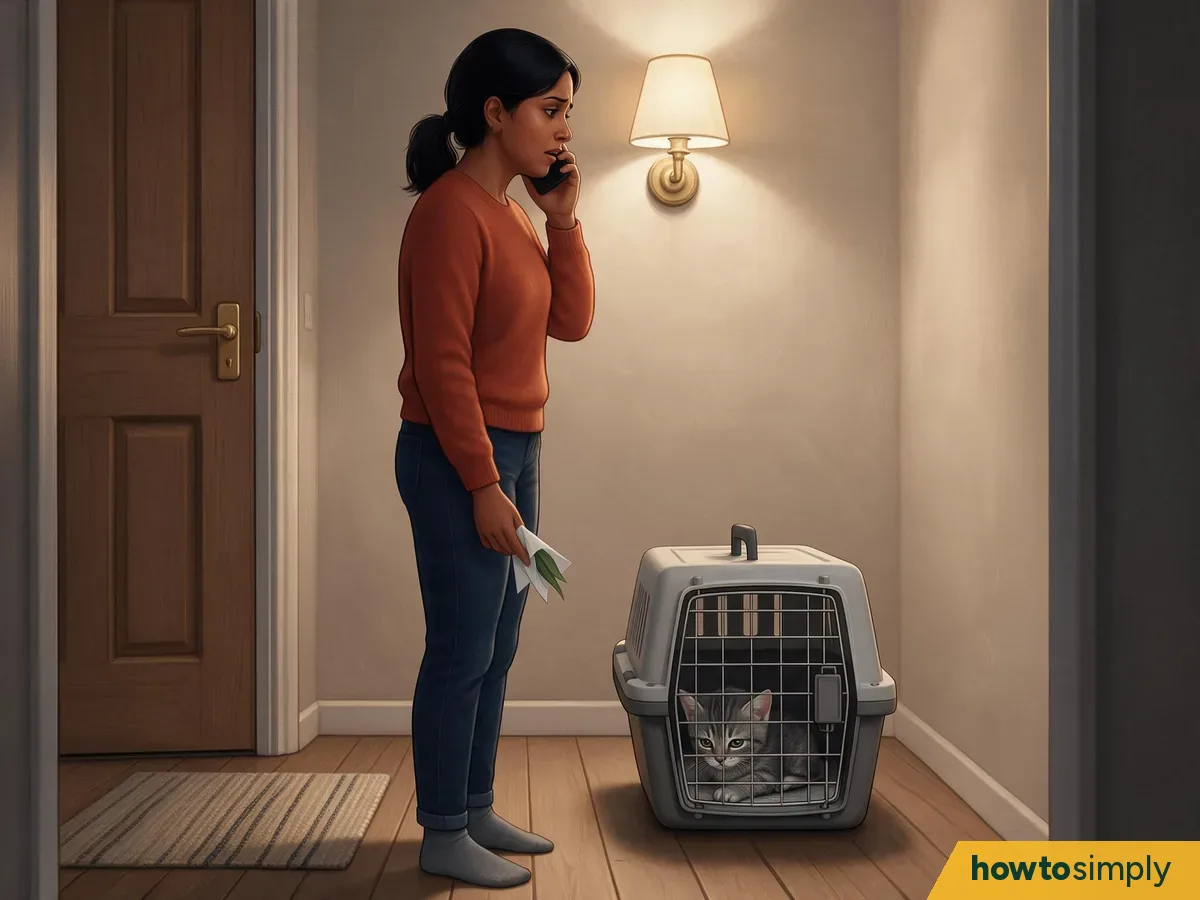
Illustration Sara phones her vet at once. She wraps the chewed leaf in a paper towel to take with her, notes the time, and puts Pip in his carrier.
Don't try to make your cat vomit. Phone your vet, have the plant label to hand, and tell them what time it happened and any signs you've noticed. Out of hours, call your vet's emergency number or the nearest emergency clinic.
Source
International Cat Care
How to tell it worked
On Saturday Pip explores every corner of the flat. Every plant he can reach has a tick in Sara's notebook.
- Every plant in your home and on your balcony has a name and a tick.
- No lilies anywhere, including in bouquets.
- Your vet's number and the plant labels are easy to find.
Who to call
| Where | First call | Good to know |
|---|---|---|
| Germany | Your vet, or a Tierklinik with emergency service out of hours | We found no national pet poison line; human Giftnotruf centres are for people |
| UK | Your vet, or your vet's out-of-hours service | Animal PoisonLine (animalpoisonline.co.uk) is a UK pet poison service |
| US | Your vet, or ASPCA Animal Poison Control: (888) 426-4435, 24/7 | A consultation fee may apply (ASPCA Pet Insurance) |
| Pakistan and India | Your vet | Have the plant label to hand (International Cat Care) |
If something goes wrong
| What happens | What it means | What to do |
|---|---|---|
| Pollen on your cat's fur or nose | Possible lily contact | Call a vet now, even if your cat seems fine (International Cat Care) |
| Your cat vomits after chewing a plant | All plants can irritate the stomach, and vomiting is also a sign of poisoning | Contact your vet (International Cat Care) |
| You can't find a plant's name | No label | Treat it as unsafe; photograph it and ask a garden centre |
| Your cat keeps chewing plants | Kittens, and cats with not much to do, are the most likely to chew harmful plants (International Cat Care) | Ask your vet about safe ways to keep your cat busy |
Questions readers ask
Is a peace lily as dangerous as a real lily?
It's on the ASPCA's toxic list for cats. A peace lily (Spathiphyllum) isn't a true lily, and International Cat Care says such plants may have different toxic effects. True lilies (Lilium) and day lilies (Hemerocallis) are the ones that cause kidney damage (International Cat Care).
Can I keep a toxic plant on a high shelf?
Cats climb and jump, and fallen leaves land on the floor. International Cat Care advises never keeping hazardous plants in the house, especially with kittens or indoor cats. Giving them away is the safe choice.
My cat chews my spider plant. Is that OK?
The spider plant is on the ASPCA's non-toxic list. Any plant, even grass, can still irritate a cat's stomach and cause vomiting (International Cat Care).
Sources and method
- Researched by
- Abu Bakar Saadat
- Pictures
- 13 illustrations drawn for this article: drawings, not photos.
- Sources
- Steps checked against the 5 named sources linked below.
- What this page adds
- A table of common houseplants and how the ASPCA cat list rates them, and who to call first in Germany, the UK, the US, Pakistan and India.
- The story
- Sara and her kitten Pip are an example we made up to walk you through the steps. They are not real readers.
What to do next
Settle in and care for your cat Step 2 of 4
- How to give a cat a pill: a calm, safe technique (with or without help)Without the scratches.
- Is my cat dehydrated? Signs to check and when to call the vetKnow the signs of a cat that is not drinking enough.
- How to settle a new cat into your home and introduce it to other petsThe first days set the tone.
Did this solve the problem?
Where did you get stuck?
Get new guides by email
Our newest guides, sent to your inbox. Free, and you can unsubscribe in one click.
We'll email you to confirm. How we use your email
Follow howtosimply on Facebook
We share every new article on our Facebook page, so the next fix turns up in your feed.
Follow on FacebookWhat did you think?
Reaction counts are loading.
Sources
We use primary, official and specialist sources appropriate to the topic.