Sit a prepared bulb in a hyacinth glass with the water just below its base, then keep it cool and dark for several weeks until the glass fills with roots. Bring it into the light slowly. Wear gloves: the bulb can make skin itch, and it is toxic to pets.
4 to 8 weeks, until roots fill the glass (NYBG, RHS)
Best cool temperature
About 4 to 7 °C, never freezing (NYBG)
Bulb to buy
A prepared bulb for indoor flowering (RHS)
Total time
About 10 to 12 weeks (RHS)
Safety
Gloves on; toxic to cats and dogs (ASPCA)
Checked
November 2026
A hyacinth grown in a glass of water is a winter project you can watch from start to finish: first the roots, then the leaves, then a scented flower. The two things that matter most are keeping the water below the bulb and giving it a long, cool, dark start. Below, one example runs from a dry bulb in November to a flower in a glass, with a drawing for every step.
Every step below follows one story, and each drawing shows that exact moment. On 1 November, Amira and her daughter set up one prepared bulb in a hyacinth glass on the kitchen table. They keep it in the cool cupboard under the stairs, check the water every weekend, and bring it into the light once the roots fill the glass.
Part 1: Set up the glass
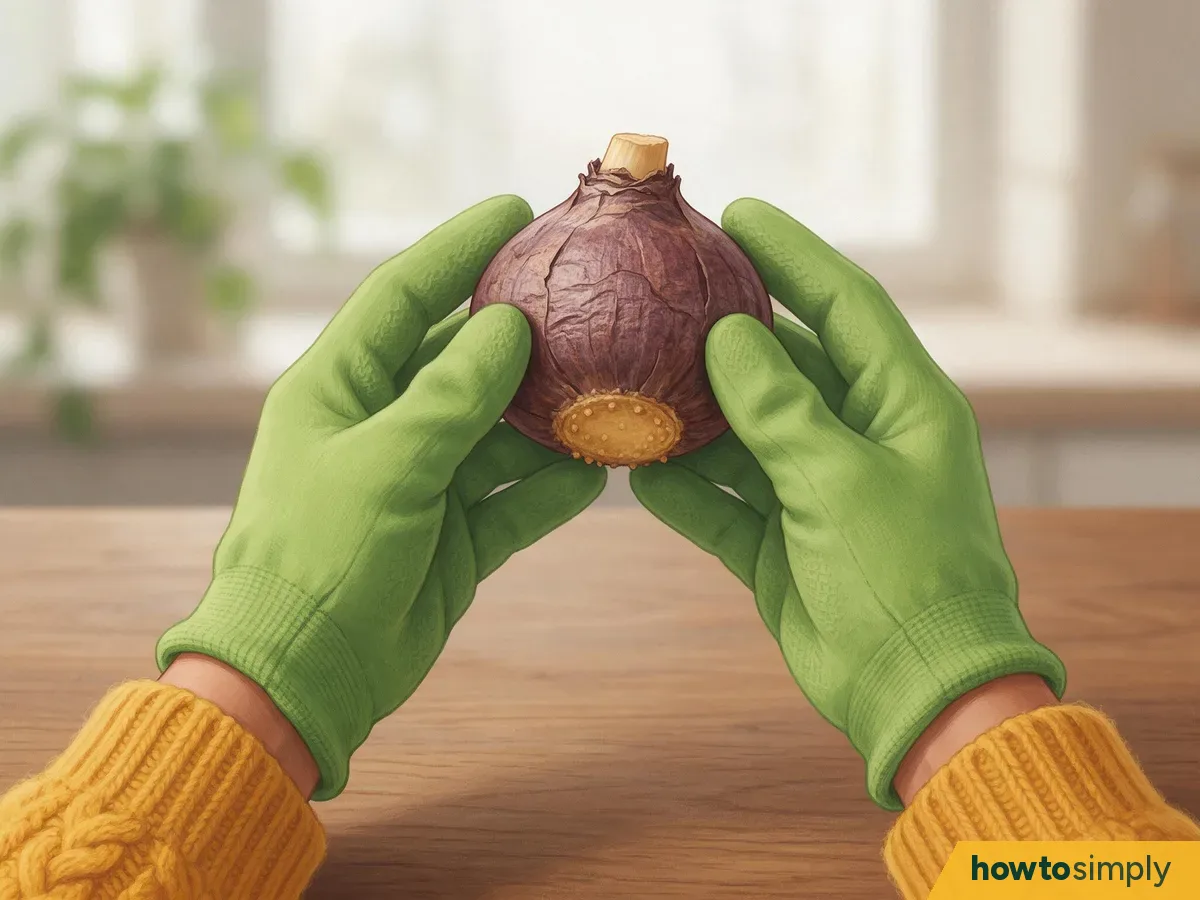
Put on gloves before you handle the bulb.
Illustration
In our story: Amira and her daughter both put on gloves before they unpack the bulb.
Handling hyacinth bulbs can cause "hyacinth itch": itching, redness and sometimes blisters, and long contact can cause dermatitis (Hong Kong Hospital Authority). The whole plant is poisonous, especially the bulb. If children help, keep gloves on and wash hands afterwards (our advice).
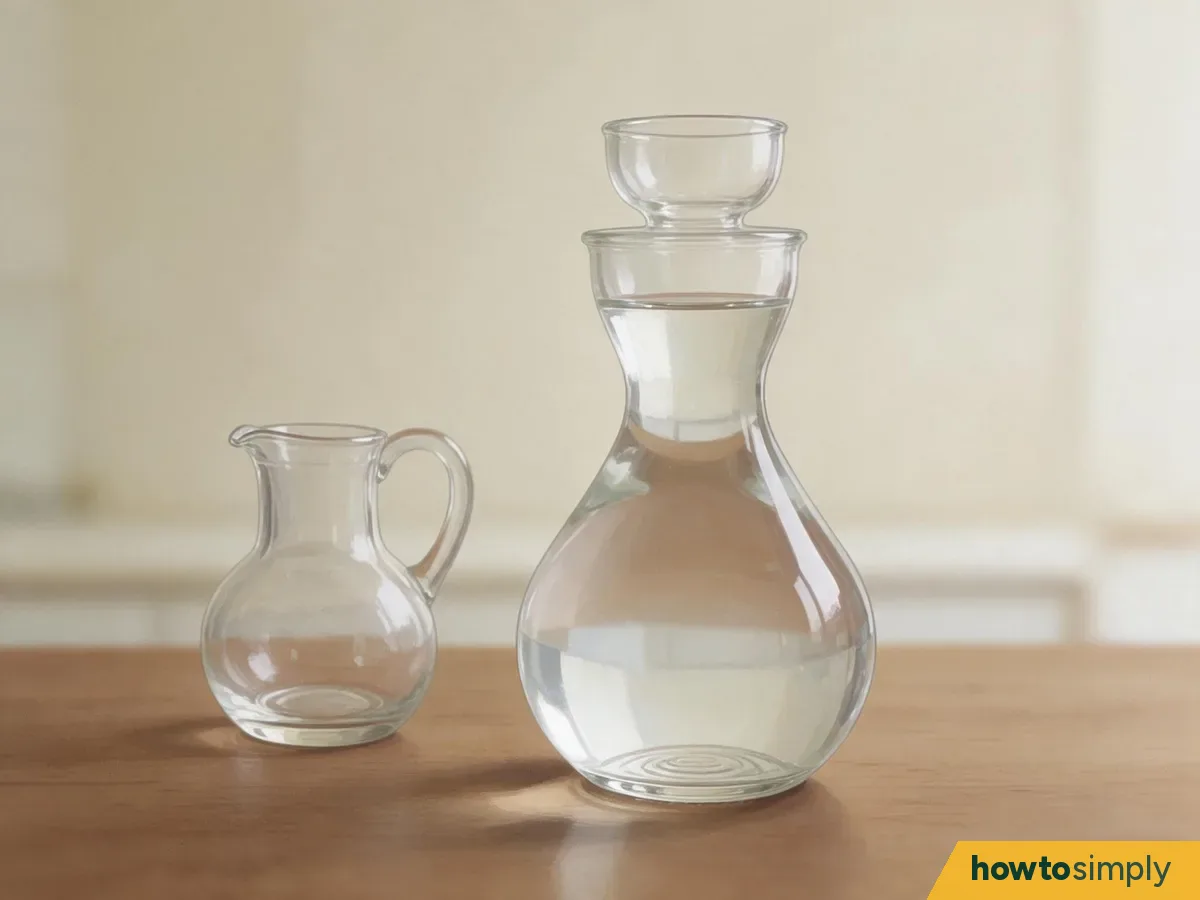
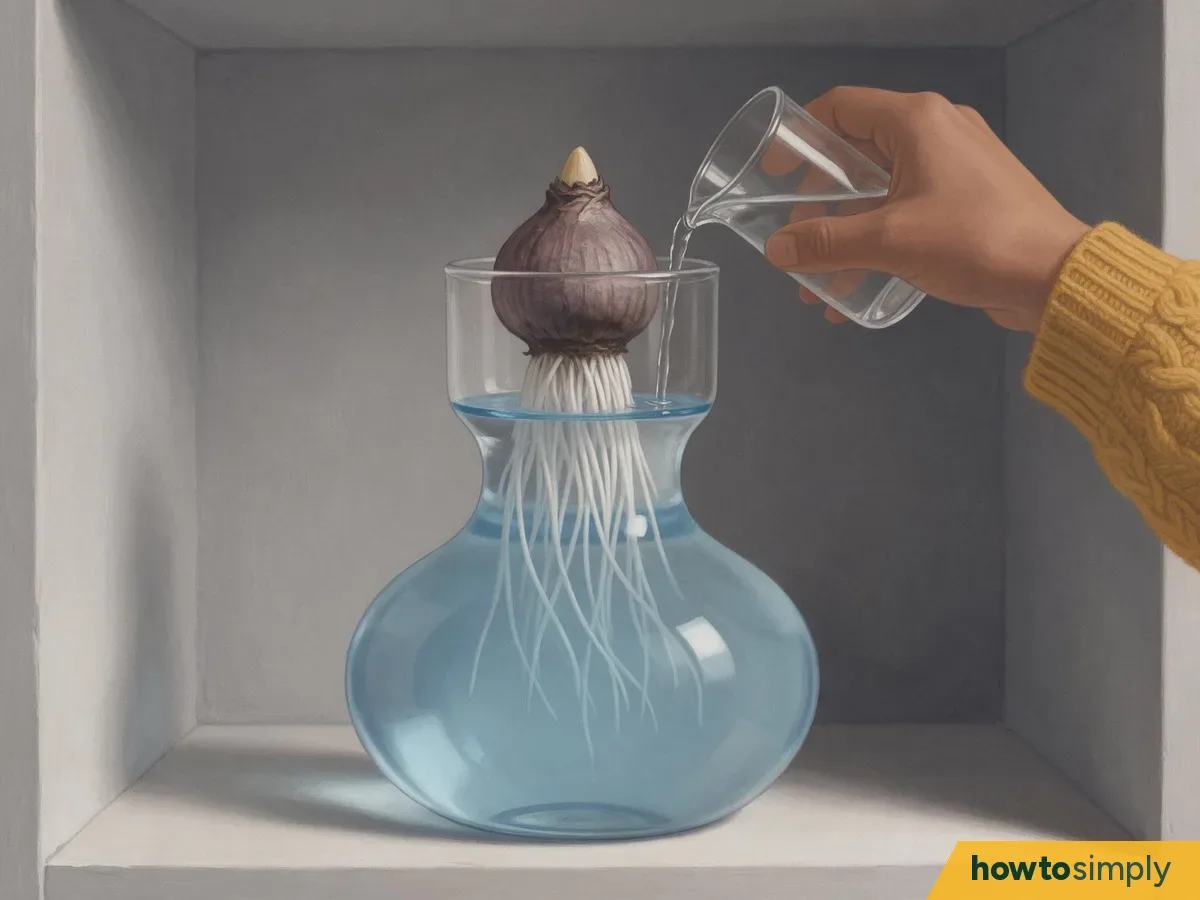
Fill the glass so the water stops just below the bulb.
Illustration
In our story: Amira pours water in slowly and stops when it is a few millimetres below the cup.
Keep the water just below the bottom of the bulb, not touching it (RHS). NYBG says the same: the bulb rests above the water, not in it. A bulb sitting in water can rot (our advice). The RHS says a few pieces of charcoal in the water help stop it going slimy, but you don't need them.
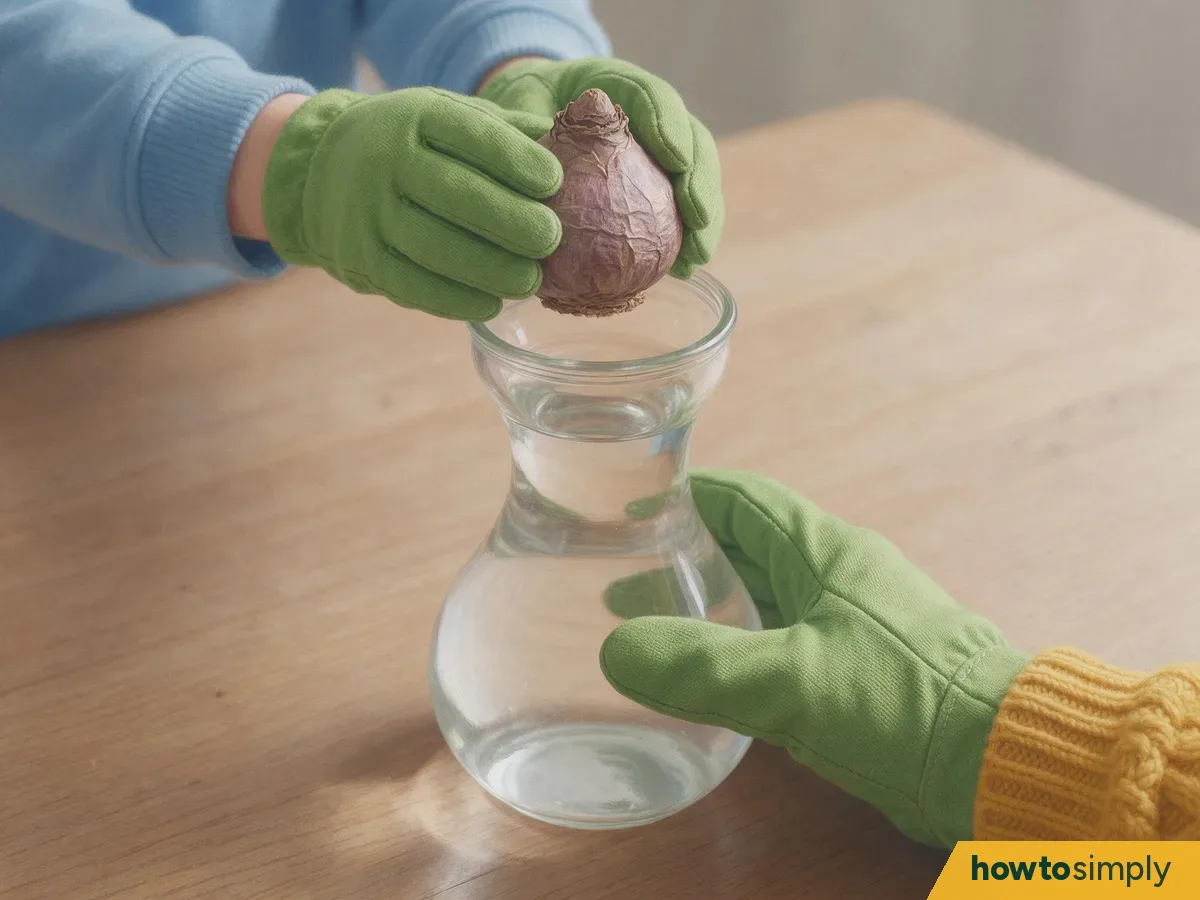
Sit the bulb in the cup, pointed end up.
Illustration
In our story: Her daughter sets the bulb in the cup, flat base down, pointed tip up.
The flat base, where the roots grow from, goes down, close to the water but not in it (RHS, NYBG).
Part 2: Grow the roots in the cool and dark
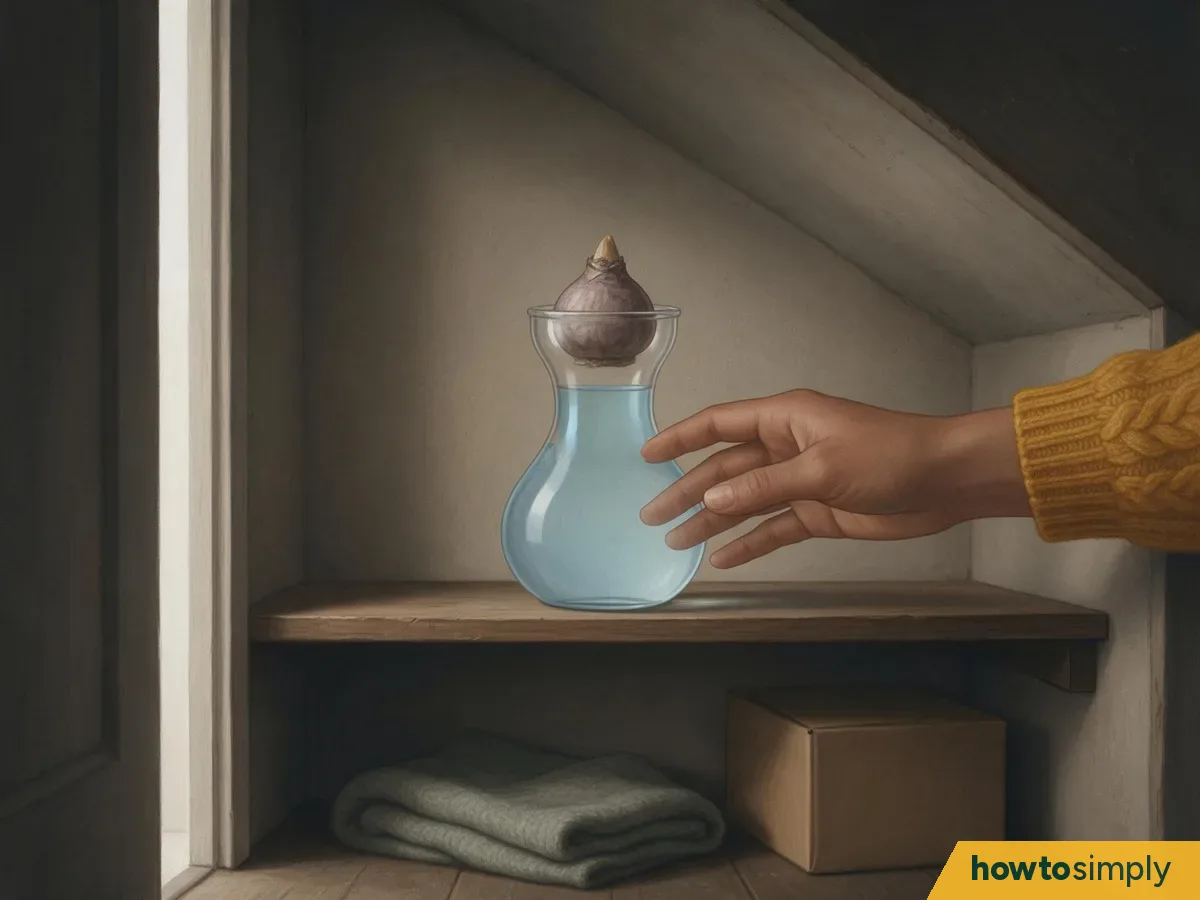
Put it somewhere cool and dark.
Illustration
In our story: Amira puts the glass on a shelf in the unheated cupboard under the stairs and closes the door.
Keep it in a dark, cool place until the glass is full of roots and the flower stem is showing (RHS). NYBG says 4 to 8 weeks, and that about 4 to 7 °C is best, between 0 and 10 °C. A bulb that isn't prepared needs much longer, about 10 to 12 weeks of cold (NYBG); WSU Extension gives about 13 weeks at 7 °C. A prepared bulb needs less, so follow the packet (NYBG).
Check the water every week.
Illustration
In our story: Every Saturday, Amira opens the cupboard and tops up the water, keeping it just below the bulb.
Check that the water level doesn't drop (NYBG). Once the roots reach the water, they keep the bulb fed; you don't need plant food in water (RHS).
Wait until the roots fill the glass and the shoot is showing.
Illustration
In our story: By early December, white roots fill the glass and a short green shoot pokes out of the top.
That is the sign it's ready to come out: a glass full of roots and the flower stem emerging (RHS), or "a good root system" (NYBG). Started on 1 November, Amira's bulb will most likely flower in January rather than at Christmas; for Christmas, the RHS says to start in September (our estimate from the RHS timing).
Part 3: Bring it into the light
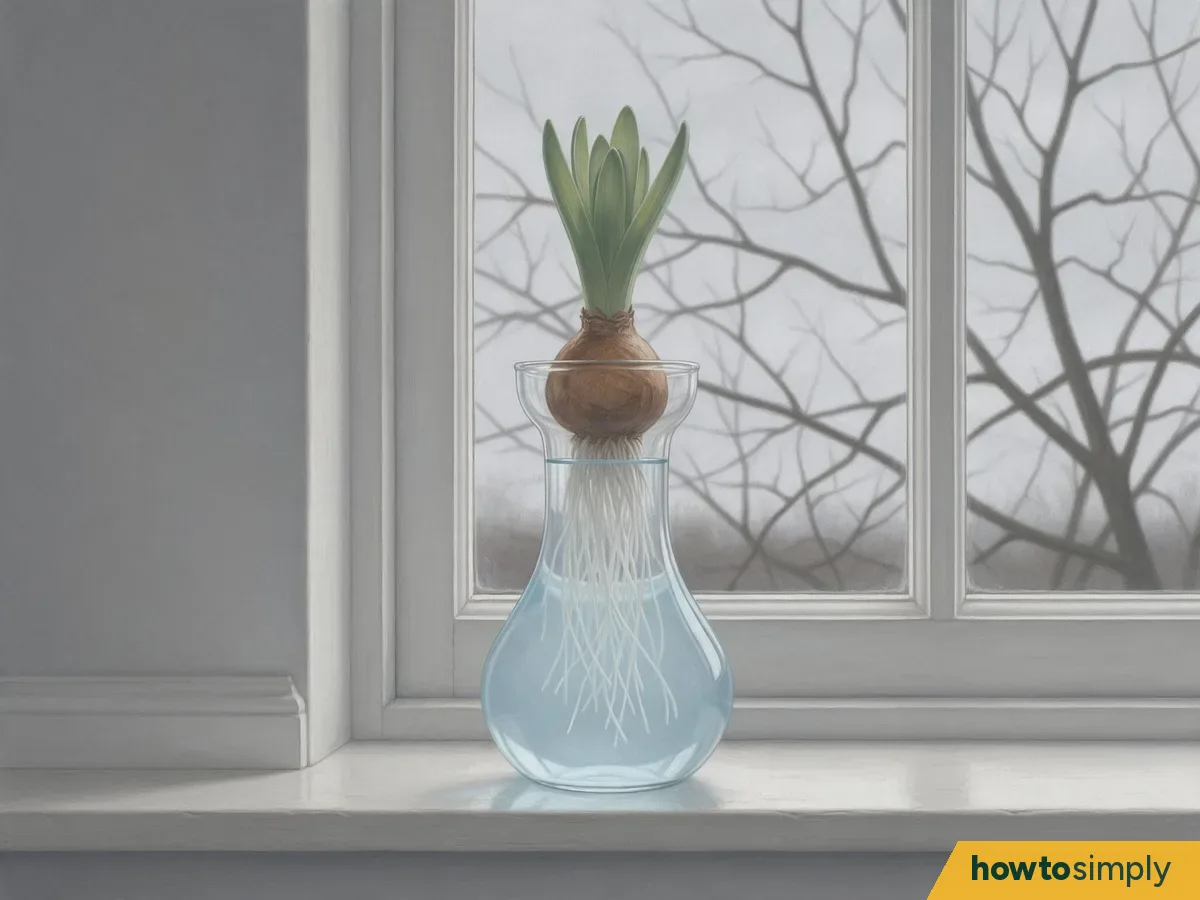
Move it to a cool, bright spot first.
Illustration
In our story: Amira moves the glass to the windowsill in the cool spare room for the first week.
Increase light and warmth gradually (RHS), slowly bringing it into warmth and light (NYBG). Going straight from a dark cupboard to a warm room risks the problem in the next step (our advice).
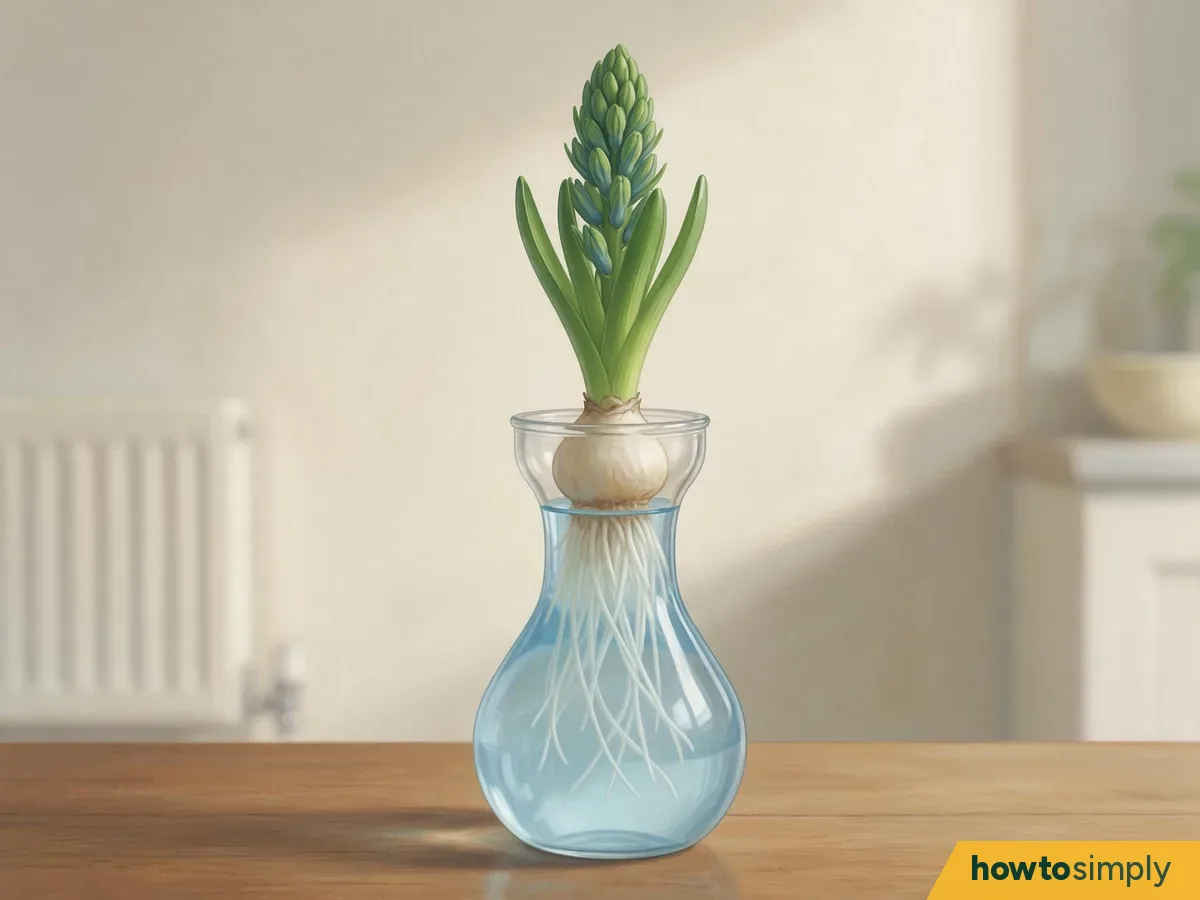
Bring it somewhere warmer once the flower stem rises.
Illustration
In our story: When the stem of buds stands taller than the leaves, the glass moves to the kitchen table, away from the radiator.
If the stem hasn't come up before the flowers open, or is weak, the room is too warm: move it somewhere cooler until the stem is taller than the leaves (RHS). Turn the glass every few days so it grows straight towards the light (our advice).
Support a heavy flower.
Illustration
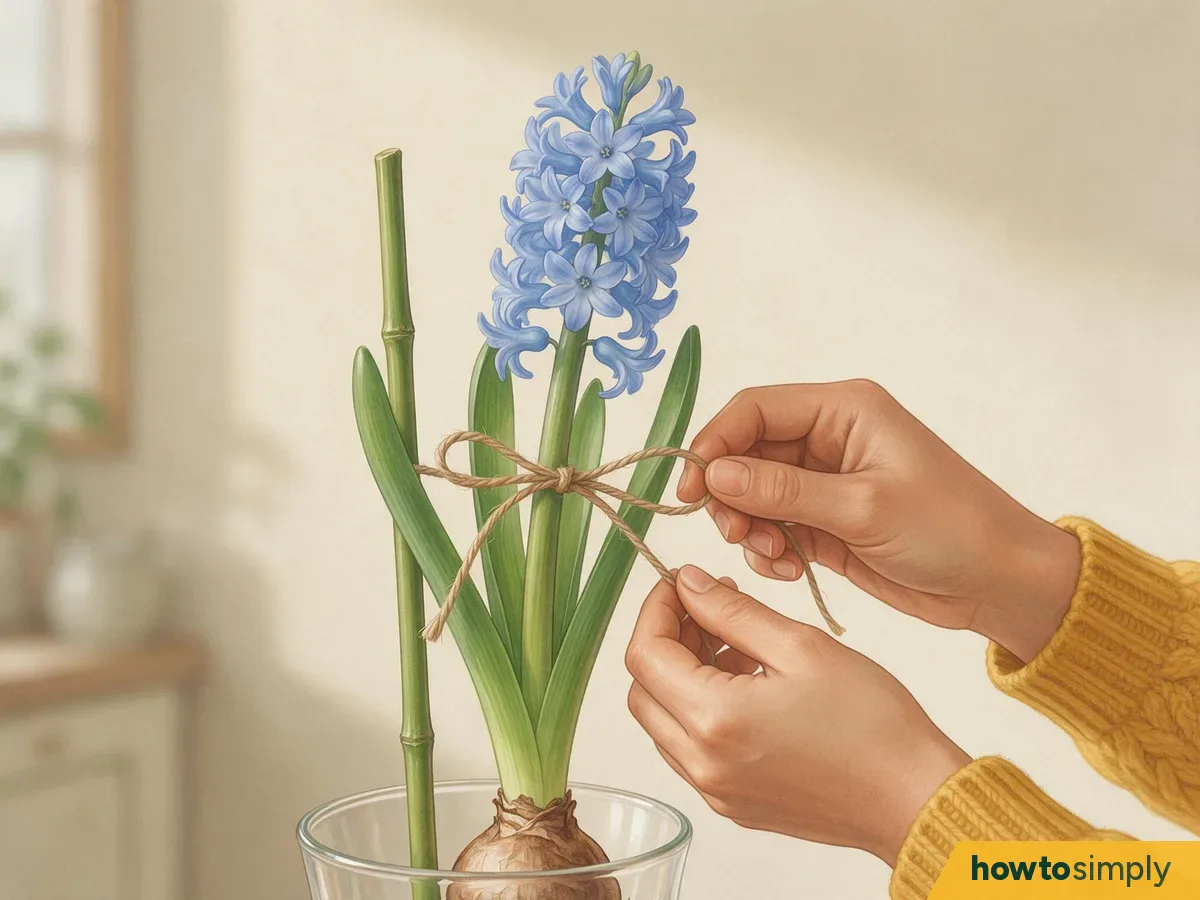
In our story: As the flower opens it starts to lean, so Amira ties it loosely to a thin cane.
Hyacinth stems are hollow and the flowers are heavy, so they may need staking (NYBG).
Enjoy the flowers.
Illustration
In our story: In January the flower opens, and the kitchen smells of hyacinth.
Keep the glass topped up while it's in flower. Keep it where cats and dogs can't reach it: hyacinth is toxic to them (ASPCA).
Part 4: After flowering
Cut off the faded flower stem at the base.
Illustration
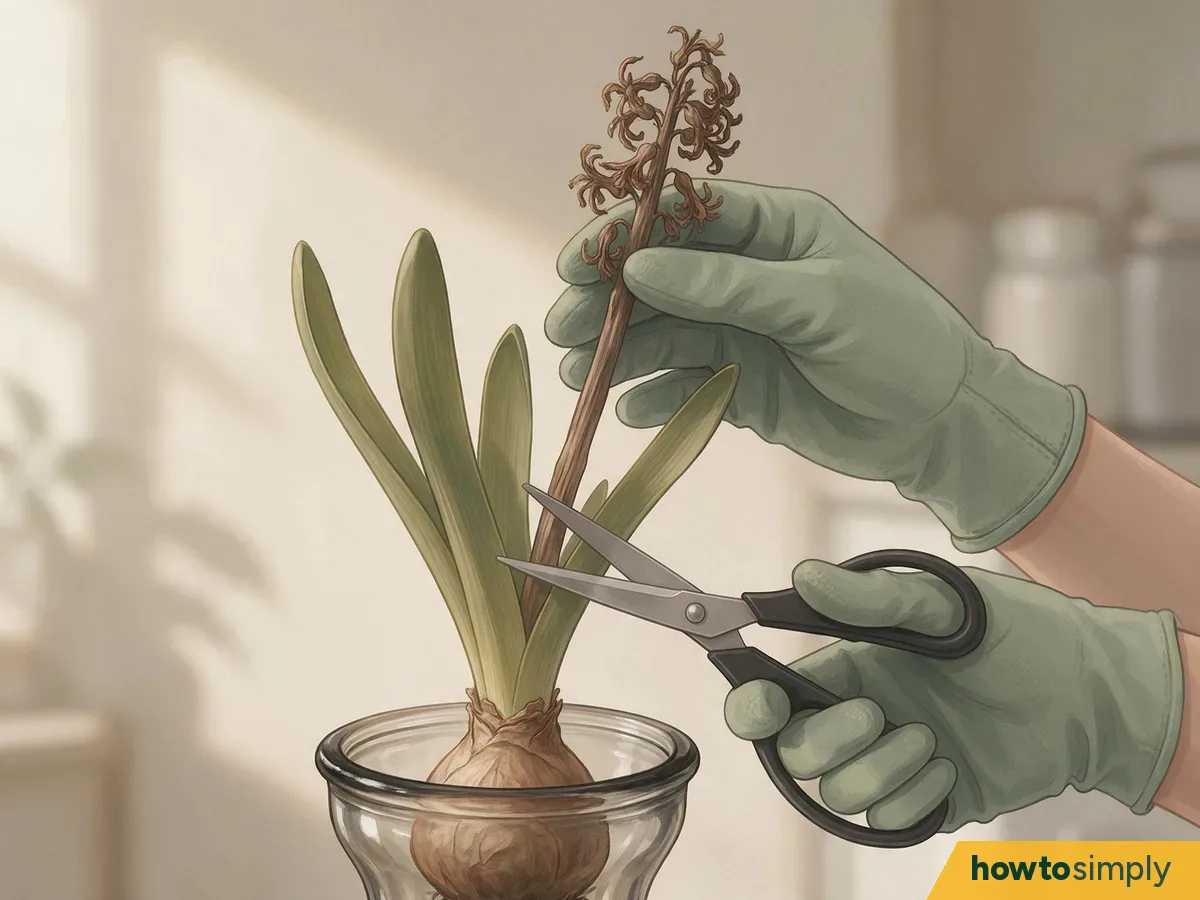
In our story: When the flowers turn brown, Amira cuts the stem off just above the bulb.
Cut the flower stem off at the base once the flowers fade (RHS). Bulbs grown in water are usually thrown away after flowering, but you can try planting them in the garden (RHS). Expect it to take a year or two to flower well again, if it does (our advice).
The one thing to avoid
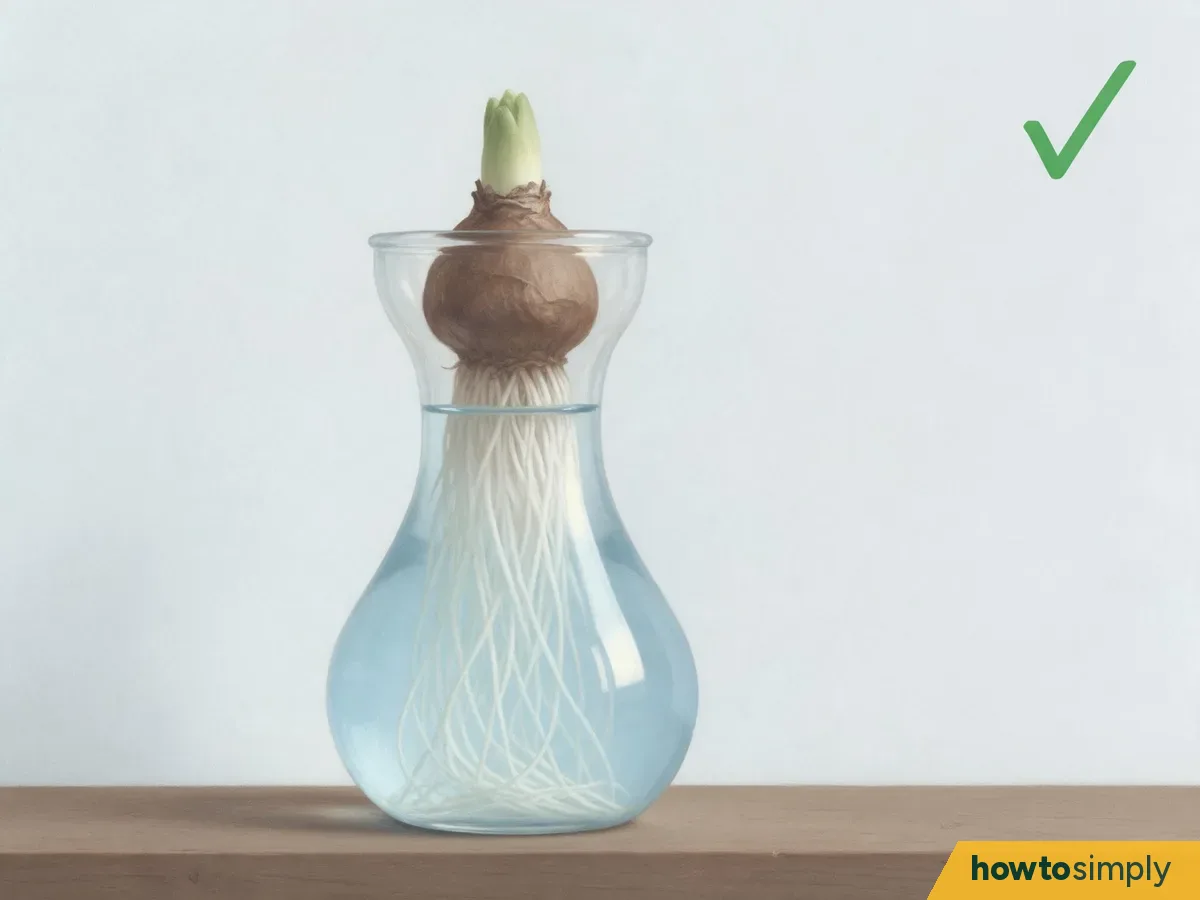
Don't let the bulb sit in the water.
Illustration
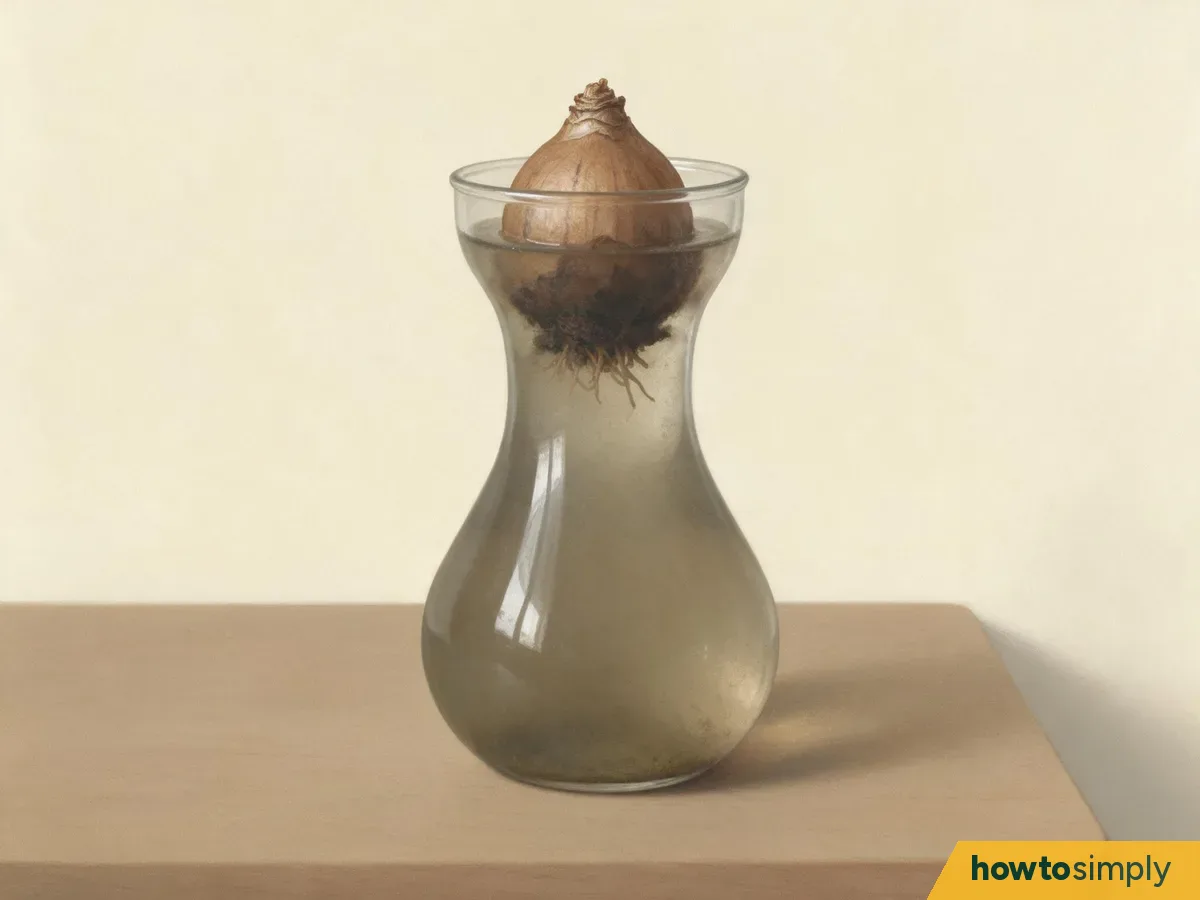
What if Amira had filled the glass to the top? The base of the bulb would sit in the water and could go soft and rot.
Keep the water below the bulb, not touching it (RHS, NYBG). If the water turns cloudy or smells, tip it out and refill it to just below the bulb (our advice).
How to tell it's working
White roots grow down into the water within the first few weeks.
The bulb stays firm, with no soft or mouldy patches.
The flower stem grows taller than the leaves before the flowers open.
If something goes wrong
What happens
Likely cause
What to do
No roots after a few weeks
Water not reaching the base, or too warm (our advice)
Top up to just below the bulb; keep it cool and dark
Bulb soft or mouldy at the base
Bulb sitting in water (RHS, NYBG)
Lower the water below the bulb; throw out a rotten bulb
No. The RHS says to keep the water just below the bottom of the bulb but not touching it, and NYBG says the bulb should rest above the water, not in it. The roots grow down to reach it.
How long does a hyacinth take to flower in water?
The RHS says prepared bulbs need about 10 to 12 weeks, and suggests planting in September for flowers at Christmas. NYBG says to keep the glass cool and dark for 4 to 8 weeks first, until there is a good root system.
Why keep it in the dark?
Cool darkness lets the roots grow before the leaves and flower stem. The RHS says to keep it in a dark, cool place until the glass is full of roots and the flower stem is showing.
Is hyacinth poisonous?
Yes. The ASPCA lists hyacinth as toxic to cats, dogs and horses, and the Hong Kong Hospital Authority says the whole plant is poisonous, especially the bulb. Handling bulbs can make skin itch, so wear gloves.
Can I keep the bulb after it flowers?
The RHS says bulbs grown in water are usually thrown away after flowering, but you can try planting them in the garden. They may take a year or two to flower again (our advice).
Did this solve the problem?
What needs work?
What did you think?
Reaction counts are loading.
Spotted a mistake? If a step is unclear or a picture is inaccurate, tell us the step number and what needs correcting. Email us about this page or use the contact form. We read every report, and fixes are listed on What changed.
Liked this article?
Follow us for new articles and short how-to videos.
 Illustration