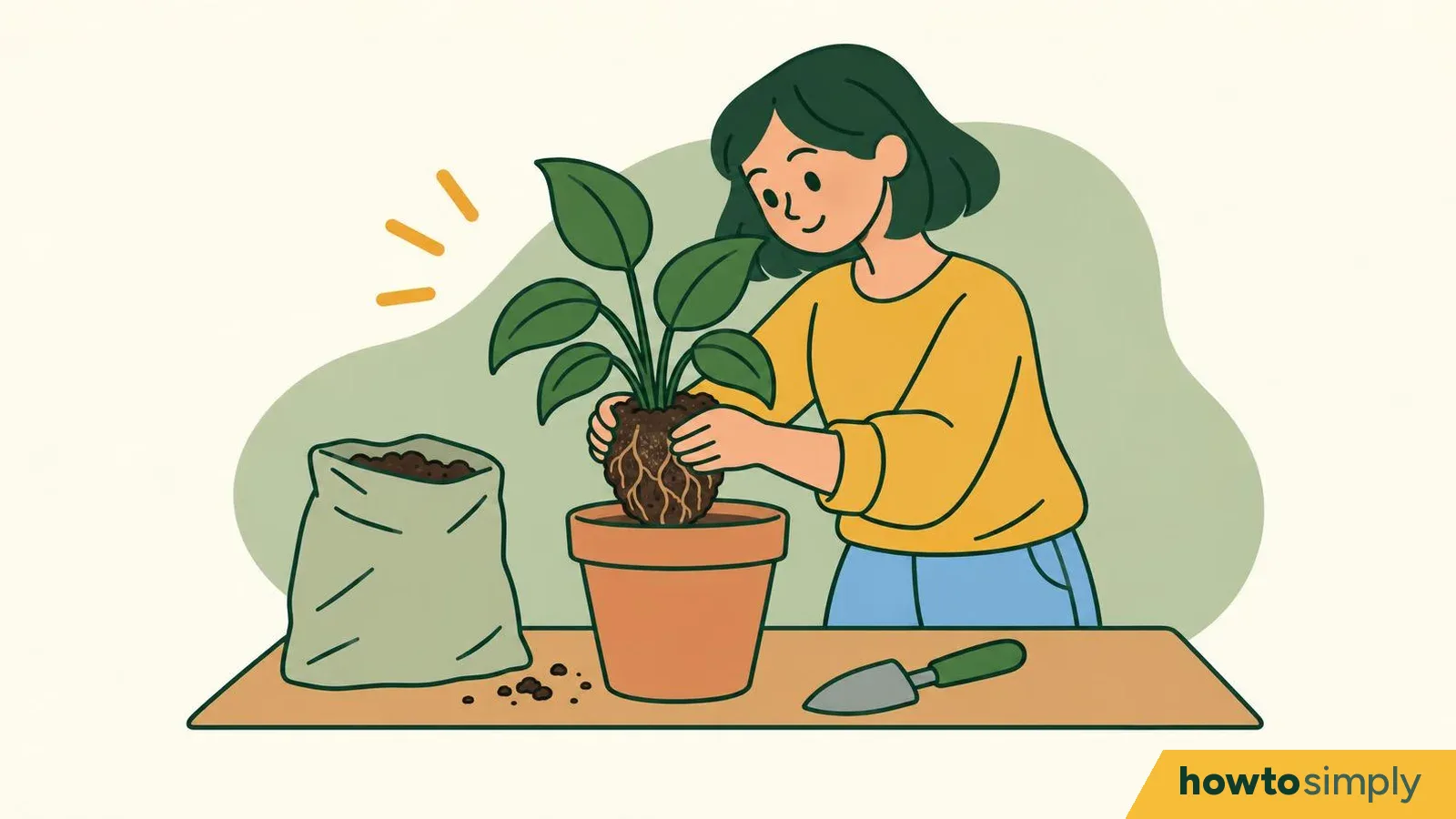
If it droops in wet compost, empty the saucer. After one heavy watering, with stems still firm, let it dry first. If it keeps drooping, unpot it, cut off soft, dark roots and yellow leaves, and repot in fresh mix in a pot with a drainage hole.
Wilting or yellow leaves while the compost is wet (RHS)
Mild case
One heavy watering, stems still firm: empty the cover and let the compost dry first (Costa Farms)
Rotten roots
Soft, dark, often smelly (Chicago Botanic Garden); judge by feel and smell, not colour alone (Costa Farms)
Prevent it
Drainage hole, empty saucers, check before watering (RHS)
Repotting time
About 20 minutes (our estimate)
Checked
November 2026
Seeing a plant wilt after you've taken care of it is always hard. It's also very easy to overwater, and a plant can recover as long as some healthy roots are left.
Too much water fills the air pockets in the compost, so the roots can't get oxygen and the plant wilts as if it were dry. A mild case can recover as the compost dries out.
What do you see?
Drooping or yellowing, compost wet
Start at Part 1. A mild case may only need to dry out.
Every step below follows one story, and each drawing shows that exact moment. Amira's golden pothos sits in a plastic pot inside a glazed pot cover on a shelf. For a week its leaves have drooped and a few have turned yellow, even though she keeps watering it. She checks it properly, finds the cause and puts it right.
Part 1: Check what's wrong
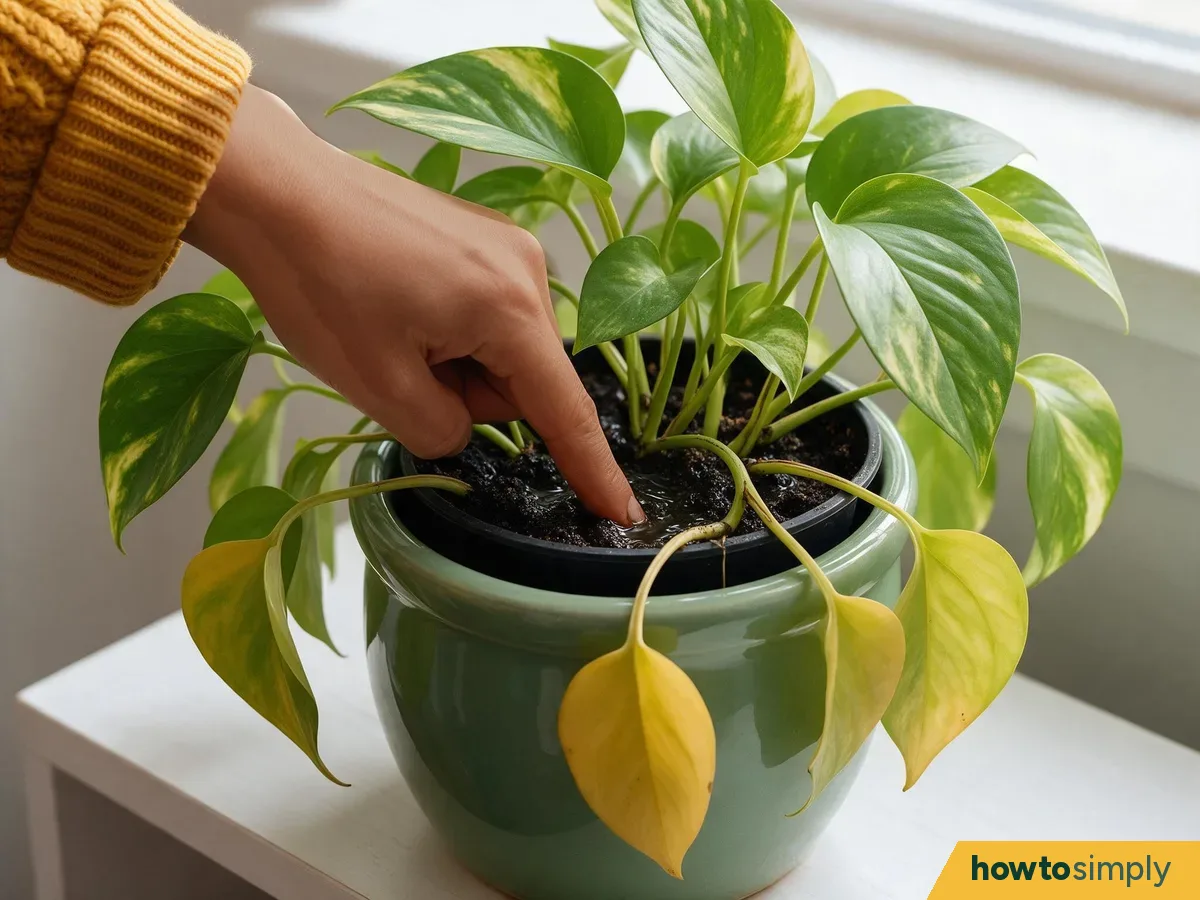
Feel the compost.
Illustration
In our story: Amira pushes a finger into the compost. It's cold and soaking wet, but the leaves hang limp.
Wilting while the compost is wet, and yellow leaves that drop, can be signs of overwatering. If the compost is dry instead, the plant probably just needs a drink.
Source
RHS
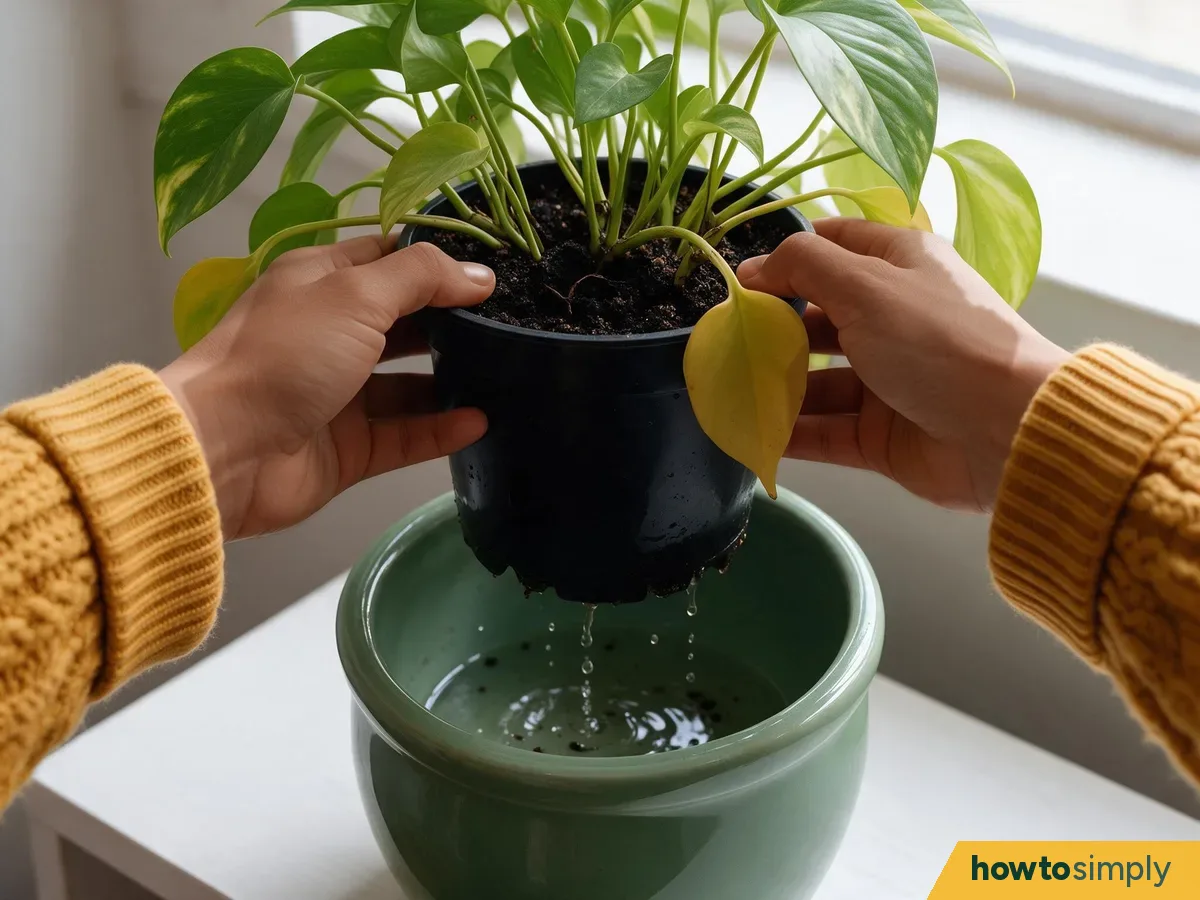
Look for standing water.
Illustration
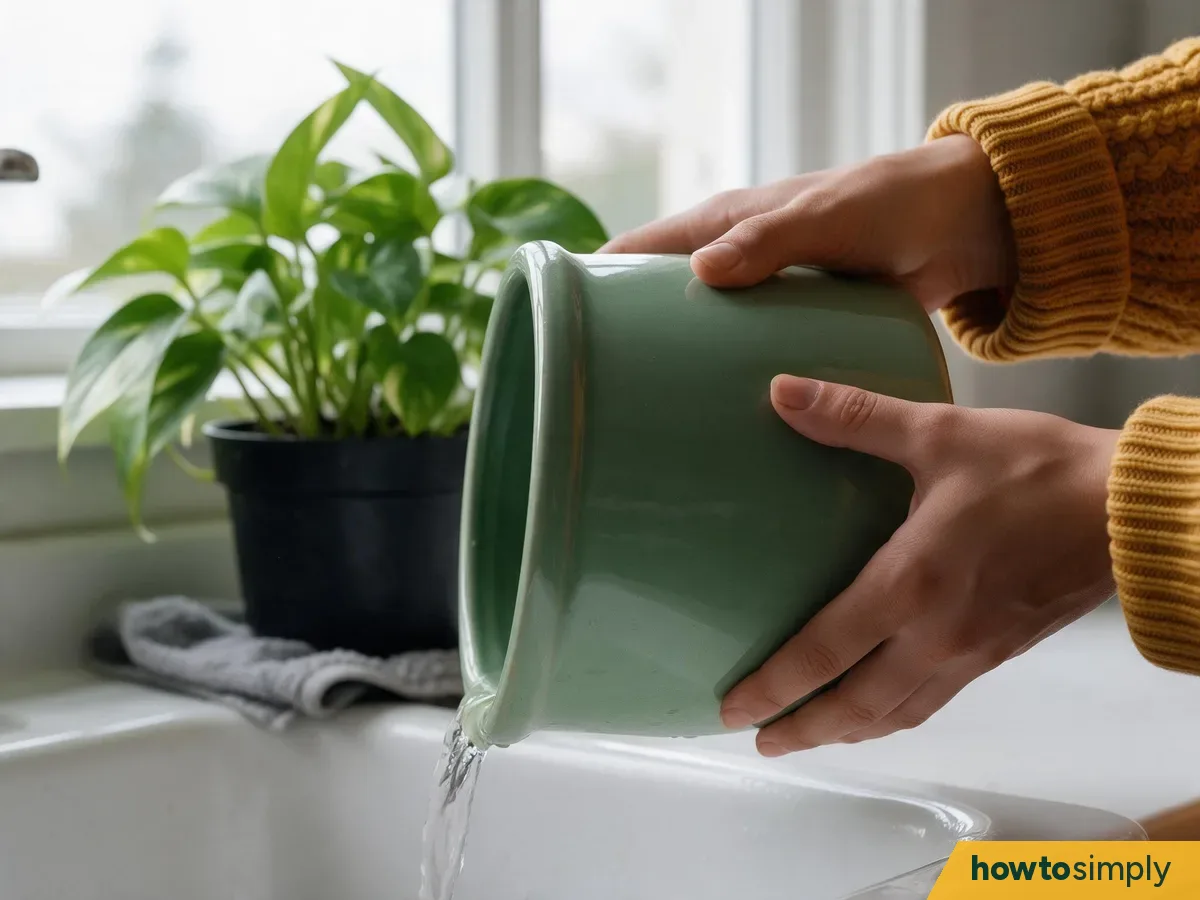
In our story: She lifts the plastic pot out of the cover. A pool of water has been sitting in the bottom.
Water left in a saucer or pot cover keeps the compost wet and can drown the roots, so empty it after watering.
If it was one heavy watering and the stems still feel firm, you may not need to go further: empty the cover and let the compost dry out first. A mild case may improve as the mix dries, and taking a plant out of its pot adds its own stress, so save that for stronger signs of root damage. If the plant keeps drooping as the compost dries, carry on to the next step (our advice).
Source
RHS, Costa Farms
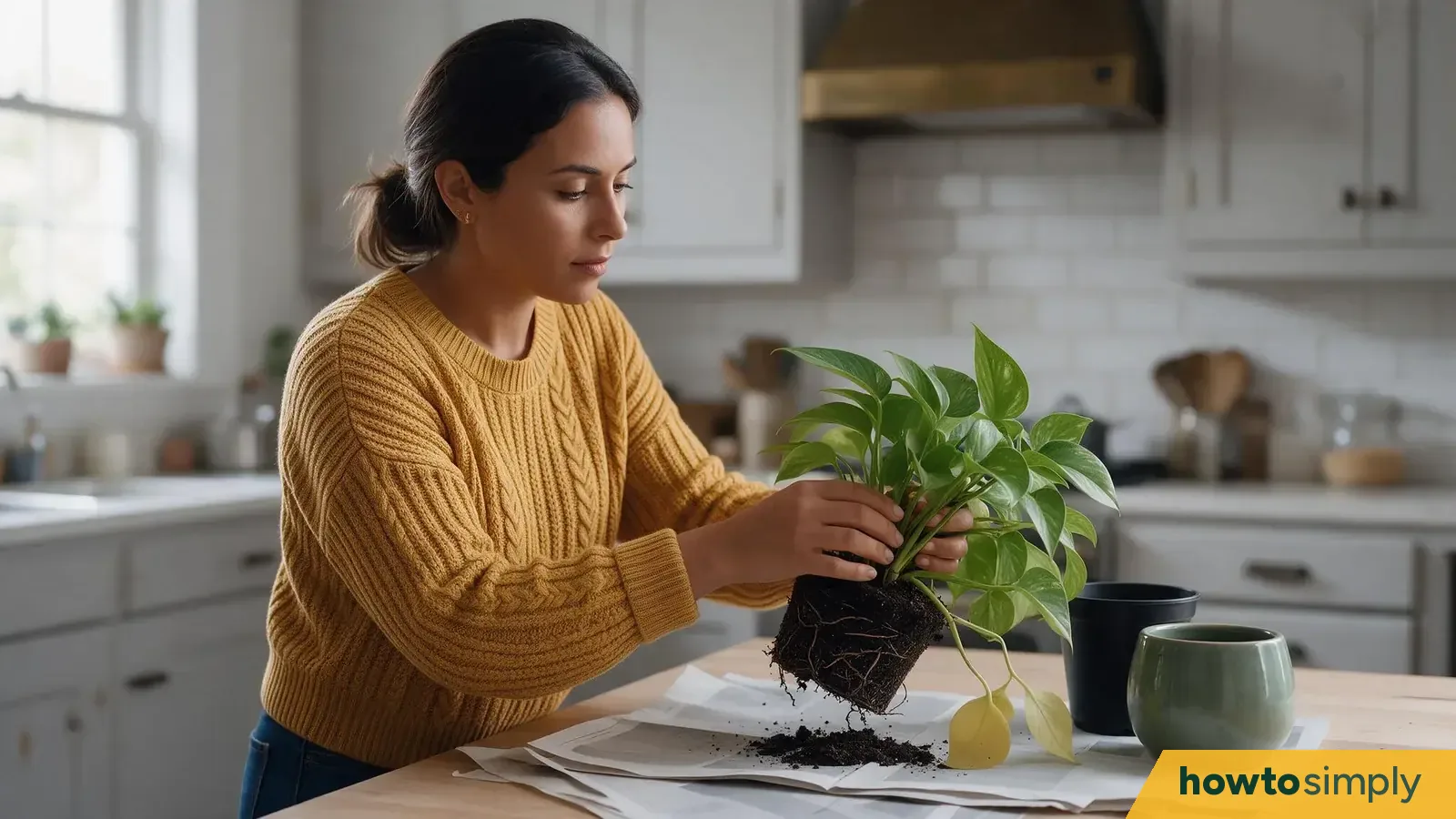
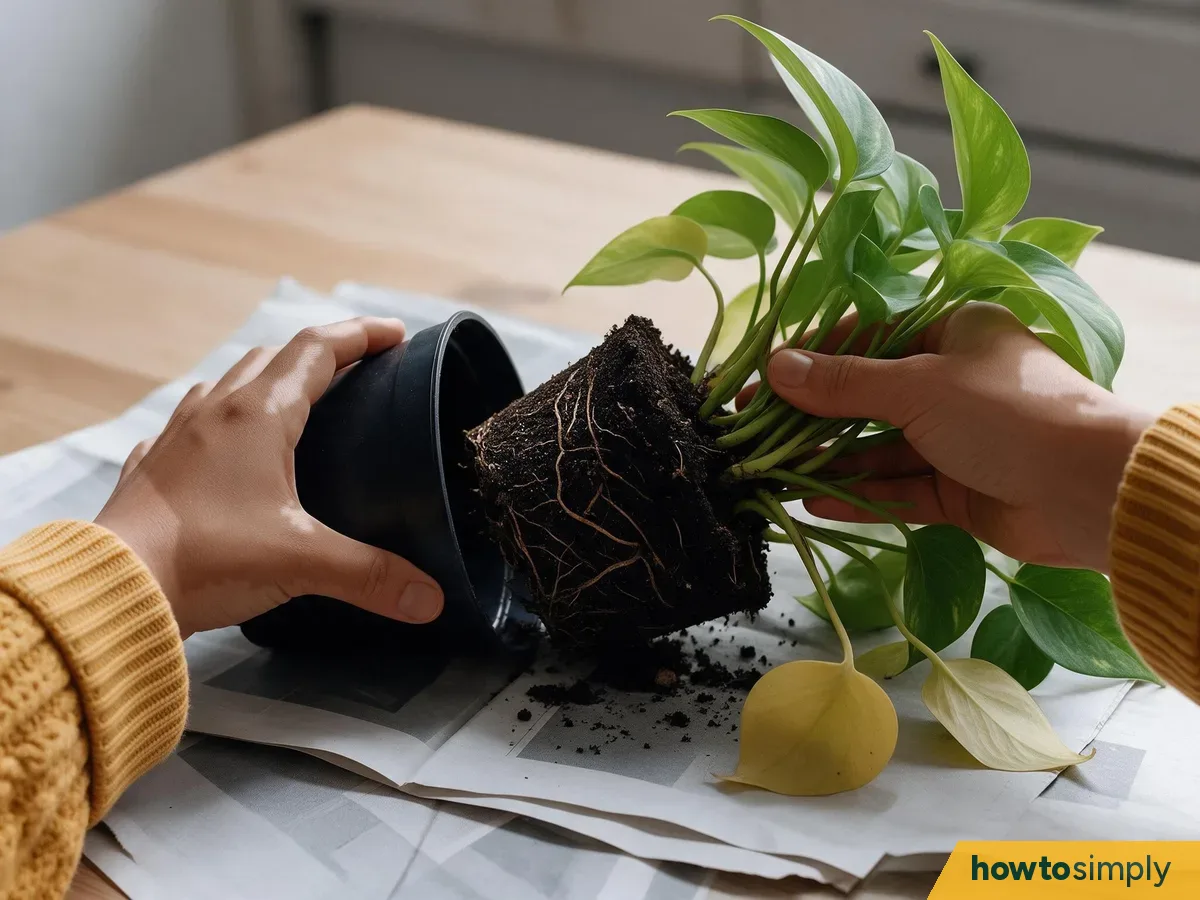
Slide the plant out of its pot.
Illustration
In our story: Over newspaper on the kitchen table, Amira tips the pot sideways and eases the plant out by the base of its stems.
Take the plant out of its pot and check the roots. Hold the plant by its base and cradle the root ball; never tug on the stems or leaves.
Source
Chicago Botanic Garden, Costa Farms
Check the roots.
Illustration
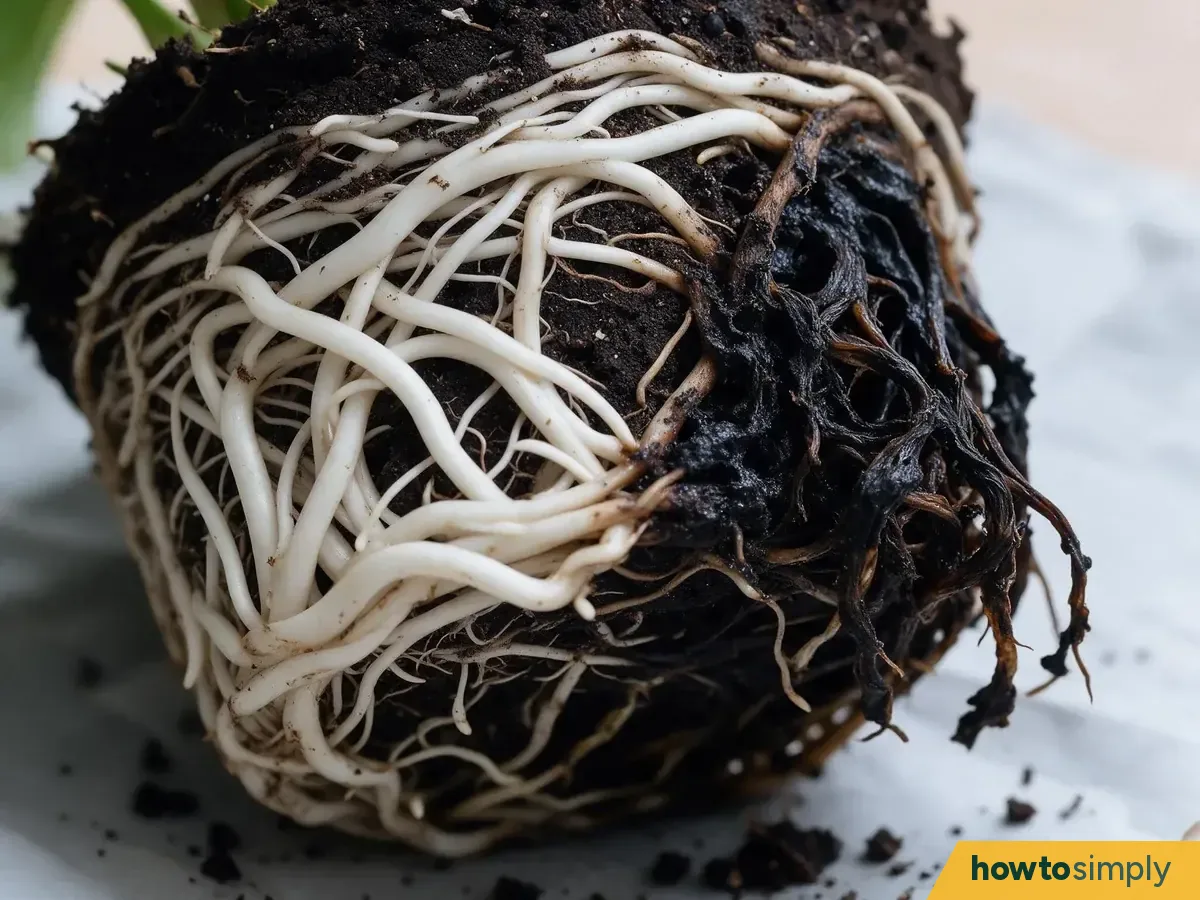
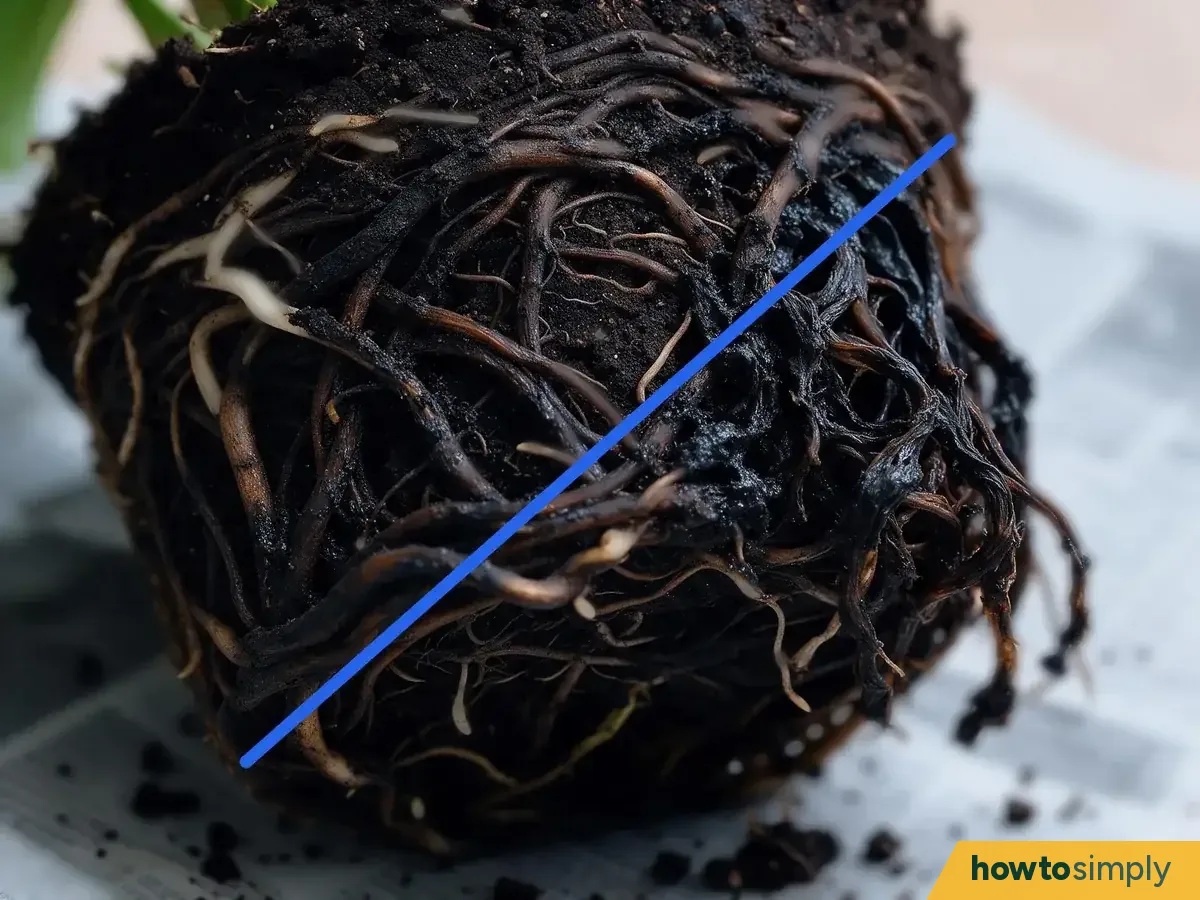
In our story: Most roots are firm and white. One side has a clump of soft, dark brown roots that smell musty.
Good roots feel firm and look white; rotting roots go soft and dark and often smell bad. The damage depends on how long the roots sat in water and how much of the root ball has been hit. Root colour varies between plants, so go by feel and smell as well, not colour alone.
Source
Chicago Botanic Garden, Costa Farms
Part 2: Trim and repot
Cut off the rotten roots.
Illustration
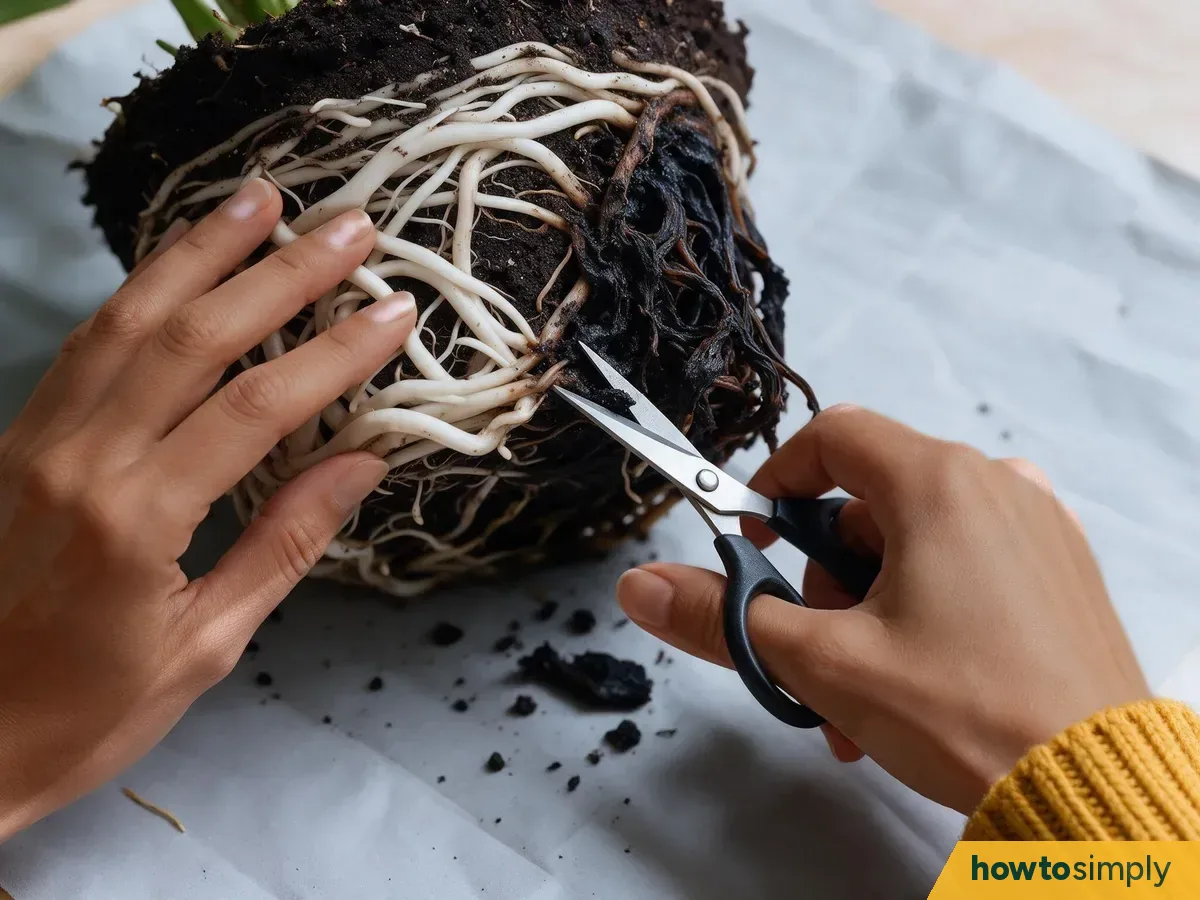
In our story: Amira snips off the dark clump back to firm, white root.
If most roots are healthy, trim out the damaged ones. Use clean, sharp scissors and disinfect the blades between cuts.
Source
Chicago Botanic Garden, Costa Farms
Remove yellow and dead leaves.
Illustration
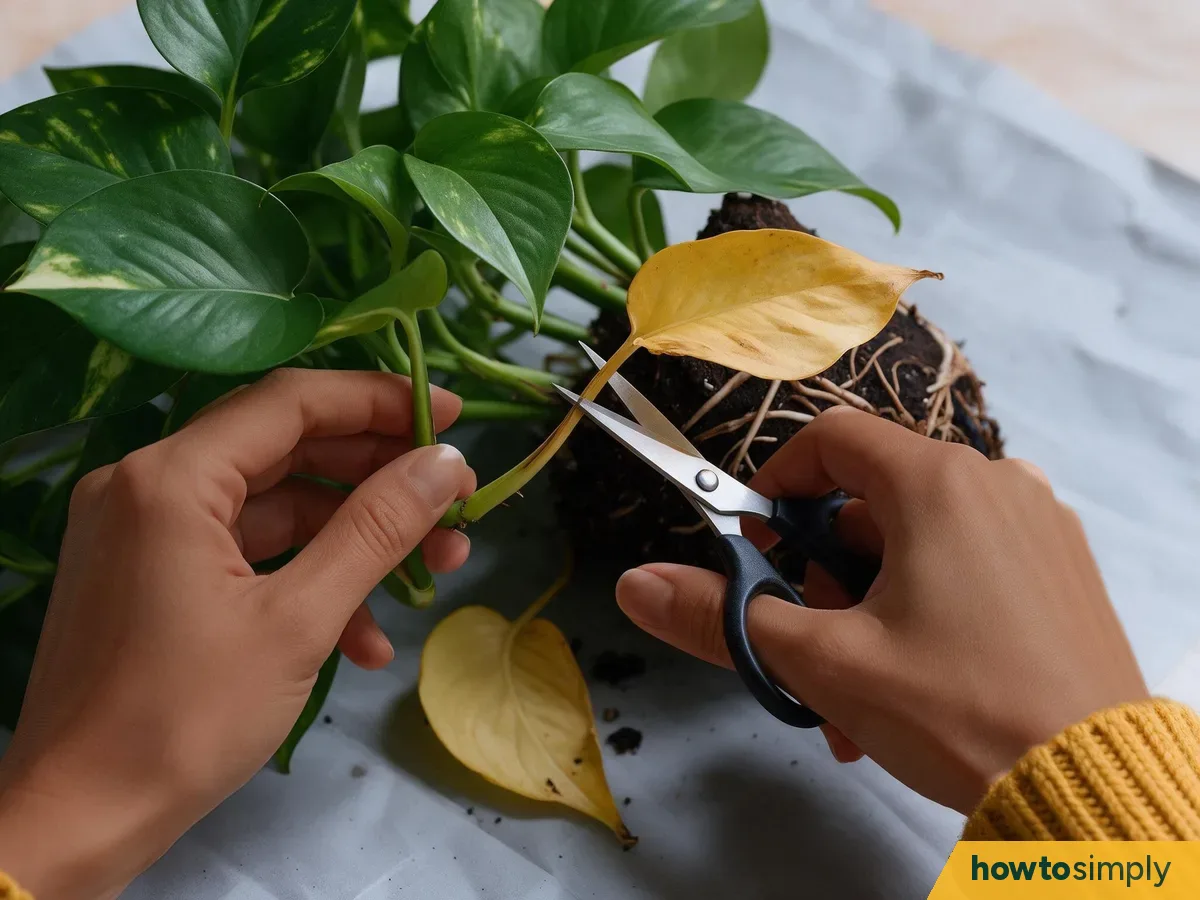
In our story: She snips off the yellow leaves through their stalks.
Remove any yellow or dead leaves. Fully yellow leaves won't turn green again.
Source
Chicago Botanic Garden, Costa Farms
Repot it in fresh mix.
Illustration
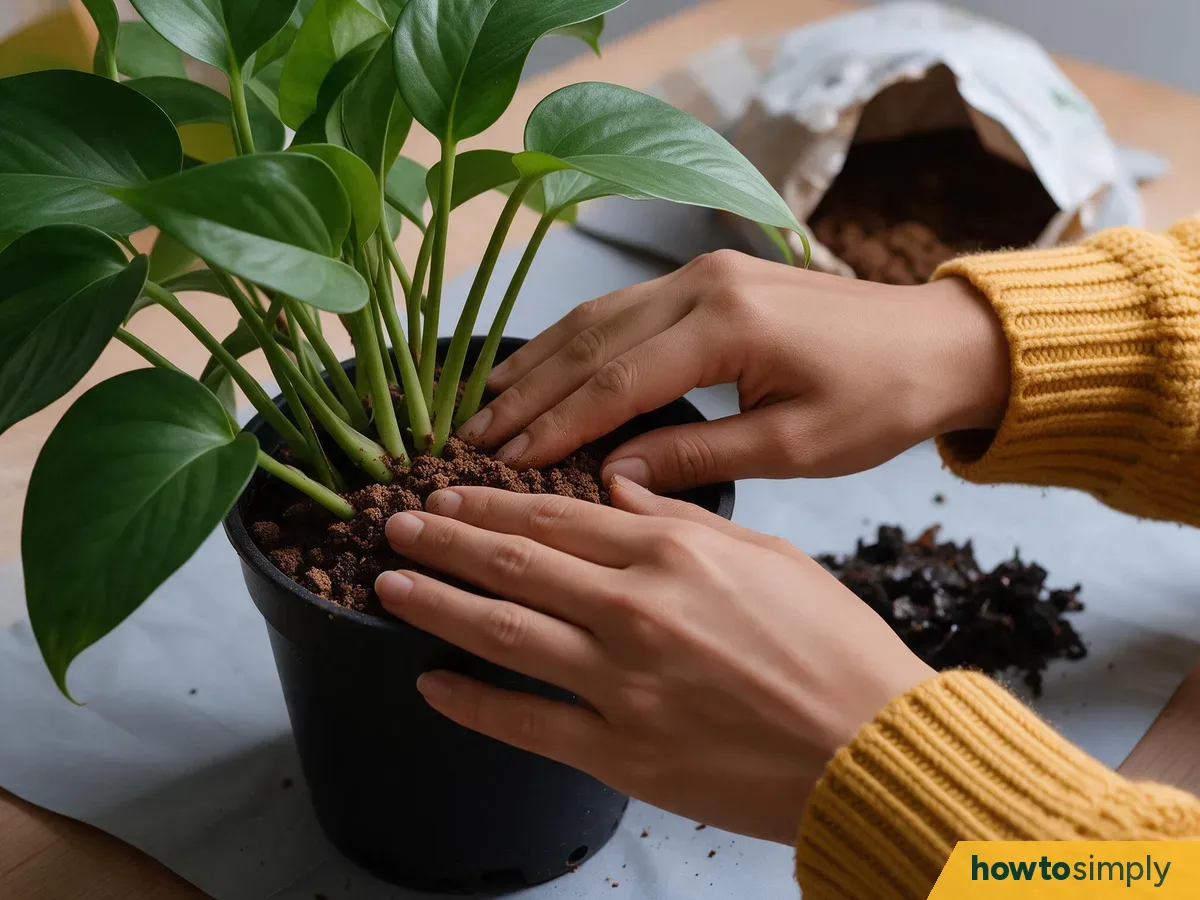
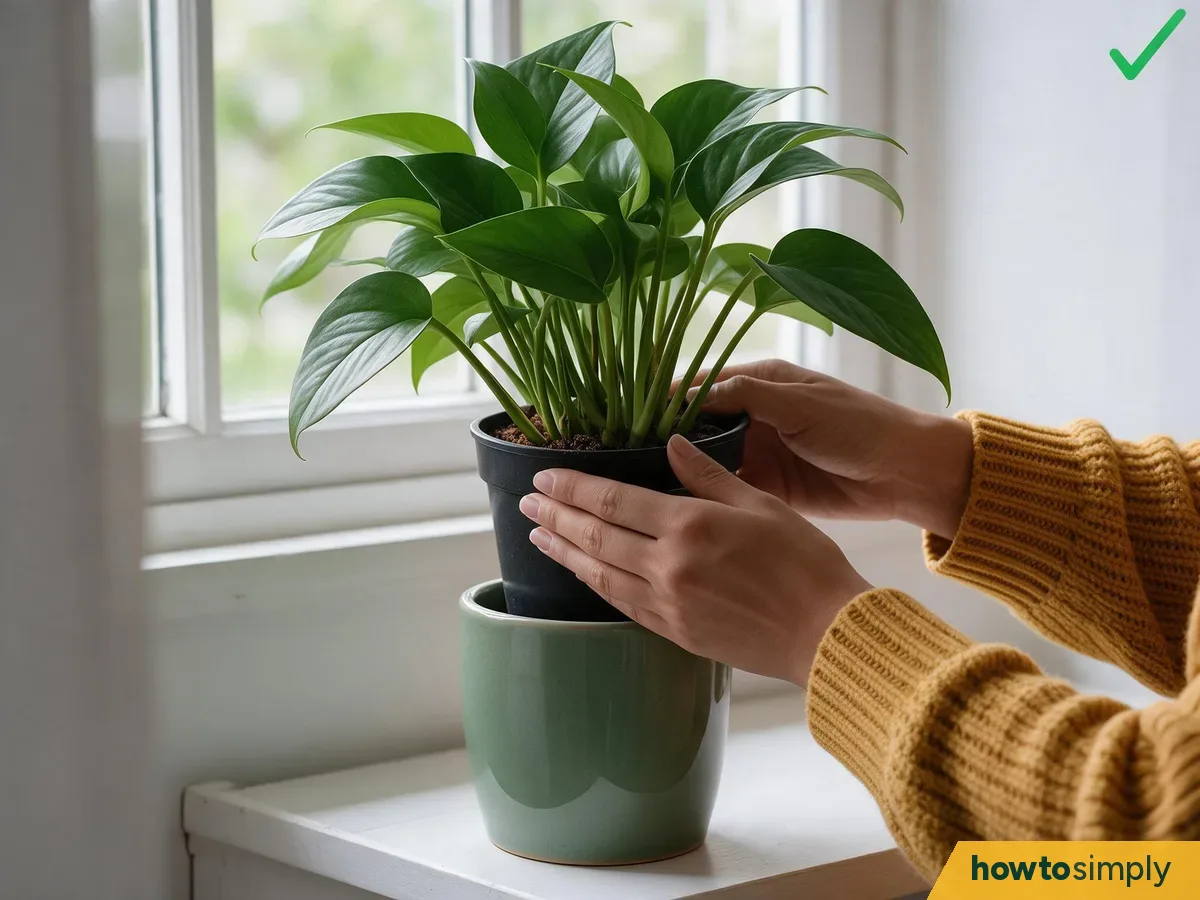
In our story: Amira bins the soggy old compost and repots the plant in fresh mix in a clean pot with drainage holes.
Repot in a fresh soilless potting mix and go back to normal care. The pot must have a drainage hole. For the repotting steps, see how to repot a houseplant.
Source
Chicago Botanic Garden, RHS
Part 3: Stop it happening again
Empty the cover after watering.
Illustration
In our story: From now on, after watering, Amira lets the pot drain and tips out what collects in the cover.
Empty water-filled saucers after watering.
Source
RHS
Check before you water.
Illustration
In our story: A week later Amira lifts the pot. It still feels heavy, so she waits.
Don't water to a schedule; feel whether the pot actually needs it first. Dry pots feel lighter than wet ones. Plants in a cool room need water less often, but central heating can dry them out faster in winter. See how to tell if a houseplant needs water.
Source
RHS
If most roots are rotten, consider starting again.
Illustration
What if Amira had found mostly rotten roots? She'd consider letting the plant go.
If more than half the roots are damaged, Chicago Botanic Garden says you might consider throwing the plant away. With some plants, a healthy stem cutting can start a new plant.
How to tell it worked
The yellowing stops getting worse.
The stems stay firm and new growth appears.
The compost dries a little between waterings, and no water sits in the cover.
If something goes wrong
What happens
Likely cause
What to do
Still drooping a week later
Roots still recovering, or more rot
Don't water more; check the roots again if it gets worse (our advice)
More leaves turn yellow
Possible overwatering (RHS)
Check for standing water; remove yellow leaves
Compost stays wet for days
No drainage hole, or pot standing in water (RHS)
Use a pot with a hole; empty the saucer or cover
More than half the roots damaged
Severe rot (Chicago Botanic Garden)
Consider discarding the plant; a healthy cutting can be a backup (Costa Farms)
Abu Bakar, who wrote this article, has kept a container garden for years. In his own words:
“Too much water can be as devastating for plants as too little. When you do water, water each of your pots slowly, because it takes some time for water to reach the root zone.”
Questions readers ask
Can an overwatered plant recover?
Often, if most of the roots are still firm and white. Chicago Botanic Garden says that if more than half the roots are damaged, you might consider throwing the plant away.
Why is my plant wilting when the soil is wet?
The roots may be damaged. The RHS says plants that wilt in wet compost may have root damage from overwatering, or a root disease.
Should I put stones in the bottom of the pot?
The RHS's key point is a drainage hole so water can escape, and not leaving the pot standing in water. A layer of stones doesn't replace a hole.