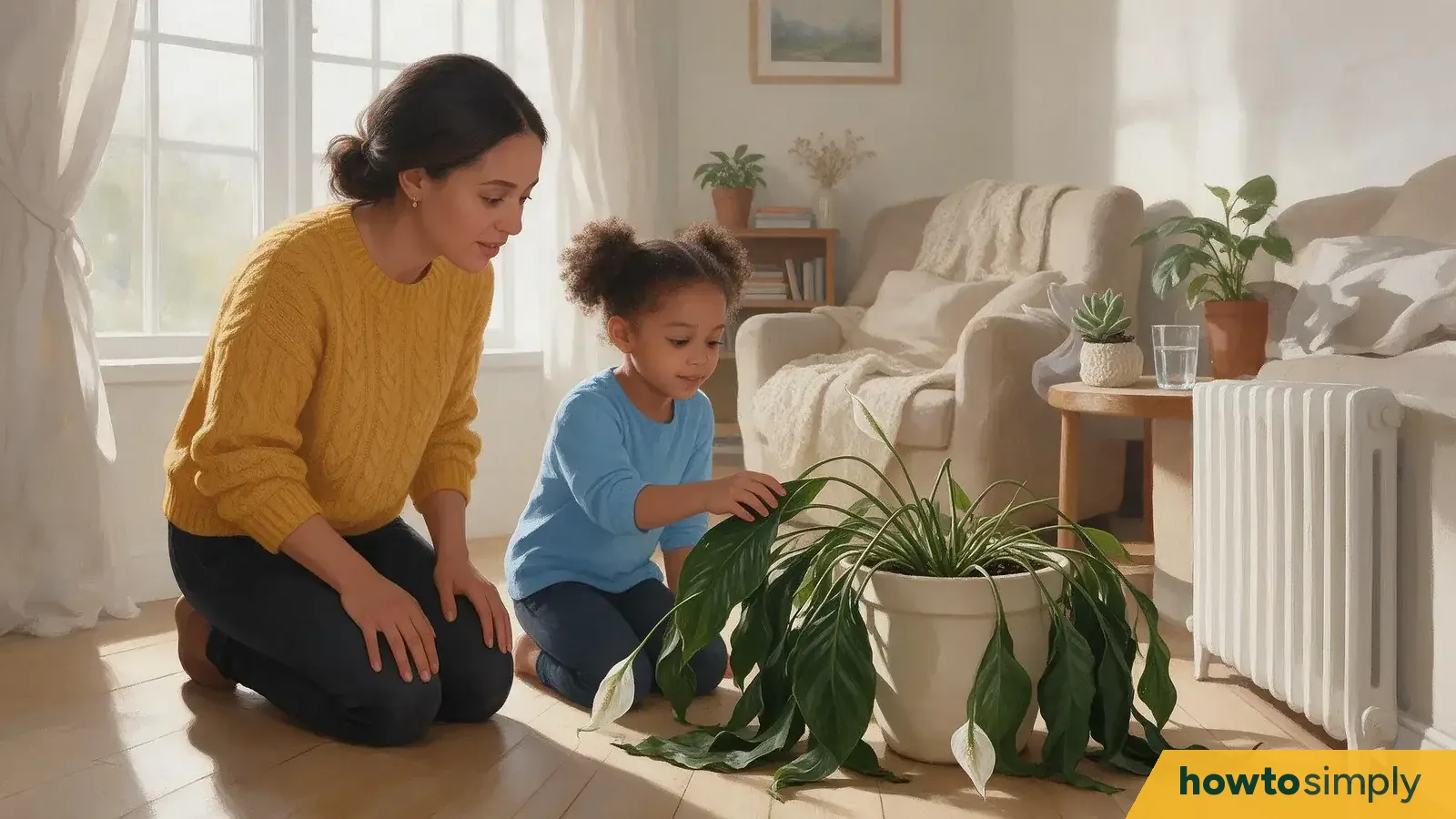
From autumn, give it 14 hours of unbroken darkness each night for at least 6 weeks, a cooler room until buds appear, and water a little less. When buds appear, bring it back to its usual spot, keep it out of draughts and away from heaters, and water evenly.
14 hours or more, unbroken, for at least 6 weeks (Clemson)
Cool spell
12 to 15 °C from mid-September until buds show (RHS)
Start
Around mid-September (RHS, Clemson)
Buds dropping?
Draughts, heat swings, over- or underwatering (RHS, Clemson)
After flowering
Cooler, drier rest, late Jan to late Mar (RHS)
Light
Bright but not full sun (RHS)
Checked
November 2026
Waiting for those bright flowers is hard enough, and when your Christmas cactus produces only green, it can leave you feeling a little defeated. A cactus that doesn't flower doesn't usually mean anything is wrong with the plant or with your care. Most often the cause is too much evening light or warmth in autumn, so your cactus is most likely fine and ready to try again.
A Christmas cactus that never flowers is often getting light after dark or too much warmth in autumn. It sets buds when the nights get longer and slightly cooler, and a cosy living room with the lamps on provides neither. Below, one example follows a cactus from no buds in November to full flower, with each stage illustrated.
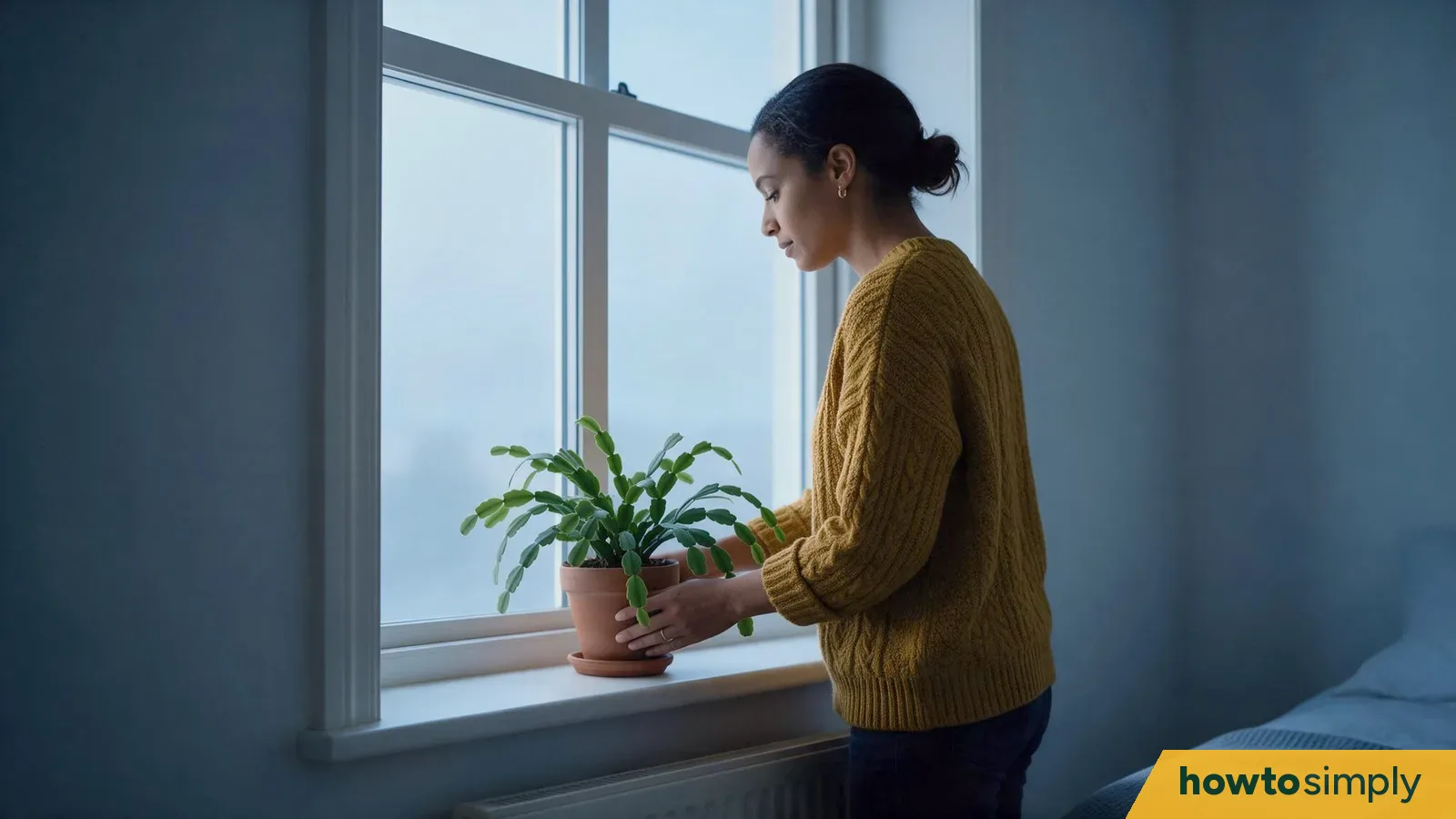
Every step below follows one story, and each drawing shows that exact moment. On 1 November, Amira's Christmas cactus has no buds. It sits on a shelf in her warm living room, where the lamp is on every evening. She moves it to the cool spare room, waits for buds, then brings it back.
Part 1: Check which cactus you have
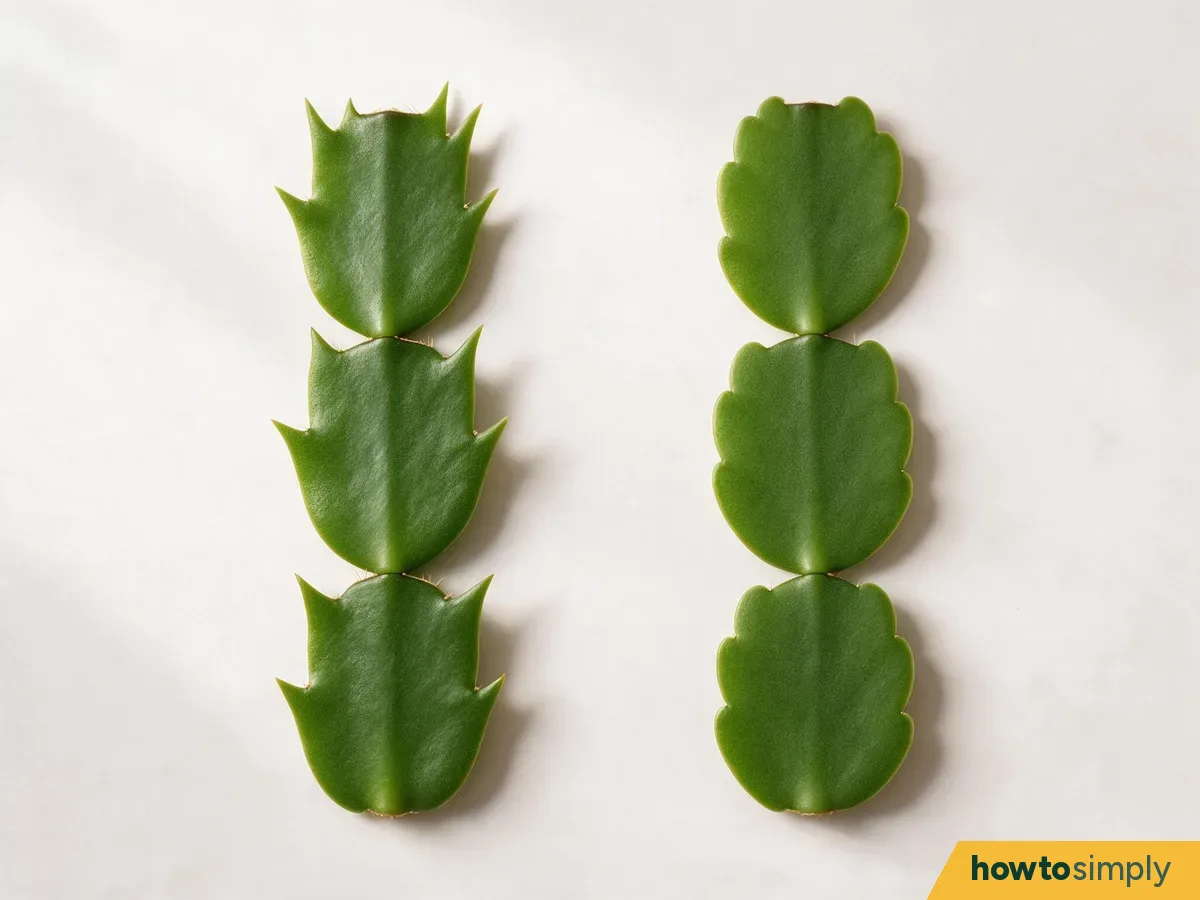
Look at the edges of the stem segments.
Illustration
In our story: Amira looks closely. Her plant's segments have smooth, rounded edges, so it's a Christmas cactus.
Thanksgiving cactus has 2 to 4 pointed, saw-like teeth on each edge of its flat segments; Christmas cactus has rounder edges (Clemson Extension). Thanksgiving cactus usually flowers about a month earlier. Both need the same long nights, so don't worry too much if you are not sure which one you have.
Part 2: Get it to set buds
Move it somewhere cool and bright.
Illustration
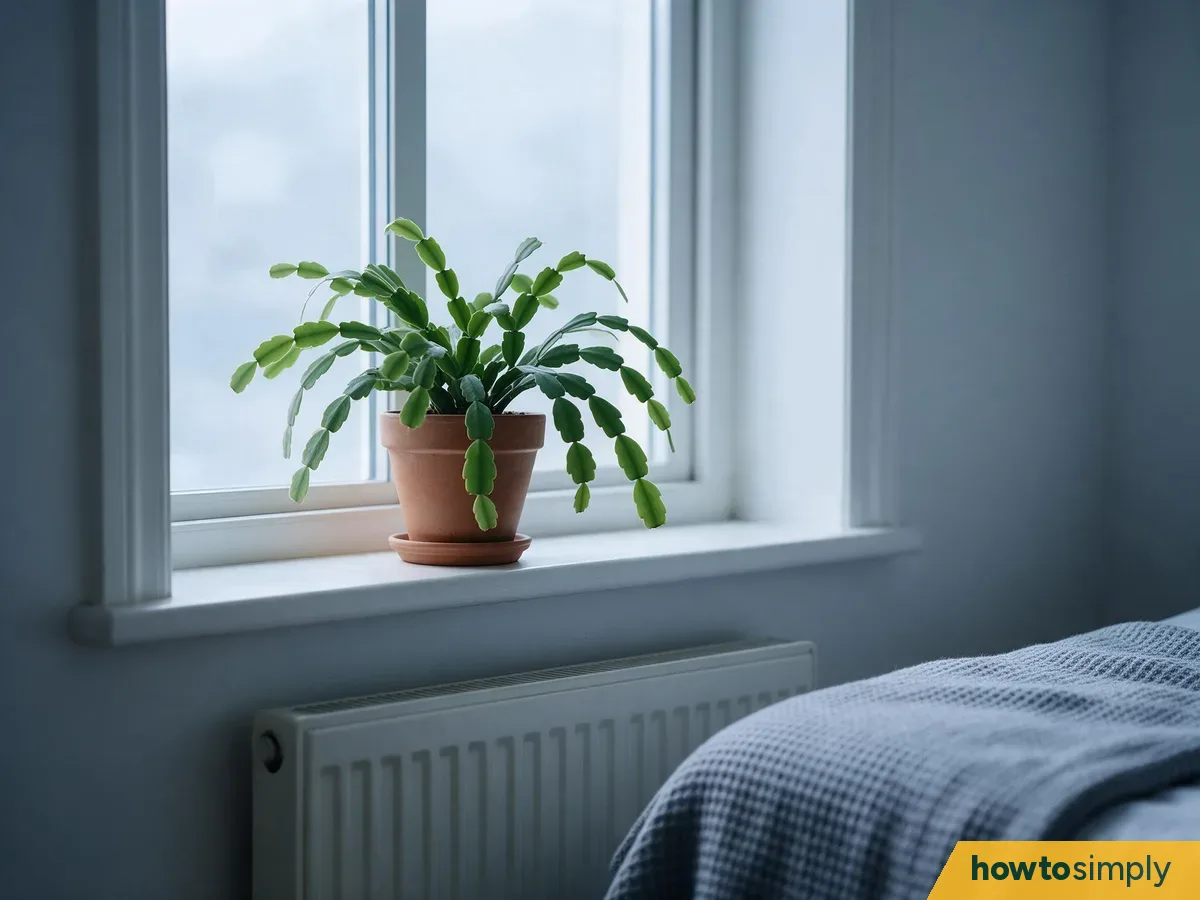
In our story: Amira puts the cactus on the windowsill of the spare room, where the heating is turned low.
The RHS suggests a cooler spell of about 12 to 15 °C from mid-September until buds appear; exact temperatures aren't critical, but there should be a clear drop. Clemson gives autumn growing temperatures of 15 to 20 °C, and says nights of 10 to 15 °C will set buds regardless of day length. Keep it in bright light but out of full sun (RHS), and above 10 °C. What it will do, that clear drop sends a message to the plant that it is time to set buds.
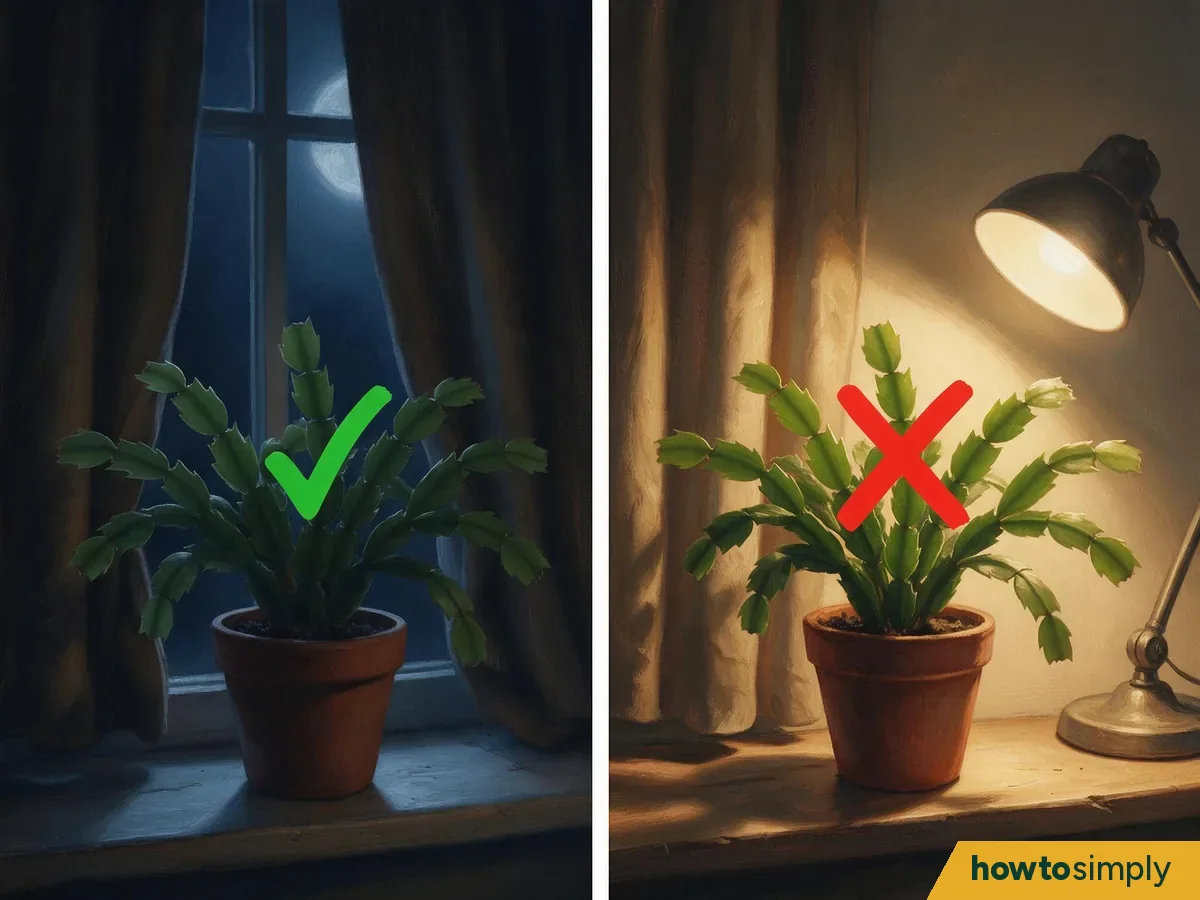
Give it long, dark nights.
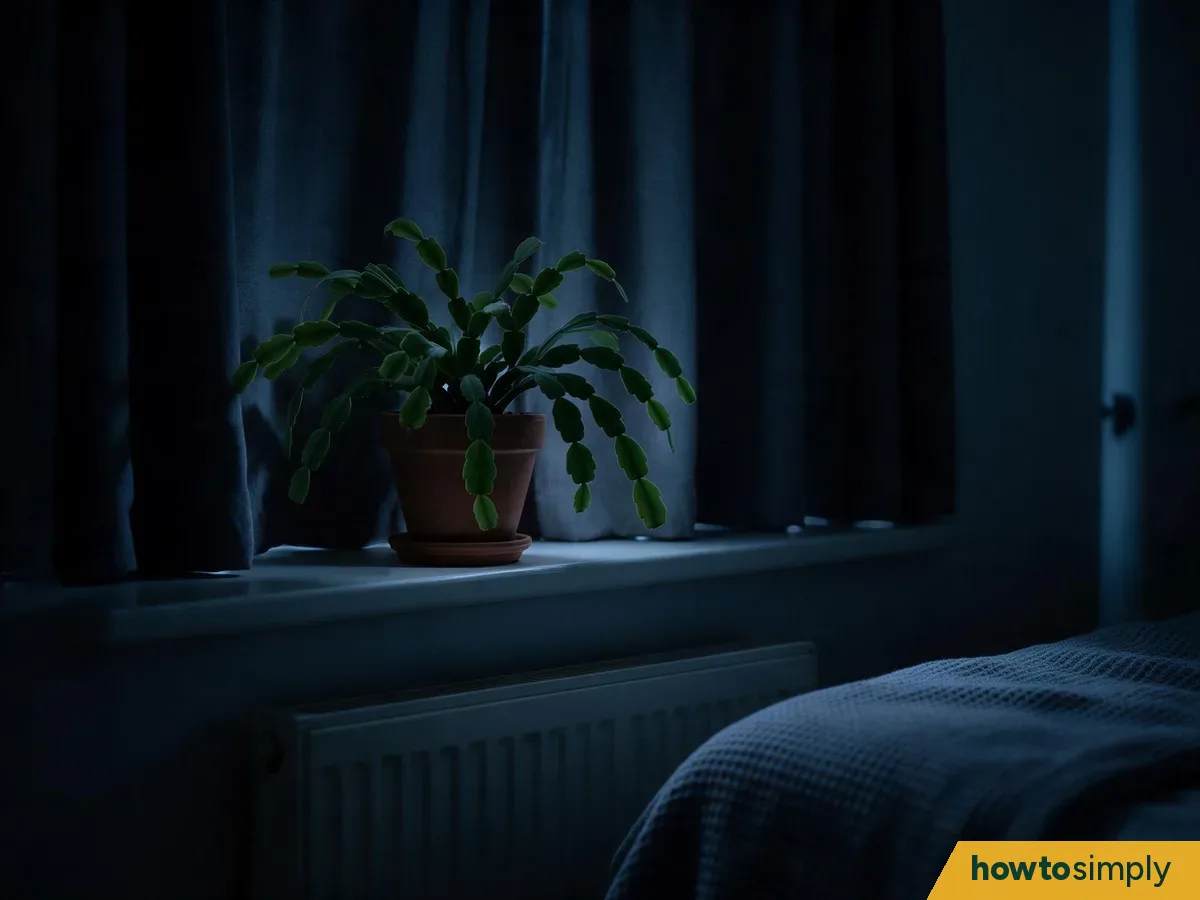
IllustrationIllustration: long, fully dark nights; even a lamp in the evening can stop the buds forming
In our story: Nobody switches the spare room light on in the evening, and Amira draws the curtain so the street light stays out.
This is the step most people miss. It needs 14 hours or more of unbroken darkness every night for at least 6 weeks (Clemson Extension). Even a couple of hours of light can stop buds forming, including street lights, car headlights and lamps (Clemson). The RHS also warns that artificial light after dark can stop flowering. So if your habit is to keep it right under the reading lamp so it can enjoy the evening with you, I am afraid it is enjoying it a little too much. Clemson says to start around mid-September.
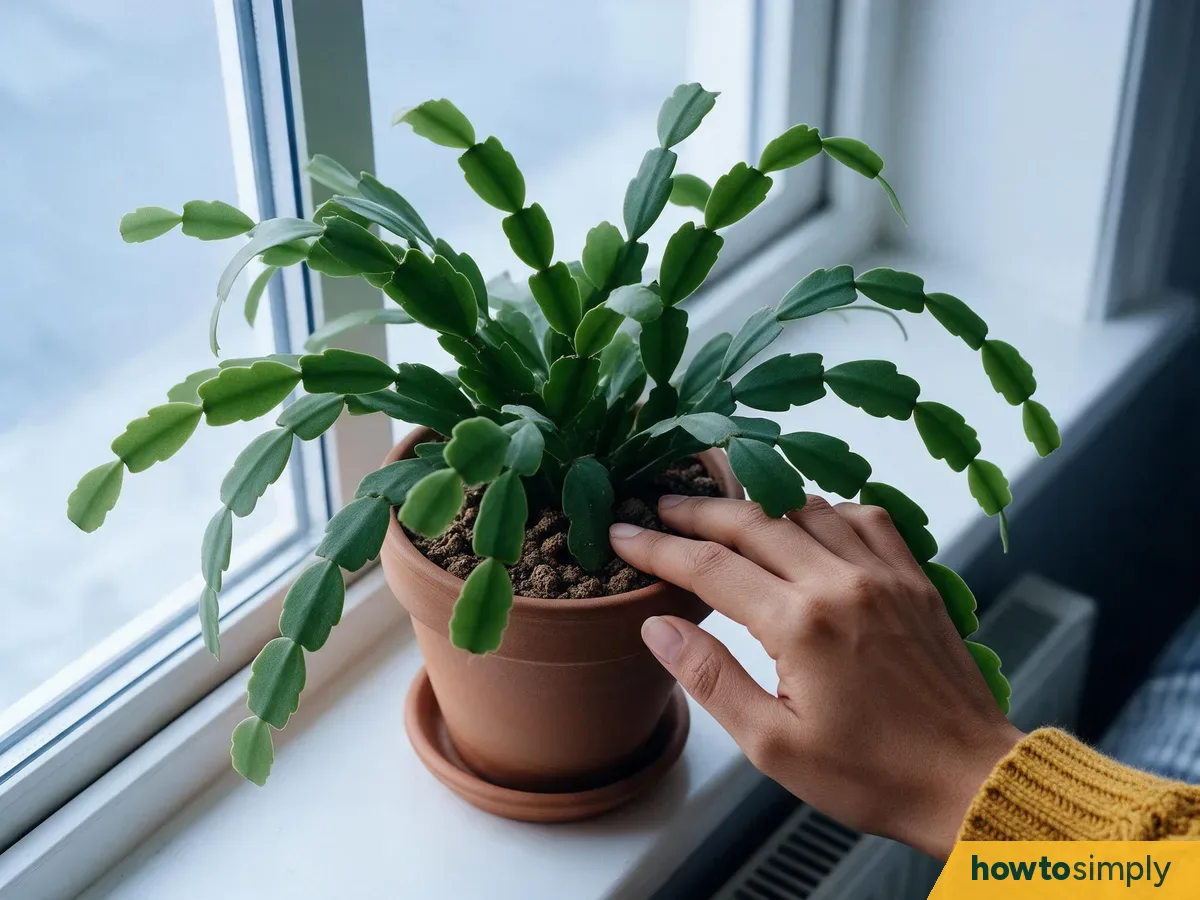
Water a little less.
Illustration
In our story: Amira only waters when the top of the compost feels dry.
Then there is watering. During this cool spell, water less often (RHS). Let the top few centimetres dry between waterings, but make sure you never let the compost dry out completely (RHS), because less water does not mean no water.
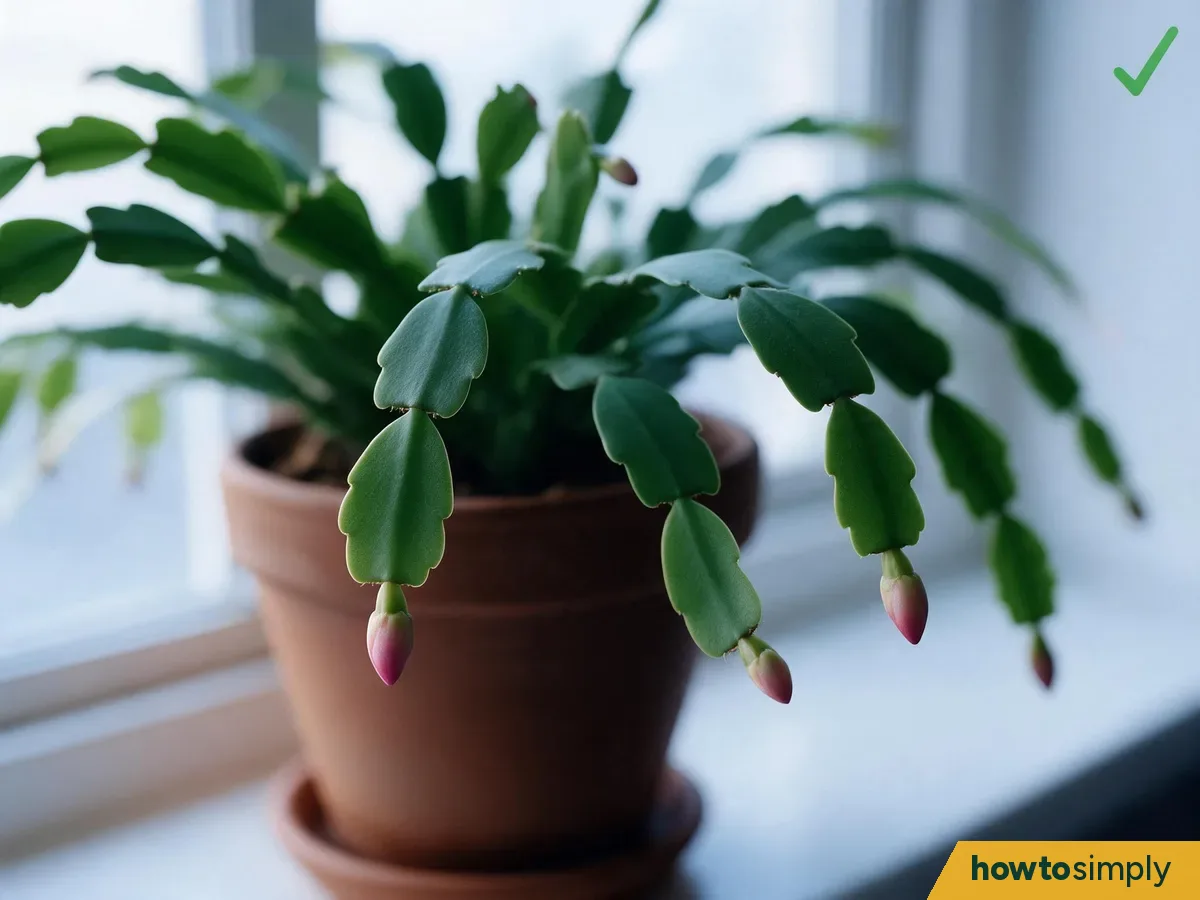
Watch for buds at the tips.
Illustration
In our story: In mid-December, small pink buds appear at the ends of the segments.
When buds appear, the cool spell has done its job (RHS). It is a happy moment, and you earned it with all those dark evenings.
Part 3: Keep the buds and enjoy the flowers
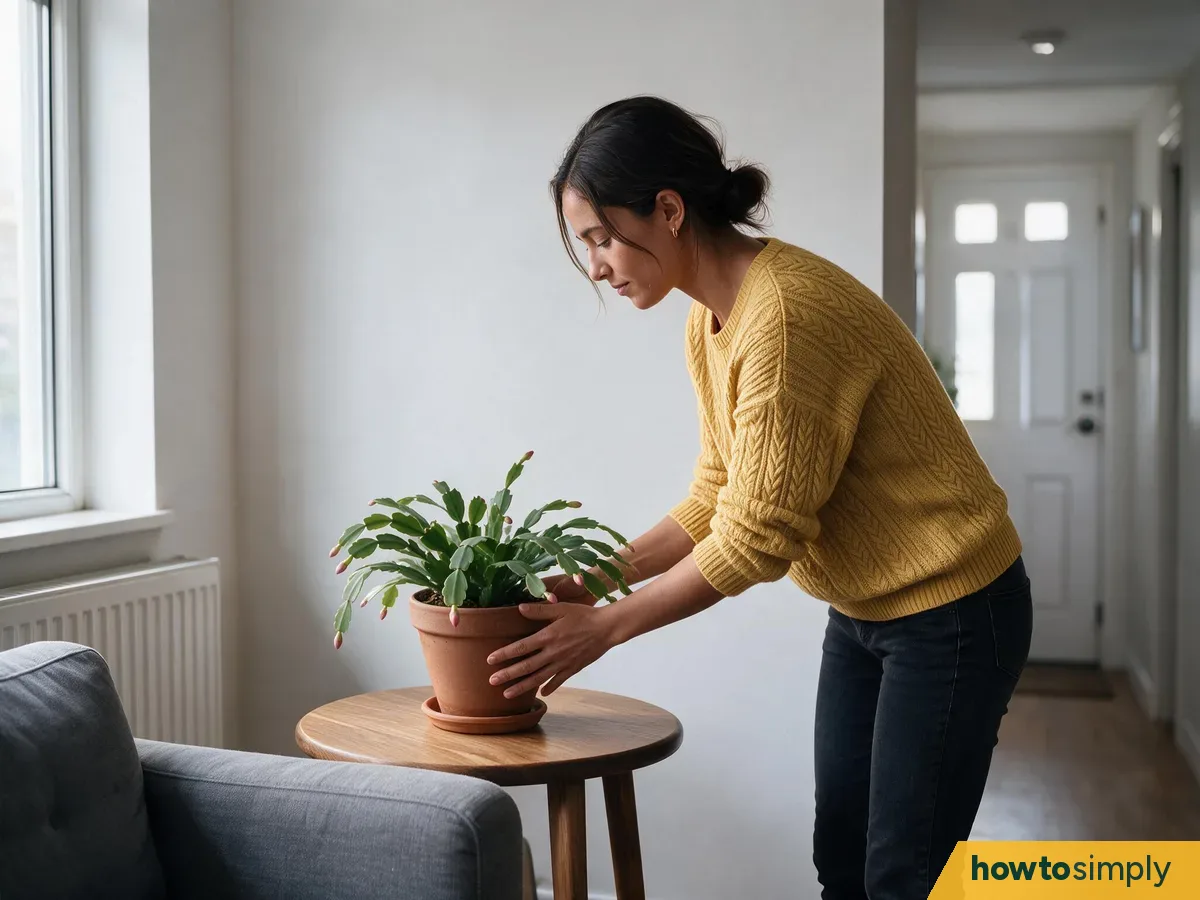
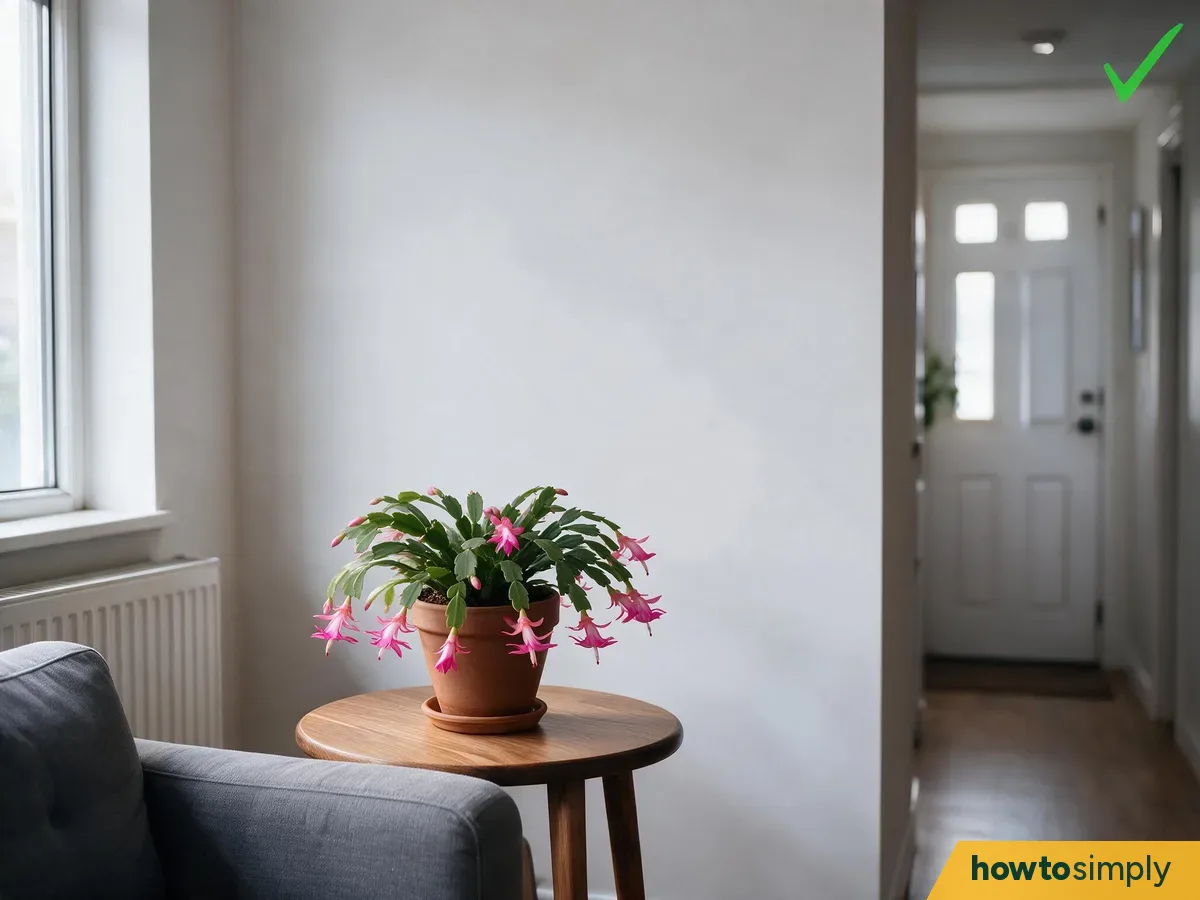
Bring it back, away from heaters and draughts.
Illustration
In our story: Amira carries it back to the living room and sets it on a side table, away from the radiator and the front door.
Once buds appear, move it back to its usual warmer spot, about 18 to 20 °C (RHS). Buds drop when temperatures swing, or in cold, draughty spots (RHS), or with sudden changes in light or temperature (Clemson). Once it's in bud, choose its place and leave it there. It is that easy: the less you move it about, the safer those buds are.
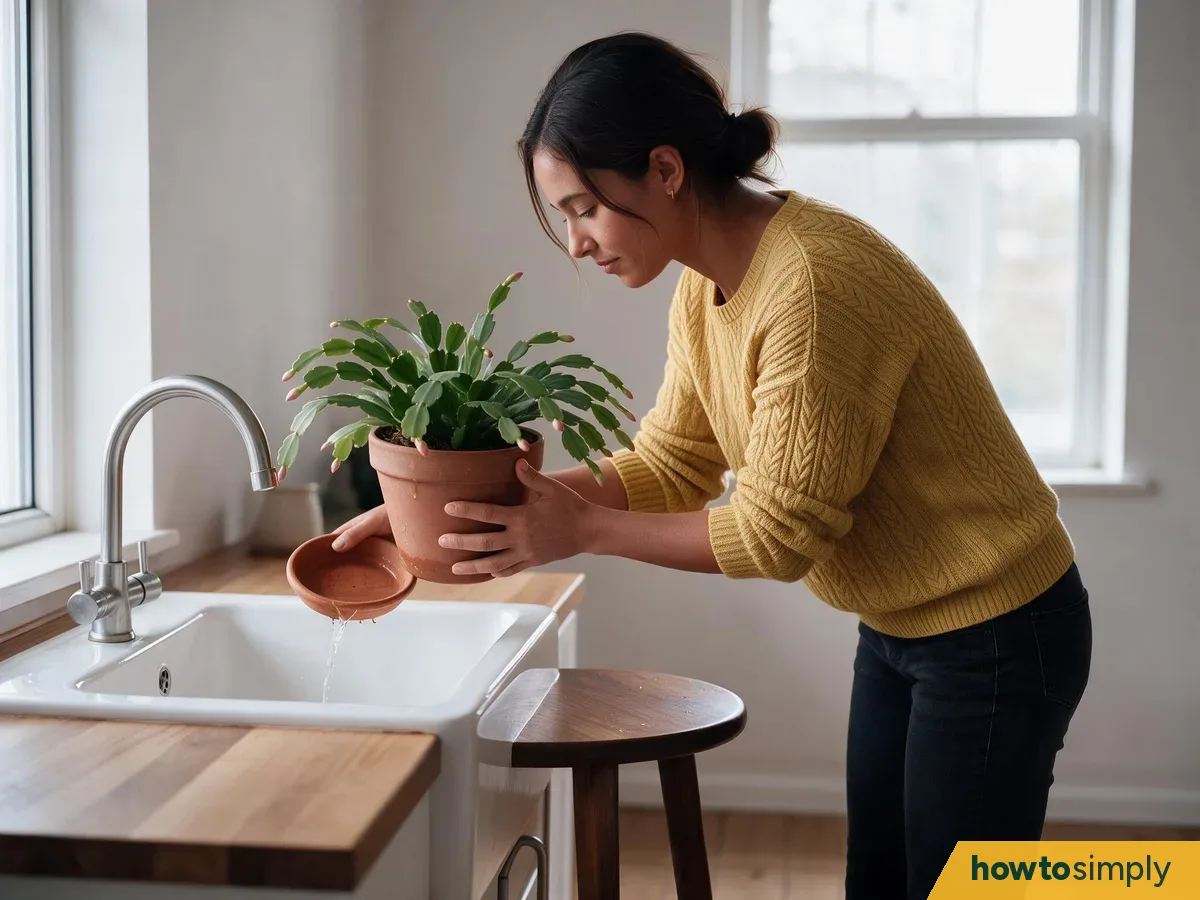
Water evenly and empty the saucer.
Illustration
In our story: She waters whenever the top feels dry, and tips away what drains into the saucer.
Once buds appear, go back to normal watering until the flowers fade, without overwatering (RHS). Keep the compost evenly moist and never leave water standing in the saucer (Clemson).
Enjoy the flowers.
Illustration
In our story: By New Year, the cactus is covered in pink flowers.
At about 20 °C the flowers can last 7 to 8 weeks (Clemson Extension). Take your time and enjoy them; this is the part you have been waiting for.
Part 4: After flowering
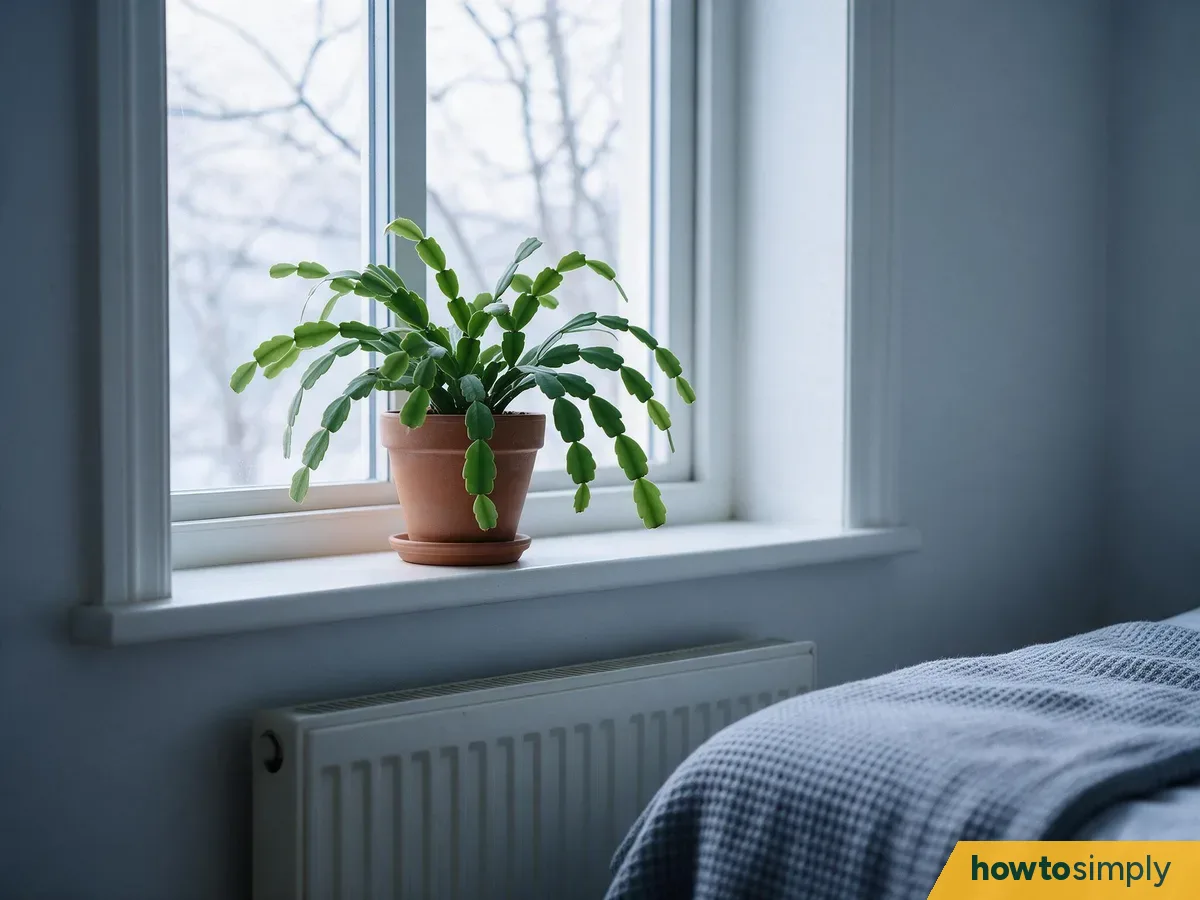
Give it a cool, drier rest.
Illustration
In our story: At the end of January, Amira moves the cactus back to the spare room until spring.
Remember that the plant needs a breather after all that effort. The RHS suggests a cooler, drier rest from late January to late March, then normal watering from spring until mid-September. In summer it can go outside in a warm, sheltered, shady spot, and come in before the nights turn cold (RHS).
If the buds drop
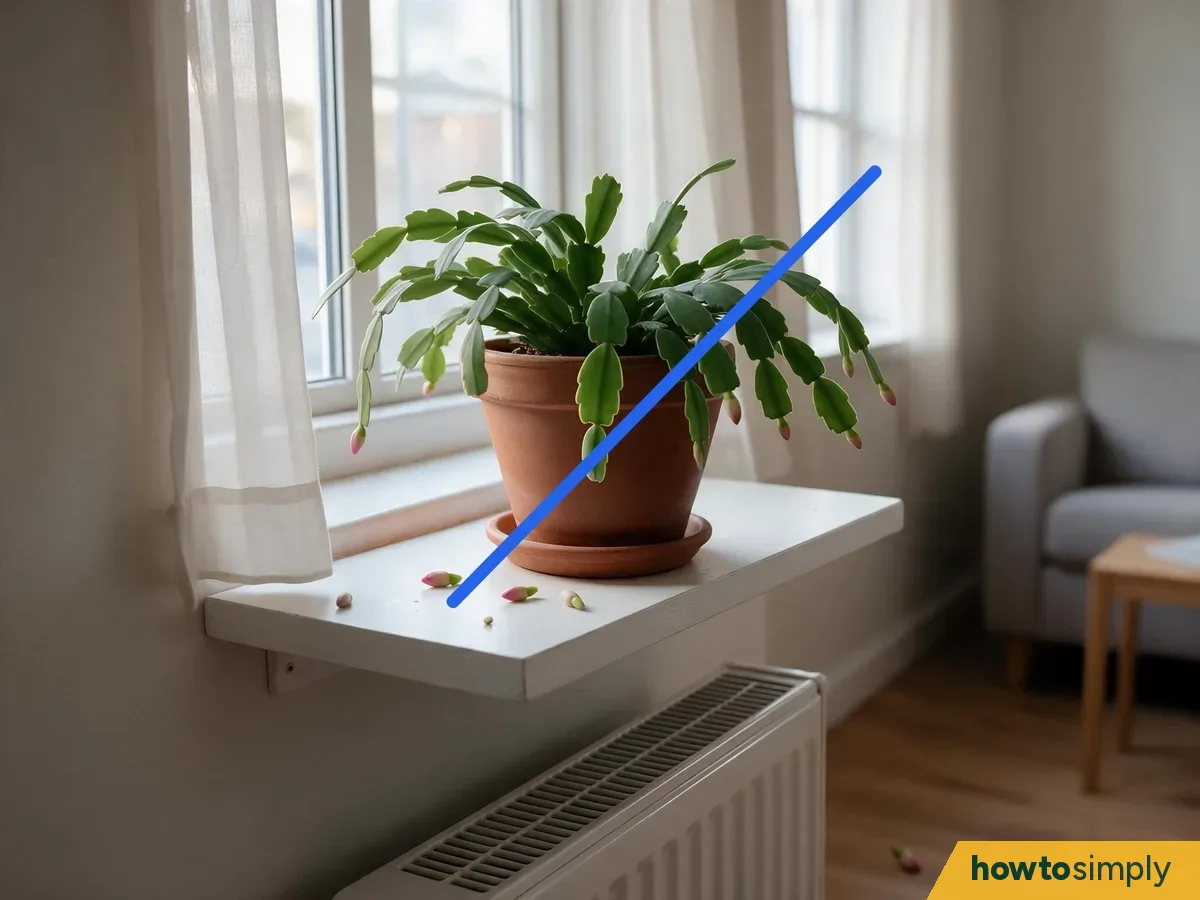
Don't put it by a radiator or an open door.
Illustration
What if Amira had put it above the radiator? Warm days followed by chilly nights can make the buds drop off before they open.
The usual reason buds drop is warm days followed by chilly nights (RHS). However, cold draughts, including on the way home from the shop, and overwatering can cause it too (RHS).
How to tell it worked
After the dark, cool weeks, small buds appear at the tips of the segments.
The buds swell and open instead of dropping off.
The segments stay firm and green, not limp or wrinkled.
If something goes wrong
What happens
Likely cause
What to do
No buds at all
Light after dark, or too warm (RHS, Clemson)
A dark, cool room for at least 6 weeks
Buds fall before opening
Temperature swings, draughts, overwatering (RHS)
One steady spot, away from heaters and doors
Buds fall, compost very dry
Compost dried out (Clemson)
Keep it evenly moist while in bud
Segments pale or yellow
Bright summer sun (Clemson)
Move to bright light out of direct sun
Segments shrivelled, compost wet
Root damage from overwatering (RHS)
Water when the compost is dry to the touch (Clemson)
Flowers in November, not December
It may be a Thanksgiving cactus, which flowers about a month earlier (Clemson)
Give it long, dark nights and a cooler spell in autumn. Clemson Extension says it needs 14 hours or more of unbroken darkness each night for at least 6 weeks; the RHS says a cooler spell of 12 to 15 °C helps buds form.
Why are the buds falling off?
Usually temperature swings. The RHS points to warm days followed by chilly nights, cold draughts and too much water. Clemson adds sudden changes in light, too many buds, and the compost drying out.
Is it a Christmas cactus or a Thanksgiving cactus?
Look at the edges of the flat stem segments. Thanksgiving cactus has 2 to 4 pointed, saw-like teeth on each side; Christmas cactus has rounder edges (Clemson Extension). Thanksgiving cactus usually flowers about a month earlier.
Can a lamp stop it flowering?
Yes. Both the RHS and Clemson say light after dark can stop it flowering; Clemson says even 2 hours of light can break the dark period, including street lights and car headlights.
What do I do after it flowers?
The RHS suggests a cooler, drier rest from late January to late March, then normal care from spring.
12 illustrations drawn for this article: drawings, not photos.
Sources
Steps checked against the 2 named sources linked below.
What this page adds
A drawn side-by-side of pointed and rounded stem segments to tell which cactus you have, Amira's cactus followed through the season, and a bud-drop table.