How to repot a houseplant, step by step
Researched by Abu Bakar Saadat8 min read
Last updated: 14 November 2026References
 Illustration
On this page 9 sections
In short
Repot in spring into a pot only a little wider, with a drainage hole. Water the plant an hour before, ease it out, loosen circling roots, set it at the same depth in fresh potting mix, firm lightly and water until it drains.
At a glance
- When
- Spring, as growth starts (RHS, Penn State); every 2 to 3 years (RHS)
- New pot
- 2.5 to 5 cm wider for most houseplant pots (Colorado State); RHS houseplant guide: 5 to 10 cm
- Mix
- Fresh potting mix, never garden soil (Penn State)
- No
- Gravel layer in the bottom (Illinois Extension)
- Advice from
- RHS, Penn State, Colorado State and Illinois extension services, read 28 October 2026
- Checked
- November 2026
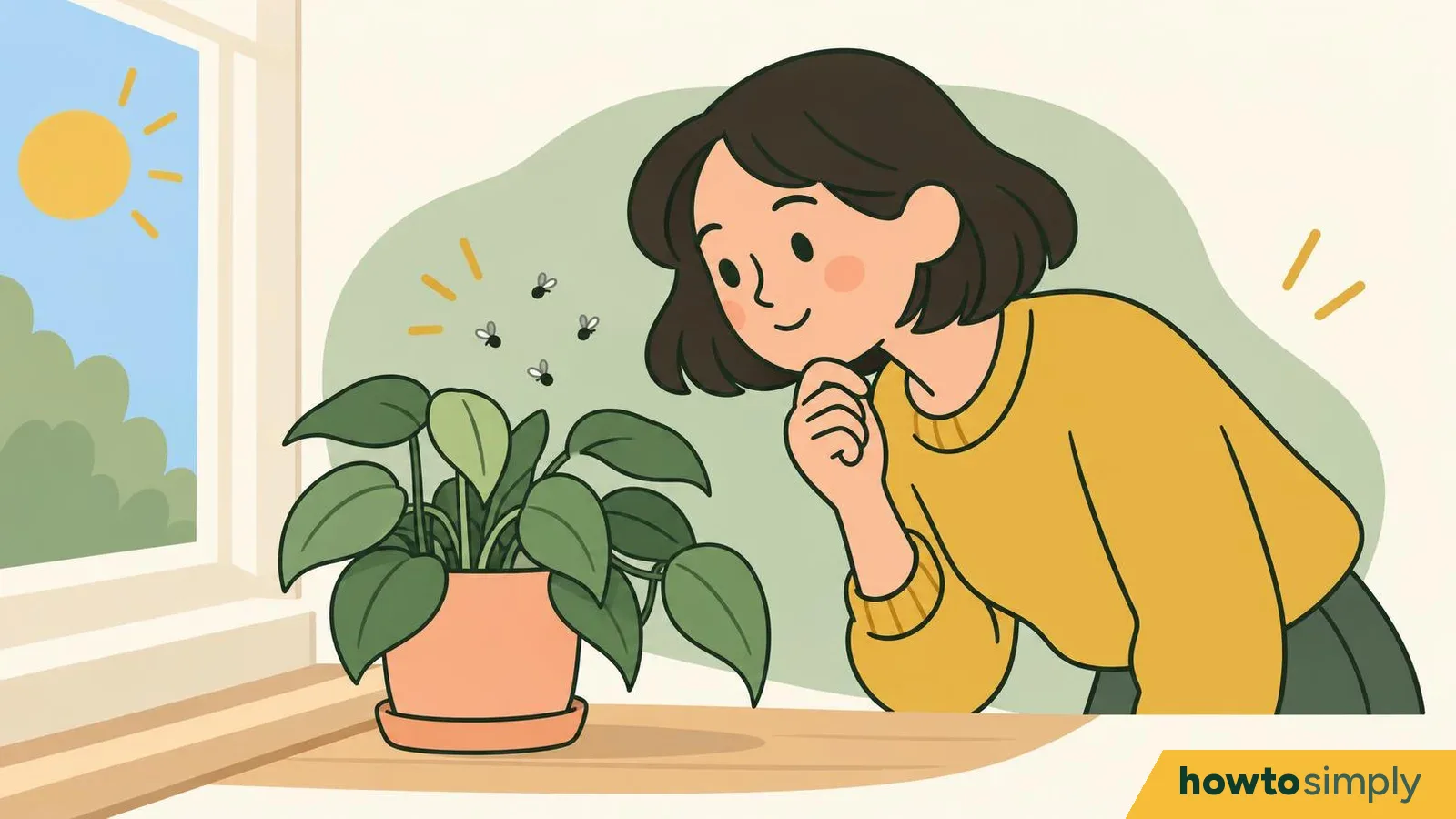
Moving a mature plant to a new pot can make you a little nervous, especially when it's an old friend you've cared for over many years. As long as you go slowly and carefully, you'll be fine, and we'll also help you avoid the two mistakes people most often make when repotting.
Plants need repotting now and then because potting compost breaks down over time and becomes denser, so less air reaches the roots (RHS). The RHS also says a tangle of roots can stop water draining properly. Repotting gives the roots room to expand and a fresh mix that drains and breathes better (RHS). The two biggest mistakes are using a pot that's much larger than the old one and putting a layer of gravel in the bottom. The steps below show you how to avoid both.
Does your plant need repotting?
Yes, repot
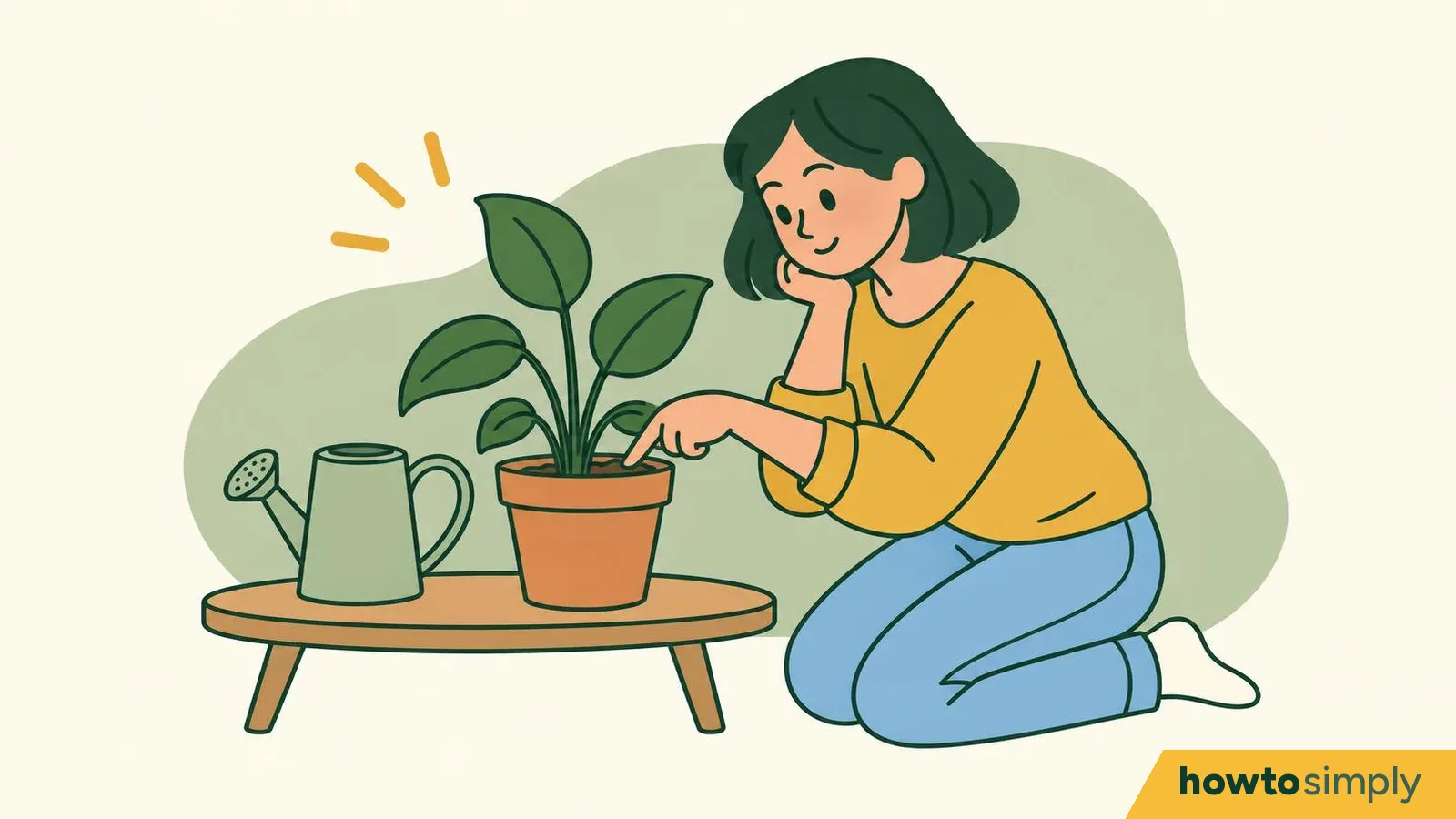
Check the roots if they're showing through the drainage hole, if the mix dries out extremely fast even in cool weather, or if the plant has stopped growing despite feeding in spring and summer. It's time to repot when roots wind round and round the root ball, or pack the lower third of the pot so tightly that hardly any mix shows (Penn State).
Maybe: compost is tired
Algae on the surface can be a sign of sour compost, and a plant that wobbles in its pot may have weak roots (RHS). Repot into fresh mix, in a pot of the same size if the roots don't fill it.
Plant is big enough already
Keep the same pot. Trim away the outer layer of the roots, put the plant back with fresh mix and cut back some of the top growth (Penn State). The RHS suggests lightly trimming up to 15% of the roots every few years.
It's autumn or winter
Wait until spring if you can. The RHS advises against autumn and winter, when growth slows down and fresh compost can stay too wet.
How much bigger should the new pot be?
Each source gives slightly different figures, so they're shown side by side, but all of them say the increase should be small. The RHS specifically warns that bigger jumps risk overpotting. So if you tend to buy a huge pot so you never have to repot again, I'm afraid the plant won't thank you for it.
| Source | How much wider |
|---|---|
| Colorado State University Extension (houseplants) | 2.5 to 5 cm (1 to 2 in) larger in diameter |
| RHS, How to repot a plant (pots under 25 cm across) | About 2.5 to 5 cm (1 to 2 in) wider and deeper; never more than a third larger |
| RHS, How to grow houseplants | 5 to 10 cm (2 to 4 in) larger in diameter, or room for two to three years of growth |
| Penn State Extension | Slightly larger than the current pot |
For a typical houseplant in a pot up to 25 cm across, Colorado State and the RHS repotting guide both say 2.5 to 5 cm wider.
How to repot
Water the plant an hour before you start.
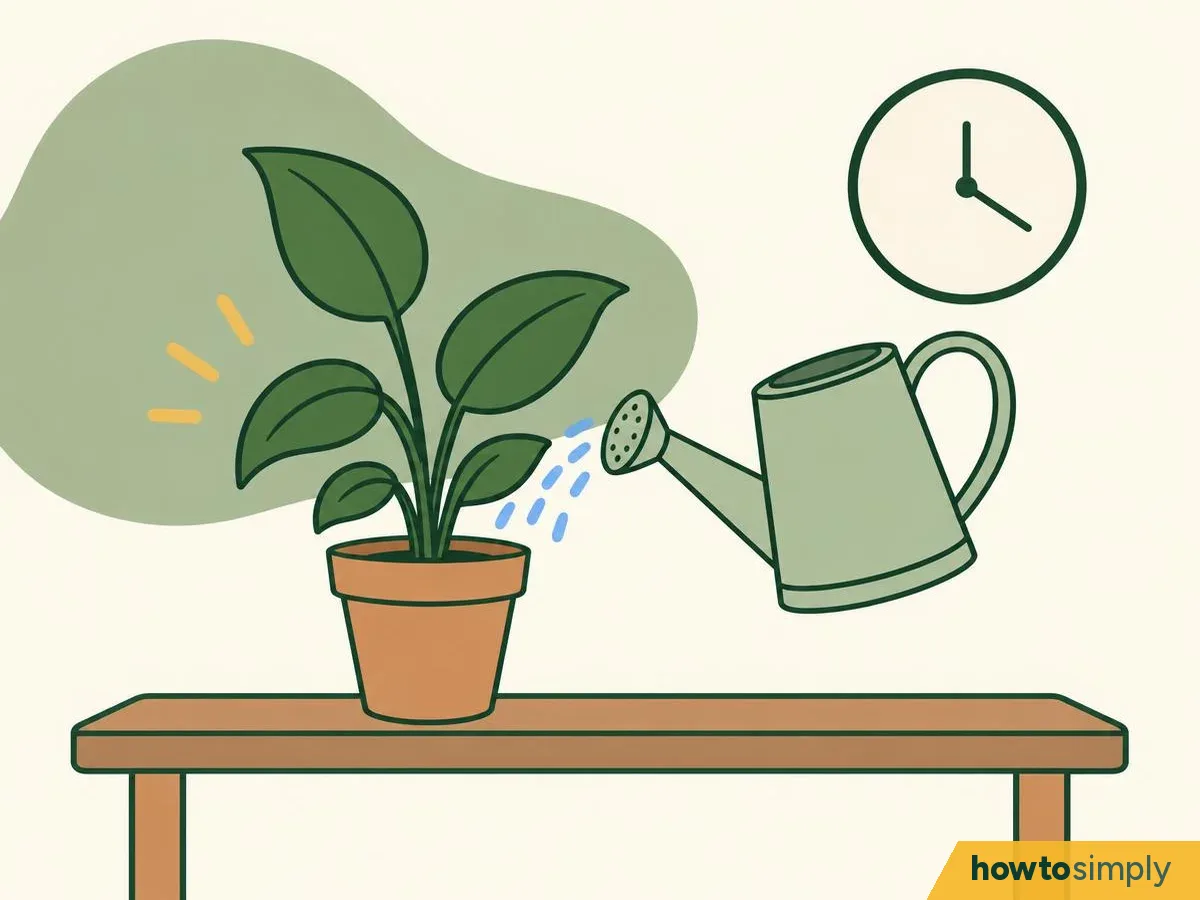
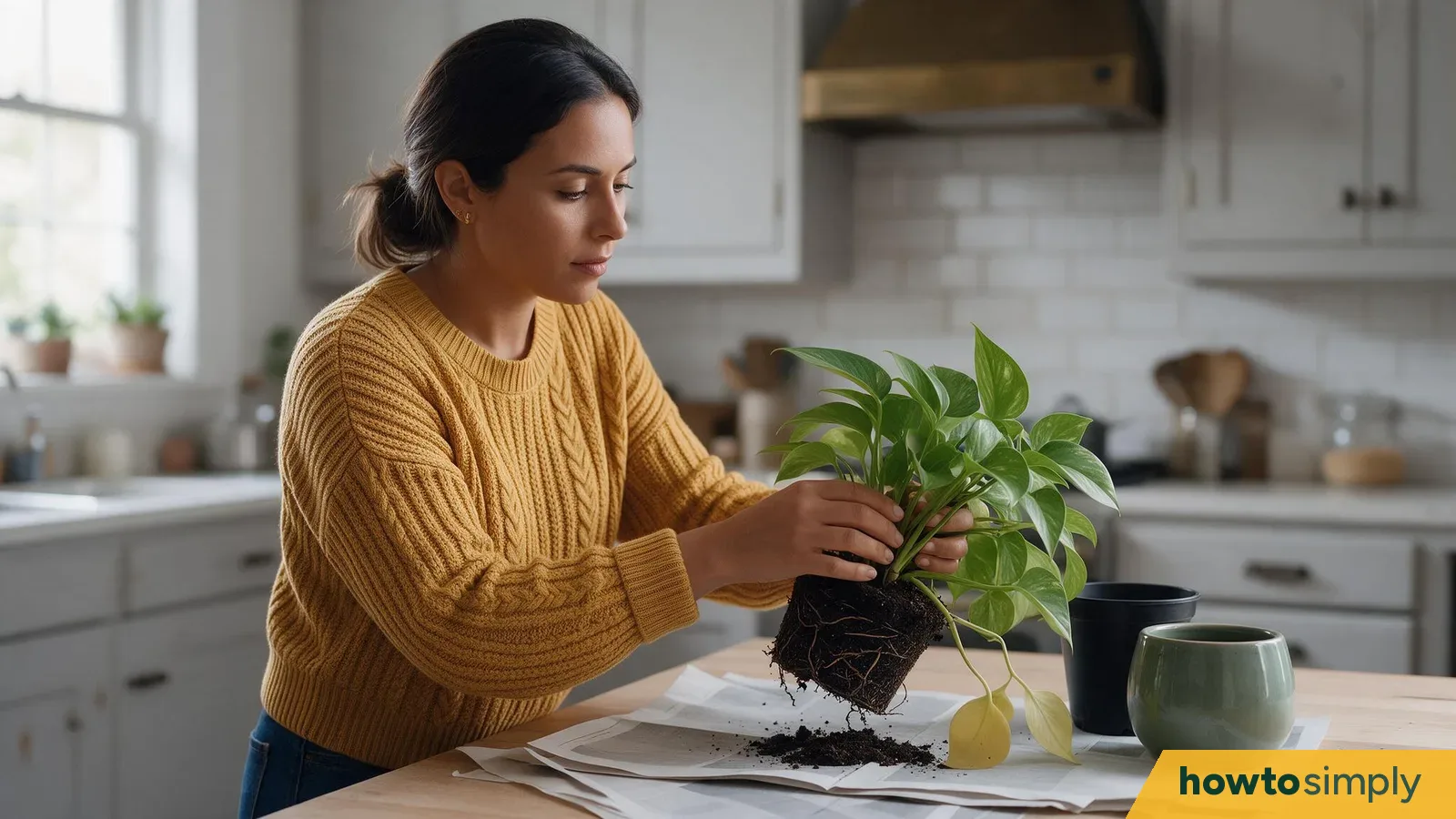
Illustration Penn State Extension says to water the plant while it's still in its old pot and leave it for one hour. Moisten the new potting mix as well, so it takes up water evenly later (Penn State). Then spread newspaper on the table, because potting mix has a way of ending up everywhere.
You should see: potting mix that is moist.
Cover the hole in the new pot and add a little mix.
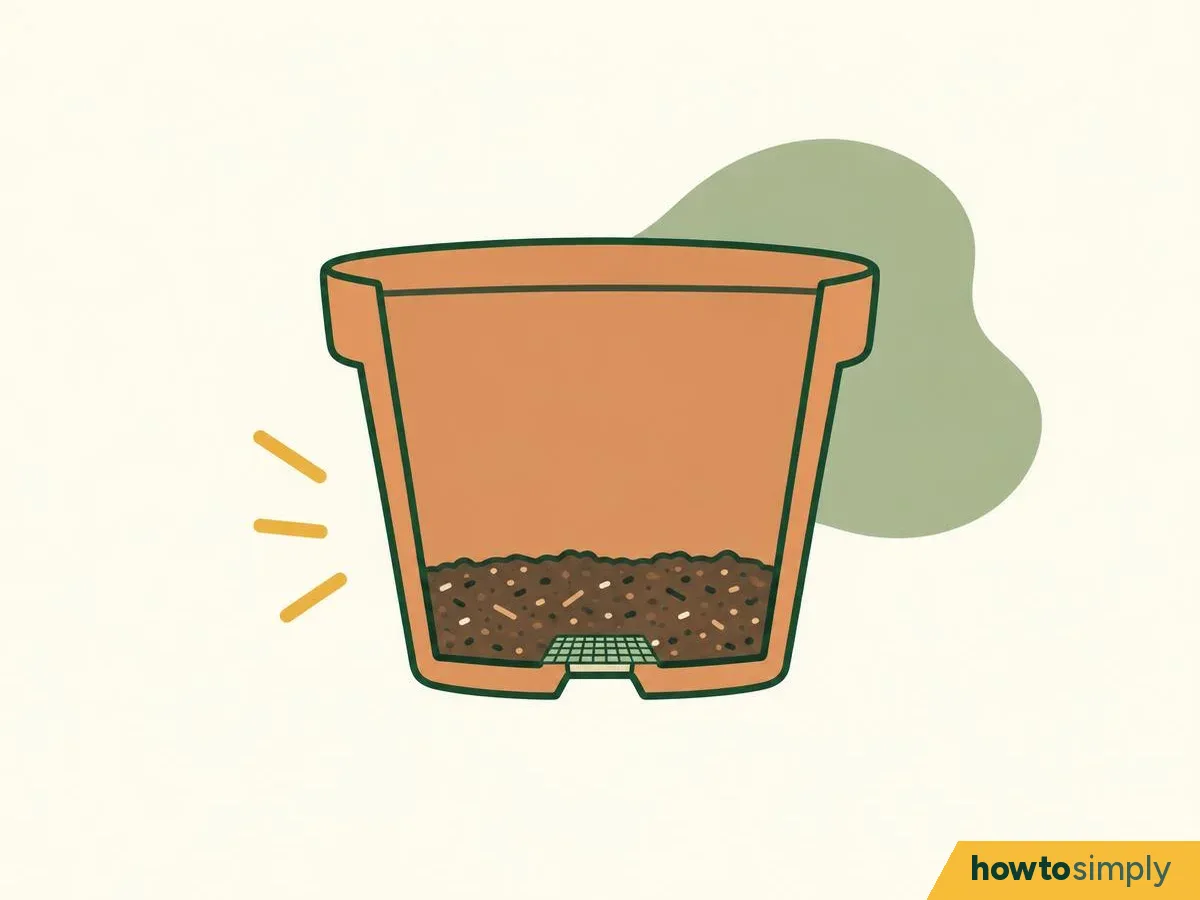
Diagram: mesh over the hole, mix on top, no gravel Lay the mesh or a piece of coffee filter over the drainage hole, then add a layer of slightly moist mix (Colorado State). Next, the gravel, which is the mistake I mentioned at the start. Don't add a layer of gravel first. Illinois Extension calls the idea that gravel improves drainage a myth: water collects in the soil just above the gravel until that soil is saturated, and only then drains into it.
You should see: the hole covered, and a small amount of mix on the bottom of the pot.
Ease the plant out of its old pot.
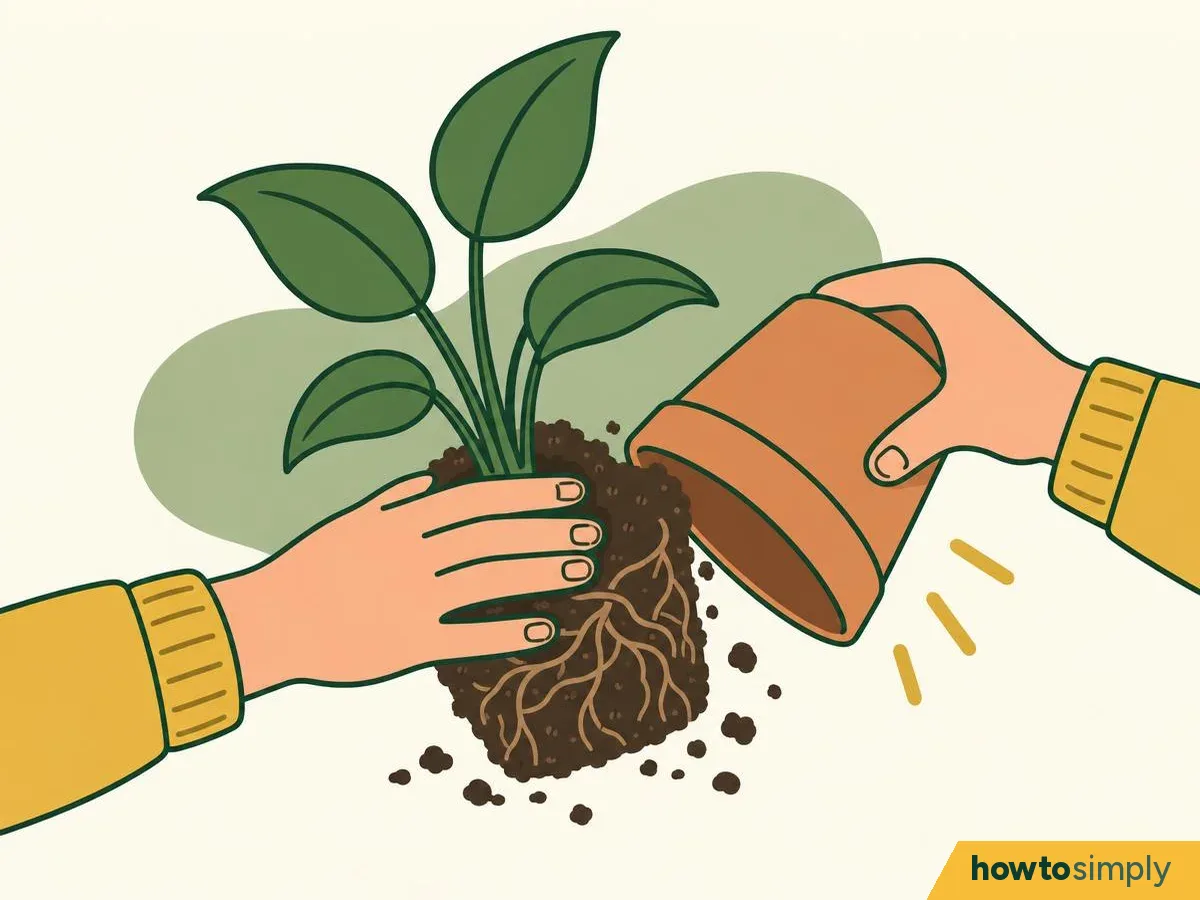
Illustration Spread your fingers over the compost around the stems, turn the pot over and let the root ball slide into your hand (Colorado State). Please don't pull the plant out by its stems or leaves, tempting as it is. Don't worry if it sticks; place the pot on its side and pull the plant out sideways (RHS). If it's still stuck, the RHS says you might have to cut down one side of the root ball, or round its edge, to get it out.
You should see: the root ball in one piece in your hand, roots showing round the outside.
Careful: keep as many healthy roots as you can. Cut only roots that are dead, rotted or badly circling.
Loosen circling roots and cut off any rotten ones.
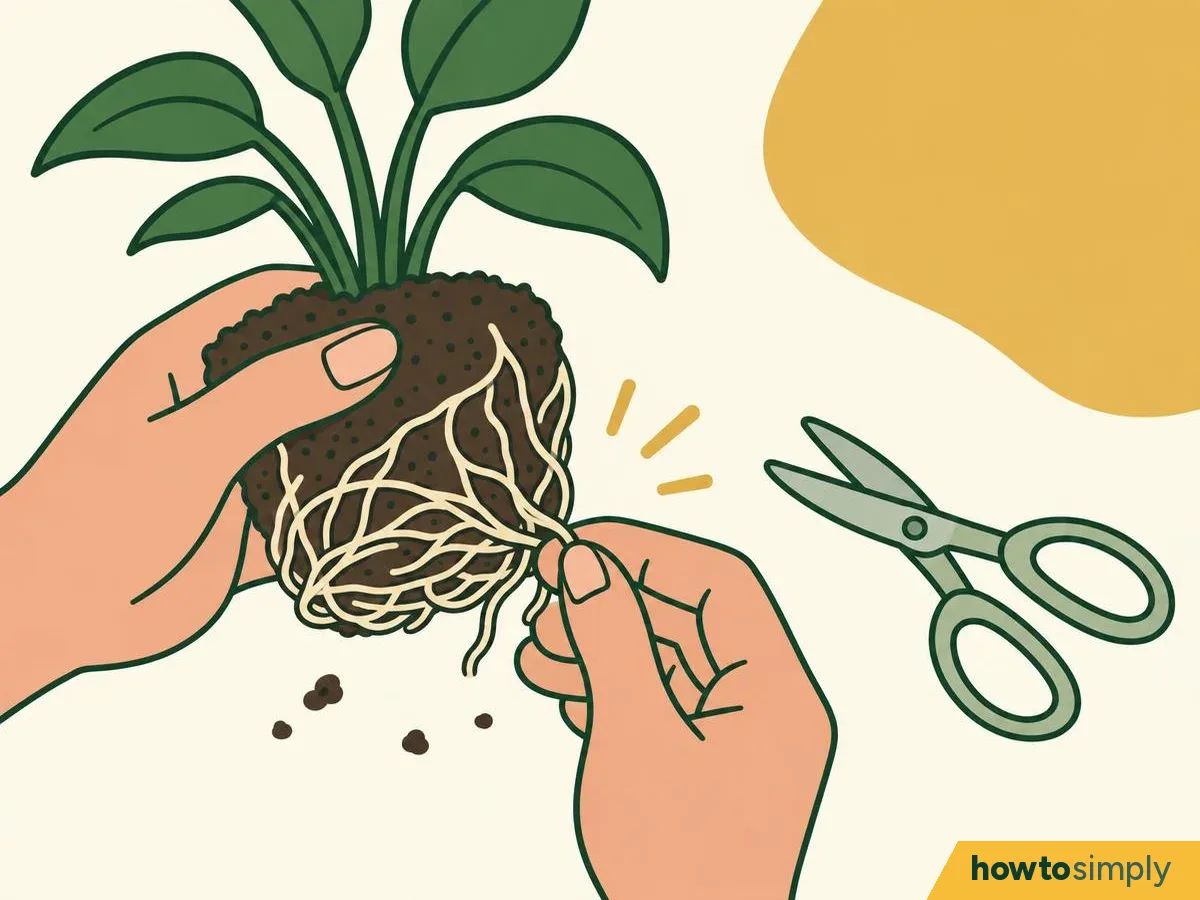
Illustration Gently tease the roots loose (Penn State). If they are tightly bound, score the root ball in a few places with a sharp knife (Colorado State). Cut away black, mushy roots (Colorado State). You will feel the difference in your fingers, because healthy roots are firm.
You should see: root ends hanging free instead of wrapped round the ball, and no soft, dark roots left.
Set the plant at the same depth as before.
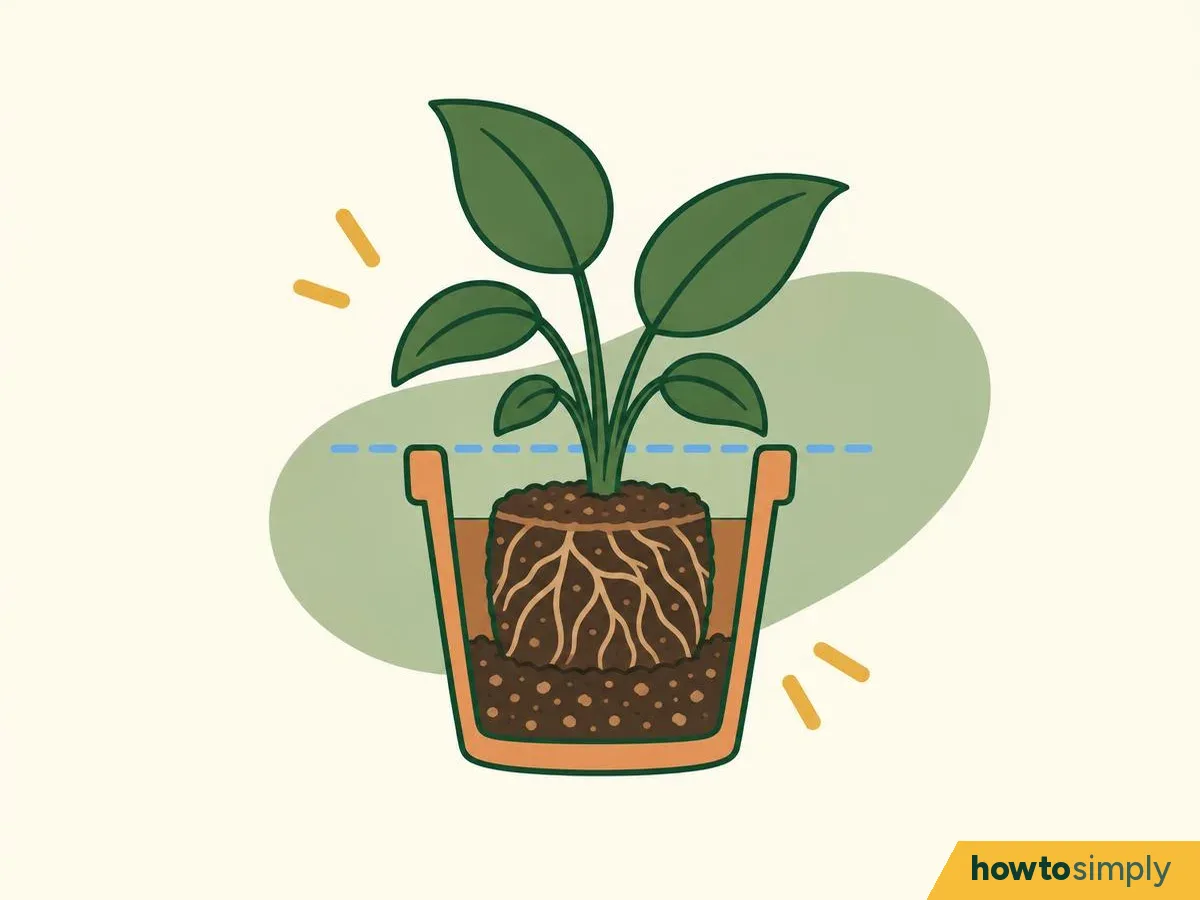
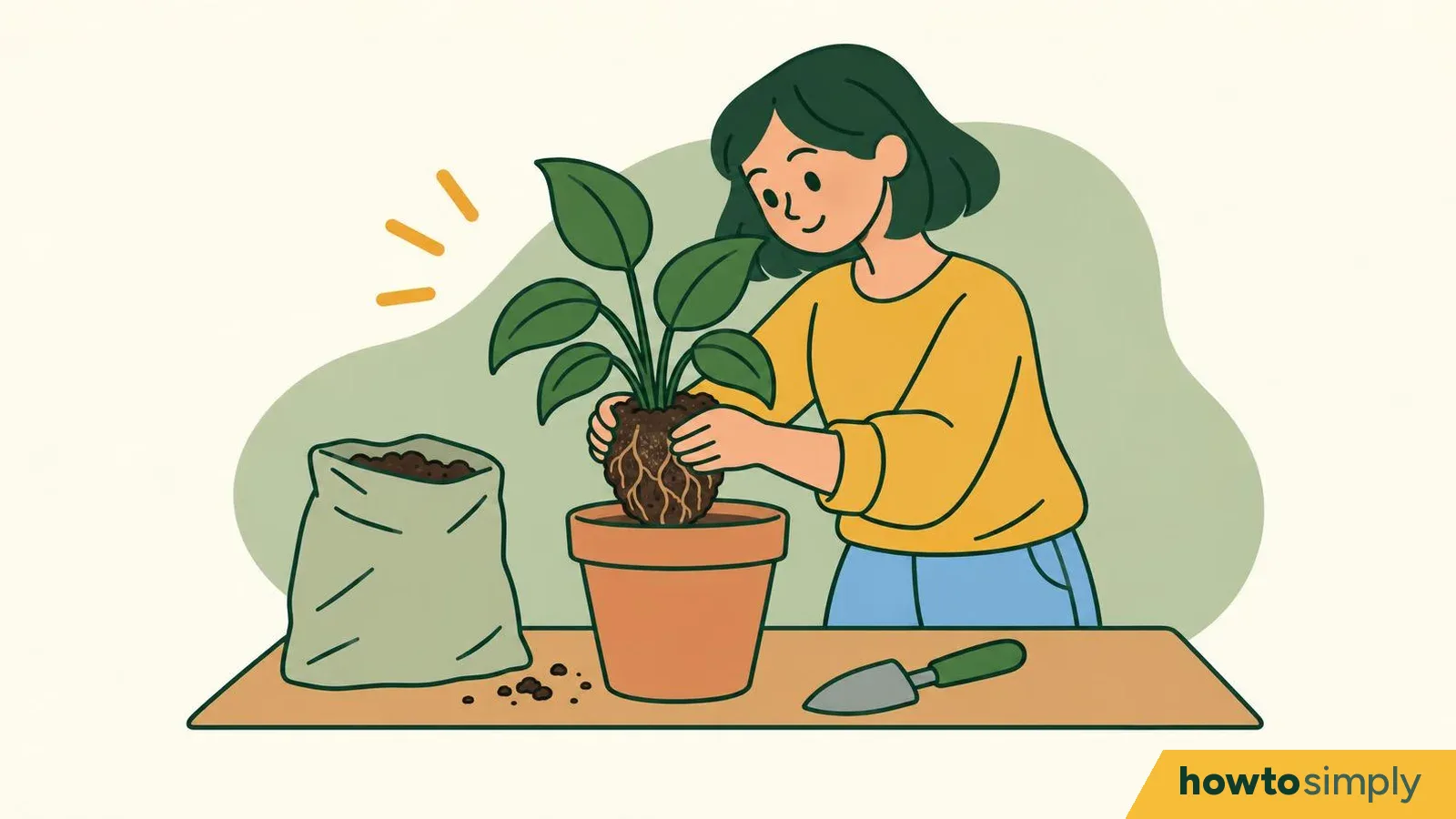
Diagram: the top of the root ball sits a little below the rim Add or remove mix underneath until the top of the root ball sits about 2.5 cm (1 in) below the rim (Penn State), at the depth it grew before (Colorado State). That gap leaves room to water, so make sure you don't fill right up to the top. Don't bury the stems deeper than they were either.
You should see: the plant upright in the middle, with its old compost level a little below the rim.
Fill round the sides and firm lightly.
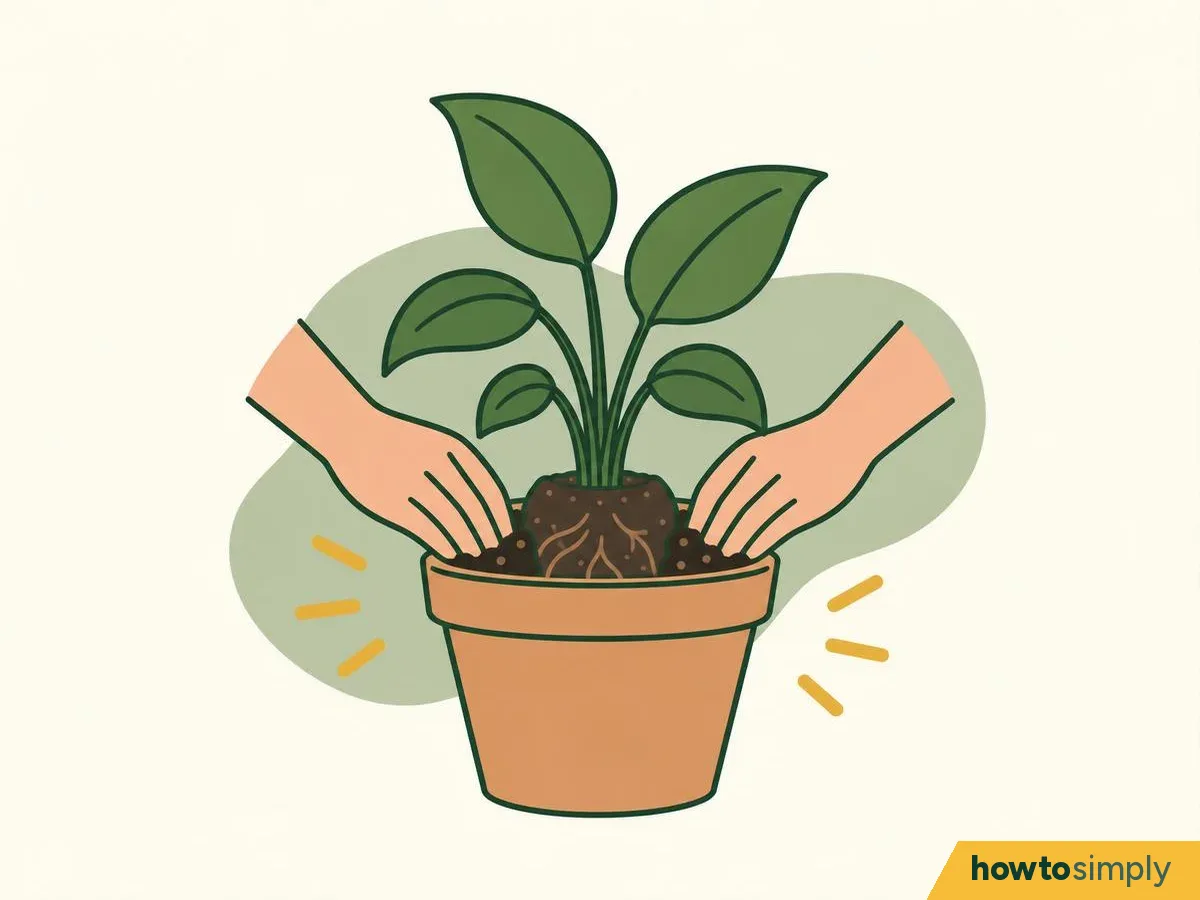
Illustration Fill the gap with mix and tap the pot to settle it (Colorado State). Firm the top lightly, without packing it hard (Penn State), because the roots need that air. The RHS says to firm enough to remove air pockets, and not to pile compost against the stems.
You should see: no gaps down the sides, and a level surface about 2.5 cm below the rim.
Water until it drains, then top up any sunken mix.
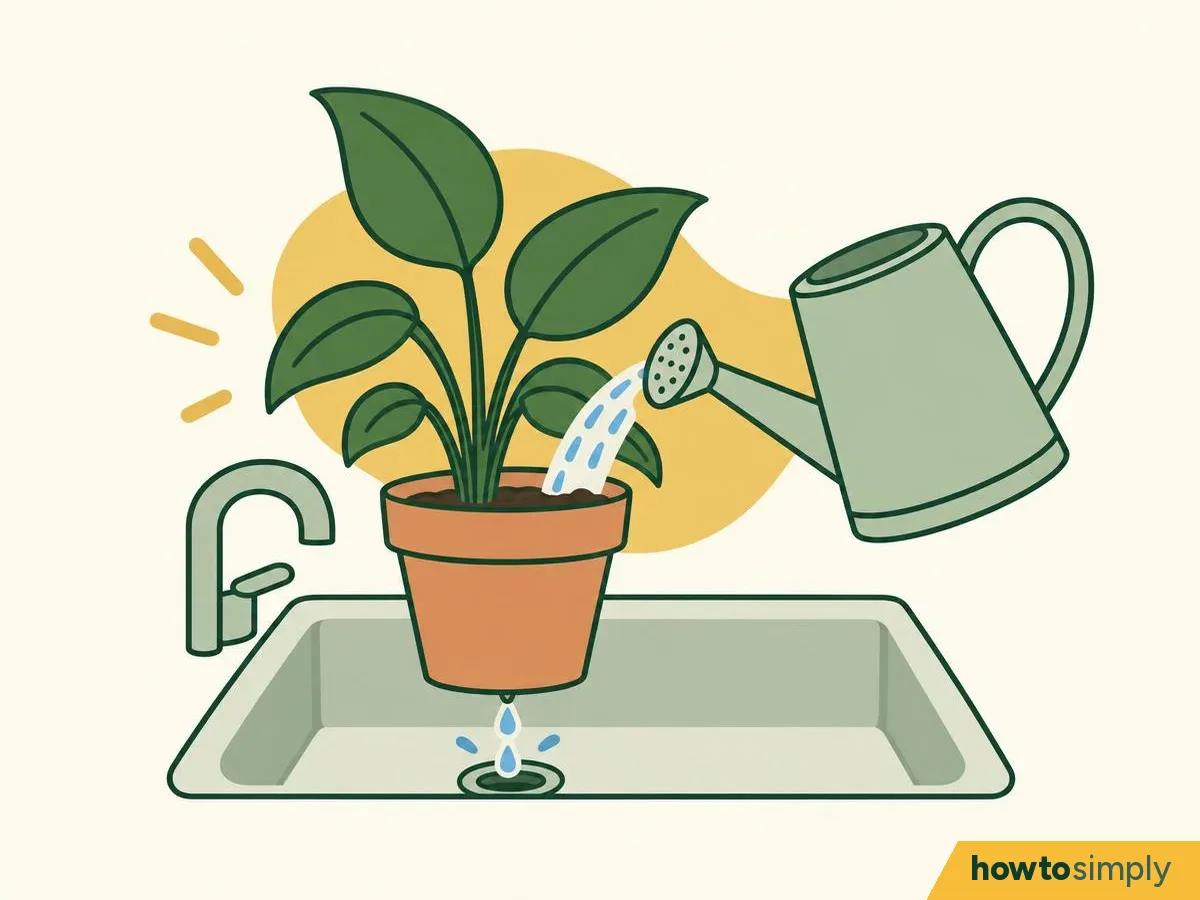
Illustration Water thoroughly and let it drain well (Penn State). If the mix settles below the top of the root ball, add a little more (Colorado State). Then put the plant back where it lives (Penn State). It is that easy.
You should see: water running from the hole, and the root ball still covered.
How to tell it worked
- Water runs out of the drainage hole when you water (RHS).
- The plant stands firmly and doesn't wobble.
- The surface sits about 2.5 cm below the rim (Penn State).
- In spring and summer, the plant keeps putting out new leaves.
If something goes wrong
If something doesn't go to plan, it isn't a disaster. Each problem below has a clear way forward.
| What happens | What it means | What to do |
|---|---|---|
| Plant won't come out | Very pot-bound, or pot narrower at the top | Place the pot on its side and pull the plant out sideways; if needed, slice down through one side of the root ball (RHS) |
| Roots are a solid mat | Strongly root-bound | Score the root ball in a few places with a knife (Colorado State) |
| Black, mushy roots | Unhealthy roots | Trim them off; then keep the soil damp without drowning it (Colorado State) |
| Water stays on top after repotting | Mix may be packed too hard | Next time firm only lightly (Penn State) |
| Compost stays wet for a week or more | The pot may be too big for the roots | Water less often; move down a size if it keeps happening |
From the writer
Abu Bakar, who wrote this article, has kept a container garden for years. In his own words:
“First of all, make sure all of your pots have the right amount of soil in them, because if they don't, it may hold back the growth of your plant and shorten its life. Over time the level of the potting soil drops, so you need to remember to add fresh potting soil now and then.”
Questions readers ask
Can I use soil from the garden?
No. Penn State Extension says garden soil can bring disease and pest problems into the pot; use a potting mix made for container plants. Colorado State University Extension gives the same advice.
How often should a houseplant be repotted?
The RHS suggests every two to three years for houseplants. Fast growers may need it sooner; check for the signs in the box at the top of this guide each spring.
Do I need to clean an old pot first?
Yes. Penn State Extension says to wash a used pot, then sanitise it with one part bleach to nine parts water. Colorado State University Extension suggests a 20% bleach solution, then a rinse with plain water. Soak a new unglazed clay pot overnight so it doesn't pull water out of the mix (Penn State).
What about orchids and cacti?
They need their own mixes. Penn State lists specialty mixes for orchids, cacti and succulents, African violets and acid-loving plants, and Colorado State University Extension says to use a specialised mix for orchids and cacti.
Sources and method
- Researched by
- Abu Bakar Saadat
- Tested by our team
- No. We have no record of anyone on our team trying these steps, so treat them as researched instructions from the sources below.
- Pictures
- 9 illustrations drawn for this article: drawings, not photos.
- Sources
- 5 named sources, linked below.
- What this page adds
- A table comparing how much wider the new pot should be, cut-away diagrams of the pot base and planting depth, and a table for stuck or rotting roots.
What to do next
Rescue a struggling houseplant Step 5 of 6
- How to keep a houseplant alive in low light: pick the spot and check the lightA dark corner needs the right plant and a few tricks.
- How to tell if a houseplant needs water, and fix over- or underwateringMost plant trouble starts with watering.
- How to save an overwatered houseplant: check the roots, trim and repotToo much water? Act before the roots rot.
Did this solve the problem?
Where did you get stuck?
What did you think?
Reaction counts are loading.
Sources
We use primary, official and specialist sources appropriate to the topic.
- RHS: How to grow houseplants (no page date)
- RHS: How to repot a plant (no page date)
- Penn State Extension: Repotting houseplants (updated 23 February 2026)
- Colorado State University Extension, PlantTalk 1316: Houseplants, repotting (no page date)
- University of Illinois Extension: Container drainage options (no page date)