How to find and turn off your main water valve (UK, US, Germany)
Your main valve is where the cold-water pipe comes into your home: in the UK often under the kitchen sink, in a US house often in the basement, garage or by the foundation, and in a German flat next to your own water meters. Turn it clockwise until it stops, without forcing it, and expect the taps to run for a few minutes more.
Researched by Abu Bakar SaadatLast changed 17 November 2026Verified 17 November 2026Version 4See all changes
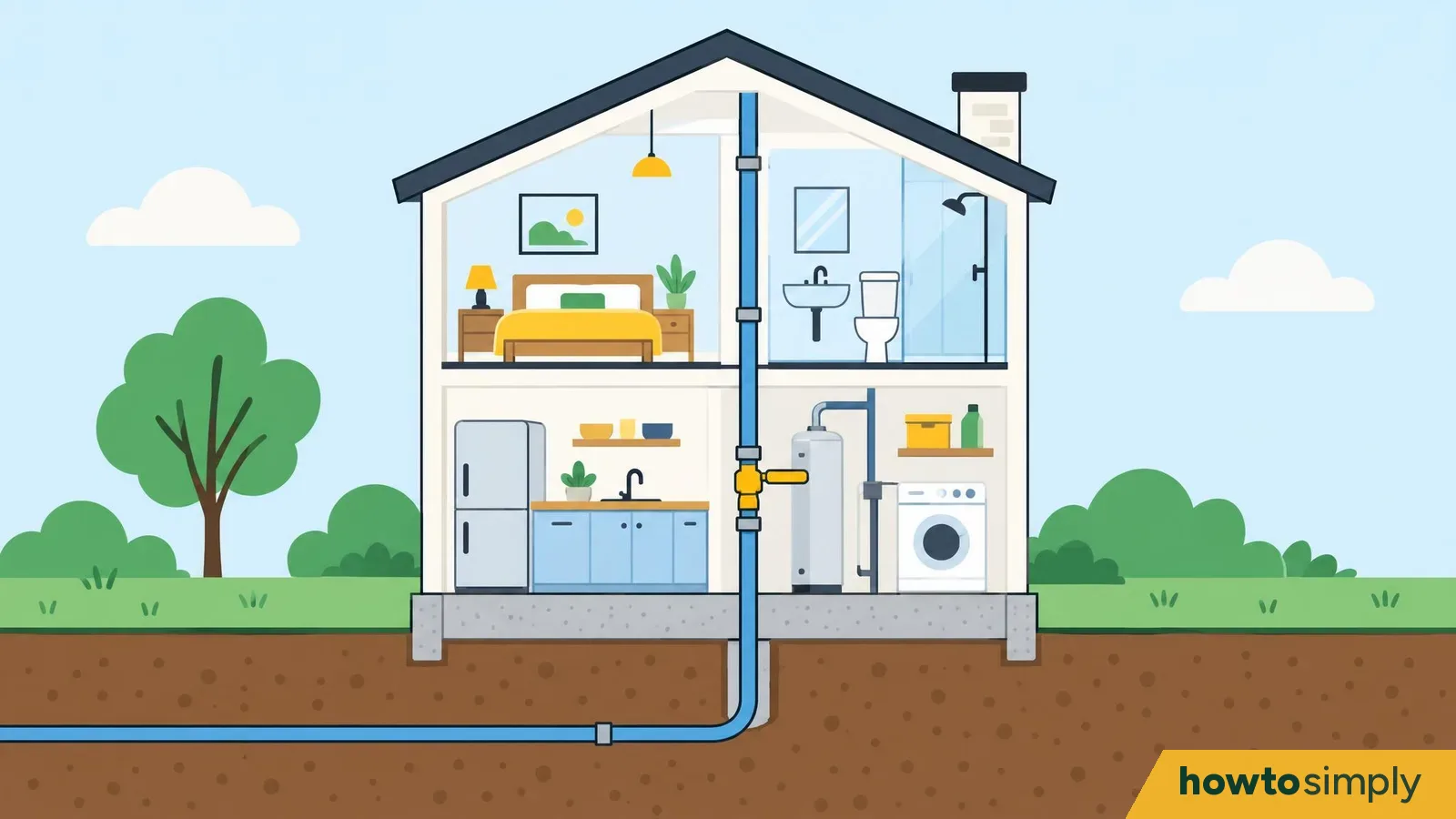 Illustration
On this page 18 sections
In short
Your main valve is where the cold-water pipe comes into your home: in the UK often under the kitchen sink, in a US house often in the basement, garage or by the foundation, and in a German flat next to your own water meters. Turn it clockwise until it stops, without forcing it, and expect the taps to run for a few minutes more.
Current advice
Find the inside valve before you need it, switch the boiler off, then turn the valve clockwise until it stops, never by force[1][6]. Use the outside valve only in an emergency, and warn neighbours if you share a supply[2].
Information, not professional advice.
Latest update
17 November 2026. We re-read the sources. All six pages opened today and still support the places to look, the turning directions, the boiler and neighbour warnings, the six-monthly check and the emergency options on this page. One line has no source behind it: the body's '10 minutes' before you suspect the wrong valve is our own rule of thumb. The sources only say the taps can keep running for a few minutes.
What changed in this version
- Added the record layout: key facts with numbered sources, a table of where the valve usually is in each country, what the sources agree on and where they differ, a record history and more reader questions.
Key facts
- In a UK house the inside stopcock is a large brass valve, like a tap with a pipe on each side, often under the kitchen sink, in a downstairs toilet or under a utility room sink.[1]
- Turn the boiler off before you shut off the water, so it doesn't try to run without enough water.[1]
- Close the valve by turning it clockwise until it won't go further. Don't force it past that point.[1][2][6]
- Water left in the pipes can keep coming from the taps for a few minutes after you close the valve.[2][6]
- UK outside stop valves sit under a cover in the path or road, often near the meter, and are for emergencies only. On a shared supply, closing one also cuts off your neighbours.[1][2]
- In a US house, look in the basement or garage, or outside by the foundation near the front faucet. In an emergency the valve in the meter box turns clockwise with a wrench or meter key.[3]
- In a German rented flat, the valves for cold and hot water sit beside the flat's own water meters. Tenants usually can't reach the building's main valve in the basement.[4]
- WaterSafe advises turning your stop tap off and on again about every six months; Thames Water suggests a monthly reminder.[5][6]
If water is leaking right now, go straight to the Where to look table below. If not, you've chosen the best time to look: a dry floor, no rush, and a torch. Then, if a pipe ever bursts, you'll know exactly where to go.
Before you start
- Turn your boiler off first. Barratt Homes says to switch the boiler off before you turn off the water.
- Take a torch. Valves like to hide at the back of cupboards. Your phone's torch will do.
- Shared supply? Thames Water says closing an outside valve can cut off your neighbours' water as well, so let them know first.
Where to look
| Your home | Where the main valve usually is |
|---|---|
| UK house | Under the kitchen sink, in the downstairs loo or under the utility room sink (Barratt Homes). Outside: under a cover in the path or pavement, often by the water meter (Barratt Homes). |
| UK flat | It may be in the communal area outside your front door, or in a cupboard with the other flats' stopcocks (Barratt Homes). |
| US house | Basement, garage, or by the foundation near the front outdoor faucet. Outside: in the meter box (City of Bellevue). |
| German house | Usually where the pipe comes into the building, for example near the water meter (Wasserzähler). It's called the Haupthahn or Absperrventil (GIGA). |
| German flat | Next to your flat's own water meters: one valve for cold, one for hot. The building's main valve in the basement is usually out of tenants' reach (GIGA). |
Step by step
Follow the pipe, or find the meter
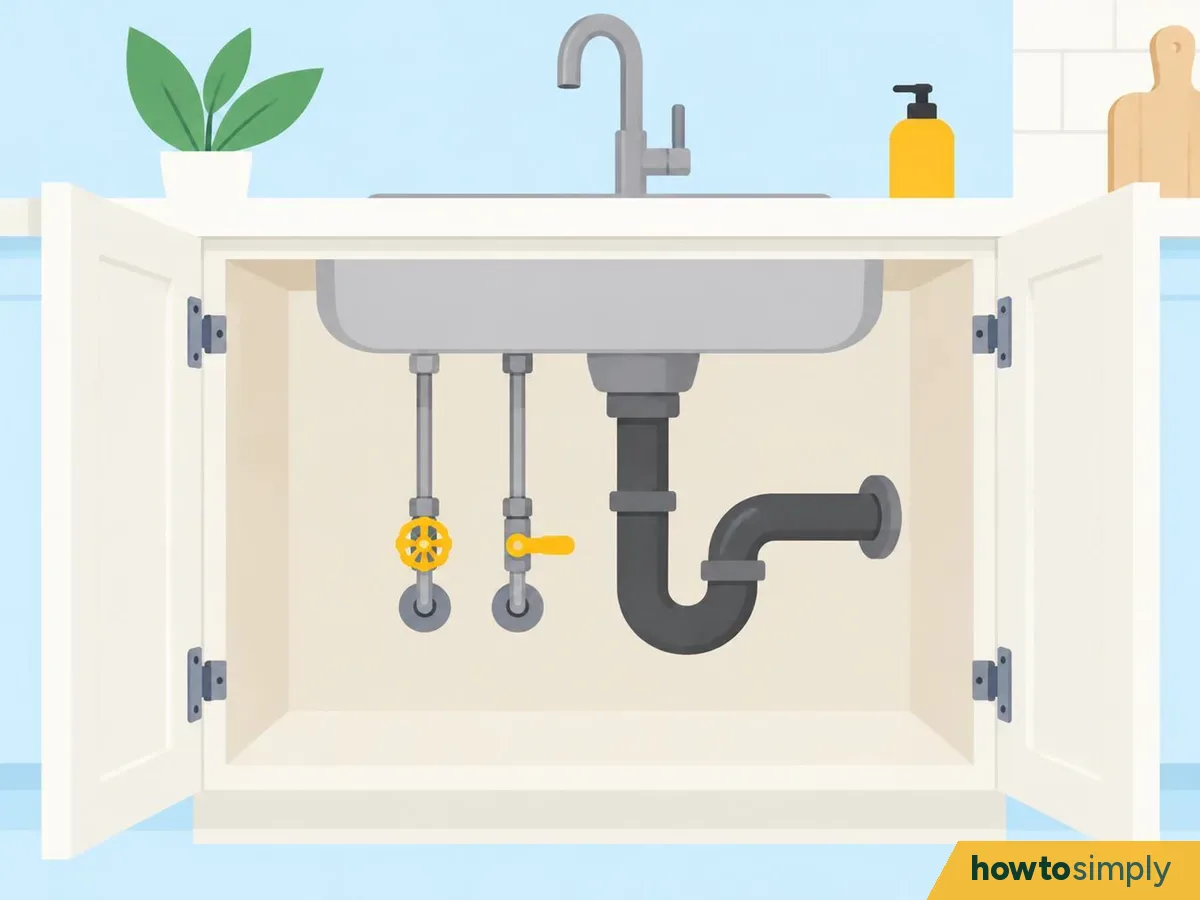
Illustration: under the kitchen sink, common in UK houses Begin under the kitchen sink or at the water meter, and trace the cold pipe back to the point where it enters your home.
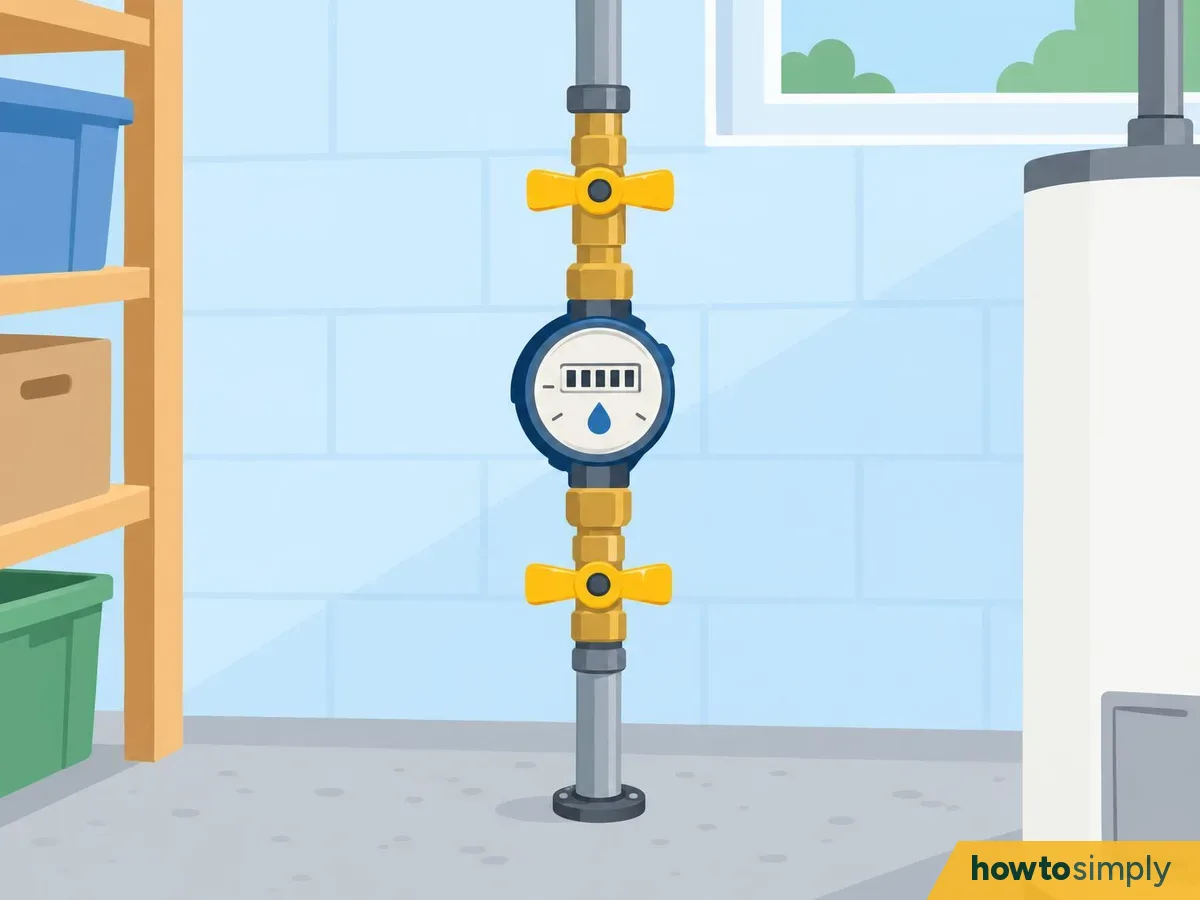
Illustration: by the water meter, common in US and German houses In a house with an indoor meter, check the pipe near the meter, where the water enters the building (GIGA).
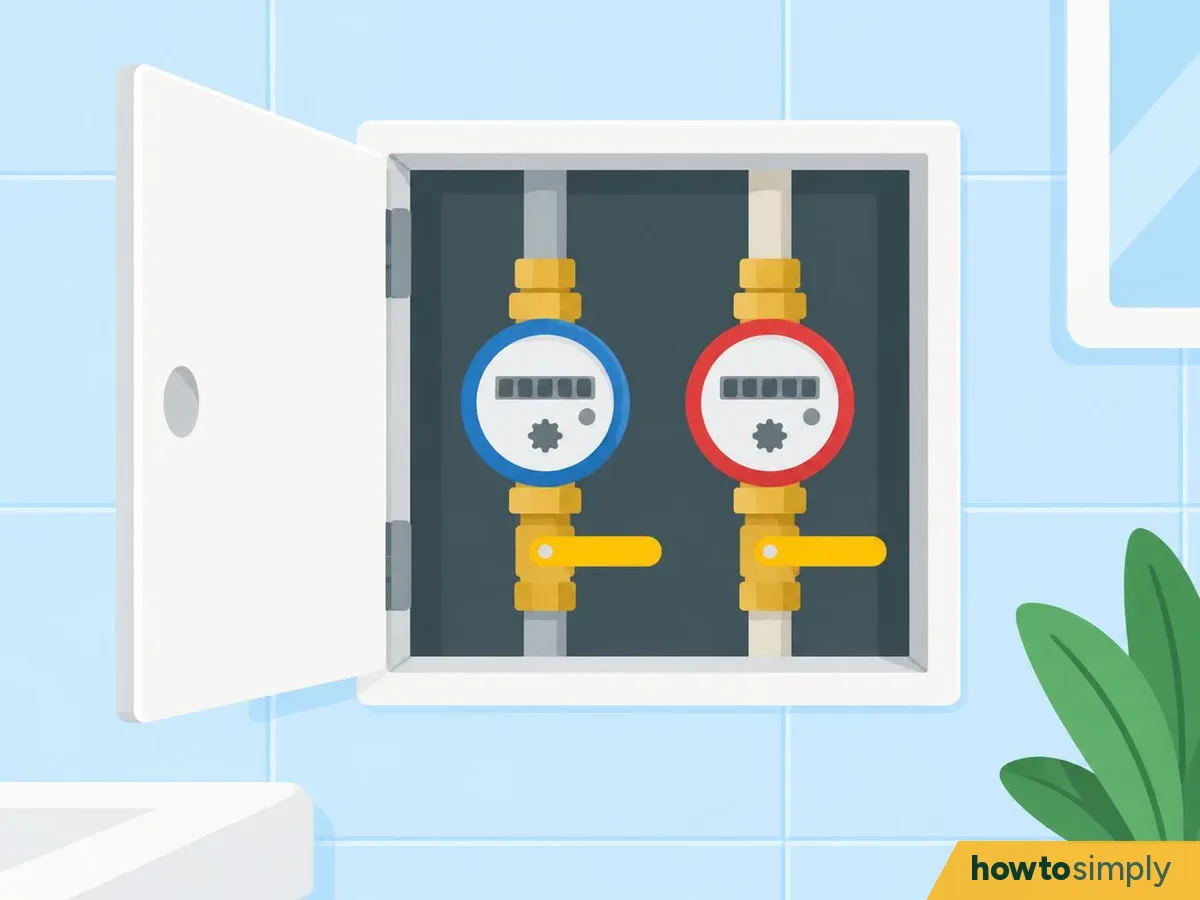
Illustration: a flat's own meters behind a bathroom panel In a flat with its own meters, the valves right beside them, one for cold and one for hot, turn off the water to the whole flat (GIGA).
See which kind of valve you have
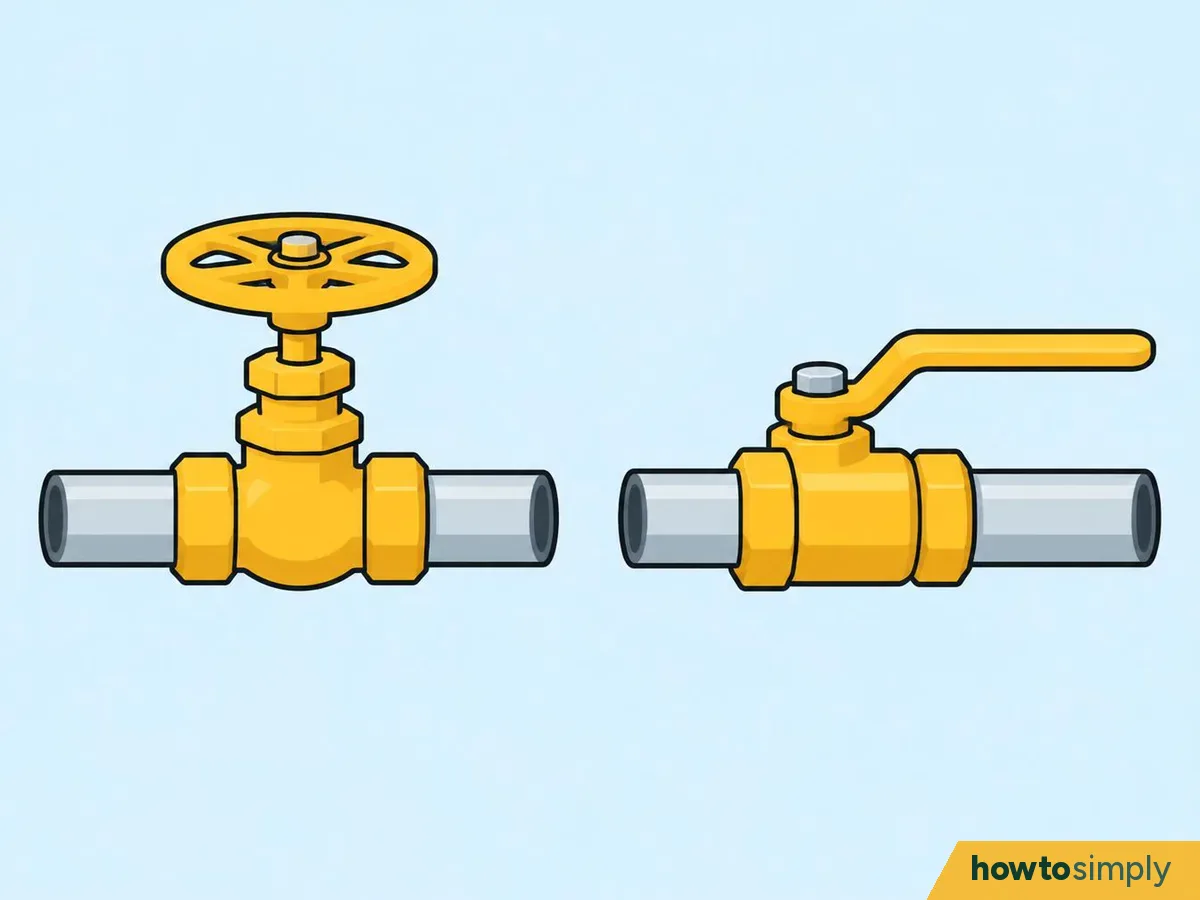
Illustration: wheel handle (left) and lever (right) In a UK home, the inside stopcock is a large brass valve that looks rather like a tap (Barratt Homes).
Close a handle clockwise
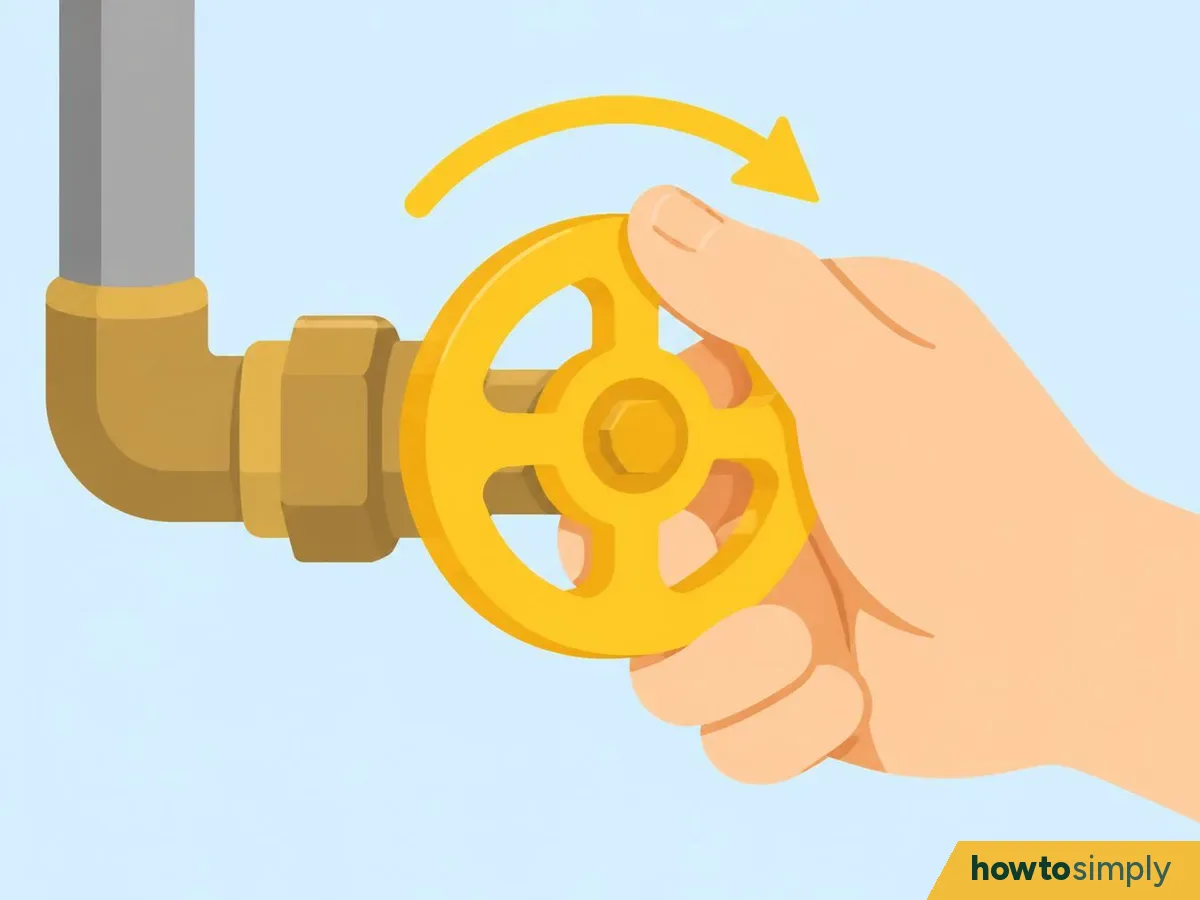
Illustration Turn it clockwise, as you would to close a tap, until you feel resistance (Barratt Homes). Thames Water says it may take a few turns before the water stops, and not to force it once it won't go any further.
Or turn a lever across the pipe
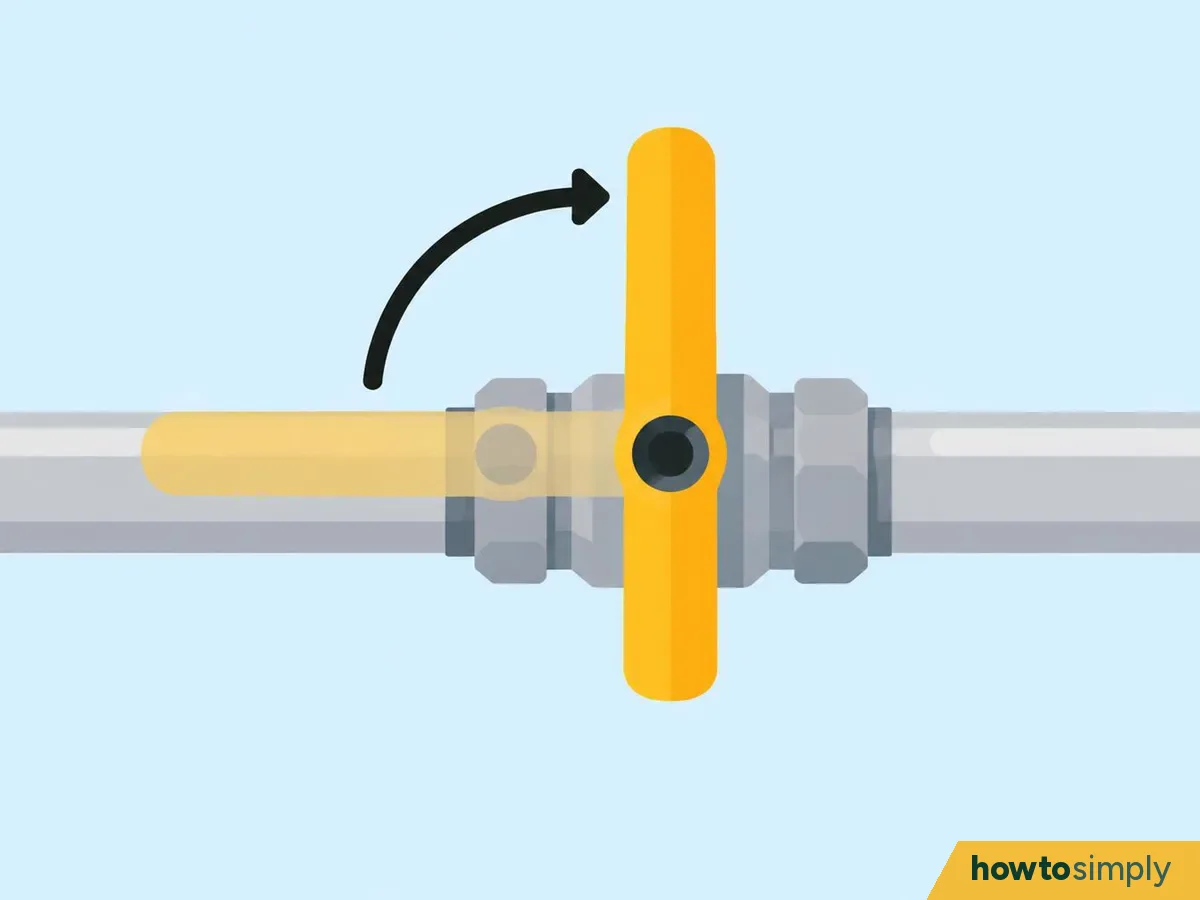
Illustration: along the pipe is open, across is closed Barratt Homes says an appliance valve, like the one for a washing machine, is open when its handle runs in line with the pipe and closed when it sits at 90 degrees across it.
Check it worked
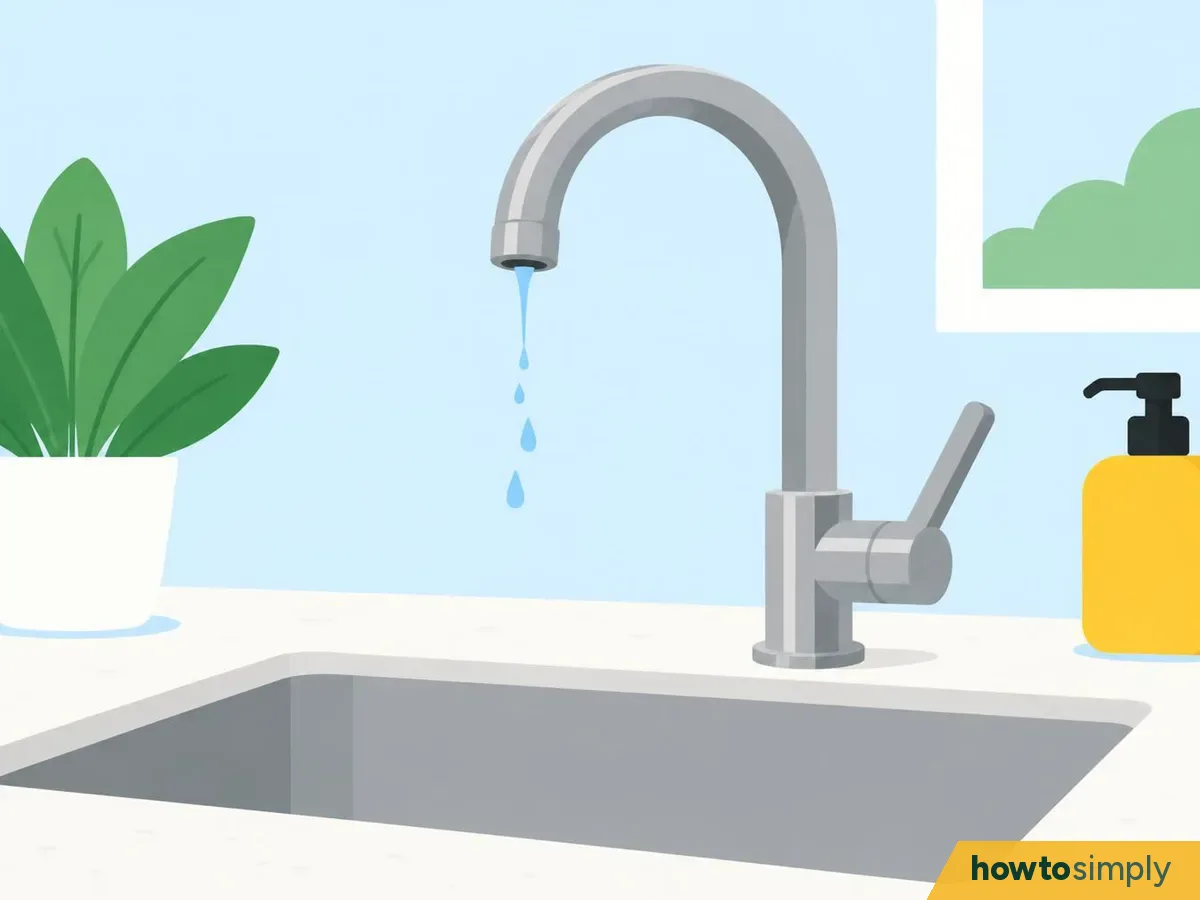
Illustration Turn on a cold tap. If it carries on running at first, that's just water left in the pipes: Thames Water says it can run for a few minutes before it stops.
Turn it back on slowly
Turn the valve anticlockwise. Thames Water warns there may be a short wait of a few minutes before water flows from the taps again.
How to tell it worked
Check it twice a year
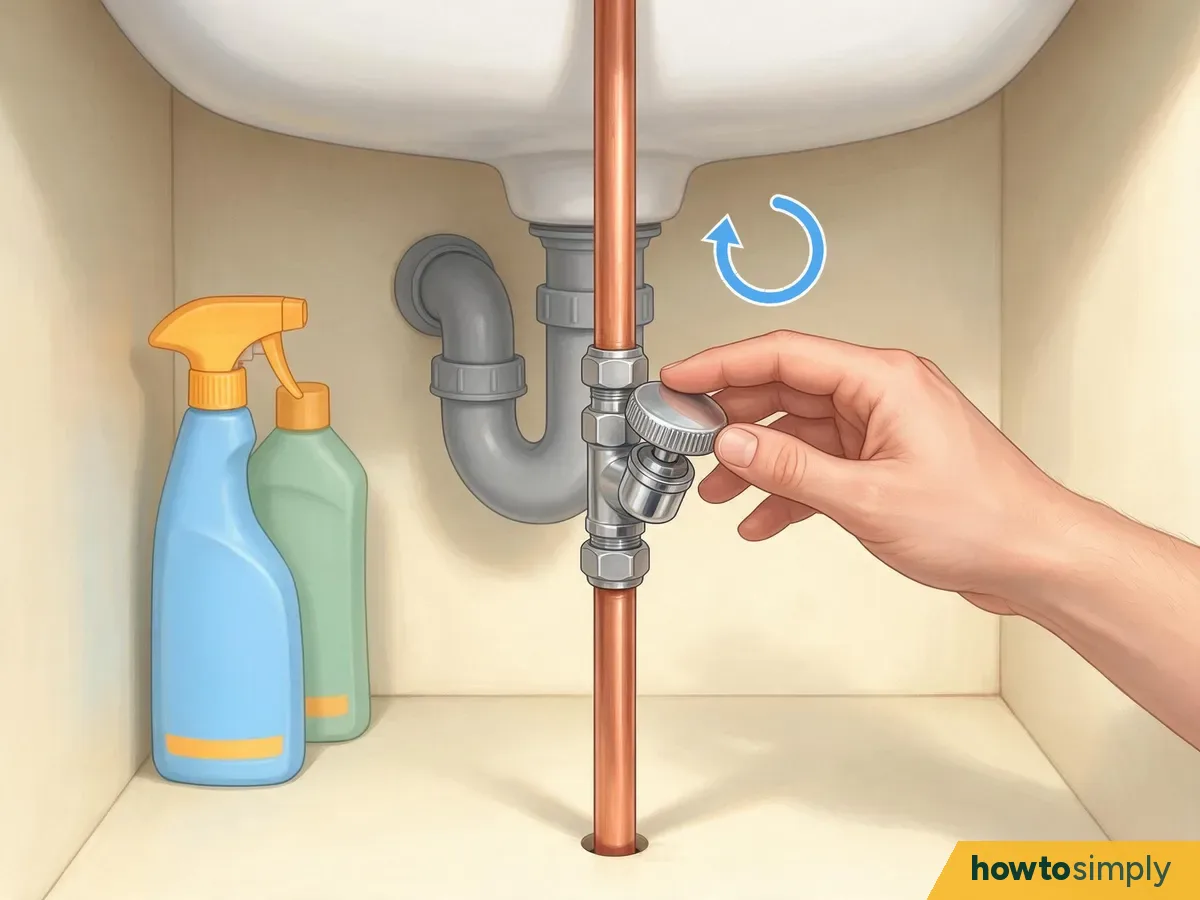
WaterSafe, the UK register of approved plumbers, says to test your stop tap roughly every six months, and the clocks changing in spring and autumn are a handy reminder. Thames Water goes further and suggests setting yourself a reminder once a month to make sure the inside stop valve still turns.
- Gently turn it off and on again (WaterSafe).
- Lever valve: leave it fully open afterwards.
- Screw-down tap: open it fully, then turn it back half a turn so it doesn't seize.
- If it's stiff or won't budge, get advice from a WaterSafe-approved plumber rather than forcing it.
More places to look in a UK home
Not in any of the places in the table? Thames Water says the inside stop valve is normally just after the pipe enters the house. Other spots worth checking are the airing cupboard, the space under the stairs, beneath the floorboards, by the front door, and the garage, bathroom or cellar. A flat may have one shared valve where the supply comes into the building and another where it comes into your flat.
Missing or broken inside valve (UK)
Thames Water says fitting, maintaining, fixing and replacing the inside stop valve is your job. Until it's working again:
- Use the smaller valves for the room or appliance you're working on. Most homes have more than one.
- Thames Water says a permanent isolation valve, such as an Aladdin valve, can be fitted without shutting off the mains supply, and that the work takes around five minutes.
If you can't find it, or it won't work
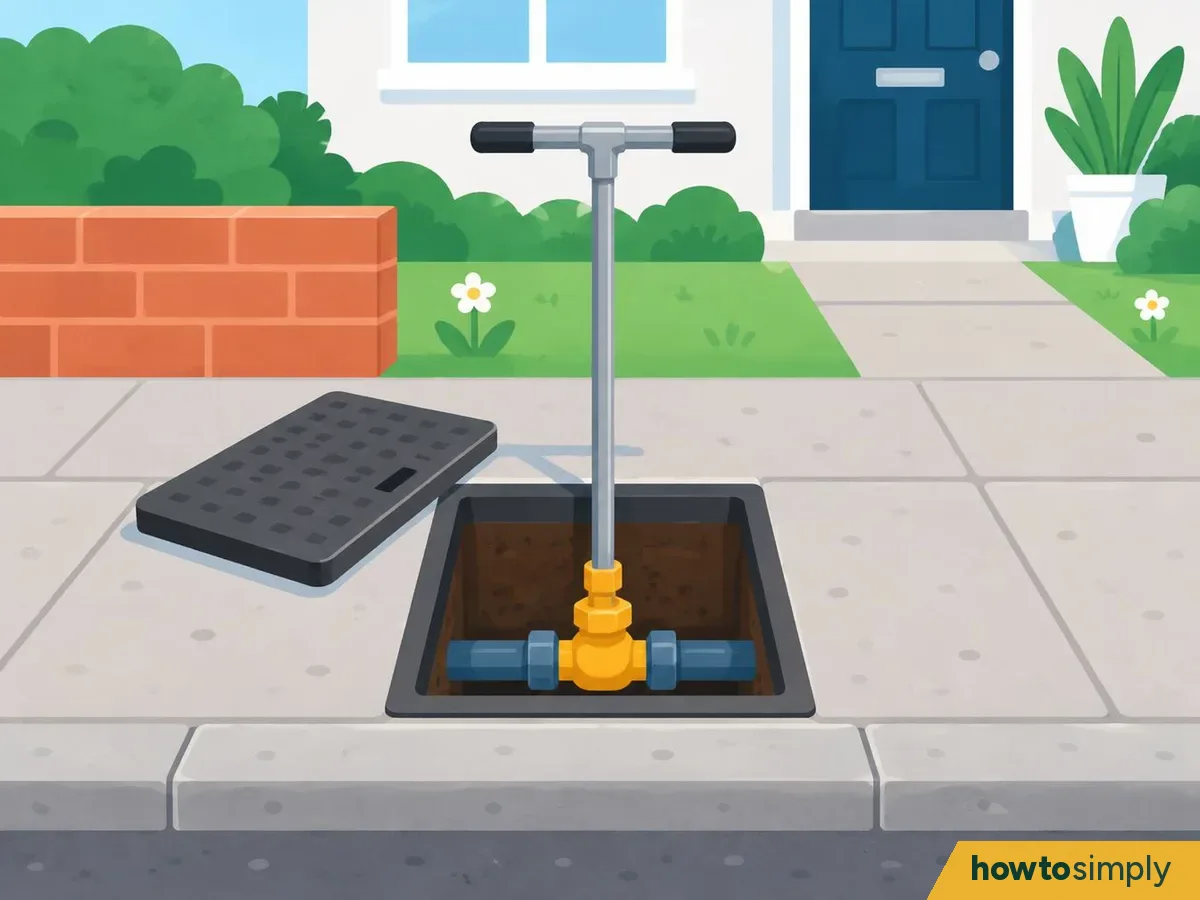
- UK: only use the outside stop valve, under the cover in the path or pavement, in an emergency. You may need a stopcock key (Barratt Homes, Thames Water).
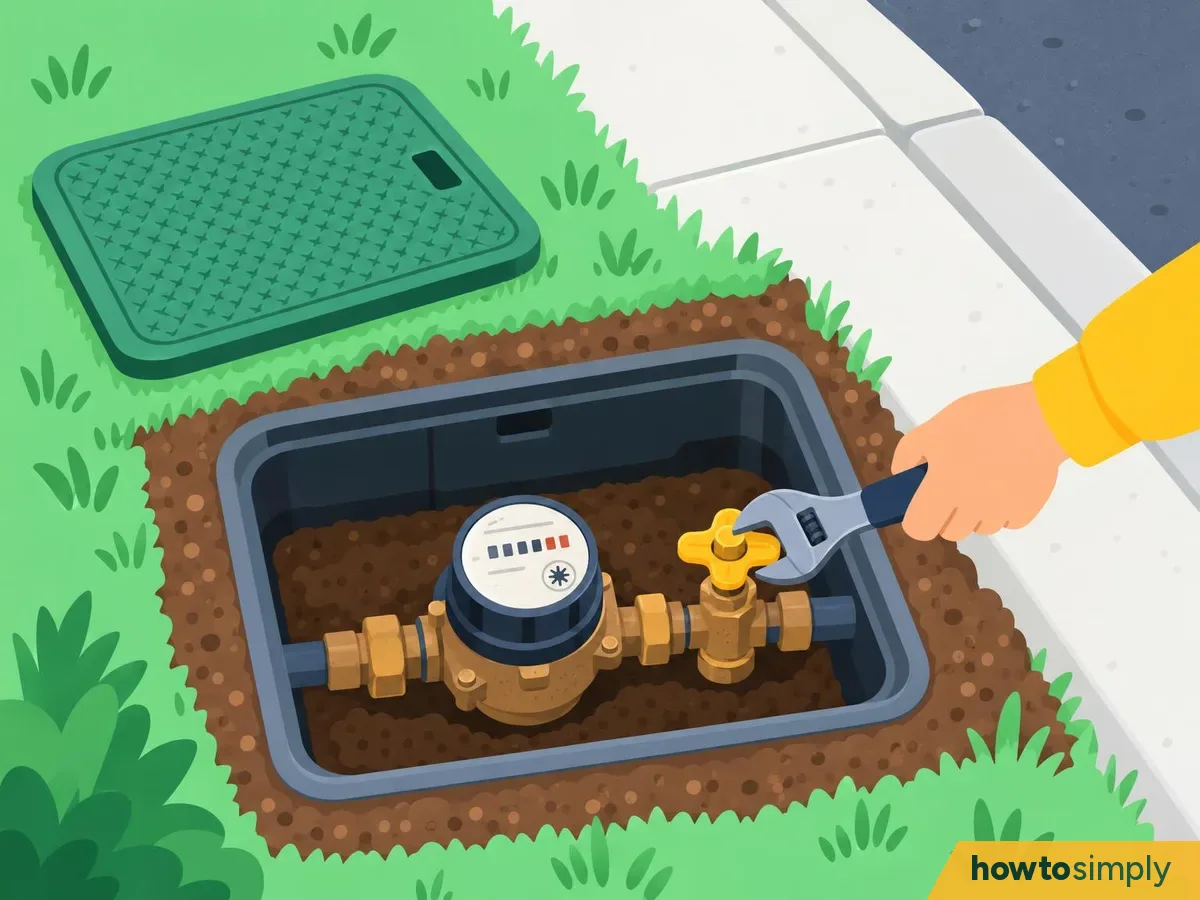
- US: in an emergency, you can close the valve inside the meter box clockwise, using a wrench or a meter key (City of Bellevue).
- German flat: get in touch with your landlord or Hausverwaltung straight away (GIGA).
- The handle won't turn: stop there and call a plumber (Thames Water).
- Water is still running after 10 minutes: you may have shut a valve for a single fitting, or the main valve may not seal any more. Try the outside valve or the meter valve, and call a plumber.
Get help
If water has got to sockets, cables or electrical appliances, turn off the power to the rooms affected (GIGA).
Where the main valve usually is, by home
| Home | Inside | Outside or building valve |
|---|---|---|
| UK house | Under the kitchen sink, in the downstairs toilet or under the utility room sink[1]; also airing cupboard, under the stairs or floorboards, by the front door, garage, bathroom or cellar[6] | Under a cover in the path or road, often by the meter; emergencies only[1][2] |
| UK flat | Communal area outside your door, or a cupboard with the other flats' stopcocks[1] | A shared valve where the supply enters the building[6] |
| US house | Basement or garage[3] | By the foundation near the front faucet, or in the meter box[3] |
| German house | Where the pipe enters the building, for example near the water meter[4] | Not covered by the source |
| German flat | Cold and hot valves beside the flat's water meters[4] | Building valve in the basement, usually out of tenants' reach[4] |
Graphic by howtosimply, from the sources below.
What the sources agree on
Where the sources differ, or nothing is confirmed
- How often to check: WaterSafe says about every six months, Thames Water says once a month, and Barratt Homes just says regularly.[1][5][6]
- After reopening: WaterSafe says to turn a screw-down stop tap back half a turn to stop it seizing. Barratt Homes, in its outside tap steps, says one full turn back.[1][5]
- Not from a source: the body's '10 minutes' before you suspect the wrong valve. The sources only say water can keep running for a few minutes.
Record history
- Version 4. Sources re-read; record layout added with key facts, a table by country, agree and differ notes, history and more questions.
- Version 3. Rewritten to follow the official sources more closely.
- Version 2. Wording rewritten for plainer reading.
- Version 1. First published, with illustrations, covering the UK, US and Germany.
Questions
Why should I turn the boiler off first?
Barratt Homes says it lowers the chance of the boiler trying to run without enough water[1].
Can I just turn off the water to one room?
Often, yes. Thames Water says most homes have several stop valves, so you can shut off the room or area you're working on and keep water elsewhere[6].
What if my US home has no main shut-off valve?
The City of Bellevue says to have one installed or repaired. Until then, in an emergency you can close the valve in the meter box clockwise with a wrench or meter key[3].
Water is coming through my ceiling from the flat above in Germany. What can I do?
If you can't reach your neighbour, tell your landlord or Hausverwaltung straight away, because tenants usually can't get to the building's main valve[4].
How long does the water take to stop?
A few minutes. Thames Water says water left in the pipes can keep running from your taps for a while after the valve is closed.
Will turning it off cut my neighbours' water too?
Yes, if you share a supply with neighbours. In some older UK homes one outside valve feeds several houses, so Thames Water says to tell your neighbours first.
Where is the stopcock in a UK flat?
Barratt Homes says it may be in the communal area outside your front door, or in a cupboard with the stopcocks for the other flats.
Can I use the small valves under a sink or by the washing machine instead?
They shut off only that one tap, toilet or appliance. Barratt Homes says an appliance valve is closed when its handle sits at 90 degrees to the pipe, and tap and toilet valves need a screwdriver.
Sources
- Barratt Homes: How to isolate your water supply. Read 17 November 2026.
- Thames Water: How to find and use your outside stop valve. Read 17 November 2026.
- City of Bellevue Utilities: Prevent frozen pipes and if one breaks. Read 17 November 2026.
- GIGA: Wasserrohrbruch, das solltet ihr sofort tun. Read 17 November 2026.
- WaterSafe: Check your stop tap as clocks fall back. Read 17 November 2026.
- Thames Water: Find and use your inside stop valve. Read 17 November 2026.
Sources and method
- Researched by
- Abu Bakar Saadat
- Tested by our team
- No. We have no record of anyone on our team trying these steps, so treat them as researched instructions from the sources below.
- Pictures
- 11 illustrations drawn for this article, each marked Illustration (drawings, not photos).
- Sources
- 6 named sources, linked below.
- What this page adds
- A table of where the main valve usually is in UK, US and German houses and flats, with drawings of each spot and of wheel and lever valves.
- What we checked
- On 17 November 2026 we re-read the Barratt Homes, Thames Water (inside and outside valve), City of Bellevue, GIGA and WaterSafe pages and checked the valve locations, turning directions, warnings, check intervals and emergency options against them.
What to do next
Do a home safety check Step 3 of 6
- How to use a fire blanket, and when fire services say get out insteadKnow how the fire blanket works before a pan catches fire.
- How to use a fire extinguisher, and pick the right oneLearn when an extinguisher is safe to use, and when to just get out.
- How to make a home emergency kit: what the UK, German and US checklists sayPut the essentials in one place.
Remind me
Test your stop tap every 6 months (WaterSafe). Add a repeating reminder to your own calendar. It links back to this page.
Nothing is sent to us. The reminder lives only in your calendar.
Did this solve the problem?
Where did you get stuck?
What did you think?
Reaction counts are loading.