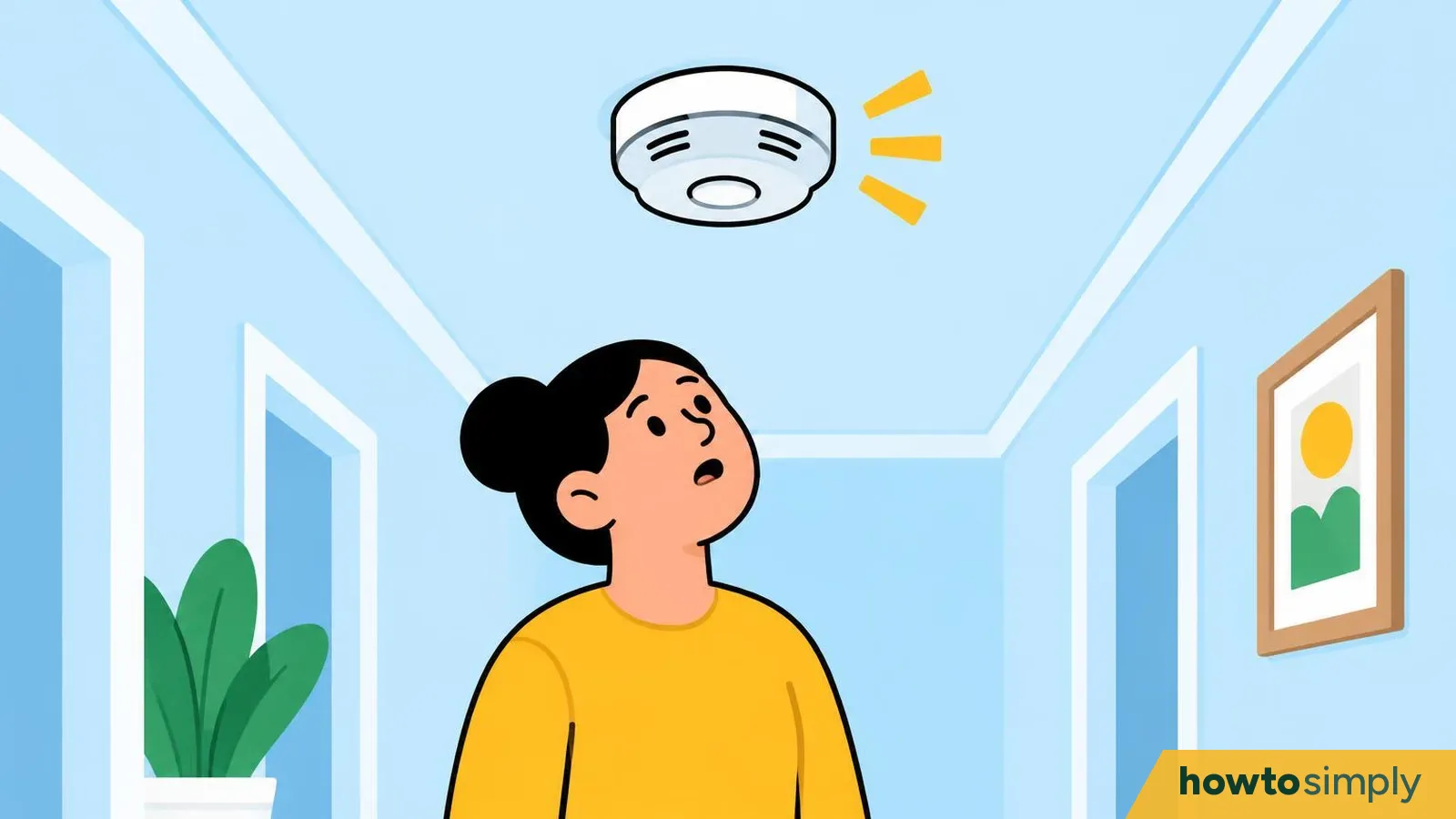
What to do when a carbon monoxide alarm beeps
Four loud beeps, a pause, then four more is the carbon monoxide warning: get everyone outside, then call for help from there. A single chirp about once a minute usually asks for new batteries, and a chirp that carries on after new batteries means the alarm has worn out and needs replacing.
Researched by Abu Bakar SaadatPublished 29 October 2026Last changed 17 November 2026Verified 17 November 2026Version 6See all changes
On this page 15 sections
Information, not professional advice.
If the alarm is giving loud, repeating beeps, get everyone outside first and read the rest from there. If it's a lone chirp, you can breathe a little easier. That usually means the alarm is asking for some attention, and the table below tells you which sound you have.
You can't see, smell or taste carbon monoxide (CO), and it can poison you before you notice (First Alert, CPSC). The reason the alarm uses different sounds for "danger" and "I need attention" is that you can't rely on your own senses here. This guide shows you how to tell them apart, so the next beep doesn't leave you guessing.
Which sound is yours?
Loud, repeating beeps
Treat it as carbon monoxide. Go to If the alarm is sounding.
A chirp or a few quick beeps every 30-60 seconds
The alarm needs attention. Go to Find out why it's chirping.
If the alarm is sounding
Treat it as real and don't look for the cause.
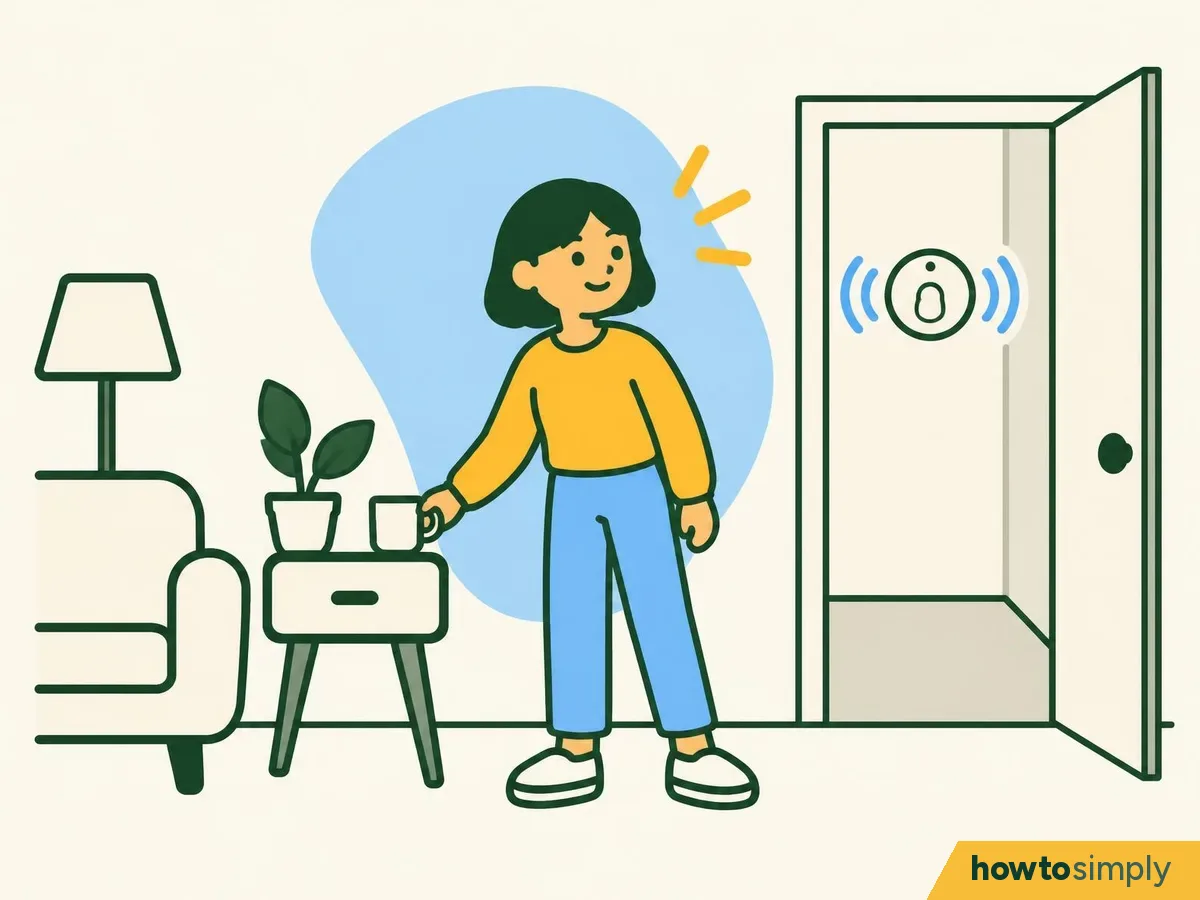
Illustration CPSC says never to ignore a CO alarm that is sounding, and not to try to find the source. Staying inside could make you pass out and could kill you (CPSC).
Don't assume it's a false alarm because nobody feels ill. With high levels of CO, people can quickly become confused and lose muscle control without having milder symptoms first (CPSC).
Careful: only do this if you can. Getting out comes first.
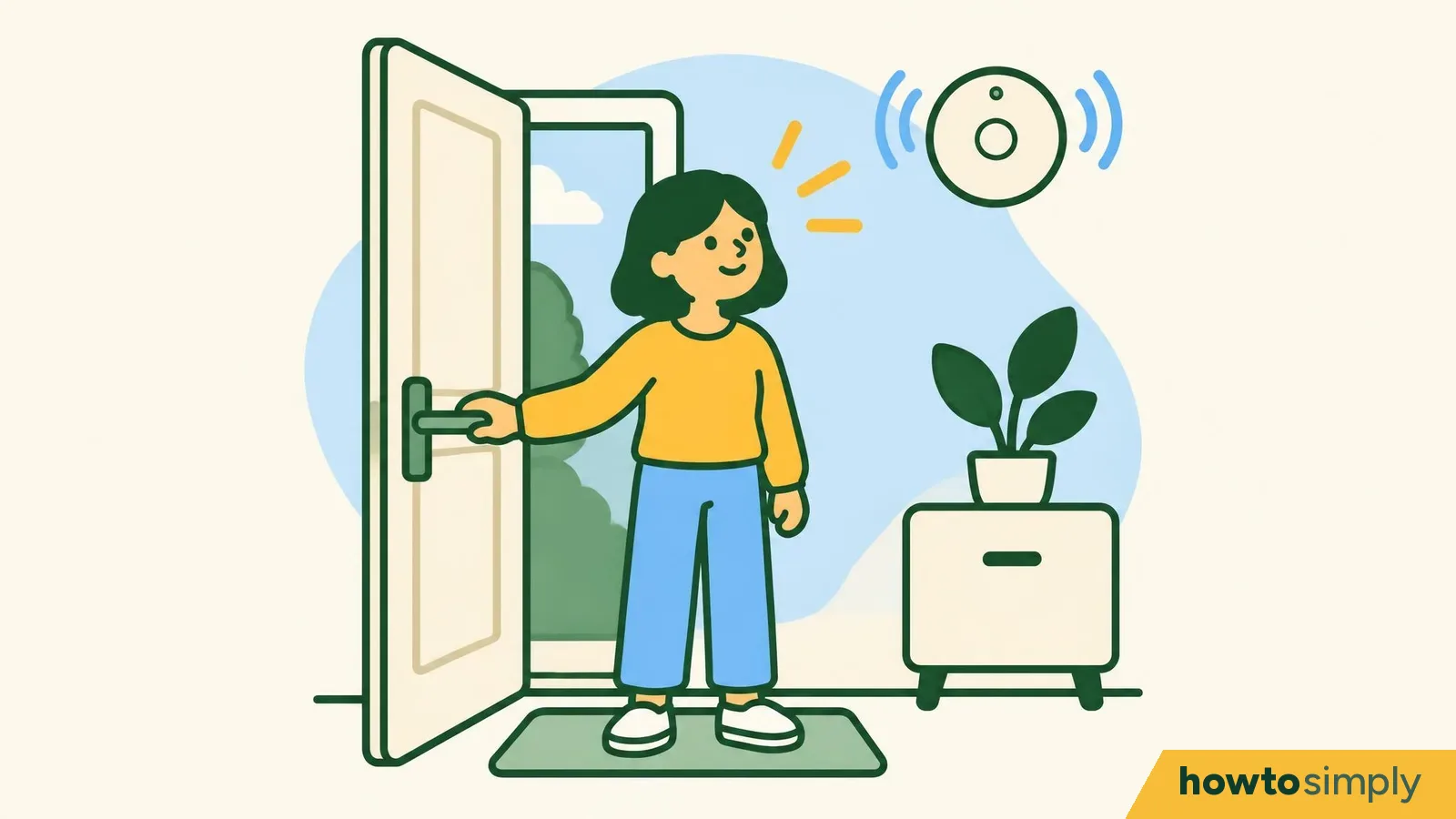
On your way out, switch off a fuel-burning appliance and open a door or window.
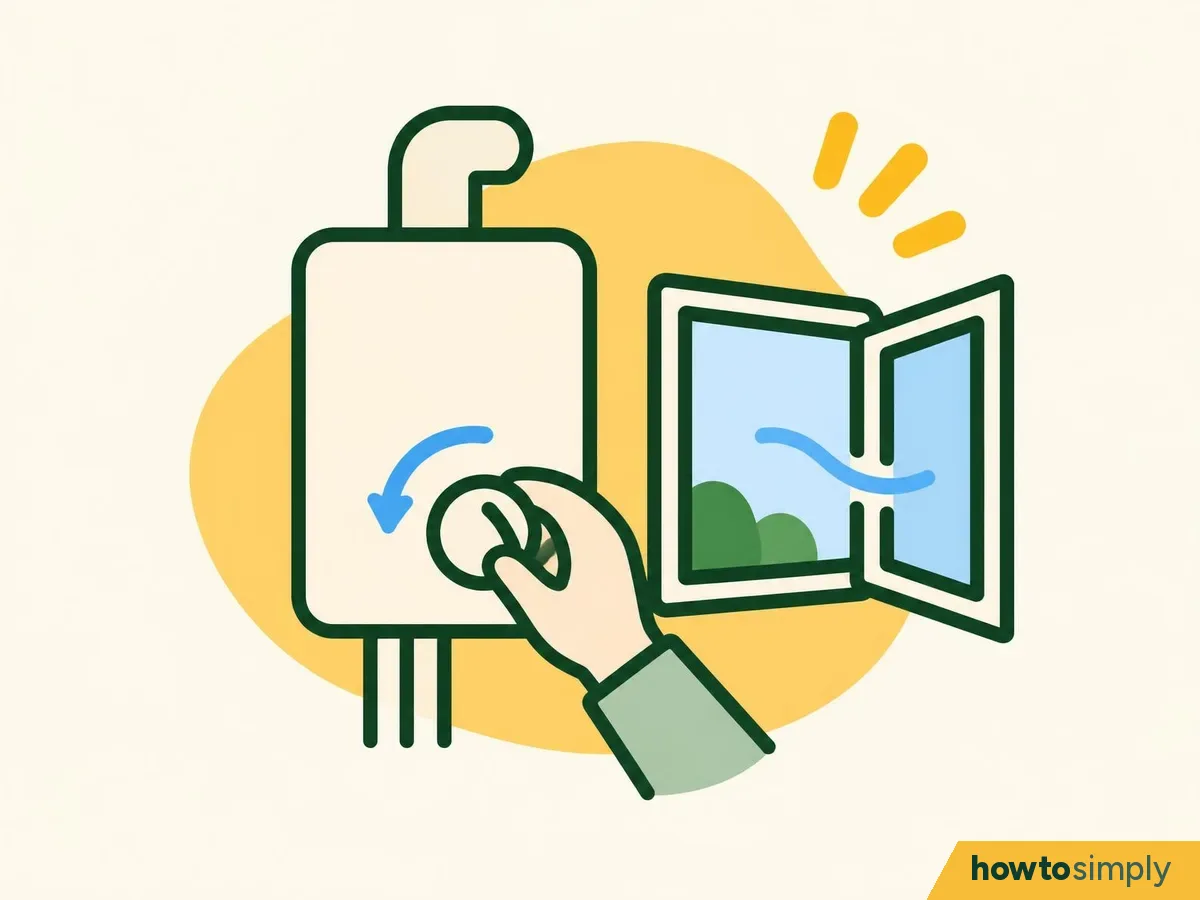
Illustration If you can, the NHS says to turn off whichever appliance you think is to blame, like the boiler, the cooker or a heater. FireAngel adds opening doors and windows as you leave.
If you have gas appliances and smell gas, don't switch lights or other electrics on or off, and don't strike a match (Rescue 1122).
Get everyone out, then count heads.
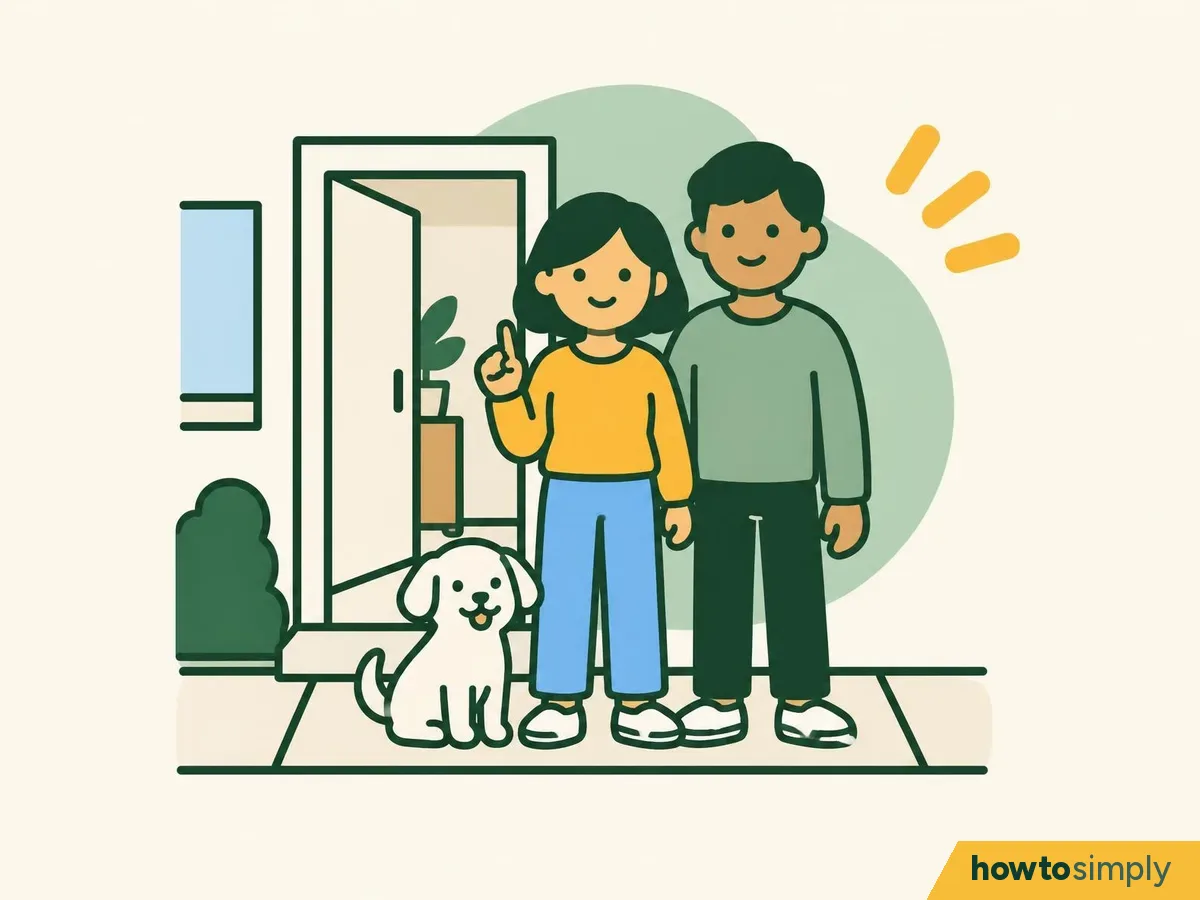
Illustration Move to fresh air outside and make sure everyone in the home is with you (CPSC). Help children, older people and anyone else who needs it.
Don't put yourself in danger to rescue someone. Tell the emergency services where they are (VdF NRW).
You should see: everyone who was inside standing with you in the open air.
Call for help from outside.
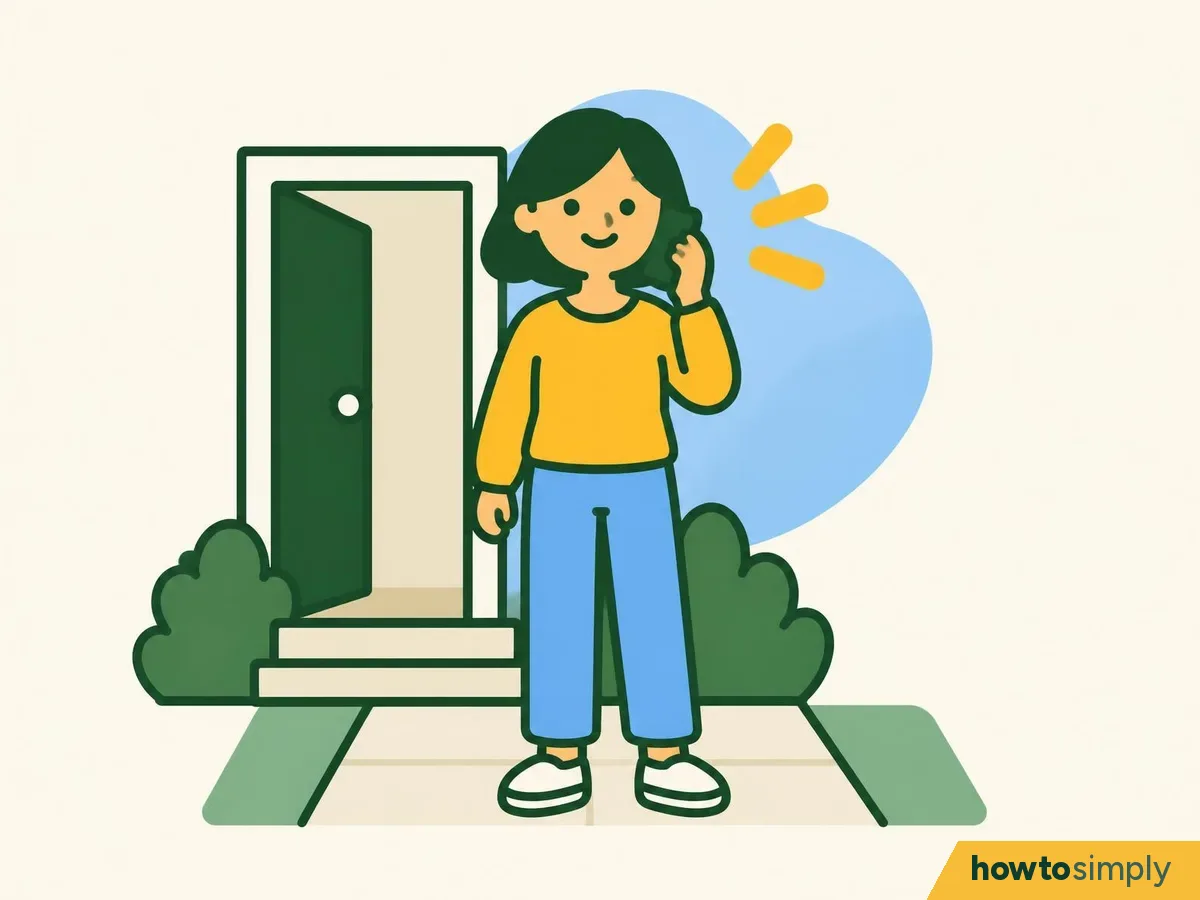
Illustration Who to call depends on your country:
- UK: the National Gas Helpline on 0800 111 999 if a gas appliance may be the cause, and 999 if anyone has trouble breathing, sudden confusion or passes out (NHS).
- Germany: 112. Say that you suspect carbon monoxide and describe any symptoms (VdF NRW).
- US: 911 or the fire department (CPSC).
- Punjab, Pakistan: Rescue 1122 (Rescue 1122).
Watch for symptoms and get medical advice.
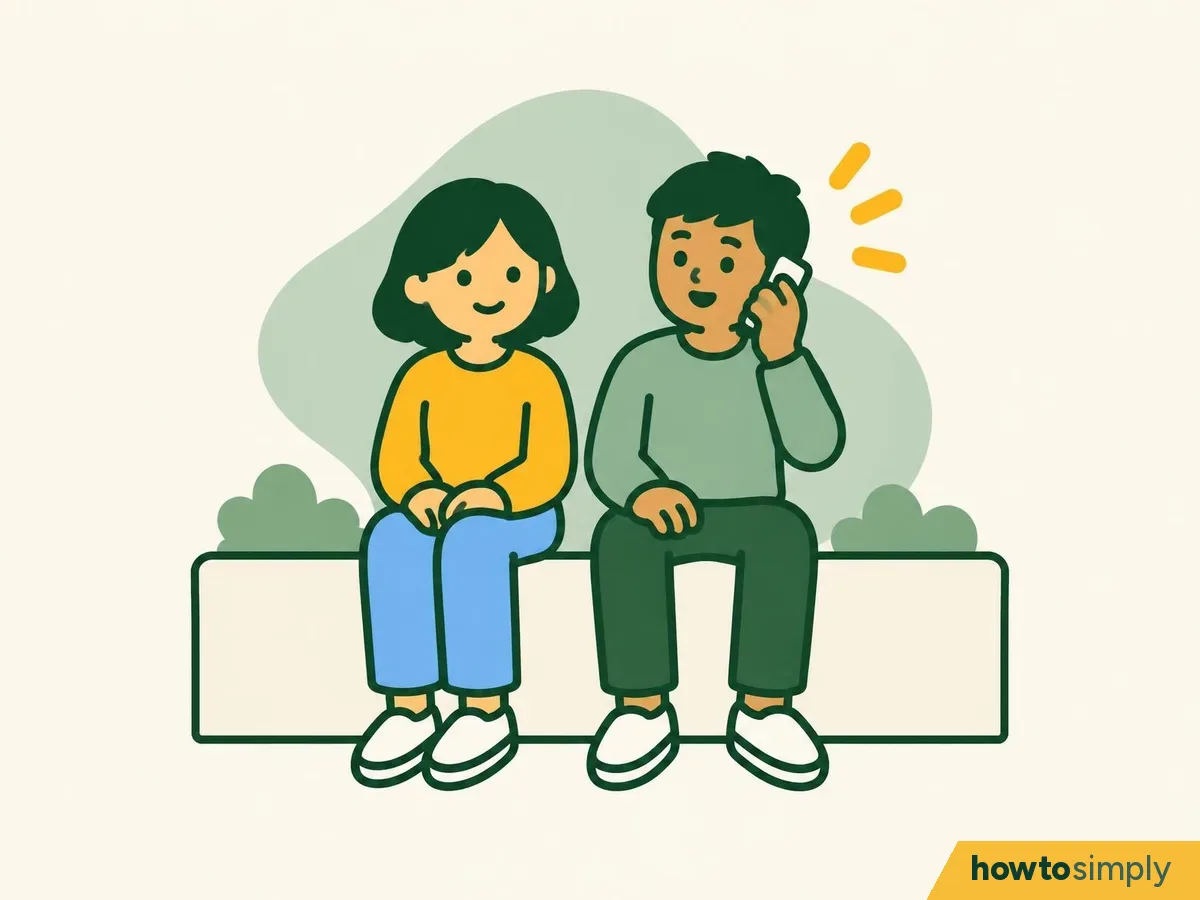
Illustration The NHS lists headache, dizziness, feeling or being sick, weakness, tiredness and confusion, chest and muscle pain, and shortness of breath. Symptoms may get better once you're out in fresh air, so feeling better doesn't mean you're fine.
In the UK, call 111 for urgent advice, or 999 for severe symptoms. Don't drive yourself to A&E (NHS). In Germany, call 112 (VdF NRW).
Stay out until you're told it's safe, then get the appliance checked.
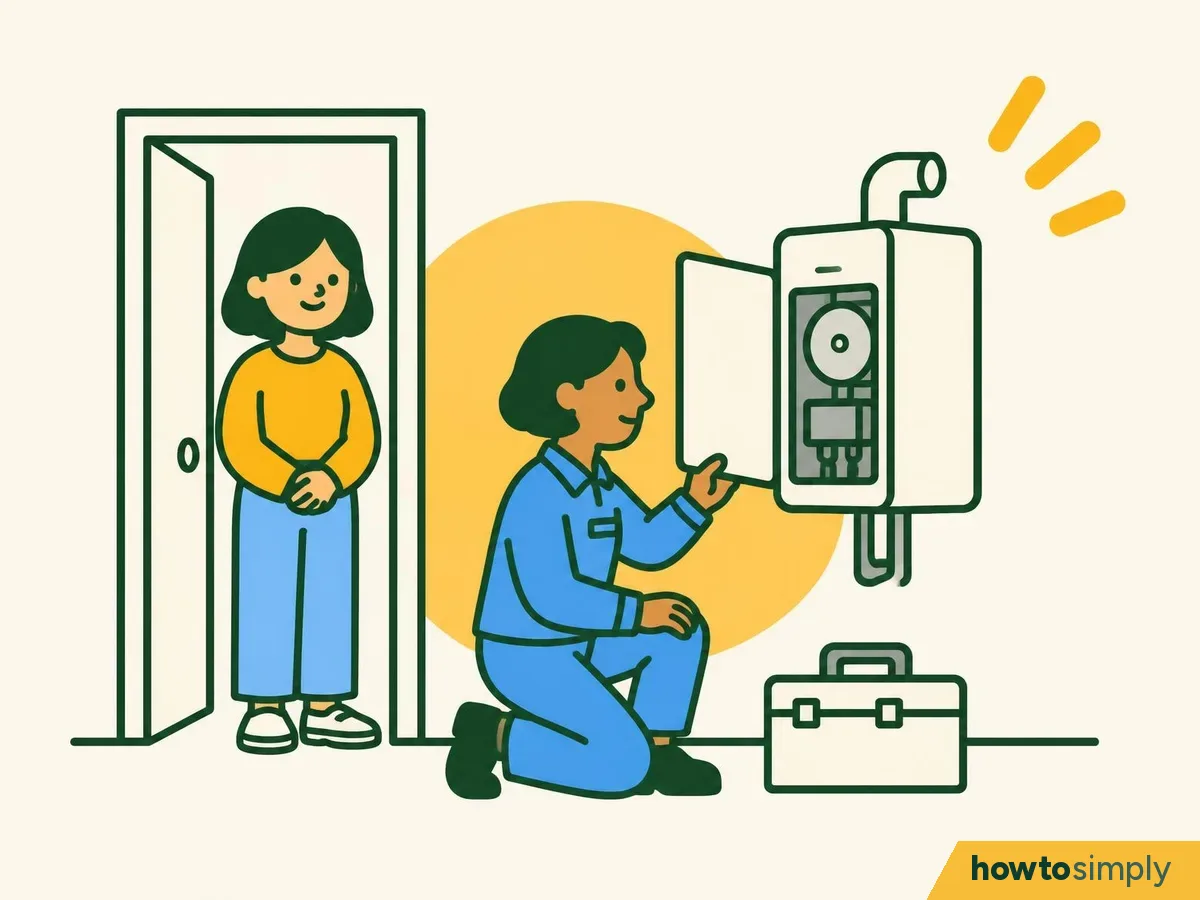
Illustration Don't go back in until the emergency services say it's safe (CPSC). Don't use the appliance again until a qualified engineer has checked it.
If the alarm goes off again within 24 hours of going back in, repeat these steps and have a qualified technician inspect all your fuel-burning equipment (CPSC).
Find out why it's chirping
Count the beeps, time the gap and watch the light.
Illustration 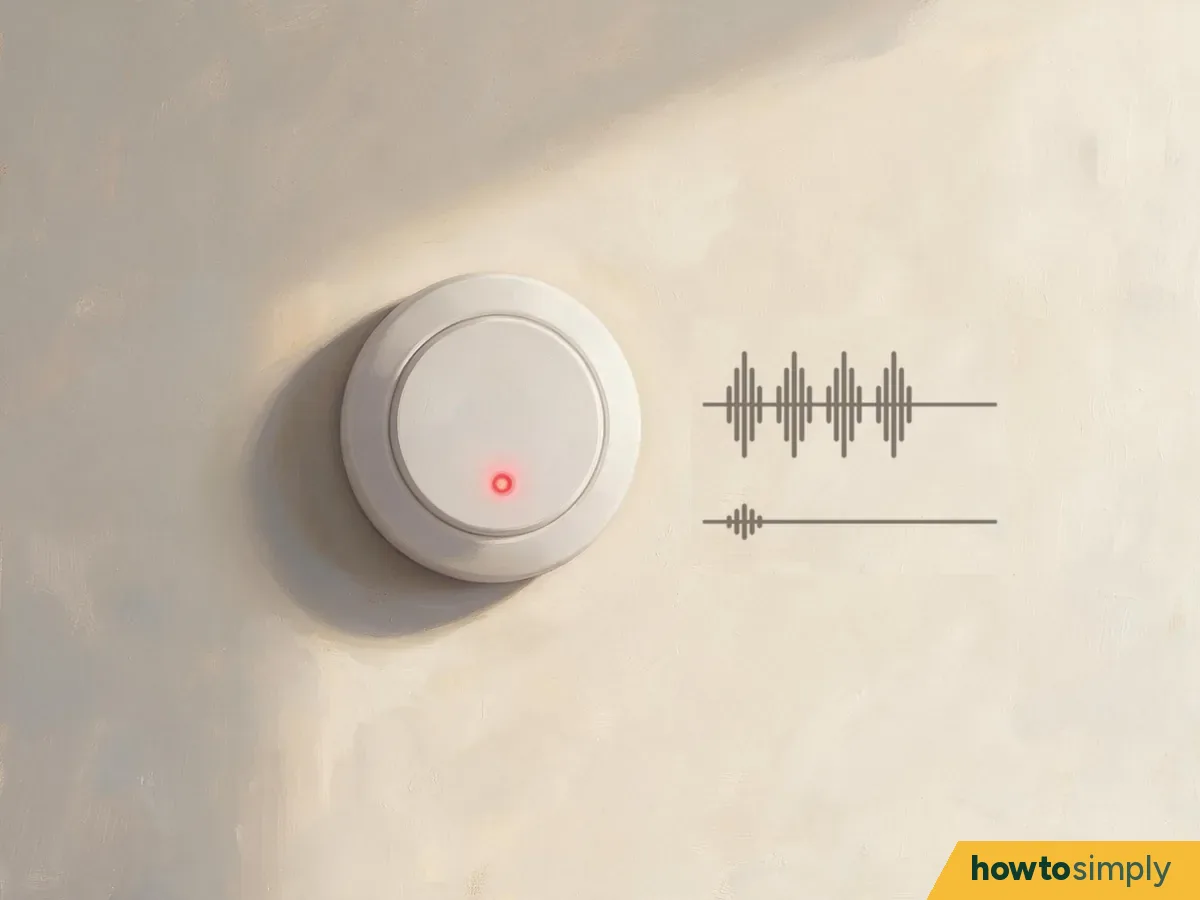
Illustration: four beeps in a row usually means carbon monoxide; a single chirp every 30 or 60 seconds usually means the battery is low Four beeps and then a pause means carbon monoxide has been detected (First Alert, Kidde). A single chirp about once a minute usually means the battery is low (FireAngel, First Alert).
Count two or three rounds, and time the gap with your phone's clock. Take your time over this, because getting the pattern right is what tells you which fix you need.
You should see: a pattern that repeats, such as one chirp a minute, or 3 quick beeps a minute.
Find the replace-by date on the back.
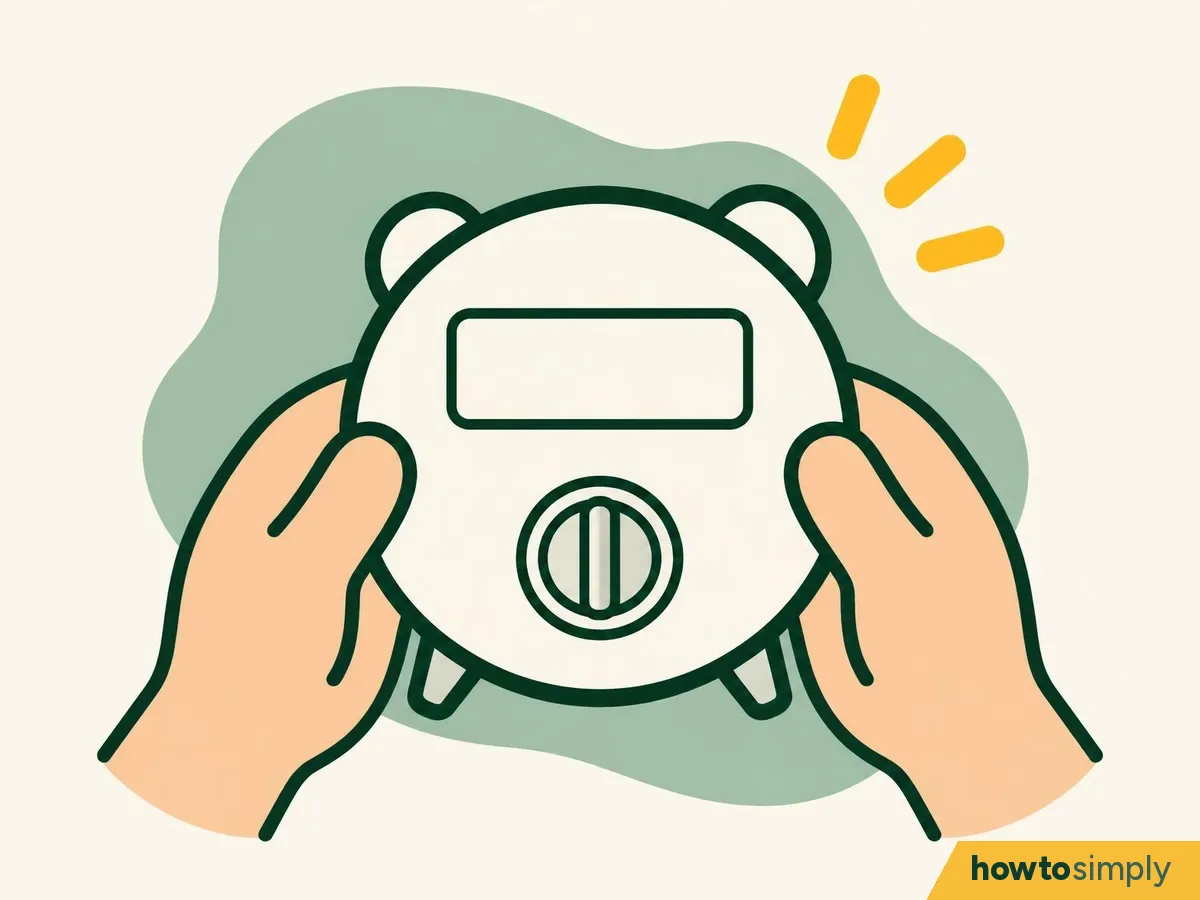
Illustration FireAngel prints a replace-by date on the back of every alarm. Light patterns can vary between models (FireAngel).
If the alarm has a screen, check it too. On Kidde alarms with a display, "Lb" means low battery, and any number shown should be treated as CO: leave and call for help.
Match the pattern to your brand.
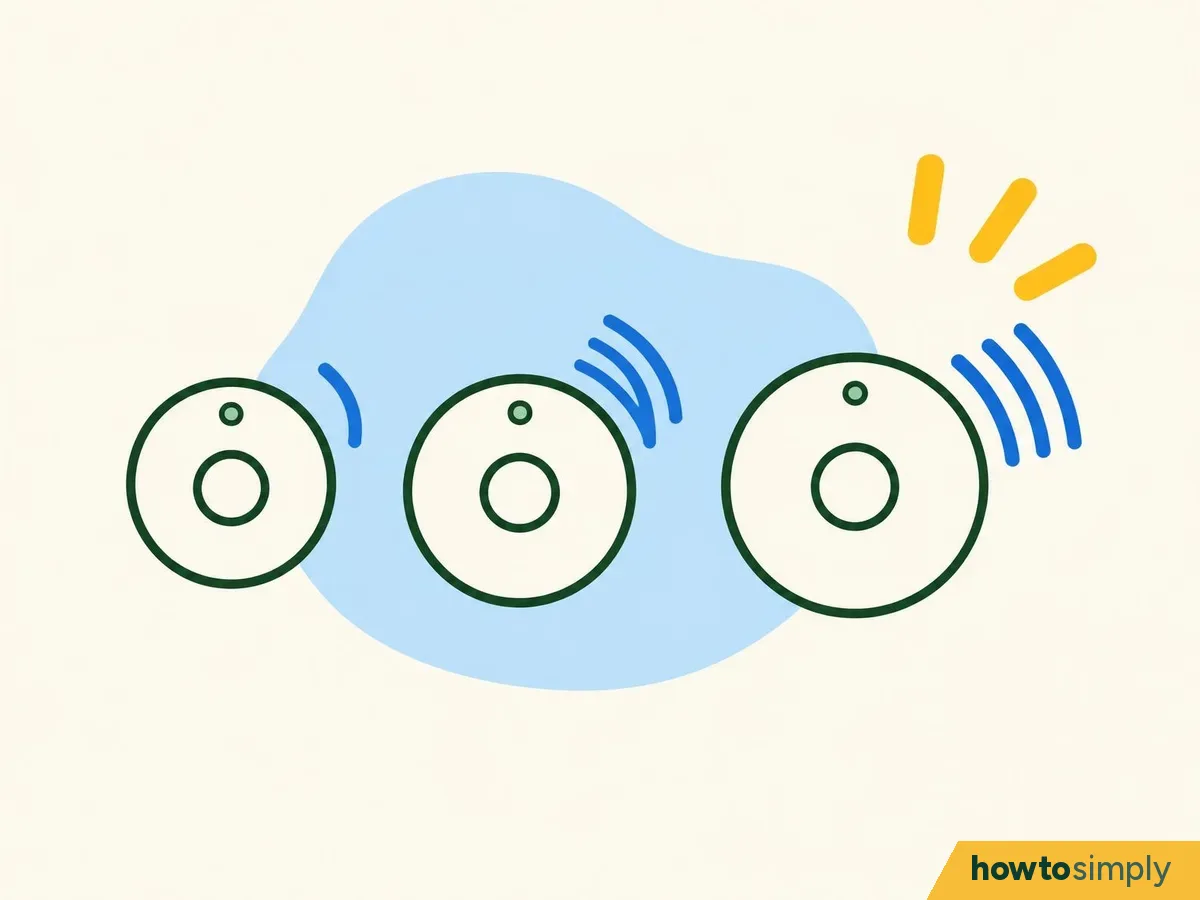
Illustration Brand Carbon monoxide Low battery End of life Fault Kidde 4 short beeps, 5 seconds' silence, repeat 1 chirp every 60 seconds 1 chirp every 30 seconds, from 7 years after first power-up 1 chirp every 30 seconds can also mean a fault; continuous squeal can mean it's unplugged FireAngel 4 loud beeps, repeating 1 beep and 1 flash every 40-60 seconds 3 quick beeps with 3 flashes, repeating every 40-60 seconds 2 quick beeps with 2 flashes, repeating every 40-60 seconds First Alert 4 beeps, then a pause 1 beep every minute 5 beeps every minute See the manual Any brand (NFPA) 4 loud beeps, repeating 1 chirp every 30 or 60 seconds Varies by maker; chirping that continues after a new battery See the manual The patterns come from each maker's support page. The manual for your model has the final say (FireAngel, First Alert).
Low battery: change the batteries, or the whole alarm if they're sealed.
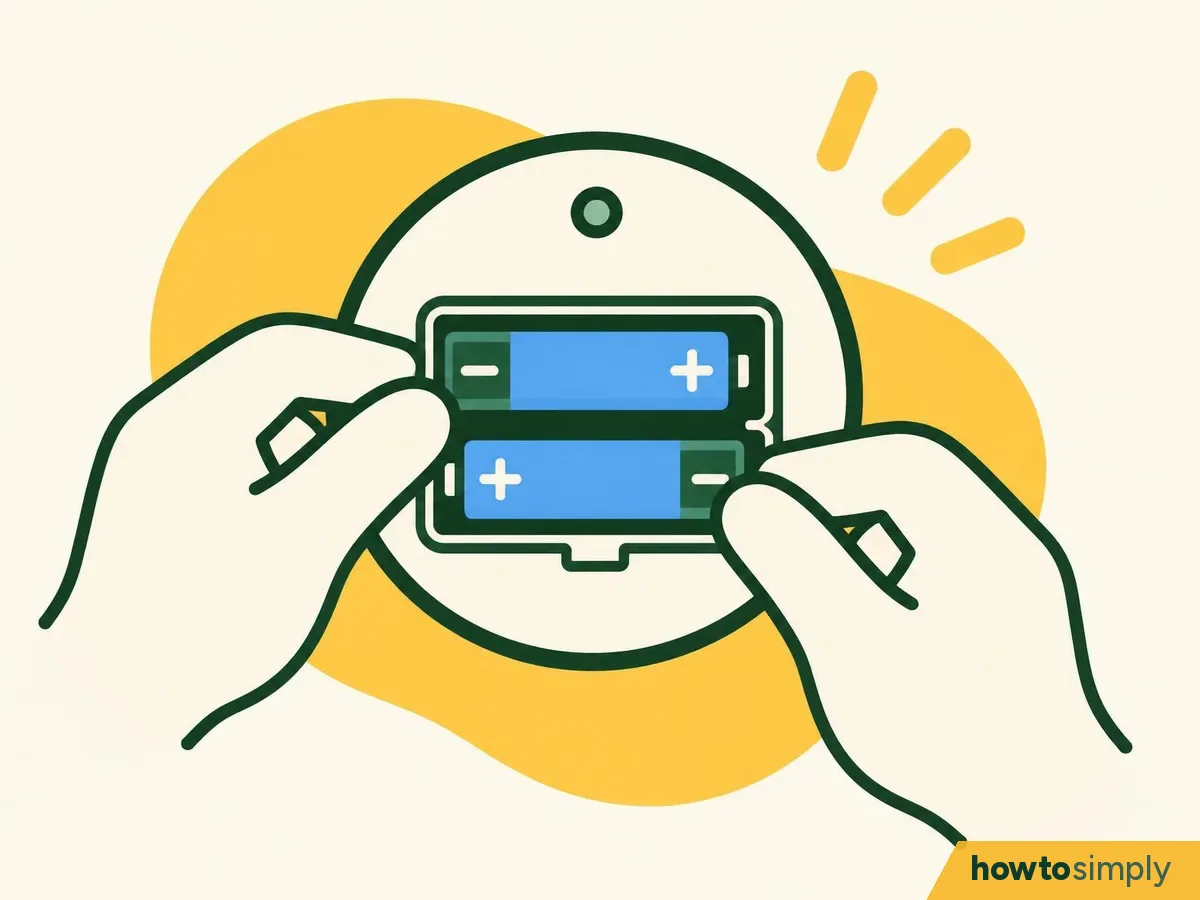
Illustration If the batteries can be changed, fit new ones (Kidde, FireAngel). Plug-in alarms with a backup battery need it changed too (First Alert).
A sealed-for-life alarm can't take new batteries. FireAngel says to replace the whole alarm within 30 days of the low-battery warning. Some FireAngel models let you silence the chirp for 8 hours, up to 10 times, while you get a new one.
You should see: the chirping stops, and the normal light flashes again.
End of life or fault: replace the alarm.

Illustration Its sensor wears out after a set time, and no reset will bring it back (FireAngel). When the end-of-life signal starts, replace the alarm (FireAngel, Kidde). Kidde says once an alarm reaches end of life, it stops being able to sense CO.
If it chirps for a fault, FireAngel says to replace it straight away and contact them if it's still under warranty. Kidde's Product Support line is 1-800-880-6788.
One beep a minute after an alarm? CO may have been detected while you were out.

Illustration Some FireAngel alarms have an alarm memory: a regular beep every 40-60 seconds, with a light that double-flashes or stays on, shows CO was detected recently, possibly while you were away. It keeps a memory of the alarm for 48 hours to 7 days, depending on which model you have (FireAngel).
Treat it as a warning. If an appliance turns out to be the source, don't use it until it has been properly serviced (CPSC). Keep the alarm's manual so you know what your model's memory signal looks like.
Keep your alarm working and in the right place
Test it regularly with the test button.
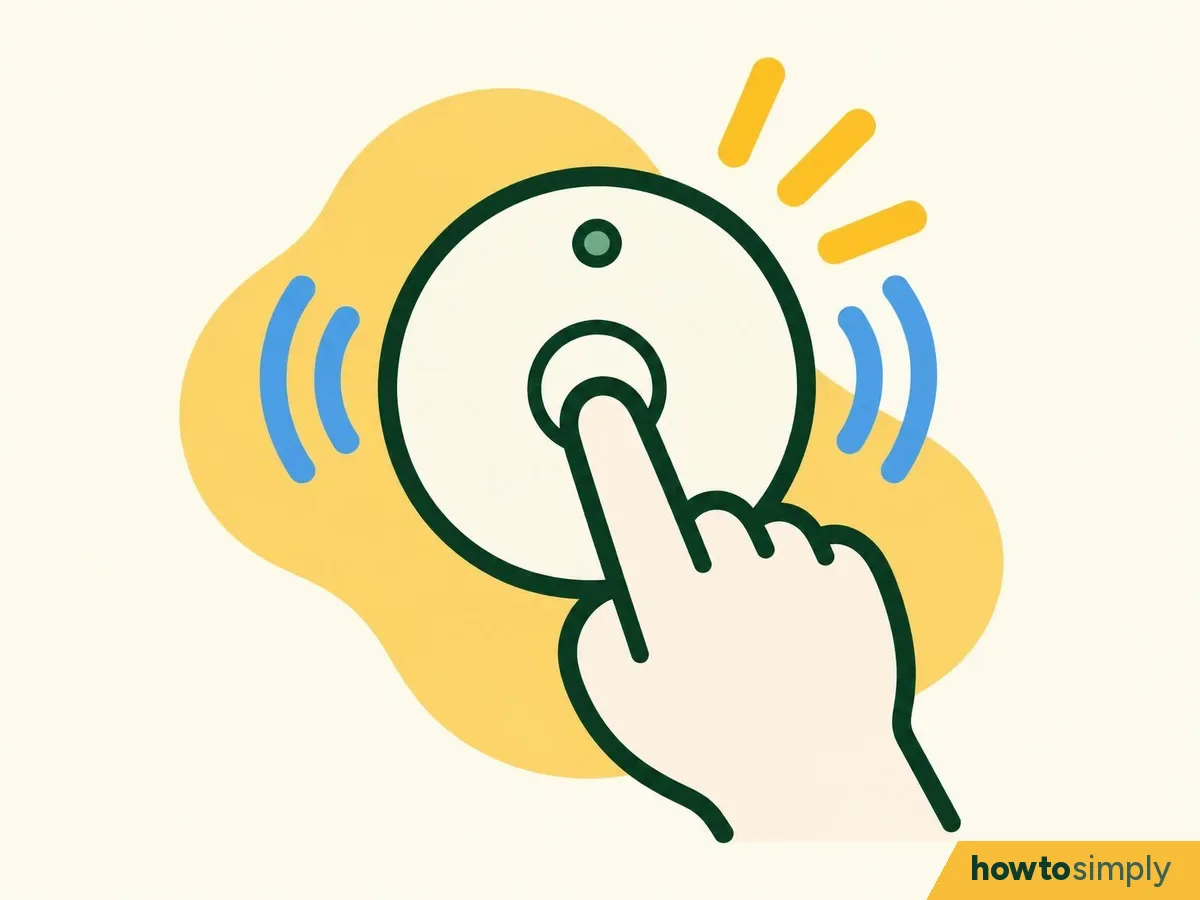
Illustration FireAngel says if an alarm is out of warranty and stays silent when you press test, you may need a new one. The button only checks the electronics, not whether the sensor still works (CPSC), so still replace it by its date.
Brand-new sealed alarm stays silent? Don't worry straight away. Check you removed the isolation pin before testing (FireAngel).
You should see: the alarm sounds while you press the button, then goes quiet.
Put alarms near where people sleep, and on every level.
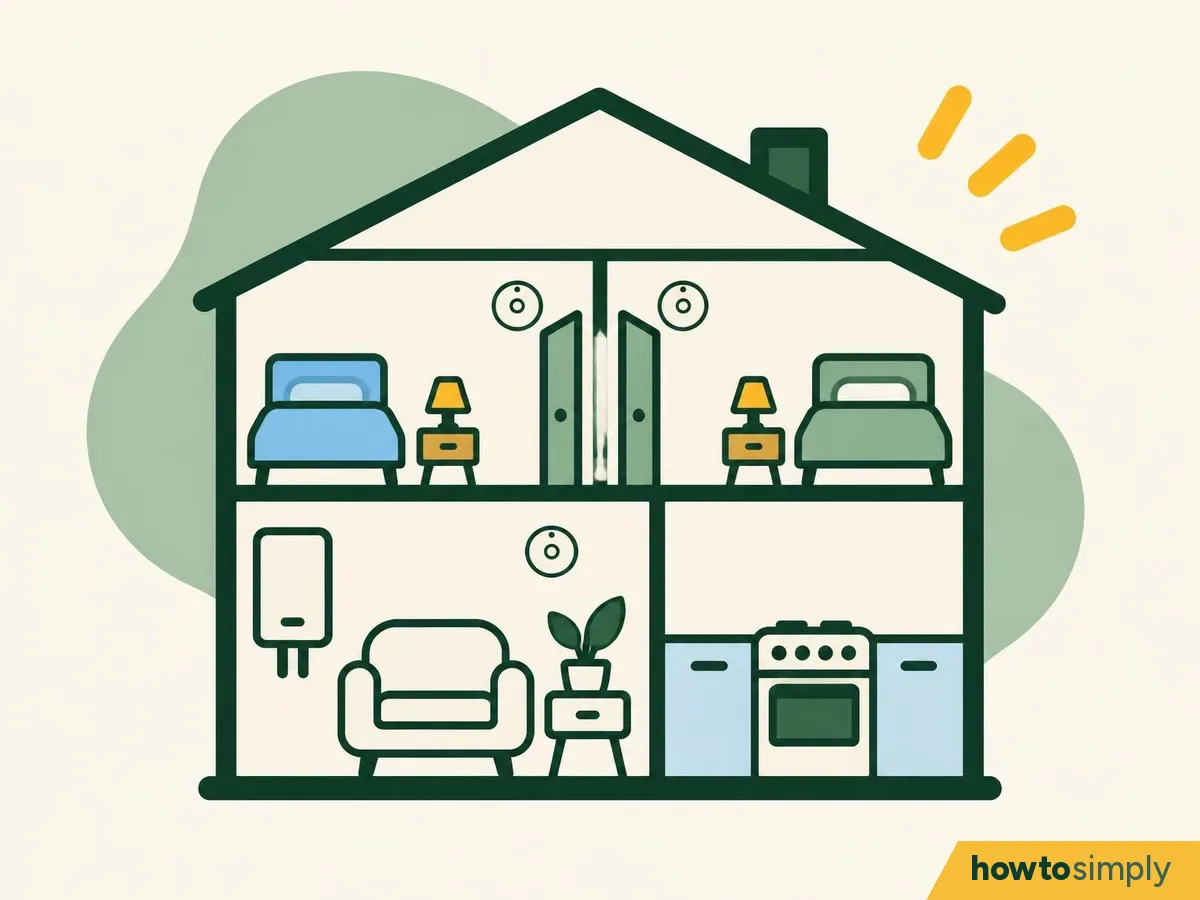
Illustration CPSC says to fit CO alarms outside bedrooms and on each floor, ideally linked together so that one going off sets them all off. If you only have one, VdF NRW says to put it in or just outside the bedroom, 1.5 to 1.85 m above the floor.
Keep alarms out of kitchens and away from spots right above fuel-burning appliances, heating vents, or curtains and furniture that could cover them (CPSC). Your alarm's manual has the final word on placement (CPSC).
Rules in the UK, Germany, the US and Pakistan
| UK | Germany | US | Pakistan | |
|---|---|---|---|---|
| Emergency | 999; gas: 0800 111 999 (NHS) | – | 911 (CPSC) | Rescue 1122 in Punjab (Rescue 1122) |
| Local rules | – | – | Many states and local areas require CO alarms; check with your local building code official (CPSC) | – |
| Buying an alarm | – | Meets UL 2034 (CPSC) | – | |
| Heaters | Have boilers, stoves and heaters serviced. An alarm doesn't replace using appliances properly and keeping them serviced (CPSC) | Never sleep with a gas heater on; keep a window or vent slightly open (Rescue 1122) | ||
How to tell it's sorted
- If it sounded for CO: everyone got out, the emergency services said it was safe, and the appliance was checked before anyone used it again (CPSC).
- If it chirped: the chirping has stopped after the fix.
- Pressing the test button should make the alarm sound (FireAngel).
- The normal light flashes about once a minute with no sound (FireAngel).
- The replace-by date on the back is still in the future (FireAngel).
If it doesn't work
| What happens | What it means | What to do |
|---|---|---|
| End-of-life chirp | The sensor has reached end of life (Kidde, FireAngel) | Replace the alarm |
| It sounds again within 24 hours of going back in | CO may still be there (CPSC) | Get out again, call for help, and have all fuel-burning appliances inspected (CPSC) |
| A new sealed alarm stays silent on test | The isolation pin may still be in (FireAngel) | Remove the pin and test again; contact the maker if it still doesn't sound |
| "ERR" on a Kidde display | An error code (Kidde) | Look the code up in the manual |
| A continuous squeal from a Kidde plug-in alarm | Unplugged or loose in the socket, or a fault (Kidde) | Call Kidde on 1-800-880-6788 (Kidde) |
| Random chirps with no pattern | Several causes are possible (Kidde) | Check the manual or contact the maker |
Keep spare batteries and a torch in your home emergency kit, because then a chirp at night is a quick fix instead of a hunt in the dark.
Where to fit a CO alarm and how long it lasts, by source
| Source | Where to fit it | Testing and lifespan |
|---|---|---|
| NFPA, US[2] | In every room where someone sleeps, outside each sleeping area, and on every level including the basement | Test at least monthly; replace by the maker's instructions or at the end-of-life signal |
| CPSC, US[3] | On every level and outside sleeping areas; not in kitchens or right above fuel-burning appliances | The test button checks the circuits only; ask the maker for the replacement age |
| First Alert, maker[8] | On every level and in every bedroom | Most last 5 to 7 years; batteries usually every 6 months |
| NHS, UK[4] | One in each room with an appliance that burns gas, oil, coal or wood | Not given |
| England rented homes[9] | Any living room with a fixed combustion appliance, gas cookers excepted | Landlord repairs or replaces a reported faulty alarm |
| VdF NRW, Germany[10] | With one alarm: in or just outside the bedroom, 1.5 to 1.85 m up; not kitchens, damp or very dusty rooms | Sensor lasts up to 7 years; look for DIN EN 50291-1 |
Graphic by howtosimply, from the sources below.
Questions
Can I reset an alarm that has reached end of life?
No. The sensor has a fixed lifespan and can't be reset, so the alarm has to be replaced[6]. Kidde says an alarm in end-of-life mode can no longer detect CO[5].
The alarm went off but I feel fine. Do I still need medical advice?
FireAngel says get medical help straight away, because you may not realise you've been affected and fresh air alone doesn't treat exposure[6]. The NHS says get medical advice and don't go back in until you have[4].
How often do the batteries need changing?
First Alert says generally every 6 months, unless it's a 10-year sealed alarm, which lasts the life of the alarm[8]. VdF NRW says battery life of up to 5 years is standard in Germany, and the battery should be one you can change yourself[10].
Do landlords in England have to fit CO alarms?
Yes, in any room used as living space with a fixed combustion appliance, apart from gas cookers. This covers private and social landlords, who must also repair or replace an alarm a tenant reports as faulty.[9]
Can I switch the alarm off and stay inside?
No. If it is giving the carbon monoxide warning, leave first. CPSC says never to ignore an alarming CO alarm. FireAngel says an alarm that is not silenced keeps sounding until the level falls below 50 ppm.
Will a carbon monoxide alarm warn me about a gas leak?
Carbon monoxide comes from burning fuel, and you can't see, smell or taste it (CPSC, First Alert). Think a gas appliance is giving off carbon monoxide? In the UK the National Gas Helpline is 0800 111 999 (NHS). Elsewhere, move outside to fresh air and call your emergency services (CPSC).
How long does a carbon monoxide alarm last?
It depends on the model. Kidde says its alarms start an end-of-life chirp after 7 years, FireAngel prints a replace-by date on the back, and First Alert says most last 5 to 7 years. Replace it by that date even if it still seems to work (FireAngel).
Can I put a carbon monoxide alarm in the kitchen?
CPSC does not recommend kitchens or spots right above fuel-burning appliances, and VdF NRW says not in kitchens, damp rooms or very dusty rooms. Follow your alarm's manual for the exact spot.
Is a smoke alarm enough?
No. NFPA says CO alarms and smoke alarms can't stand in for each other, and VdF NRW says a CO alarm adds to smoke alarms but doesn't replace them. A combined alarm does both jobs in one unit.
The pictures on this page are illustrations, not photos.
How we know this: sources, checks and every change
Current advice
If it gives four loud beeps and repeats, don't look for the cause: go outside, call for help and stay out until you're told it's safe[1][3]. A single chirp every 30 or 60 seconds usually means low batteries; if it keeps chirping after new ones, replace the alarm[1].
Information, not professional advice.
Latest update
17 November 2026. We re-read the sources. All 11 opened today and still back the beep meanings, the brand table, the emergency steps and the numbers to call. Nothing needed correcting.
What changed in this version
Key facts
- Four loud beeps that keep repeating mean carbon monoxide has been found: go outside, call for help and stay out.[1][8]
- A single chirp every 30 or 60 seconds usually means the batteries are low. First Alert gives one beep a minute, and FireAngel one beep and flash every 40 to 60 seconds.[1][6][8]
- Chirping that carries on after new batteries means the alarm has reached the end of its life. A Kidde alarm starts an end-of-life chirp every 30 seconds seven years after first power-up, and can no longer sense CO.[1][5]
- When it sounds, don't try to find the source. Get to fresh air, count heads and stay out until the emergency services say it's safe. If it sounds again within 24 hours, repeat this and have all fuel-burning equipment inspected.[3]
- The test button only shows the circuits work, not that the sensor is accurate. NFPA says test at least once a month and replace any alarm that fails.[2][3]
- A FireAngel alarm with a sealed-for-life battery that gives the low-battery warning should be replaced as a whole within 30 days.[6]
- In the UK, the National Gas Helpline is 0800 111 999 if you think a gas appliance is leaking carbon monoxide. Call 999 if someone finds it hard to breathe, is suddenly confused or has passed out.[4]
- In England, landlords must fit a CO alarm in any living room with a fixed combustion appliance (gas cookers excepted) and repair or replace one a tenant reports as faulty.[9]
What the sources agree on
- Four loud, repeating beeps mean carbon monoxide.[1][5][6][8]
- Get out first, call for help from outside, and stay out until you're told it's safe.[2][3][6][8]
- The sensor wears out: replace the alarm at its end-of-life signal or replace-by date.[2][5][6][8]
- You can't see or smell carbon monoxide.[2][3][4][10]
- A CO alarm doesn't replace smoke alarms or servicing your appliances.[2][3][10]
Where the sources differ, or nothing is confirmed
- Where to fit alarms: NFPA says inside every sleeping room as well as outside; CPSC says outside sleeping areas; VdF NRW says in or outside the bedroom; the NHS says in each room with a fuel-burning appliance.[2][3][4][10]
- The low-battery chirp: every 30 or 60 seconds (NFPA), every 60 seconds (Kidde), once a minute (First Alert), every 40 to 60 seconds (FireAngel). Check your own model's manual.[1][5][6][8]
- The end-of-life signal: Kidde chirps every 30 seconds, First Alert gives 5 beeps a minute and FireAngel 3 quick beeps with 3 flashes.[5][6][8]
- How long alarms last: Kidde and First Alert point to about 5 to 7 years, VdF NRW says sensors last up to 7 years, and FireAngel prints a replace-by date on each alarm.[5][6][8][10]
Record history
- Version 6. Sources re-read; record layout added with key facts, a table of where to fit alarms and how often to check them, agree and differ notes, history and more questions.
- Version 5. The 13 November rewording was taken back off this page and the checked text returned.
- Version 4. Wording rewritten throughout.
- Version 3. Every line checked against its source; some source names and wording corrected, including the low-battery chirp now given as about once a minute.
- Version 2. Published on the site.
- Version 1. First written, with illustrations.
Sources
- NFPA: Learn the sounds of your smoke and CO alarms (2021, PDF). Read 17 November 2026.
- NFPA: Educational Messages Desk Reference, 2026 edition, chapter 3 (PDF). Read 17 November 2026.
- CPSC: Carbon Monoxide Questions and Answers. Read 17 November 2026.
- NHS: Carbon monoxide poisoning (reviewed 16 December 2025). Read 17 November 2026.
- Kidde: Why is my carbon monoxide alarm beeping or chirping?. Read 17 November 2026.
- FireAngel: Why your CO alarm is beeping (updated 26 October 2026). Read 17 November 2026.
- FireAngel: CO alarm icon guide, FA3322, FA3820, FA3313 (PDF). Read 17 November 2026.
- First Alert: What does the beep mean?. Read 17 November 2026.
- Explanatory Memorandum to the Smoke and Carbon Monoxide Alarm (Amendment) Regulations 2022 (England, PDF). Read 17 November 2026.
- Verband der Feuerwehren in NRW: Fachempfehlung Gefährdung durch Kohlenstoffmonoxid, Fassung Bevölkerung (German, 2 April 2012, PDF). Read 17 November 2026.
- APP: Rescue 1122 issues safety guidelines for gas heater use. Read 17 November 2026.
Sources and method
- Researched by
- Abu Bakar Saadat
- Pictures
- 17 illustrations drawn for this article: drawings, not photos.
- Sources
- Steps checked against the 11 named sources linked below.
- What this page adds
- A brand-by-brand table of beep patterns for carbon monoxide, low battery, end of life and faults, and a table of rules and emergency numbers in the UK, Germany, the US and Pakistan.
- What we checked
- On 17 November 2026 we re-read all 11 sources: NFPA's sounds sheet and desk reference (chapter 3), CPSC's CO questions and answers, the NHS carbon monoxide page, the Kidde, FireAngel and First Alert support pages, FireAngel's icon guide, the England alarm regulations note, VdF NRW's advice paper and the Rescue 1122 report, and checked each beep pattern, step and number against them.
What to do next
Do a home safety check Step 2 of 6
- How to find and turn off your main water valve (UK, US, Germany)Find your stop tap before you ever need it.
- How to use a fire blanket, and when fire services say get out insteadKnow how the fire blanket works before a pan catches fire.
- How to use a fire extinguisher, and pick the right oneLearn when an extinguisher is safe to use, and when to just get out.
Remind me
Test your carbon monoxide alarm every month (NFPA). Add a repeating reminder to your own calendar. It links back to this page.
Nothing is sent to us. The reminder lives only in your calendar.
Did this solve the problem?
Where did you get stuck?
Get new guides by email
Our newest guides, sent to your inbox. Free, and you can unsubscribe in one click.
We'll email you to confirm. How we use your email
Follow howtosimply on Facebook
We share every new article on our Facebook page, so the next fix turns up in your feed.
Follow on FacebookWhat did you think?
Reaction counts are loading.