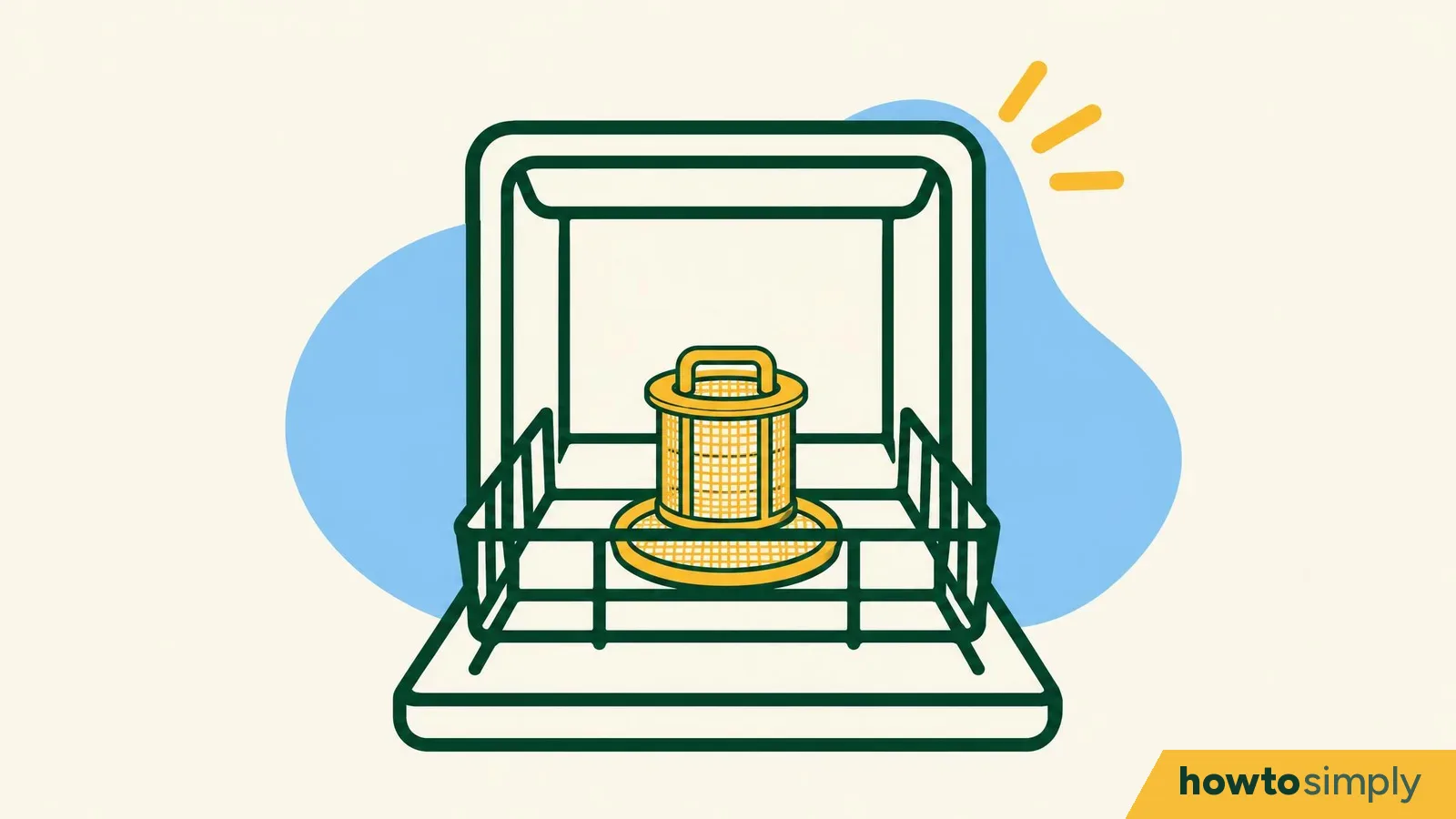
Tape over every drain overnight to find the one the flies come out of. Brush the slime out of that drain and its overflow, flush it with hot water, and keep it clean weekly. Sprays and bleach don't reach the larvae.
Small, fuzzy, moth-like flies; also called moth flies (Texas A&M)
Where they breed
In the slimy film inside drains, overflows and little-used toilets
Find the source
Tape over each drain overnight (Texas A&M, UF/IFAS)
The fix
Scrub the drain with a stiff brush, then flush it
Doesn't help
Bleach, ammonia or fly spray on their own
Time
About 30 minutes, then weekly; flies fade over 1 to 3 weeks
Checked
November 2026
Drain flies don't come from outside: they breed in the slimy film that coats the inside of a drain, so the fix is in the pipe, not in the air. Find the drain they come out of, scrub that film away, and the flies stop. Below, one bathroom goes from flies on the tiles to clean tape a week later, with a drawing for every step.
Never mix drain products. Texas A&M warns that rinsing a drain with bleach after a caustic drain cleaner can produce chlorine gas, which is extremely dangerous to breathe. Use one product at a time, follow its label, wear gloves and keep the room aired.
Are they drain flies?
Fuzzy, grey, moth-like, sitting still on walls by the sink or bath
This guide follows Hana in her rented flat. Every evening, a few small fuzzy grey flies sit on the white tiles beside her bath. Each drawing shows the next moment, from the first fly to clean tape a week later.
Part 1: Find the drain they come from
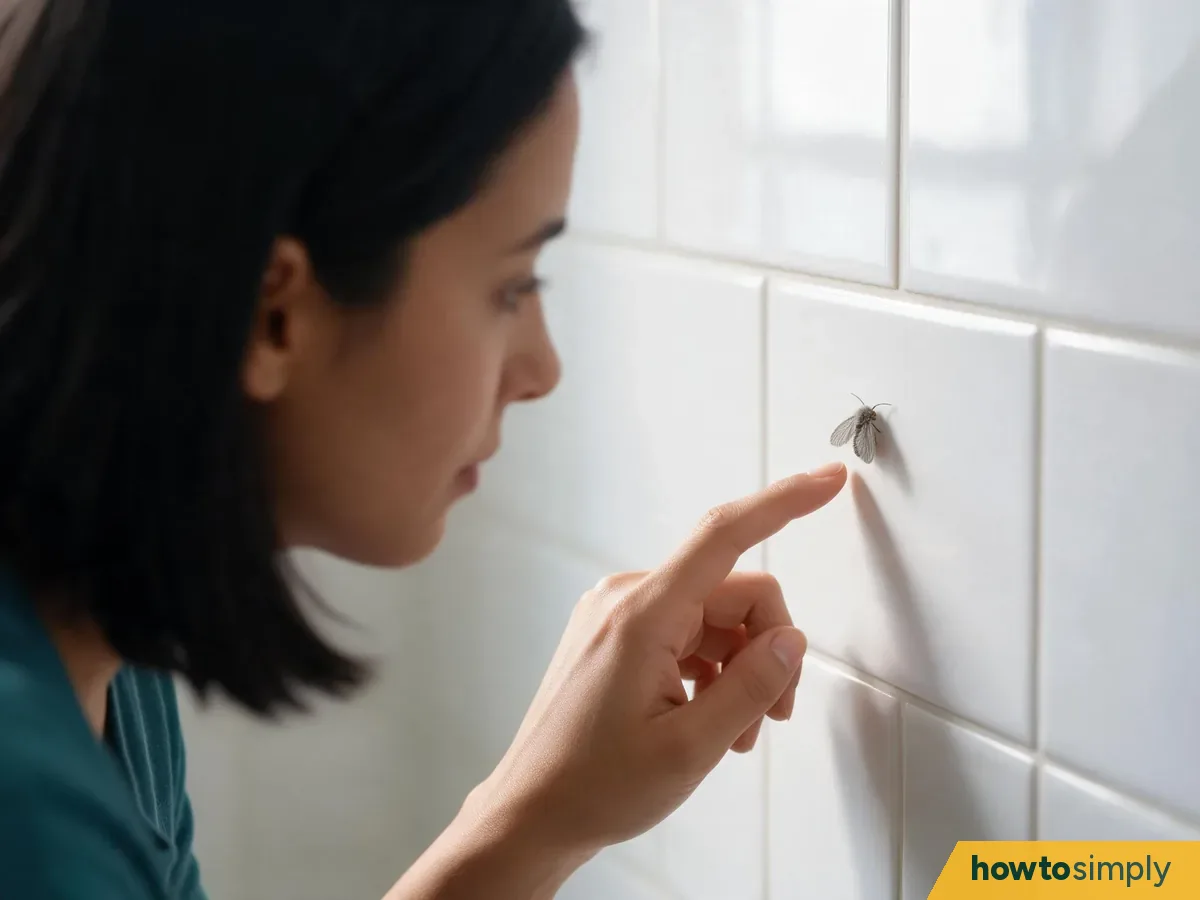
Look closely at the flies.
Illustration
Hana leans in to the tile by the bath. The fly is tiny, grey and furry, with wide wings folded like a little roof.
Drain flies are about 4 to 5 mm long, dark and covered in fine hairs, and hold their wings roof-like over the body (Texas A&M). They are weak fliers, flutter only a short way at a time, and are most active in the evening.
You should see: fuzzy flies resting still near sinks, baths or showers, not hovering round food.
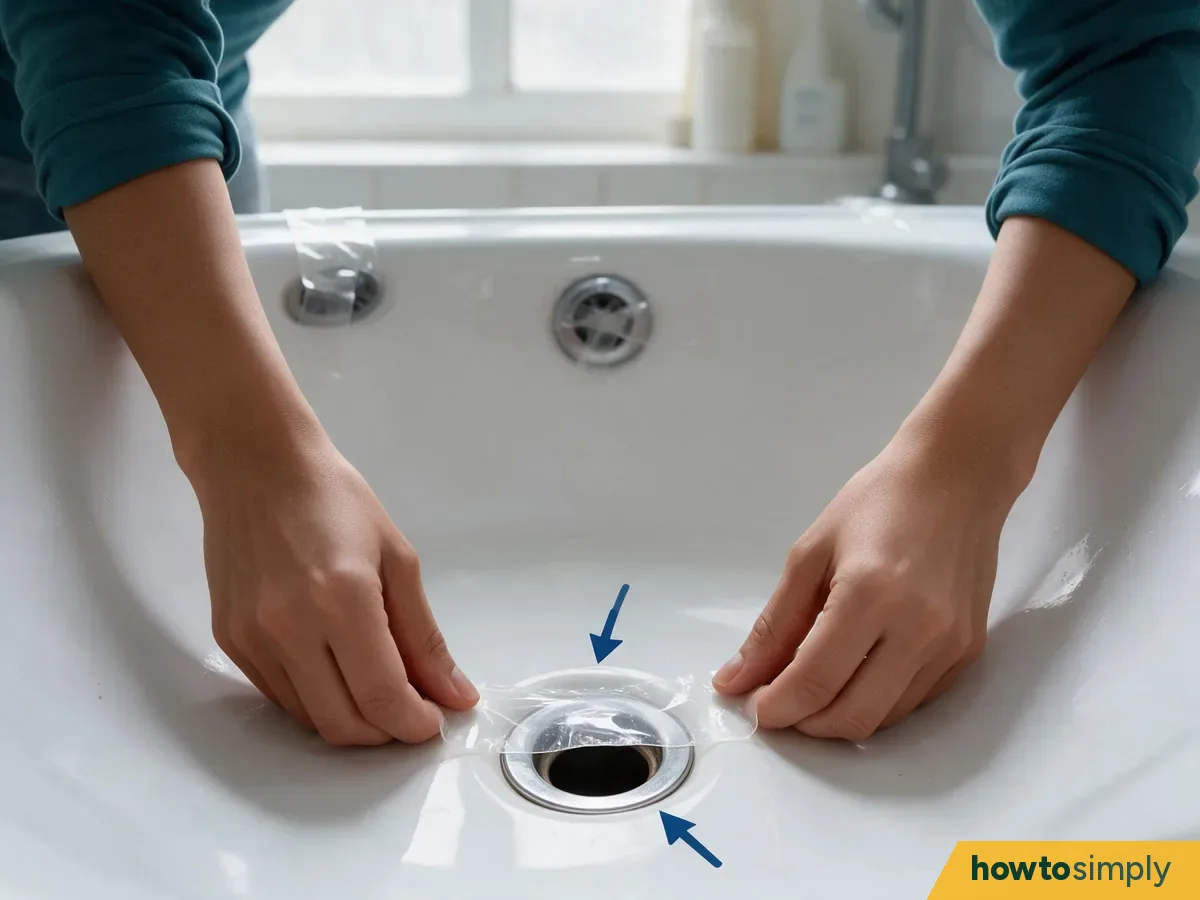
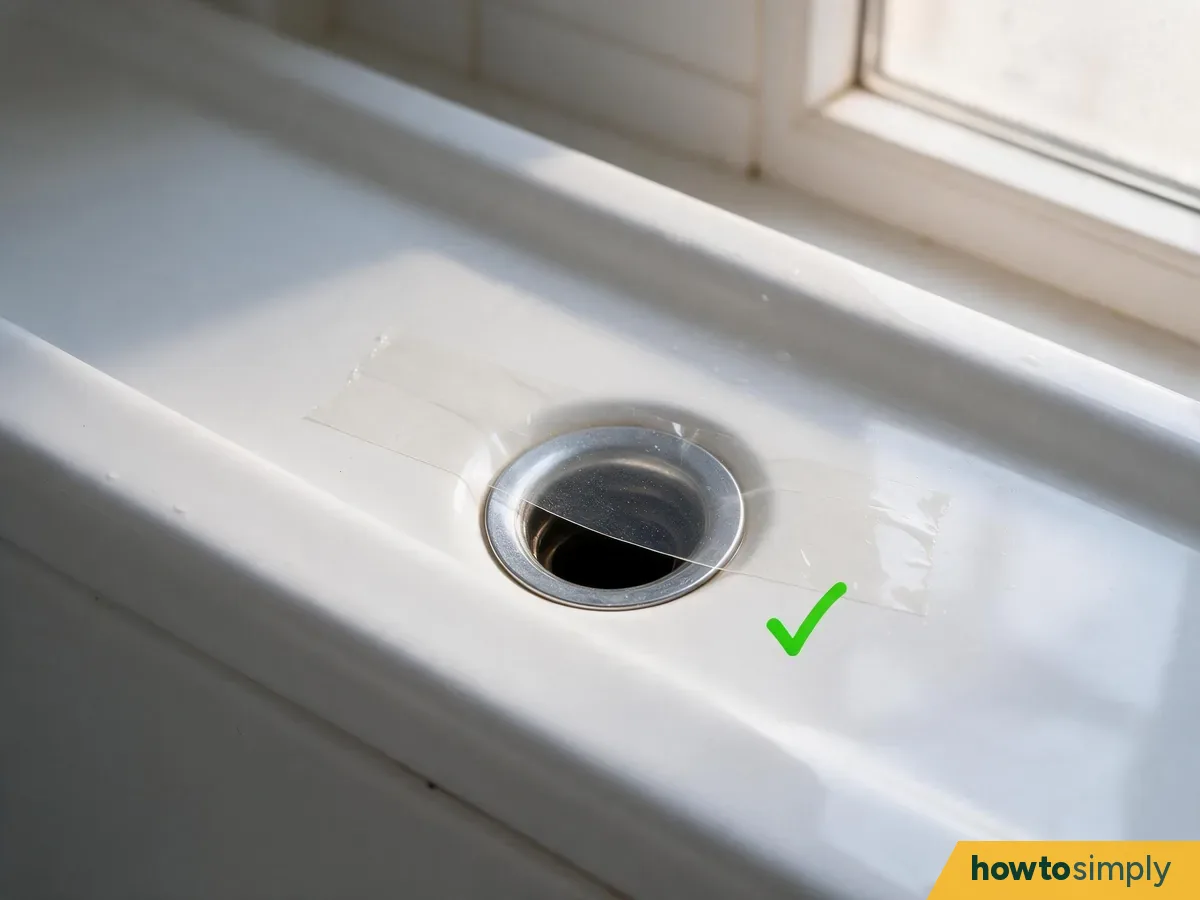
Tape over every drain overnight.
Illustration
At bedtime, Hana sticks a strip of clear tape across the bath plughole, leaving a gap at each end. She does the same on the basin, the kitchen sink and the shower tray.
Stick tape across each drain without covering it completely: if no air can get through, the flies won't come up (Texas A&M). UF/IFAS says the source is usually the closest drain, because these flies are weak fliers, and suggests leaving the tape for 24 hours. Our advice: tape every drain anyway. It costs nothing and shows up a second source. Don't run water into the taped drains overnight.
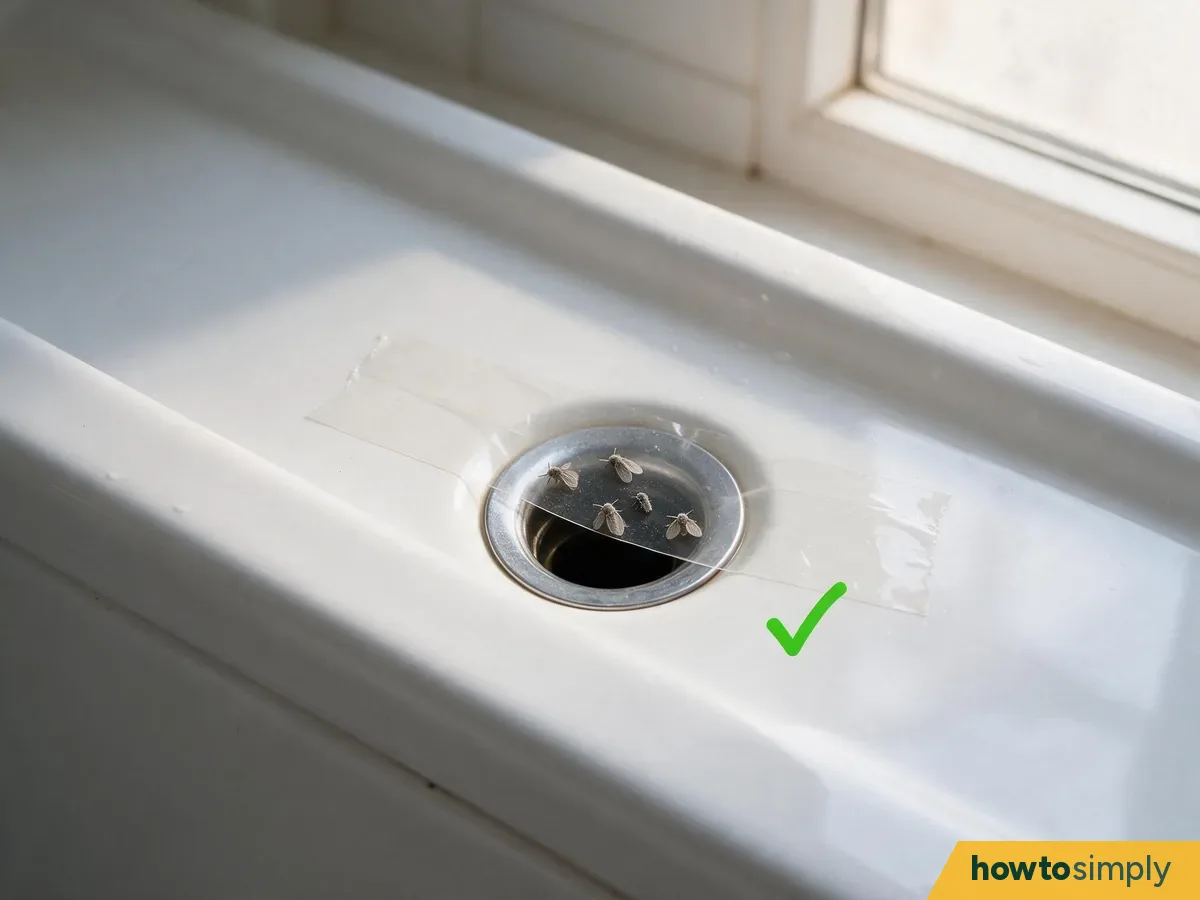
Check the tape in the morning.
Illustration
In the morning, the tape on the bath and the basin has tiny grey flies stuck to it. The kitchen sink and shower tapes are clean.
Flies stuck to the tape mean that drain is a breeding site (Texas A&M). Clean every drain that caught flies. Note the clean ones too, so you can re-test them later.
You should see: flies on one or more tapes. If every tape is clean, try the overflow, a little-used toilet and floor drains (Part 3).
Part 2: Scrub out the drain
Take out the plug and strainer.
Illustration
In rubber gloves, Hana lifts the pop-up plug out of the bath. Its stem is coated in grey slime and hair.
Most pop-up plugs lift or unscrew straight out. Pull off the hair and slime and drop it in the bin, not back down the drain. Scrub the plug with an old toothbrush and hot soapy water.
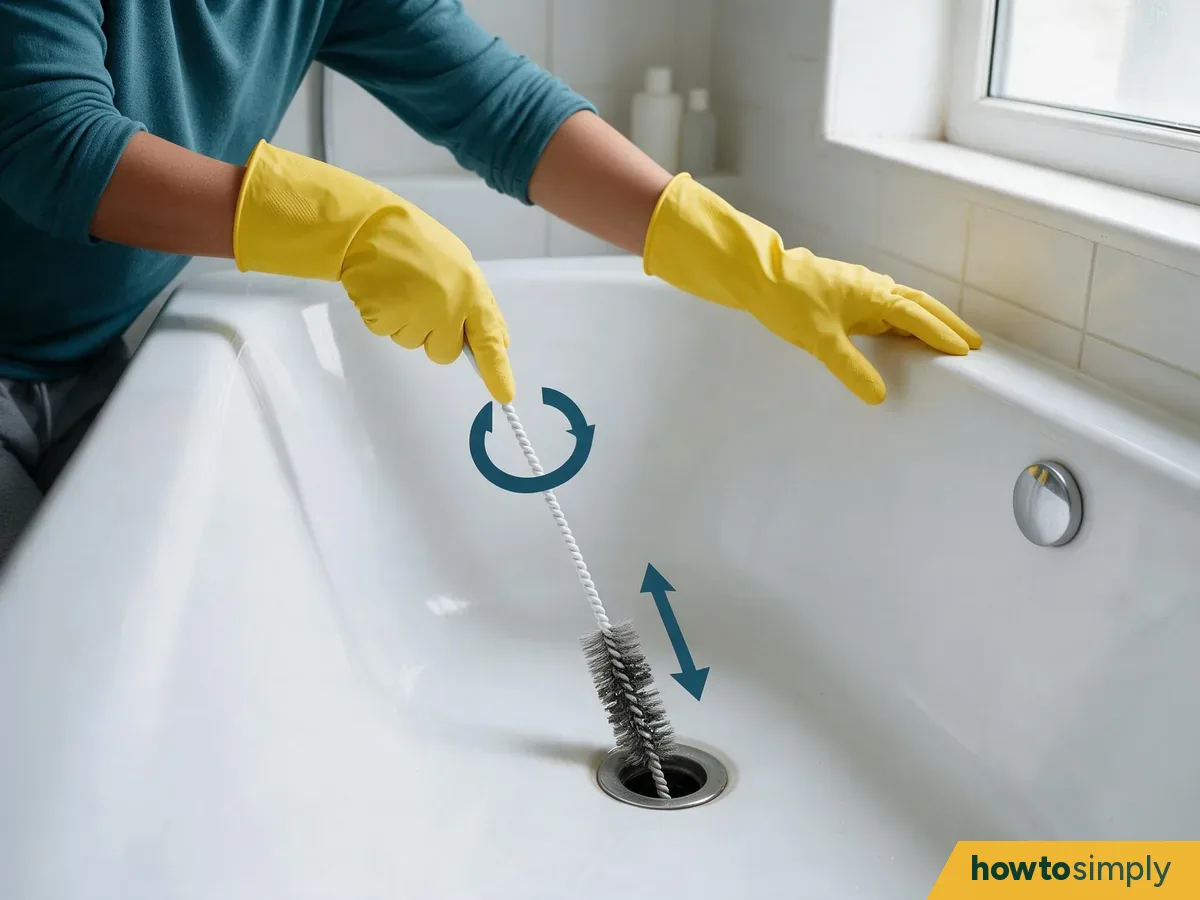
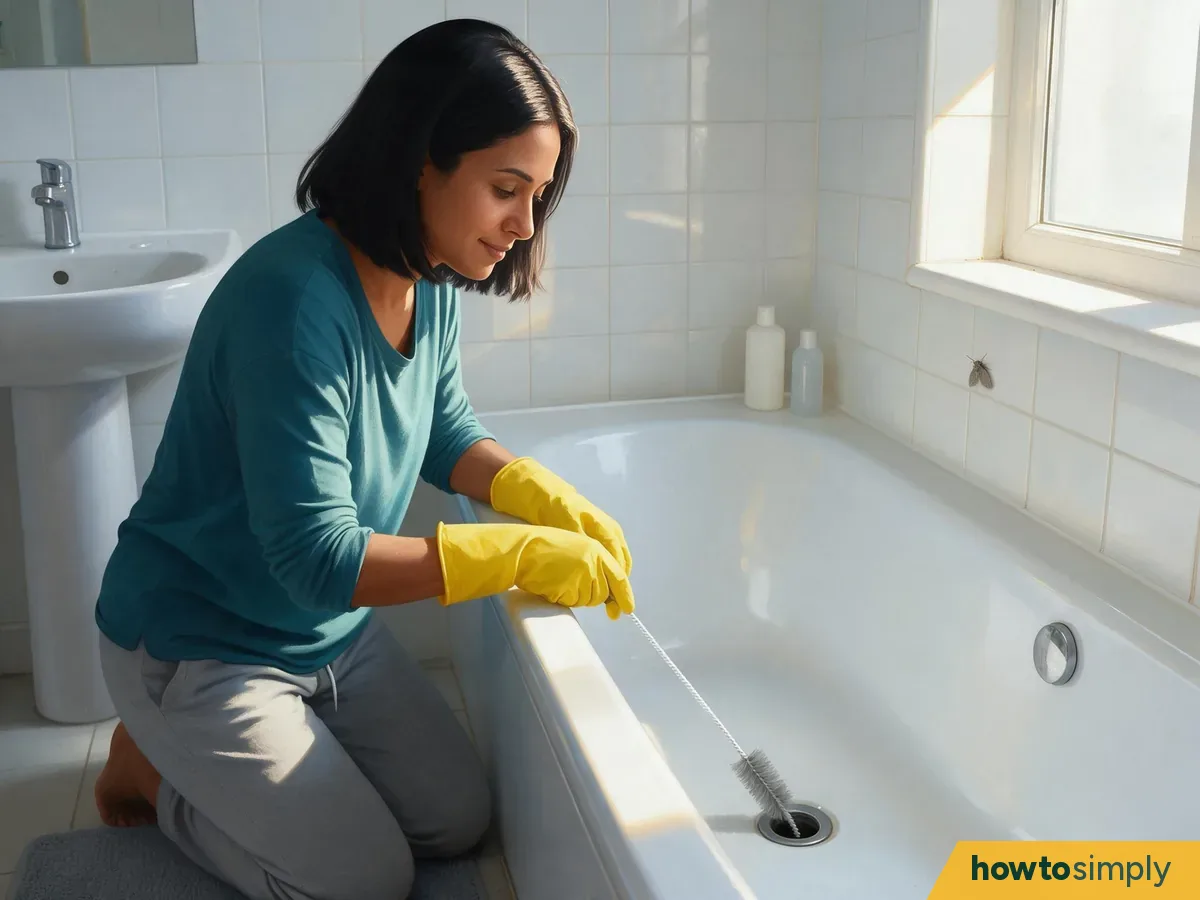
Brush the inside of the pipe.
Illustration
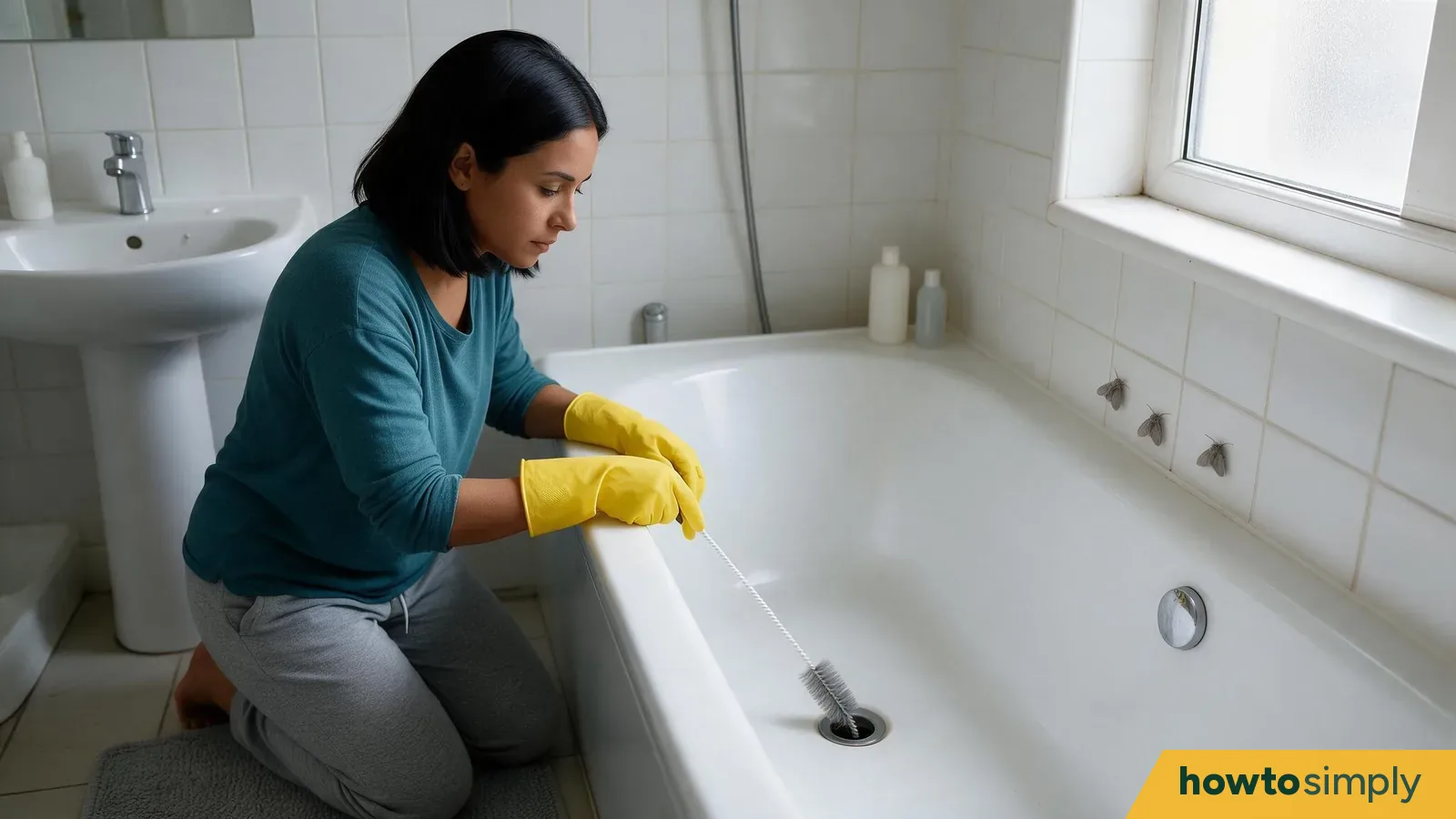
Hana pushes the long brush down the plughole and twists it round and round, working it up and down.
This is the step that matters. Scrubbing the inside of the pipe removes the slimy film the larvae feed on (Texas A&M, UF/IFAS). Push the brush as far as it goes, twist it, and pull it out and rinse it several times until it comes out clean.
You should see: dark grey slime on the brush at first, then much less.
Flush the drain with hot water.
Illustration
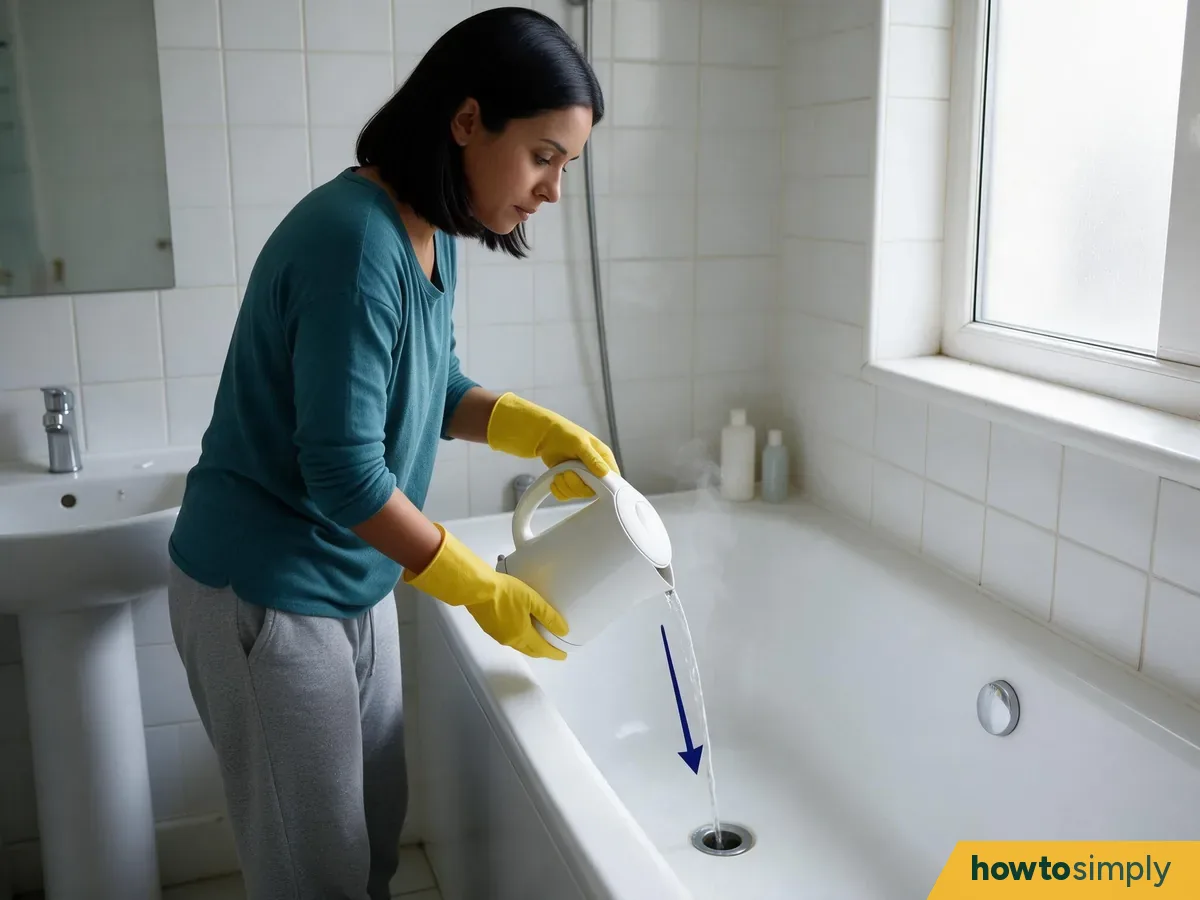
Hana pours a kettle of hot water slowly down the plughole to wash away what the brush loosened.
Texas A&M and UF/IFAS say to flush the drain with boiling water after scrubbing. Pour slowly, straight into the hole. Our advice: don't pour boiling water into a toilet bowl, which can crack, and if your waste pipes are plastic and you're unsure, let the kettle cool for a minute first.
Clean the overflow.
Illustration
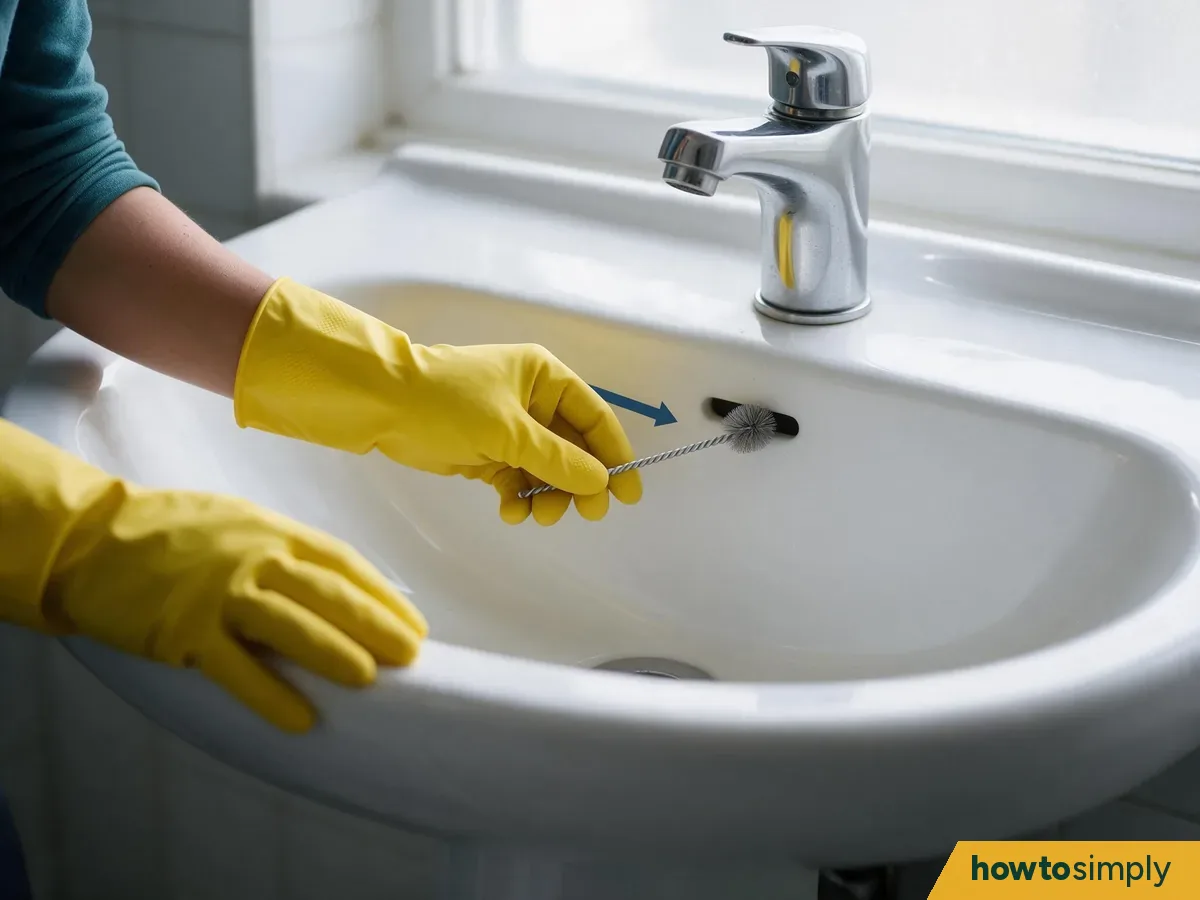
At the basin, Hana pushes a small bottle brush into the overflow slot just below the tap and scrubs it, then flushes it with hot water.
The overflow channel stays damp and is easy to forget. Scrub it the same way as the drain, then rinse it with hot water poured into the overflow hole.
Clear the trap under the basin, if you can reach it.
Illustration
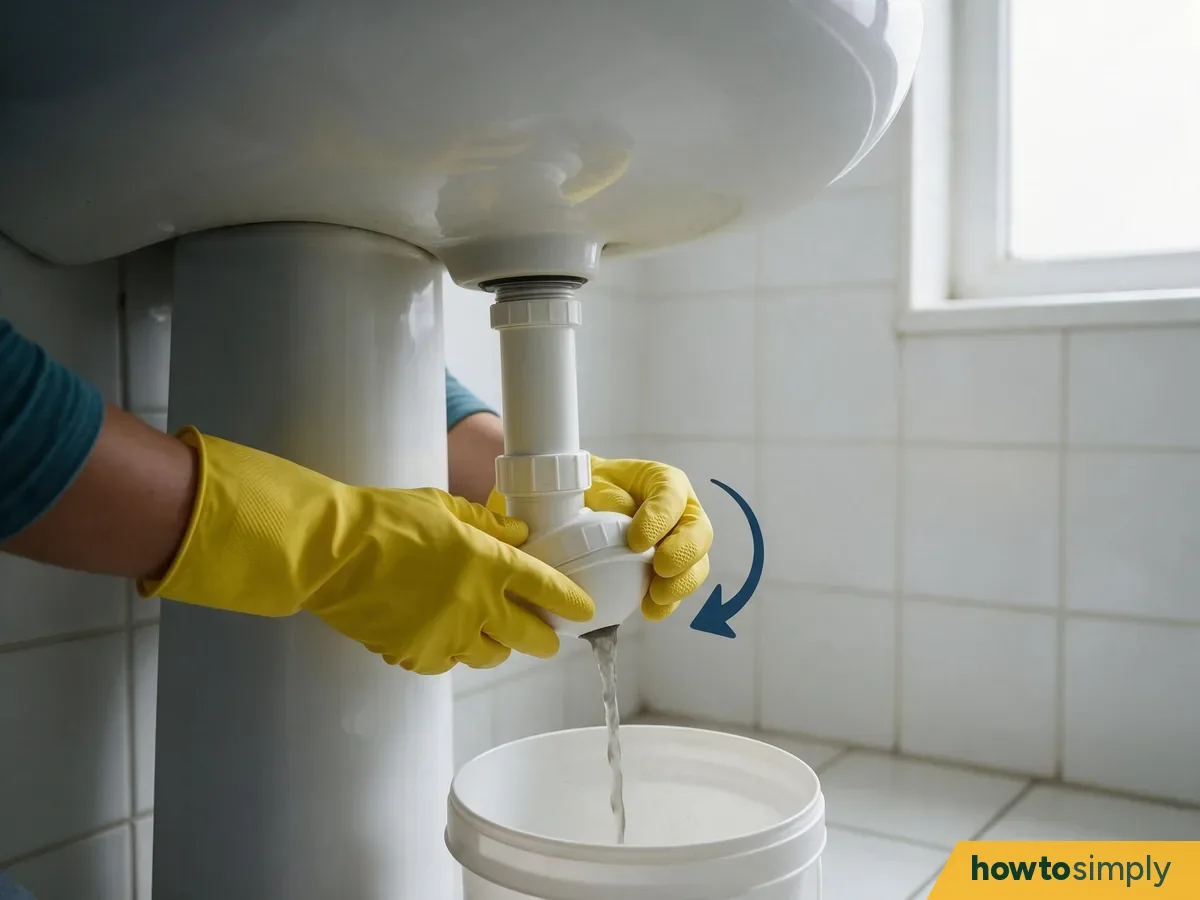
Hana puts a bucket under the basin and unscrews the bottom of the white plastic trap. Dirty water and slime drop into the bucket.
Texas A&M says to clean the traps as well as the pipes. Many UK basins have a plastic "bottle trap" whose base unscrews by hand; US sinks usually have a curved P-trap with slip nuts. Put a bucket underneath, unscrew it, scrub it in the bucket, and screw it back hand-tight with its rubber seal in place. If yours is hard to reach or the joints are sealed, skip this step (our advice).
You should see: no drip from the trap when you run the tap afterwards.
Add a drain treatment, if you want one.
Illustration
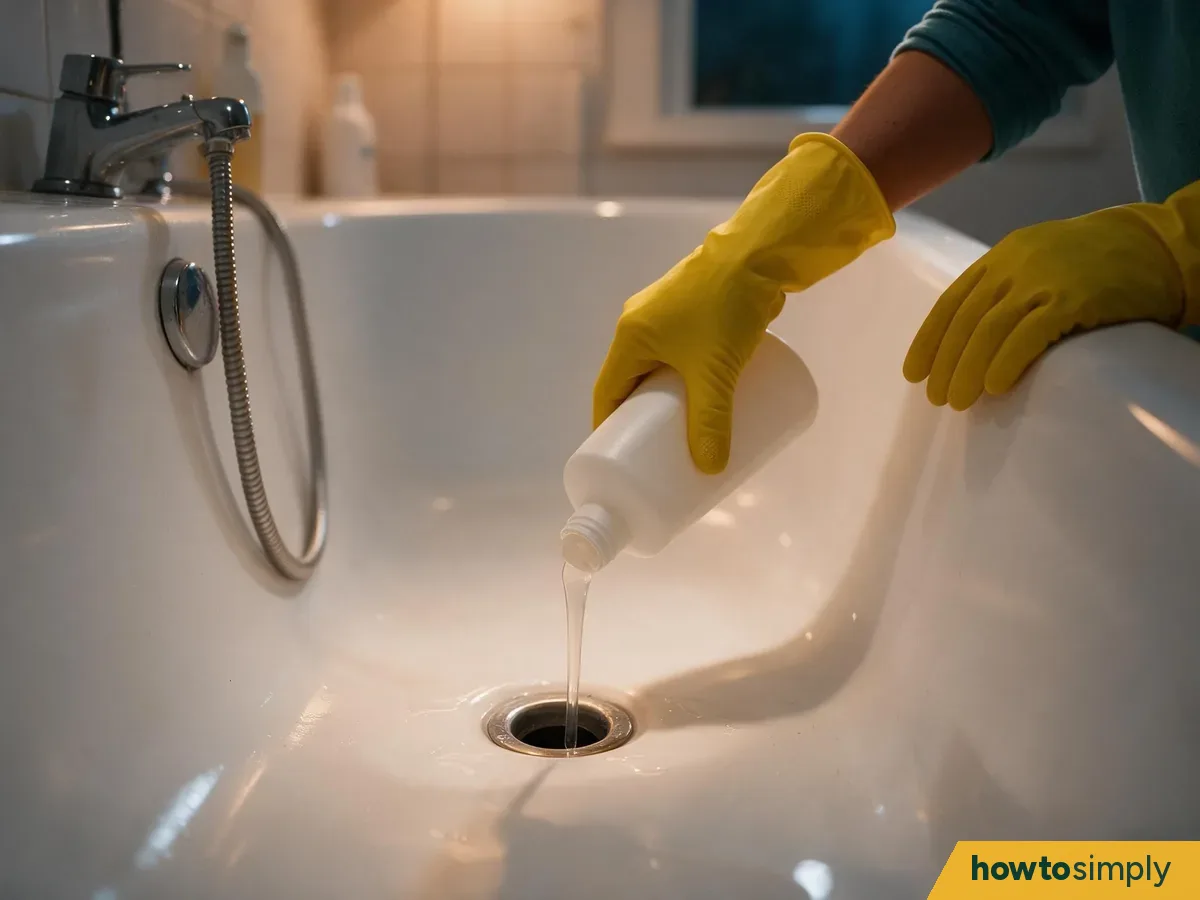
At night, when the bath won't be used for hours, Hana pours a bacterial drain gel into the plughole, as its label says.
Texas A&M says bacterial drain treatments that break down organic matter can help, used exactly as the label says. They work best after scrubbing, not instead of it. Use one product only, and never with bleach.
Part 3: Check the hidden places
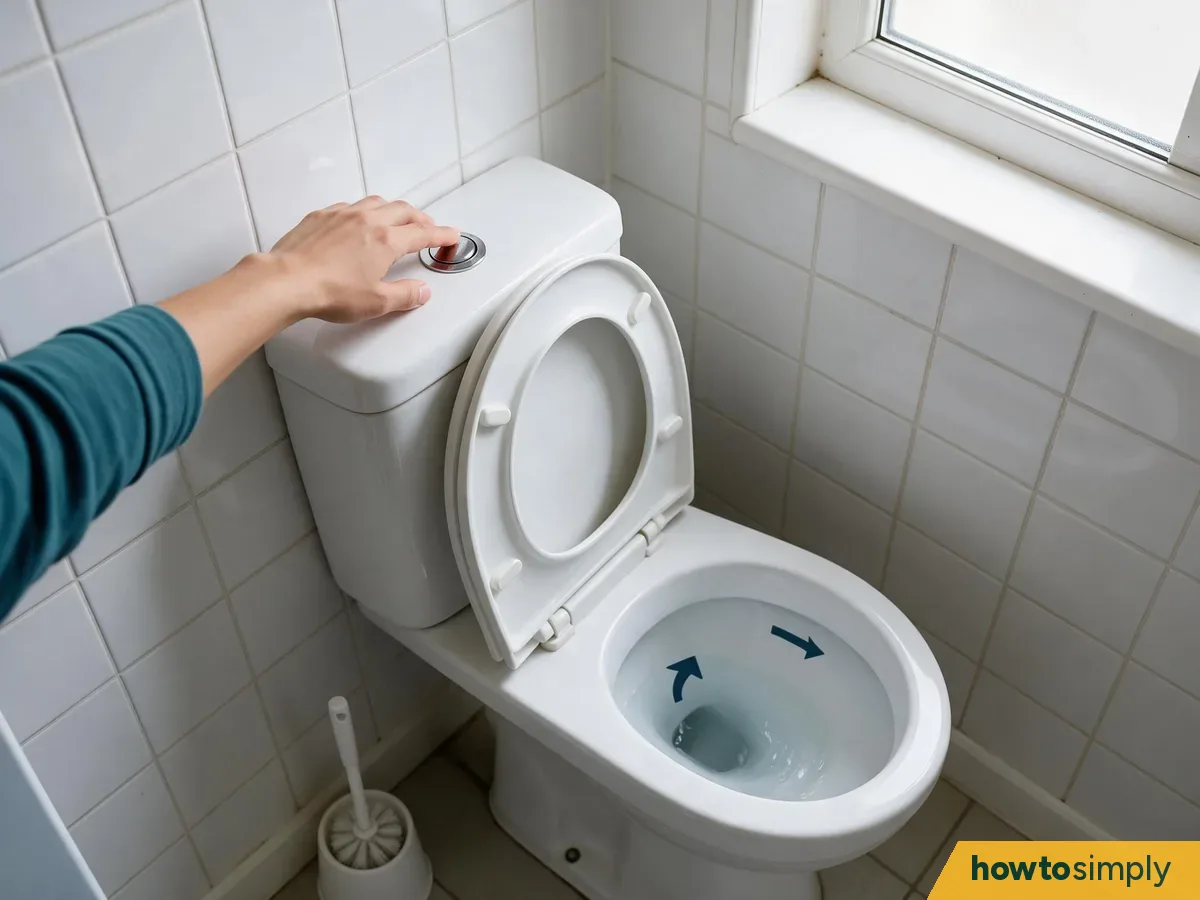
Flush a toilet you rarely use.
Illustration
Hana remembers the little cloakroom toilet nobody uses. She brushes under its rim and flushes it.
Texas A&M lists toilets, particularly ones that aren't used often, as breeding sites. Brush under the rim and flush it at least once a week (our advice).
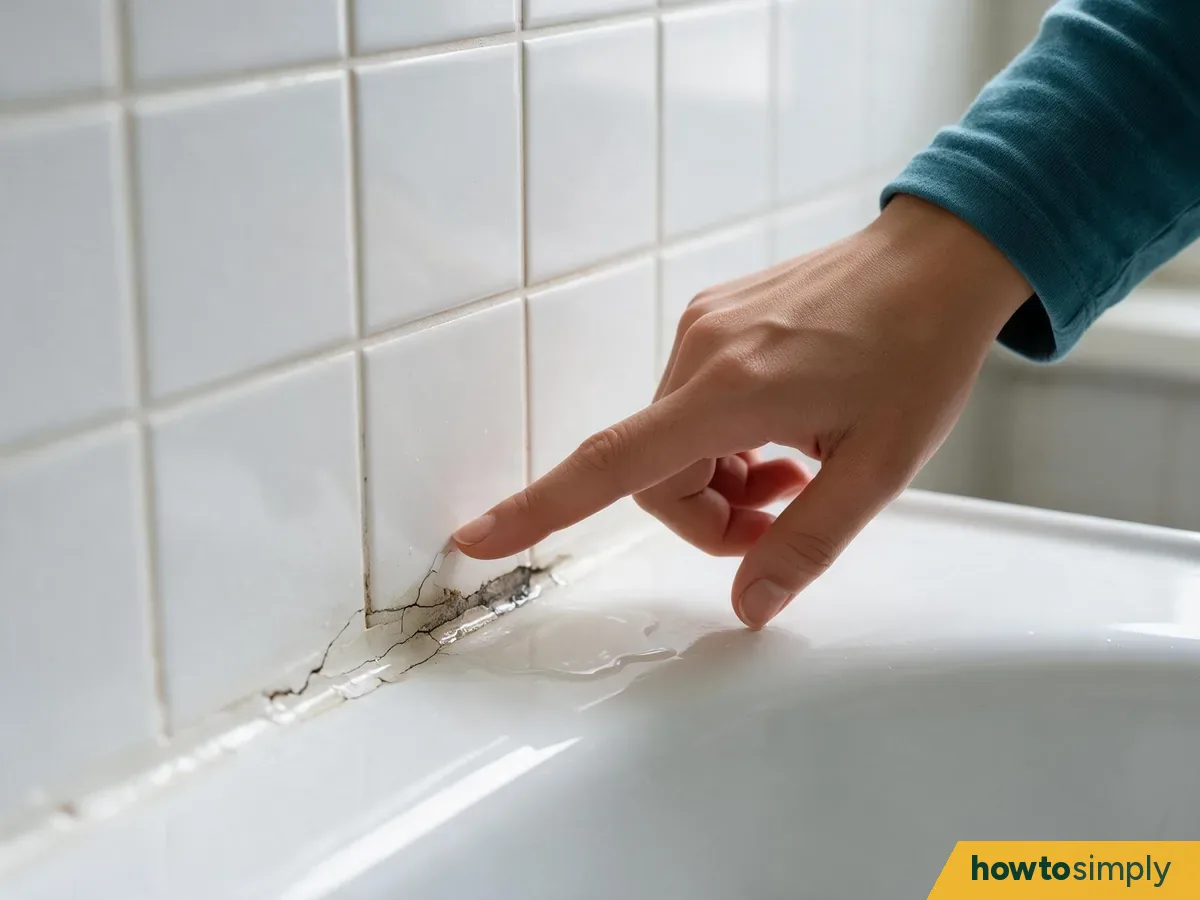
Look for damp under loose tiles and seals.
Illustration
Hana checks the sealant round the bath and spots a cracked, dirty strip where water sits.
Texas A&M lists loose floor tiles where water collects as a breeding site, and condensate lines (for example on an ice-maker). Dry and repair damp spots. For mouldy sealant, see the related guides below.
Part 4: Keep them gone
Repeat the brush-and-flush weekly.
Illustration
A few days later, Hana brushes and flushes the bath and basin drains again. Only one fly is left on the tiles.
Eggs hatch in under 48 hours and larvae take 8 to 24 days to grow (Texas A&M), so a few more flies can appear after the first clean. Keep scrubbing each source drain weekly until no new flies turn up.
Re-test with tape a week later.
Illustration
A week on, Hana tapes the drains again. In the morning, the tapes are clean.
Clean tape on every drain means you've found and cleared the source. Fly spray only kills adults you can see, and doesn't solve the problem (Texas A&M).
How to tell it worked
Overnight tape over every drain stays clean.
No fuzzy flies on the walls in the evening for a week or more.
The drain brush comes out clean when you scrub.
Who to ask if they won't go
Country
Renting
If you own the home
UK
Tell your landlord or letting agent, in writing
A plumber, for a damaged or blocked waste pipe
Germany
Tell your Vermieter or Hausverwaltung, in writing
A Sanitär (plumbing) firm
US
Tell your landlord or property manager, in writing
A plumber; persistent flies near floor drains can mean a damaged pipe
Pakistan
Tell your landlord
A plumber, for blocked or damaged pipes and gully traps
This table is our general guidance on who to contact, not a statement of the law in each country.
If they keep coming back
What happens
What it means
What to do
Fresh flies on the tape after 3 weeks of cleaning
Another breeding site
Tape the overflow, toilets and floor drains too, and clean any that catch flies
Every tape is clean, but flies still appear
They may be breeding in damp outside the drains
Check under loose tiles, round shower trays and in condensate lines (Texas A&M)
Flies came back after you poured bleach
Bleach doesn't scrub the film off
Brush the pipe, then flush; Texas A&M finds no benefit in bleach
The drain is also slow
Hair and slime building up
Pull out the hair with the brush and repeat the scrub and flush; if it stays slow, ask your landlord or a plumber
Flies keep coming with every drain clean
Possible damaged pipe
Ask your landlord or a plumber (see the table above)
Source: Texas A&M AgriLife Extension, Drain Flies (E-184). Rows 2 and 3 follow Texas A&M; the other rows are our advice.
They don't bite. UF/IFAS says they pose no health threat unless they come out in large numbers, which is unusual in homes. Texas A&M calls the adults a nuisance.
How long until they are all gone?
Expect a few more flies for a week or two after cleaning, because eggs hatch in under 48 hours and larvae take 8 to 24 days to grow (Texas A&M). Keep cleaning weekly and re-test with tape. If fresh flies still stick to the tape after 3 weeks, the source is somewhere you haven't cleaned yet (our advice).
Will bleach kill drain flies?
Texas A&M says there is no benefit to treating drains with bleach or ammonia. Bleach doesn't scrub off the slime the larvae live in. And never pour bleach after a caustic drain cleaner: together they can make chlorine gas.
Are they the same as fruit flies?
No. Drain flies are fuzzy, grey and moth-like and sit still on walls near sinks and baths. Texas A&M describes fruit flies as usually yellowish, with clear or lightly banded wings, found round fruit and peelings. Fungus gnats have dark wings, aren't fuzzy, and breed in houseplant compost.
Can drain flies come from the toilet?
Yes. Texas A&M lists toilets, especially ones that aren't used often, as a breeding site. Flush a spare toilet at least once a week and brush under its rim.
Did this solve the problem?
What needs work?
What did you think?
Reaction counts are loading.
Spotted a mistake? If a step is unclear or a picture is inaccurate, tell us the step number and what needs correcting. Email us about this page or use the contact form. We read every report, and fixes are listed on What changed.
Liked this article?
Follow us for new articles and short how-to videos.
 Illustration