How to get rid of fruit flies
Researched by Abu Bakar Saadat8 min read
Last updated: 15 November 2026References

On this page 10 sections
In short
A little dampness in their food is all fruit flies need to breed. Clear the source (fruit, bin, recycling, drain, mop), test the drain overnight with a food bag, then catch the adults with a cider-vinegar trap. A spray on its own won't end it.
At a glance
- You need
- Apple cider vinegar, washing-up liquid, cling film, a rubber band, clear food bags, tape
- Egg to adult
- About a week (University of Kentucky); 7 to 10 days (MSU)
- The real fix
- Remove the breeding site; traps help catch flies while you find it
- Drain test
- A clear food bag taped over the plughole overnight
- Advice from
- MSU Extension, University of Kentucky Entomology, Texas A&M AgriLife, read 28 October 2026
- Checked
- November 2026
A cloud of tiny flies rising from the fruit bowl every time you pass is enough to make even the most patient person cross. Chasing the ones you can see won't get rid of them, but finding where they breed will, and that's exactly where we'll begin.
According to the University of Kentucky, fruit flies lay their eggs in anything moist and fermenting, and a new generation can emerge about a week later. So swatting the flies you see rarely clears an infestation, and MSU Extension says targeting the eggs and larvae is essential. That's why the order matters: find and clear the places they breed, then trap any adults that are left.
Are they fruit flies?
Tiny, tan-and-black, red eyes, around fruit, bins and glasses
Fruit flies. The University of Kentucky describes the adults as about 1/8 inch (roughly 3 mm) long, tan at the front and black at the rear, usually with red eyes. Follow the steps below.
Dark, long-legged, like tiny mosquitoes, around houseplant pots
Probably fungus gnats, which breed in damp compost rather than fruit. They need a different fix: drying out the compost and treating it.
How to get rid of them
Clear out the fruit bowl and the vegetable store.

Illustration Eat, refrigerate or throw away anything ripe or damaged (MSU). Larvae feed near the surface, so you can cut away a damaged patch and keep the rest (University of Kentucky). Larvae feed on decaying fruit such as strawberries and bananas (Texas A&M AgriLife).
The potato and onion store is very easy to overlook, so open it up. A single rotting potato or onion at the back of a cupboard can keep an infestation going (University of Kentucky, Texas A&M).
You should see: nothing soft, leaking or mouldy left out. Ripe fruit goes in the fridge until the flies are gone.
Empty the kitchen bin and recycling, then wash them out.
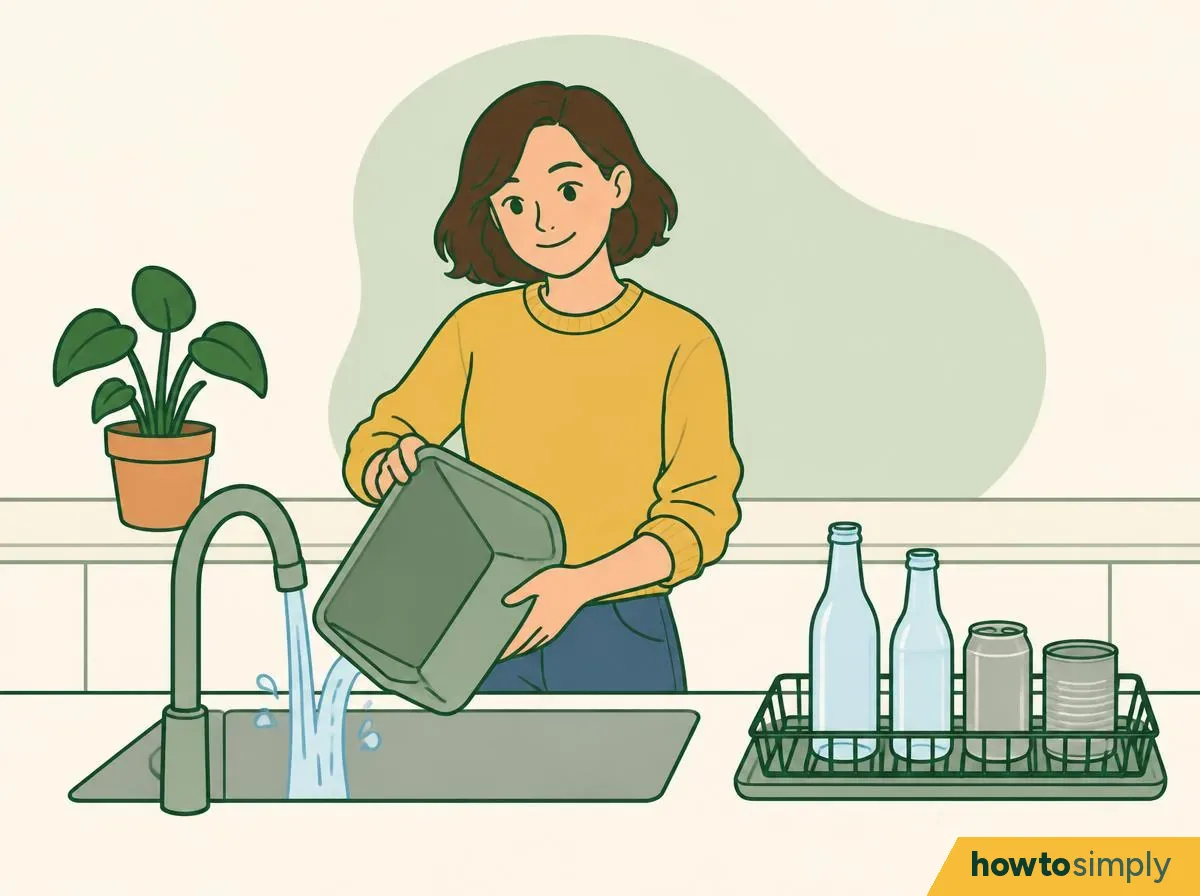
Illustration Sticky liquid at the bottom of a bin is an ideal breeding site (Texas A&M). During a bad outbreak, MSU suggests emptying the kitchen bin every evening and keeping it clean and dry.
Make sure you rinse bottles and cans before they go in the recycling, and keep the recycling box out of the kitchen if you can (MSU), because a sticky can is a perfect little nursery for them. University of Kentucky entomologists point to recycling bins that are never emptied or cleaned as a common source.
You should see: a dry, clean bin with no film of liquid in the bottom, and rinsed recycling.
Hunt down hidden spills, damp mops and cloths.

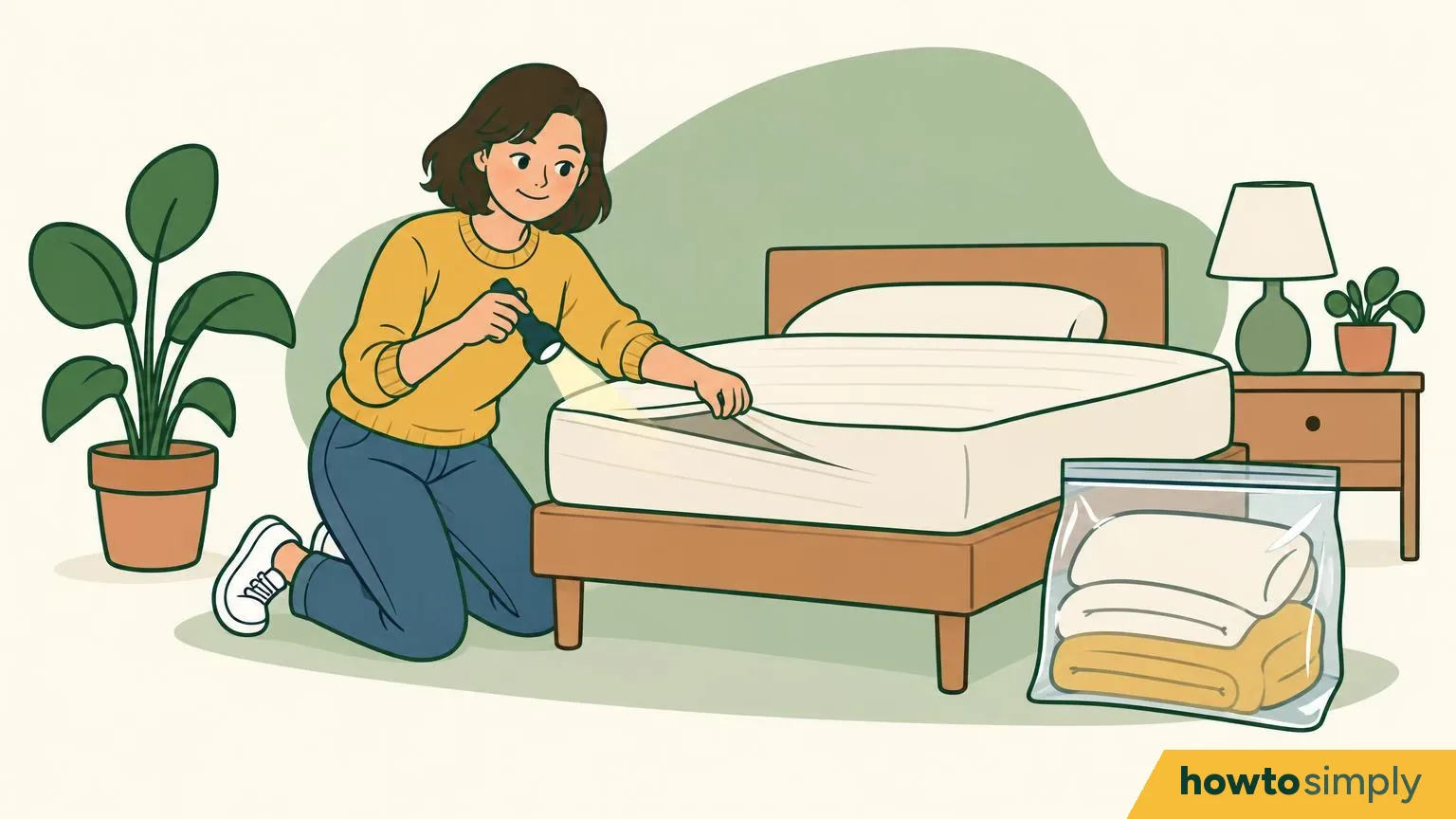
Illustration University of Kentucky entomologists say all the flies need is a moist film of fermenting material. Shine a torch under the fridge and behind appliances you can move, where juice or drink spills hide (MSU). Check floor cracks as well (Texas A&M).
Wash or replace damp mops and cleaning cloths, because they can breed flies too (University of Kentucky). If your habit is to leave the mop standing wet in its bucket, the flies will be very grateful to you. Check any home-brew, cider or pickling jars for a seal that isn't tight.
You should see: dry floors under and behind appliances, and clean, dry mops and cloths.
Test each drain overnight with a clear food bag.
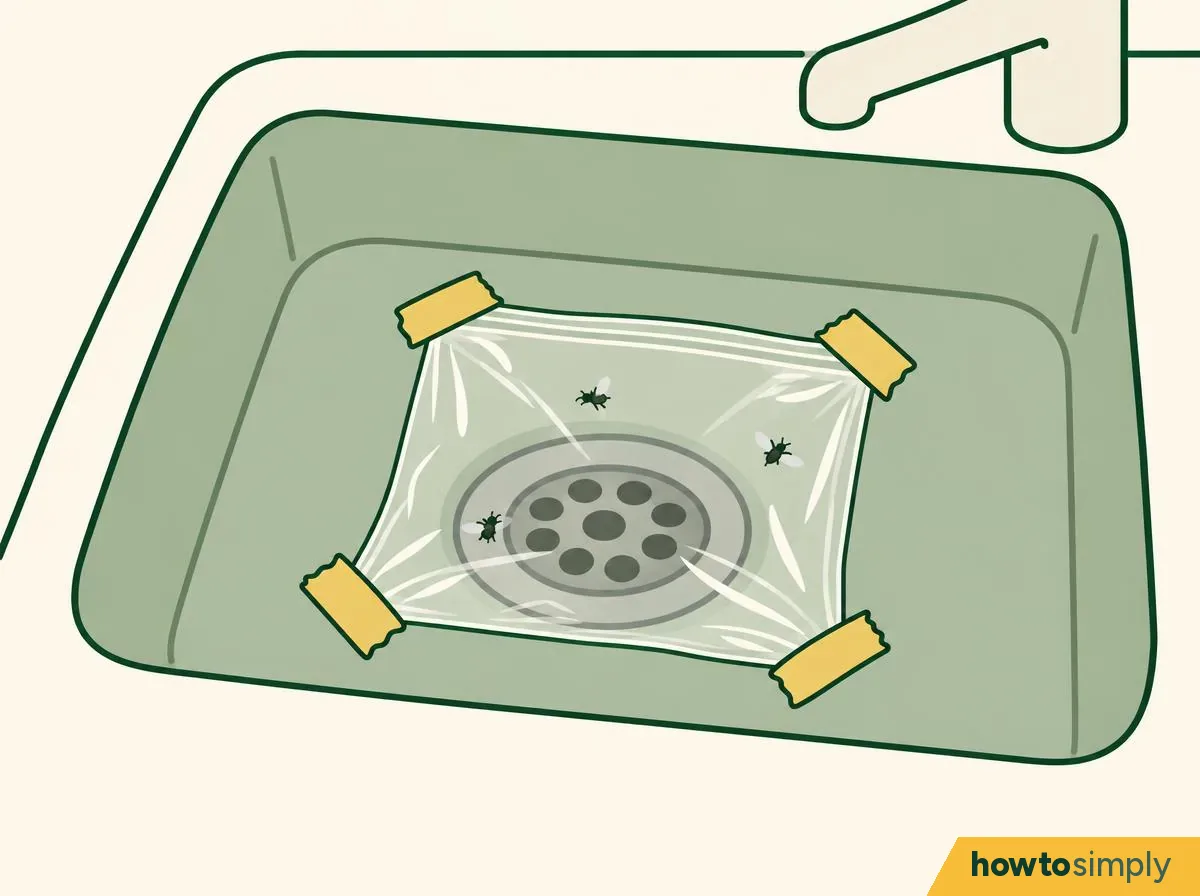
Illustration Don't worry if the flies keep coming and you can't find a source. The drain may be it. Tape a clear plastic food bag over the plughole and leave it overnight (MSU, University of Kentucky). It is that easy. Do the same for the dishwasher drain area or any other drain near where the flies gather.
You should see: in the morning, either an empty bag (that drain is not the source) or flies caught inside it (it is).
Careful: bleach must never meet ammonia, acids or other cleaning products. Washington State Department of Health warns that bleach mixed with acids, including vinegar and some drain cleaners, gives off chlorine gas, and bleach mixed with ammonia gives off toxic chloramines. If you have already poured bleach down the drain, don't add another cleaner on top of it.
Scrub out the drain that caught flies, then rinse it with very hot water.
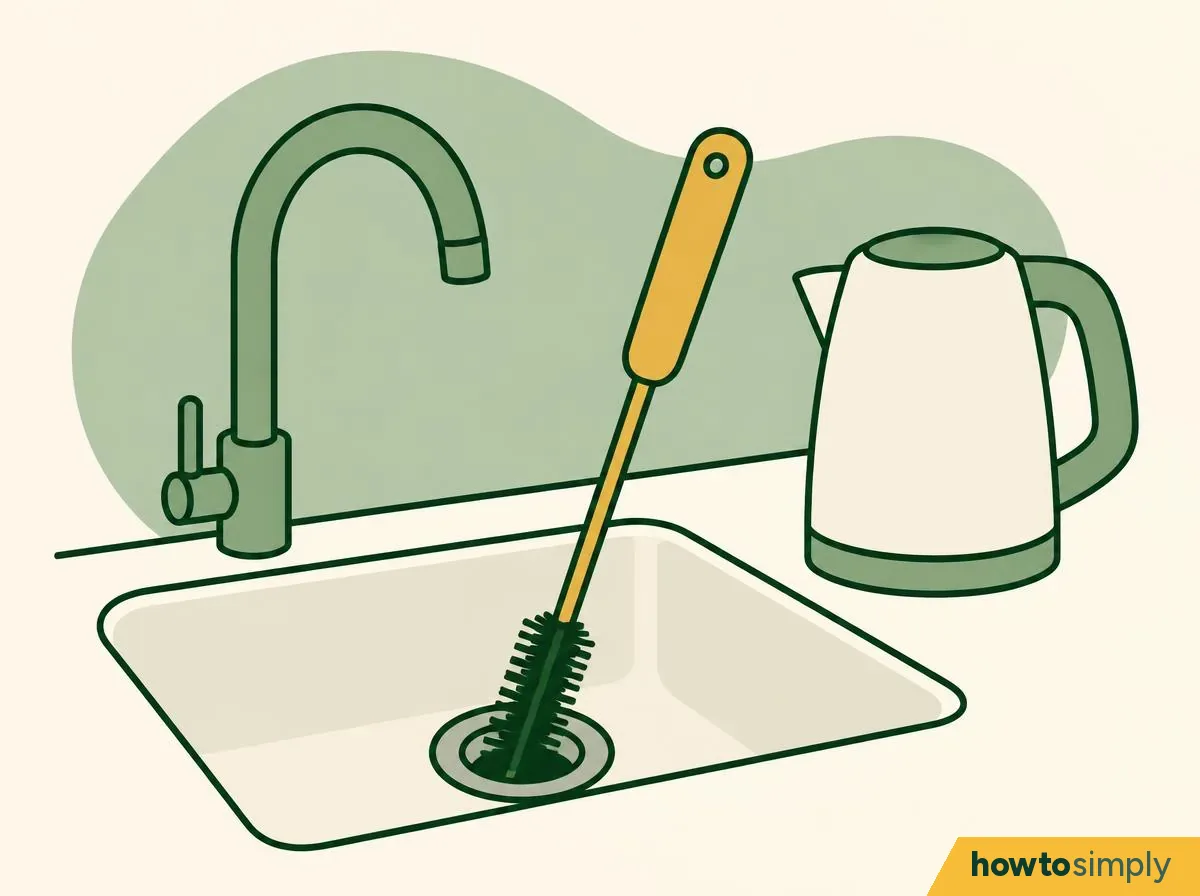
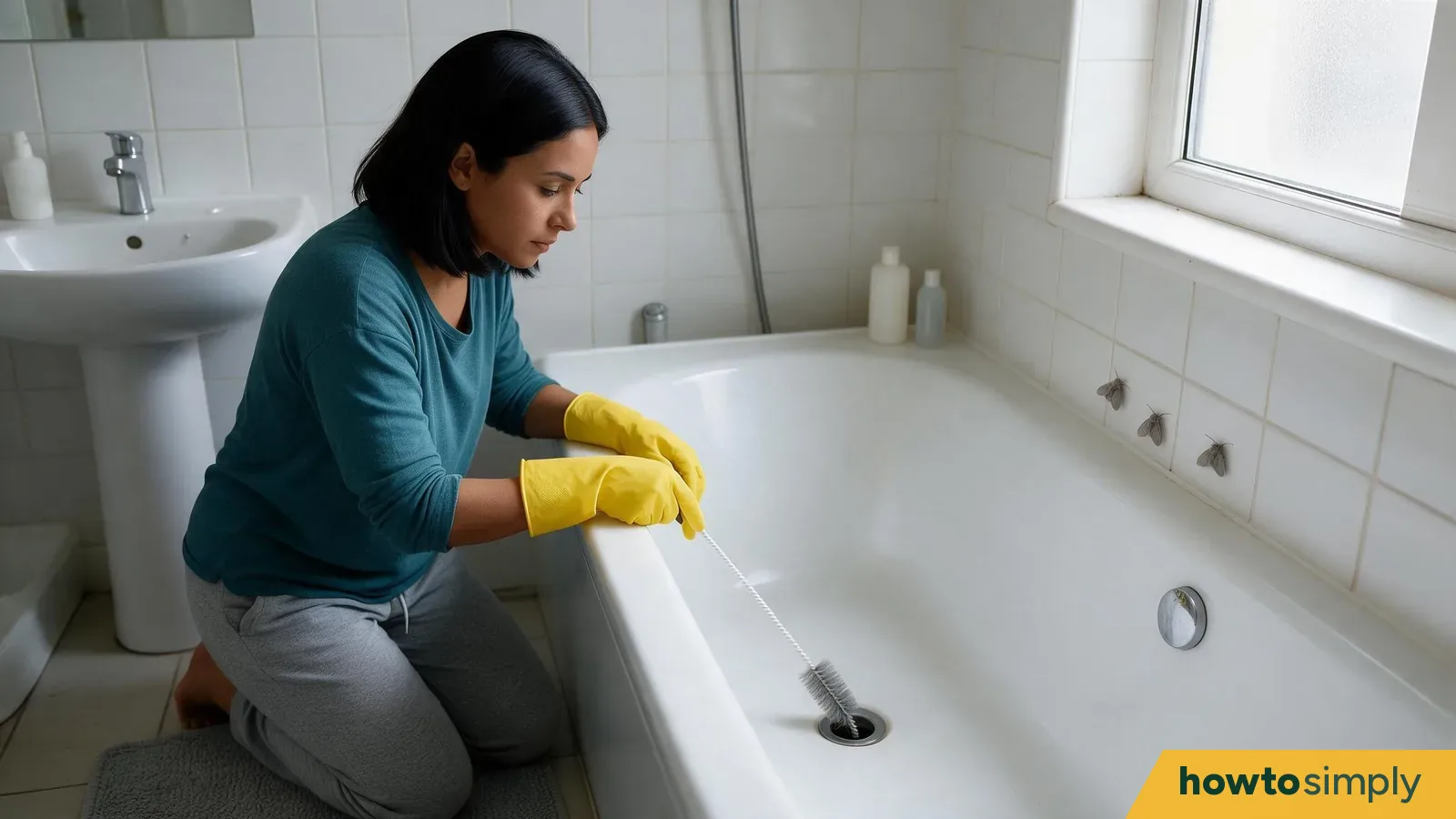
Illustration MSU says to clean the drain and trap as thoroughly as you can, then sterilise them with boiling water. A long, thin drain brush is worth having here, because it reaches the slime inside the pipe where the larvae live.
If your sink or pipes are plastic and you are not sure they can take boiling water, check with the maker first.
You should see: a clean plughole with no slimy film. Repeat the bag test the next night to check.
Set a cider-vinegar trap.
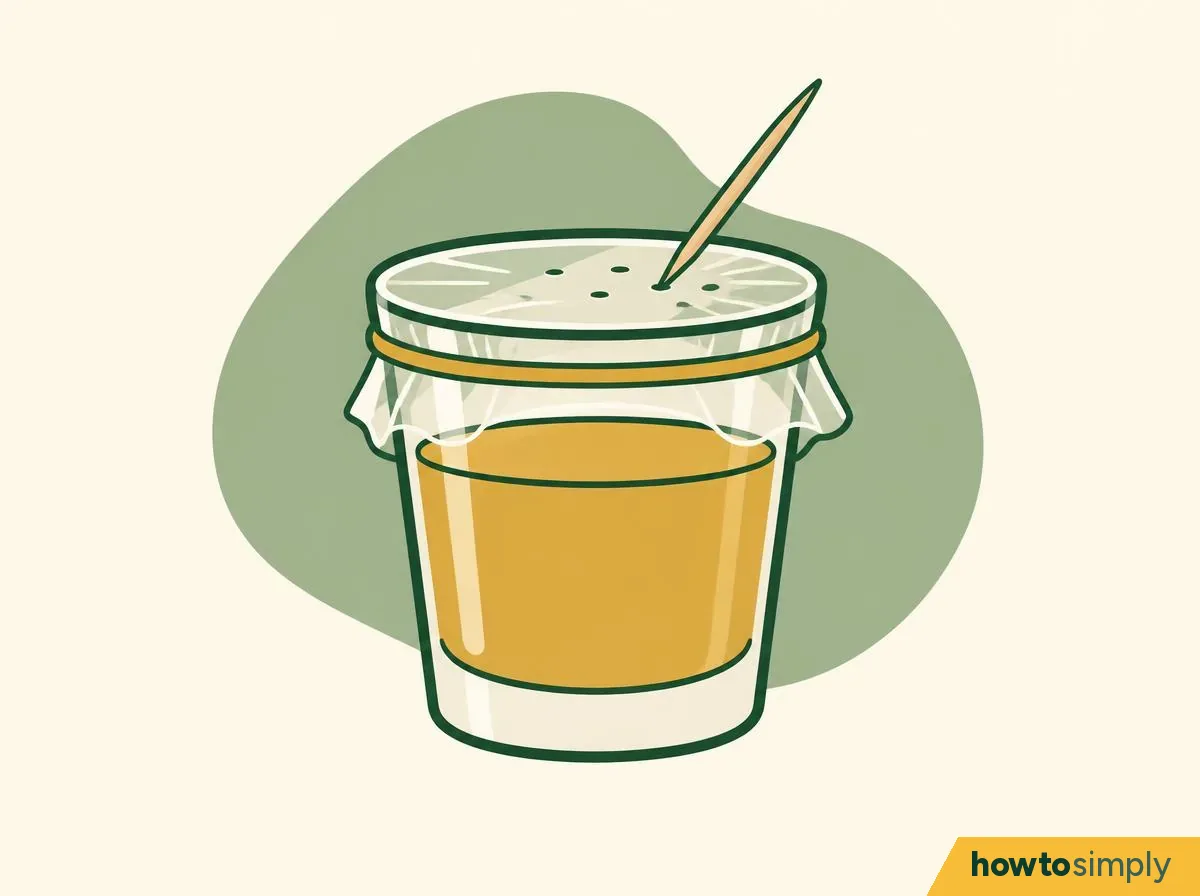
Illustration MSU's recipe: fill a small glass about two-thirds full with apple cider vinegar, add one or two drops of washing-up liquid and swirl. Stretch cling film tightly over the top, hold it with a rubber band and poke about a dozen holes with a toothpick. The soap drowns flies that try to land on the vinegar (Texas A&M AgriLife).
No cling film? Roll a sheet of paper into a cone and stand it, narrow end down, in a jar with a little vinegar, juice or rotting fruit (University of Kentucky, MSU). Make several traps and put them where you see the most flies. MSU also says to replace the bait in a fruit trap every day.
You should see: flies drowned in the liquid. Fewer each day means the breeding sites are gone.
Keep the traps going and keep checking for about two weeks.
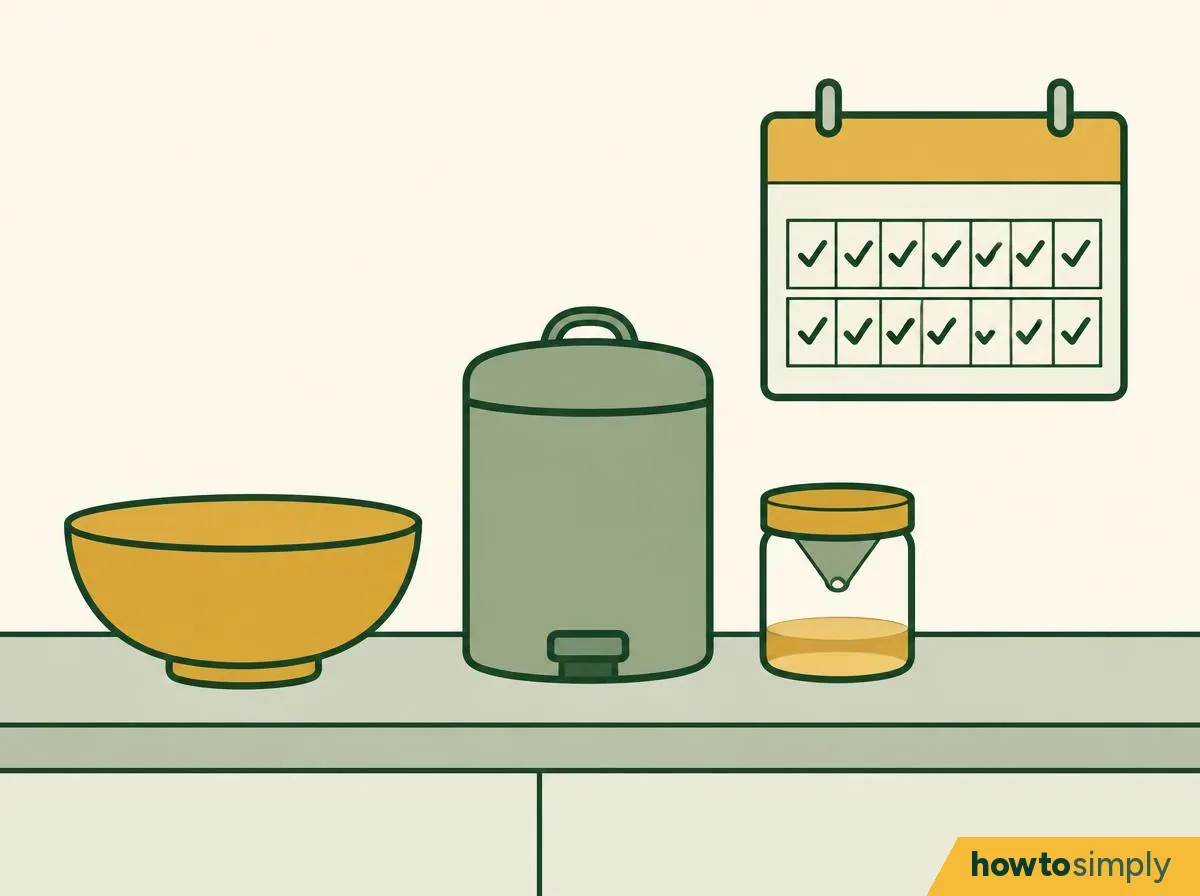
Illustration Texas A&M AgriLife says the flies disappear fairly quickly once the breeding sites are gone, because their life cycle is a week or less. Eggs already laid can still hatch, though: MSU says adults can emerge 7 to 10 days later. So please don't stop too early. Two weeks of checking is our suggestion, not a rule from the sources.
You should see: the flies disappearing relatively quickly once the breeding sites are gone (Texas A&M AgriLife).
How to tell it worked
- The traps catch fewer flies each day, and then none.
- The overnight bag test on each drain comes up empty.
- No flies hover over the bin or the fruit bowl for several days in a row.
- Bin, recycling, mops and the floor under the fridge are clean and dry.
Breeding-site checklist
| Check | What to look for | Source |
|---|---|---|
| Fruit bowl and fridge drawers | Overripe, cracked or leaking fruit, especially bananas and strawberries | MSU, Texas A&M |
| Potato and onion store | A soft or rotting one, often at the back | University of Kentucky, Texas A&M |
| Kitchen bin | Liquid or syrup at the bottom | Texas A&M |
| Recycling | Unrinsed cans and bottles; a box that is never cleaned | MSU, University of Kentucky |
| Under and behind appliances | Dried-on juice, beer or wine spills | MSU, University of Kentucky |
| Sink and other drains | Flies in the overnight bag test | MSU, University of Kentucky |
| Mops and cloths | Damp and left in a bucket or corner | University of Kentucky |
| Home brewing, cider, pickles | A jar or container that isn't sealed | University of Kentucky |
Rules in the UK, Germany, the US and Pakistan
| UK | Germany | US | Pakistan | |
|---|---|---|---|---|
| Do you need a professional? | Texas A&M AgriLife says once you track down where they're breeding, fruit flies are fairly easy to get under control. If flies keep coming from a drain or a shared bin area in a rented home, tell your landlord, since the rules for pests in rented homes apply (Shelter in England, Berliner Mieterverein in Germany) | |||
| If you buy a spray or bait | The label must show the HSE authorisation number and the uses it is authorised for (HSE) | Biocide labels name the BAuA registration number (N-...) and the approved uses (DLG guide published by LAVES Niedersachsen) | EPA registers all pesticides; read the label before you buy and again before you use it (EPA) | Every pesticide brand must be registered; selling an unregistered one is an offence (Agricultural Pesticides Ordinance 1971, s. 4) |
If they keep coming back
| What happens | What it means | What to do |
|---|---|---|
| The traps fill up every day for more than a week | A breeding site is still active | Go through the checklist again; bag-test every drain, including bathroom ones |
| The trap catches nothing | Other baits can be used | Try wine or banana instead (Texas A&M) |
| Flies come back after shopping | Eggs can arrive on fruit from the shop (MSU) | Keep ripe fruit in the fridge and use it up quickly |
| They appear even with a clean kitchen | Adults can get in through window screens (MSU) | University of Kentucky suggests tight-fitting 16-mesh screens |
Questions readers ask
Where do fruit flies come from if I haven't left fruit out?
Often from somewhere you can't see: a drain, the bottom of the bin, a recycling box, a damp mop or a forgotten potato. MSU Extension adds that eggs can already be on fruit when you bring it home, and adults can get in through window screens.
Are fruit flies harmful?
They are mainly a nuisance. University of Kentucky entomologists say they can carry bacteria and other disease-causing organisms onto food, so throw away anything they have been crawling on.
Does a red wine or banana trap work instead of vinegar?
Yes. Texas A&M AgriLife lists apple cider vinegar, wine and bananas as baits. MSU describes a funnel in a glass with a splash of wine; change the bait every day.
Will a fly spray get rid of them?
Not on its own. MSU and the University of Kentucky both say sprays only kill the adults you can see, while eggs and larvae keep developing in the breeding site. Clear the source first.
Sources and method
- Researched by
- Abu Bakar Saadat
- Pictures
- 9 illustrations drawn for this article: drawings, not photos.
- Sources
- Steps checked against the 10 named sources linked below.
- What this page adds
- A room-by-room breeding-site checklist, drawings of the overnight bag test and a cling-film vinegar trap, and spray label rules in four countries.
What to do next
The small jobs that keep a home running Step 5 of 5
- How to descale a shower head without damaging the finishScale blocks the jets bit by bit.
- How to clean your dishwasher filter, and how often Bosch, Samsung and Miele say to do itSmelly dishwasher or gritty glasses? The filter is usually why.
- How to clean a tumble dryer filter, heat exchanger and water tankA clogged dryer filter wastes time and energy.
Did this solve the problem?
Where did you get stuck?
Get new guides by email
Our newest guides, sent to your inbox. Free, and you can unsubscribe in one click.
We'll email you to confirm. How we use your email
Follow howtosimply on Facebook
We share every new article on our Facebook page, so the next fix turns up in your feed.
Follow on FacebookWhat did you think?
Reaction counts are loading.
Sources
We use primary, official and specialist sources appropriate to the topic.
- US EPA: Should I use a fogger? (updated 8 September 2026)
- Shelter England: Pests and vermin infestations in rented homes (updated 1 May 2026)
- Berliner Mieterverein: Ungeziefer in der Wohnung, Kammerjagd (German, MieterMagazin 4/2012)
- HSE: Packaging and labelling requirements for biocidal products (updated 2 June 2026)
- LAVES Niedersachsen / DLG: Informationen, die einem Biozid-Produkt beigefügt sein müssen (German, PDF)
- Agricultural Pesticides Ordinance 1971, Pakistan (text, sections 1 and 4)
- Michigan State University Extension: How to get rid of fruit flies in your home (David Lowenstein, 3 October 2023)
- University of Kentucky Entomology: Fruit Flies, Entfact-621 (Michael F. Potter)
- Texas A&M AgriLife Today: How to get rid of fruit flies in your house (6 July 2020, updated 7 May 2024)
- Washington State Department of Health: Dangers of mixing bleach with cleaners