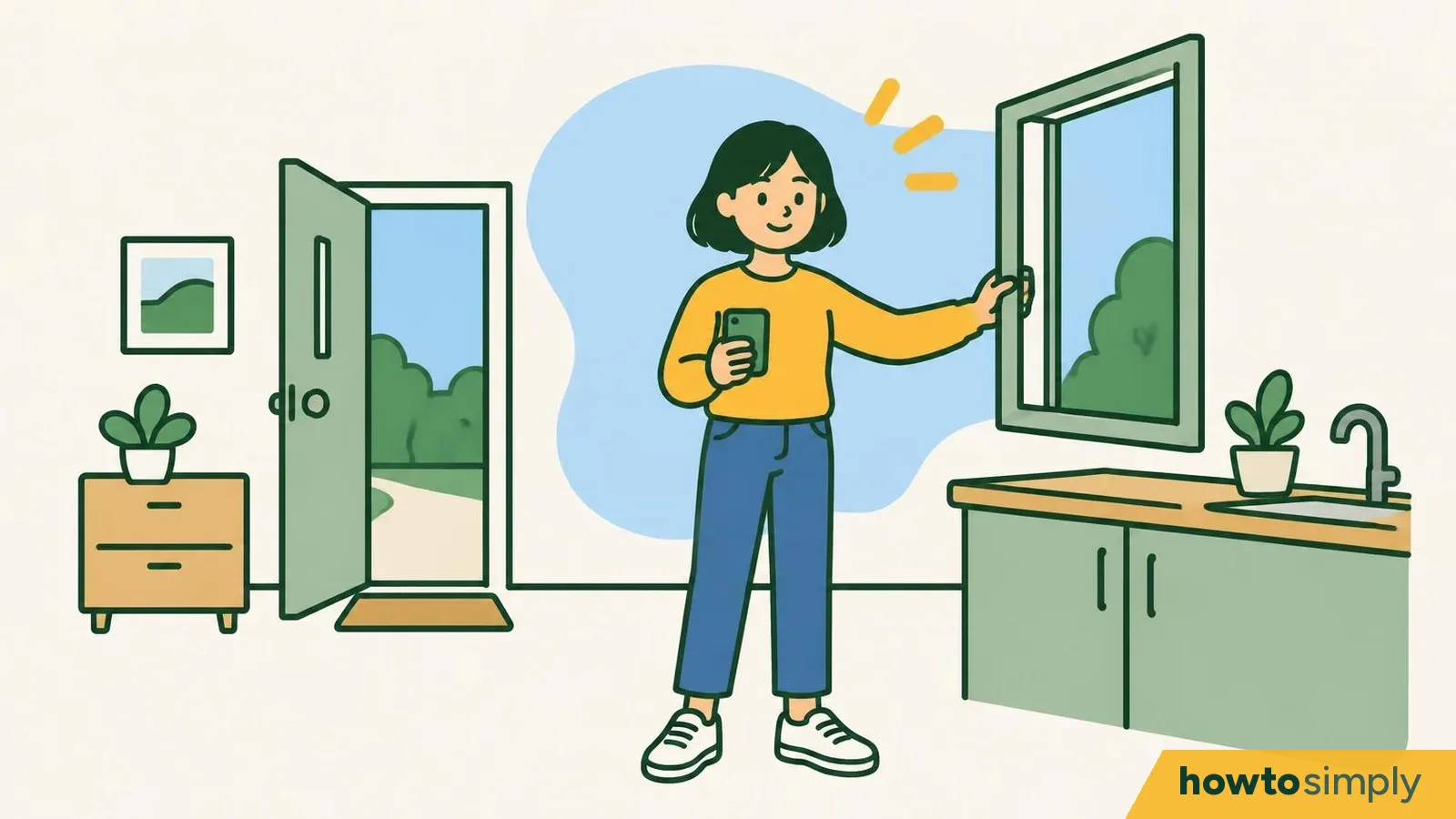
Stop condensation and mould: open windows wide for about 5 minutes, 2 to 3 times a day, and keep humidity at 40 to 60 percent
In winter, open windows wide for about 5 minutes per room two or three times a day instead of leaving them tilted, keep the kitchen or bathroom door shut and the window open after cooking or showering, keep humidity between 40 and 60 percent, clean only small patches yourself, and report anything bigger to your landlord.
Researched by Abu Bakar SaadatLast changed 17 November 2026Verified 17 November 2026Version 4See all changes
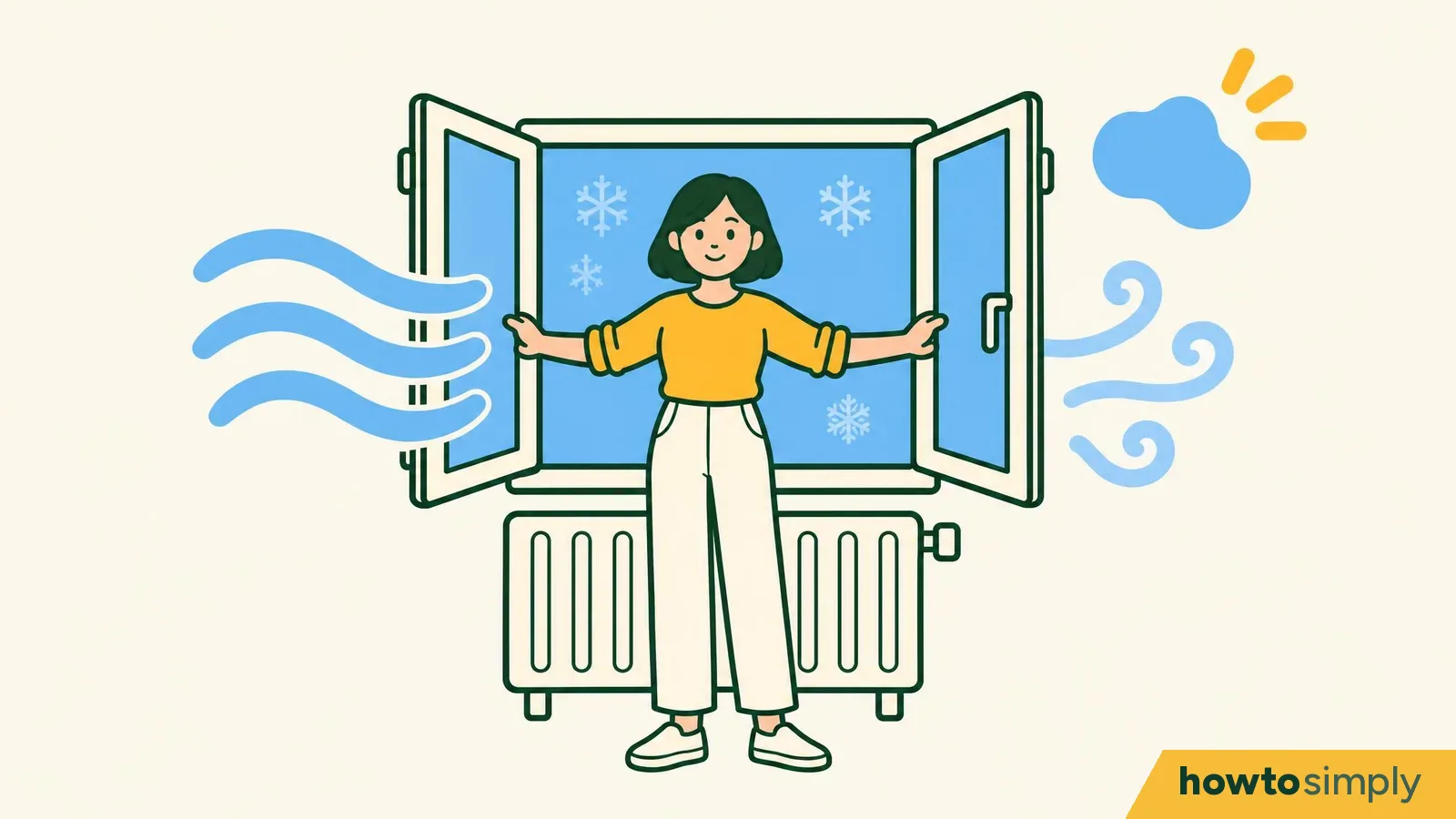 Illustration
On this page 20 sections
In short
In winter, open windows wide for about 5 minutes per room two or three times a day instead of leaving them tilted, keep the kitchen or bathroom door shut and the window open after cooking or showering, keep humidity between 40 and 60 percent, clean only small patches yourself, and report anything bigger to your landlord.
Current advice
Air rooms in short, wide-open bursts rather than with a tilted window, get steam out of the kitchen and bathroom straight away, keep relative humidity at 40 to 60 percent, find and fix the source of the moisture, and leave larger patches of mould to a professional.
Information, not professional advice.
Latest update
17 November 2026. We re-read the sources. The airing times, humidity ranges, cleaning limits and Awaab's Law deadlines on this page still match them. The Energy Saving Trust page did not open for us today, so the points taken from it rest on our reading of 9 November 2026.
What changed in this version
- The Centre for Sustainable Energy now also gives a humidity range: 40 to 60 percent, with mould more likely above 60[3]. We added this to the key facts.
- GOV.UK says Phase 2 of Awaab's Law starts on 30 November 2026 and adds more hazards, such as excess cold, for social landlords[6]. The damp and mould deadlines stay the same.
- The page now has key facts with numbered sources, a table of airing times, a list of what the sources agree and differ on, and a record history.
Key facts
- In the cold months, opening one or more windows wide for about 5 minutes per room, 2 to 3 times a day, is usually enough, depending on temperature and wind.[1]
- A window left tilted open for a long time pushes up heating costs and cools the wall beside it, which can lead to mould.[1]
- Aim for relative humidity of 40 to 60 percent; the US EPA says below 60 percent, ideally 30 to 50.[1][3][4]
- Condensation is the most common cause of damp, and its mould shows as small black dots near cold surfaces such as window frames.[3]
- Clean mould yourself only if it is small and on the surface: under about 0.5 square metres in German advice, or about 10 square feet in US advice. Larger areas need a qualified professional.[2][4][5]
- Mould comes back unless the cause of the moisture is found and fixed.[2][4]
- GOV.UK says blaming damp and mould on how people live is totally unreasonable, and landlords should not wait for medical evidence before acting.[5]
- Under Awaab's Law, social landlords in England must investigate a significant damp or mould hazard within 10 working days and deal with emergencies within 24 hours.[6]
Wiping wet windows every morning and then finding small, dark spots on the window frames doesn't feel good, especially in a home you are proud of and always try to keep nice. How you live doesn't cause the damp and mould in your home, according to GOV.UK, and regular airing may stop mould from forming (Umweltbundesamt).
Here's why we care. According to GOV.UK guidance for England, damp and mould in homes was estimated to be linked to approximately 5,000 cases of asthma and about 8,500 lower respiratory infections in 2019. The Energy Saving Trust (EST) states that cooking, showers, kettles and even breathing can put as much as 100 litres of water into the air of a typical home per week. The landlord requirements further down apply to England. This is general information only, and does not constitute medical or legal advice.
Germany, the UK and the US side by side
| Germany (Umweltbundesamt) | UK (Centre for Sustainable Energy) | US (EPA) | |
|---|---|---|---|
| Airing | Windows wide open 2 to 3 times a day, about 5 minutes per room in winter; never left tilted | Open windows regularly, keep trickle vents open, use extractor fans | Vent dryers and stoves outside; use exhaust fans |
| Humidity | 40 to 60 percent | Check rooms with a hygrometer | Below 60 percent, ideally 30 to 50 |
| Clean it yourself if | Under about 0.5 m², surface only, and you're not allergic to mould and have no chronic airway illness or weakened immune system | Treat it with a mould spray containing bleach, covering an area at least 1 m wider than the patch | Under about 10 square feet (3 ft × 3 ft) |
Who needs extra care

According to GOV.UK, the people at greatest risk from damp and mould include: children, older people, pregnant women, people who have asthma, allergies, or other lung or heart conditions, people with a weakened immune system (for example during chemotherapy), and people who have difficulty leaving the home. If someone in one of these groups lives with you, begin with their room.
Step by step
Before you start
- Time: About 5 minutes per room, 2 to 3 times a day, for airing in winter[1].
- Who it's for: Anyone with wet windows, black spots near window frames or musty rooms in winter.
- Not for: Large patches of mould, or anyone allergic to mould or with a chronic airway illness or weakened immune system: they should leave cleaning to a specialist[2].
Spot condensation mould

Illustration Condensation is the most common form of damp you'll meet, and its main sign is small black dots near cold surfaces such as window frames (CSE). Condensation occurs when warm, humid air from showers, cooking, drying laundry and even breathing meets a cold wall or window. Please do not worry: everyday jobs like cooking, bathing and drying laundry can't help adding moisture to the air (GOV.UK).
Rule out rising and penetrating damp
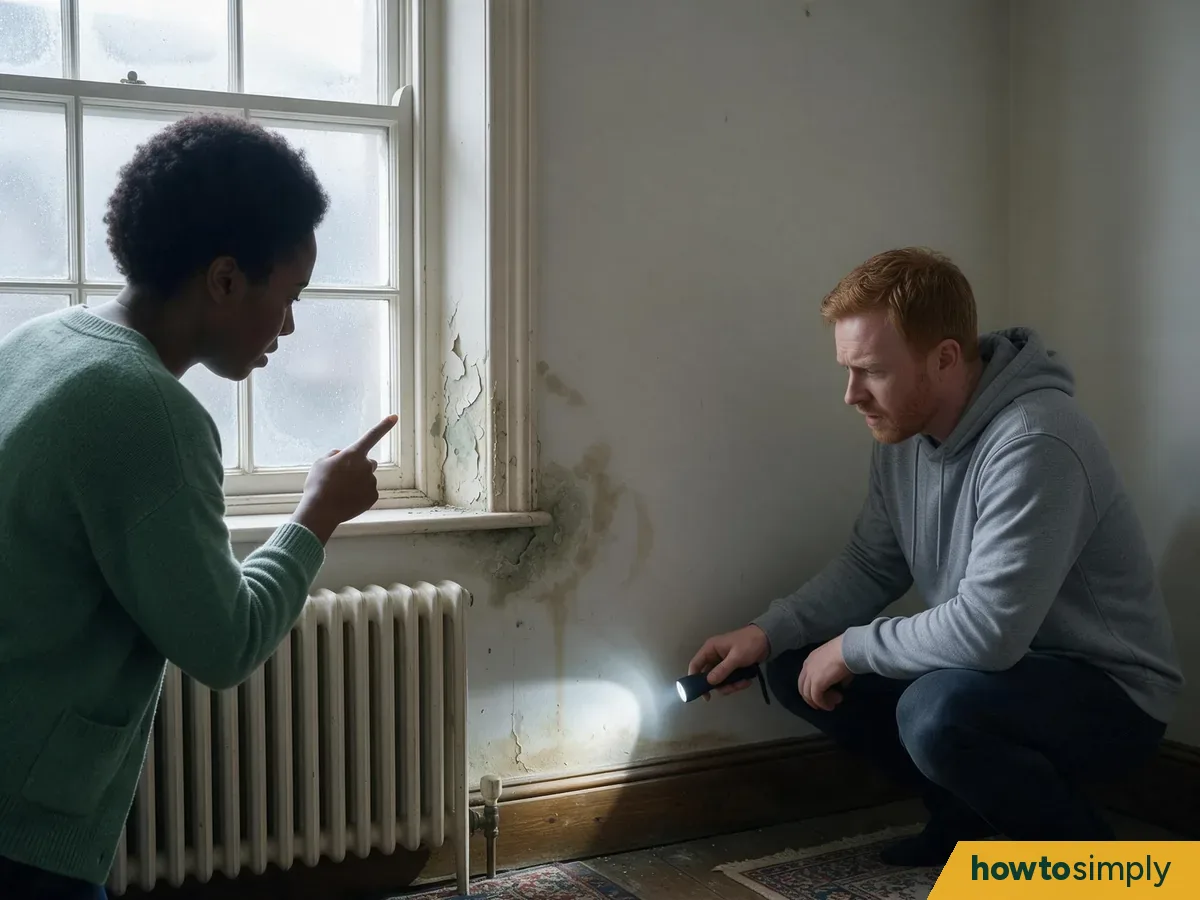
Illustration Before making any changes to your habits, take a quick glance at the walls. A tidemark at the base of a wall indicates rising damp, where water from the ground gets past a damaged damp-proof course. A patch that grows larger when it rains typically indicates penetrating damp, often from faulty gutters or roofing. If there are no leaks and no rising damp, the EST says the problem is almost certainly condensation, and the steps below are for you.
Air the German way (Stoßlüften)
Illustration 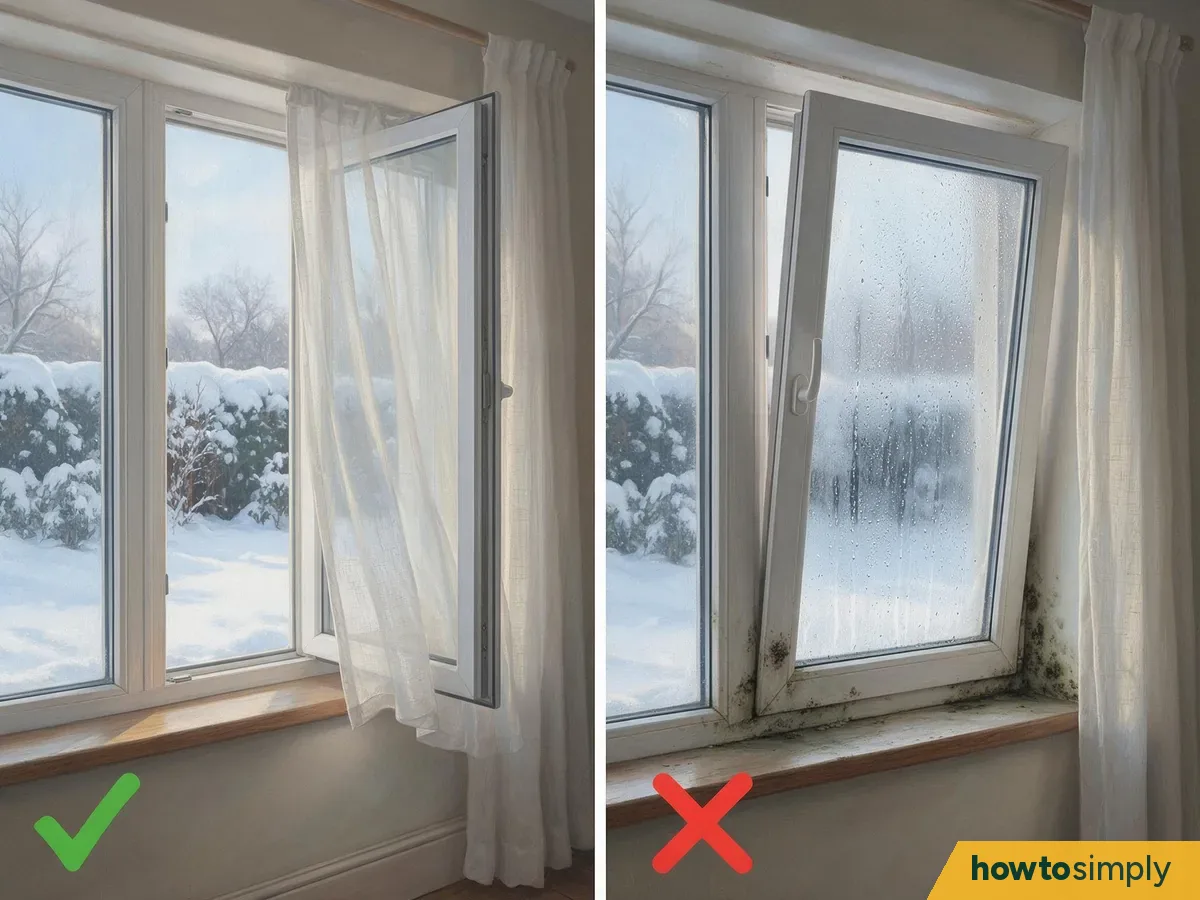
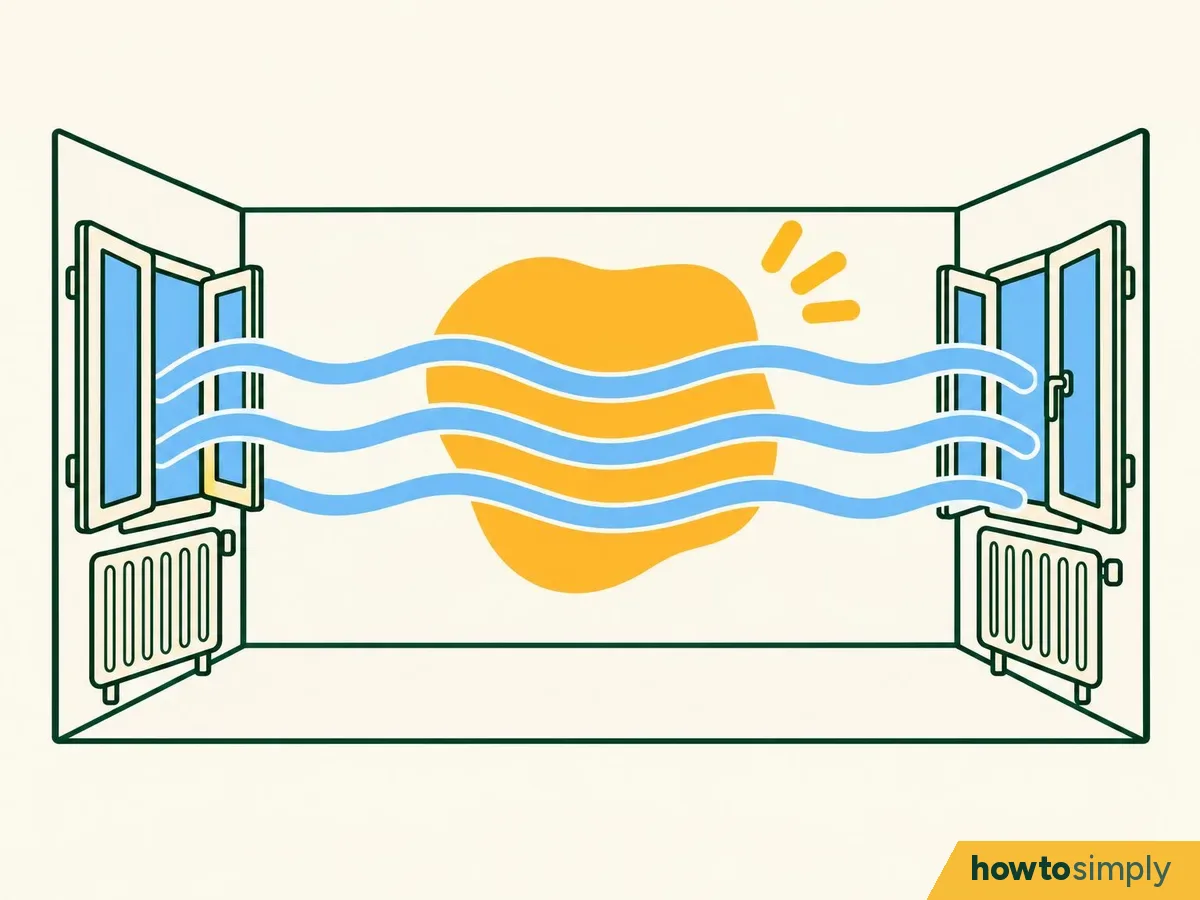
Illustration: open wide for about five minutes; a window left tilted all day cools the wall and can lead to mould Open several windows wide for a brief period, preferably on opposite sides of the home. The air then moves straight through and takes the humid air out with it. During colder months, depending on the temperature and wind, opening windows 2 to 3 times a day for about 5 minutes per room is enough. That's it! Air your bedroom for 5 to 10 minutes after waking up. Leaving a window tilted open all day works against you, though: it wastes heat and cools the wall beside the window, creating ideal conditions for mould (Umweltbundesamt).
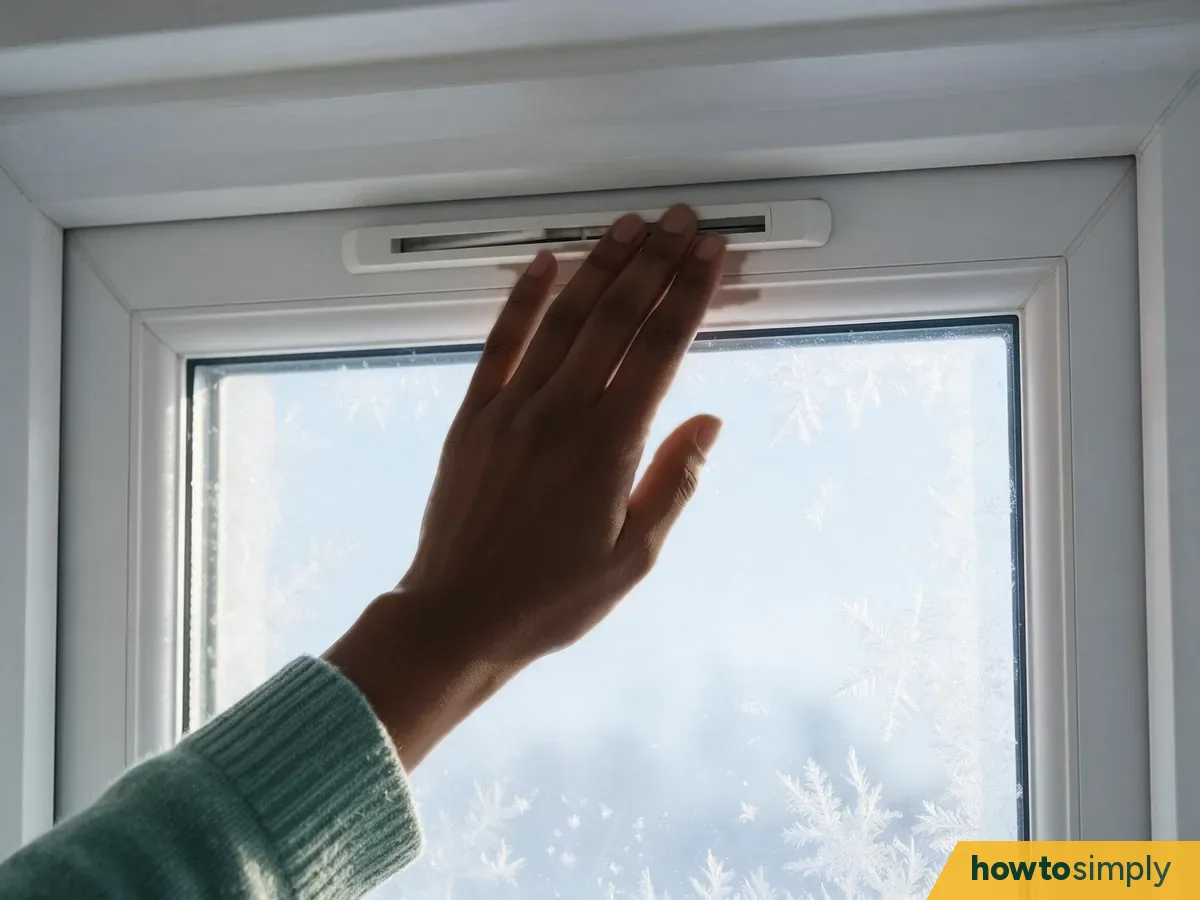
Illustration If your windows have small trickle vents at the top, keep them open and unobstructed throughout the year, including winter. As stated by the EST, ventilation is essential for reducing moisture.
Kitchen: lid on, door shut, window open
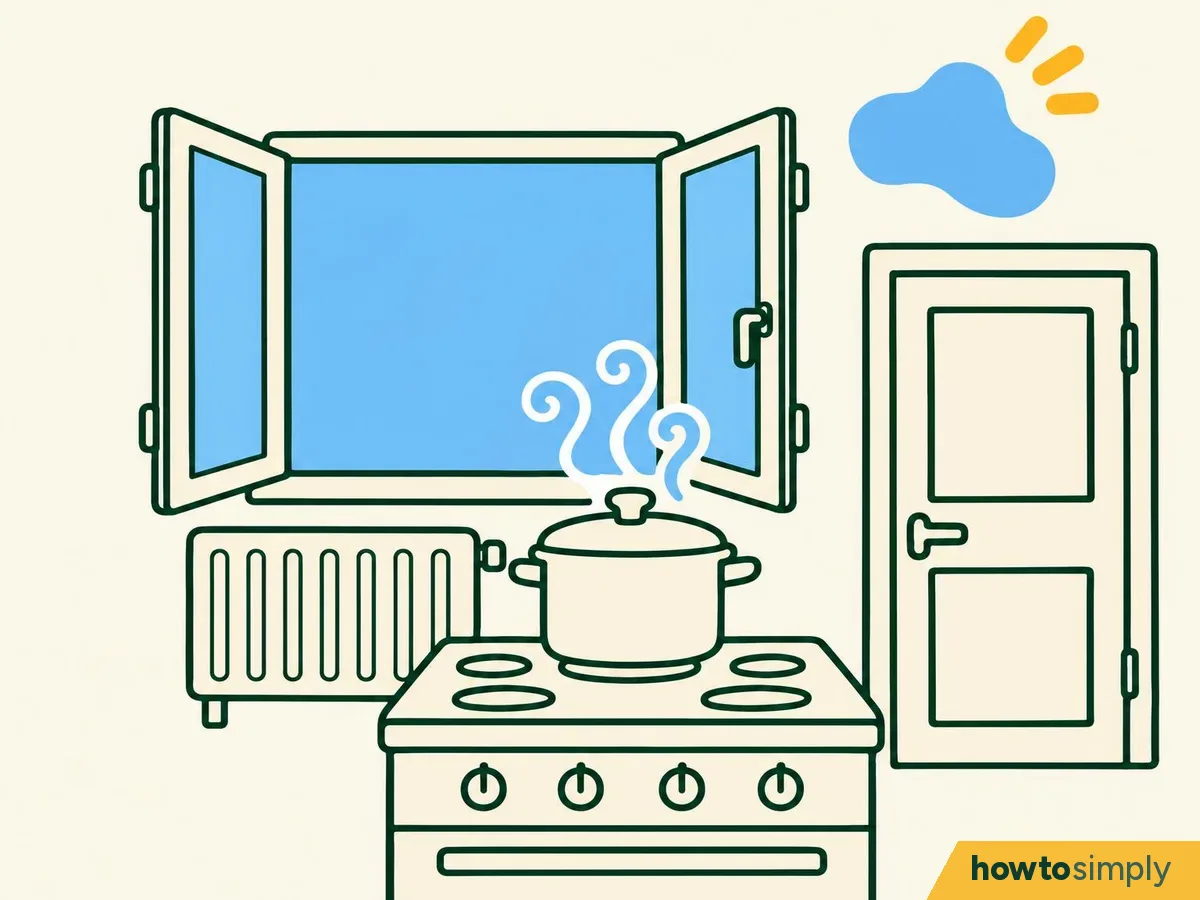
Illustration Next is the kitchen. Put lids on your pans (CSE). Open the window wide while cooking and for 5 to 10 minutes afterwards, and keep the kitchen door closed so the moisture doesn't spread through the home (Umweltbundesamt). If you have a cooker hood, turn it on while cooking and keep it running for at least 15 minutes after you finish (EST).
Bathroom: wipe the walls, then air
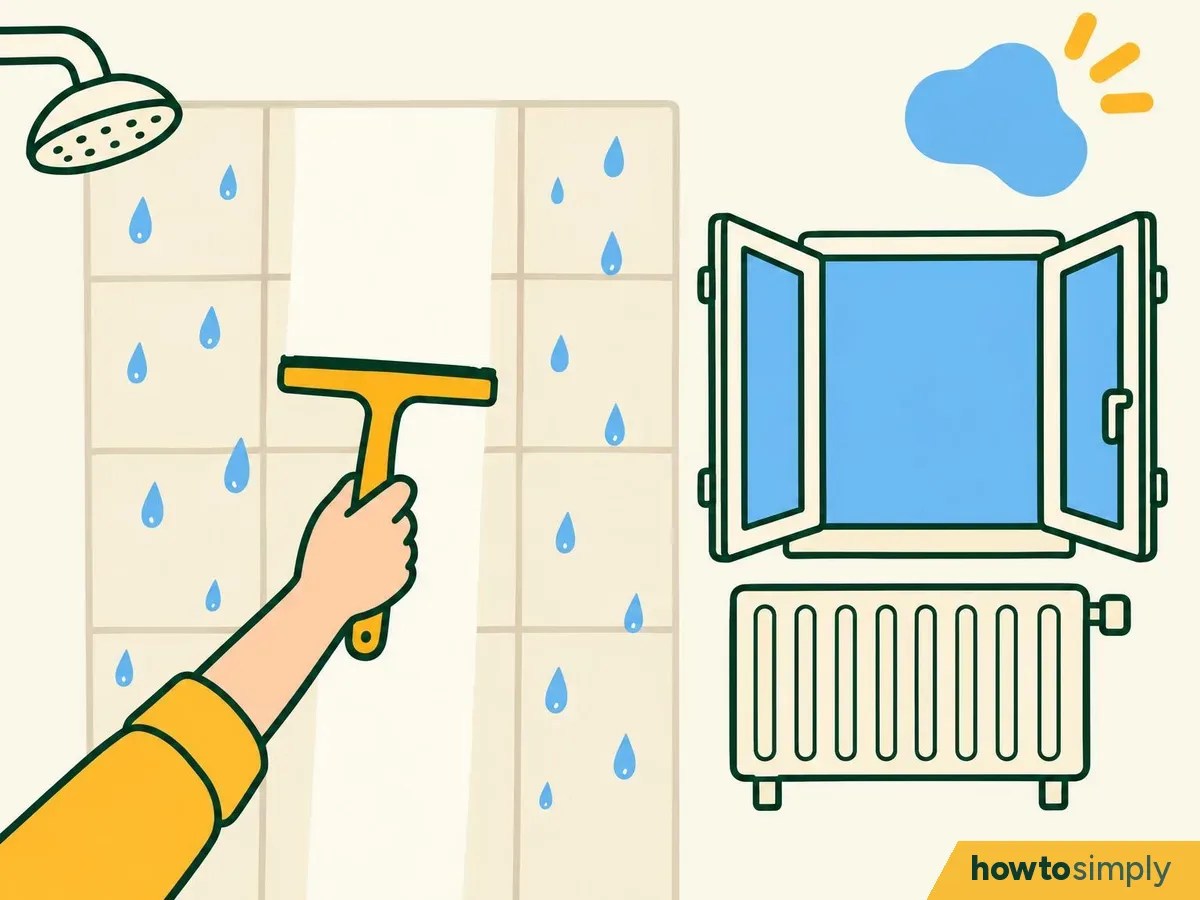
Illustration Once you've showered, wipe the water off the walls and floor; the Umweltbundesamt recommends a window squeegee. Then open the window wide for 5 to 10 minutes with the bathroom door closed. Run your extractor fan whenever there's steam, and keep it going for at least 15 minutes after you finish (EST).
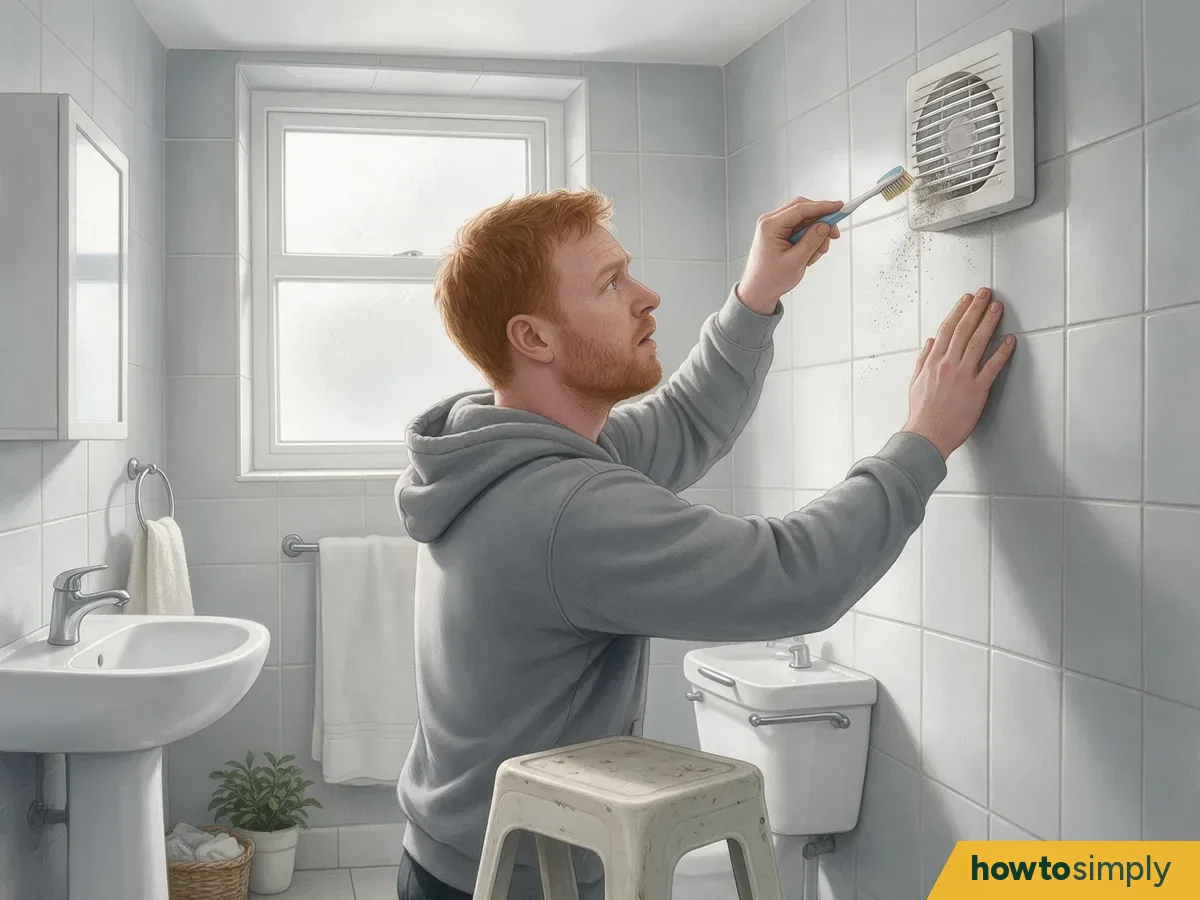
Illustration Make sure your extractor fan is clean and working properly (CSE). First, turn the fan off, then use an old toothbrush to brush the dust out.
Wipe the windows every morning
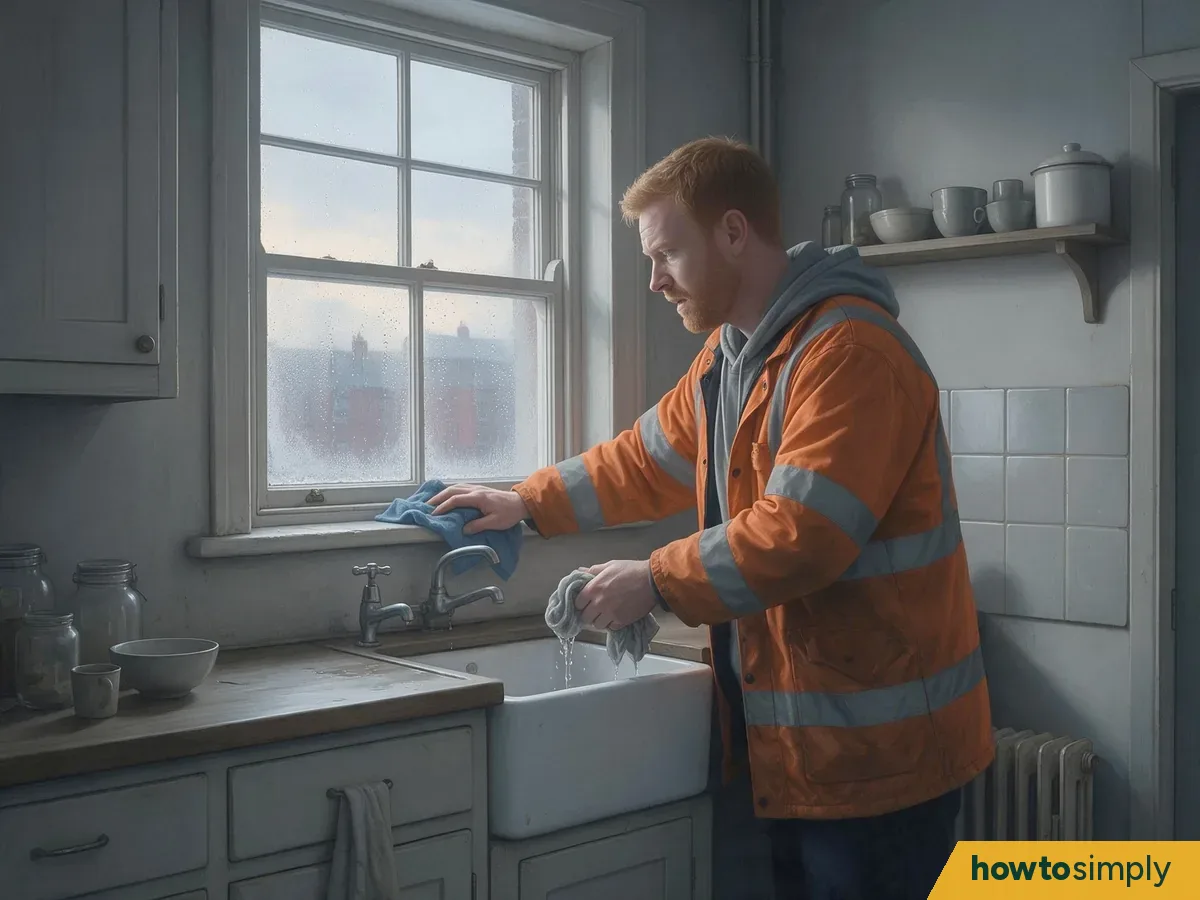
Illustration According to the EST, a little condensation on a cold morning isn't necessarily a problem if it clears quickly. However, a heavy build-up of condensation around windows is a common sign of damp (EST). Use a squeegee or a towel to wipe it away (EST).
Check the humidity

Illustration A cheap hygrometer takes the guesswork out of which rooms need more airing (CSE, Umweltbundesamt). Aim for 40 to 60 percent relative humidity (Umweltbundesamt). If the reading rises after showers and cooking and stays up, air more often. If it still stays high, a dehumidifier helps in severe cases (CSE).
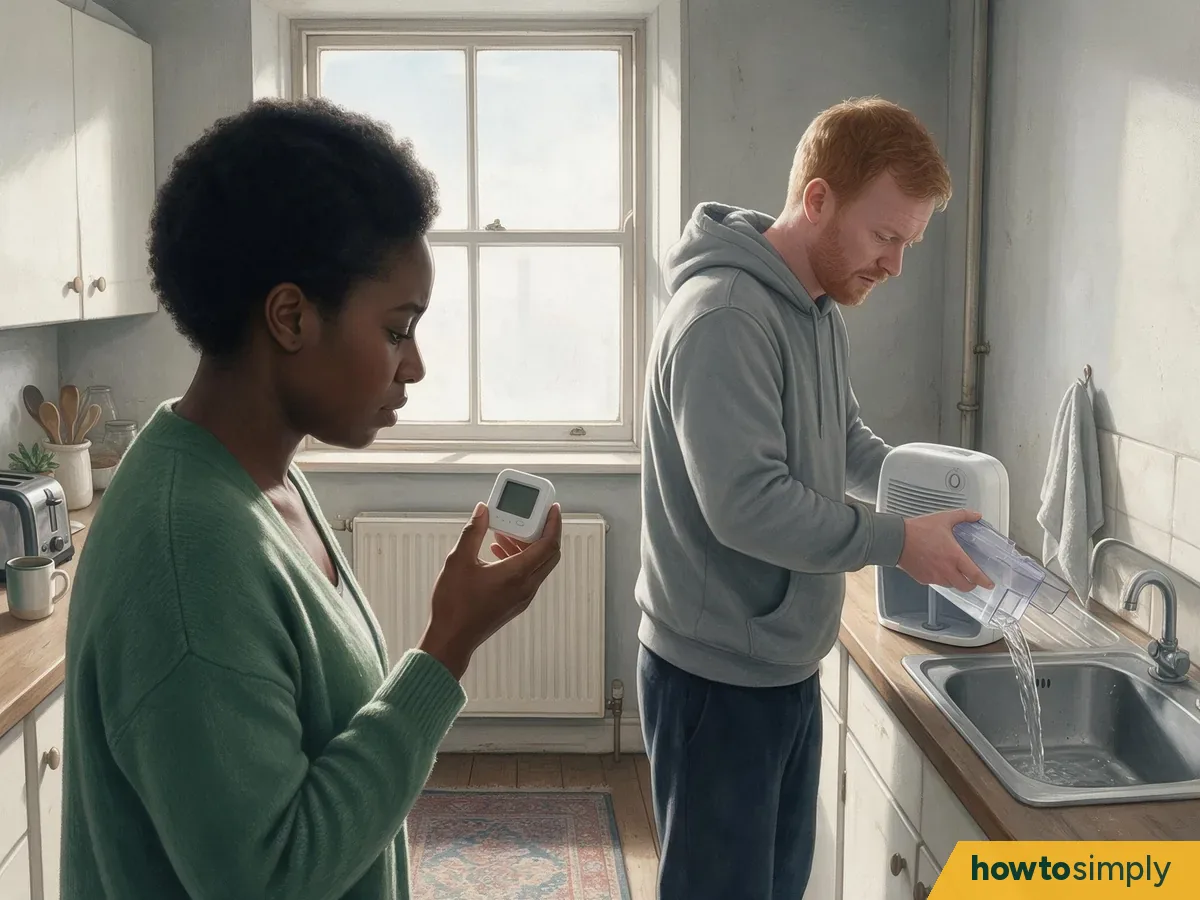
Illustration If you use a dehumidifier, empty its tank as soon as it is full. Otherwise, it stops collecting water and just becomes a box in the corner.
Give the air room to move
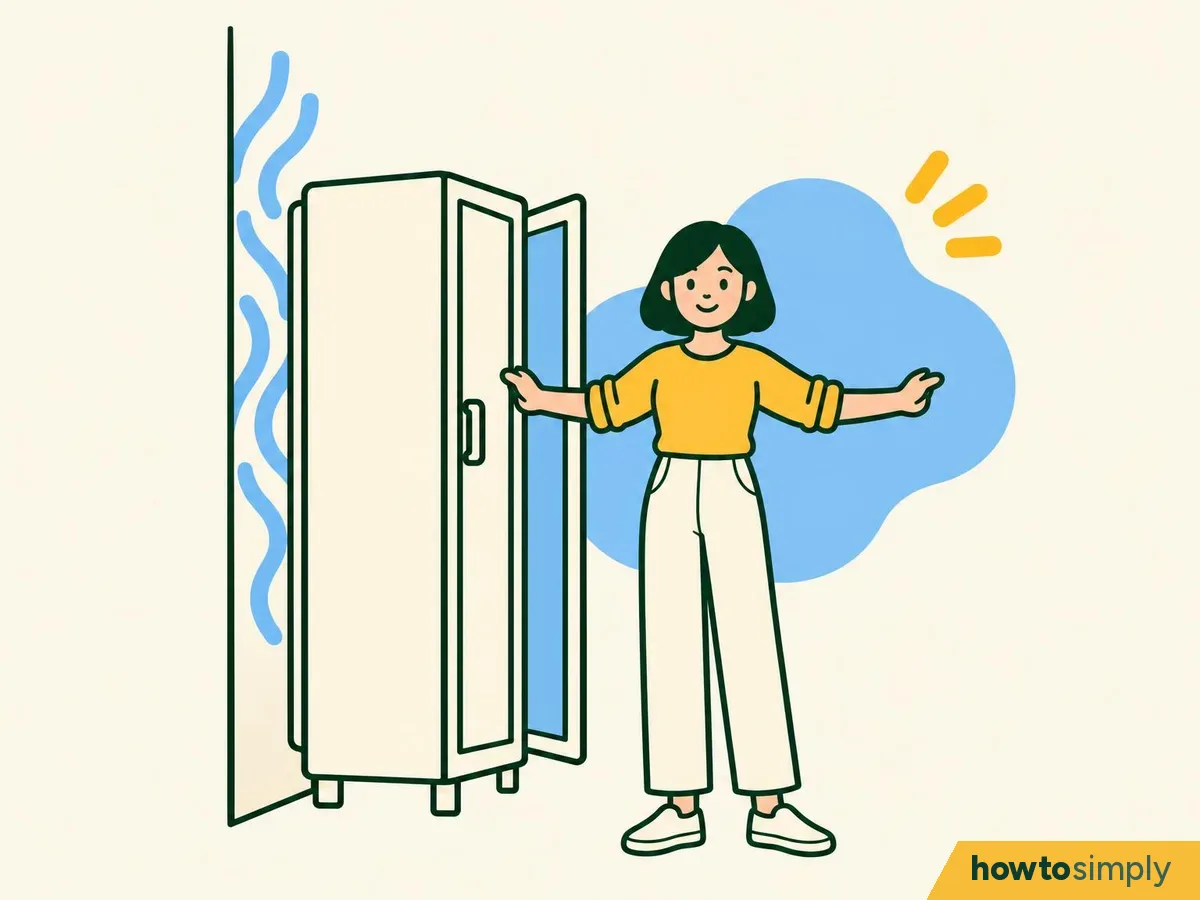
Illustration Mould is commonly found on outside walls, in corners, and behind or under beds and large furniture (Umweltbundesamt). Pulling furniture a little away from the wall lets air circulate behind it (CSE). The EST also advises a gap of at least 10mm under internal doors so air can move between rooms. Keep the doors of cooler rooms, such as bedrooms, closed so warmer, moister air from the rest of the home doesn't condense in them (Umweltbundesamt).
Keep the heat steady, and don't seal every gap
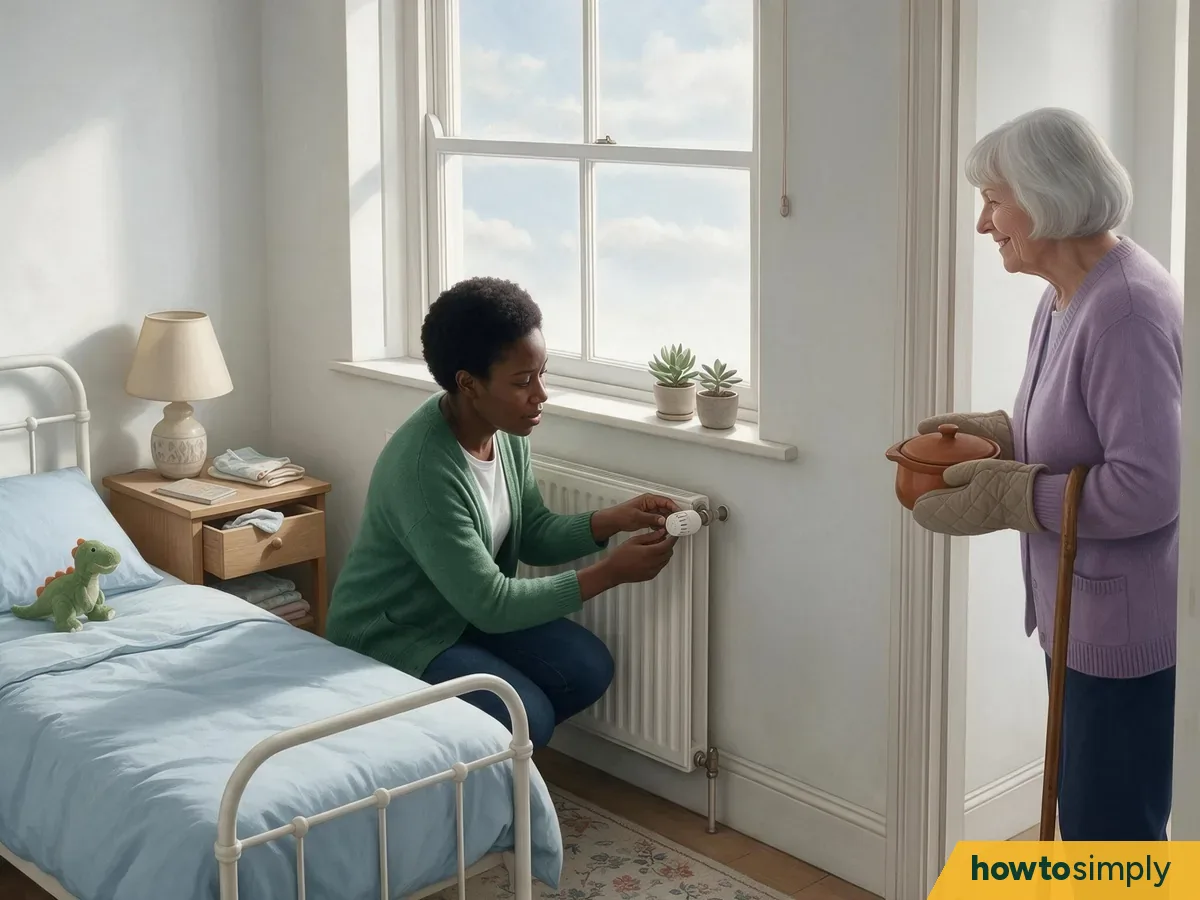
Illustration Rooms where the heating is off or low in winter are more prone to damp, according to the EST, but it also says that leaving the heating on all the time just to stop damp isn't sensible. Good heating controls help. Important note: don't add new draught-proofing to a room that lacks ventilation or already has a condensation problem.
Look up at the gutters when it rains
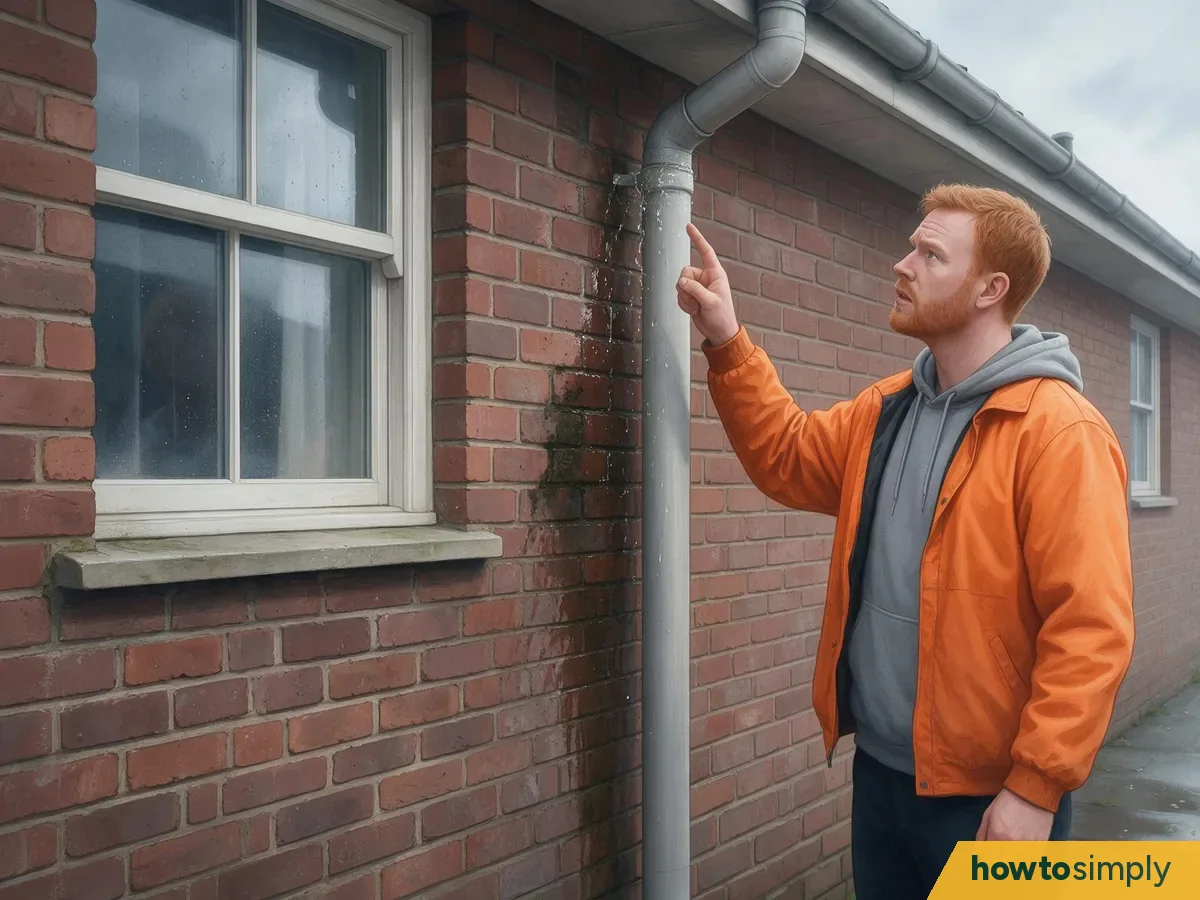
Illustration When a damp patch spreads after rain, check the outside. Among the outside checks for damp, GOV.UK includes damaged or blocked pipes, gutters and downpipes, broken window seals and cracked render, and says fixing the source can remove the moisture. Most people need an expert to visit and advise them at this point (EST). If you clean up the mould but leave the water problem, the mould is likely to come back (EPA).
How to tell it worked
More that helps
- Laundry: dry it outside if you can. If not, run the spin cycle twice, use a tumble dryer, or hang it in a room with the door closed and the window open (CSE, Umweltbundesamt). Drying shirts on radiators just turns your heating into steam.
- Heating: in cold weather, put it on often enough to keep the home dry. The boiler might be due a service, or the radiators might need bleeding (CSE). See how to bleed a radiator and how to top up boiler pressure.
- No portable gas heaters indoors: they put moisture into the air, according to CSE.
Cleaning a small patch safely
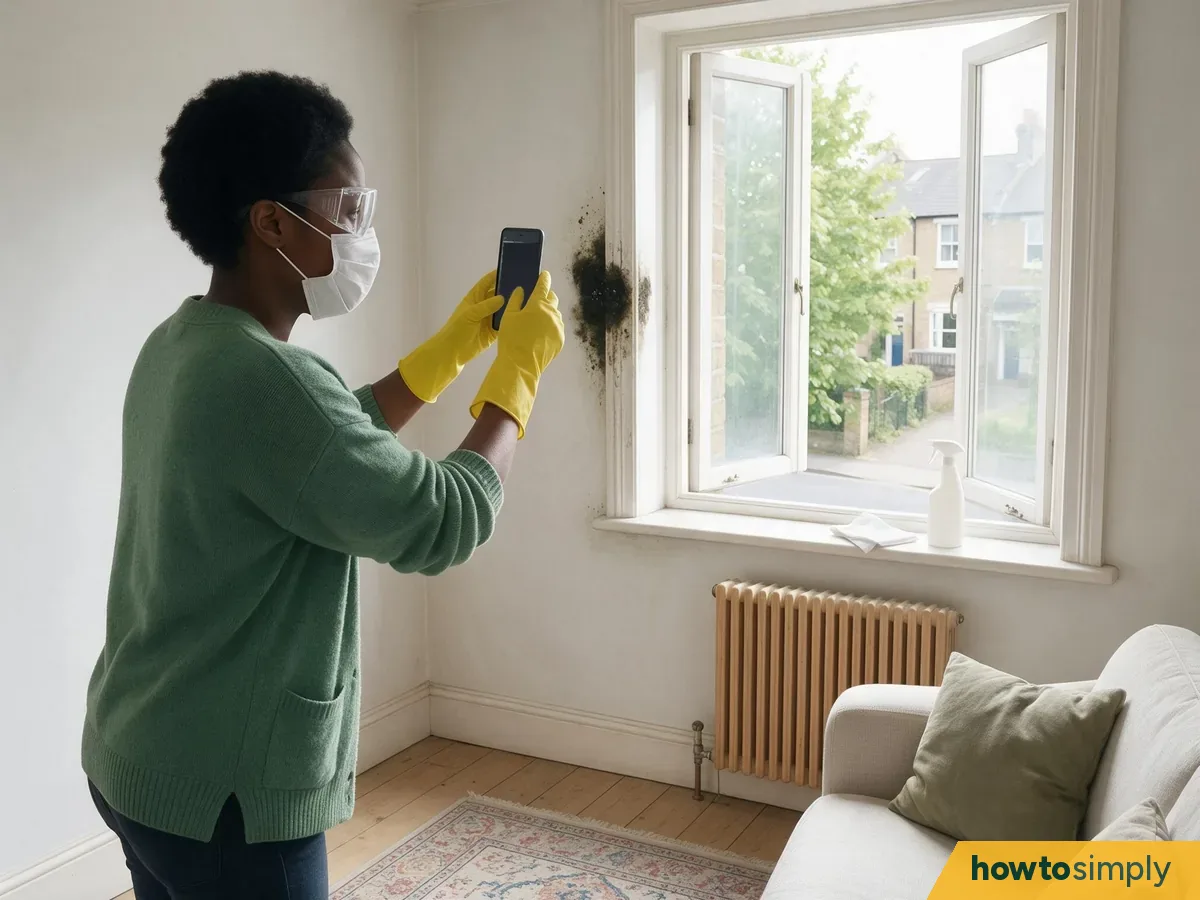
Before you clean, take photographs and draw around the area where the mould is, if you can. GOV.UK suggests this as a record, and it helps whoever looks for the source later. GOV.UK recommends using products that are specifically designed for mould and mildew instead of bleach. Larger patches should only be dealt with by qualified professionals (GOV.UK), and there is absolutely no shame in handing it over.
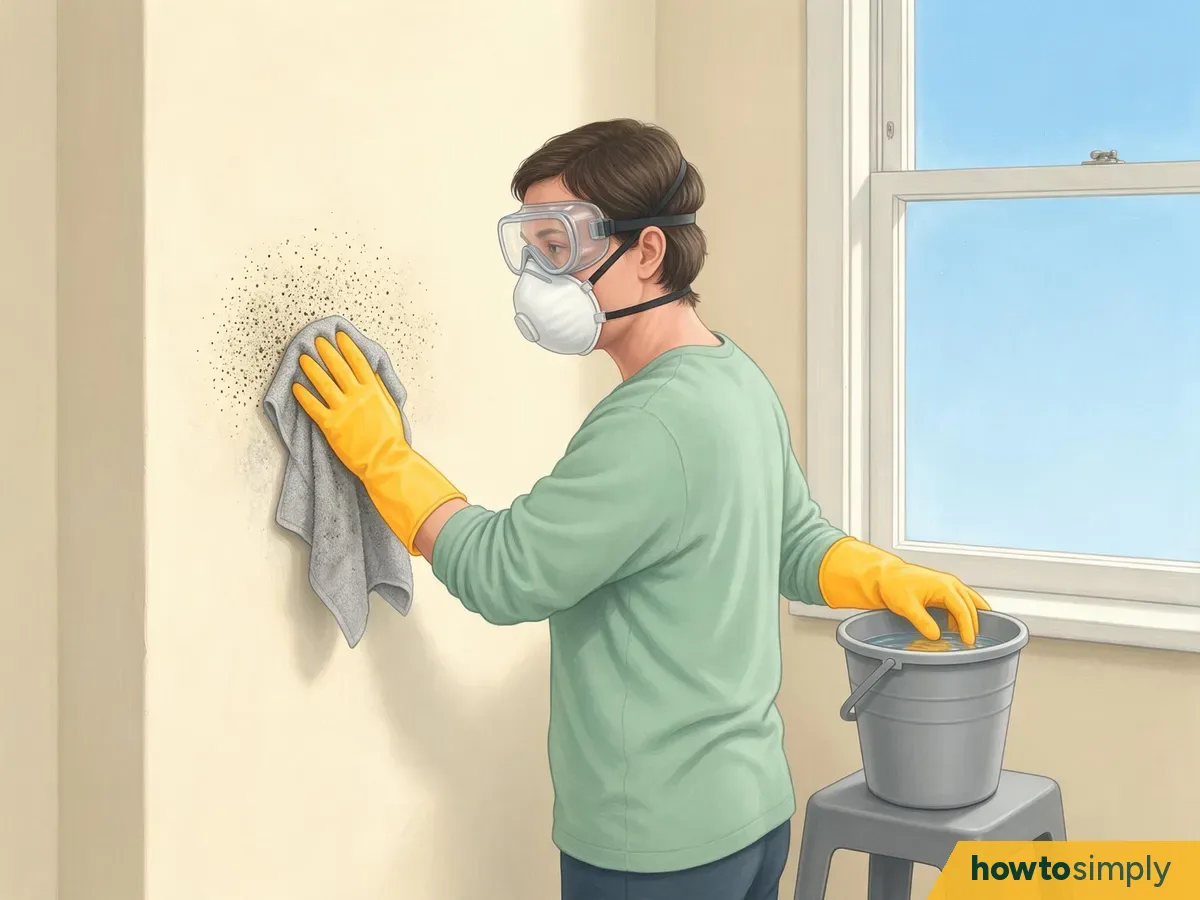
US EPA's advice for cleaning a small area of mould:
- Protect yourself: use a properly fitted N-95 mask, long gloves reaching to the middle of your forearm and goggles without ventilation holes. Don't touch the mould with your bare hands.
- Hard surfaces: clean with detergent and water, scrub, and leave nothing damp afterwards.
- Never combine bleach with cleaners that contain ammonia: the combination can produce toxic fumes. Keep the room well-aired if you use a disinfectant.
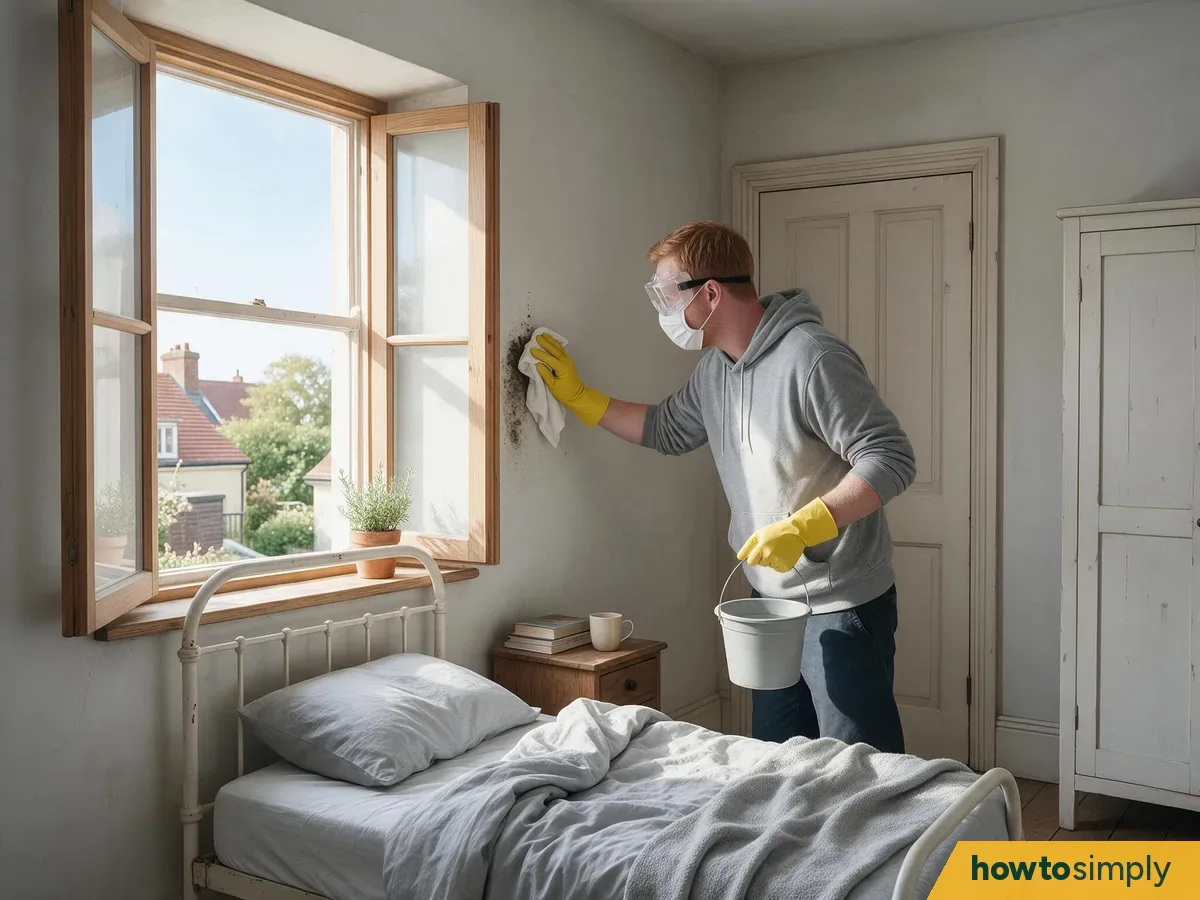
The EST has a simple tip: wipe the mould with a damp cloth rather than a dry one, so you don't spread the spores. Pick a disposable cloth so it goes straight in the bin when you're done. Keep the window open while you work.
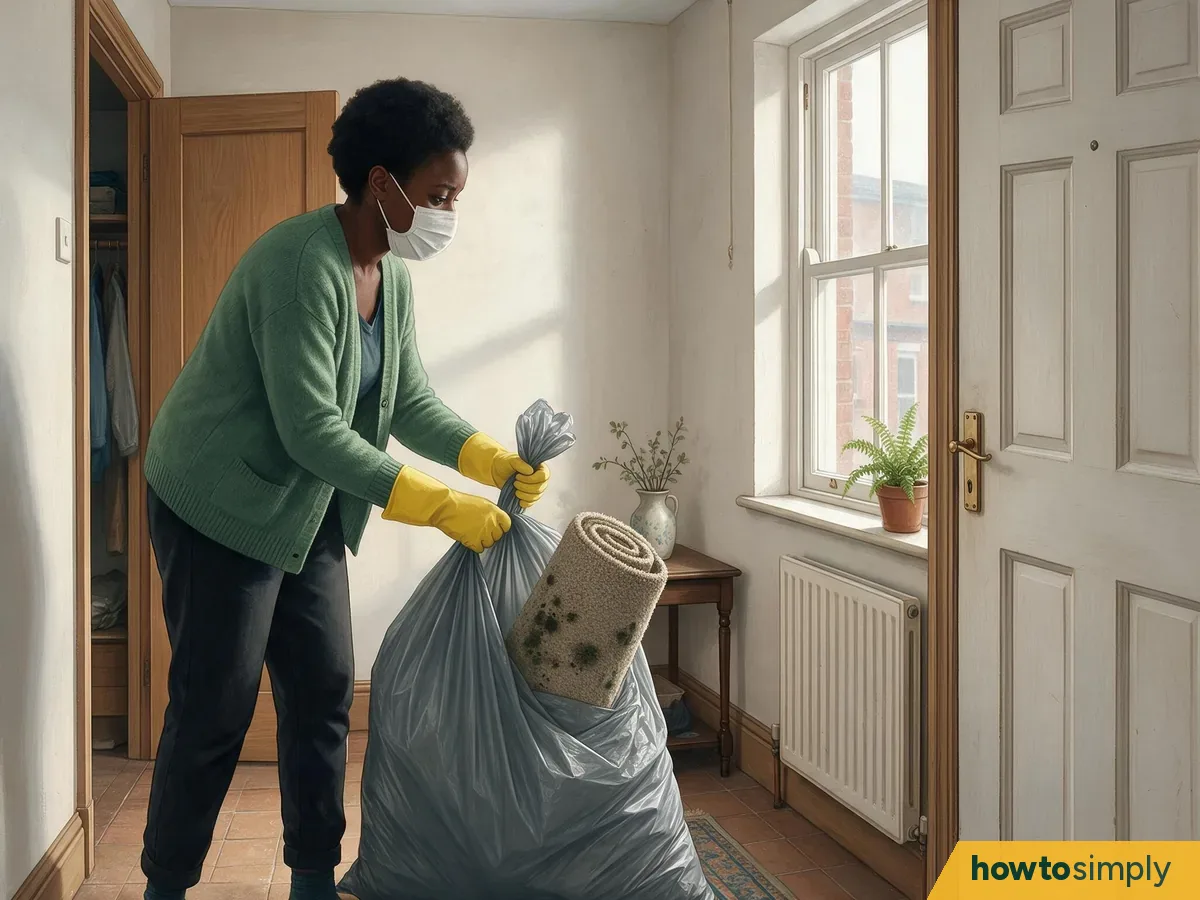
You may need to get rid of mouldy carpets, cushions, curtains and ceiling tiles, because removing all the mould from them can be hard or impossible (GOV.UK, EPA). GOV.UK also cautions that pulling up carpets or stripping wallpaper can release a lot of spores, so wear protection and ask a trained professional for advice if you are concerned.
Common mistakes
- Painting over it: clean and dry the surface first. Paint over mould is likely to peel (EPA).
- Spraying it but leaving it there: dead mould can still trigger allergies, so it has to be removed, not just killed (EPA).
- Leaving a leak or spill: dry anything soaked by water within 24 to 48 hours, before mould begins to grow (EPA).
- Letting condensation sit: wipe it off windows, walls and pipes promptly. Insulating cold water pipes helps as well (EPA).
Report it in writing, with photos

A phone call is easy to forget at both ends of the line. Report the problem promptly to your landlord or housing association (EPA). GOV.UK says photographs with a line drawn around the patch keep a record that helps find the source.
Try saying: "There's black mould on the outside wall of my son's bedroom and condensation on the windows every day. He has asthma. Could you arrange an inspection and tell me when it will happen?"
If you rent in England: your rights and Awaab's Law
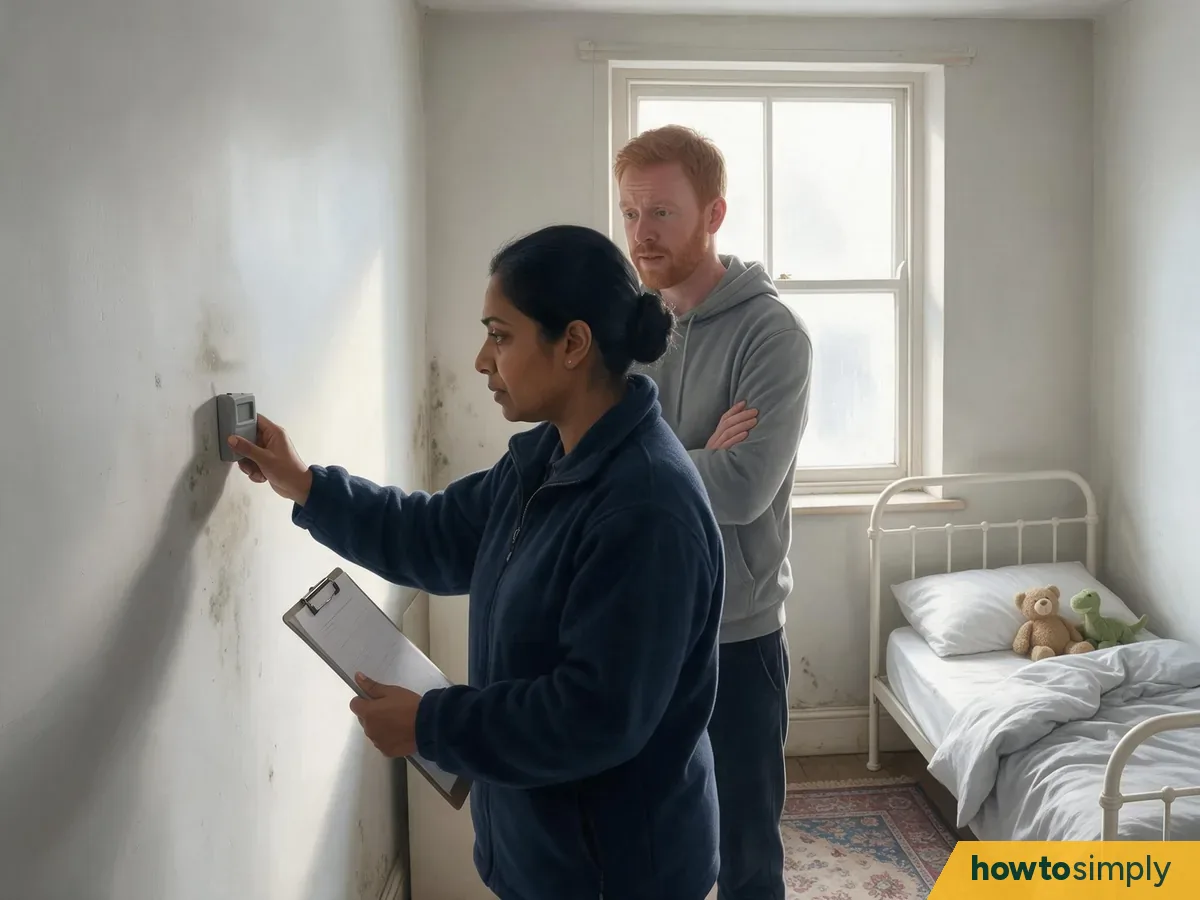
GOV.UK's guidance says it is "totally unreasonable" to blame damp and mould on "lifestyle choices", because cooking, bathing and drying laundry are unavoidable. It also says landlords shouldn't wait for medical evidence before taking action.
Awaab's Law, named after two-year-old Awaab Ishak, has applied to social housing in England since 27 October 2025. If your social landlord can't make your home safe in time, they must provide suitable alternative accommodation at their own cost. Awaab's Law will be extended to private renters, and a government consultation on how to do this closes on 18 December 2026.
| Awaab's Law (social housing, England) | Deadline |
|---|---|
| Investigate a significant damp or mould hazard | Within 10 working days |
| Send you a written summary | Within 3 working days of finishing the investigation |
| Carry out relevant safety work | Within 5 working days of the investigation ending |
| Emergencies | Investigated and made safe within 24 hours |
Source: GOV.UK, Awaab's Law in the social rented sector and Extending Awaab's Law to private rented tenancies and to licences (read 9 November 2026).
If this doesn't work
If the dots keep coming back even though you've done everything you can, please don't blame yourself. Sometimes damp has a cause that airing alone can't fix, and these points will help you find it.
- The mould keeps coming back: the source of the moisture is most likely still there and has to be fixed (Umweltbundesamt). Damp could be getting in from outside (penetrating damp, which gets worse with rain) or rising from the ground. If you can't find the cause, have a damp specialist survey your home (CSE).
- There's a large patch, or you are allergic to mould or have a chronic airway illness or a weakened immune system: don't clean it yourself. Use a specialist firm (Umweltbundesamt).
- You rent: tell your landlord promptly, as above (EPA). In Germany, tenants' associations (Mietervereine) and some health offices (Gesundheitsämter) give advice (Umweltbundesamt). In UK social housing, the Housing Ombudsman has a guide to raising an issue with your landlord (CSE).
When damp is making you ill
- If you think damp or mould is affecting your health, for example coughing, wheezing or breathlessness, consult a healthcare professional such as your GP or in England use NHS 111 online.
- If someone is struggling to breathe or having a severe asthma attack, call 999.
How long to air, by room and season
| When | How long | Source |
|---|---|---|
| Any room, cold months | About 5 minutes per room, 2 to 3 times a day, windows wide open | Umweltbundesamt[1] |
| Bedroom, after getting up | 5 to 10 minutes, window wide open | Umweltbundesamt[1] |
| Kitchen and bathroom, while and right after cooking or showering | 5 to 10 minutes, windows wide open, door shut | Umweltbundesamt[1] |
| Any room, warm months | 10 to 20 minutes each time, depending on temperature and wind | Umweltbundesamt[1] |
| Kitchen or bathroom fan | On every time there is steam | Centre for Sustainable Energy[3] |
Graphic by howtosimply, from the sources below.
What the sources agree on
- Short, regular airing and getting steam out of kitchens and bathrooms helps prevent condensation.[1][3][4]
- A hygrometer shows which rooms need more airing, and 60 percent is the upper limit to stay under.[1][3][4]
- Small patches can be cleaned at home, but larger ones need a professional.[2][4][5]
- The source of the moisture has to be fixed, or the mould returns.[2][4][5]
- Badly affected soft materials such as carpets or furniture may have to be thrown away.[3][4][5]
Where the sources differ, or nothing is confirmed
- Bleach: the Centre for Sustainable Energy tells you to treat mould with a spray containing bleach[3], GOV.UK prefers mould and mildew products over bleach[5], and the US EPA does not recommend bleach as a routine practice[4]. This page follows GOV.UK and the EPA.
- Humidity: German and UK advice gives 40 to 60 percent[1][3]; the US EPA prefers 30 to 50 percent[4].
- How big a patch you can clean yourself: about 0.5 square metres in German advice[2], about 10 square feet in US advice[4], and very small amounts only in GOV.UK guidance[5].
- Awaab's Law covers social housing in England only. Its extension to private renting is still out for consultation until 18 December 2026, so the rules for private tenants are not set yet[7].
Record history
- Version 4. Sources re-read and the page moved to the record format, with key facts, numbered sources, an airing table and this history.
- Version 3. Text rewritten in plainer words from the checked original; facts unchanged.
- Version 2. Our damp and mould article merged in: GOV.UK and Energy Saving Trust advice on risk groups, types of damp, fans, safe cleaning, reporting and Awaab's Law. The old address now redirects here, and the title was shortened.
- Version 1. First published: German, UK and US advice on airing, humidity and cleaning mould.
Questions
Is it better to leave a window tilted open all day?
No. A tilted window left open for a long time raises heating costs and cools the wall next to it, which can cause mould. Open windows wide for a few minutes instead[1].
What humidity should my home have?
Between 40 and 60 percent, according to German and UK advice[1][3]. The US EPA says below 60 percent and ideally 30 to 50[4]. A simple hygrometer shows the reading.
Can I clean mould off myself?
Only small, surface patches: under about 0.5 square metres if you are not allergic to mould and have no chronic airway illness or weakened immune system[2], or under about 10 square feet in US advice[4]. Leave larger areas to a qualified professional[5].
Should I use bleach?
GOV.UK says to use a mould and mildew product rather than bleach[5]. If you do use a disinfectant, air the room, and never mix bleach with cleaners that contain ammonia, because the fumes can be toxic[4].
Does Awaab's Law apply to private renters?
Not yet. It applies to social housing in England[6]. A government consultation on extending it to private tenancies closes on 18 December 2026[7].
Why does mould keep coming back?
Because the moisture that feeds it is still there. The Umweltbundesamt says the cause must be found and fixed, or the mould returns.
How do I know if it is rising damp or condensation?
The Energy Saving Trust says a tidemark along the bottom of a wall suggests rising damp, and a patch that gets worse when it rains suggests penetrating damp. If there are no leaks and no rising damp, it is almost certainly condensation.
Should I use bleach to clean mould?
GOV.UK guidance says to reach for a mould and mildew product rather than bleach. Wear a mask, gloves and goggles, use a disposable cloth, wipe the mould while it is wet and keep the room aired.
Can my landlord blame me for damp and mould?
GOV.UK guidance says blaming damp and mould on the way people live is completely unfair, because nobody can avoid cooking, washing and drying clothes. Landlords should not wait for medical evidence before acting.
Sources
- Umweltbundesamt: Wie lüfte ich richtig? (German, updated 13 Dec 2024). Read 17 November 2026.
- Umweltbundesamt: Häufige Fragen bei Schimmelbefall (German). Read 17 November 2026.
- Centre for Sustainable Energy: Condensation, damp and mould (reviewed Dec 2025). Read 17 November 2026.
- US EPA: A brief guide to mold, moisture and your home. Read 17 November 2026.
- GOV.UK: Understanding and addressing the health risks of damp and mould in the home. Read 17 November 2026.
- GOV.UK: Awaab's Law in the social rented sector. Read 17 November 2026.
- GOV.UK: Extending Awaab's Law to private rented tenancies and to licences. Read 17 November 2026.
- Energy Saving Trust: How to get rid of damp. Read 9 November 2026.
- NHS 111. Read 17 November 2026.
Sources and method
- Researched by
- Abu Bakar Saadat
- Tested by our team
- No. We have no record of anyone on our team trying these steps, so treat them as researched instructions from the sources below.
- Pictures
- 22 illustrations drawn for this article, each marked Illustration (drawings, not photos).
- Sources
- 9 named sources, linked below.
- What this page adds
- A Germany, UK and US side-by-side table on airing, humidity and when to clean mould yourself, drawings of airing a room from both sides, and a table of Awaab's Law deadlines for social tenants.
- What we checked
- On 17 November 2026 we re-read both Umweltbundesamt pages, the Centre for Sustainable Energy page, the US EPA guide, the three GOV.UK pages and NHS 111 online, and checked every airing time, humidity range, cleaning limit and Awaab's Law deadline against them; the Energy Saving Trust page refused our request, so its points rest on our reading of 9 November 2026.
What to do next
Get your home ready for winter Step 5 of 6
- How to dry clothes indoors in winter without dampIndoor washing is the sneaky source of damp in winter.
- How to bleed a radiator: the UK and German steps, and what to check afterwardsCold patches at the top of a radiator? Start here.
- How to top up your boiler pressure: the three UK filling methods, and the German ruleBleeding radiators drops the boiler pressure, so check it next.
Did this solve the problem?
Where did you get stuck?
What did you think?
Reaction counts are loading.