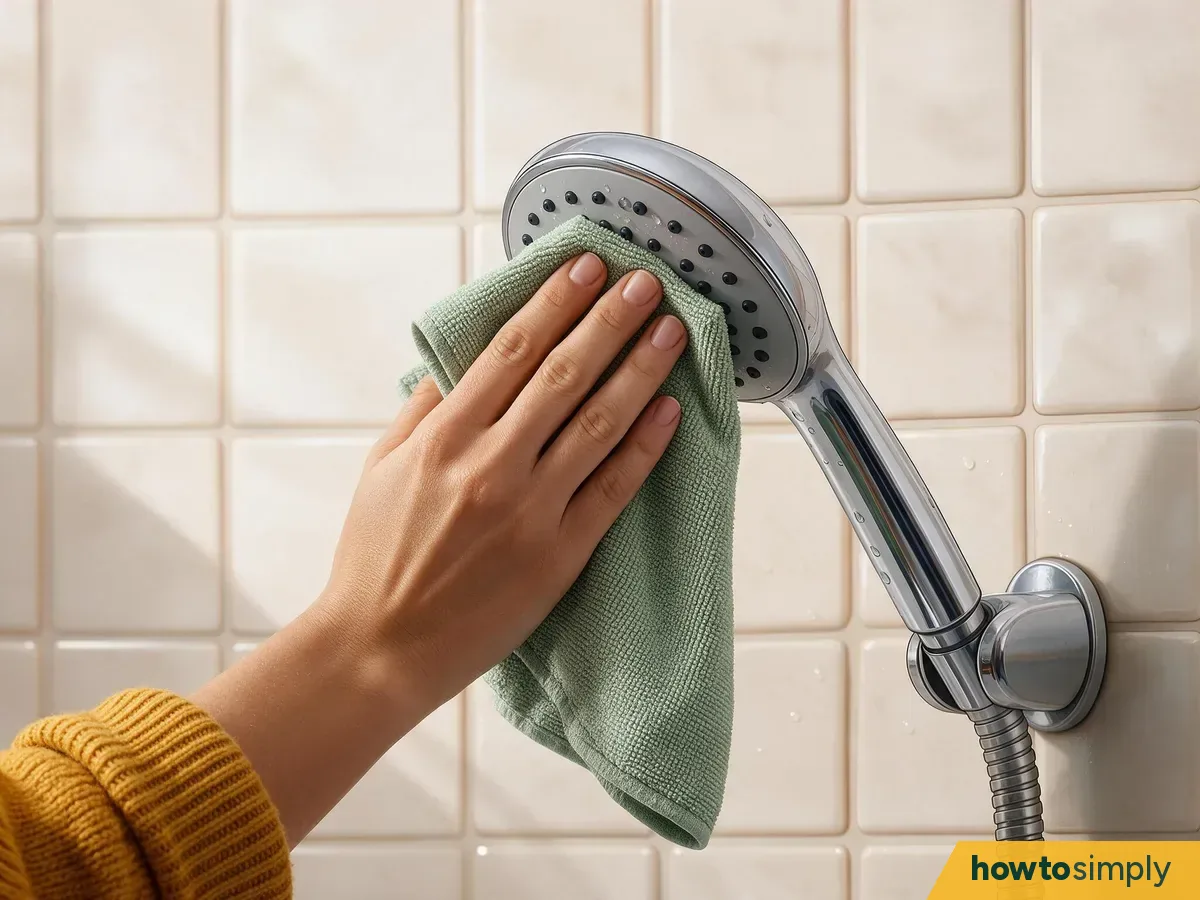
Rub the rubber nozzles with your thumb first. If some jets stay blocked, take the head off, soak it in a descaler your shower's maker allows for the time on the packet, brush the nozzles, rinse it well and put it back.
Researched by Abu Bakar SaadatPublished 31 October 2026Last changed 17 November 2026Verified 17 November 2026Version 6See all changes
A shower that spits at you sideways is only a small thing, but it can sour your mood before the day has properly started. Luckily, the culprit is usually limescale, and a short soak in a descaler that suits your shower's finish is normally enough to clear it.
When a shower starts spraying sideways, limescale is usually blocking the nozzles. A quick rub can shift light scale; if it doesn't, a short soak in the right descaler normally does the job. Which descaler is right depends on your shower's maker and finish, though, so check that first, because the wrong one can ruin the finish. Below, one example goes from a spitting shower head to clean, straight jets, with a drawing for each step.
Never mix cleaning products, and, above all, never mix descaler with bleach: NI Direct warns that mixing household cleaners can give off highly toxic gas. Wear gloves, keep a window open, and keep children and pets out of the room while you work.
Which descaler? Check your maker first
hansgrohe recommends a mild cleaner based on citric acid, and warns against any product with chlorine bleach or with acetic, formic or hydrochloric acid in it. It says the guarantee may not cover damage from them.
GROHE says not to use acids, limescale removers, vinegar or acetic acid, and recommends its own cleaner.
Mira says to use a descaling solution that's safe for plastics and to follow the packet.
Aqualisa allows diluted white vinegar on its heads.
Black finishes are more delicate than chrome. Triton says to keep vinegar, lemon juice, bleach, scrubbing and scourers away from black fittings and to clean them with warm water and a little washing-up liquid instead. Drench says not to use vinegar or citric acid on matt black or plated brushed-brass heads.
Not sure which one you've got? Don't worry. Look up your shower's care guide on the maker's website, or try a hidden spot first. And if you reach for the vinegar for every bit of scale in the house, I'm afraid some showers really don't get on with it.
Every step below follows one story, and each drawing shows that exact moment. The round chrome hand shower in Amira's bathroom has started spraying sideways. It has soft black rubber nozzles, and its manual allows a citric-acid descaler. She tries a quick rub first, then soaks, brushes, rinses and refits it. One "what if" drawing shows the bag method for a fixed head.
Amira is a made-up example that our illustrations follow. The cleaning advice comes from the shower makers and other sources named in each step.
Part 1: Try a quick rub-clean
Before you start
Time: Use the soak time on your descaler's packet[1]; Drench gives 15 to 20 minutes for citric acid on chrome[4].
Who it's for: Hand showers that unscrew from the hose, and fixed heads using a bag of descaler tied round them[4][5].
Not for: Vinegar or citric acid on matt black or plated brushed-brass heads, or vinegar on GROHE products[3][4][7].
Run the shower and look at the jets.
Illustration
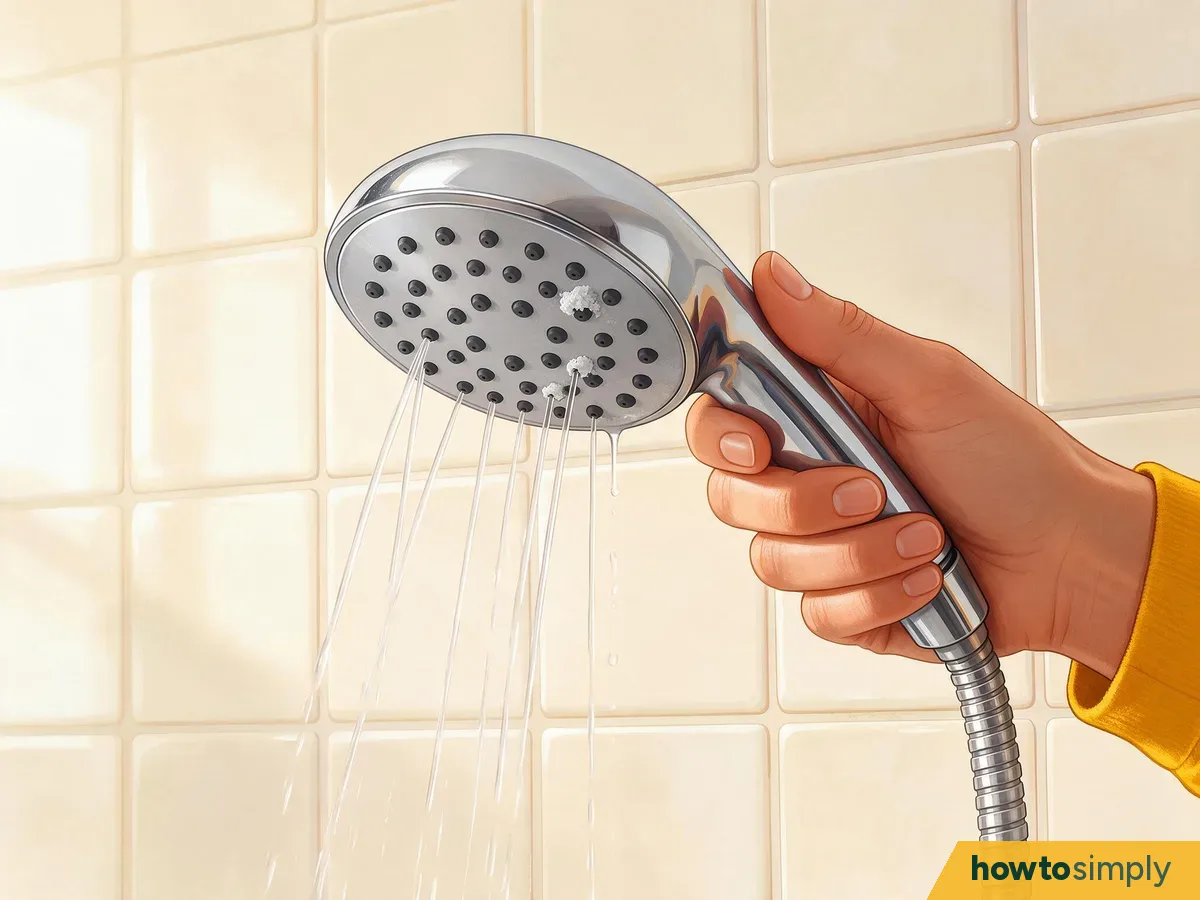
In our story: Amira turns the shower on and holds the head up to look. The jets fan out at odd angles, one nozzle only dribbles, and a few are crusted white with limescale.
Take a good look first. Jets that spray in the wrong direction or unevenly can be a sign of limescale in the nozzles (hansgrohe). Then turn the shower off.
Rub the nozzles.
Illustration
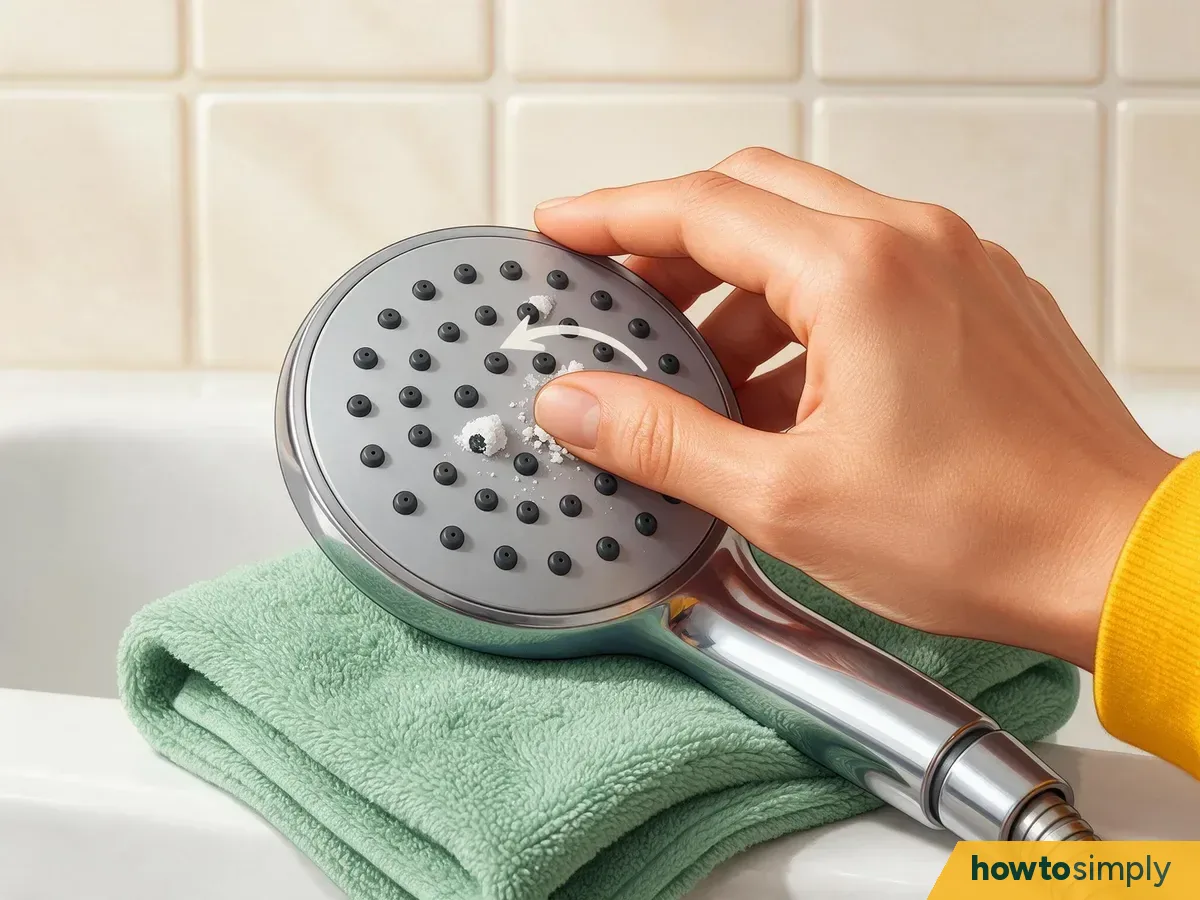
In our story: Amira rubs her thumb firmly across the rubber nozzles, and small white flakes of scale crack off.
Wipe the limescale from the nozzles with your thumb or a soft cloth (Mira). hansgrohe says this works on its flexible nozzles for light build-up. Run the shower again. If every jet now sprays straight, you're done. It is that easy.
Part 2: Soak a hand shower
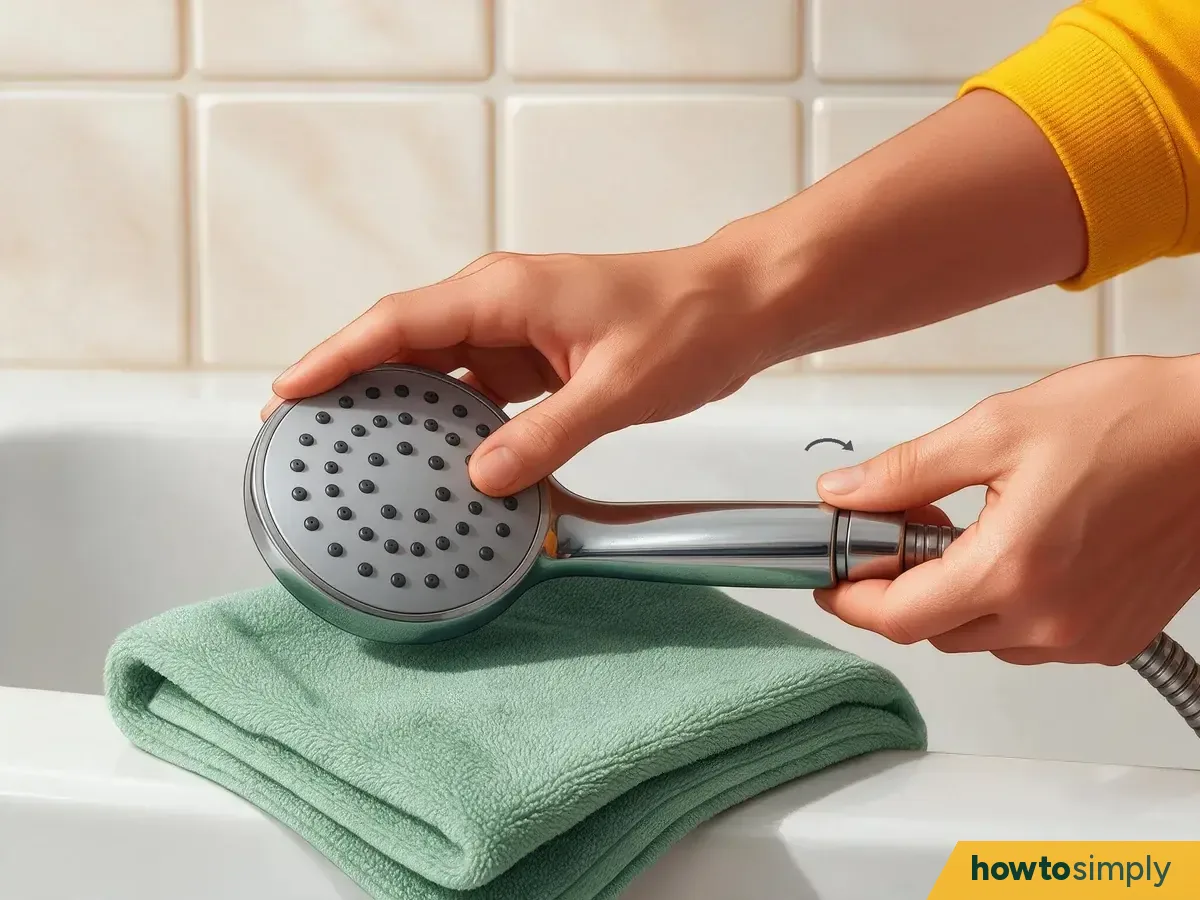
Unscrew the head from the hose.
Illustration
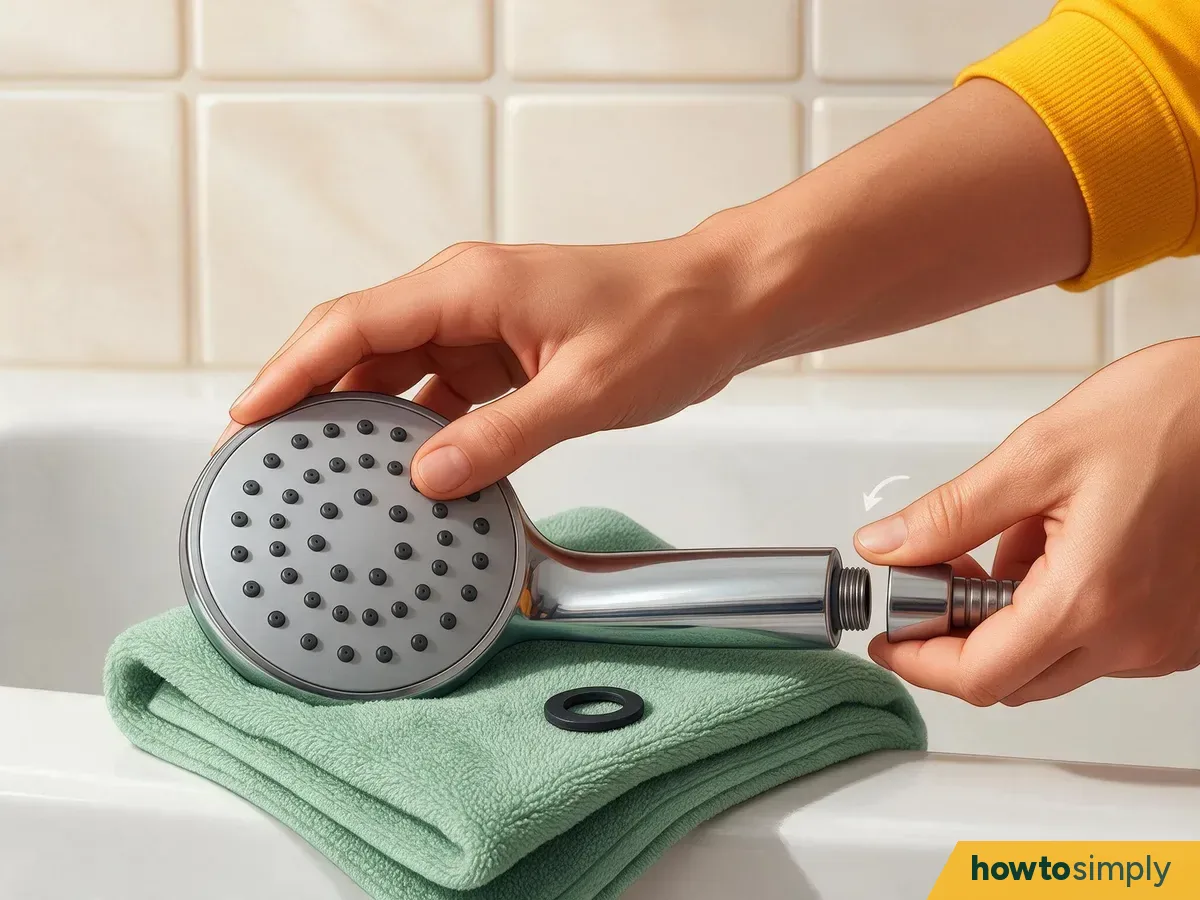
In our story: Some jets are still blocked, so Amira unscrews the head from the hose and puts the little rubber washer safely on the towel.
Twist the head off the hose. Catch the small rubber washer inside and make sure you keep it safe. It's tiny and goes missing easily, and the head won't go back on properly without it (Drench). If there's a small filter screen in the thread, take it out too (hansgrohe).
Make up the descaler.
Illustration
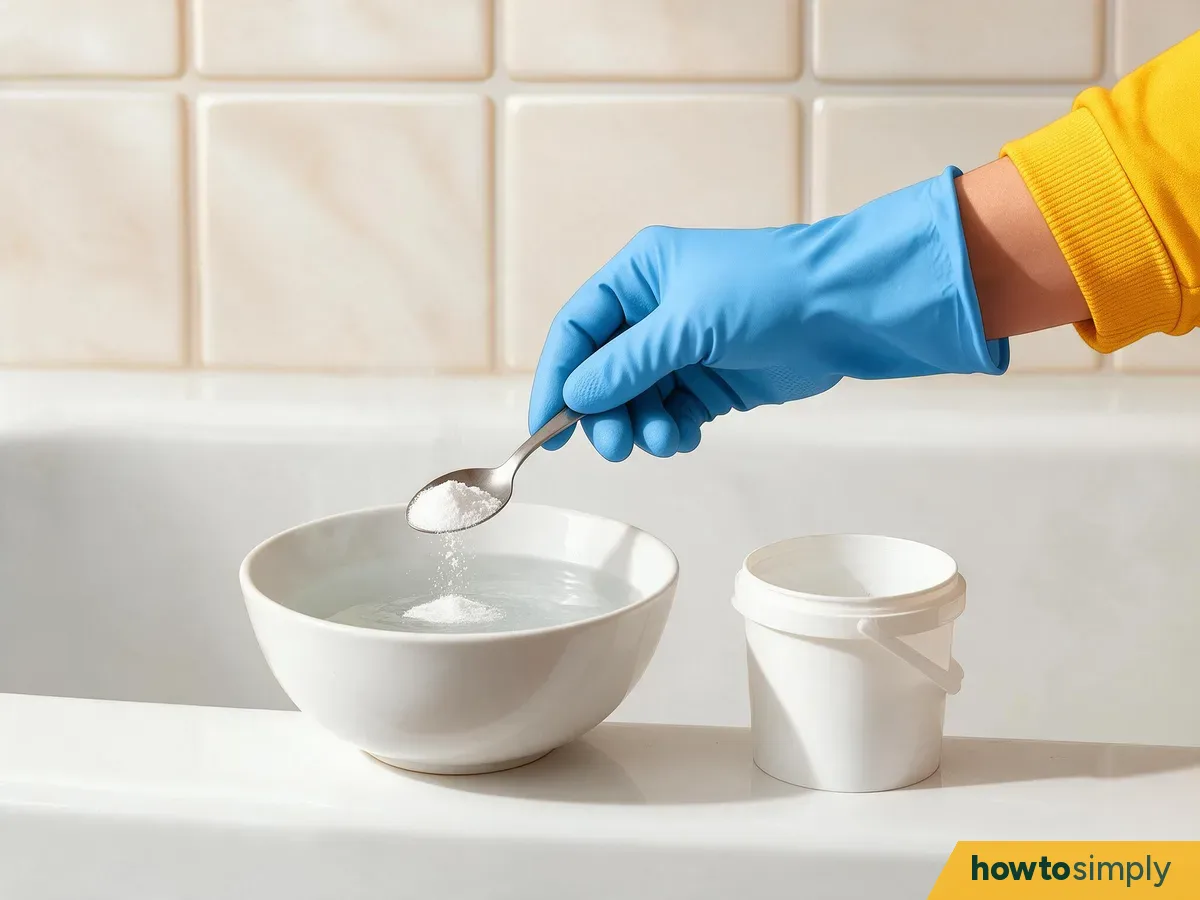
In our story: In rubber gloves, Amira tips citric-acid descaler into hot water in a white bowl, as the packet says.
Mix it exactly as the packet says, with enough to cover the spray face. If you use citric acid powder and your maker allows it, Drench suggests 2 tablespoons per litre of hot water.
Soak the head.
Illustration
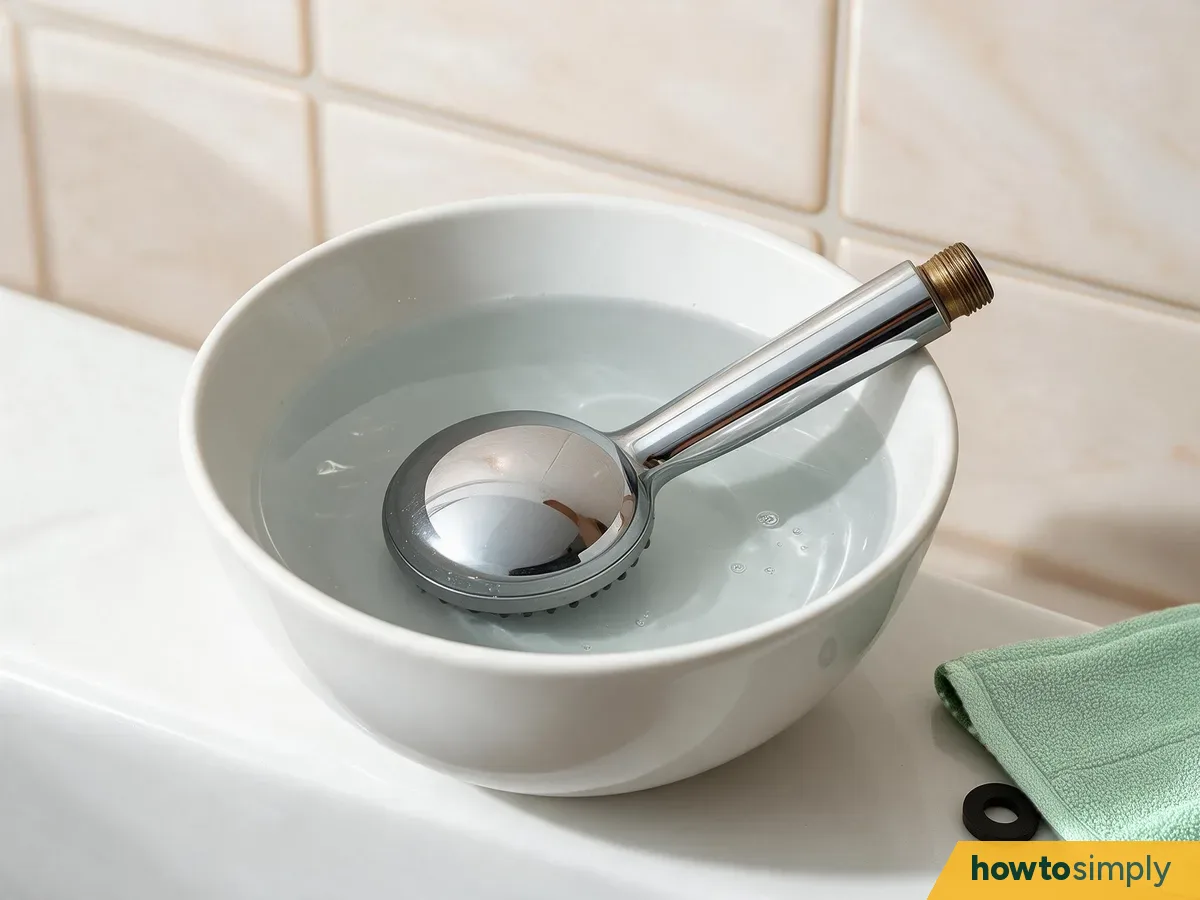
In our story: The shower head sits face down in the bowl, its spray face fully under the liquid.
Leave it for the time on the packet. hansgrohe says to take it out after a few minutes; Drench gives 15 to 20 minutes for citric acid on chrome.
Brush the nozzles.
Illustration
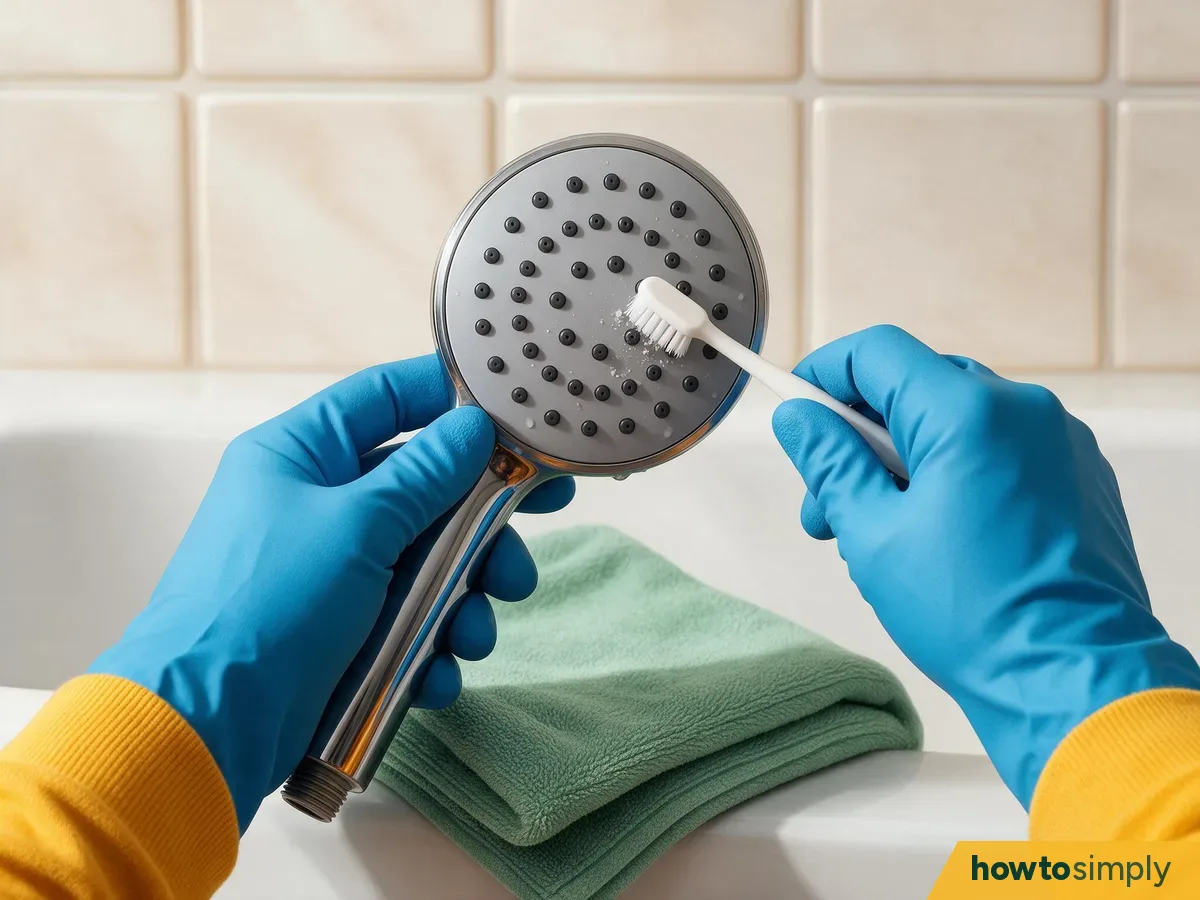
In our story: Amira lifts the head out and brushes the spray face with a soft toothbrush.
Brush the spray face gently, then rub the nozzles with your thumb again (Drench, Mira). If the filter screen is furred up, soak and brush that too. Scourers, abrasive creams and steam cleaners are not your friends here, as they can damage chrome and plastic (hansgrohe, Mira).
Rinse it well.
Illustration
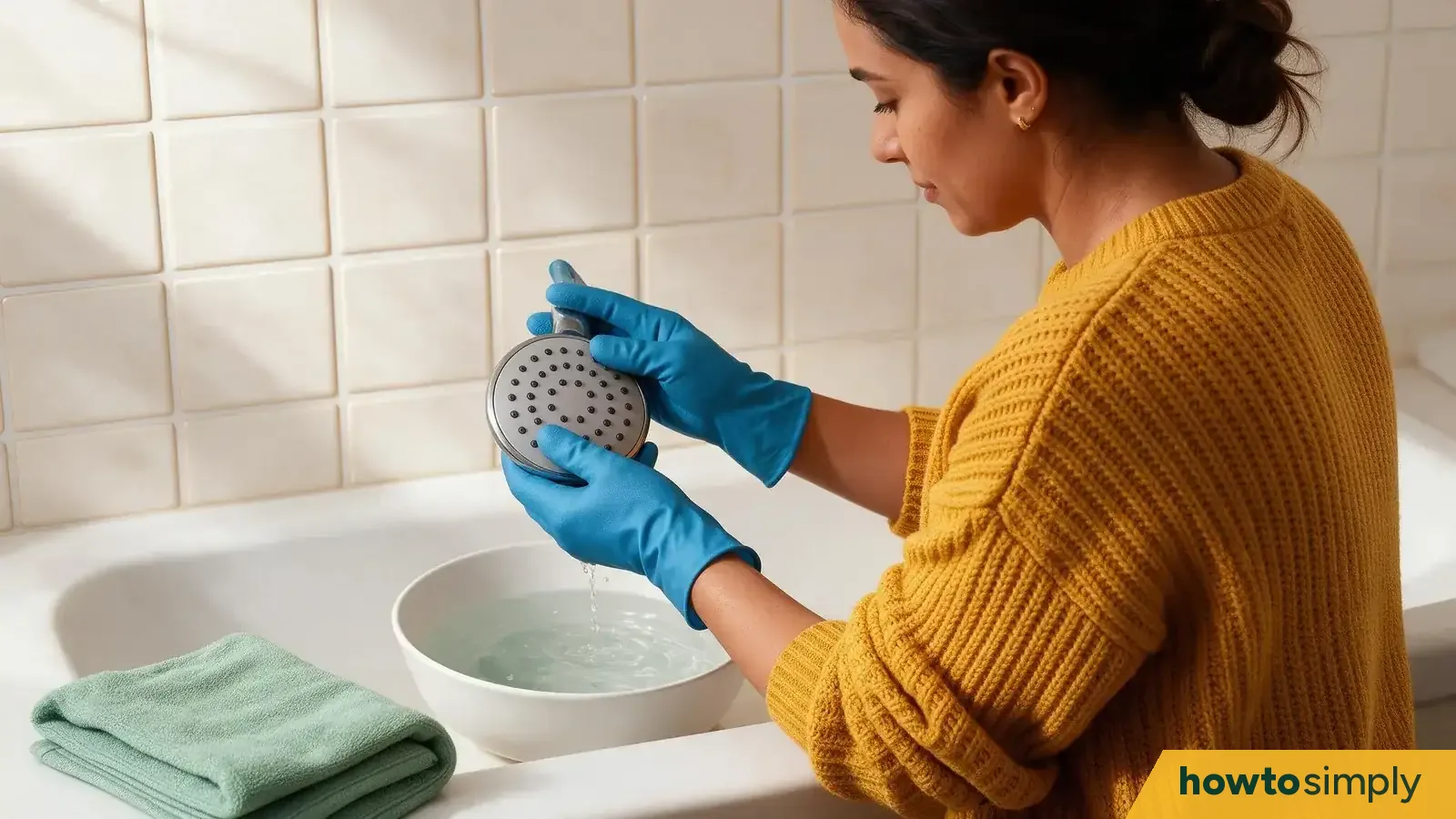
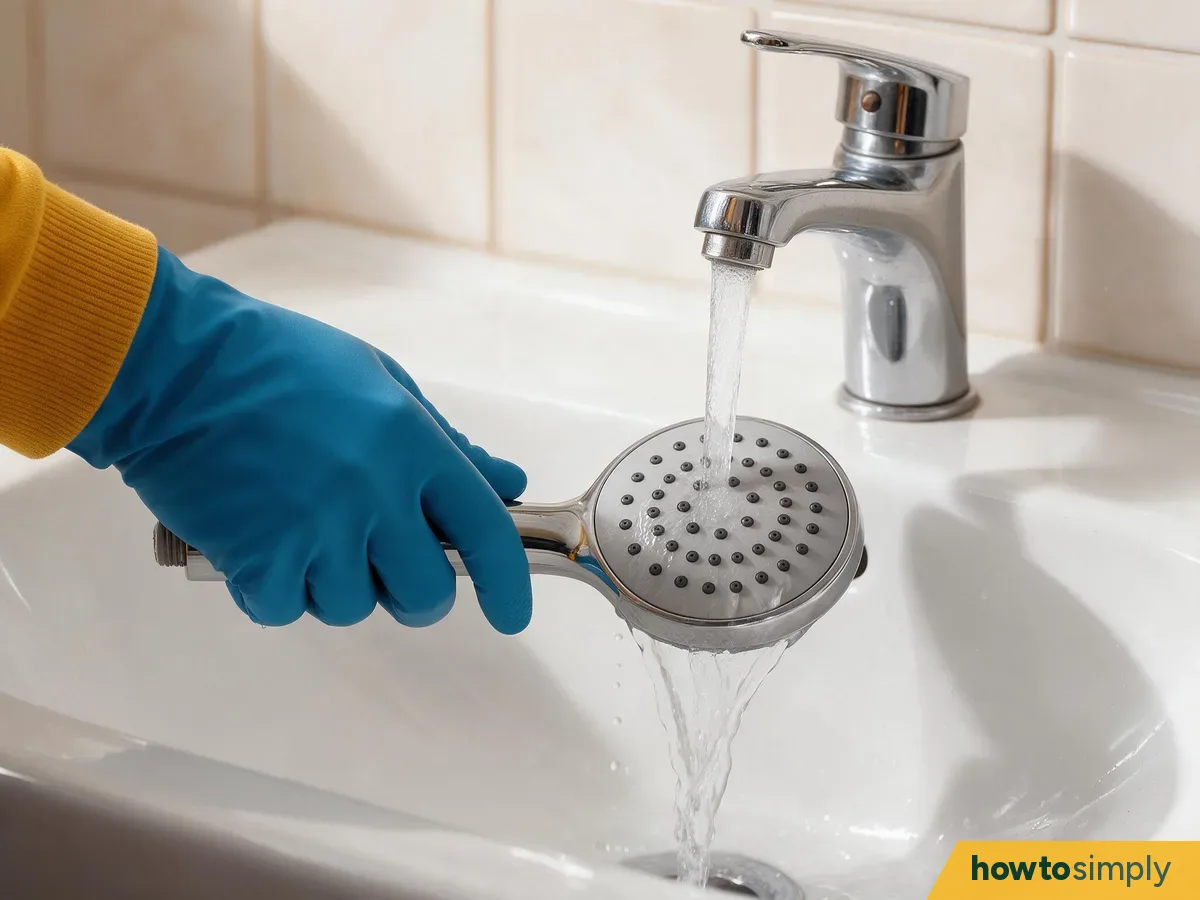
In our story: Amira rinses the head inside and out under the basin tap, then shakes it empty.
Rinse inside and out under clean running water until no descaler is left (hansgrohe).
Part 3: If the head won't come off
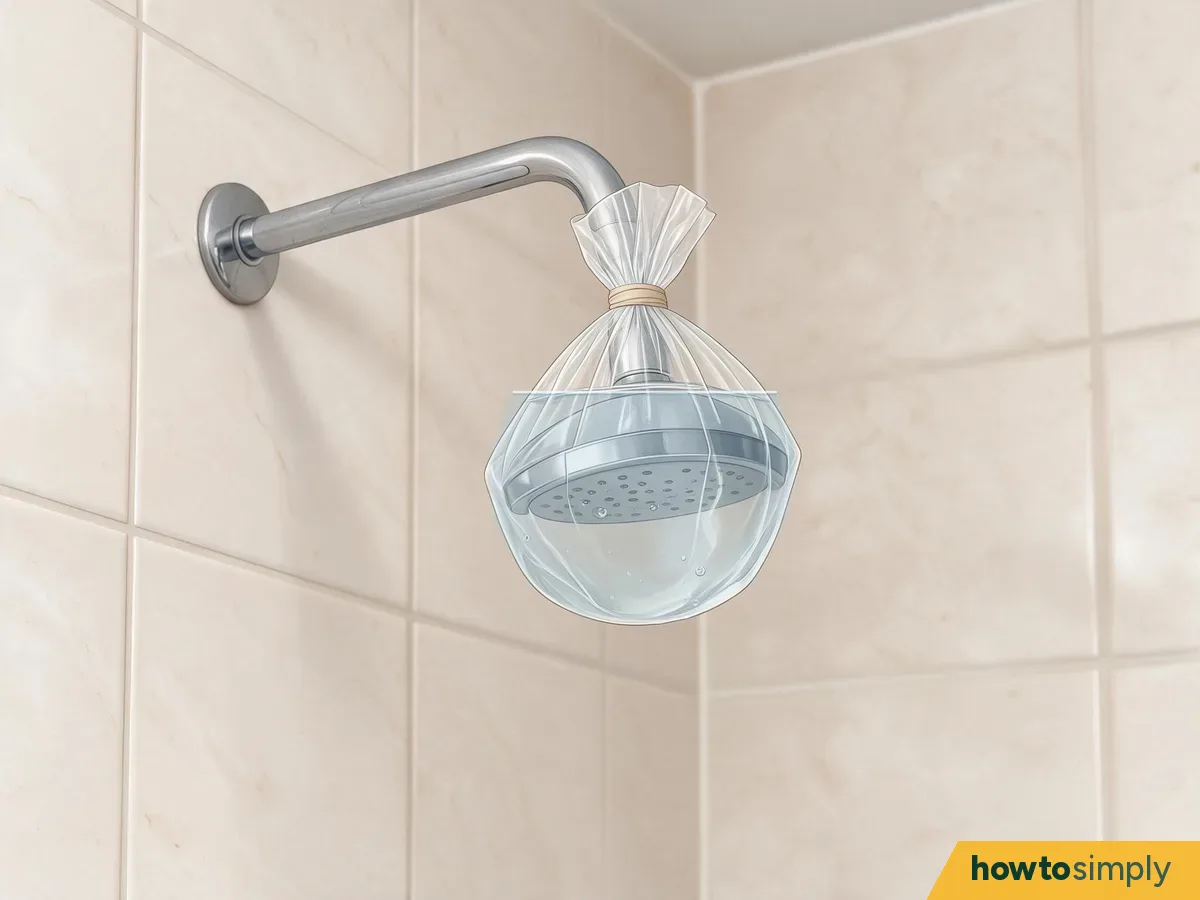
Tie a bag of descaler round it.
Illustration
In our story: What if Amira's shower head were fixed to the wall? She would pour the descaler into a food bag, lift it so the spray face is under the liquid, and band it round the arm.
Check the bag has no holes first (Aqualisa) and fasten it tight with an elastic band (Drench). Leave it for the packet time, take it off carefully over the bath, pour the liquid away and brush the nozzles. Some overhead showers have a spray disc that comes off for cleaning; check the manual (hansgrohe).
Part 4: Refit and test
Refit the head.
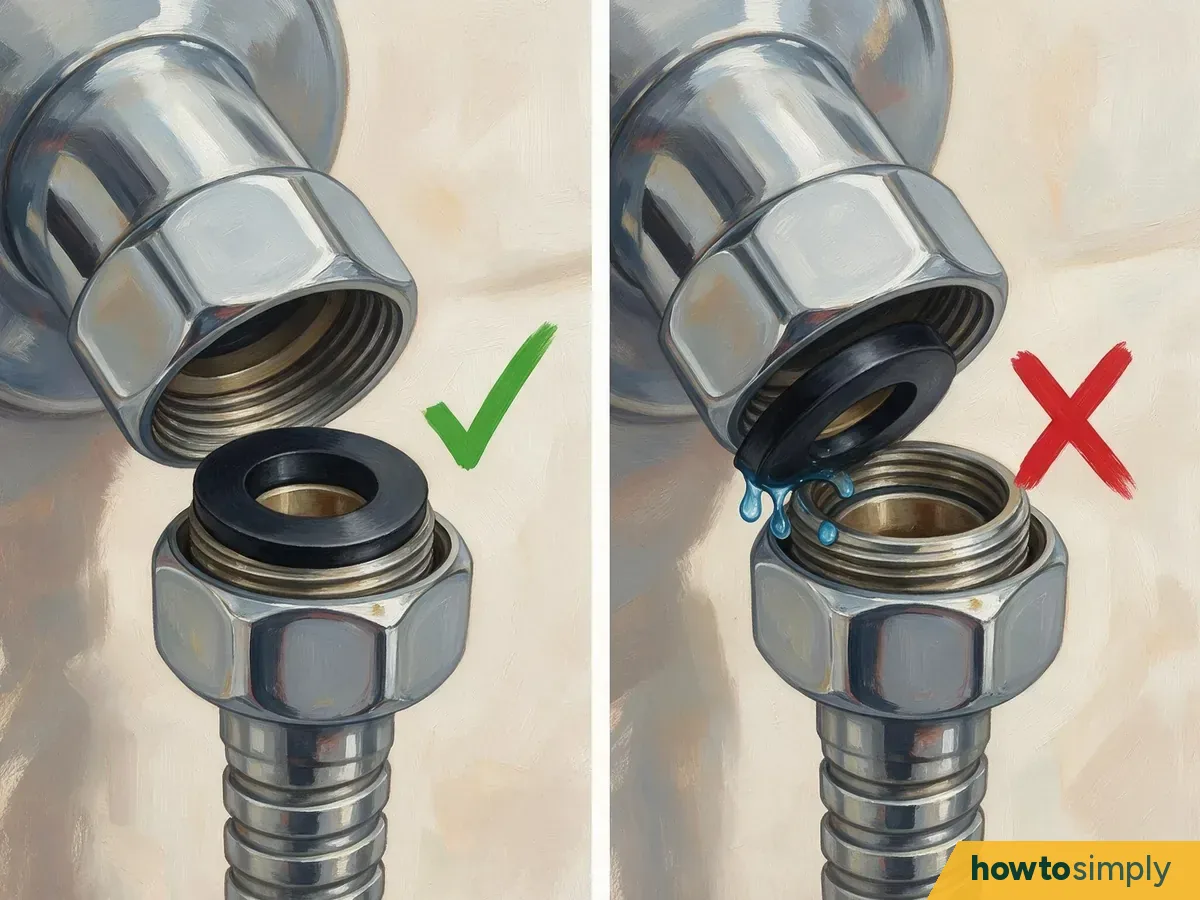
IllustrationIllustration: seat the washer flat before you screw the head back on; a tilted washer drips
In our story: Amira puts the rubber washer back in and screws the head onto the hose until it's hand-tight.
Put the filter screen back (hansgrohe) and the washer (Drench), then tighten the nut.
Flush it and test every setting.
Illustration
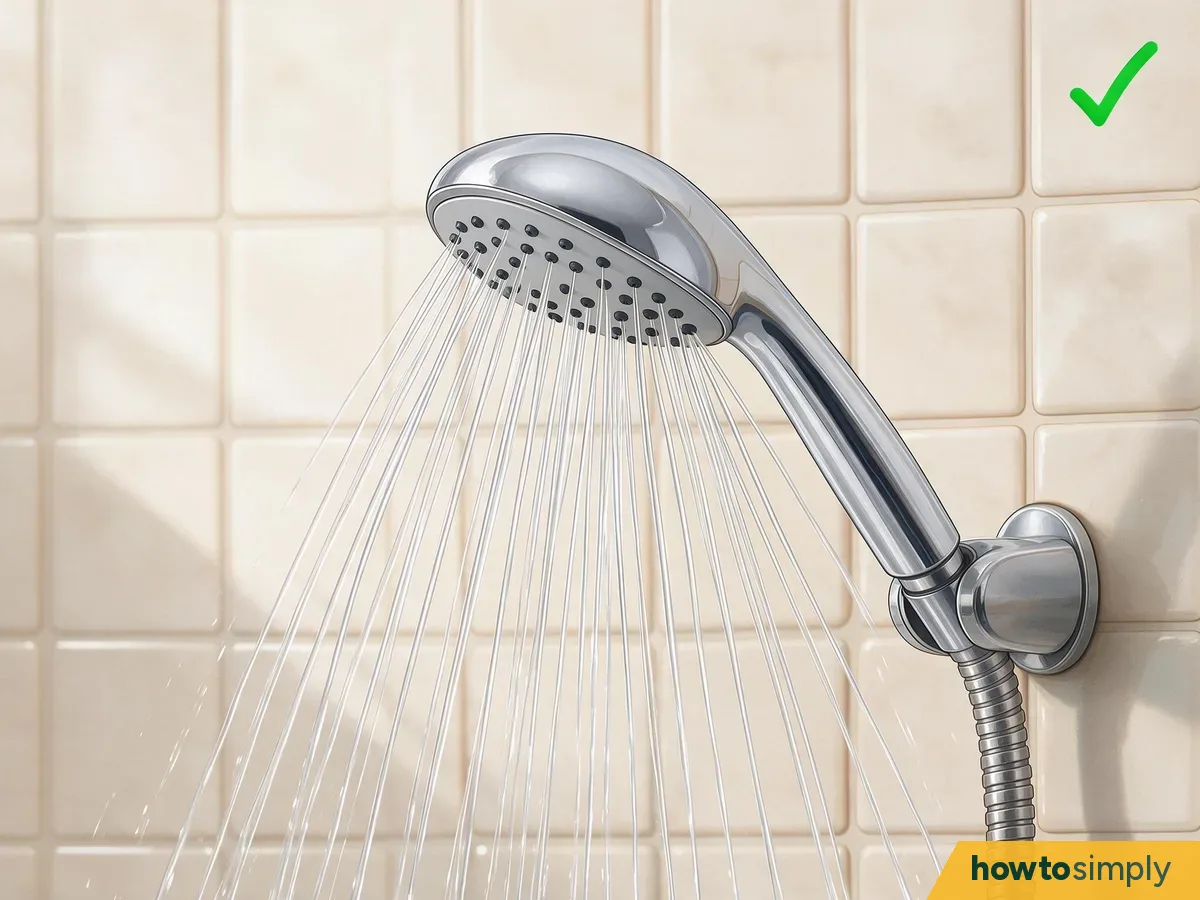
In our story: Back in its bracket, the shower sprays straight, even jets from every nozzle.
Run it for at least 30 seconds to wash out loose scale and descaler (Drench), then switch through each spray setting (hansgrohe). Check there's no drip at the hose joint.
Wipe it dry after showers.
Illustration
In our story: After her next shower, Amira wipes the head dry with a soft cloth to slow the scale coming back.
Wiping it dry is also worth turning into a habit. GROHE says the simplest way to keep scale away is to dry it off every time you use it. For routine cleaning, Mira suggests mild soapy water on a soft cloth.
How to tell it worked
Every nozzle sprays a straight, even jet, on every setting.
No drip at the joint between head and hose.
The finish looks the same as before: no dull or patchy marks.
If something goes wrong
What happens
Likely cause
What to do
Some jets are still blocked
Limescale still in the nozzles
Scrub the nozzles once more with the toothbrush
Water drips or sprays from the hose joint
Rubber washer missing or not flat (Drench)
Unscrew, refit the washer flat, hand-tighten
Every jet is weak, even after descaling
—
You might need to replace the shower head (Drench)
The finish looks dull or patchy
Cleaner too strong for the finish
Stop using it; check the maker's cleaning advice
Black or coloured finish flaking
Acid or abrasive cleaner on a plated finish (Triton)
Stop; Triton says the layer is hard to restore. Ask the maker about a replacement part
Rub the nozzles after showering, wipe the head dry, descale more often
If it's past saving
And sometimes an old head is simply past saving. If a thorough descale still leaves the spray weak or patchy, Drench suggests it could be time to replace the head. Look up the model on the maker's website.
Follow the time on your descaler's packet[1]. hansgrohe says to take it out after a few minutes[2]; Drench gives 15 to 20 minutes for citric acid on chrome and no more than 15 minutes for baking soda paste on matt black or plated brass[4].
Can I use baking soda on a black shower head?
Drench suggests baking soda paste for matt black heads, for no more than 15 minutes. Triton, whose advice is about black finishes, says warm water with a little washing-up liquid is the safest clean.[4][7]
Should I clean the shower hose too?
Drench suggests a gentle scrub with baking soda paste or about 15 minutes in diluted white vinegar while the head is off, then a good rinse. Aqualisa soaks its hoses in the same vinegar mix for 30 minutes and scrubs them with an old brush.[4][5]
Why do I need to keep the rubber washer?
Drench says it is small, easy to lose, and you need it to reattach the head.[4]
Can I use vinegar to descale a shower head?
It depends on your shower. GROHE says not to use vinegar or acetic acid, hansgrohe rules out acetic acid, and Triton says not to use vinegar on black finishes. Aqualisa allows diluted white vinegar on its heads. Check your own maker's advice first.
How often should I descale?
It depends on how hard your water is (hansgrohe). Descale when the jets start spraying unevenly, and rub rubber nozzles after showering to slow the build-up (Aqualisa).
Why is my shower pressure low?
Blocked nozzles are a common cause. Mira warns that a blocked head restricts the flow. If the flow is still poor after a thorough descale, a new shower head may be the answer (Drench).
Is citric acid gentler than vinegar?
hansgrohe recommends a mild citric-acid-based cleaner and rules out acetic acid. But Drench says to keep citric acid off matt black and plated brass finishes.
Can the shower head go in the dishwasher?
Only parts your maker says are dishwasher-safe. hansgrohe says some removable spray discs can; check your manual.
The pictures on this page are illustrations, not photos.
How we know this: sources, checks and every change
Current advice
Wipe scale off the nozzles with a thumb or soft cloth, then soak the head only in a descaler your maker allows, following the packet[1][2]. GROHE rules out vinegar and limescale removers, and black finishes need gentle soapy water instead[3][7].
Advice last changed
17 November 2026
Sources
Mira Showers and hansgrohe and GROHE and Drench and Aqualisa and Triton Showers and NI Direct
Latest update
17 November 2026. We re-read the sources. All 8 opened today and still back the steps, the cleaner advice and the troubleshooting table. Nothing on the page needed correcting.
What changed in this version
Added: Aqualisa's two pages now give different vinegar mixes and soak times, so both are shown under where the sources differ[5][6].
Added: Drench's finish-by-finish soak times, and its suggestion to descale about once a month, in the table and questions below[4].
Key facts
Mira says a blocked shower head can cut the flow and may damage the shower, so it should be descaled regularly.[1]
Light scale on soft nozzles can often be rubbed off with a thumb or a soft cloth.[1][2][6]
hansgrohe recommends a mild cleaner based on citric acid and rules out products with hydrochloric, formic or acetic acid or chlorine bleach; its warranty doesn't cover damage from the wrong cleaner.[2]
GROHE says not to use acids, limescale removers, vinegar or acetic acid on its products, and to dry them after each use to stop scale building up.[3]
Black finishes are electroplated and more delicate than chrome. Triton says to keep vinegar, lemon juice, scrubbing and scourers off them; once the layer is damaged it is hard to restore.[7]
Drench gives 15 to 20 minutes for citric acid on chrome, made up at two tablespoons of powder per litre of hot water, and up to 30 minutes for white vinegar.[4]
Never mix cleaning products: NI Direct warns that some household cleaners mixed together give off a highly toxic gas.[8]
What the sources agree on
Rubbing the nozzles with a thumb or cloth shifts light scale on soft nozzles.[1][2][5][6]
Stay away from abrasive cleaners and scourers, which can damage the finish.[1][2][3][5][7]
Drying or wiping the head after use slows scale coming back.[3][4][7]
Check your own maker's advice before you choose a cleaner.[2][4]
Vinegar: Aqualisa and Drench (on chrome) use diluted white vinegar; GROHE rules it out; hansgrohe rules out acetic acid; Triton and Drench say keep it off black finishes.[2][3][4][5][6][7]
How strong and how long: Aqualisa's cleaning tips say one part vinegar to three parts water for at least 30 minutes; its limescale FAQ says half vinegar, half warm water for two hours on heavy build-up; Drench says one part vinegar to two of water, up to 30 minutes.[4][5][6]
How often: Drench says about once a month is generally enough; hansgrohe says it depends on how hard your water is.[2][4]
Not from a source: the 10 extra minutes on top of the soak time is our own estimate, and the page says so.
Record history
Version 6. Sources re-read; record layout added with key facts, a table of what each maker allows, agree and differ notes, history and more questions.
Version 5. Wording reworked.
Version 4. Wording rewritten throughout.
Version 3. Every line checked against its source; some wording corrected.
Version 2. Approved and published on the site.
Version 1. First written, with illustrations, and held for review.
13 illustrations drawn for this article: drawings, not photos.
Sources
Steps checked against the 8 named sources linked below.
What this page adds
A worked story of Amira's spitting shower, close-ups of rubbing the rubber nozzles and soaking the head face down, and a bag method for a head that won't come off.
What we checked
On 17 November 2026 we re-read all 8 sources: the Mira, hansgrohe, GROHE, Aqualisa (two pages) and Triton care pages, Drench's descaling guide and NI Direct's chemical safety page, and checked each step, soak time, cleaner warning and table entry against them.
What to do next
The small jobs that keep a home runningStep 1 of 5