Toddler tantrums: 13 things to say and do that actually help
Reviewed by Sonia Abu Bakar✓, MSc Botany
By Abu Bakar Saadat5 min readPublisher: Saadat Rafiq
Last updated: 2 November 2026References
 Illustration
On this page 7 sections
In short
Your toddler is face-down on the supermarket floor because the banana broke. Everyone is looking. Here's what to say, what to do and what never to say, according to the NHS and the American Academy of Pediatrics.
At a glance
- When tantrums start
- Usually around 18 months (NHS)
- When they fade
- Far less common by age 4 (NHS)
- Big triggers
- Tired or hungry
- Never
- Smack, shout back, shame or give in
- Checked
- November 2026
Saturday, 11:52 a.m., aisle 4. Ama asked for a banana. Kwame gave her a banana. The banana broke in half. Ama is now lying on the supermarket floor, screaming like the banana has personally betrayed her. A woman with a trolley is staring. Kwame would like the floor to swallow him.
If this is your Saturday too, you're in good company. The NHS says tantrums usually start at around 18 months and are very common in toddlers. Here are 13 things to say and do, before, during and after, that NHS and paediatric advice actually supports.
Before it starts
1. Check the two big triggers: hungry and tired
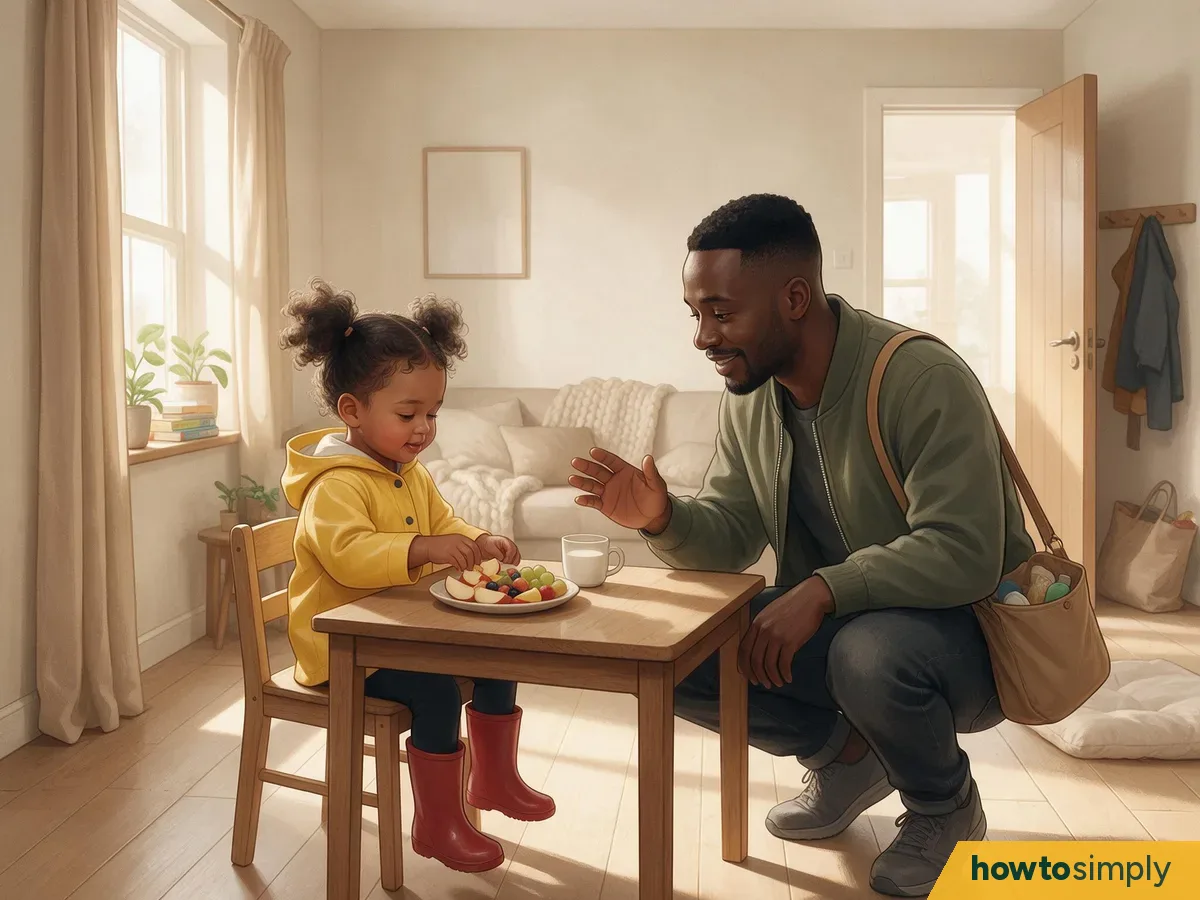
The NHS says a tantrum can simply mean your child is tired or hungry, in which case the fix might be simple. The American Academy of Pediatrics (AAP) suggests well-timed naps and meals to head tantrums off. Shop after lunch, not at nap time.
Try saying (to yourself): "When did she last eat? When did she last sleep?"
2. Warn them what's coming

The AAP advises preparing children for upcoming activities and how you'd like them to behave. Toddlers hate surprises far more than they hate rules.
Try saying: "We're going to the shop. You can hold the bananas. Then we go home for lunch."
3. Give small choices you're happy with

"Red cup or blue cup?" gives a toddler a little control without giving away the big decision. The AAP suggests letting young children choose between acceptable options.
During the meltdown
4. Name the feeling out loud
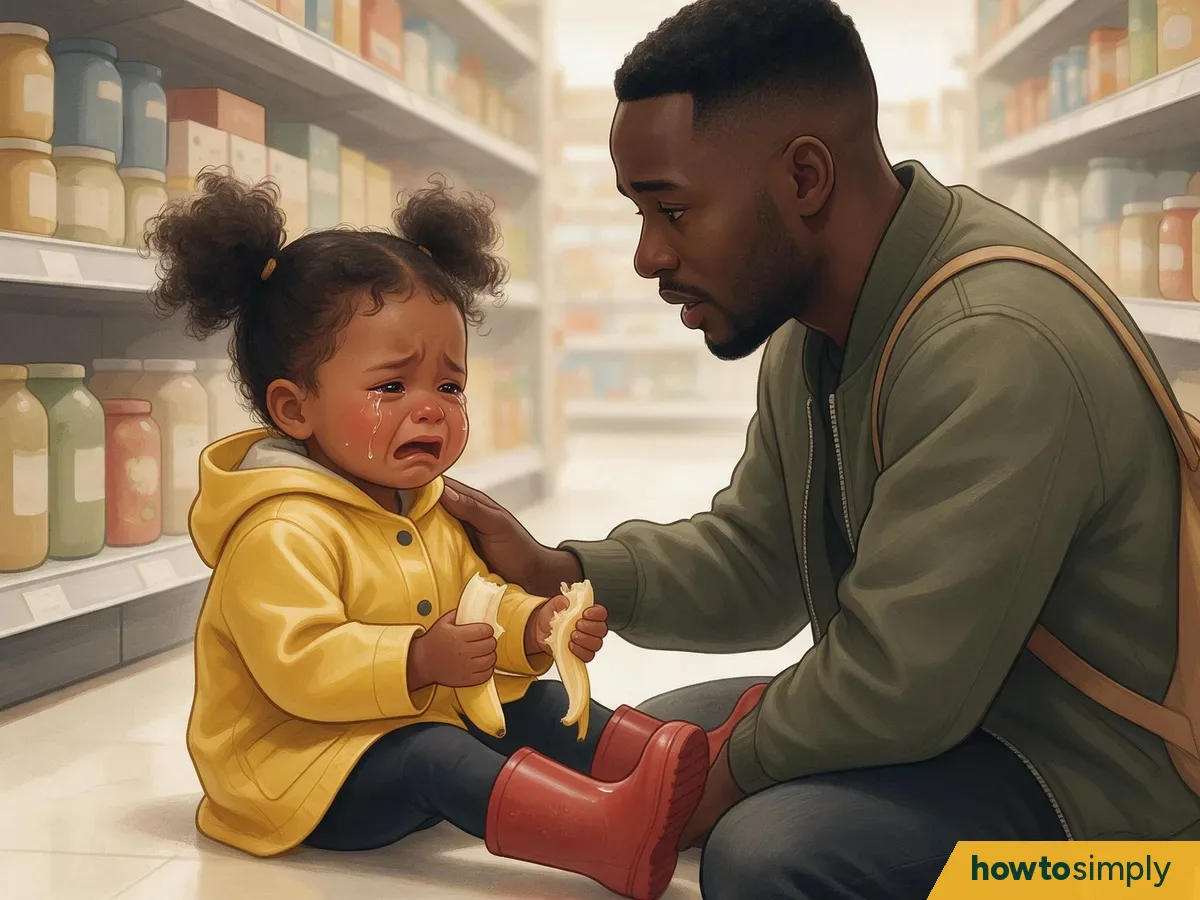
The NHS suggests saying things like "I know you're feeling angry about…" It shows you understand, and it slowly teaches your child words for big feelings. Tantrums often come from frustration at not being able to say what they want.
Try saying: "You're really cross the banana broke. That's so annoying."
5. Keep your own voice low and slow

The NHS is clear: losing your temper or shouting back won't end the tantrum. The AAP adds that yelling at or shaming a child doesn't work and can be harmful. A calm voice is the one thing in the scene you control.
6. Wait it out, and ignore the audience

This one feels wrong, but the NHS advises waiting for the tantrum to stop, ignoring the looks you get from people around you and concentrating on staying calm. The AAP says that as long as your child isn't doing anything dangerous and gets plenty of attention for good behaviour, ignoring bad behaviour can be an effective way to stop it.
Try saying (to the staring stranger, optionally): "We're fine, thanks. Bananas, eh?"
7. Make sure they're safe first

If they're thrashing, move them gently away from shelves, stairs or the road, and clear away anything they could hurt themselves on. Safety comes before any lesson.
8. Don't change your "no" to end it

The NHS warns that giving in teaches your child that tantrums get them what they want. It also says bribing with sweets or treats doesn't help, for the same reason.
Try saying: "I hear you. The answer is still no. I'm right here."
9. Offer a hug, if they're more upset than angry

The NHS says some parents find that firmly holding their child helps, usually when the child is more upset than angry and you're calm enough to reassure them. If they push you away, stay close instead.
Try saying: "I'm here when you want a cuddle."
10. Try a breathing game

NHS family health teams suggest games that make children take deep breaths, such as pretending to blow up a balloon or blowing your hair out of your face. Toddlers often can't "calm down" on command, but they can blow.
Try saying: "Can you blow my hair? Big blow! Bigger!"
Afterwards
11. Give yourself a time-out if you need one

At home, the NHS suggests going into another room for a while once your child can't hurt themselves. The AAP says parents can give themselves a time-out too: make sure your child is safe, take a few deep breaths, then come back.
12. Reconnect, then catch them being good

When it's over, hug and move on. Don't relive it. The AAP suggests noticing good behaviour and praising it.
Try saying: "You calmed your body down. That was hard, and you did it."
13. Repair your own wobble

If you did shout, the AAP suggests waiting until you're calm, apologising to your child and explaining how you'll handle it next time. You're showing them how to recover from mistakes, which is the whole point. For grown-up apologies, see how to apologise.
Try saying: "I shouted, and that wasn't OK. I'm sorry. Next time I'll take a big breath first."
Say this, not that
| Moment | Say or do | Skip |
|---|---|---|
| Before you go out | Snack, nap, then "We're going to the shop. Then lunch." | Dragging a hungry, tired toddler round the shops |
| Meltdown starts | "You're really cross. That's so annoying." | "Stop crying right now!" |
| They want the thing | "I hear you. The answer is still no." | Giving in, or a sweet to stop the noise |
| People are staring | Stay calm, stay close, keep them safe | Shouting back, smacking or shaming |
| It's over | A hug, then praise the calming down | A lecture about what just happened |
Quick check
- I fed them and planned around naps before going out.
- I named the feeling instead of arguing with it.
- I kept my "no" and stayed calm.
- I made sure they were safe.
- We reconnected afterwards.
Never smack, and never shake. The AAP advises parents not to spank or hit children, and the NHS says not to hit, bite or kick back. Never shake a baby or young child. If you feel overwhelmed, put your child somewhere safe, step away for a few minutes and call someone.
When to get help. By the age of 4, tantrums are far less common (NHS). If you're seriously worried about your child's behaviour, talk to your health visitor or GP (UK) or your paediatrician (US). In the UK, Family Lives runs a free helpline on 0808 800 2222. If you or your child are in danger, call 999 (UK) or 911 (US).
Questions readers ask
At what age do toddler tantrums stop?
The NHS says tantrums usually start at around 18 months and are far less common by the age of 4, as children learn to talk and express what they want.
Should you ignore a toddler tantrum?
If your child is safe, often yes. The NHS advises waiting for it to stop and staying calm, and the American Academy of Pediatrics says ignoring behaviour that is not dangerous can help, as long as your child gets plenty of attention for good behaviour.
What should you say to a toddler having a meltdown?
Name the feeling and keep your limit: for example, "You're really cross the banana broke. I hear you. The answer is still no, and I'm right here." Keep your voice low and slow.
Is it OK to give in to stop a tantrum?
No. The NHS warns that giving in, or bribing with sweets or treats, teaches your child that tantrums get them what they want.
Did this solve the problem?
What needs work?
What did you think?
Reaction counts are loading.
Spotted a mistake? If a step is unclear or a picture is inaccurate, tell us the step number and what needs correcting. Email us about this page or use the contact form. We read every report, and fixes are listed on What changed.
Liked this article?
Follow us for new articles and short how-to videos.
Sources
We use primary, official and specialist sources appropriate to the topic.
- NHS: Temper tantrums (page last reviewed 7 November 2022)
- Derbyshire Family Health Service (NHS): Temper tantrums
- American Academy of Pediatrics, HealthyChildren.org: What's the Best Way to Discipline My Child? (last updated 5 November 2018)
- HealthyChildren.org: Crying Child (never shake a baby)
- Coram Family Lives: Understanding and dealing with tantrums