How to apologise so it is accepted: the six parts, ranked by a study of 755 people
Researched by Abu Bakar Saadat5 min read
Last updated: 14 November 2026References
 Illustration
On this page 11 sections
In short
Say clearly that it was your fault and offer to put it right: in a 2016 study those two parts mattered most. Then say sorry, explain what went wrong and say what you will do differently. Asking for forgiveness mattered least.
At a glance
- Most important
- Taking responsibility
- Second
- Offering to repair the damage
- Least important
- Asking for forgiveness
- Evidence
- Ohio State study of 755 people (2016); Japan/US study (2011)
- Checked
- November 2026
Feeling guilty after you've hurt someone you care about is hard enough, and finding the right words can feel even worse than the mistake itself. Wanting to apologise says a lot about you, so let's work out together how to say sorry in a way that lands.
A ready-to-use apology
Here's a complete apology for a common slip: missing a friend's birthday dinner you'd promised to go to. The words are our example, but the parts come from the study's list below. Ideally, say it after they've told you how it affected them.
"Missing your dinner on Saturday was my fault. I double-booked and didn't check my calendar, and I'm really sorry. Can I take you out this week, wherever you'd like? I've put your plans straight into my phone now, so it won't happen again. And there's no rush to answer."
Notice what isn't there: no "if you were upset", no "but", and no elaborate story about the double-booking. Change the details to fit your situation and keep the same order; the steps below explain why each part is used.
The six parts of an apology, ranked
Ohio State University researchers tested how 755 people reacted to apologies built from as few as one or as many as six of these parts (Lewicki, Polin and Lount, 2016). The highest-rated apologies included all six, but the parts were not equally important:
| Rank | Part | Example |
|---|---|---|
| 1 | Acknowledge responsibility | "It was my fault. I forgot." |
| 2 | Offer to repair | "I'll replace it this weekend." |
| 3 (tied) | Express regret | "I'm sorry." |
| 3 (tied) | Explain what went wrong | "I didn't check the date." |
| 3 (tied) | Declare repentance | "It won't happen again." |
| 6 | Ask for forgiveness | "Can you forgive me?" |
The examples are ours; the ranking is the study's.
Step by step
Say it was your fault
Illustration 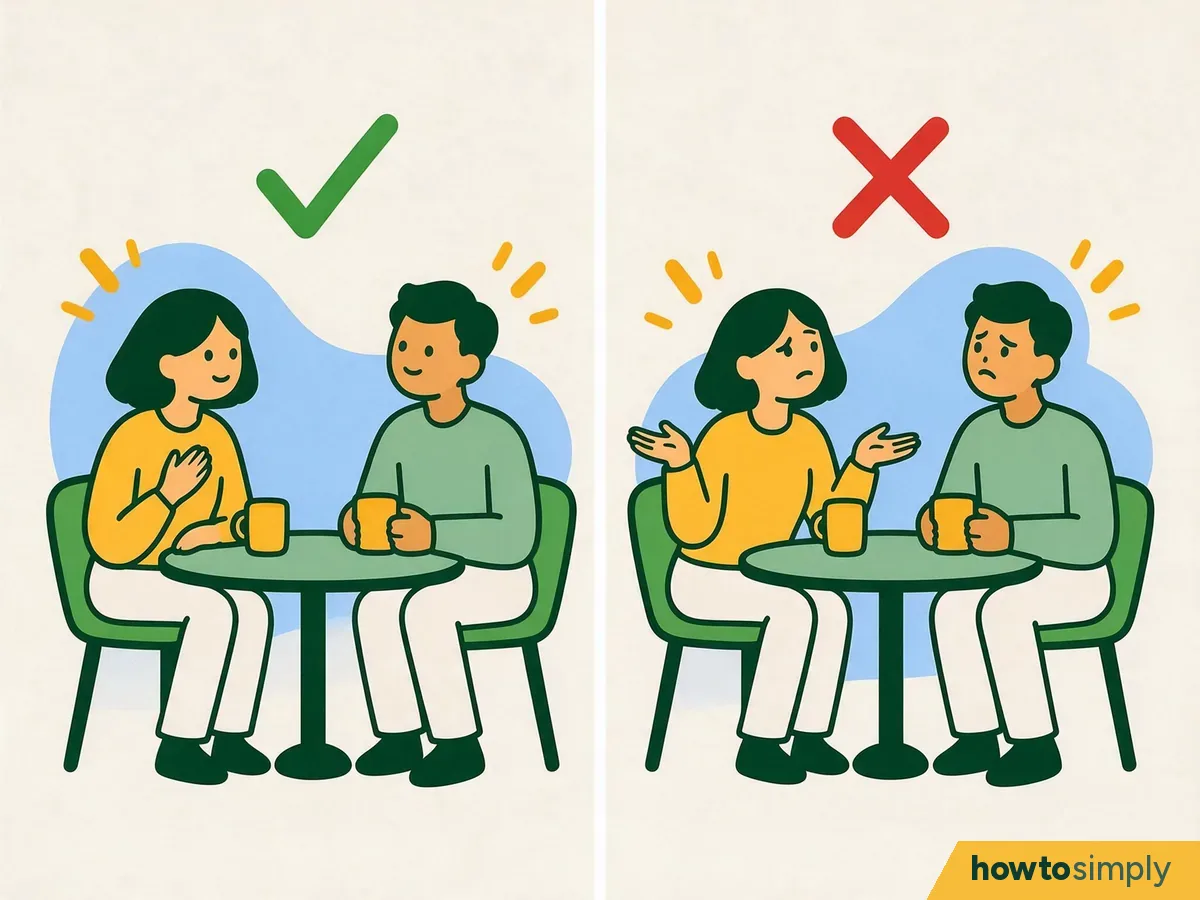
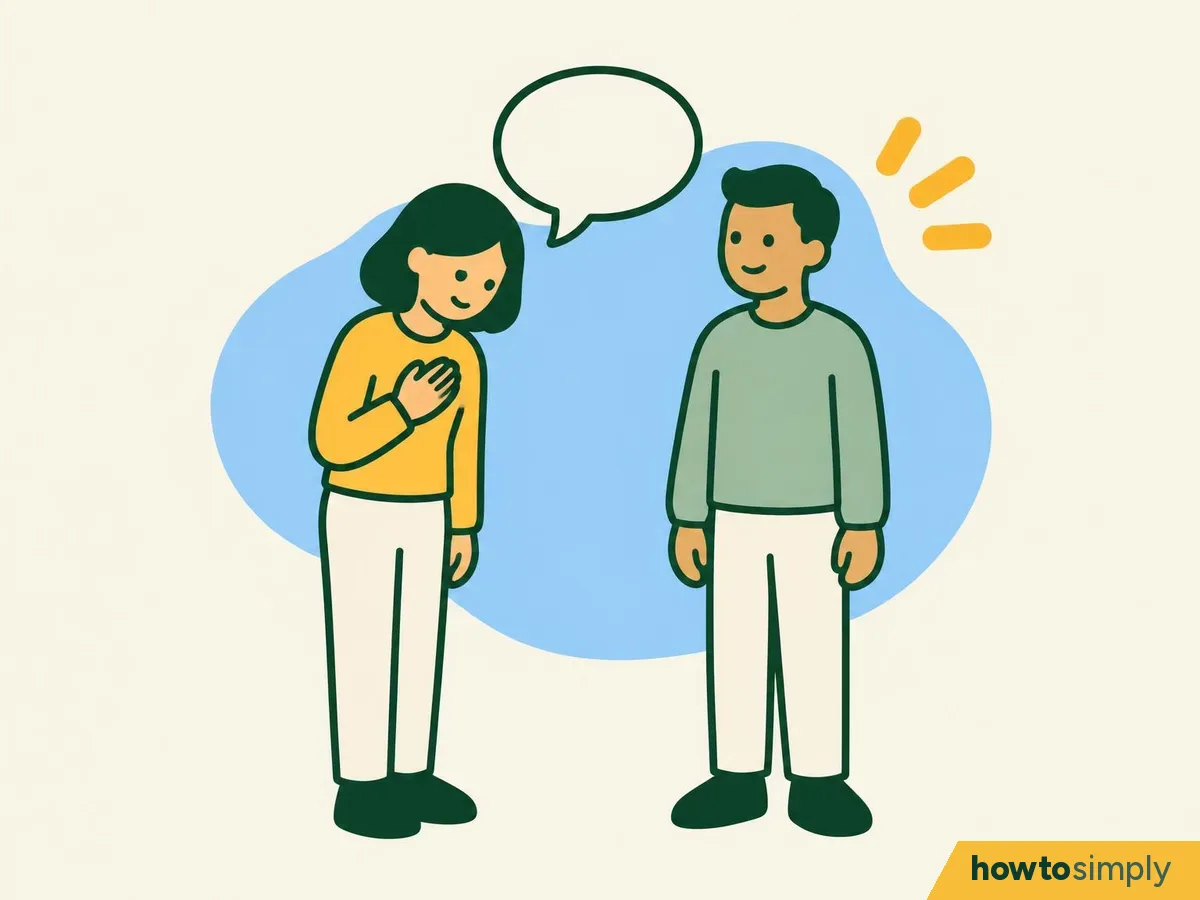
Illustration: say it was your fault; a shrug and an excuse undo the apology Start by taking responsibility, the part that mattered most. The lead author recommended saying that it's your fault and that you made a mistake. Avoid "I'm sorry if you were upset" or a "but" that redirects the blame. So if you usually soften every apology with a little "if", this is the time to stop.
Offer to put it right
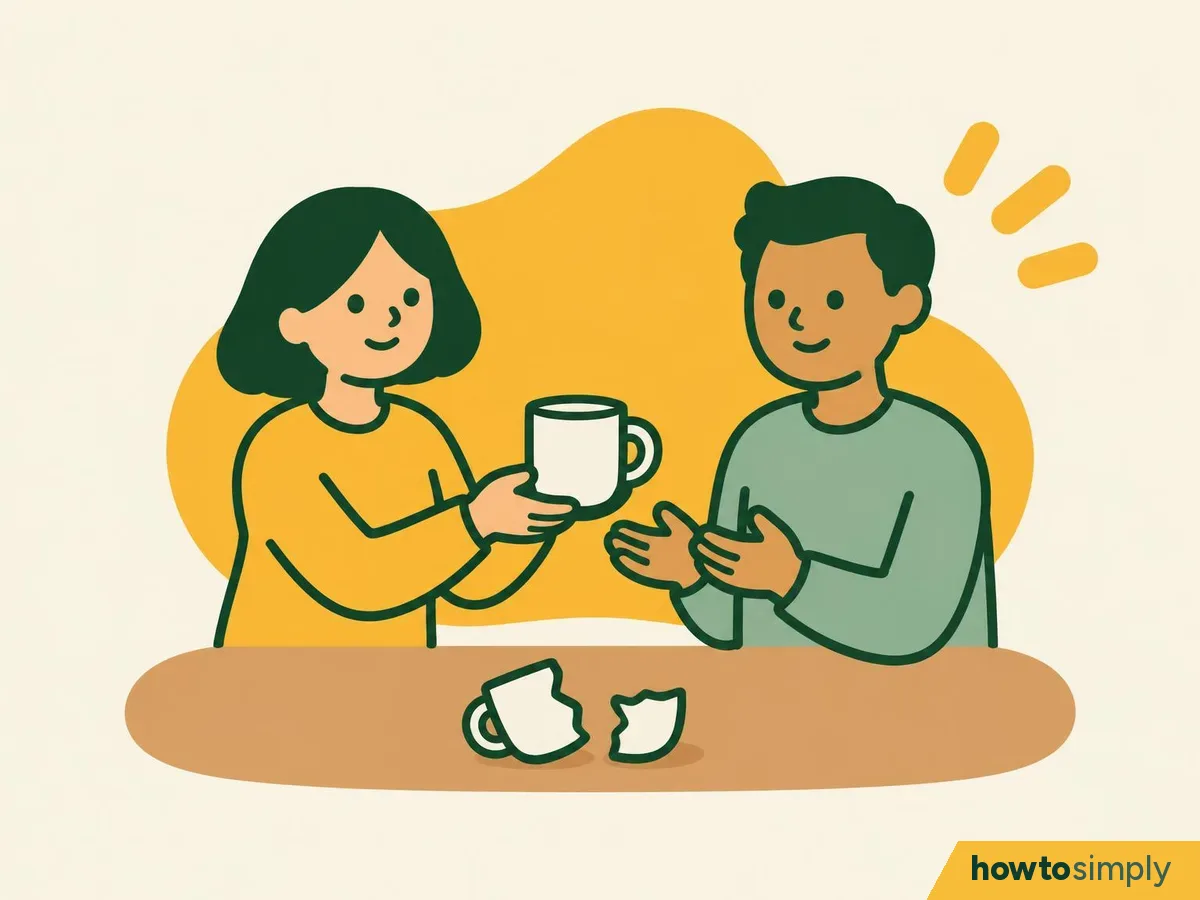
Illustration This came second. The researchers reasoned that offering to fix the problem commits you to acting on it, which answers the worry that an apology is just talk. Be specific about exactly what you'll do and when, because "I'll make it up to you" is a vague promise nobody can picture.
Say sorry and explain, briefly
Illustration Expressing regret and explaining what happened tied for third. Keep the explanation brief and factual. The longer it gets, the more it starts to sound like an excuse, whether you intend it to or not.
Say what you'll do differently, then do it
Illustration Promising it won't happen again also tied for third. It only matters if your behaviour backs it up, so make a concrete plan, such as setting a reminder or changing a routine.
Give them time
Illustration Asking for forgiveness ranked lowest, and the lead author said it's the part you can leave out if you need to. You don't need an immediate answer. It's their decision to make, in their own time, and being patient while you wait is part of the apology too.
Listen first, then apologise
Two 2005 studies by Frantz and Bennigson found that apologies worked better when they came later in a conversation, especially once the hurt person felt heard and understood (Journal of Experimental Social Psychology). So before you apologise, ask what upset them and let them finish speaking, then acknowledge what they've said before you move on to your side of it.
Does an apology make forgiveness more likely?
Researchers at the University of Maryland combined 175 studies with data from 26,006 people (Fehr, Gelfand and Nag, Psychological Bulletin, 2010). Receiving an apology was one of the factors most strongly linked with forgiveness, along with feeling empathy for the person who caused the hurt. An apology helps, but it's one part of a larger picture, not a switch.
Why saying sorry can feel hard
In two studies, people who refused to apologise reported higher self-esteem and felt more in control (Okimoto, Wenzel and Hedrick, European Journal of Social Psychology, 2013). The authors said these results point to possible barriers to making up after someone has been hurt.
Before you apologise: a checklist
- Have I asked what hurt them, and listened to the answer?
- Can I say what I did without "if" or "but"?
- Do I have a specific offer to put it right?
- Do I know what I'll do differently, and how I'll remember?
- Am I ready to wait for their answer?
Apologies across cultures
A 2011 study compared Japan and the United States. Japanese participants apologised more often than Americans, even for things they hadn't been involved in, while Americans were more likely to treat an apology as admitting personal blame. If the other person grew up with different expectations, an apology that sounds complete to you may not land the same way.
If this doesn't work
- They aren't ready: keep your promise.
- It keeps happening: apologising again and again for the same thing wears the words out; the change you promised matters more than what you say.
- Someone is being hurt or feels unsafe: this is beyond an apology. Call the emergency number (112 in the EU, 999 in the UK, 911 in the US) if anyone is in danger.
Questions readers ask
What is the most important part of an apology?
Taking responsibility. In the 2016 Ohio State study, saying clearly that it was your fault ranked first, ahead of saying sorry.
Do I have to ask for forgiveness?
It helps least. In that same study, asking to be forgiven came bottom of the six, and the lead author said it's the part to drop if you need to.
Should I explain why it happened?
Yes. An explanation of what went wrong tied for third place.
Do apologies mean the same thing everywhere?
No. A 2011 study found that Japanese participants apologised more often than Americans, even for things they had no part in, while Americans were more likely to treat an apology as admitting personal blame.
Sources and method
- Researched by
- Abu Bakar Saadat
- Tested by our team
- No. We have no record of anyone on our team trying these steps, so treat them as researched instructions from the sources below.
- Pictures
- 7 illustrations drawn for this article: drawings, not photos.
- Sources
- 5 named sources, linked below.
- What this page adds
- A table of the six parts of an apology ranked by a study of 755 people, each with an example line, plus a ready-to-use apology and a checklist.
What to do next
Get on better with the people around you Step 1 of 5
- How to split the mental load: a 13-step audit for couplesShare the invisible jobs, not just the chores.
- How to fix a friendship, or end it kindly: 13 stepsWhen a friendship has gone wrong.
- How to make friends as an adult: it takes about 50 hours, so here is how to get themNew friends after school and uni.
Did this solve the problem?
Where did you get stuck?
What did you think?
Reaction counts are loading.
Sources
We use primary, official and specialist sources appropriate to the topic.
- Ohio State University News: The 6 elements of an effective apology, according to science (2016)
- Maddux, Kim, Okumura and Brett (2011): Cultural differences in the function and meaning of apologies, International Negotiation 16 (PDF)
- Florida Institute of Technology, Psychology Science Minute: #349 Apologies and Timing (on Frantz and Bennigson, 2005)
- Fehr, Gelfand and Nag (2010): The Road to Forgiveness: A Meta-Analytic Synthesis of Its Situational and Dispositional Correlates, Psychological Bulletin 136(5) (PDF)
- Monash University research record: Okimoto, Wenzel and Hedrick (2013), Refusing to apologize can have psychological benefits (and we issue no mea culpa for this research finding), European Journal of Social Psychology 43(1)