Set the timer's clock to the right time first. On a round dial, push in the 15-minute segments for the times you want heat, starting about 30 minutes before you need it, leave the rest out, and switch to Timer or Auto.
Researched by Abu Bakar SaadatPublished 31 October 2026Last changed 17 November 2026Verified 17 November 2026Version 6See all changes
Waking up to a cold house, or hearing the boiler fire up at a silly hour, will put anyone in a bad mood before breakfast. But the good news is that setting the timer is much simpler than it sounds: everything happens on the front panel, so you don't have to open the boiler.
A boiler timer controls when your heating and hot water switch on and off. If the timer's own clock is wrong, say after the clocks change or a power cut, Viessmann says your heating can come on earlier or go off later than you expect. So before you blame the boiler, check its clock. Below, one example goes from heating that comes on an hour early to a flat that's warm exactly when it should be, with a drawing for each step.
Only use the controls on the front of the boiler. Leave the casing on. If the boiler shows a fault light or won't fire up, call a registered heating engineer.
Which timer do you have?
A round dial with little pins or tabs around the edge
Our example: Amira's heating comes on an hour early
Every step below follows one story, and each drawing shows that exact moment. The clocks went back on Sunday 25 October, and since then the combi boiler in Amira's kitchen cupboard has been heating the flat an hour before she gets up. The boiler has a round dial timer on the front. She wants heat from 7:00 to 8:00 in the morning and from 18:00 to 22:00 in the evening.
Amira is a made-up example that our illustrations follow. The timer settings come from Viessmann, Vaillant and the other sources named.
Part 1: Set a round dial timer
Before you start
Time: No source gives a time; we estimate about 5 minutes.
Who it's for: Round dial timers with pins, digital programmers, and German controllers with a time programme[1][2][3].
Not for: A timer that has stopped working altogether: try resetting it, and if that fails ask a heating engineer[2].
Find the timer and its parts.
Illustration
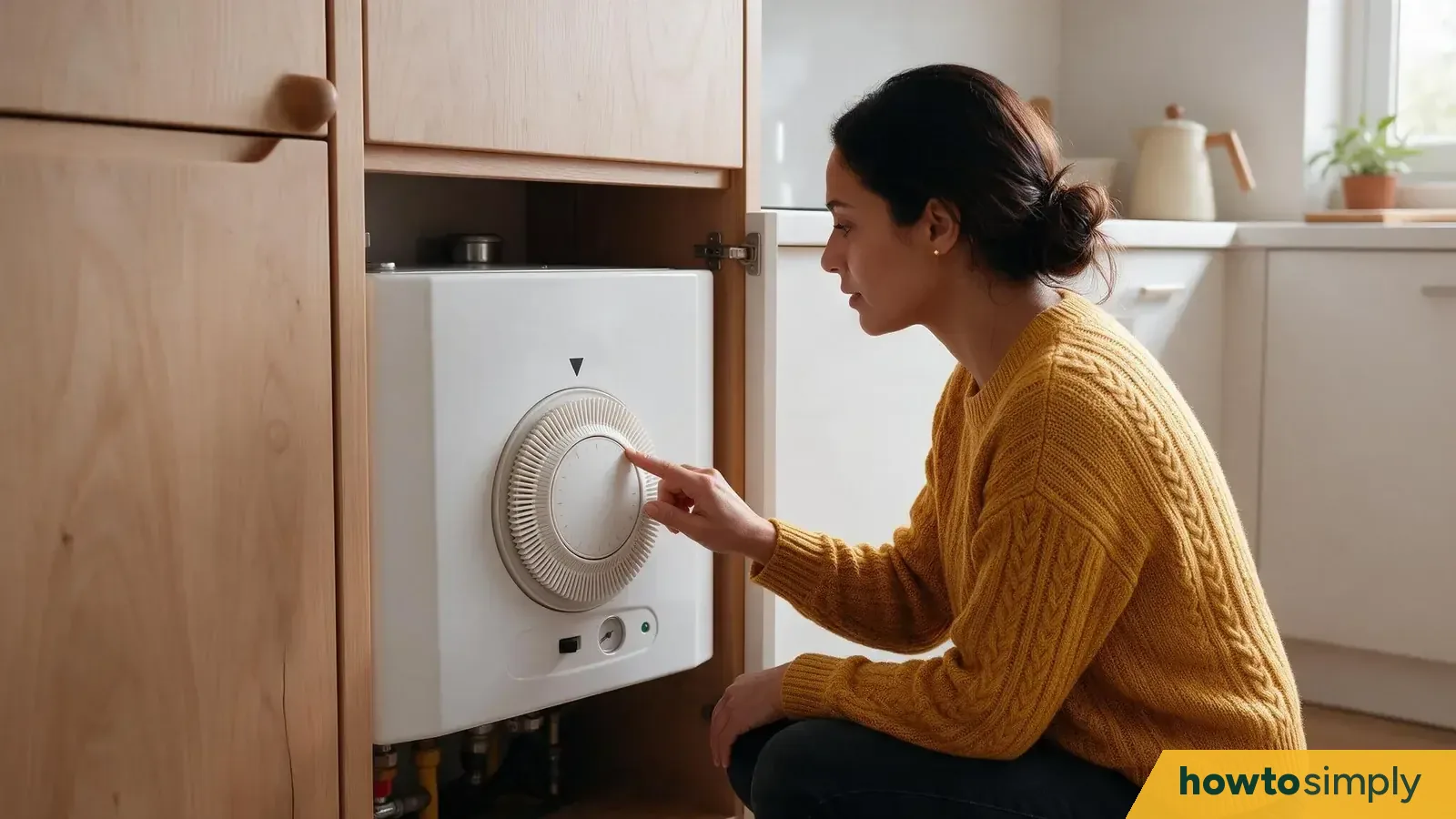
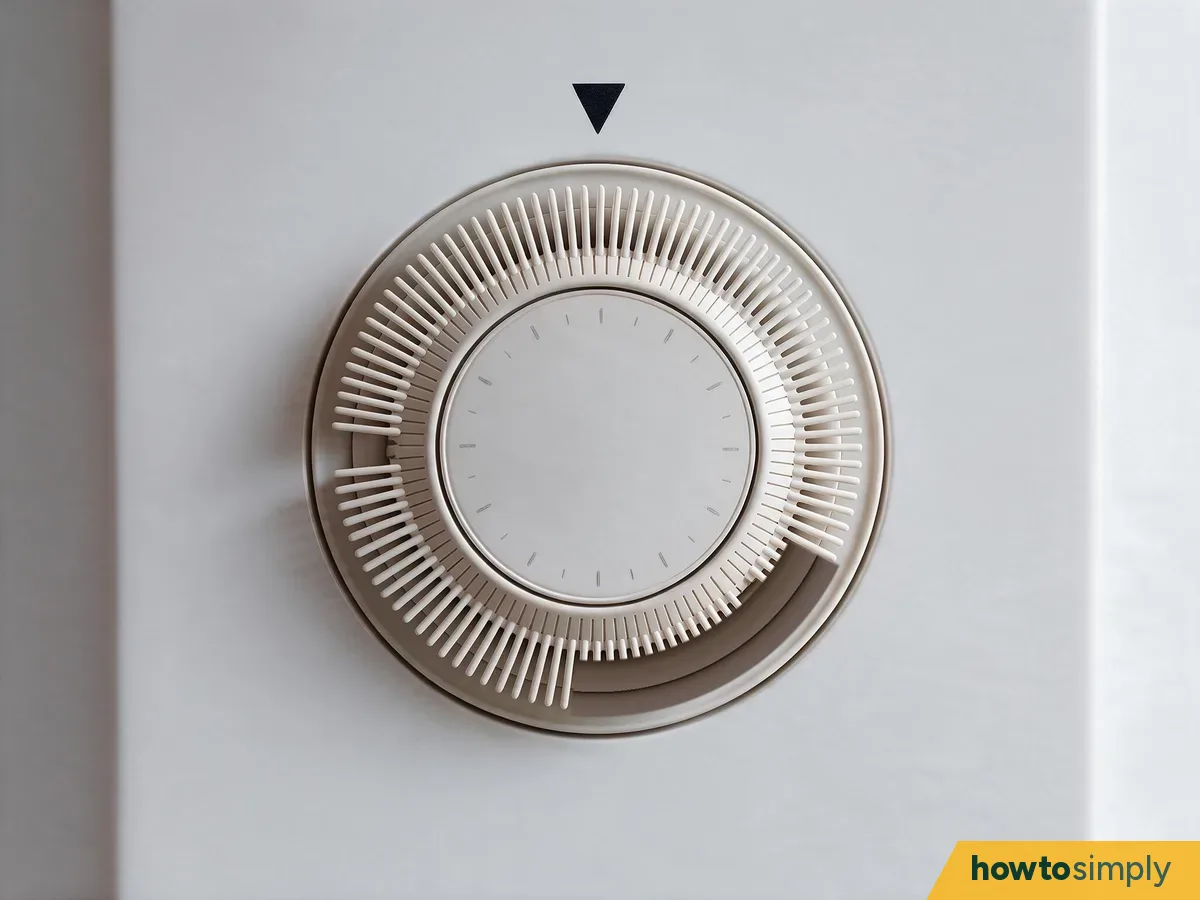
In our story: Amira opens the cupboard and looks at the round dial on the front of the boiler.
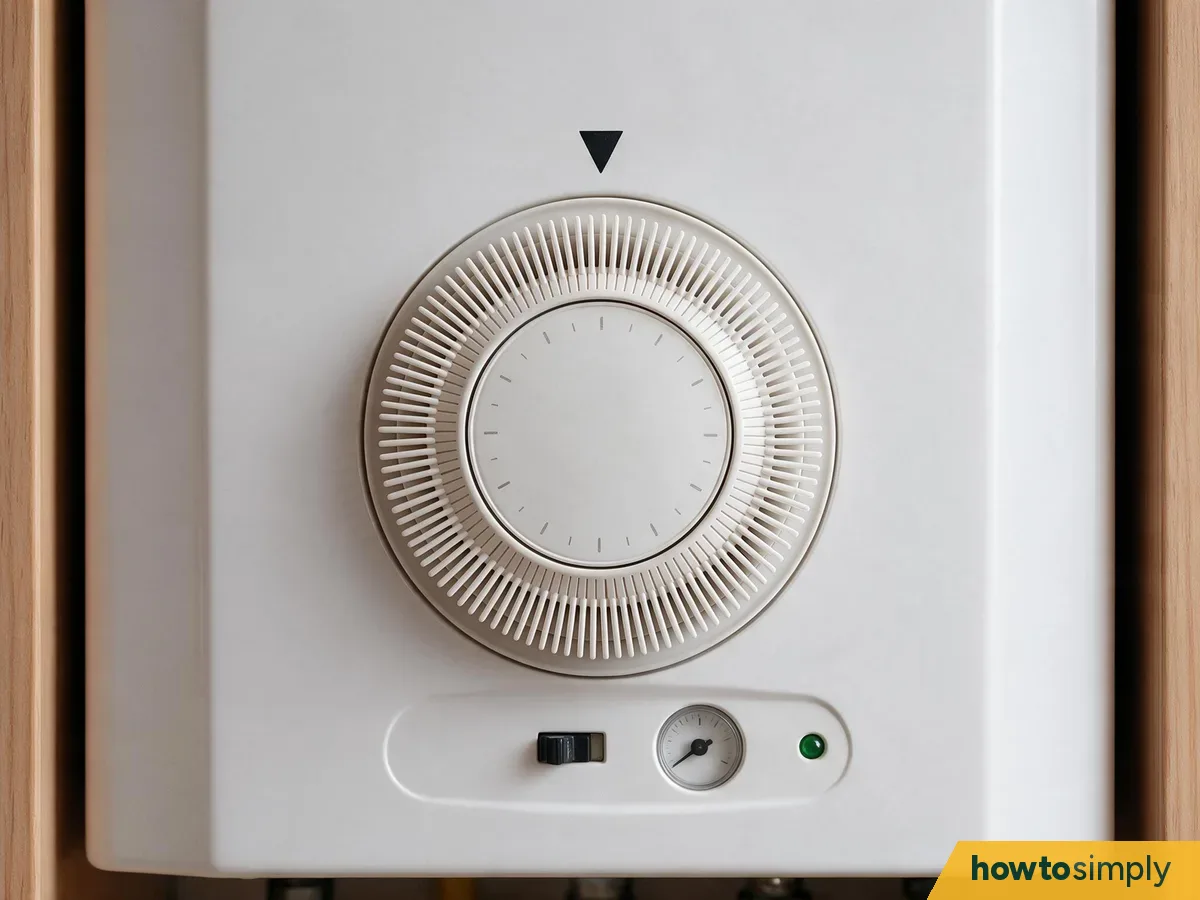
Vaillant describes the mechanical kind as a circular dial: a 24-hour clock sits in the middle, ringed by pins or segments. An adjustable arrow points to the current time of day (Vaillant). Nearby is usually a small switch for the mode. Don't worry if yours looks a little different; the dial and the switch are what you are looking for.
Turn the dial to the right time.
Illustration
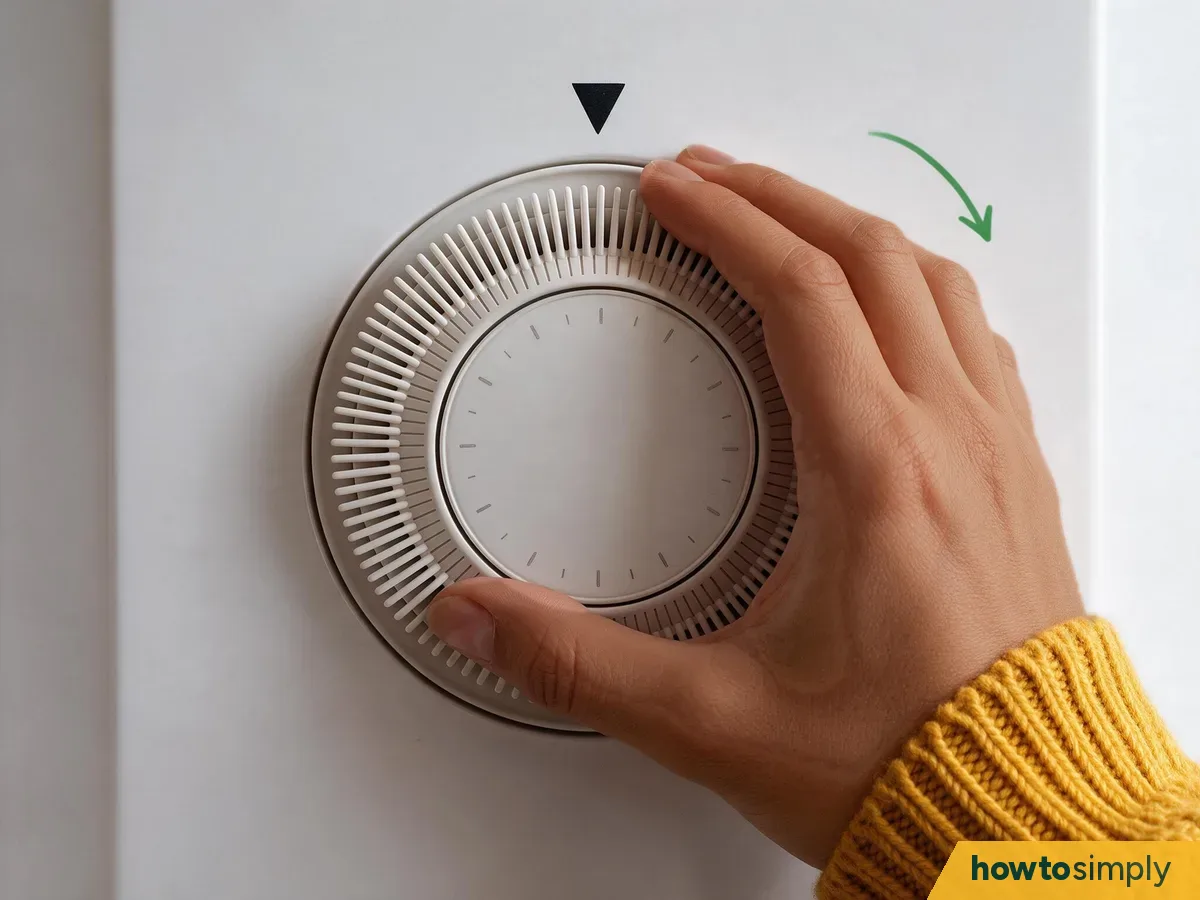
In our story: It's 19:20. Amira's dial says 20:20, an hour out since the clocks went back. She turns it until 19:20 lines up with the arrow.
Turn the dial until it shows the right time of day (Viessmann). Use the 24-hour time: 7 in the evening is 19. If it resists, try the other way, and please don't force it.
Push in the segments for the morning.
Illustration
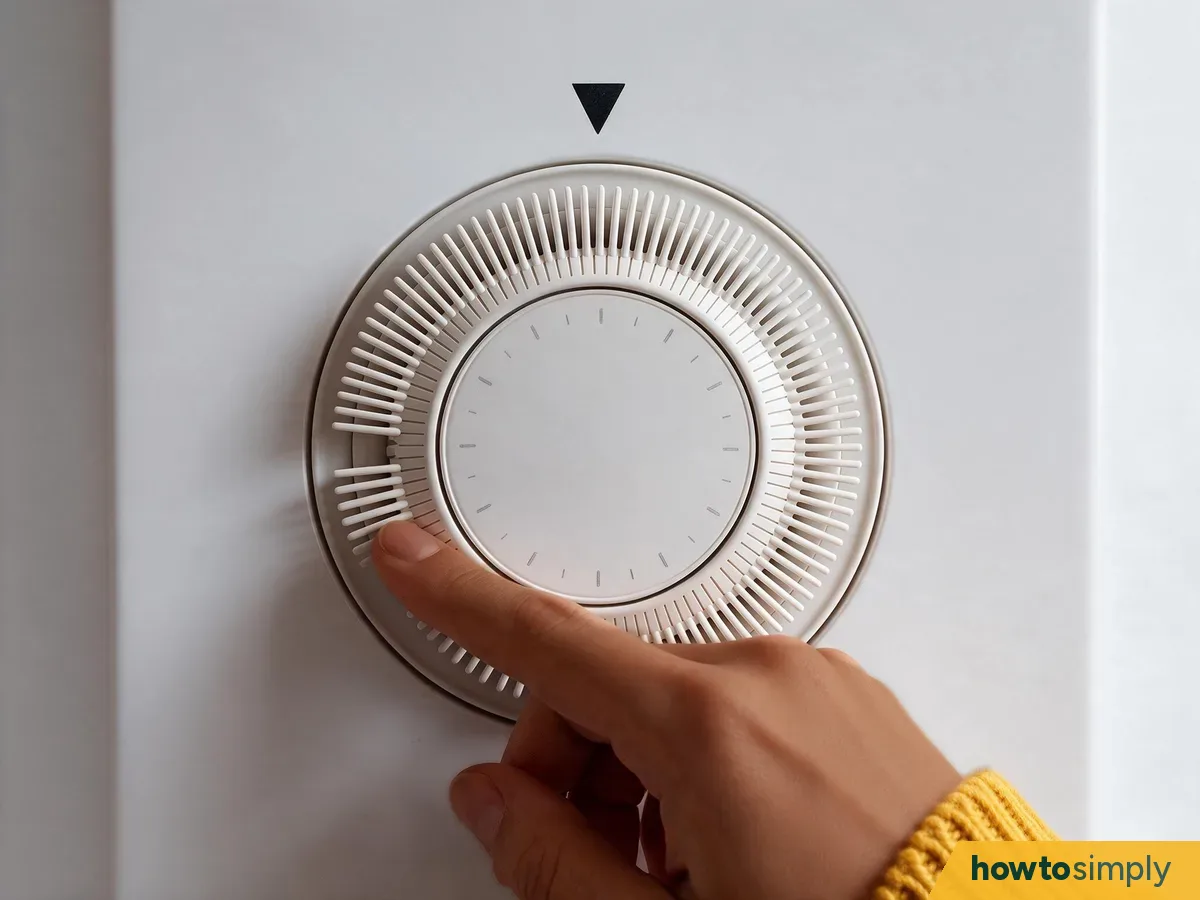
In our story: Amira wants the flat warm from 7:00, so she pushes in the segments from 6:30 to 8:00.
Each segment is usually 15 minutes (Vaillant, Viessmann), so four segments make an hour. Push them in for the times you want heat (Vaillant). Start about 30 minutes before you need the warmth. It gives the heat time to circulate around each room (Vaillant), and otherwise you will be standing in your dressing gown waiting for the house to catch up. If you're unsure, check your manual.
Add the evening and leave the rest out.
Illustration
In our story: She pushes in 17:30 to 22:00 for the evening and checks that every other segment is out.
Next, the gaps in between. Segments left out are times the heating stays off (Viessmann), so make sure every segment you don't need is sticking out. The dial repeats the same pattern every day unless you change it by hand (Viessmann); more complex programmers let you set different patterns for different days (Viessmann).
Switch to Timer mode.
Illustration
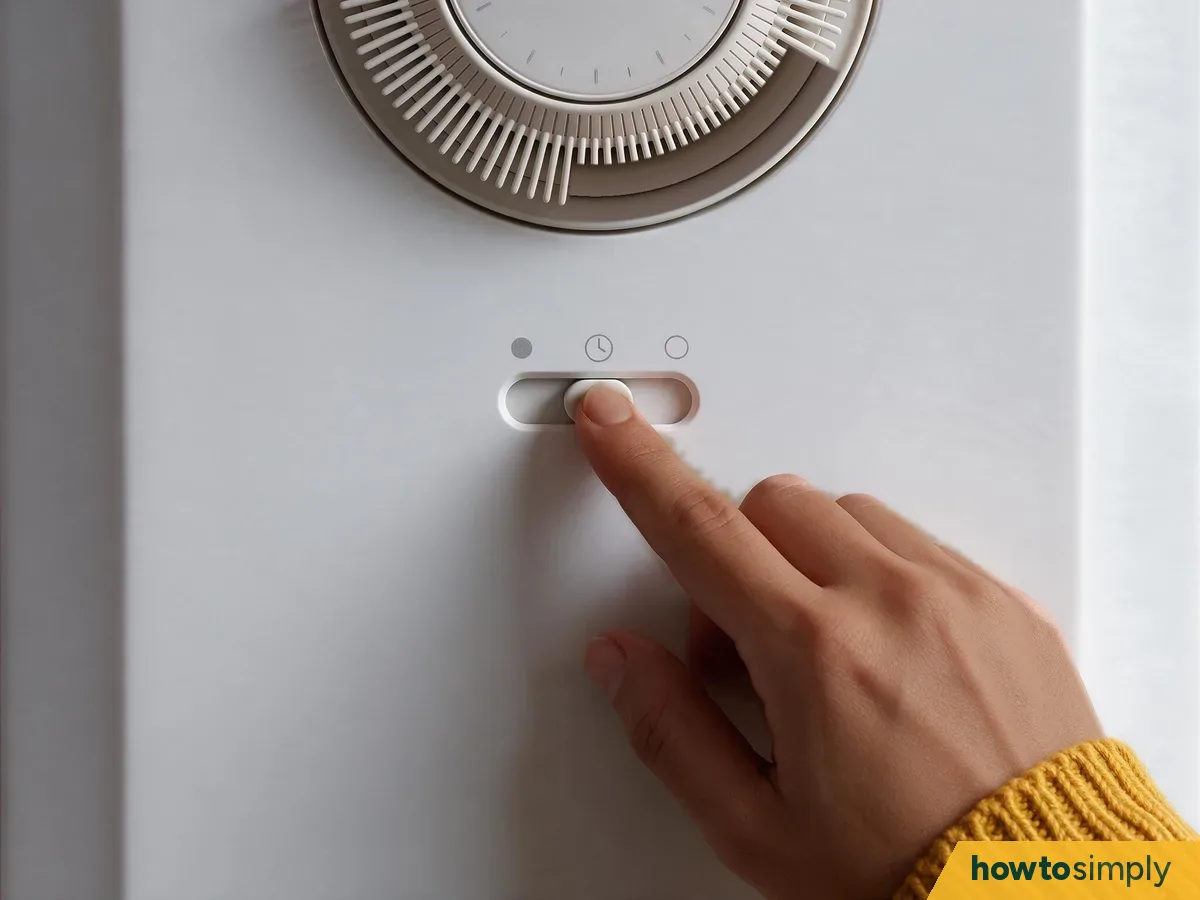
In our story: Amira slides the switch from On to the clock symbol, Timer.
People also miss this little switch. The boiler follows your times only in Timer mode (Vaillant), so all that careful pushing does nothing until you slide it across. It is that easy to forget, and that easy to fix. The other positions usually keep it on all the time or off all the time (Viessmann). Look for the word Timer (Vaillant) or Auto (Viessmann).
Check it the next morning.
Illustration
In our story: At 7:00 the next morning, the radiator in Amira's living room is already warm.
If the heating still comes on at the wrong time, don't be discouraged. Check the dial's time against your phone again, because a wrong clock can make the heating come on earlier or go off later than expected (Viessmann). If a radiator stays cold at the top while the others are warm, it may need bleeding.
Part 2: Set a digital programmer
Check the clock, then set your on and off times.
Illustration
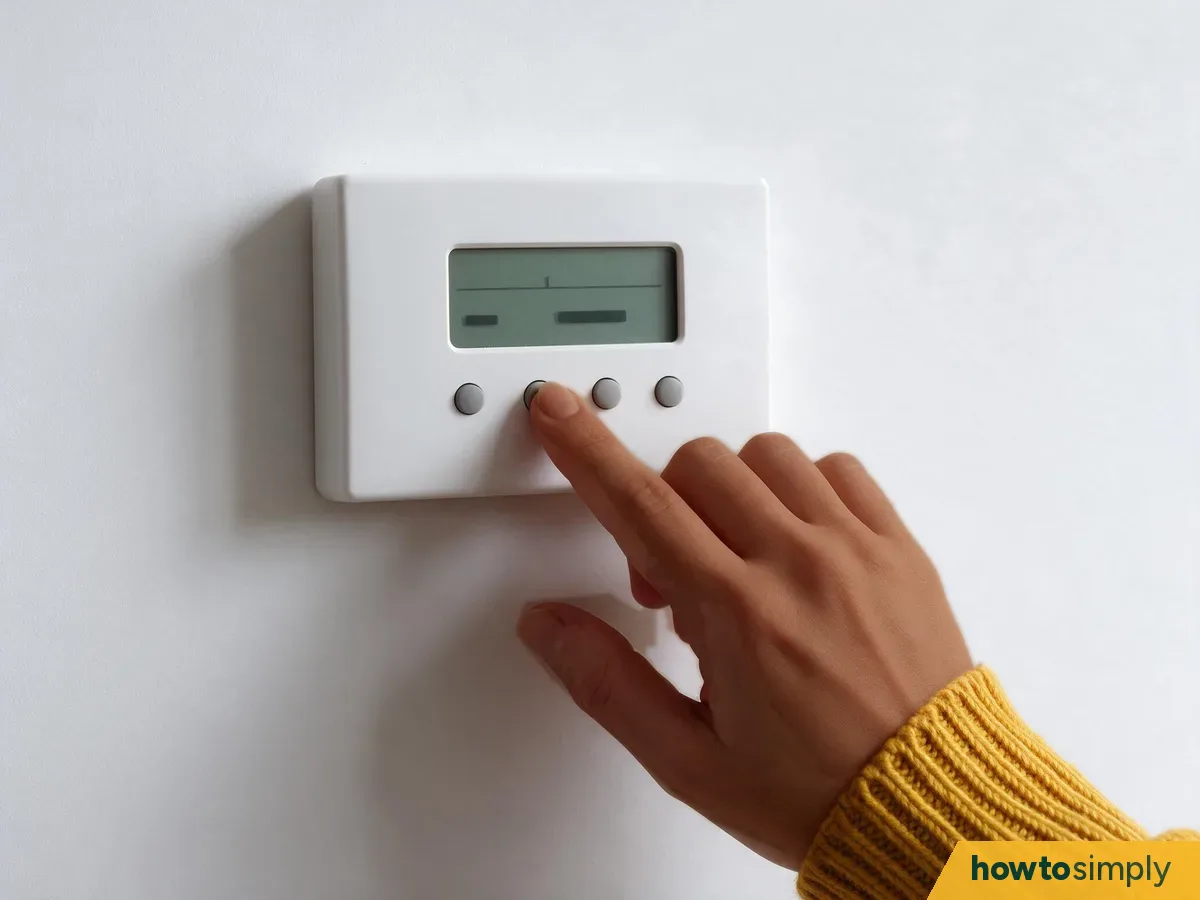
What if Amira had a digital programmer? She'd check the date and time on the screen first, then turn on the schedule and enter the same morning and evening times.
Set the correct date and time first; some programmers do this automatically, but check (Vaillant). Then switch on scheduling and choose your on and off times (Vaillant). Buttons differ a lot between models, so follow your manual (Viessmann). If the buttons feel confusing, that is the programmer's fault, not yours. More complex programmers let you set different times for different days (Viessmann).
Auto or Twice: on and off at your set times each day (Viessmann).
All day or Once: from your first on time to your last off time (Viessmann).
24hrs or On: on until you change it. Off: off until you change it (Viessmann).
+1hr or Boost: one extra hour of heat. Advance: jumps to the next on or off time (Viessmann).
Part 3: Germany: a night setback instead of off
Set a lower night temperature in the time programme.
Illustration
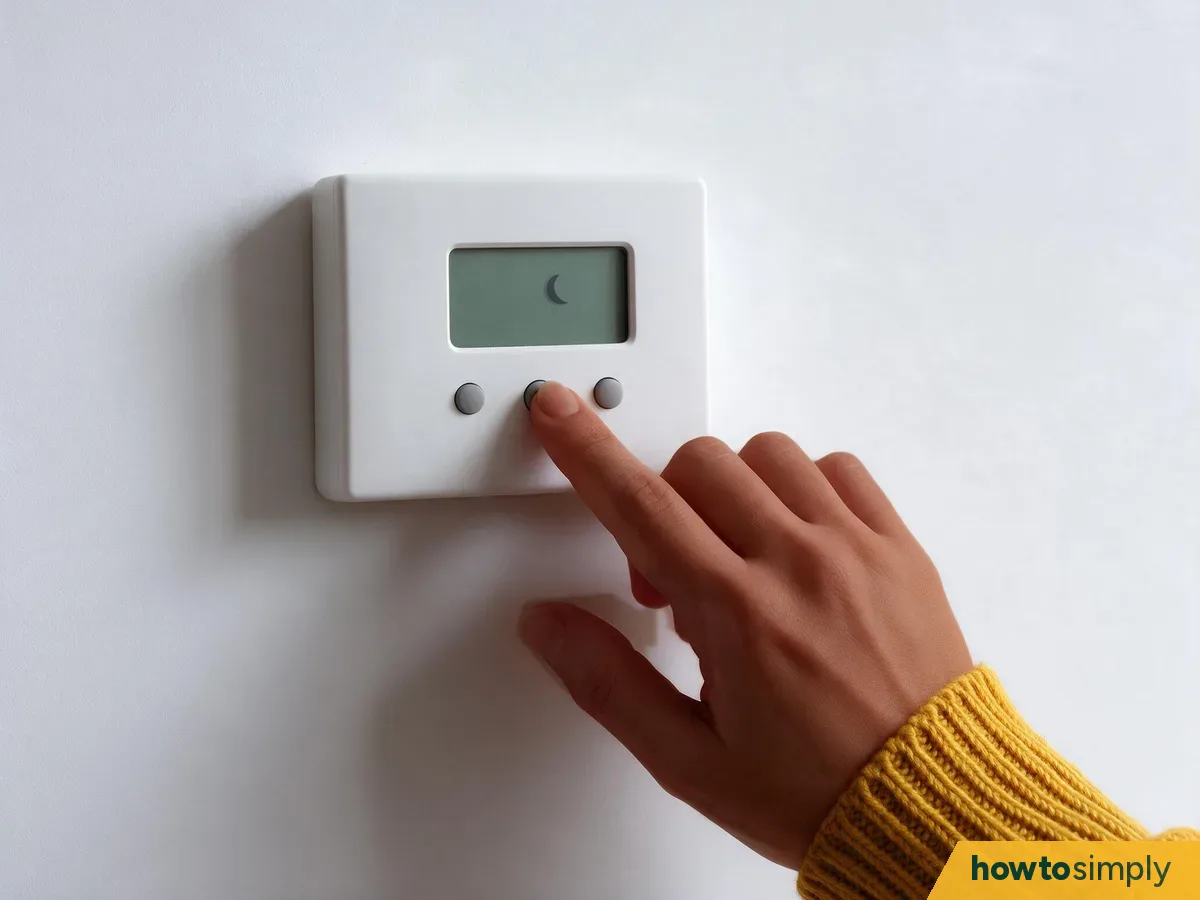
What if Amira lived in Germany? Her controller would lower the temperature at night instead of switching the heating off.
Many German controllers have a time programme (Zeitprogramm) with a lower night temperature. The path is often Menü, Heizung, Heizkreis, Zeitprogramm, but it differs between controllers (Viessmann DE). Day temperature is usually around 20 °C; Viessmann suggests not going below 17 °C at night. It says older homes with no energy upgrades and of light construction can benefit, but a setback is usually not recommended for new builds or freshly renovated homes, and underfloor heating reacts slowly, with long cool-down and warm-up phases. Rooms kept too cold for long can get damp; see stopping condensation and mould.
How to tell it worked
The time on the timer matches your phone.
The radiators warm up at the start of each period you've set, and cool down once it ends.
The switch is on Timer or Auto, not On or Off.
Tips
A few small habits will save you from having to do this all over again.
Check the timer each time the clocks change, because Vaillant and Viessmann say mechanical timers don't always adjust by themselves.
Viessmann says many boilers go back to midnight after a power cut, so set the time again.
Write your on and off times on a sticky note inside the cupboard door, so anyone at home can check them. And if everyone in your house flicks the switch to On whenever they feel chilly, the note is there to remind them that the timer is already doing that job.
If something goes wrong
When your heating doesn't do what you programmed, please remember you haven't done anything wrong. Find the problem you're seeing in the left-hand column of the table, and follow what it says about the likely cause and what to do.
What happens
Likely cause
What to do
Heating comes on an hour early or late
Clocks changed, timer didn't (Vaillant)
Turn the dial to the right time
Heating comes on at random times
Clock reset to midnight after a power cut (Viessmann)
Set the clock again
Heating never comes on
Switch on Off, or no segments pushed in
Switch to Timer, check the segments (our advice)
Heating never goes off
Switch on On (constant)
Switch to Timer (our advice)
Timer clock has stopped
The timer has stopped working
Try resetting it; if that doesn't help, contact your heating engineer (Viessmann)
Zeitprogramm, often Menü, Heizung, Heizkreis, Zeitprogramm; up to eight time phases
Night temperature not below 17 °C
Graphic by howtosimply, from the sources below.
Questions
Why is my boiler on when the timer says off?
Check the timer's clock. If it is wrong, the heating comes on earlier or goes off later than you expect; after a power cut many boilers reset to midnight. Set the current time again.[2]
What times should I set on a digital timer?
Vaillant suggests one period in the morning and one in the evening, for example 6:30 to 8:00 and 17:30 to 20:00.[1]
Can I set different times for weekends?
Not on a simple dial, which repeats the same pattern every day unless you change it by hand. More complex programmers let you set different patterns for different days.[2]
My timer has stopped working. What now?
Viessmann says to try resetting it, and if that doesn't help, to ask your heating engineer.[2]
How long is each segment on a boiler timer?
On the usual round dial timers each pin or segment is 15 minutes (Vaillant, Viessmann).
How early should the heating come on?
Vaillant suggests about 30 minutes before you want the home warm. For a warm home from 7:00, set it to come on at 6:30.
Why is my heating coming on at the wrong time?
The timer's clock may be wrong. Mechanical timers do not always update automatically when the clocks change (Vaillant), and many boilers reset to midnight after a power cut (Viessmann). Set the clock again.
What do Boost and Advance do?
Boost (or +1hr) gives one hour of heating. Advance jumps to the next on or off time in the day's programme (Viessmann).
Is it worth turning the heating down at night?
It depends on the building. Viessmann says older homes with no energy upgrades and of light construction can benefit, but a night setback is usually not recommended for new builds or freshly renovated homes, and underfloor heating reacts slowly, with long cool-down and warm-up phases. It suggests not going below 17 °C.
The pictures on this page are illustrations, not photos.
How we know this: sources, checks and every change
Current advice
Check the timer's clock first, because a wrong clock after the clocks change or a power cut makes the heating come on early or late[1][2]. On a dial, each pin is 15 minutes: push in the ones for when you want heat, about 30 minutes ahead, and set the switch to Timer[1][2].
Advice last changed
17 November 2026
Sources
Vaillant and Viessmann UK and Viessmann Germany
Latest update
17 November 2026. We re-read the sources. All 3 opened today and still back the steps, the settings list and the German night setback. We removed three lines that had no source behind them, listed below.
What changed in this version
Removed: the answer on segment length said 'some general plug-in timers use 30-minute segments'. Neither Vaillant nor Viessmann says this; both give 15 minutes for boiler dial pins[1][2]. We also removed two unsourced cautions, 'many dials only turn one way' and 'some models work the other way round'.
Added: Viessmann Germany's sample time programme, and its advice on which homes gain from a night setback, in the table and under where the sources differ[3].
Key facts
A mechanical timer is a round dial with a 24-hour clock in the middle, pins round the edge and an arrow showing the time of day. Each pin stands for 15 minutes.[1][2]
Pins pushed in are the times the heating runs; pins left out are times it stays off.[1][2]
Vaillant suggests starting about 30 minutes before you want the home warm, so the heat has time to spread through each room.[1]
The boiler only follows your times with the switch on Timer; otherwise you switch it on or off by hand.[1]
Not every timer changes its clock for British Summer Time, and many boilers reset to midnight after a power cut. A wrong clock is a common reason the heating comes on at odd times.[1][2]
On digital programmers: Auto or Twice runs your set times each day, All day or Once runs from the first on to the last off, Boost or +1hr adds an hour, and Advance jumps to the next on or off time.[2]
Viessmann Germany recommends not setting the night temperature below 17 °C, against a usual day setting of about 20 °C, partly because colder rooms risk mould.[3]
What the sources agree on
Set the timer's clock to the right time before anything else.[1][2]
Mechanical timers don't always change by themselves when the clocks go forward or back.[1][2]
Controls differ between models, so the manual has the exact steps.[2][3]
Where the sources differ, or nothing is confirmed
Off or turned down at night: Vaillant's steps set the hours when the heating is off[1], and Viessmann UK mentions either switching off or giving less heat at night[2]. Viessmann Germany describes lowering the temperature at night instead, and says it suits older, lightly built homes with no energy upgrades but usually not new builds or freshly renovated homes[3].
Viessmann Germany's own sample programme drops to about 16 °C in the afternoon, while the same page recommends not going below 17 °C at night.[3]
Record history
Version 6. Sources re-read; record layout added with key facts, a table of the three kinds of timer, agree and differ notes, history and more questions.
Version 5. Wording reworked.
Version 4. Wording rewritten throughout.
Version 3. Every line checked against its source; some wording corrected.
Version 2. Approved and published on the site.
Version 1. First written, with illustrations, and held for review.
9 illustrations drawn for this article: drawings, not photos.
Sources
Steps checked against the 3 named sources linked below.
What this page adds
A worked story of Amira's heating coming on an hour early, close-ups of setting the dial and pushing in segments, and the German night setback.
What we checked
On 17 November 2026 we re-read all 3 sources: Vaillant's and Viessmann UK's boiler timer guides and Viessmann Germany's night setback guide, and checked each step, setting name, temperature and table entry against them.