Boiler pressure: top up to 1 to 1.5 bar on a Worcester Bosch, or use the German height rule
With the heating cool, find your boiler's filling link (a blue lever, a filling key or an external hose), let water in slowly while you watch the gauge, and stop between 1 and 1.5 bar on a Worcester Bosch boiler[1]. In Germany, Viessmann works the target out from the height of your highest radiator and recommends leaving the refill to a heating professional[2].
Researched by Abu Bakar SaadatLast changed 17 November 2026Verified 17 November 2026Version 5See all changes
 Illustration
On this page 10 sections
In short
With the heating cool, find your boiler's filling link (a blue lever, a filling key or an external hose), let water in slowly while you watch the gauge, and stop between 1 and 1.5 bar on a Worcester Bosch boiler[1]. In Germany, Viessmann works the target out from the height of your highest radiator and recommends leaving the refill to a heating professional[2].
Current advice
Top up only with the heating cool, and stop between 1 and 1.5 bar on a Worcester Bosch boiler[1]. Other makes can differ: Viessmann puts most homes between 1 and 2 bar and gives a formula for yours[2].
Information, not professional advice. If the pressure keeps dropping, or you are unsure about your boiler, call a heating engineer.
Work out your target pressure
This uses the formula in Viessmann's German guide[2]: the height in metres from the boiler up to your highest radiator, times 0.1, plus 0.5 bar.
1.5 bar
Worcester Bosch boilers: use 1 to 1.5 bar, whatever the height[1]. Other makes: your boiler manual wins over this checker.
This checker is switched off. Its figures were last checked against the sources on 17 November 2026, and we switch it off when that check is more than 180 days old, so you never get a number we have not re-read. The written steps above still name the sources.
Latest update
17 November 2026. We re-read both sources. The advice on this page still matches them.
What changed in this version
- New: a target-pressure checker and a chart, both built from the Viessmann formula[2].
- New: from the same Viessmann guide, the check that tells you a refill worked: the pressure stays steady and does not fall under 1.3 bar[2].
- New: numbered sources, a list of what the two sources agree on and where they differ, and this record history.
Key facts
- Worcester Bosch gives 1 to 1.5 bar on the gauge as the range to fill to[1].
- The reading rises while the heating runs and drops back to that range once the system cools, so read it cold[1].
- Worcester Bosch boilers fill in one of three ways: a blue keyless lever, an external filling hose, or an internal filling key[1].
- Filled too far? Worcester Bosch says to bleed your radiators[1].
- Each time you bleed a radiator, a little heating water escapes, which is why the pressure falls over time[2].
- Viessmann's formula: height in metres from boiler to highest radiator × 0.1, plus 0.5 bar. A 10 m height gives 1.5 bar[2].
- After a refill, Viessmann says the pressure should hold steady and stay at 1.3 bar or more. If it keeps falling, call a heating engineer[2].
Step by step
Before you start
Read the gauge with the heating cool
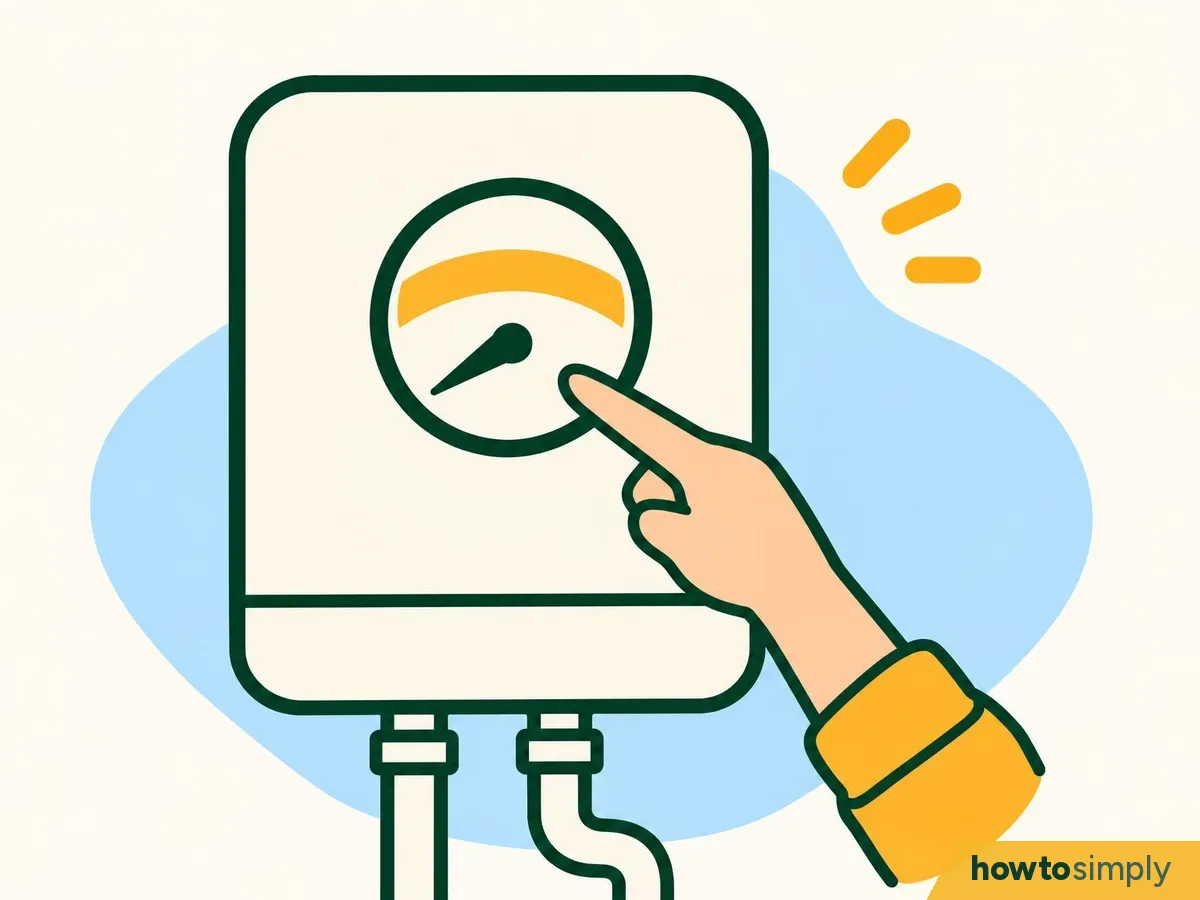
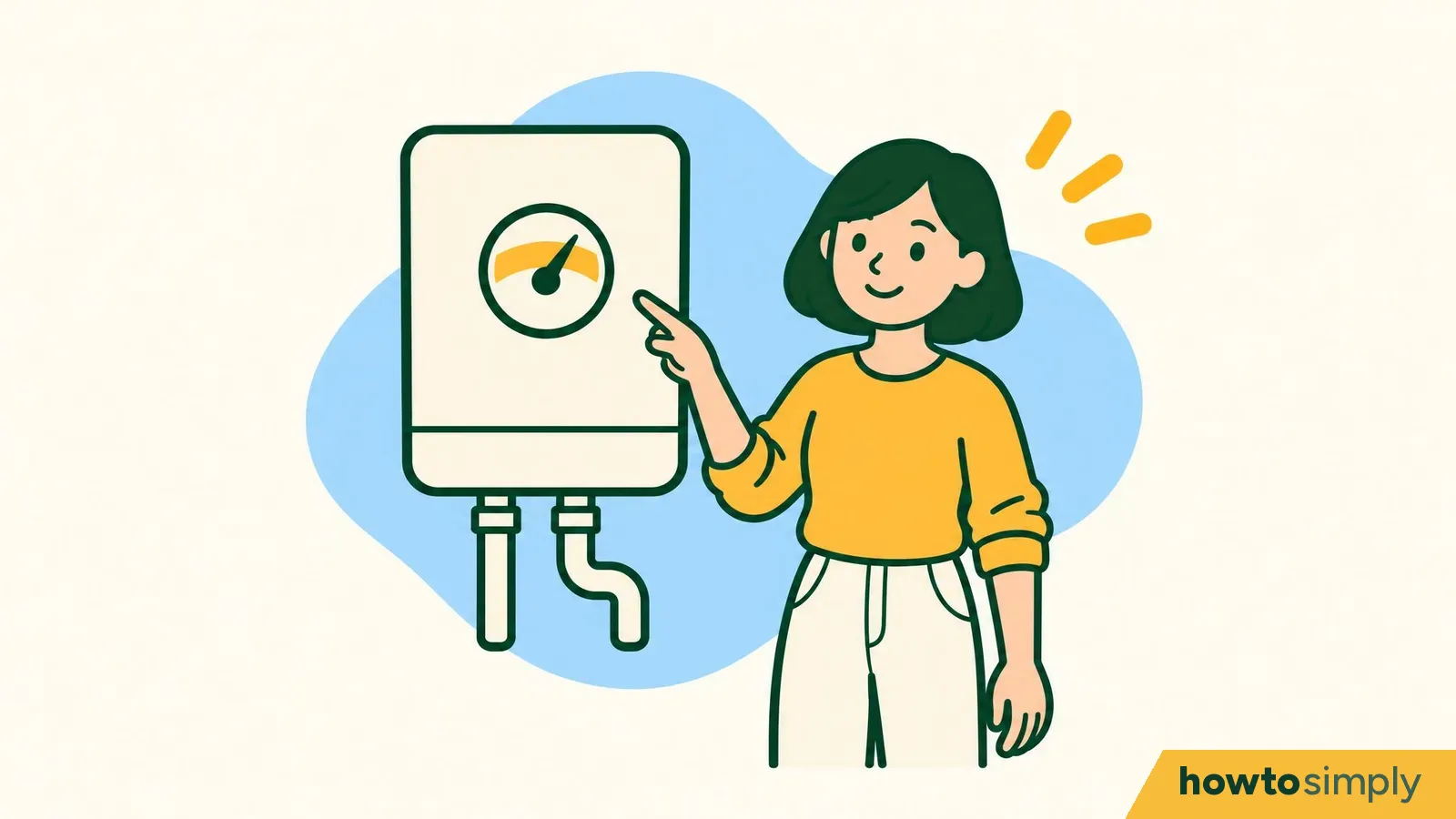
Illustration Look at the pressure gauge on the boiler (Viessmann notes that some boilers show it on the control panel instead)[2]. Check it while the boiler is cold, because Worcester Bosch says the reading goes up while the heating runs and drops back as it cools.[1] On a Worcester Bosch boiler, anything under 1 bar is below the range it gives.
You should see: the needle under 1 bar with the heating off and cool. If it's already between 1 and 1.5, there's no need to top up.
Find out which filling method your boiler has
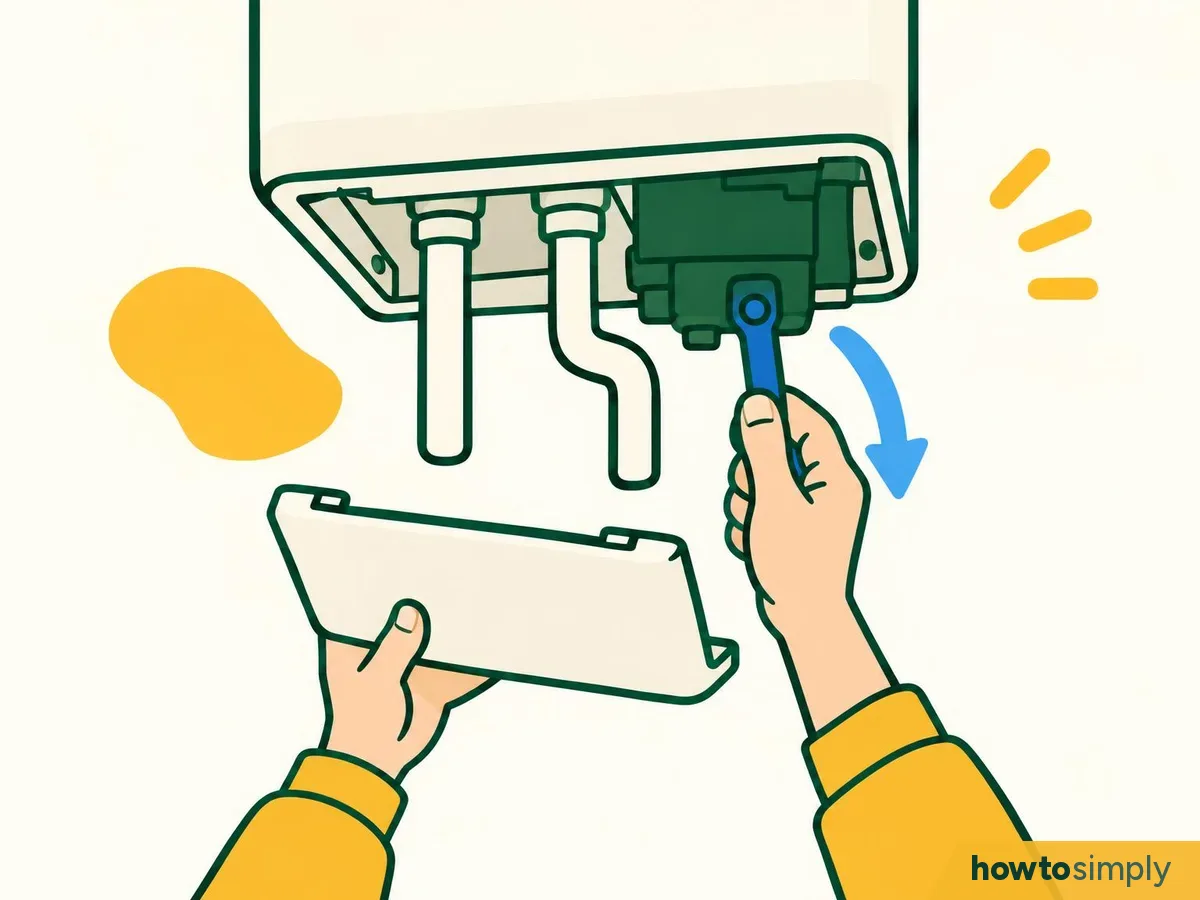
This bit looks harder than it is. Worcester Bosch describes three methods.[1] Look underneath the boiler, and behind the bottom cover if it comes off.
Blue lever (keyless filling link)
Illustration 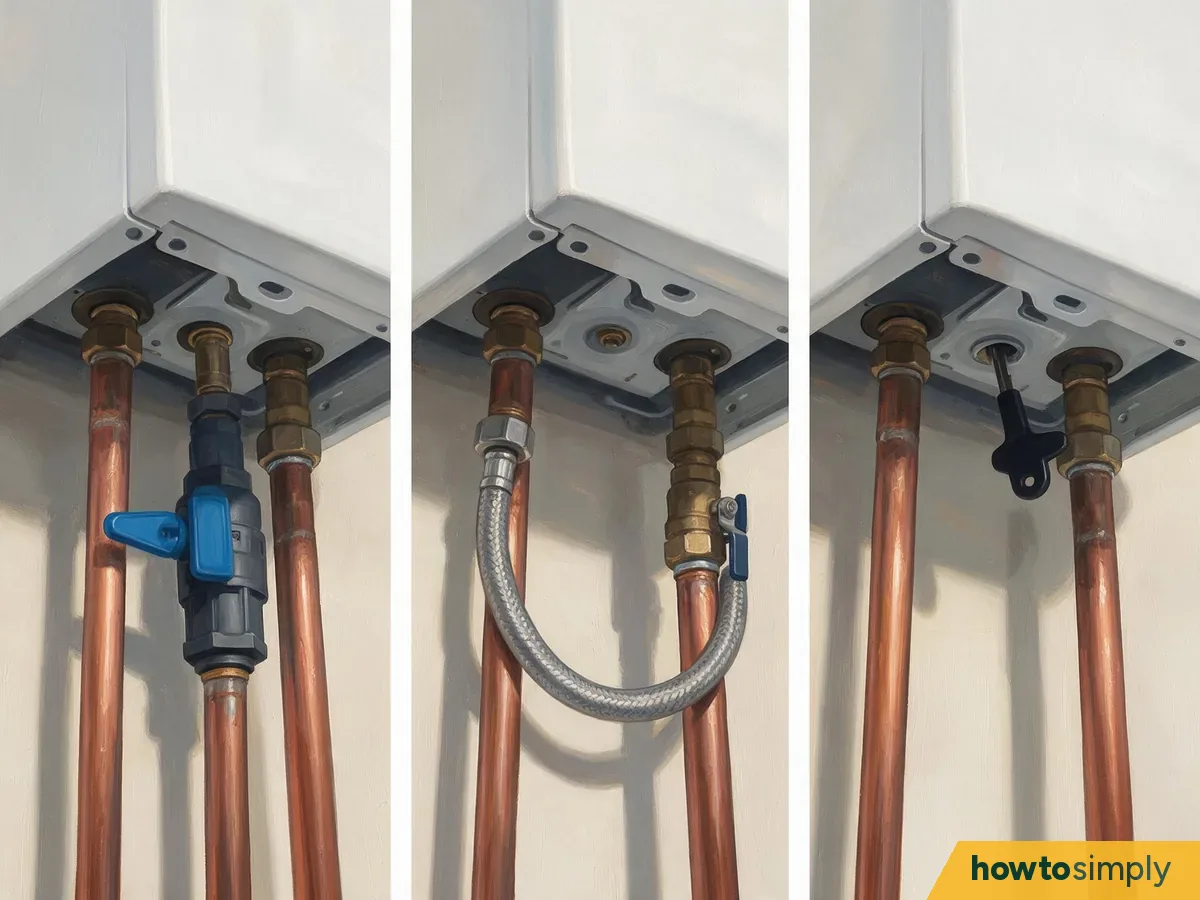
Illustration: the three common filling methods (lever, hose loop and key); look under your boiler to see which you have Take off the bottom cover and find the black manifold with the blue lever, usually on the right. Pull the lever down. Don't worry when you hear water running; that's normal. Keep your eye on the gauge and let go of the lever between 1 and 1.5 bar. Put the cover back on.[1]
You should see: the needle rising while the water runs, and stopping when you let go.
External filling hose
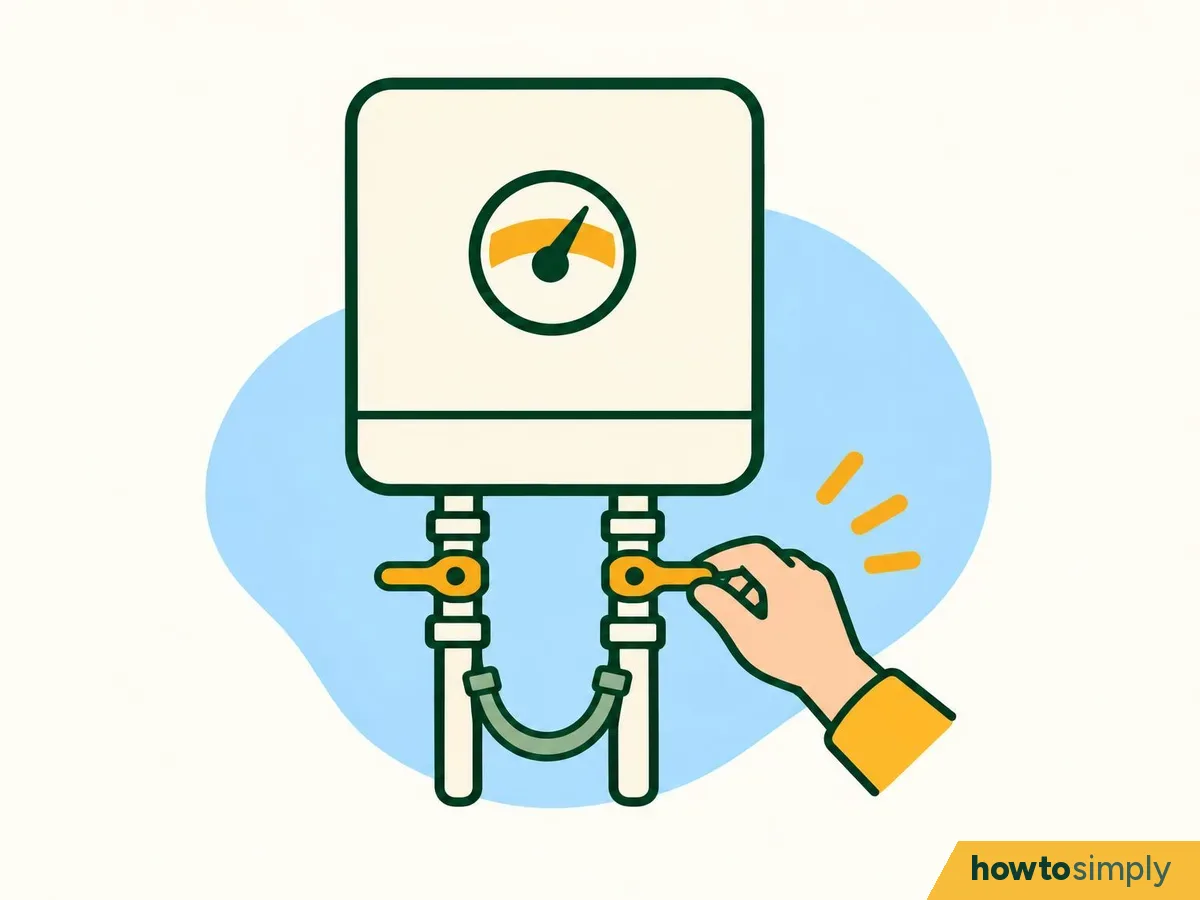
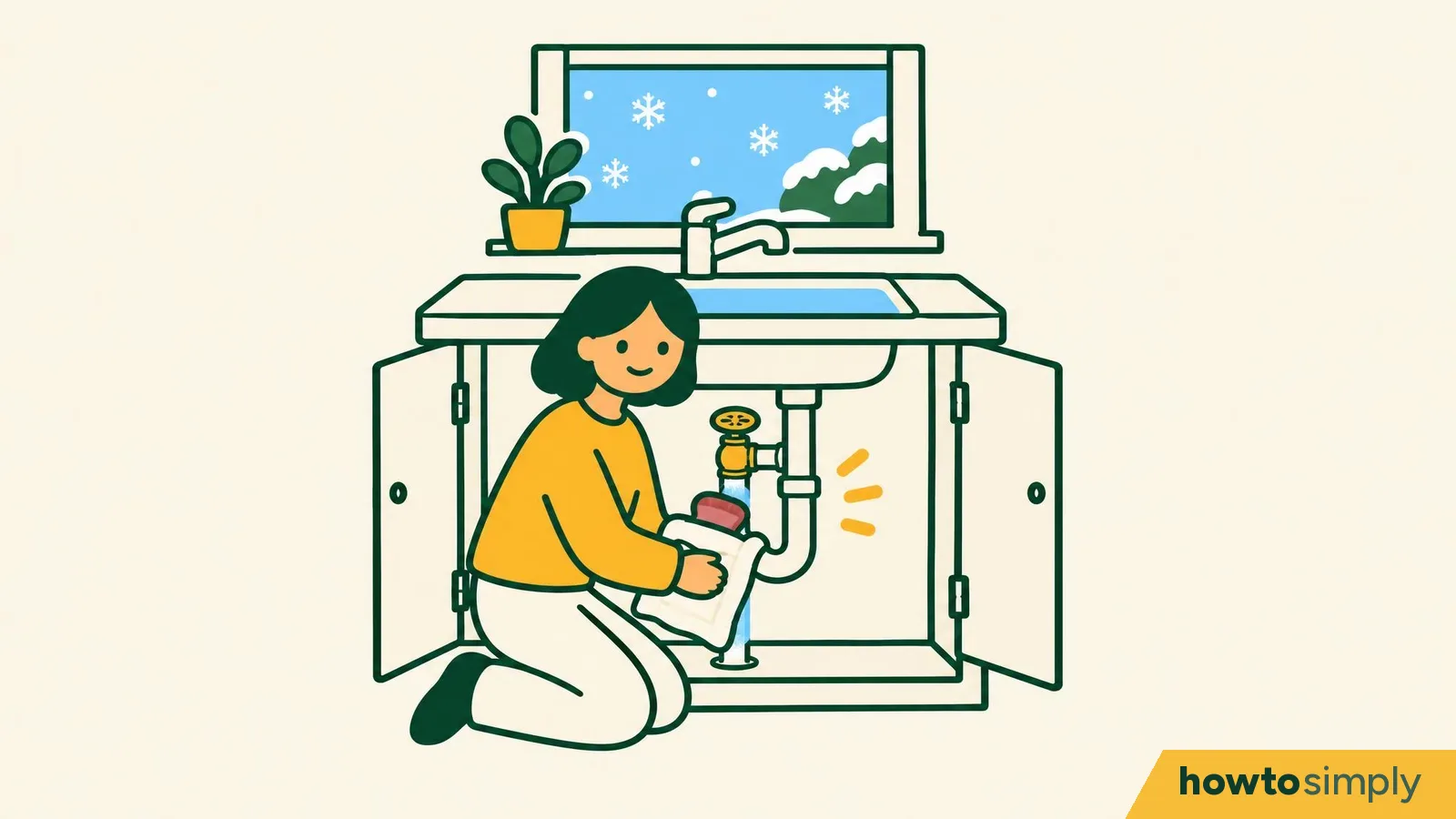
Illustration The hose may be kept under the kitchen or utility room sink. Take the cap off the valve on the copper pipe and attach the hose. Open one lever, then slowly open the second. When the gauge reads 1 to 1.5 bar, turn both levers back so they lie across the pipe. Unscrew the hose with a rag ready for drips, then put the cap back on.[1]
You should see: both levers across the pipe, which means closed, and the needle holding still.
Internal filling key
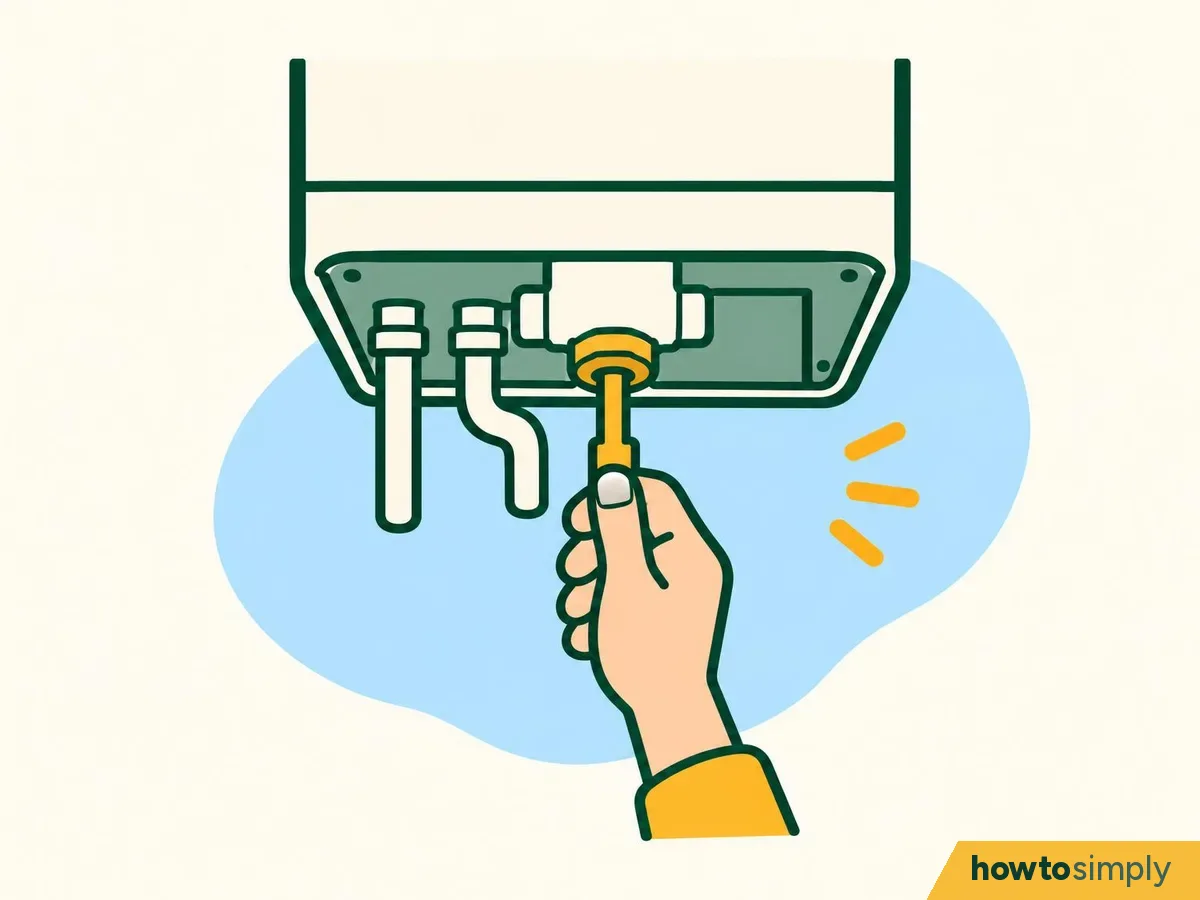
Illustration The key is usually stored inside the bottom cover. Find the manifold with the nut, put the key in at the padlock symbol, push it firmly in and turn it 45 degrees to the left until it locks. Turn the nut to the left to let water in. Close the nut once the gauge reaches 1 to 1.5 bar, turn the key 45 degrees back and pull it out. A few drips are normal, but if it keeps dripping, tighten the nut a little more.[1]
You should see: the key out, no steady drip, and the needle holding still.
Stop between 1 and 1.5 bar
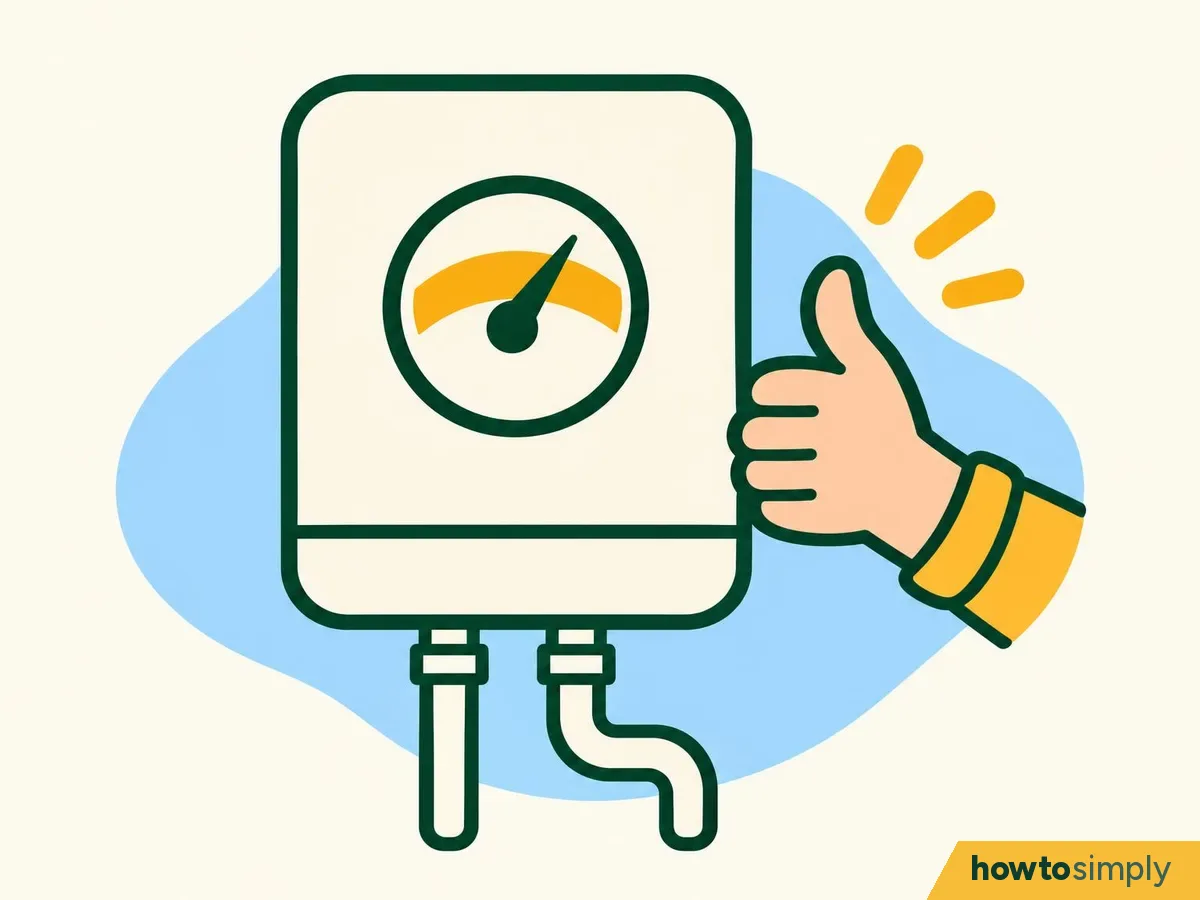
Illustration If you go past it by mistake, it's easy to fix: Worcester Bosch says to bleed a radiator to bring the pressure down.[1] Other makes may use a different range: Viessmann says the right pressure depends on your system, usually somewhere between 1 and 2 bar.[2]
Then turn the heating back on and watch the needle. It will move up as the system warms, which Worcester Bosch says is normal, and drop back as the system cools.[1] Next time you bleed a radiator, check the gauge afterwards.
How to tell it worked
Target pressure by height
Show the numbers
| Height | Formula result |
|---|---|
| 3 m | 0.8 bar |
| 5 m | 1.0 bar |
| 8 m | 1.3 bar |
| 10 m | 1.5 bar |
| 12 m | 1.7 bar |
| 15 m | 2.0 bar |
If something goes wrong
If the top-up didn't hold, please don't feel you did anything wrong. Calling in help at this point is normal, not a failure.
- The pressure keeps dropping: Viessmann says a leak or the expansion vessel is the likely cause.[2] Call a heating engineer.
- You can't find a filling link: check your boiler's manual. Worcester Bosch has a video for each method, and its helpline number is in the guide.[1]
- You rent: tell your landlord before you touch the boiler.
Other ways and adjustments
Lost the filling key? Worcester Bosch says plumbing merchants and big retailers sell them[1]. Not sure which method your boiler uses? Its guide links a short video for each of the three[1].
In Germany: a different rule
Viessmann's German guide suggests leaving the refill to a heating professional, because a careless refill can let dirty water damage the system[2]. The filling water must be clear and meet the VDI 2035 guideline, and heating water must never get into the drinking water[2]. Its own step-by-step list is written for owners who have done the job several times before[2].
| UK (Worcester Bosch) | Germany (Viessmann) | |
|---|---|---|
| Who does it | The homeowner, using the boiler's own filling link | Best left to a heating professional; the steps are for owners who have done it several times |
| How | Keyless lever, internal filling key or external hose, depending on the boiler | Hose from the tap, connected with a proper filling fitting so heating water can't get into the drinking water |
| Target | 1 to 1.5 bar | Height from boiler to highest radiator in metres × 0.1, plus 0.5 bar (10 m gives 1.5 bar) |
What the sources agree on
- You check the pressure on the boiler's gauge (Viessmann adds that some boilers show it on the control panel)[1][2].
- You top up by letting water in through a filling connection while you watch the gauge, then close it[1][2].
- Bleeding radiators lowers the pressure: Viessmann explains why it drops after bleeding, and Worcester Bosch uses bleeding to bring an overfilled system back down[1][2].
- If you can't fix it yourself, get help: Worcester Bosch gives a helpline, Viessmann says to call a heating engineer[1][2].
Where the sources differ, or nothing is confirmed
- Who should do it. Worcester Bosch writes for the homeowner[1]. Viessmann recommends a heating professional[2].
- The target. Worcester Bosch gives a fixed 1 to 1.5 bar[1]. Viessmann says it depends on the house, usually 1 to 2 bar, and gives a formula[2].
- Inside the Viessmann guide. Its formula gives less than 1.3 bar for heights under 8 m (3 m gives 0.8 bar), yet the same page says the pressure should not fall under 1.3 bar after filling[2]. The page doesn't explain which wins for a low house. We could not confirm it, so ask a heating engineer.
- How often to check. Neither source gives a fixed interval. Viessmann says it depends on the system and suggests checking regularly through the heating season[2].
Record history
- Version 5. Record format: both sources re-read, checker, chart, key facts with numbered sources, agree and differ lists. Added Viessmann's 1.3 bar check.
- Version 4. Rewritten with more detail from the same two sources.
- Version 3. Correction: we softened a first-person line we could not back up, and added Abu Bakar's note on boilers in Pakistan.
- Version 2. Added a "You should see" check after each step.
- Version 1. First published: the three UK filling methods (Worcester Bosch) and the German rule (Viessmann).
Neither source has changed its advice since we first read it, so there is no "advice that changed" list yet.
From the writer
Abu Bakar, who wrote this article, on what he sees in Pakistan:
“In Pakistan there is generally a lot of gas shortage, so the gas pressure reaching the boiler is usually low. Instead, people are gradually moving towards electric boilers.”
Questions
What should my boiler pressure be?
On a Worcester Bosch boiler, 1 to 1.5 bar with the heating cool[1]. Viessmann says it depends on your house, usually 1 to 2 bar; the checker above works it out from the height[2]. Your boiler manual has the figure for your model.
Why does the pressure go up when the heating is on?
That's normal. Worcester Bosch says it rises while the heating runs and comes back to 1 to 1.5 bar once the system cools[1].
Why does my boiler keep losing pressure?
Bleeding radiators lets a little water out each time[2]. If it falls without that, Viessmann names a leak or a problem with the expansion vessel as the usual causes. That's a job for a heating engineer[2].
What if I put in too much?
Bleed a radiator to bring it down, says Worcester Bosch[1].
Can I top it up myself in Germany?
Viessmann recommends a heating professional, and writes its own steps for owners who have done it several times before[2].
Sources
- Worcester Bosch: Maintaining your boiler pressure (homeowner guide, PDF). Maker's guide, UK. Read 17 November 2026.
- Viessmann: Bei der Heizung Wasser nachfüllen: Gründe und Anleitung (German). Maker's guide, Germany. Read 17 November 2026.
Sources and method
- Researched by
- Abu Bakar Saadat
- Tested by our team
- No. We have no record of anyone on our team trying these steps, so treat them as researched instructions from the sources above.
- What we checked
- On 17 November 2026 we re-read both sources in full and matched every fact on this page to one of them. The checker and chart use only the Viessmann formula.
- Pictures
- 7 illustrations drawn for this article, each marked Illustration (drawings, not photos). The chart is ours, drawn from the sources.
What to do next
Get your home ready for winter Step 2 of 6
- How to set a boiler timer: dial pins, digital programmers and the clocks-change fixHeat the house only when you are in it.
- How to thaw a frozen pipe safely, and stop pipes freezing (UK, Germany, US)Protect the pipes before the first hard frost.
- Stop condensation, damp and mould: the German airing routine, plus UK and US adviceWarm rooms and cold windows make condensation. Stop it early.
Did this solve the problem?
Where did you get stuck?
What did you think?
Reaction counts are loading.