How to thaw a frozen pipe safely, and stop pipes freezing (UK, Germany, US)
Researched by Abu Bakar Saadat6 min read
Last updated: 14 November 2026References
 Illustration
On this page 7 sections
In short
If a tap only trickles in freezing weather, a pipe has probably frozen. Shut the stop valve, open the tap, then gently warm the pipe from the tap end with warm towels or a hot water bottle in a towel. Never use a flame. Dripping-tap advice differs by country.
At a glance
- Sign
- A tap that only trickles, or gives nothing, in freezing weather
- UK and Germany
- Turn the water off first, then open the tap
- US (Red Cross)
- Keep the faucet open while you thaw
- Never
- An open flame or a blowtorch
- Advice from
- Thames Water, enercity and the American Red Cross, read 27-28 October 2026
- Checked
- November 2026
Well, a tap that gives you only a trickle on a bitter winter morning is a miserable way to begin the day. Happily, a hot water bottle wrapped in a towel, or some warm towels, can gently and safely thaw a frozen pipe (Thames Water).
A frozen pipe isn't a disaster yet. The damage can come later: Thames Water says that when the temperature rises, a frozen pipe may crack or burst. UK insurers settled about 12,000 weather-related burst pipe claims in 2023, and the average claim was more than £17,000 (ABI, reported by Insurance Times). The steps below turn the water off first because, as enercity says, that stops water running out and causing serious damage as the pipe thaws, so a little patience now saves a lot of trouble later.
UK, Germany and the US side by side
| UK (Thames Water) | Germany (enercity) | US (American Red Cross) | |
|---|---|---|---|
| First | Turn off the stop valve, usually under the kitchen sink | Shut off the frozen line, if needed at the main valve | Keep the faucet open |
| Heat with | A hot water bottle in a towel, or some warm towels | Hot cloths, heating mats or hot water bottles | Heating pad, hair dryer, space heater or hot towels |
| Never | An open flame (enercity, Red Cross); the Red Cross also rules out blowtorches and kerosene or propane heaters | ||
| Call | A plumber if it leaks | Your water supplier if the meter is damaged | A licensed plumber if you can't find or thaw it |
Step by step
Spot a frozen pipe
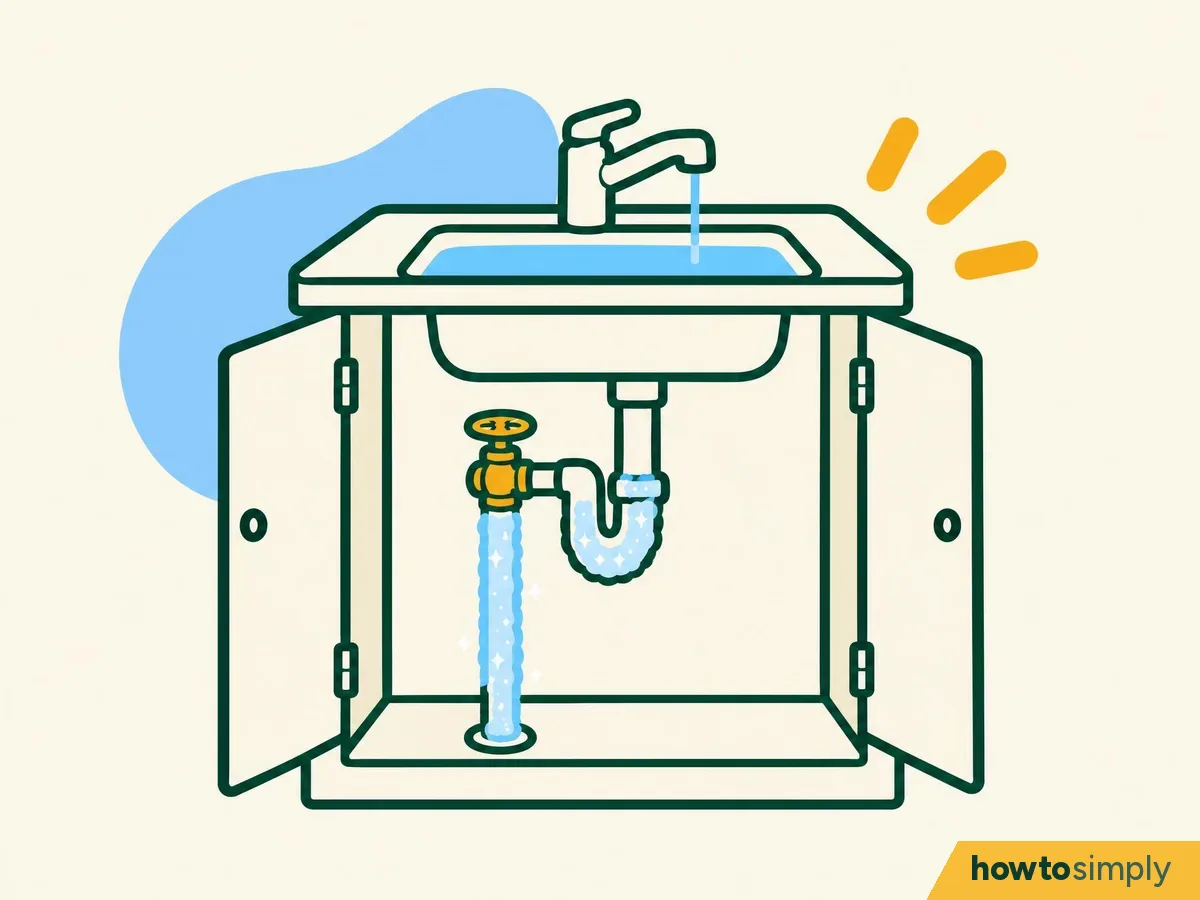
Illustration In freezing weather, if a tap gives only a trickle, suspect a frozen pipe (Red Cross). Thames Water says frozen pipes often have a thin layer of frost on the outside, so look out for that.
Let the taps narrow it down. Look first where pipes freeze most: unheated spots such as the loft, the garage or kitchen cabinets (Red Cross). If no tap works and none of your pipes look frozen or burst, the problem may be the supply: NI Water says to contact the water company.
You should see: the cold, frosted section of pipe you're going to thaw.
Turn off the stop valve
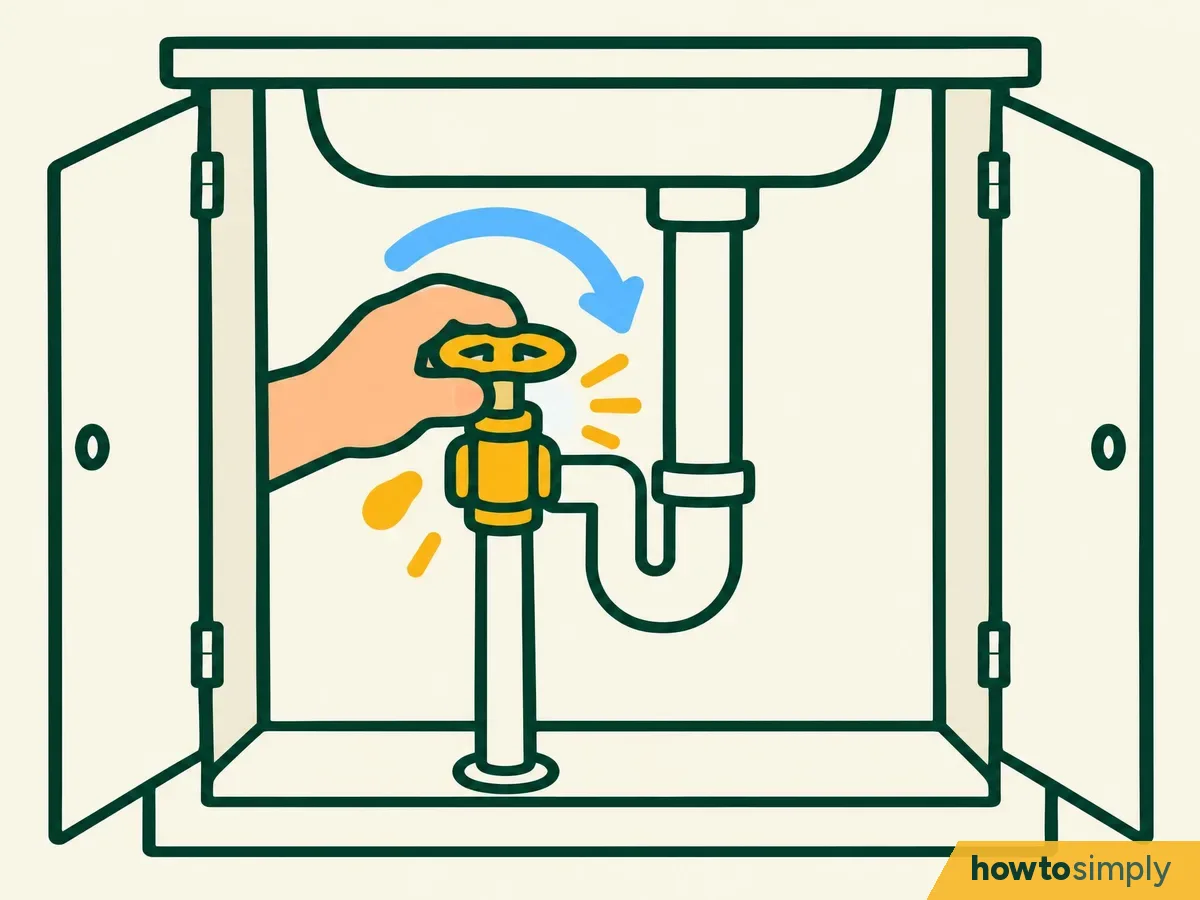
Illustration The stop valve is usually under the kitchen sink; turn it clockwise (Thames Water). enercity says to shut off the frozen line so water can't flood out when it thaws. See how to turn off your main water valve. In the US, the Red Cross says to keep the faucet open as you thaw.
Open the tap
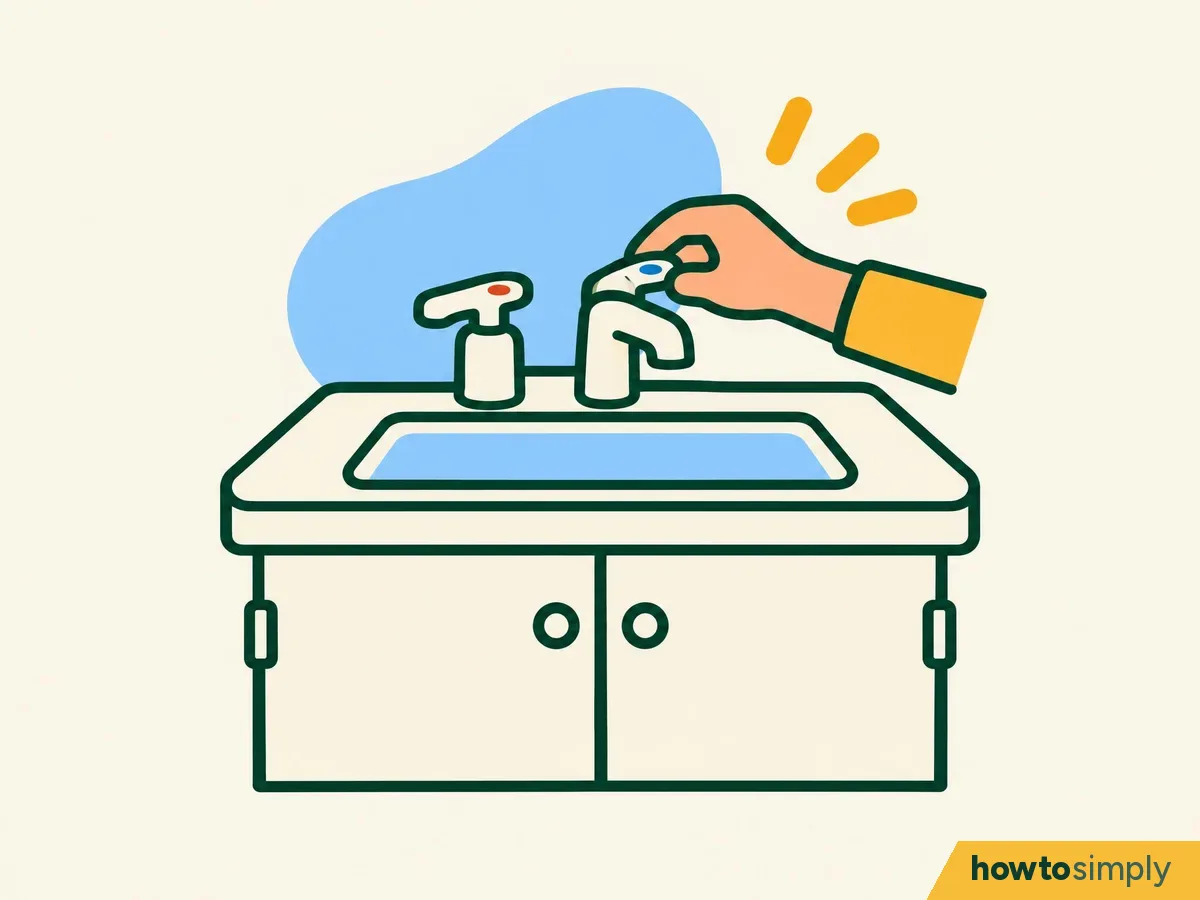
Illustration Open the tap before you start warming anything, because an open tap lets water escape as the ice melts (Thames Water). Take any wrapping or lagging off the frozen section, and move nearby furniture and belongings out of the way.
Thaw it slowly
Illustration 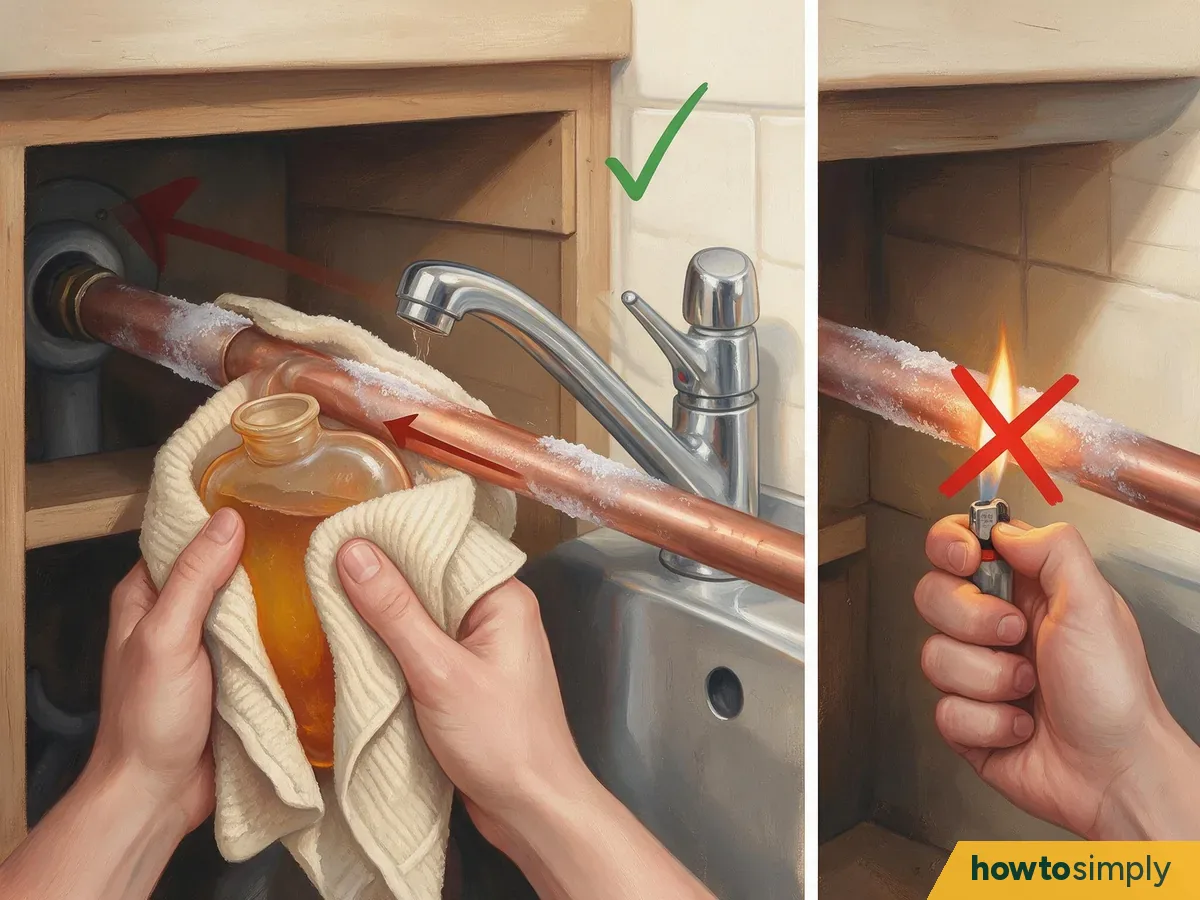
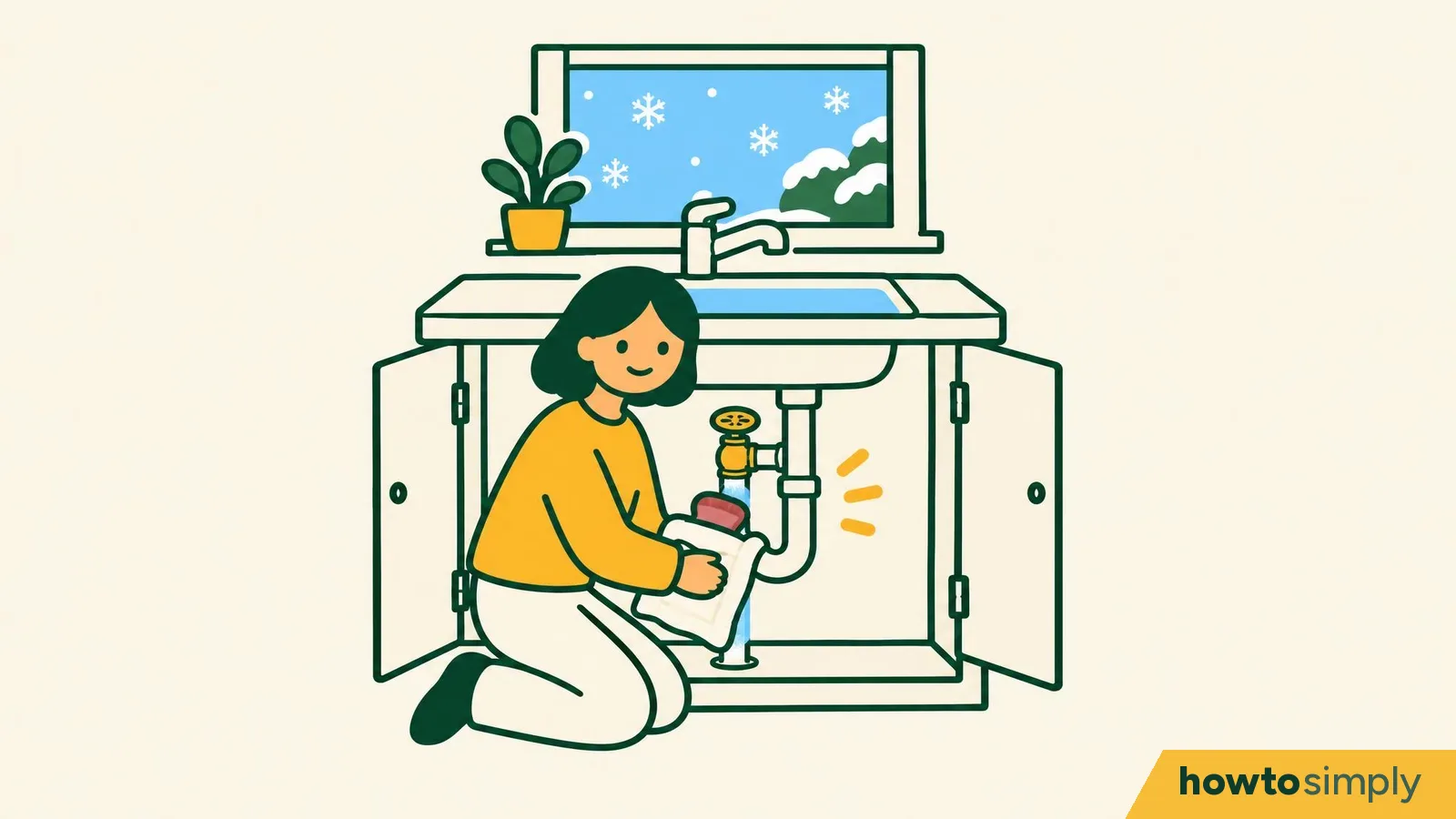
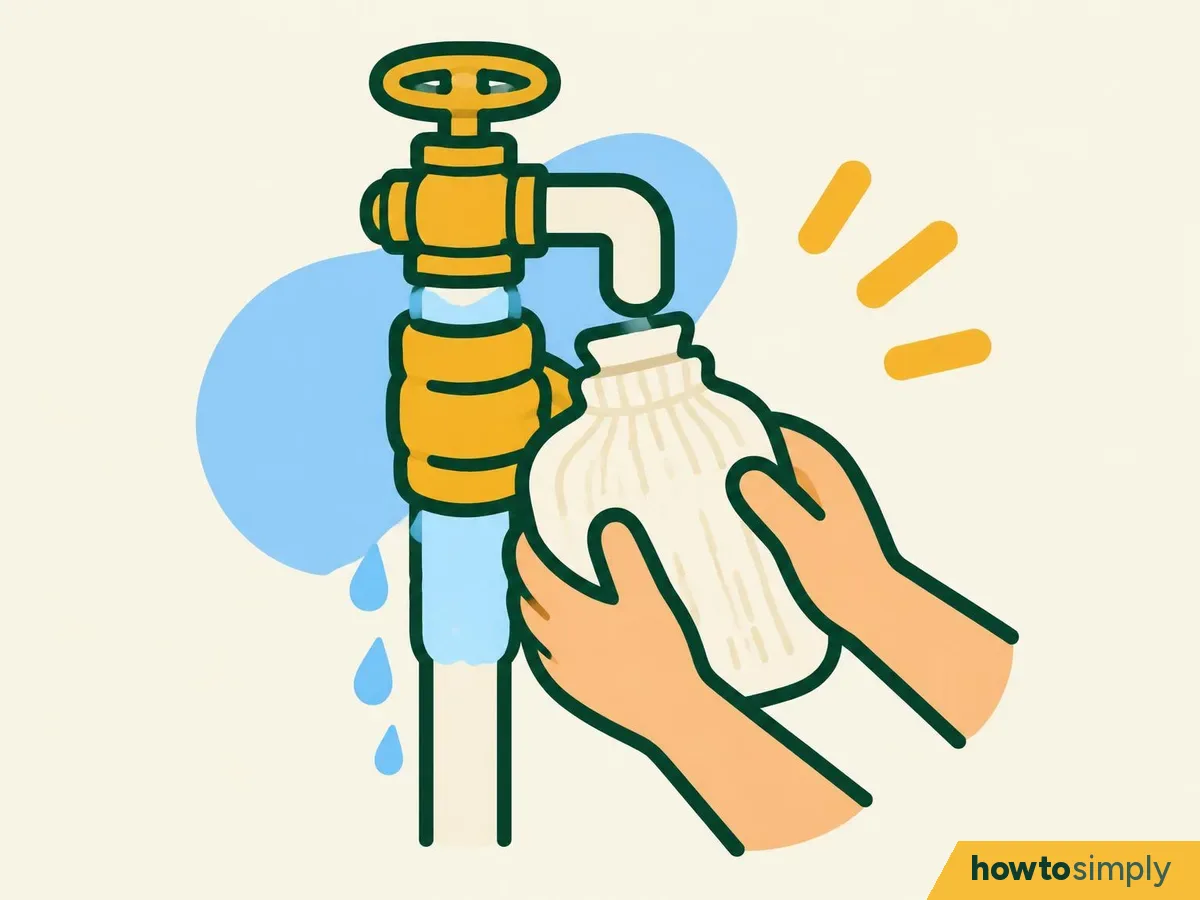
Illustration: gentle warmth with the tap open; never a naked flame Start at the end nearest the tap and thaw along the pipe (NI Water). Try a hot water bottle in a towel or some warm towels (Thames Water), hot cloths and heating mats (enercity), or a hair dryer on its lowest setting (NI Water). Go slowly: NI Water warns against warming the pipe too quickly. Never use an open flame or a blowlamp. Don't worry if nothing seems to happen for a while. You'll know it's working when the open tap starts to trickle again.
Check for leaks
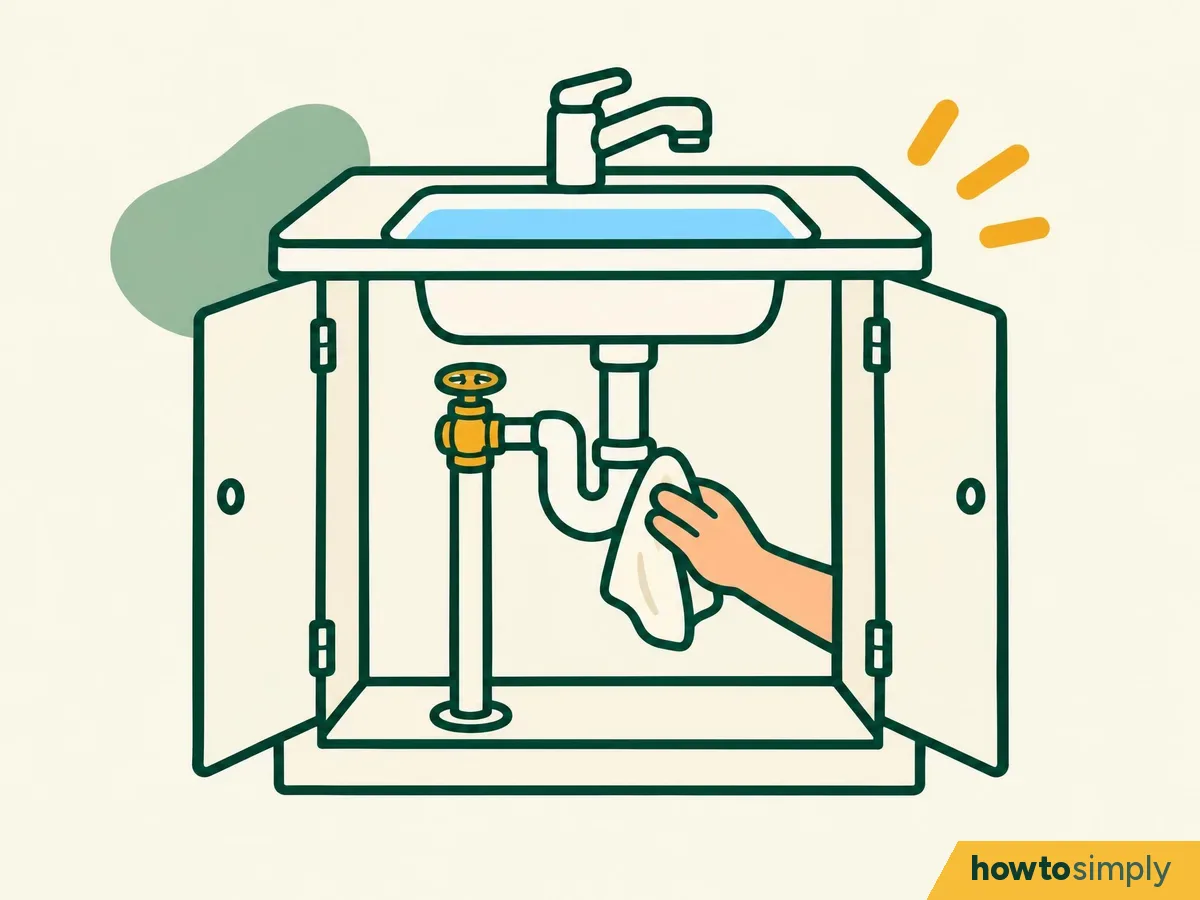
Illustration Run a dry cloth along the pipe. If water keeps escaping, keep the water off and call a plumber. If it's dry, well done: turn the water back on slowly (Thames Water, enercity).
Stop it happening again
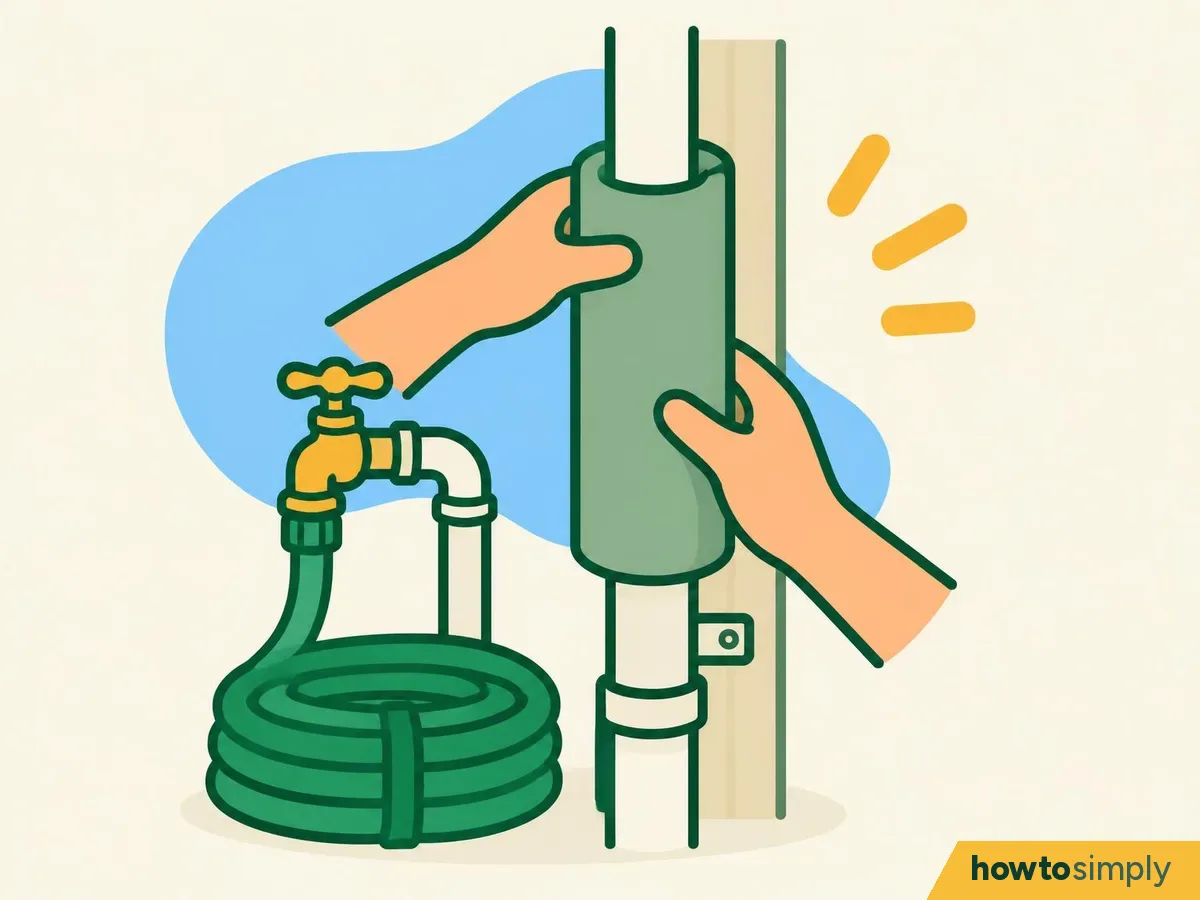
Before the cold weather
- Lag pipes in unheated spaces such as the loft, garage and outbuildings, with no gaps at bends, valves or fittings (NI Water, Red Cross). NI Water says lagging can still fail in extreme weather, but unlagged pipes are much more likely to freeze.
- Loft tank: insulate the top and sides, or fit a jacket, but don't put loft insulation under it. Heat rising from the rooms below helps stop it freezing (NI Water).
- Fix dripping taps and leaking valves. A small trickle can freeze and block the whole pipe (NI Water).
- Outside taps: drain and store hoses, and close the inside valve that feeds the outdoor tap (Red Cross).
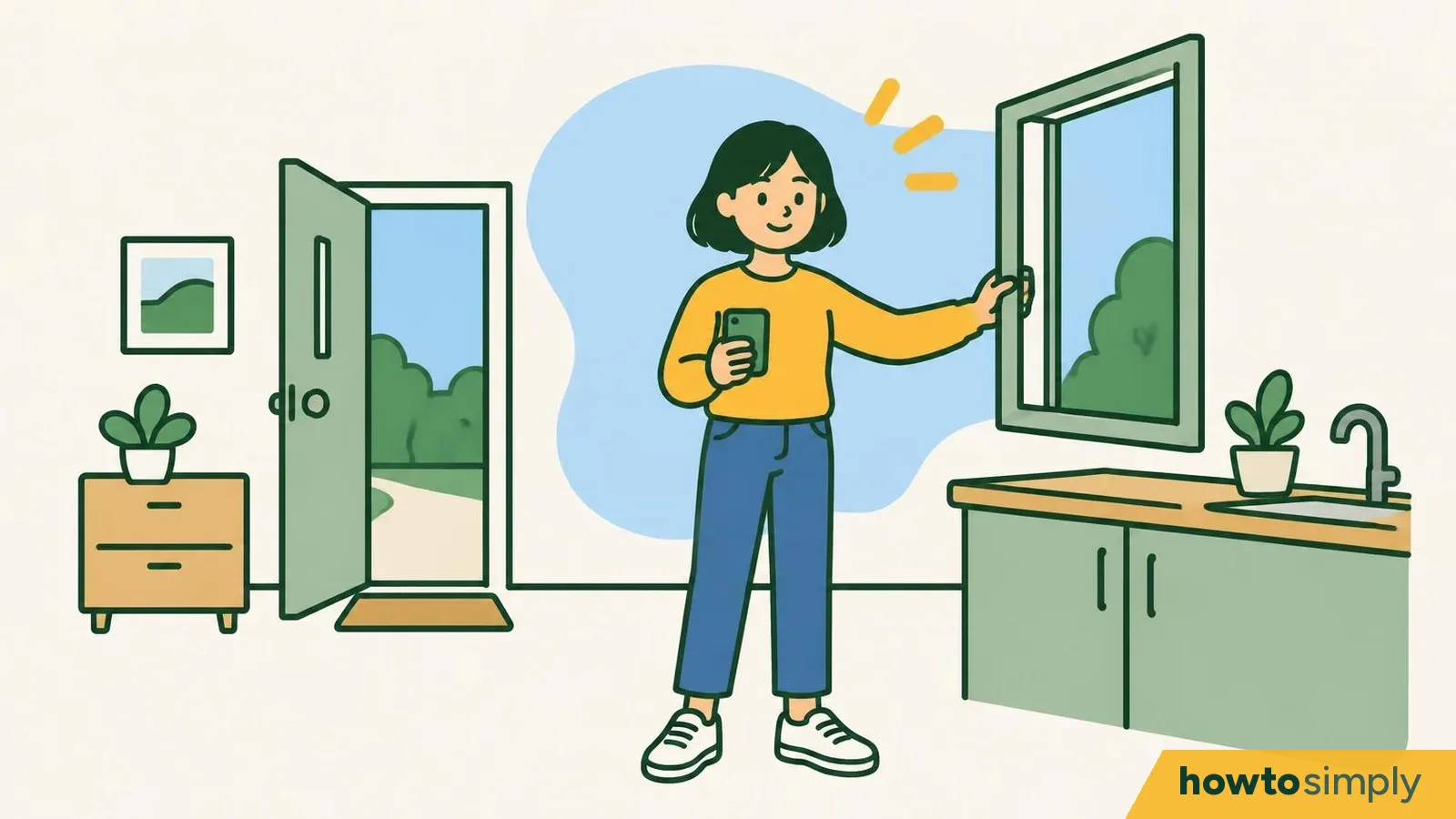
- Find your stop tap now and check it turns, so you can shut the water off fast (NI Water).
- Get the boiler serviced (NI Water).
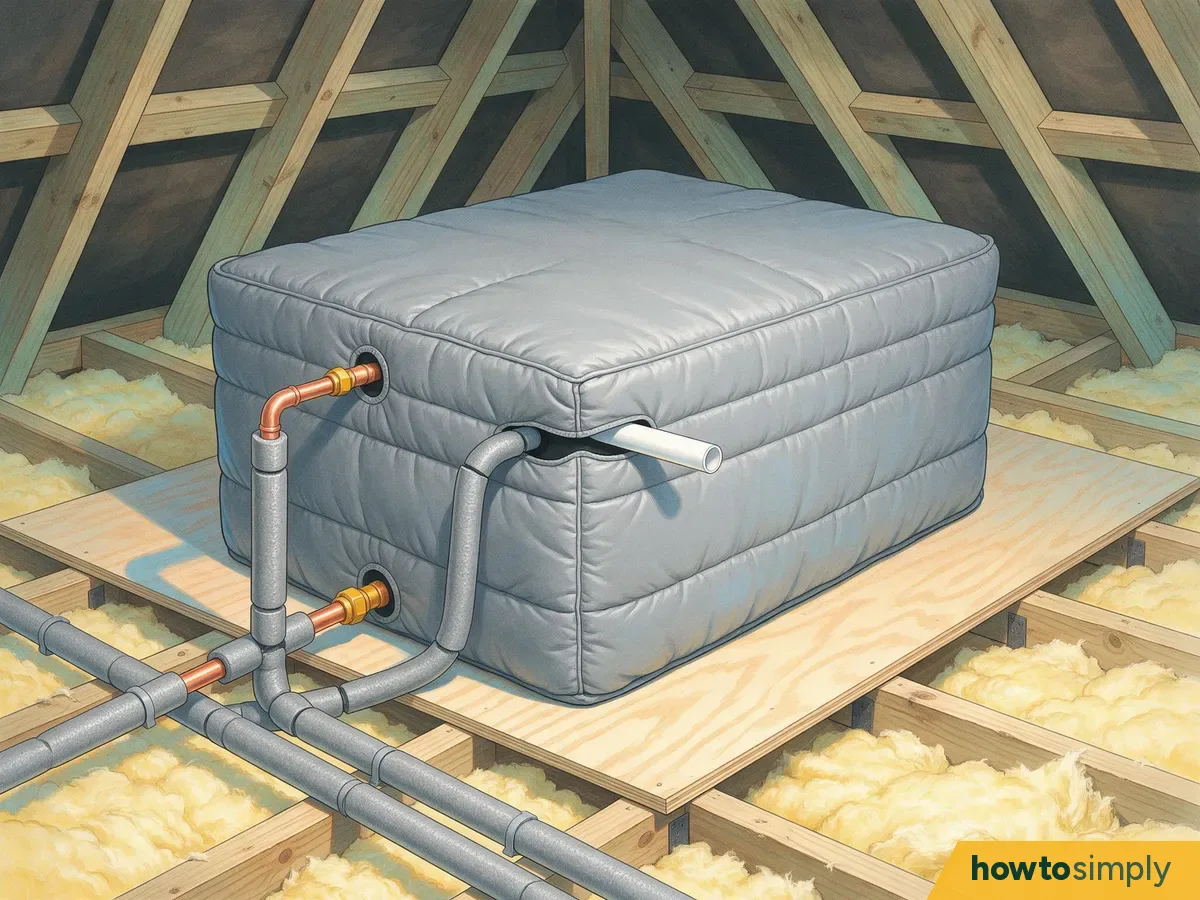
During a cold snap
- Keep doors and windows to unheated areas shut (NI Water). enercity adds that insulation alone isn't enough in a long frost: keep cellar windows shut and set radiators in cold rooms to frost protection.
- Open cabinet doors under sinks and keep the thermostat the same day and night (Red Cross).
- For pipes in the loft, open the hatch for a while to let warm air in. Only for a short time, as it causes condensation (NI Water).
Going away in winter
Leave the heating on low (NI Water); the Red Cross says no lower than 55°F (about 13°C). If the home will be empty for a long time, NI Water says to turn off the water at the stop tap and think about draining the system, to lessen the chance of a burst going unnoticed. Give a spare key to a neighbour, friend or relative who can pop in and check on the house.
Should you leave a tap dripping?
The advice depends on where you live. When pipes have frozen, NI Water says not to leave a tap dripping or running, since the water can't get away down the plughole if the pipes underneath are iced up. To help stop pipes freezing in the first place, the Red Cross says that when the weather is very cold, you should let the cold water drip from a tap served by exposed pipes. Follow your own water supplier's advice.
If a pipe has burst
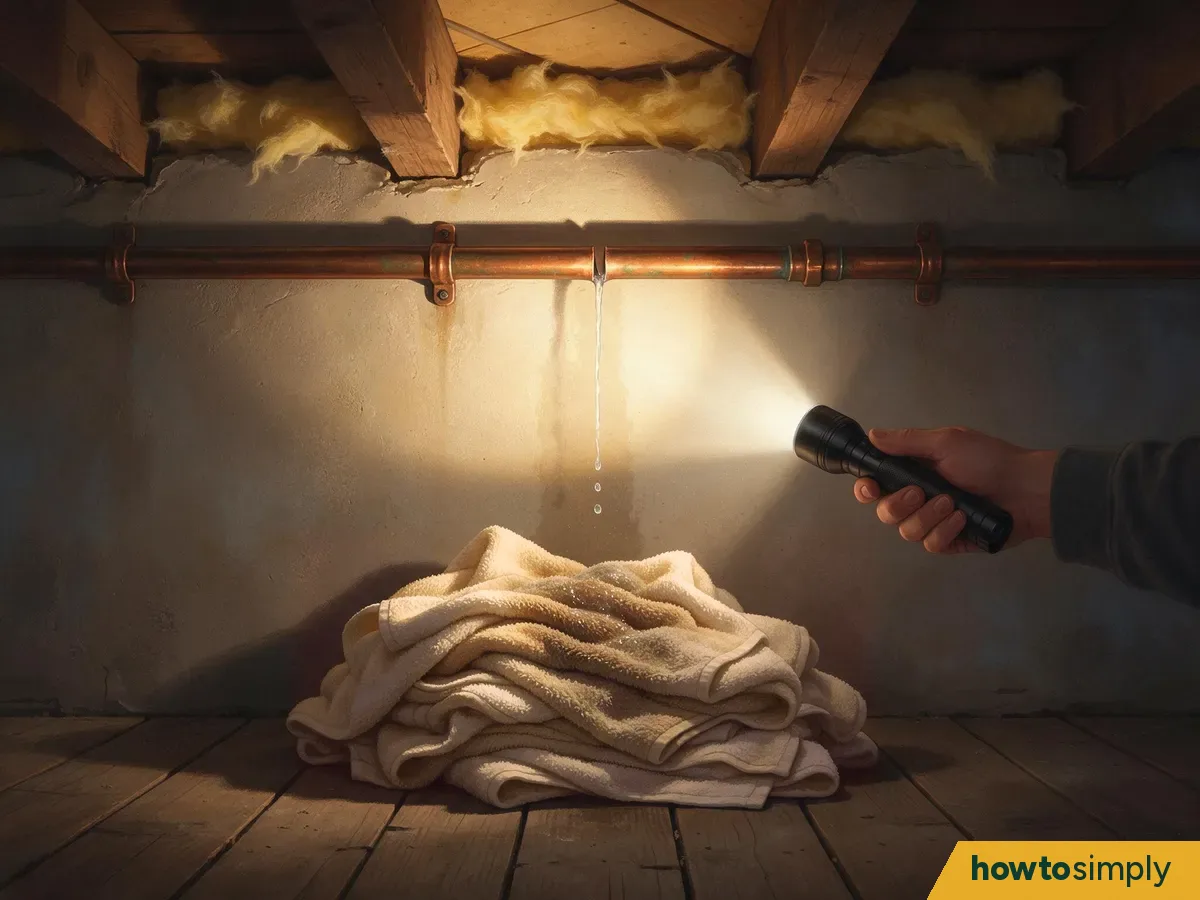
Water expands as it freezes, which can split a pipe or pull a joint apart (NI Water). As temperatures rise, check cold spots such as the loft and garage for dripping water (Thames Water).
- Turn off the water at the stop tap, and turn off the heating (Thames Water).
- Open all the taps to drain the system and reduce flooding (Thames Water, NI Water).
- Soak up or block the water with towels or other thick cloth.
- Switch the electrics off at the mains if any water is close to them (Thames Water).
- Call a plumber. In the UK, WaterSafe lists approved plumbers by postcode at watersafe.org.uk (NI Water).
- Ask your home insurer whether leaks and bursts are covered (Thames Water).
Report a leak in the road or street to your water company (Thames Water). In Northern Ireland, NI Water says all pipework inside your property boundary is your responsibility.
Questions readers ask
What if I can't reach the frozen pipe, or can't find it?
If the frozen section isn't accessible, or you can't find it at all, the American Red Cross says to call a licensed plumber. In the UK, NI Water suggests a WaterSafe approved plumber, searchable by postcode.
Do I need to turn the taps off afterwards?
Yes. Once the problem is fixed, NI Water reminds you to turn the taps off again so water isn't wasted.
How do I know if the pipe has burst?
Once it has thawed, run a dry cloth along the pipe. If the cloth comes away wet, Thames Water says to watch for a few minutes: if water keeps escaping, you have a leak, so keep the water off and call a plumber.
Should I insulate a toilet cistern in an outbuilding?
Yes. NI Water says to insulate toilet cisterns, tanks and pipes in exposed places or unheated outbuildings, and better still to drain them for the winter if you are not using them.
Sources and method
- Researched by
- Abu Bakar Saadat
- Tested by our team
- No. We have no record of anyone on our team trying these steps, so treat them as researched instructions from the sources below.
- Pictures
- 10 illustrations drawn for this article: drawings, not photos.
- Sources
- 5 named sources, linked below.
- What this page adds
- A UK, Germany and US table of what to do first, what to heat the pipe with and who to call, plus the dripping-tap question, where advice differs by country.
What to do next
Get your home ready for winter Step 4 of 6
- Stop condensation, damp and mould: the German airing routine, plus UK and US adviceWarm rooms and cold windows make condensation. Stop it early.
- How to dry clothes indoors in winter without dampIndoor washing is the sneaky source of damp in winter.
- How to bleed a radiator: the UK and German steps, and what to check afterwardsCold patches at the top of a radiator? Start here.
Did this solve the problem?
Where did you get stuck?
What did you think?
Reaction counts are loading.
Sources
We use primary, official and specialist sources appropriate to the topic.