How to dry clothes indoors in winter without damp
In short: Spin the washing hard, hang it with gaps in one small room you can close off, open the window wide for 5 to 10 minutes several times a day, and keep the humidity between 40 and 60 percent.
Co-authored by Moaz Abdullah✓, BS Textile Engineering Technology
By Abu Bakar Saadat6 min readPublisher: Saadat Rafiq
Last updated: 31 October 2026References
 Illustration
At a glance
- Air the room
- Window wide open 5-10 minutes, at least 3 times a day; not tilted (Verbraucherzentrale)
- Humidity
- 40-60 percent; above 50 percent in winter raises mould risk (Verbraucherzentrale)
- Not on
- Radiators (Which?)
- Dehumidifier
- Almost halved drying time in Which?'s test
- You need
- A folding airer, hangers, a thermo-hygrometer, a cloth
- Checked
- Advice read 31 October 2026
- Checked
- October 2026
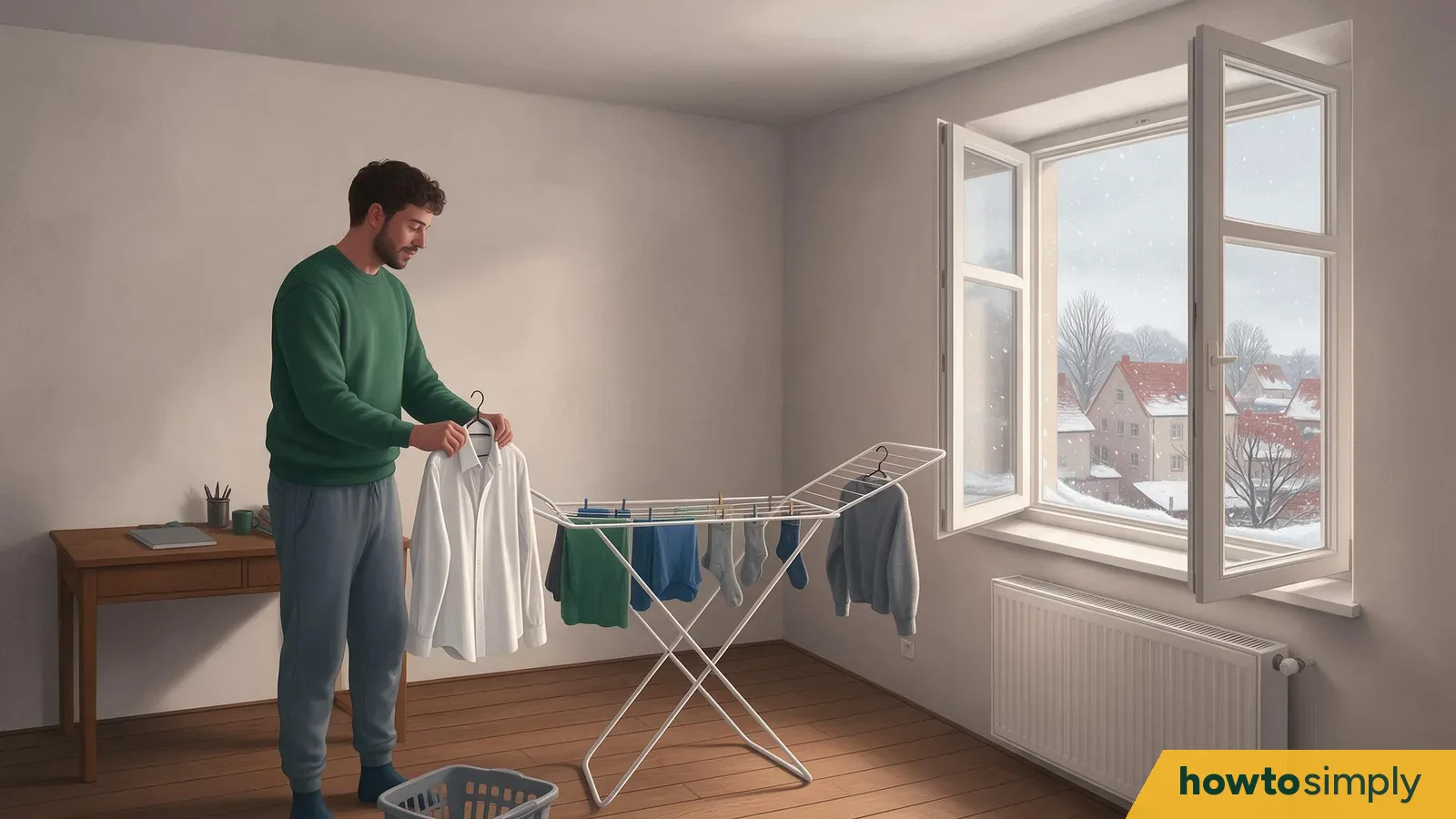
Jonas rents a small flat in Germany. There's no balcony, no tumble dryer, and it's raining or freezing most of the week. Last winter his bedroom window grew black spots in the corner. Follow him through one load of washing, from the machine to the folded pile, without the damp coming back.
Where are you?
About to hang a wash
Start with the spin. Go to Get less water into the room.
Washing is already up
Air the room now. Go to Air the room.
Windows wet, humidity high
Bring in a dehumidifier. Go to If the air stays damp.
Part 1: Get less water into the room
Run an extra spin before you hang anything.
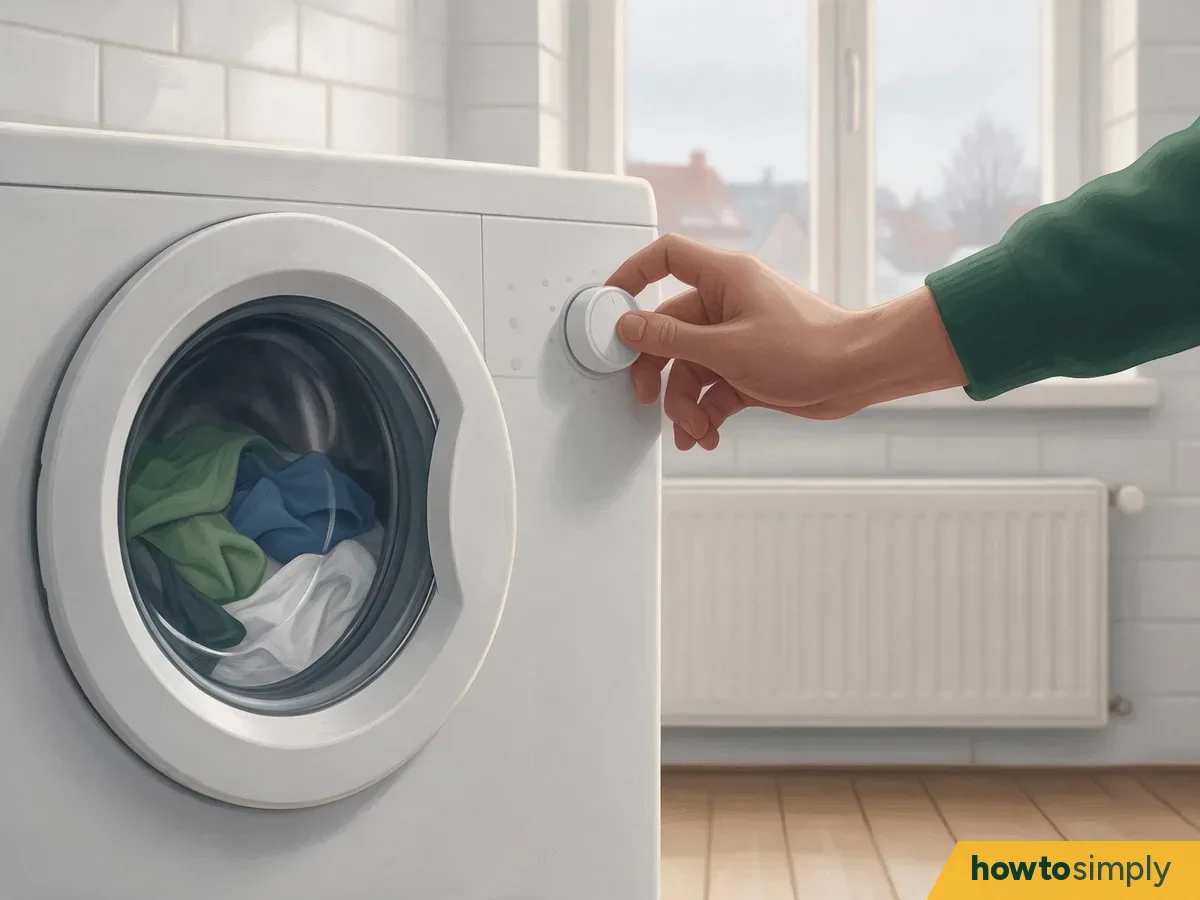
Illustration The wash has finished. Before he opens the door, Jonas turns the dial to spin and runs it once more.
Every drop the machine spins out is a drop that won't end up on your walls (Which?). Use the highest spin speed the care labels allow; wool and delicates may need a gentle spin.
Shake each item out and hang shirts on hangers.
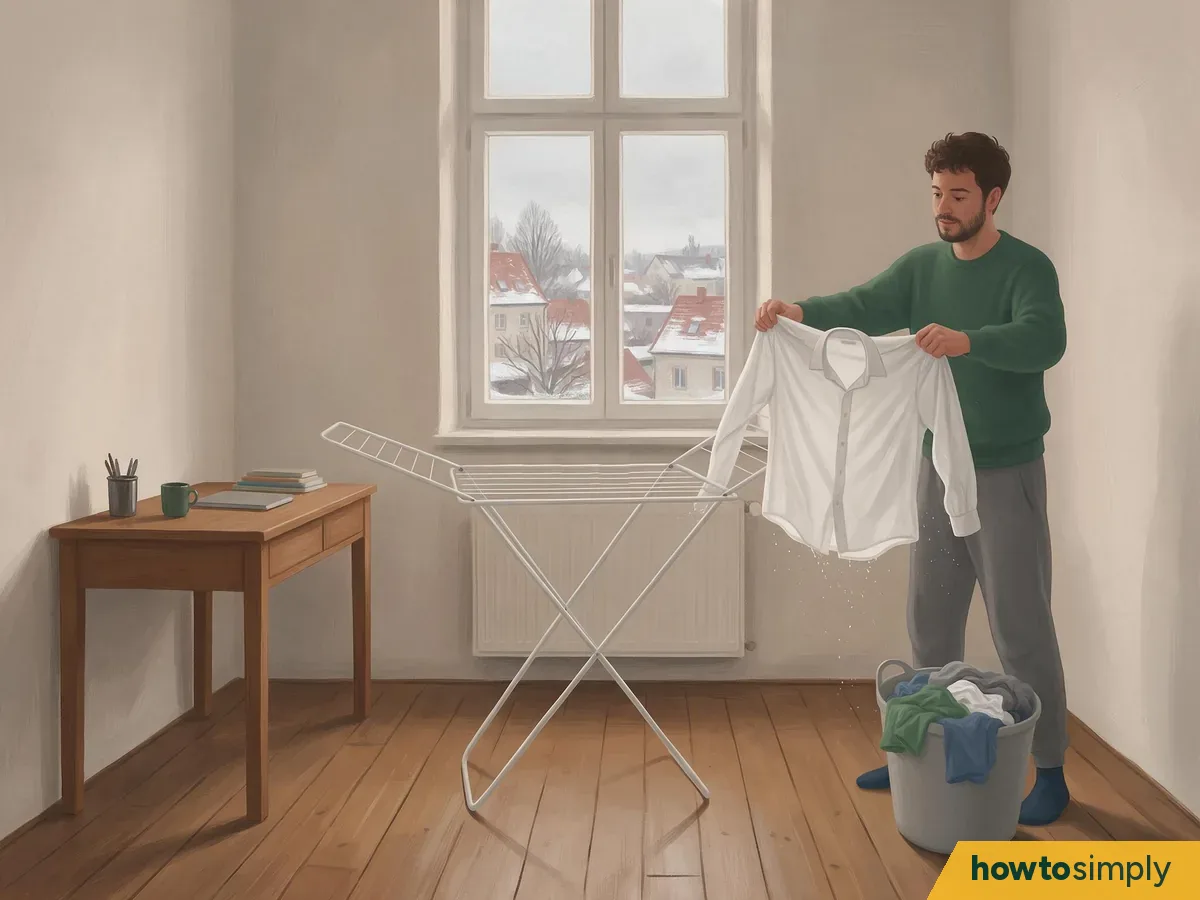
Illustration He takes the shirts out one by one and holds each by the shoulders for a hard shake before it goes on a hanger.
A shake opens the fabric so air can reach it, and a shirt on a hanger dries with fewer creases. Lay jumpers flat on the airer so they keep their shape.
Part 2: Pick one room and set it up
Choose a small room with a window that you can close off.
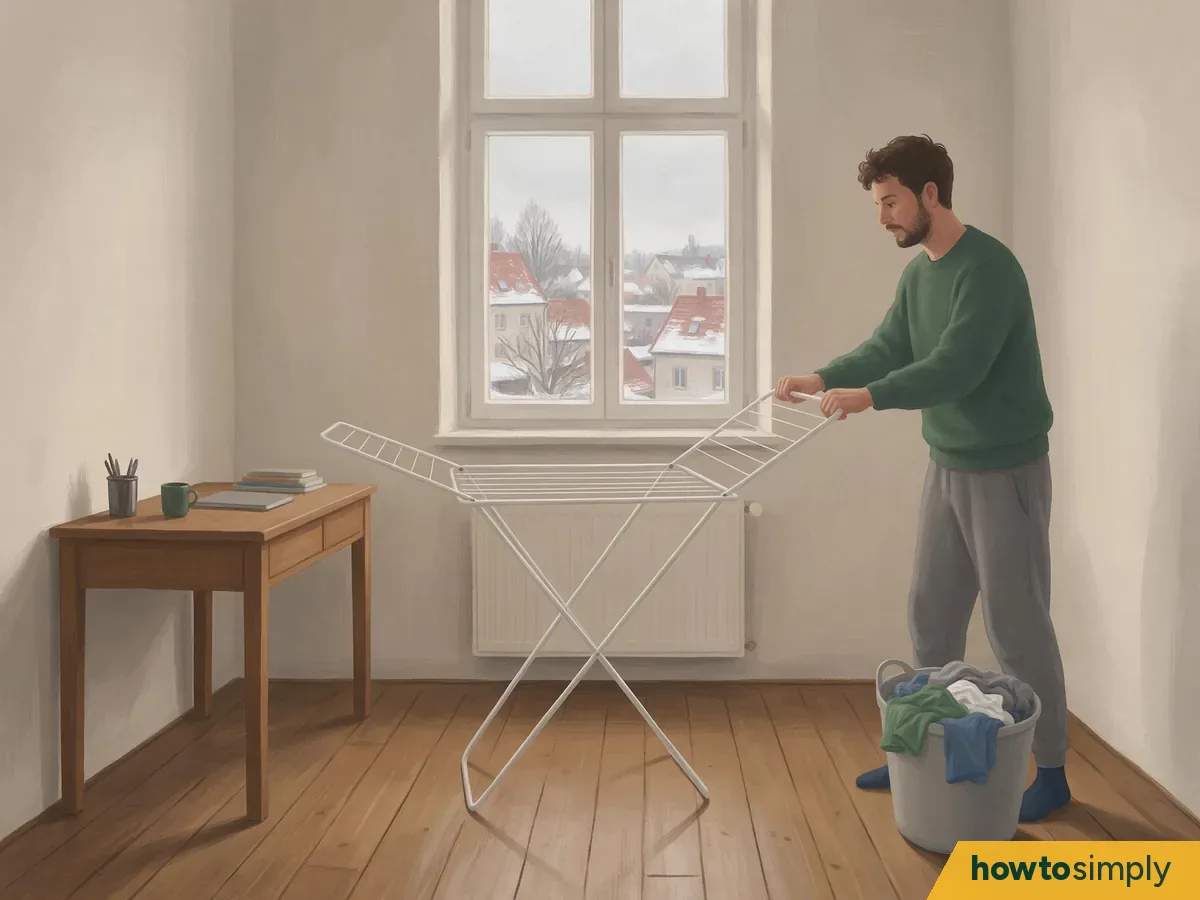
Illustration Not the bedroom this time. Jonas opens the airer in his small study, in the middle of the floor, clear of the walls and the radiator.
The Umweltbundesamt recommends drying in an unheated, well-ventilated room where you can. Keep the heating on low rather than off: the Verbraucherzentrale advises not letting rooms drop below about 16 °C, because cold walls grow mould. Leave a gap between the airer and the walls (Shelter).
Hang everything with a gap between items, then shut the door.
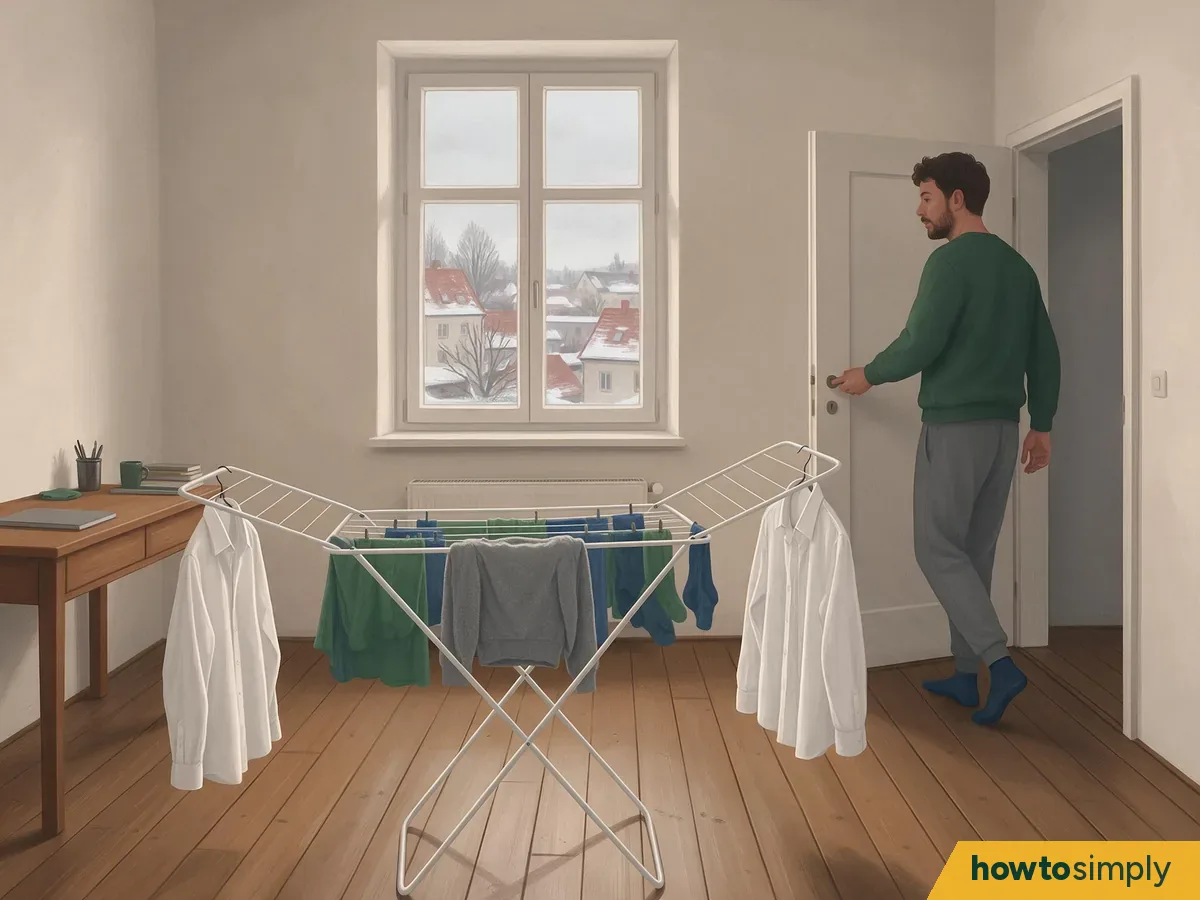
Illustration Shirts on hangers at the ends, socks and T-shirts on the rails, a gap between each. Jonas heads out and pulls the door shut behind him.
Gaps let air through, so the load dries faster. A shut door keeps the damp air in one room you can air, instead of letting it spread to cold corners of the flat; this is our general advice, in line with Shelter's advice to shut the kitchen and bathroom doors.
Part 3: Air the room
Open the window wide for 5 to 10 minutes, at least three times a day.
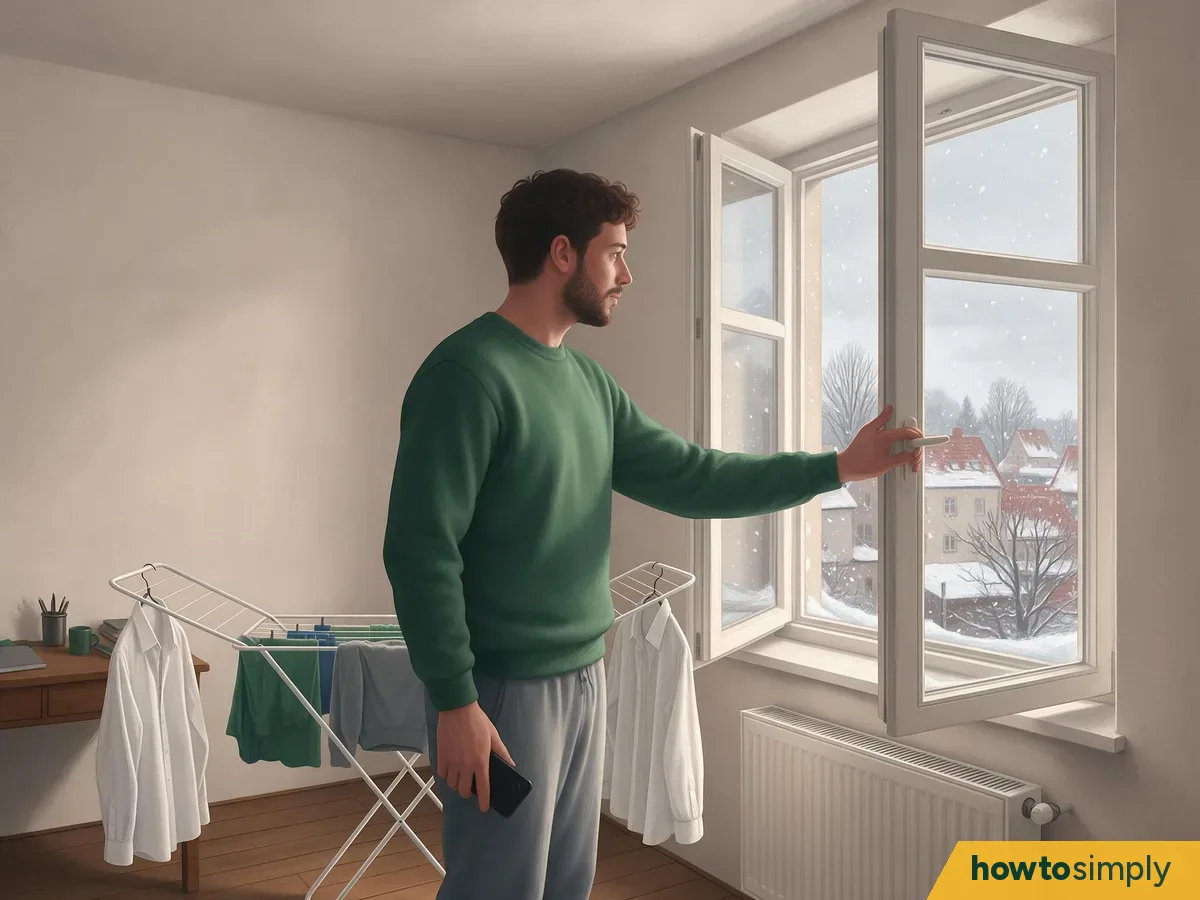
Illustration Before work, after work and before bed, Jonas opens the study window all the way and sets a timer on his phone.
Open it fully, not on tilt. The Verbraucherzentrale advises at least three times a day for 5 to 10 minutes, and 3 to 5 minutes when it's below 0 °C outside. The Umweltbundesamt gives the same 5 to 10 minutes for drying washing indoors. Close the window when the time's up so the walls don't cool.
Check the humidity on the hygrometer.
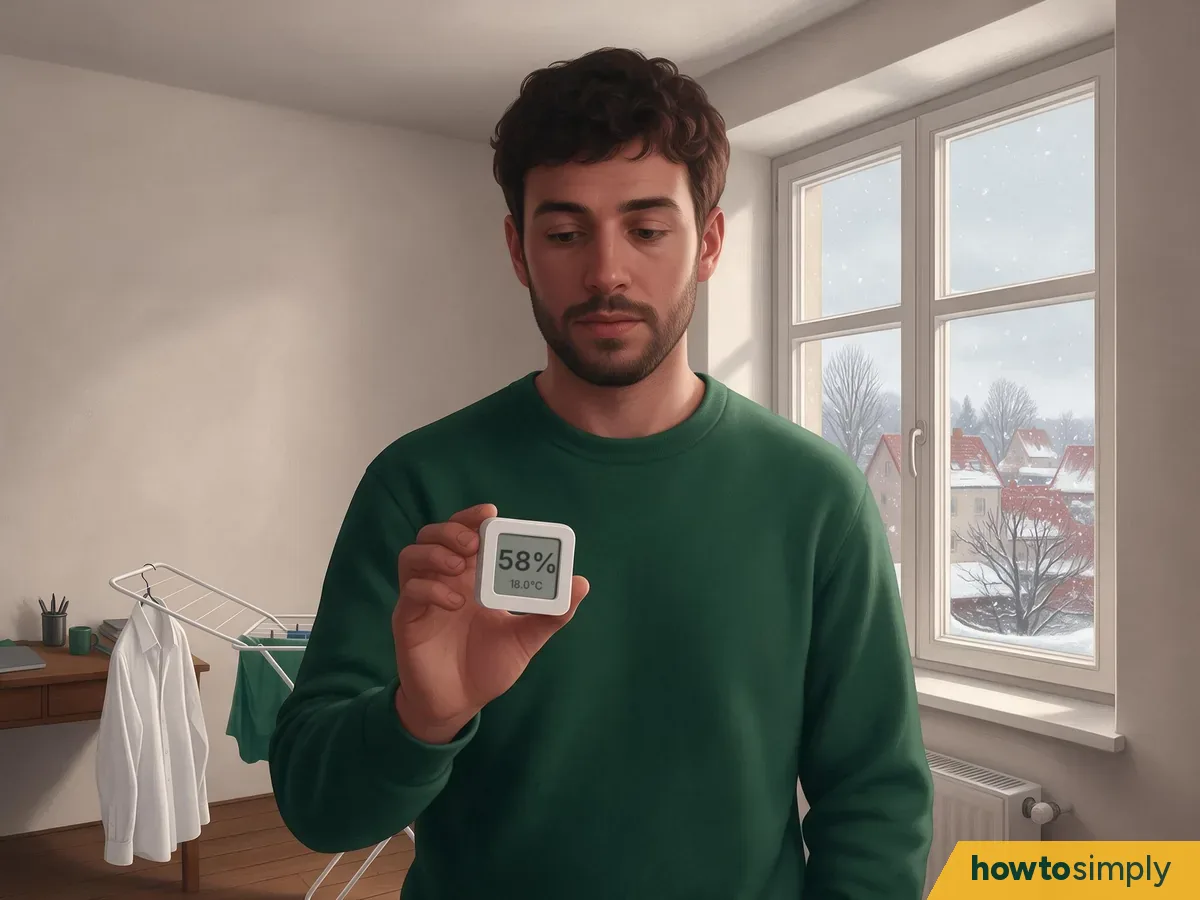
Illustration An hour after airing, Jonas picks up the little meter on the shelf. It reads 58 percent: inside the range.
Aim for 40 to 60 percent. If it stays above 50 percent for long in winter, the risk of mould rises (Verbraucherzentrale). If it's over 60 percent even after airing, go to Part 4.
Part 4: If the air stays damp
Put a dehumidifier next to the airer and close the window.
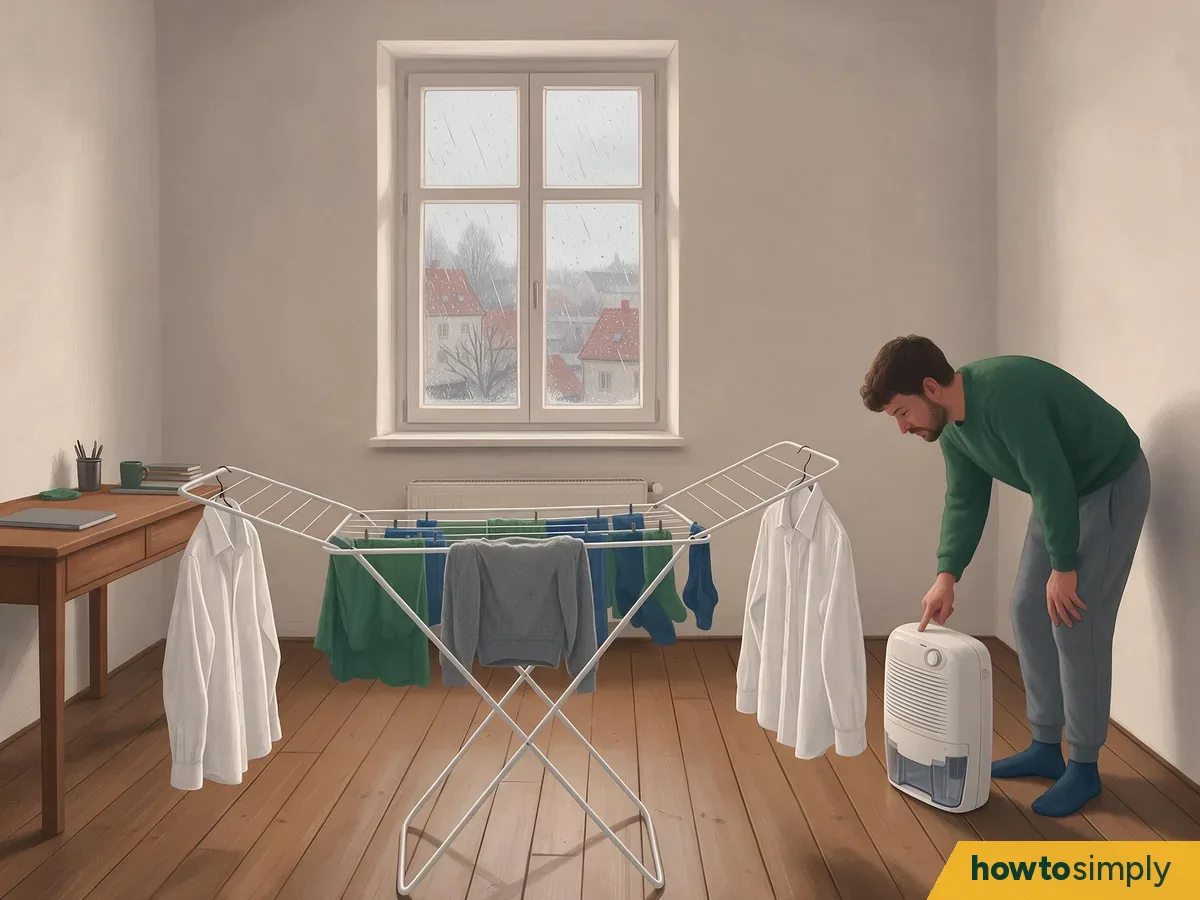
Illustration On the third rainy day the meter stays high, so Jonas borrows his neighbour's dehumidifier. He stands it beside the airer and switches it on.
In Which?'s test, a dehumidifier almost halved the drying time and pulled about 2 litres of water out of the air from one load. Keep the door and window shut while it runs, stand it at least 20 cm from walls and furniture, and keep it close to the clothes without water dripping onto it (Which?).
Empty the water tank when it's full.
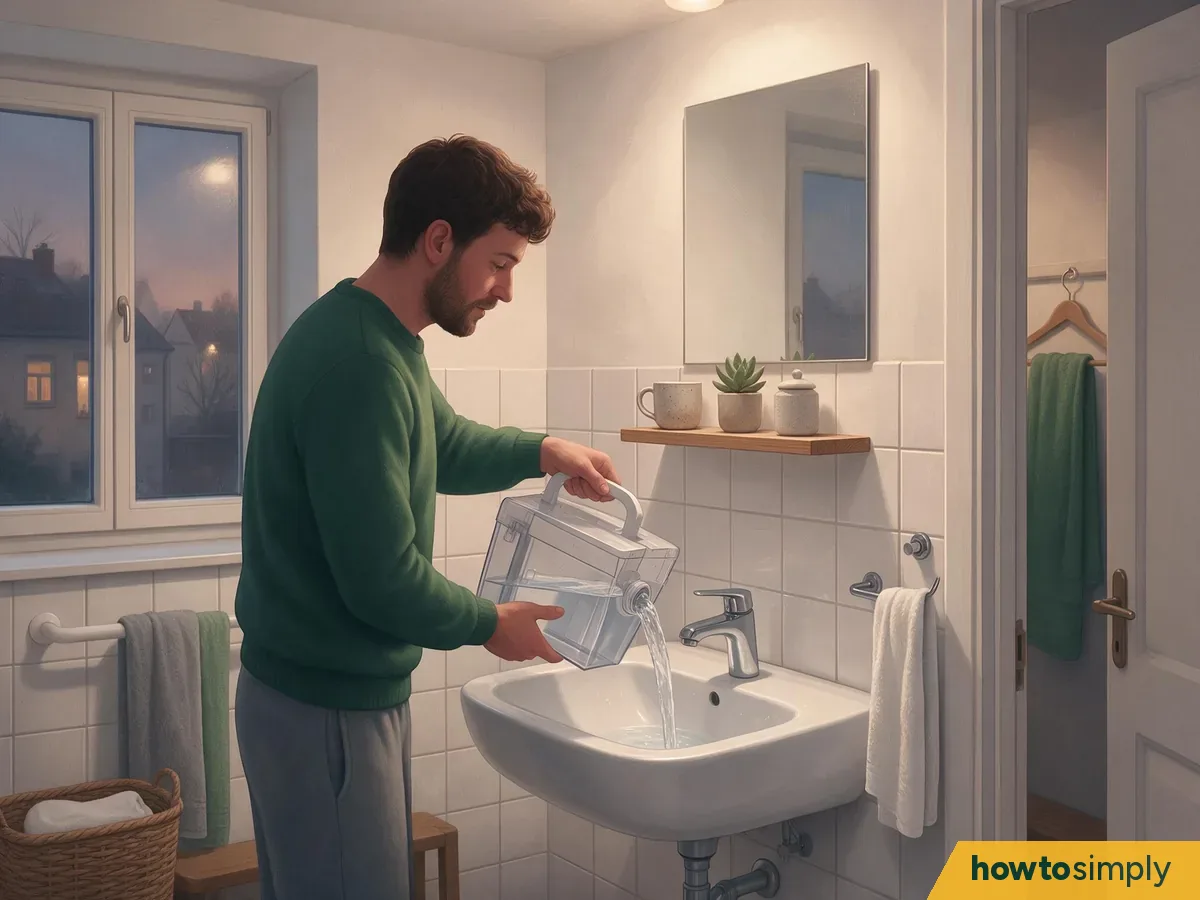
Illustration By evening the tank is nearly full. Jonas pours it into the sink: water that would otherwise have ended up on his walls.
Most dehumidifiers switch off by themselves when the tank is full. Which? found an average running cost of about 26p per litre of water removed; a heat pump tumble dryer is usually cheaper per load if you already have one.
Part 5: Finish and check
Wipe any water off the window in the morning.
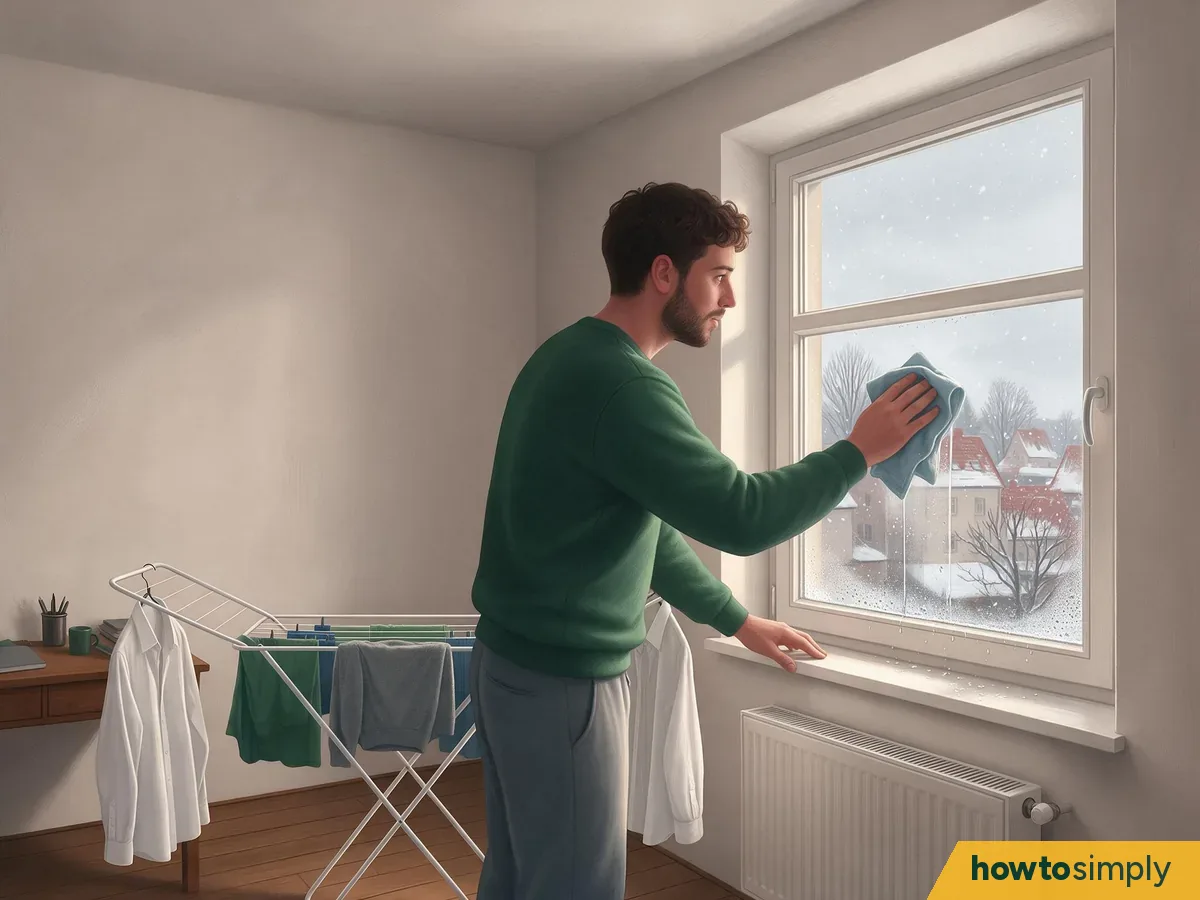
Illustration Next morning there are a few drops at the bottom of the window. Jonas wipes them off with the cloth before he airs.
Wipe down the places where condensation collects, such as window panes and sills, before it soaks in (Shelter). Wring the cloth out in the sink, not over the radiator.
Feel the thickest parts, then fold and put away.
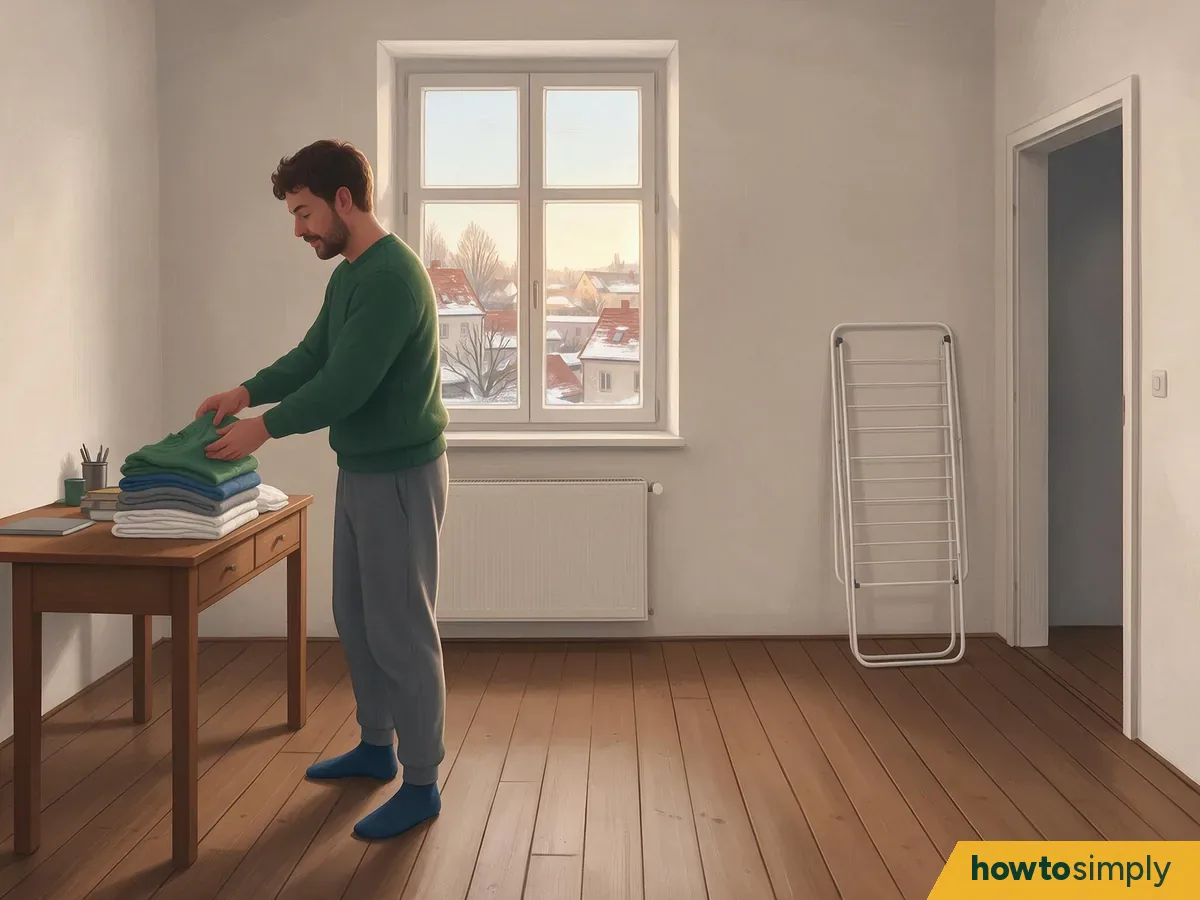
Illustration He checks the seams and the cuffs of the jumper: dry. Jonas folds the load into a pile and folds the airer away.
Seams, waistbands and hoods dry last. Clothes put away even slightly damp can smell musty in the wardrobe; give them a few more hours if in doubt.
How to tell it worked
Three weeks into winter, the corner of Jonas's bedroom window is still clean.
- The hygrometer stays between 40 and 60 percent most of the day.
- No water running down the windows by mid-morning.
- No musty smell, and no black spots in corners or behind furniture.
Good to know where you live
| Where | Good to know |
|---|---|
| Germany | Check your rental contract and Hausordnung: many flats don't allow drying washing indoors (Verbraucherzentrale). A shared Trockenraum in the cellar, if your building has one, is the better place. |
| UK | Condensation is the most common form of damp in homes (GOV.UK). If damp or mould keeps coming back, tell your landlord: Shelter explains your rights. |
| Everywhere | Damp and mould are a bigger risk for children, older people, pregnant women and people with breathing problems or weak immune systems (GOV.UK). |
If it doesn't work
| What happens | What it means | What to do |
|---|---|---|
| Windows are wet every morning | Too much moisture for the airing you're doing | Air more often, or add a dehumidifier (Part 4) |
| Clothes still damp after two days | The room is too cold or the airer too full | Spin again, hang with bigger gaps, keep the heating on low |
| Clothes smell musty | They dried too slowly | Rewash, spin hard and dry with a dehumidifier |
| Black spots in a corner | Mould on a cold wall | Wipe it, keep furniture away from the wall, and tell your landlord if it comes back |
Questions readers ask
Is it bad to dry clothes on the radiator?
Yes. Which? advises against it: it adds condensation and stops the radiator heating the room properly. Put the airer near the radiator, not on it.
Should I leave the window tilted while clothes dry?
No. Open it wide for 5 to 10 minutes at a time instead. A tilted window lets out little damp air but cools the wall around it, and cold walls are where mould starts (Verbraucherzentrale, Umweltbundesamt).
What humidity should I aim for?
Between 40 and 60 percent. If it stays above 50 percent in winter, the risk of mould rises (Verbraucherzentrale). A cheap thermo-hygrometer shows you the number.
Do I need a dehumidifier?
Not always. Airing often may be enough in a small flat. If the hygrometer stays above 60 percent or the window runs with water every morning, a dehumidifier in the drying room helps: in Which?'s test it almost halved the drying time.
Can I dry clothes in the bedroom?
Better not. You sleep there with the door shut for hours, so the damp air has nowhere to go. Choose a room you can air while you're awake.
Is drying indoors allowed in a rented flat in Germany?
Check your rental contract and house rules. The Verbraucherzentrale notes that many flats don't allow it. If yours does, air the room as below.
What did you think?
Reaction counts are loading.
Spotted a mistake? Menus change with updates, and we want every step to match your screen. Email us about this page or use the contact form. We read every report, and fixes are listed on What changed.
Liked this article?
Follow us for new articles and short how-to videos.
Sources
We use primary, official and specialist sources appropriate to the topic.
- Umweltbundesamt: Umwelttipps, Wäschetrockner (drying in the flat, airing)
- Verbraucherzentrale: Richtiges Heizen und Lüften, die beste Strategie gegen Schimmel
- Verbraucherzentrale: Energiespartipps in einfacher Sprache (flyer, 2022: drying washing, many flats forbid it)
- Shelter England: How to deal with condensation
- Which?: Can you use a dehumidifier to dry laundry?
- GOV.UK: Understanding and addressing the health risks of damp and mould in the home