Unplug the appliance, lever out the fuse holder with a small flat screwdriver, swap in a new fuse of the same rating, push the holder back and test. If the new fuse blows as well, stop using the appliance.
Researched by Abu Bakar SaadatPublished 31 October 2026Last changed 17 November 2026Verified 17 November 2026Version 7See all changes
Well, when a lamp or kettle suddenly goes dead, it is easy to think it has given up for good. Often it's only the small fuse inside the plug, and Wickes says swapping it is a simple job anyone can manage (Wickes).
UK-style three-pin plugs (BS 1363) have a small fuse inside. When it blows, it cuts off the electricity to the appliance (Electrical Safety First). Changing it takes a few simple steps, a screwdriver and a new fuse (Wickes). To make it easy to follow, one example runs below from a lamp that won't switch on to a lamp that works, with a drawing for every step.
Always unplug before you open a plug, and keep your hands dry and work on a dry surface (Wickes). If the plug is damaged, overheated or burnt, replace the plug rather than just the fuse (Wickes).
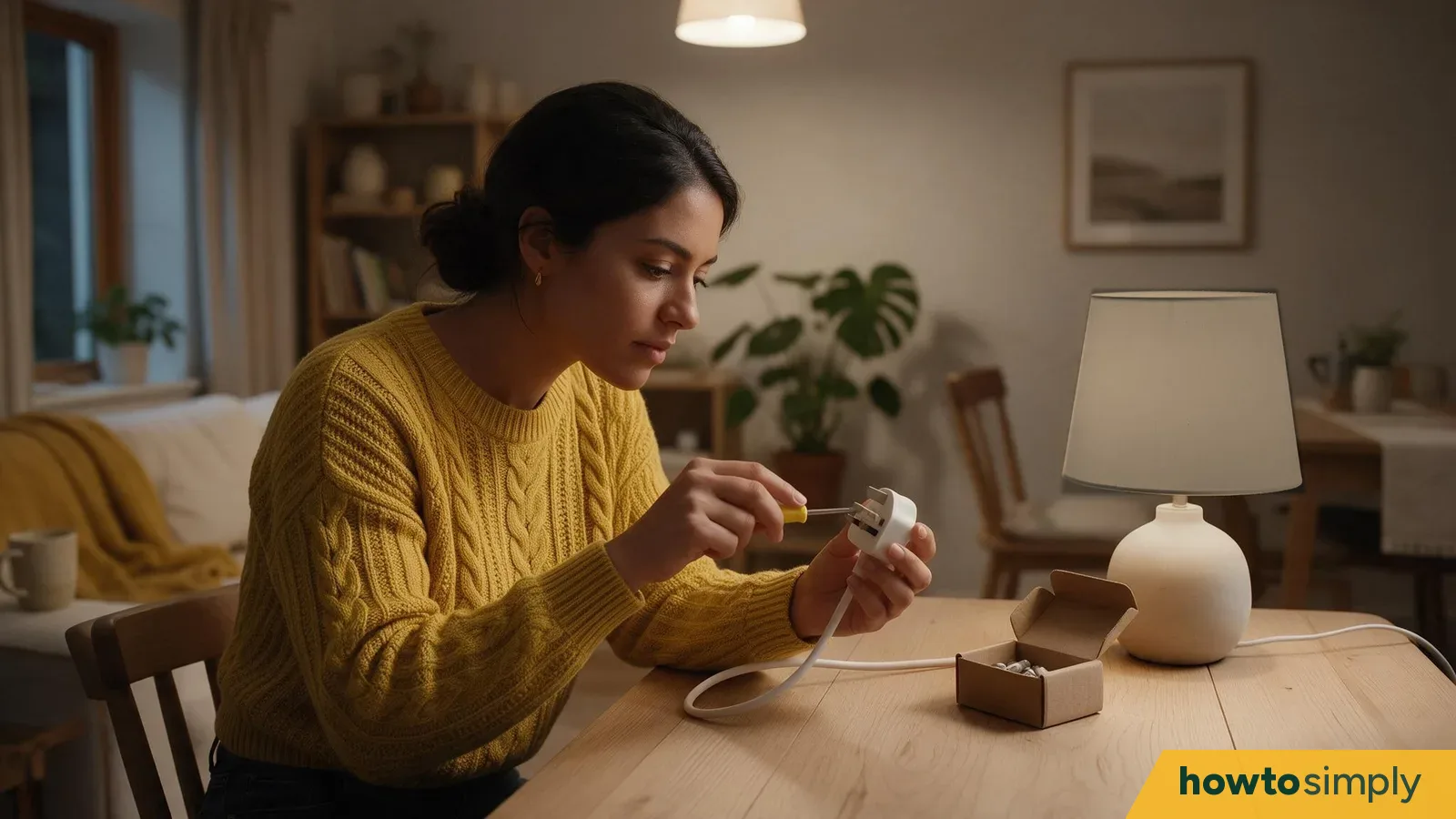
Every step below follows one story, and each drawing shows that exact moment. Amira's table lamp won't switch on. She tries a new bulb and a different socket, and it still doesn't work, so she changes the fuse in its plug.
Part 1: Change the fuse in a newer plug
Before you start
Time: No source gives a time; we estimate about 5 minutes.
Who it's for: UK three-pin plugs to BS 1363, newer ones with a fuse holder and older ones with a screw-on cover[1][2].
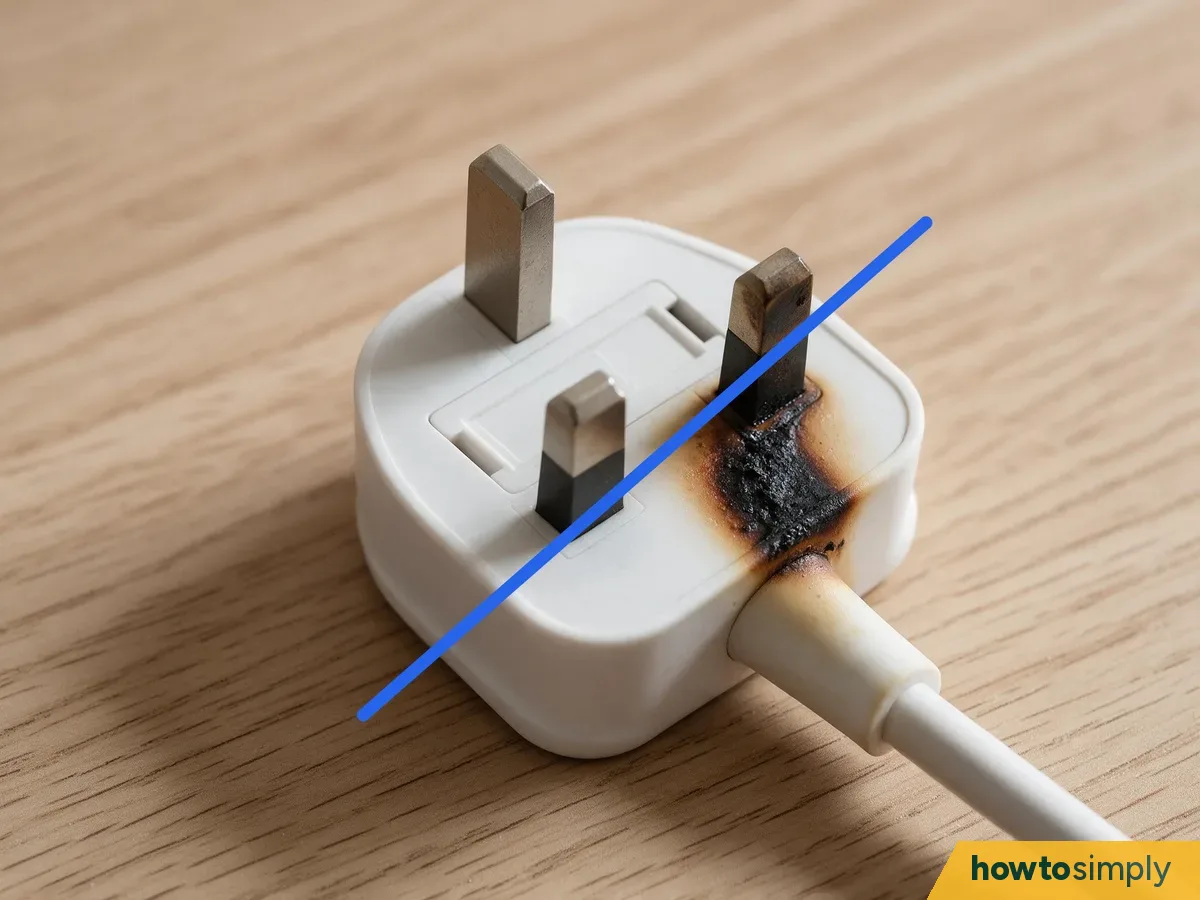
Not for: A plug with melted plastic, scorch marks or a discoloured casing or cable, or a sealed plug that won't open[1][2].
Switch off and unplug it.
Illustration
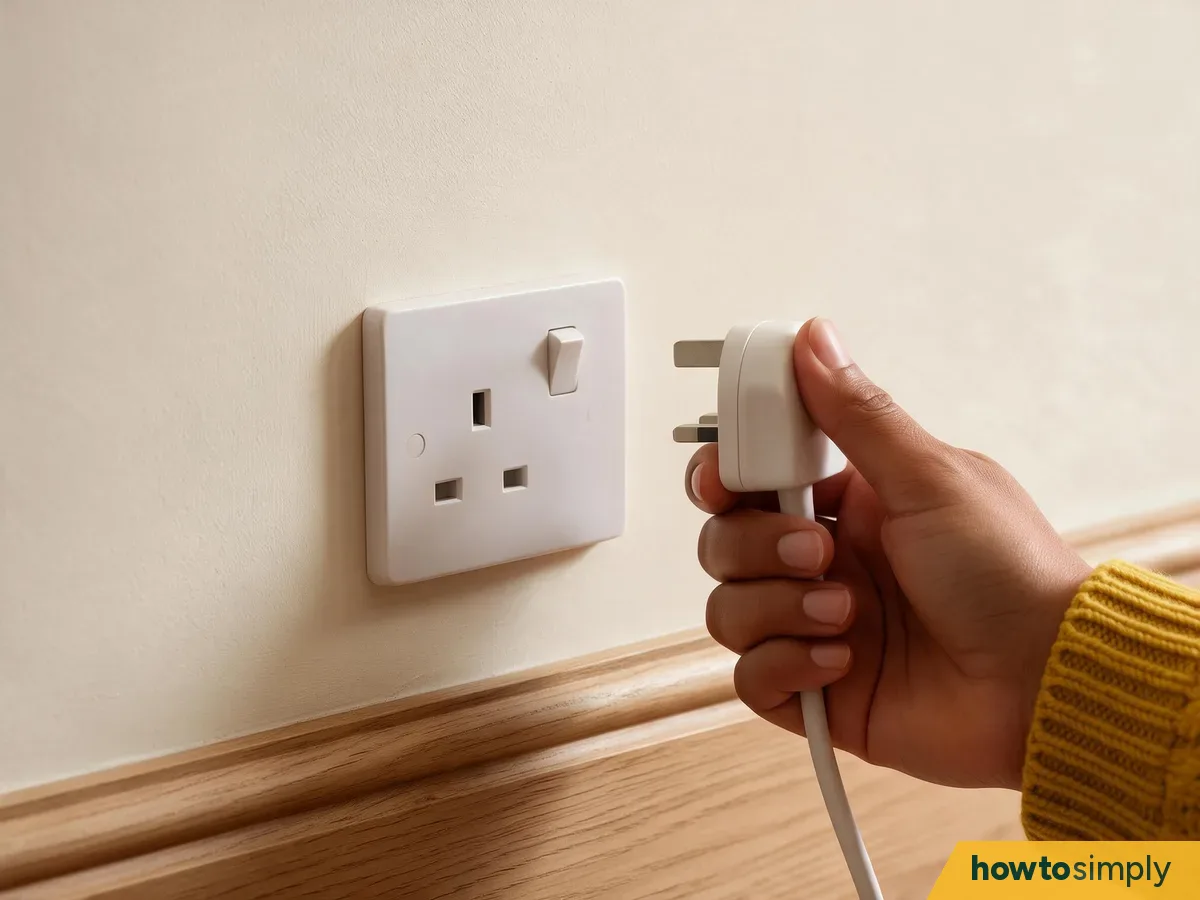
In our story: Amira flicks the socket switch off and pulls out the lamp's plug.
Turn the appliance off at the socket (Wickes), then unplug it before you open the plug (Electrical Safety First). Hold the plug, not the cable.
Check the plug for damage.
Illustration
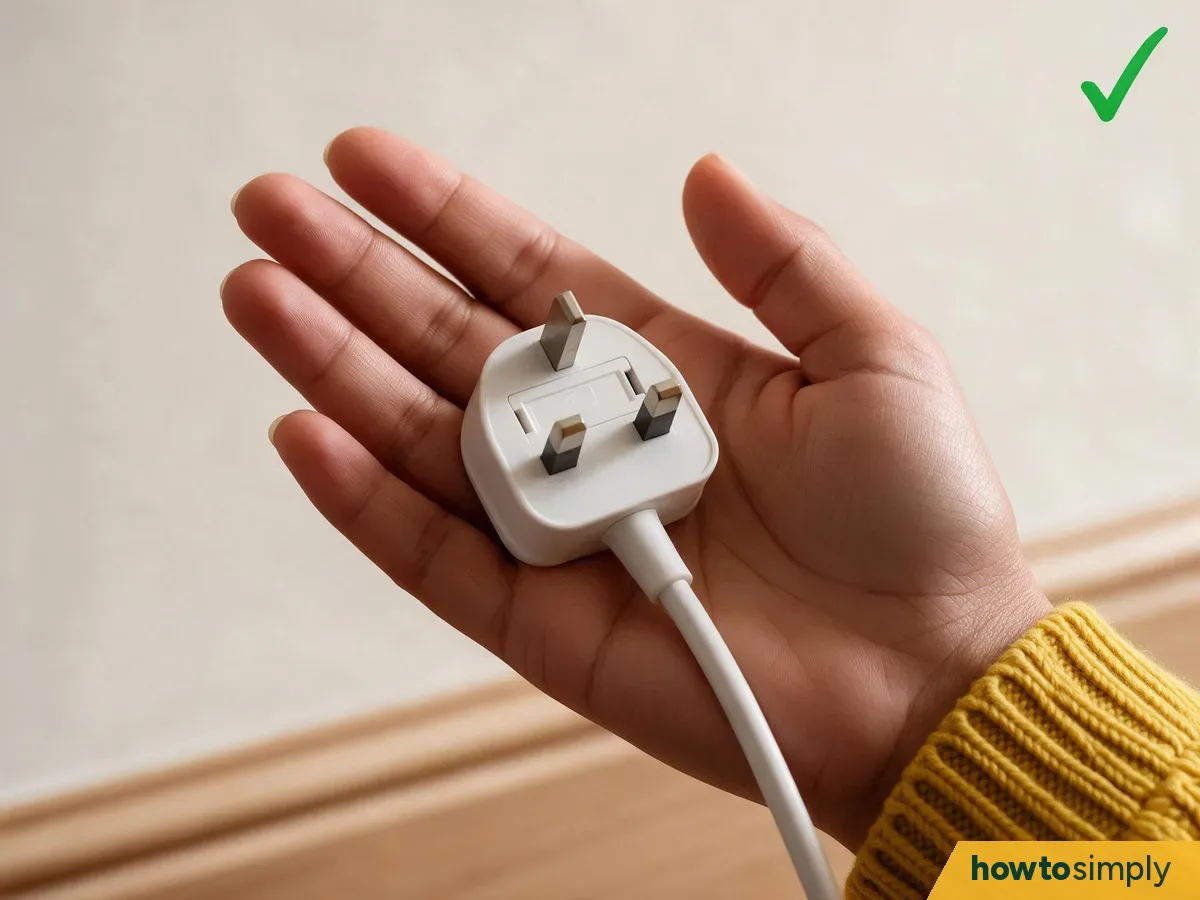
In our story: The plug is clean, cool and uncracked, so Amira carries on.
Look for melted plastic, a discoloured plug or cable, or burn marks (Electrical Safety First). If you see any, don't change the fuse: go to When to stop.
Get a new fuse of the same rating.
Illustration
In our story: The lamp's plug had a 3A fuse, so Amira takes a new 3A fuse from her drawer.
Replace a fuse only with one of the same rating (Electrical Safety First). You'll usually find the appliance's power or current rating printed on its label (Wickes). As a general guide, lamps, TVs and computers take 3A, and appliances from 700 to 3000 watts, such as kettles, take 13A (Electrical Safety First). Some older equipment uses 5A.
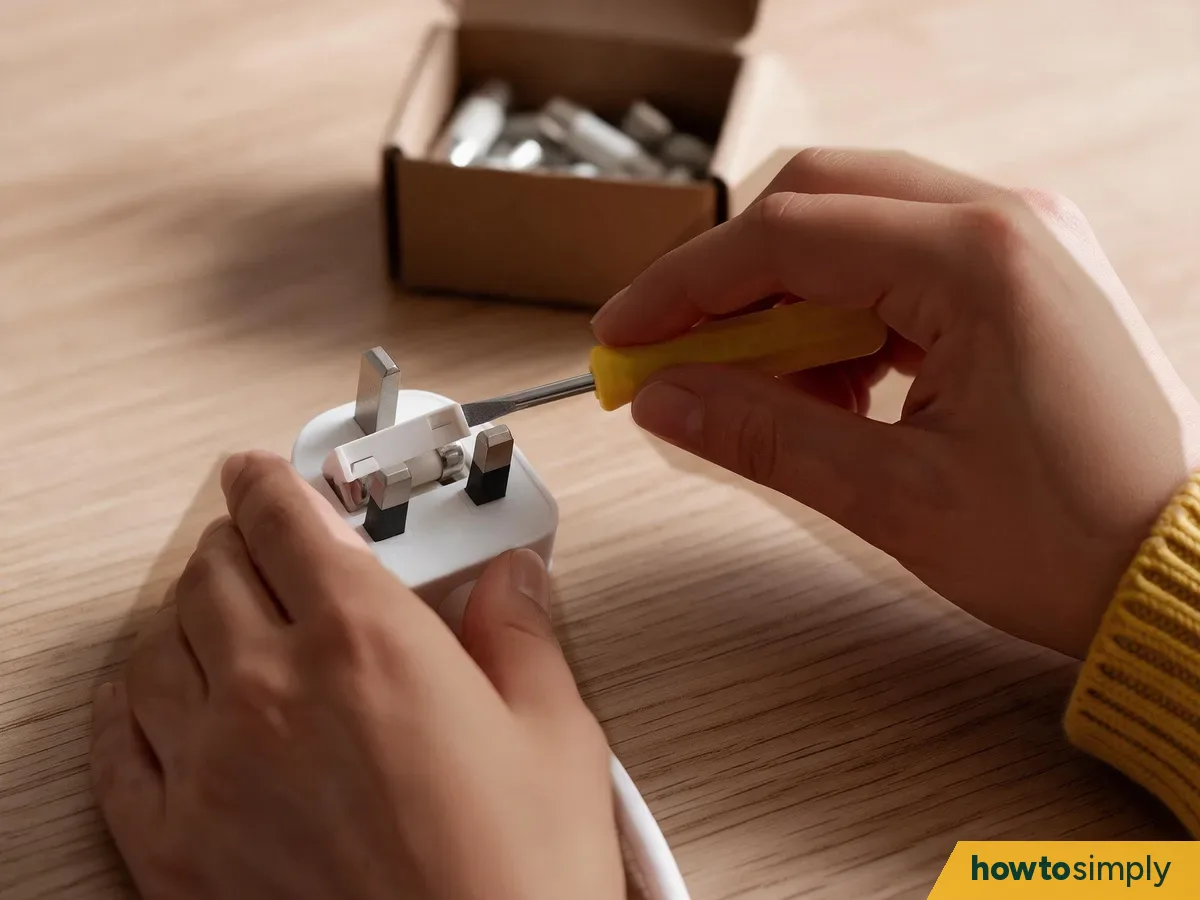
Prise out the fuse holder.
Illustration
In our story: Amira turns the plug pins-up and levers the little fuse holder out with the screwdriver tip.
On newer plugs, use a small flat screwdriver to tilt the fuse holder up (Wickes). It sits behind the live pin (Wickes) and only lifts so far, so don't worry when it stops part-way; that is how it is meant to be. Don't pull it right off.
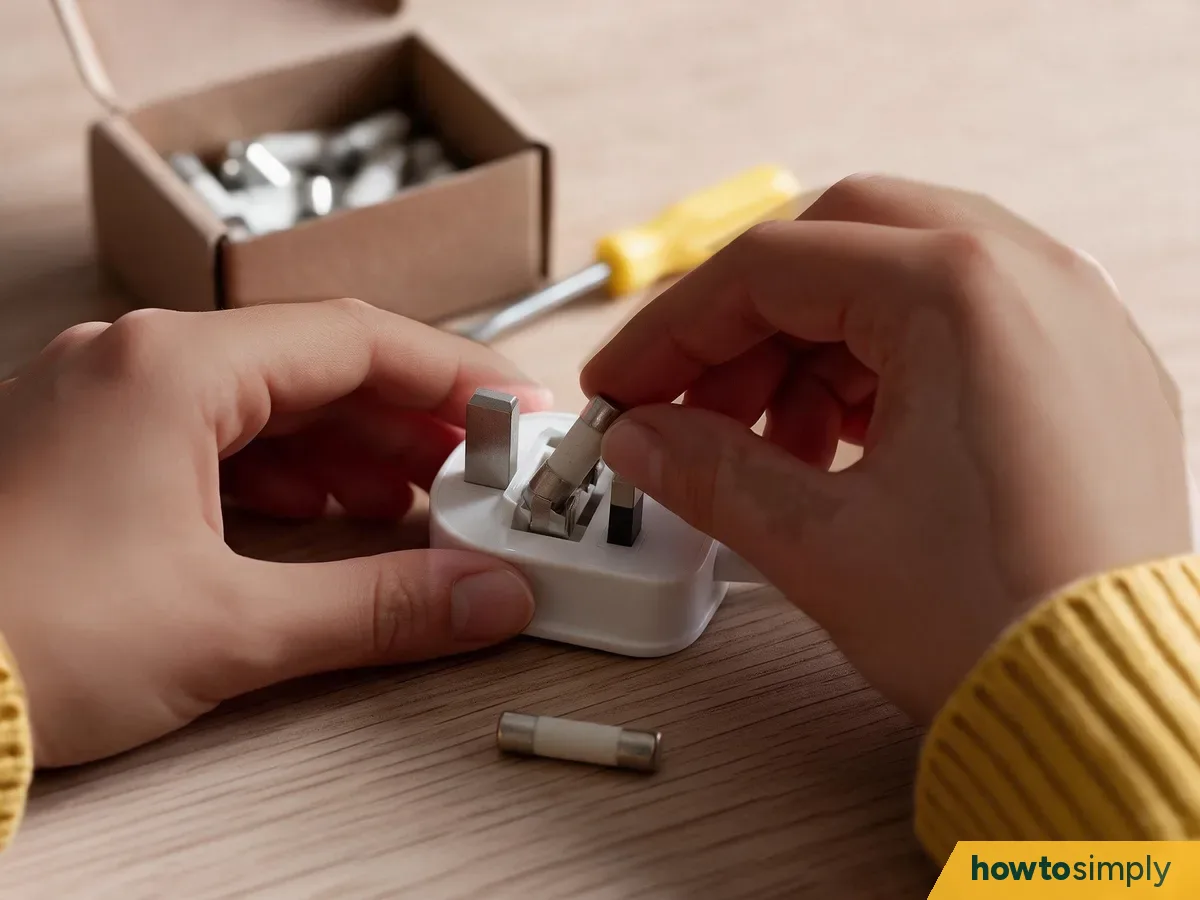
Swap the fuse.
Illustration
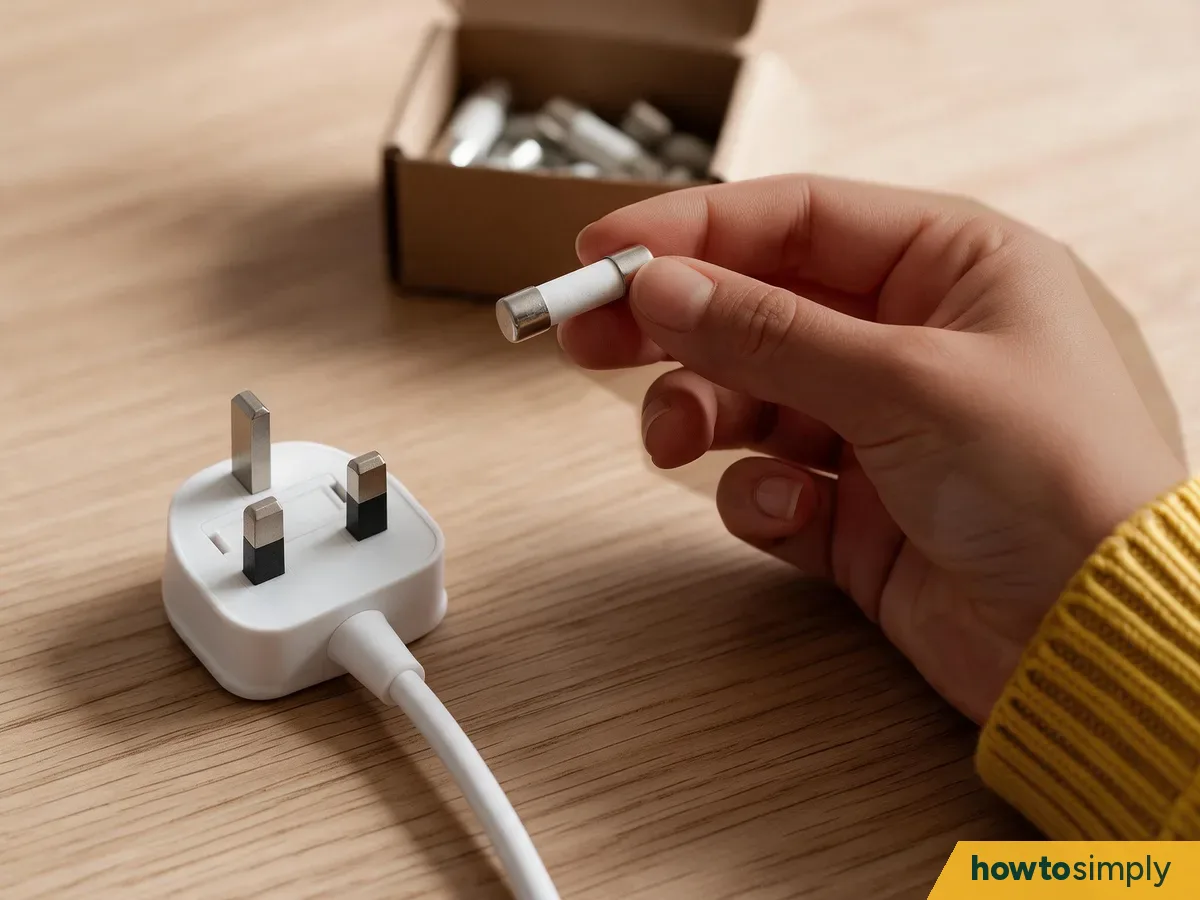
In our story: She pops out the old fuse and clips the new one into the holder.
Take out the old fuse and clip the new one into the holder (Wickes). Make sure you keep the old fuse apart from the new ones, because once they are mixed up in a drawer, they all look the same and the old one could get used again.
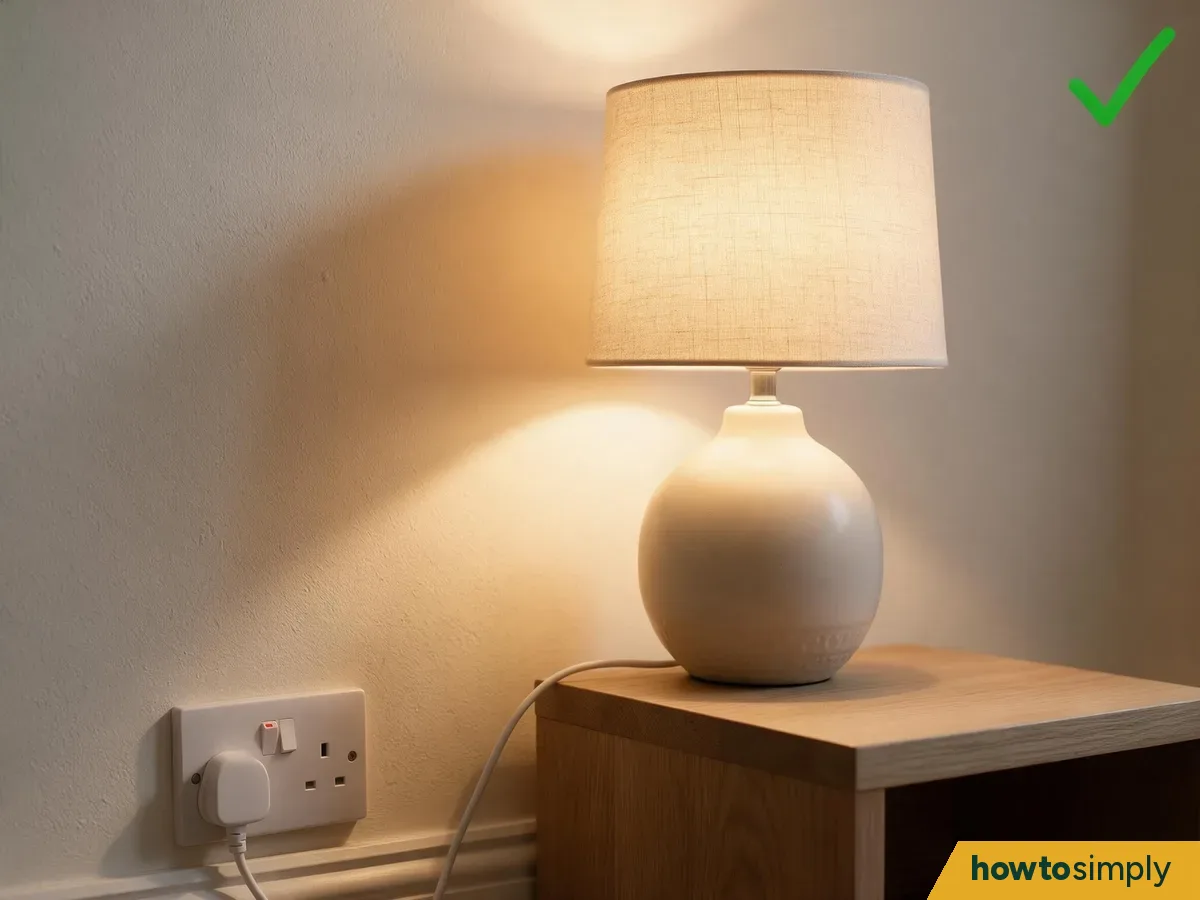
Push the holder back and test.
Illustration
In our story: Amira snaps the holder shut, plugs the lamp in, switches on, and it lights.
Push the holder back until it is secure, plug in and test it (Wickes). If it still doesn't work, see If something goes wrong.
Part 2: An older plug with a screw on the front
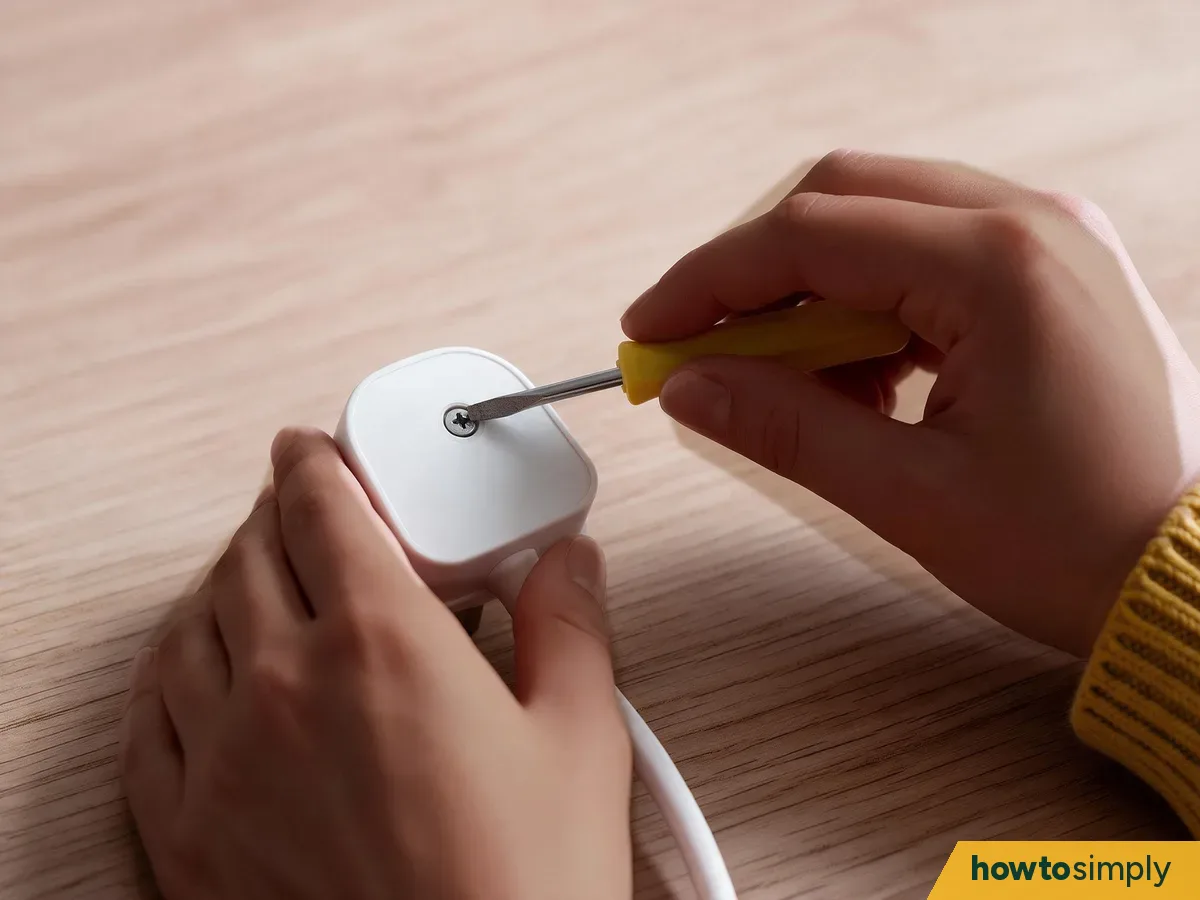
Unscrew the cover and swap the fuse inside.
Illustration
What if Amira's lamp had an older plug? She'd undo the big screw, lift off the cover, swap the fuse in its clips, then screw the cover back on.
On older plugs, undo the cover screw with a cross-head screwdriver, swap the fuse in its holder, refit the cover and screw it tight (Wickes). Don't touch the wires. If a sealed plug won't open, don't force it; replace the plug or have it done for you (Wickes).
When to stop
This part matters as much as the swap itself, so please read it even if your appliance is already working again.
Don't use a damaged plug.
Illustration
What if Amira's plug had been scorched? She'd stop and not use the lamp until the plug or lamp was repaired or replaced.
Don't ignore burn marks, buzzing or crackling sounds, or fuses that keep blowing (Electrical Safety First). Unplug it, then get in touch with the shop, the maker or a qualified repair technician.
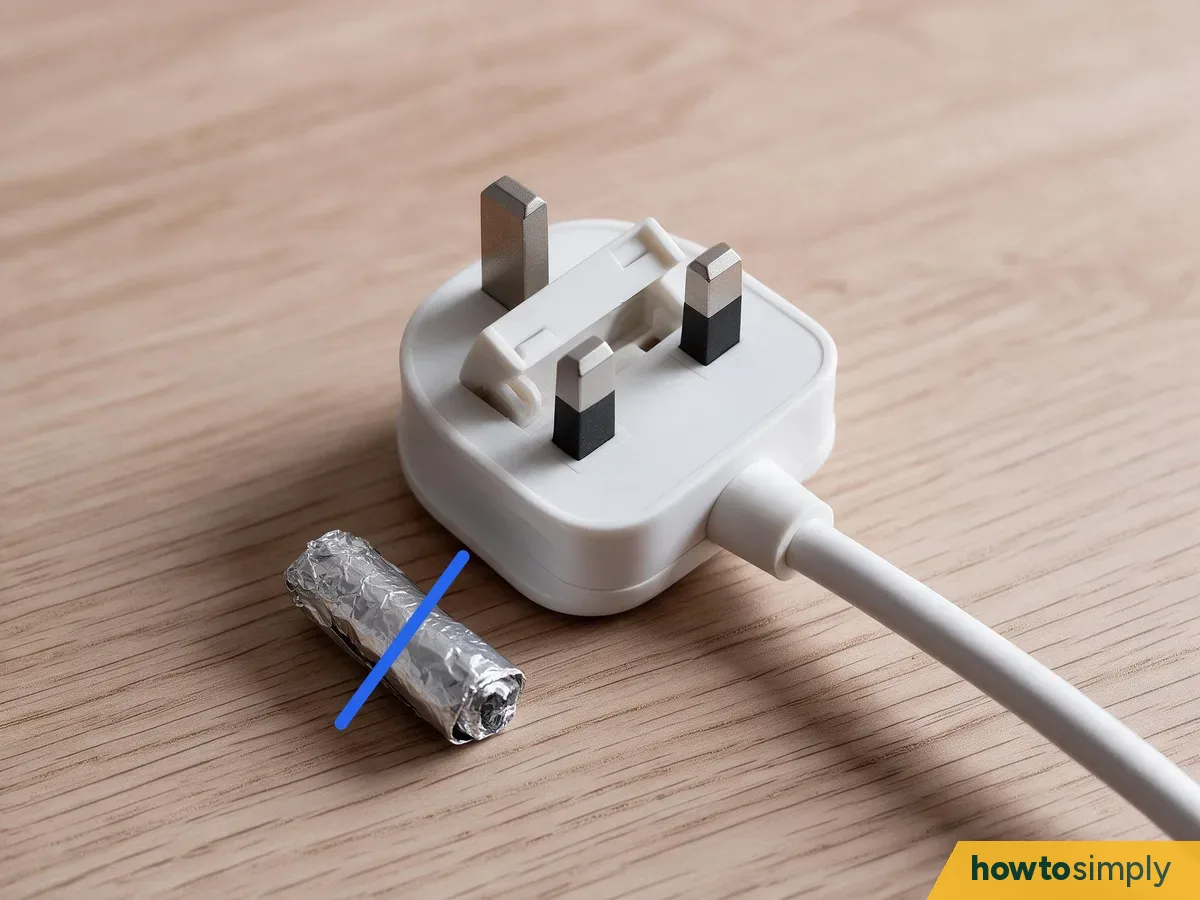
Never use wire or foil instead of a fuse.
Illustration
What if Amira had no spare fuse? She'd leave the lamp unplugged until she could buy one, never foil.
Never replace a fuse with wire or foil (Wickes). Spare 3A and 13A fuses are cheap, so keeping a few in a drawer takes the temptation away completely.
How to tell it worked
The appliance works when you plug it in and switch on.
The fuse holder is pushed back in and secure, with nothing loose.
The plug doesn't feel hot to touch while the appliance runs.
If something goes wrong
If the new fuse didn't do the trick, that is not your fault. The table below shows what is most likely going on and what to do next.
What happens
Likely cause
What to do
New fuse blows at once
An overload or a fault (Electrical Safety First)
Stop using it; contact the retailer, maker or a repair technician
Still doesn't work
The device itself could be faulty (Wickes)
Contact the manufacturer, especially if it's new (Wickes)
Plug feels hot to touch
—
Unplug it, then get in touch with the shop, the maker or a qualified repair technician (Electrical Safety First)
Fuse holder won't close
Fuse the wrong size or not clipped in
Check it's a standard plug fuse and seated in both clips (our advice)
Check the appliance's label or the maker's instructions
Same rating as the old fuse; never higher than the maker advises
Graphic by howtosimply, from the sources below.
Questions
What do I do with the old fuse?
Wickes says not to put old fuses in the household bin, because they can be a fire hazard. Take them to your local recycling centre's electrical section.[2]
Where exactly is the fuse in a UK plug?
Inside the plug on the brown, live wire side, just behind the live pin.[2]
When should I replace the whole plug?
Wickes lists a sealed, damaged or overheated plug, loose or burnt pins or wires, and a fuse that keeps blowing even at the correct rating.[2]
How often should my home's wiring be checked?
Electrical Safety First recommends an inspection at least every 10 years in a home you own, and every 5 years or at each change of tenant in a rented home.[1]
Which fuse does my appliance need?
Check the appliance's rating label or its manual. As a general guide, Electrical Safety First says appliances rated 700 to 3000 watts take a 13A fuse; lamps, TVs and computers usually take 3A. If you're not sure, check the manufacturer's instructions.
Can I put a 13A fuse in instead of a 3A?
No. Electrical Safety First says a replacement fuse must always have the same rating as the old one.
Why does the fuse keep blowing?
A fuse blows because of an overload or a fault (Electrical Safety First). If the new fuse blows too, stop using the appliance, then get in touch with the shop, the maker or a qualified repair technician.
How do I know a fuse is blown?
Fit a new fuse of the same rating and see if the appliance now works (Wickes).
Can I use a piece of wire or foil instead?
Never. Wickes warns never to use wire or foil in place of a fuse. The fuse is what stops a fault from overheating the cable.
The pictures on this page are illustrations, not photos.
How we know this: sources, checks and every change
Current advice
Only open a plug once it is out of the socket, and replace a fuse with one of the same rating, never with wire or foil[1][2]. If fuses keep blowing, or you see burn marks or hear buzzing, unplug it and get help[1][2].
Advice last changed
17 November 2026
Sources
Electrical Safety First and Wickes
Information, not professional advice.
Latest update
17 November 2026. We re-read the sources. Both opened today and still back the steps, the fuse ratings and the warnings. We corrected one credit and one detail, set out below.
What changed in this version
Credit: the first step credited Wickes with 'unplug it'. Wickes says to turn the device off at the mains; it is Electrical Safety First that says to open a plug only once it is out of the socket[1][2]. The step now credits both.
Correction: the step on prising out the holder said the fuse sits between the pins. Wickes says it sits behind the live pin[1], and the step now says so.
Added: who to call when fuses keep blowing differs slightly between the two sources, shown under where the sources differ[1][2].
Key facts
The fuse in a UK plug blows when an appliance or extension lead draws too much current, through an overload or a fault, and so stops the cable and appliance overheating.[1]
Replace a blown fuse only with one of the same rating. Plug fuses should meet BS 1362, marked on the fuse body.[1]
Plug fuses are now standardised at 3A or 13A; 5A fuses are still used in some older equipment.[1]
As a general guide, appliances rated 700 to 3000 watts take a 13A fuse; a table lamp, TV or computer takes 3A.[1]
On newer plugs the fuse sits in a holder you tilt out with a flat screwdriver; on older plugs you undo the cover with a cross-head screwdriver.[2]
Never use wire or foil in place of a fuse, and keep your hands and work surface dry.[2]
Don't force a sealed plug open: replace the plug, or have a qualified person check it.[2]
What the sources agree on
Use a replacement fuse of the correct rating for the appliance.[1][2]
Fuses that keep blowing are a warning sign: stop and get advice.[1][2]
Replace a damaged, burnt or overheated plug, not just the fuse.[1][2]
Where the sources differ, or nothing is confirmed
Who to call: Electrical Safety First says contact the retailer, the maker or a qualified repair technician; Wickes says seek a qualified electrician's advice, and contact the maker if a new device still won't work.[1][2]
Record history
Version 7. Sources re-read; record layout added with key facts, a fuse rating table, agree and differ notes, history and more questions.
Version 6. The 13 November rewording was taken back off this page and the checked text returned.
Version 5. Wording rewritten throughout.
Version 4. Every line checked against its source; some wording corrected.
Version 3. Wording made friendlier; the safety lines were left as they were.
Version 2. Approved and published on the site.
Version 1. First written, with illustrations, and held for review.
10 illustrations drawn for this article: drawings, not photos.
Sources
Steps checked against the 2 named sources linked below.
What this page adds
A worked story of Amira's lamp, close-ups of levering out the fuse holder and clipping in the new fuse, and a separate route for older plugs with a screw on the front.
What we checked
On 17 November 2026 we re-read both sources, Electrical Safety First's plugs and fuses page and Wickes's guide to changing a fuse, and checked each step, fuse rating, warning and table entry against them.