Mouth ulcer: how to ease the pain and help it heal
Reviewed by Dr Aaiman Liaqat✓, BDS
By Abu Bakar Saadat6 min readPublisher: Saadat Rafiq
Last updated: 2 November 2026References
 Illustration
On this page 11 sections
In short
Most mouth ulcers heal on their own in a week or 2. Use a soft toothbrush, avoid spicy, acidic and crunchy food, rinse with warm salt water, and ask a pharmacist for a gel or rinse. See a dentist if one hasn't healed after 2 weeks.
At a glance
- Usually heals
- In a week or 2 (NHS)
- Contagious?
- No (NHS, gesund.bund.de)
- Ease it
- Soft brush, soft food, cool drinks through a straw (NHS)
- Rinse
- Half a teaspoon of salt in a glass of warm water (NHS)
- Pharmacist
- Gels, rinses or sprays without a prescription (NHS)
- Get it checked
- Not healed after 2 weeks (gesund.bund.de, MedlinePlus); always after 3 weeks (NHS)
- Checked
- November 2026
A mouth ulcer is a small, painful sore inside the cheek or lip. There's no quick fix, but avoiding what irritates it helps it heal faster, hurt less and come back less often (NHS). Advice on when to get it checked differs between countries, so the table near the end shows the UK, Germany and the US side by side.
See a dentist if an ulcer hasn't healed after 2 weeks (gesund.bund.de, MedlinePlus). See a dentist or GP if it lasts longer than 3 weeks, is bigger than usual or near the back of your throat, or bleeds or gets more painful and red (NHS). See a GP if you also have ulcers elsewhere on your body or painful, swollen joints (NHS).
What do you want to do?
Check what it is
Round, pale, inside the mouth. Start at Check it's an ulcer.
Make it hurt less
Soft food, salt rinse, pharmacist. Go to Ease the pain.
It won't go away
Know when to get it checked. Go to See a dentist or GP.
Check it's a mouth ulcer
Look for a small round sore inside your cheek or lip.
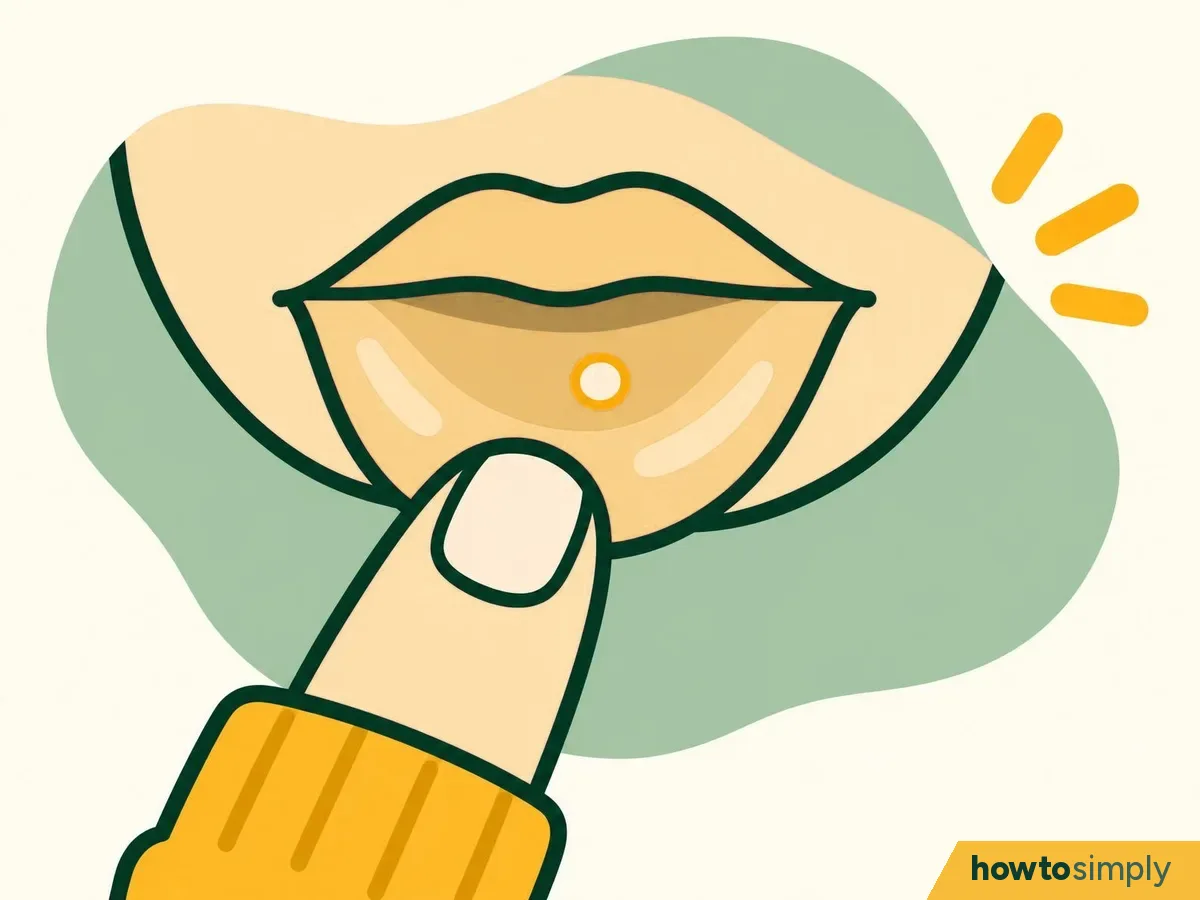
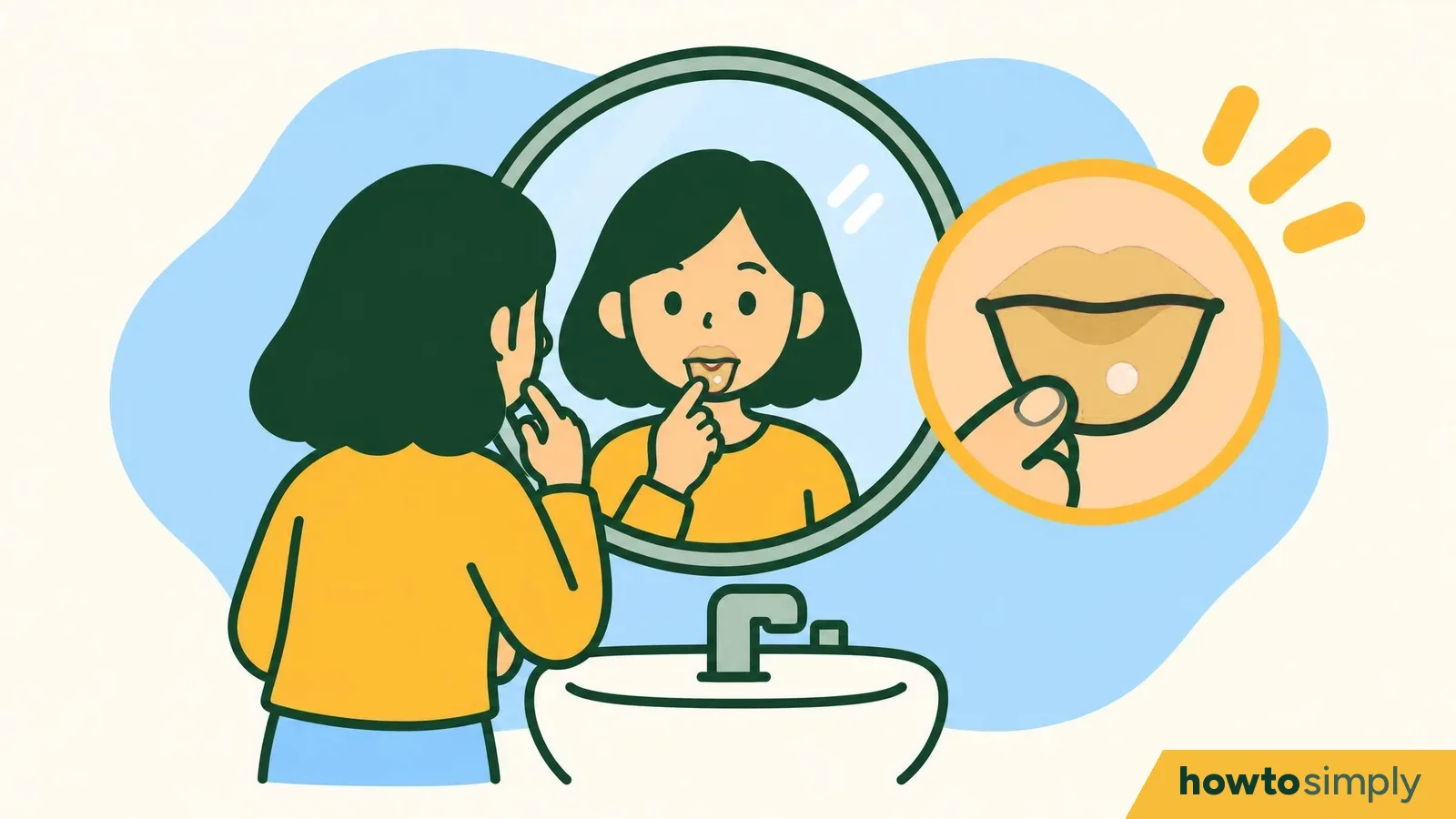
Illustration Mouth ulcers usually appear inside the cheeks or lips, and sometimes on the tongue (NHS). They are round and white or yellow with a red edge, and usually only a few millimetres across (gesund.bund.de, MedlinePlus). You can have more than one at a time (NHS).
Make sure it isn't a cold sore.
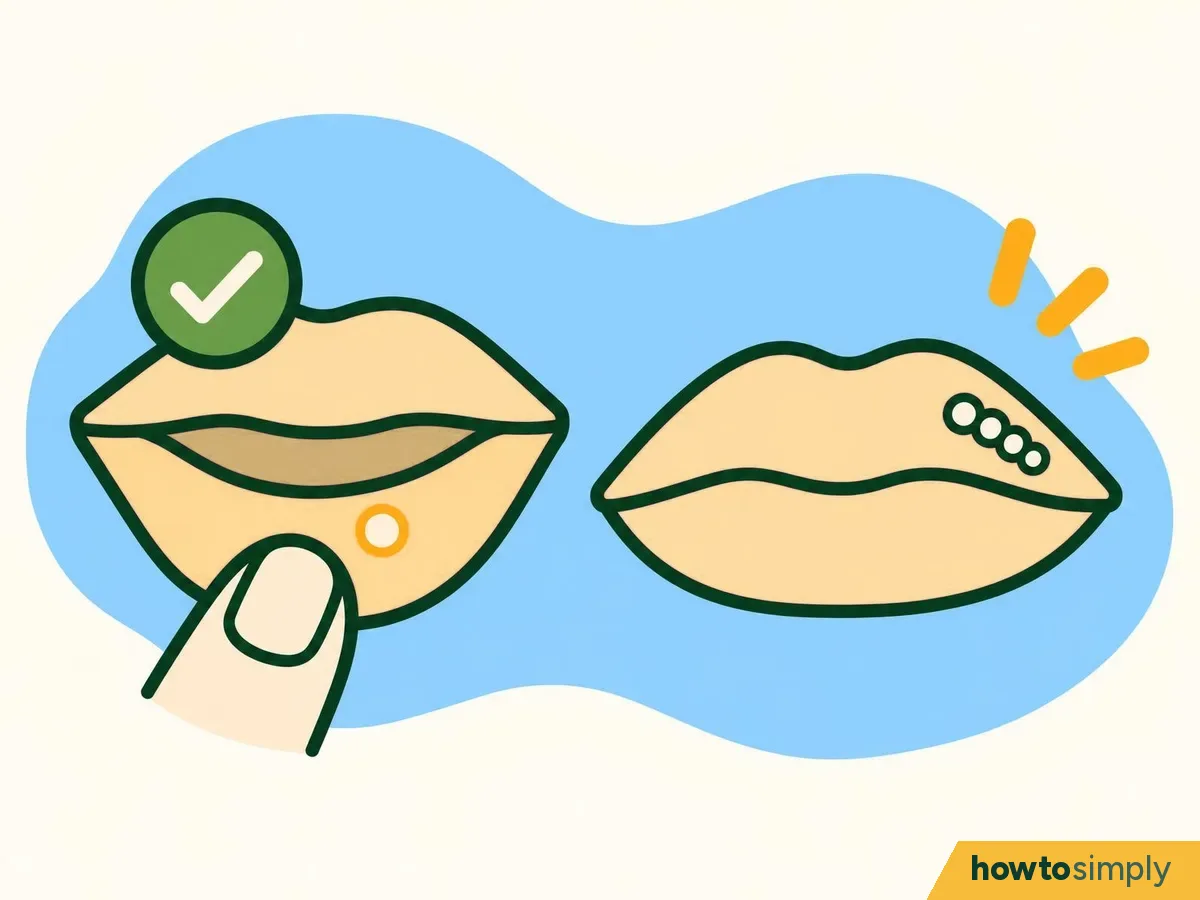
Illustration Cold sores appear on the lips or around the mouth, and often start with tingling, itching or burning (NHS). Mouth ulcers are inside the mouth.
Carry on as normal: ulcers aren't catching.

Illustration Mouth ulcers are not contagious (NHS, gesund.bund.de).
Ease the pain while it heals
Brush gently with a soft toothbrush.
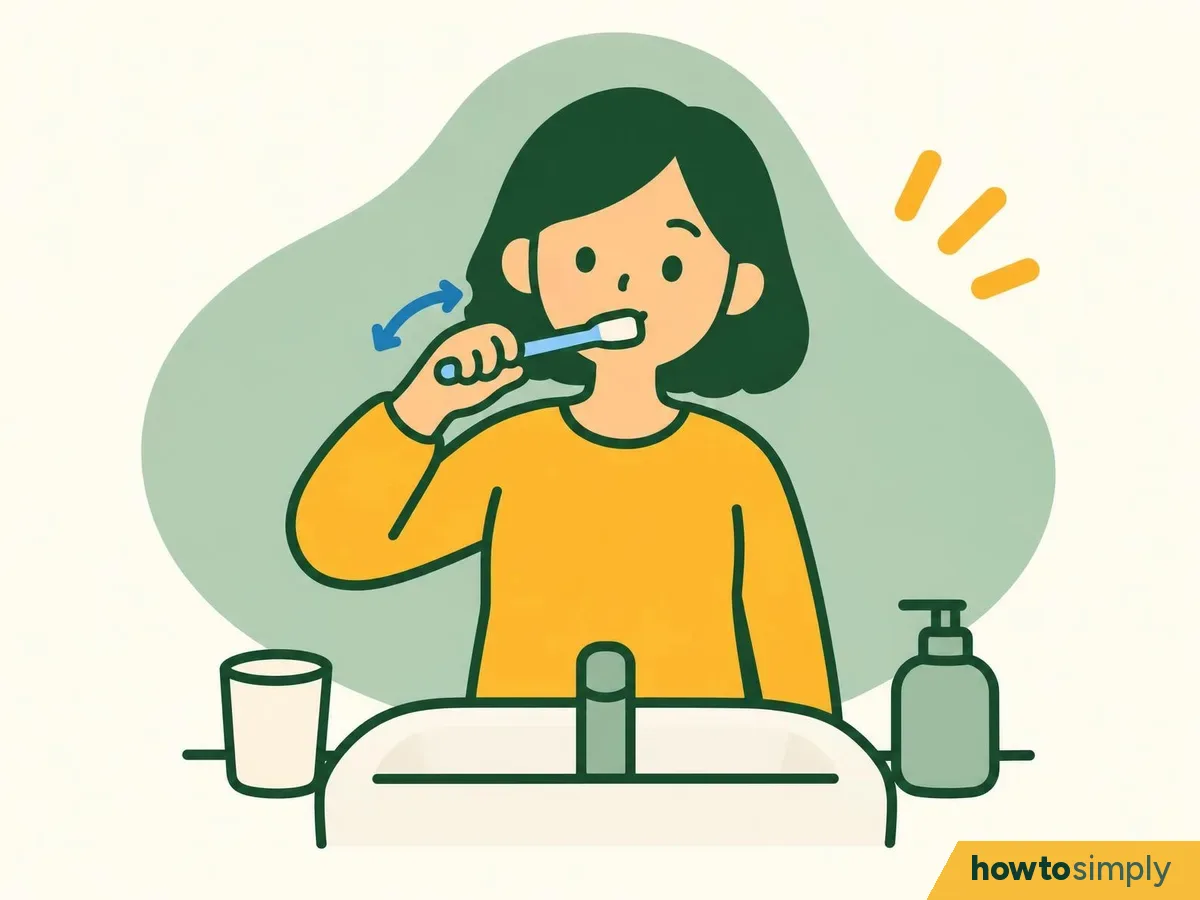
Illustration Use a soft-bristled toothbrush (NHS). Brushing too roughly can bring on ulcers (MedlinePlus).
Skip spicy, salty, acidic and crunchy food.
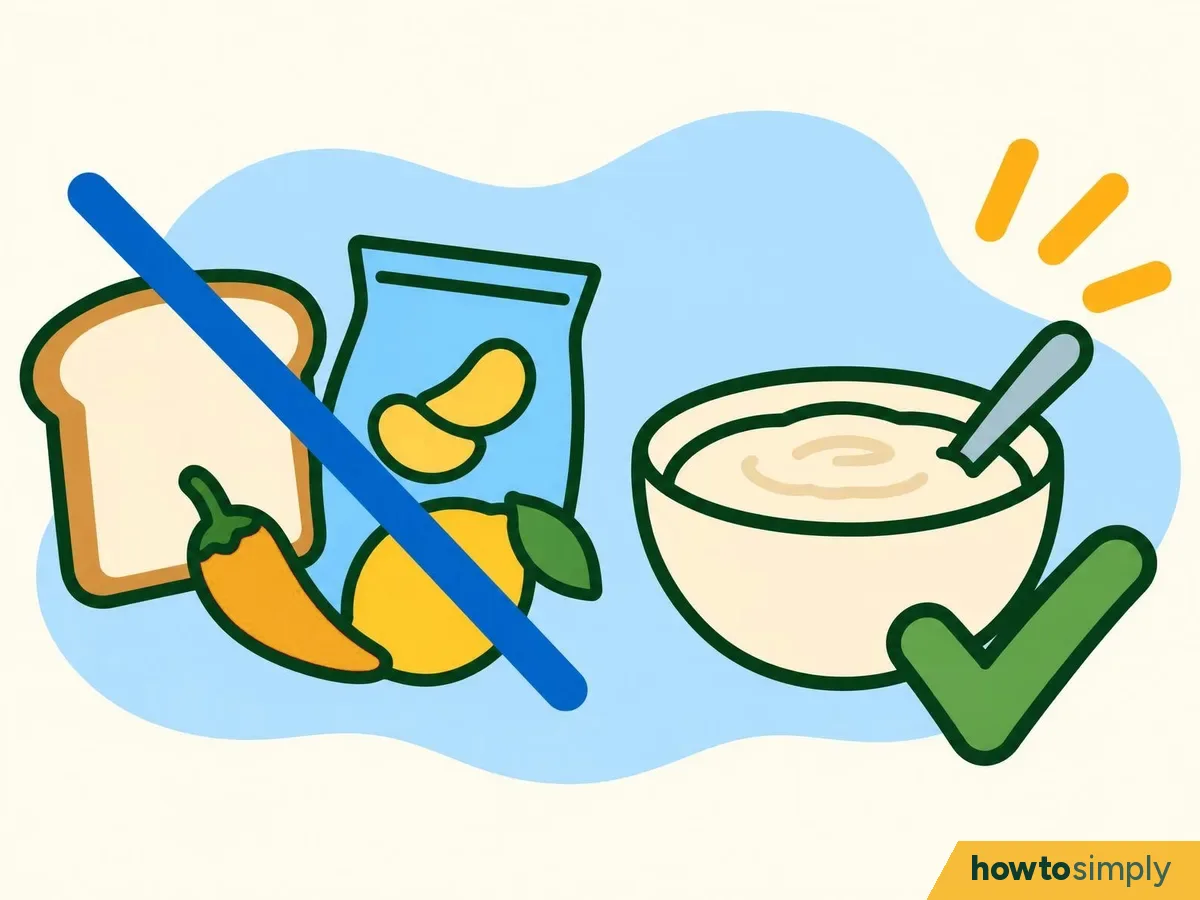
Illustration Avoid very spicy, salty or acidic food, and rough, crunchy food such as toast or crisps (NHS). gesund.bund.de names bread-roll crusts, sour fruit and hot spices. Eat softer foods instead (NHS).
Drink cool drinks through a straw.

Illustration Drink cool drinks through a straw, and avoid very hot or acidic drinks such as fruit juice (NHS).
Rinse with warm salt water, then spit it out.
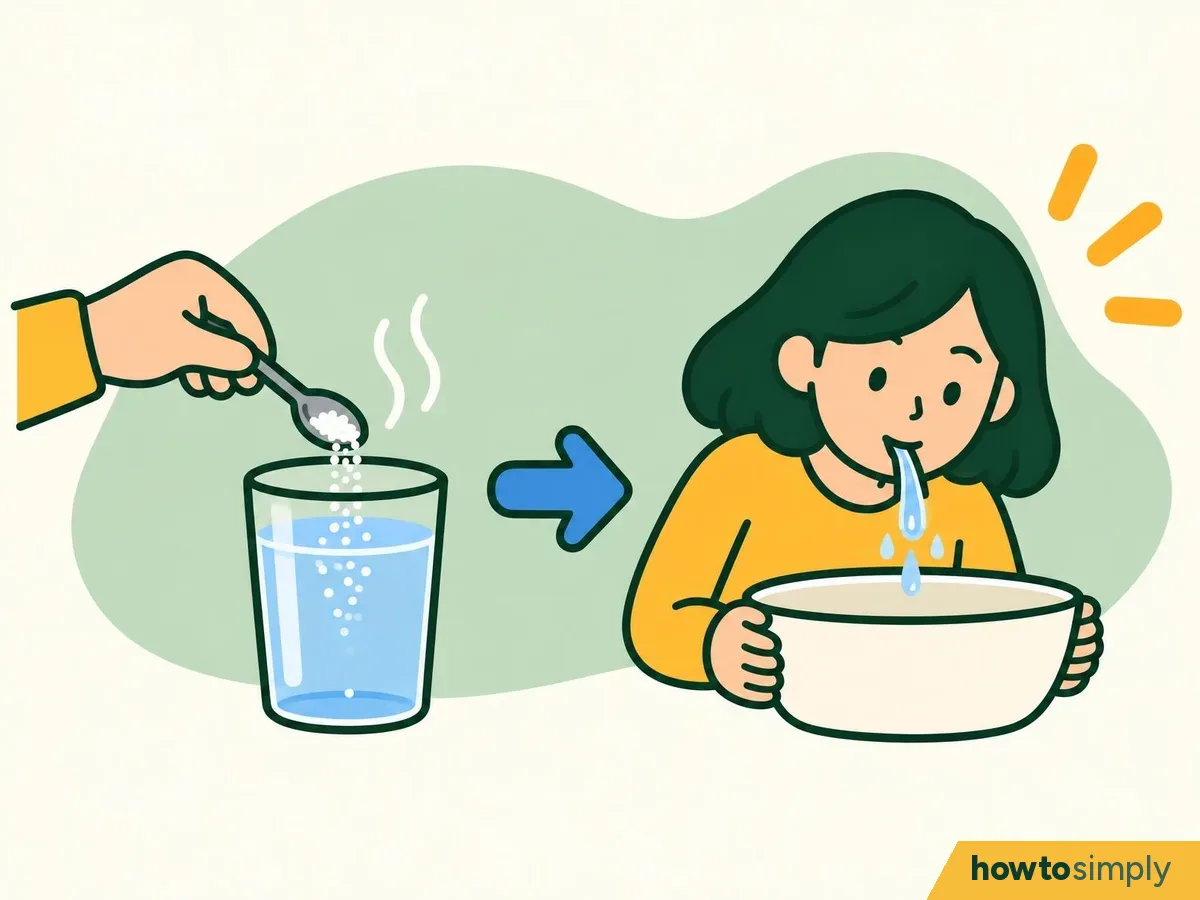
Illustration Dissolve half a teaspoon of salt in a glass of warm water, rinse your mouth, then spit it out. Don't swallow it. You can repeat this as often as you like (NHS). MedlinePlus also suggests salt water, and says to avoid mouthwashes with alcohol, which can irritate the sore.
Check your toothpaste for sodium lauryl sulphate.

Illustration The NHS says not to use toothpaste that contains sodium lauryl sulphate while you have an ulcer. Check the ingredients list on the tube.
Ask a pharmacist for a gel, rinse or spray.

Illustration A pharmacist can recommend something to speed up healing, prevent infection or ease the pain, such as a mouthwash, gel, spray or lozenges, without a prescription (NHS). gesund.bund.de says gels, creams and mouth rinses can ease the pain.
Stop the cause
Get anything sharp or rubbing fixed by your dentist.
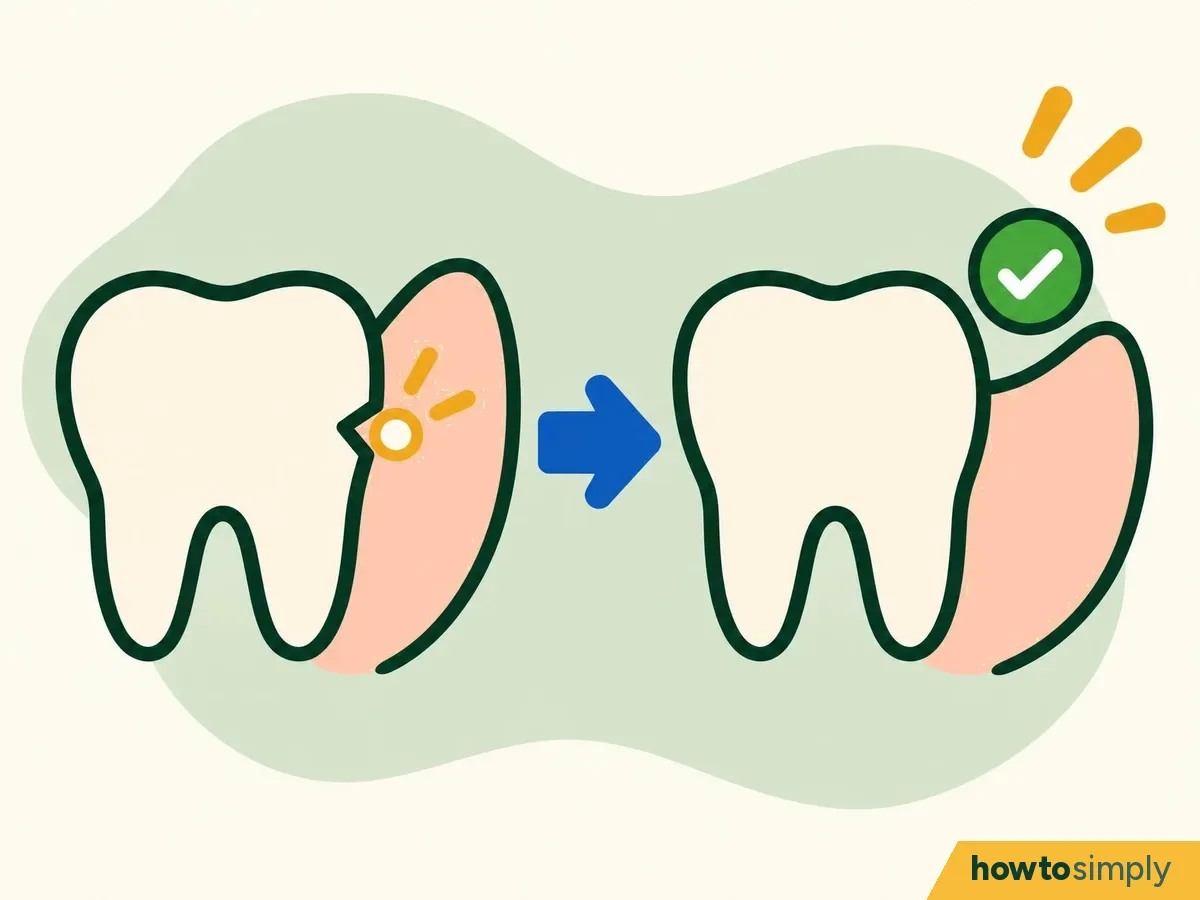
Illustration Badly fitting dentures, braces, rough fillings or a sharp tooth can cause ulcers (NHS). Your dentist can sort these out.
Take care not to bite your cheek.

Illustration Biting the inside of your cheek, and cuts or burns from hard food or hot drinks, are common causes (NHS). Eating slowly can help you avoid them.
Eat a balanced diet and get some rest.

Illustration Eat a healthy, balanced diet (NHS). Feeling tired, stressed or anxious can bring on ulcers, and so can a shortage of iron, zinc, folic acid, vitamin B or vitamin D (NHS). A sore, red tongue with mouth ulcers can be a sign of vitamin B12 deficiency, which a GP can check with a blood test (NHS). gesund.bund.de also names stress and iron or vitamin B shortage.
See a dentist or GP
Get it checked if it hasn't healed in 2 weeks.

Illustration In Germany, gesund.bund.de suggests a dentist or ear, nose and throat (HNO) practice if an ulcer hasn't healed within 2 weeks, and MedlinePlus says contact your provider if it hasn't gone after 2 weeks of home care. The NHS gives 3 weeks as the point where every lasting ulcer needs a GP or dentist, because a long-lasting ulcer is sometimes a sign of mouth cancer. So book a dentist at 2 weeks, and don't wait past 3. It helps to keep a note of when it started.
Go sooner if it's unusual, or you have other symptoms.
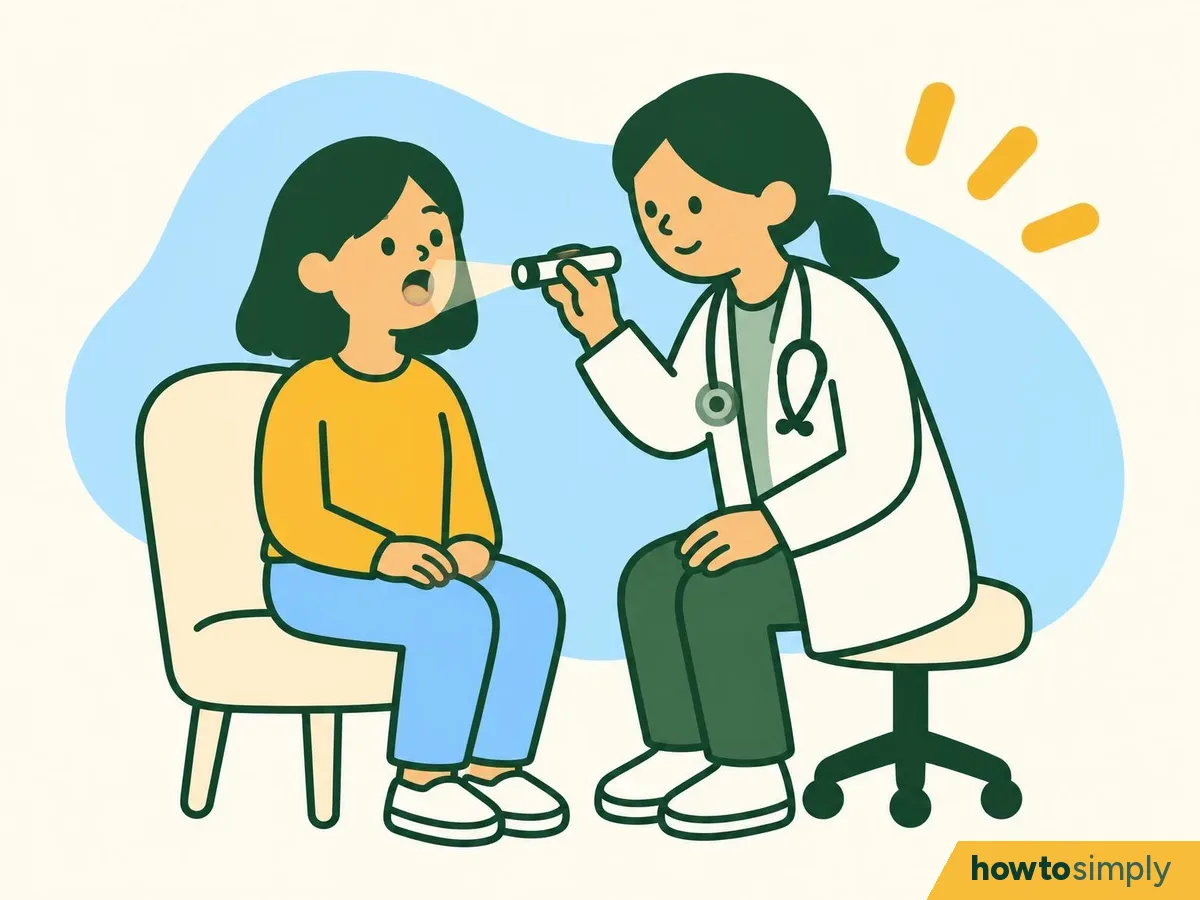
Illustration See a dentist or GP if the ulcer is bigger than usual, near the back of your throat, bleeds, or gets more painful and red, which can be infection (NHS). See a GP if you have ulcers elsewhere on your body or painful, swollen joints (NHS), or fever, diarrhoea, headache or a rash (MedlinePlus). If you get ulcers more than 2 or 3 times a year, tell your doctor (MedlinePlus).
What each country says
| UK | Germany | US | |
|---|---|---|---|
| How long it lasts | A week or 2 (NHS) | About a week; large ones up to 4 weeks (gesund.bund.de) | Pain 7 to 10 days; healed in 1 to 3 weeks (MedlinePlus) |
| First help | Pharmacist: gels, rinses, sprays, lozenges, salt rinse (NHS) | Pain-relieving gels, creams or mouth rinses (gesund.bund.de) | Salt water or mild, alcohol-free mouthwash (MedlinePlus) |
| Get it checked after | 3 weeks (NHS) | 2 weeks (gesund.bund.de) | 2 weeks of home care (MedlinePlus) |
| Who to see | Dentist or GP (NHS) | Dentist or ear, nose and throat (HNO) doctor (gesund.bund.de) | Your health care provider (MedlinePlus) |
| Keeps coming back | Triggers include stress, hormone changes and vitamin shortages (NHS) | Common; cause unknown (gesund.bund.de) | Tell your provider if more than 2 or 3 times a year (MedlinePlus) |
How to tell it's healing
- The pain eases after a few days (gesund.bund.de, MedlinePlus).
- The sore turns greyish as it heals (MedlinePlus).
- It's gone within a week or 2 (NHS).
If something isn't right
| What happens | What it means | What to do |
|---|---|---|
| Not healed after 2 weeks | It needs checking | See a dentist (gesund.bund.de, MedlinePlus); don't wait past 3 weeks (NHS) |
| It bleeds, or gets bigger, redder or more painful | It may be infected | See a dentist or GP (NHS) |
| Small sores on the outside of the lip that tingled first | Probably a cold sore, not an ulcer | Ask a pharmacist (NHS) |
| A denture, brace or sharp tooth keeps rubbing | The same spot keeps getting hurt | See your dentist (NHS) |
| Ulcers come with a fever, rash or sore joints | There may be another cause | See a GP (NHS, MedlinePlus) |
Tooth pain too? See our guide to toothache until you can see a dentist.
Questions readers ask
How long does a mouth ulcer last?
Usually a week or 2 (NHS). gesund.bund.de says most are gone after about a week, but large ones can take up to 4 weeks. MedlinePlus says the pain often goes in 7 to 10 days and healing can take 1 to 3 weeks.
Are mouth ulcers contagious?
No. The NHS and gesund.bund.de both say mouth ulcers are not contagious. Don't confuse them with cold sores, which are on or around the lips (NHS).
Can a mouth ulcer be cancer?
Rarely. Most are harmless, but a mouth ulcer that lasts a long time is sometimes a sign of mouth cancer, so get one checked by a dentist if it hasn't healed after 2 weeks (gesund.bund.de, MedlinePlus), and always if it lasts longer than 3 weeks (NHS). Ordinary ulcers don't turn into cancer (MedlinePlus).
Why do I keep getting them?
Often nobody knows. gesund.bund.de says the cause is unknown, and genes, stress, a weak immune system or hormone changes may play a part. The NHS adds feeling tired or stressed, shortages of vitamins such as vitamin B12, and some medicines; a sore, red tongue with mouth ulcers can be a sign of vitamin B12 deficiency (NHS). See your GP or provider if you get them more than 2 or 3 times a year (MedlinePlus).
What if I have lots of ulcers at once?
Several ulcers can be a sign of another condition, such as hand, foot and mouth disease, which also causes a rash on the hands and feet (NHS). See a GP.
Does salt water help?
It can. The NHS lists a salt mouthwash among the things a pharmacist may suggest: half a teaspoon of salt in a glass of warm water, rinse, then spit it out. MedlinePlus also suggests rinsing with salt water.
Did this solve the problem?
What needs work?
What did you think?
Reaction counts are loading.
Spotted a mistake? If a step is unclear or a picture is inaccurate, tell us the step number and what needs correcting. Email us about this page or use the contact form. We read every report, and fixes are listed on What changed.
Liked this article?
Follow us for new articles and short how-to videos.
Sources
We use primary, official and specialist sources appropriate to the topic.