Knocked-out tooth: what to do in the first hour to save it
Reviewed by Dr Aaiman Liaqat✓, BDS
By Abu Bakar Saadat7 min readPublisher: Saadat Rafiq
Last updated: 2 November 2026References
 Illustration
On this page 12 sections
In short
Pick it up by the crown, not the root. Put an adult tooth back if it slides in easily, or keep it in cold milk (no milk: saline; no saline: saliva inside the cheek), then see a dentist at once. Never put a baby tooth back or store a tooth in water.
At a glance
- Hold it
- By the crown (the white part), never the root (NHS, AAE)
- Adult tooth
- Put it back if it goes in easily, bite on a clean cloth (NHS)
- Baby tooth
- Don't put it back (NHS)
- Can't put it back
- Cold milk or a tooth rescue box; no milk, saline; no saline, saliva inside the cheek (NHS, AAE, ZTZ Regensburg)
- Never
- Water, drying out, scrubbing (AAE, ZTZ Regensburg)
- Dentist
- Straight away, ideally within 30 minutes (AAE)
- Checked
- November 2026
An adult tooth that has been knocked out can often be saved, but only if the cells on its root stay alive (proDente). That depends on two things: how you handle the tooth, and how quickly a dentist sees it. Official advice differs between countries on putting the tooth back and on what to store it in, so the table near the end shows each one.
Whose tooth is it?
An adult tooth
Try to put it back, or keep it in milk. Start at First minutes.
A young child's baby tooth
Don't put it back. Stop the bleeding and see a dentist (NHS).
Only a piece broke off
Keep the piece. Go to Get to a dentist.
First minutes
Press a clean cloth on the bleeding, and look for the tooth straight away.
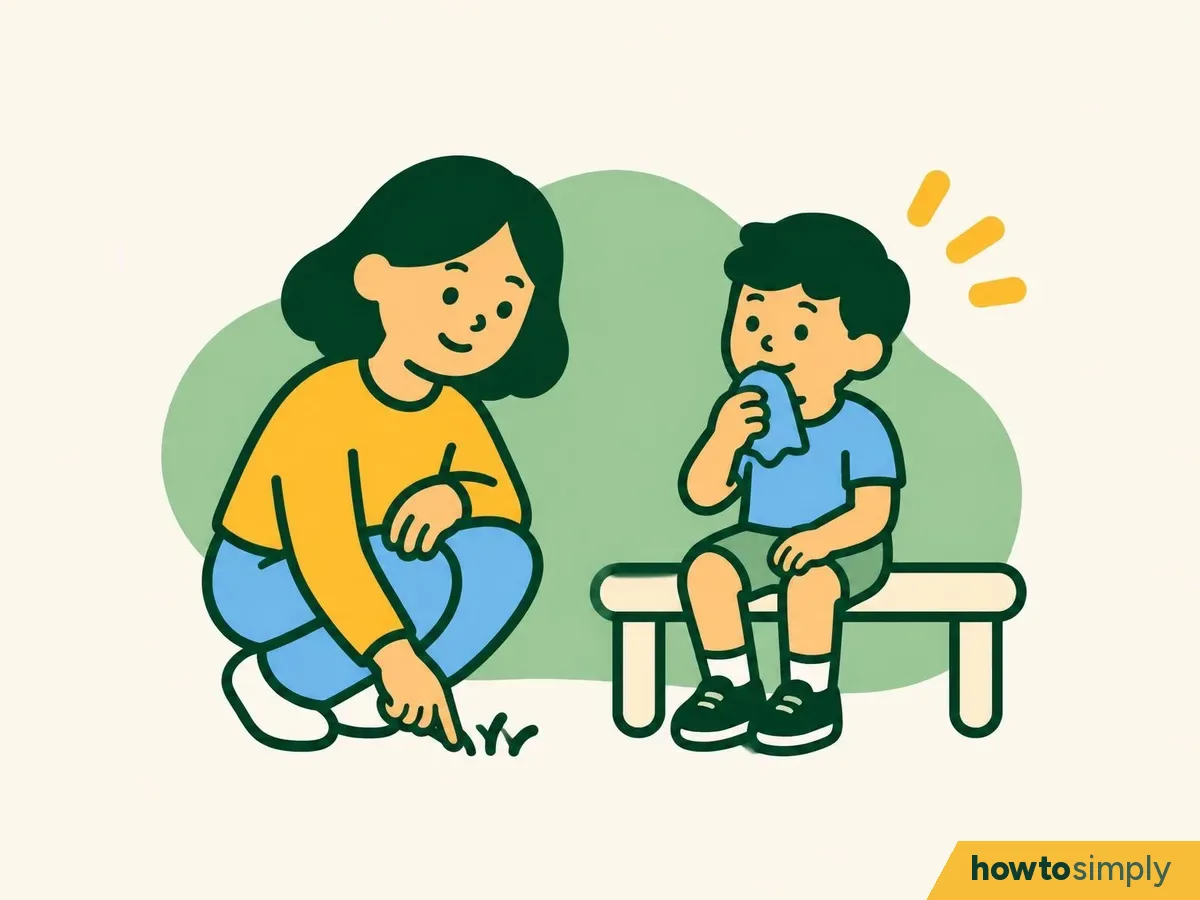
Illustration Mouths bleed a lot, but pressing a cloth handkerchief or sterile dressing on the spot can stop it (Zahntraumazentrum Regensburg, proDente). proDente also suggests cooling the mouth from the outside.
Search for the tooth, and any broken pieces, at once (proDente). Every minute the tooth spends in a rescue box improves its chances (Zahntraumazentrum Regensburg).
Work out whether it's a baby tooth or an adult tooth.
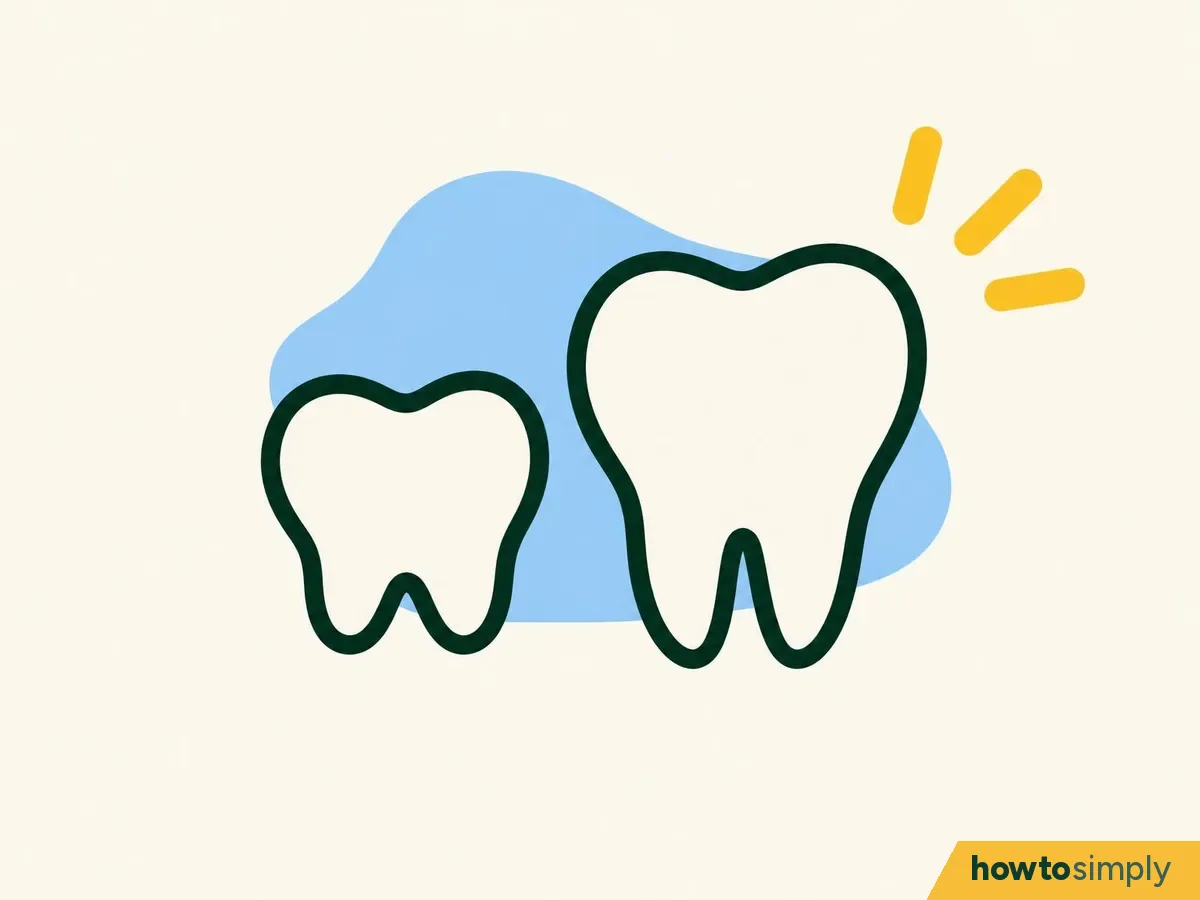
Illustration Never put a baby tooth back in: it could damage the adult tooth growing underneath (NHS). Baby teeth are not replanted (MedlinePlus), but your child should still see a dentist.
If you can't tell whether it's a baby tooth, don't put it back. Keep it in milk and let the dentist decide.
Pick the tooth up by the crown, never the root.
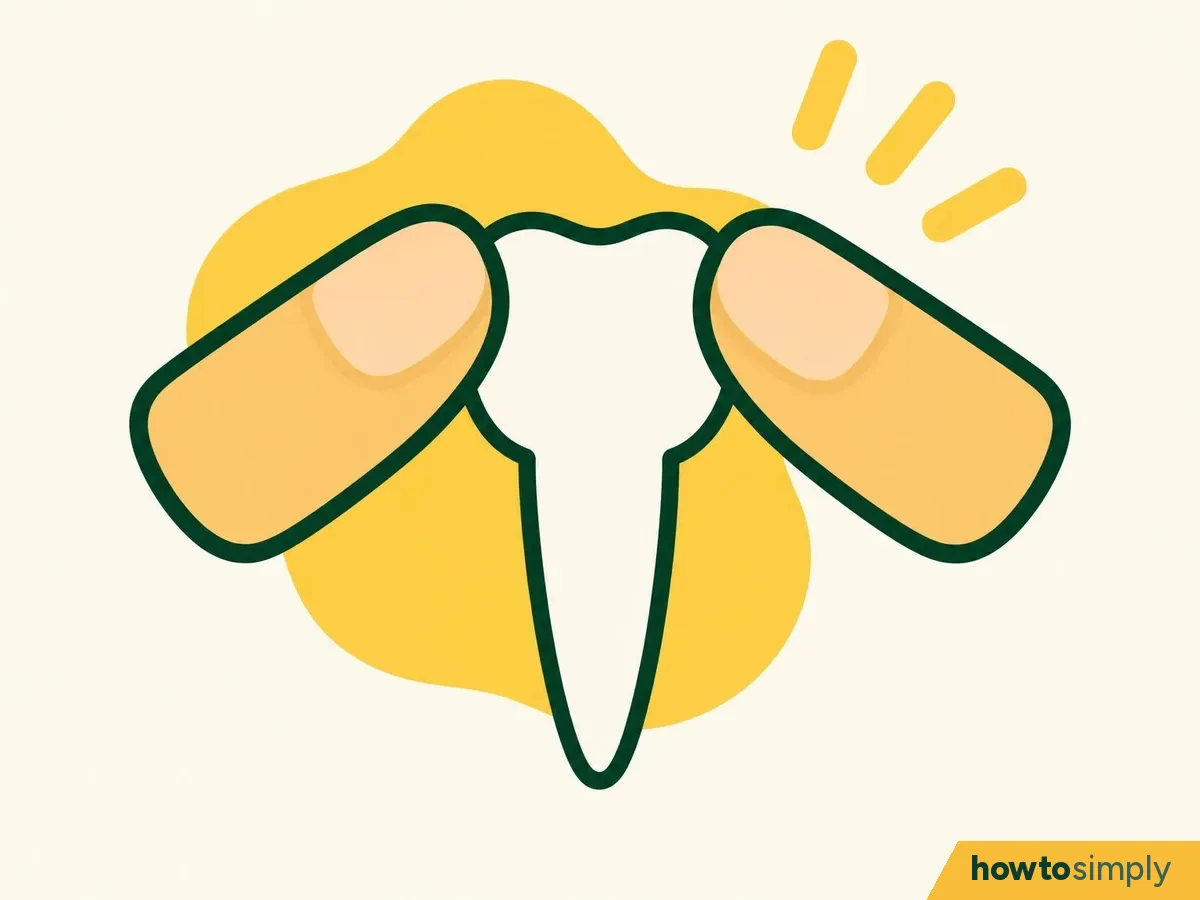
Illustration Hold it by the white part that normally sticks out of the gum (NHS). Touching the root harms the cells that let the tooth grow back in (proDente, MedlinePlus).
Careful: never scrub the tooth, dry it, or clean it with soap, alcohol or peroxide (AAE, MedlinePlus).
Only if it's dirty, rinse it very briefly.
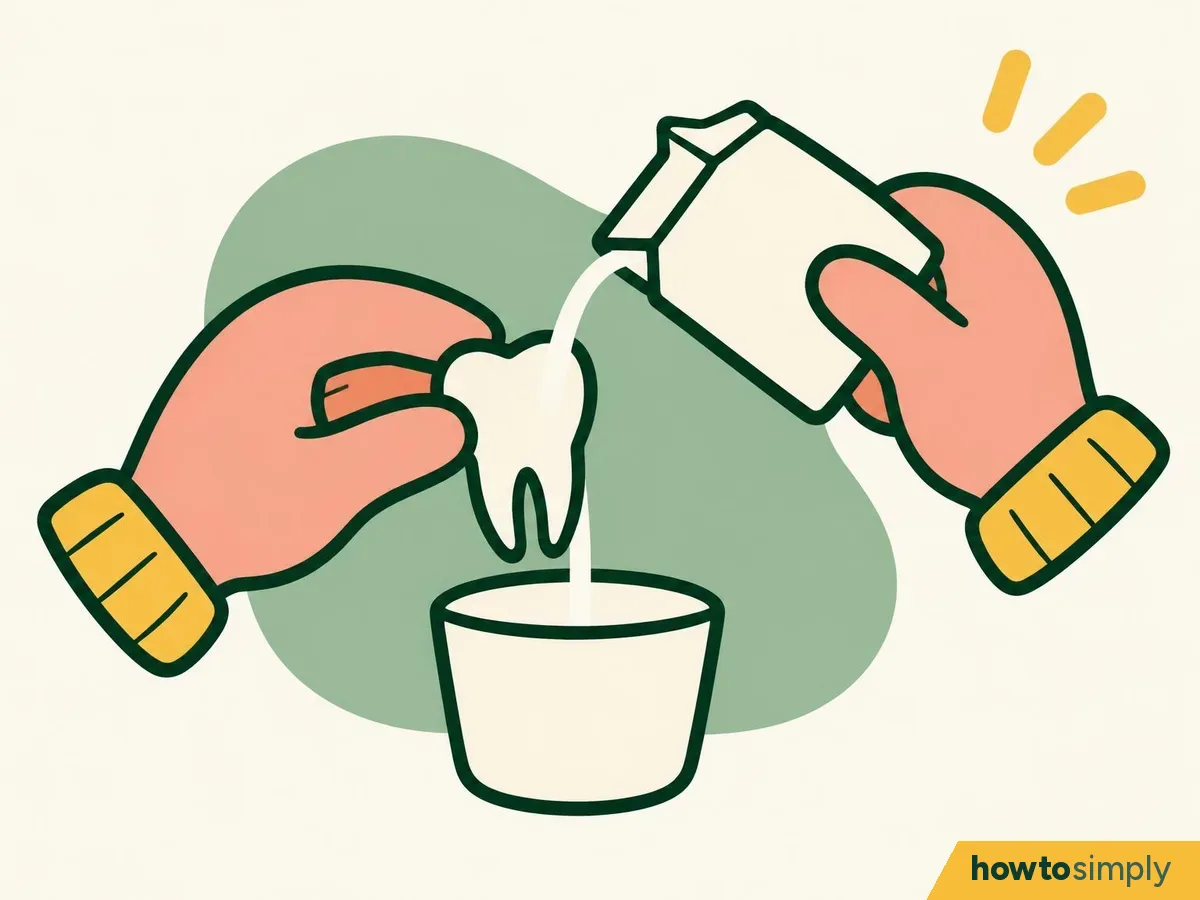
Illustration The NHS says to rinse a dirty tooth gently in milk, saline or saliva. The American Association of Endodontists says plain water, only if dirty.
German dental sources go further: don't clean or disinfect the tooth at all, just put it straight into a tooth rescue box (Zahntraumazentrum Regensburg, proDente).
Put it back, or keep it wet
Put an adult tooth back into its socket, if it slides in easily.
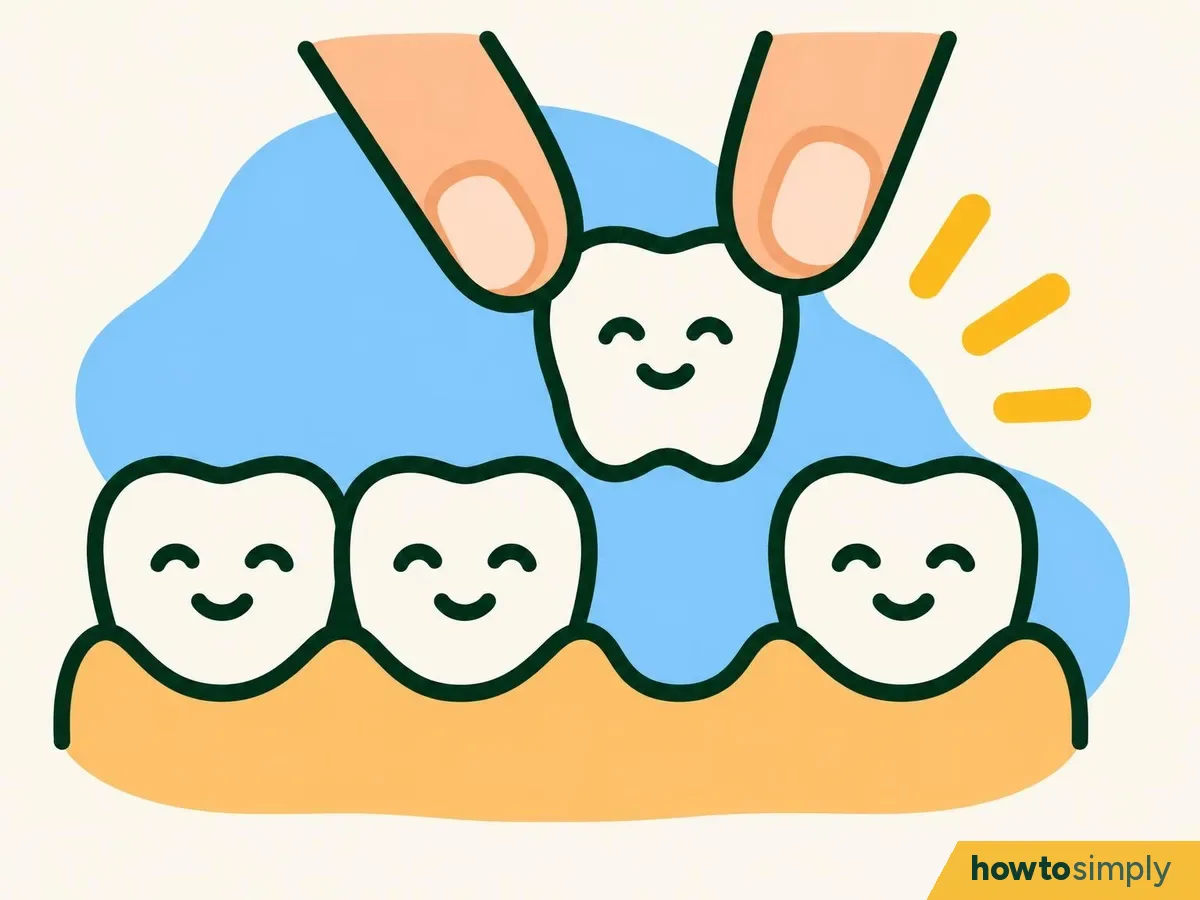
Illustration The NHS and the AAE both say to try putting it back in the hole in the gum, guiding it gently with your fingers (AAE). MedlinePlus says to place it so it's level with the other teeth. Don't force it.
German dental sources don't ask you to put it back yourself: they say to put it in a tooth rescue box and go straight to a dentist (Zahntraumazentrum Regensburg, proDente).
Bite gently on a clean cloth to hold it in place.
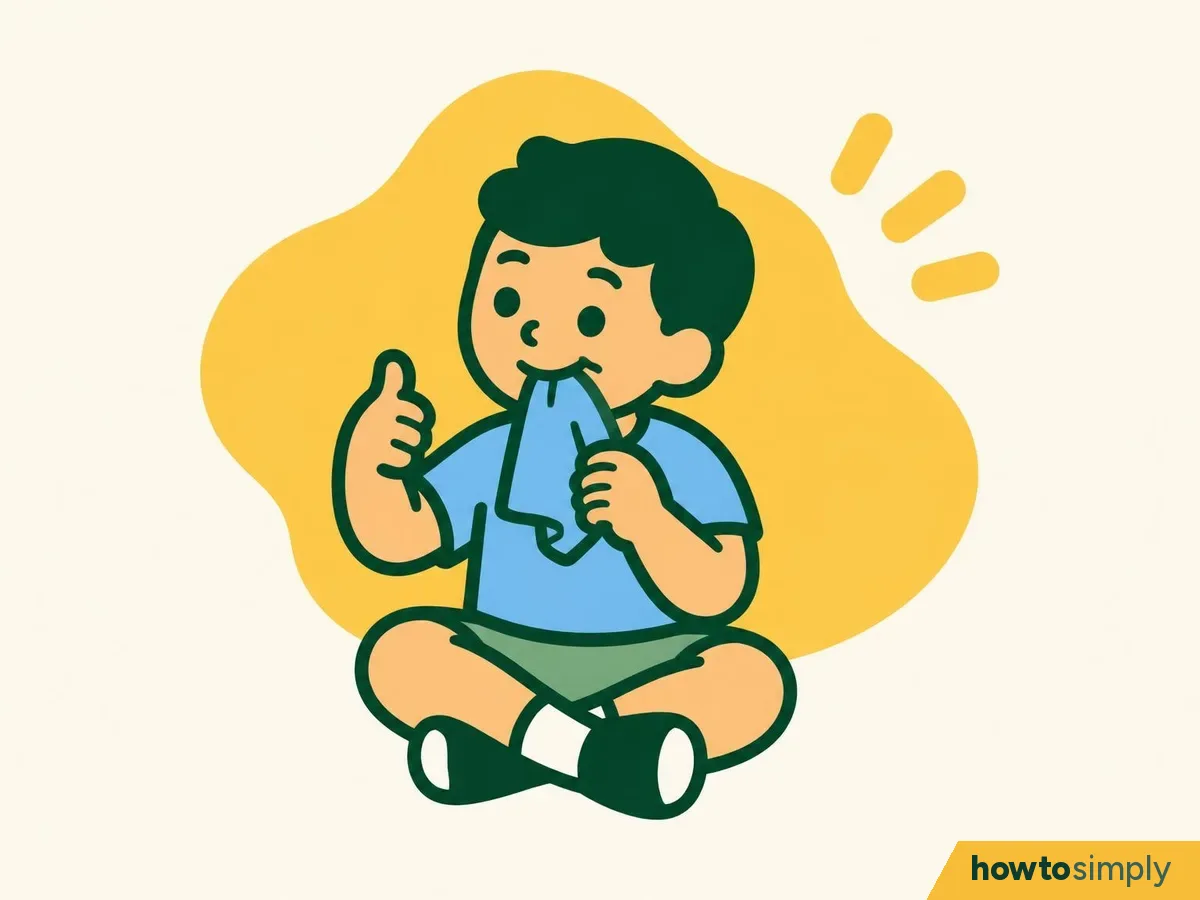
Illustration Bite down gently on a clean cloth to keep the tooth there (NHS), or on gauze (MedlinePlus). You can also hold it in place with your fingers (AAE). Then go to the dentist.
If it won't go back, put it in cold milk or a tooth rescue box. No milk? Use saline.
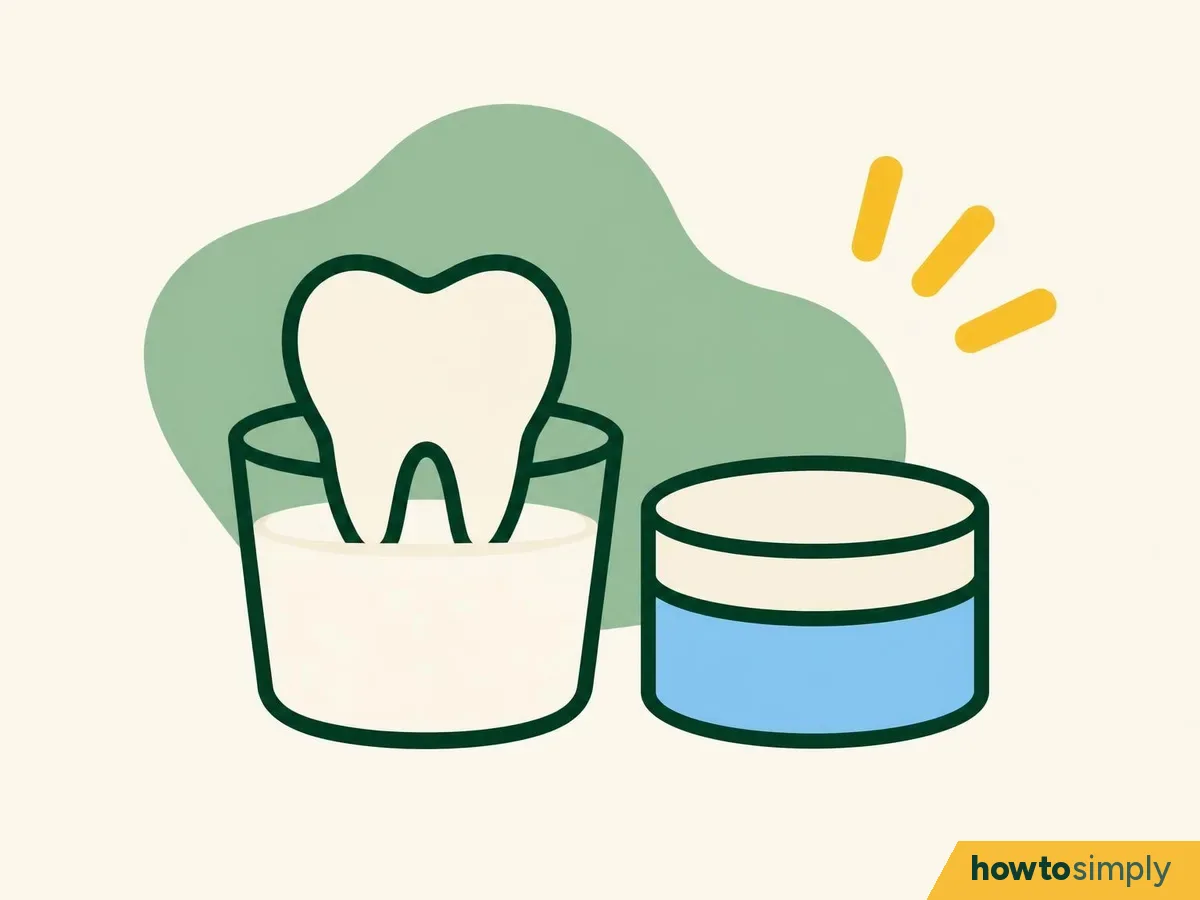
Illustration A tooth rescue box keeps the root cells alive for up to 48 hours at room temperature (Zahntraumazentrum Regensburg). The AAE calls it an emergency tooth preservation kit.
Without one, use milk (NHS, AAE, MedlinePlus). No milk? Use saline. The Zahntraumazentrum Regensburg recommends cold long-life (UHT) milk for no more than 120 minutes, or saline for no more than 30, until you can get a rescue box. proDente also lists wrapping it in cling film as a short stopgap.
Careful: never keep a tooth in tap water, wrapped in a tissue, or dry. The root cells die within minutes (Zahntraumazentrum Regensburg, AAE).
No milk or saline? Keep the tooth in saliva until a dentist can put it back.
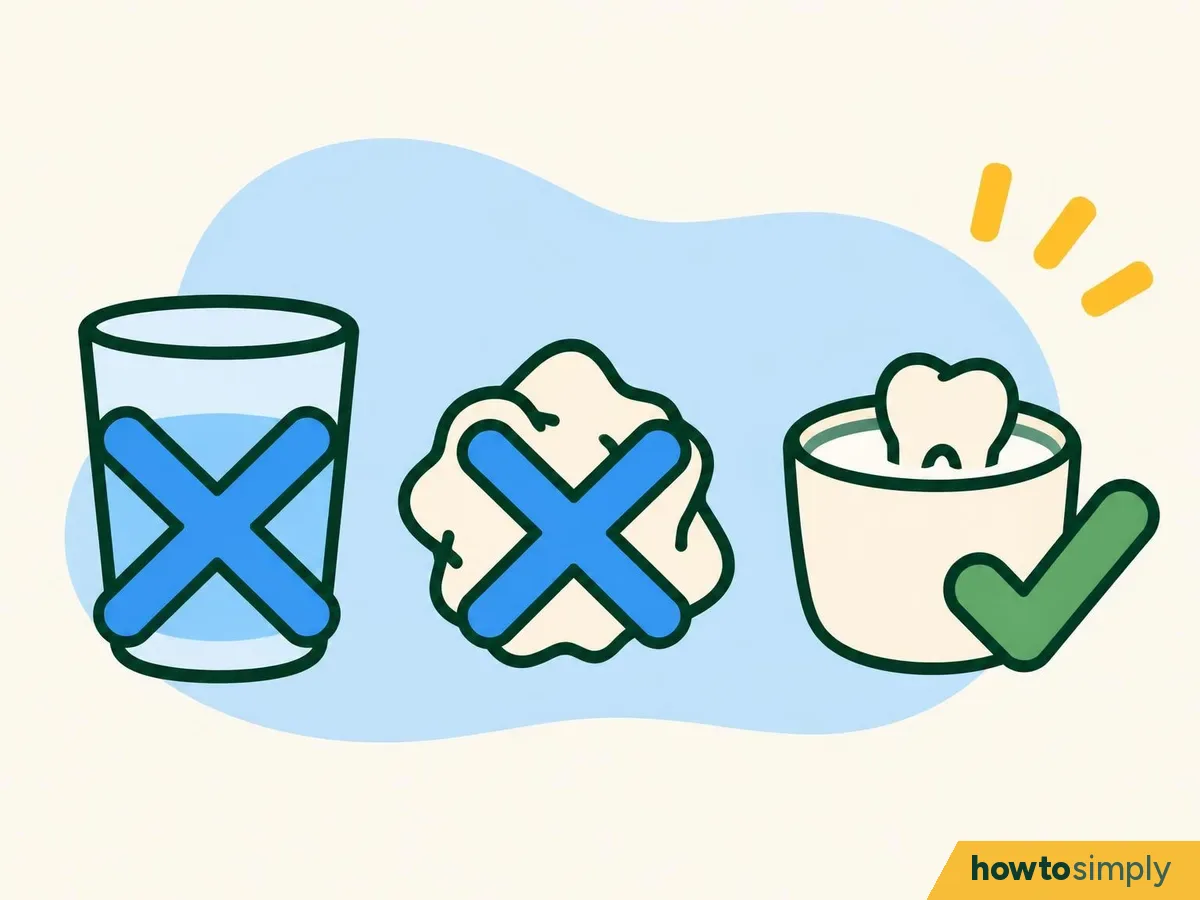
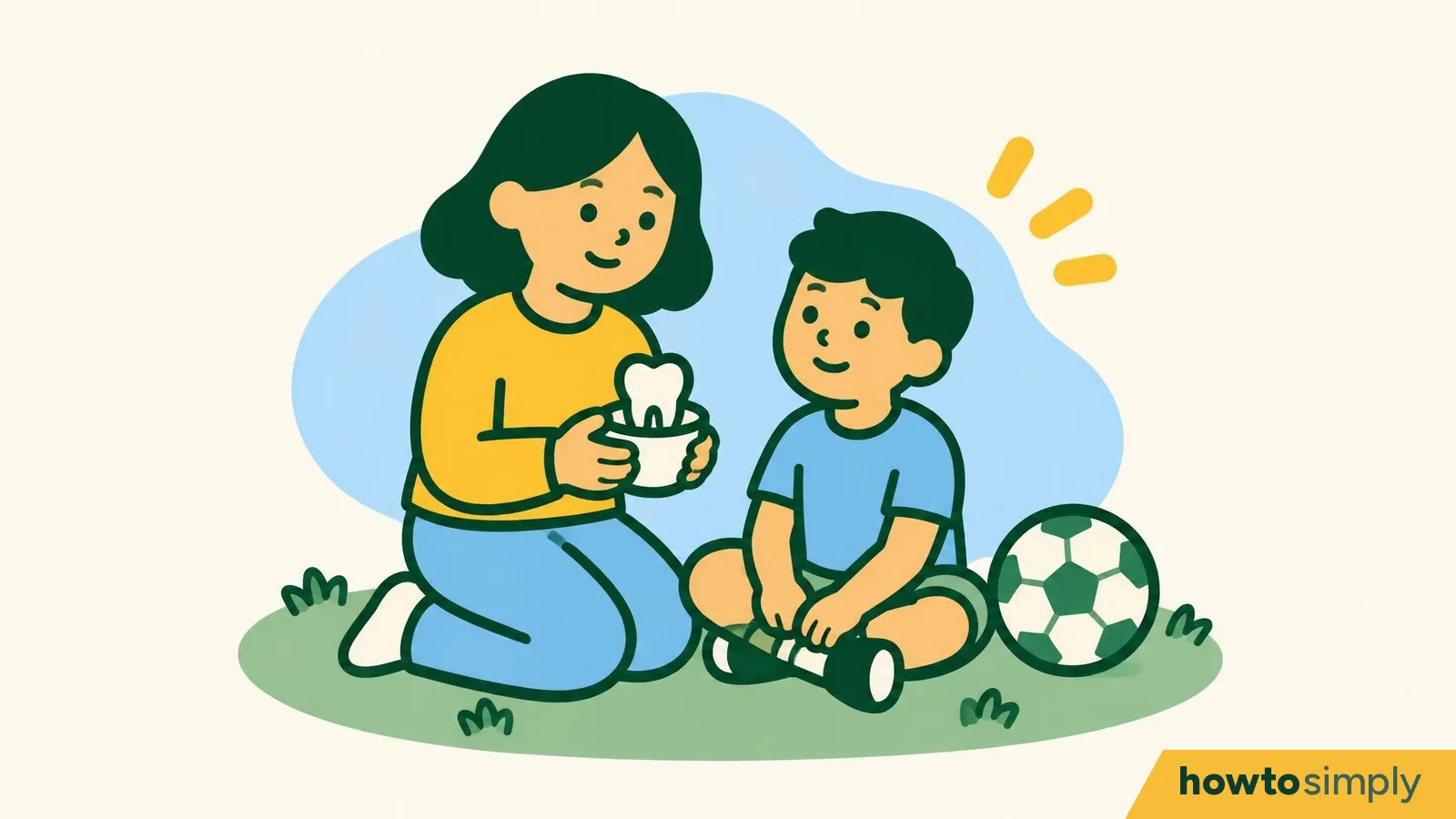
Illustration An adult or older child can keep the tooth inside their cheek, between the cheek and the gums, so it stays in saliva until a dentist puts it back in the socket (AAE), or between the lower lip and gum (MedlinePlus). Or the person who lost the tooth spits into a clean container and the tooth goes in that (NHS).
Never let a young child keep a tooth in their mouth: swallowing or breathing it in can be life-threatening (Zahntraumazentrum Regensburg). Use the container instead.
Get to a dentist
Go to a dentist straight away.
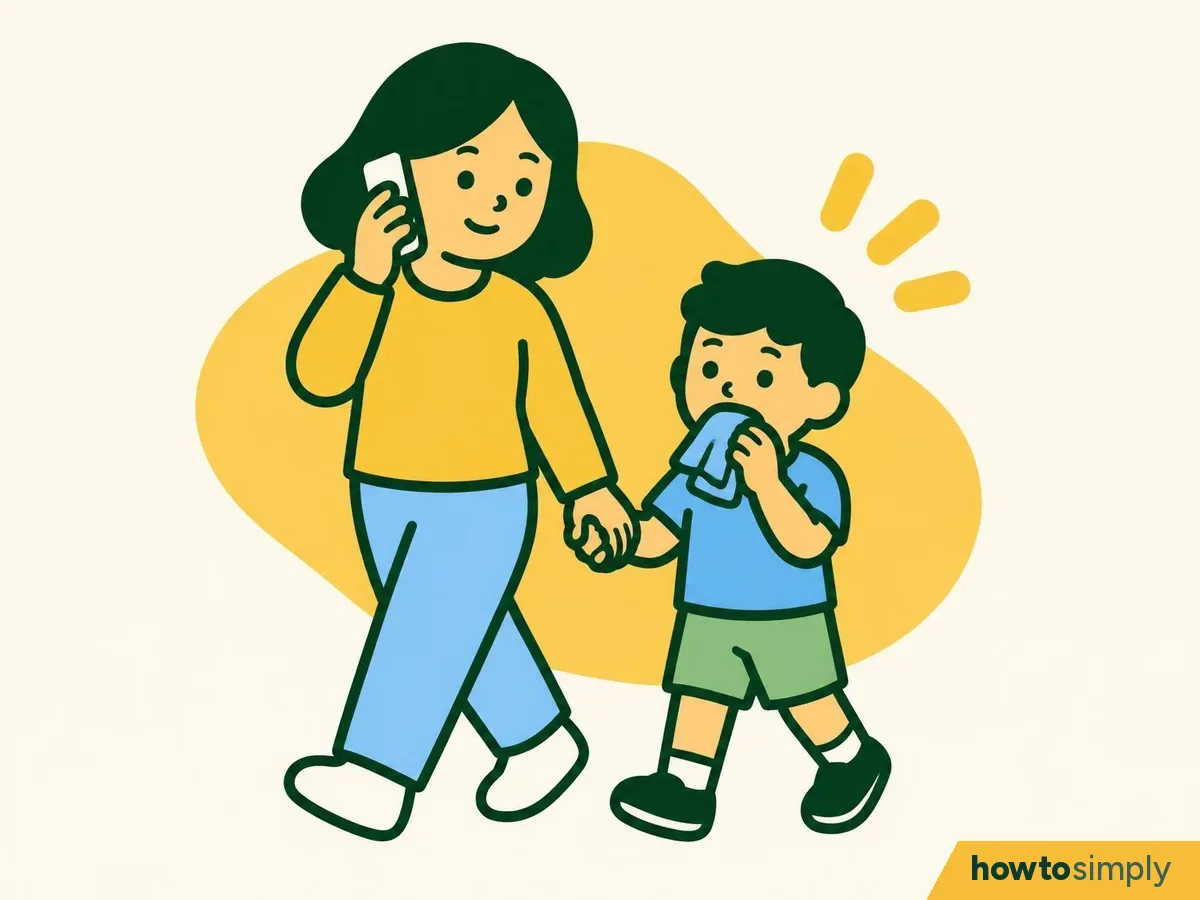
Illustration The AAE says seeing a dentist within 30 minutes gives the best chance of saving the tooth, though it's sometimes possible after an hour or more. The NHS says to ask for an emergency dental appointment, even if you can't find the tooth.
- UK: your dentist. If you don't have one, or can't get an emergency appointment, call 111 (NHS).
- Germany: a dentist or dental clinic (proDente). Out of hours, the zahnärztlicher Notdienst run by your region's dental association (KZV); in Berlin, (030) 89004-333 (KZV Berlin).
- US: a dentist or an endodontist (AAE).
Take the tooth and any broken pieces with you.
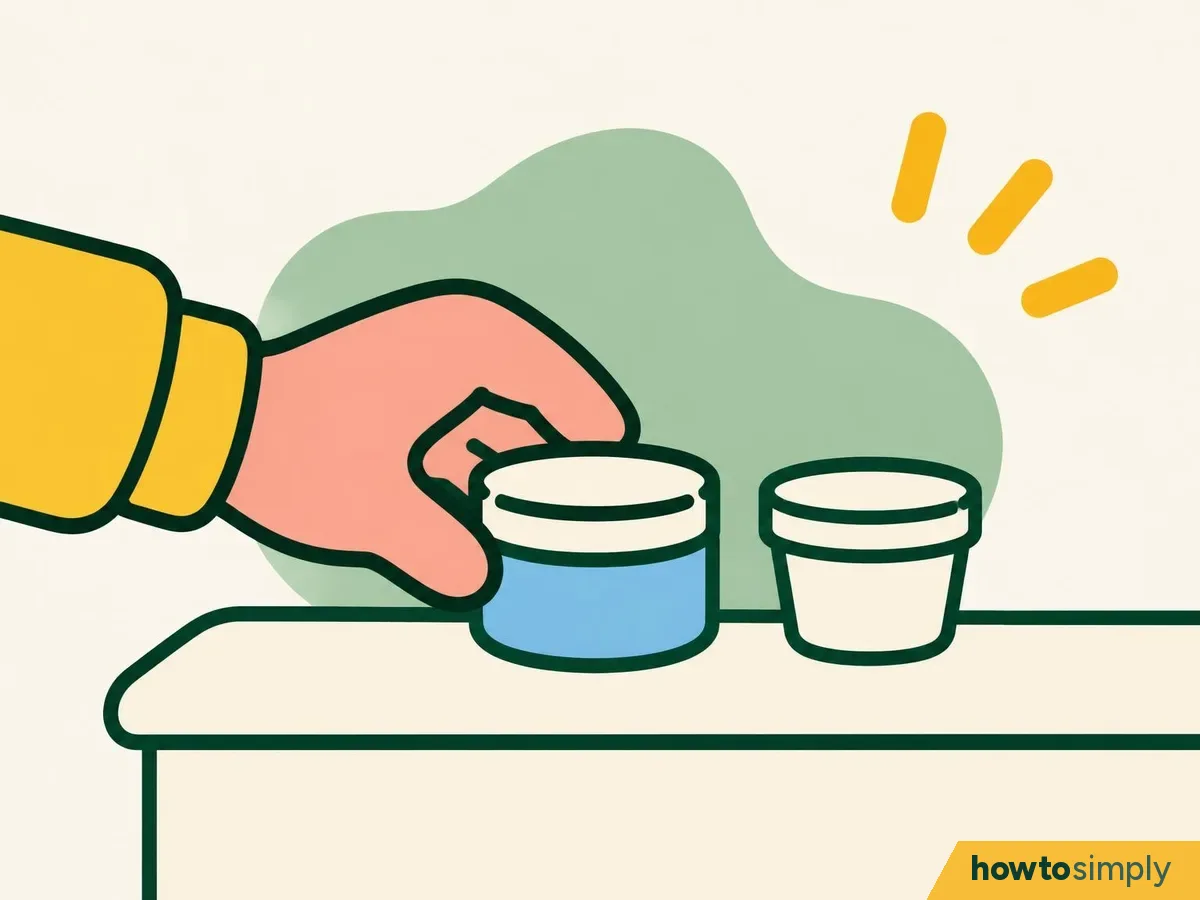
Illustration Bring the tooth (AAE). Broken pieces can often be stuck back on, so collect them too (Zahntraumazentrum Regensburg). Keep pieces in a tooth rescue box so they don't dry out (Zahntraumazentrum Regensburg), or in milk or saline, never in tap water.
Get any other mouth injury checked, even if it looks small.
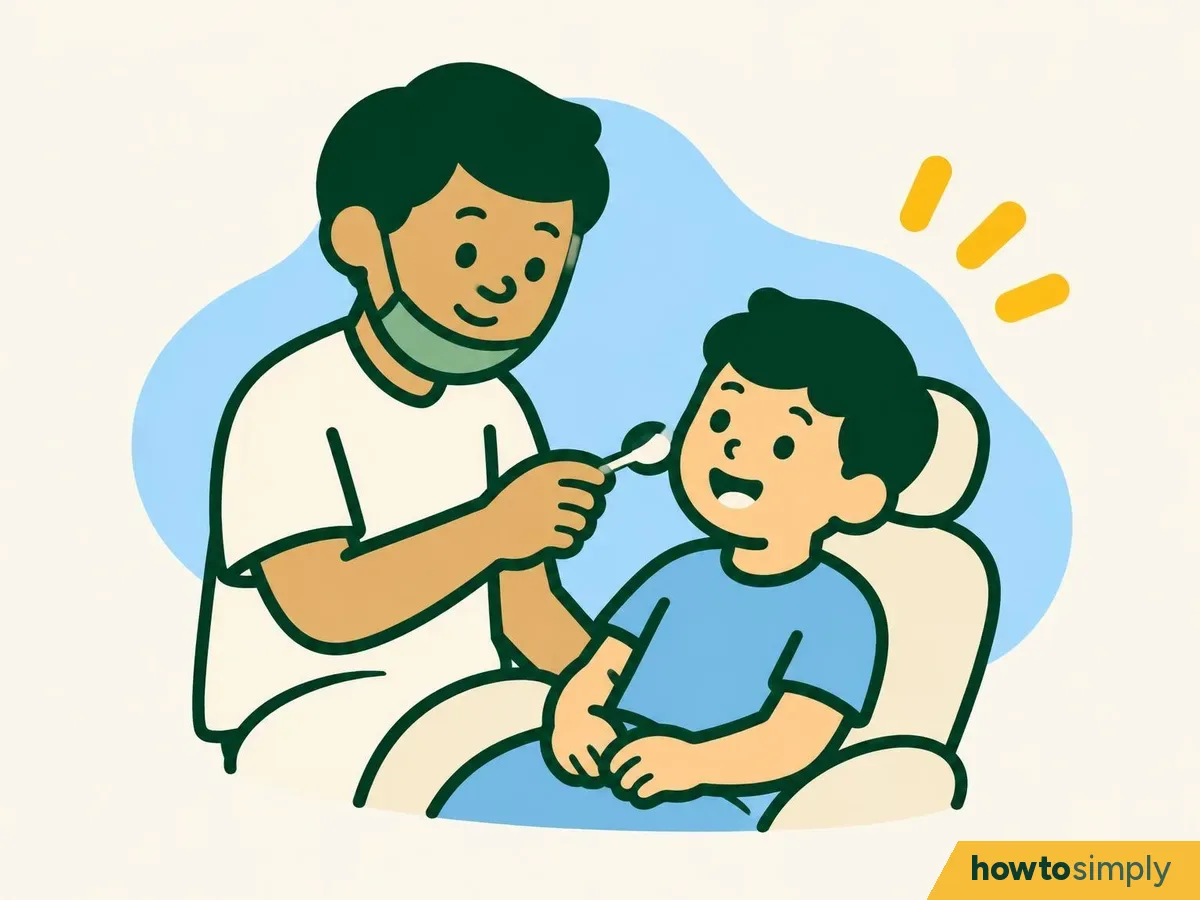
Illustration Teeth can also be loosened, pushed out of place or cracked at the root in ways you can't see. See a dentist after any knock to the teeth (Zahntraumazentrum Regensburg, proDente).
A doctor should also check the person's tetanus protection, as for any wound (Zahntraumazentrum Regensburg).
Afterwards, and next time
Go back for every check-up the dentist asks for.
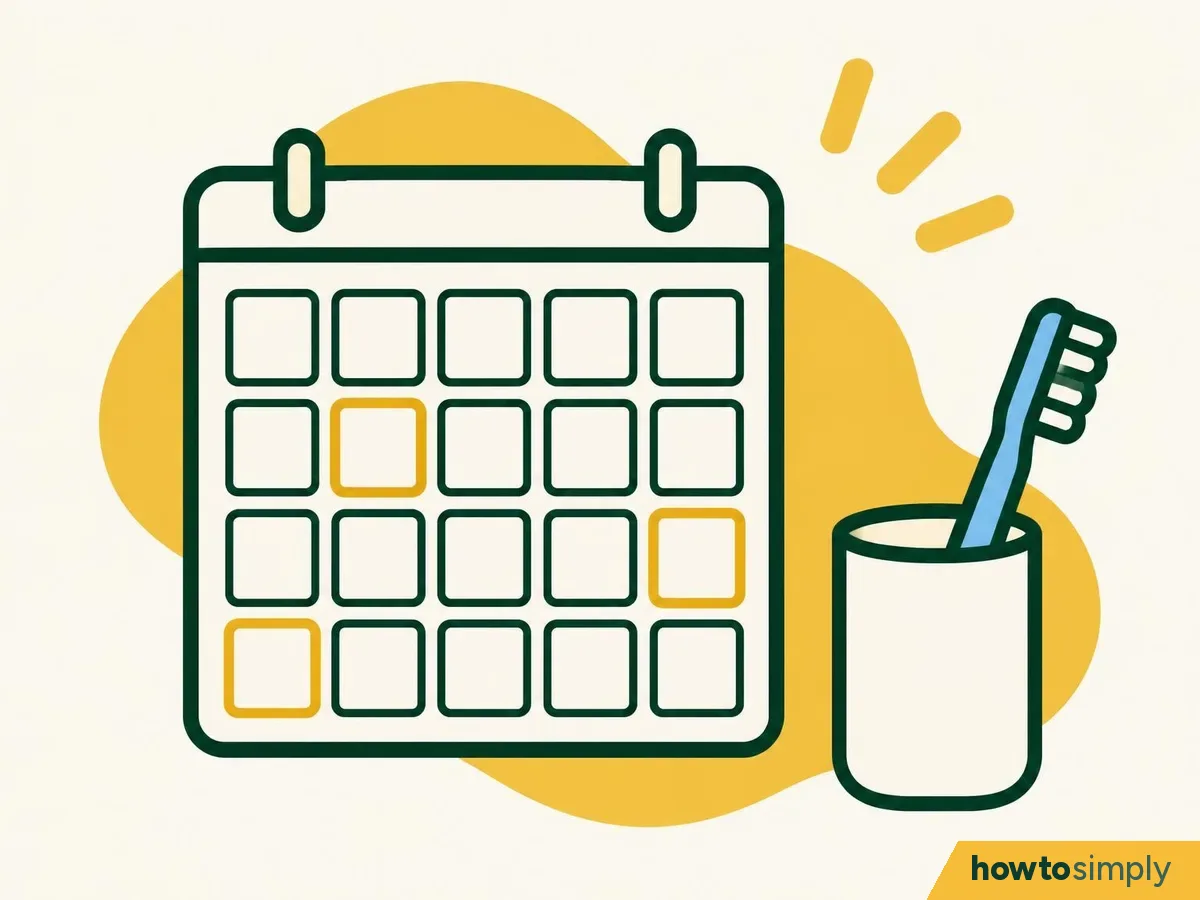
Illustration Regular follow-up visits catch problems early (Zahntraumazentrum Regensburg). In Germany, proDente also says to report the accident to your health insurer.
Keep a tooth rescue box at home, especially with children.
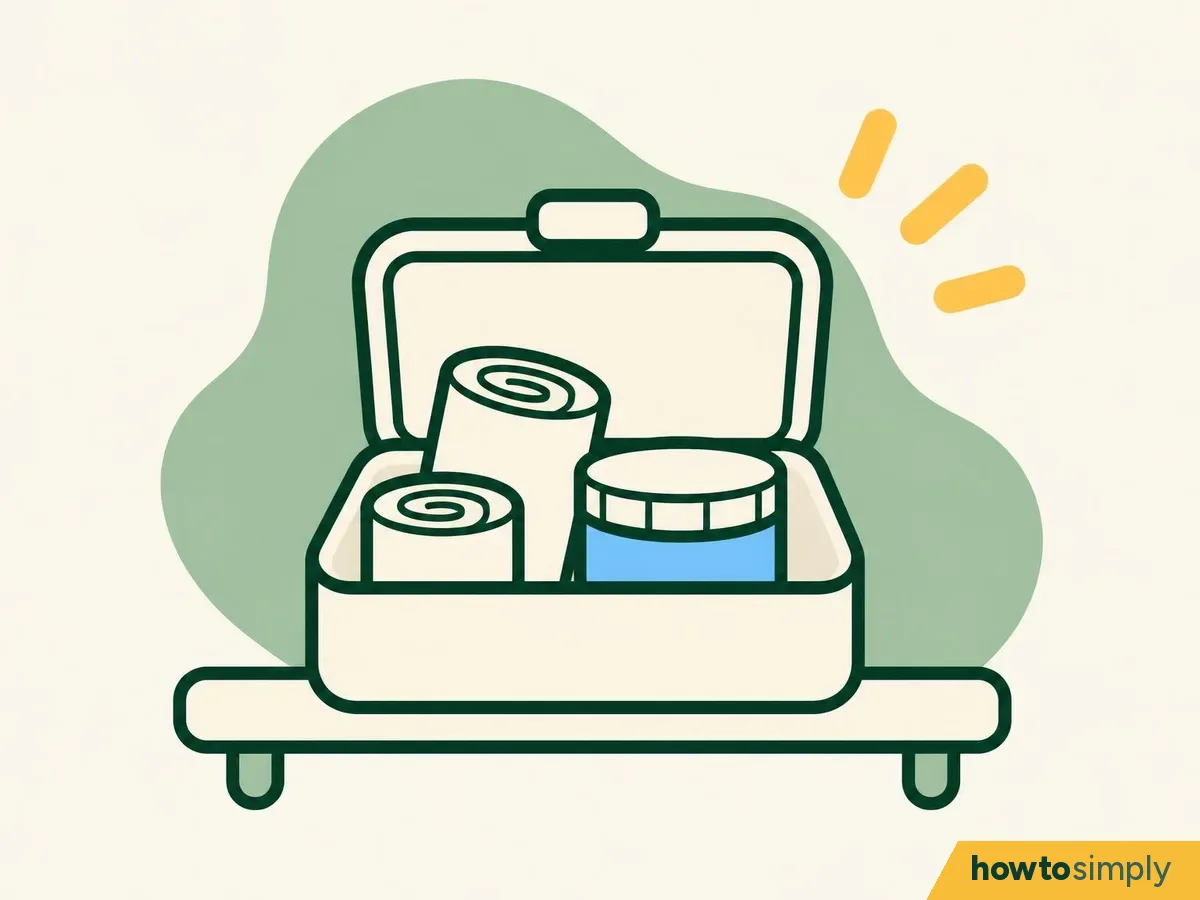
Illustration In Germany, pharmacies sell tooth rescue boxes for about 15 to 20 euros, and they keep for 3 years at room temperature (proDente). Schools, sports clubs and families with children should have one (proDente). Store it somewhere everyone knows (Zahntraumazentrum Regensburg).
Wear a mouthguard for contact sports.
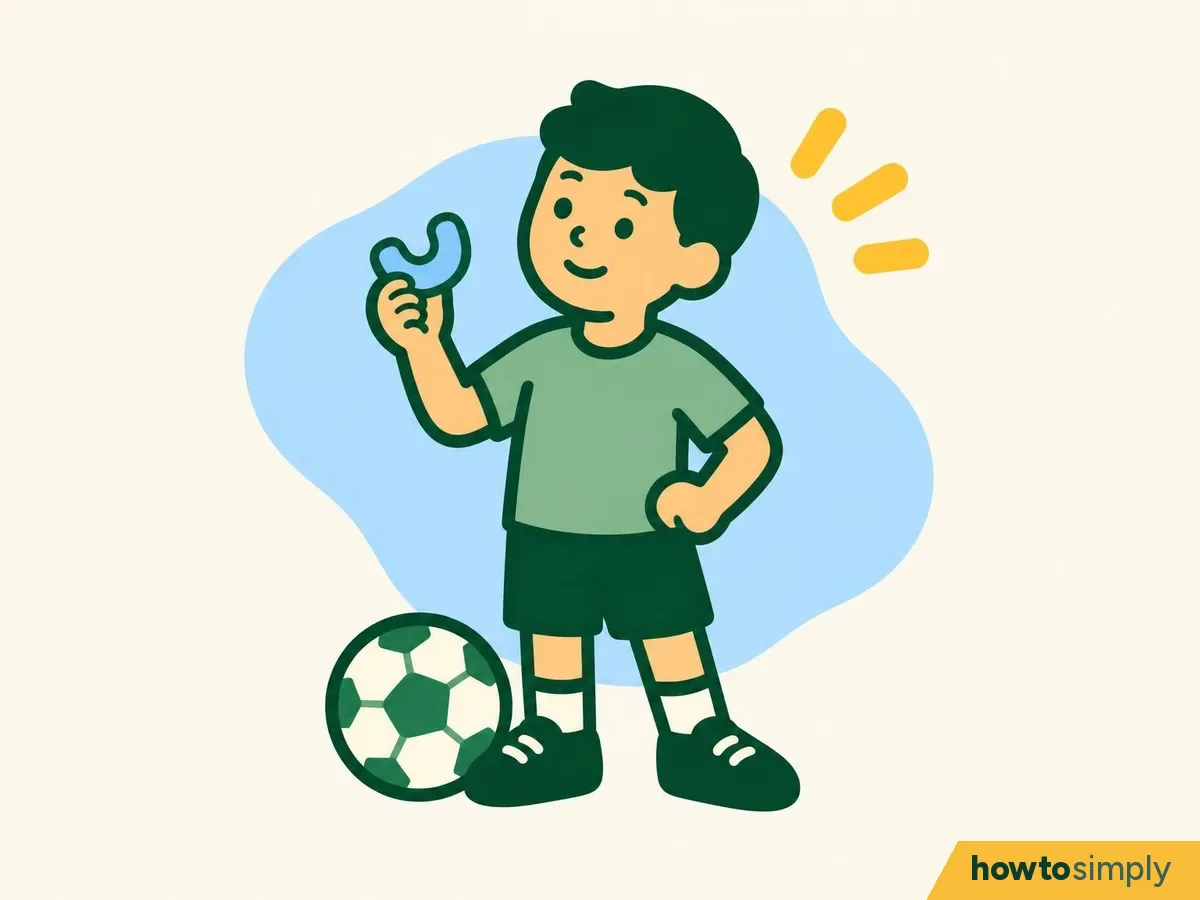
Illustration A mouthguard made by a dentist for your sport protects best. Ready-made ones protect much less well and fit poorly, so people stop wearing them (proDente).
What each country says
| UK | Germany | US | |
|---|---|---|---|
| Put an adult tooth back? | Yes, if you can (NHS) | Not asked: tooth rescue box, then dentist (ZTZ Regensburg, proDente) | Yes, right away if you can (AAE) |
| Dirty tooth | Rinse gently in milk, saline or saliva (NHS) | Don't clean or disinfect (ZTZ Regensburg, proDente) | Rinse briefly with water only (AAE) |
| Best storage | Milk or saliva (NHS) | Tooth rescue box; cold UHT milk up to 120 minutes (ZTZ Regensburg) | Milk, beside the cheek, or a preservation kit (AAE) |
| Saliva or in the mouth? | Saliva in a container is fine (NHS) | No: unsuitable, risk of swallowing (proDente, ZTZ Regensburg) | Beside the cheek (AAE) or between lip and gum (MedlinePlus) |
| Who to call | Your dentist; 111 if you can't get one (NHS) | Dentist or dental clinic; zahnärztlicher Notdienst out of hours (KZV) | Dentist or endodontist (AAE) |
How to tell you did it right
- You only touched the crown, never the root.
- The tooth never dried out and never sat in water.
- A dentist saw you as fast as possible, with the tooth.
- You've booked the follow-up visits the dentist asked for.
If something isn't right
| What happens | What it means | What to do |
|---|---|---|
| The tooth won't slide back in | Don't force it | Put it in cold milk or a tooth rescue box and go (NHS, ZTZ Regensburg) |
| You can't find the tooth | It may have been swallowed or be lost | Still get an emergency dental appointment (NHS) |
| The teeth won't close together | The jaw may be broken (MedlinePlus) | Get medical help straight away at a dentist's or a hospital (MedlinePlus) |
| The tooth dried out for a while | The root cells may be damaged | Put it in milk now and still go: it can sometimes be saved after an hour or more (AAE) |
For pain that starts later, see our guide to toothache until you can see a dentist.
Questions readers ask
Should I put a baby tooth back in?
No. The NHS says not to put a baby tooth back, because it could damage the adult tooth growing underneath, and MedlinePlus says baby teeth are not replanted. Still take your child to a dentist.
Can I keep the tooth in water?
No. The American Association of Endodontists says root surface cells can't cope with tap water for long, and the Zahntraumazentrum Regensburg says the cells die within minutes in water or if the tooth dries out. Use milk or a tooth rescue box. No milk? Saline. No saline? Keep it in saliva inside the cheek until a dentist can put it back.
How fast do I need to see a dentist?
As soon as you can. The AAE says within 30 minutes gives the best chance, but a tooth can sometimes be saved even after an hour or more out of the mouth. The NHS says to ask for an emergency dental appointment even if you can't find the tooth.
What is a tooth rescue box?
A small container of a special liquid that keeps the root cells alive. The Zahntraumazentrum Regensburg says a tooth can stay in one for up to 48 hours at room temperature. proDente says pharmacies in Germany sell them for about 15 to 20 euros and they keep for 3 years.
Do I need a tetanus jab?
Ask a doctor. The Zahntraumazentrum Regensburg says a doctor should check the injured person's tetanus protection after a dental injury, as with any wound.
Did this solve the problem?
What needs work?
What did you think?
Reaction counts are loading.
Spotted a mistake? If a step is unclear or a picture is inaccurate, tell us the step number and what needs correcting. Email us about this page or use the contact form. We read every report, and fixes are listed on What changed.
Liked this article?
Follow us for new articles and short how-to videos.
Sources
We use primary, official and specialist sources appropriate to the topic.
- NHS: Knocked-out tooth (reviewed 6 February 2025)
- American Association of Endodontists: Knocked out teeth
- MedlinePlus: Broken or knocked out tooth (reviewed 5 February 2026)
- Zahntraumazentrum Regensburg, University Hospital Regensburg: Infoblatt Zahnunfall (German, PDF)
- proDente: Zahnunfall (German, June 2019, PDF)
- KZV Berlin: Zahnärztlicher Notdienst, 4th quarter 2026 (German, PDF)