How to stop a nosebleed: lean forward, pinch the right spot, and when to get help
Reviewed by Dr Sumbal Safi Ullah✓, MBBS
By Abu Bakar Saadat5 min readPublisher: Saadat Rafiq
Last updated: 28 October 2026References
 Illustration
On this page 8 sections
In short
Sit down, lean forward and pinch the soft part of your nose just above the nostrils for 10 to 15 minutes without letting go, breathing through your mouth. Don't tilt your head back. If it is still bleeding after that, go to A&E (NHS).
At a glance
- Position
- Sit up and lean forward, not back (NHS)
- Pinch
- Soft part just above the nostrils, 10 to 15 minutes (NHS, HSE)
- For 24 hours after
- No blowing or picking, hot drinks, alcohol, heavy lifting or lying flat (NHS)
- Go to A&E
- Still bleeding after 10 to 15 minutes, heavy bleeding, or after a blow to the head (NHS)
- Advice from
- NHS, HSE (Ireland) and Mayo Clinic, read 28 October 2026
- Checked
- October 2026
Most nosebleeds are not a sign of anything serious and can be stopped at home (NHS). What matters is the position and the patience: lean forward, not back, and keep pressing for the full time without checking. The same steps work for a child; help them sit and lean forward, and hold the pinch for them if they can't.
How to stop the bleeding
Sit down and lean forward.
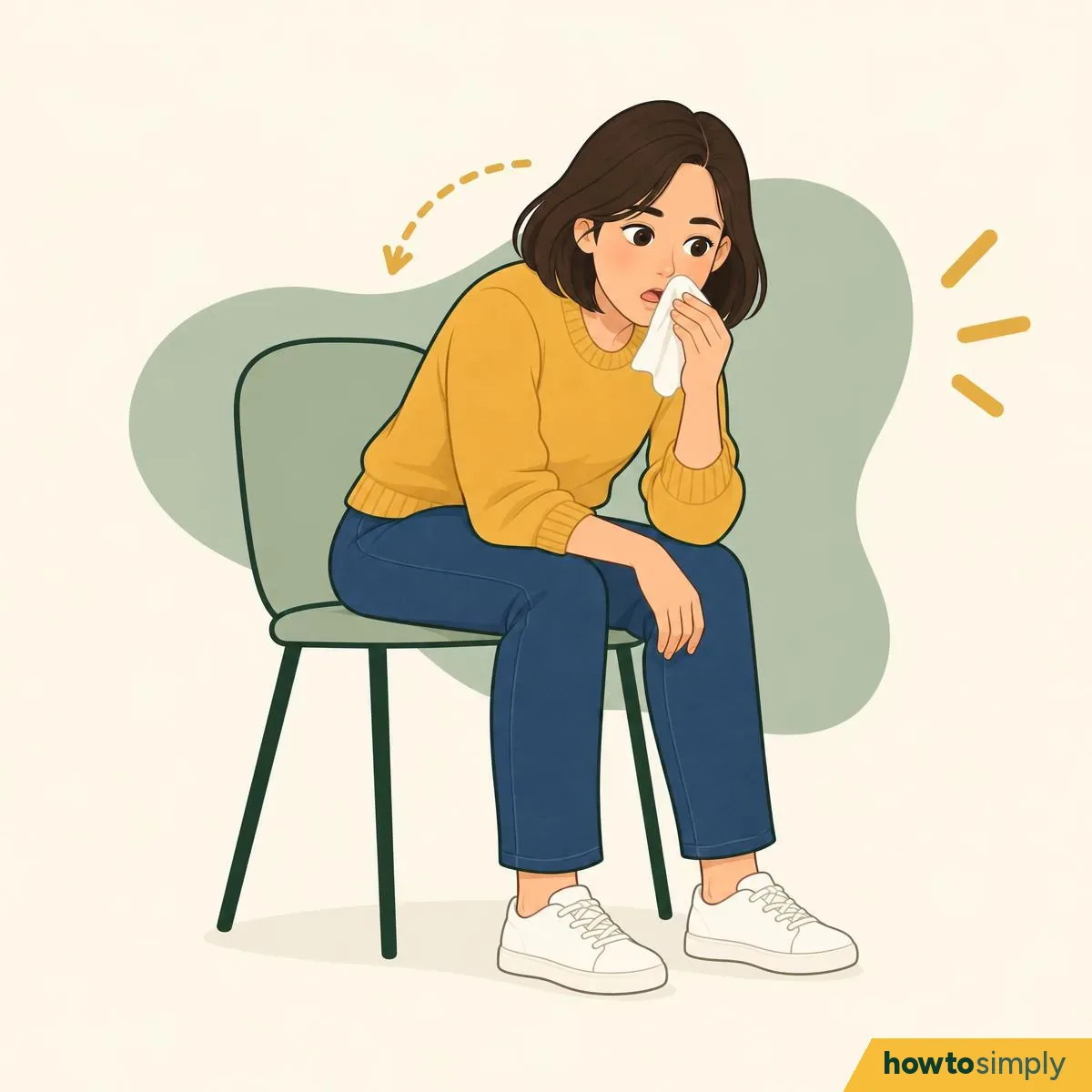
Illustration Tilt your head forward, not back, and keep your mouth open (NHS). Sitting up and leaning forward keeps blood from running down your throat (Mayo Clinic). Don't lie down (HSE).
You should see: blood dripping forward from the nose onto a tissue or into a bowl, not running into your mouth.
Pinch the soft part of your nose, just above the nostrils.
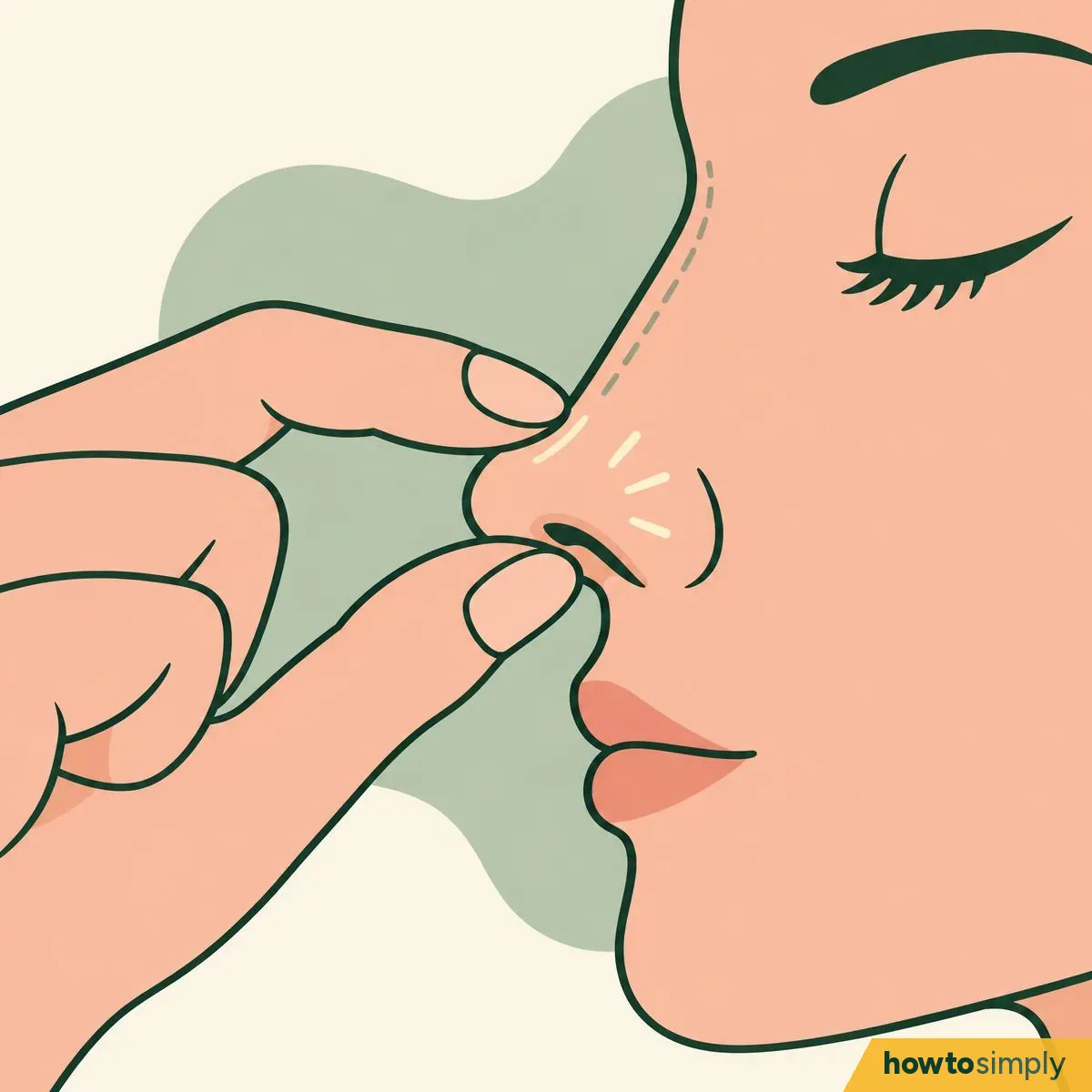
Illustration: pinch the soft part, not the bony bridge Use your thumb and finger to squeeze both nostrils shut (Mayo Clinic). The spot is the soft part just above the nostrils (NHS), below the hard bridge of the nose.
You should see: both nostrils pressed closed, so no blood comes out while you pinch.
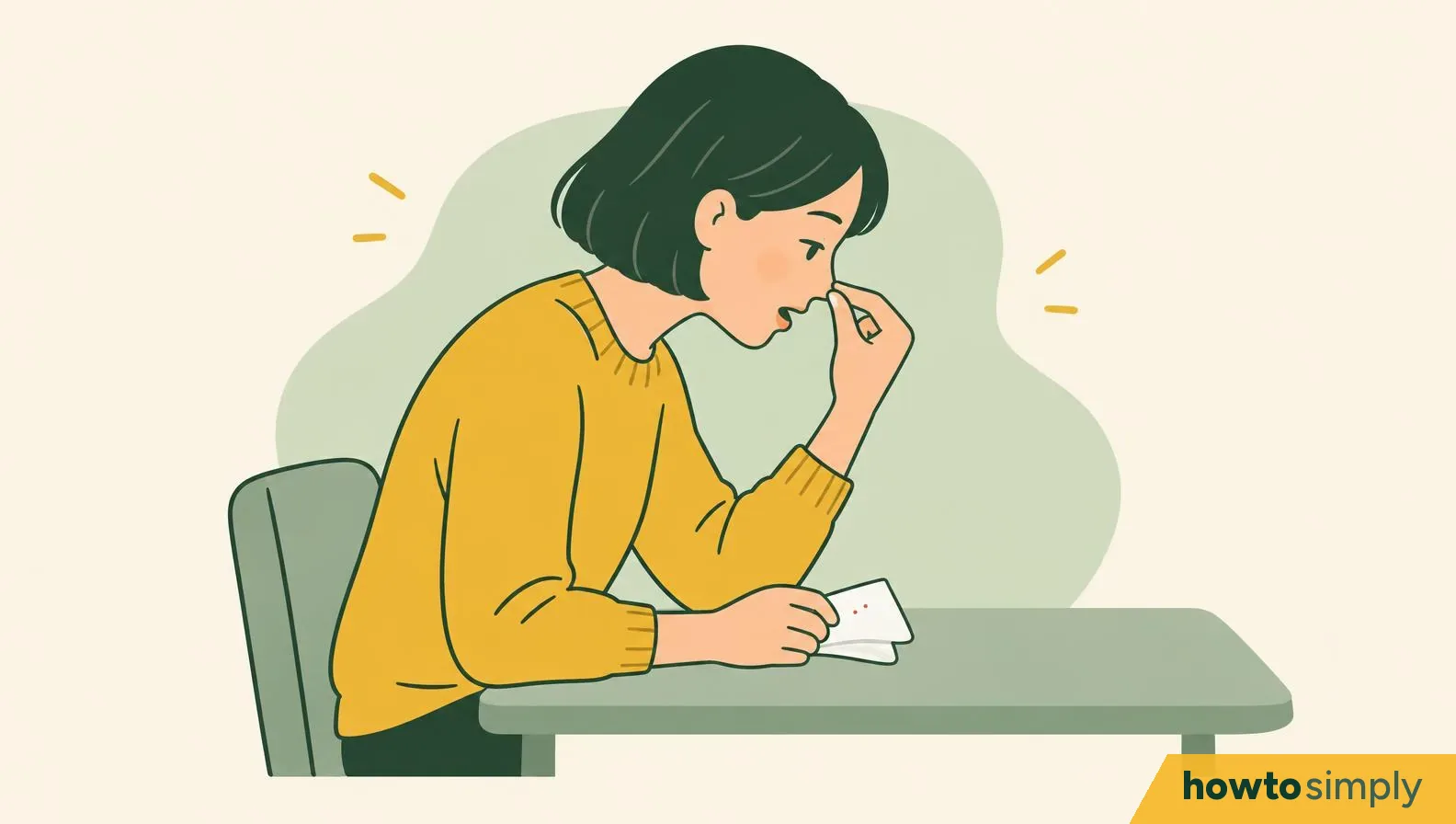
Keep pinching for 10 to 15 minutes and breathe through your mouth.
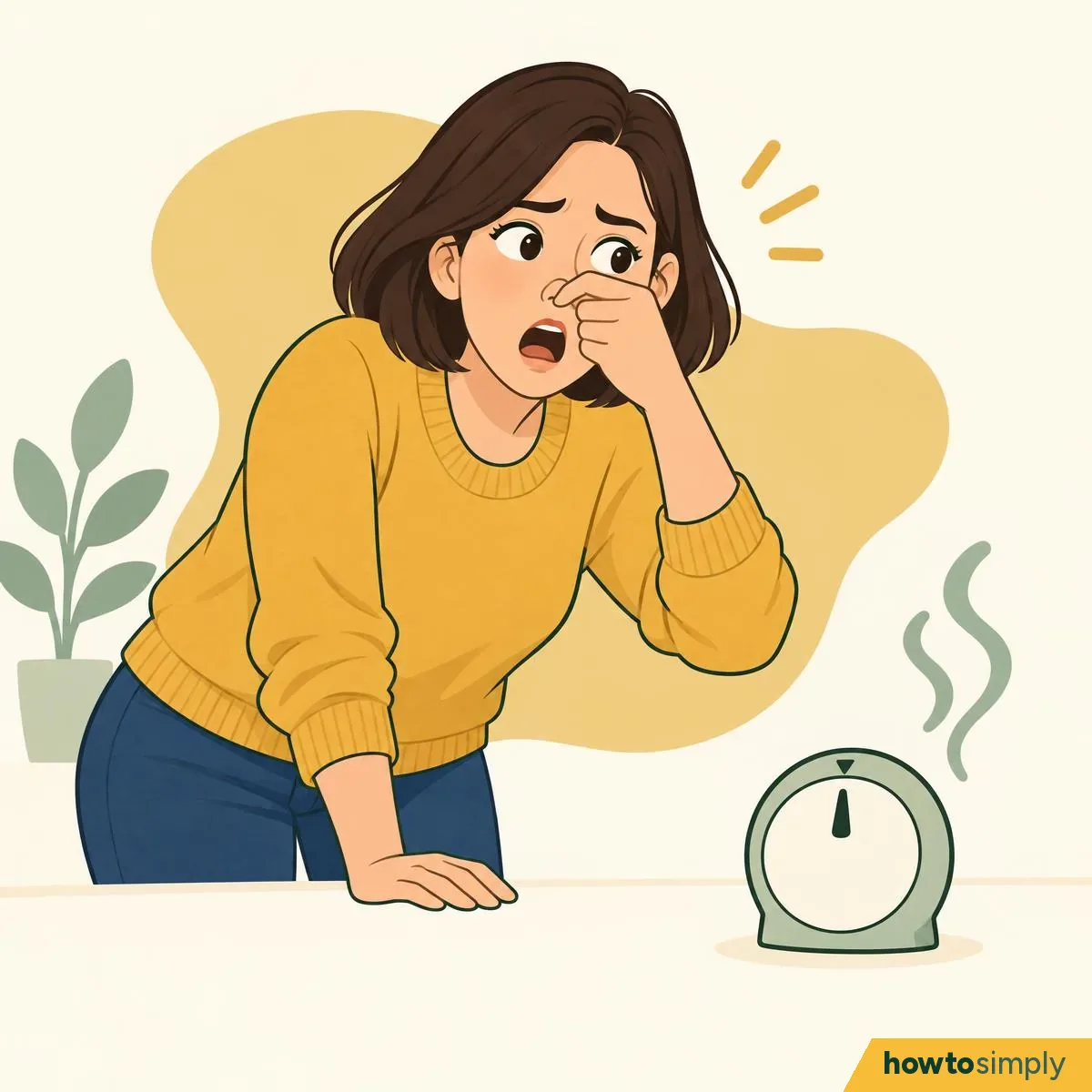
Illustration Start a timer. The NHS and HSE both say 10 to 15 minutes. Don't let go to check: Mayo Clinic says not to release to look for at least five minutes. Keep the pressure steady for the whole time.
You should see: after the time is up, when you let go slowly, little or no fresh blood.
If you like, hold something cold on the top of your nose.
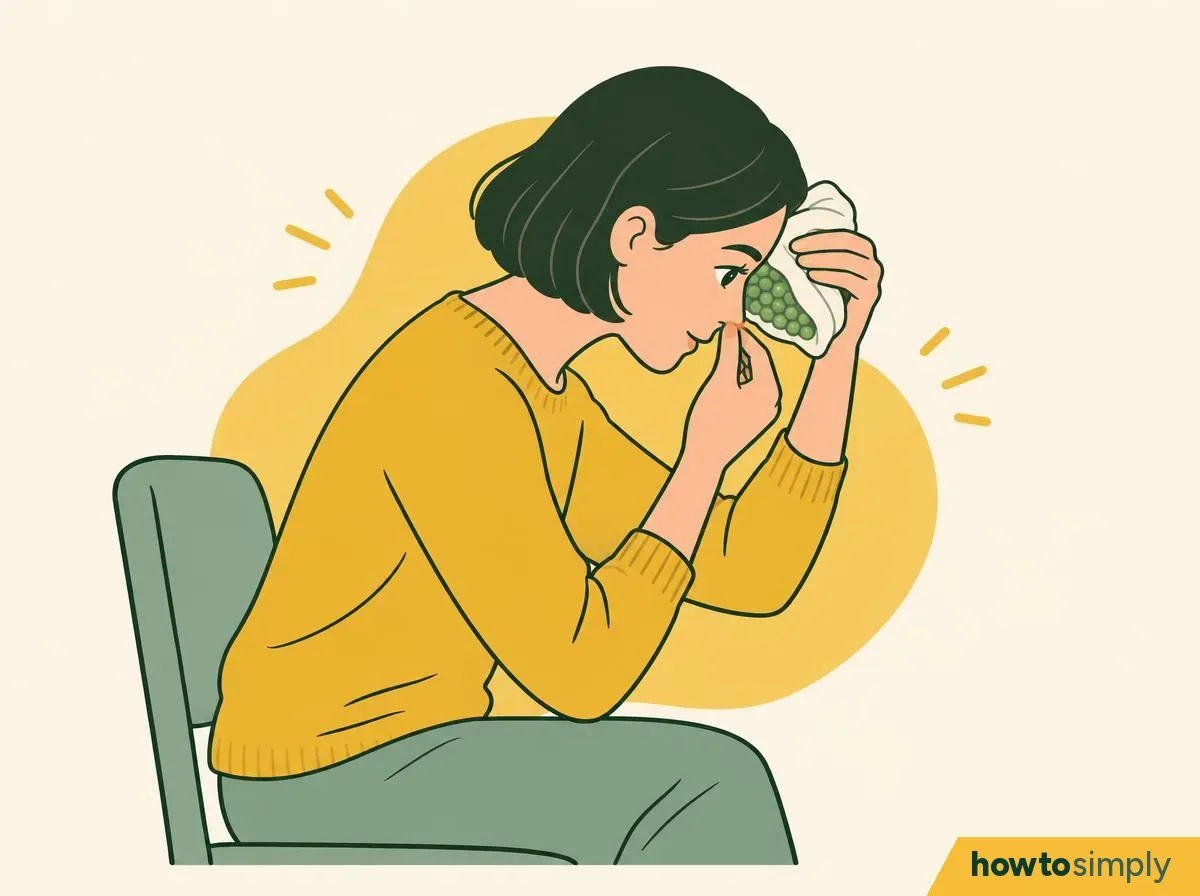
Illustration An ice pack or a bag of frozen peas wrapped in a tea towel on top of the nose may help reduce bleeding, though the NHS says the evidence for this is not strong. The HSE says cold on the neck or nose, or chewing ice, may help. Keep pinching while you do it.
You should see: the cold pack wrapped in cloth, never ice straight on the skin.
Careful: if it is still bleeding after 10 to 15 minutes, the NHS says go to A&E. Don't drive yourself.
Let go slowly and check whether it has stopped.
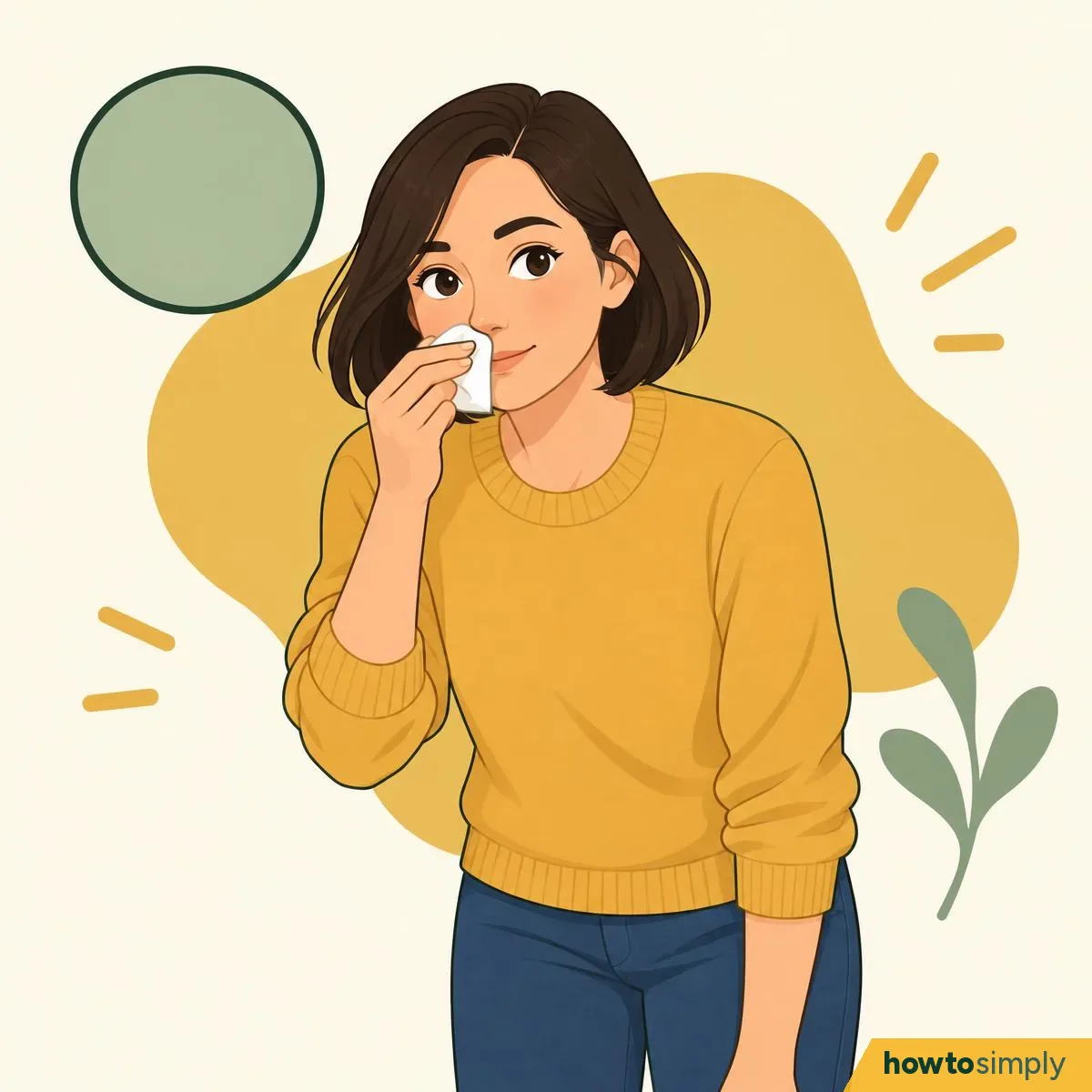
Illustration Mayo Clinic (US) says to pinch again for up to 15 minutes if it is still bleeding, and to get emergency care if it doesn't stop after the second try or lasts over 30 minutes. In the UK, follow the NHS timing above. A blood clot may come out after the bleeding has stopped; the HSE says this is normal, so wipe it away gently.
You should see: no fresh blood dripping, and no blood trickling down the back of your throat.
Take it easy for the next 24 hours.

Illustration For 24 hours after the bleeding stops, the NHS says not to blow or pick your nose or any scabs, and to avoid hot drinks, alcohol, heavy lifting, strenuous exercise and lying flat. Mayo Clinic adds not to bend your head below your heart for many hours.
You should see: the nose staying dry. If it starts again, go back to the first step.
How to tell it has stopped
- No fresh blood comes from either nostril when you sit upright.
- You are not swallowing blood or tasting it at the back of your throat.
- You feel well: not weak, dizzy or short of breath (NHS).
- Any clot that comes out afterwards is not followed by new bleeding (HSE).
If it doesn't go to plan
| What happens | What it means | What to do |
|---|---|---|
| Blood runs into your mouth or throat | Your head is tilted back or upright | Lean further forward (NHS, Mayo Clinic) |
| Still bleeding after 10 to 15 minutes of pinching | Home first aid isn't enough | Go to A&E, don't drive yourself (NHS) |
| It starts again later the same day | The clot was disturbed | Repeat the steps, then avoid blowing, hot drinks and lifting for 24 hours (NHS) |
| You feel faint or dizzy | You may have lost a lot of blood | Go to A&E or call 999 (NHS) |
| Nosebleeds keep coming back | A blood vessel may need treating | See a GP. A doctor may seal it or pack the nose (NHS) |
Questions readers ask
Should I tilt my head back to stop a nosebleed?
No. The NHS says to lean forward with your head tilted forward, not back. Mayo Clinic explains that leaning forward stops blood running down your throat.
Should I blow my nose before pinching it?
Mayo Clinic suggests gently blowing your nose first to clear clots; the NHS steps start straight with pinching. Both agree you should not blow your nose once the bleeding has stopped: the NHS says avoid it for 24 hours.
Why do I get nosebleeds?
The NHS lists picking your nose, blowing it too hard and a dry inside of the nose, for example from a change in air temperature, as common causes. Children, adults over 45, pregnant women and people with high blood pressure get them more often.
How can I stop nosebleeds coming back?
Avoid the triggers for 24 hours after a bleed (NHS). Mayo Clinic says a humidifier at home adds moisture that can help. If you get them often, see a GP: a doctor can seal a bleeding blood vessel (NHS).
Did this solve the problem?
What needs work?
What did you think?
Reaction counts are loading.
Spotted a mistake? If a step is unclear or a picture is inaccurate, tell us the step number and what needs correcting. Email us about this page or use the contact form. We read every report, and fixes are listed on What changed.
Liked this article?
Follow us for new articles and short how-to videos.
Sources
We use primary, official and specialist sources appropriate to the topic.