How to treat a blister: when to leave it and how to cover it
In short: Leave the blister unbroken, wash it gently, cover it with a soft plaster or a hydrocolloid blister plaster, and keep away from whatever rubbed it. Most blisters heal on their own within about a week.
Co-authored by Dr Aaiman Umer✓, BDS
By Abu Bakar Saadat8 min readPublisher: Saadat Rafiq
Last updated: 31 October 2026References
 Illustration
At a glance
- Pop it?
- No. The skin on top protects it (NHS)
- Cover with
- A soft plaster or a hydrocolloid blister plaster (NHS)
- If it bursts
- Wash hands, let it drain, leave the skin on (NHS)
- Heals in
- About a week (NHS)
- Call 111
- Hot, red, pus, very painful or keeps coming back (NHS)
- Diabetes
- Foot blister: see your podiatrist or GP practice (RCPod)
- Checked
- October 2026
A blister is the skin's own dressing. Leave it unbroken, keep it clean, cover it, and stop whatever rubbed it, and it usually heals in about a week. Below, one example runs from the first blister to a healed heel, with a drawing for every step.
Call 999 or go to A&E if the skin around a blister is painful, hot and swollen and you have a very high temperature or feel hot, cold or shivery, a fast heartbeat or fast breathing, purple patches on the skin, dizziness or faintness, confusion, or cold, clammy or pale skin. These can be signs of a serious skin infection (NHS). Don't drive yourself.
What does your blister look like?
Still a closed bubble
Leave it and cover it. Start at Part 1.
It has burst
Let it drain, keep the skin on. Go to Part 2.
Hot, red, pus or very sore
Get help. See When to get help.
When to get help
Call 111 or get help from 111 online if (NHS):
- it looks infected: hot, with green or yellow pus, or red skin around it (redness can be harder to see on brown or black skin)
- it is very painful or keeps coming back
- it is in an unusual place, such as the eyelids, mouth or genitals
- several blisters have appeared for no reason
- it was caused by a burn or scald, sunburn or an allergic reaction. For burns, see Minor burn or scald
The NHS warns not to ignore an infected blister: without treatment it can lead to a skin or blood infection.
Diabetes or poor circulation. A foot blister may not heal easily. The Royal College of Podiatry says to see your podiatrist for advice. Don't drain it yourself, and ask a pharmacist or your GP practice before using blister plasters.
Our example: Amira's new walking boots
Every step below follows one story, and each drawing shows that exact moment. On a Saturday walk, Amira's new walking boots rub the back of her right heel. At home she finds one oval blister about the size of a fingertip, filled with clear fluid. On Monday it bursts, and by the end of the week it has healed. One "what if" drawing shows what an infected blister looks like.
Part 1: A blister that hasn't burst
Look at it.
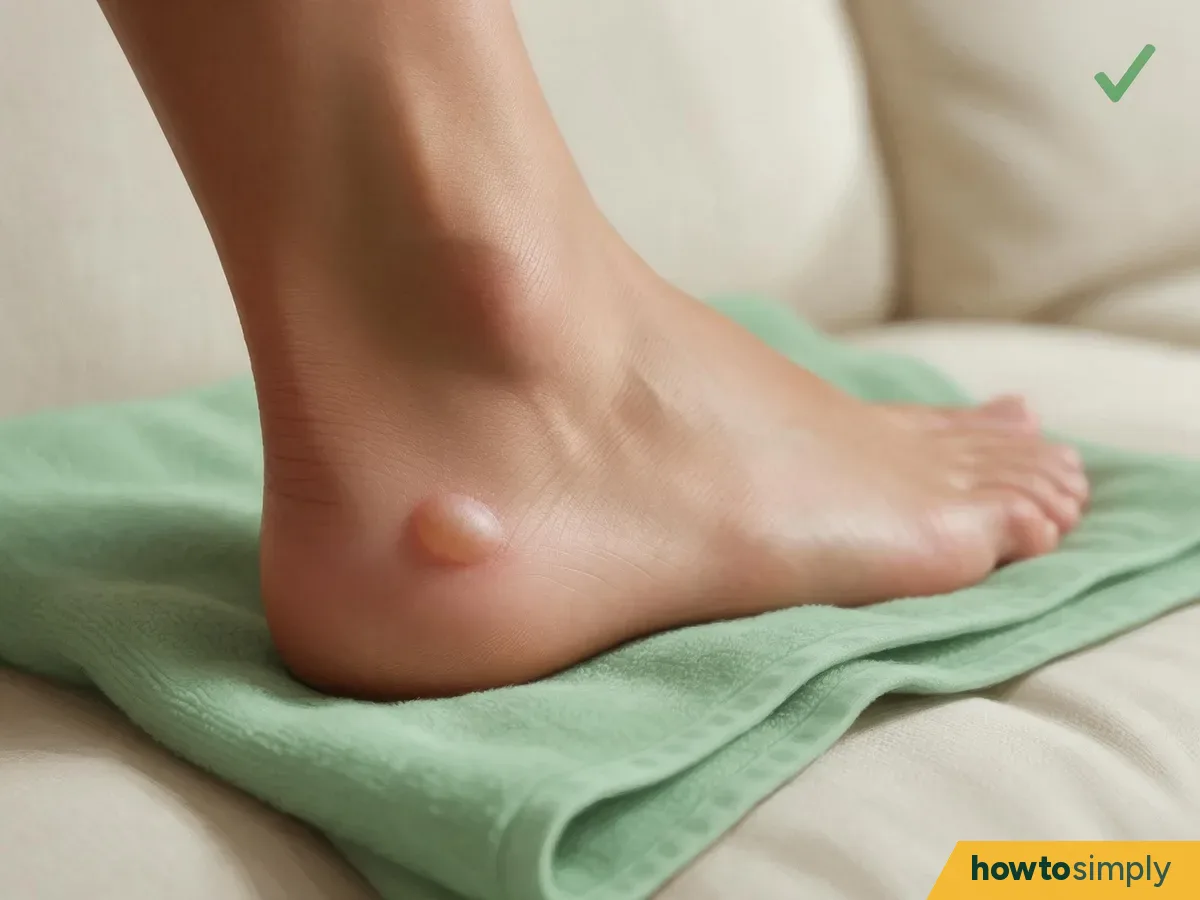
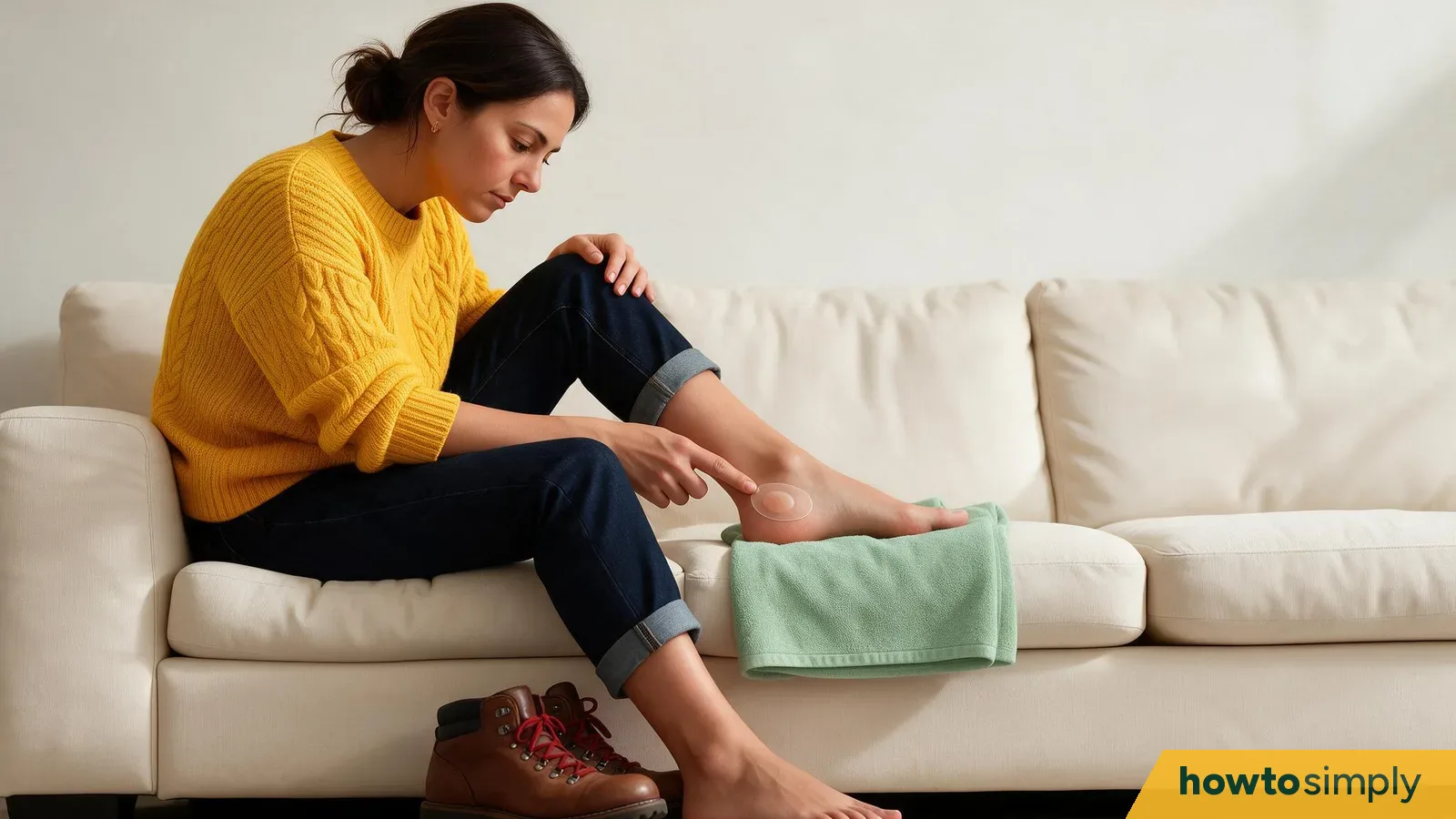
Illustration In our story: Amira rests her foot on a folded towel and looks at the back of her right heel: one smooth oval bubble of clear fluid, the skin around it only faintly pink.
Clear fluid is the usual friction blister. Red or black fluid is a blood blister, from small blood vessels damaged under the skin; treat it the same way and don't pop it. Green or yellow pus means infection: see When to get help (NHS).
Wash gently and pat dry.
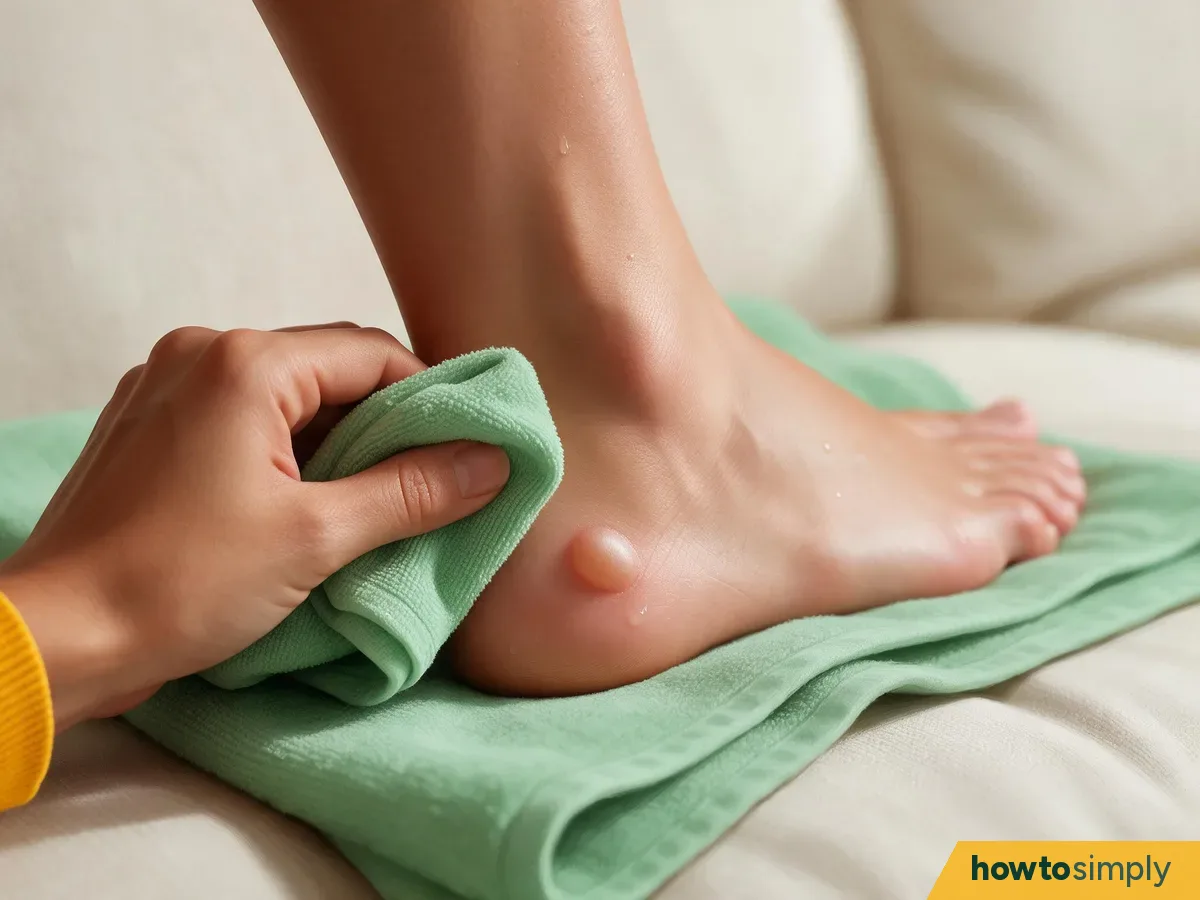
Illustration In our story: Amira washes round the blister with mild soap and water, then pats her heel dry with the towel.
Keep the blister as clean as possible: wash the skin gently and pat it dry (NHS). Don't rub.
Cover it.
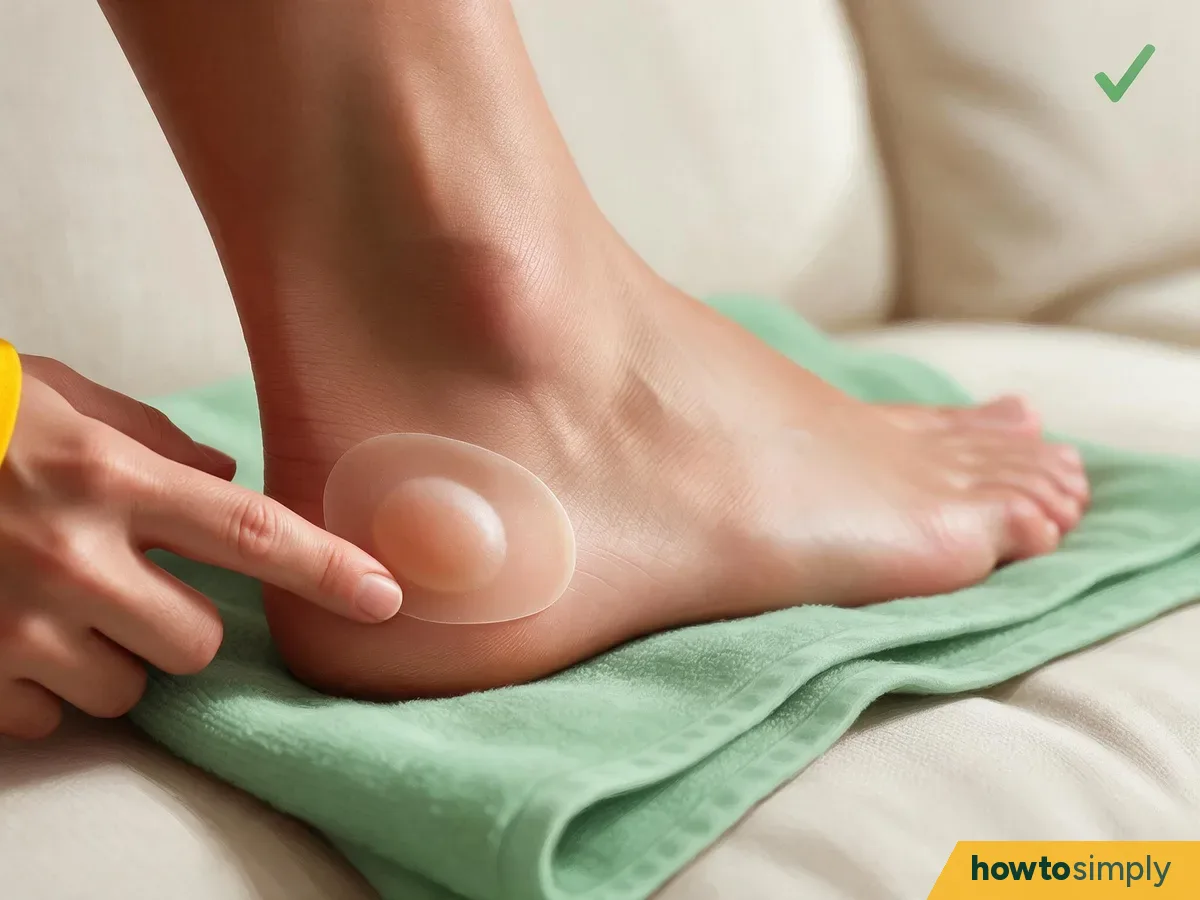
Illustration In our story: Amira smooths a hydrocolloid blister plaster over the blister, running her fingertip round the edges so there are no wrinkles.
Use a soft plaster or padded dressing (NHS). A hydrocolloid plaster, a moist gel dressing, can protect the blister, ease the pain and help it heal faster (NHS). The skin must be clean, dry and free of cream or the plaster won't stick. Follow the pack on how long to leave it on.
On a pressure spot, add a padded ring.
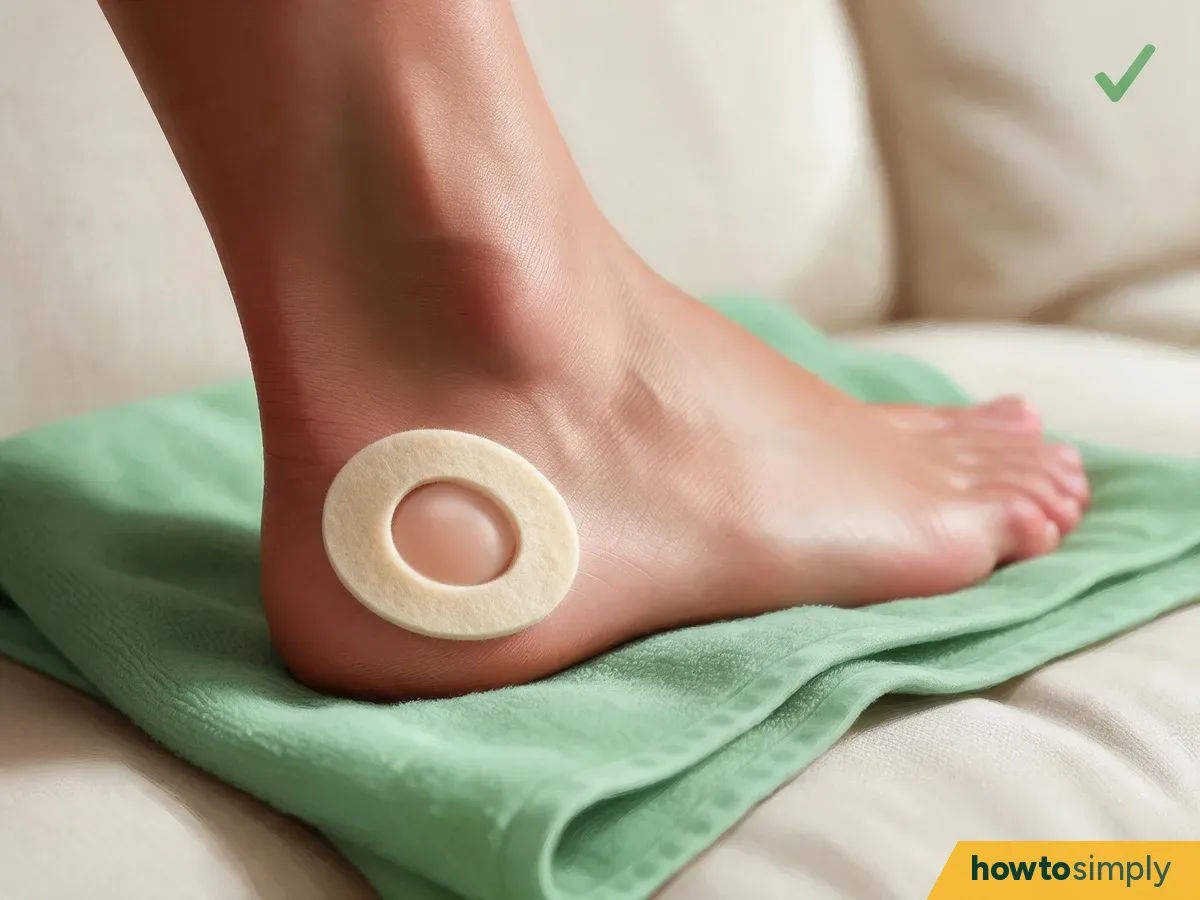
Illustration In our story: For the walk to work, Amira adds a ring of soft felt round the plaster, with the blister in the hole, so her shoe presses on the ring and not on the blister.
The Royal College of Podiatry recommends this "doughnut" of padding for a blister on a heel, toe or sole. Tape it down or cover it with a soft gel dressing.
Don't pop, prick or peel it.
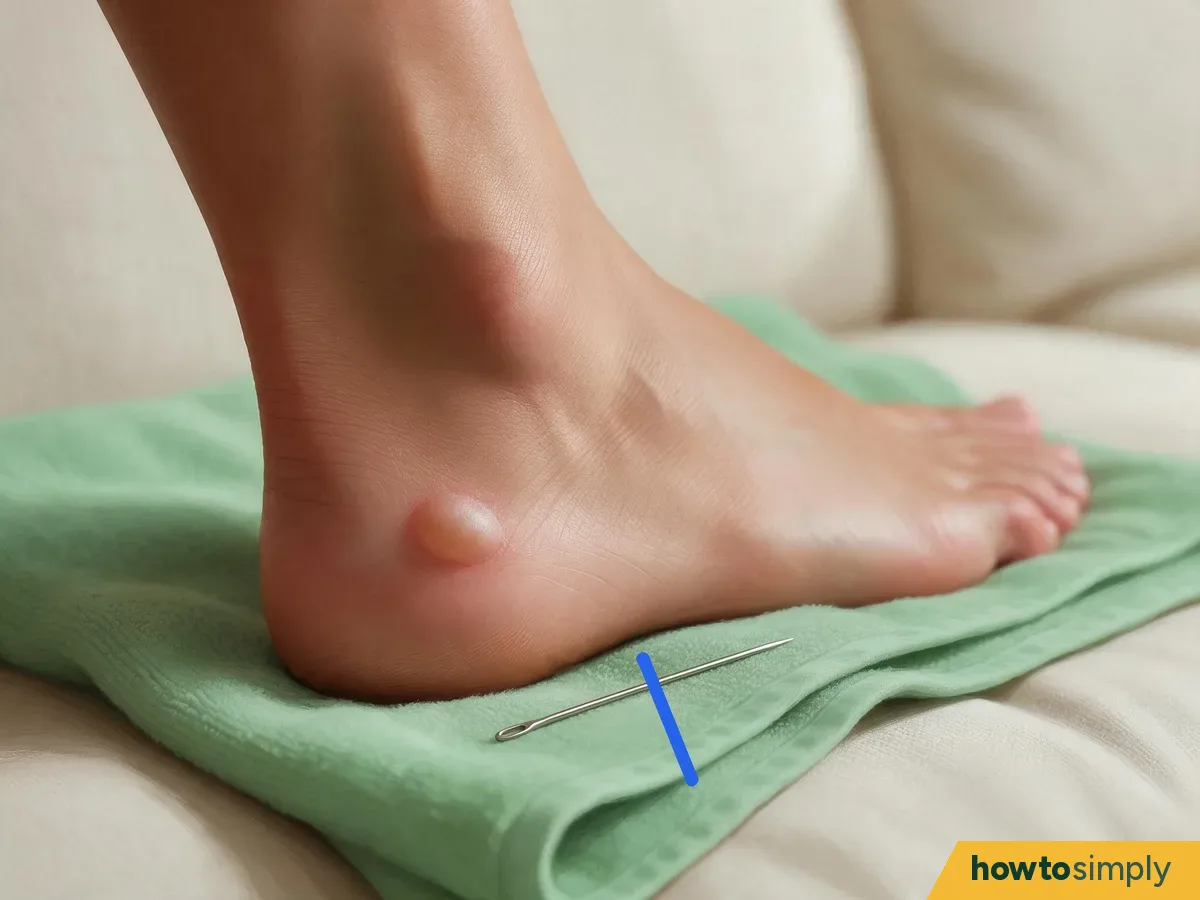
Illustration In our story: That evening the plaster comes off when she showers. Looking at the bare blister, Amira is tempted to prick it with a sewing needle, but puts the needle down on the towel. The blister stays closed.
The NHS says not to burst a blister yourself, peel off the skin or pick at the edges. The skin on top keeps germs out while new skin grows underneath, and the fluid usually goes down by itself. See Should you ever drain a blister?
Part 2: If it bursts
Wash your hands, then let it drain.
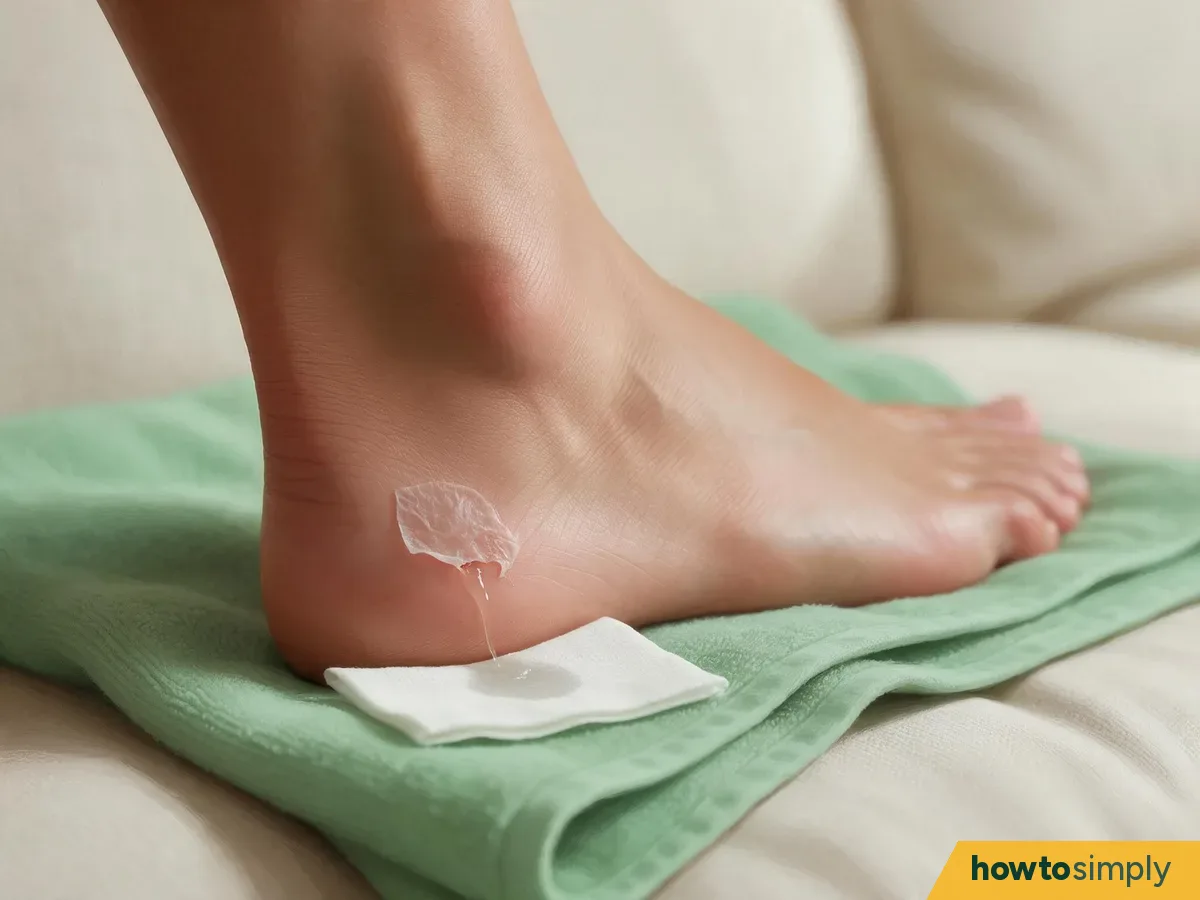
Illustration In our story: On Monday the blister has burst. Amira washes her hands, then lets the clear fluid drain onto a square of clean gauze.
Wash your hands before you touch a burst blister, and let the fluid drain before you cover it (NHS).
Leave the loose skin on.
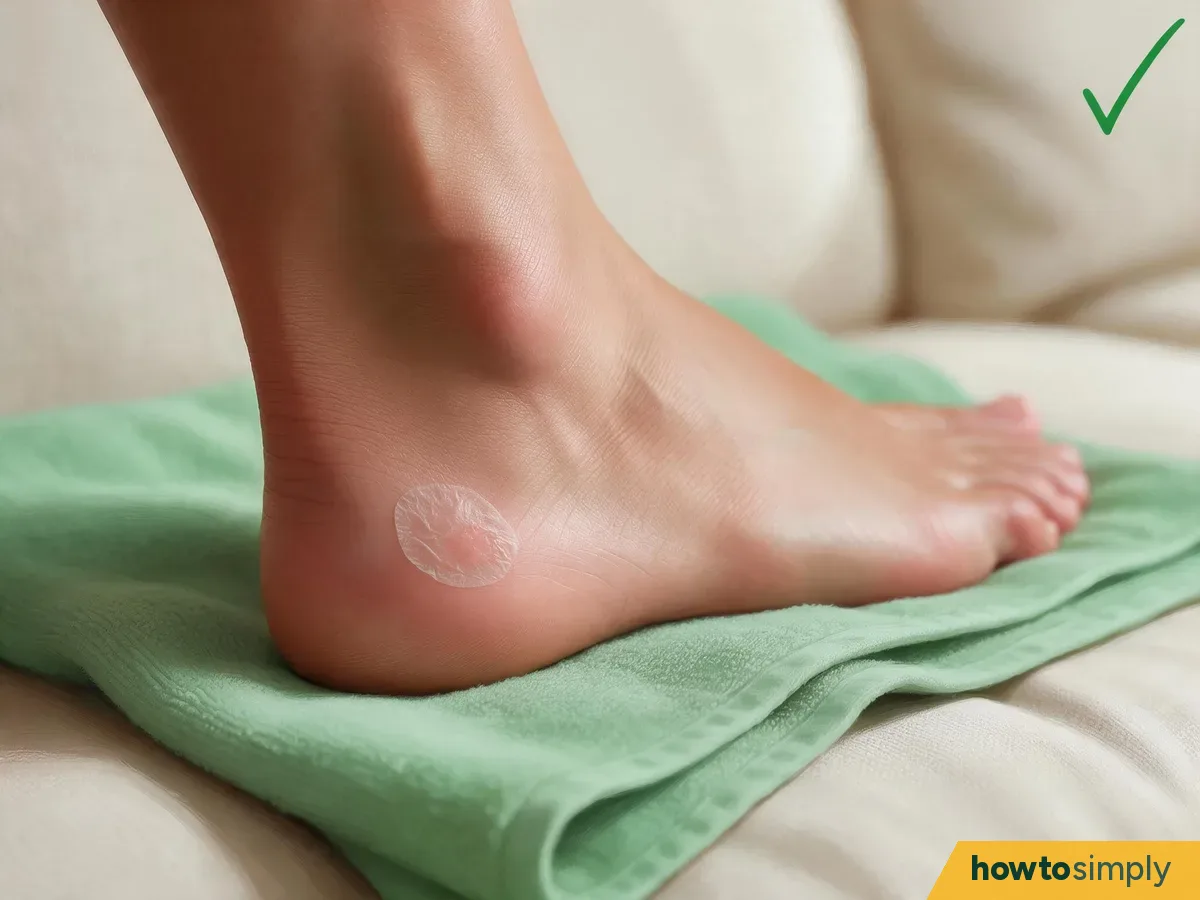
Illustration In our story: Amira cleans round it gently and leaves the thin flap of skin lying flat over the pink skin underneath.
Don't peel the skin off or pick at the edges (NHS). Laid flat, it works as a natural dressing.
Cover it again.
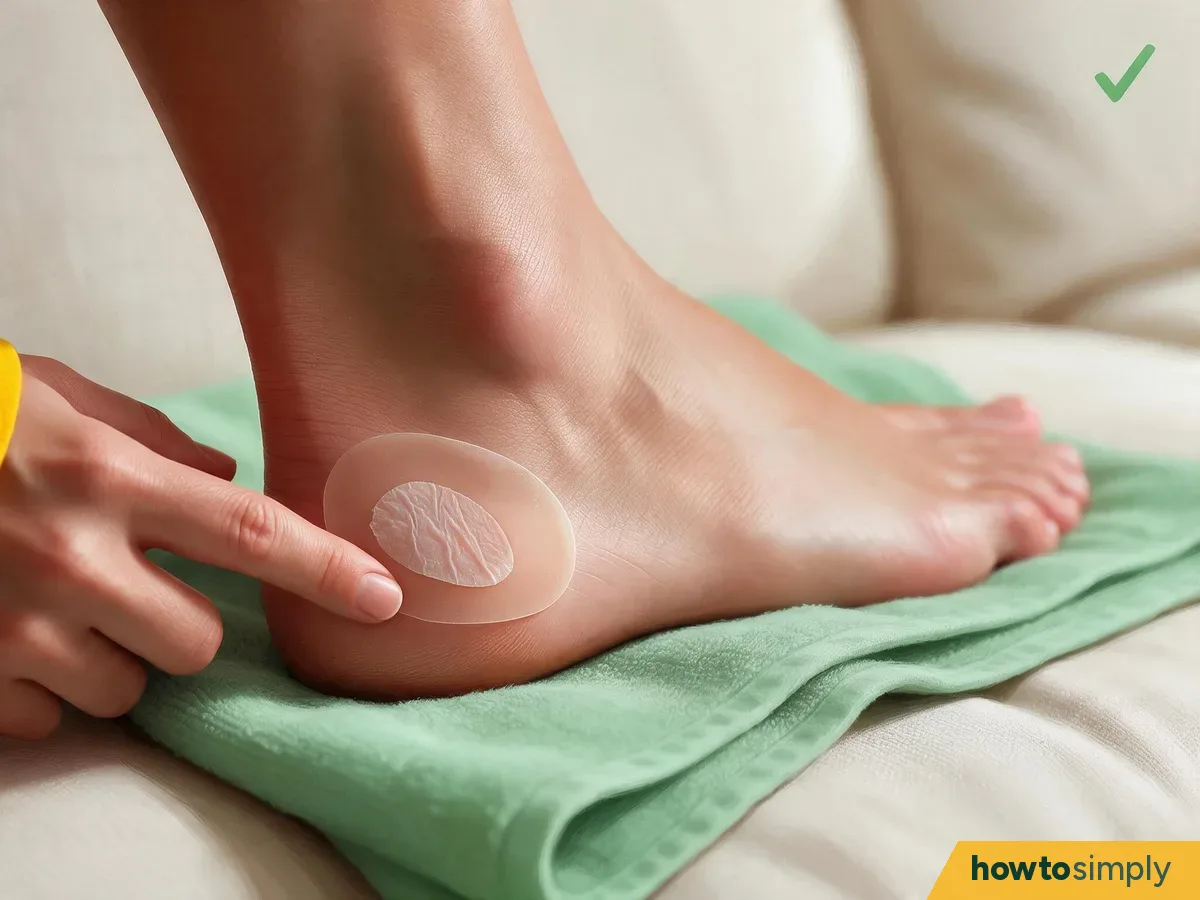
Illustration In our story: Amira puts a new hydrocolloid plaster over the burst blister and presses the edges flat.
Use a soft plaster, a hydrocolloid blister plaster or a soft gel dressing. The Royal College of Podiatry suggests an antiseptic ointment under the dressing for an open blister; if you use one, follow the label, or ask a pharmacist.
Part 3: Until it heals
Check it every day.
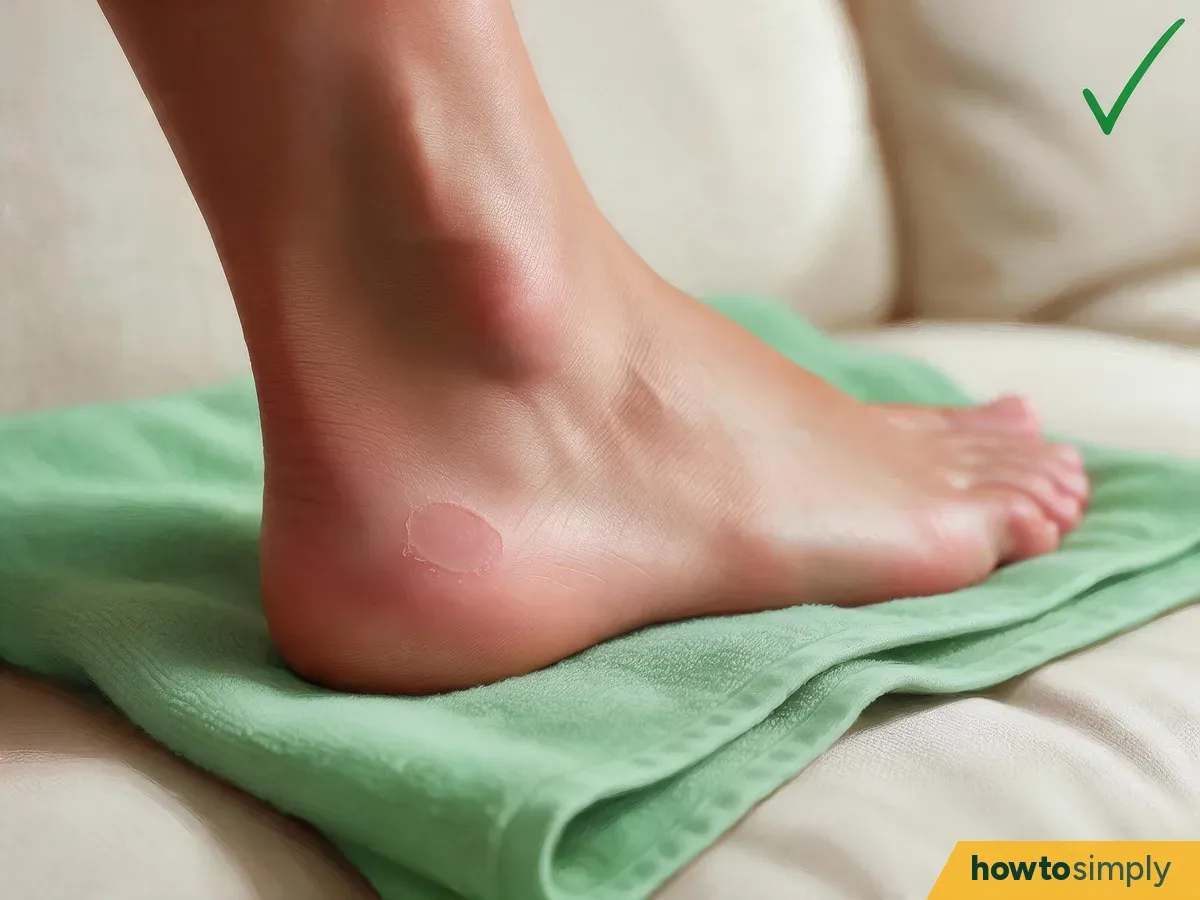
Illustration In our story: By Friday the blister is flat and dry, with just a faint pink patch where it was.
Change a normal plaster if it gets wet or dirty. A hydrocolloid plaster can usually stay on until it starts to peel at the edges; follow the pack. Most foot blisters clear in 3 to 7 days once the rubbing stops (Royal College of Podiatry).
Watch for infection.
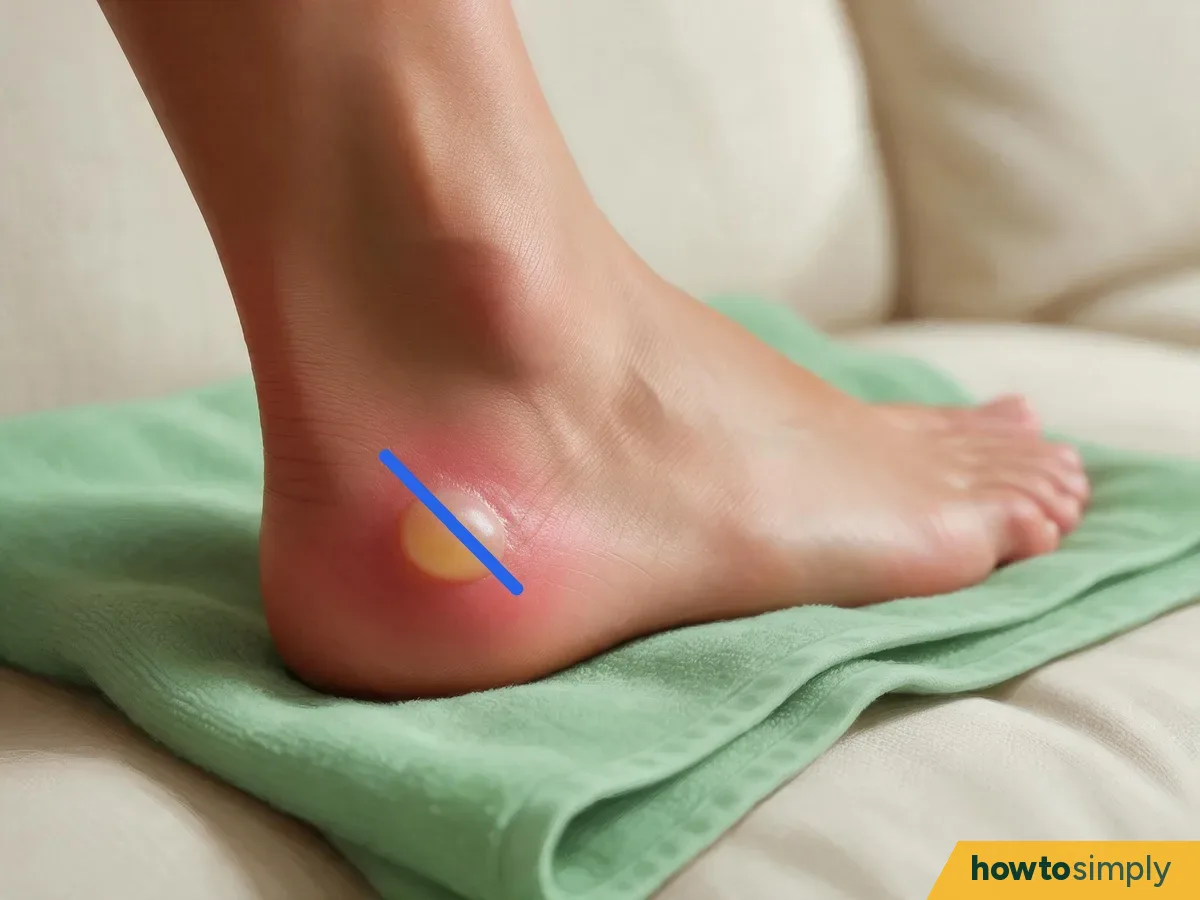
Illustration In our story: What if it had become infected? It would look like this: yellow pus, and red, swollen, hot skin spreading round it. Amira would call 111.
Spreading redness, more pain, warmth, swelling or pus mean it may be infected. Call 111 or get help from 111 online (NHS). If you also feel very unwell, see the box at the top.
Stop the rubbing.
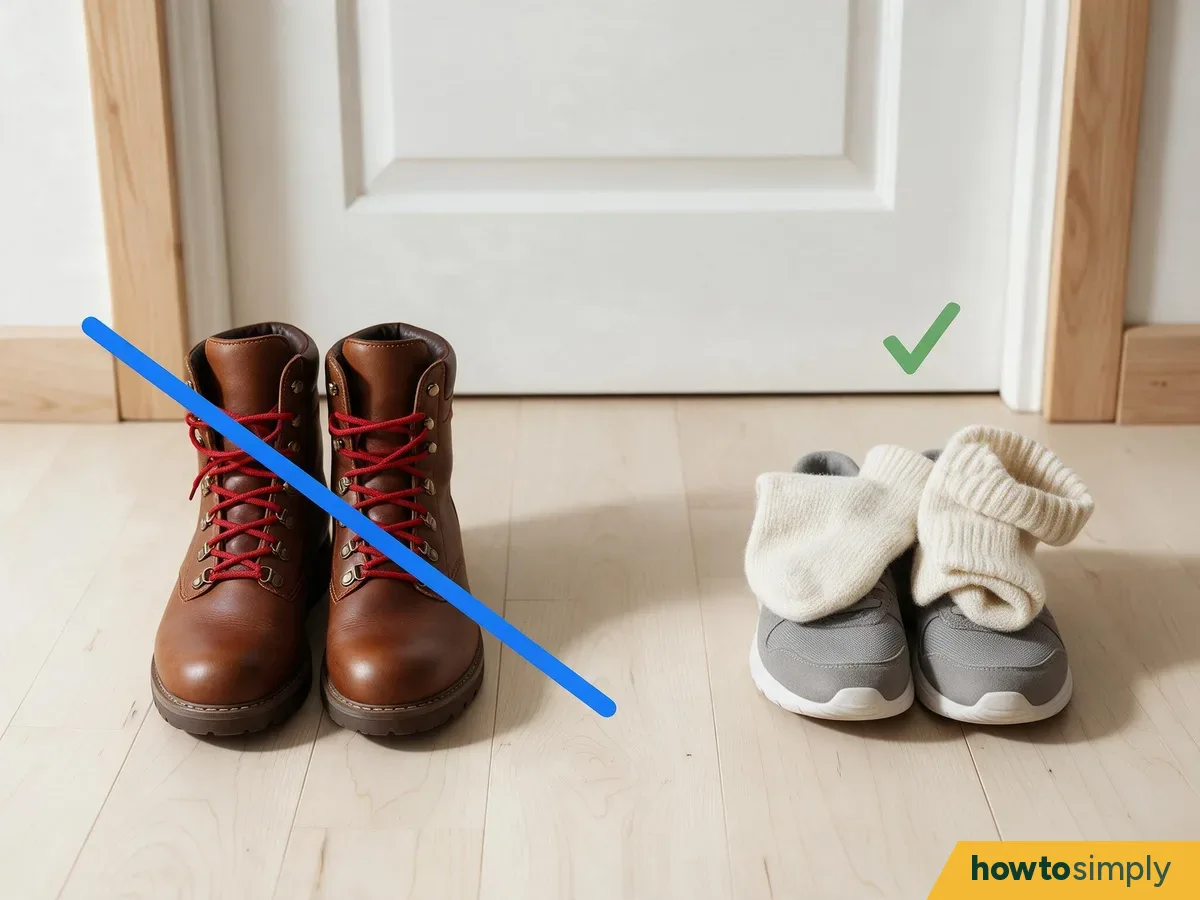
Illustration In our story: Amira leaves the new boots by the door until her heel has healed and wears soft trainers with thick socks instead.
Don't wear the shoes or use the equipment that caused the blister until it heals (NHS). Then wear new shoes for short periods at first.
Should you ever drain a blister? Sources disagree
- The NHS says not to burst a blister yourself. A GP might burst a large or painful one with a sterilised needle.
- Mayo Clinic (US) says a very painful blister can be drained at home, leaving the top skin on, with a needle cleaned with rubbing alcohol, and that people with diabetes or poor circulation should take extra care.
Our advice for UK readers: follow the NHS. If a blister is so tense and sore that you can't walk or work, ask a pharmacist or your GP practice rather than draining it yourself. Never drain one yourself if you have diabetes, poor circulation or a weakened immune system.
How to tell it's healing
- It hurts a little less each day.
- The skin flattens and dries over a few days.
- There is no spreading redness, heat, swelling or pus.
If something goes wrong
| What happens | Likely cause | What to do |
|---|---|---|
| The plaster keeps peeling off | Damp, oily or creamed skin, or a bending joint | Wash and dry the skin well with no cream; use a plaster shaped for heels or toes |
| A hydrocolloid plaster fell off after a day | The edges weren't pressed down, or normal wear | Don't stick it back on; one maker says they are single use. Clean, dry and use a new one |
| Taking the plaster off hurts or lifts the skin | Pulled straight up | Peel it slowly by stretching it along the skin, not upwards; wait until the edges lift if you can |
| The plaster has gone white and puffy | The gel is soaking up fluid; this is expected | Leave it on unless it leaks or the skin looks infected |
| The blister is bigger than your biggest plaster | A large friction blister, or a burn | Ask a pharmacist or call 111; don't drain it yourself |
| It keeps coming back in the same place | The shoe rubs, or socks slip | Change shoes or socks, pad the spot before walking; call 111 if it keeps happening (NHS) |
| Hot, red, swollen, pus | Infection | Call 111; call 999 if you also feel very unwell (see the top box) |
No blister plaster? Use a padded ring
Cut a piece of moleskin or foam about 2.5 cm (1 inch) bigger than the blister. Fold it in half and cut a half-circle from the fold, so it opens out with a hole the size of the blister. Stick it on with the blister in the hole and cover it with gauze. Mayo Clinic describes this method; it keeps pressure off the blister while you walk.
Related: Minor burn or scald and How to clean and dress a small cut or graze.
Questions readers ask
How long does a blister take to heal?
Usually within about a week, the NHS says. The Royal College of Podiatry says most foot blisters clear in 3 to 7 days once the rubbing stops.
Should I let a blister breathe?
No need. The NHS advises covering it with a soft plaster or padded dressing, which protects it from rubbing and dirt.
Is a blood blister different?
It is red or black because small blood vessels in the skin were damaged too (NHS). Treat it the same way and do not pop it.
Why has my blister plaster gone white?
A hydrocolloid plaster turns white and puffy over the blister as its gel soaks up fluid. One manufacturer says this is how it works. Leave it on unless it leaks or the skin looks infected.
How do I stop blisters on long walks?
The NHS suggests comfortable, well-fitting shoes, wearing new shoes for short periods until they are comfortable, thick or moisture-wicking socks for exercise, and changing socks often if your feet sweat. Stop and pad a warm, sore spot before a blister forms.
What did you think?
Reaction counts are loading.
Spotted a mistake? Menus change with updates, and we want every step to match your screen. Email us about this page or use the contact form. We read every report, and fixes are listed on What changed.
Liked this article?
Follow us for new articles and short how-to videos.
Sources
We use primary, official and specialist sources appropriate to the topic.