How to propagate pothos in water
Researched by Abu Bakar Saadat7 min read
Last updated: 15 November 2026References
On this page 9 sections
In short
Cut a 7.5 to 15 cm stem tip, strip the leaves off the lowest one or two nodes and stand it in room-temperature water in bright, indirect light. Change the water regularly and pot it up once the roots are a few centimetres long.
At a glance
- You need
- Sharp scissors, a glass or jar, room-temperature water
- Cutting
- 7.5 to 15 cm stem tip with at least one node (Clemson) or two (Iowa State)
- Best time
- Spring to summer (Penn State)
- Pot up when
- Roots 2.5 cm or more (Iowa State); over 5 to 7.5 cm (University of Vermont)
- Advice from
- University of Vermont, Iowa State, Clemson and Penn State extension services, RHS, ASPCA, read 28 October 2026
- Checked
- November 2026
Taking a single cutting from your pothos and turning it into a whole new plant has a magical quality to it, and projects like this bring a windowsill to life. Penn State Extension calls pothos a great plant for the houseplant novice, so even if you've never tried this before, you can be confident.
Pothos (Epipremnum aureum) roots from stem cuttings, and the University of Vermont Extension lists it among the vining houseplants that root easily in water. To get it right, you first need to know what a node is, because everything depends on it. It's the small knob where a leaf meets the stem, and according to Clemson Extension, a cutting needs one or more nodes if it's going to root well.
Water or potting mix: which suits you?
You want to watch the roots grow
Root it in water, as below. The University of Vermont Extension notes that you can see when the roots are ready.
You want the smoothest move into a pot
Root it straight into a moist, airy mix such as perlite or a peat and perlite blend. Iowa State Extension says roots formed in water are coarser and may be stressed when they're potted.
How to root a pothos cutting in water
Choose a healthy stem, ideally in spring or summer.
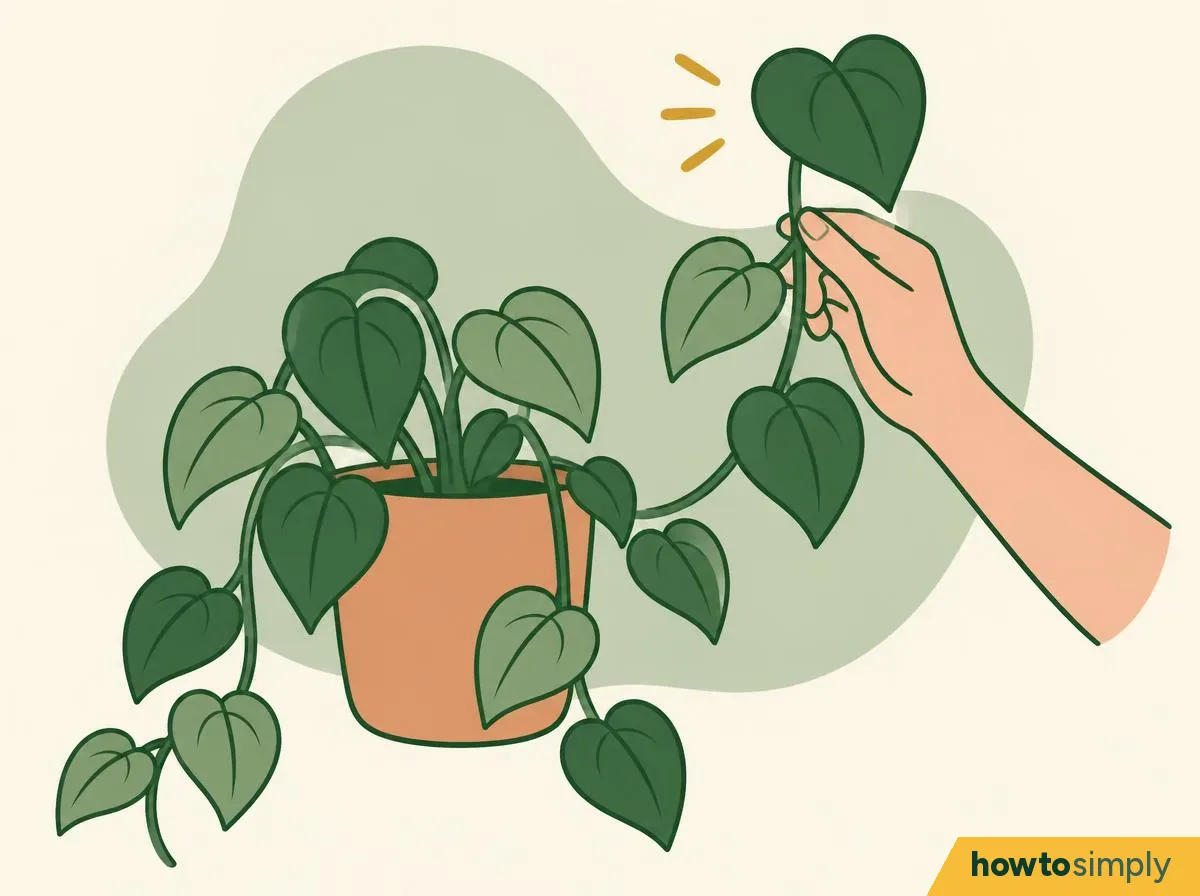
Illustration Penn State Extension says pothos cuttings do best while the plant is actively growing, from spring into summer. The RHS gives the same window. Make sure you take your cutting from a healthy stem (University of Vermont Extension).
You should see: along the stem, small bumps or short aerial roots where each leaf meets the stem. Those are the nodes (University of Vermont, Penn State Extension).
Careful: the plant contains calcium oxalate crystals that irritate skin (Penn State). Wear gloves if you're sensitive, and wash your hands afterwards.
Cut a 7.5 to 15 cm length from the tip.
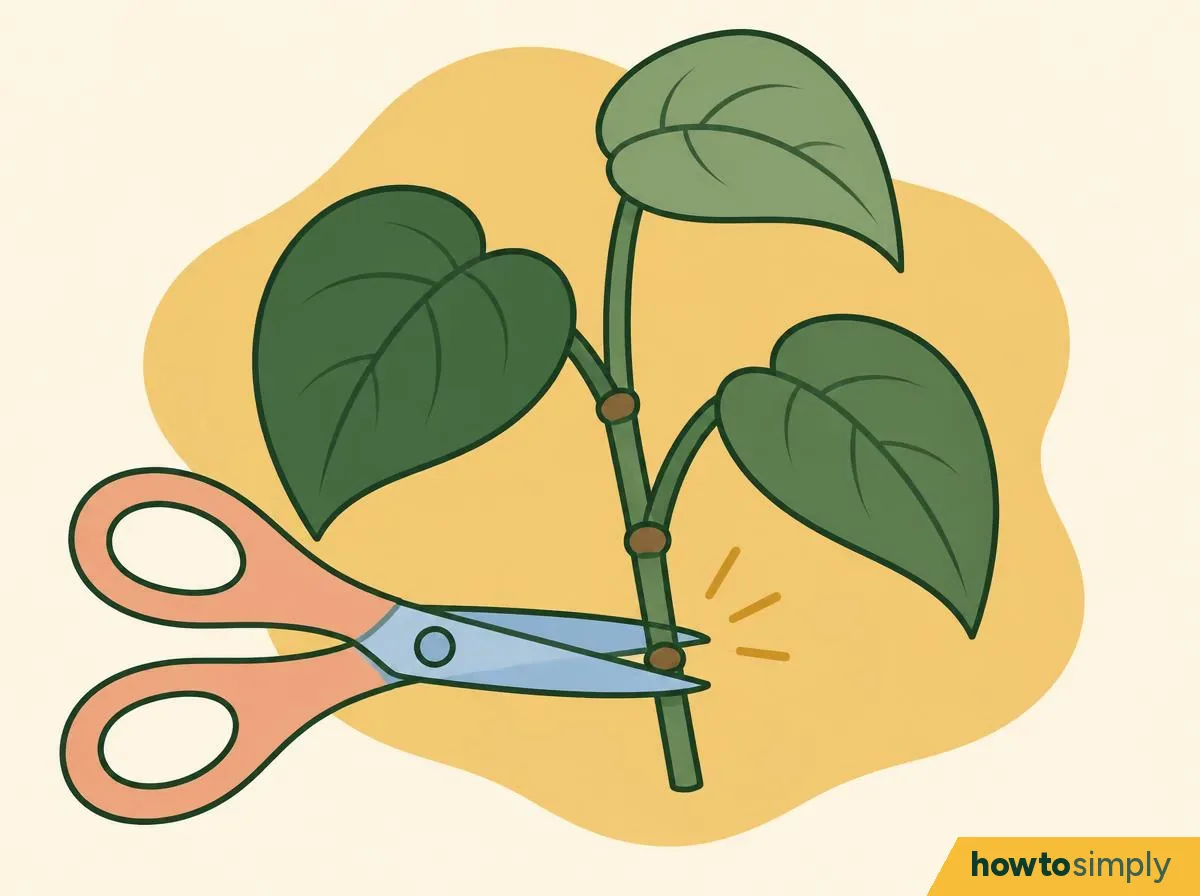
Illustration: cut just below a node The University of Vermont and Iowa State extension services both suggest a 3 to 6 inch (about 7.5 to 15 cm) cutting from a stem tip. Clemson Extension says it needs at least one node; Iowa State says at least two. The University of Vermont Extension advises including several leaf nodes.
When you trim the parent, Penn State suggests cutting just above a node.
You should see: a cutting with a few leaves and at least two nodes, with a clean cut just below the lowest one.
Strip the leaves off the bottom one or two nodes.
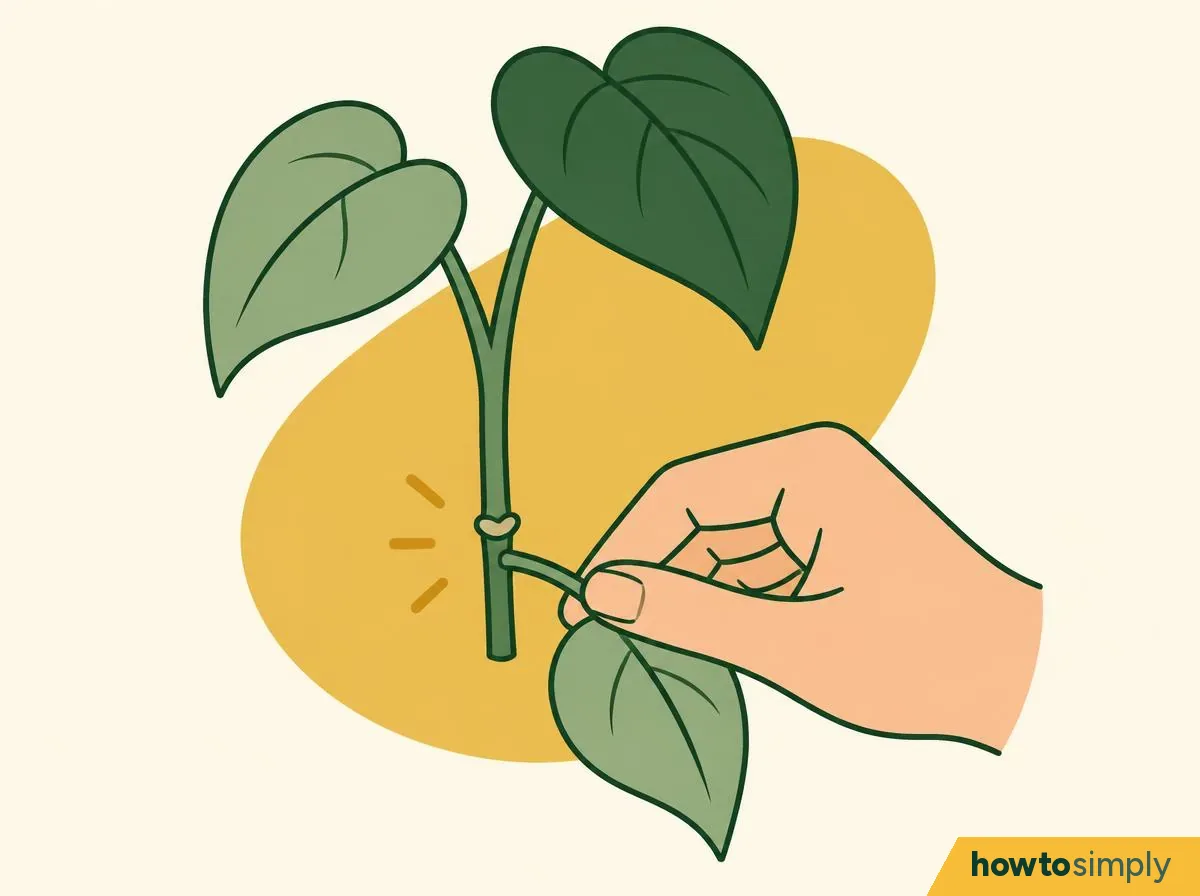
Illustration Please don't skip this bit, because no leaves should sit below the surface of the water (University of Vermont Extension). The University of Vermont Extension says to remove the leaves from the bottom one or two nodes. Iowa State also suggests removing or trimming very large leaves. What it will do, the cutting loses less water while it has no roots to drink with.
You should see: one or two bare nodes at the bottom and a few leaves at the top.
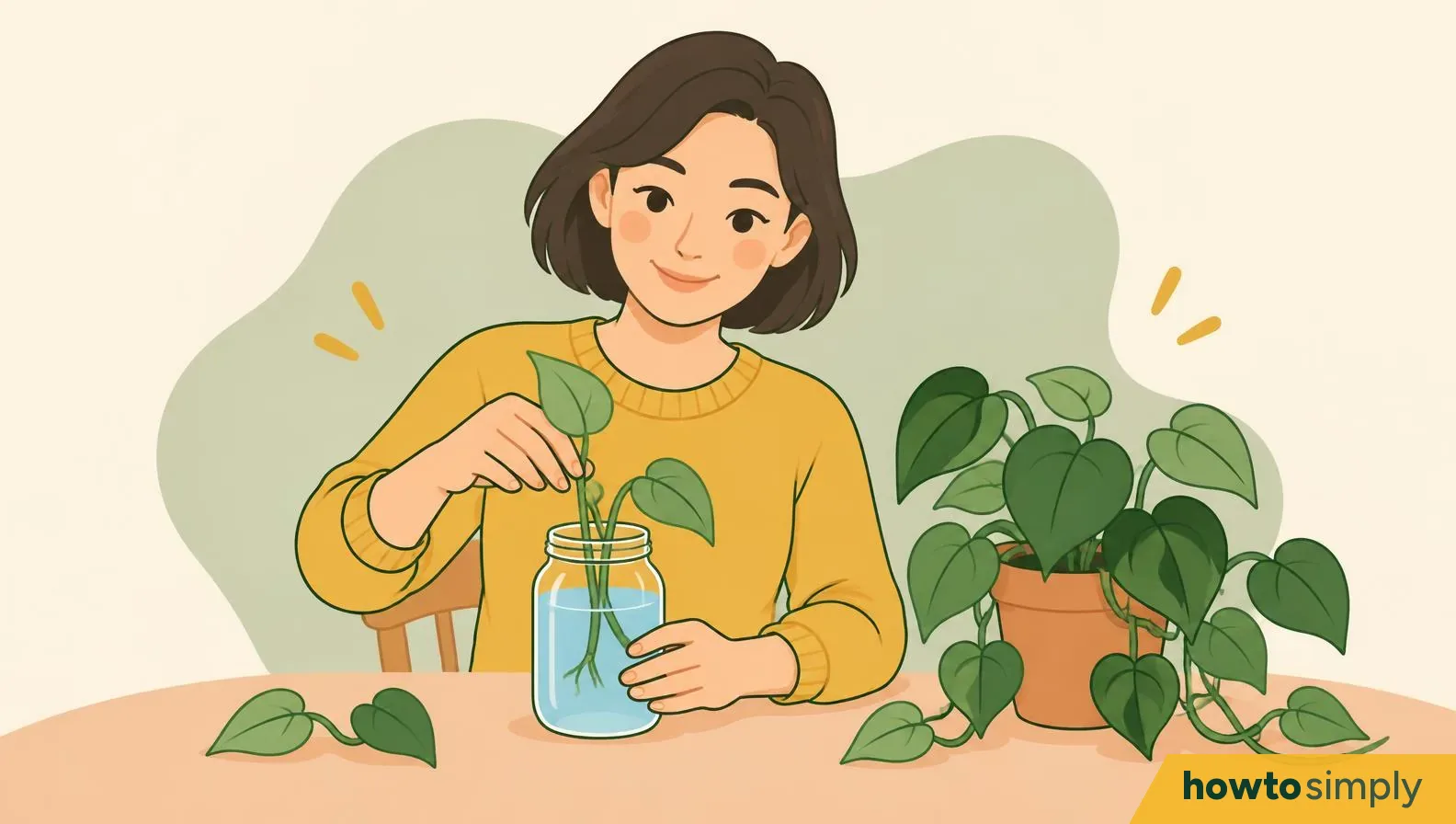
Stand the cutting in water with the bare nodes under and every leaf above.
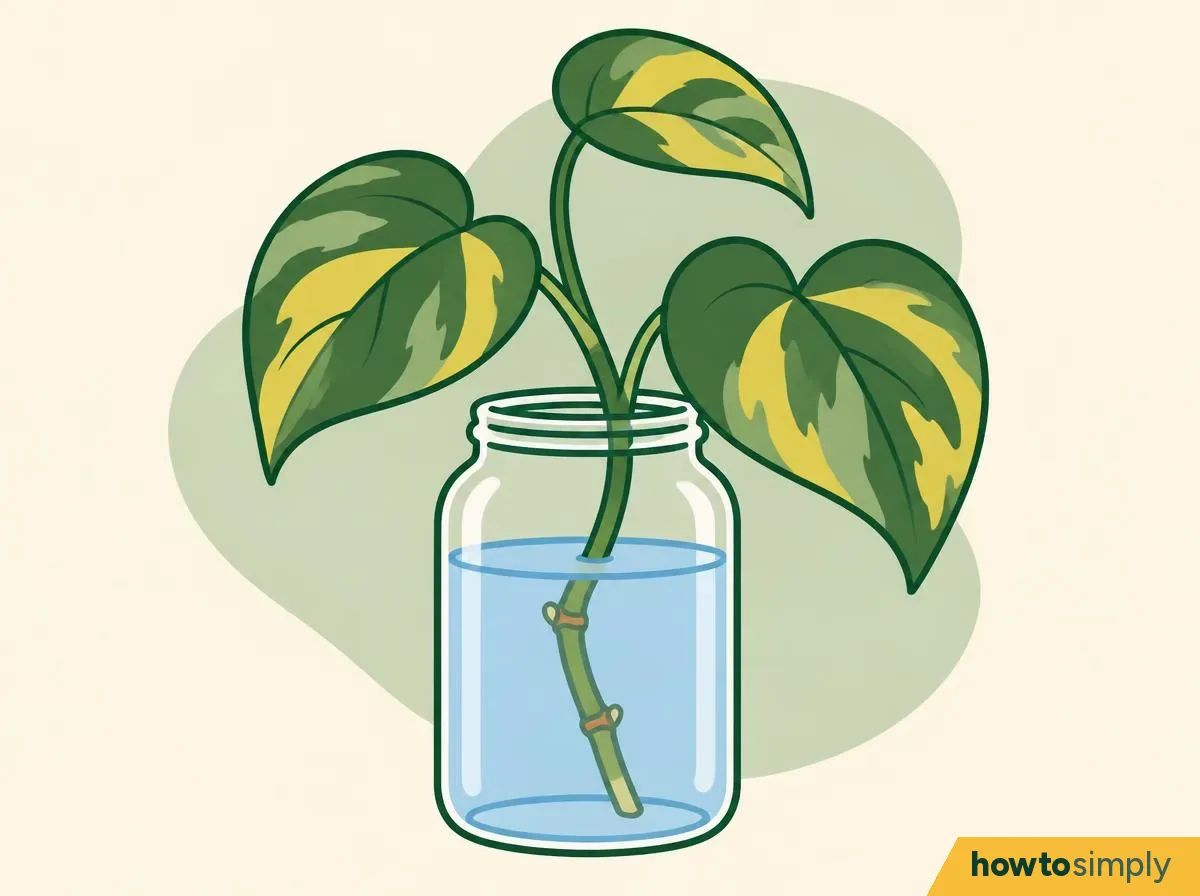
Illustration: nodes under water, leaves above Use room-temperature water and keep all the leaves above the waterline (University of Vermont Extension). You can put several cuttings in one jar if they all fit without leaves going under. It is that easy.
You should see: the bare nodes fully covered by water and no leaves touching it.
Put the jar somewhere warm with bright, indirect light.
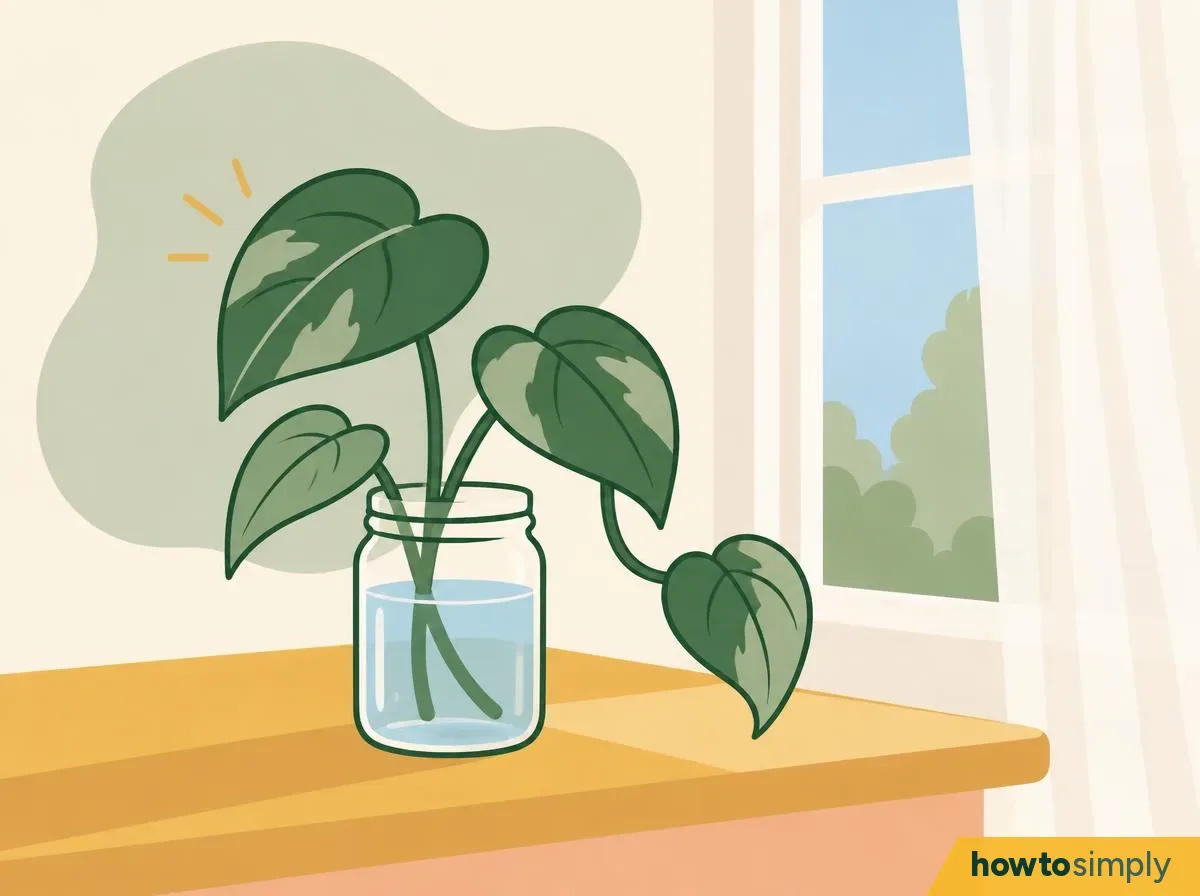
Illustration For rooting cuttings, Iowa State Extension suggests 4 to 6 hours of bright light that isn't direct, at 65 to 75 °F (about 18 to 24 °C). Too little light slows rooting. However, keep the jar out of hot direct sun, because Penn State says direct sun yellows pothos leaves.
You should see: the jar in bright light, out of direct sun.
Change the water regularly and never let the roots dry out.
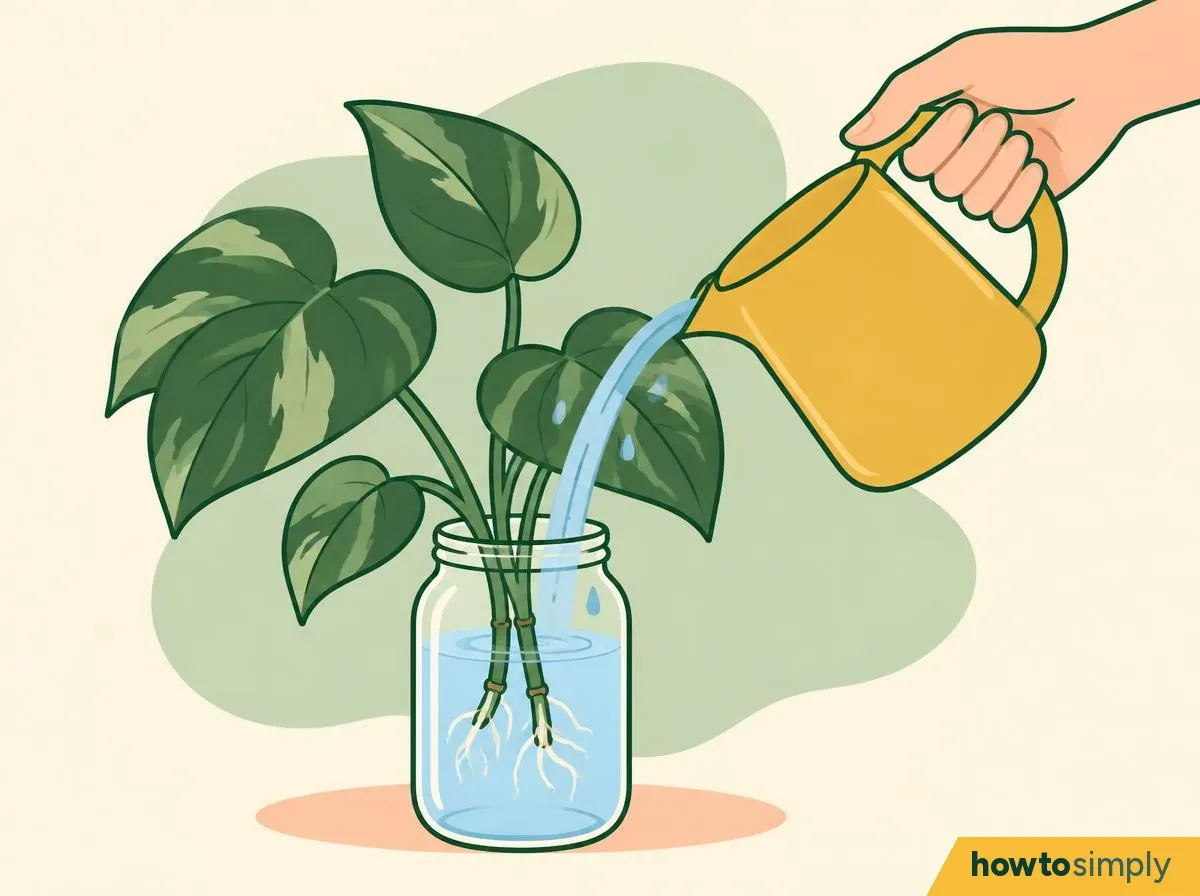
Illustration Iowa State Extension says to change the water once or twice a week and never let the level drop so far that the new roots are left in air. The University of Vermont Extension says to swap in fresh room-temperature water whenever it turns cloudy. So if your habit is to top up the same old water and walk away, fresh water is a much kinder gift.
The hardest part is waiting. The University of Vermont says rooting can take days, weeks or sometimes months, so don't worry if nothing seems to happen for a while. Iowa State gives 3 to 6 weeks for most houseplant stem cuttings; neither gives a figure for pothos alone.
You should see: clear water and, after a while, tiny roots forming.
Pot it up once the roots are a few centimetres long.
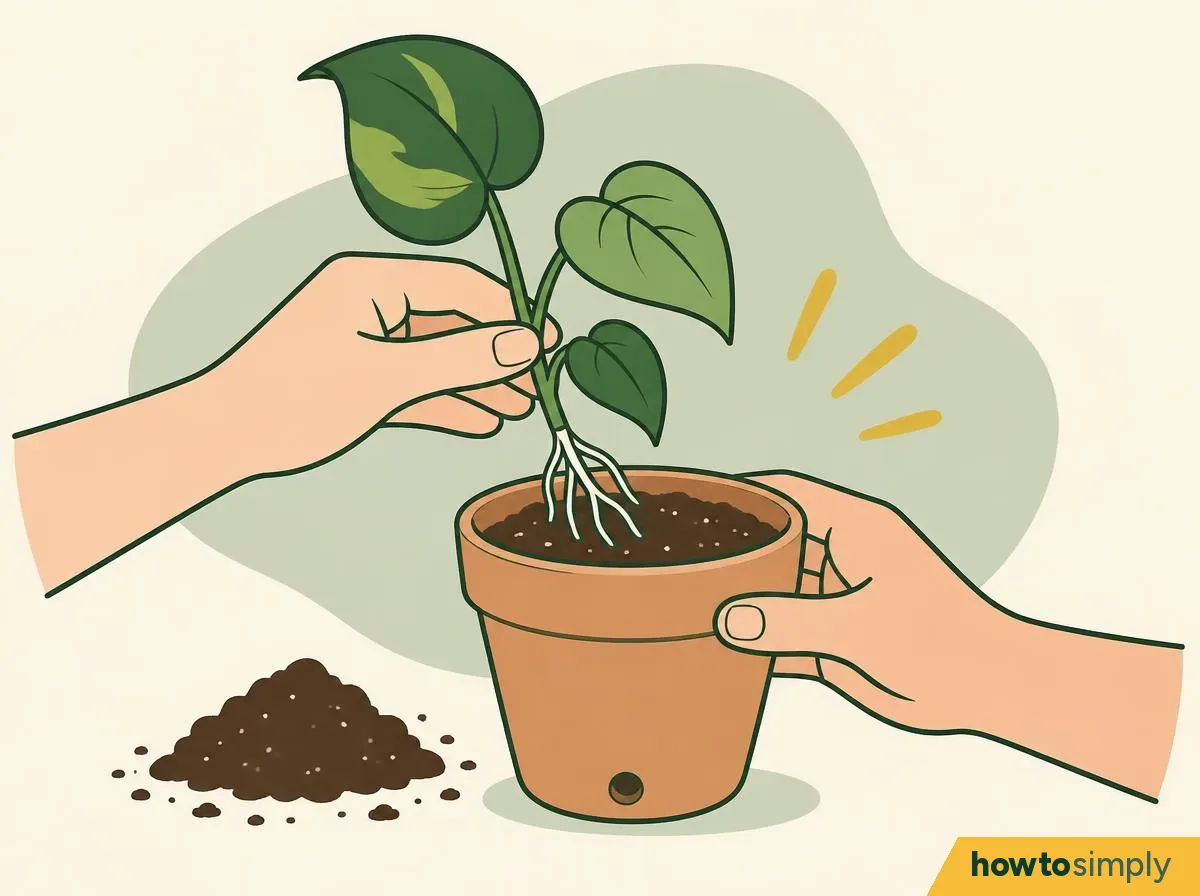
Illustration The sources differ on when. Iowa State says pot up once the roots are about 1 inch (2.5 cm) long or more; the University of Vermont waits until they are more than 2 to 3 inches (5 to 7.5 cm). Pot it in regular potting soil and keep it well watered in bright, indirect light while it settles (Iowa State).
Once it's growing, you can stop fussing and treat it like an adult pothos: let the mix dry before watering again (Clemson, Penn State). Our watering guide shows how to check.
You should see: the cutting standing upright in the mix, with no roots showing above the surface.
How to tell it worked
- Tiny roots form under water.
- The cutting looks healthy.
- Iowa State says that after potting, the plant becomes well established within a few weeks.
- New growth appears.
If something goes wrong
| What happens | What it means | What to do |
|---|---|---|
| The water turns cloudy | Time for fresh water | Swap in fresh water at room temperature, and check that none of the leaves sit underwater (University of Vermont) |
| No roots after several weeks | Too little light or warmth, or no node under water | Move it to brighter, indirect light at 18 to 24 °C (Iowa State); check a node is submerged |
| The cutting rots | Too little light (Iowa State) | Move it to brighter, indirect light |
| The cutting wilts after potting | Water roots adjusting to the mix (Iowa State) | Keep the mix moist, not soggy, in bright, indirect light while it settles |
| Leaves yellow in a sunny window | Too much direct sun (Penn State) | Move it out of the direct sunbeam |
Once your new plant fills its first pot, our repotting guide shows how to move it on.
Questions readers ask
Can I propagate a pothos from a single leaf?
Not reliably. Clemson Extension says a cutting needs one node or more to root well; the node is the little bump where a leaf joins the stem. Iowa State says the new roots grow from buds low down on the stem.
Do I need rooting hormone?
Not for water rooting. Iowa State Extension lists rooting hormone as optional for stem cuttings. Pothos is one of the vining plants the University of Vermont Extension names as easy to root in water.
Can I just keep the cutting in water for good?
None of our sources recommends it. Both the University of Vermont and Iowa State extension services describe water as a rooting stage, followed by potting up in a mix suited to the plant. Iowa State notes that roots formed in water are coarser and can be stressed by the move.
Is pothos safe around cats and dogs?
No. The ASPCA lists golden pothos as toxic to dogs and cats because it contains insoluble calcium oxalates, which can cause mouth irritation, drooling, vomiting and difficulty swallowing. Keep the jar of cuttings out of reach as well as the parent plant.
Sources and method
- Researched by
- Abu Bakar Saadat
- Pictures
- 8 illustrations drawn for this article: drawings, not photos.
- Sources
- Steps checked against the 6 named sources linked below.
- What this page adds
- A drawing of where to cut just below a node, one of the nodes under water with the leaves above, and a fix table for cloudy water, missing roots and rotting stems.
What to do next
Grow something new indoors Step 1 of 6
- How to grow herbs on a windowsill, and keep them from going leggyHerbs you can actually cook with.
- How to start seeds indoors, from sowing to planting outGive seeds a head start before spring.
- How to grow a hyacinth bulb in water: roots first in the dark, then flowers indoorsA winter flower in a glass.
Did this solve the problem?
Where did you get stuck?
Get new guides by email
Our newest guides, sent to your inbox. Free, and you can unsubscribe in one click.
We'll email you to confirm. How we use your email
Follow howtosimply on Facebook
We share every new article on our Facebook page, so the next fix turns up in your feed.
Follow on FacebookWhat did you think?
Reaction counts are loading.
Sources
We use primary, official and specialist sources appropriate to the topic.
- University of Vermont Extension: More, please: propagating houseplants (Deborah J. Benoit, 7 December 2022)
- Iowa State University Extension: How to propagate houseplants by stem tip cuttings (Aaron Steil, last reviewed January 2025)
- Clemson Cooperative Extension, HGIC 1568: How to grow pothos indoors (Taylor and Tanner, 30 January 2026)
- Penn State Extension: Pothos as a houseplant (Susan Marquesen, updated 29 September 2025)
- RHS: Epipremnum aureum, plant details (no page date)
- ASPCA Animal Poison Control: Golden pothos