How to grow herbs on a windowsill
Researched by Abu Bakar Saadat7 min read
Last updated: 15 November 2026References
On this page 9 sections
In short
Put each herb in its own pot with a drainage hole in your sunniest window: most need at least 6 hours of direct light a day. Water only when the top 2.5 cm of mix is dry, feed lightly in spring and summer, and snip the tips often.
At a glance
- Easiest
- Parsley, mint, chives, basil, oregano, coriander, thyme
- Grow light
- 15 to 30 cm above the leaves, 12 to 16 hours a day
- Advice from
- Iowa State, University of Illinois and NC State extension services, RHS, read 28 October 2026
- Checked
- November 2026
When you bring home a pot of basil and it turns long, slender and pale within a few weeks, it can be very disappointing, but many gardeners have been there. The most common reason comes down to one thing.
That one thing is light. Illinois Extension says herbs that don't get enough light grow "leggy and spindly", and Iowa State calls light "typically the most limiting factor" for herbs grown indoors. So if your herb has gone leggy, give it more light (step 1, or a grow light in step 5) and trim it regularly to keep it full.
Which herbs should you start with?
Your first windowsill herbs
Parsley, mint, chives, basil, oregano, coriander (cilantro) and thyme all do well indoors.
You have a very bright window or a grow light
Bay, chervil, lemon balm, marjoram, rosemary and sage can work too, but they need more light, and some suffer badly from pests such as spider mites indoors.
How to grow herbs on a windowsill
Advice from the Iowa State, Illinois and NC State extension services and the RHS.
Choose your sunniest window.
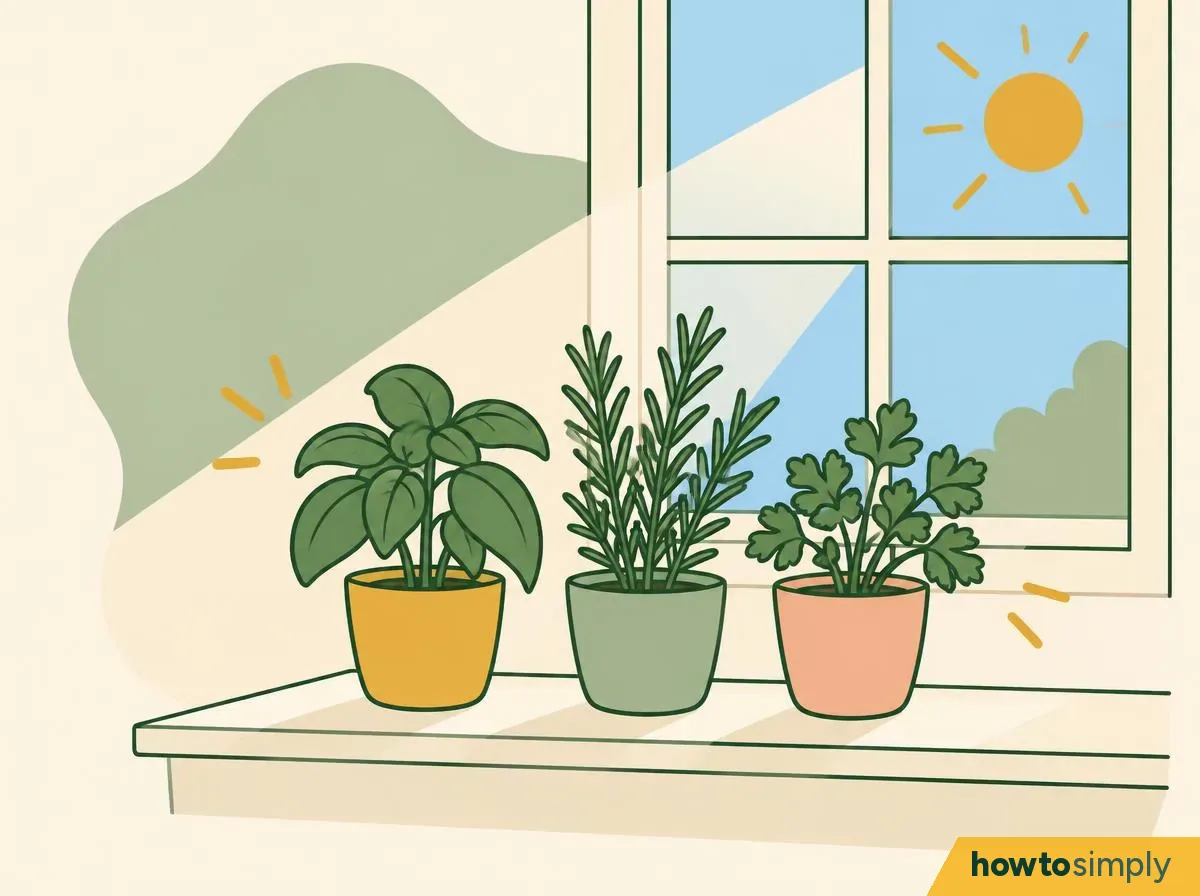
Illustration Try to give them 6 hours or more of direct sunshine every day; around 8 is even better. A sunny window facing south is ideal, though a bright one facing east or west can do the job too. In the southern hemisphere, use a north-facing window. If your window doesn't give enough light, herbs grow well under a grow light (step 5).
You should see: sunlight falling directly on the windowsill for most of the day, not just a bright room.
Plant every herb in a pot of its own that has a hole in the bottom for water to drain.
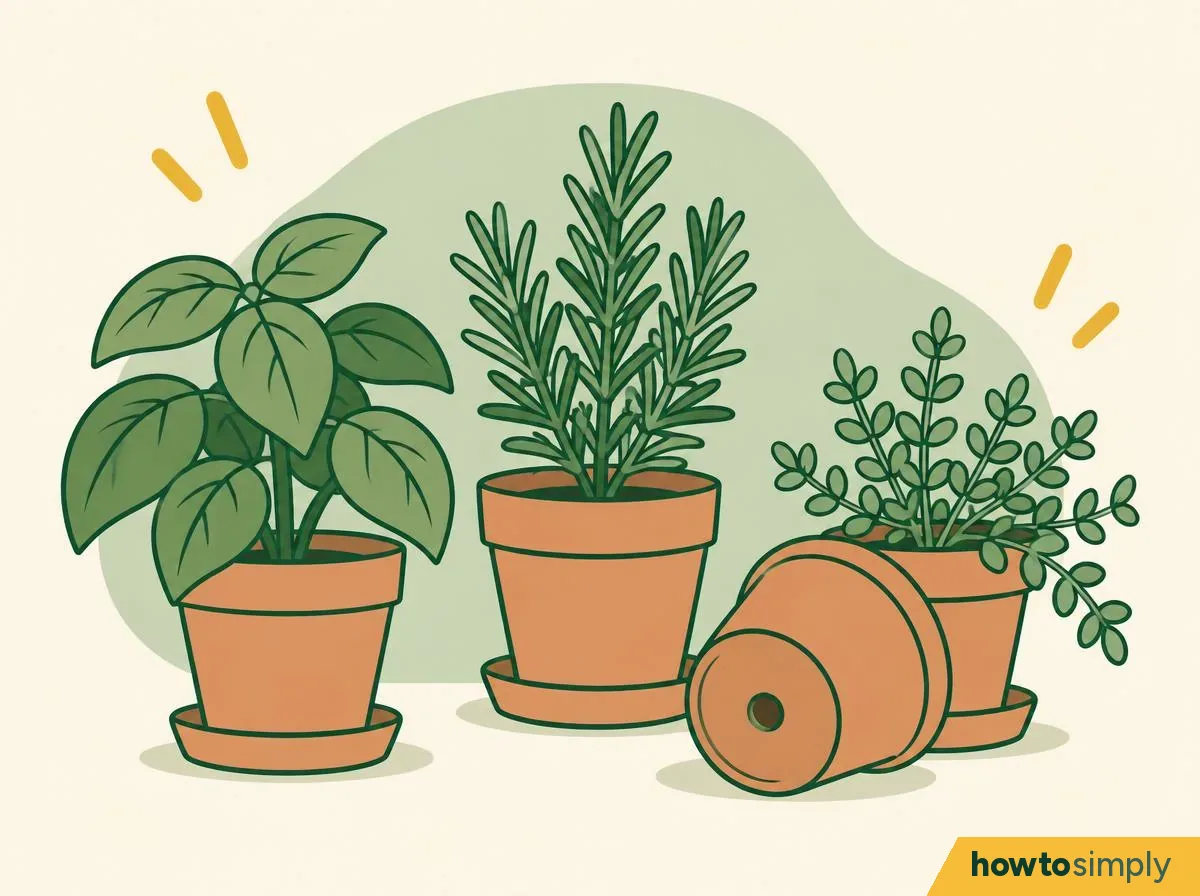
Illustration Grow each kind of herb in its own container. Herbs differ in how much water they like (see the table below), and it is hard to give several kinds of herb the best conditions in one container (Iowa State).
A supermarket pot of basil is usually crowded with seedlings, so divide it and repot the clumps promptly.
You should see: one herb per pot, at the same level it was growing before.
Keep them warm, but away from heaters.
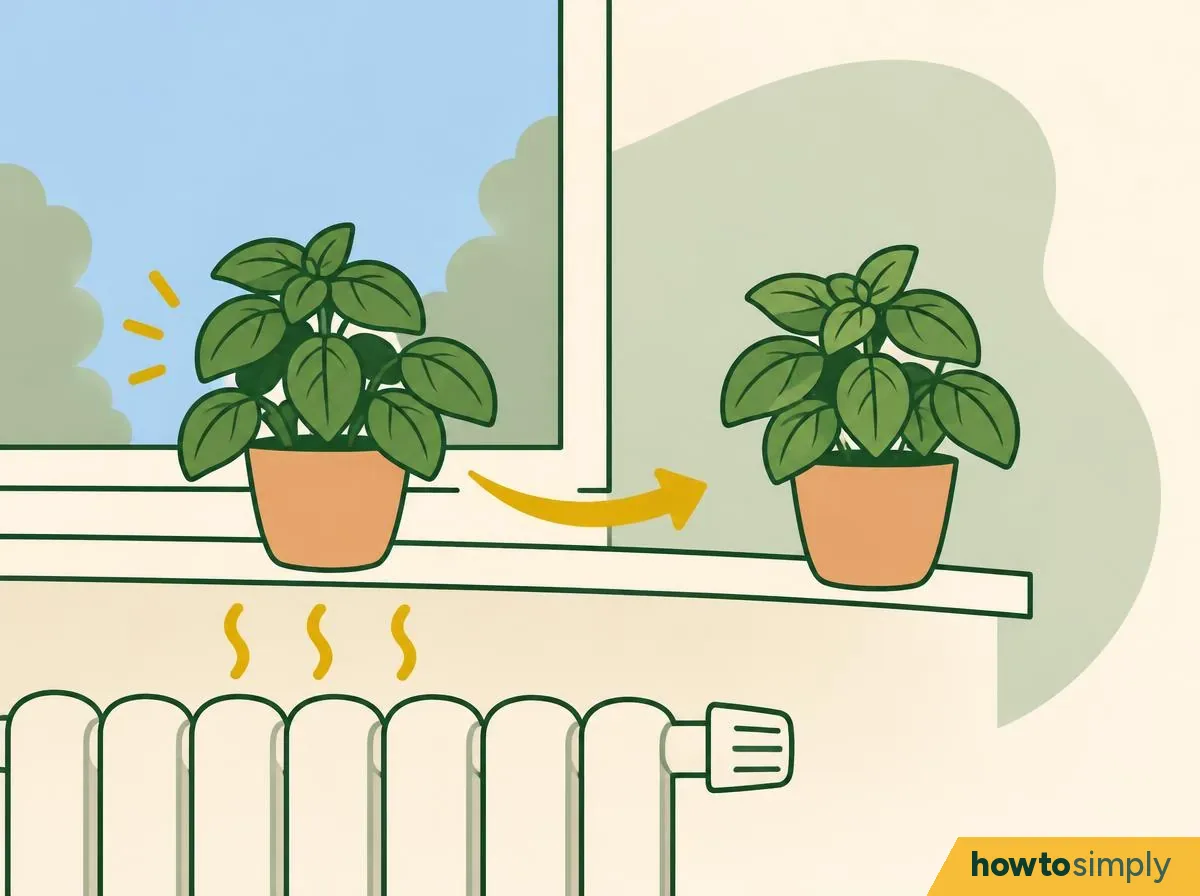
Illustration Aim for 60 to 70 °F (about 16 to 21 °C) and keep herbs away from heating vents, which dry them out. Basil needs warm conditions: it isn't hardy in the UK (RHS).
You should see: herbs in the sun but not directly above a radiator or vent.
Water only when the mix is dry about 2.5 cm down.
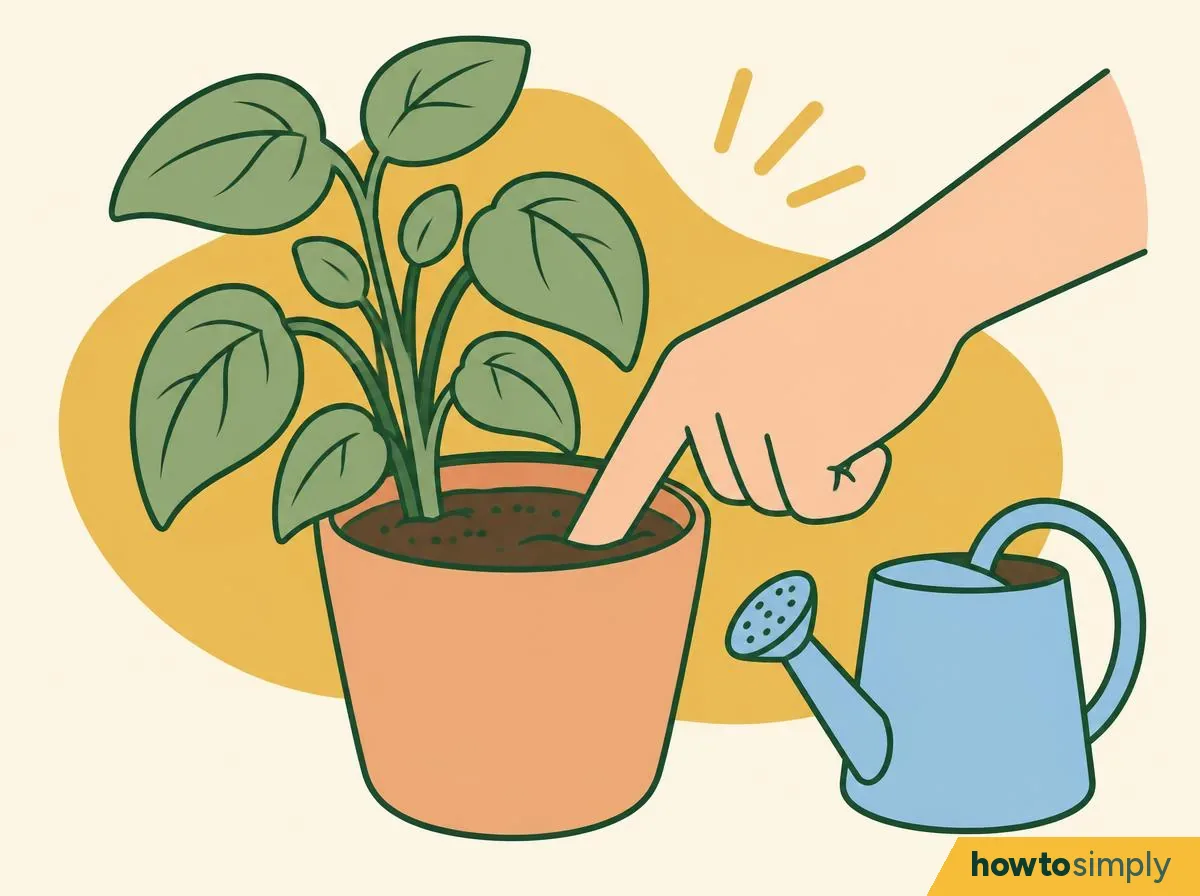
Illustration Most herbs don't like wet soil, so let the mix dry between waterings. Water only when the mix is dry at least an inch (2.5 cm) down, then water until it drains from the hole and tip away the runoff. However, some herbs, such as rosemary, should never have their mix dry out completely (Illinois Extension). So if your habit is to give every pot a splash each morning out of love, I am afraid that kind of love can drown them.
Water basil in the morning if you can: it dislikes wet roots overnight and doesn't like its leaves splashed.
You should see: water running from the drainage hole, then an empty saucer. Our watering guide shows the checks in detail.
Add a grow light if the window is too dark.
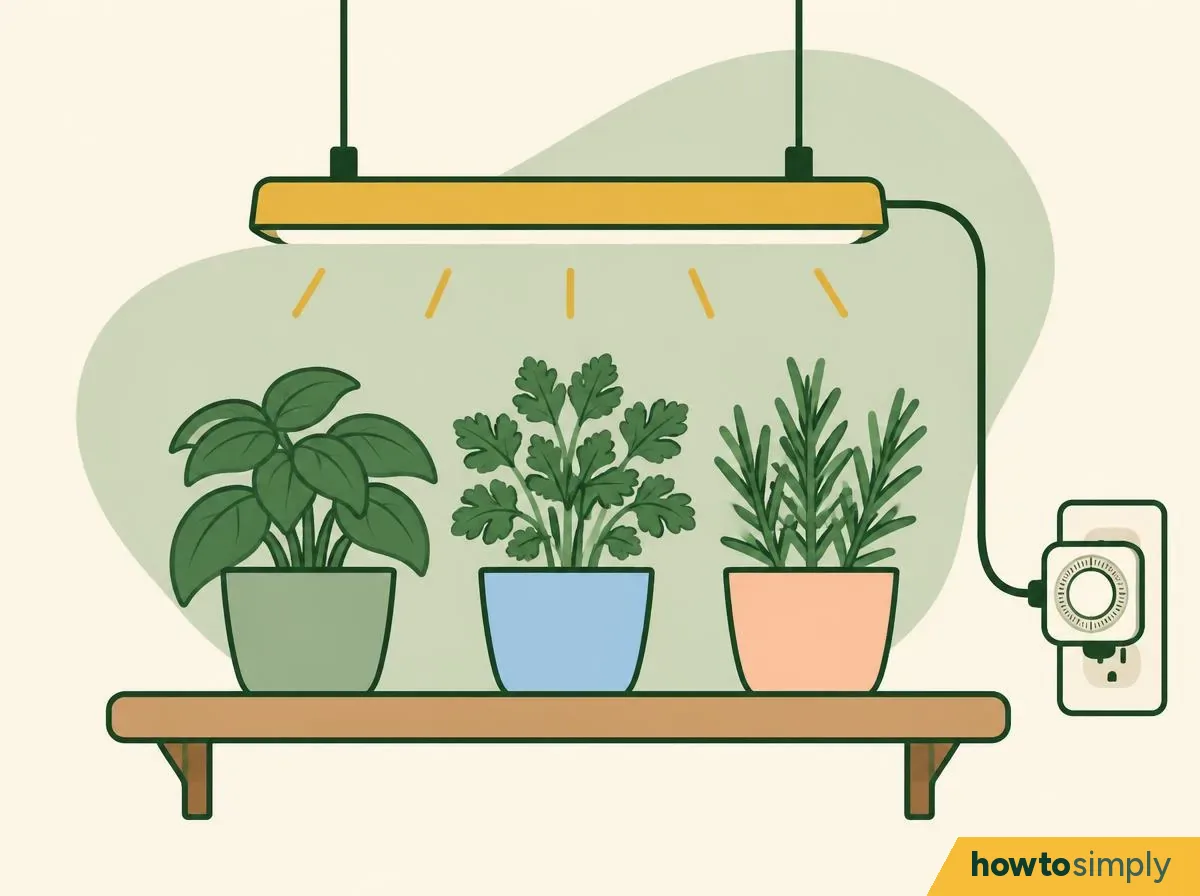
Illustration In winter, or at a shady window, a grow light fills the gap. Look for a full-spectrum grow light in a high-output fixture (Iowa State). Place it 6 to 12 inches (15 to 30 cm) from the leaves and plug it into a timer set for 12 to 16 hours a day.
You should see: new growth that is not leggy and spindly.
Feed lightly in spring and summer only.
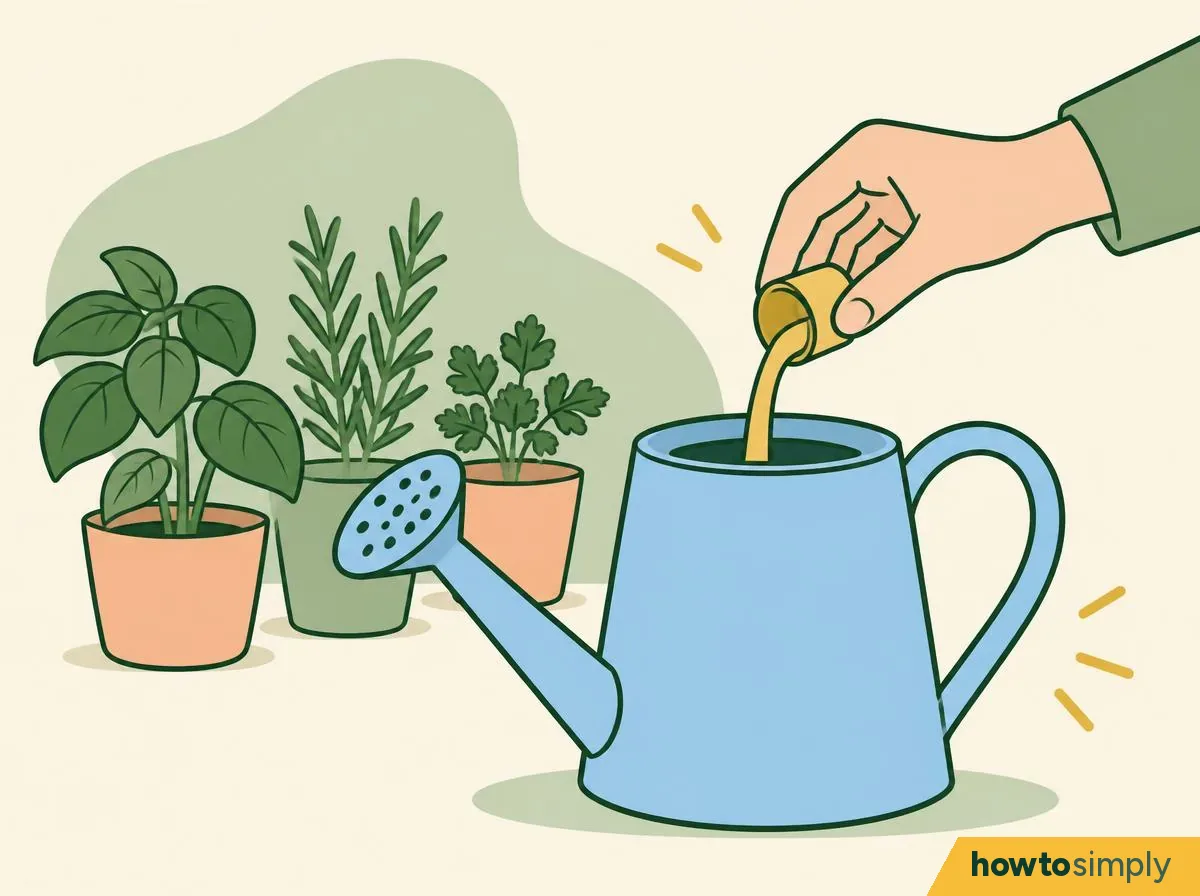
Illustration Use an all-purpose fertiliser at half or a quarter of the normal strength, from early spring through summer, and none in winter. Go easy, because too much feed can reduce aroma and taste, and flavour is the whole point of growing them. One thing no feed can change: many herbs grown indoors are not as strongly flavoured as ones grown outside, although basil still tastes like basil (Iowa State).
You should see: no feeding at all in winter.
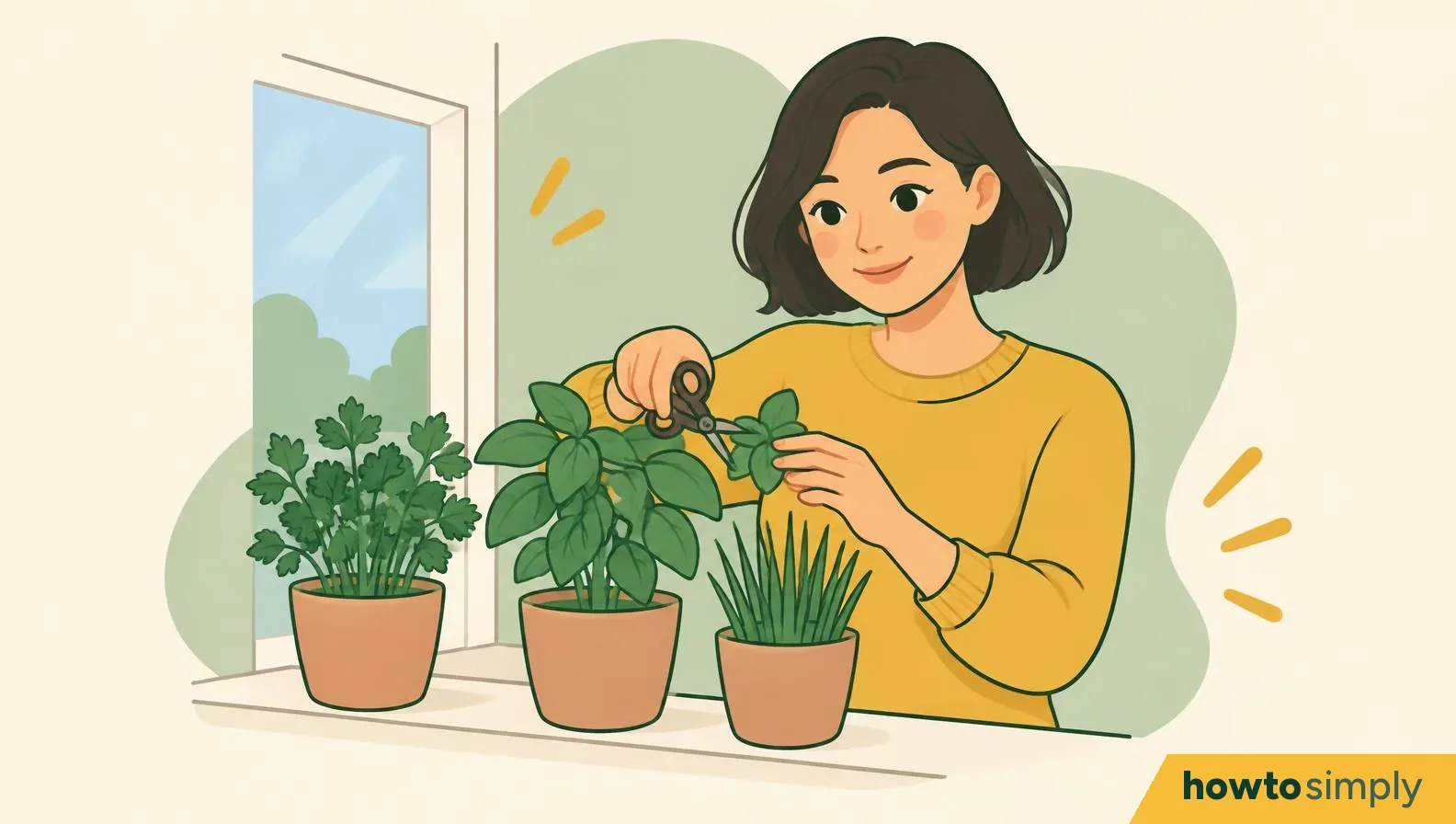
Snip the tips often, and never take more than the plant can regrow.
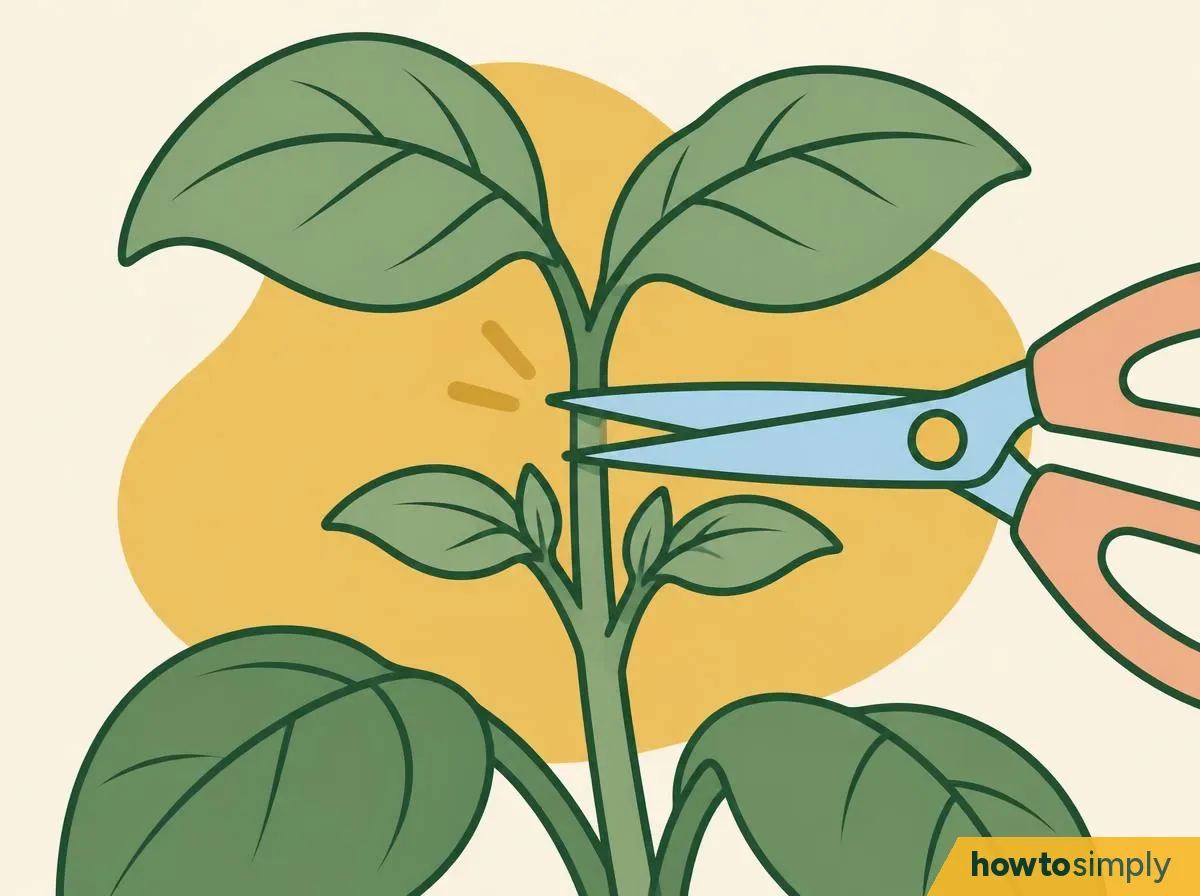
Illustration: cut just above a pair of leaves Pinching out the growing tip makes basil branch and grow bushier. With leafy annuals like basil and parsley, snip just above a leaf or a pair of leaves and leave roughly 4 to 6 inches (10 to 15 cm) of stem so it grows back; with perennials like chives, mint, oregano and thyme, cut no more than the top third. Cut parsley and coriander stalks at the base. When spring frosts are over, rosemary, bay and marjoram can spend the summer outdoors and carry on giving you leaves (Iowa State).
You should see: plants staying compact as you keep trimming them often.
Herb by herb
| Herb | Light | Water | How to pick |
|---|---|---|---|
| Basil | Warm, sunny spot | Keep evenly moist; water in the morning | Pinch out tips; leave 10 to 15 cm of stem |
| Parsley, coriander | 6+ hours of sun | When dry 2.5 cm down | Cut whole stalks at the base |
| Chives, mint, oregano, thyme | 6+ hours of sun | Let it dry between waterings | Top third only |
| Rosemary | May need more light than most | Never let it dry out completely | Cut a few inches down the stem |
| Sage | May need more light than most | Let it dry, but not until leaves wilt | Cut a few inches down the stem |
Sources: RHS (basil), Iowa State, Illinois and NC State extension services.
How to tell your herbs are happy
- New growth is compact, not leggy and spindly.
- The leaves are a good green and smell strongly when you rub them.
- The mix dries out within a few days of watering, and the saucer is empty.
- Regular trimming keeps the plants compact and stops them flowering.
If something goes wrong
| What happens | What it means | What to do |
|---|---|---|
| Leggy, spindly stems | Too little light | Move to a sunnier window or add a grow light 15 to 30 cm above; trim back |
| Yellowing lower leaves, mix always wet | Overwatering or a pot that's too big | Let it dry out; repot into a smaller pot with a drainage hole |
| Flowers forming | Flowering lowers the flavour | Cut the flowering tips off and harvest more often |
| Basil collapses in a crowded supermarket pot | Crowding invites fungal disease | Divide and repot the clumps |
| Tiny insects on shoot tips or under leaves | Possibly aphids | Rinse with lukewarm water; see our aphid guide |
| Annual herbs after several harvests | Time to replace them | Discard and start new plants from seed |
From the writer
Abu Bakar, who wrote this article, has grown his own chillies, tomatoes and even lettuce in pots for years. In his own words:
“For an imperfect gardener like me, a little praise from the guests and some fresh fruits and vegetables in the season is a real morale booster. It is fun, and I think it is nice at the end of the day to come home and eat fresh vegetables.”
Questions readers ask
Why does my basil keep dying in winter?
Basil needs warmth and light. The RHS says it isn't hardy in the UK and needs warm conditions, and Iowa State says giving herbs enough light indoors is difficult, especially in winter when days are shorter. A grow light on a timer helps.
Should I let my herbs flower?
Not if you want leaves. Illinois Extension says to trim plants often to keep them compact and stop them flowering, because flowering lowers the flavour.
Can I use pesticide on herbs I eat?
Washington State University's PestSense advises against chemical controls on indoor edible plants such as herbs. Rinse aphids off with lukewarm water instead and remove badly affected shoots.
Sources and method
- Researched by
- Abu Bakar Saadat
- Pictures
- 8 illustrations drawn for this article: drawings, not photos.
- Sources
- Steps checked against the 5 named sources linked below.
- What this page adds
- A close-up of where to cut a basil stem, a herb-by-herb table of light, water and picking, and a table for leggy, yellowing or flowering herbs.
What to do next
Grow something new indoors Step 2 of 6
- How to start seeds indoors, from sowing to planting outGive seeds a head start before spring.
- How to grow a hyacinth bulb in water: roots first in the dark, then flowers indoorsA winter flower in a glass.
- How to get a Christmas cactus to flower: long nights, a cool room and no bud dropGet the Christmas cactus to bloom on time.
Did this solve the problem?
Where did you get stuck?
Get new guides by email
Our newest guides, sent to your inbox. Free, and you can unsubscribe in one click.
We'll email you to confirm. How we use your email
Follow howtosimply on Facebook
We share every new article on our Facebook page, so the next fix turns up in your feed.
Follow on FacebookWhat did you think?
Reaction counts are loading.
Sources
We use primary, official and specialist sources appropriate to the topic.
- Iowa State University Extension: Growing herbs indoors (Aaron Steil, last reviewed November 2023)
- University of Illinois Extension: Herbs all winter: grow them indoors (Brittnay Haag, 8 January 2021)
- NC State Extension, Union County: Growing herbs indoors (Debbie Dillion, 18 October 2021)
- RHS: How to grow basil (no page date)
- Washington State University PestSense: Aphids (last reviewed 11 December 2025)