How to clean a tumble dryer filter
Researched by Abu Bakar Saadat8 min read
Last updated: 15 November 2026References

On this page 9 sections
In short
Clean the fluff filter after every load: pull it out, peel off the fluff, rinse it if needed and let it dry fully. On condenser and heat pump dryers, also empty the water tank every cycle and clean the heat exchanger as your maker says.
At a glance
- Fluff filter
- After every load (Bosch, Samsung, fire services)
- Water tank
- Empty after every cycle on condenser and heat pump dryers (Bosch)
- Heat exchanger
- Every 2 weeks (Bosch condenser); at least monthly (Samsung heat pump)
- Never
- Run it while you sleep or are out (West Yorkshire and Cheshire FRS)
- Advice from
- Bosch UK, Samsung, West Yorkshire, Cheshire and South Wales Fire and Rescue Services, read 28 October 2026; fire service links re-checked 12 November 2026
- Checked
- November 2026
A dryer that takes ages, or clothes that come out still damp, can really wear you down, especially with a pile of washing waiting by the door. The cure is often hiding in plain sight: clear the fluff and the hidden parts, and the machine works better and safer too.
You need to know why this matters. A full fluff filter makes the dryer slower and is a fire risk: fire services ask you to clear it every time you use the machine (West Yorkshire and Cheshire Fire and Rescue Services). Condenser and heat pump dryers have two more jobs: the water tank and the heat exchanger. Steps 1 to 4 are for every dryer, so start there whatever model you have.
Which dryer do you have?
A vent pipe leads to a flap outside
Vented dryer. Do steps 1 to 4 and step 8. No water tank or heat exchanger.
A water tank; heat exchanger behind a maintenance flap
Condenser dryer. Do steps 1 to 7. Bosch says its EasyClean filter and heat exchanger need cleaning every two weeks.
A water tank, sold as "heat pump"; some have a reminder light
Heat pump dryer. Do steps 1 to 7. Samsung recommends cleaning the heat exchanger once a month or more often.
A washing machine that also dries
Washer-dryer. Samsung says some washer-dryers have no lint filter: the drain pump removes the lint, so clean the drain pump filter regularly instead. Check your manual.
How to clean it
Careful: let the programme finish, including its cool-down (South Wales FRS). Before you clean the heat exchanger, unplug the dryer (Samsung).
Let the programme finish, including its cool-down.
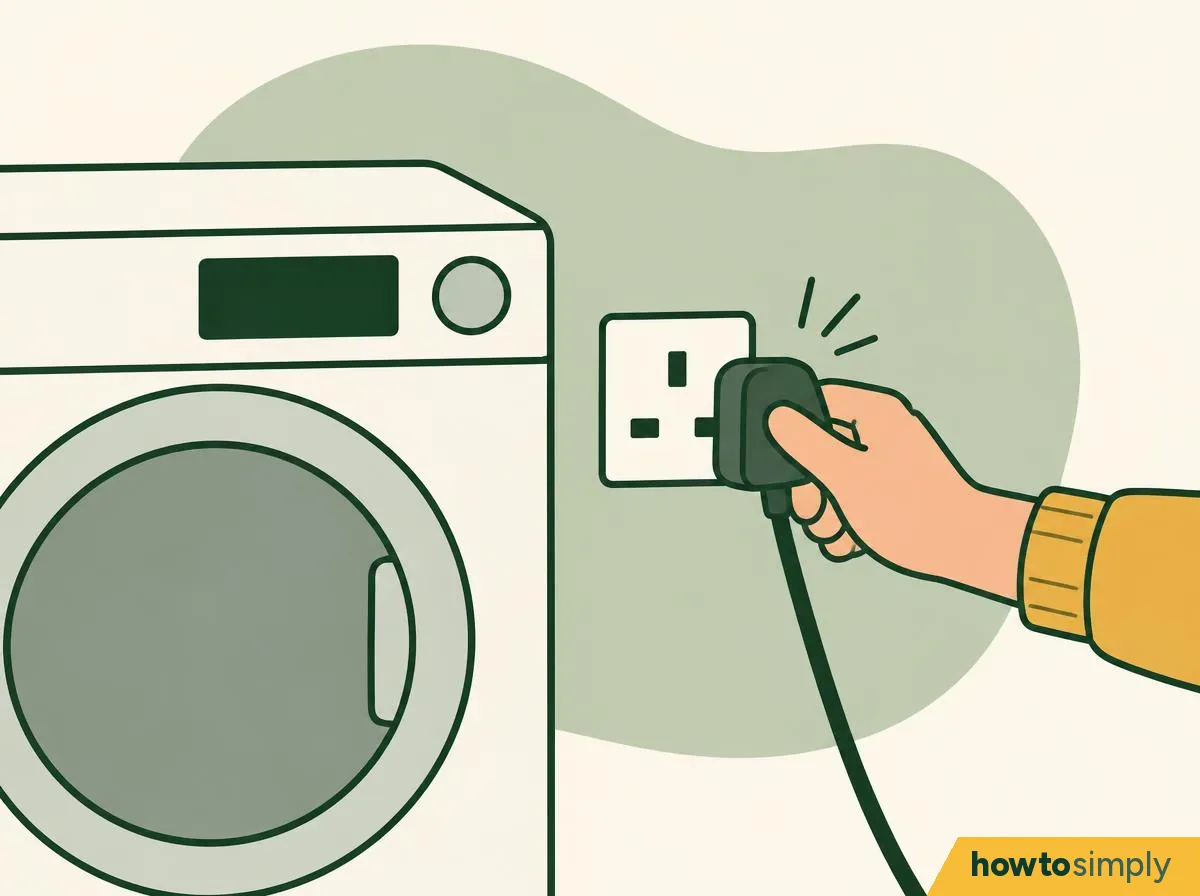
Illustration The reason you wait is that stopping a dryer mid-cycle leaves the clothes hot. So let the full programme run, cool-down included, before you empty it (South Wales FRS).
You should see: a dark display and a drum that is warm at most, not hot.
Pull out the fluff filter.

Illustration Open the door. On Bosch dryers the filter sits behind and under the door (Bosch). On Samsung dryers you pull it upwards to remove it (Samsung). Bosch and Samsung filters come in two parts that separate.
You should see: a flat mesh filter with a layer of grey fluff on it, and an empty slot where it sat.
Open the filter, peel off the fluff and brush the mesh.

Illustration Open the filter and take out the inner part if it has one (Samsung). Peel the fluff off both parts and put it in the bin. It is that easy. Bosch also tells you to clear the fluff out of the little hollow in the fluff filter. Brush the mesh with the cleaning brush (Samsung).
If any fluff remains, rinse both parts under running water (Bosch, Samsung).
You should see: mesh you can see light through, and no fluff in the slot.
Careful: always put the inner filter back inside the outer one before you run the dryer (Samsung).
Dry the filter completely, then put it back.
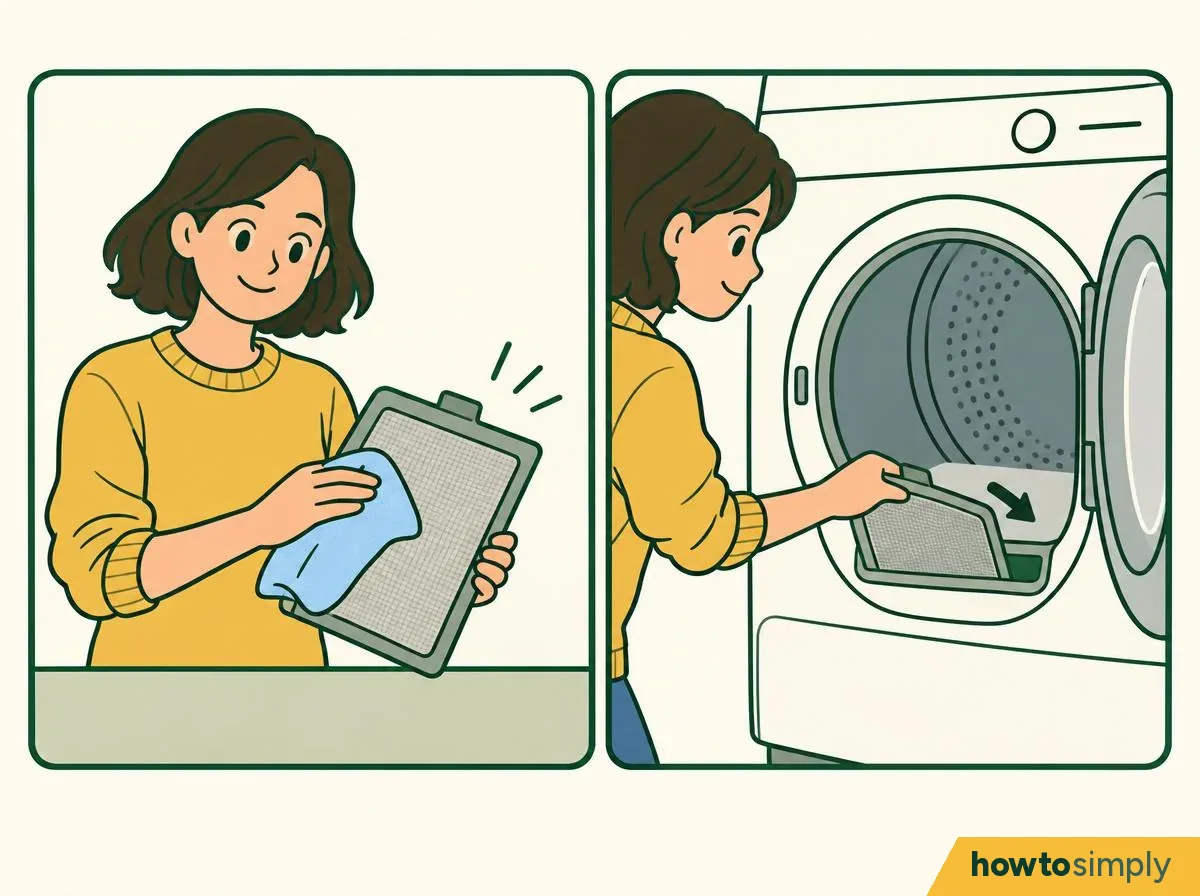
Illustration Dab the filters dry using a cloth or some kitchen roll (Bosch). If you rinsed it, make sure it is fully dry first, because Samsung says a wet filter can cause mould, bad smells and slower drying. Put the inner part back inside the outer one and slide the filter back into its slot (Samsung).
You should see: the filter sitting flush in its slot, and the door closing normally.
Empty the water tank (condenser and heat pump dryers).
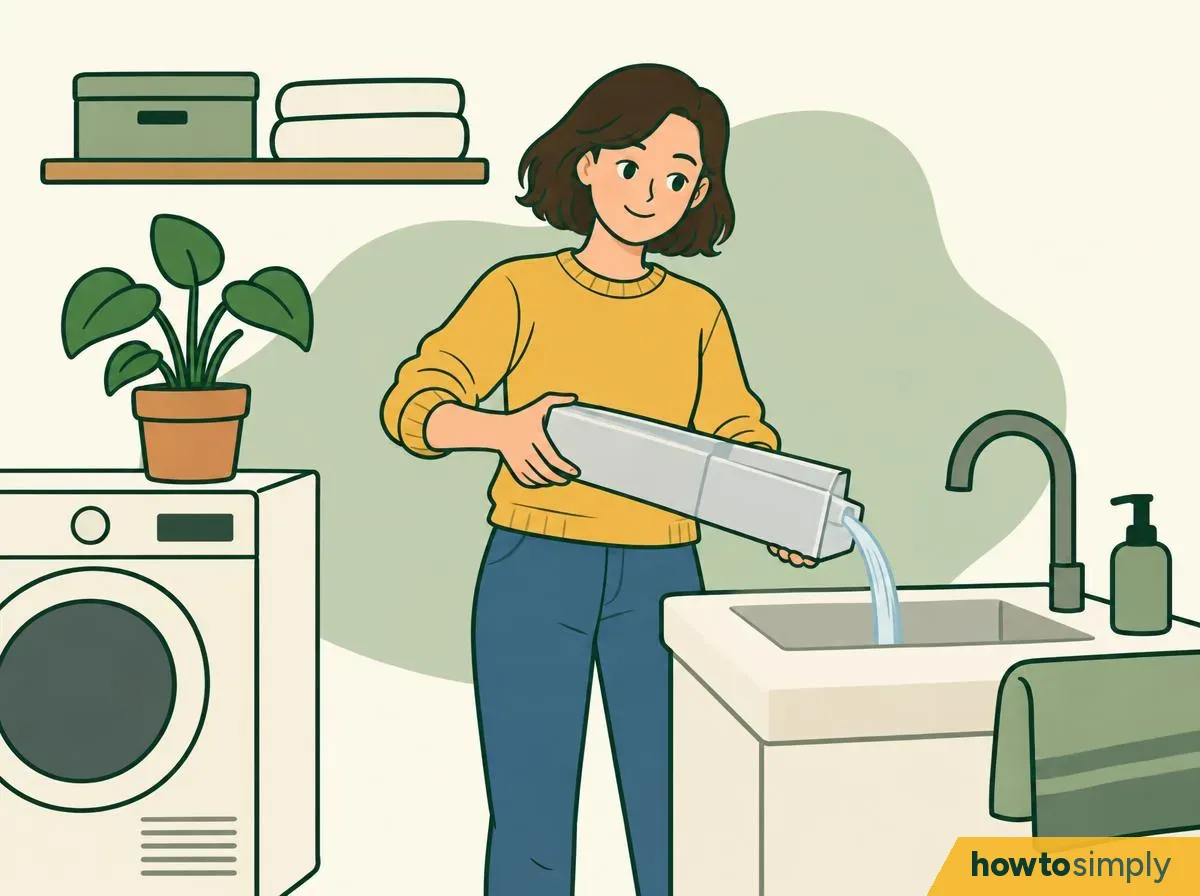
Illustration Next, the water tank. Bosch says to empty the tank after every cycle. Pull it out slowly and keep it level, pour the water into the sink and push the tank back in firmly. The water may be warm (Bosch).
You should see: the tank securely back in place.
Careful: unplug the dryer first and don't touch the heat exchanger fins with bare hands: Samsung warns of burns and injury, and Bosch says the same about bare hands. Don't bend the fins (Samsung).
Open the maintenance flap or cover and clean the heat exchanger.
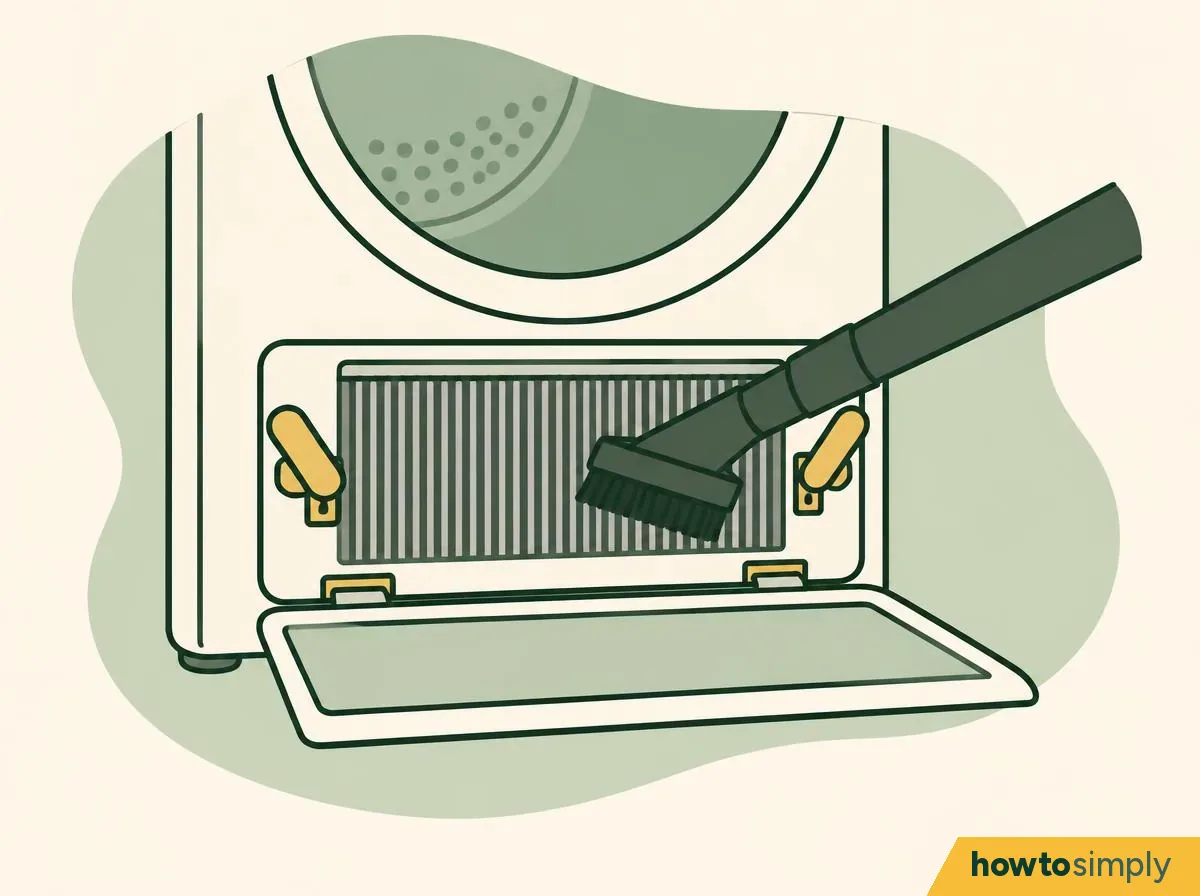
Illustration Bosch condenser dryers: open the maintenance flap, release the levers and pull out the EasyClean filter. Wash and dry its mat by hand. Some heat exchangers can be taken out and rinsed with water; otherwise clean it with a soft brush (Bosch).
Samsung heat pump dryers: push on the top edge of the outer cover, low down on the front of the dryer, so it opens; then release the levers on the inner cover and slide it out. Sweep the fins using the brush that came with the dryer or your vacuum's brush nozzle; if the heat exchanger has dried out and the fluff won't shift, mist it with a little water first. Wipe the inner cover with a damp cloth, refit it and lock the levers (Samsung).
You should see: both levers locked.
Clean the moisture sensor in the door area.

Illustration The moisture sensor is also easy to miss. The sensor near the door checks how damp your washing is, so a film of limescale or leftover detergent and fabric conditioner on it can throw the drying off. Bosch says to clean it with a coarse sponge, but never with abrasives or steel wool, which can damage it.
You should see: no limescale or detergent residue on the sensor.
Vented dryers: check the hose and the outside flap.
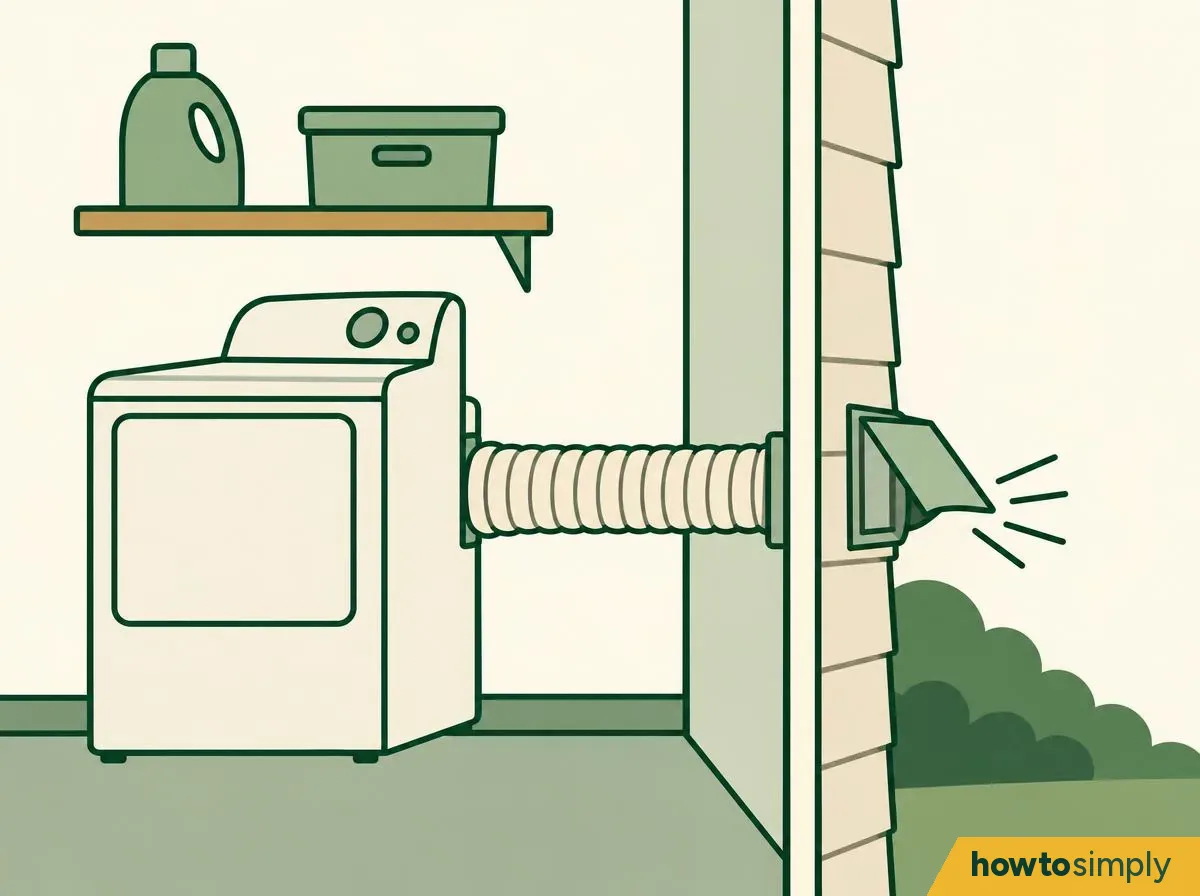
Illustration The vent hose should be free from kinks, and the flap on the outside vent should open while the dryer runs (West Yorkshire FRS). Cheshire FRS also says vents shouldn't be blocked or kinked.
You should see: a hose free from kinks and the outside flap opening when the dryer is on.
How often, by part
| Part | How often | Source |
|---|---|---|
| Fluff filter | After every load | Bosch, Samsung, West Yorkshire and Cheshire FRS |
| Water tank | After every cycle | Bosch |
| Condenser filter and heat exchanger | Every two weeks | Bosch |
| Heat pump heat exchanger | At least once a month | Samsung |
| Moisture sensor | Regularly; no exact interval given | Bosch |
| Vent hose | Check it is straight and clear | West Yorkshire and Cheshire FRS |
How to tell it worked
- The filter mesh is clear and the filter is back in place, dry.
- The tank is empty and securely back in place.
- The next load dries in its usual time.
- Clothes are not hotter than usual at the end of the cycle, and there is no burning smell.
If something goes wrong
| What happens | What it means | What to do |
|---|---|---|
| Clothes still damp after a normal cycle | Blocked filter or heat exchanger, or an overloaded drum | Clean both (Samsung, Bosch) and dry smaller loads (Samsung) |
| Musty smell after cleaning | Possibly a filter that went back wet: Samsung says this may cause mould and bad odours | Take it out, dry it fully and refit it |
| Heat exchanger reminder won't go off | Some Samsung models show it after every cycle by design | Tap to dismiss; unplug and replug, or refit the inner cover (Samsung) |
| Water drops near the heat exchanger | Condensation; Samsung says this is normal and not a leak | Nothing; it is normal (Samsung) |
| Burning smell, or clothes hotter than usual | A fault | Stop using it and have it checked by a professional (Cheshire FRS) |
Questions readers ask
Can I wash a tumble dryer filter with water?
Yes, on Bosch and Samsung dryers: both say you can rinse the filter under running water. Samsung says to let it dry completely before you put it back, because a wet filter can cause mould, smells and slower drying.
Why is my dryer taking so long to dry?
Check the filter: Samsung says if you don't clean it after each load, drying performance may decrease. West Yorkshire Fire and Rescue Service adds that stuffing the drum too full can make it overheat and makes a fire more likely. On condenser and heat pump dryers, also clean the heat exchanger.
The clean-filter light stays on after I cleaned it. Why?
On some Samsung heat pump dryers the heat exchanger reminder lights up after every cycle by design. Samsung says to tap the button to dismiss it; if it won't go, unplug and replug the dryer or take out and refit the inner cover.
Is it safe to run the dryer overnight?
Fire services say no. West Yorkshire and Cheshire Fire and Rescue Services both advise against starting a tumble dryer when you go to bed or leave the house.
Sources and method
- Researched by
- Abu Bakar Saadat
- Pictures
- 10 illustrations drawn for this article: drawings, not photos.
- Sources
- Steps checked against the 6 named sources linked below.
- What this page adds
- A drawing of opening the lower flap and vacuuming the heat exchanger fins, a how-often table for each part with sources, and a table for clothes that stay damp.
What to do next
The small jobs that keep a home running Step 3 of 5
- How to get rid of drain flies: find the drain they come from, then scrub it outTiny flies near the sink live in the drain.
- How to get rid of fruit flies: find where they breed, then trap the restTiny flies near the fruit bowl are a different fly.
- How to descale a shower head without damaging the finishScale blocks the jets bit by bit.
Remind me
Clean the tumble dryer's filter and heat exchanger every 14 days (Bosch, condenser dryers). Add a repeating reminder to your own calendar. It links back to this page.
Nothing is sent to us. The reminder lives only in your calendar.
Did this solve the problem?
Where did you get stuck?
Get new guides by email
Our newest guides, sent to your inbox. Free, and you can unsubscribe in one click.
We'll email you to confirm. How we use your email
Follow howtosimply on Facebook
We share every new article on our Facebook page, so the next fix turns up in your feed.
Follow on FacebookWhat did you think?
Reaction counts are loading.
Sources
We use primary, official and specialist sources appropriate to the topic.
- Bosch UK: Tumble dryer cleaning
- Samsung UK: How to clean the lint filter on a tumble dryer (updated 18 December 2020)
- Samsung Australia: Cleaning the heat exchanger on a Samsung dryer (updated 11 September 2026)
- West Yorkshire Fire and Rescue Service: Electricals (tumble dryers)
- Cheshire Fire and Rescue Service: Appliance safety
- South Wales Fire and Rescue Service: Tumble dryer dos and don'ts