Power went off? How to reset a tripped RCD (FI-Schalter, GFCI) and find what tripped it
Unplug everything on the dead circuit, push the wider safety switch in your fuse box fully down and then back up, then plug things back in one at a time. The one that trips it again is faulty. If it trips with nothing plugged in, call an electrician.
Researched by Abu Bakar SaadatLast changed 17 November 2026Verified 17 November 2026Version 7See all changes
 Illustration
On this page 18 sections
In short
Unplug everything on the dead circuit, push the wider safety switch in your fuse box fully down and then back up, then plug things back in one at a time. The one that trips it again is faulty. If it trips with nothing plugged in, call an electrician.
Current advice
Unplug everything on the circuit, push the RCD lever fully down and then up, and plug things back in one at a time to find the faulty one[1][2]. If it trips with nothing plugged in, or keeps tripping, get a registered electrician[1][5].
Information, not professional advice.
Latest update
17 November 2026. We re-read the sources. All five opened today and still support the steps, the warnings, the inspection intervals and the German prices on this page. Two small details in the body are not in any source we list: a burning smell as a reason to switch a circuit off, and US GFCI outlets being usually in the kitchen or bathroom. We note them below and don't repeat them.
What changed in this version
- Added the record layout: key facts with numbered sources, a table of what a trip may mean, what the sources agree on and where they differ, this history and more reader questions.
Key facts
- An RCD (FI-Schalter in Germany) compares the current going out with the current coming back, and cuts the power, usually within milliseconds, when some leaks away through a faulty appliance or a person.[1][2]
- Look for a switch labelled RCD, RCCB, RCBO or FI. If its lever is down, it has tripped. Some stop half-way, so push the lever fully down before pushing it up.[1][2]
- Pull the plugs out rather than switching sockets off, because the RCD can still sense a faulty appliance at a switched-off socket. Turn a cooker or electric shower off at its isolator switch.[2]
- Plug things back in one at a time, waiting a few seconds each. The one that trips the switch is faulty: leave it unplugged and don't use it until it is repaired or replaced.[1][2]
- Holding the lever up won't work while a fault is there: the switch is built to cut out again straight away.[1]
- If it trips with everything unplugged, the fault is often in something wired in, such as the oven, the heating or outside lights, or in the wiring. Call an electrician.[1]
- Pressing the Test or T button should switch off the power to the areas the RCD protects. If it doesn't, get a registered electrician to investigate.[3][5]
- For a US GFCI outlet, Leviton says to test it monthly with TEST and RESET, and to replace it straight away if it is discoloured, warm or holds plugs loosely.[4]
Losing the lights out of nowhere is unsettling, especially when it happens after dark. Usually it is only the safety switch doing its job, and we will get it reset together in a few minutes.
An RCD cuts the power, usually within milliseconds, when it detects current leaking away, for example through a faulty appliance or a person. That is why it trips (ADAC), and it is a good thing it does, because it is there to protect you. If it's dark, use your phone's torch (and if it won't come on, see iPhone flashlight not working).
Same switch, three names
| UK | Germany | US | |
|---|---|---|---|
| Name | RCD (also RCCB, RCBO) | FI-Schalter | GFCI |
| Where | In the consumer unit (fuse box) | In the Sicherungskasten | Usually an outlet in the kitchen or bathroom, with TEST and RESET buttons |
| How to spot it | A switch with a "Test" or "T" button | A wider switch marked "FI" or "RCD" | Two buttons between the sockets |
Step by step
Before you start
- Time: The sources don't time it. When you plug things back in, wait a few seconds after each one[1].
- Who it's for: Homes with an RCD or FI switch in the fuse box, and US homes with GFCI outlets[1][2][4].
- Not for: Water on the electrics: switch that circuit off at its breaker and call an electrician[2]. Repairs to the fixed wiring by non-electricians are not allowed in Germany and can kill[1].
Find the switch that's off
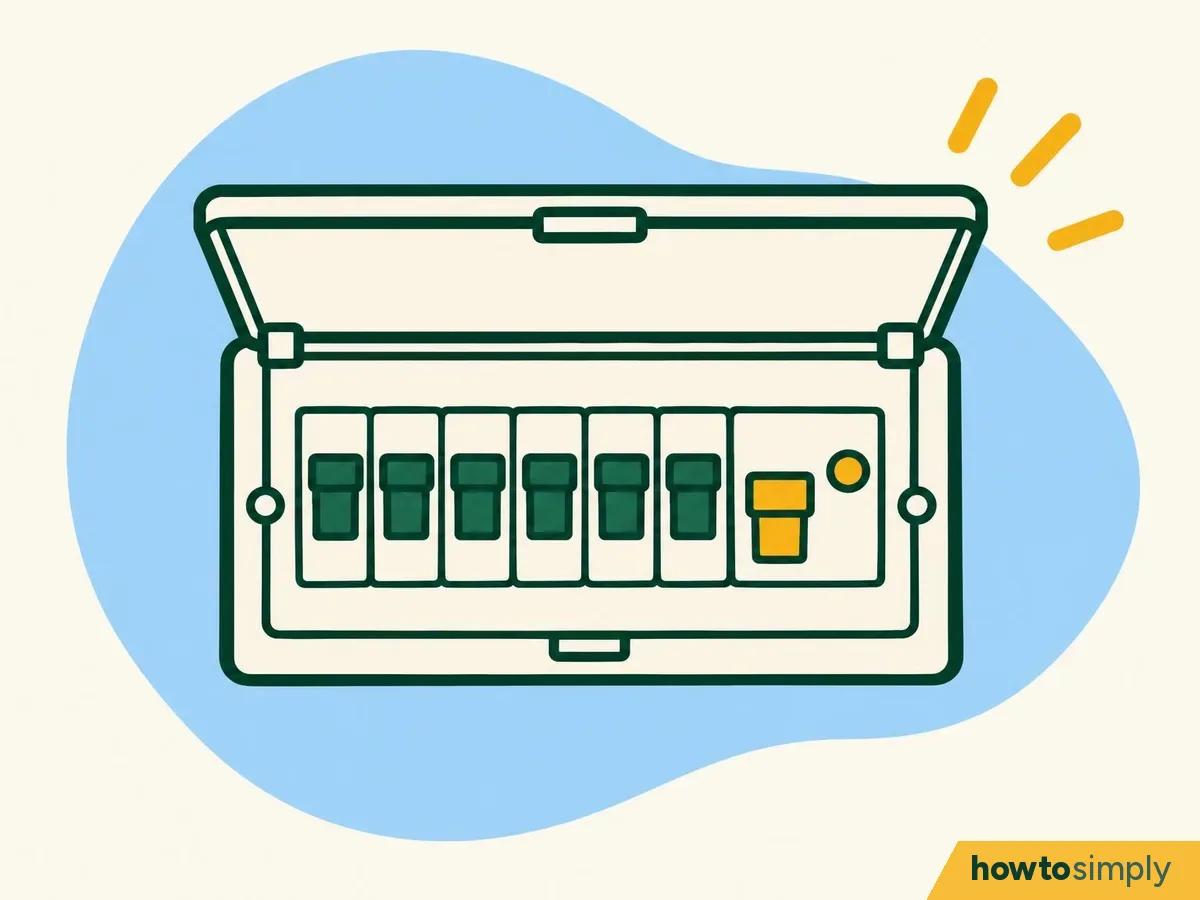
Illustration Open the fuse box. The RCD is usually wider than the other switches and has a test button. If its lever is down, it has tripped (RBH). Make sure you look closely, because ADAC says some switches stop half-way when they trip and look as if they are on from a distance.
Unplug everything on that circuit
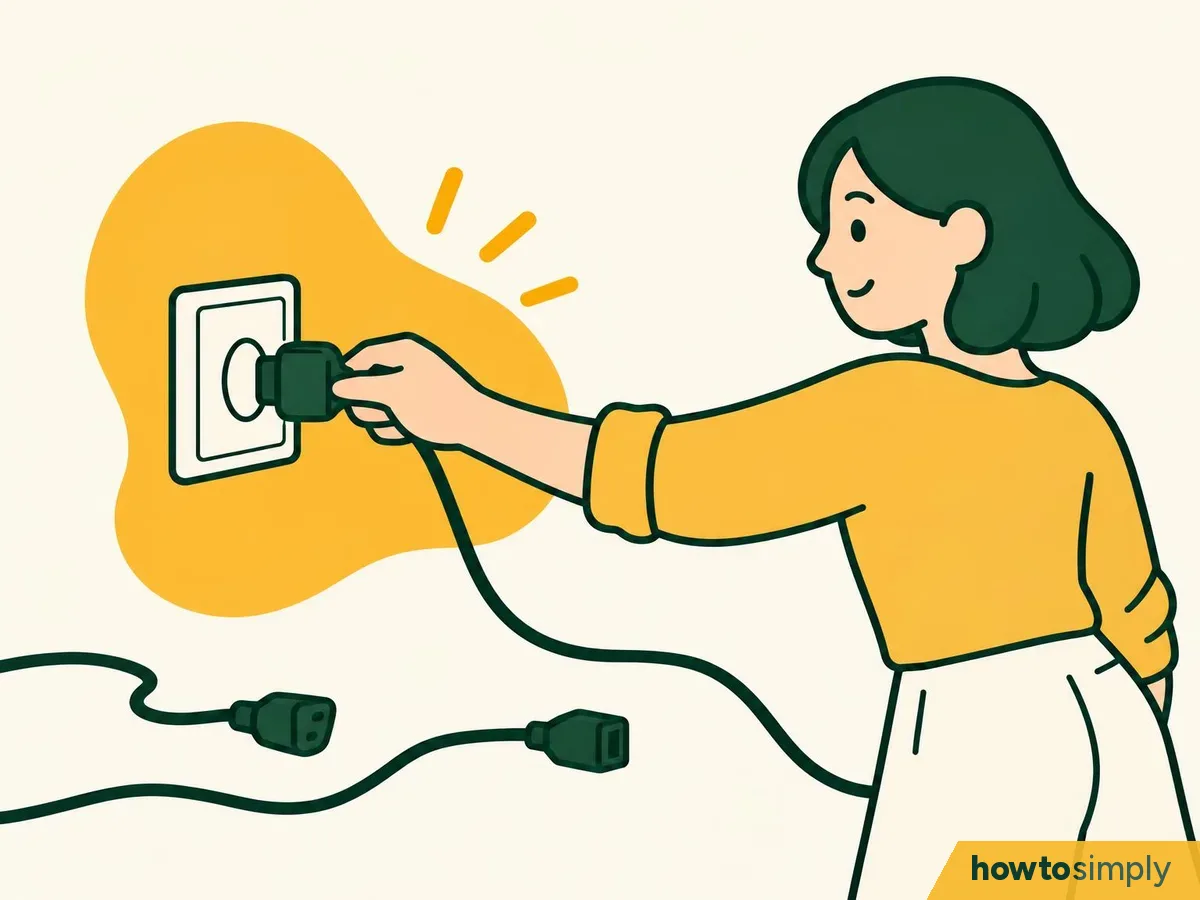
Illustration Pull the plugs out. Just switching the socket off won't do, because the RCD can still pick up a faulty appliance (RBH). Switch a cooker or electric shower off at its own isolator switch. Rarely used things are easy to miss, so don't forget a freezer in the cellar, or extension leads and power strips (ADAC).
Push the lever fully down
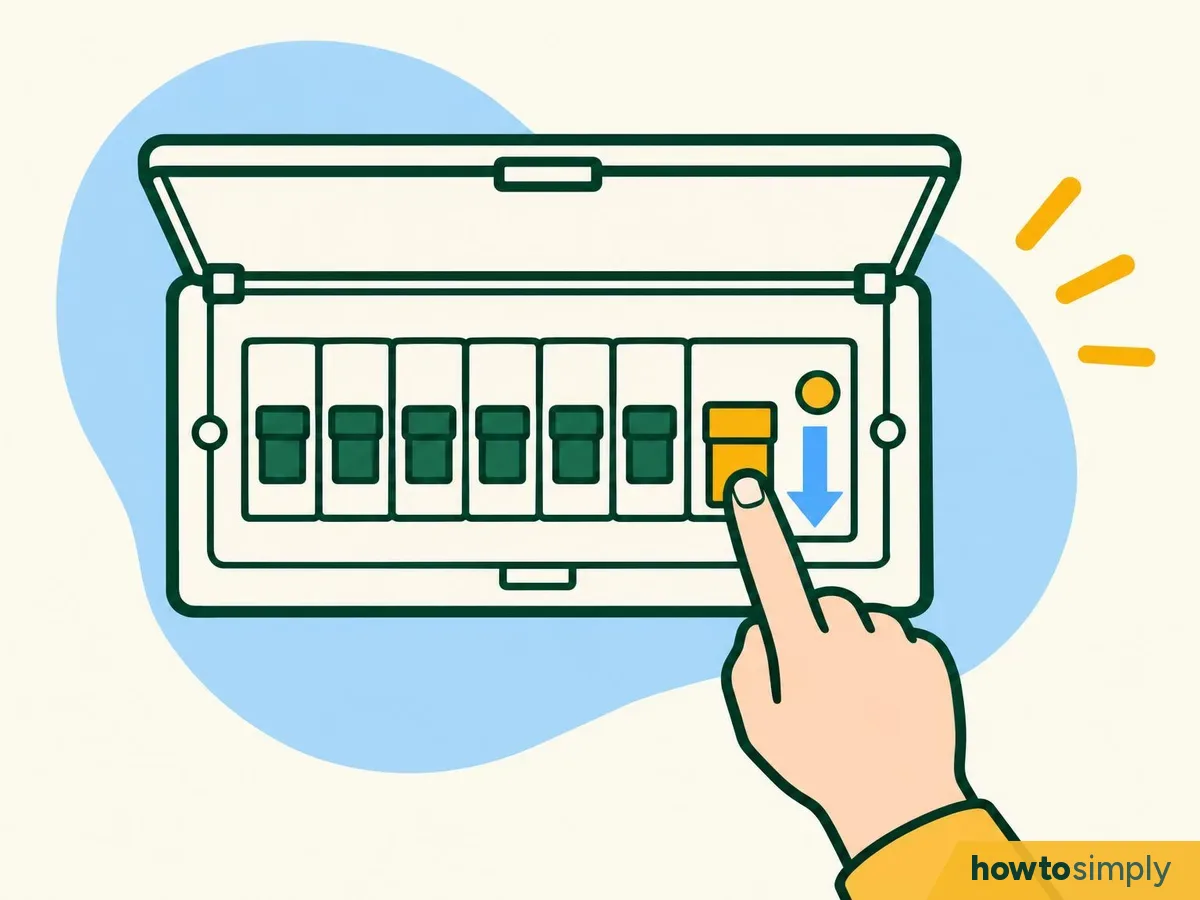
Illustration If the lever is stuck half-way, push it all the way down first (RBH, ADAC).
Push it back up
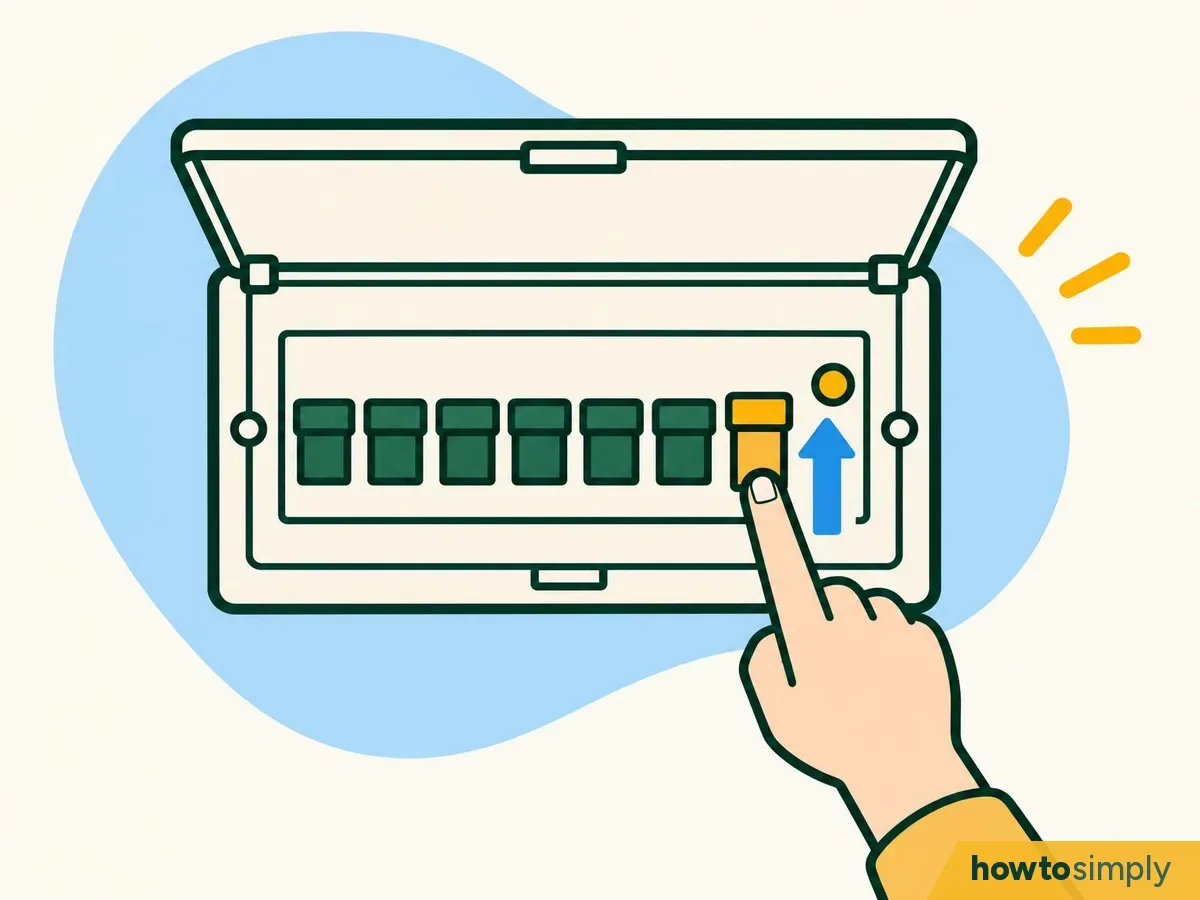
Illustration Push it firmly up. If it stays on, an appliance was the cause (ADAC). If it snaps straight back down with everything unplugged, go to "If this doesn't work" below.
Plug each thing back in, one by one
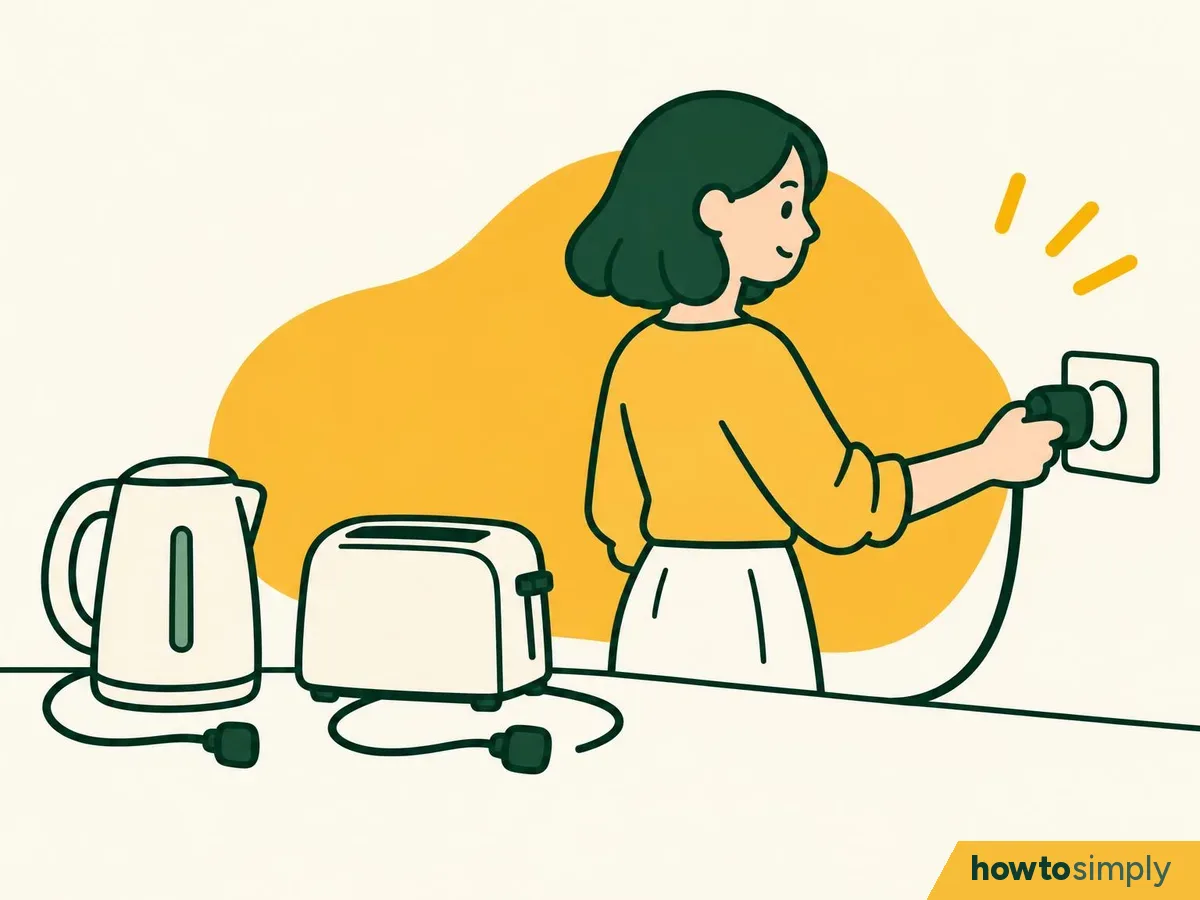
Illustration Wait a few seconds after each one. It takes a little patience, but it is worth it: when the RCD trips again, you've found the faulty appliance (ADAC). Leave it unplugged, reset the RCD, and don't use that appliance again until it's repaired or replaced (RBH, ADAC).
How to tell it worked
In the US: reset a GFCI outlet
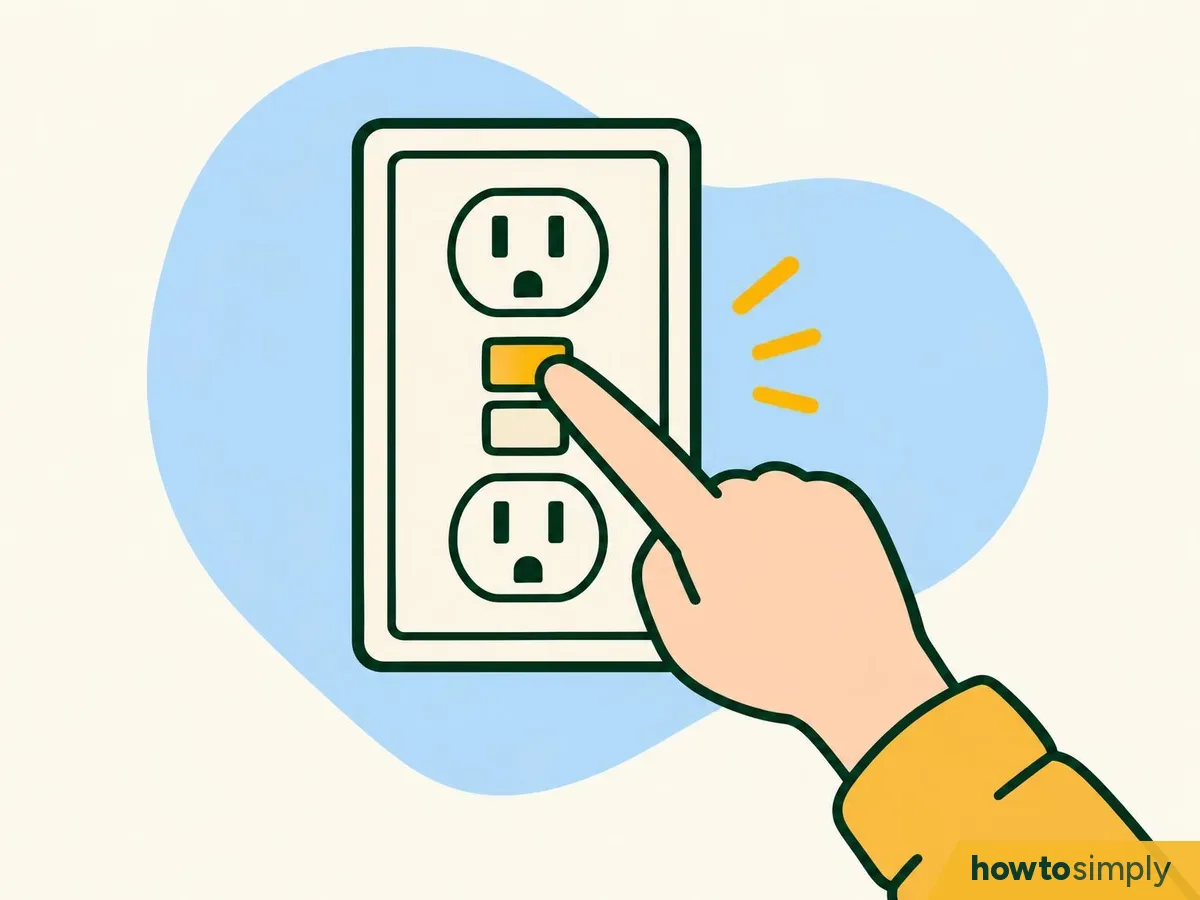
Leviton says to look first: replace the outlet straight away if it is discoloured, warm or holds plugs loosely, and check what was plugged in for frayed cords. Think about what you were using when it tripped and unplug that device, as it may be faulty. Then press RESET. If it keeps tripping, or there is no obvious cause, Leviton says to contact an electrician.
If this doesn't work
- It trips again with everything unplugged: ADAC says the fault is then often in something wired in, like the oven, the heating or outside lights, or in the wiring itself. Call an electrician.
- Find the faulty circuit: RBH's method is to switch all the circuit breakers off, switch the RCD on, then turn the breakers on one at a time. Leave off the one that trips it, switch the rest back on, and call an electrician.
- Water near electrics, a burning smell or scorch marks: switch that circuit off at its breaker and call an electrician (RBH, Electrical Safety First).
- The power is off but every switch is up: check whether the neighbours or street lights are out too. In older buildings, there may also be main fuses before your flat's box, for example in the cellar or hallway (ADAC).
- Don't force it: holding the lever up won't work, because the switch is built to trip again while a fault exists (ADAC). Don't attempt repairs to the electrics yourself: that is not allowed for laypeople and is life-threatening (ADAC).
What usually trips it
ADAC lists these common causes:
- Moisture: water in a cellar, in an outdoor socket, or in a badly sealed bathroom.
- An appliance with a hidden fault: a washing machine or toaster can seem to work and still have an internal insulation fault.
- A damaged cable: for example one hit while drilling into a wall.
- A surge: a lightning strike or a sudden disturbance in the grid.
Electrical Safety First says that if an RCD keeps tripping, there is likely a fault with an appliance or the wiring, and a registered electrician should look at it.
Test it with the test button
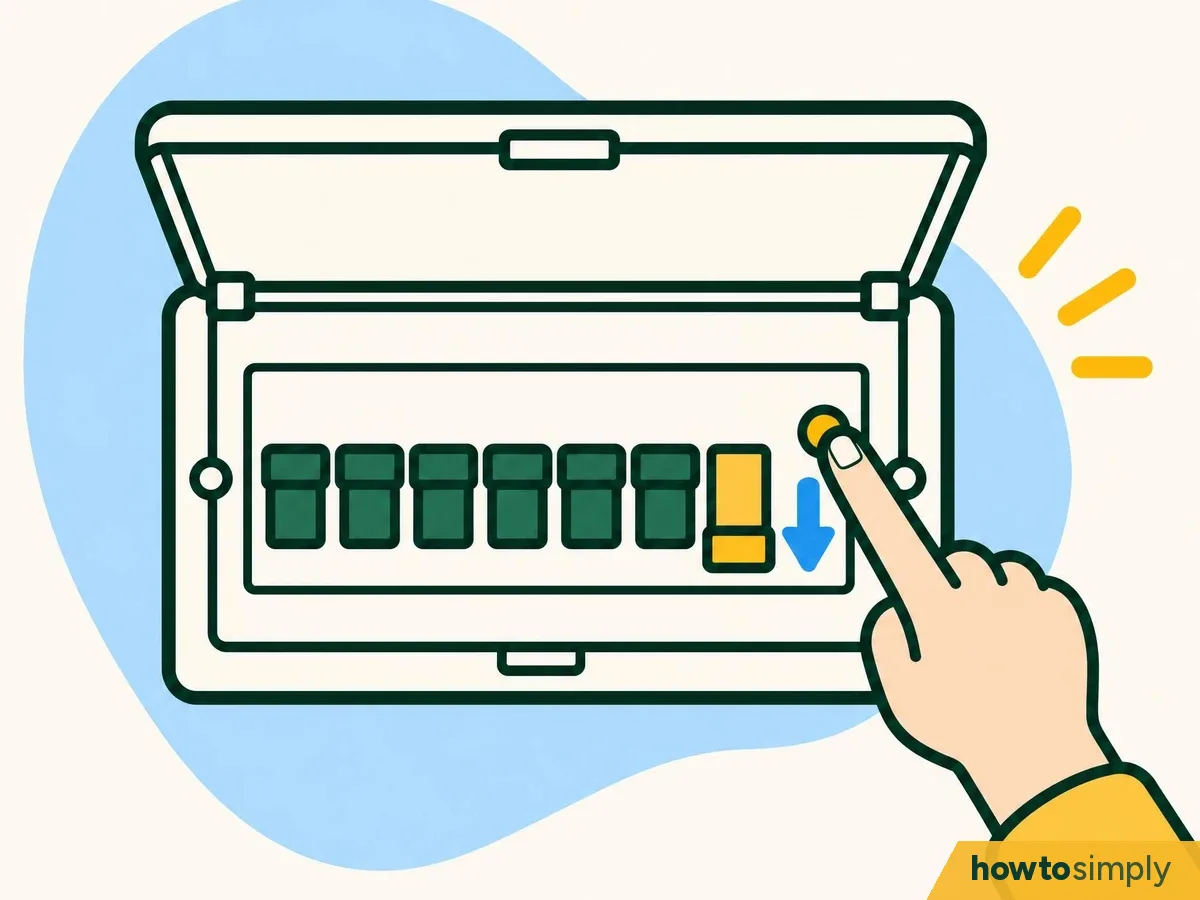
Pressing the "Test" or "T" button switches off the power to the parts of the home the RCD protects (Electrical Safety First), so the lever should drop. Push it back up afterwards. ADAC says regular testing matters, and a switch that fails the test or doesn't trip properly needs replacing. Electrical Safety First says to get a registered electrician to investigate if it fails.
No RCD in your fuse box?
- UK: older consumer units may have no RCD. Electrical Safety First says this doesn't necessarily mean they are unsafe; an Electrical Installation Condition Report (EICR) by a registered electrician will show whether they are. If there is no working RCD, it suggests plug-in RCDs for the sockets. It suggests an EICR every 10 years or sooner if you own and live in the home, and every 5 years or whenever the tenant changes if it's rented.
- Germany: older systems that haven't been altered generally don't have to be upgraded if they met the rules when built and are still safe, but ADAC recommends it. Rooms with a bath or shower have needed RCD protection since 1984. A tenant who wants one fitted must ask the landlord's permission and pay for it.
What it costs in Germany
ADAC gives rough prices: 25 to 150 euros for the switch itself, about 150 to 300 euros to have an electrician fit it, and about 800 to 2,500 euros to retrofit a whole older building, including materials, testing and paperwork.
What a trip may mean, and what to do
| What you see | Possible cause | What to do |
|---|---|---|
| It trips suddenly | Leaking current from a faulty appliance, damp or a damaged cable[1] | Stop pushing it up, unplug things and call an electrician if needed[1] |
| It won't switch back on | The fault is still there[1] | Unplug everything and try again; call an electrician if it still fails[1] |
| It trips when one appliance goes back in | A fault inside that appliance[1] | Stop using it; have it repaired or replace it[1][2] |
| It trips with nothing plugged in | A fault in the fixed wiring, such as a cable or socket[1] | Have the circuit checked by an electrician[1] |
| It trips often, for no clear reason | Leakage from damp, damaged insulation or a slowly worsening fault[1] | Professional fault-finding[1][5] |
| Power is off but no switch looks down | A switch stuck half-way, or a main fuse outside your flat[1] | Push each switch fully down then up; check neighbours and the main fuses[1] |
| US GFCI outlet is warm, discoloured or loose | The outlet itself[4] | Replace it straight away[4] |
Graphic by howtosimply, from the sources below.
What the sources agree on
- Unplug everything, reset the switch, then plug things back in one by one to find the faulty appliance.[1][2]
- If the lever won't go up, push it fully down first and then up.[1][2]
- A switch that keeps tripping, or trips with no clear cause, needs an electrician.[1][4][5]
- Test the device regularly with its test button.[1][4][5]
Where the sources differ, or nothing is confirmed
- Older homes without an RCD: Electrical Safety First says this isn't necessarily unsafe, an inspection report will tell you, and plug-in RCDs can cover sockets meanwhile[3]. In Germany, unchanged older systems generally don't have to be upgraded, but ADAC strongly recommends it, and bathrooms have needed RCD protection since 1984[1].
- Inspections: Electrical Safety First recommends one at least every 10 years for an owner-occupied home and every 5 years, or at each change of occupant, for a rented one[5]. ADAC gives no interval, only regular button tests[1].
- Not from a source: the body mentions a burning smell as a reason to switch a circuit off, and says US GFCI outlets are usually in kitchens or bathrooms. The sources we list mention water on the electrics, burn and scorch marks, but not these two points.
Record history
- Version 7. Sources re-read and the page moved to the record layout, with numbered key facts, a table of what a trip may mean, agree and differ lists, this history and more reader questions.
- Version 6. Added the Sources and method box and the Researched by byline.
- Version 5. A second pass on wording that sat close to the sources.
- Version 4. Sentences that sat too close to the sources' own wording were reworded, and the test-button illustration was redrawn.
- Version 3. Wording reworked across the page.
- Version 2. Each step now names its source underneath, and the follow line at the end is shorter.
- Version 1. First published, with UK, German and US steps and illustrations.
Questions
Who pays to fit an FI switch in a rented flat in Germany?
ADAC says that unless new sockets or cables go in, the landlord doesn't have to retrofit one. A tenant who wants one must ask permission and pay for it. If the landlord adds a new socket circuit, for example with a new kitchen, the landlord must add the protection.[1]
Can one FI switch cover a whole house in Germany?
Not under current standards, ADAC says. The circuits must be split across several switches so that one fault never cuts power to the whole home.[1]
How often should I have my electrics inspected in the UK?
Electrical Safety First recommends at least every 10 years if you own and live in the home, and every 5 years or at each change of occupant if it is rented.[5]
The power is off but every switch is up. What now?
Check whether the street lights or the neighbours are out too; if so, it is a wider power cut. In older or larger buildings there may also be main fuses before your own box, for example in the cellar or hallway.[1]
Why won't my RCD switch back on?
Usually because the fault is still there. ADAC explains that the switch is built to trip again at once while a fault exists, even if you hold the lever up. Unplug everything on that circuit and try again.
Is it safe to keep using the appliance that tripped it?
No. ADAC says an appliance you have identified as faulty must not be used again, because of the risk of electric shock. Have it repaired or replace it.
How do I know if my fuse box has an RCD?
Look for a switch with a "Test" or "T" button. Electrical Safety First says pressing it should switch off the power to the areas it protects. If you have none, it recommends plug-in RCDs for your sockets.
How often should I test a GFCI outlet?
Leviton says to test it monthly by pressing TEST and then RESET.
Sources
- ADAC: FI-Schalter fliegt raus, was jetzt zu tun ist (German, 2 Sep 2026). Read 17 November 2026.
- RBH: How to reset a Residual Current Device (RCD). Read 17 November 2026.
- Electrical Safety First: RCDs explained. Read 17 November 2026.
- Leviton: What to do when your GFCI trips (PDF). Read 17 November 2026.
- Electrical Safety First: FAQ for Electrical Safety, Your Questions Answered. Read 17 November 2026.
Sources and method
- Researched by
- Abu Bakar Saadat
- Tested by our team
- No. We have no record of anyone on our team trying these steps, so treat them as researched instructions from the sources below.
- Pictures
- 8 illustrations drawn for this article, each marked Illustration (drawings, not photos).
- Sources
- 5 named sources, linked below.
- What this page adds
- A UK, Germany and US table of what the switch is called and how to spot it, a drawing of the wider switch that has dropped, and how to reset a US GFCI outlet.
- What we checked
- On 17 November 2026 we re-read ADAC's German guide to a tripping FI-Schalter, RBH's RCD reset page, Electrical Safety First's RCD page and its safety FAQ, and Leviton's GFCI application note (PDF), and checked every step, warning, interval and price on this page against them.
What to do next
When something goes wrong at home Step 3 of 5
- How to change the fuse in a plug: the right rating and when to stopOne appliance dead? Try the plug fuse.
- Toilet keeps running or leaking into the pan? How to find and fix the faulty partThe small leak that quietly costs you water.
- What to do if you smell gas: no switches, open windows, get out, callThe one that cannot wait.
Did this solve the problem?
Where did you get stuck?
What did you think?
Reaction counts are loading.