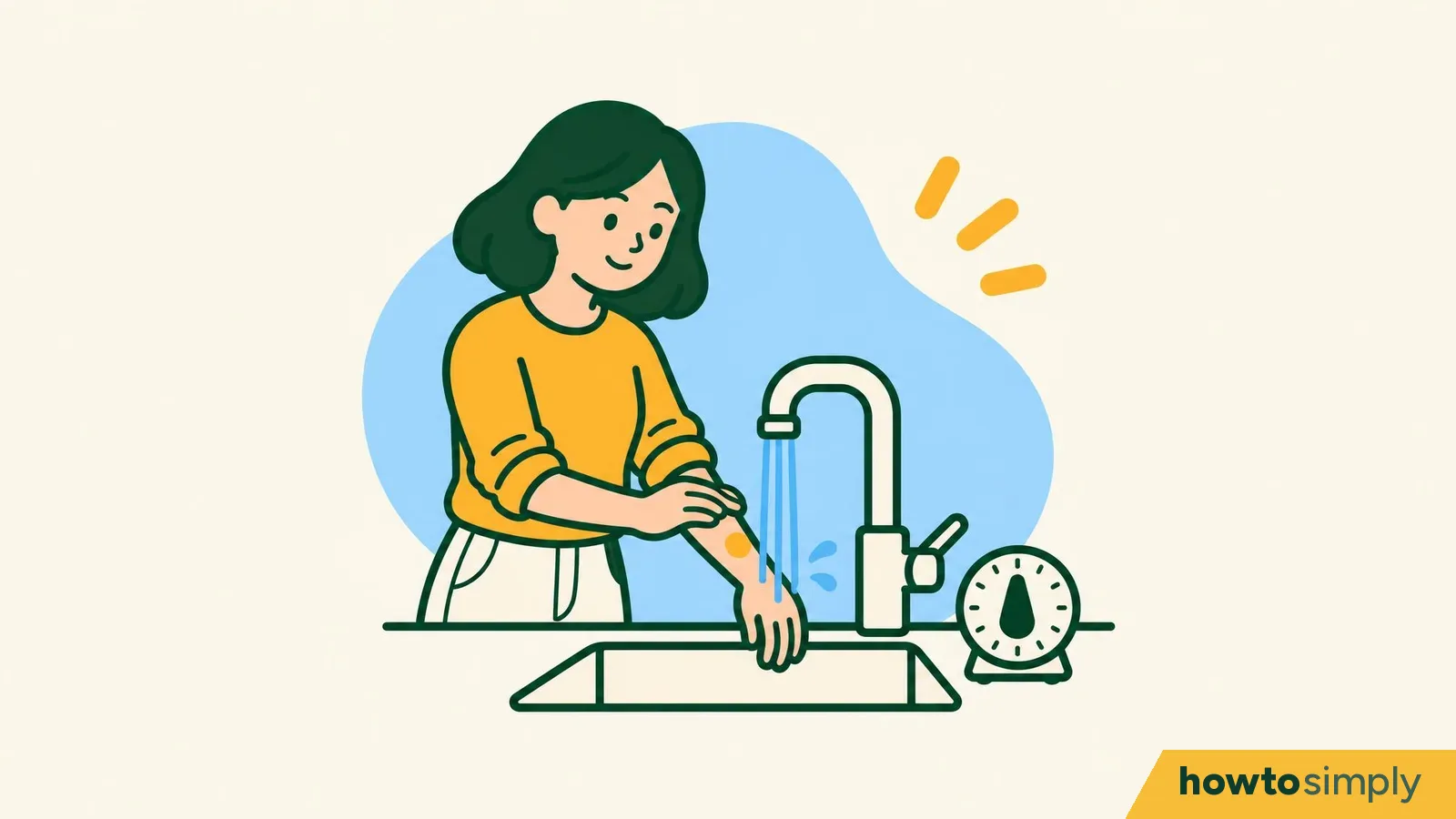
Wet your hands, add soap, then rub palms, backs, between the fingers, thumbs and fingertips for about 20 seconds. Rinse and dry completely. Use alcohol gel only when there's no soap and water.
Backs of hands, between fingers, thumbs, under nails (NHS, CDC)
Dry
Completely, with a clean or disposable towel (NHS, CDC)
Gel
At least 60% alcohol, only when there's no soap and water (CDC)
Gel doesn't beat soap on
Norovirus, dirty or greasy hands (CDC)
Children
Supervise them with gel so they don't swallow it (CDC)
Checked
October 2026
Most people rinse their palms and stop. The parts that get missed are the backs of the hands, between the fingers, the thumbs and the fingertips. The full routine takes about 20 seconds. Below, one example runs from dirty hands to clean, dry ones, with a drawing for every step.
When to wash your hands
After using the toilet, changing a nappy, or helping a child who has used the toilet (NHS, CDC).
Before and after handling raw food, and before eating or preparing food (NHS, CDC).
After sneezing, coughing or blowing your nose (NHS).
Before and after treating a cut or wound, or caring for someone who is being sick or has diarrhoea (NHS, CDC).
After touching animals, their food or their cages, and after touching rubbish (NHS, CDC).
Our example: Amira gets home
Every step below follows one story, and each drawing shows that exact moment. Amira gets home on the bus and goes to the kitchen to start dinner. Before she touches any food, she washes her hands at the sink. Her daughter joins in and they sing Happy Birthday twice together.
Part 1: Wash with soap and water
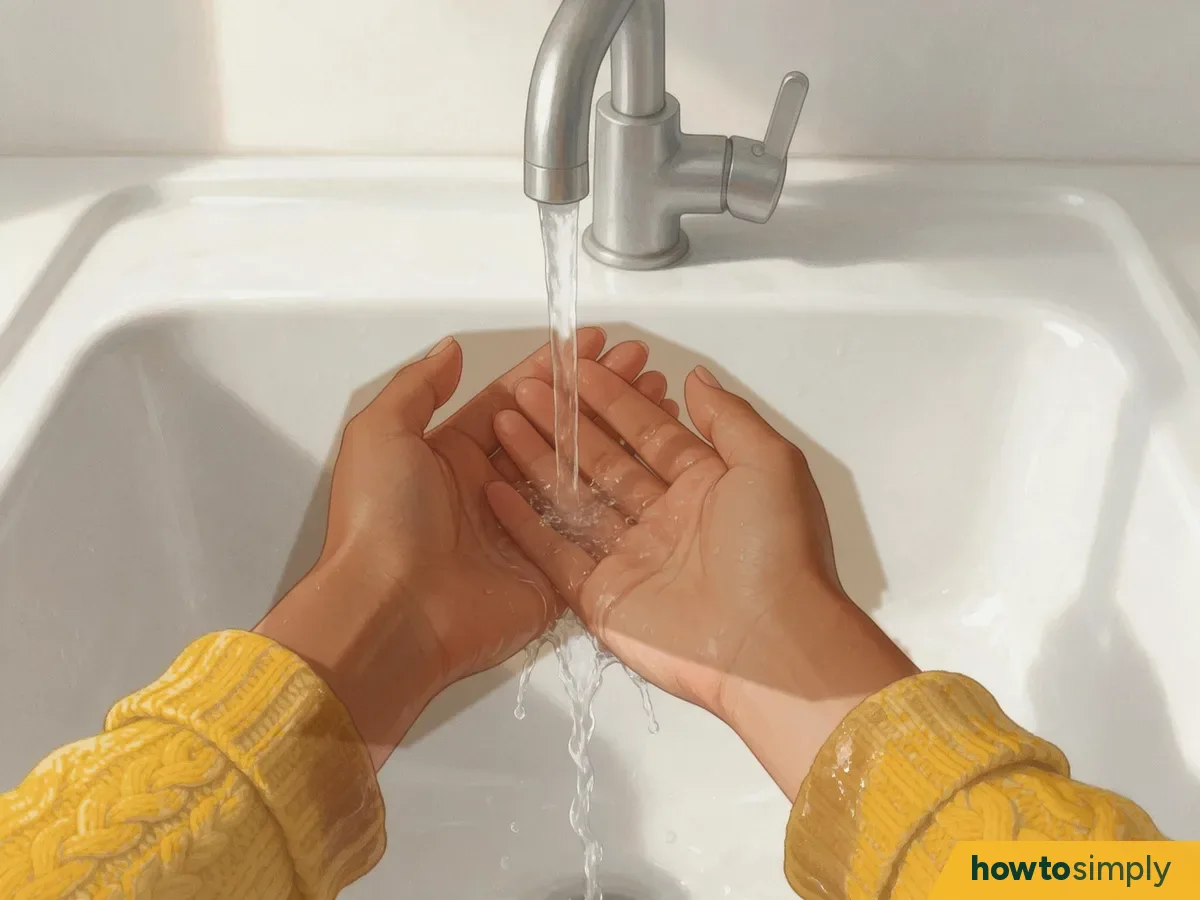
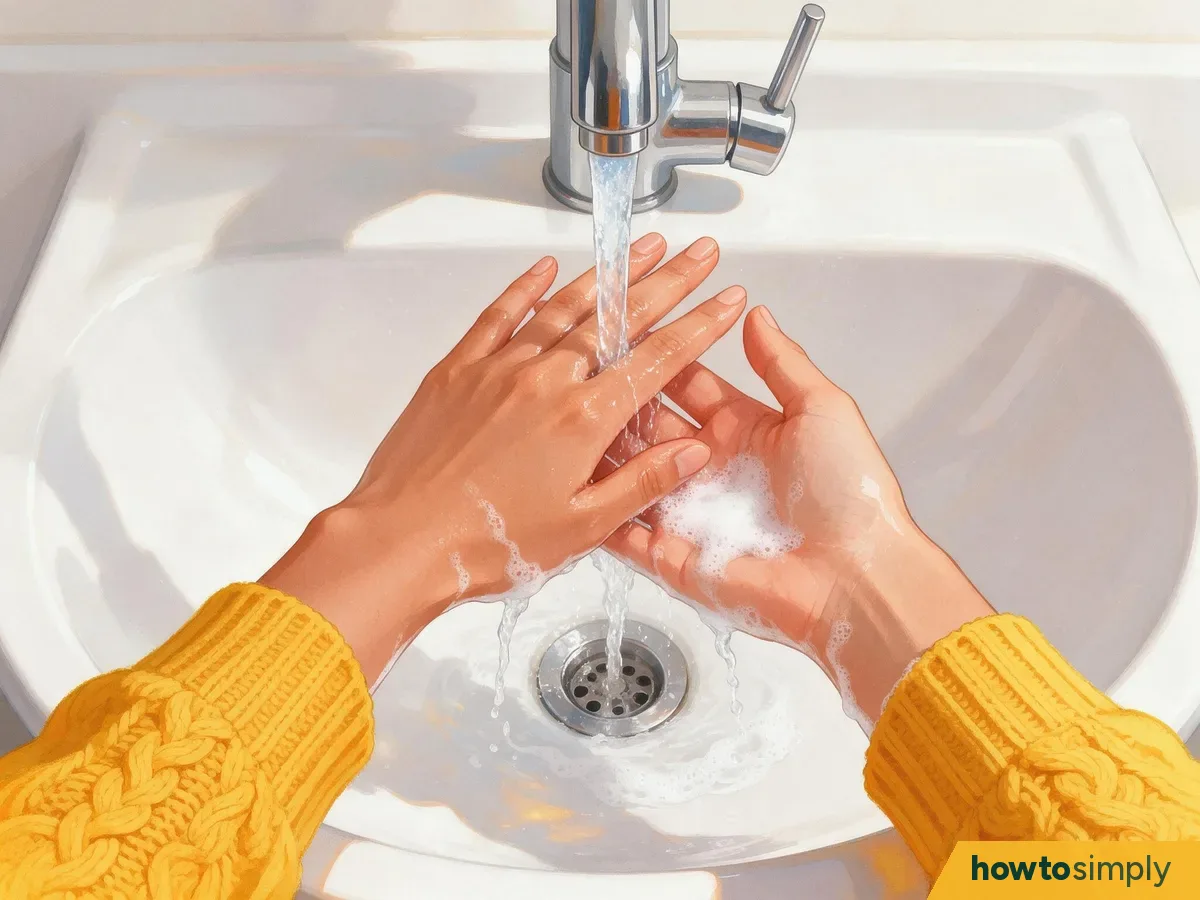
Take off rings and wet your hands.
Illustration
In our story: Amira slips off her ring, puts it on the windowsill and wets both hands under the tap.
Remove rings and bracelets if you can (NHS). Wet your hands with clean, running water (CDC).
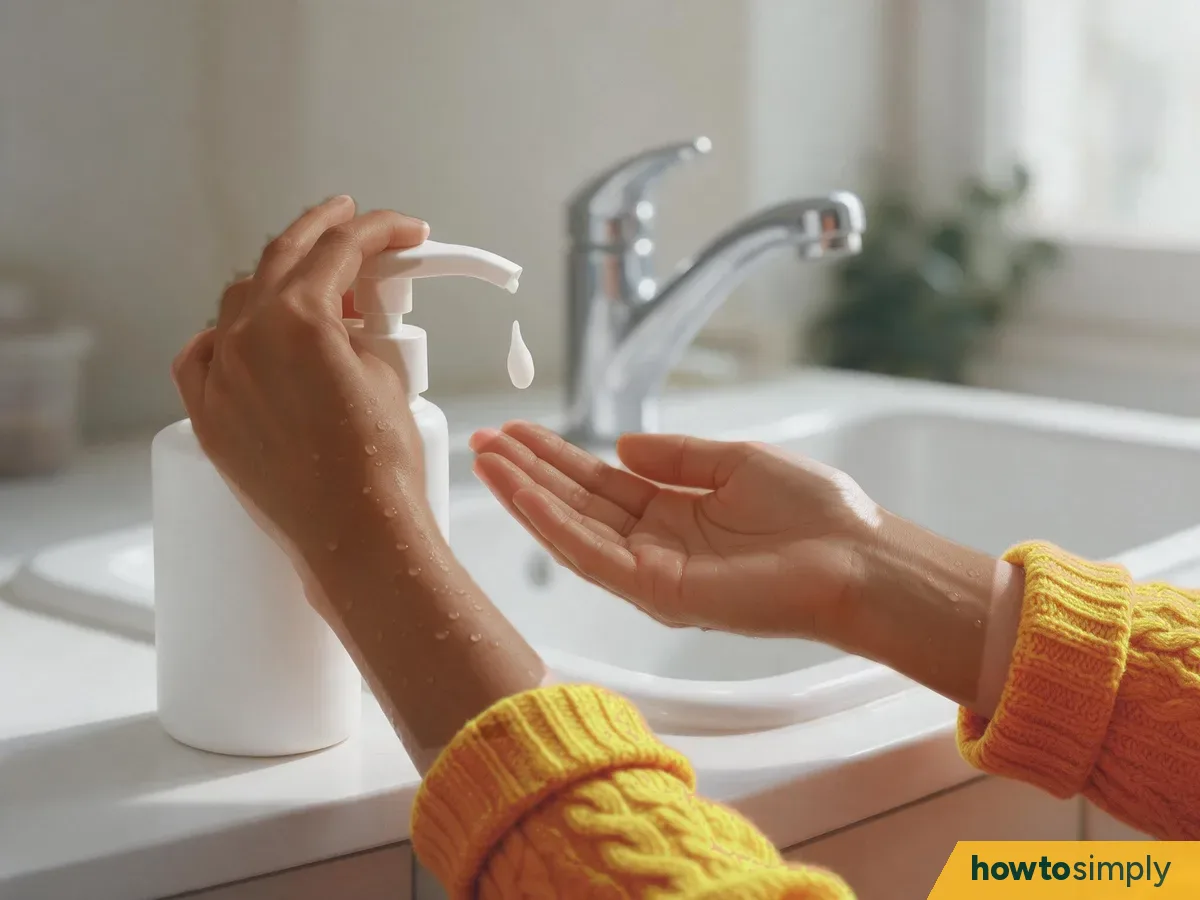
Add enough soap to cover your hands.
Illustration
In our story: She presses the soap pump once into her palm.
Use enough soap to cover both hands (NHS). CDC says to turn off the tap before you apply soap.
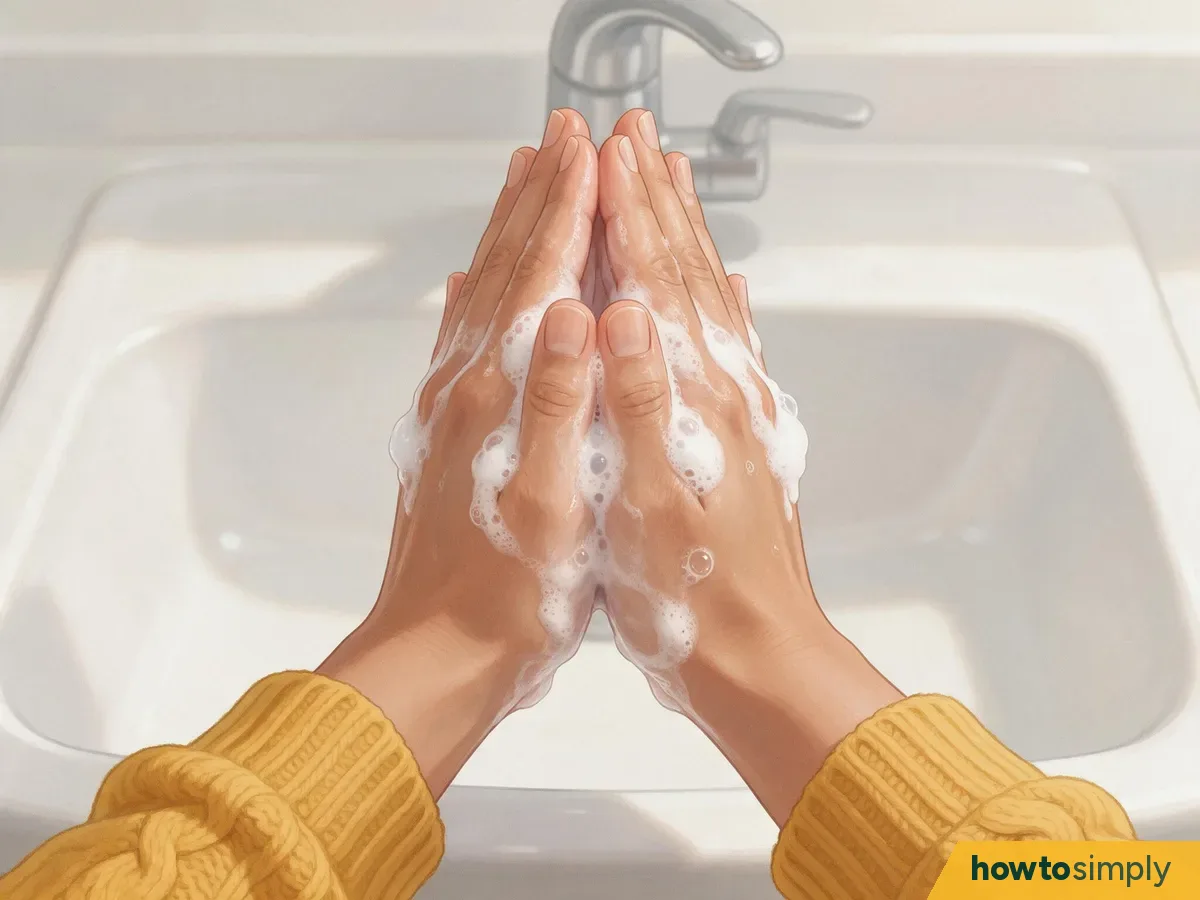
Rub your palms together.
Illustration
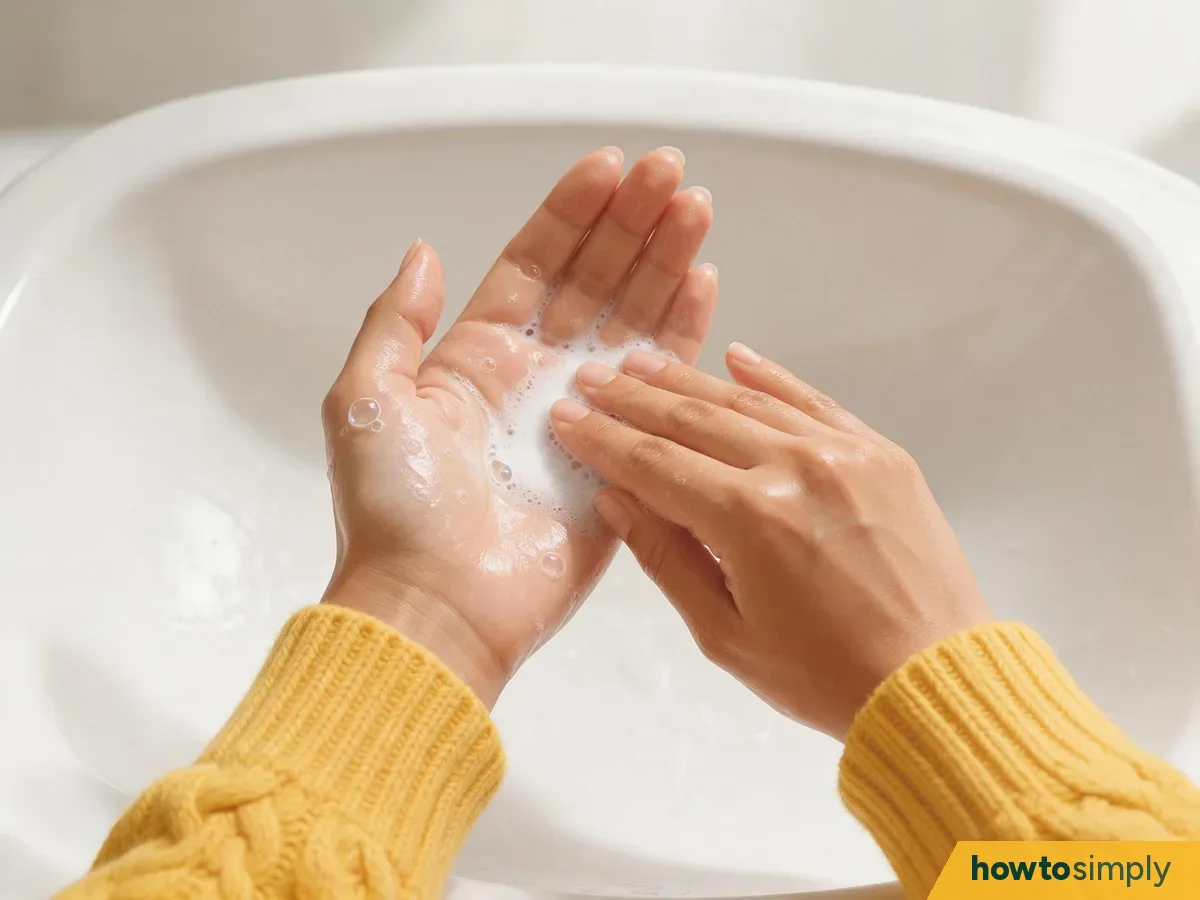
In our story: Amira rubs her palms together until they're covered in lather and starts singing Happy Birthday.
Rub your hands together to work up a lather (NHS).
Scrub the backs of your hands.
Illustration
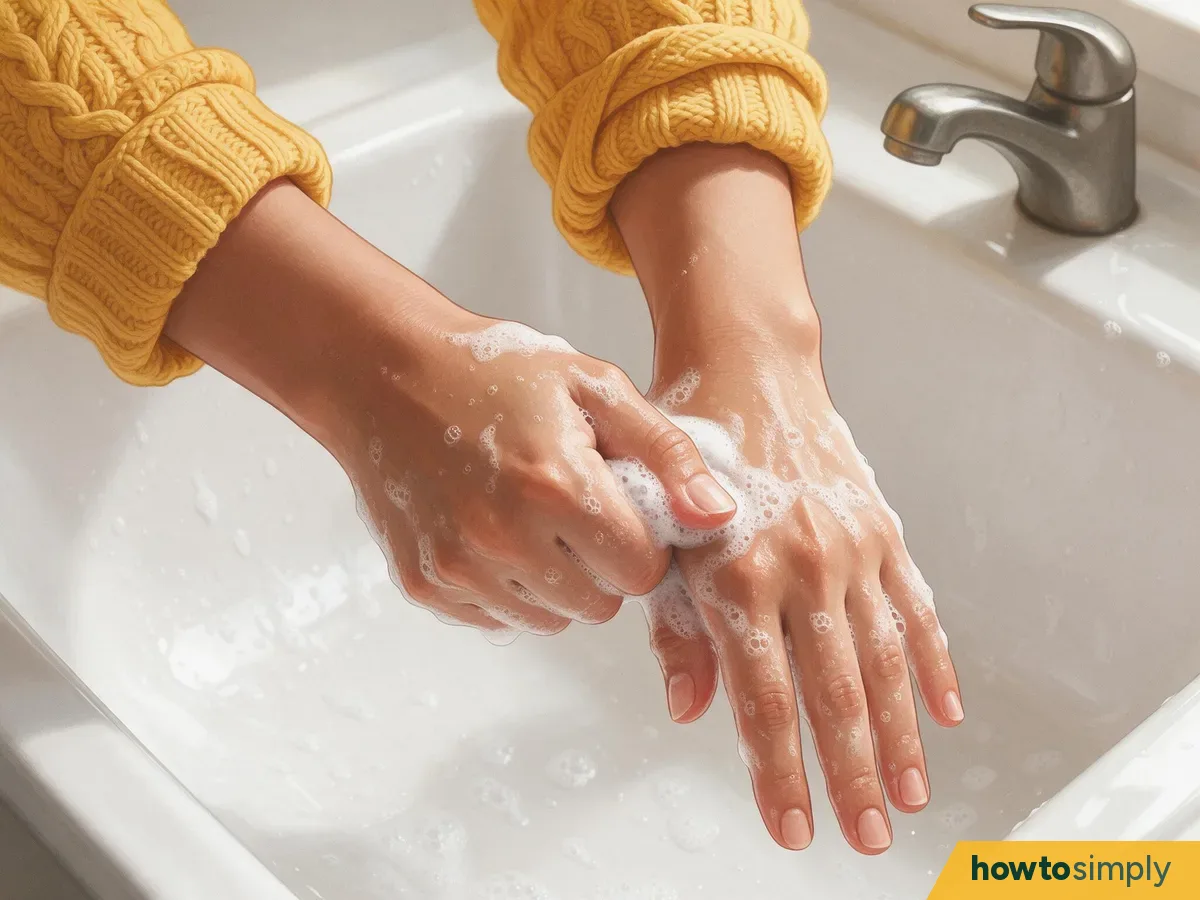
In our story: She rubs her right palm over the back of her left hand, fingers between fingers, then swaps.
Use one hand to rub the back of the other and clean between the fingers, then swap (NHS).
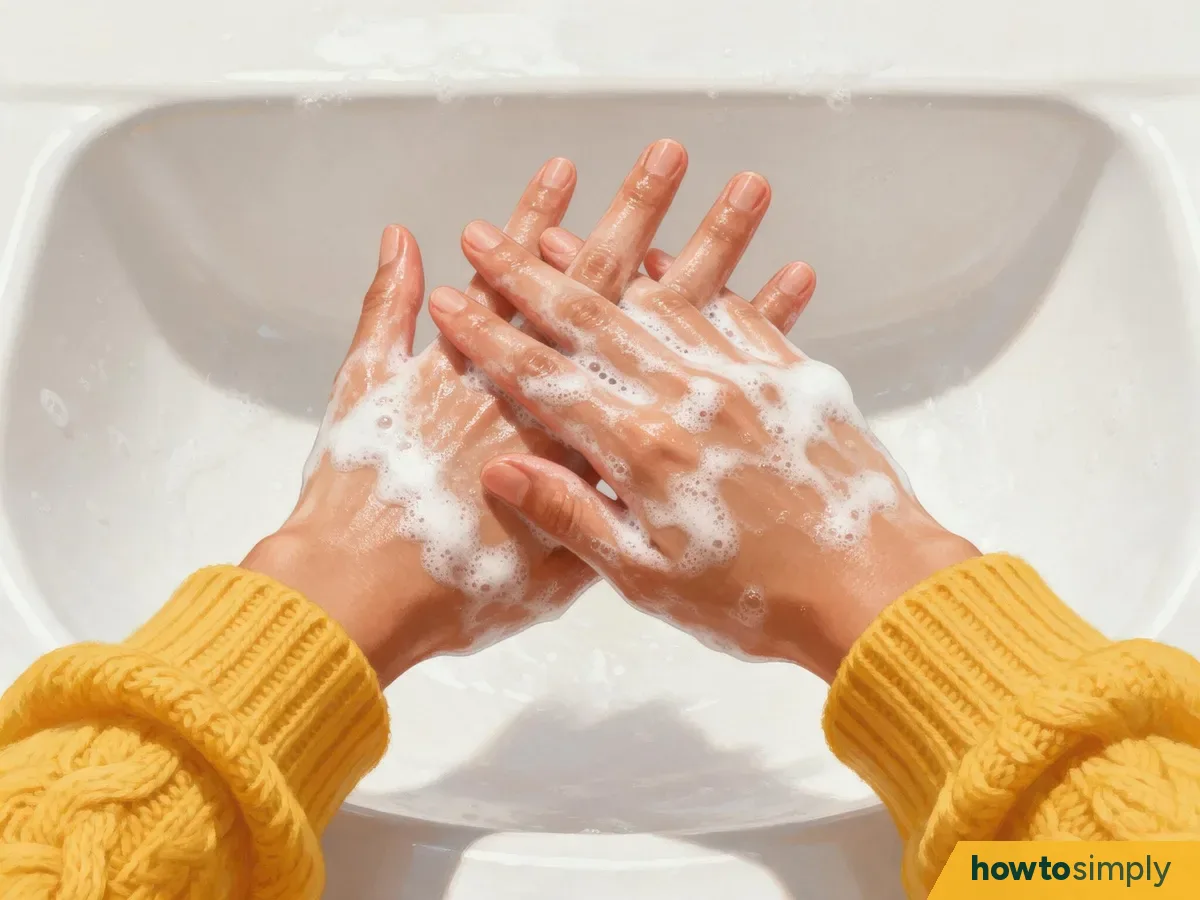
Clean between your fingers.
Illustration
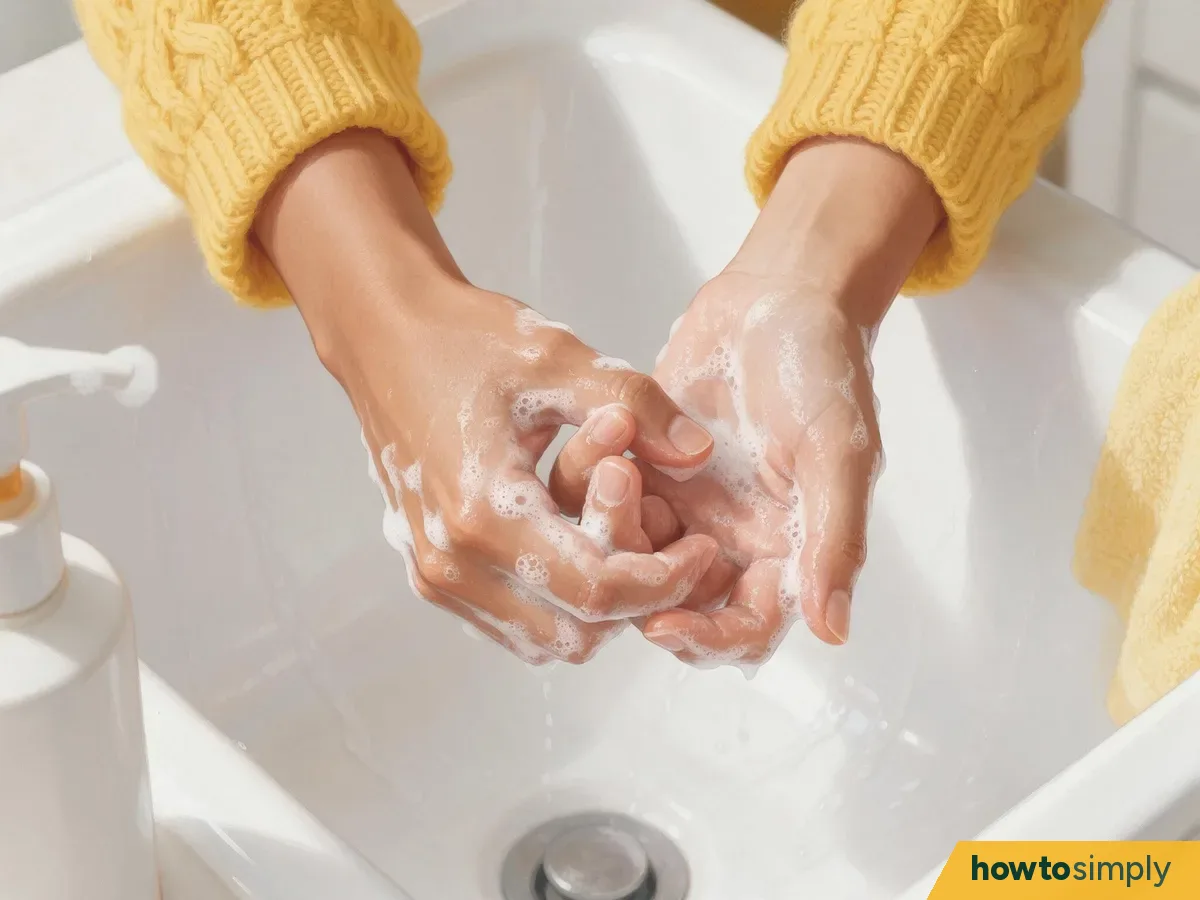
In our story: Palm to palm, she slots her fingers together and slides them back and forth.
Rub your hands together and clean between your fingers (NHS).
Grip your fingers together.
Illustration
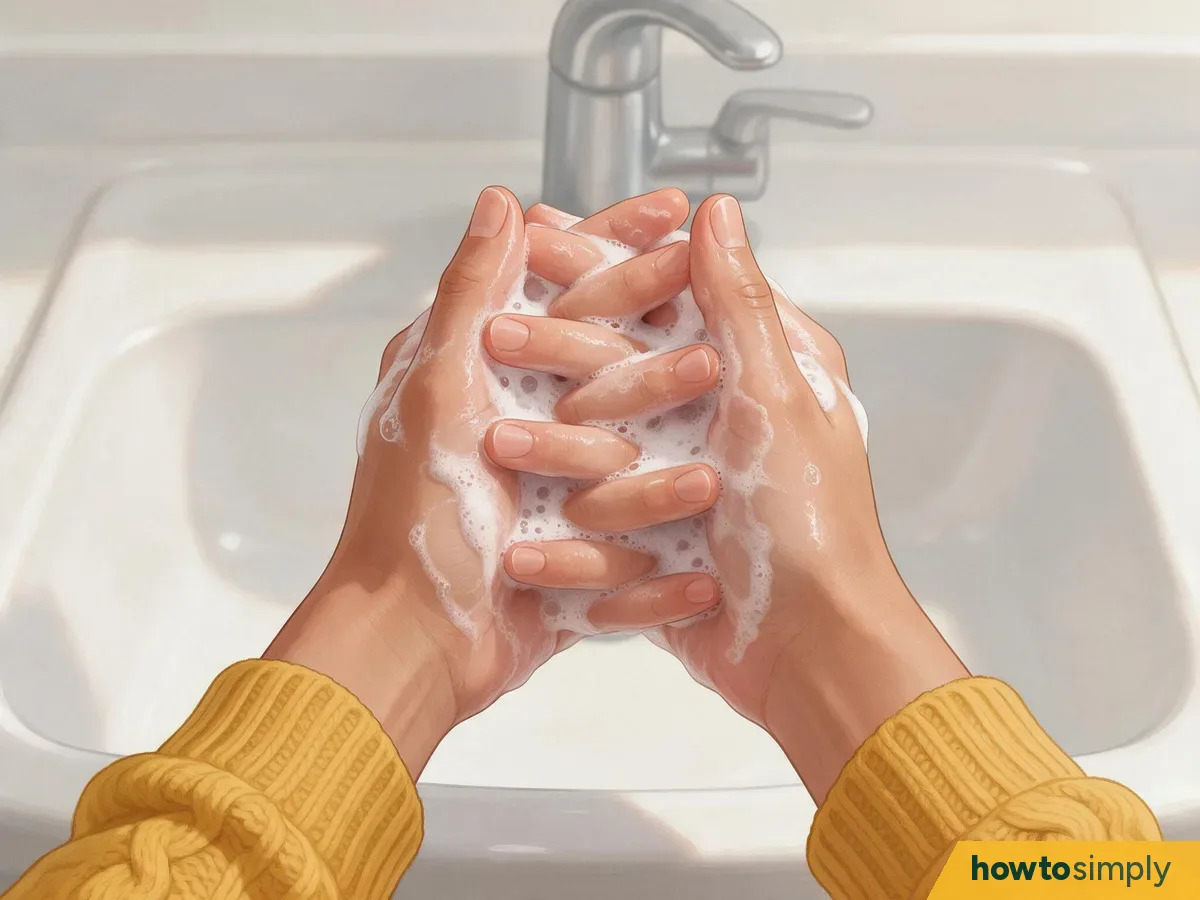
In our story: Amira hooks her fingers into each other and rubs the backs of her fingers against her palms.
Grip the fingers of each hand together (NHS), so the backs of the fingers get scrubbed too.
Rub each thumb.
Illustration
In our story: She wraps one hand around the other thumb and twists, then swaps.
Rub one thumb using your other hand, then the other thumb (NHS).
Rub your fingertips on your palm.
Illustration
In our story: Amira bunches her fingertips and rubs them on the opposite palm, which also cleans under her nails.
Rub the tips of your fingers on the palm of your other hand (NHS). CDC also says to clean under your nails.
Rinse.
Illustration
In our story: The second Happy Birthday ends, and she rinses off all the soap.
Rinse your hands well under clean, running water (NHS, CDC). The scrubbing should have taken about 20 seconds (NHS).
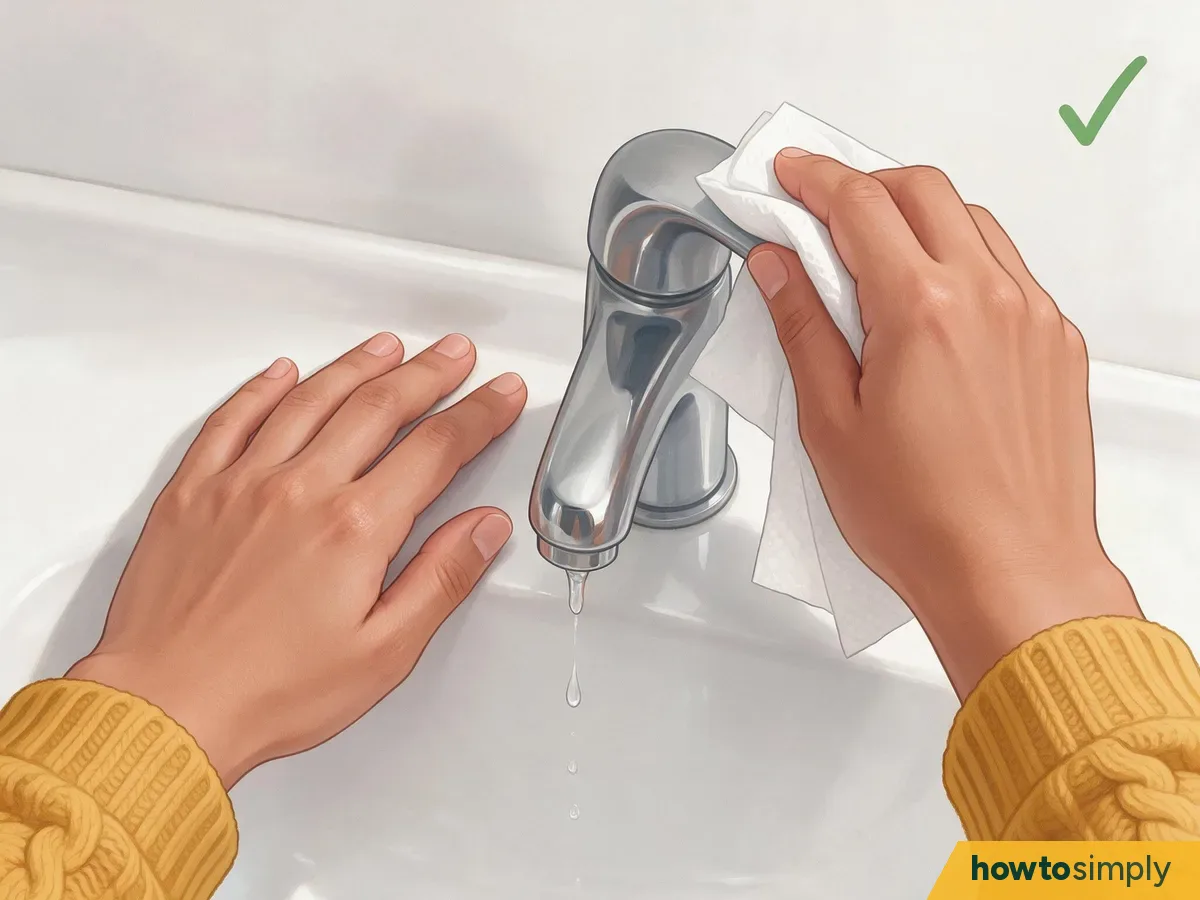
Dry them completely.
Illustration
In our story: She dries her hands with a paper towel and uses it to turn off the tap.
Dry your hands completely with a disposable towel and use it to turn off the tap (NHS). CDC says a clean towel or an air dryer also works.
Part 2: Help a child do it
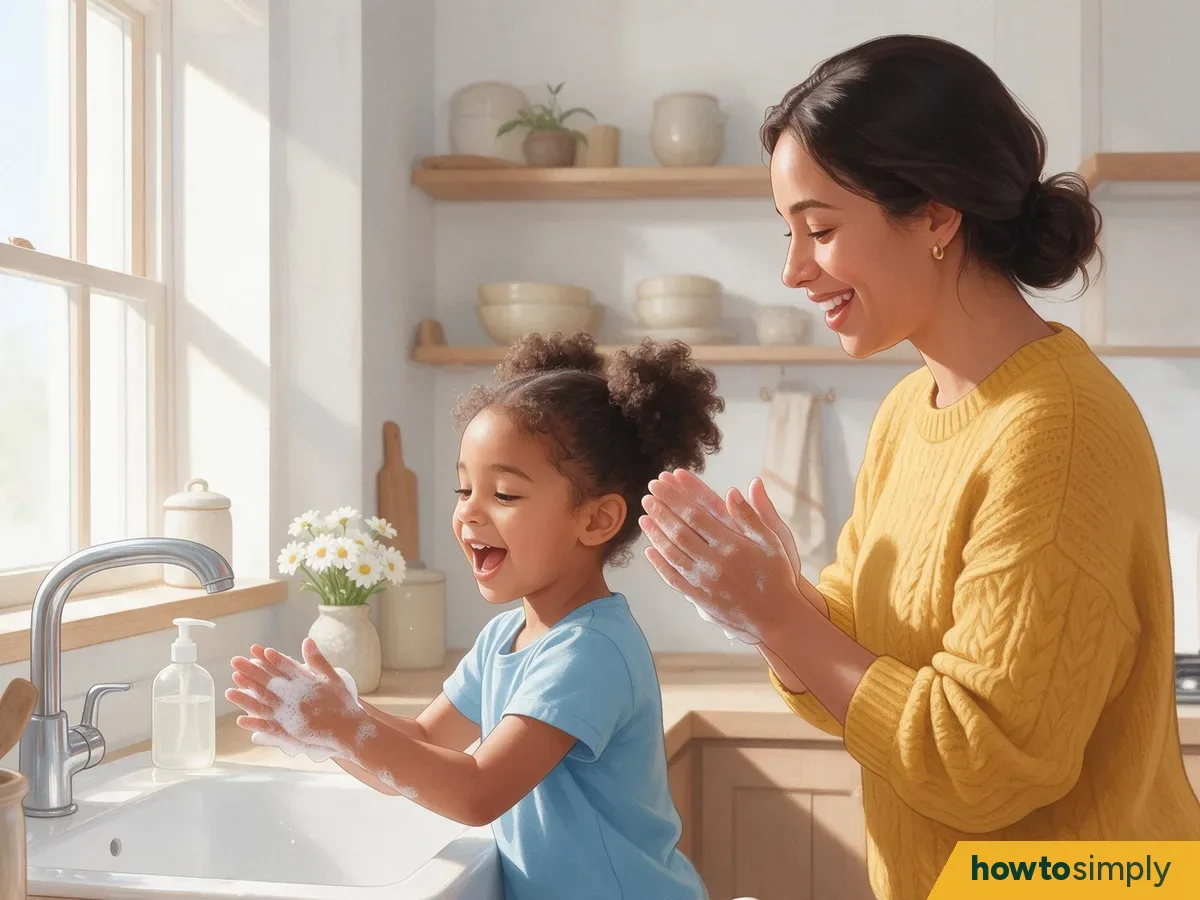
Sing Happy Birthday twice together.
Illustration
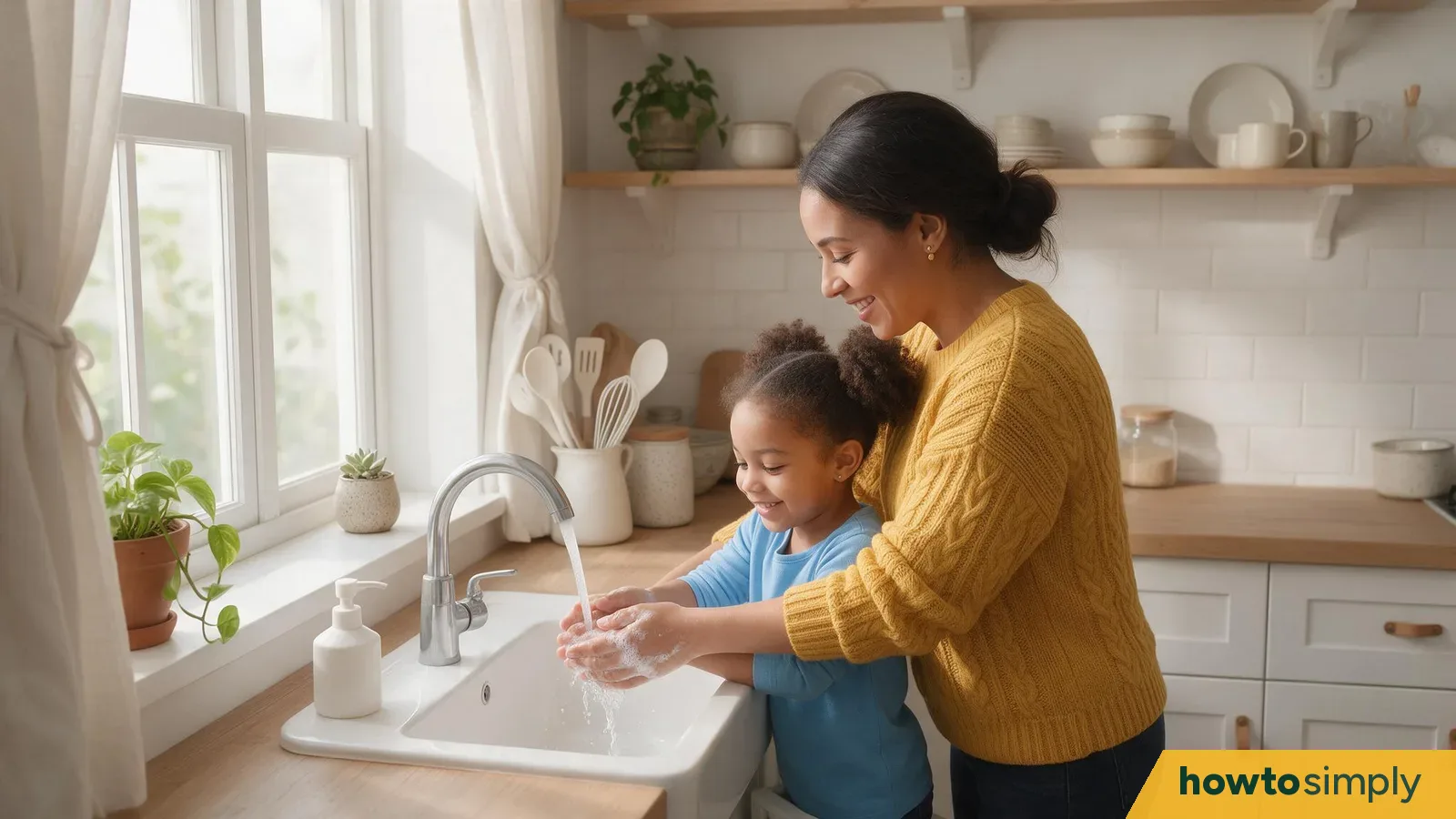
In our story: Amira's daughter climbs onto her step stool and washes too. They sing Happy Birthday twice, and she doesn't stop rubbing until the song ends.
Happy Birthday twice is about 20 seconds (NHS), a good timer for children. A step stool helps them reach the tap, and showing each step yourself is easier than explaining it (our advice).
Part 3: If there's no soap and water
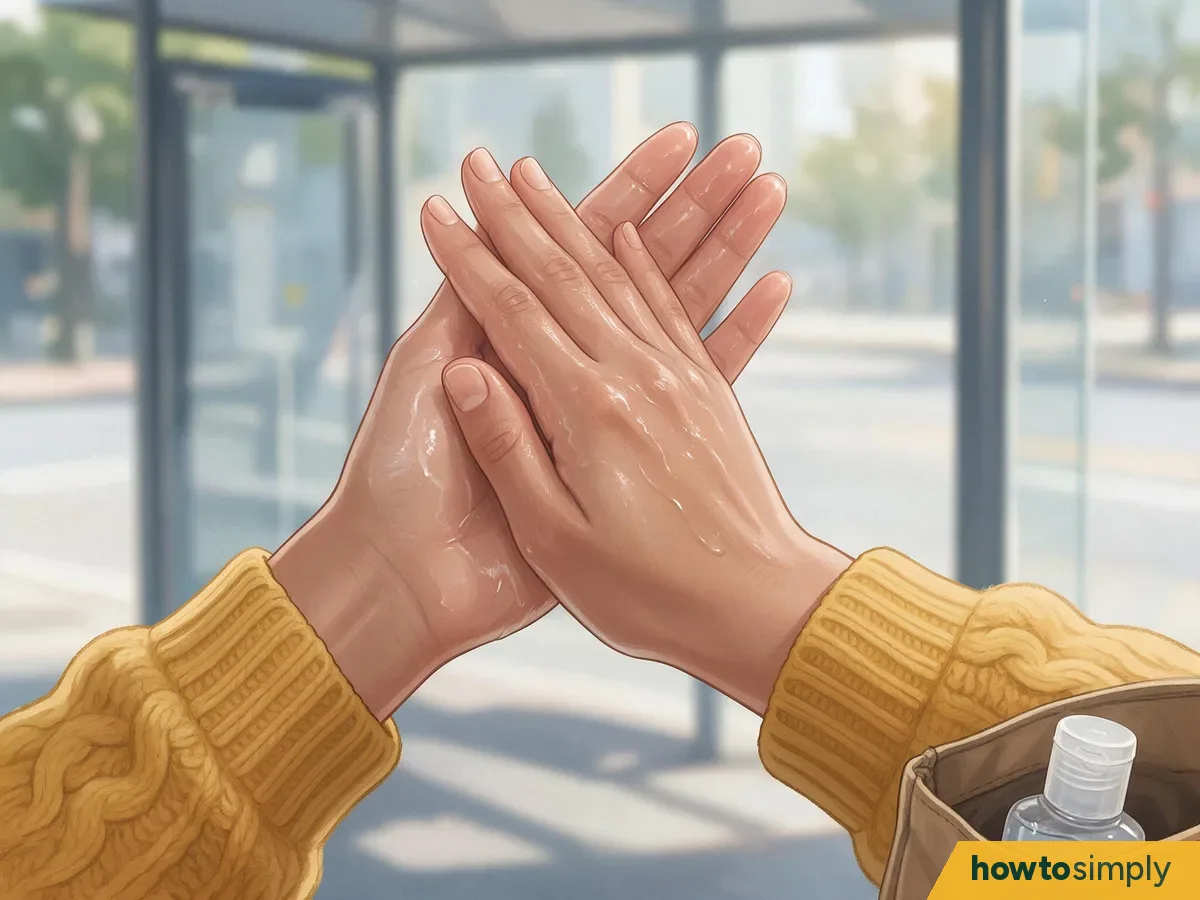
Use alcohol gel and rub until dry.
Illustration
What if Amira couldn't get to a sink? At the bus stop, she'd use hand gel from her bag, then wash properly when she got home.
Use an alcohol-based gel with at least 60% alcohol when soap and water aren't available (CDC). The NHS also says to use gel only when you can't get to soap and water. Use enough to cover your hands and rub until they're dry, about 20 seconds; don't wipe it off first (CDC). Supervise young children with gel so they don't swallow it (CDC).
Soap or gel?
Situation
Use
Why
Most of the time
Soap and water
The best way to get rid of germs in most situations (CDC)
No sink nearby
Gel, at least 60% alcohol
Next best thing (CDC)
Hands visibly dirty or greasy
Soap and water
Gel may not work as well (CDC)
Someone at home has a vomiting bug
Soap and water
Soap and water work better than gel against norovirus (CDC)
After handling garden chemicals
Soap and water
Gel might not remove chemicals such as pesticides (CDC)
How to tell you did it right
You scrubbed for about 20 seconds before rinsing.
You did the backs of your hands, between the fingers, thumbs and fingertips.
Your hands are completely dry.
If something goes wrong
What happens
Likely cause
What to do
Children stop after a few seconds
No timer
Sing Happy Birthday twice together (NHS)
Skin gets dry and sore
Washing often
Dry completely and use a hand cream; see a pharmacist if it cracks or bleeds (our advice)
No paper towels
Ran out
A clean towel or an air dryer also works (CDC)
Gel feels sticky, hands still wet
Wiped off or not rubbed long enough
Rub until dry, about 20 seconds (CDC)
Questions readers ask
How long should I wash my hands?
About 20 seconds, as long as singing Happy Birthday twice (NHS). CDC says scrub for at least 20 seconds.
Is hand gel as good as washing?
Not always. CDC says soap and water are the best way to get rid of germs in most situations, and work better than gel against some germs, such as norovirus. Gel may also not work as well on visibly dirty or greasy hands.
What kind of hand gel should I use?
An alcohol-based one with at least 60% alcohol; check the label (CDC).
Does the water need to be hot?
The NHS and CDC steps say water, or clean running water, and don't ask for hot. Use a temperature that's comfortable so you keep going for the full 20 seconds.
Should I take my rings off?
If possible, yes. The NHS says to remove rings and bracelets before washing.
Did this solve the problem?
What needs work?
What did you think?
Reaction counts are loading.
Spotted a mistake? If a step is unclear or a picture is inaccurate, tell us the step number and what needs correcting. Email us about this page or use the contact form. We read every report, and fixes are listed on What changed.
Liked this article?
Follow us for new articles and short how-to videos.
 Illustration