How to talk to your teenager: 13 moves that work
Reviewed by Mehak Fatima✓, BS Clinical Psychology
By Abu Bakar Saadat6 min readPublisher: Saadat Rafiq
Last updated: 8 November 2026References
 Illustration
On this page 9 sections
In short
You ask how school was. They say "Fine." The door shuts. Here are 13 ways to get a real conversation going with a teenager, based on NHS advice, plus where to get help if you're worried.
At a glance
- Pulling away
- Usually part of growing up (NHS)
- Best questions
- Open and specific, not confrontational
- When they talk
- Listen and let them finish
- If it gets too much
- Change the subject, come back later
- UK parents' helpline
- YoungMinds 0808 802 5544, weekdays 9.30am to 4pm
- Checked
- November 2026
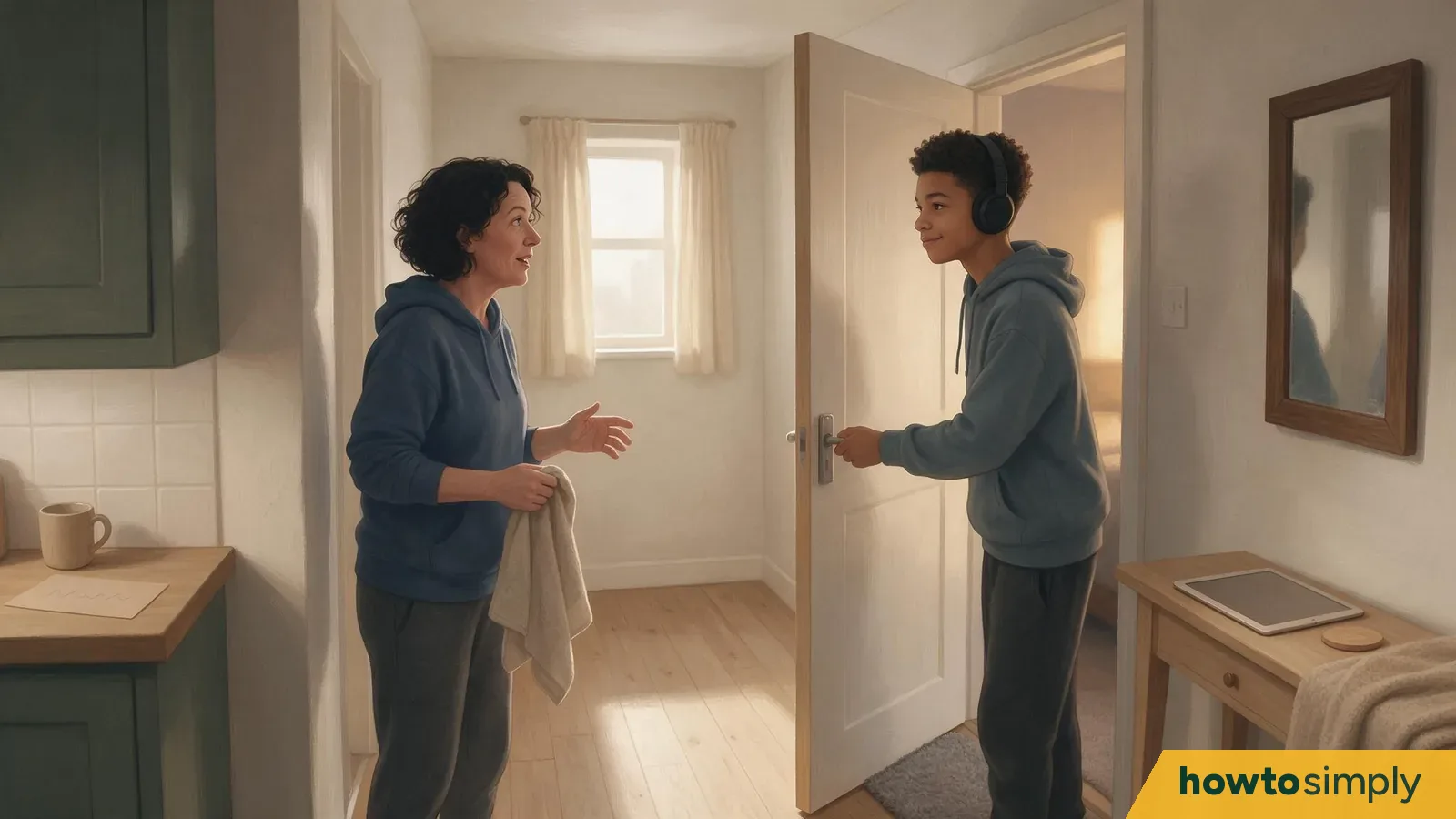
Tuesday, 6:15 p.m. "How was school?" "Fine." "Anything happen?" "No." Then the bedroom door, the headphones, and nothing. Dee used to hear about every part of Kai's day. Now he's 15 and she gets one word and a grunt.
If that sounds like your house, the NHS has some reassurance. Teenagers can become aloof, want more time alone or with friends, feel misunderstood and push back when you try to talk. In most cases, the NHS says, that's a normal part of becoming an adult. You can still keep the door open, and these 13 moves help.
Set up the conversation
1. Swap "How was school?" for something specific
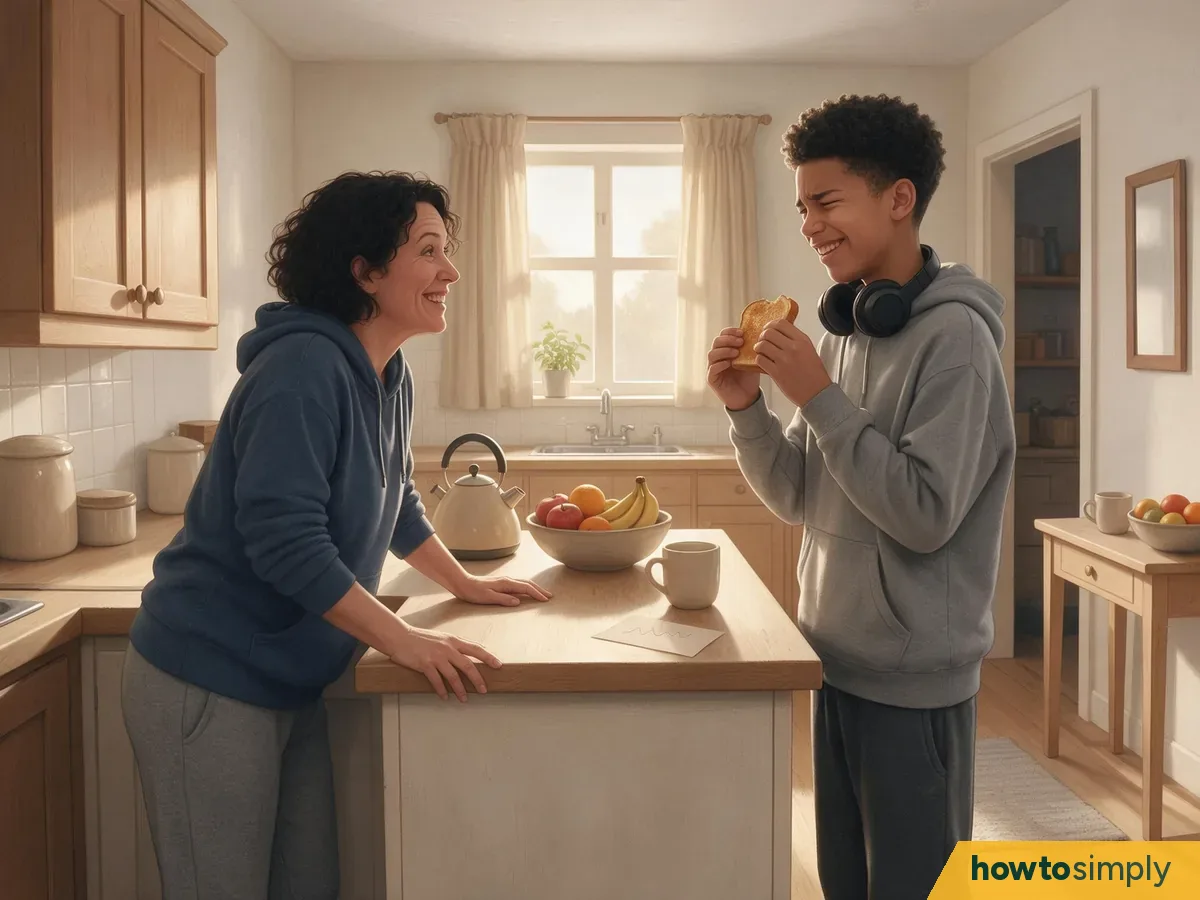
A general question about school is easy to answer with "Fine." The NHS recommends open questions, the kind that can't be answered with yes or no, and warns that confrontational ones tend to get dishonest answers. Asking about one specific thing gives your teenager something to grab hold of.
Try saying: "What was the most annoying thing that happened today?"
2. Talk while you're doing something together

NHS mental health staff say doing an activity together is often a good way into a conversation. Cooking, walking the dog or kicking a ball about all work. Sitting face to face can feel like an interview, and having something to do with your hands eases that.
3. Use the car

Lots of parents find their best conversations happen on the drive to football or a late-night trip for snacks. You're side by side, you're both looking at the road, and the journey has an end, so nobody feels trapped.
4. Be around when they're chatty

Straight after school, mid-game and five minutes before bed are rarely good moments. Notice when your teenager tends to open up (for many it's late in the evening) and make sure you're nearby then, even if you're only making a cup of tea.
Listen like you mean it
5. Let them finish

The NHS says to listen when your teenager does want to talk, and to try not to interrupt until they've finished. Hold your questions and your advice until they've stopped.
6. Don't finish their sentences
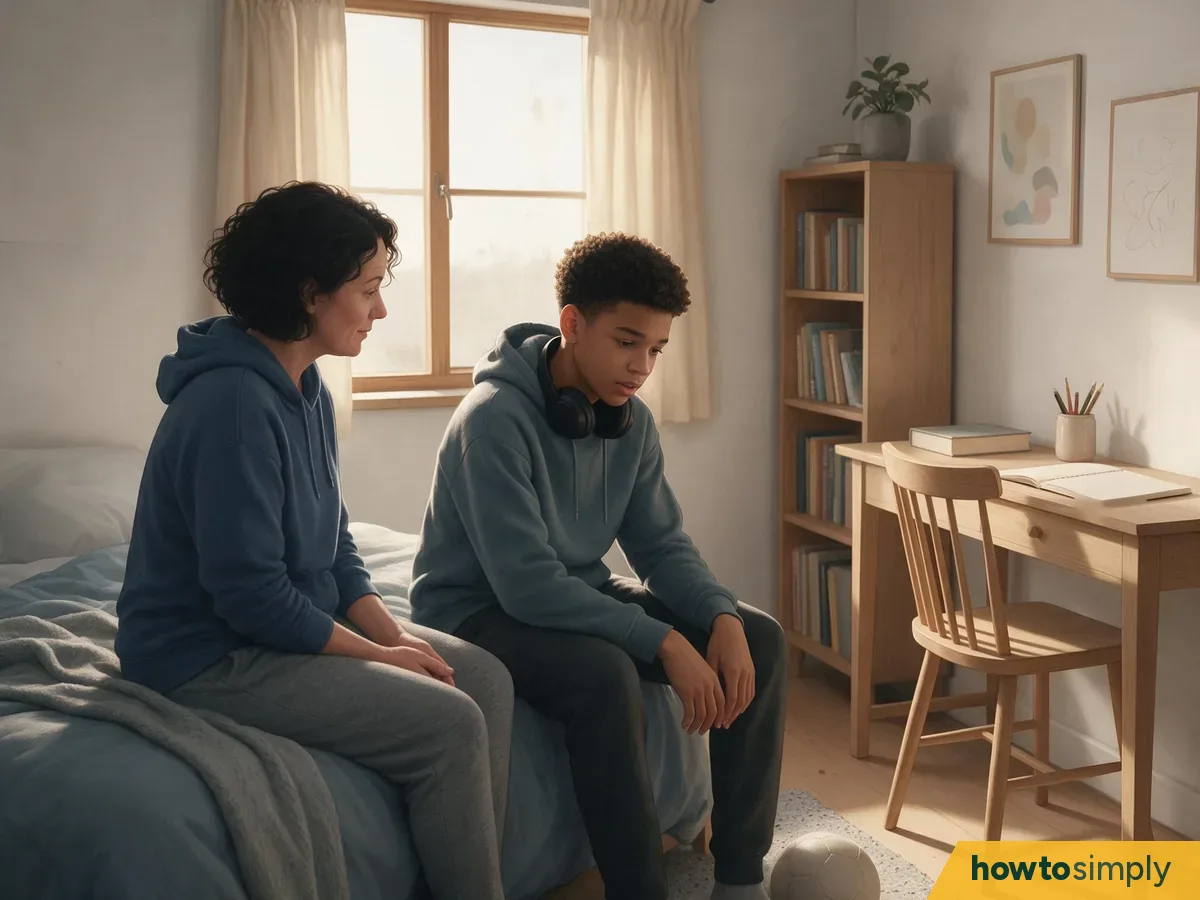
NHS mental health staff also suggest resisting the urge to finish their sentences when they're struggling to put a feeling into words. Let the pause sit there and give them time.
7. Stay calm, even if you don't feel it
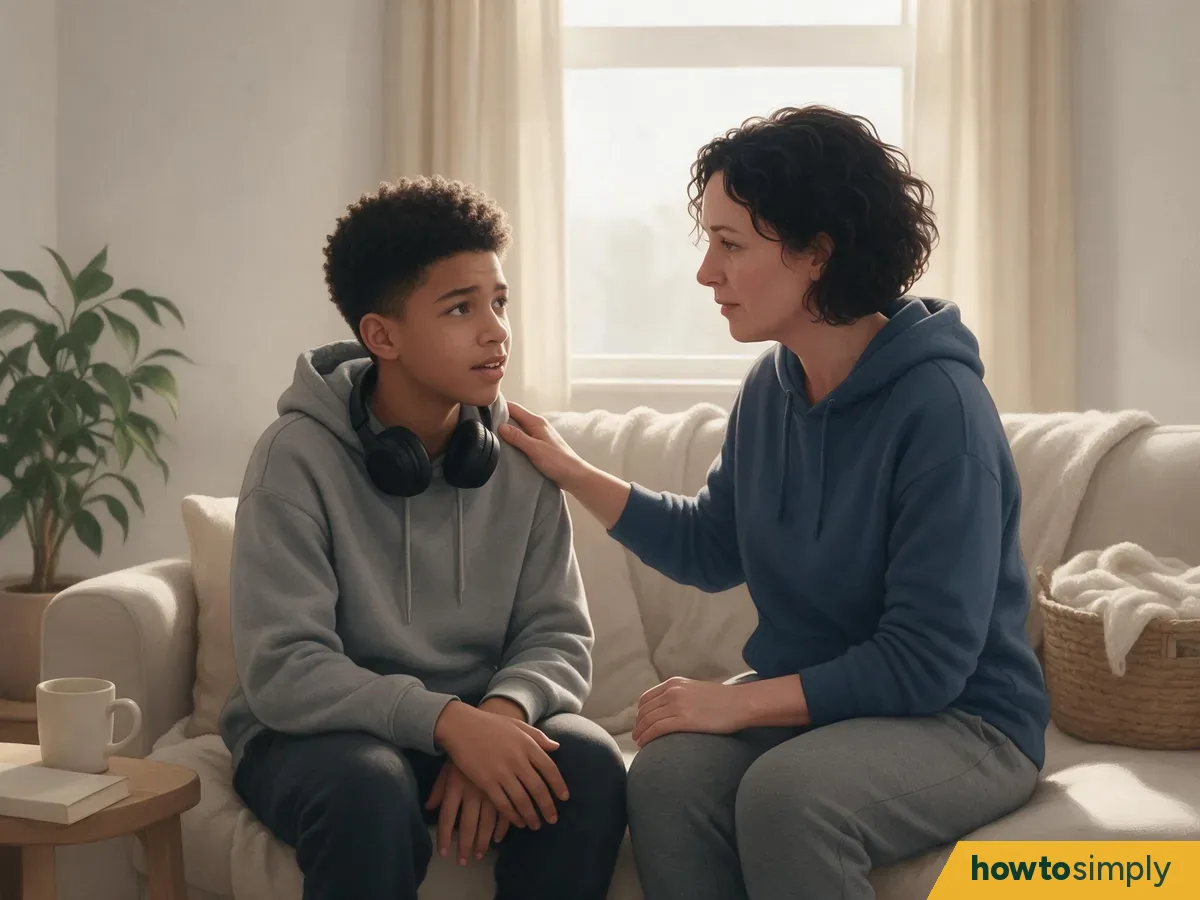
Teenagers need their parents to be a calm, consistent presence, the NHS says. If you react to news with panic or anger, they may decide not to tell you next time. The NHS also suggests making it clear you want to help and won't do anything they don't want you to.
Try saying: "Thanks for telling me. I'm not cross. Let's work out what to do together."
8. If it gets too intense, change the subject for a bit

If a young person gets really upset, an NHS mental health trust suggests changing the subject for a while to take the heat out of it, then coming back to it later. A break for chips counts.
Keep the relationship strong
9. Set boundaries and stick to them
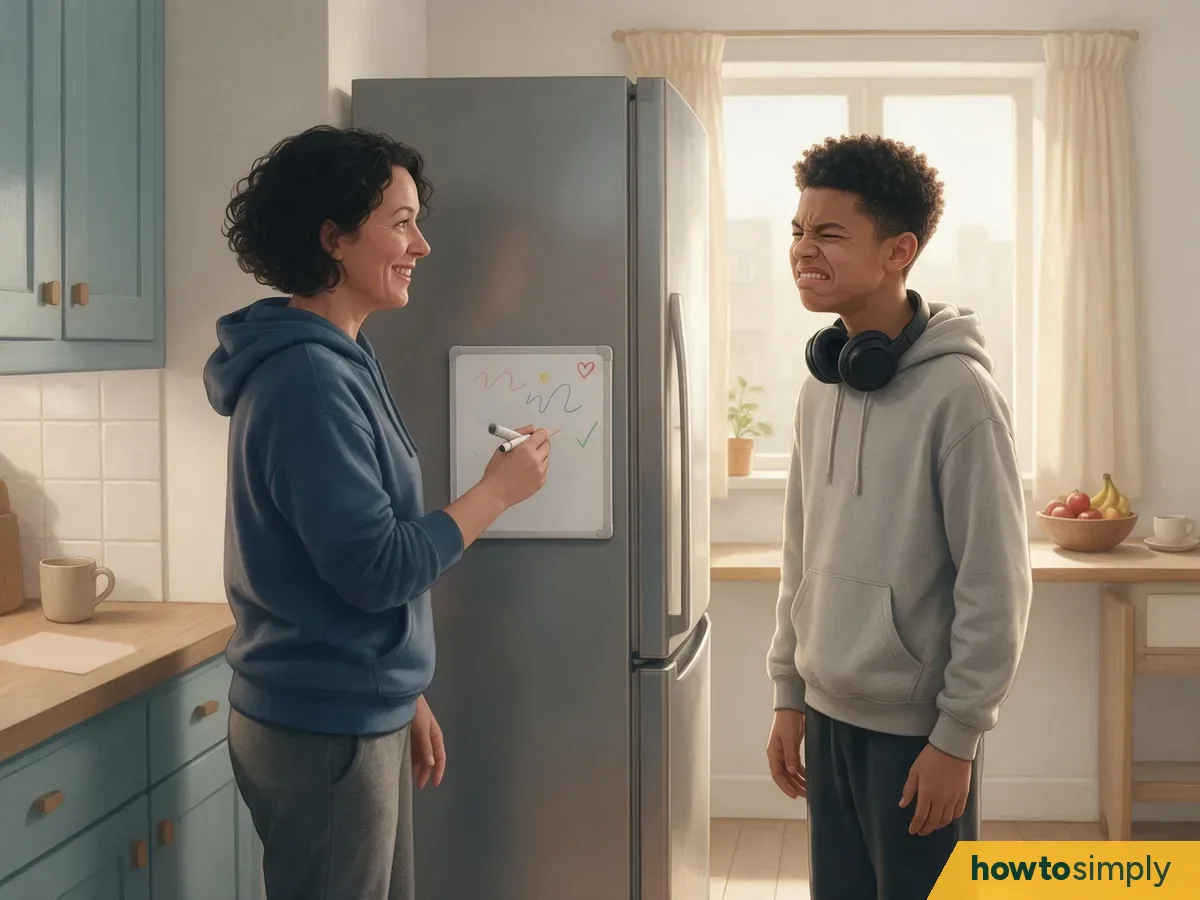
The NHS advises deciding what your boundaries are and sticking to them. Your teenager may object, but the NHS says they understand boundaries are a sign that you care. It also suggests picking your battles: let small things like clothes go so you're still on speaking terms when something bigger comes up.
10. Give them space and privacy
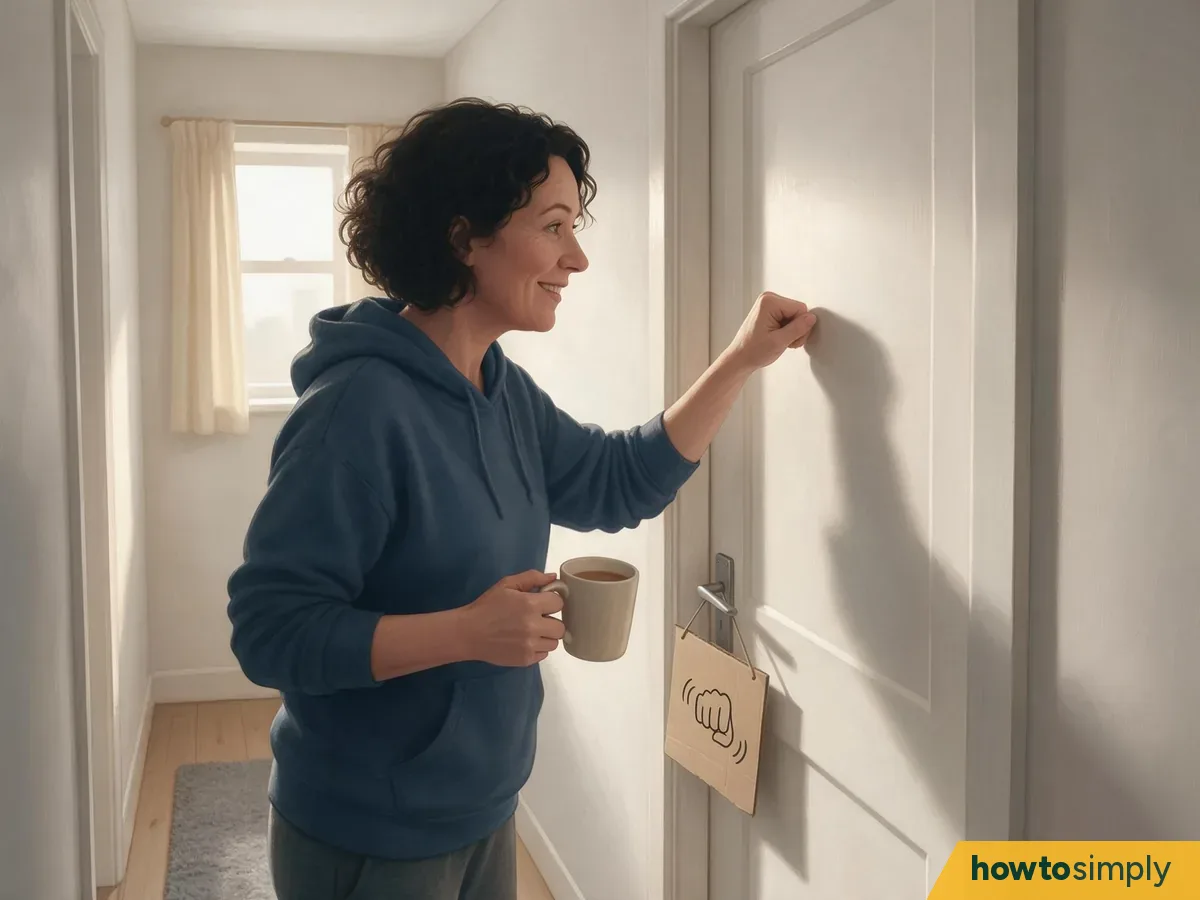
The NHS says to let teenagers have their own space and privacy, and to let them learn from their own mistakes as long as they're safe. A closed bedroom door is normal. Knock first.
11. Say the hard stuff calmly

Don't bottle up your worries, the NHS says. If you're concerned your teenager may be having unprotected sex or using drugs, talk to them calmly and point them to good information. The NHS also suggests not assuming you know what's wrong before you ask.
Try saying: "I've been worried about you. You don't seem your usual self. Is there anything I can help with?"
12. Share your own mistakes

NHS mental health staff suggest telling them how you, or someone you know, got through something similar, so they know their feelings are normal. Starting with "When I was your age, I…" and telling what really happened can feel less like a lecture.
13. Look after yourself too

Parenting a teenager can be exhausting. Advice from the charity Family Lives, shared by the NHS, is to set aside time for yourself, talk to a partner or friends or join a support group, and see a GP if you're worried you're depressed, anxious or stressed. Dee started going to her mum's for Sunday tea, on her own.
Instead of this, try this
| Instead of | Try |
|---|---|
| "How was school?" | "What was the most annoying thing that happened today?" |
| "Are you being bullied?" | "You don't seem your usual self. What's going on at the moment?" (NHS) |
| Sitting them down for a serious talk | Talking in the car, while cooking or on a walk |
| Jumping in when they pause | Waiting until they've finished |
| Reacting with panic or anger | "Thanks for telling me. Let's work out what to do together." |
| Pushing on when they get upset | Changing the subject, then coming back to it later |
What the NHS advises, and which step covers it
| NHS advice | Step |
|---|---|
| Don't assume you know what's wrong. Ask open questions such as "How has your day been?" | 1 |
| Listen when they want to talk, and try not to interrupt until they've finished | 5 and 6 |
| Keep a calm, consistent presence, and try not to react to angry outbursts | 7 |
| Decide what the boundaries are and stick to them | 9 |
| Allow them their own space and privacy | 10 |
| Don't bottle up your worries. Talk calmly and point them to useful information | 11 |
| Be honest yourself, because teenagers notice when you don't follow your own advice | 12 |
| Look after yourself: set aside time for you and talk to a partner, friends or a GP | 13 |
Source: NHS, "Talking to your teenager" (reviewed 24 February 2023) and "Coping with your teenager" (reviewed 4 April 2023).
Teen-talk check
- I've swapped "How was school?" for a specific question.
- We've done something side by side this week, like a drive, cooking or a walk.
- I let them finish without interrupting.
- Our boundaries are clear, and I've stuck to them.
- I've had some time for myself this week.
If this doesn't work
- They still won't talk to you: that isn't a failure. Make sure they have someone else they can talk to, such as a relative, a teacher or a youth group leader.
- You're worried about their mental health: speak to your GP or the school. In the UK, the YoungMinds parents' helpline is 0808 802 5544 (9.30am to 4pm, Monday to Friday), and Family Lives is on 0808 800 2222 (9am to 9pm on weekdays, 10am to 3pm at weekends).
- Your teenager needs someone to talk to: young people in the UK can call Childline free on 0800 1111, or text SHOUT to 85258 at any time of day.
- It's a crisis: in England, call NHS 111 and choose option 2 for mental health. If someone is in immediate danger, call 999. In the US, call or text 988.
Your turn: where does your teenager open up the most? The car? The midnight fridge raid? Tell us in the comments.
Questions readers ask
Is it normal for a teenager to stop talking to their parents?
Usually, yes. The NHS says teenagers may become aloof, want more time alone or with friends, feel misunderstood and reject attempts to talk, and that in most cases this is part of growing up.
How do I get my teenager to open up?
Ask open questions, talk while you do something together, listen without interrupting, and stay calm when they tell you something difficult. NHS advice also suggests not assuming you already know what is wrong.
What should I do if my teenager gets upset when we talk?
An NHS mental health trust suggests changing the subject for a while to take the intensity down, then coming back to it later.
Where can I get help if I am worried about my teenager?
Talk to your GP or your child's school. In the UK, the YoungMinds parents' helpline is 0808 802 5544 (9.30am to 4pm, Monday to Friday) and Family Lives is 0808 800 2222. Young people can call Childline on 0800 1111 or text SHOUT to 85258.
Did this solve the problem?
What needs work?
What did you think?
Reaction counts are loading.
Spotted a mistake? If a step is unclear or a picture is inaccurate, tell us the step number and what needs correcting. Email us about this page or use the contact form. We read every report, and fixes are listed on What changed.
Liked this article?
Follow us for new articles and short how-to videos.
Sources
We use primary, official and specialist sources appropriate to the topic.