How to take a temperature correctly: adults, children and babies
Reviewed by Dr Sumbal Safi Ullah✓, MBBS
By Abu Bakar Saadat7 min readPublisher: Saadat Rafiq
Last updated: 28 October 2026References
 Illustration
On this page 9 sections
In short
Use a digital thermometer. For children under 5, put it in the armpit and hold the arm against the body until it beeps. Older children and adults can use under the tongue, 30 minutes after eating or drinking. 38C or above is a high temperature (NHS).
At a glance
- You need
- A digital thermometer (not glass or a forehead strip)
- Under 5s
- Armpit, arm held against the body (NHS)
- Over about 5 and adults
- Under the tongue or in the armpit (NHS, KidsHealth)
- High temperature
- 38C or above (NHS)
- Advice from
- NHS, HSE, Mayo Clinic and KidsHealth, read 28 October 2026
- Checked
- October 2026
A thermometer reading is only useful if it is taken the right way: a hot drink, a warm bath or a probe that isn't touching skin can all give the wrong number. The steps below work for a digital thermometer, the type the NHS recommends. Trust how the person seems as well as the number: the NHS says you can have a high temperature even when a thermometer reads below 38C.
Which way should you measure?
Baby or child under 5
Use: the armpit. The NHS says always use the armpit for children under 5.
Some US sources, including Mayo Clinic, also list rectal readings for babies; Mayo says these are mainly used by healthcare professionals. Ask your doctor before trying it.
Child from about 4 or 5, or an adult
Use: under the tongue, or the armpit. KidsHealth says most children can manage a mouth reading from around 4 to 5 years old, if they can keep still.
You only have an ear thermometer
Use it carefully: the NHS says readings can be misleading if it isn't positioned correctly, more likely in babies. Mayo Clinic says not to use one under 7 months and that earwax can affect the reading.
Forehead strip or scanner
Avoid strips: the NHS says they are not accurate. For scanners, follow the maker's distance: Mayo gives 1.3 to 5 cm, varying by brand, and says not to use forehead types for anyone aged 65 or over.
How to take the temperature
Let the person settle for a while first.

Illustration For a mouth reading, wait after eating or drinking, because the temperature of food and drink affects the result. Mayo Clinic's pages say 15 to 30 minutes and KidsHealth says 20 to 30; waiting 30 minutes covers all of them. Take out gum or sweets (KidsHealth).
For a baby or child, the NHS says a reading can be too high if they have been tightly wrapped, heavily dressed, very active, in a very warm room, cuddling a hot water bottle or just had a bath. Let them cool down for a few minutes, without getting cold or shivery.
Before you move on: the person is calm and resting, with no warm layers or hot drink.
Wash your hands, clean the thermometer and switch it on.
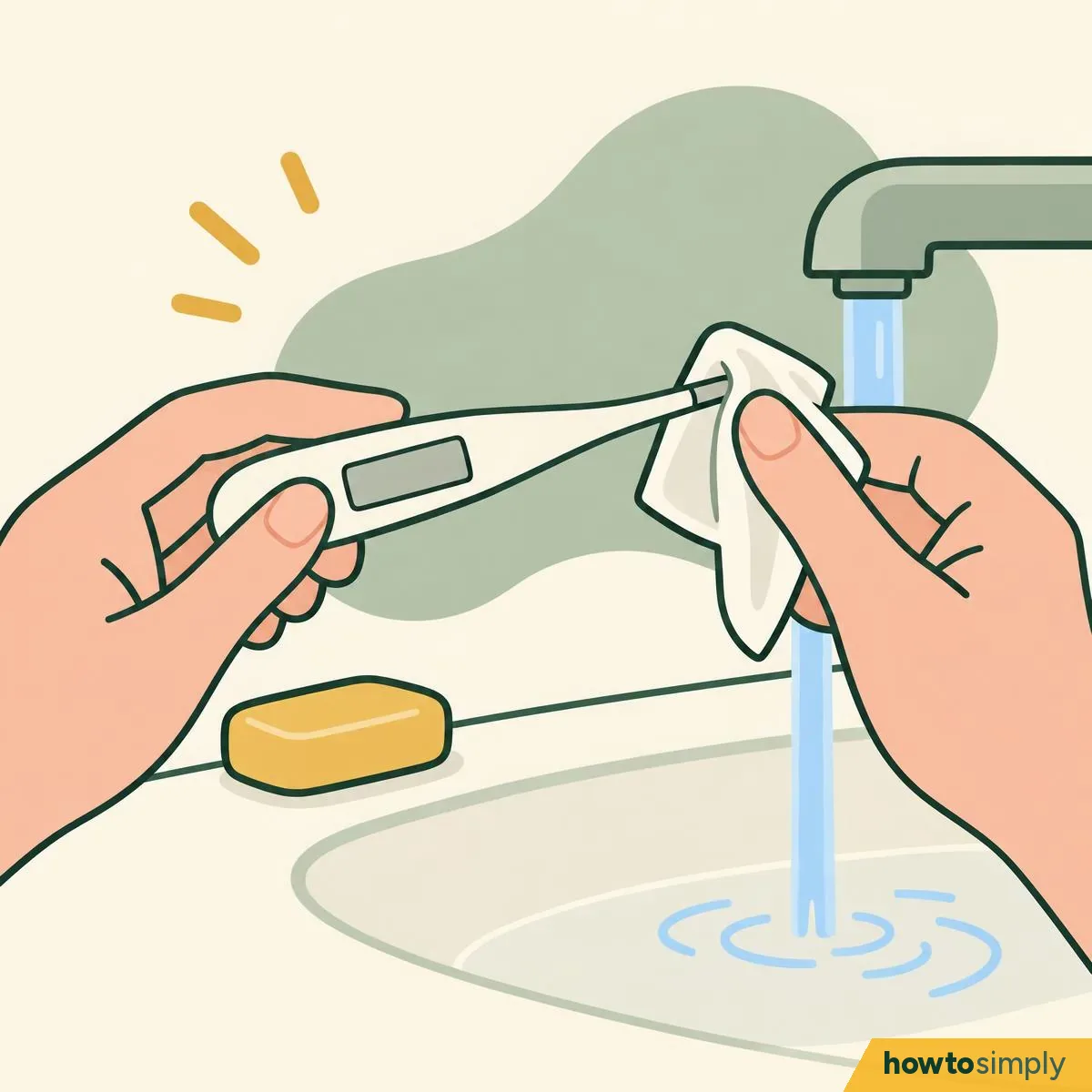
Illustration Mayo Clinic says to wash your hands with soap and warm water and to clean the thermometer with rubbing alcohol or soap and lukewarm water before and after each use. Then press the button and wait until the display shows it is ready, as the leaflet describes.
You should see: the screen lit up and showing the ready sign for your model.
Put the tip in the armpit, or under the tongue.
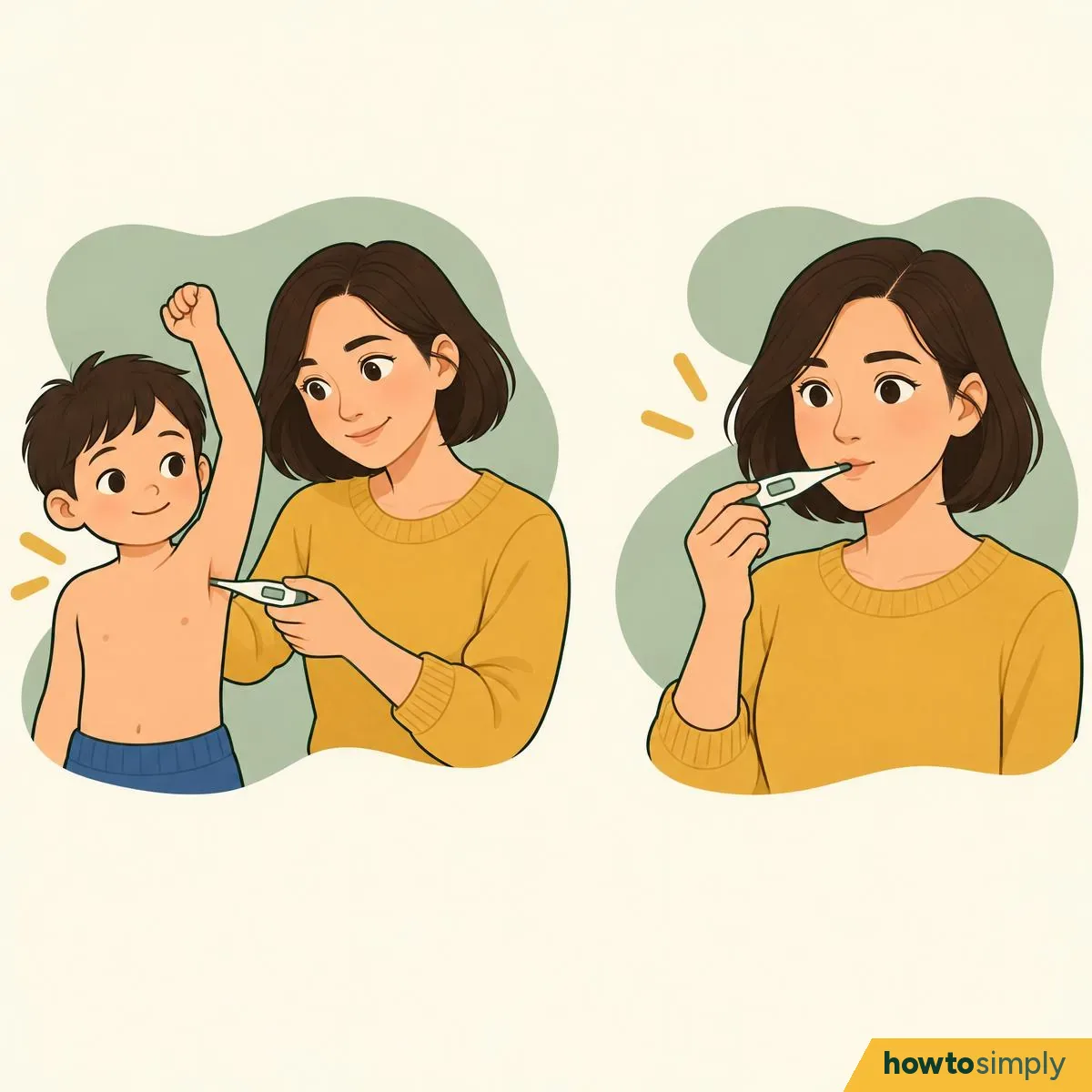
Illustration: armpit (left) or under the tongue (right) Armpit: the tip must touch bare skin, not clothing (Mayo Clinic). Sit a child comfortably on your knee (NHS) or lie a baby flat (HSE).
Under the tongue: put the tip under the tongue and close the lips around it. Don't bite it or talk; breathe normally through the nose (KidsHealth).
You should see: only the end of the thermometer sticking out, with the tip fully covered by skin or tucked under the tongue.
Keep it still until it beeps.

Illustration For the armpit, hold the arm gently but firmly against the body. The NHS says this is usually about 15 seconds, but go by your thermometer's leaflet; some beep when they are ready. Don't take it out early to look.
You should see or hear: the beep, or the ready signal your model uses (KidsHealth).
Read the number and write it down with the time.
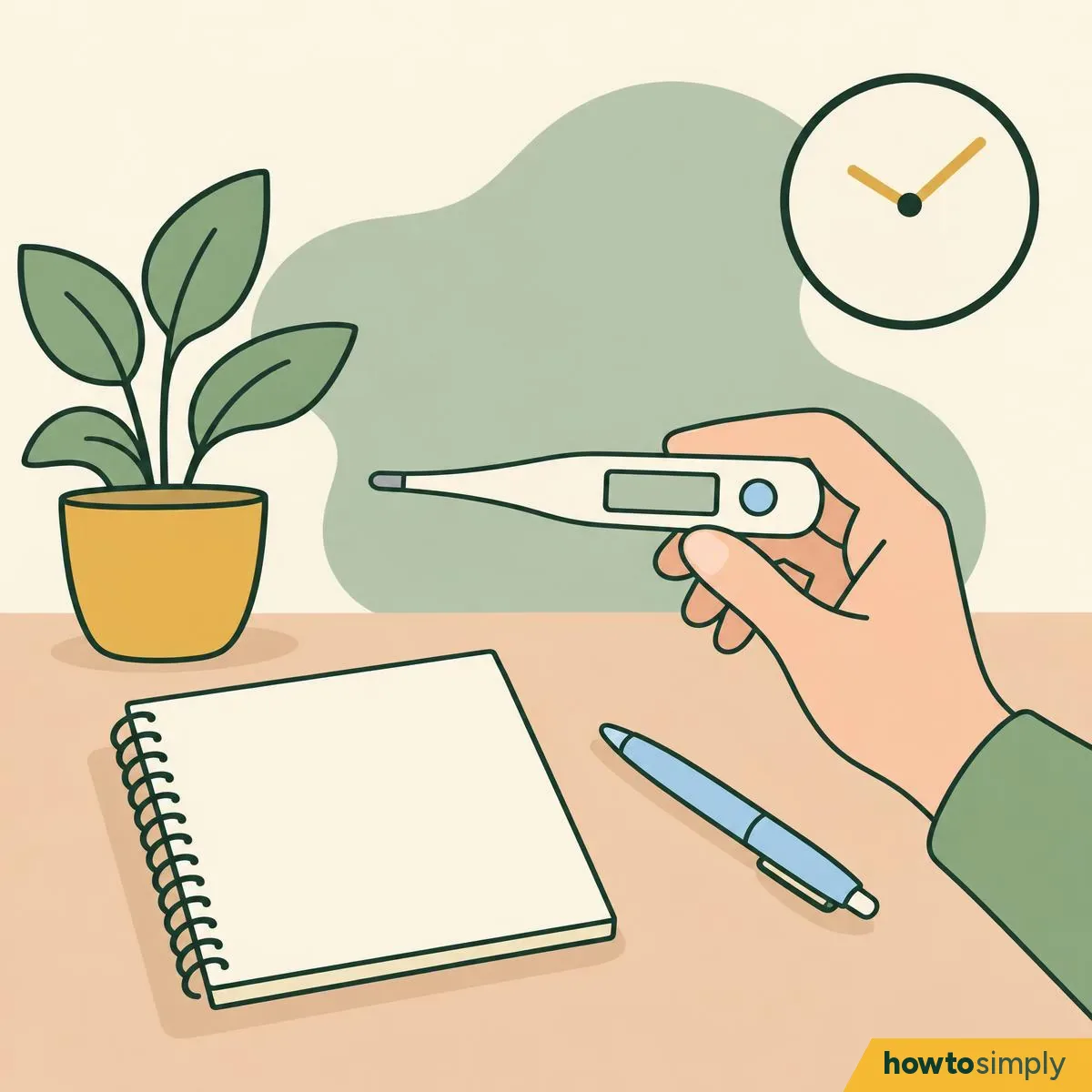
Illustration KidsHealth suggests recording the reading and the time of day. Note how you took it too: readings differ by body site, so compare readings taken the same way each time (Mayo Clinic).
The NHS counts 38C or above as a high temperature. If the person seems unwell but the reading looks normal, believe the person: the NHS says feeling hot, cold or shivery can mean a high temperature even below 38C.
You should see: a number, usually in the 36s or 37s when the person is well (NHS, HSE).
Clean the thermometer again before you put it away.
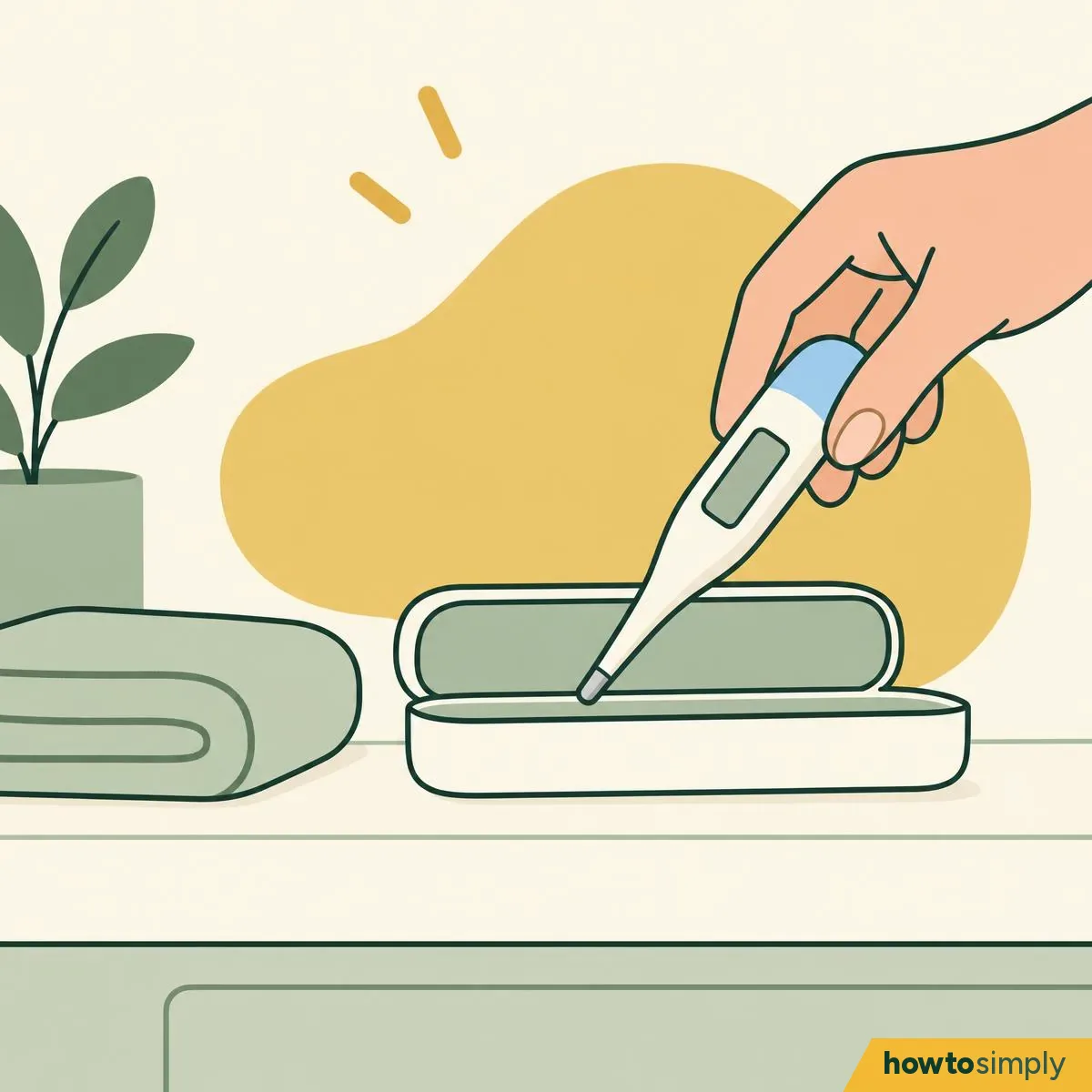
Illustration Clean it after each use and each person, to stop germs spreading (Mayo Clinic). If a family uses one thermometer in different ways, keep a separate, labelled one for any rectal use (Mayo Clinic).
You should see: a clean, dry thermometer back in its case, ready for the next reading.
How to tell the reading is reliable
- The person had no food, drink, warm bath or thick layers just before.
- The tip was on bare skin, or under the tongue with the lips closed.
- You waited for the beep or ready signal.
- You wrote down the number, the time and the method, and used the same method as last time.
If the reading looks wrong
| What happens | What it means | What to do |
|---|---|---|
| Reading is normal, but the person feels hot or shivery | They may still have a high temperature (NHS) | Treat them as unwell; check the tip was on skin and retake it. Get advice if worried |
| Reading is high right after a bath or being wrapped up | Outside heat can raise the reading (NHS) | Let them cool for a few minutes, not until shivery, then retake (NHS) |
| Mouth reading straight after a drink | Food and drink affect the result (Mayo Clinic) | Wait 30 minutes and retake (Mayo Clinic, KidsHealth) |
| Ear readings differ from try to try | Position, earwax or ear canal shape (NHS, Mayo Clinic) | Use a digital thermometer in the armpit or mouth instead |
| A glass mercury thermometer breaks | Mercury is poisonous (Mayo Clinic) | If a child is exposed, get medical advice immediately (NHS). Ask your pharmacy or recycling service about disposal (Mayo Clinic) |
Questions readers ask
What is a normal temperature?
There is no single number. The NHS gives about 36.4C for a baby, the HSE says around 36.5 to 37.5C for a child, and Mayo Clinic notes that temperature varies from person to person and tends to be higher in the late afternoon.
Do I need a thermometer to know if I have a high temperature?
No. The NHS says you may have a high temperature if your chest or back feels hotter than usual, or you feel hot, cold or shivery, even if a thermometer reads below 38C.
Why does my armpit reading differ from my mouth reading?
Readings differ by body site, so Mayo Clinic advises comparing readings taken the same way each time. Mayo also says armpit readings are typically less accurate than readings under the tongue.
Are forehead thermometers and fever strips accurate?
The NHS says forehead strips are not accurate because they measure skin, not body, temperature, and its adult page advises against infrared thermometers because some don't meet UK regulations. Mayo Clinic lists contactless forehead thermometers as an option but not for people aged 65 and over.
Did this solve the problem?
What needs work?
What did you think?
Reaction counts are loading.
Spotted a mistake? If a step is unclear or a picture is inaccurate, tell us the step number and what needs correcting. Email us about this page or use the contact form. We read every report, and fixes are listed on What changed.
Liked this article?
Follow us for new articles and short how-to videos.
Sources
We use primary, official and specialist sources appropriate to the topic.
- NHS: High temperature (fever) in adults (reviewed 19 October 2026)
- NHS: How to take your baby's temperature (reviewed 18 July 2023)
- HSE (Ireland): Checking your child's temperature (reviewed 30 September 2022)
- Mayo Clinic: Thermometers: Understand the options (21 January 2026)
- Mayo Clinic: How to take your temperature (7 April 2020)
- Nemours KidsHealth: How to take an oral temperature (reviewed November 2022)