How to survive family Christmas: 13 scripts for awkward moments
Reviewed by Mehak Fatima✓, BS Clinical Psychology
By Abu Bakar Saadat6 min readPublisher: Saadat Rafiq
Last updated: 8 November 2026References
 Illustration
On this page 9 sections
In short
Uncle Pete wants to talk politics. Your mum wants grandchildren. Your cousin wants to know your salary. Here's what to say, word for word, to get through the day with your peace (and your relationships) intact.
At a glance
- Cost of Christmas
- More than 1 in 3 say it will hurt their mental health (Australian survey, 2024)
- Seeing family
- 1 in 4 aged 18 to 24 say it will hurt their mental health (same survey)
- When it gets heated
- Take a 15 to 20 minute break (Gottman Institute)
- Samaritans (UK and Ireland)
- 116 123, free, 24 hours a day
- UK National Domestic Abuse Helpline
- 0808 2000 247, free, 24/7
- Checked
- November 2026
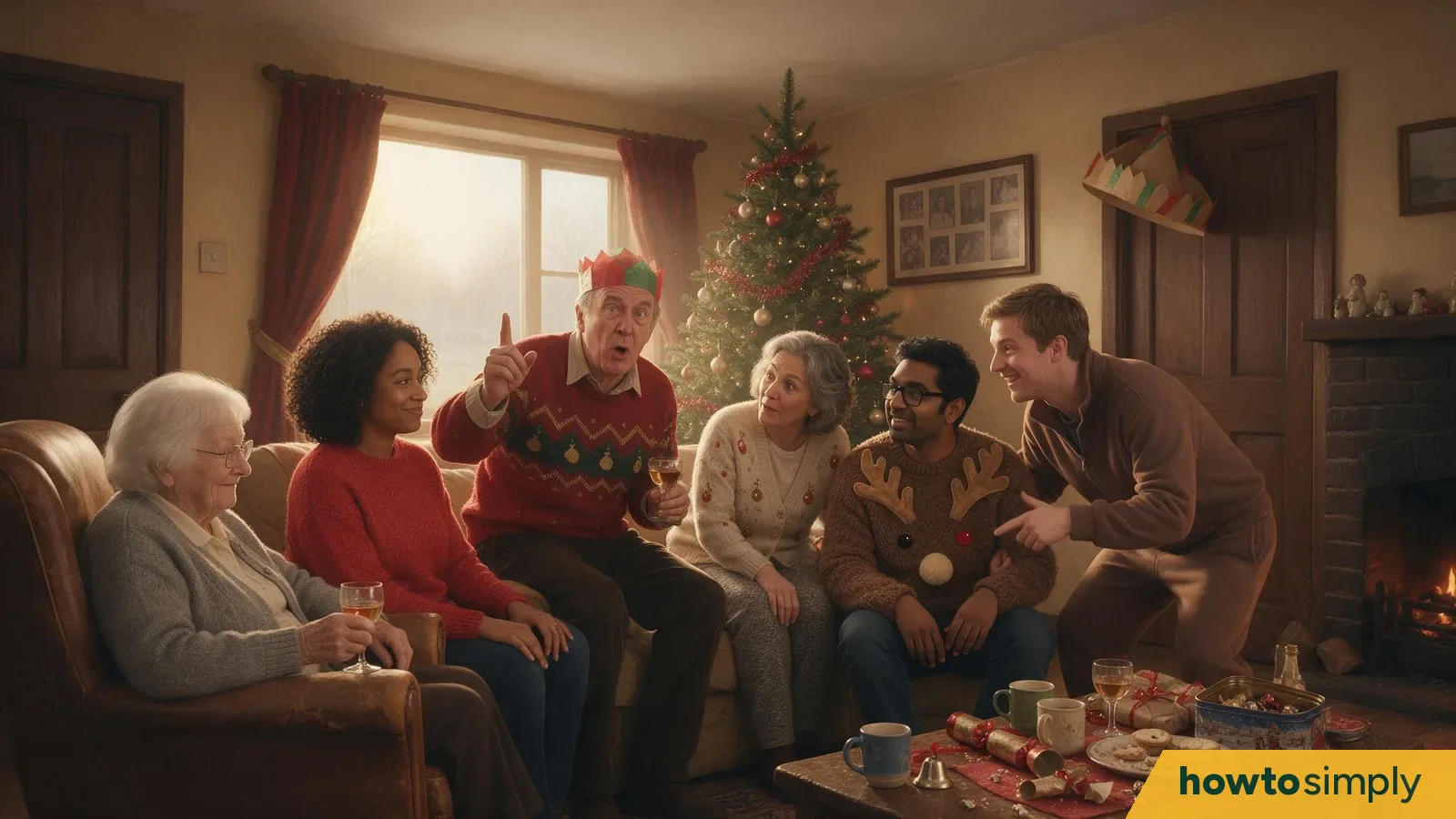
12:15 p.m., Christmas Day. The turkey needs another hour. Uncle Pete has had two sherries and is building up to "the news". Mum has asked twice whether Jade and Sunil have "any announcements". Cousin Liam wants to know how much Sunil earns. Jade is hiding in the downstairs loo, just to breathe.
Christmas isn't easy for everyone. In a 2024 survey of 1,139 Australians for the health insurer Medibank, more than 1 in 3 said the cost of Christmas would hurt their mental health, and 1 in 4 people aged 18 to 24 said seeing family would. Wherever you live, here are 13 scripts for the moments that get everyone.
Before you arrive
1. Agree a plan with your partner

Decide how long you'll stay, which topics are off-limits, and a code word for "help". Five minutes in the car beats three hours of guessing. Our in-law survival guide covers this in more detail.
Try saying (in the car): "If I say 'did we leave the oven on?', we're leaving in ten minutes."
2. Set a gift budget, and say it early
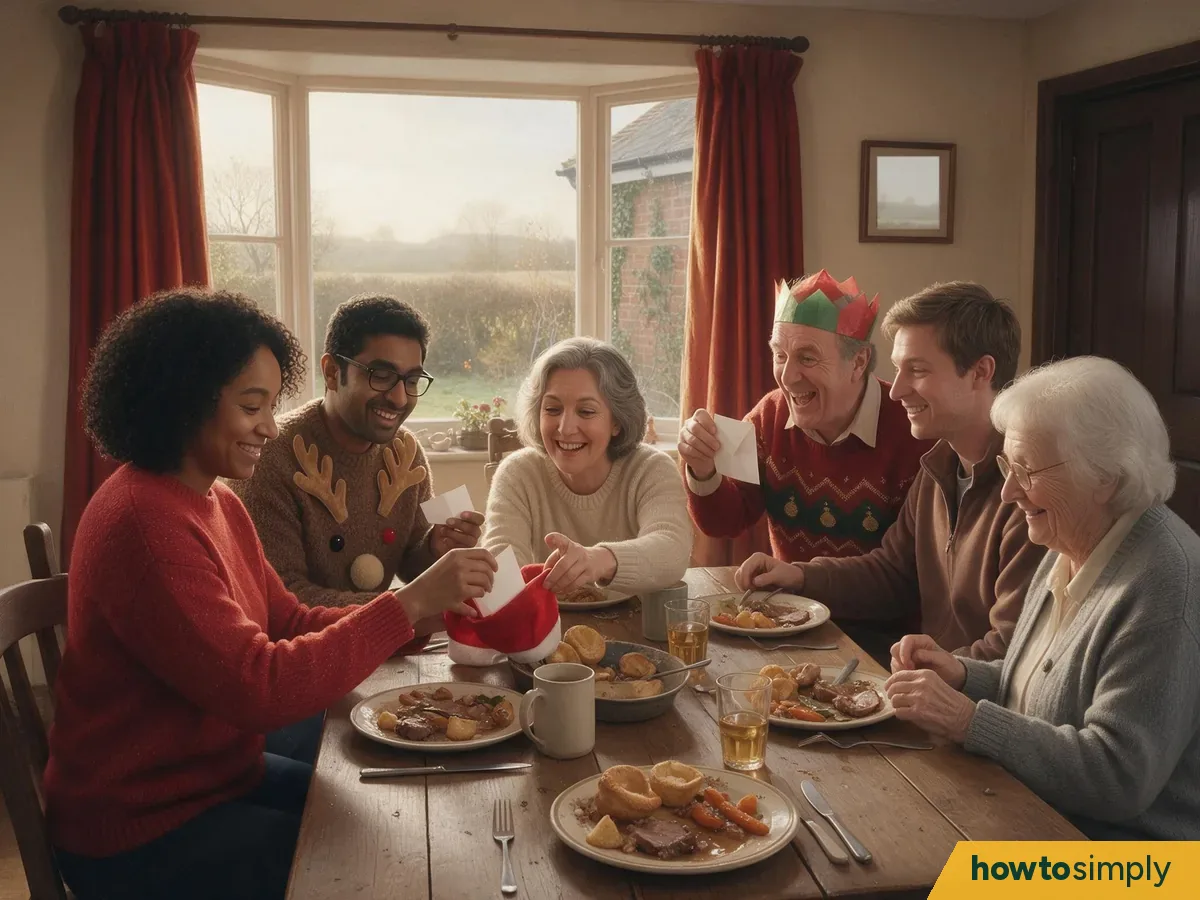
Money is tight for a lot of families. Agree a gift limit or a Secret Santa in November, not on the 23rd, so nobody is embarrassed on the day.
Try saying: "We're doing a £20 Secret Santa this year to keep it fun and fair. Who's in?"
3. Plan your own breaks

The dog walk, a trip to the corner shop, "I'll do the washing-up". Know where you'll get ten quiet minutes before you need them.
The awkward questions
4. Politics at the table
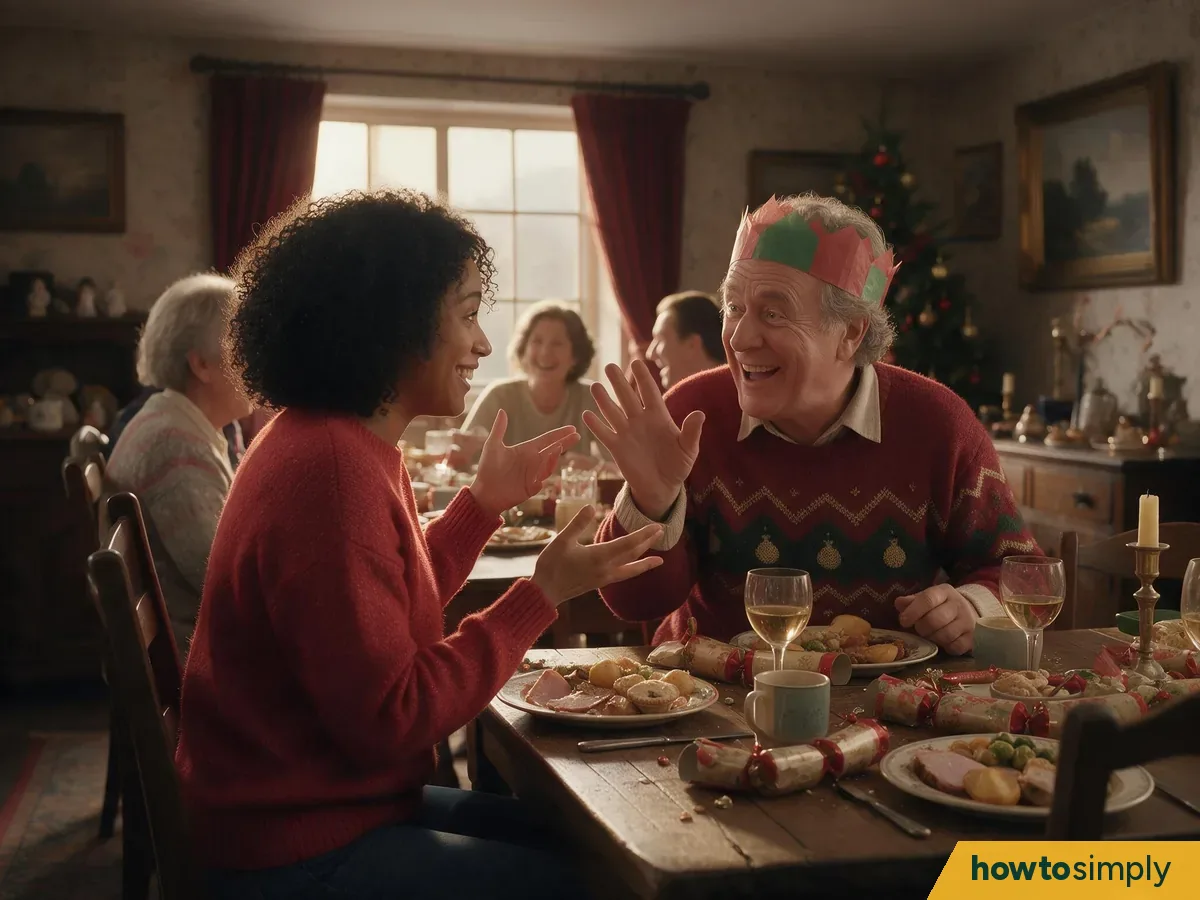
You won't change anyone's vote over the turkey. Steer them to something they love talking about instead.
Try saying: "I love that you care about this, Pete. Today I'd rather hear about your trip to Cornwall. How was it?"
5. "How much do you earn?"
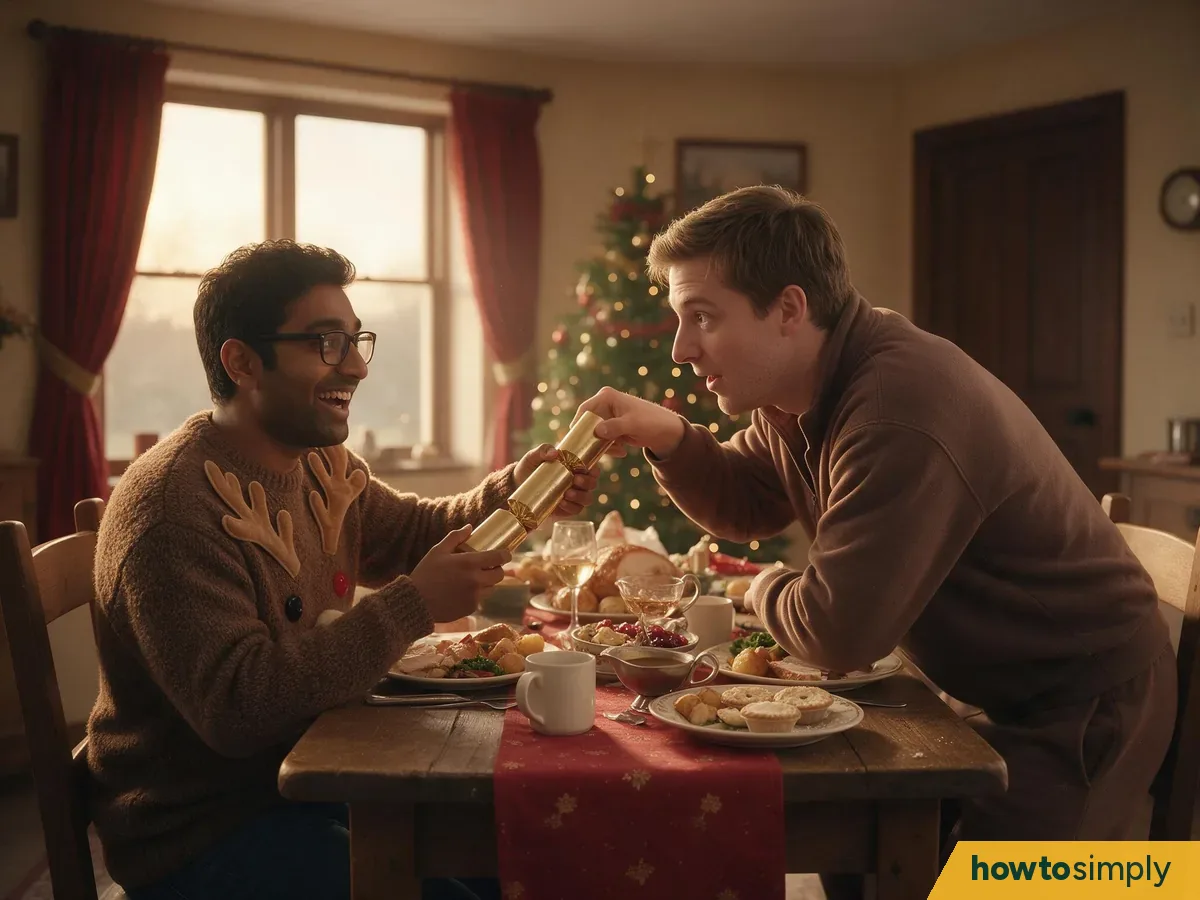
A joke and a question back closes the topic without any drama.
Try saying: "Enough for the good crackers! How's your new job going?"
6. Comments about food or weight
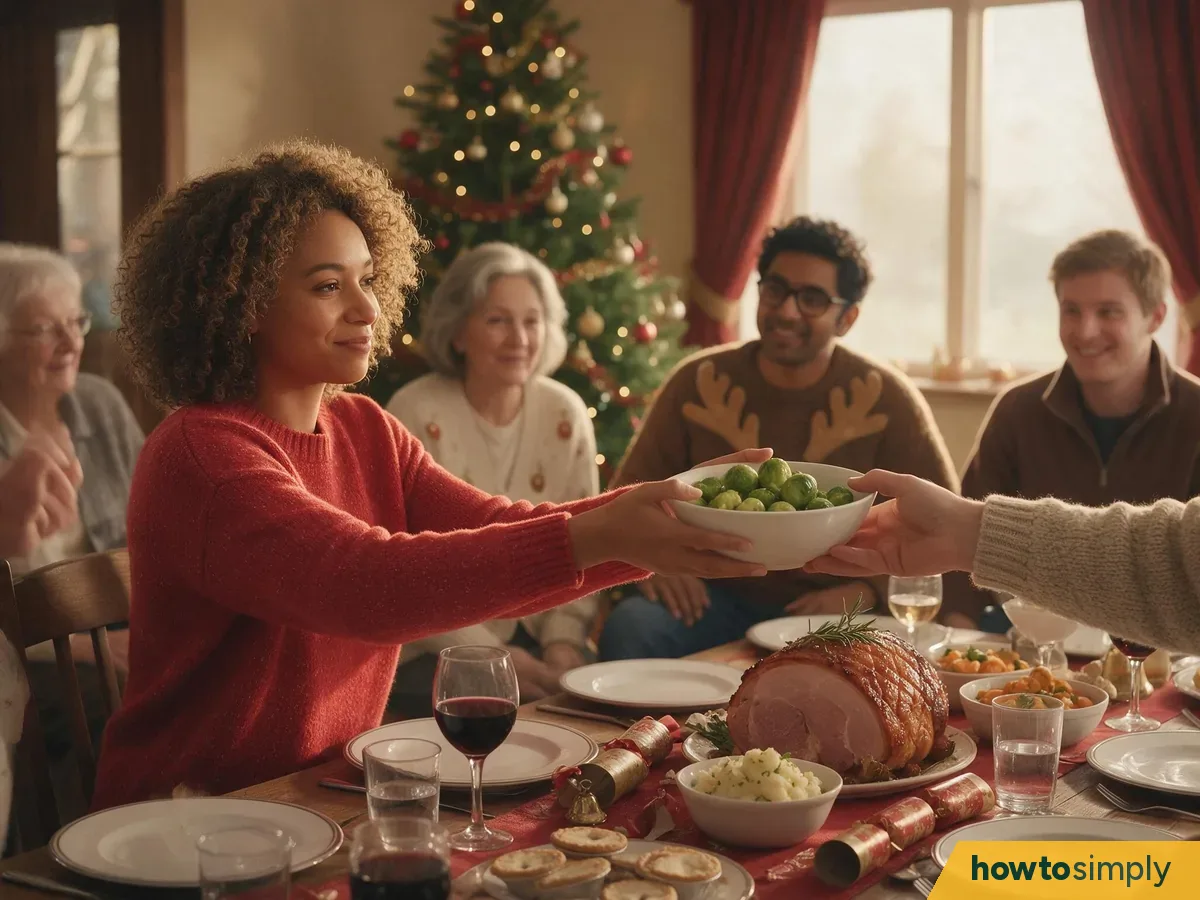
You don't have to explain your plate to anyone.
Try saying: "I'm happy with what I'm eating, thanks. Can you pass the sprouts?" If it carries on, a calm "Please don't comment on my body" is enough.
7. "So, when are you having kids?" (or getting married)
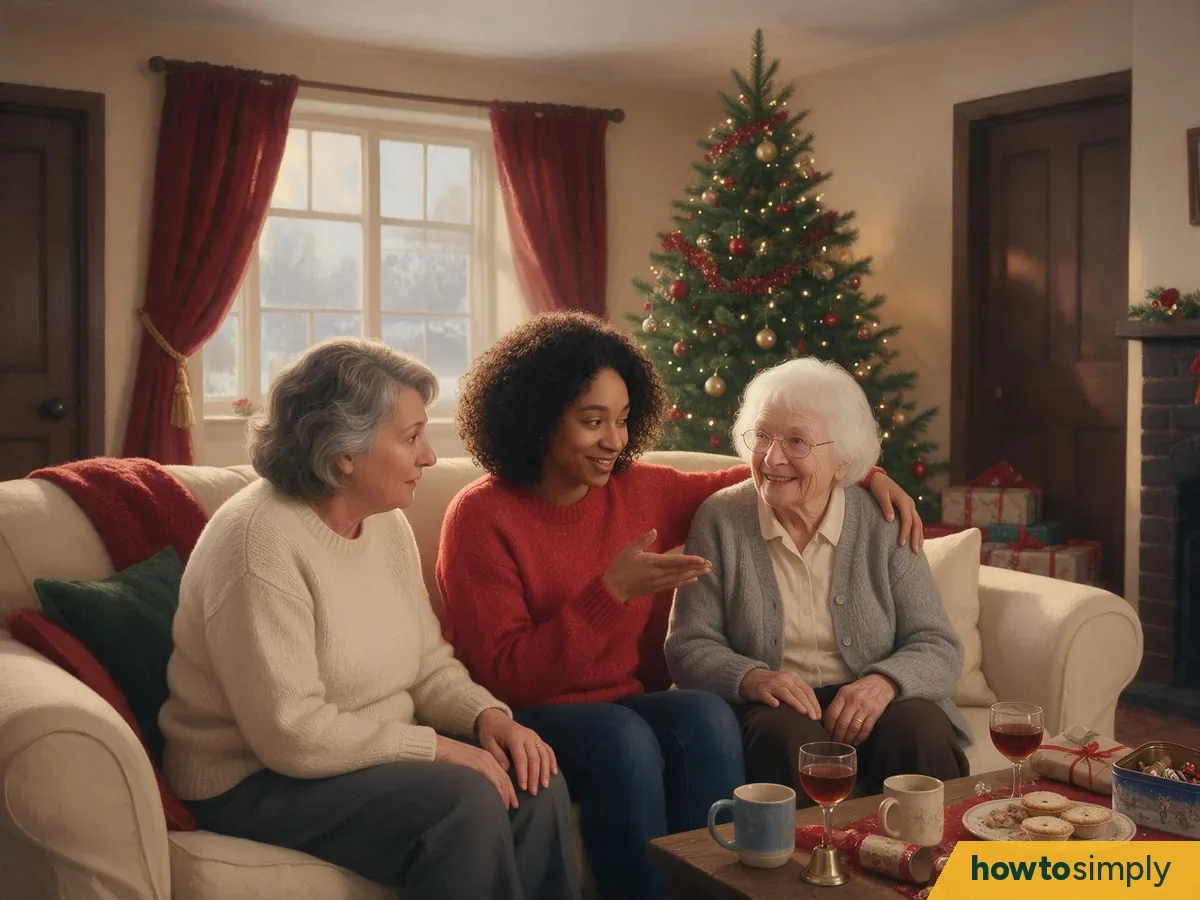
This one is kind, final, and moves the spotlight to someone who will enjoy it.
Try saying: "You'll be the first to know if there's ever news. Now, tell me about Granny's new hip."
8. The old family argument
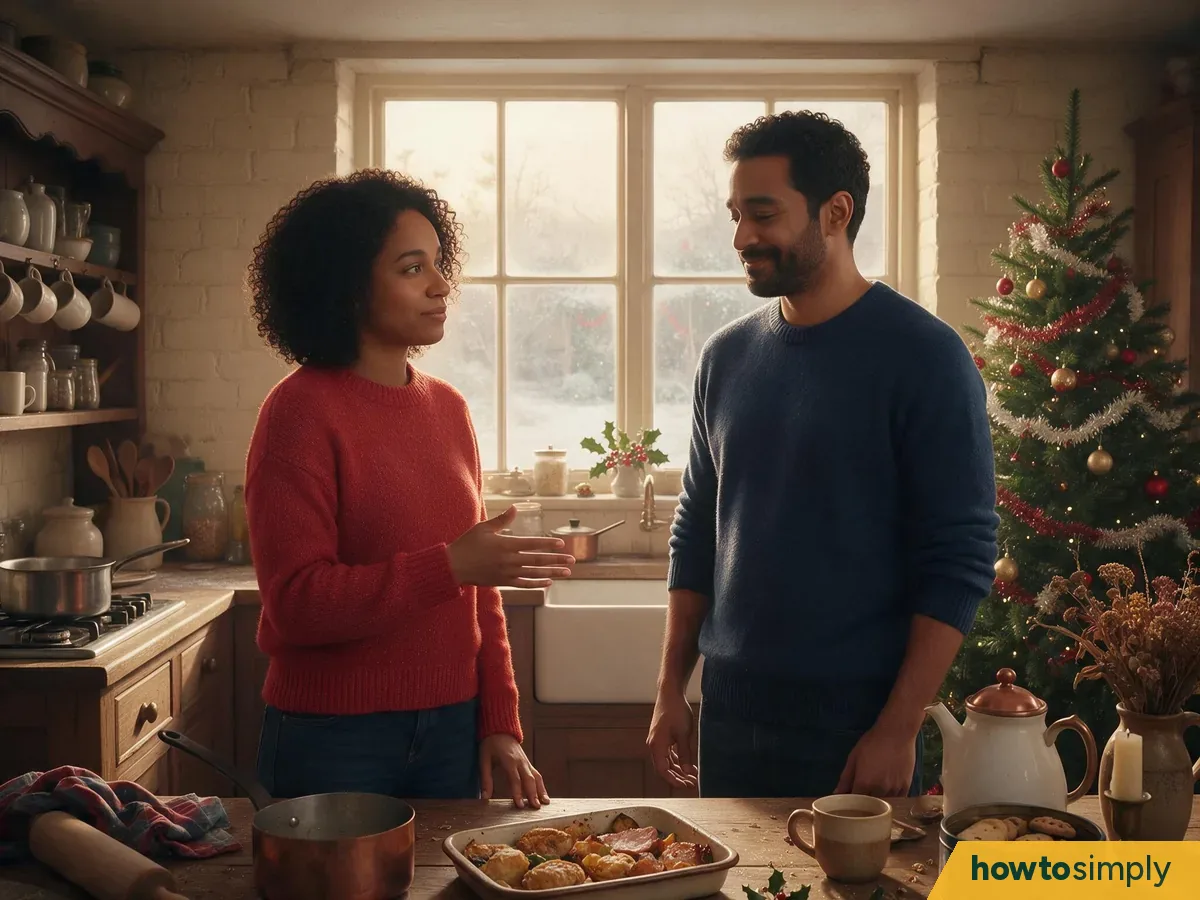
If a topic always ends badly, don't reopen it on the 25th. The Gottman Institute's advice for couples works for families too: when a conversation gets too heated, take a break of 15 to 20 minutes and do something soothing, rather than pushing on.
Try saying: "Let's not do this today. Can we talk about it in January, just us?"
Look after yourself
9. Eat, drink water and take your breaks
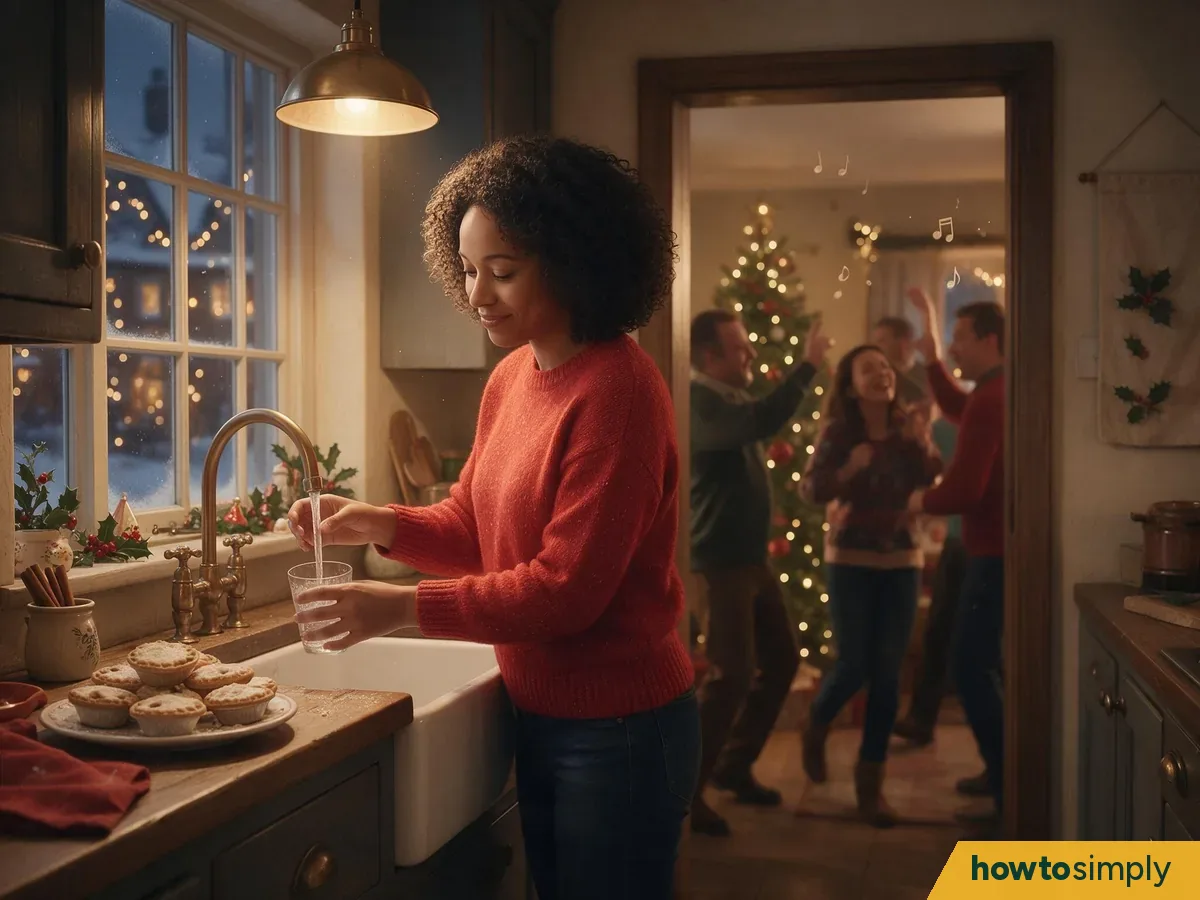
Hunger, alcohol and too little sleep make everyone's fuse shorter. Eat before the long wait for dinner, pace the sherry, and have a glass of water between drinks.
10. Find your ally
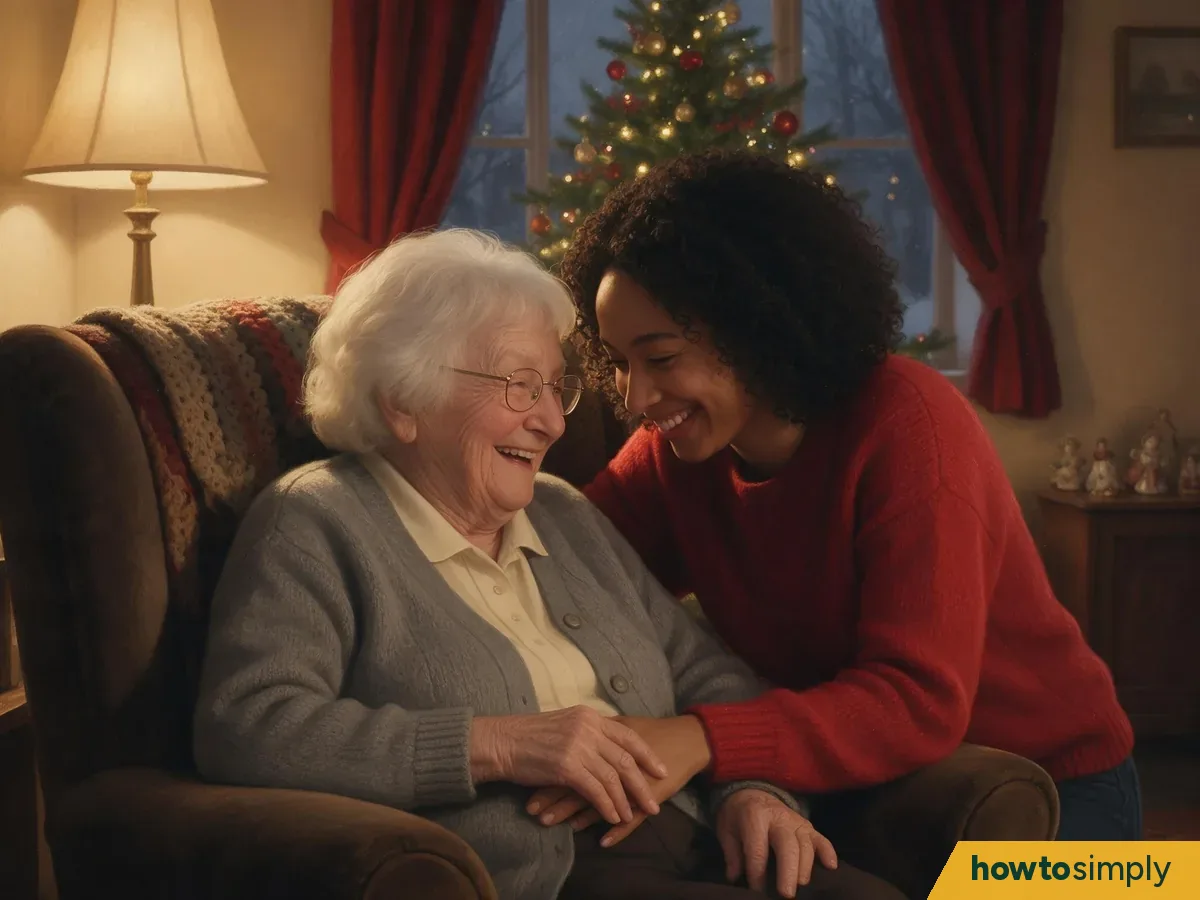
Granny Rose, a favourite cousin, the dog. Sit next to someone who makes the day easier, and agree to rescue each other.
11. Give someone a job
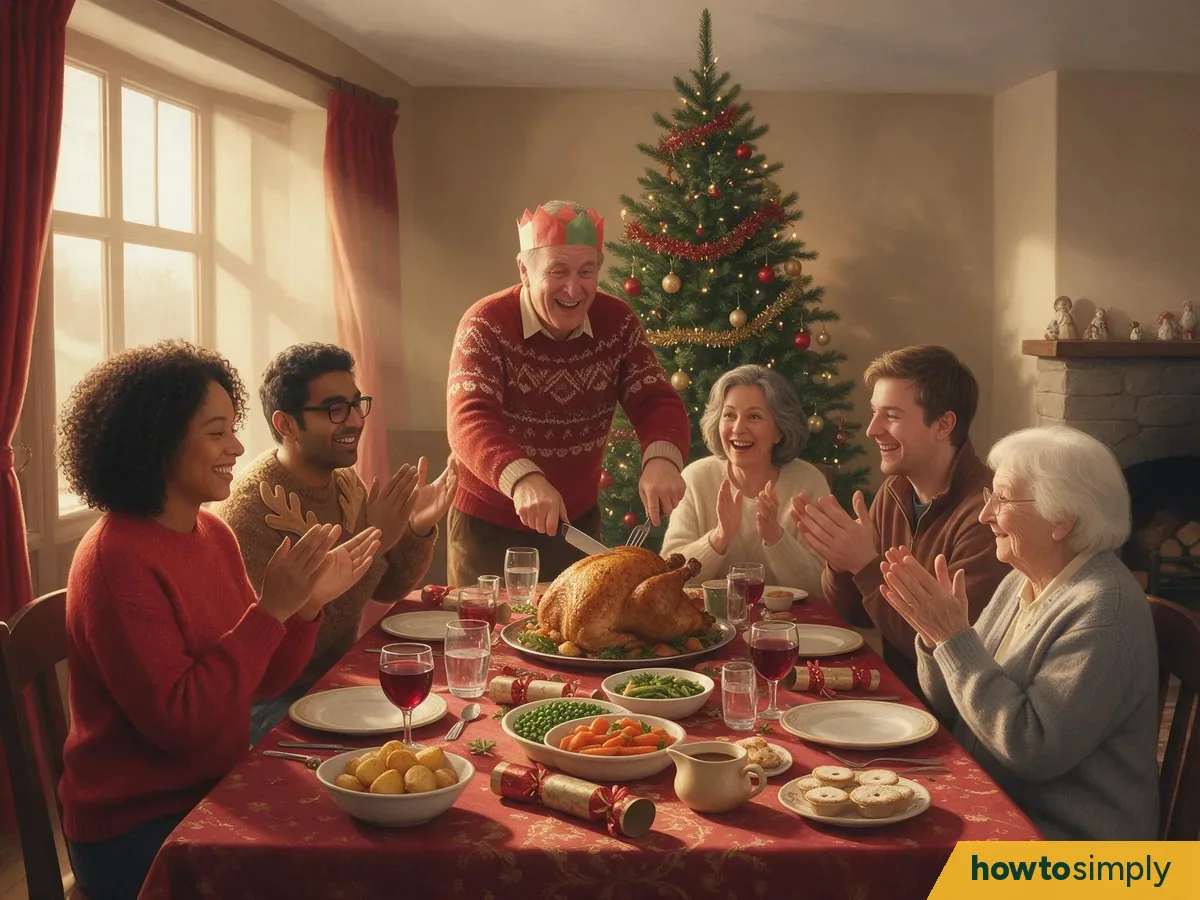
Uncle Pete carves the turkey. Liam runs the quiz. A busy relative is a happy relative, and a busy relative has less time for questions.
12. Leave on time, warmly

Leave while it's still nice. A thank-you and a hug at 6 p.m. beats a row at 10.
Try saying: "Thank you so much for today. We're heading off before the roads get busy. Love you!"
13. If you're alone this year, plan it

Christmas can make loneliness feel bigger. Plan your day the way you'd plan a family one: a film, a long walk, a video call with a friend, or volunteering. If you're struggling, Samaritans are on 116 123 in the UK and Ireland. The call is free and they're open 24 hours a day, including Christmas Day.
The scripts at a glance
| Awkward moment | What to say |
|---|---|
| Politics | "I love that you care about this. Today I'd rather hear about your trip." |
| Salary | "Enough for the good crackers! How's your new job going?" |
| Food or weight | "I'm happy with what I'm eating, thanks." Then: "Please don't comment on my body." |
| Kids or marriage | "You'll be the first to know if there's ever news." |
| The old argument | "Let's not do this today. Can we talk about it in January, just us?" |
| Gift budget | "We're doing a £20 Secret Santa this year. Who's in?" |
| Leaving | "We're heading off before the roads get busy. Love you!" |
Who finds Christmas hardest
Medibank's survey asked Australians how they expected the holidays to affect them. Younger adults were far more worried than older ones.
| What people said | How many |
|---|---|
| The cost of Christmas will hurt my mental health (all ages) | More than 1 in 3 |
| The cost of Christmas will hurt my mental health (aged 18 to 49) | 46% |
| I expect to feel lonely some of the time over Christmas and New Year | 38% |
| Seeing family will hurt my mental health (aged 18 to 24) | 1 in 4 |
| I'd prefer to spend Christmas alone (aged 50 to 64) | 1 in 5 |
| I don't expect any mental health issues over Christmas (aged 18 to 24) | 26% |
| I don't expect any mental health issues over Christmas (aged 65 and over) | 69% |
Source: Medibank, "The cost of Christmas causing mental health concerns", survey of 1,139 Australians by Pure Profile, November 2024.
Christmas survival check
- We agreed how long we're staying and a code word.
- We set a gift budget early.
- I have three scripts ready for the awkward questions.
- I know where I'll take a ten-minute break.
- I've planned my exit time.
If this doesn't work
- Someone won't drop it: you don't need a better comeback. Say "I'm not going to talk about that today" once, then leave the room for a few minutes.
- The same fight happens every year: raise it with that person in January, one to one, when nobody has had sherry and nobody has an audience.
- Christmas isn't safe for you: if someone at home is controlling, threatening or hurting you, help is open over the holidays. In the UK, call the National Domestic Abuse Helpline on 0808 2000 247 (free, 24/7). In Germany, call the Hilfetelefon on 116 016 (free, anonymous, 24/7). In the US, call the National Domestic Violence Hotline on 1-800-799-7233 (24/7). If you are in danger, call 999 (UK), 112 (EU) or 911 (US).
Your turn: what's the most awkward question you've ever been asked at Christmas dinner, and what did you say? Tell us in the comments.
Questions readers ask
How do I answer "when are you having kids?" at Christmas?
Give a short, kind answer that closes the topic, then move the spotlight. For example: "You'll be the first to know if there's ever news. Now, tell me about Granny's new hip." You don't owe anyone an explanation.
How do I stop a political argument at the dinner table?
Thank the person for caring, then steer them to a topic they enjoy talking about. For example: "I love that you care about this, Pete. Today I'd rather hear about your trip to Cornwall." If it keeps going, take a break of 15 to 20 minutes away from the table.
What can I say if someone comments on my weight or what I eat?
Try "I'm happy with what I'm eating, thanks. Can you pass the sprouts?" If it carries on, a calm "Please don't comment on my body" is enough.
Who can I call if I'm alone or struggling at Christmas?
In the UK and Ireland, Samaritans are on 116 123, free, 24 hours a day, including Christmas Day. If someone at home is hurting or threatening you, the UK National Domestic Abuse Helpline is 0808 2000 247, free and open 24/7.
Did this solve the problem?
What needs work?
What did you think?
Reaction counts are loading.
Spotted a mistake? If a step is unclear or a picture is inaccurate, tell us the step number and what needs correcting. Email us about this page or use the contact form. We read every report, and fixes are listed on What changed.
Liked this article?
Follow us for new articles and short how-to videos.
Sources
We use primary, official and specialist sources appropriate to the topic.
- Medibank (Australia): The cost of Christmas causing mental health concerns (survey of 1,139 Australians, November 2024)
- The Gottman Institute: Managing vs. resolving conflict in relationships
- Samaritans: Talk to us on the phone
- National Domestic Abuse Helpline (run by Refuge)
- Hilfetelefon Gewalt gegen Frauen (Germany)
- The Hotline: US National Domestic Violence Hotline