Sprained ankle? How to treat it at home, and when it might be broken
Reviewed by Dr Sumbal Safi Ullah✓, MBBS
By Abu Bakar Saadat5 min readPublisher: Saadat Rafiq
Last updated: 28 October 2026References
 Illustration
On this page 10 sections
In short
For the first 2 to 3 days: protect it, rest it, hold a wrapped ice pack on it for up to 20 minutes every 2 to 3 hours, use a snug bandage by day and raise it on a pillow. A crack, odd shape, numbness or not walking more than a few steps needs a doctor.
At a glance
- First 2 to 3 days
- Protect, rest, ice, compress, elevate (NHS)
- Ice
- Wrapped, up to 20 minutes every 2 to 3 hours (NHS)
- Avoid at first
- Heat, alcohol and massage (NHS); running (nidirect)
- Recovery
- Most feel better in about 2 weeks; no running for up to 8 weeks (NHS)
- Advice from
- NHS, nidirect, Mayo Clinic and the Emergency Care Institute NSW, read 28 October 2026
- Checked
- October 2026
A sprain is a stretched or torn ligament, the tissue that holds a joint together, and the ankle is one of the most common places for it (NHS). Most sprains can be looked after at home with five simple measures for the first 2 to 3 days. First, though, rule out signs that the ankle may be broken.
Which case is yours?
You can walk, though it hurts
Follow the steps below for 2 to 3 days (NHS).
You can't walk more than a few steps
Contact NHS 111 or an urgent treatment centre (NHS). Doctors use this as one sign that an X-ray may be needed (Ottawa ankle rules).
A crack, odd shape, numbness or cold skin
Call 999 or go to A&E (NHS). Don't try to straighten it.
How to look after it for the first 2 to 3 days
Stop what you are doing and protect the ankle.

Illustration Stop the exercise and avoid putting weight on it (NHS). Use a support or supportive footwear (NHS); nidirect suggests lace-up, high-top shoes to stop further injury.
You should see: the foot supported and no longer being used for sport or long walks.
Rest it for the first 2 to 3 days.

Illustration nidirect says avoid activity for 48 to 72 hours. Mayo Clinic puts it simply: avoid anything that causes pain, swelling or discomfort.
You should see: the pain settling when you keep still.
Careful: don't put ice straight on the skin. If you have diabetes, a blood vessel disease or reduced feeling in the skin, check with a healthcare professional before using ice (Mayo Clinic).
Hold a wrapped ice pack on it for up to 20 minutes.
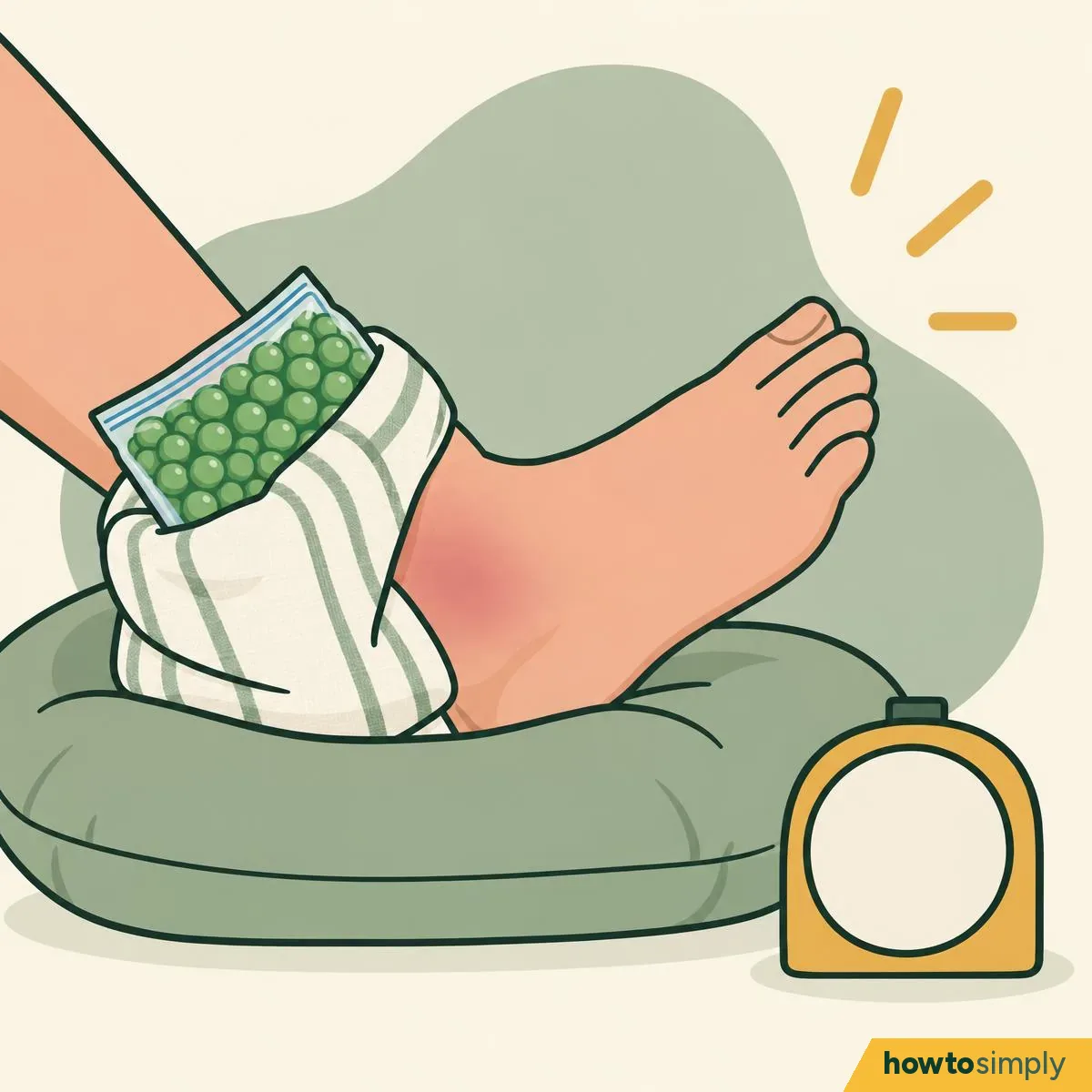
Illustration The NHS says up to 20 minutes every 2 to 3 hours; nidirect gives 15 to 20 minutes, during the day, for the first 48 to 72 hours, and not while you sleep. Wrap the ice in a damp (nidirect) or thin (Mayo Clinic) towel.
You should see: a towel between the ice and the skin all the time, and the timer running.
Careful: the bandage should feel snug but not tight. Don't wrap so tightly that blood flow is blocked (Mayo Clinic).
Wrap an elastic bandage around it, starting at the toes end.
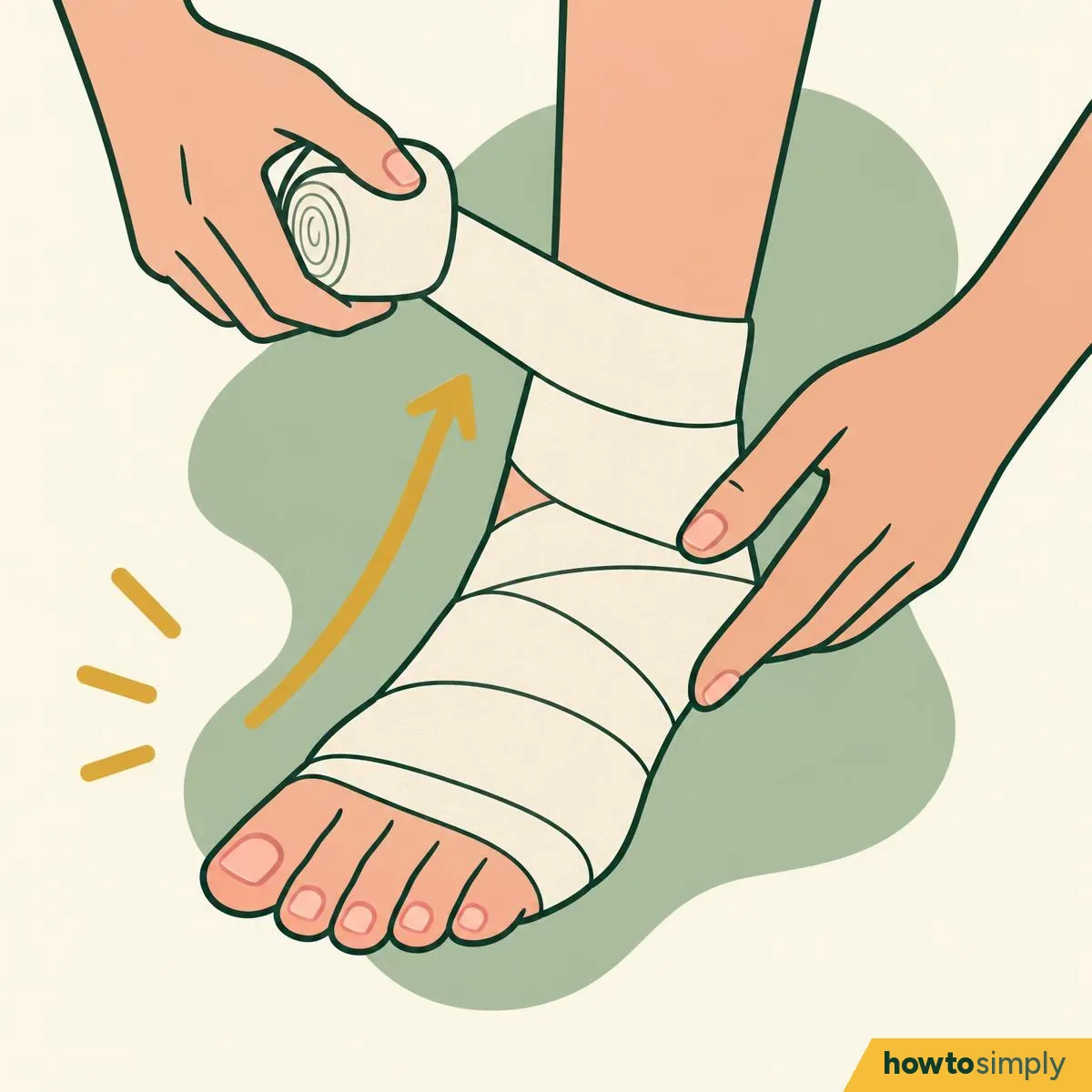
Illustration Start at the end farthest from your heart, so near the toes, and wrap up towards the leg (Mayo Clinic). Wear it during the day for support (NHS) and take it off before bed (nidirect).
To check it isn't too tight, use the test the NHS gives for bandages: press a toenail or the skin beyond the bandage until it goes pale, and the colour should come back within 2 seconds. If it doesn't, loosen the bandage.
You should see: the toes uncovered, pink and warm, with no tingling.
Raise the ankle on a pillow.

Illustration The NHS says keep it raised on a pillow as much as possible. Mayo Clinic says above the level of your heart if you can, especially at night, so gravity helps drain the swelling. nidirect adds not to keep a leg raised for long periods without moving.
You should see: the ankle higher than your hips while you rest.
Start moving it again once the pain allows.
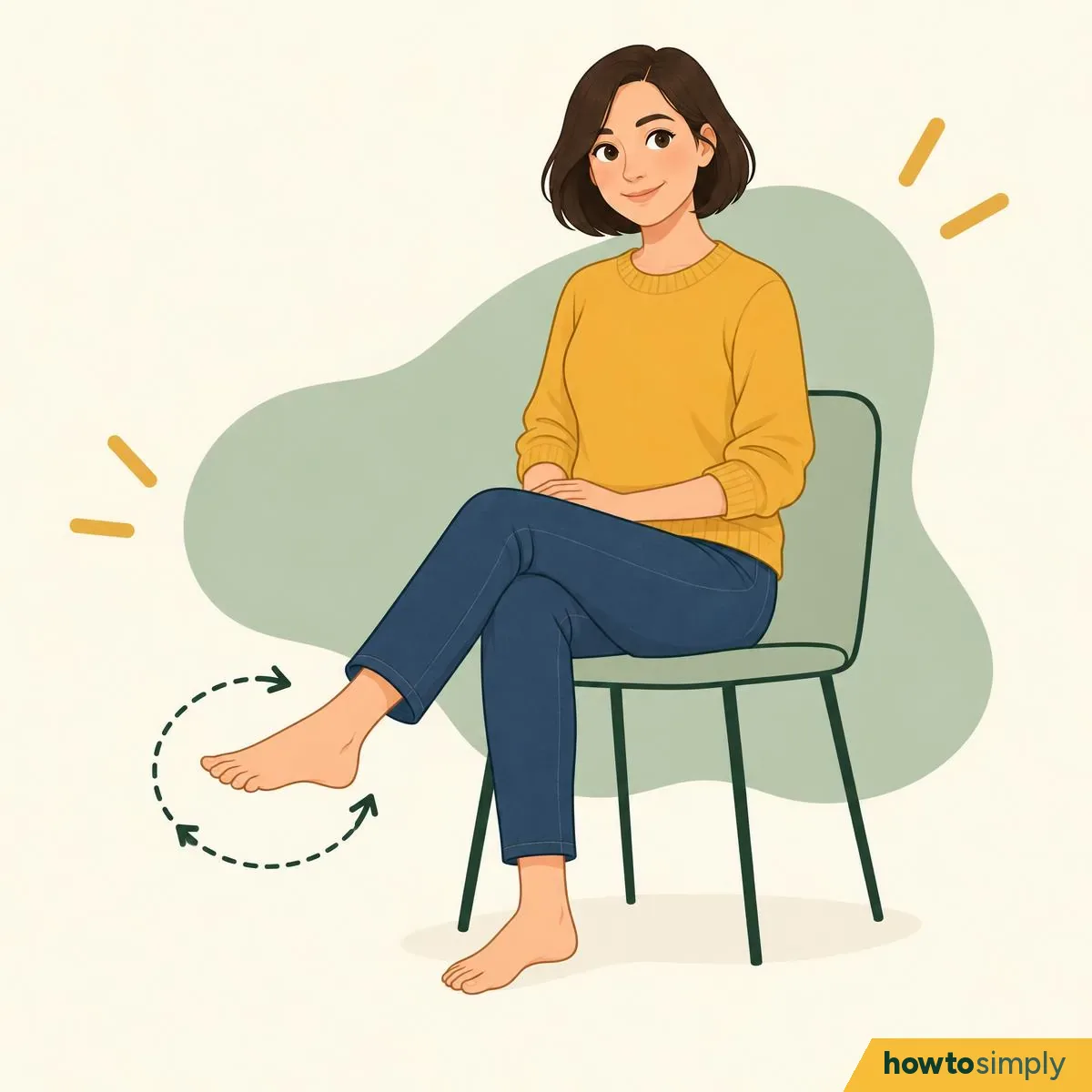
Illustration Once you can move the ankle without pain stopping you, keep it moving so it doesn't stiffen (NHS). Mayo Clinic says a physiotherapist can guide exercises for strength and balance, such as standing on one leg. In many areas of England you can refer yourself to NHS physiotherapy (musculoskeletal, or MSK, services) without seeing a GP (NHS).
You should see: a little more movement and less swelling day by day.
What to avoid in the first few days
| Avoid | Why |
|---|---|
| Heat: hot baths, saunas, heat packs | Can increase swelling (NHS) |
| Alcohol | Can increase bleeding and swelling and slow healing (nidirect) |
| Massage | May increase bleeding and swelling (nidirect) |
| Running or other exercise | Could cause more damage (nidirect); avoid strenuous exercise for up to 8 weeks (NHS) |
How to tell it is getting better
- The swelling and bruising are getting smaller, not bigger.
- You can put a little more weight on it each day.
- With the bandage on, your toes stay pink, warm and feeling normal.
- After about 2 weeks it feels clearly better (NHS).
If it isn't going to plan
| What happens | What it means | What to do |
|---|---|---|
| Toes tingle, go pale or feel cold under the bandage | The bandage is too tight (Mayo Clinic) | Loosen it and recheck. If the ankle is numb without a bandage, go to A&E (NHS) |
| Swelling or bruising keeps growing | It may be more than a simple sprain | Contact NHS 111 or an urgent treatment centre (NHS) |
| The ankle is hot and you feel shivery | Possible infection (NHS) | Contact NHS 111 or see a GP (NHS) |
| Still painful or wobbly after a couple of weeks | Slow recovery or an unstable ankle (Mayo Clinic) | See a GP or physiotherapist (NHS, Mayo Clinic) |
| It is very stiff and hard to move | It needs checking (NHS) | Contact NHS 111 or an urgent treatment centre (NHS) |
Questions readers ask
Should I use heat or ice on a sprained ankle?
Ice for the first 2 to 3 days. The NHS says to avoid heat, such as hot baths and heat packs, in the first couple of days because it can increase swelling.
Should I walk on a sprained ankle?
In the first days, rest it and avoid putting weight on it (NHS). Once you can move it without pain stopping you, keep it moving so it doesn't stiffen. Not being able to walk more than a few steps is a reason to contact NHS 111.
How long does a sprained ankle take to heal?
The NHS says most sprains start to feel better after about 2 weeks. Avoid strenuous exercise such as running for up to 8 weeks, and a severe sprain can take months.
Do I need an X-ray?
Not for most sprains. Go to A&E if you heard a crack, the ankle looks a different shape, or it is numb or cold (NHS). Doctors use the Ottawa ankle rules to decide: one reason they X-ray is that you could not take four steps straight after the injury and when you are examined.
Did this solve the problem?
What needs work?
What did you think?
Reaction counts are loading.
Spotted a mistake? If a step is unclear or a picture is inaccurate, tell us the step number and what needs correcting. Email us about this page or use the contact form. We read every report, and fixes are listed on What changed.
Liked this article?
Follow us for new articles and short how-to videos.
Sources
We use primary, official and specialist sources appropriate to the topic.
- NHS: Sprains and strains (reviewed 23 April 2024)
- nidirect (Northern Ireland): Sprains and strains (updated 26 February 2026)
- Mayo Clinic: Sprained ankle: Diagnosis and treatment (19 June 2026)
- NHS: Cuts and grazes, bandage circulation check (reviewed 2 April 2026)
- Emergency Care Institute NSW: Ottawa ankle rules (adapted from Stiell et al., JAMA 1994)