How to keep a houseplant alive in low light
Researched by Abu Bakar Saadat7 min read
Last updated: 15 November 2026References
On this page 8 sections
In short
Pick a plant that tolerates low light, then put it as close to a window as you can: light fades fast with distance. Check the light, dust the leaves, and water and feed less than you would in a warm, sunny room.
At a glance
- Low-light plants
- Snake plant, Chinese evergreen, peace lily (Illinois); cast-iron plant, pothos (Clemson)
- Low light means
- About 25 to 100 foot-candles (UF/IFAS); roughly 250 to 1,000 lux
- Stay within
- A few feet of a north window (Illinois)
- Grow light
- 14 to 16 hours a day, never more than 16 (Illinois)
- Advice from
- Illinois, UF/IFAS and Clemson extension services, Missouri Botanical Garden, RHS, read 28 October 2026
- Checked
- November 2026
It's a shame when a plant starts to go pale and leggy because it isn't getting enough light. Don't lose hope just yet. Moving it a metre or two closer to a window could make a big difference, and we'll find the best spot for it together.
No houseplant survives with no light at all. "Low-light" doesn't mean zero light; it means the plant copes with less than others prefer. According to Illinois Extension, light drops off quickly as you move into a room, so moving a plant a metre or two closer to the window usually makes the biggest difference.
How to give a plant the best chance in a dim room
Find the brightest spot you can, close to a window.
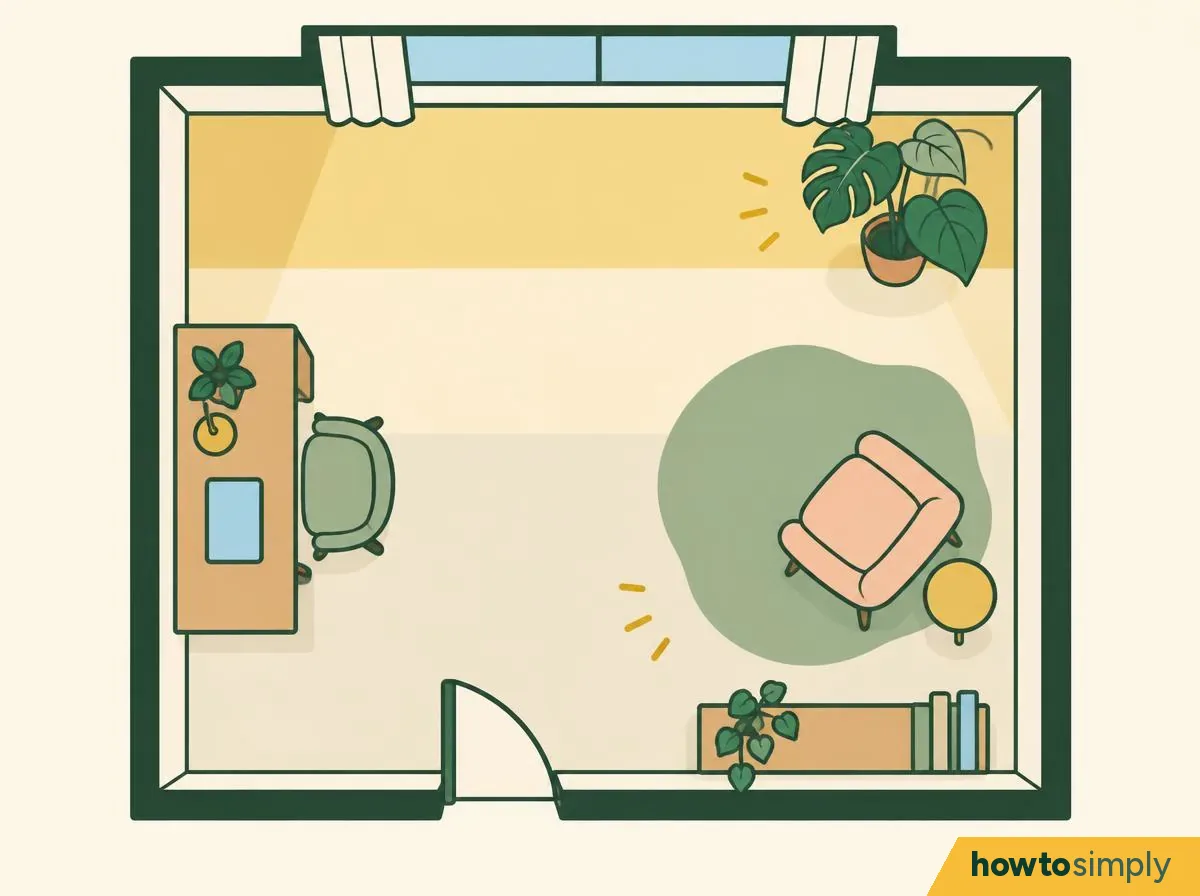
Diagram: light fades with distance from the window The reason distance matters so much is that light fades fast as you walk into the room. Illinois Extension gives these positions for low light: a few feet from a north window, 3 to 10 feet (about 1 to 3 m) from an east or west window, or 15 to 20 feet (about 4.5 to 6 m) from a south window. Directly in front of a north window counts as medium light. These directions apply in the northern hemisphere; in the southern hemisphere, swap north and south.
You should see: the window clearly in view from where the plant stands, with nothing such as furniture or a heavy curtain in between.
Choose a plant that copes with low light.
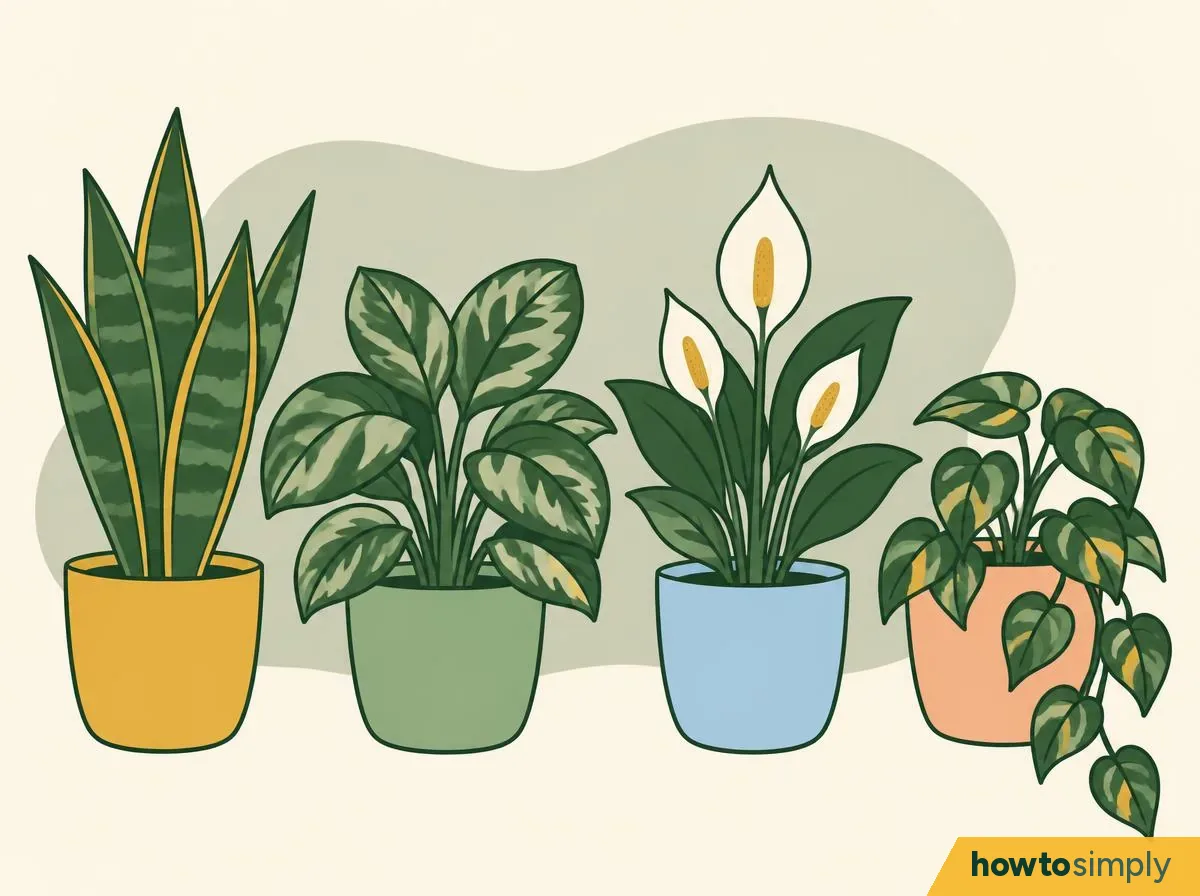
Illustration Illinois Extension lists Chinese evergreen (Aglaonema), parlour palm, Boston fern, heartleaf philodendron, snake plant (Sansevieria) and peace lily (Spathiphyllum) as low-light plants. Clemson Extension adds cast-iron plant (Aspidistra) and golden pothos.
Also keep flowers in mind. Avoid flowering plants for dark spots, because the RHS says they often need more light than foliage plants. Plain green leaves cope better than heavily variegated ones, which can turn solid green in low light (Missouri Botanical Garden).
You should see: a plant whose label or care sheet says "low light" or "shade tolerant".
Check the light with your hand, or a meter.
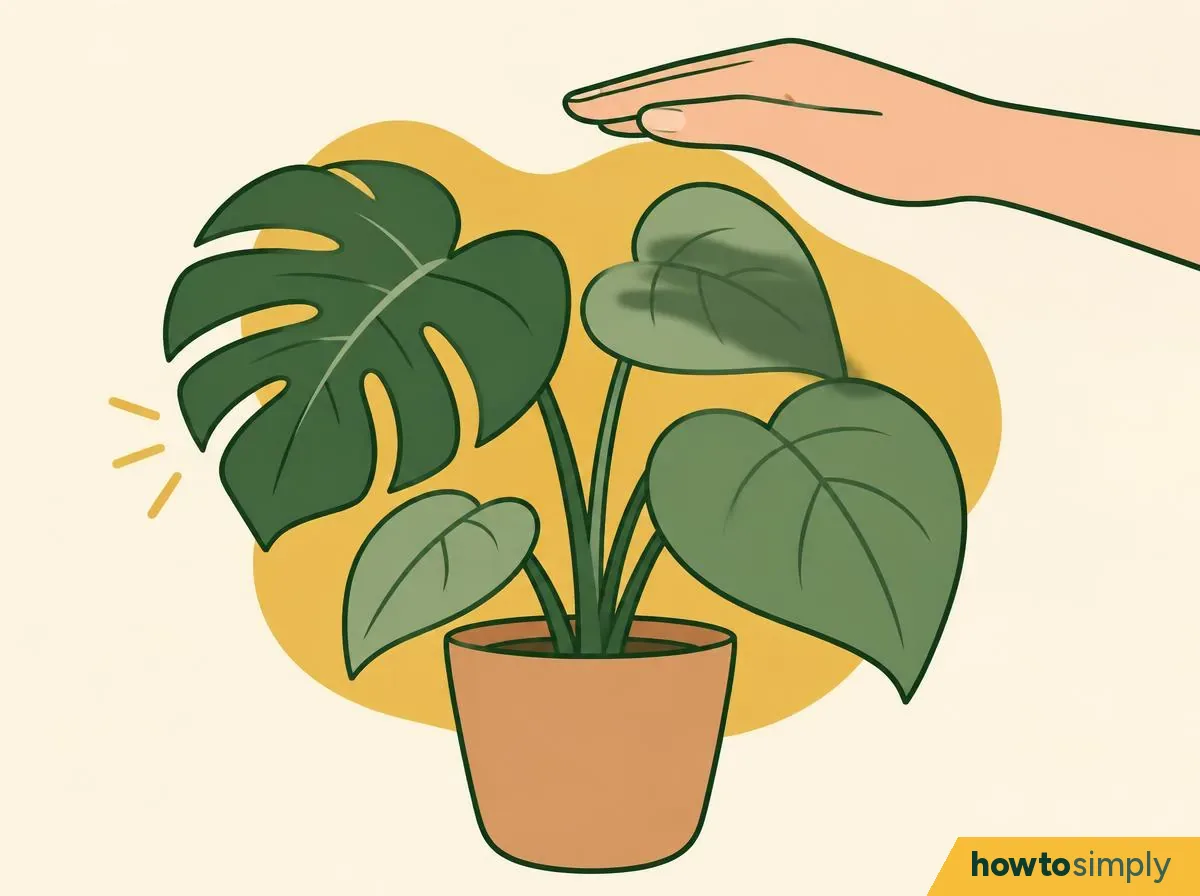
Illustration: a soft shadow means bright shade You don't need any gadget for this. Hold your hand a little above the leaves at midday. The RHS describes bright shade as light too soft to throw a crisp, clear shadow. The RHS says this bright shade is generally OK in summer.
For a number, UF/IFAS puts low light at about 25 to 100 foot-candles (roughly 250 to 1,000 lux) and medium light at 100 to 500. Clemson says a plant needs about 100 foot-candles for 12 hours a day to stay in good condition for a year.
You should see: at least a faint shadow, or a midday reading near 100 foot-candles (about 1,000 lux) or more.
Careful: don't move a plant from a dark corner straight into strong sun. Clemson says light changes should be gradual, and leaves can bleach or scald in direct sun.
If the plant struggles, move it closer to the light in stages.
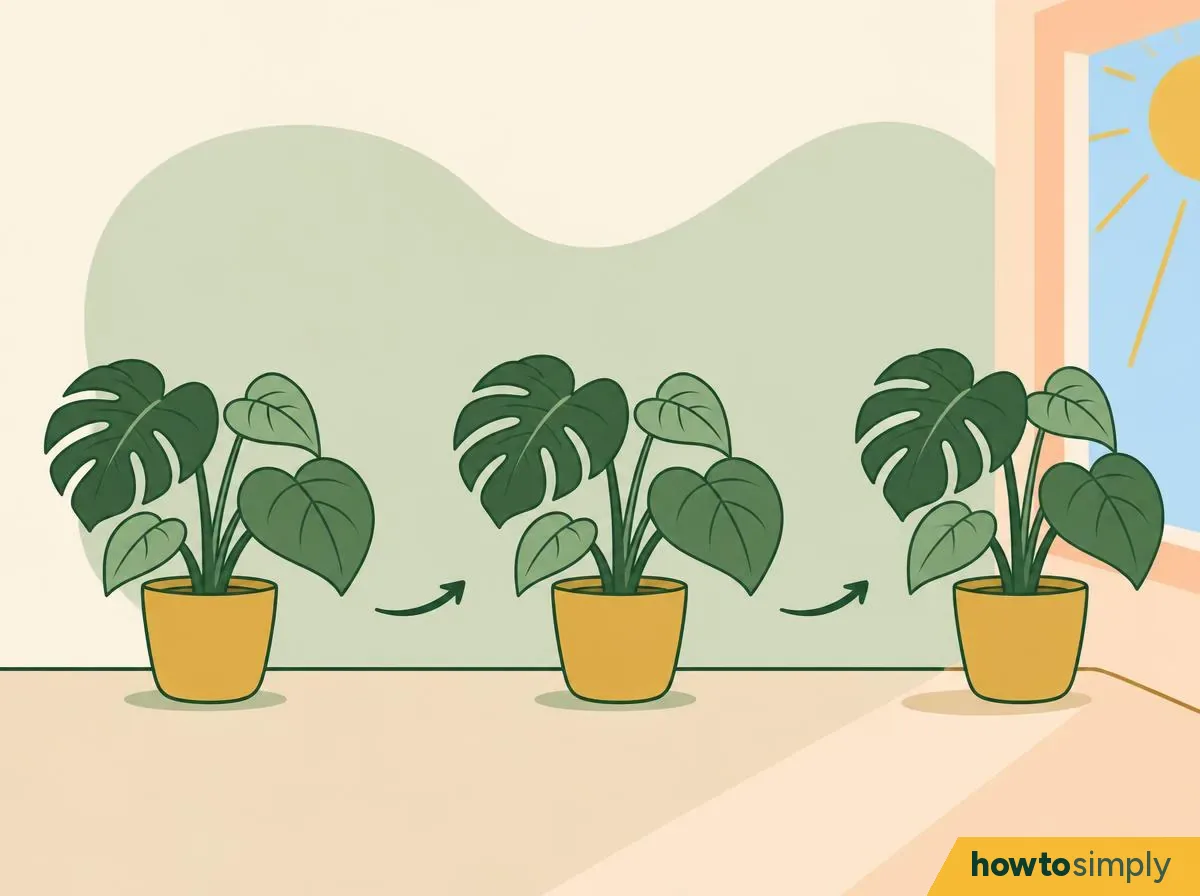
Illustration: move it in stages Move it a step closer to the window, wait a week or two, and look at the new growth. Make sure you go in stages: Clemson says any change in light should be gradual, and too much direct light bleaches or scalds leaves. In summer, keep sun-sensitive plants out of the direct sunbeam: the RHS says strong sun can scorch them through glass. In winter, when daylight is weak, the RHS says houseplants benefit from full sun.
You should see: new leaves that are as big and as green as the old ones.
Turn the pot each week.
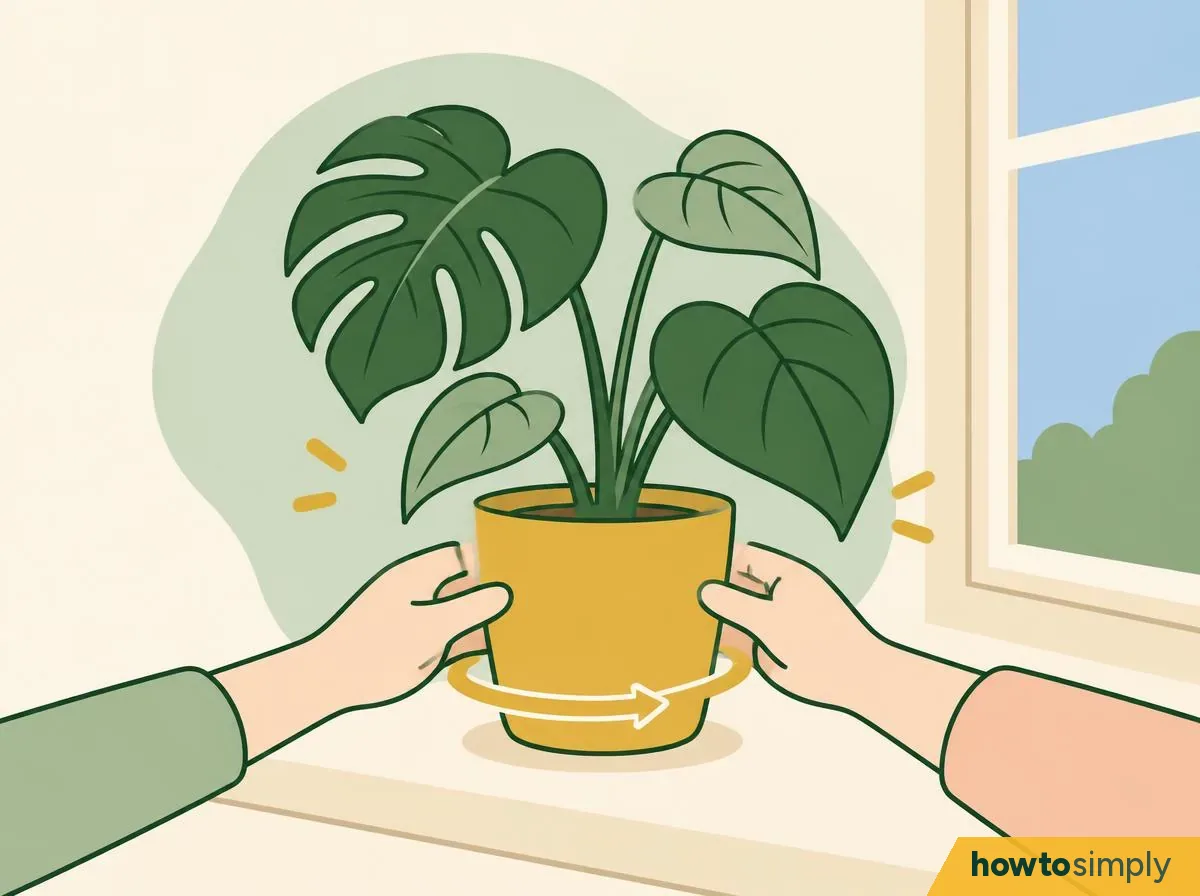
Illustration Pothos leaves grow towards the light (Penn State Extension). Penn State Extension suggests turning a pothos weekly so it grows evenly, and the same leaning happens with other plants: Missouri Botanical Garden says plants short of light grow spindly, reaching towards it. So give the pot a turn as part of your weekly routine; it is that easy.
You should see: a plant that grows evenly on all sides instead of leaning to the window.
Wipe dust off the leaves.
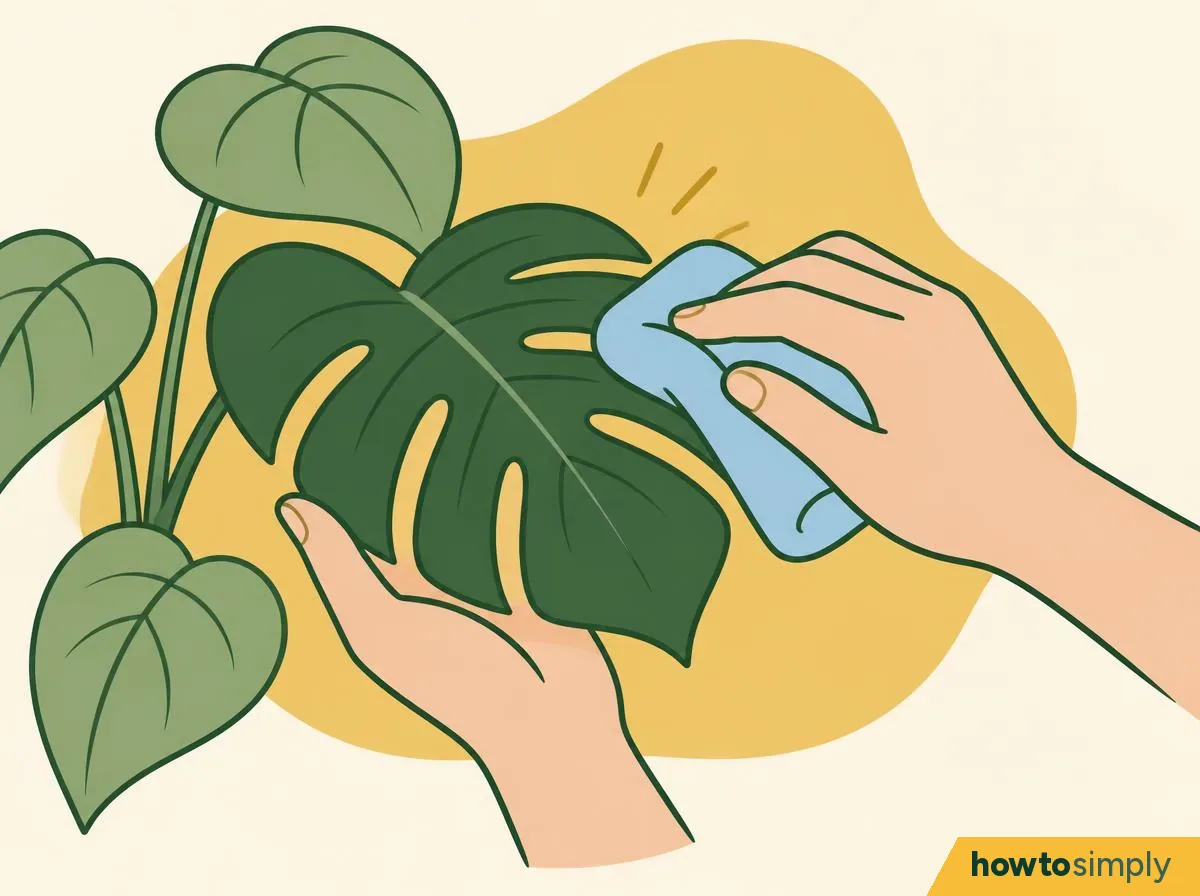
Illustration Dusting may sound fussy, but Clemson Extension says clean leaves are favourable to healthy growth. Clemson Extension says to wipe smooth leaves on both sides with a soft damp cloth, or rinse the plant in the shower. Use a soft brush on hairy leaves, and skip leaf-shine products, which Clemson says can interfere with the leaves' air exchange. So if your habit is to polish the leaves until they gleam, the plant would rather breathe.
You should see: clean, slightly glossy leaves with no grey film.
Water and feed less than you would in a bright room.
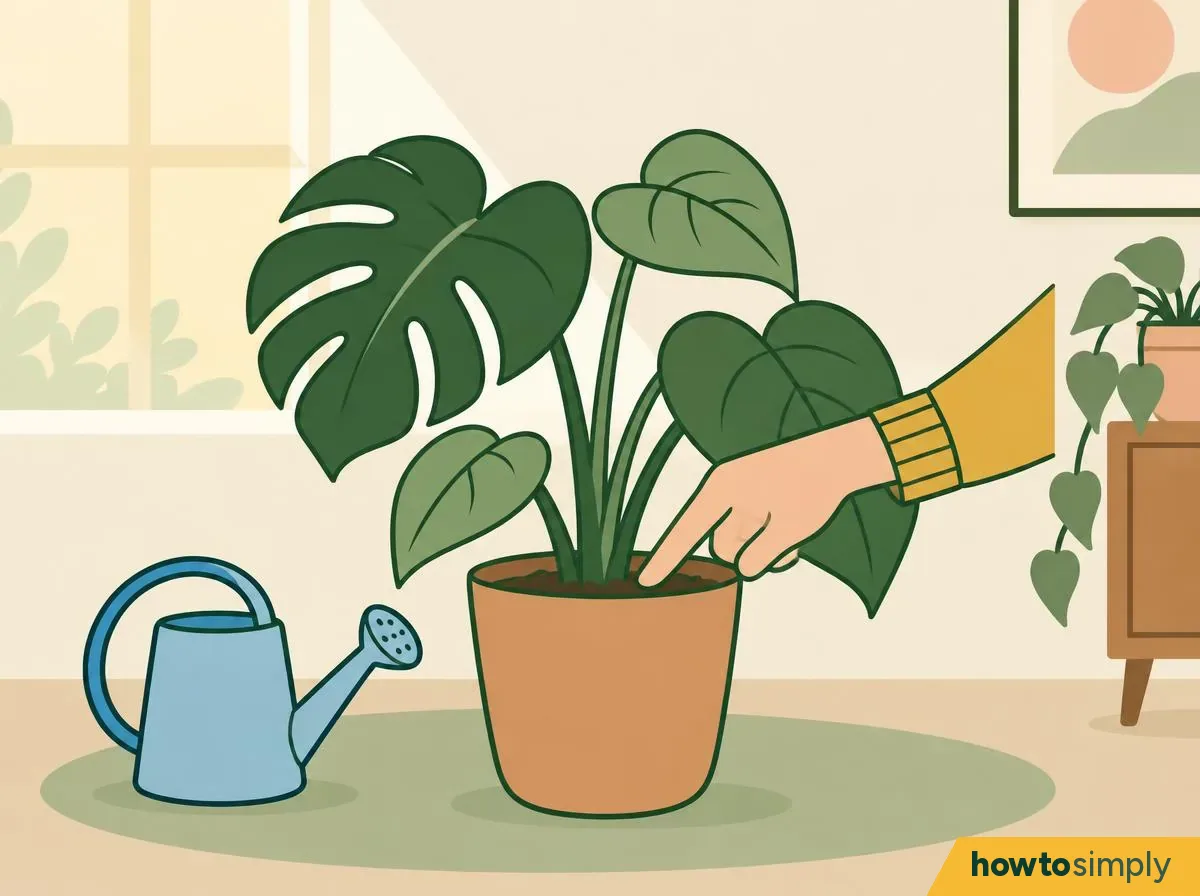
Illustration Clemson Extension (HGIC 1459) says a plant in a cool, low-light spot needs watering less often than one in a warm, sunny place. However, always check the compost first; don't water routinely (RHS). Our watering guide shows how.
Clemson Extension says low light reduces how much fertiliser a plant needs; foliage plants need at least 200 foot-candles for 12 hours a day to benefit from it. Feed mainly in spring and summer, and not at all if the plant goes into a winter rest period (Clemson).
You should see: compost that dries out between waterings, not a pot that stays wet for a week or more.
If there's no better spot, add a grow light.
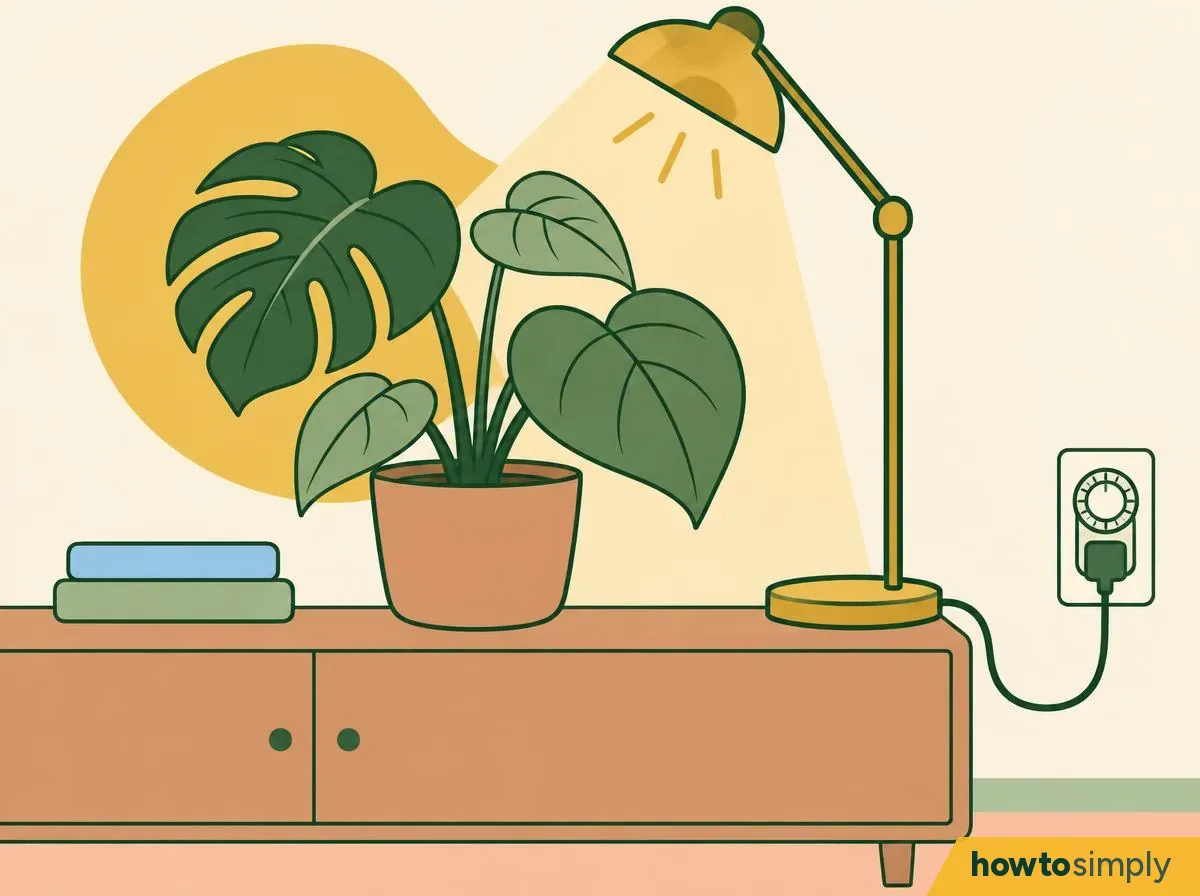
Illustration The grow light is your friend when the window can't do any more. Clemson Extension says fluorescent lamps work well and standard incandescent bulbs aren't recommended; 16 hours of light and 8 of darkness suits most plants, and a timer keeps it regular. Illinois Extension says 14 to 16 hours is enough and plants should never get more than 16, because they need a rest period too.
You should see: the light switching on and off at the same times each day, and new growth that's compact rather than stretched.
How far from the window?
Illinois Extension's guide to window light (northern hemisphere). We converted the distances from feet.
| Window faces | Low light | Medium light | Bright light |
|---|---|---|---|
| North | A few feet away | Directly in front | Not given |
| East or west | About 1 to 3 m (3 to 10 ft) away | A few feet away | Directly in front |
| South | About 4.5 to 6 m (15 to 20 ft) away | About 1 to 3 m (3 to 10 ft) away | Up to about 1.5 m (5 ft) away |
How to tell the spot is working
- New leaves are about the same size and colour as the older ones.
- The stems aren't stretching, with long bare gaps between the leaves, a sign Missouri Botanical Garden and Clemson both describe.
- The plant isn't dropping its older leaves, another sign Missouri Botanical Garden lists.
- Variegated leaves keep their pattern (Missouri Botanical Garden).
If something goes wrong
Don't worry if your plant shows any of these signs. It's telling you what it needs, and each sign has a clear next step.
| What happens | What it means | What to do |
|---|---|---|
| Long thin stems reaching towards the window | Too little light (Missouri Botanical Garden) | Move it closer in stages (step 4) or add a grow light |
| Older leaves drop | Too little light (Missouri Botanical Garden), or too much water | Check the compost; move it closer to the light |
| Variegated leaves turn plain green | Too little light (Missouri Botanical Garden, Clemson) | Give it more light, or choose a plain-leaved plant |
| Pale, bleached or scorched patches after a move | Too much direct light, too fast (Clemson) | Move it back out of the sunbeam; make changes gradually |
| Compost stays wet | A plant in a cool, low-light spot needs watering less often (Clemson) | Water less often; check before every watering |
| A flowering plant won't bloom | Flowering plants often need more light (RHS, Missouri Botanical Garden) | Move it to a brighter window |
Questions readers ask
Can a plant live in a room with no window?
Only with electric light. Clemson Extension says a well-lit home interior is often under 100 foot-candles, and that keeping a plant in good condition for a year takes about 100 foot-candles for 12 hours a day. In a windowless room, give it a grow light on a timer, such as the fluorescent lamps Clemson recommends,, 14 to 16 hours a day (Illinois Extension).
Is a snake plant or a ZZ plant better for a dark corner?
Illinois Extension lists snake plant (Sansevieria) among the plants that manage in low light, alongside Chinese evergreen, parlour palm, heartleaf philodendron and peace lily. Clemson Extension adds cast-iron plant and golden pothos. Our sources don't list the ZZ plant, so check its label or a specialist grower.
Does a phone light-meter app work?
Roughly. UF/IFAS says phone apps are usually fine for spotting that the light has changed, but their readings are only rough. UF/IFAS says a small digital light meter you hold in your hand often works best, and there's no need for a pricey one.
Can I move my low-light plant outside for the summer?
Carefully. Clemson Extension says leaves can bleach or scald when a plant moves into direct sun, which often happens when it's put outdoors. Any change in light should be gradual.
Sources and method
- Researched by
- Abu Bakar Saadat
- Pictures
- 9 illustrations drawn for this article: drawings, not photos.
- Sources
- Steps checked against the 7 named sources linked below.
- What this page adds
- A diagram of light fading with distance from a window, a table of how far from a north, east, west or south window a plant can stand, and a hand-shadow light check.
What to do next
Rescue a struggling houseplant Step 6 of 6
- How to tell if a houseplant needs water, and fix over- or underwateringMost plant trouble starts with watering.
- How to save an overwatered houseplant: check the roots, trim and repotToo much water? Act before the roots rot.
- How to get rid of fungus gnats in houseplantsLittle flies in the soil come from wet compost.
Did this solve the problem?
Where did you get stuck?
Get new guides by email
Our newest guides, sent to your inbox. Free, and you can unsubscribe in one click.
We'll email you to confirm. How we use your email
Follow howtosimply on Facebook
We share every new article on our Facebook page, so the next fix turns up in your feed.
Follow on FacebookWhat did you think?
Reaction counts are loading.
Sources
We use primary, official and specialist sources appropriate to the topic.
- University of Illinois Extension: Houseplants, lighting (no page date)
- UF/IFAS Gardening Solutions: Light for houseplants (no page date)
- Clemson Cooperative Extension, HGIC 1450: Indoor plants: cleaning, fertilizing, containers and light requirements (Shaughnessy and Pertuit, 1999)
- Clemson Cooperative Extension, HGIC 1459: Indoor plants, watering (last reviewed 21 June 2024)
- Missouri Botanical Garden: How much light do indoor plants need? (no page date)
- RHS: How to grow houseplants (no page date)
- Penn State Extension: Pothos as a houseplant (Susan Marquesen, updated 29 September 2025)