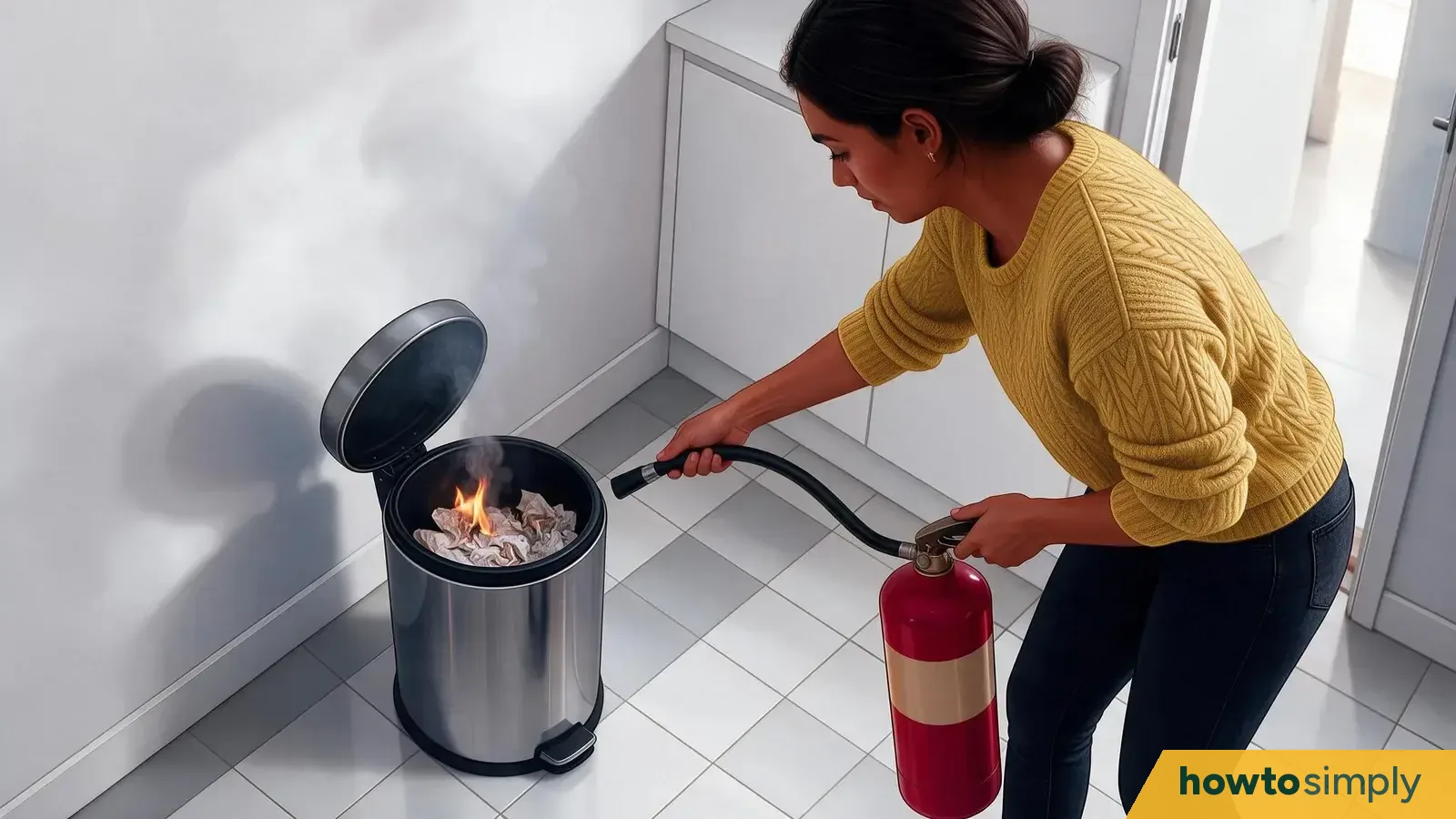
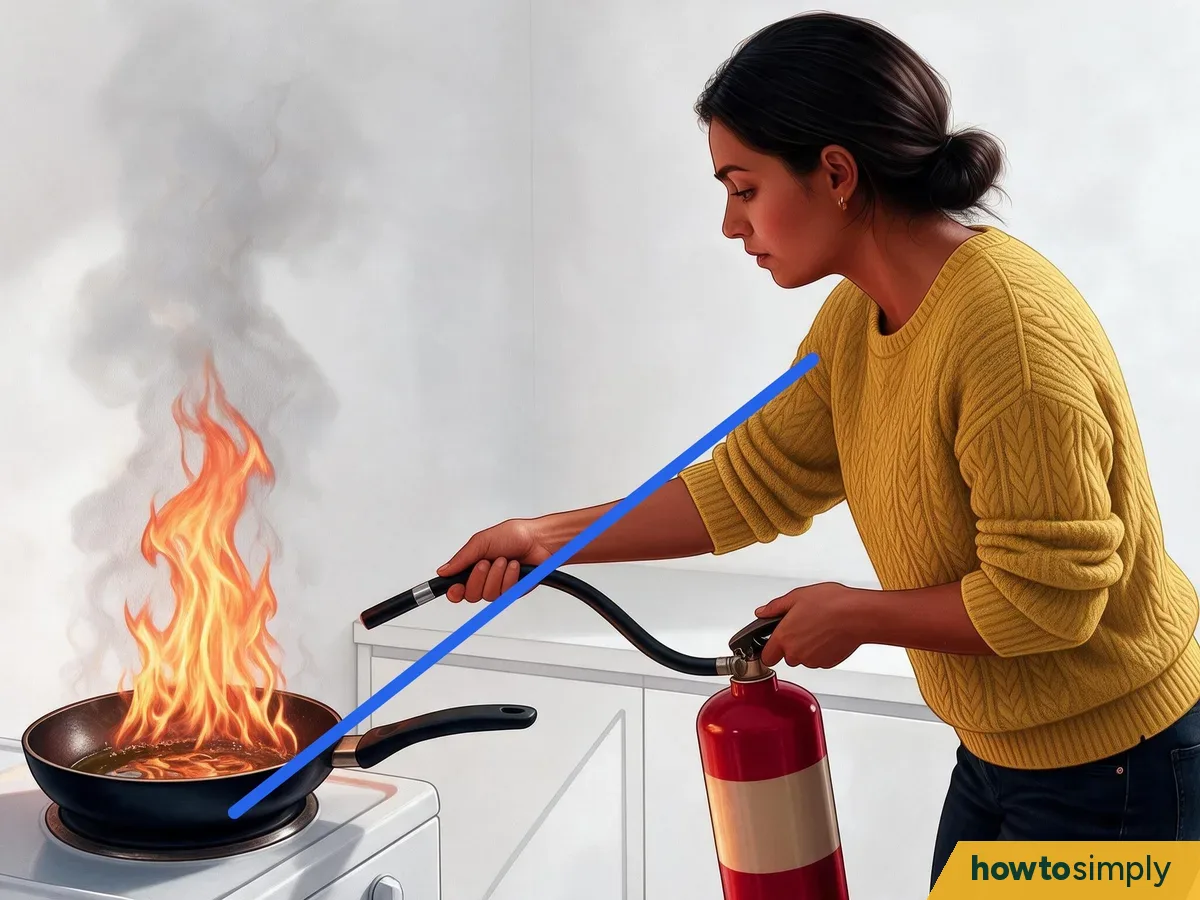
Use one only on a small fire that isn't spreading, once everyone is getting out, someone is calling the emergency number and you have a clear way out. Then PASS: pull the pin, aim low at the base, squeeze slowly, sweep side to side. If one extinguisher doesn't put it out, leave and shut the door.
Researched by Abu Bakar SaadatPublished 31 October 2026Last changed 17 November 2026Verified 17 November 2026Version 7See all changes
Seeing flames in your own home is frightening, and it is completely normal if your mind goes blank for a moment. If the fire is bigger than a bin or spreading, get everyone out and call the emergency number now; otherwise, here's how to decide in seconds.
A fire extinguisher can stop a small fire from becoming a house fire. However, it is most effective at the very start of a fire, and you need the right type. Fire services, including the US Fire Administration, put getting out first. Below, we go through how to tell the types apart, when it is safe to try, and the four moves to use it. One example runs all the way through, from a burning kitchen bin to a fire that's out.
If the fire is bigger than a waste bin, is spreading, or the room is filling with smoke, don't fight it. Get everyone out, close the doors behind you and call the emergency number: 112 in Germany, 911 in the US. USFA says to use an extinguisher only when the fire is small and contained in a single object and you have a clear escape route.
Every step below follows one story, and each drawing shows that exact moment. Amira keeps a foam extinguisher on a bracket in her hallway. One evening a match she thought was out sets the paper in the kitchen bin alight. The flames are still lower than the rim of the bin. She gets her daughter out, takes the extinguisher and puts the fire out in seconds. One "what if" drawing shows why she would never point it at a burning pan.
Part 1: Before a fire: pick it, place it, check it
Know the types by colour and letter.
Illustration
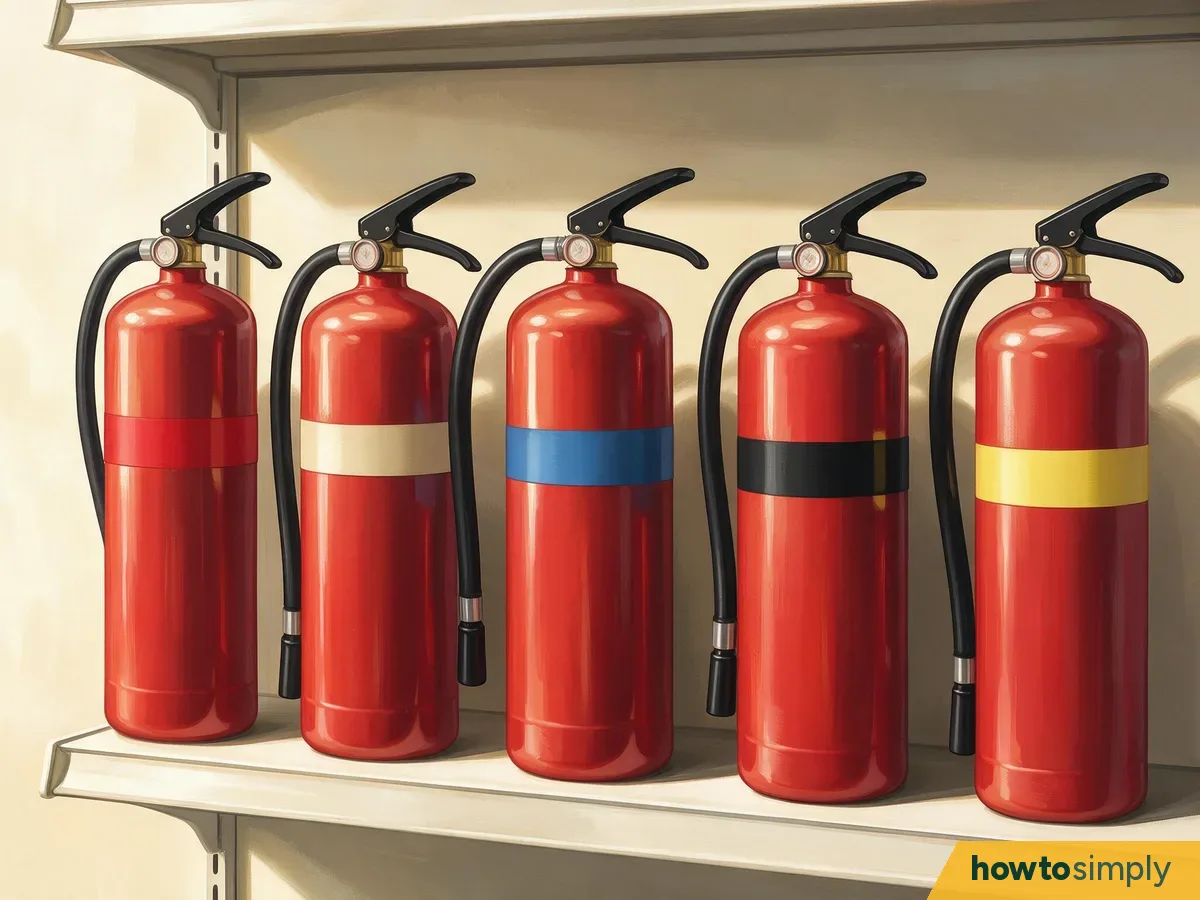
In our story: In the shop, Amira looks along a row of red extinguishers. Each has a different coloured band.
In the UK, extinguishers are colour-coded (Derbyshire FRS): red water, cream foam, blue powder, black CO2, yellow wet chemical. The letters on the label show what it's for: A solids like wood, paper and fabric; B flammable liquids; C gases; F cooking oil and fat. In the US, the label shows a rating such as 2-A:10-B:C instead; the C there means electrical equipment (USFA).
In some confined spaces it can block your view and make breathing harder (Derbyshire FRS)
CO2 (black)
Electrical equipment, burning liquids
Solids: it doesn't cool them (Derbyshire FRS). Cooking oil
Wet chemical (yellow)
Cooking oil and fat (class F) only
Other fires (Derbyshire FRS)
Choose one for your home.
Illustration
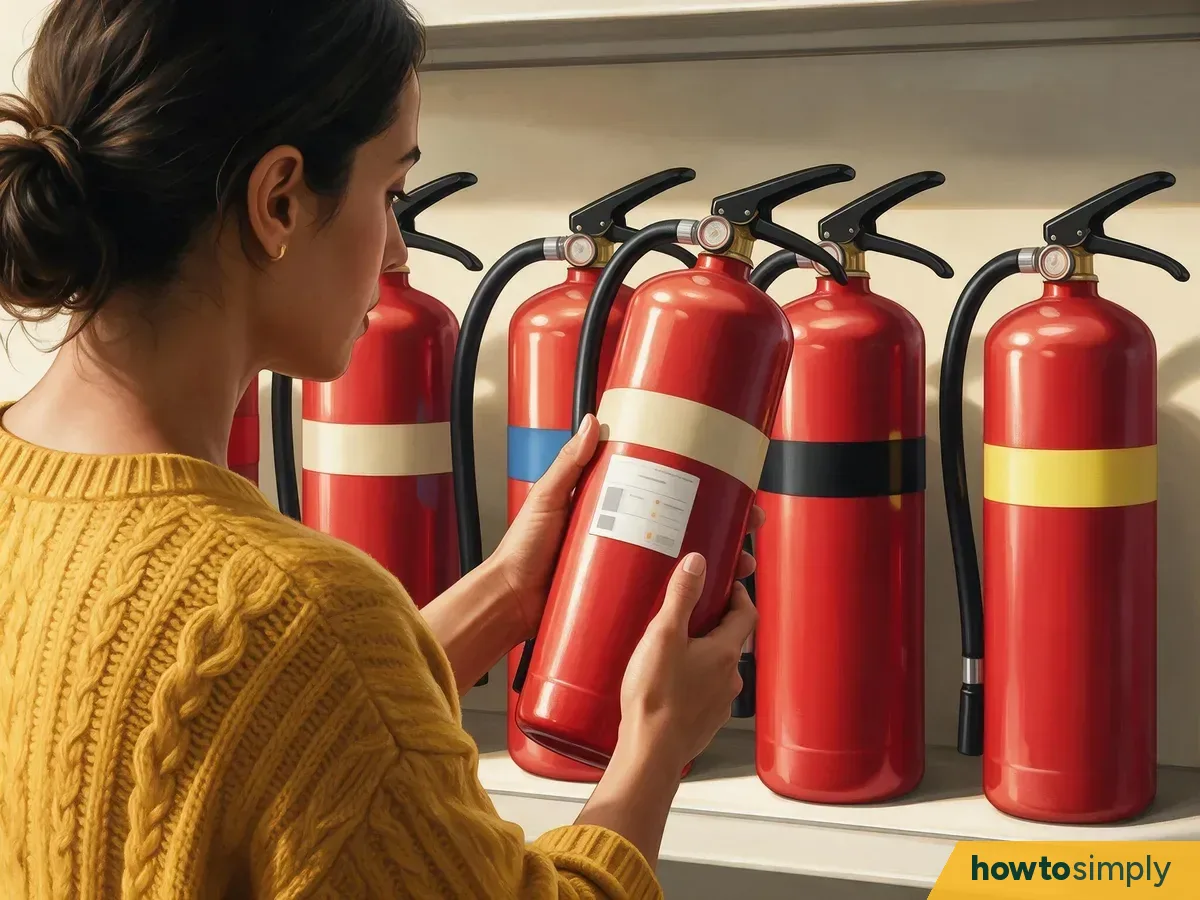
In our story: Amira picks a foam extinguisher with a cream band and checks the label before she buys it.
Advice differs by country. NFPA says a home extinguisher in the US should be rated at least 2-A:10-B:C and listed by a testing laboratory such as UL. In Germany, NDR reports that foam (classes A and B) suits homes best, because the fine powder from a powder extinguisher spreads through the whole room and is very hard to clean off. Whichever type you go for, choose the biggest one you can lift and use comfortably (USFA).
Keep it where you can reach it quickly.
Illustration
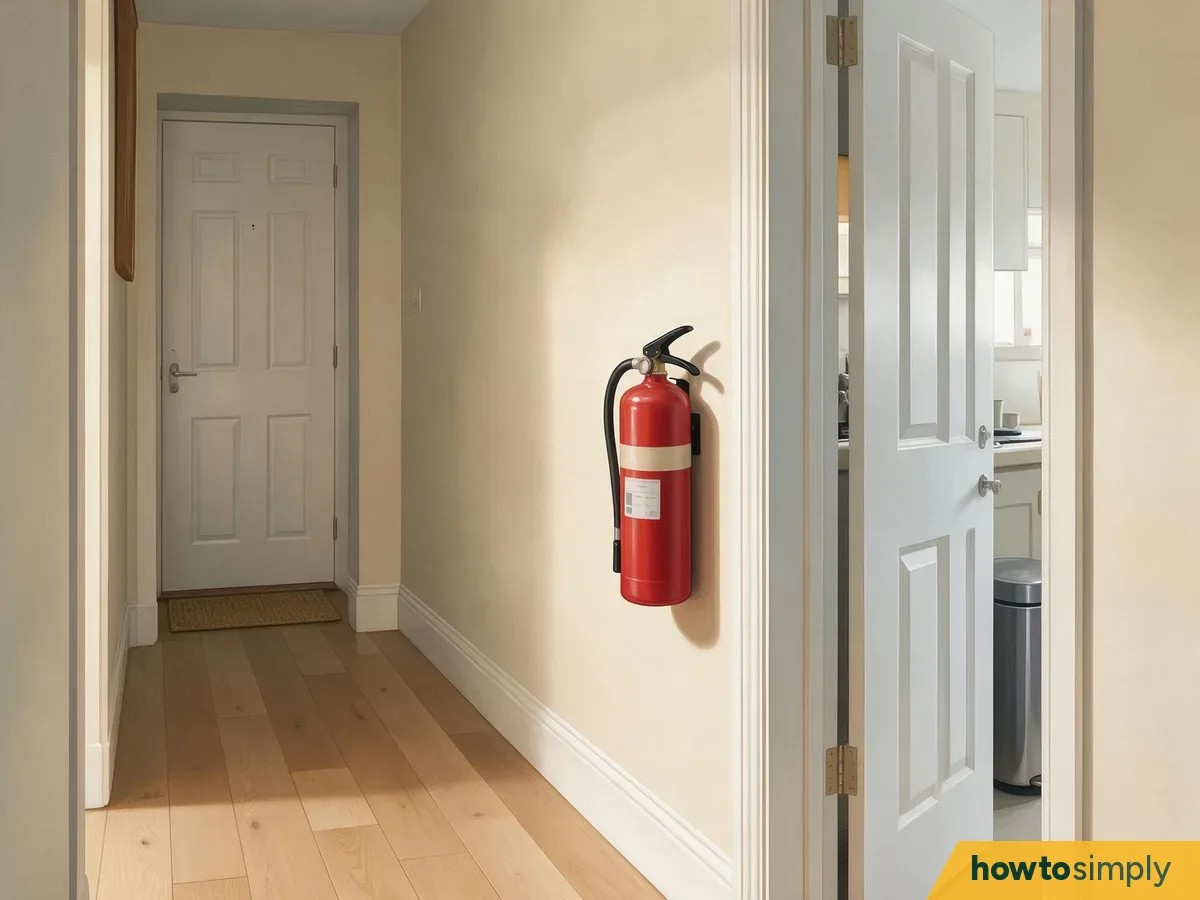
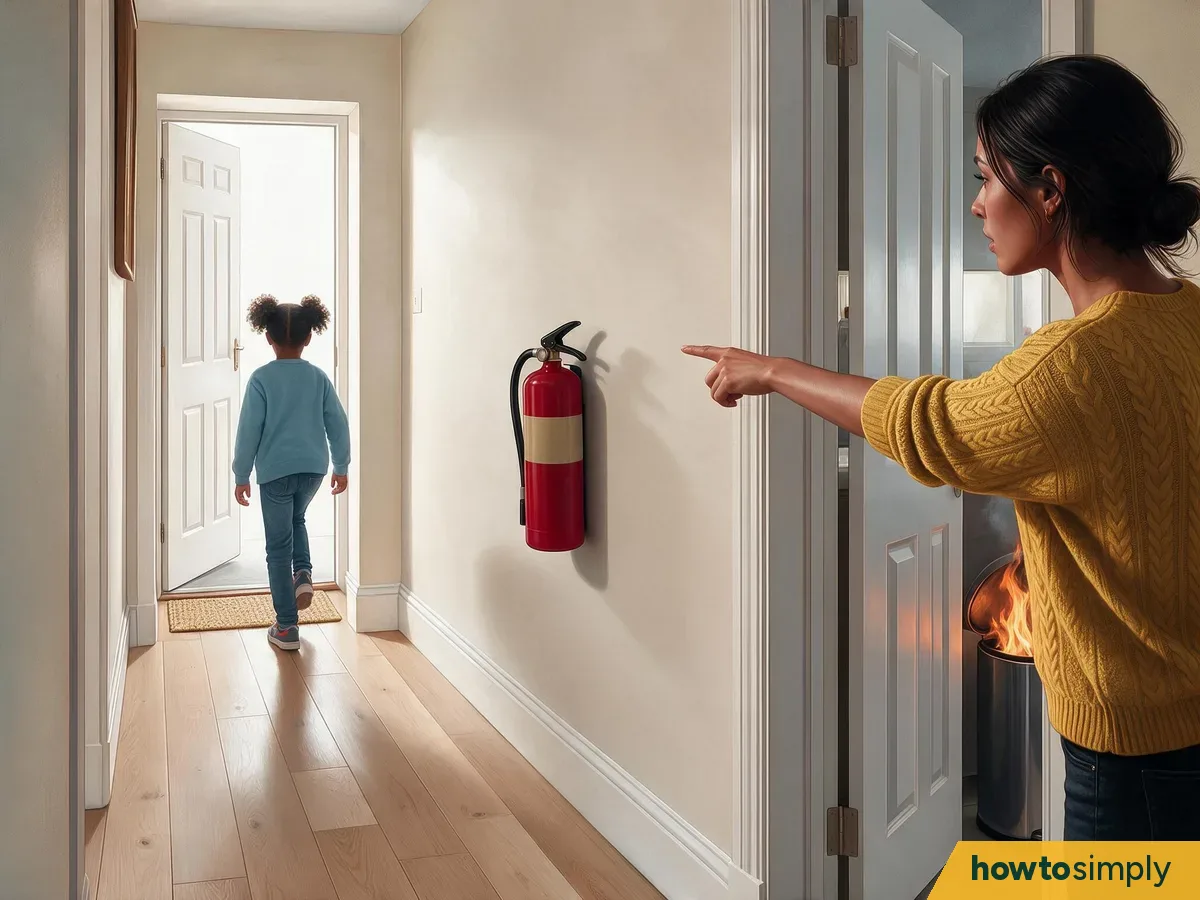
In our story: Amira hangs it on a bracket in the hallway, just outside the kitchen door.
Keep it where it is easy to reach in an emergency (USFA). Fire safety guidance for buildings puts extinguishers on escape routes, near exit doors (London Fire Brigade), so you grab it on your way out of danger, not by walking further in.
Check it regularly.
Illustration
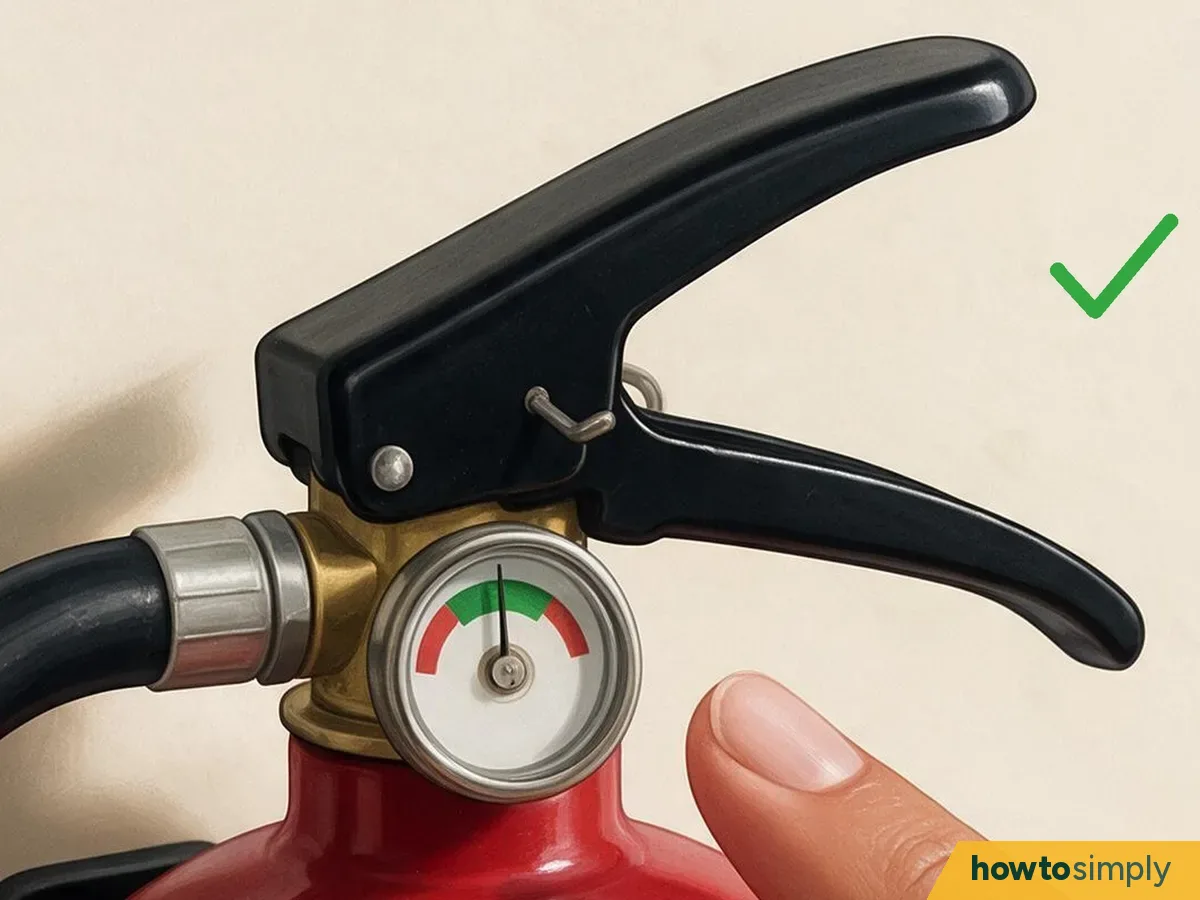
In our story: On the first of the month, Amira checks that the needle on the gauge is in the green.
USFA's checks: nothing blocks it; the gauge shows the recommended pressure; the can, hoses and nozzles aren't damaged, dented or rusted; it's clean.
Part 2: Fire! Decide in seconds
Shout "Fire!" to alert everyone else first.
Illustration
In our story: Amira sees flames in the kitchen bin. She sends her daughter straight out of the front door to the neighbour, to ask them to call 112.
USFA says to use an extinguisher only once you've alerted others and someone has called the fire department. USFA says fire extinguishers aren't for young children or older adults.
Only fight it if it's small and you have a way out.
Illustration
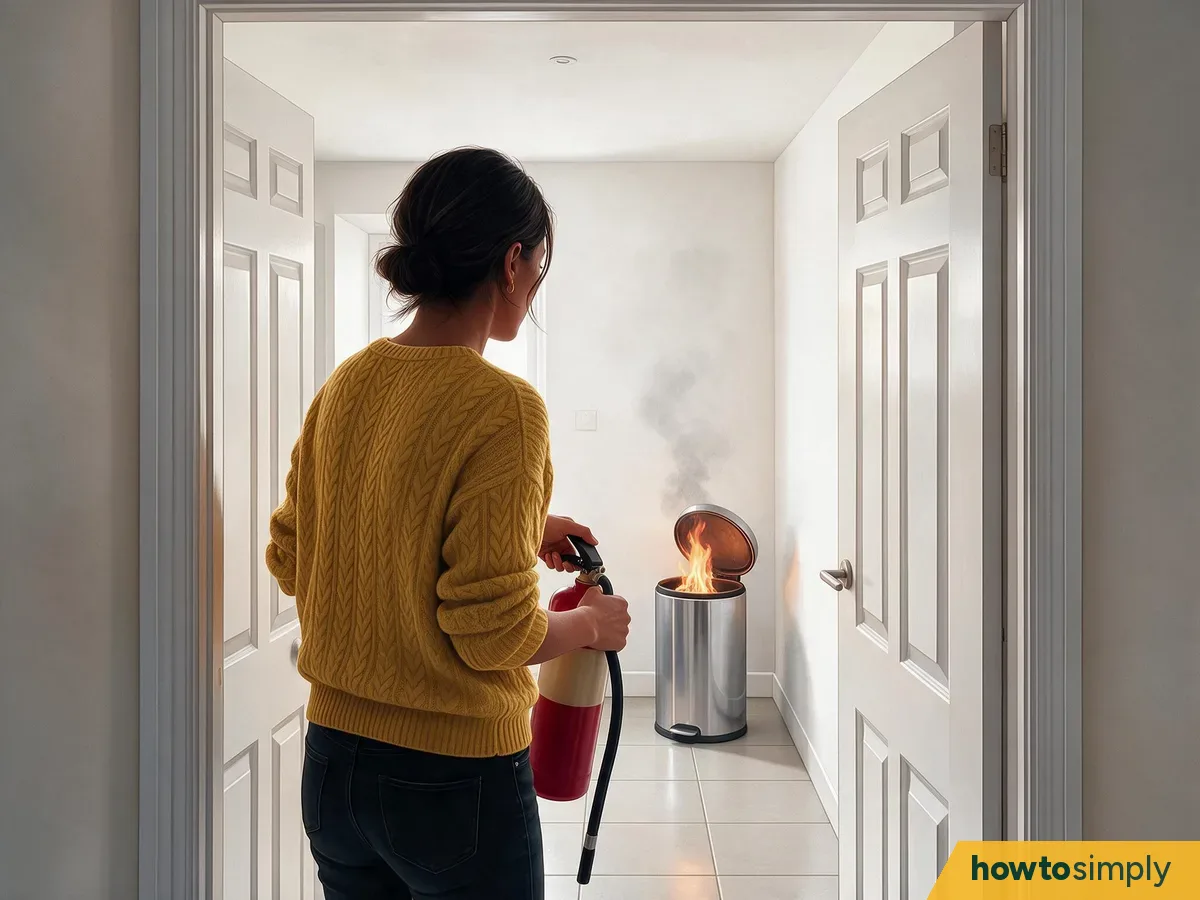
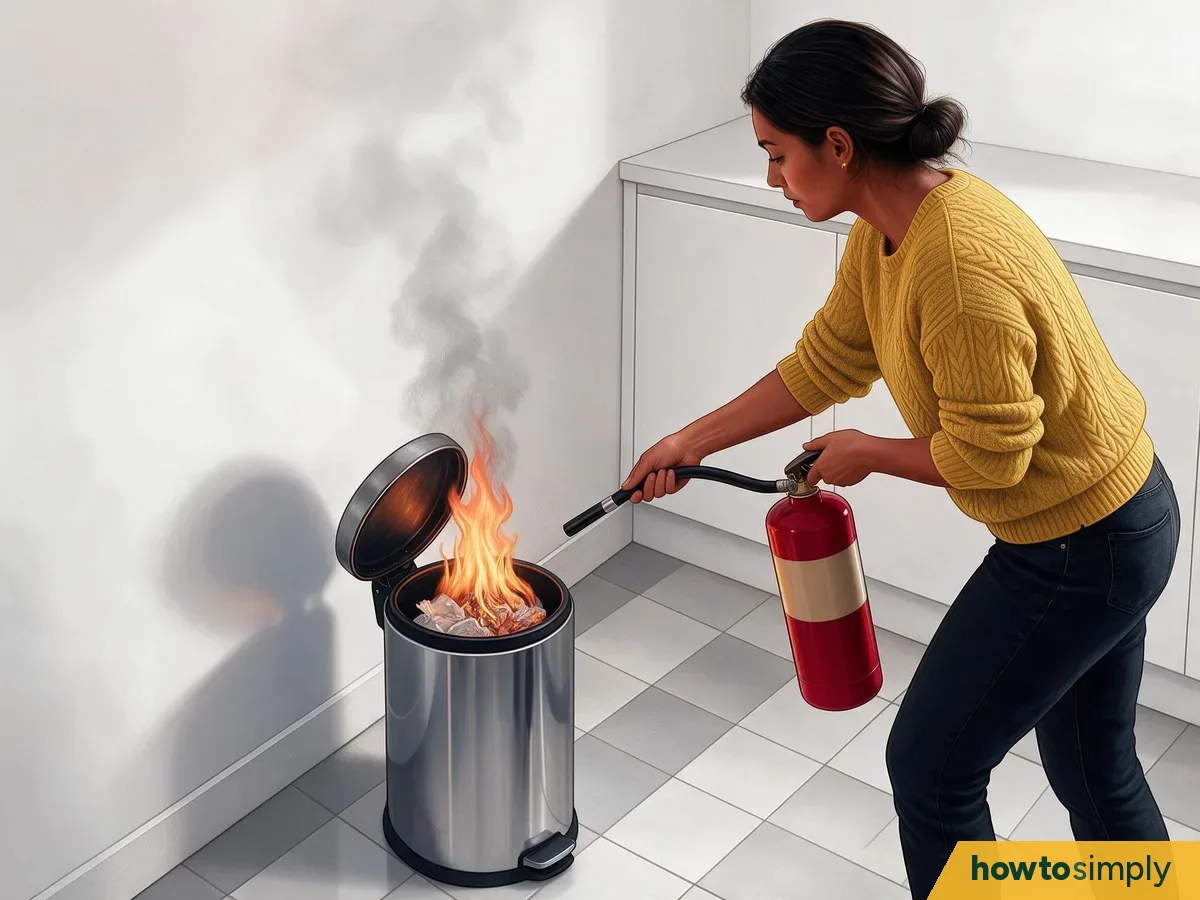
In our story: Amira takes the extinguisher from the hall. The fire is still inside the bin, the smoke is light, and the door is right behind her. She stands about three big steps away.
USFA's checklist: the fire is small and contained to one object, like a bin or a pan; you are safe from the smoke; you have a clear escape route; you're physically able. If any answer is no, alert others, leave the building and call the emergency number.
Part 3: Use it: PASS
Pull the pin.
Illustration
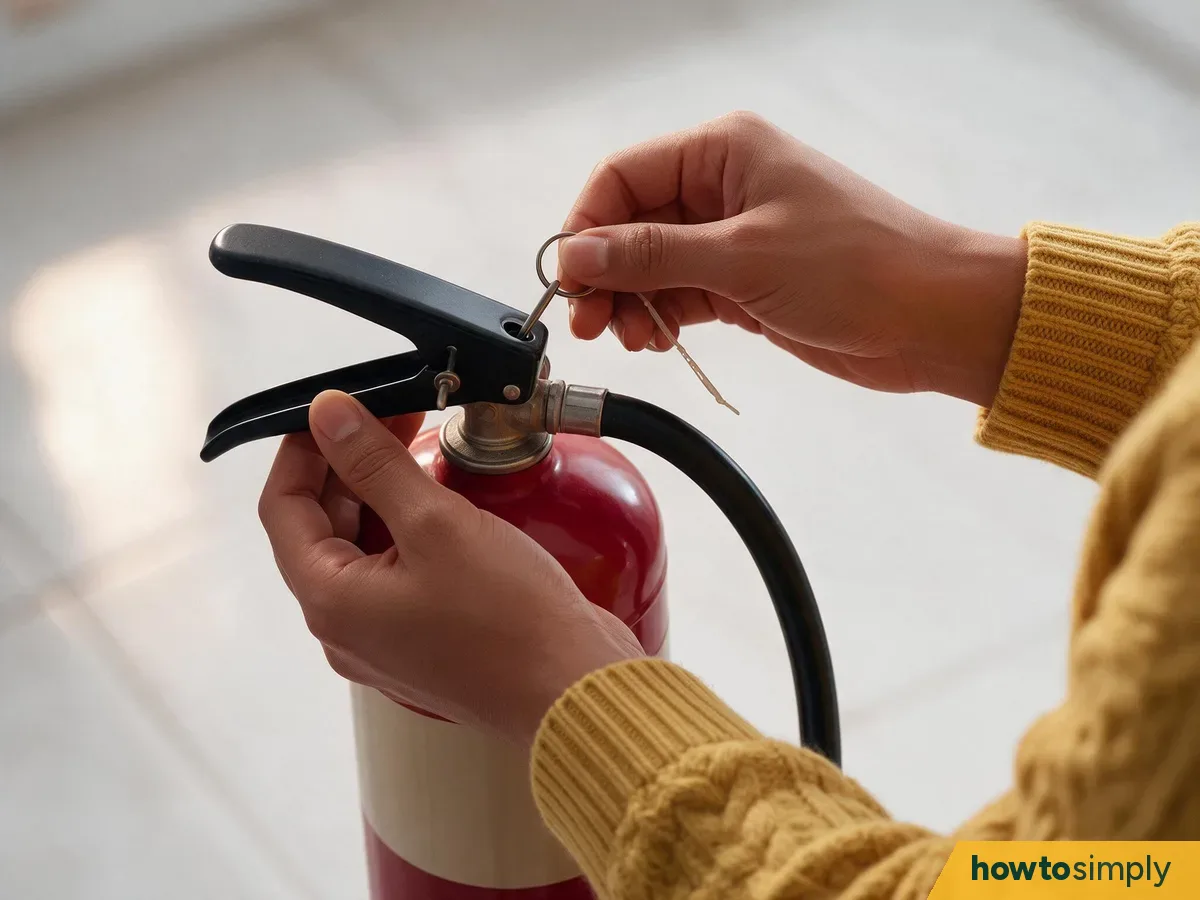
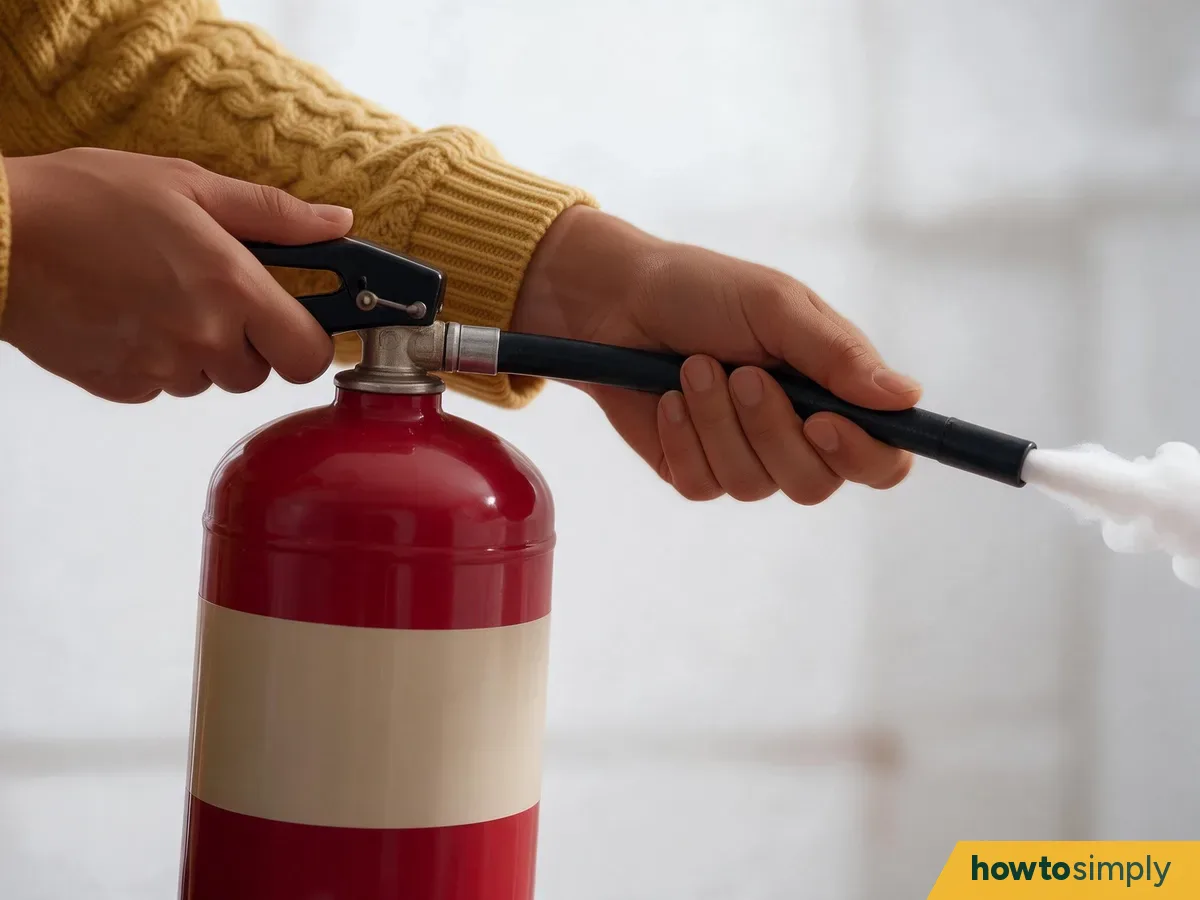
In our story: Amira holds the extinguisher upright, nozzle pointing away from her, and pulls out the pin.
Point the nozzle away from yourself and pull out the pin to release it (USFA). On a CO2 extinguisher, don't hold the horn itself: the horn and hose get cold enough to damage skin (East Dunbartonshire Council).
Aim low, at the base of the fire.
Illustration
In our story: She points the hose at the burning paper at the bottom of the flames, not at the flames themselves.
Point it at the base of the fire (USFA).
Squeeze the lever slowly and evenly.
Illustration
In our story: Amira squeezes the handle and foam comes out of the hose.
Squeeze slowly and evenly (USFA).
Sweep from side to side until it's out.
Illustration
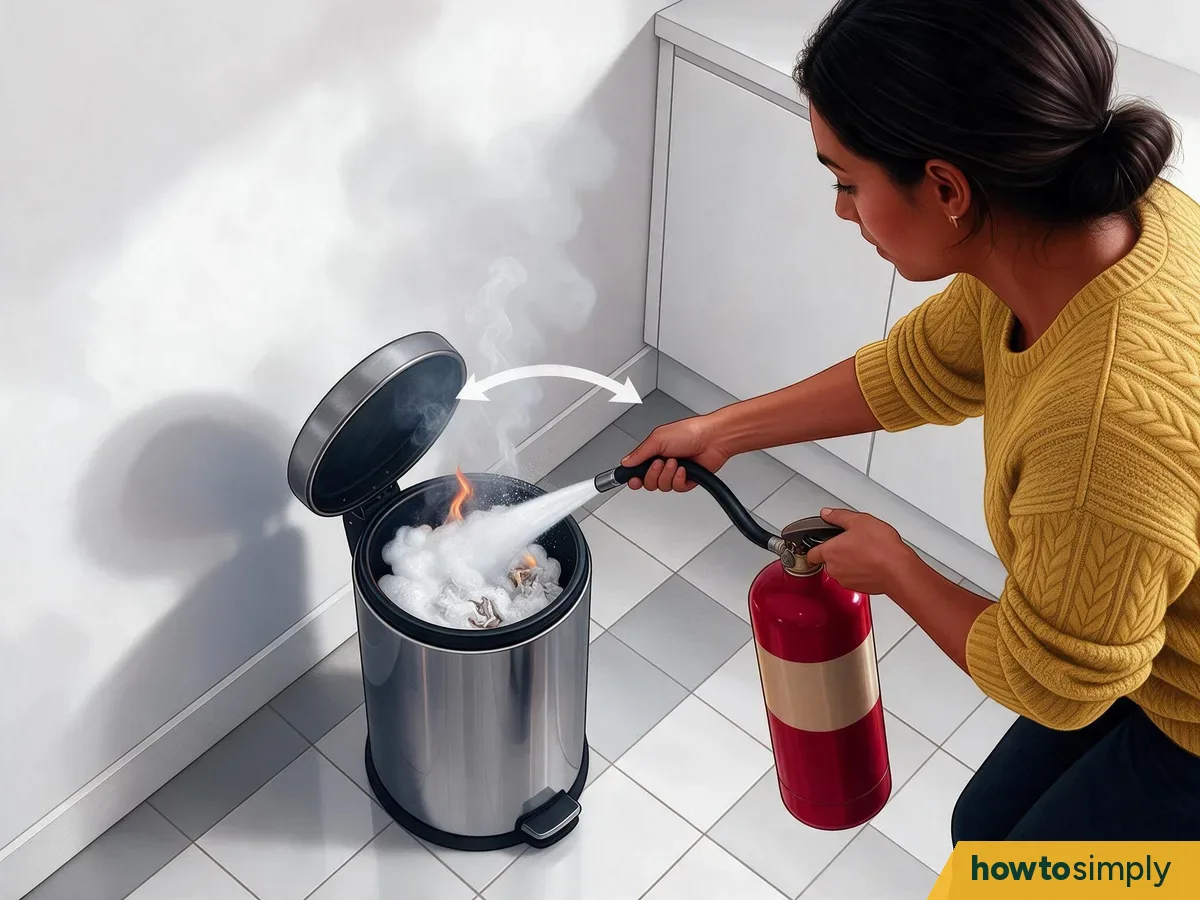
In our story: She sweeps the hose from side to side until the foam covers all the paper and the flames are gone.
Sweep the nozzle from side to side (USFA). If you can't put it out and a lot of smoke develops, leave the room at once, close the doors and wait for the fire service (NDR).
Then check its pressure.
Illustration
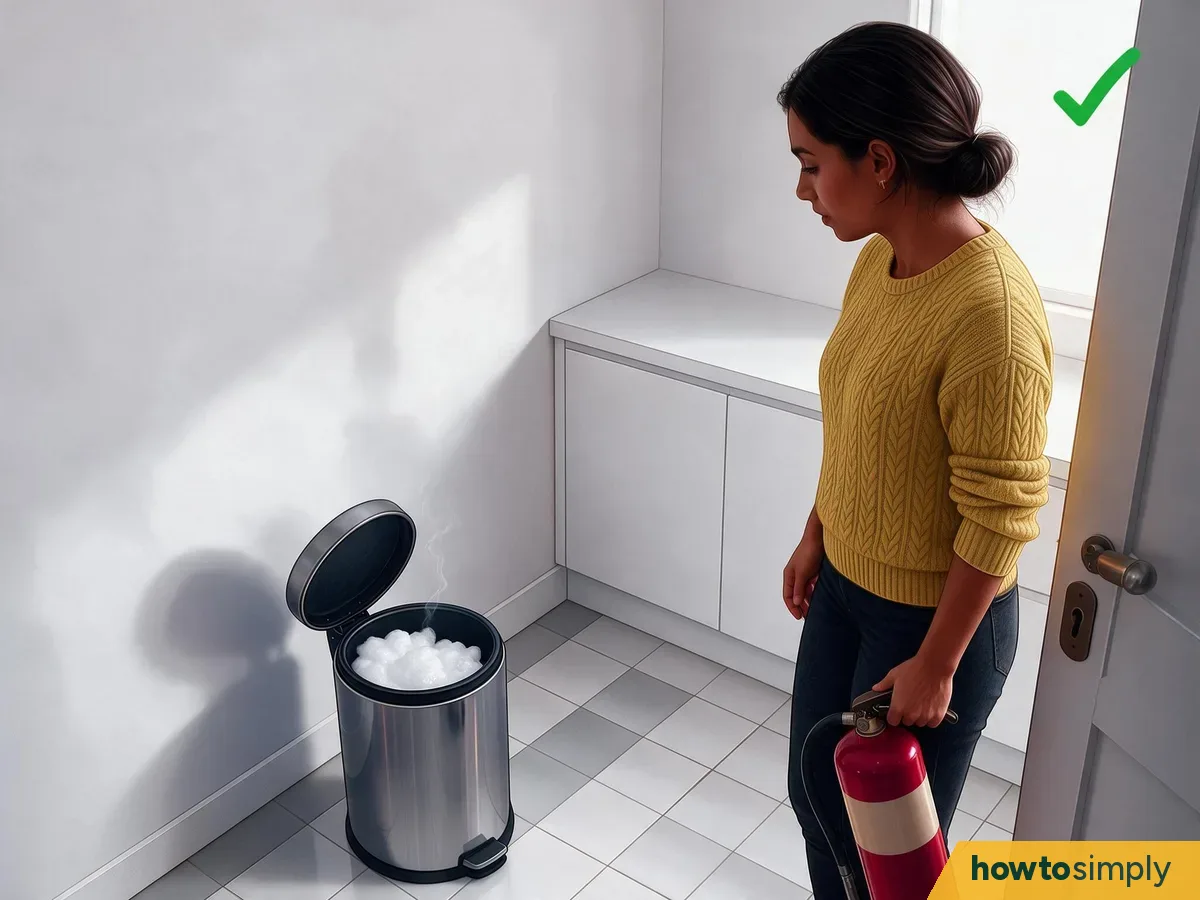
In our story: The fire is out. Amira backs towards the door and watches the bin, ready to leave, until the fire service arrives.
Some extinguishers can be recharged; others need replacing if the pressure is too low (USFA).
Once it is all over, take a moment to breathe. You did the right things, in the right order, when it mattered.
Pan fires: why Amira would never use this one
Illustration
What if the fire had been a pan of oil? Water would be the wrong choice.
Never pour water on burning oil: it can explode (NDR).
Wet chemical extinguishers (yellow band) are meant for class F fires involving cooking oil or fat (Derbyshire FRS).
NDR's first move: put a tight-fitting lid on the pan, take it off the hob and let it cool. If you can't, get out, close the door and call for help.
Country by country
Country
What the label shows
Emergency number
UK
Colour-coded to BS EN 3 (Derbyshire FRS)
—
Germany
Label shows fire classes A, B, C, D, F; foam best for homes (NDR)
112
US
Classification such as 1A:10B:C, UL or ULC listing (USFA)
911
Pakistan
Not covered by the sources for this page
Not covered by the sources for this page
If something goes wrong
If it doesn't go to plan, please don't feel you have failed. Leaving and closing the door is the right call, not a defeat.
What happens
Likely cause
What to do
Nothing comes out when you squeeze
Pin still in, or it has lost pressure
Check the pin once; if still nothing, leave and close the door
The fire isn't going out
—
Leave the room, close the doors and wait for the fire service (NDR)
The room fills with smoke or powder
Smoke, or powder in a confined space (Derbyshire FRS)
Leave straight away; smoke can kill (NDR)
The extinguisher runs out first
—
Leave, close the door and wait for the fire service (NDR)
East Dunbartonshire Council's manual says to start from about 2 to 3 metres away and move forward slowly. On a grease fire, NFPA says at least 6 to 8 feet (180 to 240 cm), and only with a class K extinguisher.[1][6]
Can I use a CO2 extinguisher on a fire in a TV or computer?
CO2 suits electrical equipment and doesn't conduct electricity[5][6]. Don't hold the horn itself: it gets cold enough to damage skin[6]. NDR says to pull the plug or switch off the fuse first on burning electrical devices[7].
Is a fire blanket better than an extinguisher?
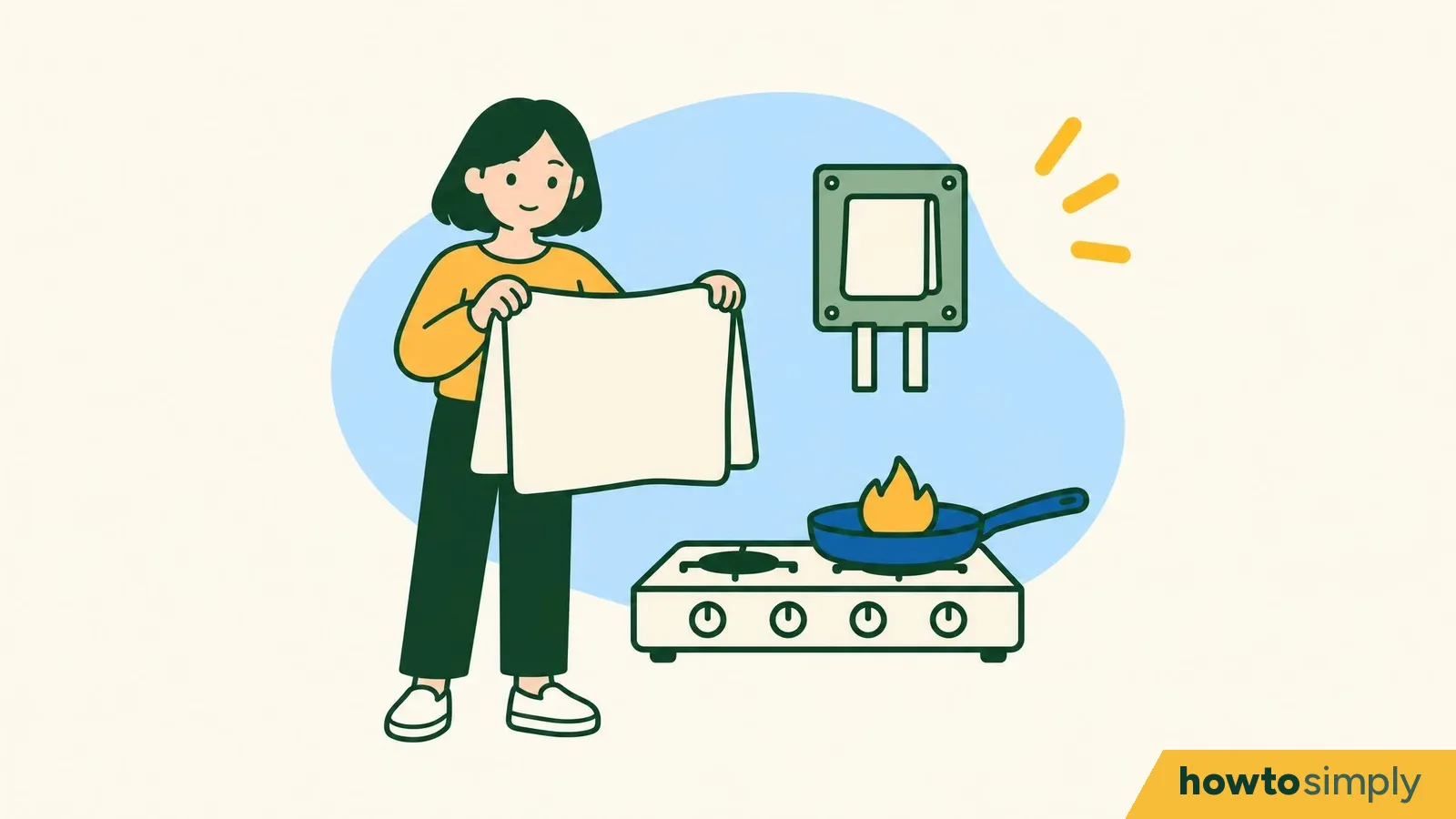
NDR says a fire blanket means standing dangerously close to the fire, and air pockets under it can stop it smothering the flames, so an extinguisher is the better choice at home. NFPA says no fire blankets on the US market are listed to safety standards.[1][7]
Are foam extinguishers with PFAS still allowed?
NDR reports that PFAS foam extinguishers may only be sold until October 2026 and are to be banned across the EU from the end of 2030, when they must go to hazardous waste.[7]
Should children learn to use one?
No. NFPA doesn't recommend training children and says only adults who know how should use one; USFA says young children and older adults shouldn't use them.[1][2]
Which fire extinguisher is best for a home?
In the US, USFA says an "A-B-C" multipurpose extinguisher will tackle most fires you'd get at home. In Germany, NDR reports that foam (classes A and B) is the most suitable for homes, because powder spreads through the whole room. In the UK, check the coloured band and the letters on the label against the fires you might have.
Can I use a fire extinguisher on a chip pan or oil fire?
Only one built for cooking oil: the wet chemical extinguisher with a yellow band, made for class F fires in oil or fat (Derbyshire FRS). NFPA says only class K extinguishers are rated for grease fires. Never use water. Instead, put a tight-fitting lid on the pan, take it off the hob and let it cool (NDR), or get out.
How long does a fire extinguisher last when you use it?
Not long. A typical extinguisher empties in about 10 to 20 seconds, depending on its size (East Dunbartonshire Council). That is why you only tackle a small fire.
Can I use it again after a short squirt?
NFPA says to replace an extinguisher once it has been used. USFA adds that some can be recharged, while others need replacing if the pressure is too low.
Should children learn to use a fire extinguisher?
USFA says fire extinguishers aren't for young children or older adults.
Do I have to call the fire service if I put the fire out?
Call before or while you tackle it, not after: NDR says to call the fire service immediately as well as trying to put the fire out.
The pictures on this page are illustrations, not photos.
How we know this: sources, checks and every change
Current advice
Only tackle a small fire, with others alerted, the fire service being called and a clear escape route; then pull, aim low, squeeze, sweep[1][2]. If it isn't out, get out, close the doors and don't go back in[1][7].
Advice last changed
17 November 2026
Sources
NFPA and USFA and London Fire Brigade and GOV.UK and Derbyshire Fire and Rescue Service and East Dunbartonshire Council and NDR
Information, not professional advice.
Latest update
17 November 2026. We re-read the sources. All 7 opened today and still back the PASS steps, the checklist and the colour table. We corrected three lines that went further than their sources, listed below.
What changed in this version
Correction: the page said NFPA advises refilling or replacing an extinguisher after use 'even if it isn't empty'. NFPA says to replace one once it has been used[1], and USFA says some can be recharged[2]. The page now says that.
Correction: the country table's Pakistan row named a label check and Rescue 1122, but none of the 7 sources covers Pakistan. The row now says so.
Correction: the summary said never to use water, foam, CO2 or powder on a pan fire. The sources say only class F or K extinguishers are made for cooking oil, so the summary now says that.
Added: NDR reports that foam extinguishers containing PFAS may only be sold until October 2026, with an EU-wide ban planned from the end of 2030[7].
Key facts
NFPA says use an extinguisher only when everyone is leaving, someone is calling the emergency number from outside, the fire is small and not spreading, and you have a clear escape route.[1][2]
PASS: pull the pin, aim low at the base of the fire, squeeze the lever slowly and evenly, sweep from side to side.[1][2][6]
A typical extinguisher runs for only about 10 to 20 seconds, depending on its size.[6]
UK extinguishers are red with a coloured band: red for water, cream for foam, blue for powder, black for CO2 and yellow for wet chemical.[3][5]
Only extinguishers made for cooking oil and fat are rated for pan fires: class F (wet chemical) in the UK and Germany, class K in the US. Never put water on burning fat.[1][5][7]
In the US, NFPA says a home extinguisher should be rated at least 2-A:10-B:C and listed by a recognised testing laboratory.[1][2]
NDR reports that foam suits German homes best, because powder spreads through the whole room, is very hard to clean off and makes electrical devices corrode.[7]
NFPA gives disposable extinguishers a maximum life of 12 years from manufacture; in Germany, NDR says extinguishers need a service by an approved firm at least every two years.[1][7]
What the sources agree on
An extinguisher is only for a small fire that you can tackle without putting yourself in danger.[1][2][4][6][7]
Raise the alarm and get the fire service called first.[1][2][6][7]
Aim at the base of the fire, not the flames.[1][2][6]
If it isn't going out, leave, close the doors behind you and wait for the fire service.[1][7]
Never use water on burning cooking oil or fat.[4][5][7]
Where the sources differ, or nothing is confirmed
Tackle it at all: GOV.UK's home fire safety booklet says don't tackle fires yourself, though an extinguisher can help if the fire is very small or blocks your exit[4]. USFA and NFPA give a checklist for when it is safe to try[1][2].
Where to keep it: NDR suggests somewhere quick to reach, such as near the cooker[7]; NFPA says never next to a possible fire hazard, within 40 feet (12 metres) and on every floor[1]; London Fire Brigade's guidance for buildings puts them on escape routes, near exit doors[3].
A burning pan: NDR says put a tight lid on, take the pan off the hob and let it cool[7]; NFPA says don't move a pan of burning grease, cover it and turn off the heat[1]; GOV.UK says turn off the heat if it's safe and don't tackle it yourself[4].
Which type for a home: USFA says a multipurpose A-B-C extinguisher covers most home fires[2]; NDR says foam is best for German homes because of the mess powder makes[7].
After use: NFPA says replace it[1]; USFA says some can be recharged and others need replacing if the pressure is too low[2]; East Dunbartonshire Council says a used workplace extinguisher must be serviced straight away[6].
Record history
Version 7. Sources re-read; record layout added with key facts, a country table, agree and differ notes, history and more questions.
Version 6. The 13 November rewording was taken back off this page and the checked text returned.
Version 5. Wording rewritten throughout.
Version 4. Every line checked against its source; some source names and wording corrected.
Version 3. Wording made friendlier; the safety lines were left as they were.
Version 2. Approved and published on the site.
Version 1. First written, with illustrations, and held for review.
13 illustrations drawn for this article: drawings, not photos.
Sources
Steps checked against the 7 named sources linked below.
What this page adds
A colour-band table of extinguisher types and what each must never be used on, a crossed-out drawing of foam on a pan fire, and a country table of labels and emergency numbers.
What we checked
On 17 November 2026 we re-read all 7 sources: NFPA's 2026 desk reference (chapters 8 and 21), USFA's extinguisher page, London Fire Brigade's GN_08, the GOV.UK home fire safety booklet, Derbyshire Fire and Rescue Service's page, East Dunbartonshire Council's training manual and NDR's guide, and checked each step, figure and table entry against them.