How to get over a breakup: what the research says actually helps
Reviewed by Sonia Abu Bakar✓, MSc Botany
By Abu Bakar Saadat3 min readPublisher: Saadat Rafiq
Last updated: 1 November 2026References
 Illustration
On this page 5 sections
In short
Feeling lost after a breakup is normal: studies find your sense of who you are gets blurrier, and that drives much of the pain. Reflect on it on purpose, for example in a weekly journal, rebuild routines that are yours, and talk to someone you trust.
At a glance
- Why it hurts
- Your sense of self gets less clear, which predicts distress (Slotter and others, 2010)
- What helped
- Reflecting on the breakup 4 times over 9 weeks (Larson and Sbarra, 2015)
- Try
- A weekly journal check-in, as the study's lead author suggested
- Get help if
- You can't cope day to day, or have thoughts of harming yourself
- Checked
- November 2026
Why a breakup can make you feel lost
A breakup isn't only missing the other person. A 2010 study found that after a breakup, people's sense of who they are becomes less clear, and that loss of clarity predicted how upset they felt (Slotter, Gardner and Finkel). The lead author of a later study put it simply: becoming "psychologically intertwined" with a partner is painful to undo. Routines, plans and part of your identity were shared. That's why the steps below focus on rebuilding you.
Step by step
Let yourself feel it

Illustration Sadness, anger, relief and confusion can all show up, sometimes in the same day. Friends may tell you to put it out of your mind, but the research in step 2 points the other way. Give yourself a few low-pressure days if you can.
Reflect on it, on purpose
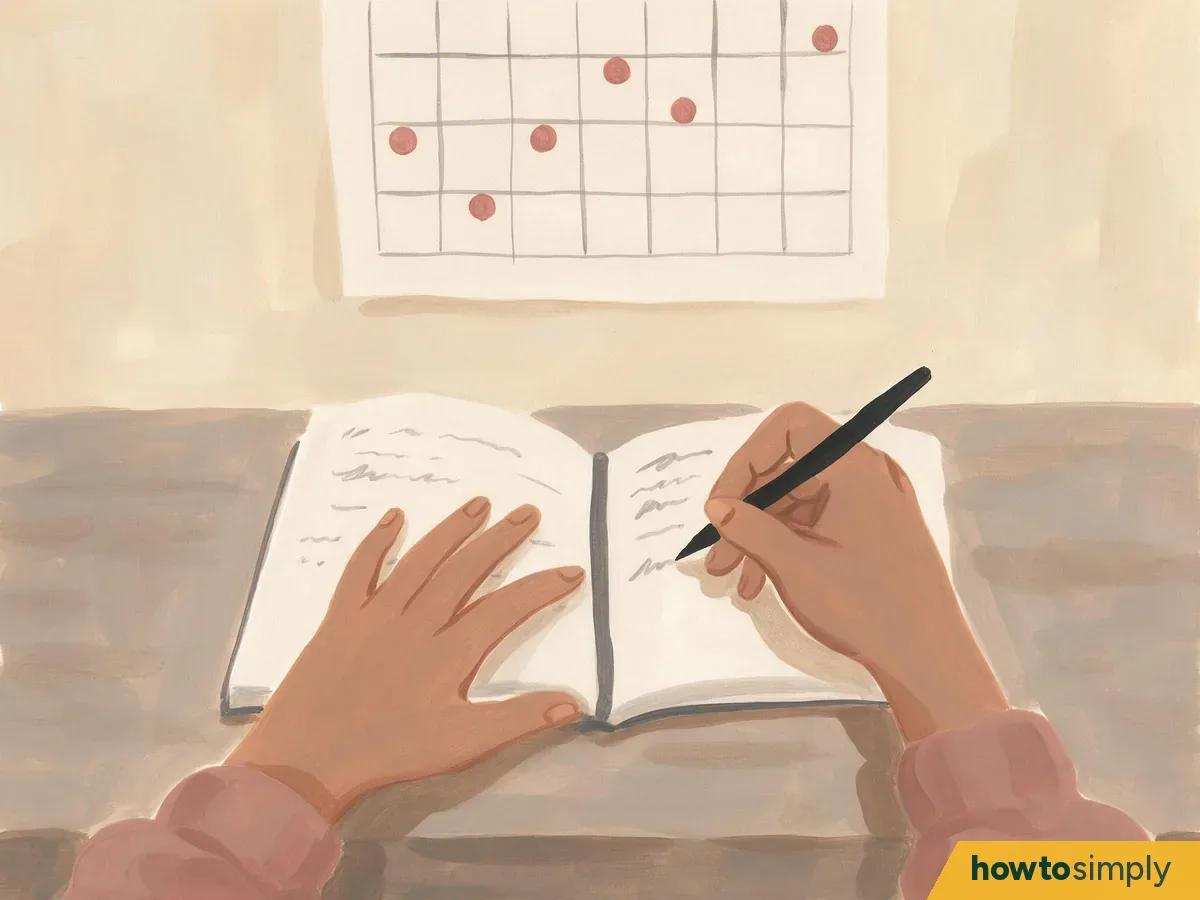
Illustration In a 2015 study, people who had broken up in the last six months either reflected on their breakup four times over nine weeks or only filled in a questionnaire at the start and end. The group who reflected recovered better, and the researchers traced it to a clearer sense of who they were as single people (Larson and Sbarra).
Group in the 2015 study What they did Result Reflection group Reflected on their breakup 4 times over 9 weeks Recovered better, with a clearer sense of who they were Comparison group Only filled in a questionnaire at the start and the end Recovered less Lead author Grace Larson suggested weekly check-ins in a journal, or writing about the breakup "as though talking to a stranger about it".
Reflecting is different from replaying. Ask yourself questions that move forward: what happened, what did I learn, what do I want now? If you're going round the same loop, stop and do something else.
Rebuild the parts of you that got put aside

Illustration Larson's advice was to think about who you are apart from the relationship, and what you neglected while you were together but can now pick up again. That might be a hobby, a friend you saw less, a sport or a class. NHS Every Mind Matters also suggests making time to do something just for yourself.
Talk to someone you trust

Illustration Finding someone you trust to confide in can really help (NHS Every Mind Matters). It doesn't have to be about the breakup every time. Time with people who know you as you is part of rebuilding your sense of self.
Catch the harsh thoughts

Illustration Breakups can bring thoughts like "nobody will want me" or "I ruin everything". NHS Every Mind Matters suggests noticing unhelpful thoughts and swapping them for a neutral or realistic version, such as "this is hard right now, and it won't always feel like this."
If this doesn't work
- Weeks later, you still can't sleep, eat or get through the day: talk to your GP or doctor.
- You have thoughts of harming yourself: use NHS Every Mind Matters urgent support, or call your local emergency number if you might act on them.
- The relationship was controlling or frightening: a domestic abuse helpline can help, such as the National Domestic Abuse Helpline in the UK (0808 2000 247) or love is respect in the US (1-866-331-9474). The NHS says it's OK to leave a relationship that isn't right for you.
Questions readers ask
How long does it take to get over a breakup?
There is no set time. Research on breakups tracks people over weeks or months, and people vary a lot. What studies link to recovery is rebuilding a clear sense of who you are, not a number of weeks.
Is it bad to keep thinking about the breakup?
It depends how. In a 2015 study, people who reflected on their breakup four times over nine weeks recovered better than people who did not. Going over the same painful loop without getting anywhere is different from reflecting on what happened and who you are now.
Should I stay friends with my ex?
There is no single right answer. If contact keeps reopening the hurt, a break from it can give you room to rebuild your own routines (our suggestion).
When should I get help?
If you can't sleep, eat or get through the day for weeks, or you have thoughts of harming yourself, talk to your GP or doctor. If you feel you might act on those thoughts, use NHS Every Mind Matters urgent support or call your local emergency number.
Did this solve the problem?
What needs work?
What did you think?
Reaction counts are loading.
Spotted a mistake? If a step is unclear or a picture is inaccurate, tell us the step number and what needs correcting. Email us about this page or use the contact form. We read every report, and fixes are listed on What changed.
Liked this article?
Follow us for new articles and short how-to videos.
Sources
We use primary, official and specialist sources appropriate to the topic.
- NHS Every Mind Matters: Maintaining healthy relationships and mental wellbeing
- SAGE / EurekAlert: An unexpected way to recover from a breakup (6 Jan 2015), on Larson and Sbarra, Social Psychological and Personality Science 6(4), 2015
- ScienceDaily: An unexpected way to recover from a breakup (7 Jan 2015), with Larson's journalling suggestion
- Slotter, Gardner and Finkel (2010): Who am I without you? The influence of romantic breakup on the self-concept, Personality and Social Psychology Bulletin 36(2)