How to help with homework without doing it for them: 13 steps
Reviewed by Sonia Abu Bakar✓, MSc Botany
By Abu Bakar Saadat7 min readPublisher: Saadat Rafiq
Last updated: 11 November 2026References
 Illustration
On this page 8 sections
In short
You sat down to "just check" the fractions. Forty minutes later everyone is in tears and the answer is still wrong. The evidence says your job is coach, not tutor. Here is how to do it.
At a glance
- Homework
- About 5 months' extra progress on average, 3 at primary (EEF)
- Parents doing homework
- Not generally linked to better results (EEF)
- What helps more
- Planning, goals, time, effort and feelings (EEF)
- Sleep, ages 5 to 11
- 9 to 11 hours a night (NHS Healthier Together)
- Screens
- Off an hour before bed, out of the bedroom (NHS)
- Checked
- November 2026
If homework time in your house has started to feel like a nightly battle, please know you're in very good company. Pour yourself something warm. We'll swap the tug-of-war for a calmer routine, and you won't need to remember any long division.
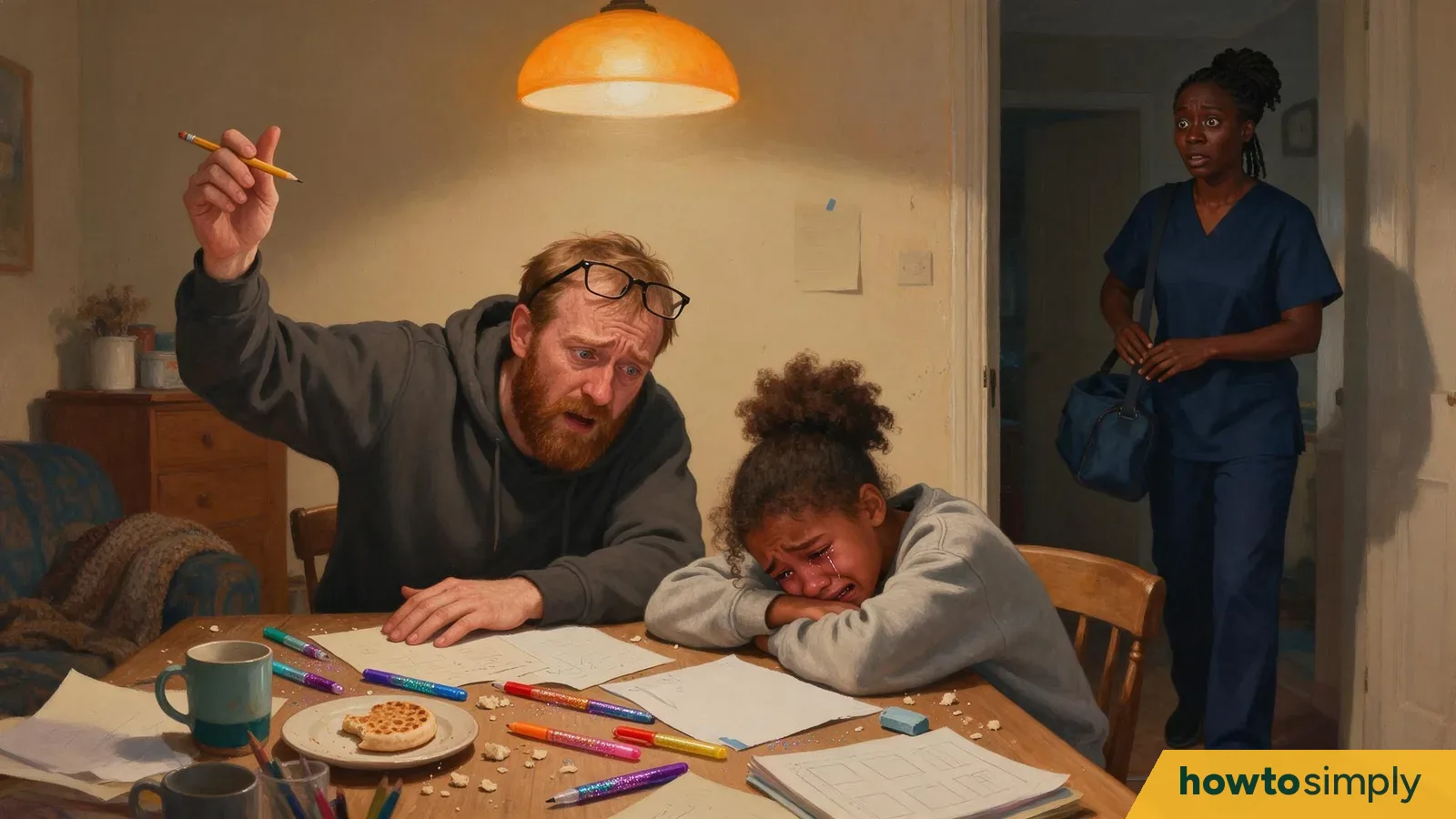
Tuesday, 7.40pm. The kitchen table looks like a crime scene: rubber crumbs, a half-eaten crumpet and one glitter pen with its lid lost forever. Zosia has a maths worksheet. Her dad, Tomasz, has a strategy. "You just carry the one." "We don't do carrying, Tata." "Everyone does carrying." Her mum, Grace, walks in from a twelve-hour shift to find two people in tears and a worksheet in three different handwritings.
Here's the twist. The Education Endowment Foundation (EEF), an education charity, estimates homework is worth about five months of extra progress on average, more at secondary school than at primary. But in its review of parental engagement, it says programmes to get parents involved in homework are not generally linked to better results. Helping your child plan, set goals and manage their time, effort and feelings is often more valuable. So: less co-author, more coach.
Set it up
Ask what the homework is for
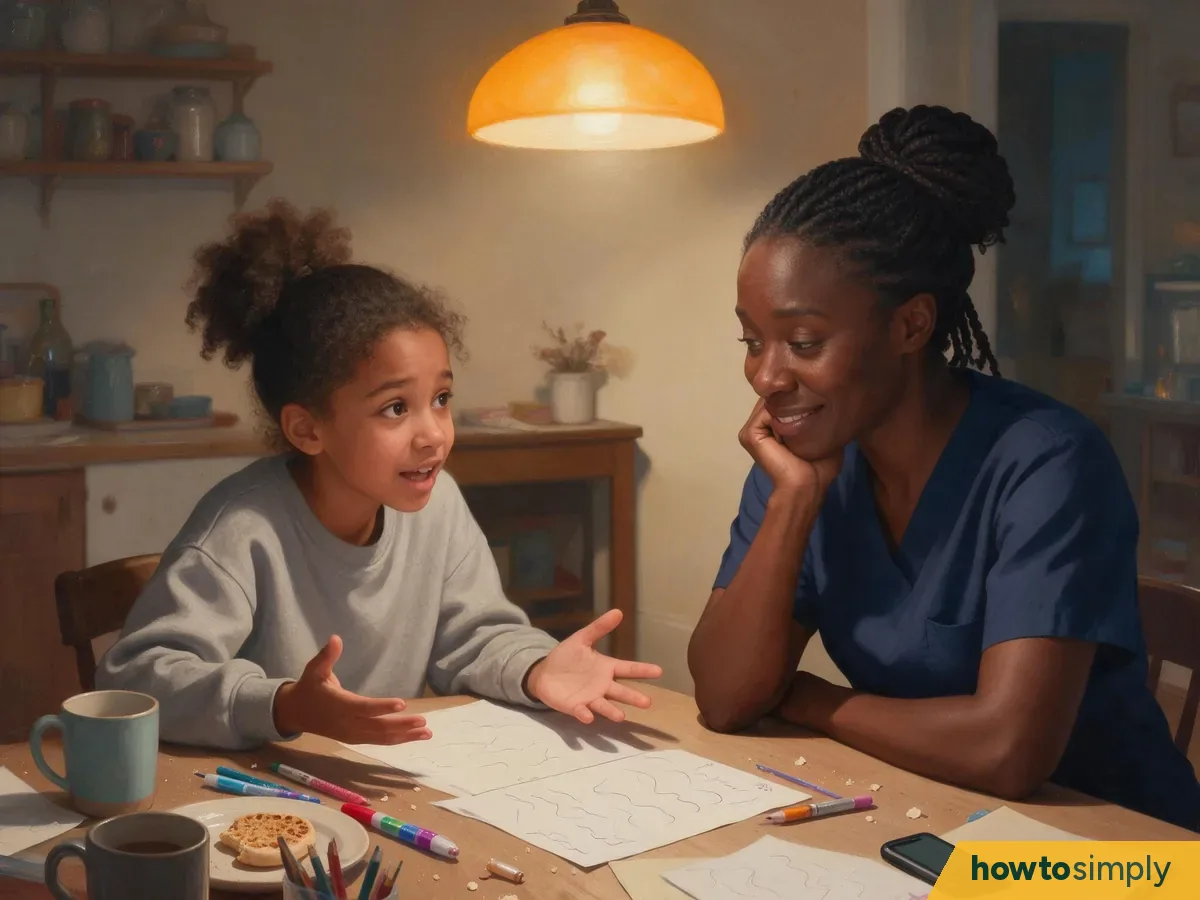
Illustration The EEF says it's important to make the purpose of homework clear to pupils, and that homework linked to classroom work tends to work better. Before anyone opens a pencil case, get your child to tell you the point of tonight's task.
Try saying: "What's this one meant to help you get better at?"
Find the quietest corner you've got
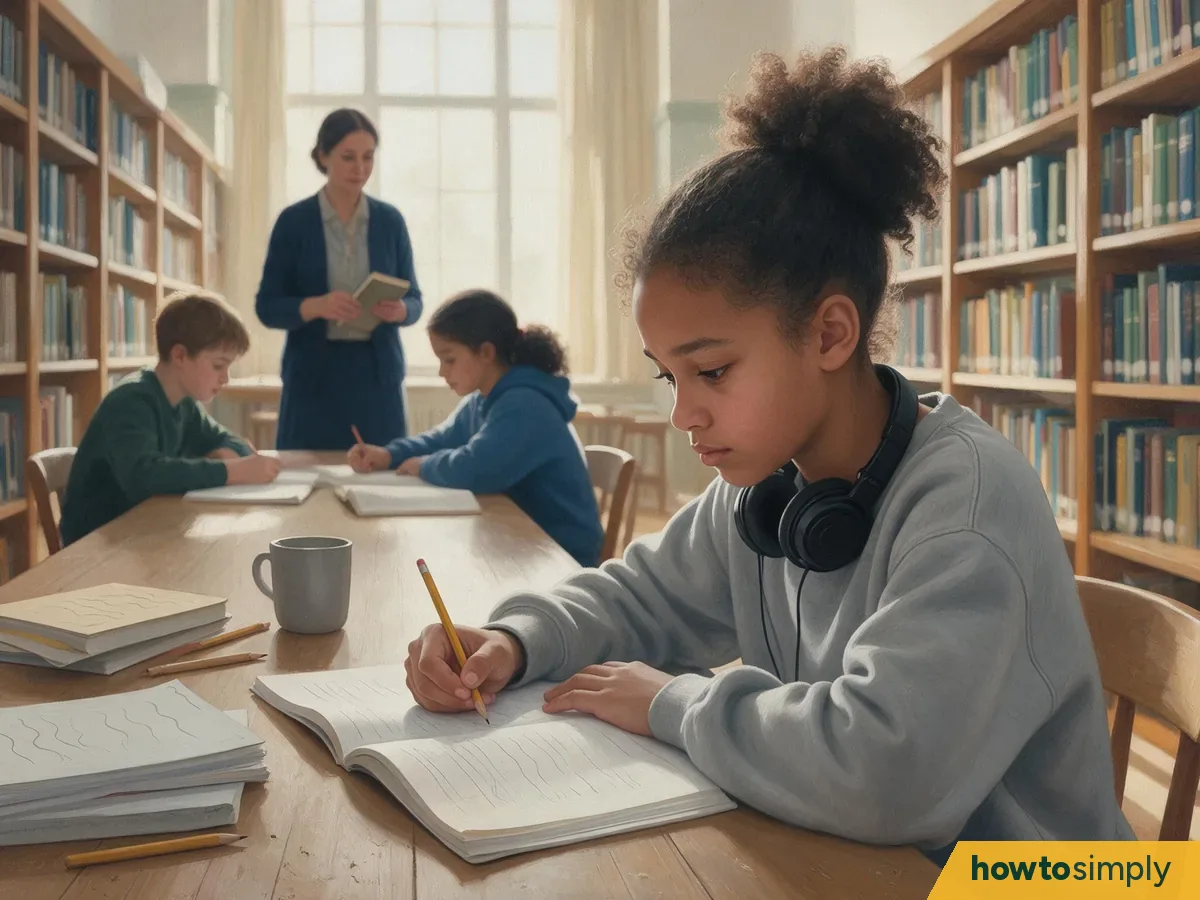
Illustration The EEF notes that some pupils don't have a quiet space to work at home, and that homework clubs at school can help. If your kitchen at 7pm sounds like a ferry terminal, ask whether school runs one. Zosia now does Thursdays in the library, and the crumpet count has dropped.
Don't let it eat the whole evening
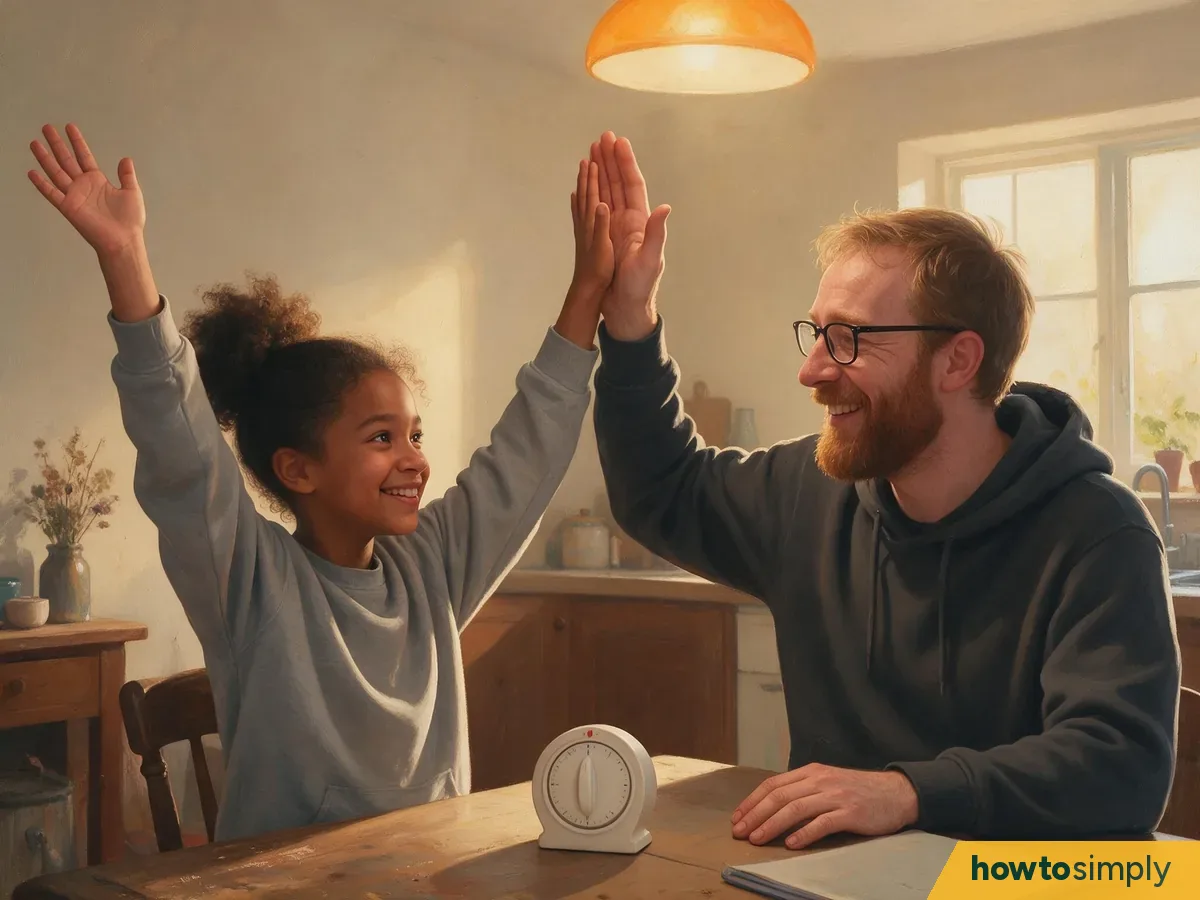
Illustration The EEF says the quality of homework matters more than the quantity, and that there's some evidence the benefit shrinks as the time spent grows. Set a sensible stopping point. If homework regularly takes far longer than the teacher seems to expect, we'd say that's worth telling the school.
Help them plan, not perform
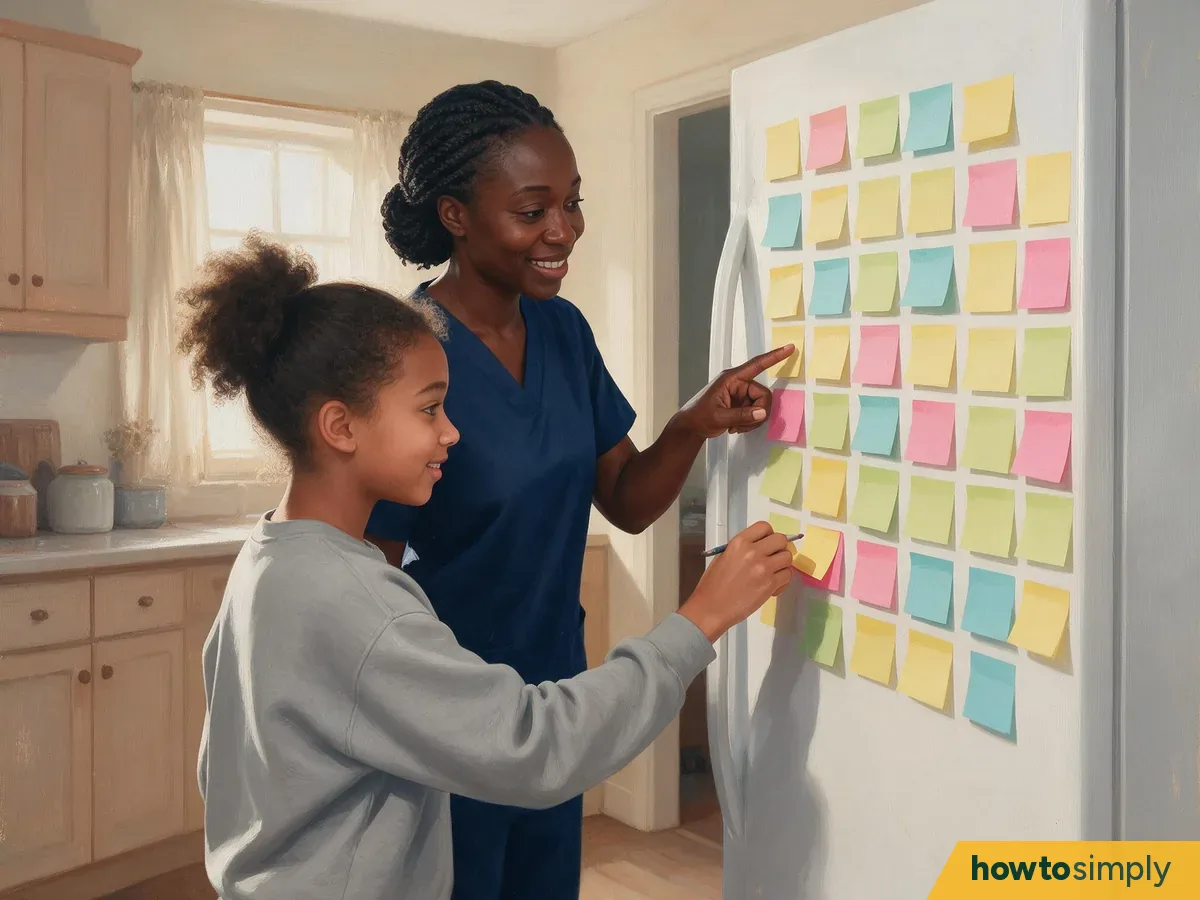
Illustration The EEF suggests parents can help by encouraging children to set goals, plan and manage their time. A sticky note with "what's due, when, and what I'll do tonight" is your whole contribution. It's boring. It works better than you holding the pen.
Be the coach, not the co-author
Answer questions with questions
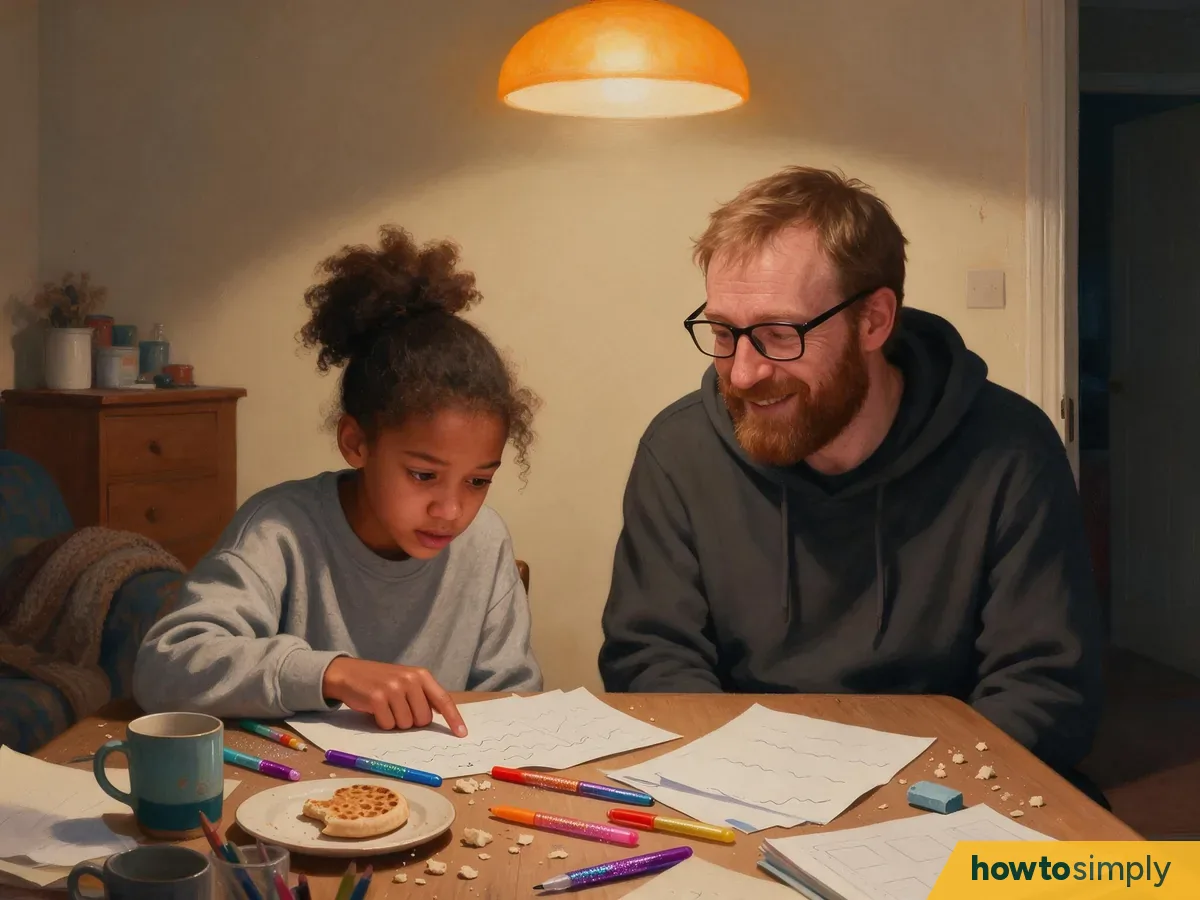
Illustration This one is our advice. When they're stuck, resist the urge to explain. Getting them to say what they already know often unsticks things on its own. Tomasz now sits on his hands. Literally.
Try saying: "Read me the question out loud. What's it actually asking?"
Don't teach them your old school method
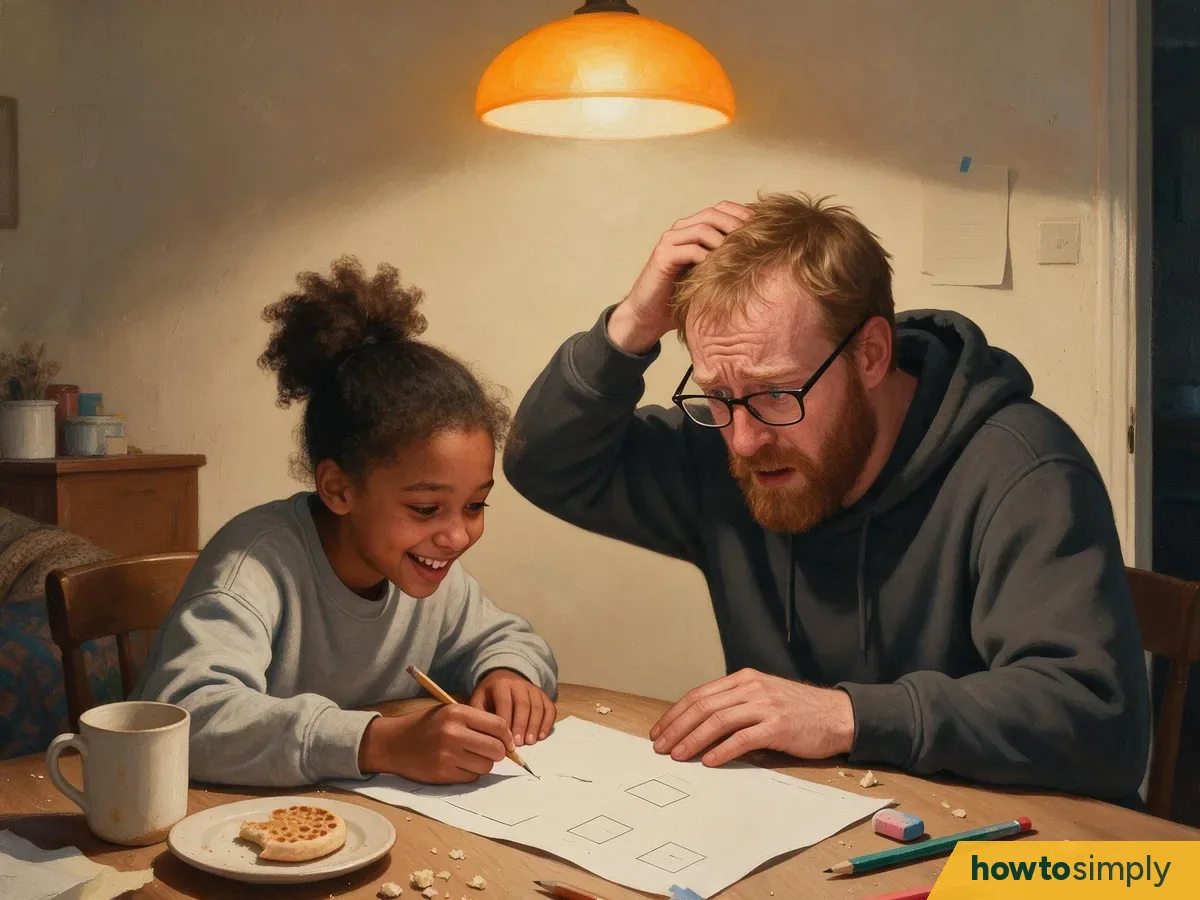
Illustration The EEF points out that parents may not be familiar with the most effective teaching methods. Tomasz's "carrying the one" was correct. It just wasn't what Zosia's class does, so now she had two methods and confidence in neither. If your child knows a method, let them teach it to you instead.
Send them back to the teacher
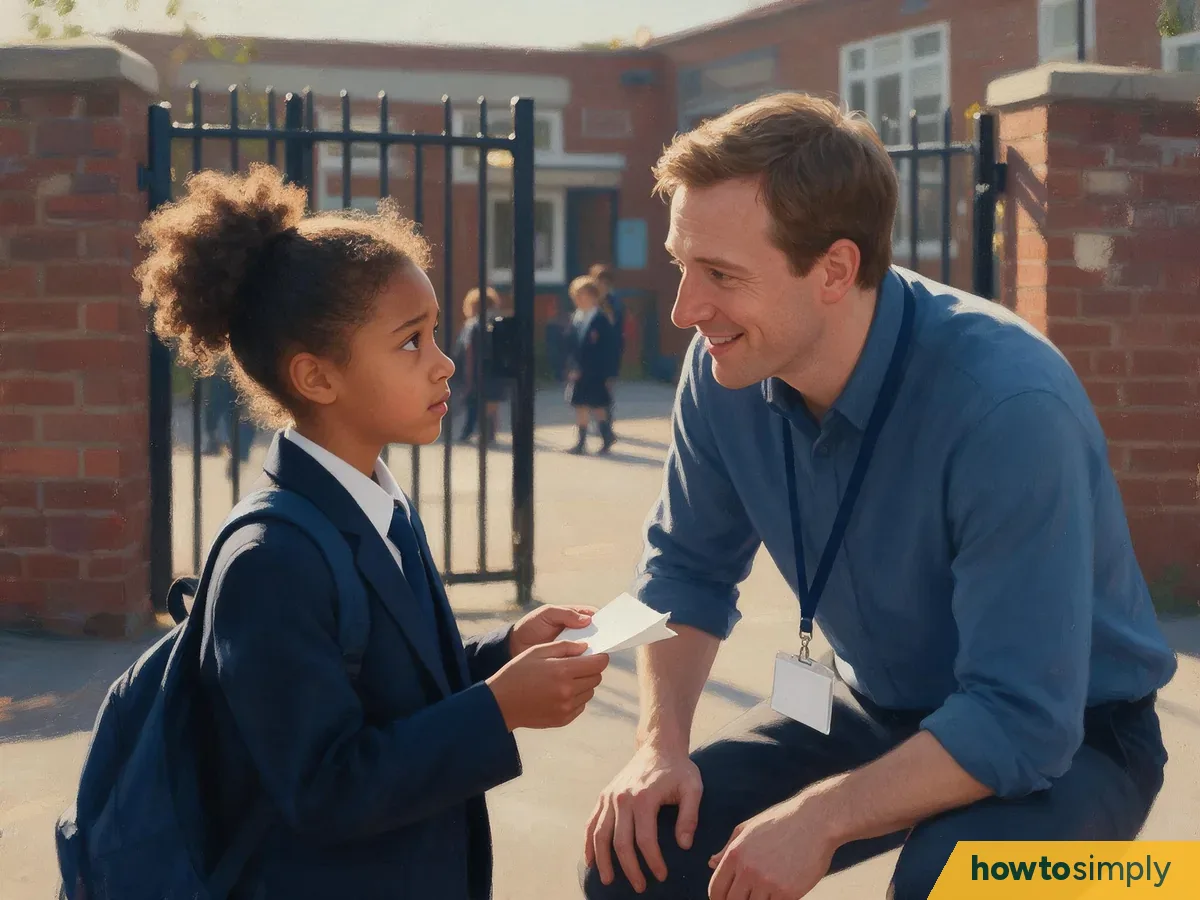
Illustration For a child who is genuinely struggling, the EEF says it may be more effective for parents to point them back to their teacher rather than step in as the instructor. Write a short note, or have your child ask first thing in the morning.
Try saying: "This is a brilliant question for Mr Hughes. Let's write it down so you remember to ask."
Leave the mistakes in
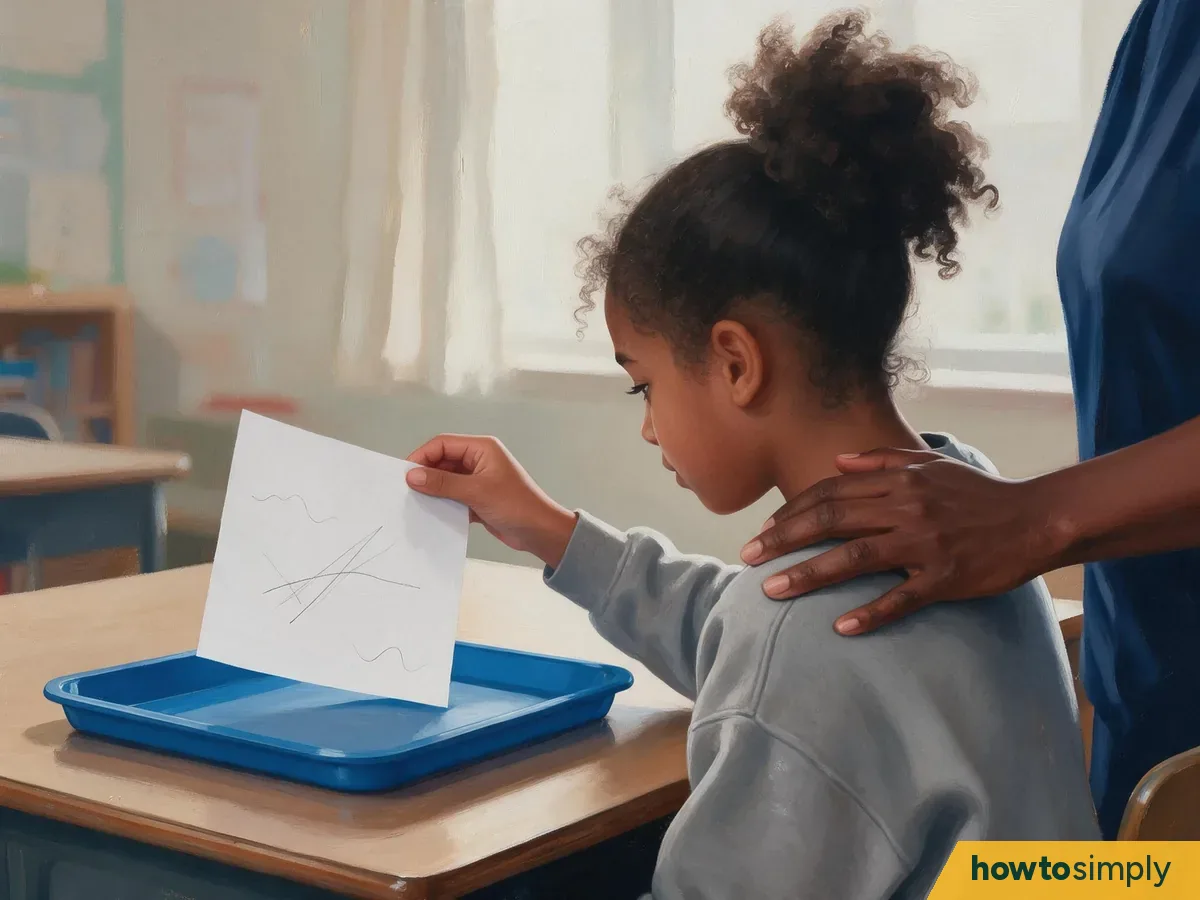
Illustration The EEF found that studies which included feedback on homework had bigger effects on learning. Our take: feedback only helps if the teacher sees what your child actually did. If you quietly fix every wrong answer, the teacher is marking you.
Coach the feelings too

Illustration Managing emotions is on the EEF's list of things parents can usefully support. A meltdown over long division is rarely about long division. Name the feeling, take a breather, come back. If the tears are about more than homework, our guide to how to talk to your teenager has gentle ways in, and it works on 11-year-olds too.
Try saying: "You're frustrated, and that makes sense. Five minutes off, then we'll look at just the first question."
The things that aren't homework, but help
Read together, and talk about it
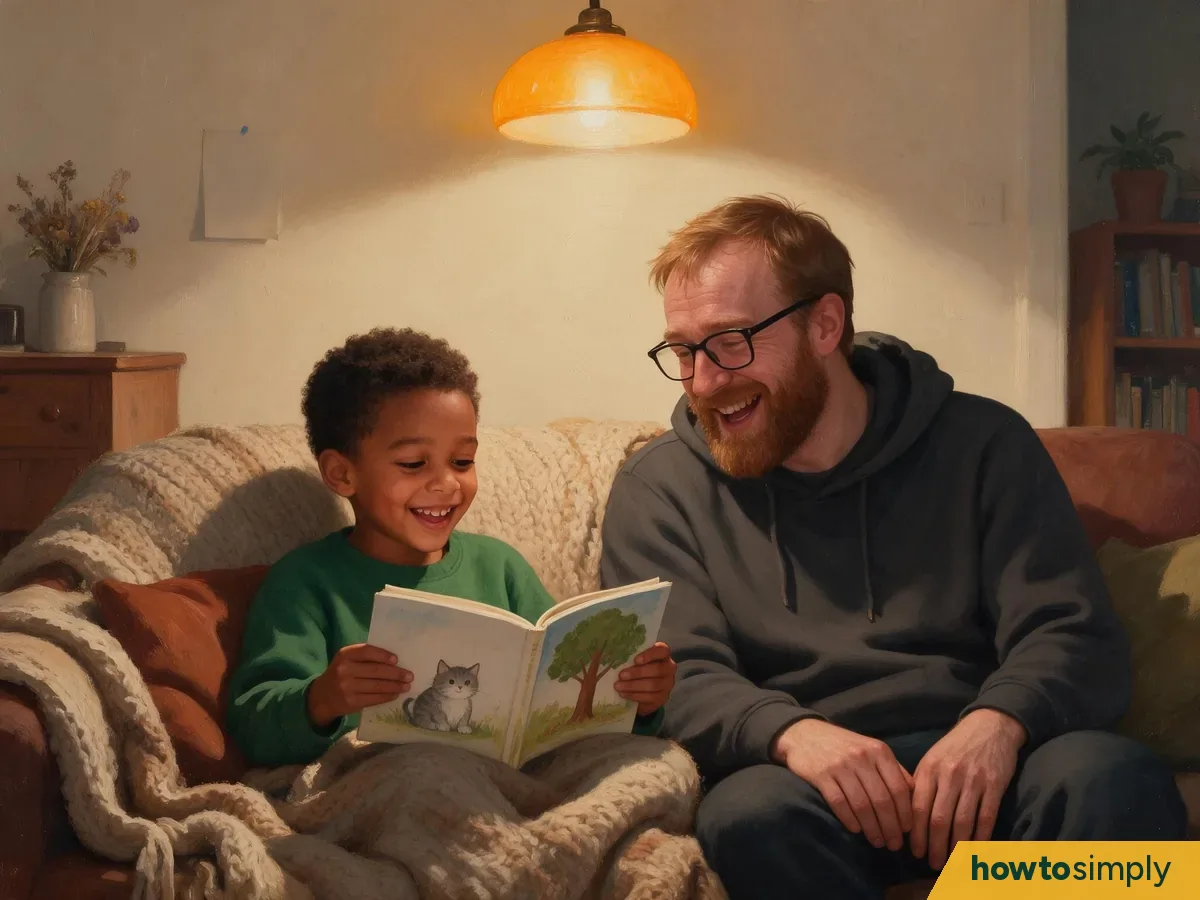
Illustration The EEF's parental engagement review puts the average impact at about four months of extra progress. Most of that evidence is about reading at home, and the biggest effects come when a parent works one-to-one with their child. That's ten minutes on the sofa with Kwame's reading book, not a forensic inspection of Zosia's essay.
Screens off an hour before bed
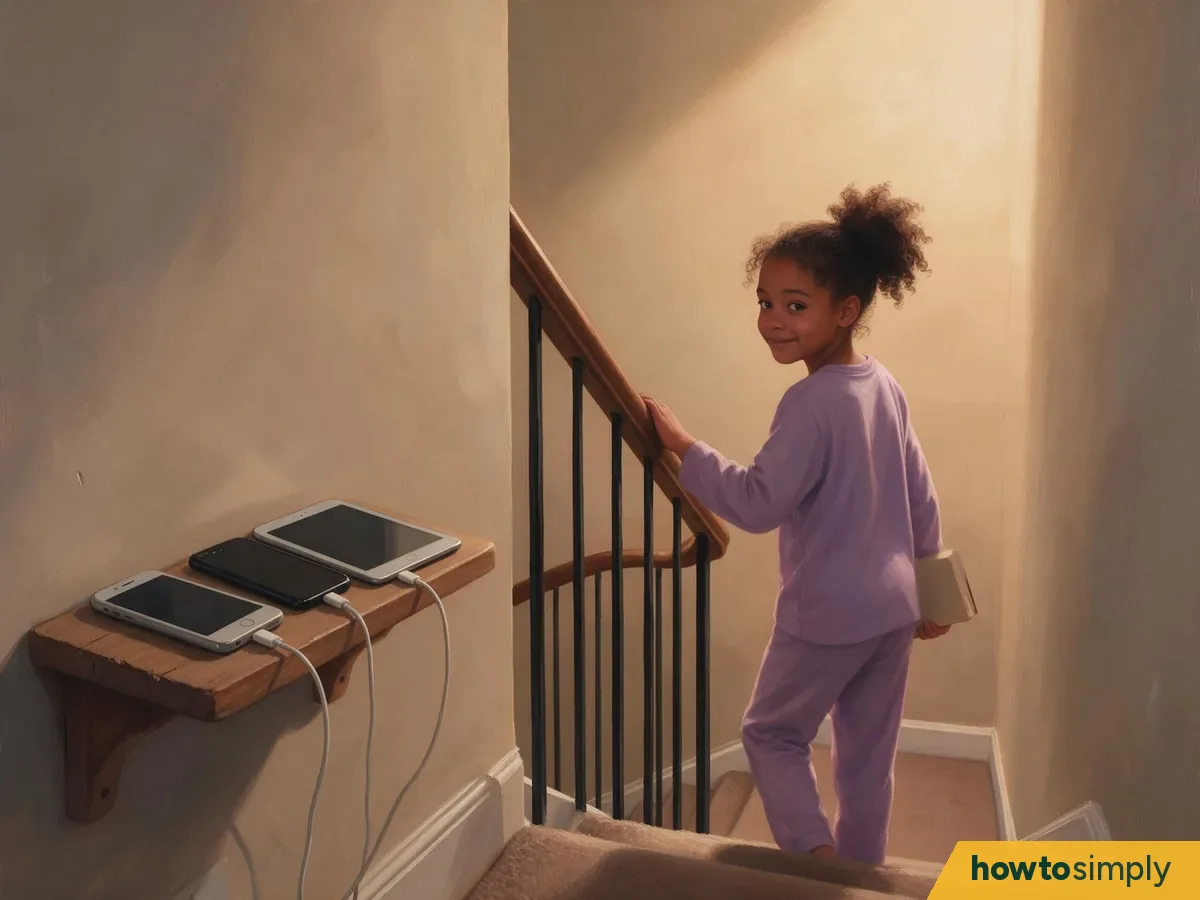
Illustration NHS Healthier Together advises turning screens off one hour before bedtime and keeping them out of the bedroom, because screens keep the brain awake. Its family digital plan says devices should never be allowed in bedrooms. A charging shelf in the hallway does the job. Yes, even for the phone with the "homework" group chat.
Put sleep before "one more worksheet"
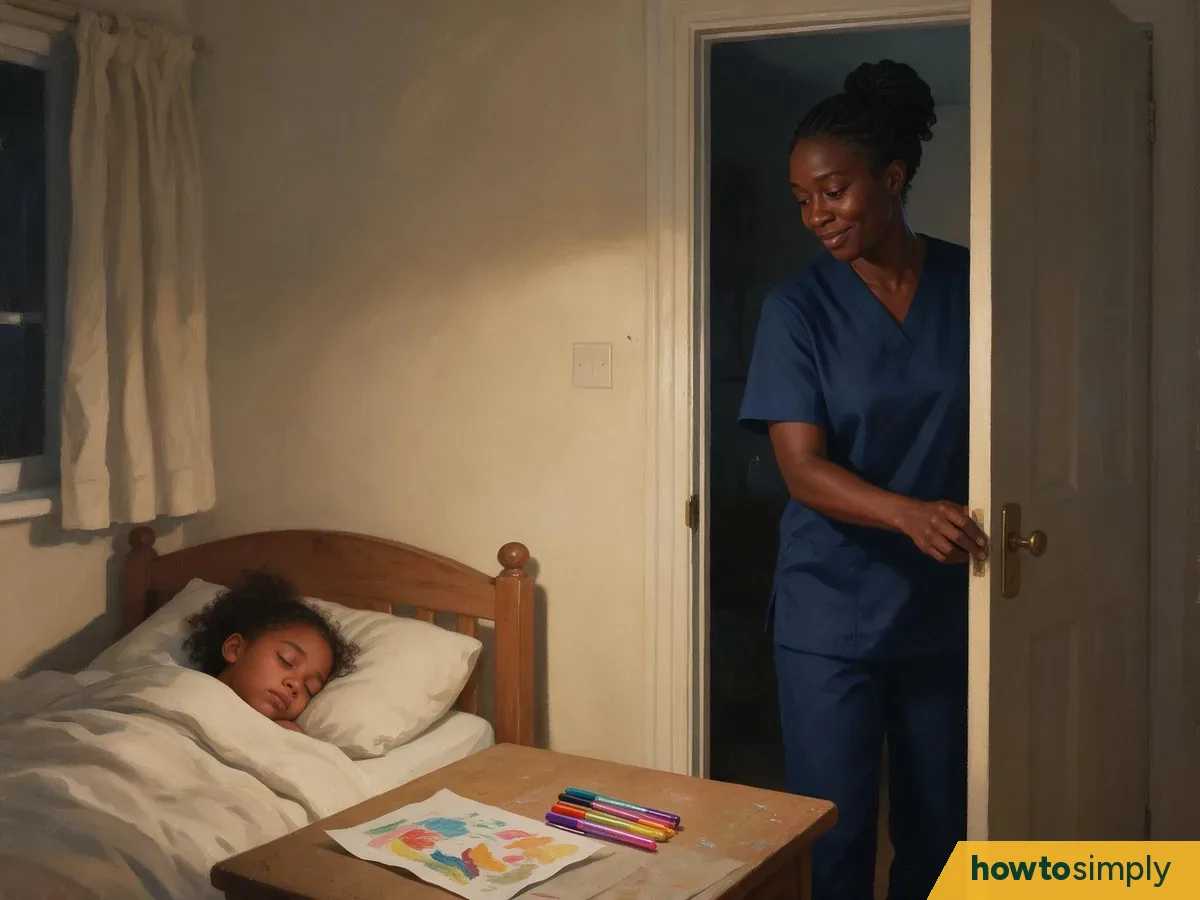
Illustration NHS Healthier Together says most children aged 5 to 11 need 9 to 11 hours of sleep a night, and that good sleep helps them pay attention, learn and remember what they've learned. Our view: if it's 9.30pm and the poster isn't finished, bed usually wins. A short note to the teacher can explain.
Tell the school early about any barriers

Illustration The EEF says teachers should try to understand what stops pupils completing homework, such as no quiet space, no suitable device or patchy internet, and that homework shouldn't be used as a punishment. If any of that applies at your house, a quick email lets the school help.
Try saying (to school): "We don't have a laptop at home at the moment. Is there a way Zosia can do the online tasks at school?"
Three weeks later, Tuesday night looks different. Zosia plans on the fridge, Kwame reads to his dad, and Tomasz has learned the new method. He still thinks carrying was better.
Homework help at a glance
| What the evidence says | What it means at home | Source |
|---|---|---|
| Homework: about +5 months on average (+3 at primary) | Worth doing, but the evidence is rated low security | EEF |
| Quality matters more than quantity | Set a stopping point | EEF |
| Clear purpose, linked to class work | Ask what tonight's task is for | EEF |
| Feedback raises the impact | Let the teacher see the real mistakes | EEF |
| Parent homework programmes not generally linked to better results | Coach planning and feelings, not answers | EEF |
| Struggling pupils: redirect to the teacher | Write the question down for tomorrow | EEF |
| Parental engagement: about +4 months, mostly home reading | Ten minutes of reading together | EEF |
| Ages 5 to 11 need 9 to 11 hours' sleep | Bedtime beats one more worksheet | NHS Healthier Together |
| Screens off an hour before bed | Charge devices outside the bedroom | NHS Healthier Together |
Source: Education Endowment Foundation, Teaching and Learning Toolkit: Homework (review updated August 2021) and Parental engagement (review updated May 2025); NHS Healthier Together, Healthy Sleep (all read 11 November 2026).
Homework-helper checklist
- My child can tell me what tonight's homework is for.
- There's a quiet spot, at home or at a homework club.
- I asked questions instead of giving answers.
- I sent at least one "I'm stuck" back to the teacher.
- Screens went off an hour before bed.
If homework stress is hiding something bigger
- Tears every night, refusing to go to school or homework that's always "lost" can sometimes point to bullying, anxiety or an unmet learning need. Talk to the class teacher, form tutor or the school's SENCo (special educational needs coordinator), and see your GP if you're worried about your child's mental health.
- Parents and carers can call the YoungMinds parents' helpline on 0808 802 5544 (9.30am to 4pm, Monday to Friday) or Family Lives on 0808 800 2222.
- Children and young people can call Childline free on 0800 1111 or text SHOUT to 85258.
- In an emergency, call 999.
Your turn: which homework topic broke your household? Long division? The Tudors? A model volcano? Tell us in the comments, so another parent knows they're not alone at the kitchen table tonight.
Questions readers ask
Should parents help with homework?
Yes, but as a coach rather than a tutor. The Education Endowment Foundation says programmes to get parents involved in homework are not generally linked to better results, while helping children plan, set goals and manage their time, effort and feelings is often more valuable.
What should I do if my child is stuck on homework?
Ask them to read the question aloud and say what it is asking. If they are still stuck, the Education Endowment Foundation suggests pointing them back to their teacher rather than teaching it yourself, because your method may differ from theirs.
Should I correct my child's homework mistakes?
It is usually better not to. The Education Endowment Foundation found homework with feedback has a bigger effect on learning, and feedback works best when the teacher can see what your child really did.
How much sleep does a primary school child need?
NHS Healthier Together says most children aged 5 to 11 need 9 to 11 hours of sleep a night, and that screens should go off an hour before bed and stay out of the bedroom.
Does homework actually help?
On average, yes. The Education Endowment Foundation estimates about five months of extra progress, more at secondary school than at primary (about three months), though it rates the evidence as low security.
About this article
- Written by
- Abu Bakar Saadat
- Reviewed by
- Sonia Abu Bakar, MSc Botany. Checked this article on a private review copy and approved it on 12 November 2026.
- Pictures
- 14 illustrations drawn for this article, each marked Illustration (drawings, not photos).
- Sources
- 4 named sources, linked below.
- What this page adds
- A table of what the evidence says and what it means at home, a homework-helper checklist, and drawings of one family working through each step.
Did this solve the problem?
What needs work?
What did you think?
Reaction counts are loading.
Sources
We use primary, official and specialist sources appropriate to the topic.