How to get rid of aphids on houseplants
Researched by Abu Bakar Saadat8 min read
Last updated: 14 November 2026References
On this page 9 sections
In short
Move the plant away from the others, rinse it in the shower with lukewarm water (especially under the leaves), squash or snip off what's left and repeat regularly. Use an insecticidal soap labelled for indoor plants only if they keep coming back.
At a glance
- Look for
- Soft-bodied insects (WSU), 1 to 7 mm on shoot tips, buds and leaf undersides (RHS)
- First try
- Isolate, rinse in lukewarm water, squash or prune (WSU, RHS)
- If needed
- Insecticidal soap labelled for indoor use (WSU)
- Repeat
- Soap at short intervals if needed, following the label (Colorado State)
- Advice from
- RHS, University of Maryland, Washington State and Colorado State university extension services, read 28 October 2026
- Checked
- November 2026
It's an unpleasant moment when you flip over a leaf on a plant you care about and see it crawling with tiny bugs. Please don't reach straight for a harsh spray: WSU puts non-chemical methods such as a lukewarm rinse first, and we'll take this step by step.
Aphids are small, soft-bodied insects that feed on sap from leaves and stems. Indoors, they're active all year round (RHS), so inspect your plants regularly and deal with them before damage builds up (RHS). A small group of aphids left unchecked can quickly become a bigger problem. Washington State University's PestSense puts non-chemical treatments before chemical ones, and the RHS advises avoiding pesticides wherever possible. I believe it makes sense to use the gentlest method first, then step up only if you need to.
What kind of plant is affected?
Ornamental houseplant, a few aphids
Steps 1 to 5, then keep checking. You probably won't need a spray.
Ornamental houseplant, keeps coming back
Add step 6: insecticidal soap, repeated as the label says.
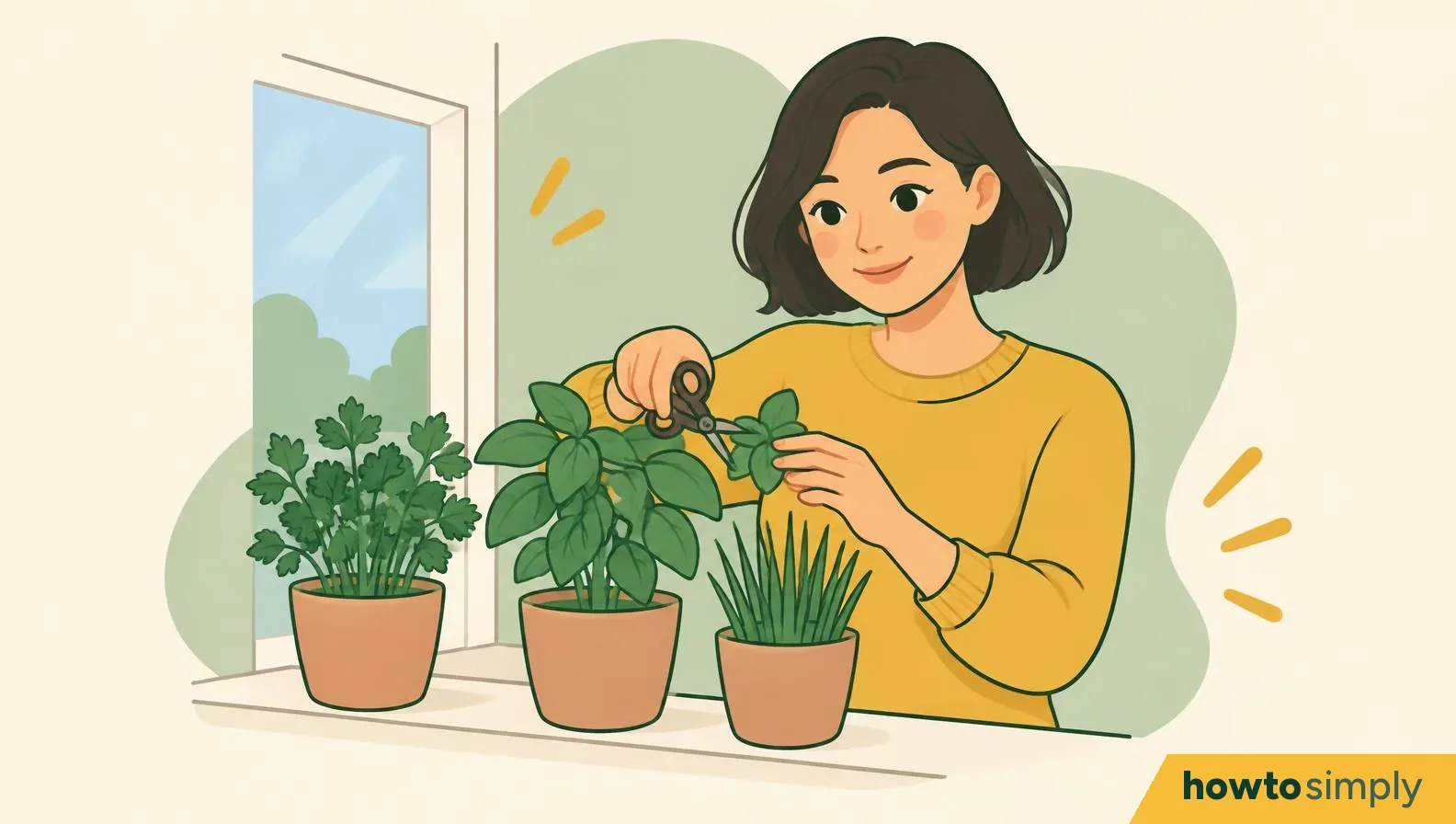
Herbs or salad leaves you eat
WSU advises against chemical sprays on edible plants grown indoors. Rinse, squash and snip only.
Plant covered and badly distorted
WSU says plants with a heavy infestation may be too damaged to save. Think about throwing it away before the aphids spread.
How to get rid of aphids
Check that they really are aphids.
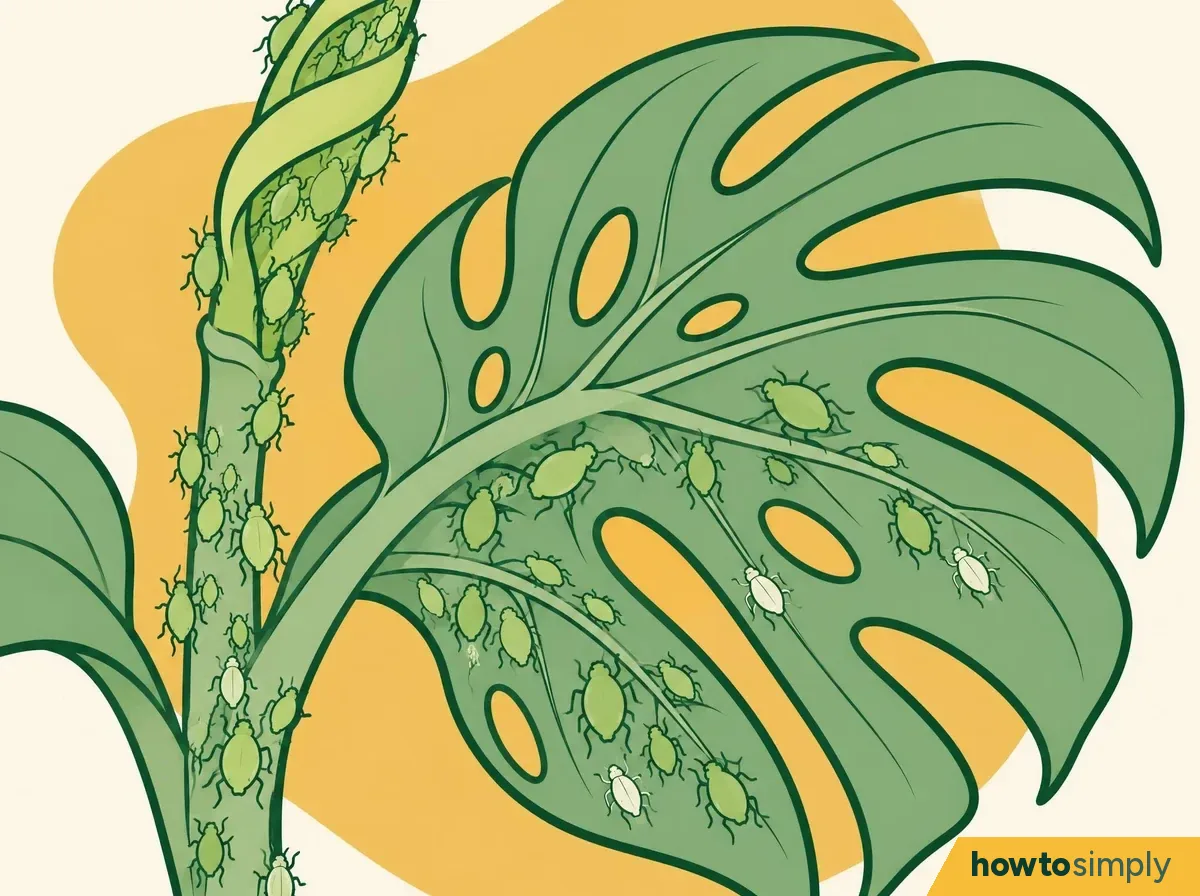
Illustration: aphids cluster on soft new growth Look at shoot tips, flower buds and the undersides of young leaves (RHS). Aphids are about 1 to 7 mm long; some are green or black (greenfly, blackfly), others yellow, pink, white or mottled, and some cover themselves in a white waxy secretion (RHS).
Other clues: sticky leaves or surfaces under the plant (honeydew), black sooty mould on that stickiness, curled or distorted leaves, and white cast skins on the leaves (RHS, WSU).
You should see: soft-bodied insects that can be crushed with fingers, often in groups, mostly without wings (WSU).
Move the plant away from your other plants.
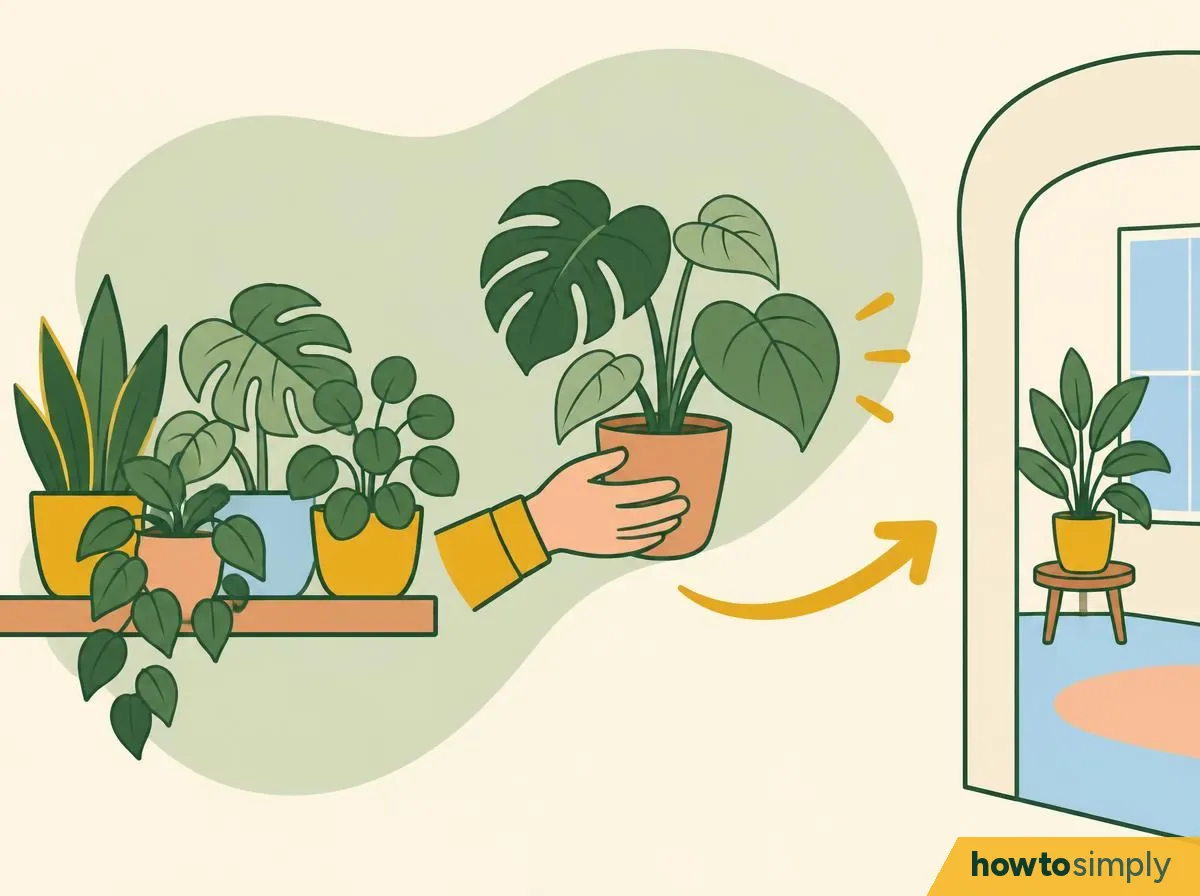
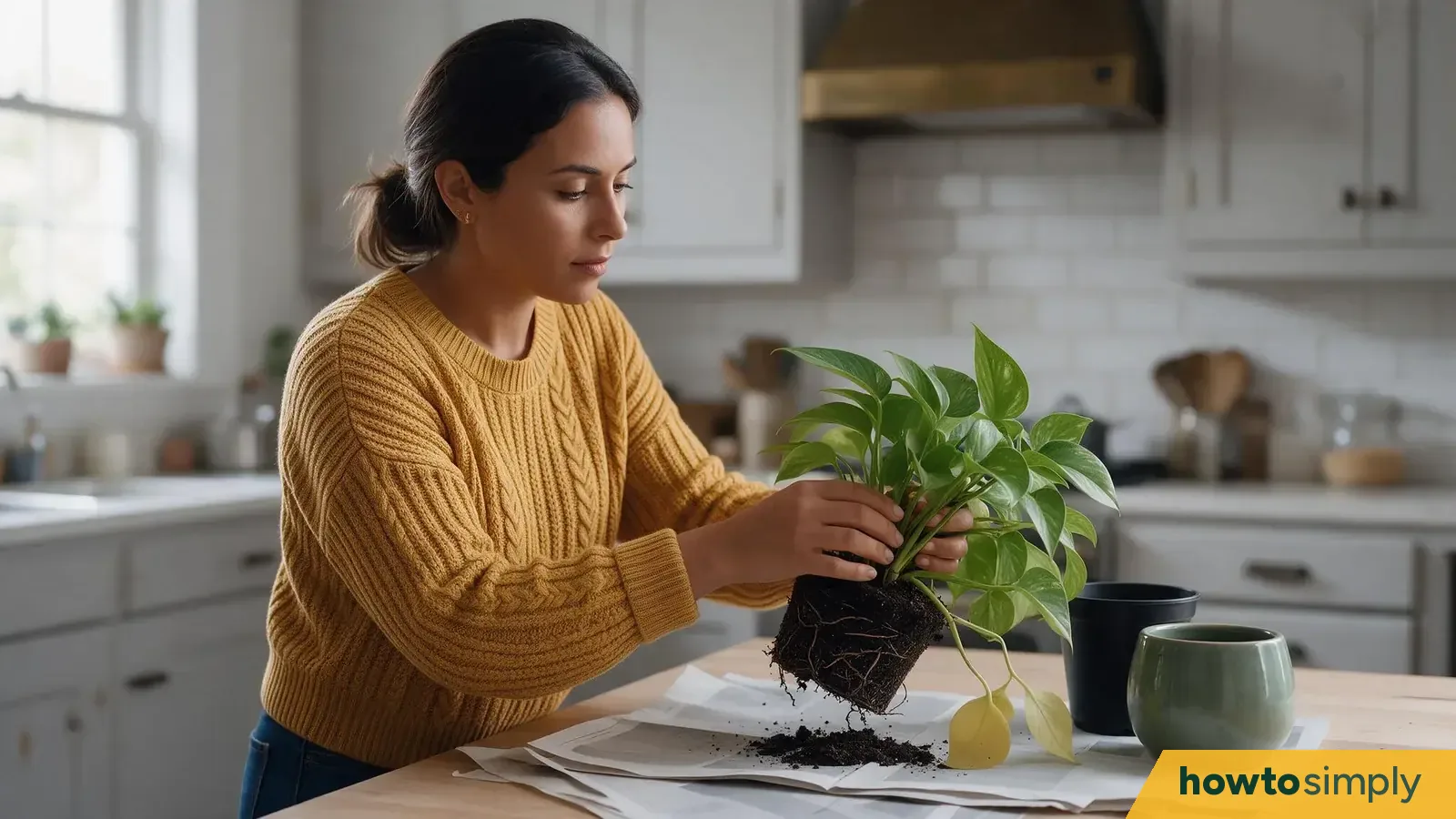
Illustration Give the plant a little room of its own. Aphids move between plants by walking or flying across (WSU). Put the plant in another room until it's clear, and check its neighbours leaf by leaf. WSU suggests keeping plants brought indoors from outside apart, in a spare bedroom for example, for about a month.
You should see: the affected plant on its own, with no leaves touching other plants.
Snip off the worst shoots, and squash small groups.
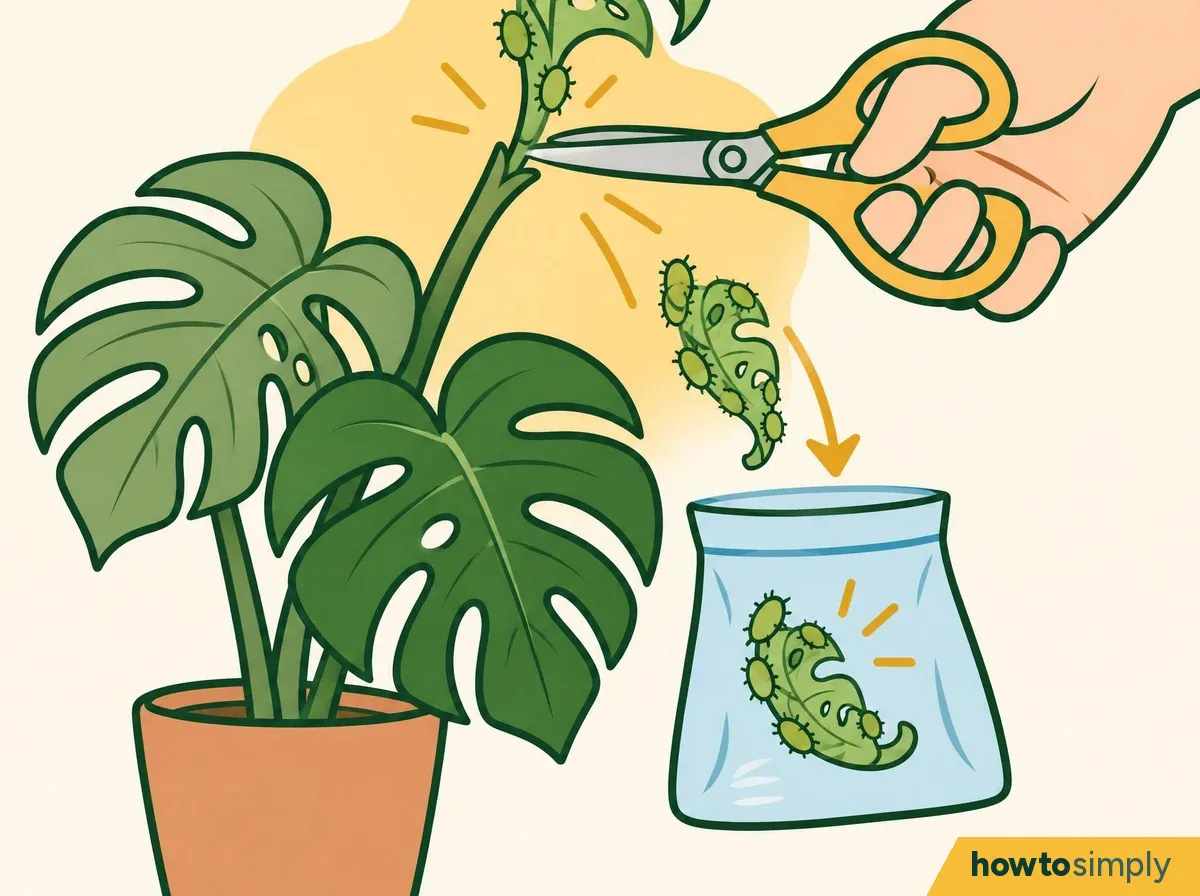
Illustration WSU suggests pruning out heavily infested leaves and shoots. Bag them and put them in the bin. The RHS says small colonies can simply be squashed between finger and thumb. If you'd rather not squash them, the rinse in the next step also removes aphids (WSU).
You should see: no tight, curled leaves left on the plant. Soap sprays can't control aphids inside curled leaves (Colorado State).
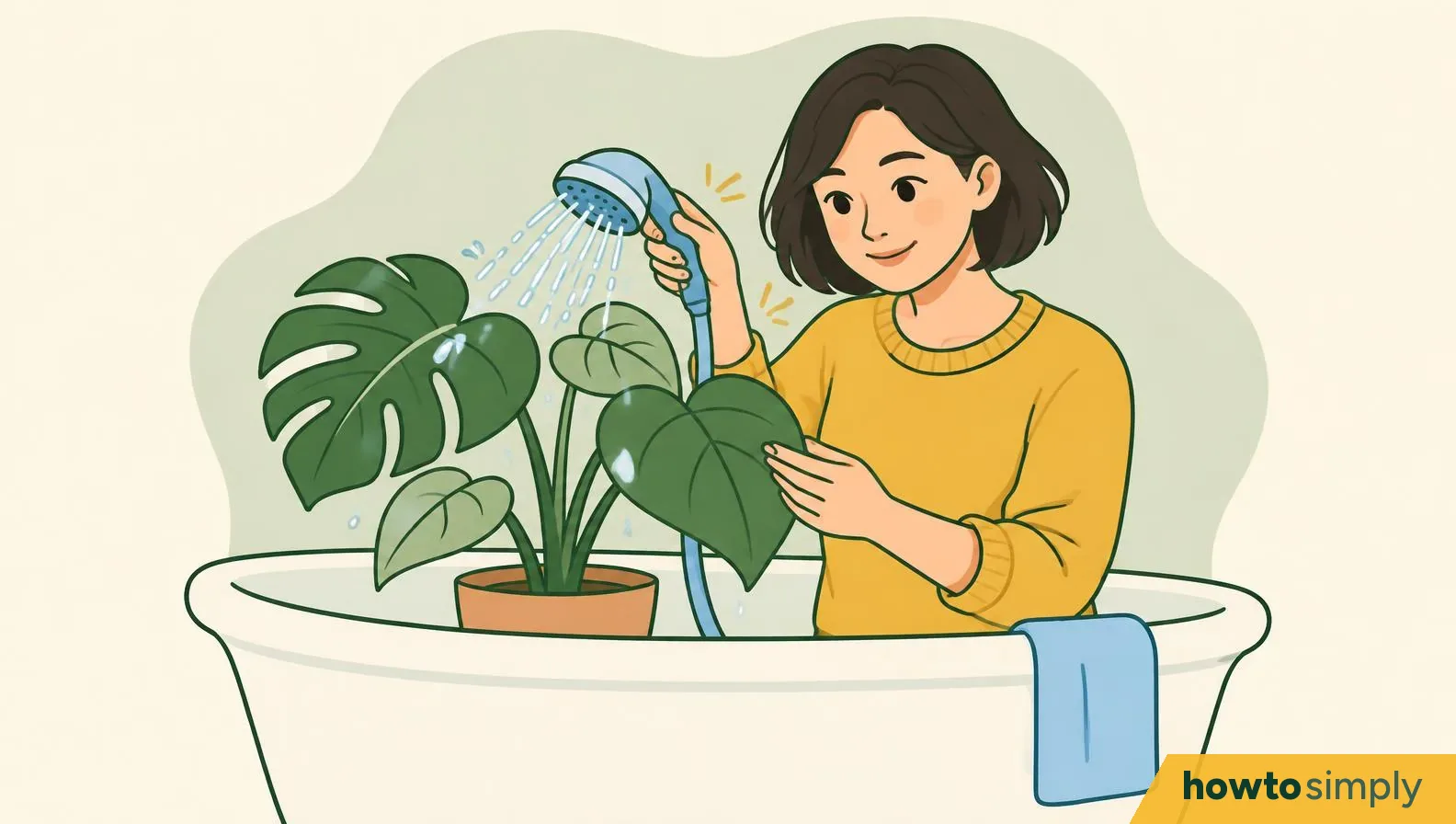
Rinse the plant in lukewarm water, especially under the leaves.
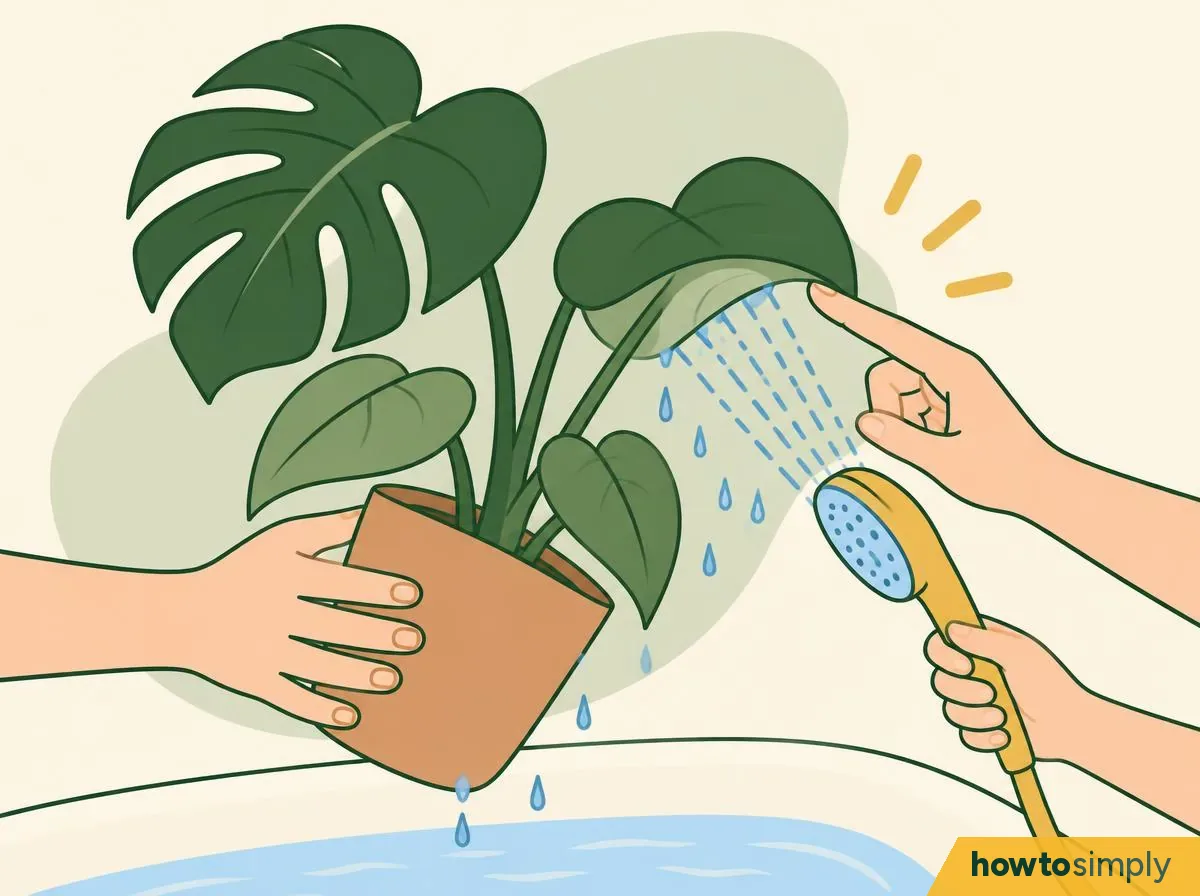
Illustration Next, the step that does most of the work. WSU suggests rinsing the plant under a lukewarm shower or tap to wash away the aphids, their sticky honeydew and any sooty mould. Turn the leaves so the water hits the undersides (WSU). The University of Maryland Extension agrees aphids can be washed off with water.
Let the pot drain fully before you put it back. Then have a good look; it is quite satisfying to see clean leaves again.
You should see: clean leaves with no insects and no sticky shine on them.
Careful: too much alcohol can harm some plants. Test it on a single leaf first (WSU).
Wipe off stragglers with a cotton bud dipped in rubbing alcohol.
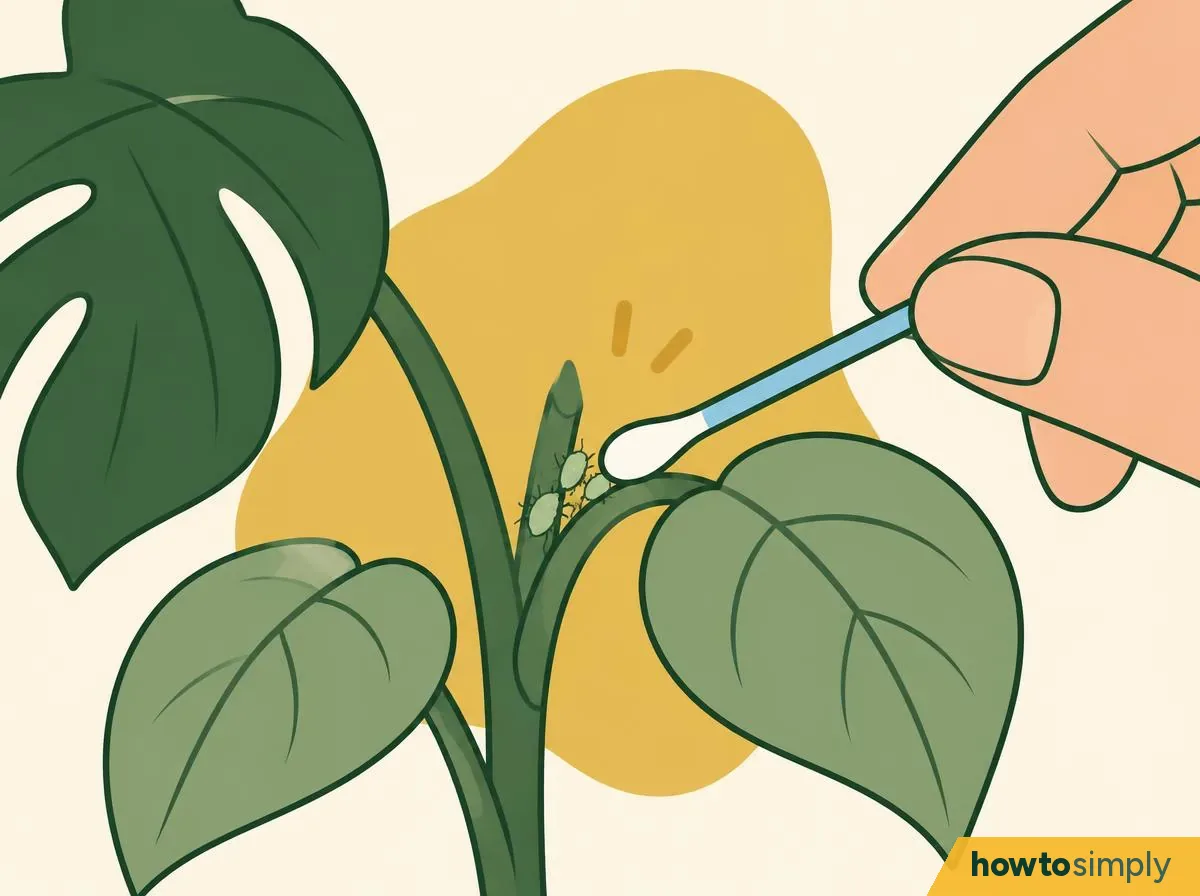
Illustration Don't worry if a few are still there after the rinse. Aphids that drop off when disturbed can climb back up later (WSU). WSU suggests removing the rest with cotton buds or cotton wool moistened with rubbing alcohol. Check the tips of shoots, stems and the undersides of leaves (WSU). Wipe any sooty mould off the leaves with a damp cloth (RHS).
You should see: no aphids left anywhere on the plant, and the tested leaf unharmed.
Careful: some plants are injured by soap sprays. Spray a small patch first and wait a day or two before doing the whole plant (Colorado State). Read the label and check its approved uses cover your plant and aphids (RHS). Don't use it on herbs or other plants you eat (WSU).
If they keep coming back, spray with insecticidal soap.
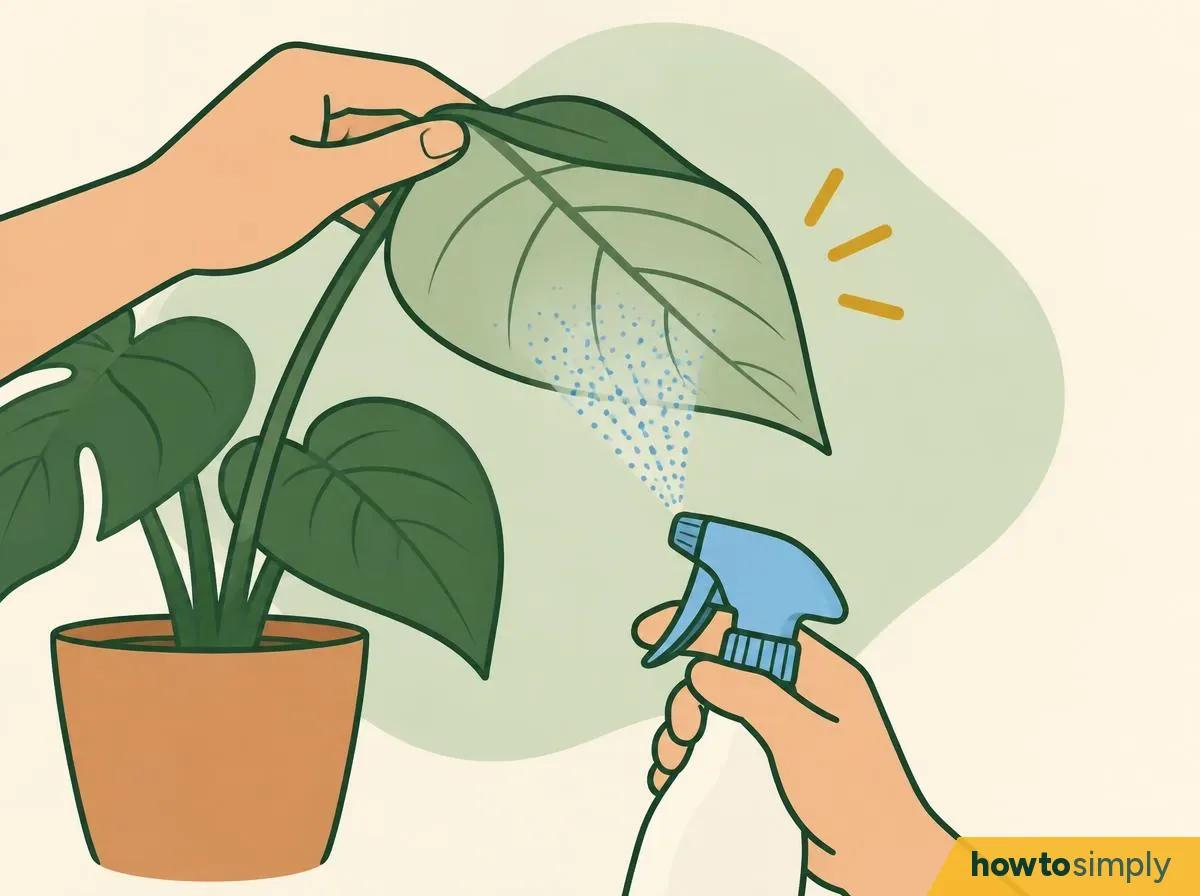
Illustration Use an insecticidal soap labelled for indoor use (WSU). Soap works only on contact, with no residual effect (Colorado State), so cover the undersides of the leaves thoroughly.
Because of its short residual action, repeat sprays may be needed, but limit the number of sprays to avoid damaging the plant (Colorado State). Follow the label for how often. Don't use washing-up liquid instead: Colorado State says dish soaps can injure plants. So if your habit is to reach for the washing-up liquid for every job in the house, this is one job it is not made for.
You should see: dead aphids, and no damage on the leaves.
Check again regularly, and repeat.
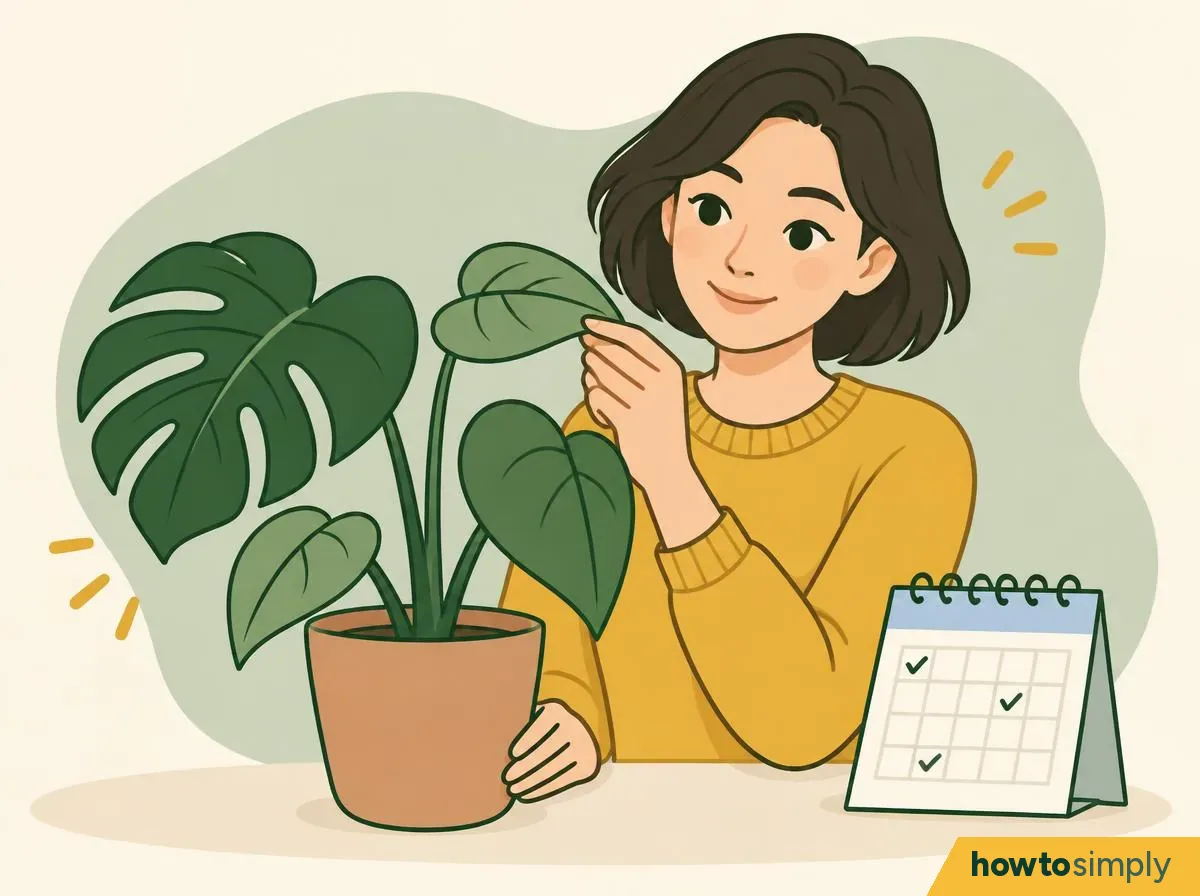
Illustration Remember that a single rinse is rarely the end of it. Aphids that drop off during washing climb back up, so WSU says to rinse regularly. Check the undersides of the leaves and new shoots each time. Frequent checks let you act before damage builds up (RHS).
You should see: fewer aphids each time you look, then none.
Aphids or something else?
According to the RHS, woolly aphids can easily be mistaken for scale insects, mealybugs or whitefly. So work out which pest you have before you treat the plant, because the right treatment depends on the right pest.
| What you see | Likely | Hint |
|---|---|---|
| Soft-bodied insects in clusters on new growth | Aphids (WSU, RHS) | White cast skins on leaves (RHS) |
| White waxy insects | Mealybugs, or woolly aphids (RHS) | Identify it before you treat |
| White insects on the leaves | Possibly whitefly, which the RHS lists as a look-alike for woolly aphids | A different pest: identify it before you treat |
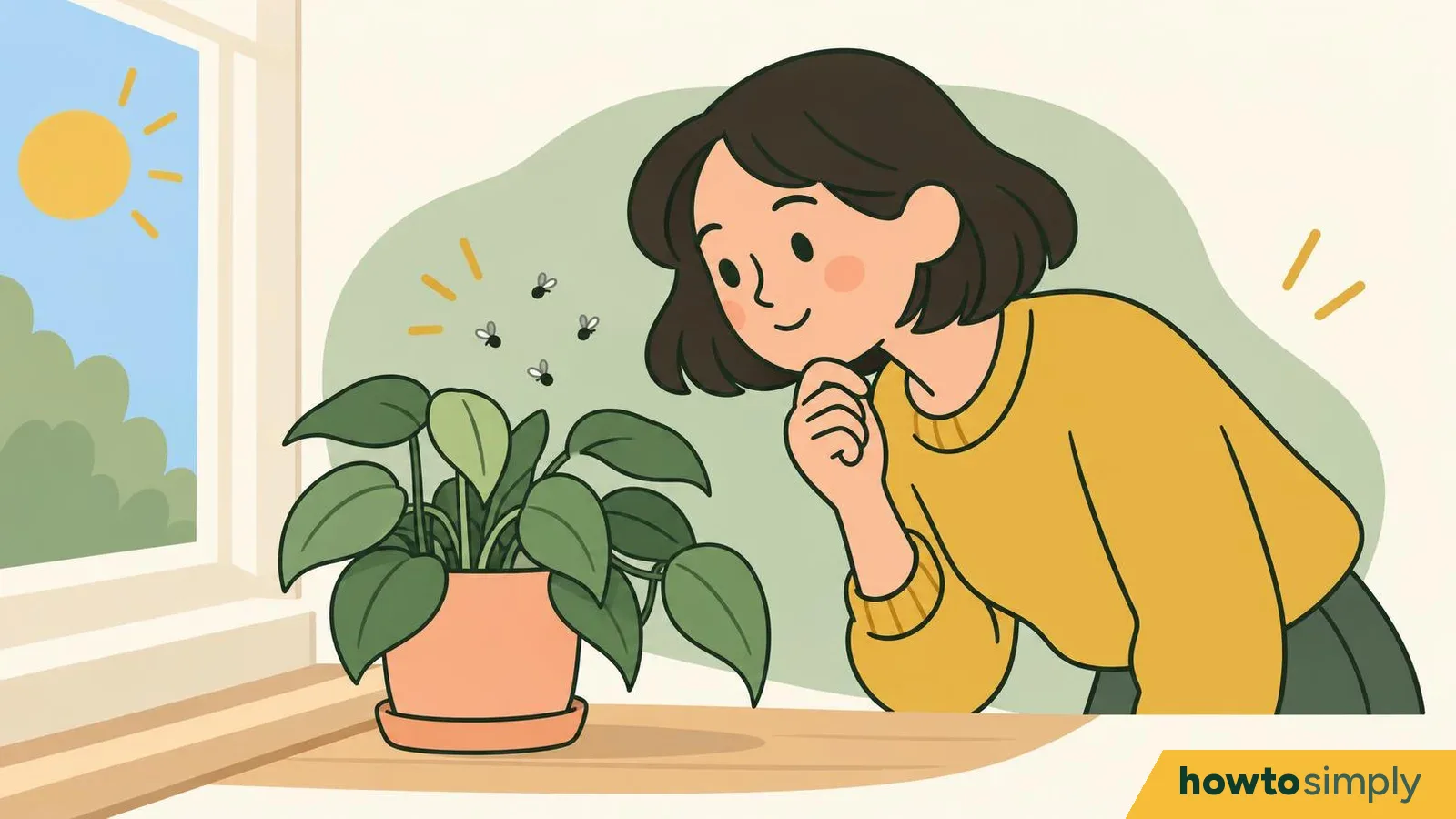
| Small dark flies around the compost, not on leaves | Fungus gnats | See our fungus gnat guide |
How to tell they're gone
- No insects on shoot tips, buds or the undersides of leaves for two checks running.
- No fresh sticky honeydew on the leaves or the surface underneath (RHS, WSU).
- No new curled or misshapen leaves, which the RHS lists as signs of aphids.
- The plants next to it are clear too before you move it back. With repeat treatments every 4 to 7 days (Colorado State), expect this to take a few weeks.
Rules in the UK, Germany, the US and Pakistan
| UK | Germany | US | Pakistan | |
|---|---|---|---|---|
| Do you need a professional? | No: in the UK, anyone can use the pesticides approved for home gardeners, with no training needed (RHS). In Germany, hobby gardeners need no Sachkunde (expert certificate) for products approved for non-professional use (Pflanzenschutzamt Berlin). | |||
| If you buy a spray | Products show a five-digit MAPP number, though some physical-action insecticides need none; you must follow the label by law (RHS) | Hobby gardeners may only use products marked "Anwendung durch nichtberufliche Anwender zulässig" (Pflanzenschutzamt Berlin) | Use a product registered for that use and follow the label: EPA says "the label is the law" | Every pesticide brand must be registered; selling an unregistered one is an offence (Agricultural Pesticides Ordinance 1971, s. 4) |
| Storing it | Keep any spray in its original container. UK law says pesticides must stay in the container they came in (RHS) | |||
If something goes wrong
Aphids are persistent pests, so please don't think you've failed if they come back. The table below explains what each sign means and how to proceed.
| What happens | What it means | What to do |
|---|---|---|
| Aphids are back a few days after rinsing | Some dropped off and climbed back (WSU) | Rinse again regularly; wipe stragglers with alcohol |
| Soap spray didn't work on some | They weren't wetted, for example inside curled leaves (Colorado State) | Remove curled leaves; spray the undersides thoroughly |
| Leaf damage after spraying | The plant is sensitive to soap (Colorado State) | Stop spraying; go back to rinsing and squashing |
| Black film on the leaves | Sooty mould growing on honeydew (RHS) | Wipe off with a damp cloth (RHS); it stops once aphids are gone |
| Leaves stay distorted after the aphids have gone | Not certain: some aphids can spread plant viruses (RHS) | Have it identified; the RHS says plants with a virus should be thrown away so it doesn't spread |
Questions readers ask
Where do aphids on houseplants come from?
WSU says aphids move between plants by walking or flying across; most of a colony has no wings, but adults with wings turn up and can move on (RHS). WSU says to quarantine and monitor newly purchased plants, and to keep plants brought in from outside apart for about a month.
Is washing-up liquid as good as insecticidal soap?
No. Colorado State University Extension says dish soaps contain strong detergents that can injure plants, and it does not recommend homemade soap sprays for insect control. Use a product labelled as an insecticidal soap for indoor use (WSU).
Can I buy ladybirds for my houseplants?
The RHS says some natural enemies (hoverfly larvae, lacewing larvae, parasitoid wasps) can be bought as biological control for greenhouses. Colorado State says adult lady beetles are generally not affected by soap sprays, but their larvae may be.
Will aphids kill my plant?
Very rarely, says the RHS, but a heavy colony stunts growth and distorts leaves. Some aphids carry plant viruses too (RHS), and WSU warns that a plant covered in them may be past saving.
Sources and method
- Researched by
- Abu Bakar Saadat
- Pictures
- 8 illustrations drawn for this article: drawings, not photos.
- Sources
- Steps checked against the 9 named sources linked below.
- What this page adds
- A close-up of aphids clustered on new growth, an 'aphids or something else?' table, and spray label rules for the UK, Germany, the US and Pakistan.
What to do next
Rescue a struggling houseplant Step 4 of 6
- How to repot a houseplant, step by stepRoots poking out of the pot? Time for a bigger home.
- How to keep a houseplant alive in low light: pick the spot and check the lightA dark corner needs the right plant and a few tricks.
- How to tell if a houseplant needs water, and fix over- or underwateringMost plant trouble starts with watering.
Did this solve the problem?
Where did you get stuck?
Get new guides by email
Our newest guides, sent to your inbox. Free, and you can unsubscribe in one click.
We'll email you to confirm. How we use your email
Follow howtosimply on Facebook
We share every new article on our Facebook page, so the next fix turns up in your feed.
Follow on FacebookWhat did you think?
Reaction counts are loading.
Sources
We use primary, official and specialist sources appropriate to the topic.
- RHS: Aphids (no page date)
- University of Maryland Extension: Aphids on indoor plants (updated 17 October 2024)
- Washington State University PestSense: Aphids (last reviewed 11 December 2025)
- Colorado State University Extension: Insect control: insecticidal soap (W.S. Cranshaw, reviewed August 2025)
- HSE: Labelling Handbook Volume 3, Amateur products (Version 3, June 2025, PDF)
- RHS: Chemical labels explained (no page date)
- Pflanzenschutzamt Berlin: Pflanzenschutzmittel im Haus- und Kleingarten (German, no page date)
- US EPA: Introduction to pesticide labels (updated 2 June 2026)
- Agricultural Pesticides Ordinance 1971, Pakistan (text, sections 1 and 4)