How to drive on icy roads: 18 steps to get there safely
Reviewed by Sonia Abu Bakar✓, MSc Botany
By Abu Bakar Saadat8 min readPublisher: Saadat Rafiq
Last updated: 9 November 2026References
 Illustration
On this page 9 sections
In short
Stopping distances on ice can be ten times longer than on a dry road, says the Highway Code. Here's how to get your car ready, drive gently, spot black ice, steer out of a skid and get unstuck, step by step.
At a glance
- Stopping
- Up to ten times longer than on dry roads (Highway Code)
- Windows
- You must clear all snow and ice from every window
- Tyres
- At least 1.6mm of tread, the legal minimum for cars
- Skids
- Ease off, then steer into the skid
- Snowdrift
- Stay with the car, call for help, engine off (RoSPA)
- Checked
- November 2026
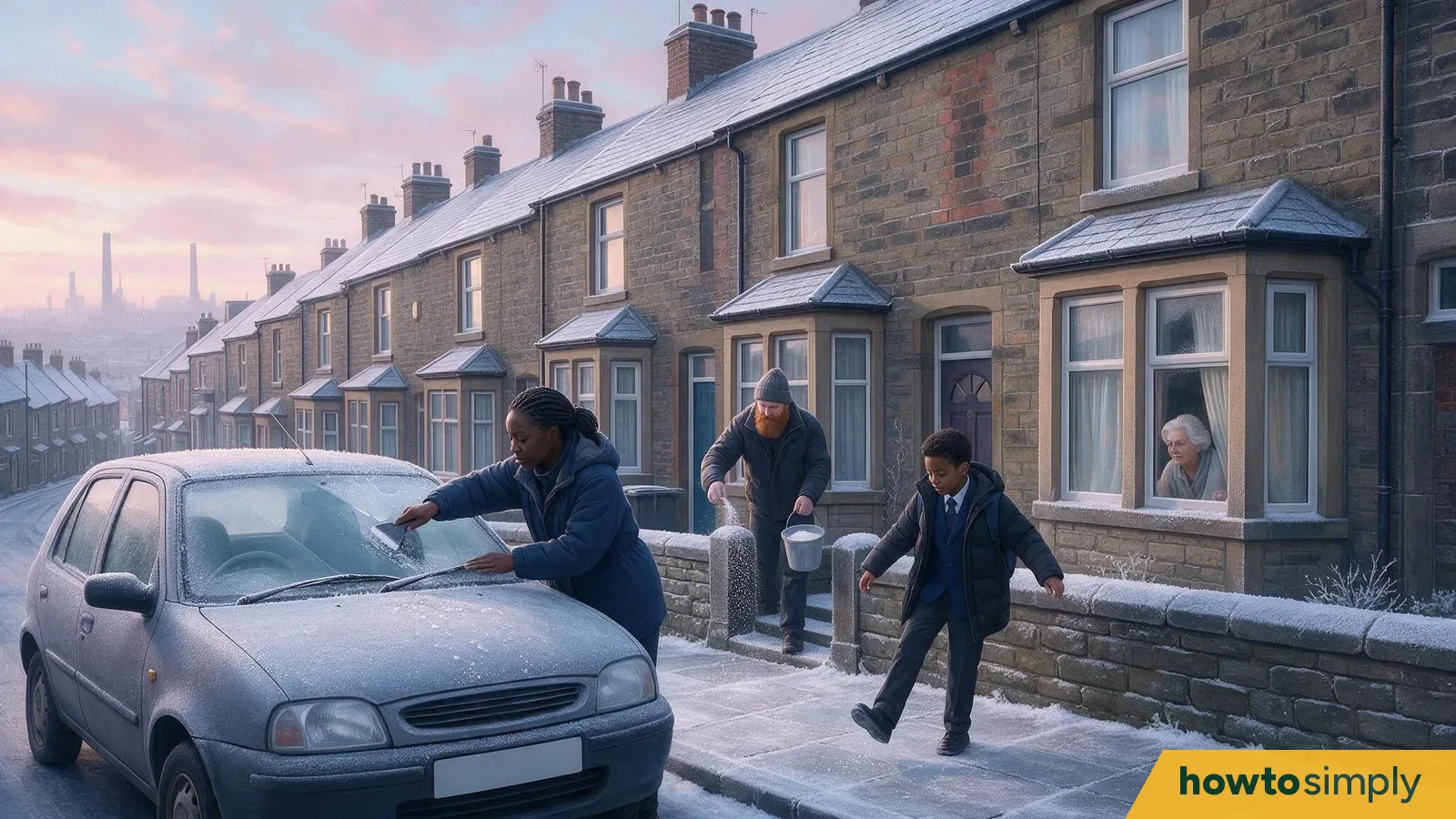
It's 6.20am on a steep terraced street, and the whole road looks like a frosted cake. Funmi has a 7am shift. Her car is a white lump. Callum is hunting for the de-icer he swore he bought last year, and Tayo wants to know if he can "skate" to school. (He can't, and there's a separate guide for that: how to walk on ice without falling.)
This guide is about the drive. The Highway Code warns that in icy and snowy weather your stopping distance can be ten times what it is on a dry road. Here are 18 steps, from the night before to getting unstuck, using the Highway Code and the Royal Society for the Prevention of Accidents (RoSPA). The rules quoted are for Great Britain. This is general information, not legal advice.
Before you set off
1. Check the forecast, then ask if you really need to go
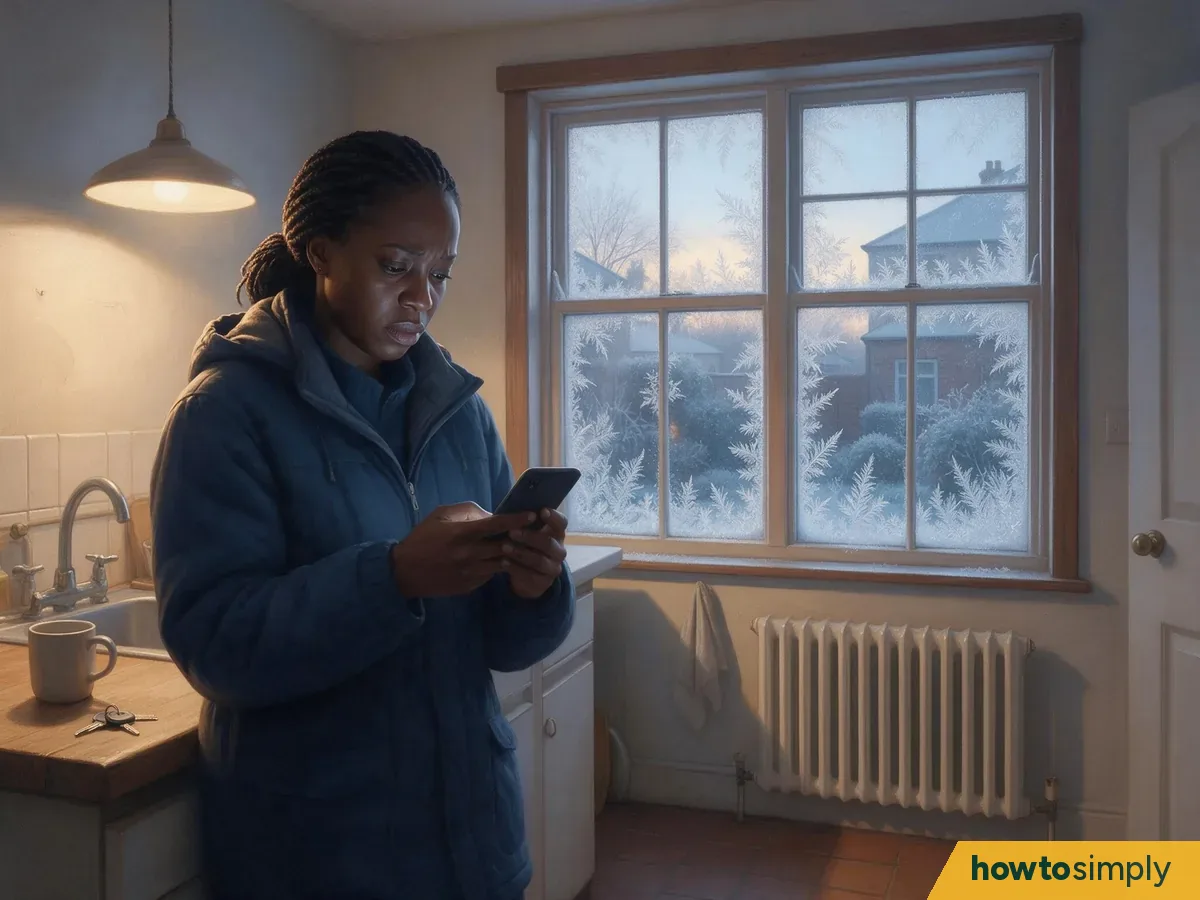
The Highway Code tells drivers to check the local forecast for ice and snow warnings in winter, and not to drive in those conditions unless the journey is essential. If it is, allow more time and take great care.
2. Check your winter kit is in the boot
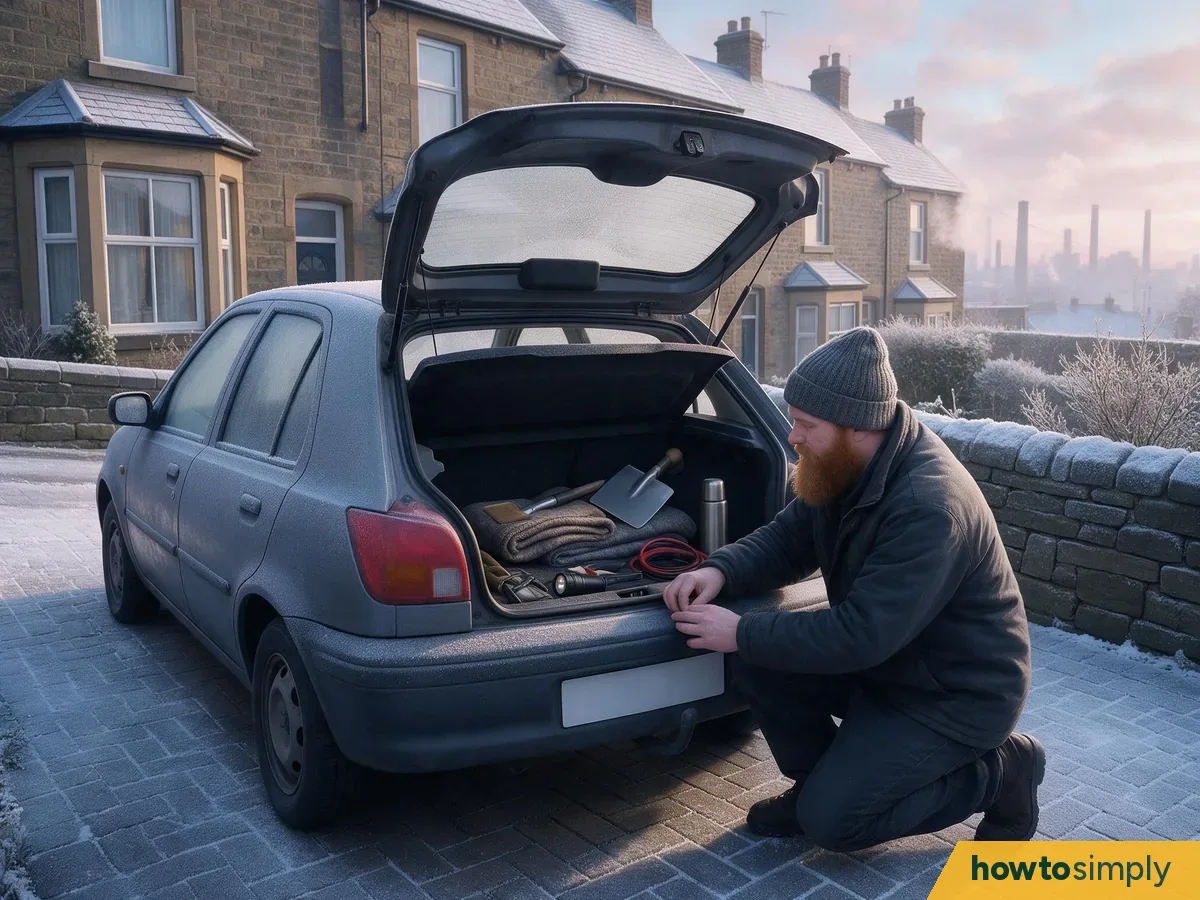
The Highway Code's list: de-icer and an ice scraper, a torch, warm clothing and boots, a first aid kit, jump leads, a shovel, a warm drink and emergency food. RoSPA adds a fully charged phone. Callum found the de-icer. It had been in the boot all along.
3. Check your tyres
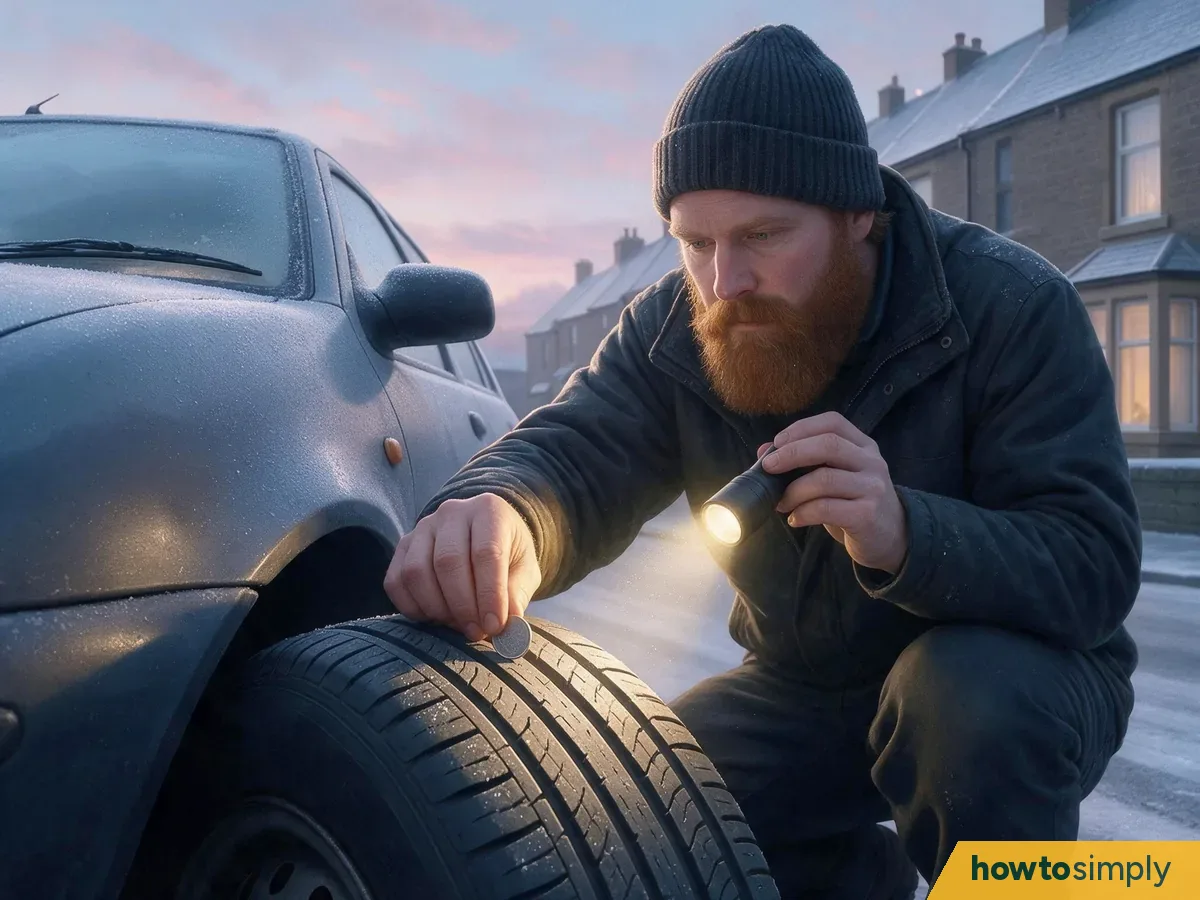
Cars must have at least 1.6mm of tread across the central three-quarters of the tyre and all the way round, and tyres must be at the pressure in your handbook, the Highway Code says. RoSPA adds that more than 3mm gives much shorter braking distances in the wet, and reminds you to check the spare too. A cheap tread-depth gauge gives you an exact reading.
4. Clean the lights and fill the screen wash
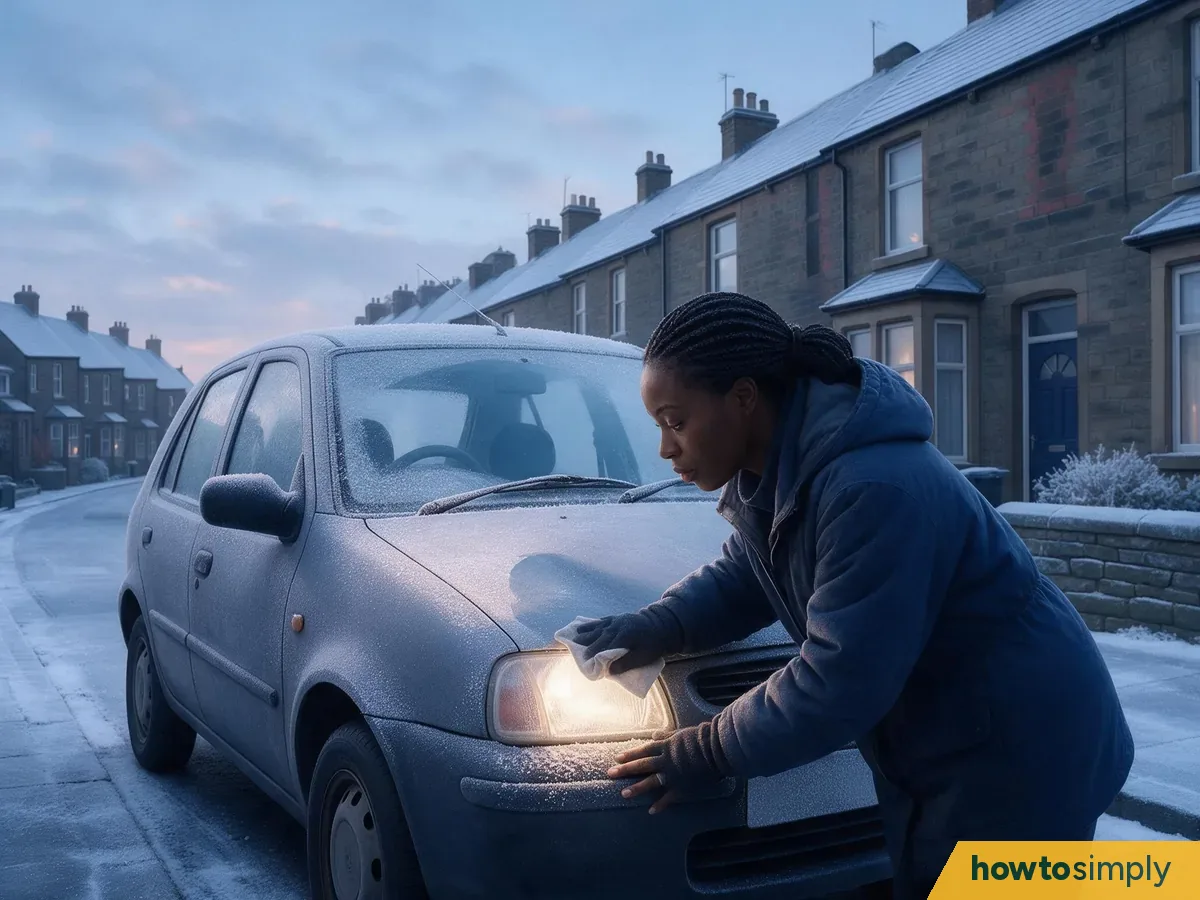
Your lights must be clean, the Highway Code says. RoSPA's winter checks add that lights should be working, the battery charged, the wipers and windows clean and the washer bottle filled with screen wash mixed to the right strength so it doesn't freeze.
5. Clear every window and the roof (this one is the law)
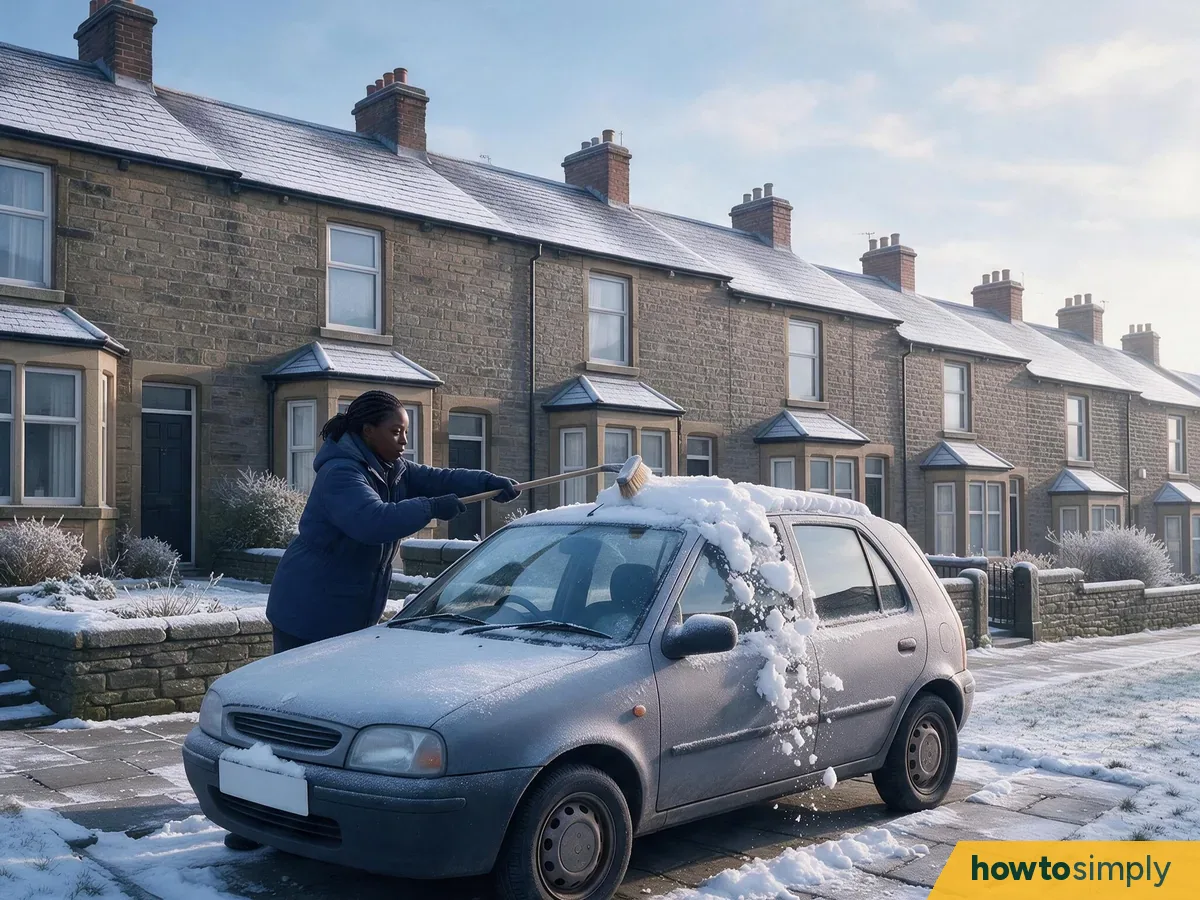
Under the Highway Code you must be able to see, so you must clear all snow and ice from all your windows. Your number plates must be clearly visible and legible. It also says to clear the mirrors and remove any snow that might fall off into the path of other road users, which includes the slab on the roof.
Try saying (to yourself, at 6.25am): "Five more minutes of scraping beats one minute of not seeing."
6. Demist properly before you pull away
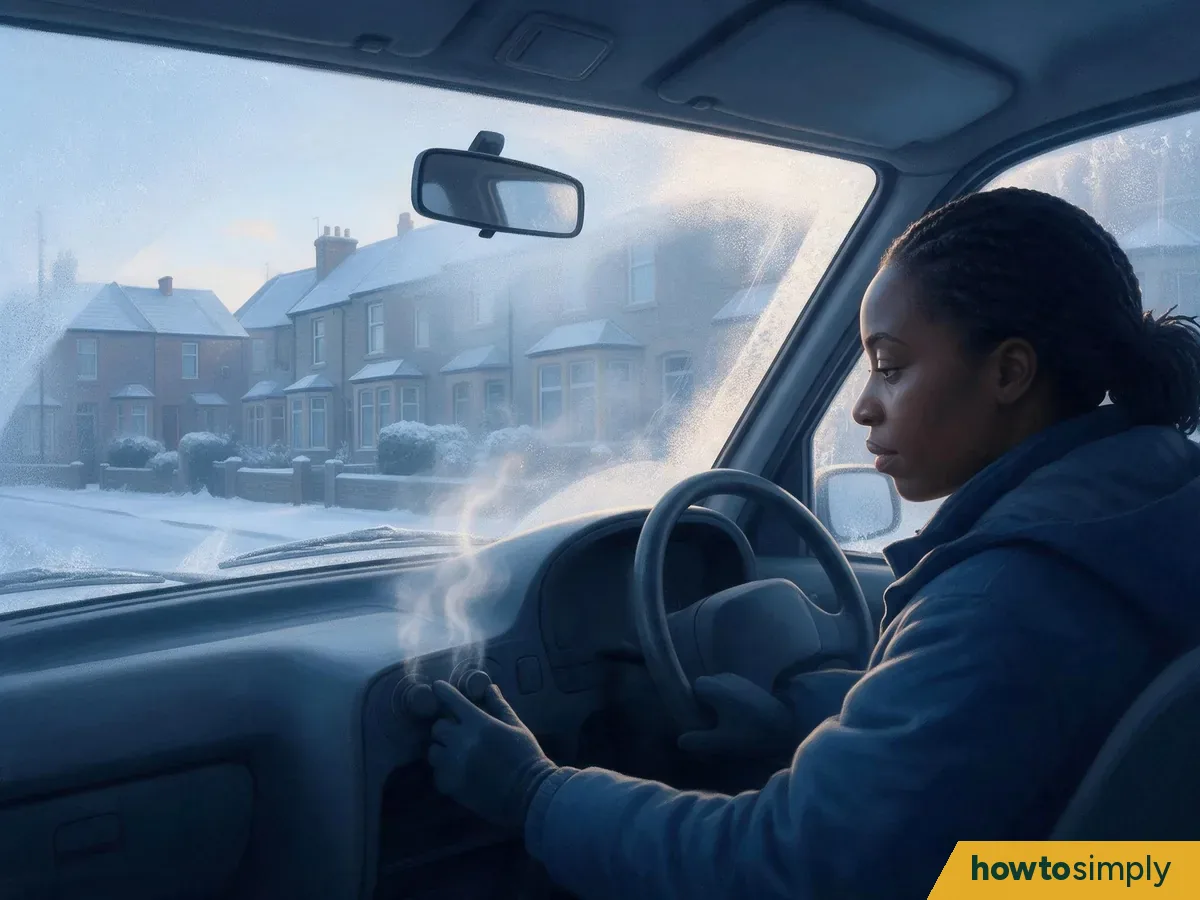
The Highway Code says to demist the windows thoroughly. RoSPA's tip: make sure the heater is blowing warm air before you set off, because it keeps the windscreen clear once you're moving. Stay with the car while it warms up.
7. Listen to the travel news, and tell someone your route
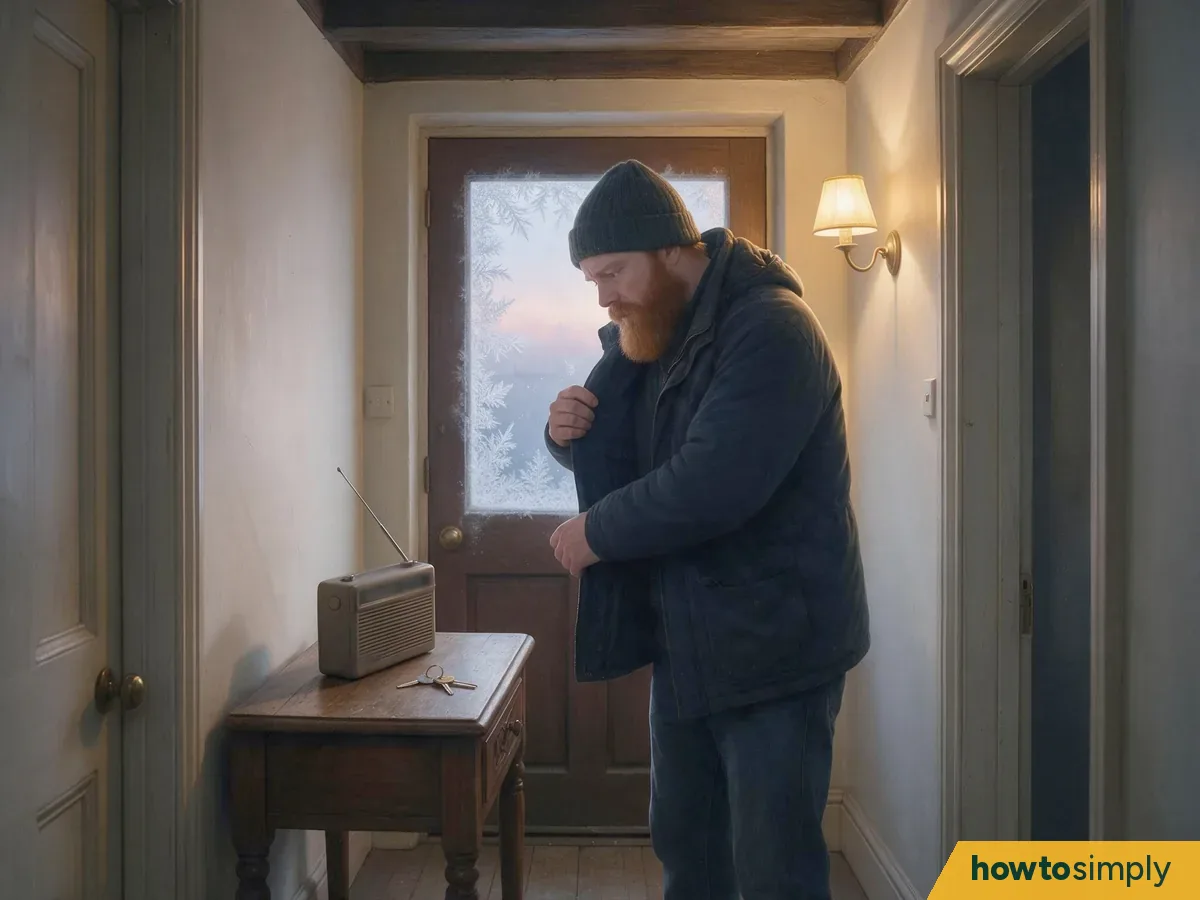
Check your planned route is clear and that no more snow is forecast, the Highway Code says. RoSPA suggests listening to local travel bulletins for the areas you'll drive through, telling someone where you're going and when you expect to arrive, and keeping the fuel tank near full.
Behind the wheel
8. Leave a gap that feels ridiculous
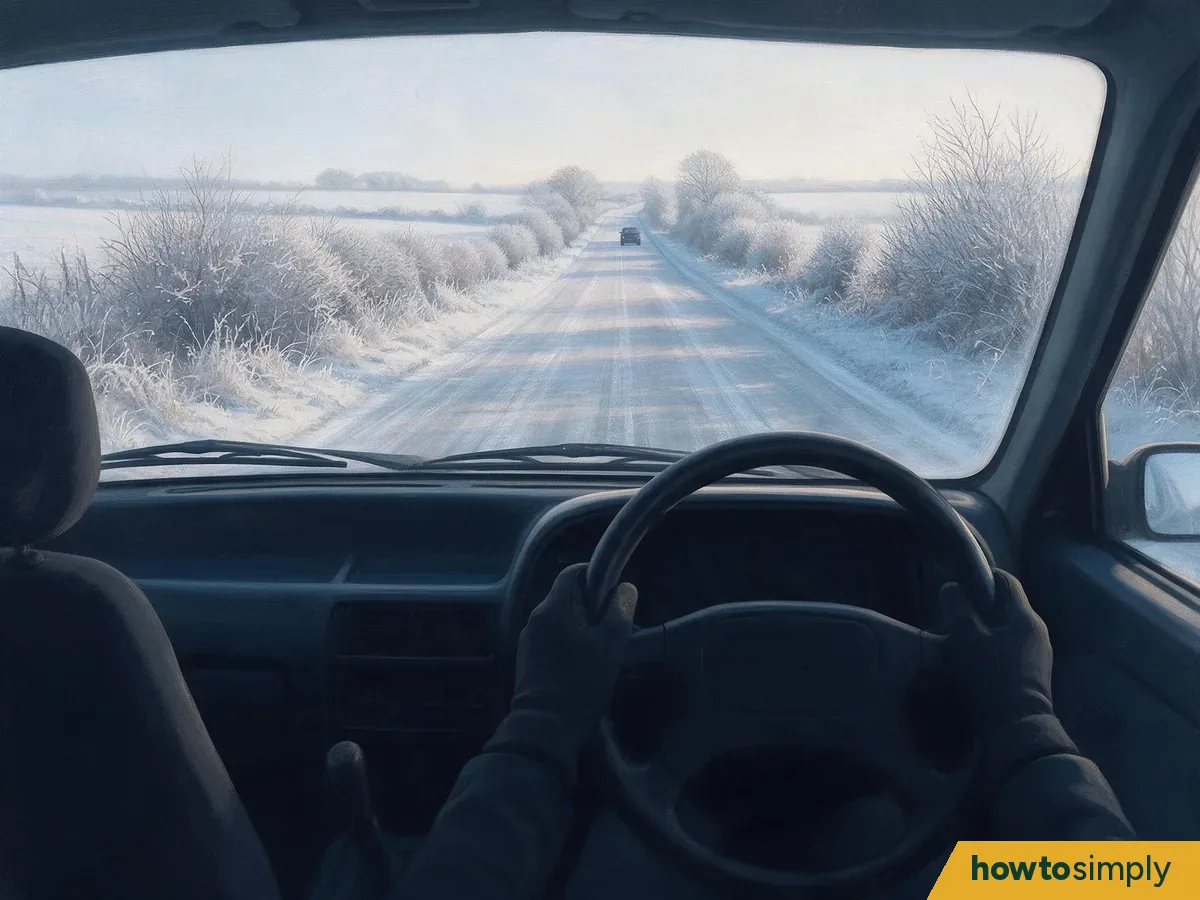
Keep well back from the road user in front, because stopping distances can be ten times greater than on dry roads, the Highway Code warns. RoSPA puts braking distances on icy roads at up to ten times normal. If the gap feels silly, it's probably about right.
9. Do everything gently
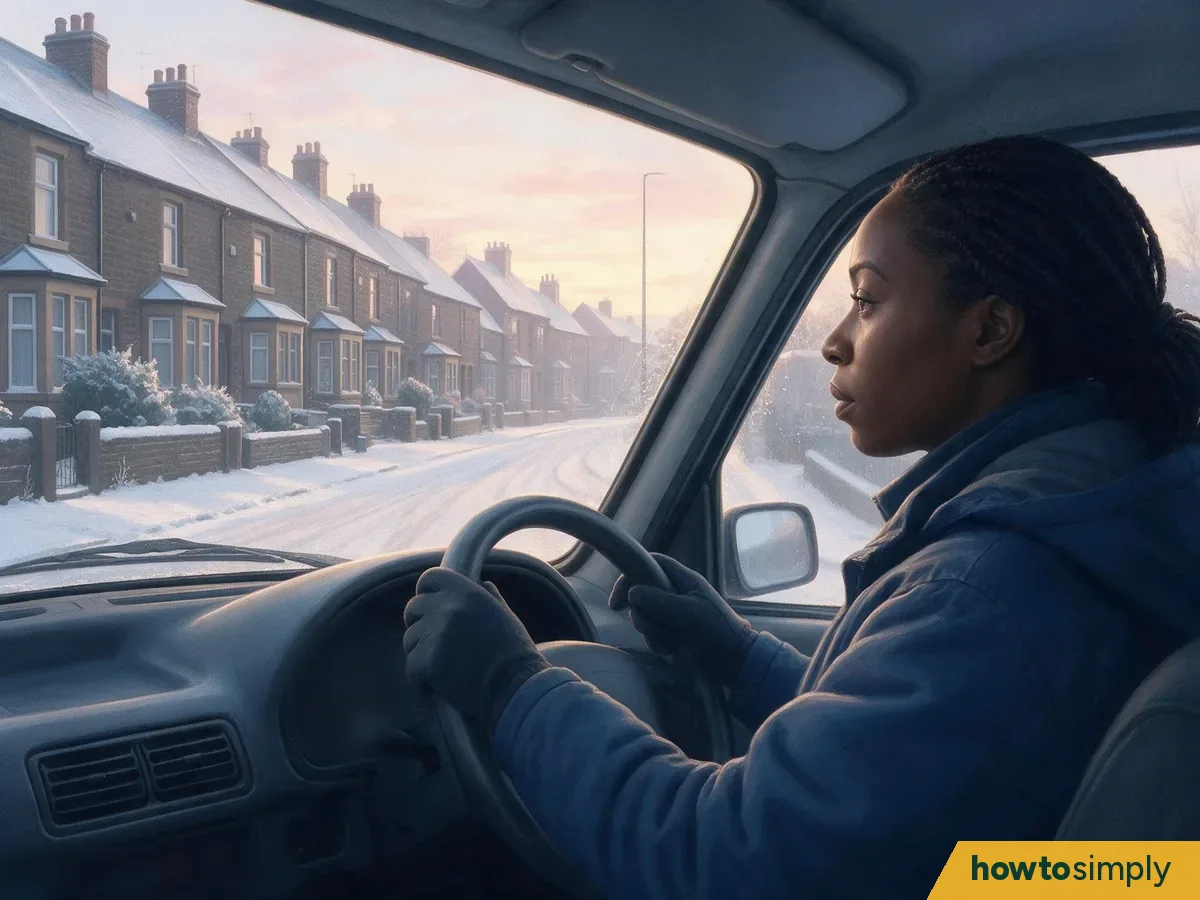
Avoid sudden actions on ice, the Highway Code says: drive at a slow speed in as high a gear as possible, and accelerate and brake very gently. RoSPA's key tips add smooth steering and no harsh braking. Drive as if there's a full cup of tea on the dashboard.
10. Brake before the bend, not in it
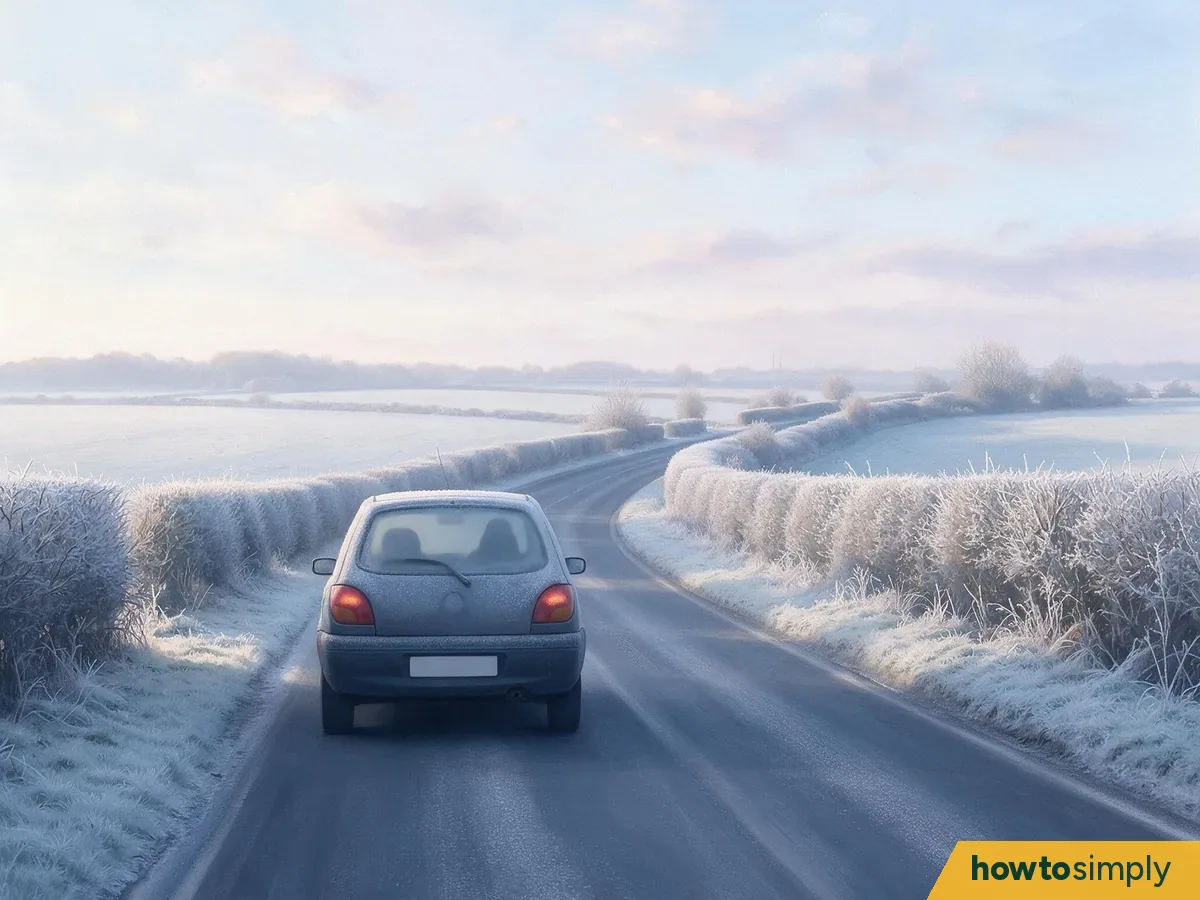
You're most likely to lose control on bends, the Highway Code says. Brake progressively on the straight before you reach the bend, then steer smoothly round it. RoSPA also says to slow down well before junctions.
11. Expect ice under bridges and in shade
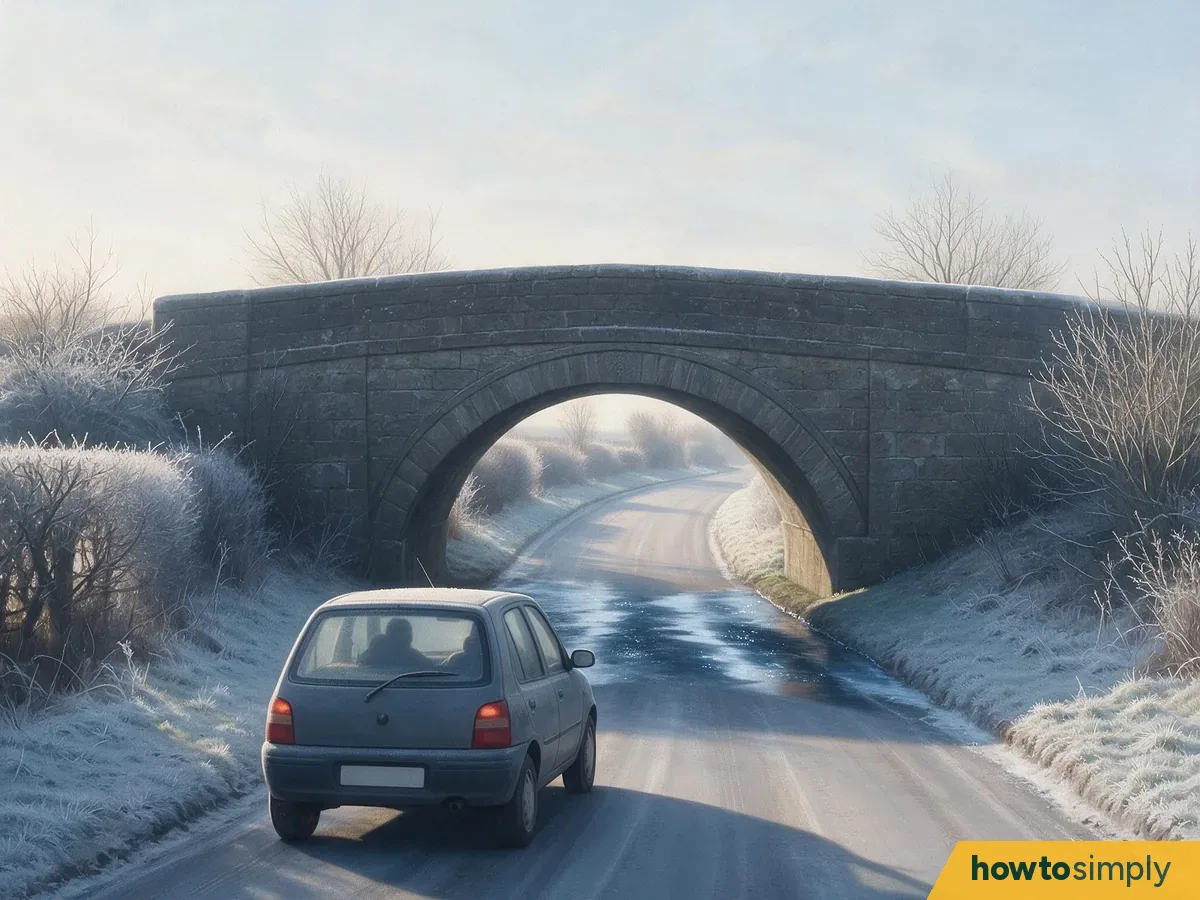
RoSPA warns that roads can look clear while isolated icy patches remain, especially under bridges, in shaded areas and on untreated roads. The Highway Code adds that conditions can change over short distances, so drive with care even on roads that have been gritted.
12. Know the signs of black ice
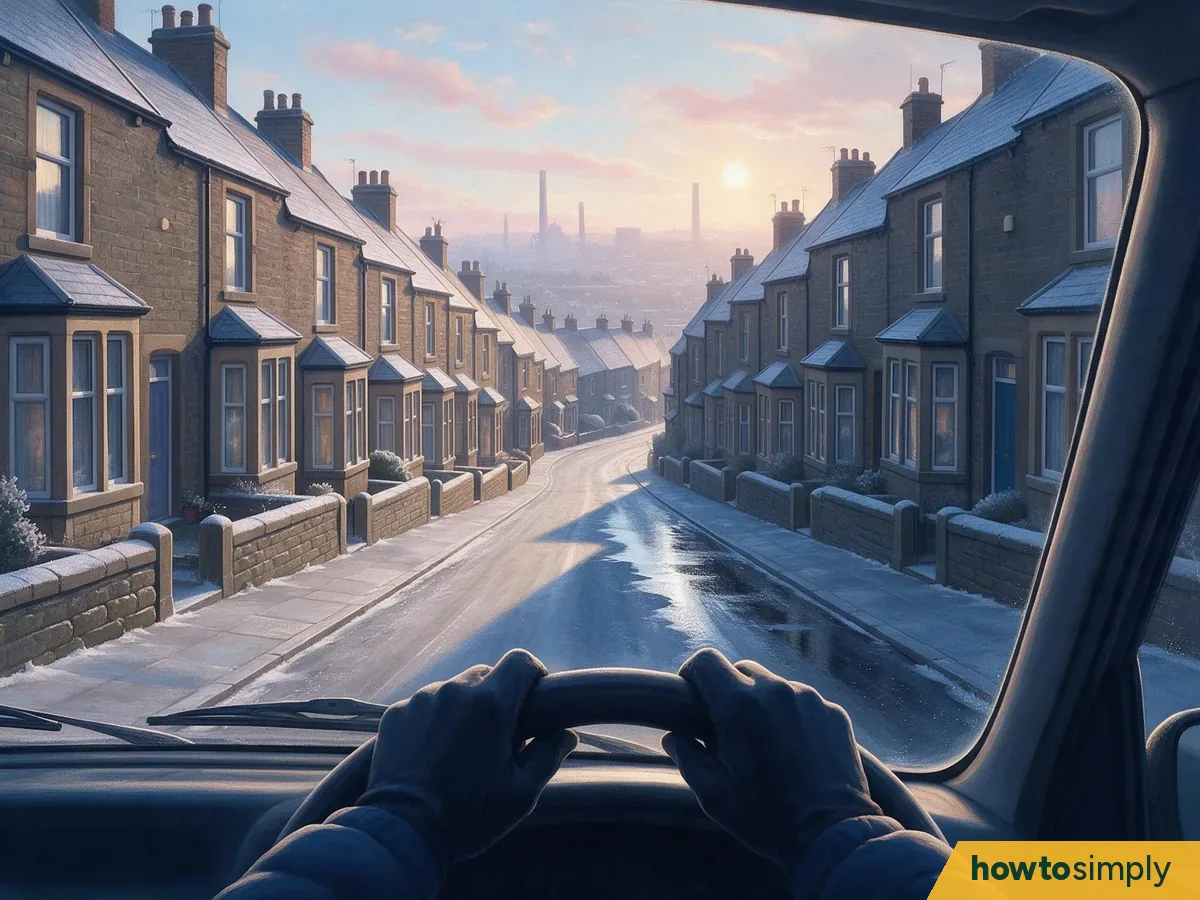
Two clues from the Highway Code: if the steering suddenly feels unresponsive, you may be on ice and losing grip; and on ice your tyres make almost no noise. If the road goes quiet and light under your hands, don't brake hard or swing the wheel. Ease off and keep the steering straight and gentle.
13. Stay well back from gritters
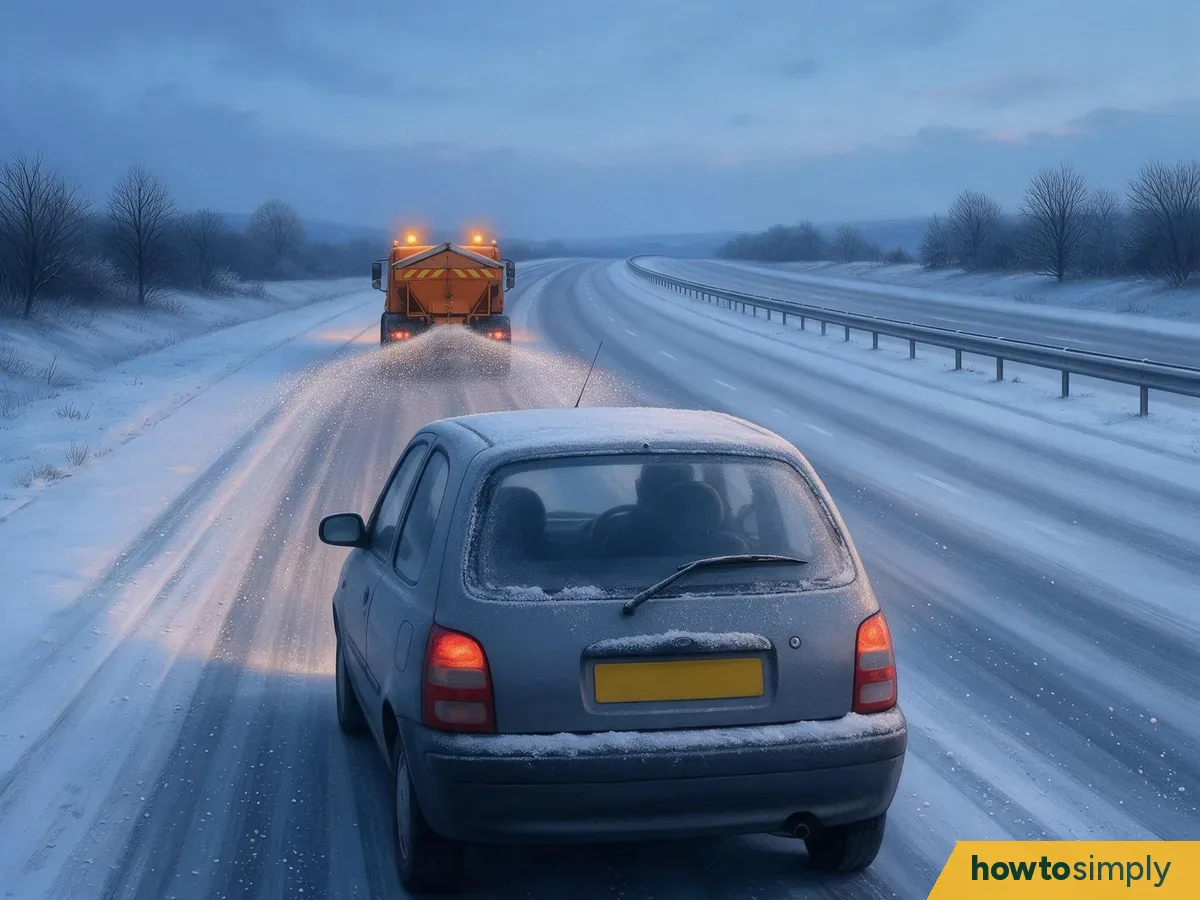
Take care when overtaking vehicles spreading salt or other de-icer, the Highway Code says, particularly on a motorbike or bicycle. Hanging back also keeps salt spray off your windscreen.
14. Never overtake a snowplough on an uncleared lane
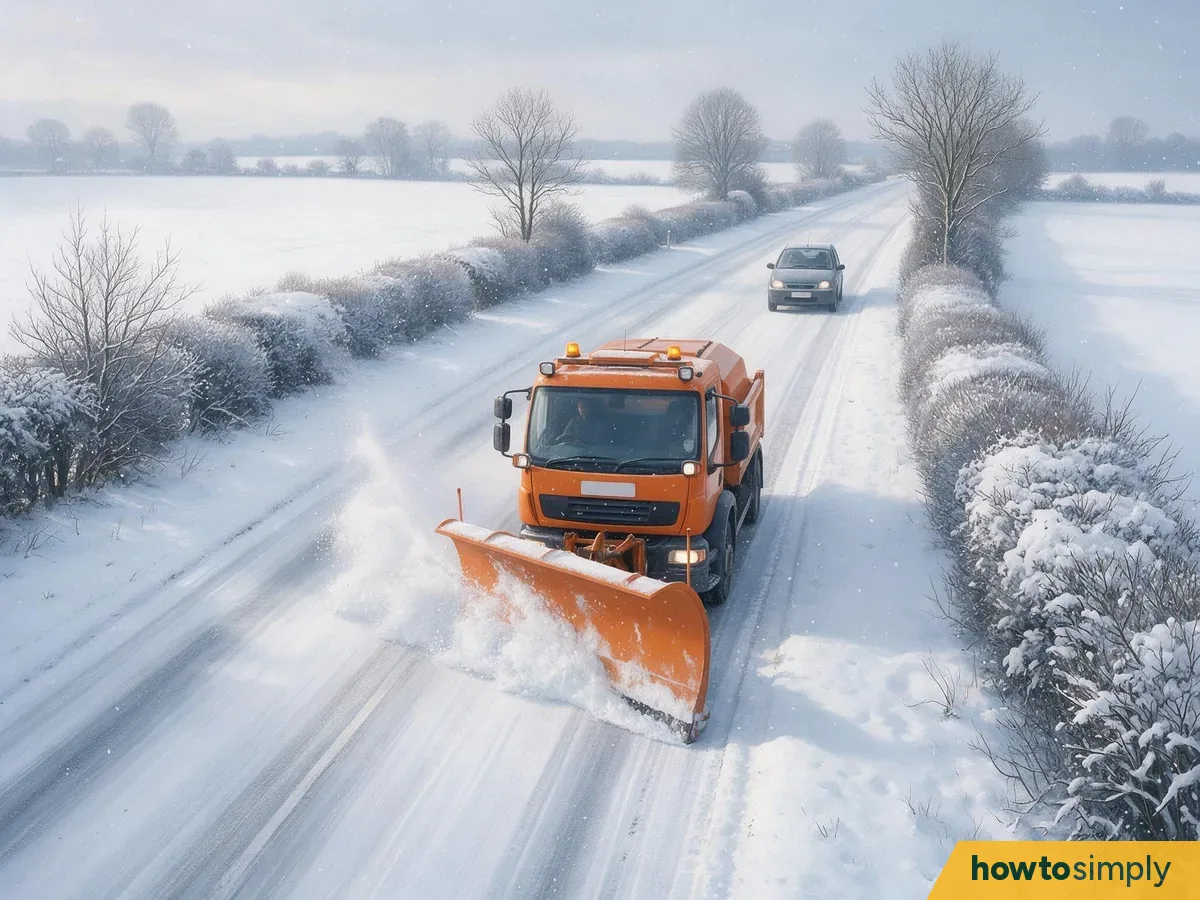
Snowploughs can throw snow out on both sides, the Highway Code warns. Don't overtake one unless the lane you intend to use has been cleared.
15. If the car skids, ease off and steer into it
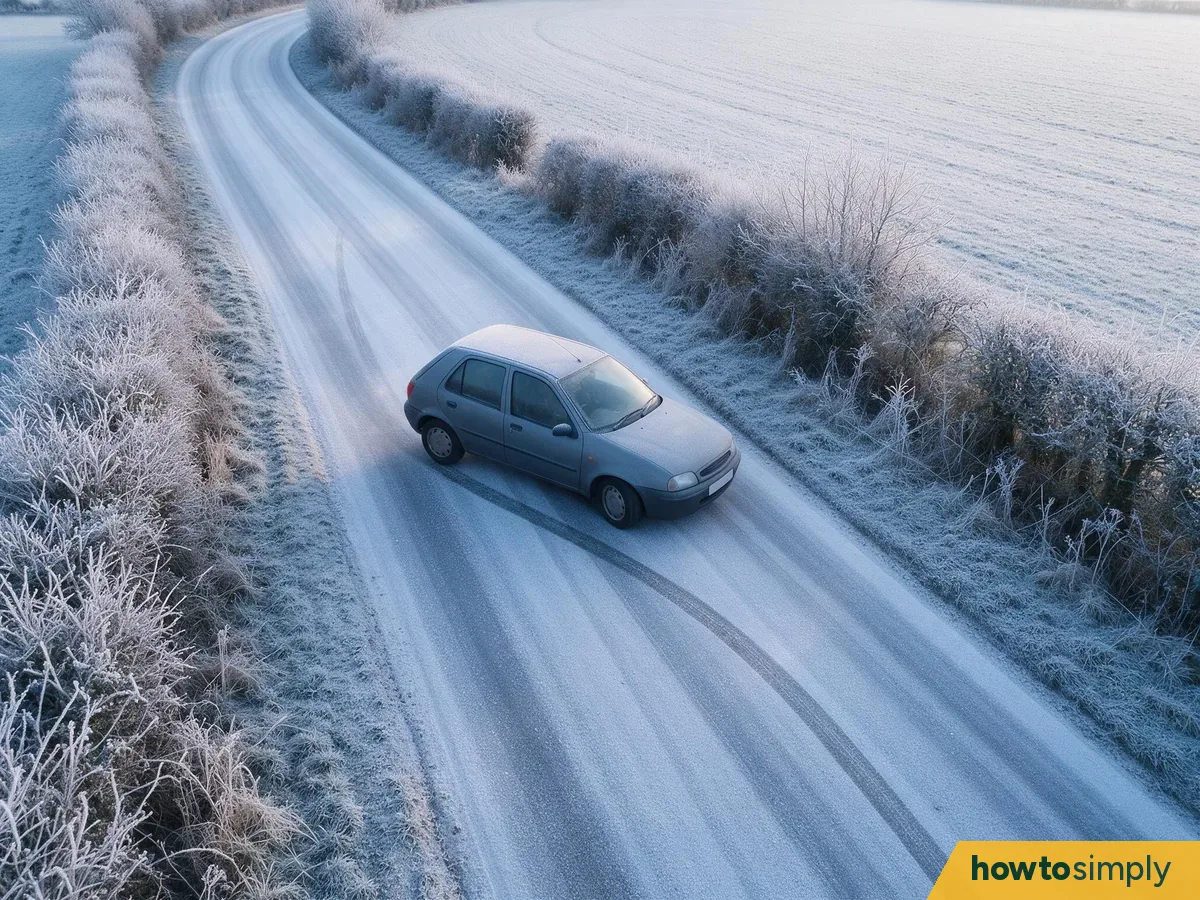
Skids are usually caused by braking, accelerating or steering too harshly, or by driving too fast for the conditions, the Highway Code says. Remove the cause: release the brake pedal fully or ease off the accelerator. Then turn the steering wheel in the direction of the skid. If the back of the car slides to the right, steer right; if it slides left, steer left.
16. In an emergency stop, brake firmly and hold it
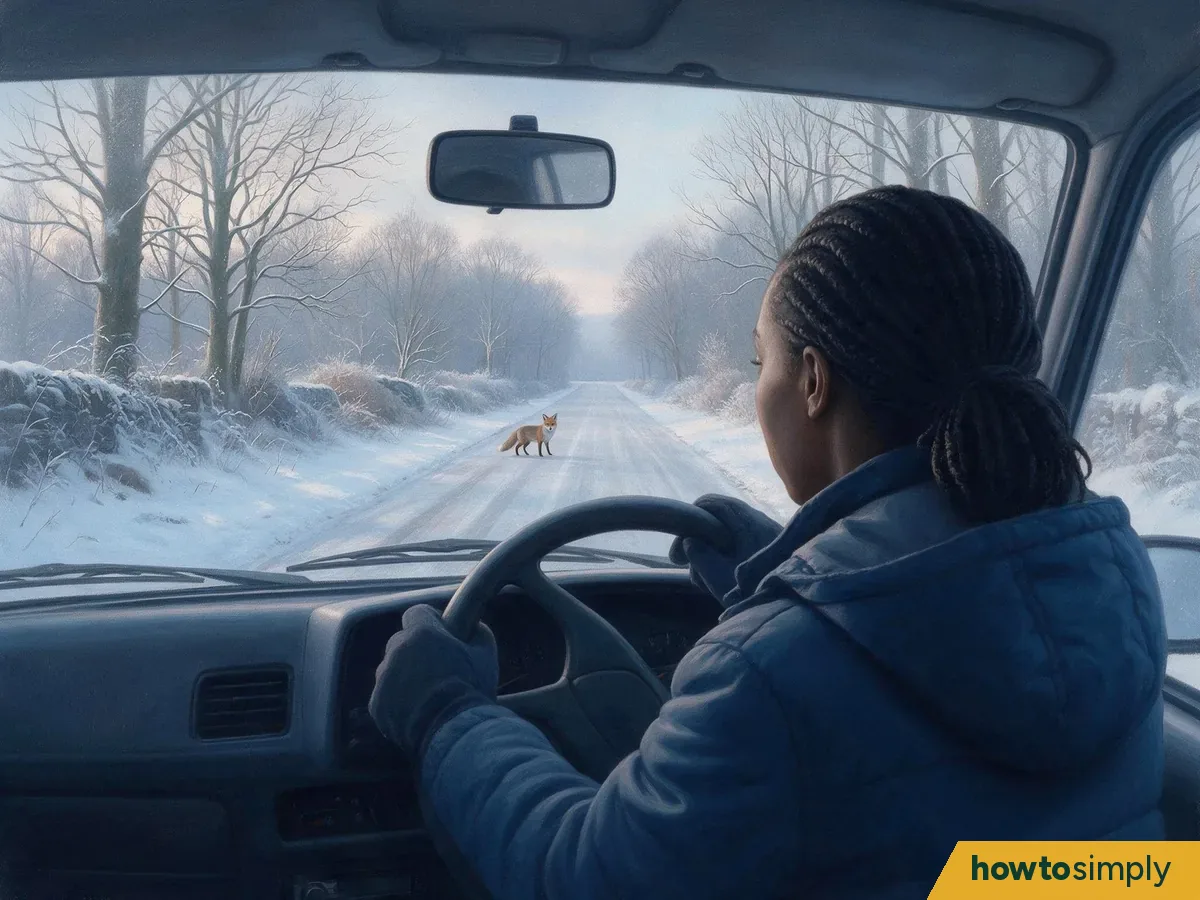
If your car has anti-lock brakes (ABS), the Highway Code says to follow your handbook, but in an emergency brake firmly and don't release the pressure until you've slowed down. ABS should let you keep steering, but don't assume it will stop you in a shorter distance. On ice, the real answer is the gap from step 8.
If it goes wrong
17. Stuck? Rock gently, don't spin
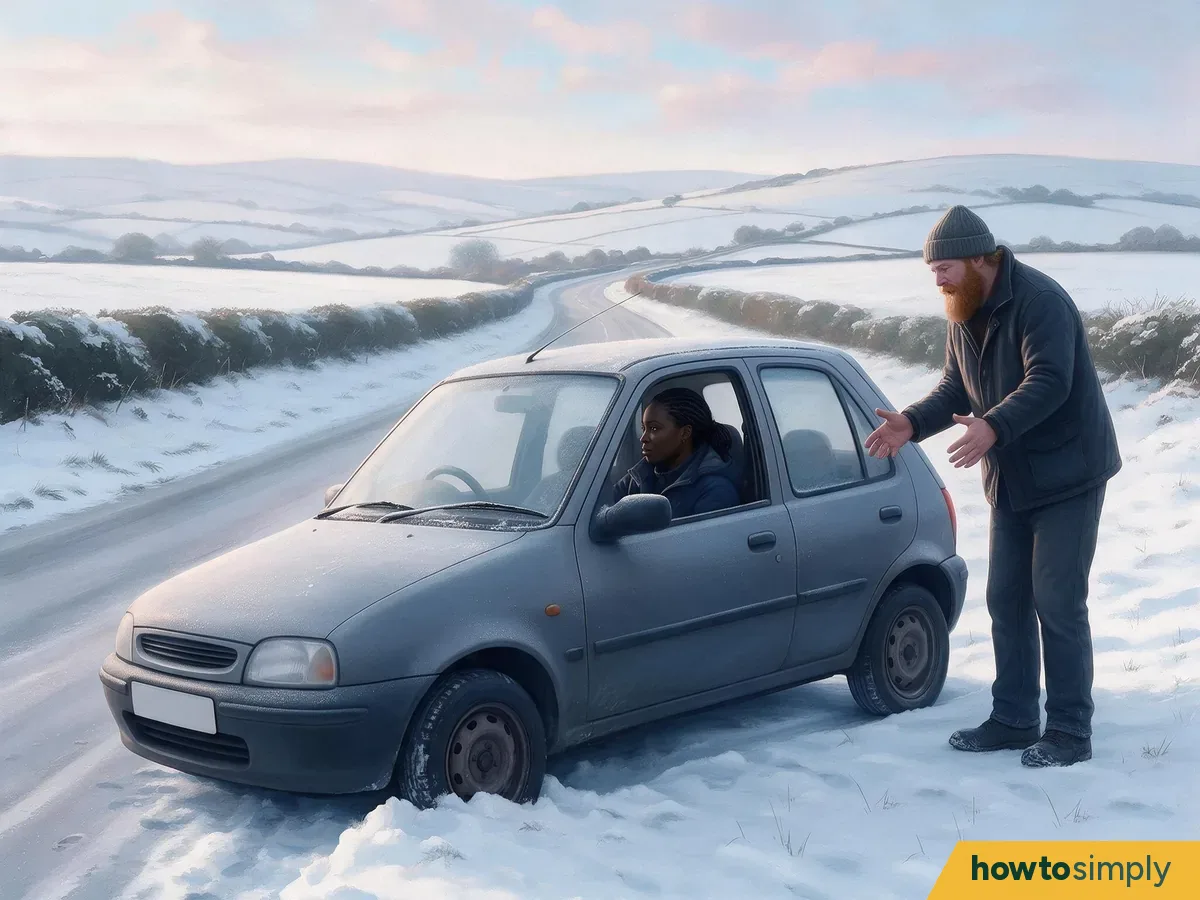
Spinning the wheels usually makes the rut worse, RoSPA says. Instead, rock the car gently backwards and forwards in the highest gear you can. If that doesn't work, get the shovel out or ask someone for a push, keeping everyone clear of the wheels.
18. In a snowdrift, stay with the car
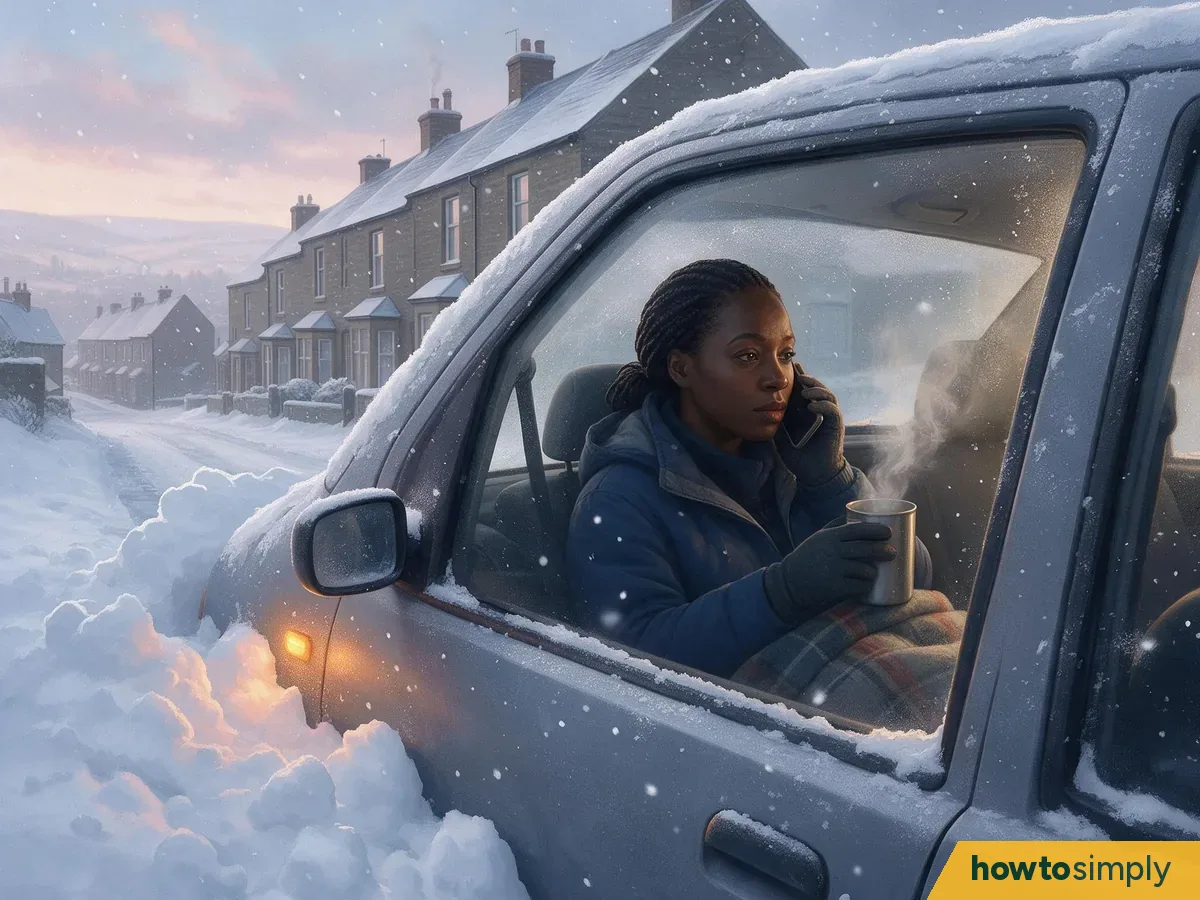
If you're trapped in a snowdrift, RoSPA says to stay with your vehicle, call your breakdown service or the emergency services, and let help come to you. Don't run the engine to keep warm. Use the blanket, warm clothes and flask from step 2 instead.
Skids and brakes at a glance
| Situation | Do this | Source |
|---|---|---|
| Back of the car slides right | Release the brake or ease off the accelerator, then steer right | Highway Code rule 119 |
| Back of the car slides left | Release the brake or ease off the accelerator, then steer left | Highway Code rule 119 |
| Emergency stop, car has ABS | Brake firmly and keep the pressure on until you've slowed | Highway Code rule 120 |
| Steering feels light or unresponsive | You may be on ice: no sudden actions | Highway Code rule 231 |
| Wheels spinning in snow | Rock gently in the highest practical gear | RoSPA |
Icy-road rules at a glance
| What | The rule | Source |
|---|---|---|
| Windows | You must clear all snow and ice from all windows | Highway Code rule 229 |
| Lights and plates | Lights must be clean; number plates clearly visible and legible | Highway Code rule 229 |
| Tyre tread (cars) | At least 1.6mm across the central three-quarters | Highway Code annex 6 |
| Stopping distance on ice | Can be up to ten times greater than on dry roads | Highway Code rule 230; RoSPA |
| Driving style | Slow, highest gear possible, very gentle acceleration and braking | Highway Code rule 231 |
| Bends | Brake on the straight before the bend | Highway Code rule 231 |
| Hidden ice | Under bridges, in shade, on untreated roads | RoSPA |
| Snowploughs | Don't overtake unless your lane has been cleared | Highway Code rule 230 |
| Snowdrift | Stay with the car, call for help, don't run the engine to keep warm | RoSPA |
Source: GOV.UK, The Highway Code, rules 119 to 120, 228 to 231 and annex 6 (read 9 November 2026); RoSPA, Winter driving safety and Road safety factsheet: Winter driving tips (read 9 November 2026).
Icy-morning checklist
- I've checked the forecast and decided the journey is essential.
- The kit is in the boot and my phone is charged.
- Tyres, lights and screen wash are checked.
- Every window, mirror, light and plate is clear, and the roof snow is off.
- Someone knows my route and when I'll arrive.
- I'm leaving a huge gap and doing everything gently.
If someone is hurt
- If anyone is injured in a crash, or you're stuck and in danger, call 999.
- If you're stranded but safe, stay with the car and call your breakdown service.
Your turn: what's the one thing you always do before driving on an icy morning? Tell us in the comments. Someone scraping a peephole right now needs it.
Questions readers ask
How much longer does it take to stop on ice?
The Highway Code says stopping distances can be ten times greater in icy and snowy weather than on dry roads, so leave a far bigger gap than usual to the vehicle in front.
What do I do if my car skids on ice?
The Highway Code says to remove the cause: release the brake pedal fully or ease off the accelerator, then steer in the direction of the skid. If the back of the car slides to the right, steer right.
Should I pump the brakes on ice if my car has ABS?
No. The Highway Code says that in an emergency in a car with anti-lock brakes you should brake firmly and keep the pressure on until you have slowed down. ABS helps you keep steering, but it does not mean you will stop in a shorter distance.
Is it illegal to drive with a frosty windscreen?
Yes. Under the Highway Code you must be able to see, so you must clear all snow and ice from all your windows, and your lights must be clean and number plates legible before you set off.
What should I do if I get stuck in a snowdrift?
RoSPA says stay with your vehicle, call your breakdown service or the emergency services and wait for help. Do not run the engine to keep warm.
Did this solve the problem?
What needs work?
What did you think?
Reaction counts are loading.
Sources
We use primary, official and specialist sources appropriate to the topic.
- GOV.UK: The Highway Code, Driving in adverse weather conditions (226 to 237)
- GOV.UK: The Highway Code, General rules, techniques and advice for all drivers and riders (103 to 158)
- GOV.UK: The Highway Code, Annex 6: vehicle maintenance, safety and security
- RoSPA: Winter driving safety
- RoSPA: Road safety factsheet, Winter driving tips (PDF)