Chilblains: how to ease them, and how to stop them coming back
Reviewed by Dr Sumbal Safi Ullah✓, MBBS
By Abu Bakar Saadat5 min readPublisher: Saadat Rafiq
Last updated: 30 October 2026References
 Illustration
On this page 11 sections
In short
Chilblains are itchy, sore patches on fingers or toes after cold or damp. Dry and warm your skin slowly, never on a radiator, don't scratch, and keep warm. Most go in 2 to 3 weeks. See a GP if they don't, or if you have diabetes.
At a glance
- Where
- Mostly fingers and toes; also face, ears, legs (NHS, AOK)
- When
- A few hours after being in the cold (NHS)
- Warm up
- Dry the skin and warm it slowly (NHS)
- Never
- Radiator, hot water, scratching (NHS)
- See a GP
- Not better in 2 to 3 weeks, pus, fever, diabetes (NHS)
- Checked
- October 2026
Chilblains are small, itchy patches that appear a few hours after you've been in the cold, mostly on fingers and toes (NHS). They usually clear up on their own (NHS), and warming up slowly and dressing warmly can help them heal and stop them coming back (NHS, AOK). UK, German and US advice is side by side in the table near the end.
See a GP if your skin isn't better after 2 to 3 weeks, pus comes out, you have a very high temperature or feel hot, cold or shivery, you keep getting chilblains, or you have diabetes (NHS).
What do you want to do?
Check what it is
Itchy, red or purple, after cold. Start at Check for chilblains.
Ease them now
Dry, warm slowly, don't scratch. Go to Ease them.
Stop them coming back
Warm layers, loose shoes, dry feet. Go to Prevent them.
Check for chilblains
Look for itchy, burning patches on fingers or toes a few hours after the cold.
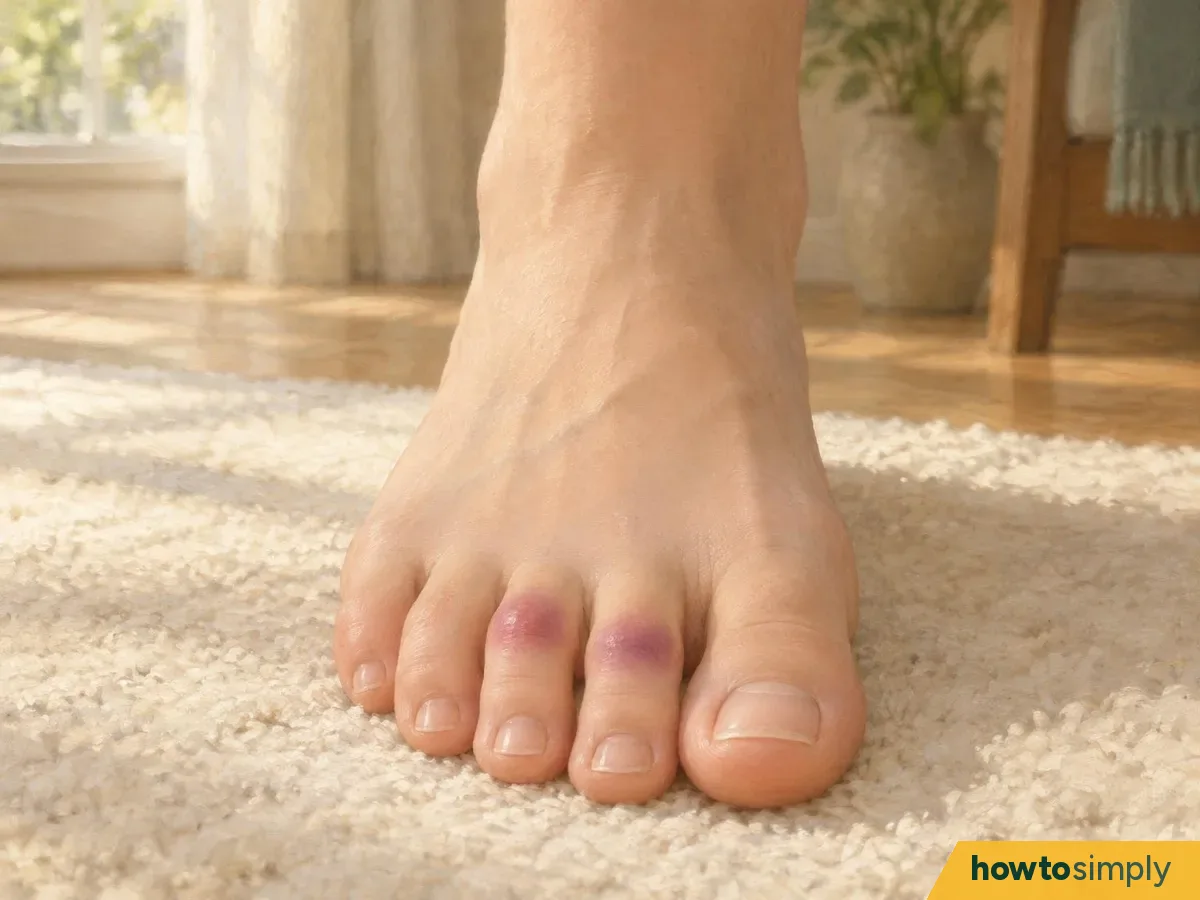
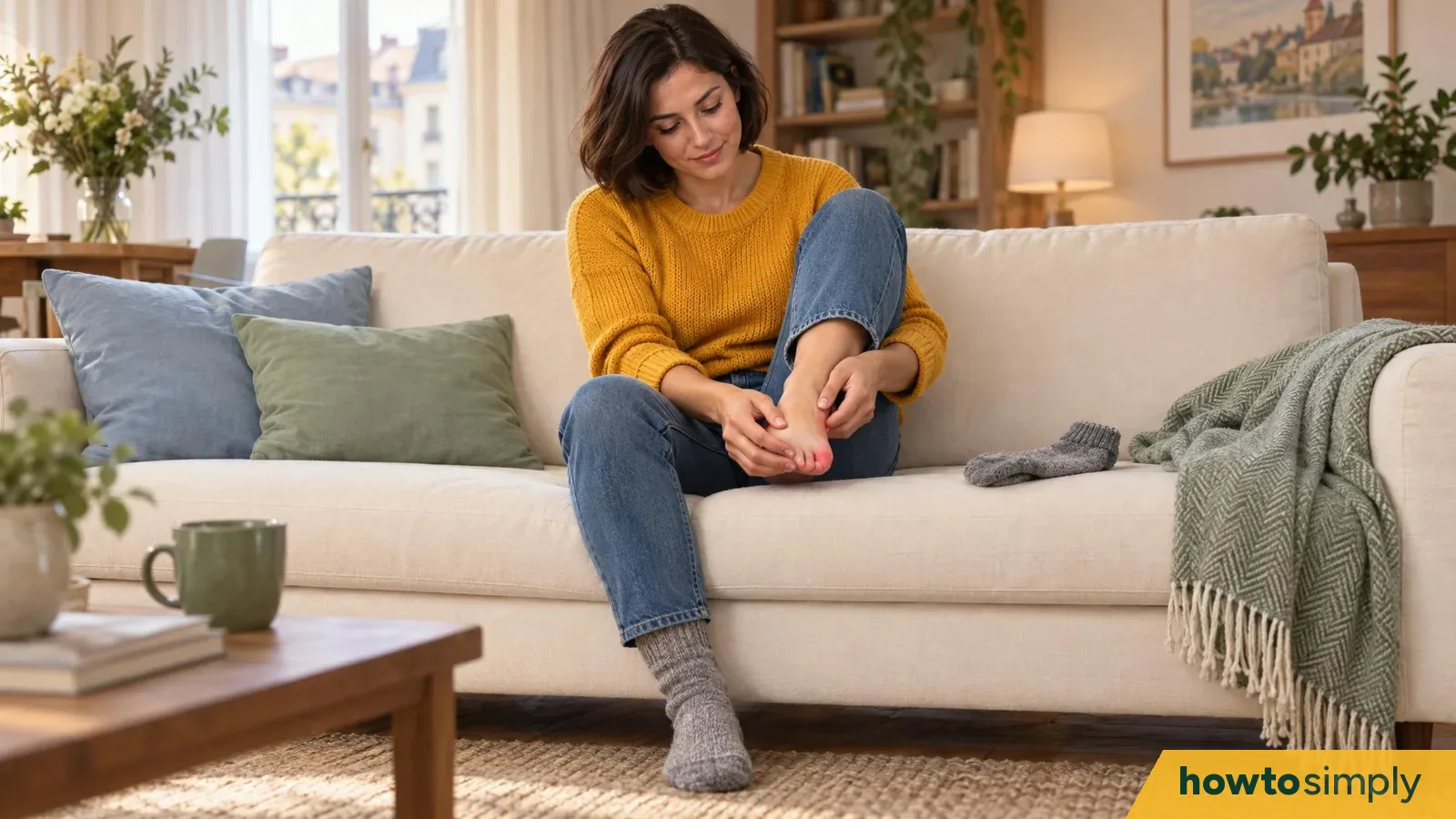
Illustration Chilblains usually appear a few hours after you've been in the cold, mostly on fingers and toes, sometimes on the face and legs. The skin can feel itchy or like it's burning (NHS). AOK adds ear lobes, and describes bluish-red, cushion-like swellings.
Know that the colour can be harder to see on darker skin.

Illustration Fingers or toes may turn red or purple, but redness may be harder to see on brown and black skin (NHS). Swelling, itching and burning are still signs.
Ease them
Come in, dry your skin, and let it warm up slowly.

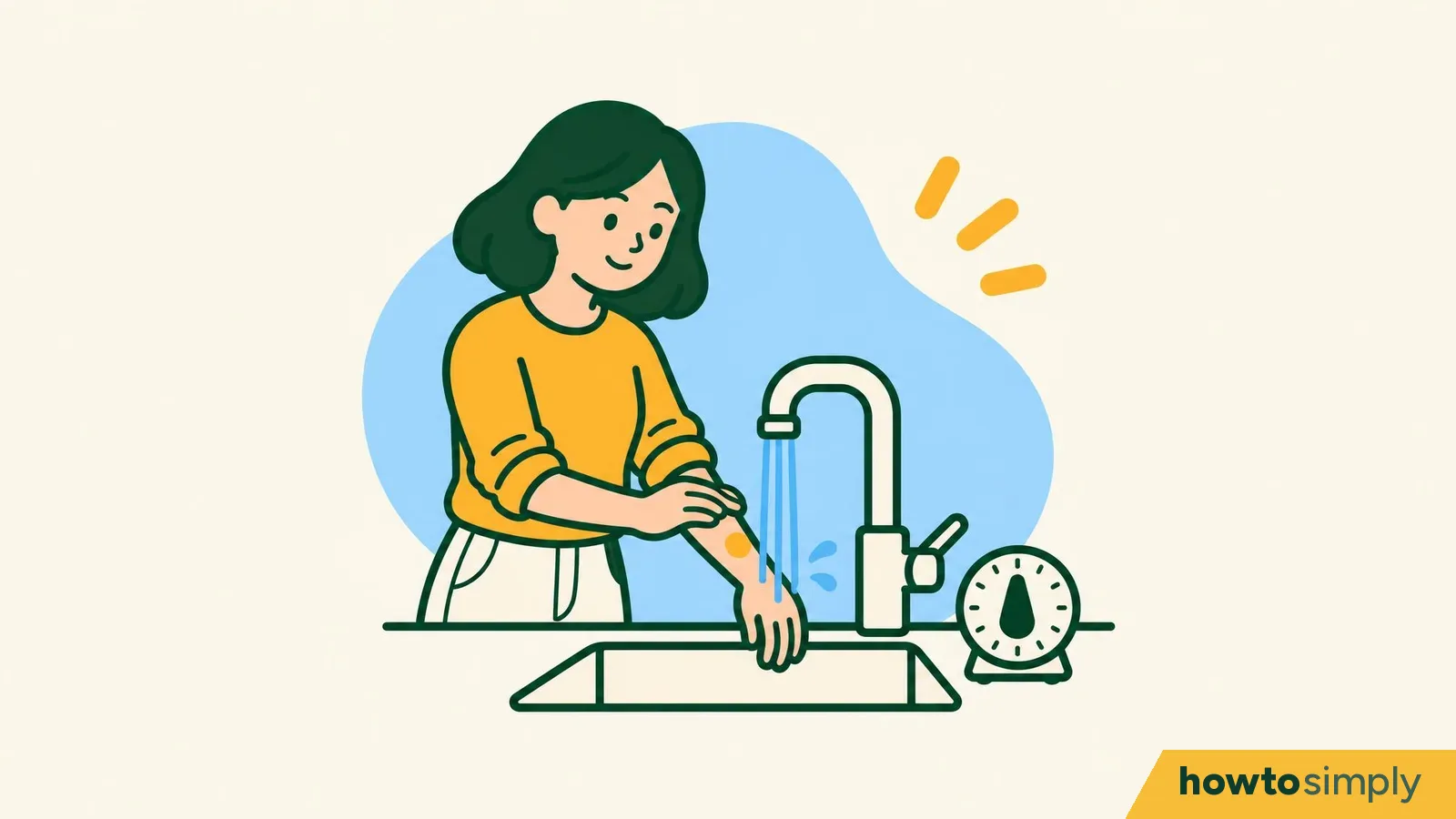
Illustration If you've been out in the cold, dry your skin and warm it slowly (NHS).
Keep your feet and hands away from radiators and hot water.
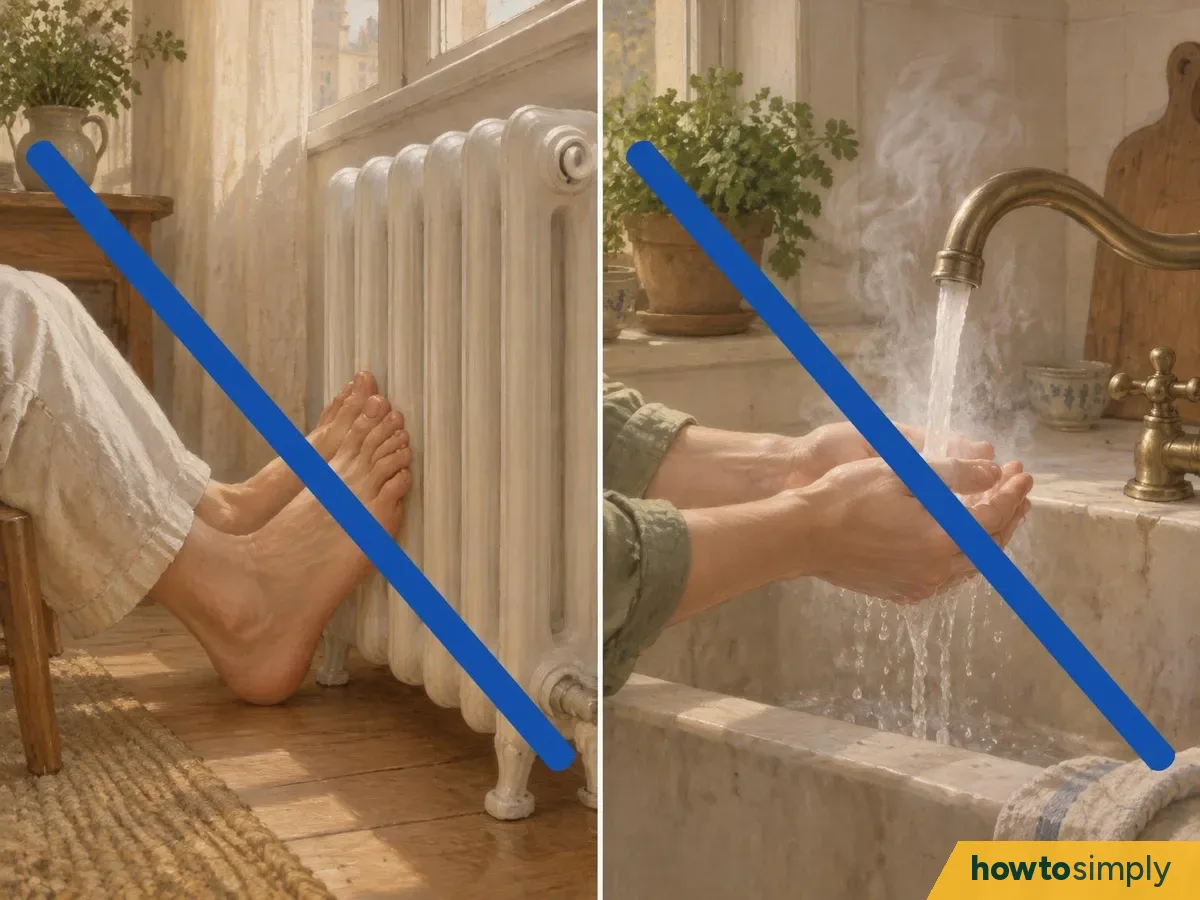
Illustration The NHS says not to warm your hands or feet on a radiator or under hot water. Chilblains happen when the skin's surface vessels widen as you warm up while the deeper ones stay narrow (NHS). Cleveland Clinic allows short soaks in warm, not hot, water.
Don't scratch. Ask a pharmacist for a soothing lotion.
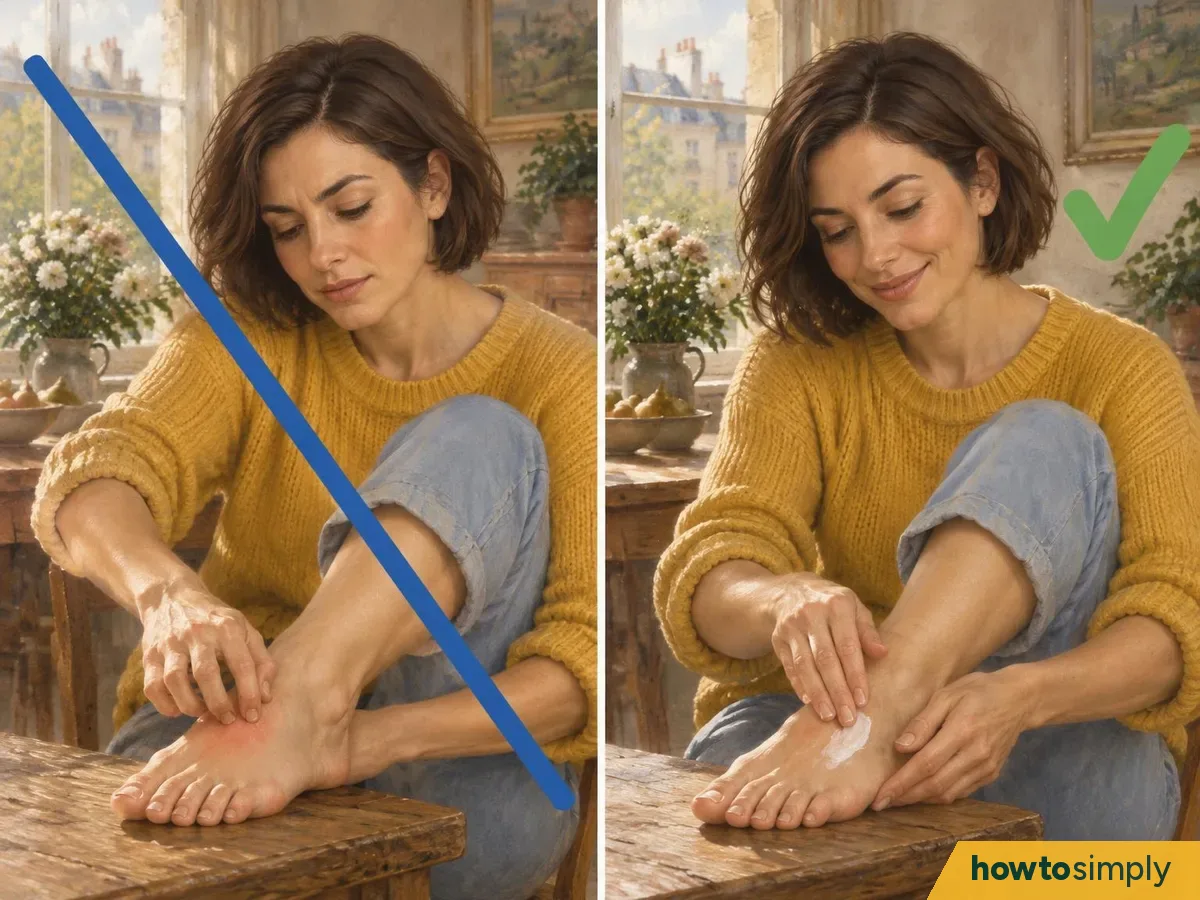
Illustration Don't scratch or pick at the skin (NHS); scratching damages it further (AOK). A pharmacist can suggest a lotion to soothe the itching, and tell you if you need a GP (NHS). AOK says rubbing in wool wax (lanolin) can help keep warmth in, and Cleveland Clinic suggests an unscented moisturiser.
Keep the sore spots covered and warm.

Illustration Protect the skin from cold with breathable wool or cotton socks, gloves, a hat or a scarf (AOK). Keep the whole body warm too (AOK, Cleveland Clinic).
Prevent them
Dress in warm, waterproof layers when it's cold or damp.

Illustration Avoid being out in cold or damp weather where you can. If you go out, wear warm, waterproof clothing, gloves and thick socks (NHS). Several layers keep you warmer than one thick one, and clothes should stay dry (AOK). A hat helps keep your whole body warm (Cleveland Clinic).
Choose shoes that don't pinch your toes.
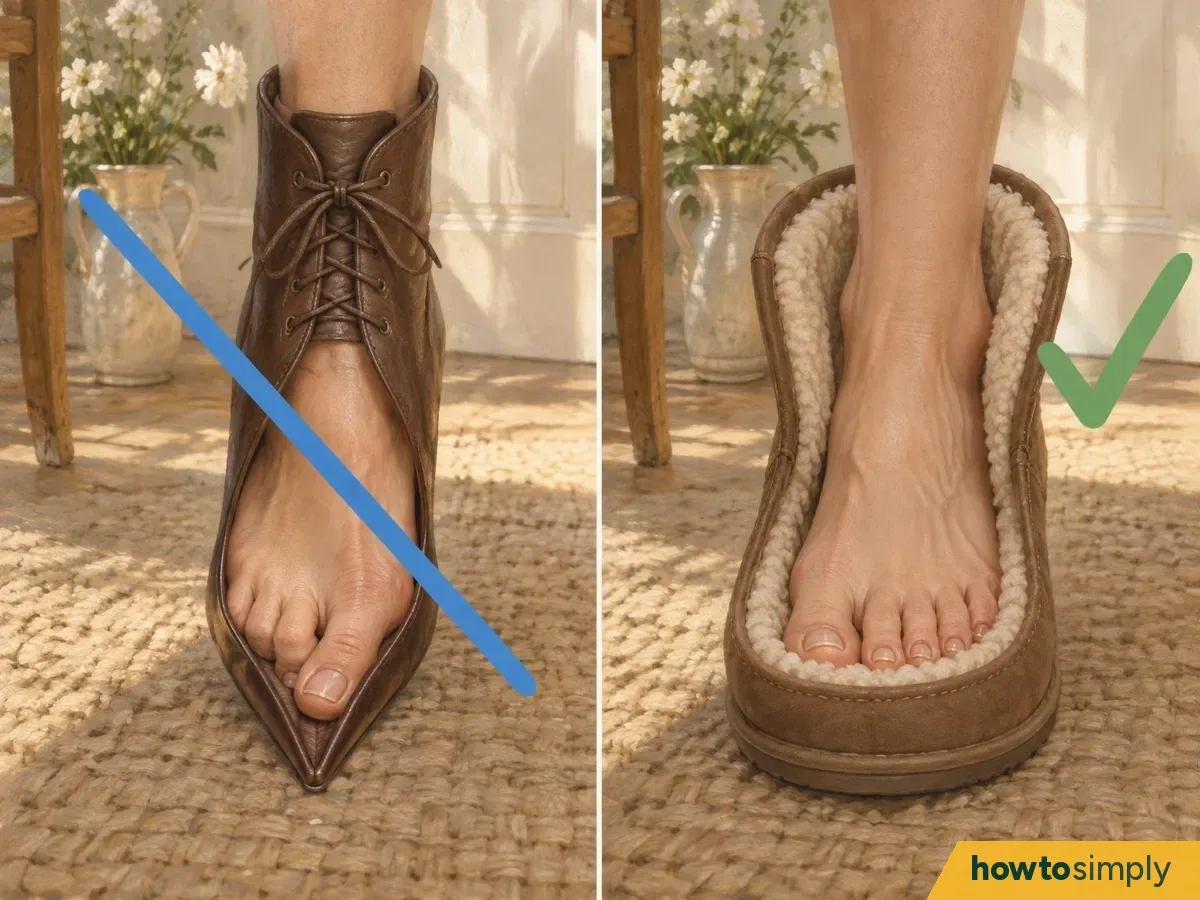
Illustration Shoes shouldn't be too tight, because that restricts blood flow, and they shouldn't rub (AOK). Tight shoes, gloves or clothes in cold, damp weather raise the risk (Cleveland Clinic).
Keep moving, especially if you sit a lot.

Illustration Light movement improves circulation. If you sit for long periods, get up now and then, for example walking about while on the phone (AOK).
Dry your feet well after a shower or bath.

Illustration Always dry your feet thoroughly after showering or bathing, because damp skin can make chilblains more likely in people who are prone to them (AOK).
Cut down on caffeine, don't smoke, and check before taking a decongestant.

Illustration The NHS says don't smoke, have caffeine drinks or take medicine for a blocked nose (decongestants), as these can affect blood flow in your fingers and toes. AOK also says to avoid caffeine and nicotine where you can.
See a GP
Get help if they haven't gone in 2 to 3 weeks, or look infected.
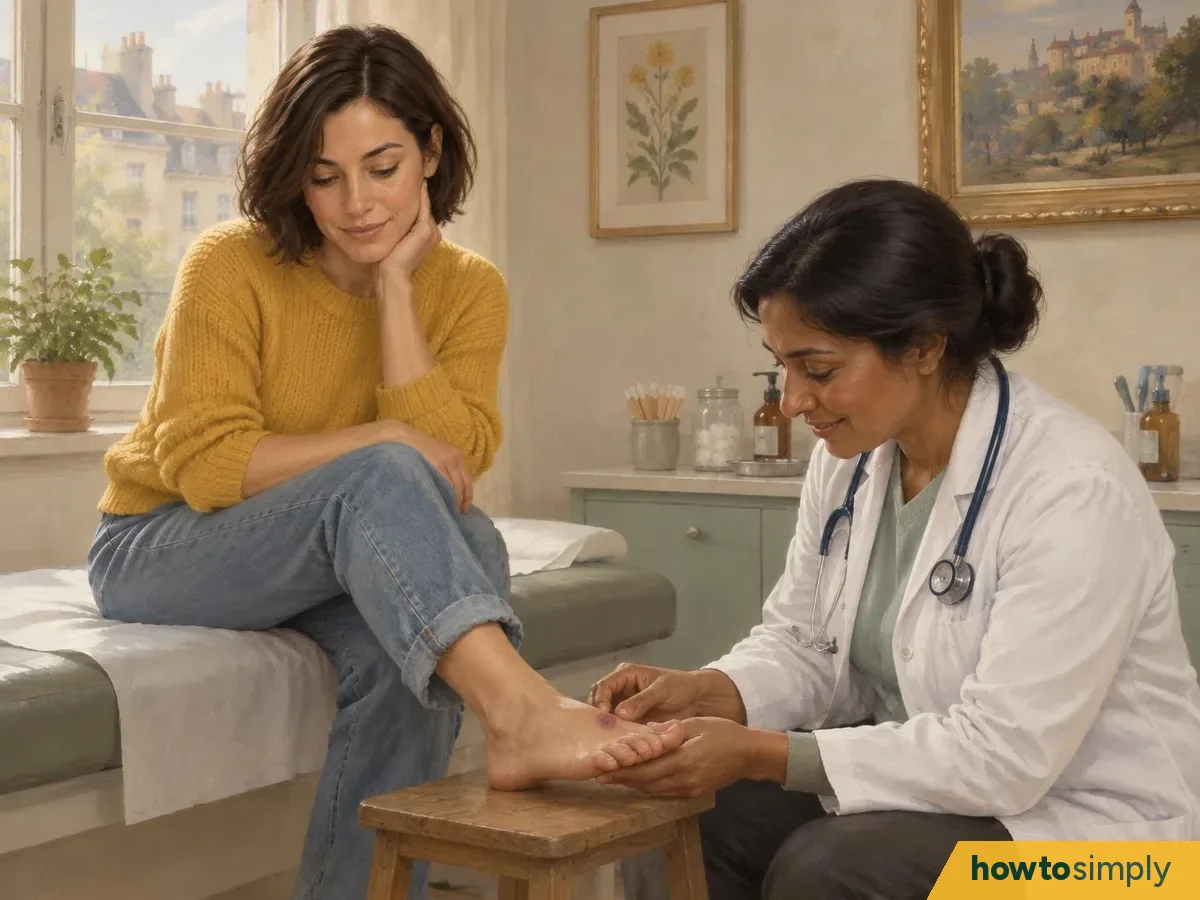
Illustration See a GP if your skin isn't better after 2 to 3 weeks, there's pus, you have a very high temperature or feel hot, cold or shivery, or you keep getting chilblains (NHS). AOK adds open sores, and Cleveland Clinic adds fever or chills.
If you have diabetes, get chilblains on your feet checked.
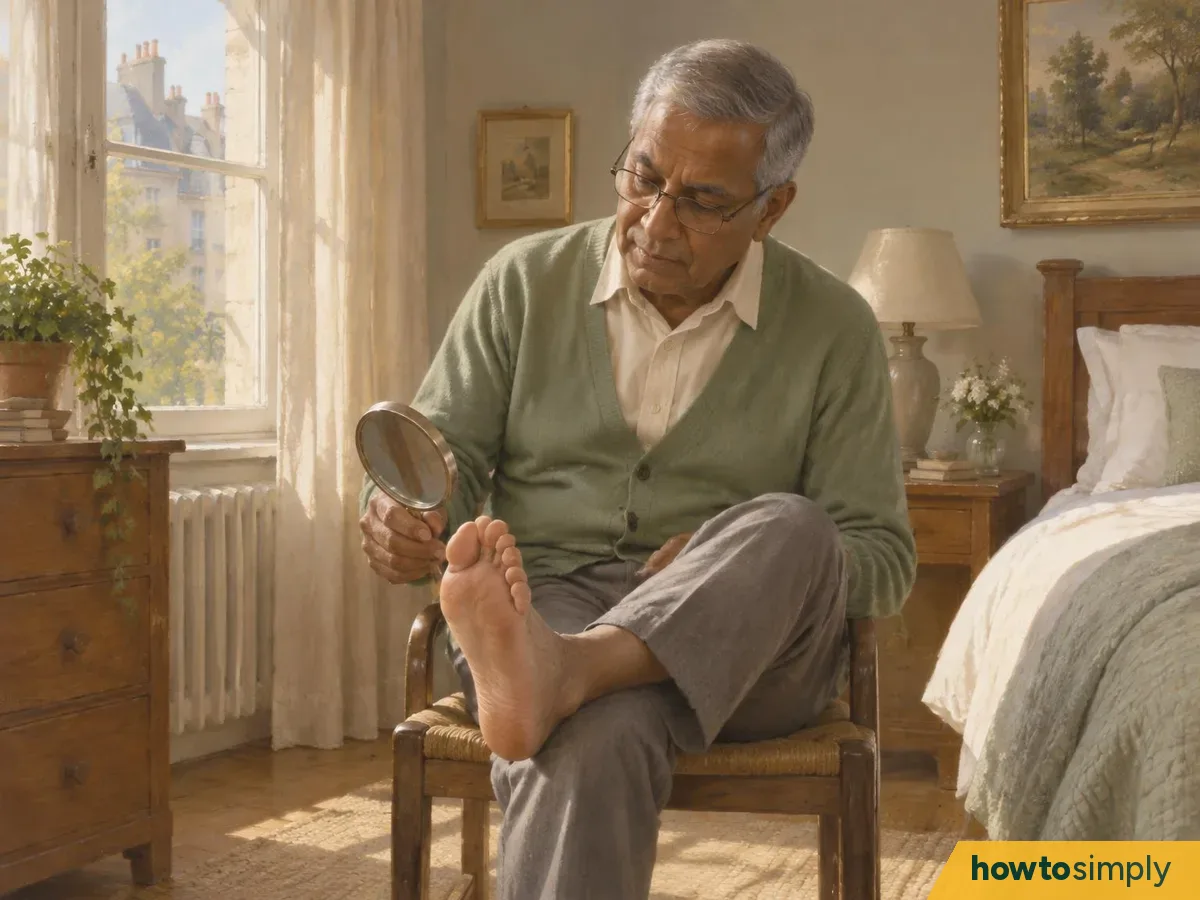
Illustration Foot problems can be more serious if you have diabetes (NHS). AOK explains that high blood sugar can dull feeling in the feet, so sores are noticed late and heal slowly. Cleveland Clinic says see a provider right away.
What each country says
| UK | Germany | US | |
|---|---|---|---|
| How long | 2 to 3 weeks (NHS) | About 3 weeks (AOK) | 1 to 3 weeks (Cleveland Clinic) |
| Warming up | Slowly; no radiator or hot water (NHS) | Keep the whole body warm (AOK) | Short soaks in warm water only (Cleveland Clinic) |
| Skin care | Lotion for itching from a pharmacist (NHS) | Wool wax (lanolin) if you like; pharmacy products for itching (AOK) | Unscented moisturiser (Cleveland Clinic) |
| Avoid | Smoking, caffeine, decongestants (NHS) | Caffeine, nicotine, tight shoes (AOK) | Smoking, tight shoes and gloves (Cleveland Clinic) |
| See a doctor | After 2 to 3 weeks, pus, fever, diabetes, keeps coming back (NHS) | After 2 to 3 weeks, sores, pus, fever, diabetes (AOK) | After 3 weeks, diabetes, fever or chills, pus (Cleveland Clinic) |
How to tell they're healing
- The itching and burning ease as you keep warm and dry (NHS).
- The patches fade within 2 to 3 weeks (NHS).
- New ones stop appearing once you dress warmly and avoid sudden heat (NHS, AOK).
If something isn't right
| What happens | What it means | What to do |
|---|---|---|
| Still there after 3 weeks | It may need treatment | See a GP (NHS) |
| Pus, or an open sore | It may be infected | See a GP (NHS, AOK) |
| Fever, or you feel shivery | It may be more than chilblains | See a GP (NHS) |
| They come back every winter | Some people are more prone | See a GP (NHS); keep warm and dry (AOK) |
| You have diabetes | Foot problems can be more serious | Get your feet checked (NHS) |
Questions readers ask
How long do chilblains last?
Usually 2 to 3 weeks (NHS). AOK says most go within about 3 weeks, and Cleveland Clinic says 1 to 3 weeks.
Are chilblains the same as frostbite?
No. Chilblains come from cold or damp air that isn't freezing (Cleveland Clinic), and AOK says they are a circulation problem rather than frozen skin. Frostbite is a different condition (Cleveland Clinic).
Why shouldn't I warm my feet on a radiator?
Chilblains happen when the deep blood vessels stay narrow but the ones near the surface widen as you warm up (NHS). The NHS says warm your skin slowly and not to use a radiator or hot water.
Can I put cream on chilblains?
A pharmacist can suggest a lotion to soothe the itching (NHS). Cleveland Clinic suggests an unscented moisturiser, and AOK says you can rub in wool wax (lanolin) to help keep the warmth in.
Why do I keep getting them?
Some people are more prone, for example with low body weight, smoking, or a family tendency (AOK, Cleveland Clinic). See a GP if you keep getting chilblains (NHS).
I have diabetes. What should I do?
Get chilblains on your feet checked by a GP or doctor. Foot problems can be more serious with diabetes (NHS, AOK, Cleveland Clinic).
Did this solve the problem?
What needs work?
What did you think?
Reaction counts are loading.
Spotted a mistake? If a step is unclear or a picture is inaccurate, tell us the step number and what needs correcting. Email us about this page or use the contact form. We read every report, and fixes are listed on What changed.
Liked this article?
Follow us for new articles and short how-to videos.
Sources
We use primary, official and specialist sources appropriate to the topic.