How to keep a dog calm during fireworks
Researched by Abu Bakar Saadat10 min read
Last updated: 18 November 2026References
On this page 12 sections
In short
Walk your dog in daylight on a lead, shut windows, doors and curtains before dark, play music, and let it hide in a den or stay close to you. Stay home and calm, never scold it, and see your vet early if it panics: some help must start before the bangs.
At a glance
- Fireworks season
- UK 5 November, Diwali (8 November 2026), New Year; Germany New Year only; US July 4 and New Year
- Walks
- In daylight, on a lead, harness and collar (Dogs Trust, TASSO)
- Loudness
- Fireworks can reach 120 to 175 decibels (RSPCA)
- Medicine
- Only from your vet, sometimes started before the night (Dogs Trust, Bundestierärztekammer)
- ID
- Microchip registered with current details (gov.uk, TASSO)
- Advice from
- Dogs Trust, RSPCA, Bundestierärztekammer, TASSO, gov.uk, read 29 October 2026
- Checked
- November 2026
It really hurts to watch your dog hide, pant or shake as fireworks fill the sky. The fact that you're looking for ways to help means you've already done something positive, and there are lots of things you can do to make this a better night for them.
The RSPCA says fireworks can be as loud as 120 to 175 decibels, and because dogs hear sounds we can't, many find them frightening. This guide is organised in stages: the weeks leading up to it, the day itself, the bangs and the aftermath, so you can go straight to the part you're at now. Dates and rules vary greatly between the UK, Germany, the US, Pakistan and India, so a table near the end shows when to expect fireworks where you live.
How long have you got?
Weeks before
Vet, sound therapy, den, ID. Start at Weeks before.
It's today
Daylight walk, shut everything, stay in. Go to On the day.
The bangs have started
Let it hide, stay calm. Go to During the fireworks.
Weeks before
Talk to your vet early if your dog has been scared before.
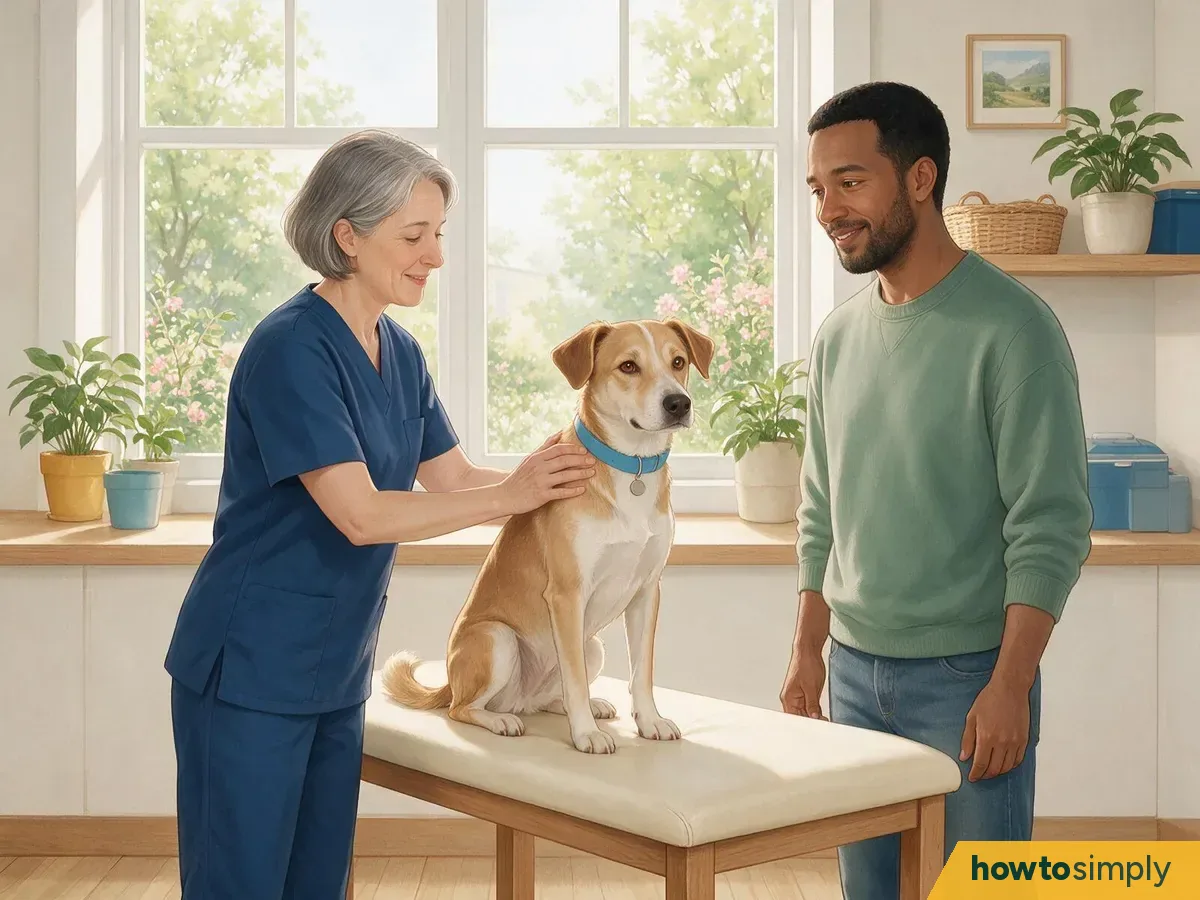
Illustration Your vet can check for a medical cause, refer you to a behaviourist and talk about medication (Dogs Trust). Many prescribed medicines need to be given before fireworks start, so follow your vet's instructions (Dogs Trust). Anxiety medication is only for very anxious animals and only as your vet advises (Bundestierärztekammer).
Look into sound therapy and firework training.
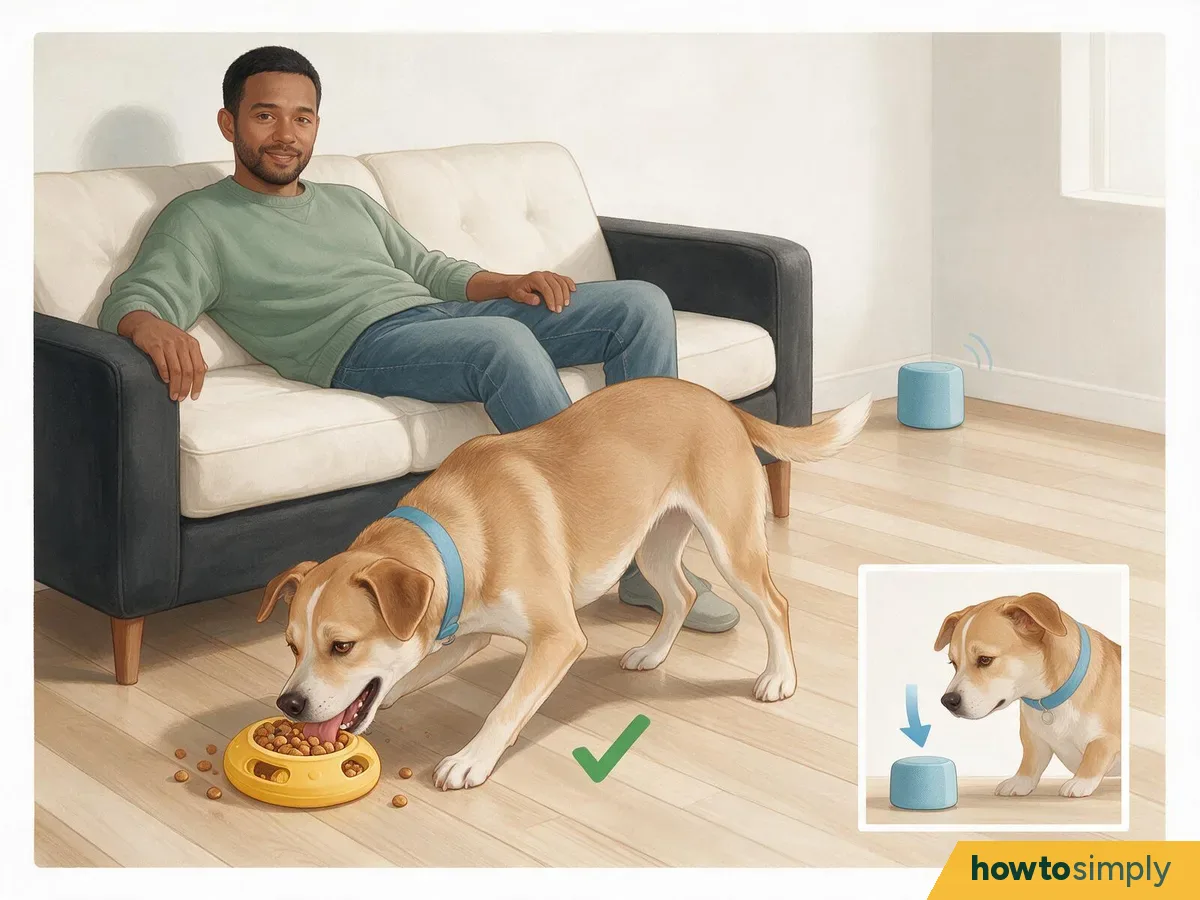
Illustration The RSPCA recommends playing your dog high-quality recordings of fireworks so it gets used to the noise, starting well before the season; how much training it needs varies from dog to dog (RSPCA). Sound therapy helps a dog get used to new noises that frighten it (Dogs Trust). Start very quietly while your dog eats or plays and raise the volume only slowly. If its ears go back or it stops eating, turn it down. Follow the guidance that comes with the recordings. The reason to go so gently is that the practice sound should never frighten your dog.
Create a safe space for your dog.
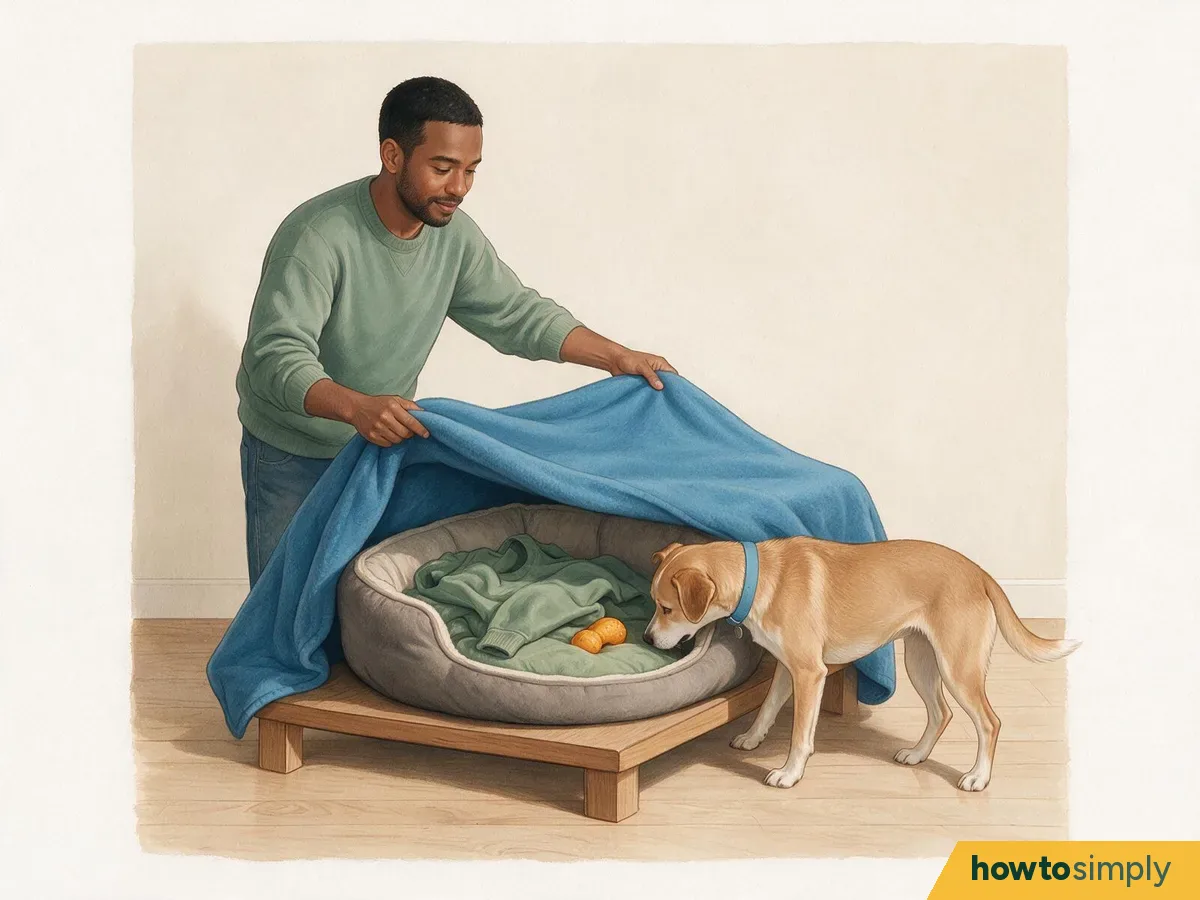
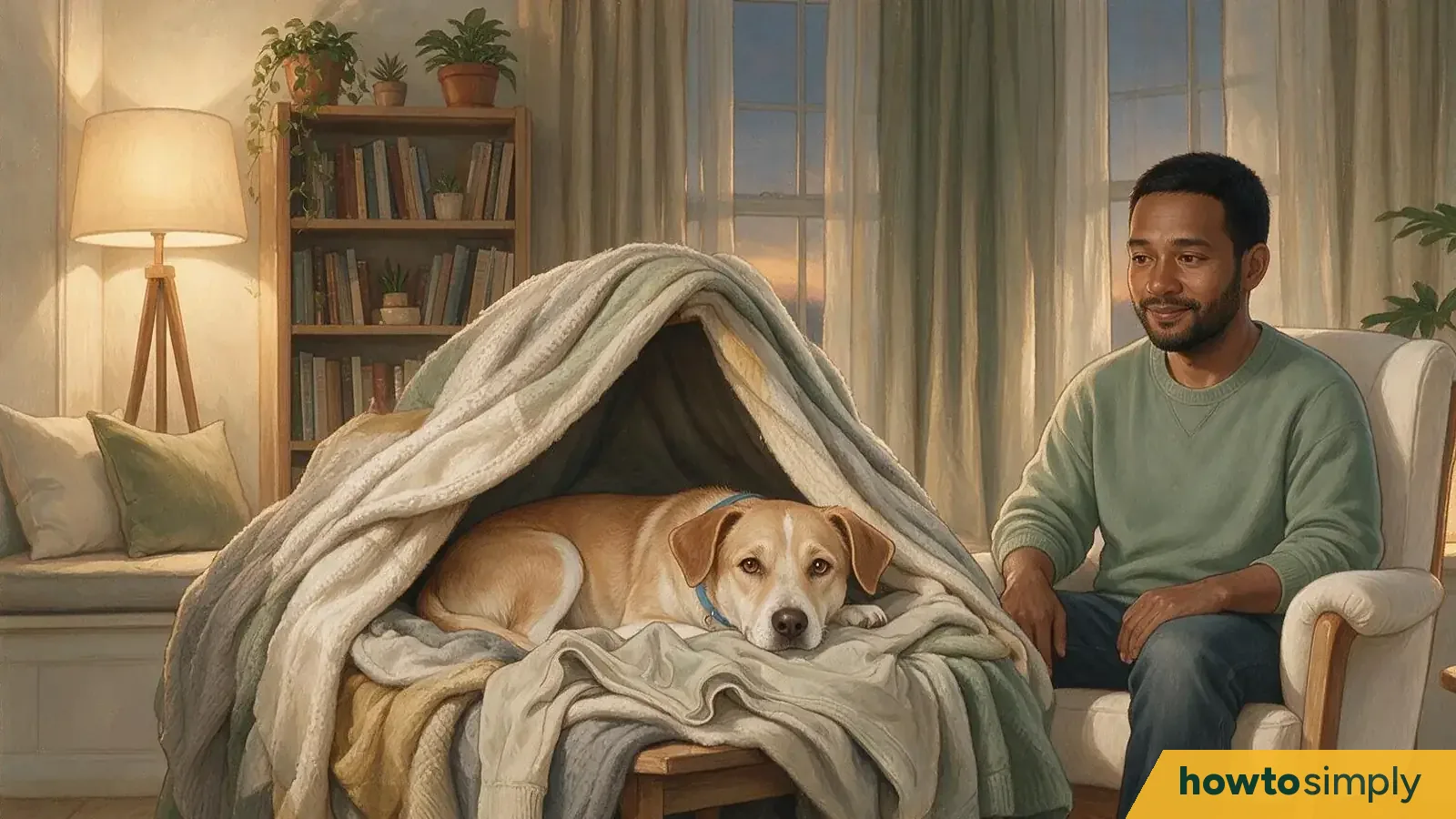
Illustration If your dog goes off to hide, leave it in the spot where it feels safe (Dogs Trust).
Check its tag and microchip details.
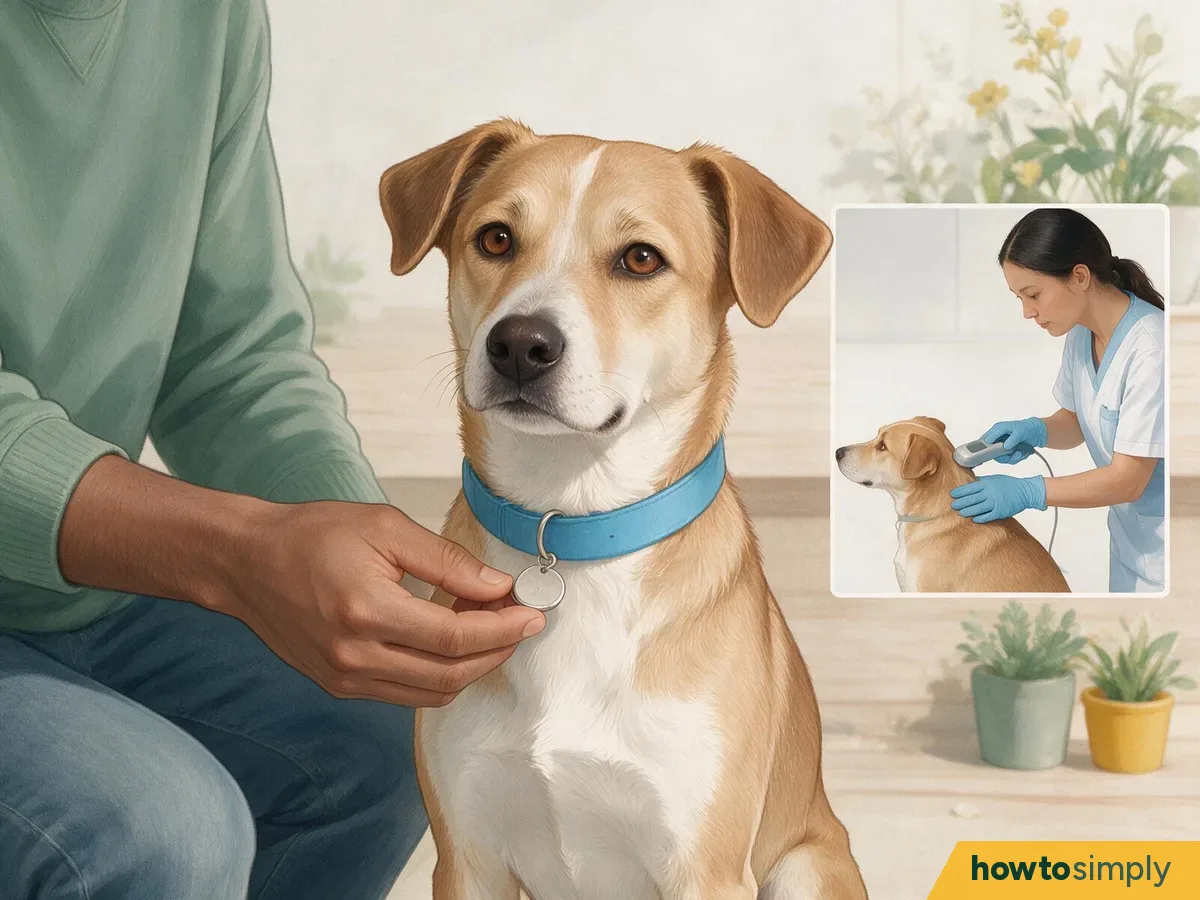
Illustration Frightened dogs can bolt. A microchip can only be read with a scanner, so a visible tag on the collar or harness helps too, and the chip must be registered with your current details; not every vet registers it for you (TASSO). In the UK every dog must be microchipped and registered by 8 weeks old, and you must update the details when you move (gov.uk). In Germany, register the chip with TASSO or FINDEFIX.
Start now if New Year's Eve fireworks are coming
The most useful thing you can do happens weeks before the night, not on it. The Royal Kennel Club suggests getting your dog used to firework sounds slowly (Royal Kennel Club):
- Pick a quiet room your dog likes, and play a fireworks recording at a volume you can barely hear.
- While it plays, give treats, play and fuss, so the sound starts to mean good things.
- Keep it to a few minutes, then stop and do something else in another room.
- Next time, turn it up a little. If your dog pants, licks its lips, paces or pins its ears back, stop, and go quieter next time.
How long does it take? The Kennel Club's answer is either several short sessions a day for at least a couple of weeks, or several sessions a week spread over months, and it warns against rushing (Royal Kennel Club). Even a dog that has learned to ignore the recording may still find real fireworks stressful, so keep the steps for the night itself too (Royal Kennel Club). Dogs Trust also has sound-therapy tracks on its fireworks page for this kind of training (Dogs Trust).
On the day
Walk your dog in daylight, on a lead, with harness and collar.
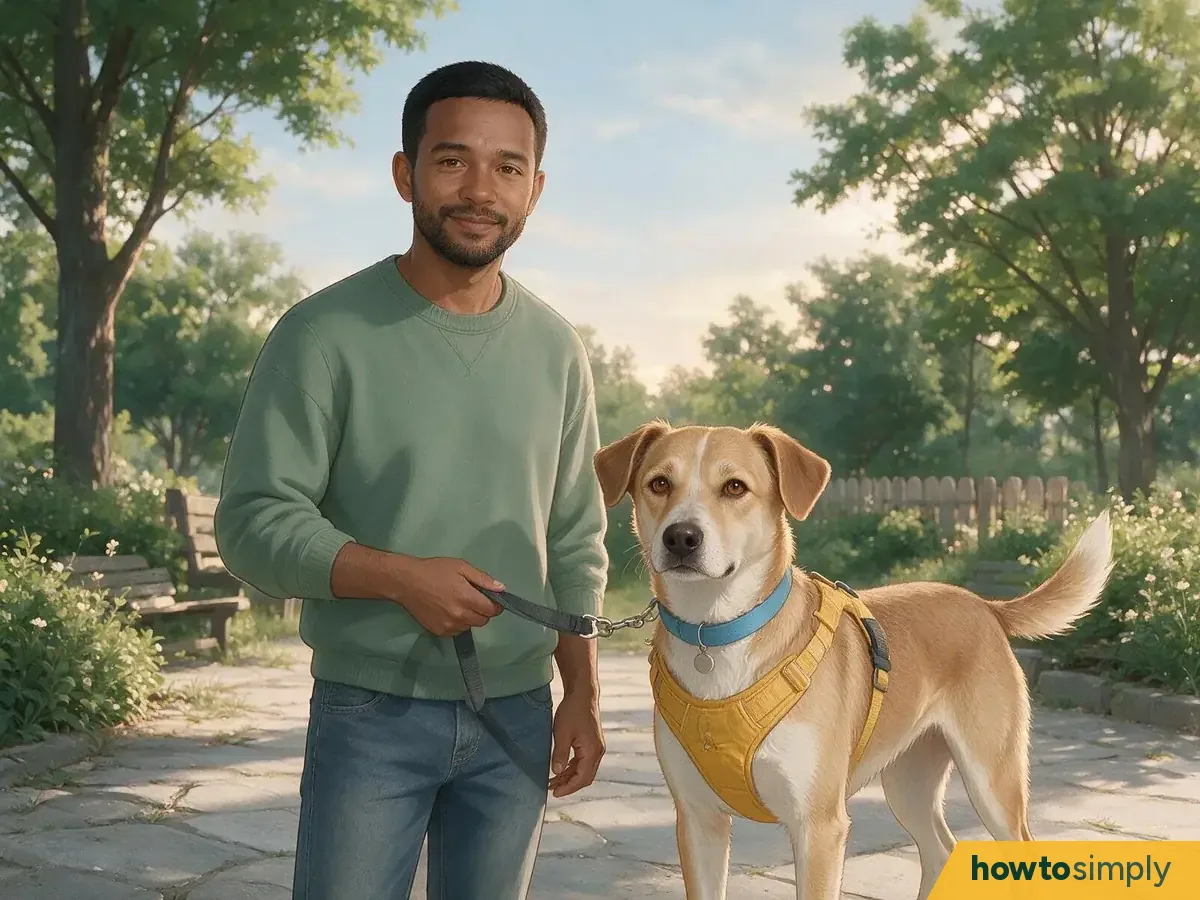
Illustration Skip walks after dark, and get everyone indoors and settled long before the first firework goes up (Dogs Trust). TASSO advises a well-fitting harness as well as the collar, ideally with a lead on each, and a safety harness with an extra belly strap for nervous dogs (TASSO). Exercise earlier in the day can also use up energy before the evening (AVMA).
Check that windows, doors and the garden are secure.
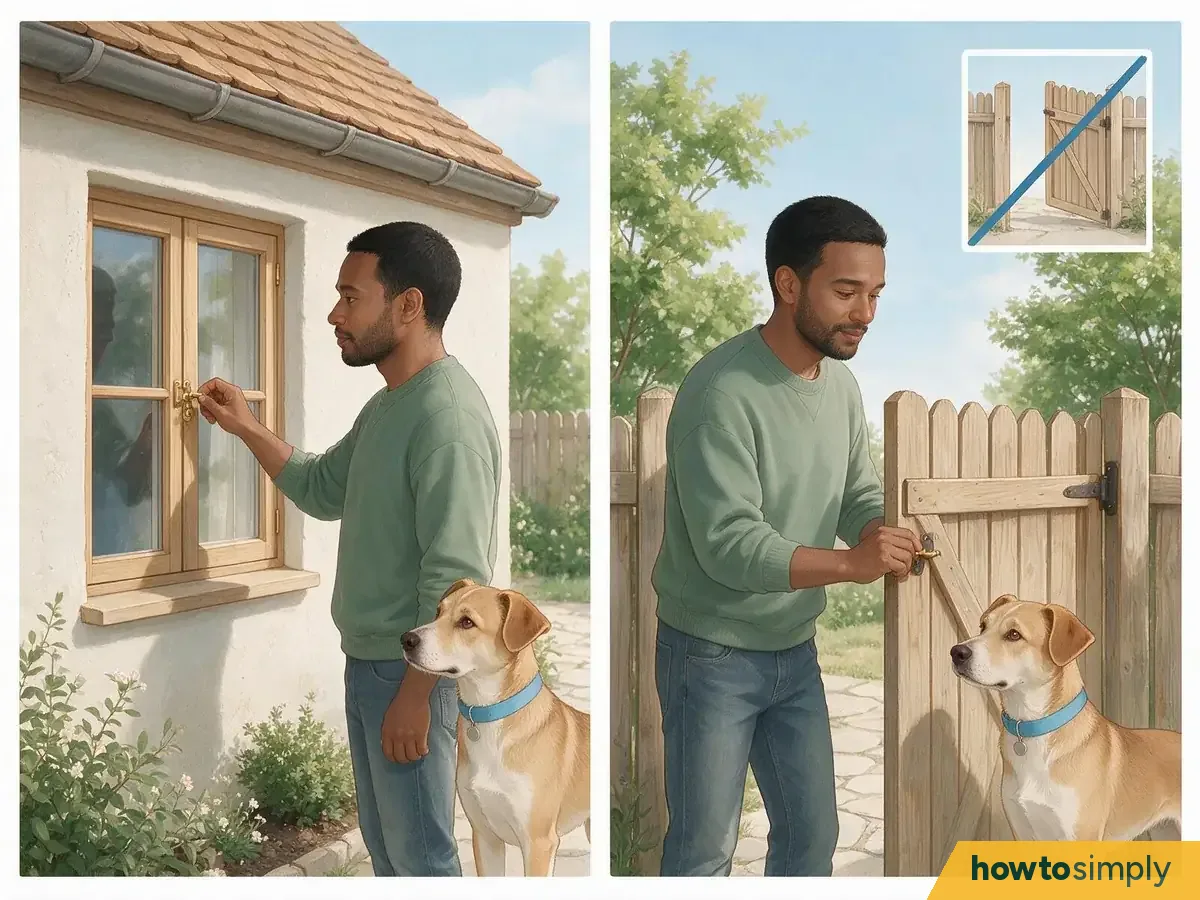
Illustration A frightened dog may bolt, so make sure doors, windows and fences are shut tight and secure (Dogs Trust). If your dog needs the toilet after dark, take it into the garden on a lead.
Close the curtains, turn the lights on and put music on.
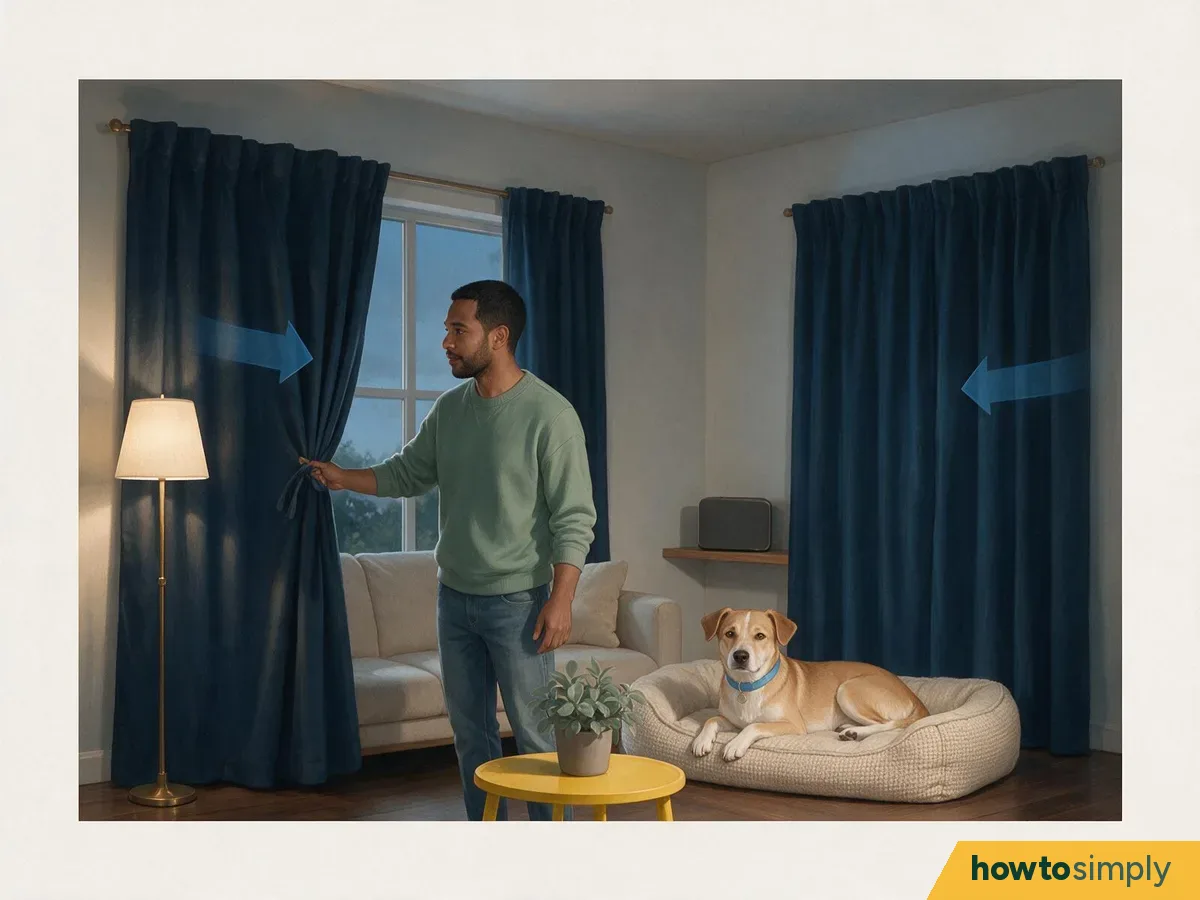
Illustration Closed windows and curtains with the lights on block the flashes and some of the noise (Dogs Trust). Music or the TV helps disguise the noise (Dogs Trust). Dogs Trust's Sound Blanket is meant to be played before the bangs start (Dogs Trust).
You should see: your dog settled indoors before the first bang.
Stay at home with your dog.
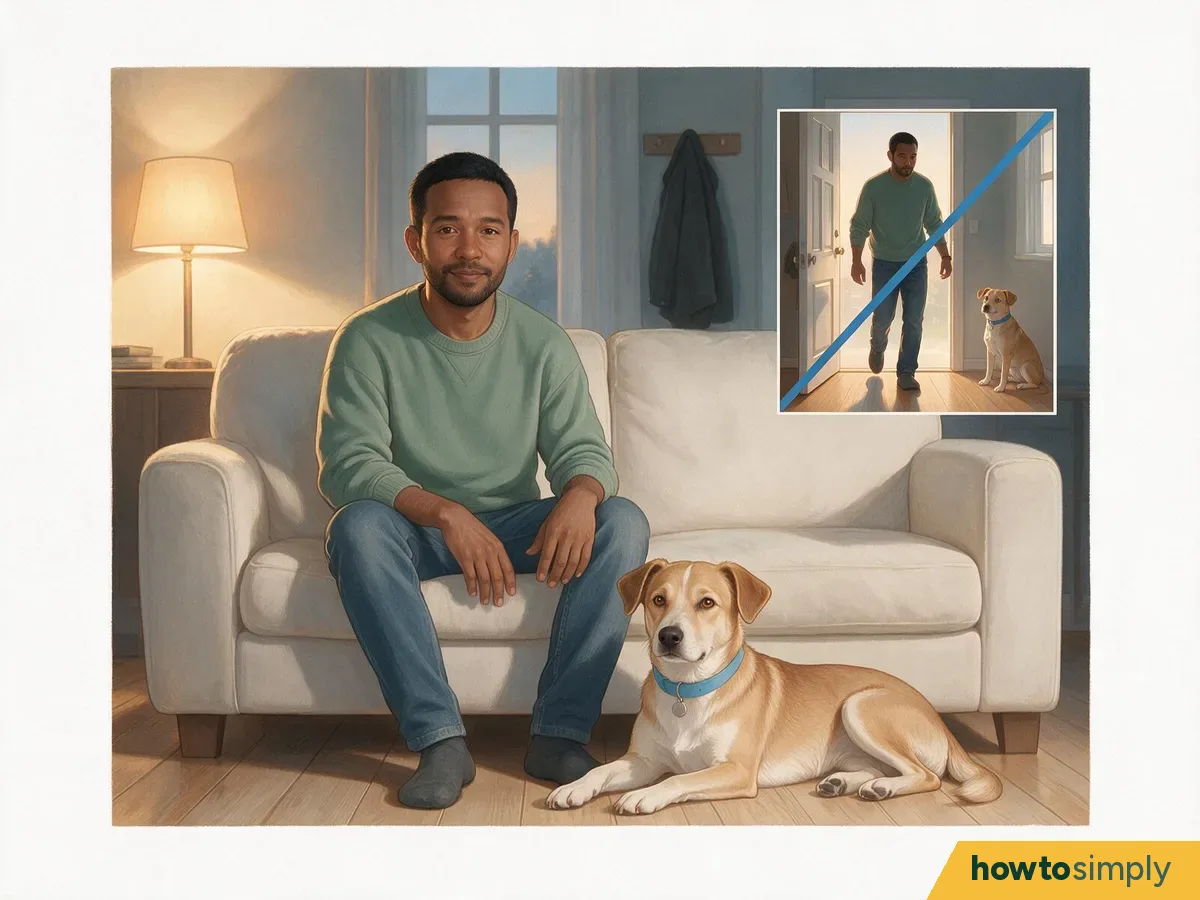
Illustration Dogs may panic if they're left alone during fireworks (Dogs Trust). If you have to go out, arrange for someone your dog knows to stay with it.
During the fireworks
This is probably the hardest part to sit through, and it's perfectly normal for your heart to sink each time a firework goes off. Your presence is an important part of helping your dog cope, so sit quietly with them.
Let your dog hide if it wants to.
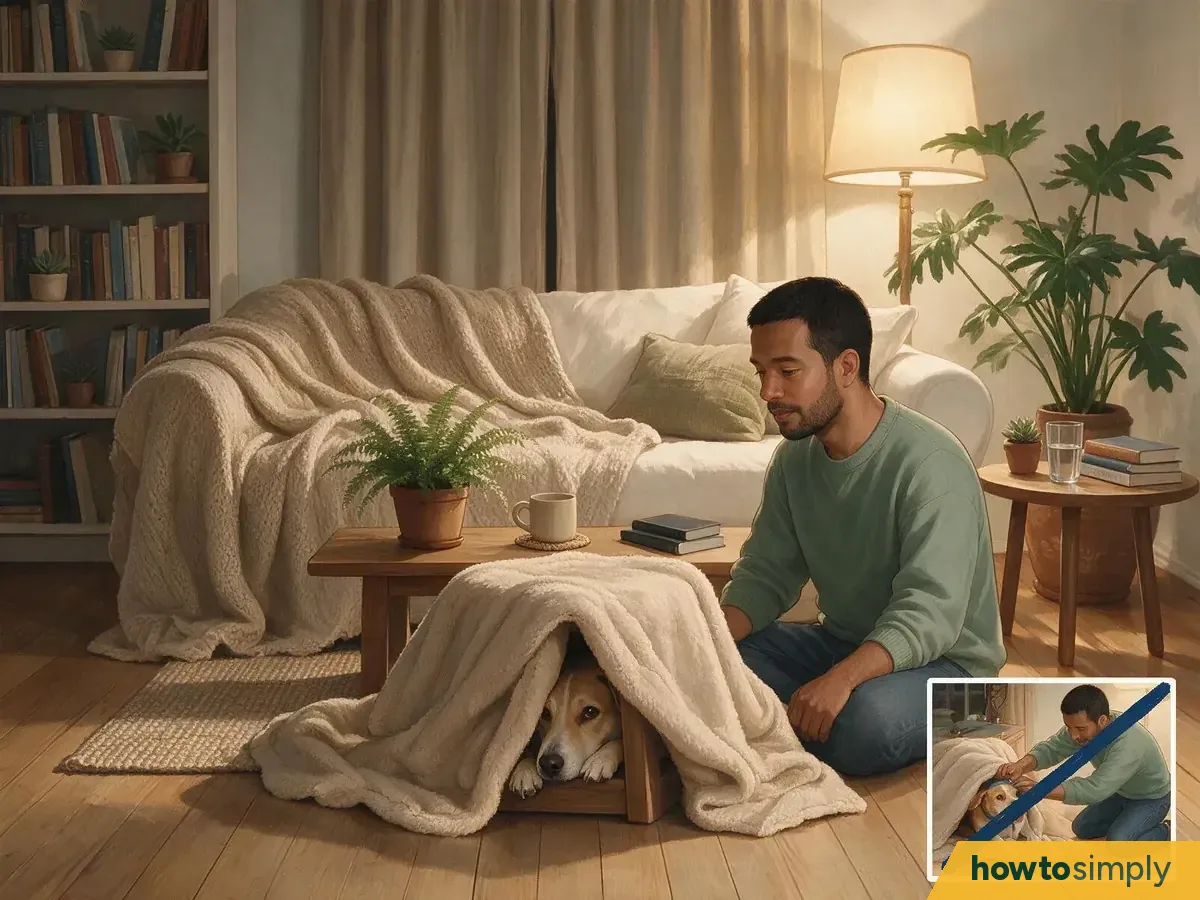
Illustration If your dog goes to its den or under furniture, leave it there (Dogs Trust). Recognise your dog's needs and let it choose (Dogs Trust). Pulling it out takes away the place where it feels safest.
If it comes to you, comfort it calmly.
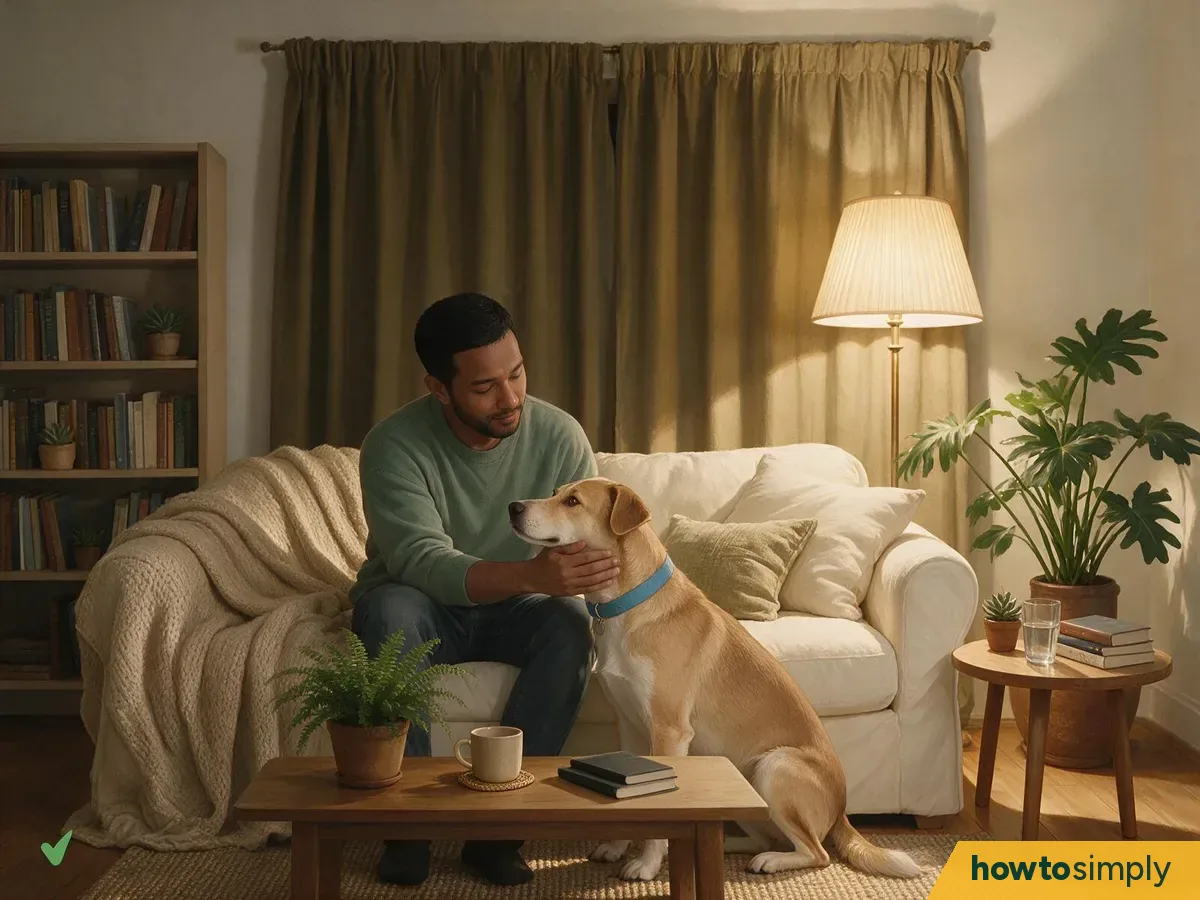
Illustration A dog that looks for reassurance should get calm attention; ignoring it doesn't help (Dogs Trust). Slow strokes and a quiet voice are enough. Company helps it relax, whether that's you or another person it knows and trusts (Dogs Trust).
Stay calm yourself, and if it isn't worried, keep it busy with a favourite toy.
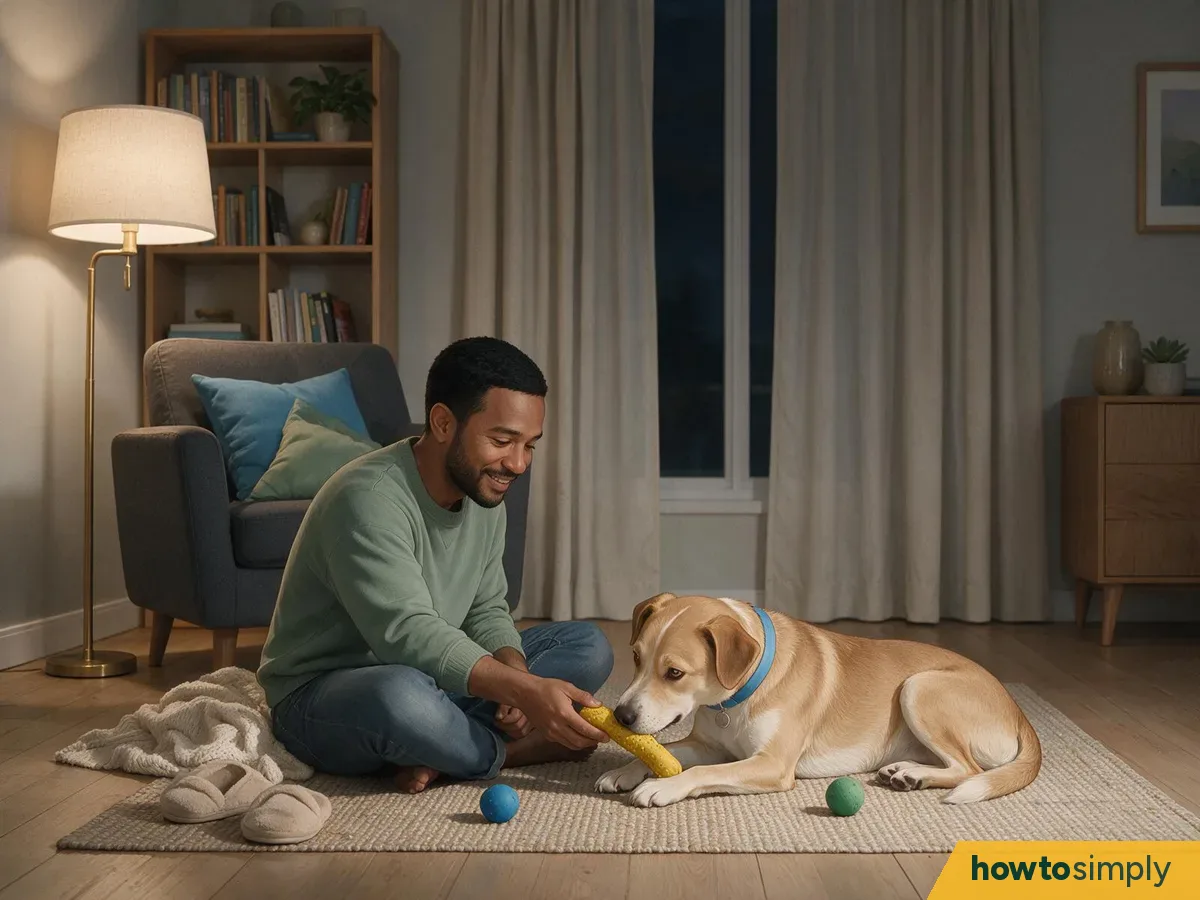
Illustration Your dog picks up on your mood, so keep yours relaxed (Dogs Trust). If it doesn't seem worried, keep it busy with a favourite toy or game (Dogs Trust). Chewing and licking are calming for many dogs.
Never tell it off, and never force it outside during the bangs.
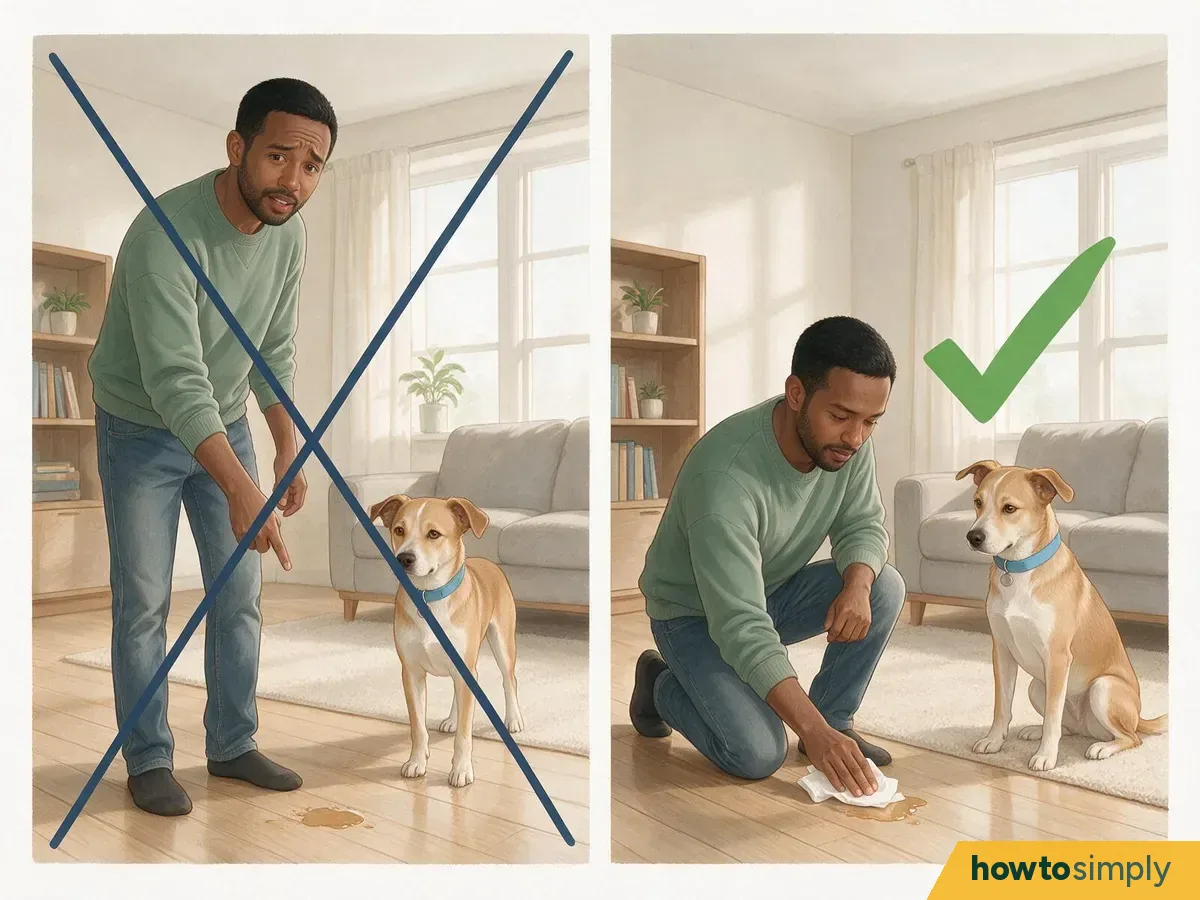
Illustration Fear can make a dog have an accident indoors or behave in ways you'd rather it didn't. Telling it off can make its fear worse (Dogs Trust), so clean up quietly. Never force your dog outside while fireworks are going off (Dogs Trust).
Afterwards
When the sky goes quiet, you can both breathe out. A few small checks finish the job.
Watch out for firework debris.
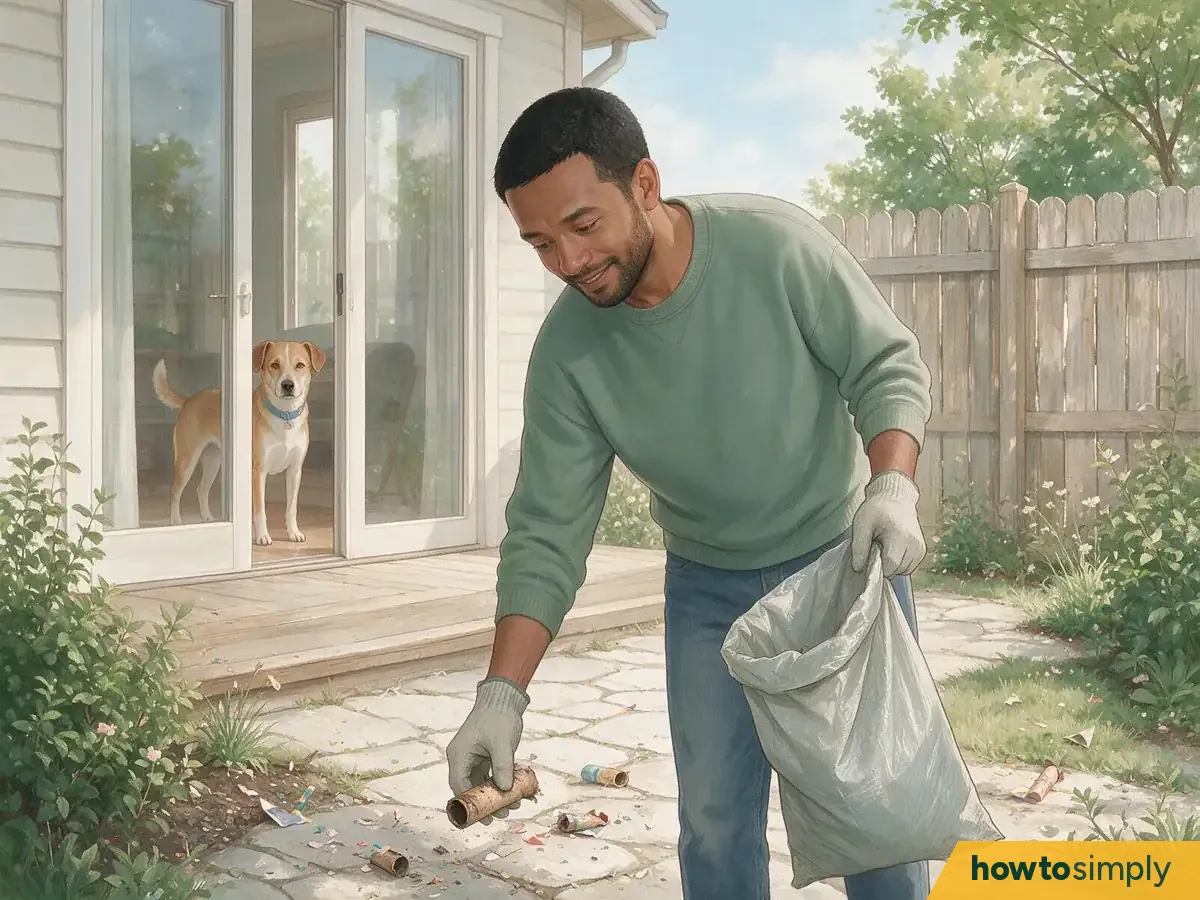
Illustration Animals are often hurt during fireworks, by the bangs, the bright flashes and the falling debris (RSPCA).
Go back to your normal routine and watch how your dog is.
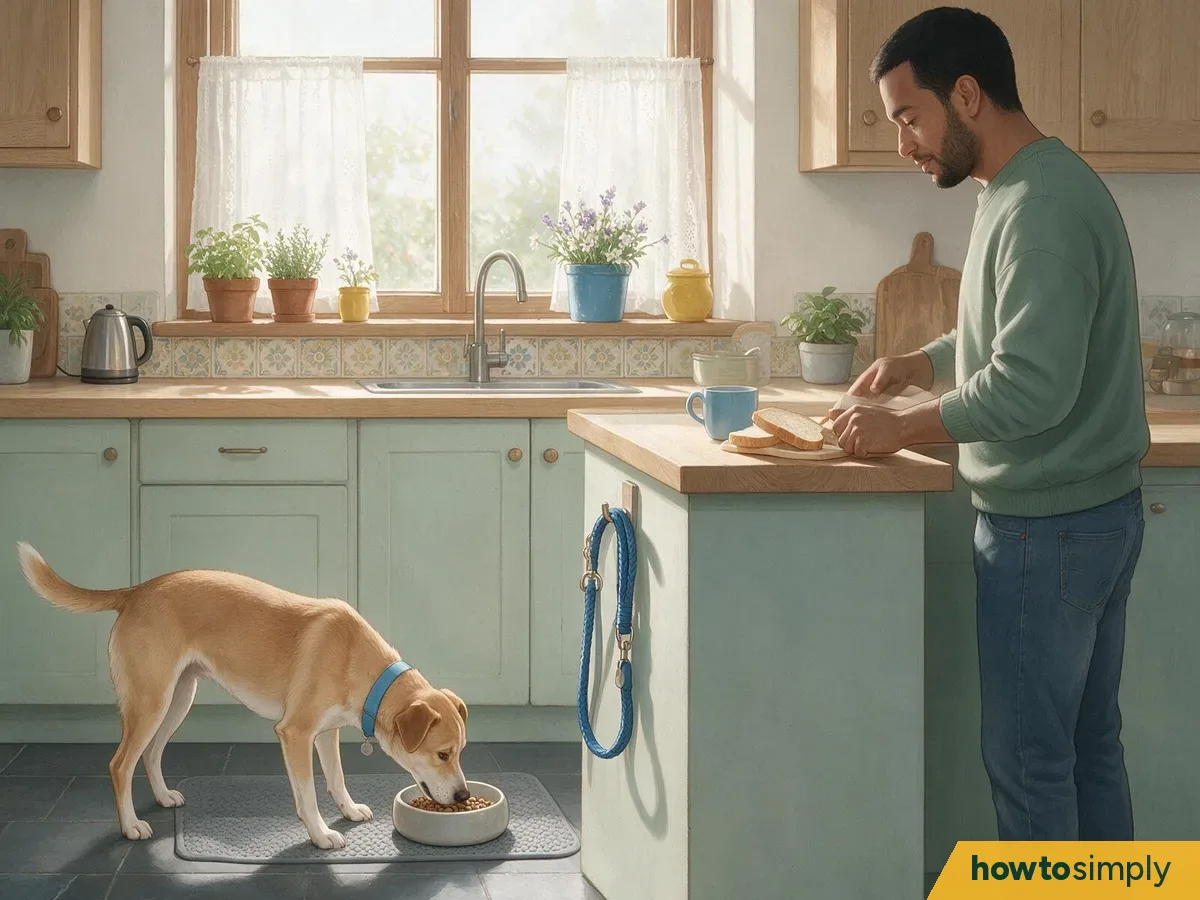
Illustration A normal routine in the following days helps your dog settle (Dogs Trust). Keep an eye on it on walks and at home, because fireworks are unlikely to be limited to one night (Dogs Trust).
You should see: your dog eating, walking and sleeping as usual within a day or two.
If the fear lasts, plan next year with your vet and a behaviourist.
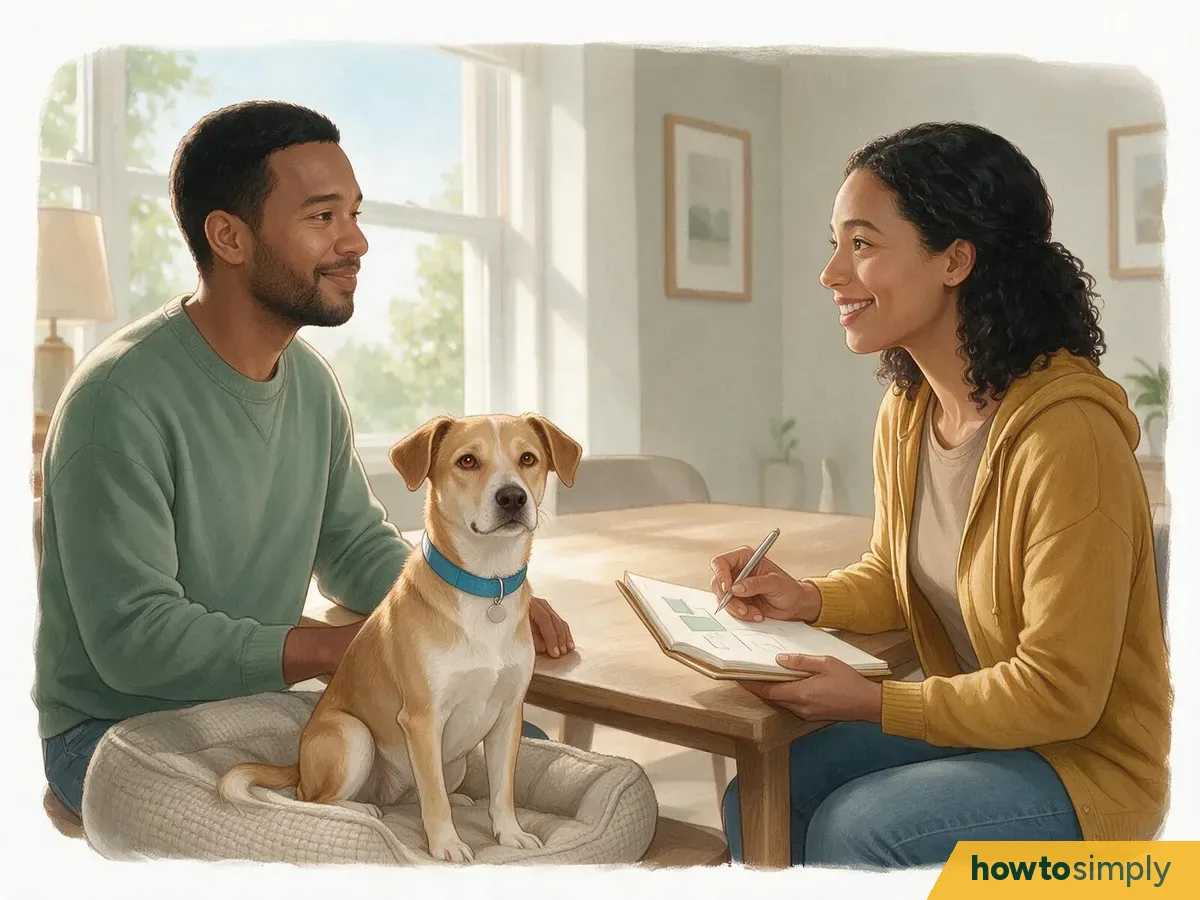
Illustration Please don't blame yourself if the fear hangs on. If your dog is still scared, see your vet, who may refer you to a clinical behaviourist for a plan for next time (Dogs Trust). With proper treatment a dog can learn to be less afraid of loud noises, so start long before the next season (RSPCA).
When to expect fireworks
| Country | Main nights | Rules that help you plan | If your dog goes missing |
|---|---|---|---|
| UK | Bonfire Night 5 November, Diwali, New Year's Eve, Chinese New Year | Allowed from 7am to 11pm, with a later finish of midnight on Bonfire Night and 1am on New Year's Eve, Diwali and Chinese New Year. Registered sellers can sell them from 15 October to 10 November, from 26 to 31 December and for 3 days before Diwali and Chinese New Year; at other times only licensed shops can (gov.uk) | Contact your microchip database; Dogs Trust Behaviour Support Line 0303 003 6666 |
| Germany | New Year's Eve (Silvester) | Adults may set off ordinary fireworks only on 31 December and 1 January, and never near churches, hospitals, children's or old people's homes (1. SprengV § 23); sold 29 to 31 December (§ 22); towns may add bans | Report it to TASSO or FINDEFIX, where the chip is registered |
| US | July 4 and New Year's Eve | Rules depend on the state and city | Keep the microchip registry up to date (AVMA) |
| Pakistan | Weddings, New Year, some religious festivals | Fireworks can happen on many nights with no warning, so keep evening walks on a lead | Tell local vets and animal shelters; a tag with your phone number helps most |
| India | Diwali (8 November 2026) and the days around it, weddings, New Year | Rules vary by state and city | Tell local vets and animal welfare groups; a tag with your phone number helps most |
How to tell it's working
- Your dog heads for its den or for you, instead of pacing or trying to get out.
- It will still take a treat or a chew while the fireworks are going off.
- In the days afterwards, it settles down as you go back to your normal routine (Dogs Trust).
If it doesn't work
Some dogs stay frightened even when you get everything right, and that isn't your fault. Find what you're seeing below, and the last column says what to do next.
| What happens | What it means | What to do |
|---|---|---|
| Trembling, panting, hiding, won't eat | Your dog is frightened (Dogs Trust) | Let it hide, stay close and calm; see your vet before the next fireworks |
| Tries to escape | Extreme fear (Dogs Trust) | Speak to your vet (Dogs Trust) |
| Won't settle in the den | It may want to be near you | Let it choose; comfort it calmly (Dogs Trust) |
| Music seems to bother it | Music or talk radio can upset some dogs (Dogs Trust) | Speak to your vet (Dogs Trust) |
| Still scared days later | The fear has lasted | Vet and a clinical behaviourist (Dogs Trust) |
Questions readers ask
Should I comfort my dog during fireworks, or ignore it?
Comfort it calmly if it comes to you. Dogs Trust says ignoring a frightened dog doesn't help, and to let your dog choose: if it wants to hide, let it stay where it feels safe (Dogs Trust).
Can I give my dog something to calm it?
Follow your vet's instructions (Dogs Trust). Your vet can advise on additional treatments like medication, and many prescribed medicines need to be given before fireworks start (Dogs Trust). Never give alcohol or human medicines.
Is it too late to start sound therapy?
For this year, usually yes: it works gradually and needs to start well before the season (RSPCA). Use the steps in "On the day" now, and look into preventative measures such as sound therapy for the next time fireworks happen (Dogs Trust).
My dog was fine last year. Do I still need to prepare?
Yes. Any dog can be startled by a sudden bang, so keep it on a lead from when fireworks go on sale and keep its ID up to date (TASSO). Fireworks can reach 120 to 175 decibels, and dogs hear more than we do (RSPCA).
What if my dog runs away?
Call the database your dog's microchip is registered with, and local vets and rescue centres. In Germany, report it to TASSO or FINDEFIX. This is why the chip details must be up to date (Dogs Trust, TASSO).
How do I know if my dog is scared?
Signs include trembling, panting, drooling, pacing, hiding, a tucked tail, trying to escape, barking or whining, clinginess and not eating (Dogs Trust). Some of these can also be health problems, so ask your vet if you're not sure.
Sources and method
- Researched by
- Abu Bakar Saadat
- Tested by our team
- No. We have no record of anyone on our team trying these steps, so treat them as researched instructions from the sources below.
- Pictures
- 17 illustrations drawn for this article: drawings, not photos.
- Sources
- 10 named sources, linked below.
- What this page adds
- A country table of the main firework nights, legal hours and who to contact if your dog goes missing, and drawings of what not to do, such as pulling a hiding dog out.
What to do next
Everyday care for your dog Step 4 of 6
- Is my dog too hot? Heatstroke signs and how to cool your dog fastThe warning signs on hot days.
- Dog ate chocolate? What to do now, and how much is dangerousWhat to do if your dog gets into the chocolate.
- How to brush your dog's teeth, step by step, even if it hates itA daily habit your dog can learn to enjoy.
Did this solve the problem?
Where did you get stuck?
What did you think?
Reaction counts are loading.
Sources
We use primary, official and specialist sources appropriate to the topic.
- Dogs Trust: Fireworks
- Royal Kennel Club: Fireworks night and dogs
- RSPCA: Fireworks frighten animals (leaflet P29)
- RSPCA: Fireworks
- Bundestierärztekammer: Presseinformation 11/2022, Gefahren zum Jahresende (German, 19 December 2022)
- GOV.UK: Fireworks: the law
- GOV.UK: Get your dog microchipped
- Erste Verordnung zum Sprengstoffgesetz, § 23 (German)
- TASSO e.V.: Silvester mit Hund, 10 Tipps gegen die Angst (German)
- TASSO e.V.: Hund richtig sichern (German)